Evaluation of the South Yorkshire Restorative Justice
programme (SYRJP)
MEADOWS, Linda, ALBERTSON, Katherine <http://orcid.org/0000-0001-7708-1775>, ELLINGWORTH, Daniel and SENIOR, Paul
Available from Sheffield Hallam University Research Archive (SHURA) at: http://shura.shu.ac.uk/7049/
This document is the author deposited version. You are advised to consult the publisher's version if you wish to cite from it.
Published version
MEADOWS, Linda, ALBERTSON, Katherine, ELLINGWORTH, Daniel and SENIOR, Paul (2012). Evaluation of the South Yorkshire Restorative Justice programme (SYRJP). Project Report. Sheffield, Sheffield Hallam University.
Copyright and re-use policy
See http://shura.shu.ac.uk/information.html
1 | P a g e
Evaluation of the South Yorkshire
Restorative Justice Programme
Linda Meadows, Katherine Albertson, Dan Ellingworth, and
Paul Senior
Final Report
2 | P a g e
TABLE OF CONTENTS
1.
EXECUTIVE SUMMARY ... 4
2.
BACKGROUND AND CONTEXT ... 6
3.
ABOUT THE EVALUATION ... 9
3.1 Methodology ... 10
3.1.1 Sampling - Interviews ... 12
3.1.2 Sampling - Surveys ... 14
3.1.3 Sampling - Focus Groups and Observations ... 15
3.1.4 Sampling - Reconviction Analysis ... 15
4.
PROFILE AND PERFORMANCE ... 18
5.
FINDINGS ... 21
5.1 The Restorative Justice Model ... 21
5.1.1 Management, Governance and Scrutiny ... 21
5.1.2 The Changing Model of RJ... 22
5.1.3 Usage, Awareness and Preparedness amongst Police Officers ... 23
5.1.1 What Types of Offenders/Offences is RJ Suitable for? ... 27
5.1.2 Victim, Offender and Community Awareness/ Understanding of the Model ... 29
5.2 The RJ Process ... 30
5.2.1 Communication of the process prior to engagement ... 30
5.2.2 Motivation for Involvement ... 33
5.2.3 Levels of support during and after the RJ process... 36
5.3 Impact of RJ ... 39
5.3.1 Impact on the Offender and on Reoffending ... 40
5.3.2 Impact on the Victim ... 44
5.3.3 Impact on confidence and satisfaction with the police/CJ system ... 46
5.3.4 Impact on police/police practice ... 48
5.3.5 Impact on reducing fear of crime/improving feelings of community safety .... 48
5.3.6 Impact on efficiency/cost effectiveness of delivery of justice ... 49
6.
CONCLUSIONS AND RECOMMENDATIONS... 53
6.1 Conclusions... 53
3 | P a g e
APPENDIX 1: RESPONDENTS TO THE VICTIM SURVEYS ... 56
APPENDIX 2: RESPONDENTS TO THE POLICE OFFICER SURVEY ... 59
APPENDIX 3: POLICE OFFICER TRAINING ... 61
4 | P a g e
1.
EXECUTIVE SUMMARY
This is the final report of the evaluation of South Yorkshire Restorative Justice Programme (SYRJP), undertaken by the Hallam Centre for Community Justice at Sheffield Hallam University.
The SYRJP was developed in partnership between South Yorkshire Police and the Local Criminal Justice Board (LCJB) with the aim of implementing a county wide model of
Restorative Justice (RJ) for use in neighbourhood policing and other community applications. It is aimed at tackling low level crime and anti-social behaviour in neighbourhoods and gives police officers the discretion to use Youth and Adult Restorative disposals as an alternative to prosecution for low level offending behaviour where offenders have no previous
convictions, make an admission of guilt and where both offender and victim consent to the RJ process.
The first phase of implementation involved training 1700 front line police officers in the use of RJ disposals and the second phase delivered enhanced training in Restorative
conferencing to 160 officers. The third phase is ongoing and has extended RJ into Hate Crime and Integrated Offender Management. Since the inception of the Programme in March 2010 until February 2012 a total of 3,357 RJ interventions have been undertaken across the County.
The evaluation was primarily qualitative and involved: interviews with eight magistrates, 34 victims and 29 offenders and 10 police officers; observation/focus group activities in five community meetings; a survey of police staff, a community survey and two victim surveys. A quantitative element was added during the course of the evaluation and involved
analysing the reconviction rates for a cohort of offenders who had received an RJ disposal and a comparator cohort. Findings from these activities are organised around three key themes: The RJ Model; the RJ Process and the Impact of RJ.
The RJ Model currently in operation has changed from the model originally envisaged at the outset of the program. What has emerged is a continuum of approaches which
incorporates Street/Instant RJ and RJ conferencing but also includes hybrid approaches which fall somewhere between the two. While there may be advantages to a more flexible and wider application of RJ, this is not without risk, including consistency and clarity of understanding amongst police officers.
5 | P a g e
involved in the decisions to use RJ. Use of conferencing is less well embedded and police officers identified a range of structural and cultural barriers which had impeded its use.
Victims are positive about the processes surrounding RJ which were seen as straightforward. Victims felt that communication prior to becoming involved was clear and effective and they were positive about the support they received both during and after the event. Occasions were identified where the RJ process broke down which provide potential pointers for the future development of the programme.
Victims were generally satisfied with the outcome of their involvement with RJ. They reported feeling empowered by their experience of RJ and indicated that it gave them a greater sense of control. Many also indicated that RJ had increased their confidence in the police force and that they felt that RJ had had a positive effect on the offender. There were some encouraging indications that offenders who had received an RJ disposal were less likely to be reconvicted than offenders who had received an alternative disposal. Though the results of the reconviction analysis were not statistically significant, they were close to the 0.1 level that is traditionally used as a guide. The qualitative fieldwork also supported these findings and indicated that RJ had had a significant impact on many of the offenders involved.
The following key recommendations were indicated by the findings of the evaluation:
Communicating and embedding changes in the model to ensure greater consistency in the application of RJ
Additional training for inspectors/custody sergeants who make decisions about whether or not to proceed with RJ
Clarifying and potentially extending the role of PCSOs – for example in the administration of RJ processes, especially relating to RJ conferencing
Clarifying the role of RJ conferencing and addressing the structural and cultural inhibitors to its use
Developing a community communications strategy to increase awareness
Ensuring victim and offender understanding of the RJ process and effective communication throughout.
Developing guidance for police officers on appropriate compensation for victims
Clarifying processes relating to follow up and non-compliance.
Redesigning guidance/processes/paperwork to support the use of RJ with non-crimes
Refreshing guidance for police officers on the status of RJ disposals in enhanced CRB checks.
Conducting further reconviction analysis
6 | P a g e
2.
BACKGROUND AND CONTEXT
Restorative Justice (RJ) represents one of the key priorities in the current coalition
Go e e t s criminal justice policy. The Green Paper – Breaking the Cycle1 published in 2010 outli ed the Go e e t s commitment to increasing the range and availability of Restorative Justice approaches indicating their intention to:
Extend the use of Restorative Justice as an alternative to formal action for low level offenders, including the continuation of testing of neighbourhood justice panels;
Explore the use of Restorative Justice at the charging stage as an addition to out of court disposals such as conditional cautions and to
Consider the use of restorative conferencing pre-sentence to inform court decisions about sentencing.
In June 2011, the Go e e t s espo se to the o sultatio fu the u de li ed thei commitment to extending the use of Restorative Justice and developing effective frameworks and evidence base to support this2.
A survey of Restorative Policing conducted by ACPO in 2010 indicated that the use of RJ in policing was expanding at a significant pace3 and in a speech in February 2011, Nick Herbert, Minister for Policing and Criminal Justice indicated that over three quarters of police forces in England and Wales were implementing some level of restorative policing.4
South Yorkshire Police (SYP) is the thirteenth largest of the 43 police forces within England, Wales and Northern Ireland with responsibility for policing in Barnsley, Doncaster,
Rotherham and Sheffield. In 2009, the South Yorkshire Police Senior Command Team endorsed the development of a corporate model of Restorative Justice to be implemented across the county. Following formal approval, the South Yorkshire Restorative Justice Programme (SYRJP) was developed via a partnership between South Yorkshire Police and the Local Criminal Justice Board (LCJB). The aim of the programme was to implement a county wide model of Restorative Justice for use in neighbourhood policing and other community applications with the strategic aims of:
1
Breaking the Cycle: Effective Punishment, Rehabilitation and Sentencing of Offenders. December 2010. London: The Stationery Office
http://webarchive.nationalarchives.gov.uk/20120119200607/http:/www.justice.gov.uk/consultations/docs/br eaking-the-cycle.pdf
2 Breaking the Cycle: Government Response. June 2011. London: The Stationery Office
http://www.justice.gov.uk/downloads/consultations/breaking-the-cycle-government-response.pdf
3
Shewan, G (2010) A business case for restorative policing.
http://www.restorativejustice.org.uk/resource/the_business_case_for_restorative_justice_and_policing
4
7 | P a g e
Increasing community engagement in the delivery and design of Criminal Justice Services
Empowering victims to effectively contribute in resolutions to reduce crime and anti-social behaviour that impacts upon their quality of life
Effectively reinvesting criminal justice resources
Increasing officer visibility within neighbourhoods
Reducing bureaucracy
Developing a proportionate response to local crime and anti-social behaviour
Reintroducing professional judgement to front line delivery staff
Promoting a fair and equitable service to the communities of South Yorkshire
Creating effective partnership working in the delivery of the SYRJP5
With the following key outcomes
Increasing community confidence and satisfaction
Reducing Reoffending through early and effective intervention
Avoiding the criminalisation of young people
Reducing anti-social behaviour
Reducing call handling demand against local priorities
Reducing police officer demand/time
Improving partnership working
Increasing officer job satisfaction6
The Programme was developed between 2009 and 2011 to equip all front line police officers in the County with the training and skills necessary to enable them to deliver Restorative Justice Disposals to youths7 and adults as an alternative to prosecution in the following circumstances.
Low level offending behaviour (criminal damage, assaults, theft, public order, anti-social behaviour)
Offenders who have no previous convictions (other than fixed penalty notices)
The offender makes an admission of guilt
Offender and victim consent to the Restorative Process
The programme was implemented in two phases with a third phase beginning during the course of the evaluation. The first phase involved initial training in delivering street/instant
5
South Yorkshire Police and Local Criminal Justice Board Strategic and Delivery Plan: Restorative Justice –
2010/11.
6
South Yorkshire Police and Local Criminal Justice Board Strategic and Delivery Plan: Restorative Justice –
2010/11.
7
8 | P a g e
Restorative Justice for all front line police officers (including Police Constables, Sergeants, Inspectors, Special Constables and PCSOs) across the County with additional input for managers and supervisors. The training programme was developed and delivered by
Remedi8 to equip officers with the skills and knowledge to apply RJ disposals as a summary
measure to dispose of low level crime and neighbourhood disorder. Between March and
July 2010 over 1700 front line staff had been trained to deliver instant/street Restorative Justice (RJ) interventions. The second phase began in October 2010 and completed in February 2011 and has involved delivering enhanced training for 160 officers to enable them to undertake Restorative Justice Conferencing to deal with more complex cases. The Programme has now moved into its third phase which focuses upon the sustainability of the programme integrating it into normal business and has extended the use of RJ into Hate Crime, Neigh ou hood disputes a d othe o - i e e e ts and Integrated Offender Management9.
8
Remedi (Restorative Justice & Mediation Initiatives) is an independent voluntary sector organisation that provides a range of restorative justice initiatives across South Yorkshire
9
9 | P a g e
3.
ABOUT THE EVALUATION
The Hallam Centre for Community Justice at Sheffield Hallam University was commissioned in January 2011 by South Yorkshire Police and partners to conduct an evaluation of the implementation of the South Yorkshire Restorative Justice Programme. The evaluation began in February 2011 and this report is the final output. An interim report on the first phase of the SYRJP was completed in July 2011.
The aims of the evaluation were to assess:
Victim confidence and satisfaction - the extent to which involvement in RJ had increased victim confidence with the police service
Victim empowerment - the extent to which victims were involved appropriately in RJ and the value that they had derived from this
Community confidence and satisfaction - the extent to which RJ had impacted on the wider community and what the impact had been
Officer satisfaction and confidence - officers' perceptions of RJ compared to other disposals and their confidence in delivering RJ and the RJ process
Offender perceptions - the impact of RJ on offenders - including their intention to reoffend.
An important cross cutting theme of the research was to ensure that the nine strands of diversity were incorporated across the research process and this is covered in more detail within the Methodology section below.
It was originally envisaged that the evaluation would be undertaken in two phases: the first phase was to be an evaluation of the first phase10 of the programme - i.e. the
implementation of street/instant RJ; the second phase was to be an evaluation of the
second phase of the programme - i.e. the implementation of RJ conferencing. In conducting the evaluation, it became clear that the implementation of the SYRJP had progressed
somewhat differently and that RJ conferencing was developing somewhat differently from the original model. As a result, the focus of the evaluation was changed, following
discussions with South Yorkshire Police. The original research questions detailed above remained pertinent but given low levels of usage of conferencing they were applied to the full range of RJ disposals used by police officers11. An additional focus was added to
examine police officers' perceptions of RJ conferencing and to examine its usage amongst a small subset of officers who had received conferencing training.
10
As a result of this change in focus; Phase 1 and Phase 2 are used to mean the phases of the evaluation rather than the Phases of the SY RJ Programme. RJ is used hereafter as a generic term to cover the range of disposals though where comments are specific to a particular type of RJ, this is indicated as either Street/Instant RJ or Restorative Conferencing.
11
10 | P a g e
Although commissioned as a primarily qualitative evaluation, a quantitative element was added in order to examine reconviction rates of offenders who had received an RJ disposal compared to a comparative cohort of offenders who had received an alternative disposal12.
This report is the final deliverable for the evaluation and integrates and combines findings from the first phase evaluation report with additional data from the second phase of the evaluation.
3.1
Methodology
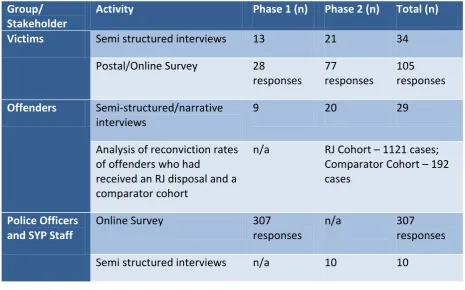
[image:11.595.65.531.420.710.2]The methodology used a combination of qualitative semi-structured and narrative interviews, surveys, and focus groups across the range of participants and stakeholders, together with a quantitative analysis of reconviction rates. During the course of the evaluation, the fieldwork was amended from the original specification in response to changing requirements to include: additional perspectives from magistrates in Phase 1; an additional analysis of police officer perceptions and a quantitative analysis of re-offending rates for Phase 2. This resulted in a reconfiguration of the fieldwork to ensure that these additional requirements could be captured. For the two phases the following fieldwork was conducted:
Figure 1: Evaluation Fieldwork
Group/ Stakeholder
Activity Phase 1 (n) Phase 2 (n) Total (n)
Victims Semi structured interviews 13 21 34
Postal/Online Survey 28
responses
77
responses
105 responses
Offenders Semi-structured/narrative interviews
9 20 29
Analysis of reconviction rates of offenders who had
received an RJ disposal and a comparator cohort
n/a RJ Cohort – 1121 cases; Comparator Cohort – 192 cases
Police Officers and SYP Staff
Online Survey 307
responses
n/a 307
responses
Semi structured interviews n/a 10 10
12
11 | P a g e Group/ Stakeholder
Activity Phase 1 (n) Phase 2 (n) Total (n)
Focus Groups n/a 5 focus
groups13
5 focus groups
Community Participant
observation/guided discussion
5 meetings n/a 5 meetings
Survey n/a 2792
responses
2792 responses
Magistrates Semi structured interviews 8 n/a 8
Analysis of performance and offence data
Documentary review of procedural and strategic documents
Structured observation of one Community Justice Panel
Throughout the evaluation, the research team captured and monitored diversity issues relating to participants in the research, both in analysing the characteristics of offenders and victims for whom we had details and in attempting to ensure an appropriate range of
participants within our sampling strategy (discussed in more detail below).
Qualitative interviews were transcribed verbatim from digital recordings and analysed using a thematic approach. This involved working through a number of distinct though
interconnected phases (familiarisation, identifying a thematic framework, coding data, and capturing and mapping interpretation). The process was an iterative process between the key researchers involved to provide a checking mechanism for the interpretation of the data thus adding to the validity of the results. The observations and outputs from the group discussions during the community meetings were captured using a standard proforma and again analysed thematically by the research team.
For the quantitative reconviction analysis, the aim was to identify the effectiveness of the South Yorkshire Restorative Justice Programme in reducing reconvictions following a
restorative justice disposal. This was assessed through comparison with a group of offenders who had received disposals that were identified as those a recipient of a restorative justice disposal would have received, had the SYRJ programme not been in place. The comparator
13
12 | P a g e
cohort was drawn from people committing burglary, theft, violence against the person and affray.
Reconviction was measured by matching records of those receiving restorative justice or comparison disposals by name, with reconviction data held by South Yorkshire Police. Matching was completed using first name, last name, gender and age. Where no match was identified in subsequent re-convictions, the data managers were confident that this
represented no further re- o i tio s, athe tha a false egati e o -match.
Re-convictions were tracked in both groups for a 12 month period following the initial disposal.
3.1.1
Sampling - Interviews
It was an important consideration that the sample of interviewees selected for the research would enable us to capture views of offenders and victims across a range of variables
including ethnicity, age (including young people and adults); gender; corporate and personal incidents; Street/Instant RJ and restorative conferencing; and representation from all four areas14. While we attempted to achieve as balanced a sample as possible across the two phases, our available pool of victims and witnesses was limited to those for whom South Yorkshire Police had accurate contact details and who, having been contacted by South Yorkshire Police, gave consent for their details to be passed on to the evaluation team. The sample was further reduced as a number of victims and offenders later withdrew their consent or failed to respond to repeated attempts to contact them. We could not identify from the sample what form of RJ intervention victims and offenders had received and so
e e elia t o i ti s a d offe de s o epo ts/des iptio s i elatio to this.
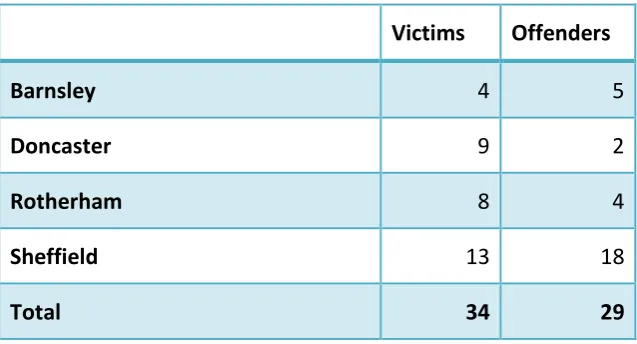
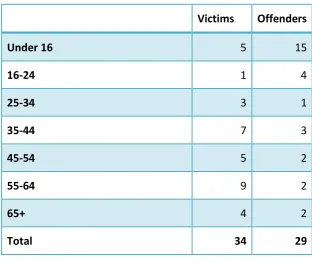
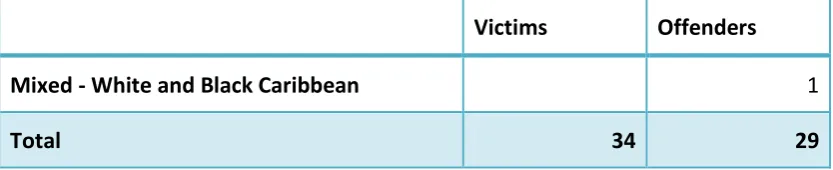
[image:13.595.67.386.530.702.2]The following shows a breakdown of participants across the range of variables:
Figure 2: Victim and Offender Interviewees by area
Victims Offenders
Barnsley 4 5
Doncaster 9 2
Rotherham 8 4
Sheffield 13 18
Total 34 29
14
13 | P a g e
Figure 3: Victim and Offender Interviewees by age range
Victims Offenders
Under 16 5 15
16-24 1 4
25-34 3 1
35-44 7 3
45-54 5 2
55-64 9 2
65+ 4 2
[image:14.595.71.380.408.524.2]Total 34 29
Figure 4: Victim and Offender Interviewees by Gender
Victims Offenders
Female 18 13
Male 16 16
Total 34 29
Figure 5: Victim and Offender Interviewees by Ethnicity
Victims Offenders
White British 31 27
Asian 1
Black 1
British 1
[image:14.595.80.483.580.750.2]14 | P a g e
Victims Offenders
Mixed - White and Black Caribbean 1
[image:15.595.67.484.73.158.2]Total 34 29
Figure 6: Type of RJ intervention
Victims Offenders
Instant/Street RJ 29 25
Conferencing15 5 4
Total 34 29
For the agist ates i te ie s (n=8), a volunteer sample of two representatives from each
a ea e e e uited He Majest s Cou t a d T i u als “e i e HMCT“ fo “outh
Yorkshire.
The Police Officer interviews (n=10) were conducted specifically to explore the experiences and perceptions of RJ conferencing. For these interviews, a sample of those who had received RJ conferencing training was selected by SY Police; within that sample, half of the officers interviewed had used RJ conferencing and half had not.
3.1.2
Sampling - Surveys
For the Victim Survey, in Phase 1, the survey was sent by post or email to all 52 victims and there were 28 responses representing a response rate of 54%16. In Phase 2, the survey was sent to all victims for whom South Yorkshire Police had contact details (n=588) and there were 77 responses representing a response rate of 13%. The overall response rate across both surveys was 16%. The full breakdown of respondents to the Victim Survey is at Appendix 1.
The Officer Survey was placed on the staff intranet and thus available for all police staff to respond; 307 responses were received. The full breakdown of respondents to the Officer Survey is at Appendix 2.
15
Note: The RJ model is not as clear cut as is suggested by these two categories (see Section 5.1). Thus conferencing may refer to a range of activities which is more involved that Instant/Street RJ but falls short of the original model of full restorative conferencing
16
15 | P a g e
The Community Survey was not undertaken directly by the evaluation team but we supplied a small number of questions specifically related to Restorative Justice for inclusion in the Your Voice Counts survey17. The survey was distributed to 19,140 people. 2792 responses were received equating to a response rate of 14.6% and with a confidence interval of 1.8518
3.1.3
Sampling - Focus Groups and Observations
Community Focus Groups and PACT meetings were selected to represent each of the four areas19. Groups with a record of particularly high attendance were selected in consultation with the Safer Neighbourhood Teams in order to ensure maximum community engagement. An additional group was attended in Sheffield in view of the relative larger size of the area.
Five police officer focus groups were conducted to represent each of the four areas with an additional group in Sheffield, again, in view of its larger relative size. Groups were selected by SY Police area RJ champions who aimed to recruit groups with a cross section of ranks, roles and experience of RJ. Inevitably, this was not always possible and sampling of the groups was, in some part, driven by availability of officers on the day. For the Sheffield groups, the evaluation team participated in two groups which had been convened for internal review purposes as this was felt to offer the best opportunity to gather together a cross section of officers.
3.1.4
Sampling - Reconviction Analysis
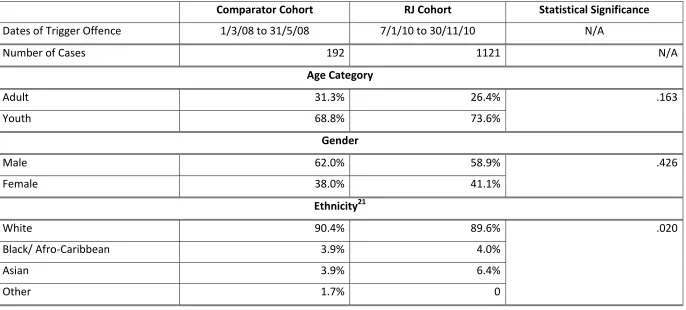
The following tables show the composition of the two cohorts used for the reconviction analysis20
17 Your Voice Counts is a quarterly survey conducted on behalf of the South Yorkshire Police, South Yorkshire
Police Authority and South Yorkshire Fire and Rescue Service. It is sent to a random sample of residents in South Yorkshire (aged over 16 years) and is administered and analysed by the Business Change Directorate in South Yorkshire Police.
18
This means that we can be 95% confident that had the whole population of South Yorkshire responded then the responses would be within ±1.8% of these results.
19 2 in Sheffield; 1 in Barnsley; 1 in Doncaster and 1 in Rotherham 20
16 | P a g e
Figure 7: Composition of RJ and Comparator Cohorts
Comparator Cohort RJ Cohort Statistical Significance
Dates of Trigger Offence 1/3/08 to 31/5/08 7/1/10 to 30/11/10 N/A
Number of Cases 192 1121 N/A
Age Category
Adult 31.3% 26.4% .163
Youth 68.8% 73.6%
Gender
Male 62.0% 58.9% .426
Female 38.0% 41.1%
Ethnicity21
White 90.4% 89.6% .020
Black/ Afro-Caribbean 3.9% 4.0%
Asian 3.9% 6.4%
Other 1.7% 0
21
17 | P a g e
Figure 8: Disposals received
Comparator Cohort RJ Cohort
Reprimand 98 (50.8%) Apology 951 (85.4%)
Simple Caution 35 (18.1%) Compensation 130 (11.7%)
Conditional Caution 2 (1.0%) Reparation 10 (0.9%)
Warning 11 (5.7%) Other 22 (2.0%)
Warning – 1st Offence 8 (4.1%) Warning – 2nd Offence 14 (7.3%)
Penalty Notice 24 (12.4%)
18 | P a g e
4.
PROFILE AND PERFORMANCE
In order to give some background and context to the usage of RJ across South Yorkshire and to inform understanding of how this has changed during the lifetime of the project, we have presented below a snapshot of profile and performance data22. This indicates:
1. The total number of RJ cases from March 2010 to January 2012, subdivided by area. 2. The monthly breakdown of RJ cases for this period subdivided by area to show
trends in usage over time
[image:19.595.68.420.321.502.2]The first RJ cases were undertaken in March 2010 and between March 2010 and February 2012, a total of 3,357 interventions have been undertaken. This is broken down across the four areas as follows:
Figure 9: Total RJ Cases – March 2010 to February 2012
Area Number of Cases Percentage of total
cases
Barnsley 755 22%
Doncaster 528 16%
Rotherham 558 17%
Sheffield 1,516 45%
Total - All Areas 3,357 100%
The following chart shows the monthly breakdown of RJ cases for each area:
22
19 | P a g e
20 | P a g e
Figure 10 shows the trends in numbers of cases over time. Clearly this will fluctuate from month to month but, it would be expected that there would be an upward trend in the number of cases from the beginning of the programme, with perhaps a levelling off as the intervention became established. Numbers of cases will also be affected by: widening the scope of RJ (e.g. using it for a wider range of crimes) and may also be impacted by activities of the RJ project team in communicating RJ many of which have taken place over the period. Increases in the number of cases have been particularly noticeable in Sheffield, Rotherham and Barnsley. Since June 2011, Sheffield has shown a marked increase in their numbers of
‘J ases; Ba sle s u e s ha e, apa t f o a dip i August , sho a stead
increase since the programme began; Rotherham who were reported as showing a
downward trend in the first phase report have reversed this trend in the months following
that epo t; Do aste s ase u e s ha e sho the least flu tuatio o e the pe iod.
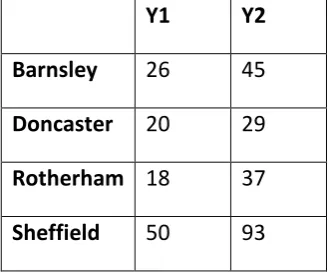
Comparing the average number of cases over the two years of operation shows that all have shown a significant increase in the average number of RJ cases in the second year of
[image:21.595.66.231.383.520.2]operation of the programme when compared to the first. The percentage increase is greatest in Rotherham, followed by Sheffield, Barnsley and then Doncaster.
Figure 11: Average Number of Cases by Area - Year 1 and Year 2
Y1 Y2
Barnsley 26 45
Doncaster 20 29
Rotherham 18 37
21 | P a g e
5.
FINDINGS
This section brings together the main findings which have emerged from the analysis of the qualitative interviews, surveys, focus groups and observations and quantitative analysis of reconviction outcomes described above across the following key areas:
The Restorative Justice Model in South Yorkshire
The Restorative Justice Process
Impact and Outcomes
Conclusions and recommendations emerging from the analysis are consolidated in Section 6.
5.1
The Restorative Justice Model
This section will look at the management, governance and scrutiny of the Restorative Justice programme and how this has developed over the life of the programme. It will then
consider the model itself and how this has changed and developed over time, the awareness and understanding of police officers and their preparedness to use RJ, including barriers and enablers to usage. Finally it will examine awareness and understanding of the model by victims, offenders and communities.
5.1.1
Management, Governance and Scrutiny
The RJ model in operation in South Yorkshire was established in partnership between South Yorkshire Police and the Local Criminal Justice Board (LCJB) in 2009. A project team oversaw implementation which involved a range of strategic and local delivery partners. The project team was important in ensuring that appropriate and workable procedures were achieved and front line staff trained and effective governance and scrutiny established. Governance during implementation of the programme was provided by an Executive Board who
provided strategic oversight of the implementation; a project steering group who
contributed to the implementation of the programme and provided direction and leadership to the District Implementation Groups who developed and co-ordinated the implementation of the programme within the Safer Neighbourhood Policing Framework23.
Although the implementation project team was disbanded in summer 2011, it was
considered important to retain ongoing management of the programme at Superintendent level within the Criminal Justice Administration Department. At the time of the first phase of the evaluation, it was envisaged that governance for the RJ programme would be transferred to the Reducing Reoffending subgroup of the LCJB with an additional Task and
23
22 | P a g e
Finish group to oversee operational delivery of Phase 3 of the programme24. The District Level Implementation groups and RJ champion roles within districts were to remain. However, following discussions with LCJB in September 2011, the RJ Steering Group was reinstated (initially until March 2012) in order to maintain momentum; ensure effective co-ordination and sharing of best practice.25 It is clear that there have been changes to the model of RJ (see below) and that the model continues to be adapted in response to
changing priorities. Governance was a particular issue raised by magistrates during Phase 1 of the evaluation. Of particular concern was the importance of continued scrutiny of
numbers and types of offences for which RJ has been used to ensure that RJ continues to be used appropriately and in line with agreed criteria. Clearly as the programme develops and changes, this continued dialogue with magistrates is important in ensuring their continued support for the programme.
5.1.2
The Changing Model of RJ
When the evaluation was commissioned it was envisaged that there would be two distinct phases to the SYRJ programme – Street/instant RJ and RJ conferencing for more complex cases. Street/Instant RJ was rolled out extensively across the force with training being delivered to more than 1700 front line staff. Specialist Restorative conferencing training was delivered to a smaller number (160) staff to equip them to deal with more complex Restorative Justice cases. In reality, there have been relatively few restorative conferences undertaken by these officers and the model of RJ has thus developed somewhat differently than was originally intended. What seems to have emerged in practice is a continuum of RJ approaches which incorporates Instant/Street RJ and conferencing but also includes hybrid approaches which fall somewhere between the two – i.e. they are a little more involved that Instant/Street RJ but fall short of a full-blown RJ conference. Officers, trained in
conferencing, described circumstances where, for example, there might be an opportunity
to ediate a i fo al o fe e e et ee i ti s a d offe de s. The des i e using the restorative conference process as a guideline but using, for example, a shortened version to ensure that they maintain the momentum with victims and offenders. Where conferences are used, this seems to be most commonly within school/college contexts where administration and organisation of the conferences is seen as more straightforward
o fo eigh ou hood disputes a d si ila a ti ities he e the e is o lea offe de and
i ti .
This, then, represents a clear move away from the original model envisaged in the early programme documentation in the following ways:
24
Phase 3 of the programme was beyond the remit of this evaluation and includes the use of restorative approaches within IOM cohorts and RJ as a specified activity as part of a sentence from the court.
25
23 | P a g e
The original model as an alternative to prosecution for low level offences where the offender makes an admission of guilt has been extended to use in
neighbourhood disputes and other circumstances where there is no clear distinctio et ee offe de a d i ti a d othe o - i e e e ts
The two models of RJ proposed – Instant/Street RJ and Restorative Conferencing
–a e ei g adapted a d fle ed o the g ou d , ep ese ti g a o ti uu of approaches rather than two distinct models.
While it may be an inevitable consequence that programmes emerge and develop over time, and while there might be advantages in having a more flexible and wider range of RJ
disposals, such divergence raises the following issues:
There may be a lack of a consistent approach across the force and RJ may be used differently in different areas.
Magistrates interviewed in Phase 1 were particularly concerned about the potential escalation of usage of RJ disposals and in ensuring scrutiny of RJ as it became more widespread. Inconsistency in approach may thus reduce
confidence in RJ amongst partners and the community.
There is a risk of confusion amongst police officers u de sta di g of ‘J a d its appropriate use. Some poli e offi e s des i ed it as halle gi g to keep up with the changes in the model and some officers indicated that they felt that the
theo u de pi i g ‘J as i da ge of getti g lost as its e it ide ed a d
became more blurred.
Issues were raised by front line police staff about the additional bureaucracy involved in extending RJ to non-crimes.
It will be important to ensure clarity between a dispute and an offence to avoid
the pote tial isk of et- ide i g
These are important issues and there are good examples of SY Police preparing additional materials such as Frequently Asked Questions, and making use of RJ Champions within the force to clarify the changes that are taking place. Given the risks highlighted above, it is clearly of paramount importance that this work is expanded and continued and this is reflected in the recommendations in Section 6.
5.1.3
Usage, Awareness and Preparedness amongst Police Officers
Usage of RJ generally seems well embedded across the force. The Police Officer survey conducted in Phase 1 indicated high levels of satisfaction with the relevance of the training in both Street/Instant and RJ and Restorative Conferencing and the level of skills and
24 | P a g e
senior staff at district and Chief Constable/ACC level26 and very few staff indicated that they had been inhibited in using RJ as a result. While police officers in the second phase of the evaluation supported the view that there was support at a senior level for RJ27, concerns were expressed at a perceived lack of understanding of RJ amongst certain sections of the police force. This was highlighted specifically in connection with Inspectors and Custody Sergeants. There was a perception amongst a number of officers that these staff were not sufficiently aware of RJ28. This created a potential barrier to usage of RJ as these staff were in positions which may require them to provide advice on the suitability of use of RJ or which enabled them to disregard RJ as an option or reject applications to use it.
In terms of training, there was also some confusion in the second phase of the evaluation as to whether or not PCSOs had received training in RJ and/or what their role was in relation to RJ. Many officers felt appropriately trained PCSOs had an important role in RJ and could be used more effectively, for example, in following up with victims, checking on compliance, or in managing the administrative requirements associated with RJ conferencing, as well as handling non crime RJ interventions. It is our understanding that PCSOs have received level one RJ training but the confusion amongst police officers about this and the PCSO role indicates that further training or clarity in relation to PCSOs role in RJ may be required.
In Phase 1 there were some indications from survey responses that officers had been discouraged from using RJ because they felt it was in conflict with their district targets in terms of sanction detection rates. New reporting arrangements had been implemented during the Phase 1 evaluation which aimed to remove concerns about the impact of RJ disposals on sanction detection rates; however these were not widely understood. We revisited this in Phase 2 and, encouragingly, this seemed to have been effectively communicated to officers and so no longer created a potential barrier to usage of RJ.29
Within the Phase 1 survey, those officers who had been trained in RJ indicated that they felt more empowered and that using RJ enabled them to make use of their professional
judgement to a greater extent than other approaches. This was largely supported within the police focus groups and interviews conducted during Phase 2 with officers indicating that RJ offered them another option when dealing with low-level offenders and enabled a more common-sense and proportionate approach for these offences. While appreciating that the approach did leave room for professional discretion, some officers felt that some of the constraints put some limitations on this:
26
97% of respondents felt that Senior District level staff were supportive of RJ and 99% of respondents felt that Chief Constable/ACCs were supportive.
27
Though see also comments below relating to use of Restorative Conferencing
28
Either as a result of lack of training or insufficient understanding due to a lack of experience of using RJ directly
29
25 | P a g e
The imposition of specific criteria as to eligibility reduces the value of the programme as it removes an element of discretion and means that some incidents ideally suited to the RJ process have to be dealt with via other means. (Police Constable, Sheffield)
Earlier in this chapter, we discussed some of the risks inherent in widening the approach and offering more flexibility in circumstances in which RJ can be used: mitigating these risks while offering officers appropriate levels of professional discretion will be an important factor in the ongoing success of RJ.
As we indicated above, Restorative Conferencing has, to some extent, been used less (or differently) than was originally envisaged in the implementation model. The most
commonly cited barrier to using Restorative Conferencing was the time and administrative effort required to organise and run a conference and the difficulty of fitting this around shift patterns and other commitments:
The fear with conferencing initially felt through the training – how on earth is a police
officer that only works 8 hours a day and is expected to pack a lot into that 8 hours so having to run backwards and forwards arranging a conference, how are we going to be able to plan and organise that kind of thing...We entered conferencing thinking
this sounds great in theory but in practice how are we going to be able to do that –
it’s a le gth p o ess a d all that fo a d pla i g Poli e Co sta le, Barnsley)
Police Officers felt particularly strongly that the arranging of conferences, venues etc was beyond their remit and not a good use of their time. There seemed to be a greater momentum to use conferencing in school settings where the administrative burden of arranging the conference was felt to be less and, in some cases, assisted by the school.
Additionally, there is a perception that senior staff can be unsupportive of conferencing and have little awareness of the time they take. Police officers felt that most senior staff have neither been trained in, nor observed a conference and thus have less understanding of what is involved in conferencing than in, for example Street RJ:
With regional senior staff, they are supportive of RJ but it feels like they are more supportive of Street RJ, in the sense that they do not seem to understand the time
constraints you face when doing a conference – that is probably only because the ’ e
ot ee o the ou se a d do ’t app e iate the ti e it does take Poli e Co sta le,
Doncaster)
26 | P a g e
Co fe e i g is ’t sho as a igge ti k i the o ...it’s a assi e a ou t of o k but there is no more to show for it in terms of statistics. (Police Constable, Rotherham)
For some officers, the time taken to set up conferences also resulted in a loss of momentum and a subsequent failure of all relevant parties to attend, or failure to reach a resolution. Others saw the work they had done to set up a conference fall apart due to priorities given to more urgent police operations:
We are still front line officers, but if all hell breaks loose, you get your kit on and you go out there and do what the public want - bring back order. So, in August last year, 8 of my team dropped everything and went to support the Met. So, you have done all that mediation, all that assessment, you have checked up the availability of all the local community centres and then you have to let all those people down (Police Constable, Sheffield)
Officers were clear that they saw conferencing in particular as being unsuited to the role of response team/patrol officer. The length of time and the more long term nature of
Restorative Justice interventions were seen to be more suited to the responsibilities of Safer Neighbourhood Team officers. While this view was held particularly strongly in relation to conferencing, it was, to some extent, applied more widely to all RJ interventions.30
There was a strong sense amongst police officers that conferencing represented significantly more of a cultural shift than Street RJ and that this was an important barrier to its use amongst police officers. While officers could see how Street/Instant RJ fit with their role and indicated that it felt like hat e do a a , restorative conferencing does not feel like a natural fit to many officers either culturally or organisationally. Some officers
indicated that they were more comfortable in dealing with issues immediately, rather than the protracted process of organising a restorative conference:
The general mindset of police officers, well- the quicker and more efficiently I can get rid of this job the better- Street Justice fits that better than conferencing (Police Constable, Barnsley)
Additio all , hile the sa that o fli t esolutio as lea l a pa t of a poli e offi e s
role and skill set, some officers felt that restorative conferencing took this to a different level and one which, they felt would be more suited to an external agency. Sheffield officers
30
27 | P a g e
already have this facility as a result of the availability of Community Justice Panels31 which gives police officers in Sheffield an alternative to running their own restorative conferences. Officers in other areas indicated strongly that this would be a welcome resource:
I think [street] RJ is fantastic, I think any officer can do it, but when it comes to full conferencing, mediation and assessment it would be far more beneficial for us to put some of our budget away to pay for a secondment with someone like Remedi so we can do a referral and for them to undertake it - like they do with low level Social Care.
We do ’t do A ge Ma age e t lasses do e? “o akes se se...I do suppo t it %
- I just do ’t thi k it should e us that does the o fe e i g Poli e Co sta le,
Doncaster)
Some officers felt that it was important to retain control of conferences within the police force as they provide an important enforcement role in the event of non-compliance but saw a much bigger role for PCSOs – either in administering the organisation of them or in running them for non-crime events/neighbourhood disputes. For many officers,
conferences seem to be associated most strongly with non-crimes and neighbourhood disputes or where there is no clear admission of guilt and this also seems to be related to their opinions on the appropriateness of the police force in dealing with such events.
There are clearly, then, a number of structural and cultural barriers to Restorative
Conferencing which may go some way to explaining the divergence of the model from the original implementation plan. In the impact section below, we indicate some of the benefits and cost savings which can result from effective use of RJ conferencing. In the light of this and the findings above, strategic consideration should be given to clearly defining the role of RJ conferencing within SY Police, the role of police officers within this, including the role that PCSOs might play and the future roll out of neighbourhood justice panels.
5.1.1
What Types of Offenders/Offences is RJ Suitable for?
As we indicated in the first phase of the evaluation, there was strong support from victims surveyed about the use of RJ for first time offenders and young offenders and low level offences. This view was shared by respondents to the Officer Survey, many of the community groups and magistrates:
I do think at the level of offences they are dealing with, with the Street Level RJ, I do think this is a reasonable approach...provided that it is kept to an appropriate level of lo le el offe es I pe so all do ’t ha e a g eat deal of o e a out that, concern would be if RJ, if you had pre court diversions for more serious offences
31
28 | P a g e
which I know is not the intention of the South Yorkshire initiative (Magistrate,
Sheffield)
It was important to magistrates, victims and community participants alike that RJ was not offered "inappropriately" to offenders. The victim surveys indicated that 79%32 of
respondents thought that RJ was not an appropriate disposal for offenders who had
committed more than one offence. They were content that it was appropriate for first time, low level offenders but did not want it to be "abused" by offering it to offenders who had previously been convicted for similar offences. There was a strong sense from victims and communities that an RJ disposal in circumstances where the offender had been previously convicted would be considered a soft option and likely to be detrimental to the safety of the wider community:
I did ’t k o ho the pe so as I as deali g ith, I had o i di atio of hethe he was a first time offender or what, I had to base my decisions on my experience
a d I ould ’t, I ea he ight ha e ee as I said ea lie , he might have been
involved with an ASBO or a previous criminal offence of a similar nature and I am not doing anything positive to help the community by taking what would appear to be
you know a soft option. (Victim, Doncaster)
Community groups felt strongly that RJ was only suitable for low level offences and first time offenders, with a number suggesting that it would be most useful for young offenders. This was supported by the Community Survey in Phase 2 of the evaluation which indicated that 75% of respondents33 supported the view that RJ should not be offered to offenders who had committed more than one offence. One community group indicated that they would want to be sure that police had carefully considered the offender and the offence before offering RJ – being concerned about the possibility of repeat victimisation. While there was strong evidence in a number of the community groups of high levels of trust in the police to make those judgements, one community group were less convinced, believing that in their communities, many offenders who might be first time offenders were, in fact, repeat offenders who had just not been caught. This led to a high level of mistrust in the group as to the applicability of RJ in their community.
Police staff were more likely than other groups to see those with previous convictions as being suitable for RJ and from the qualitative responses to the survey, this generally related to the police being empowered to use their professional discretion to assess the
appropriateness of an RJ intervention. Police officer focus groups and interviews
undertaken in the second phase supported this view and the section below explores in more detail what police officers take into account when deciding on whether to use RJ or not.
32
n=76
33
29 | P a g e
5.1.2
Victim, Offender and Community Awareness/ Understanding of the
Model
From our initial research for the first phase of the evaluation we indicated that, within the community groups observed, there were very low levels of awareness of RJ and very few people had heard of it, particularly in relation to their communities. A very small number of those attending PACT meetings had come into contact with RJ in relation to jobs or other positions – e.g. magistrates, local councillors or in connection with their work with
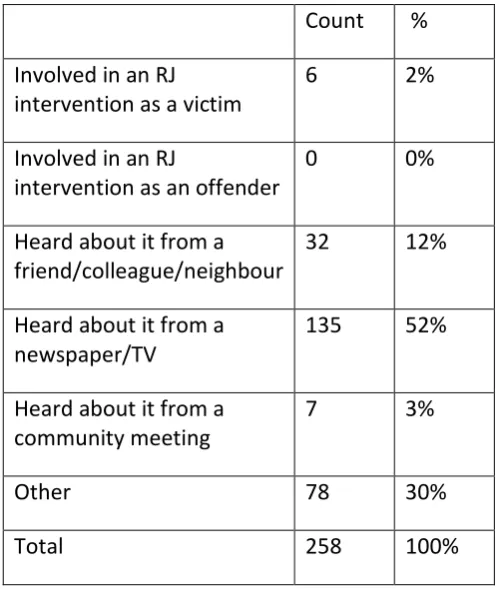
[image:30.595.65.314.376.671.2]Neighbourhood Watch who had attended a seminar on RJ. These low levels of awareness were supported by research within the second phase of the evaluation where only 10%34 of respondents to the Your Voice Counts survey indicated that they had heard of the SYRJ Programme. This level of awareness was relatively consistent for all of the areas with 8% of respondents having heard of the programme in Barnsley and Rotherham; 10% in Doncaster and 11% in Sheffield. The table below indicates how respondents became aware of the programme – most commonly via newspaper or TV coverage and again this was similar across all districts.
Figure 12: How respondents became aware of the SYRJ Programme
Count %
Involved in an RJ intervention as a victim
6 2%
Involved in an RJ
intervention as an offender
0 0%
Heard about it from a friend/colleague/neighbour
32 12%
Heard about it from a newspaper/TV
135 52%
Heard about it from a community meeting
7 3%
Other 78 30%
Total 258 100%
34
30 | P a g e
Magistrates had attended a training day on RJ and, from that, and via representation on the project executive board were well informed about what RJ was and how it was being
implemented in South Yorkshire. However, amongst victims and witnesses, very few had any awareness of RJ prior to their specific involvement and awareness of both victims and offenders was low even after involvement in RJ, though this was more marked amongst offenders than victims. The term, Restorative Justice, was unfamiliar to many of those interviewed and understanding of the ideas underpinning it was also limited. The impact of this is discussed more fully in the section on processes below.
Clearly then wider awareness of the SYRJ Programme remains low across the range of stakeholders. Greater general awareness of RJ was felt by Police Officers to be important in communicating RJ to offenders and victims and by magistrates in ensuring that the public
u de stood its usage as a p e- ou t di e sio a d did ot ega d it as e el a soft optio for offenders. One of the recommendations in Phase 1 of the evaluation related to the communication of the programme and ensuring community engagement and this remains an important consideration.
5.2
The RJ Process
Experiences of the RJ processes and procedures can have a significant impact on
perceptions of, satisfaction with and confidence in the RJ initiative. This section will look at the process from the point of view of police officers, victims and offenders. It draws on the offender and victim survey/interviews from Phase 1 and 2 and the police officer
survey/interviews and focus groups and evaluates views in relation to the crucial stages of communication prior to becoming involved, motivation to participate in an RJ intervention, support throughout the process and the follow up processes. Where issues were identified in the first evaluation report but remain valid following the second phase of fieldwork, these have been retained within the section.
5.2.1
Communication of the process prior to engagement
As indicated in the phase 1 report, the decision to participate in the Restorative Justice intervention is made by victims and offenders following an interview with a police officer trained in the use of Restorative Justice. As mentioned above, the ways in which the process is communicated to victims and offenders is key, therefore the information
stakeholders receive from officers during the initial interviews is particularly important. The importance of this stage was indicated by police officers who described the communication and pre-preparation work they conducted as key to a successful RJ experience for victims and offenders which increased the chances of a successful outcome.
31 | P a g e
The process
The circumstances
That the process will be recorded
That the record may be shared with partner agencies
That the offender has not received a criminal conviction
That the RJD will not usually be disclosed for employment reasons
Warning of available options open to the police should the offender re-offend or fail to comply with any agreed actions35
The victim survey results, across both phase 1 and 2 of the evaluation indicate that, a majority of victims36 were very positive about the clarity with which the process was
explained to them by the police officers who attended and 85%37 of victims agreed/strongly agreed that the RJ process was straightforward. Clearly, then, the vast majority of victims felt that they understood what RJ was, and what would happen if they took part and felt that the police explained this clearly and objectively to them without pressurising them into taking part:
It was explained very well because the officer that came was absolutely brilliant...he sat down he explained everything, he said he would get to the end of the enquiry and he wouldn't let it go 'til he got to the end of it, and then he explained it very, very well. I was given enough time. And I think the nice part about it was nobody was forcing me to do it (Victim, Sheffield)
However, a small number of victims reported that they felt pressured by the police officers into agreeing to an RJ intervention and, in some cases, perceived that the police officers had already decided that RJ was the most appropriate disposal regardless of the victims' views and in some cases had left the victim feeling that an RJ disposal was the only feasible route:
He made it sound like it were the only route we could do (Victim, Doncaster)
The SYRJ Programme is a victim-led programme and it is important that victims agree willingly, and without feeling pressured to do so by the police officers who attend the incident. While this may only happen in a minority of cases, it underlines the importance of reinforcing police officers' training in this respect and in re-stating the principles behind the RJ programme.
Conversely, one victim interviewed expressed some discomfort at being put in a position where they had to make the final decision between RJ and arrest. This was a difficult (though perhaps not unusual) situation as the victim knew the perpetrator personally and,
35
South Yorkshire Police Procedural Instructions (April 2009)
36
69%; n=68
37
32 | P a g e
as a result the victim reported they would have been more comfortable had the decision not been left up to them:
I'd rather it wasn't up to me to be honest cos it had put us in an awkward situation
e ause e k e the fa il , a d I did ’t a t to make that decision (Victim,
Sheffield).
As we indicated above, given the importance of victims being free to make this decision without undue pressure from police officers, this is not to suggest that the police should have necessarily handled this differently. It does however suggest that officers need to be aware of, and manage, potential sensitivities where a pre-existing personal relationship between victim and offender is identified during the RJ process.
In respect of offenders' understanding of the process the findings from the first phase of fieldwork were reinforced by the second phase: while the vast majority of offenders interviewed understood that participating in RJ meant they would avoid a criminal
conviction, they generally showed only a modest understanding of the principles behind the RJ process. Offenders' awareness of the consequences of non-compliance was patchy and indeed, some showed no awareness that they had participated in a Restorative Justice intervention at all.
It should be noted two offenders interviewed during phase 2 reported that their agreement to participate in RJ was given when it was communicated to them by the police that the offence would not show up on an enhanced CRB check (both offenders had employment where these checks were an ongoing requirement). This was also raised in the police officer focus group. It seems that in this case the information the offenders received was incorrect and that RJ disposals would be included in an enhanced CRB check. This indicates the need for clear guidance on this issue for police officers. As we indicated in the first report, a leaflet or other information which clarified issues such as this would be of benefit to
ensuring that victims and offenders fully understood the implications of participating in RJ.
In both phases of the fieldwork, we identified a small number of offenders who did not consider themselves to be guilty of an offence or considered themselves to be jointly culpable with the "victim".
She was as guilty as was. I just agreed so it would go away (Offender, Sheffield).
Although there are some theorists who suggest that RJ does not require the assumption of the roles of victim and offender (Shapland et al 2011)38, the process defined by the SY RJ Programme is clear about the importance of acknowledgement of guilt on the part of the
38
33 | P a g e
offender. However, as discussed in the previous section, the model is increasingly being used for non-crimes and neighbourhood disputes where there is less likely to be a clearly defined victim and offender. If, as seems to be the case, this is becoming an established part of the SYRJP model, then this needs to be reflected in clear guidance about the use of RJ for non-crimes and in documentation used to report these: the standard form used for this purpose (the CJU10), for example, does not include a category for non-crime and requires individuals to be allocated as either victim or offender.
Despite the issues identified above, overall, most of the offenders and victims were satisfied with the way the processes were explained at the outset. It is beyond the remit of the evaluation to quantify the extent to which breakdown in any aspect of the process occurred and these are reported here to provide insights into possible opportunities for improvement to the process.
5.2.2
Motivation for Involvement
It was reported in the phase 1 evaluation report that the motivations of victims (who were interviewed) to engage with RJ were similar to those identified in other studies (see, Shapland et al, 201139). Results from the victim's survey in phase 1 showed that the most commonly cited motivation (50% in phase 1, and 40% in phase 240) for participating in RJ was to stop the offender from getting a criminal record. Similarly, a number of those interviewed in both phases perceived that participating in RJ made it more likely that the offender would desist from future criminal activity and were also keen that the offenders were given another chance - this was particularly true in the case of younger offenders and was thus more marked in Phase 2 where a higher number of the offenders interviewed were young people
I do ’t a t hi to get a e o d, I do ’t a t hi to e i t ou le ith the poli e a d get him arrested, I just want him to be aware that he can't carry on doing what he's
doi g … a d not have any consequences (Victim, Sheffield).
The ability to influence the punishment of the offender received was also an important motivating factor for 42% 41of respondents to the victims' surveys. In interviews, victims were clear that RJ was more likely to provide an opportunity to receive recompense or other reparation and, that the issue was likely to be resolved more quickly than if the offence had been dealt with by other means:
39
Shapland, J., Robinson, G. and Sorsby, A. (2011) Restorative Justice in practice: evaluating what works for victims and offenders. London: Routledge
40
In response to completion of the phase 1 victim's survey, we added additional questions to the phase 2 survey; however this has meant that the surveys cannot be combined in these additional question sets.
41
34 | P a g e
I think I would have probably lost out on the payment or it might have gone to court and then I would have got paid that way, and that would have took a bit longer (Victim, Rotherham).
In some cases, as we indicated in Phase 1, victims and community groups also felt that RJ offered a way of achieving "justice" which might not be available by other means:
They'd have got a slap on the wrist and that would have been the end of it (Victim, Doncaster).
In the victim survey in phase 1, 23%42 of survey respondents cited the opportunity to confront the offender as being a motivational factor for involvement with RJ processes, and in phase 2, this remained similar at 22%43; This was more commonly cited in the second phase of victim interviews than the first but it is clear that having the opportunity to express their distress face-to-face with the offender is a significant motivational factor for victims. This can be very frustrating for victims when the opportunity does not materialise - for example due to a break down in the process and again underlines the importance of communicating the process at the outset and managing risks and expectations carefully throughout.
However, as we indicated in Phase 1, and in line with previous studies, some victims do not want to meet the offender usually because of concerns about possible re-victimisation. These findings were supported in the victims' interviews conducted in phase 2, where some victims reported declining the opportunity of a face-to-face meeting. It has been highlighted by Sherman and Strang (200744) that, whilst there is consistent evidence that victims benefit from face to face RJ conferences, the evidence of the effect of indirect forms of RJ is less clear. As we indicated in Phase 1, there was no clear evidence of lower levels of satisfaction amongst victims who had opted for indirect forms of RJ and victims interviewed welcomed the option of a formal written apology, rather than a face to face meeting with the offender. It is vitally important however that such apologies are appropriate and are followed through by offenders and this is covered in more detail in the section below.
Though the motivation for the vast majority of offenders to engage with RJ was to avoid a criminal conviction, for some, their lack of awareness of RJ processes meant it was difficult to ascertain that there had been a clear and considered decision to become involved. As in
phase , a s all u e of offe de s o side ed the sel es as ot ei g guilt of the
offence and agreeing to be involved in RJ merely as a way of speeding up the process:
42
n=6
43
n=17
44
35 | P a g e
I had no leg to stand on to try and fight my side of the story. [They] weren't really interested in my dispute over the case; they just wanted me to write this letter of apology (Offender, Sheffield).
As we indicated above, RJ in these circumstances is unlikely to be satisfactory for either the victim or the offender and may point to the need to re-state some of the guidance for officers.
Police Officers reported that their decision to offer an RJ disposal was guided by the results of their initial assessment and the SYRJP guidelines. However, in coming to their decision about whether to offer RJ (and if so, what form of RJ), they also indicated that they considered the following key questions:
Is the incident more complex and/or have a history of reoccurrence?
Is it a crime/non-crime?
Do the participants have the right attitude?
Will these people realistically sit down together?
What will be the result of the risk assessment?
Will it have the desired effect?
Do I have the resources to arrange it?
These questions indicate that the motivation for officers to undertake RJ is influenced not just by the guidelines for suitability but also by less tangible factors such as attitude of the participants and likely outcome. Further, as we discussed in the previous section, the resources needed to undertake RJ conferences is proving to be a disincentive for some officers and clearly features as a significant factor in their decision as to what form of RJ intervention to offer.
The officers' role also has an impact on their decisions about using RJ. For example,
response officers reported they were motivated to opt for Street RJ as this fitted the quick task-focussed, short turn-around time constraints of their role. Whereas Safer
Neighbourhood police officers, particularly those responsible for schools in their area, reported using models of RJ which were either full conferencing or some variation of it.
This section has highlighted that victims and offenders identified a range of initial
motivations to engage with RJ which were consistent with the findings in the first phase of the evaluation. The police officer motivations explored here reveal a more complex set of motivations which are driven by considerations of time and resources as well as
36 | P a g e
5.2.3