STANDARDIZATION OF MARHAM ZANGAR WITH STANDARD
OPERATING PROCEDURES (SOPS)
Shakeel Ahmed1*, Mohammad Idris2
1
*M.D; P.G. Deptt. of Ilm-us-Saidla & Advia, A & U Tibbia College Karol Bagh, New Delhi-05.
2
Professor & H.O.D, P.G Deptt. of Ilm-us- Saidla & Advia, A & U Tibbia College Karol Bagh, New Delhi-05.
ABSTRACT
Standardization is a pre-requisite in quality control of Unani drugs both single as well as compound formulation as the efficacy and safety of the drugs mainly depends upon their physico-chemical properties. Therefore, the determination of physico-chemical characters for the authenticity of a drug is a need of the hour before studying it for pharmacological activity. Marham Zangar is a topical Unani pharmacopoeial compound formulation for wound healing, especially of non-healing wounds or ulcers. There is no Standard Operating Procedure (SOP) is available in Unani pharmaceutics. Hence, Marham Zangar was select to standardize it with Standard Operating Procedures (SOPs).
KEYWORDS: Standardization, Standard Operating Procedures (SOPs), Marham Zangar, Unani wound healing formulation.
INTRODUCTION
Unani medicine is an age-old, time tested stream of medicine dating back 5000 years to the ancient Greece. In Unani system of medicine, principally drugs of herbal origin and partly animal, mineral and metallic origin are used for cure of diseases.[1] The theoretical framework of In Unani classical literature several dosages forms were described out of which Marham
(Ointment) is an extremely popular Unani semi solid dosage form. It is prepared by mixing the drugs in the natural base, such as roghan (oil), mom (wax) or shaham (fat). Marham is generally used for auram (inflammation/swellings) and quruh (wounds).[3] It is believed that it was invented by none other than Hippocrates.
Volume 4, Issue 4, 1636-1645. Research Article ISSN 2277– 7105
Article Received on 31 Jan 2015,
Revised on 26 Feb 2015, Accepted on 23 March 2015
*Correspondence for
Author
Dr. Shakeel Ahmed
Marham Zangar is an important qarabadeeni/ pharmacopoeial formulation of Unani medicine. It is described by Ibn Sina, Al-Razi, Ismail Jurjani, Ali Geelani, Azam Khan and others. It is popularly prescribed for the chronic, infected and septic wounds (Quruh-e-usr indamal/khabeesah) because it removes dead and septic part of the wounds effectively.[3, 4, 5] It removes lahm zai`d (pathological overgrowth of tissues). It is munbit-e-lahm (promoter of new tissues growth), beneficial in bawaseer (hemorrhoids) . Marham Zangar is also useful in
bawaseer-ul-anaf (nasal polyps).[6] This study was designed to sets the standards and to develop SOPs for Marham Zangar
MATERIALS AND METHODS
Behrozah (Exudate of Pinus longifolia), Roghan-e-Gul (Oil of Rosa damascena), Zangar
(Copper acetate) were procured from Khari Baoli, old Delhi. These were authenticated by NISCAIR and Shree Krishna Laboratories, New Delhi.
Preparation of Marham Zangar
Table: Ingredients of Marham Zangar
S. No. Name of drug/ingredient Scientific Name Ratio 1. Zangar Copper acetate 1 Part 2. Behrozah Exudate of Pinus longifolia 5 Part 3. Roghan-e-Gul Oil of Rosa damascena 5 Part
1. Separation of foreign matter of crude drugs
All the foreign matter were inspected on a thin layer of white paper with unaided eye and removed. All drugs were separately weighed.
2. Powdering of drugs
All ingredients were taken in the ratios as mentioned in the National Formulary of Unani Medicine (NFUM), Part-I. The following steps were taken before powdering the drugs:
i. Earthy and other waste materials were separated and dried under shade to remove the moisture
ii. Before powdering, each drug was pounded by the mortar and pestle.
iii. Zangar and Behrozah were made powder separately through mortar and pestle and sieved by 120 no sieve.
Mixing of ingredients
i. Powder of both ingredients was mixed in Roghan-e-Gul slowly in a sterilised glass beaker.
ii. Then mixture was stirred for 5 minutes.
Physico-Chemical Analysis of Marham Zangar
The physico-chemical studies were carried out on Marham Zangar in the pharmaceutical laboratory of Ayurvedic and Unani Tibbia & Hosp. A battery of tests were carried out. Of these were organoleptic properties, particle size, extractive values, alcohol soluble matter, water soluble matter, moisture content, loss of weight on drying at 105oC, pH in 1% solution and 10% solution, bulk density, thin layer chromatography (TLC), oil percentage determination and volatile oil determination.
1. Organoleptic properties
i. Determination of Taste: This was performed by asking the volunteers to taste the formulation.
ii. Determination of Color: The color of the drug formulation was noted.
iii. Appearance: Appearance was recorded according to the consistency whether semisolid, semi-liquid etc.
iv. Determination of smell: A small portion of the sample was examined by slow and repeated inhalation of air over the material.
2. Particle size analysis
This parameter was carried out by using microscope.[7]
3. Determination of water soluble and alcohol soluble matter
i. Determination of Water-soluble matter
The formulation in the quantity of 5 grams was macerated with 100 ml water in a conical flask for twenty four hours, shaking frequently during six hours and was allowed to stand for eighteen hours. Filtered rapidly, taking precautions against loss of the solvent, evaporated 25 ml of the filtrate to dryness in a tarred flat bottomed shallow dish on a water bath, and dried at 1050 C till constant weight. The percentage of water-soluble extract with reference to the air-dried drug was calculated. This procedure was repeated for three consecutive times. The mean value and standard deviation was calculated.
four hours, shaking frequently during six hours and allowed to stand for eighteen hours. Filtered rapidly, taking precautions against loss of the solvent, evaporated 25 ml of the filtrate to dryness in a tarred flat bottomed shallow dish on a water bath, and dried at 1050C, to constant weight and weighed. The percentage of alcohol-soluble extract with reference to air dried drug was calculated. This procedure was repeated for three times. The mean value and standard deviation was calculated.[8]
4. Determination of Moisture Content
Ten gm of drug was taken in a tared evaporating dish. Dried the drug at a temperature of 105°C for 5 hours, and weighed. This procedure was repeated upto a constant weight after drying for 30 minutes and cooling for 30 minutes in a desiccator showed not more than 0.01g difference.[8]
5. Loss in Weight on Drying at 1050 C
Ten grams of drug was spread uniformly and thinly in shallow petri dish and heated at a regulated temperature of 1050 ± 1° till constant weight and then cooled in desiccators, weighed and calculated the percentage loss with respect to drug.[8]
6. Determination of pH
(i) pH of 1% solution: 1 gm of drug was weighed and dissolved in accurately measured 100 ml of ethyl alcohol, then filtered and pH was checked with a standardized glass electrode. (ii) pH of 10% solution: 10 gm of drug was weighed and dissolved in accurately measured 100 ml of ethyl alcohol, then filtered and pH was checked with a standardized glass electrode.[8]
7. Determination of Bulk Density
A clean, dry and previously weighed bottle (25 ml) was filled with 10 ml distilled water and weighed. Marked the water level got the bottle emptied, rinsed withacetone and dried. Fill the bottle with the drug, allow it to settle overnight and again adjust the level upto the mark and weigh. Calculate the bulk density from the weights of water and drug.[8]
8. Volatile oil
occasionally to wash down any material that adheres to its sides. At the end of the specified time (3-4 hours) heating was discontinued, the apparatus was allowed to cool for 10 minutes and the tap was opened and the tube lowered slowly; as soon as the layer of the oil completely entered into the graduated part of the receiver the tap was closed and the volume was noted. The distillation was again continued for another hour and the volume of oil was again noted, after cooling the apparatus as before. The distillation was continued until successive readings of the volatile oil did not differ.[9]
9. Determination of spreadability
Spreadability of the formulation was determined by an apparatus suggested by Muttimer et al., which was suitability modified in the laboratory and used for the study. It consisted of a wooden block which was provided by a pulley at one end. A rectangular ground glass plate was fixed on this block. An excess of gel (about 3 gm) under study was placed on this ground plate. The gel was then sandwiched between this plate and another glass plate having the dimensions of the fixed ground plate and provided with the hook. One kilogram weight was placed on the top of the two plates for 5 minutes to expel air and to provide a uniform film between the plates. Excess of the gel was scrapped off from the edges. The top plate was then subjected to a pull of 50 grams, with the help of a string attached to the hook and the time (in seconds) required by the top plate to cover a distance of 10 cm is noted.
The spreadability was calculated using the formula as follows: S = mx l/t
where S = Spreadability. m = weight tied to the upper slid l = length of the glass slid
t = time.[10]
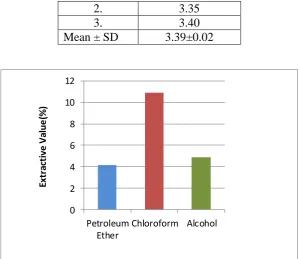
Extractive value of the formulation was calculated in three different solvent i.e. ethyl alcohol, petroleum ether and chloroform.
10. Determination of Viscosity
11. Extractive value
a. Five grams of drug was macerated with 80 ml of ethyl alcohol in a closed flask for 7 days with occasionally shaking from day 2. After 7 days liquid was decanted or filtered, the marc was not pressed and volume was adjusted by adding remaining 20 ml ethyl alcohol through the marc. The filtrate was evaporate on water bath.
b. Five grams of drug was macerated with 80 ml of petroleum ether in a closed flask for 7 days with occasionally shaking from day 2. After 7 days liquid was decanted or filtered, the marc was not pressed, volume was adjusted by adding remaining 20 ml petroleum ether through the marc. The filtrate was evaporate on water bath.
c. Five grams of drug was macerated with 80 ml of chloroform in a closed flask for 7 days with occasionally shaking from day 2. After 7 days liquid was decanted or filtered, the marc was not pressed, volume was adjusted by adding remaining 20 ml chloroform through the marc. The filtrate was evaporate on water bath.[12]
12. Thin layer chromatography (TLC)
Thin layer chromatography ofextract of Marham Zangar was carried out in different mobile phase/solvents to confirm the presence of phytoconstituents in the given sample of Marham.
A thick layer of Silica gel-G was coated on glass plate and activated at 1100C for one hour. The extract of Marham Zangar was applied on glass plate 2 cm above the base. The glass sheet was put into a developing chamber. Mobile phases, pure and mixtures were used. The glass plates were kept vertical(one dimensional development) and the solvent flewed against the gravity. After some time the visualising agents were used for detecting the spots. Then Rf
value was calculated as formula:
Rf =Distence travelled by solute\Distence travelled by solvent front.[13]
13. Oil percentage determination
Three grams of drug was placed in an extraction thimble. Drug was extract with solvent petroleum ether,( B.P. 40º to 60º) in a continuous extraction apparatus (Soxhlet extractor) for 6 hours. Filtered the extract quantitatively into a tared evaporating dish, evaporated off the solvent on a water bath and dried the residue at 105º to constant weight. Percentage of ether-soluble extractive with reference to the air-dried drug was calculated.[7]
RESULTS AND DISCUSSION
concentration of their active principles. WHO and department of AYUSH has given preliminary guidelines for standardizing these conventional formulations, for uniformity of batches in production of herbal formulation and it is necessary to develop methods for evaluation.
There is no SOPs of Marham Zangar given in any reference book therefore through this study a serious effort has been made to set its standards and to formulate SOPs of Marham Zangar.
CONCLUSION
The aim of present study was to prepare Marham Zangar in classical form as mentioned in National Formulary of Unani Medicine (NFUM), Part-I, and to standardized it by standard operating procedures (SOPs).
There is no effective treatment available for the non healing wounds/ulcer in the conventional system of medicine. Antibiotic prescribing for non healing wounds is often based on expert opinion rather than scientific fact and may present difficulties in interpretation and implementation to the clinicians. Further, the increasing prevalence of antibiotic resistance is widely recognized. But Unani pharmacopoeias mention a number of formulations to treat non healing wounds/ulcers. Of these Marham Zangar has been recommended for this clinical indication.
There are no SOPs for Marham Zangar at present, so a serious effort was made to prepare
Marham Zangar as per NFUM, Part-I and to standardized it by standard operating procedure (SOPs).
So we can use this data for future reference for the pharmaceutical preparation of Marham Zangar.
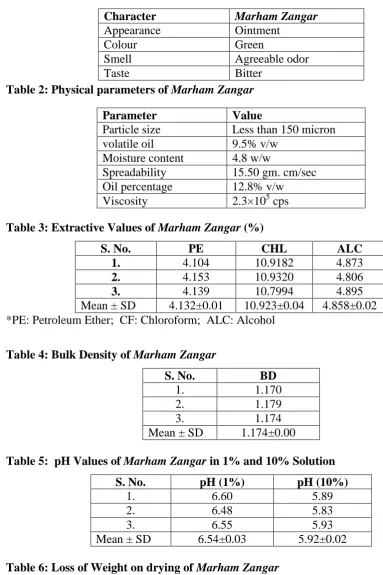
Table 1: Organoleptic description of Marham Zangar
[image:8.595.66.450.146.721.2]
[image:8.595.205.388.512.588.2]
Table 2: Physical parameters of Marham Zangar
Table 3: Extractive Values of Marham Zangar (%)
S. No. PE CHL ALC
1. 4.104 10.9182 4.873
2. 4.153 10.9320 4.806
3. 4.139 10.7994 4.895
Mean ± SD 4.132±0.01 10.923±0.04 4.858±0.02 *PE: Petroleum Ether; CF: Chloroform; ALC: Alcohol
Table 4: Bulk Density of Marham Zangar
S. No. BD
1. 1.170
2. 1.179
3. 1.174
Mean ± SD 1.174±0.00
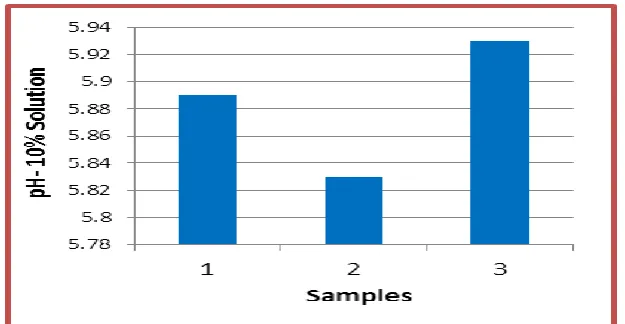
Table 5: pH Values of MarhamZangar in 1% and 10% Solution
S. No. pH (1%) pH (10%)
1. 6.60 5.89
2. 6.48 5.83
3. 6.55 5.93
Mean ± SD 6.54±0.03 5.92±0.02
Table 6: Loss of Weight on drying of Marham Zangar
S. No. LOD
1. 3.42
Character Marham Zangar
Appearance Ointment
Colour Green
Smell Agreeable odor
Taste Bitter
Parameter Value
Particle size Less than 150 micron
volatile oil 9.5% v/w
Moisture content 4.8 w/w
Spreadability 15.50 gm. cm/sec
Oil percentage 12.8% v/w
2. 3.35
3. 3.40
Mean ± SD 3.39±0.02
0 2 4 6 8 10 12
Petroleum Ether
Chloroform Alcohol
Ex
tra
ct
ive
Va
lu
e
(%
[image:9.595.142.453.54.787.2])
[image:9.595.148.449.71.330.2]Fig 1: Extractive Values of Marham Zangar
Fig 2: Bulk Density of MarhamZangar
[image:9.595.143.455.581.741.2]Fig 4: pH value of Marham Zangar in 10% Solution
REFERENCES
1. Dubey N, Dubey N, Mehta RS, Saluja AK, Jain DK, Quality assessment of Kushta-e-Gaudanti: A Traditional Unani Medicine; Asian Journal of Research Chem. 1(1): July-Sept, 2008; 46-50.
2. Kabiruddin M (2006).Al Qarabadeen. CCRUM MHFW GOI. New Delhi; 1046-1047, 1065.
3. Ghaffar A (YNM) Maseeh-ul-Mulk Ke Murakkabat, Vol.2. Urdu Dawakhana Gurgaon Haryana; pp 303-304.
4. Kabiruddin M (1935). Bayaz-e-Kabir. Vol.3. Hikmat Book Depot. Hyderabad; pp-100. 5. Ibn Sina (2007) Al Qanoon fit Tib Vol. 5 Idara Kitab us Shifa New Delhi; p 93.
6. Arzani A (1998). Qarabadeen-e-Qadri. Aijaz Publishing House. Delhi; pp-498.
7. Unani Pharmacopoeia of India. (2007) Part-1. Vol. 1. CCRUM MHFW GOI. New Delhi; p A-5.
8. Physicochemical Standards of Unani Formulations (1991)Part 3. CCRUM, MHFW, GOI. New Delhi; pp- 145-146.
9. Quality Control Methods for Herbal Material (2011) World Health Organization, Switzerland pp 33-39.
10.Kumar L, Verma R. In vitro evaluation of topical gel prepared using natural polymer, Int. J Drug Delivery, 2010: (2) 58-63.
11.Aggarwal P, Bajpayee M, Singh PS International Bulletin of Drug Research., 2(3): 31-40 12.Extraction Technologies for Medicinal and Aromatic Plants. United Nations Industrial