www.wjpr.net Vol 4, Issue 07, 2015.
503
DEVELOPMENT OF HPTLC-UV METHOD FOR COMPARATIVE
PHYTOCHEMICAL STUDY OF STEM BARK
VERSUS
SMALL
BRANCHES OF
STREBLUS ASPER
LOUR
S. C. Verma*, S. Subhani, E. Vashishth, R. Singh, P. Pant, A.K. Mangal, M. M. Padhi, K. S. Dhiman
Central Council for Research in Ayurvedic Sciences, 61- 65, Institutional Area, Opp.- D-Block, Janakpuri, New Delhi-110058, India.
ABSTRACT
Streblus asper Lour belongs to the family Moraceae. It is a small tree found in tropical countries, such as India, Sri Lanka, Malaysia, the Philippines and Thailand. S. asper is a medicinal plant from Thailand used in folk medicine for the treatment of several inflammatory diseases, treat wounds, skin diseases, filariasis, leprosy, toothache, fever, diarrhea, dysentery. The chromatographic fingerprints of stem bark and small branches of F. racemosa were developed and validated
for comparison of phytochemicals. Our results revealed that the chromatographic fingerprints combined with similarity measurement could efficiently identify and distinguish S. asper stem bark and small branches. The phytochemical fingerprint profiling of stem bark and small branches of S. asper were found similar as an official part of S. asper plant i.e. stem bark, therefore small branches may be used in place of stem bark and vice-versa after comparison and confirmation of same pharmacological activities. The method can also be used for identification of different S. asper species and adulterants.
KEYWORDS: Streblus asper, HPTLC–UV detection, phytochemical fingerprint profiling analysis.
ABBREVIATIONS: HPTLC–UV, high performance thin layer chromatography-ultra violet detection; Rf, retention factor; min., minutes; St. Bk., stem bark., Sm. Br., small branches.
Volume 4, Issue 7, 503-512. Research Article ISSN 2277– 7105
Article Received on 30 April 2015,
Revised on 20 May 2015, Accepted on 10 June 2015
*Correspondence for
Author
S. C. Verma
Central Council for
Research in Ayurvedic
Sciences, 61- 65,
Institutional Area, Opp.-
D-Block, Janakpuri, New
www.wjpr.net Vol 4, Issue 07, 2015.
504 INTRODUCTION
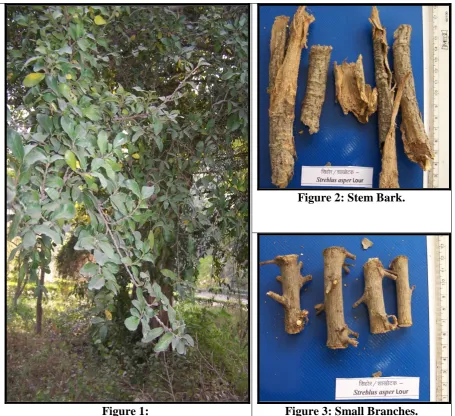
Streblus asper is a medicinal plant from Thailand used in folk medicine for the treatment of several inflammatory diseases. S. asper Lour belongs to the family Moraceae.[1] S. asper is a tree known by several common names, including Siamese rough bush, khoi, serut, and toothbrush tree. It is a medium-sized tree native to dry regions in Thailand, India, Malaysia, and Vietnam. In the Republic of the Philippines, it is commonly known as "bogta-e" or "bogtalay".[2,3] A bushy, small, evergreen tree with milky juice. Leaves alternate, elliptic or obovate, 5-10 cm long, irregularly crenate, acute or shortly acuminate, very rough on both
surfaces, petiole very short. Flowers dioecious, axillary; male flowers in globose heads, 7.5 mm diam., female flowers solitary, inconspicuous, long peduncled. Fruit 1-seeded berry, 5 mm diam., yellow when ripe.[2-6]
S.asper is a rich source of cardiac glycosides. More than 20 cardiac glycosides have been isolated by Reichstein and co-workers from the root bark of S. asper according to literature,[7] and 15 such compounds were structurally characterize, mainly as a result of the application of
degradative techniques, namely kamloside, asperoside, strebloside, indroside, cannodimemoside, strophalloside, strophanolloside, 16-O-acetylglucogitomethoside, glucogitodimethoside, glucokamloside, sarmethoside and glucostrebloside. The other glycosides reported from the roots include b-sitosterol-3-O-b-d-arabinofuranosyl- O-a-l-rhamnopyranosyl-O-b-d-glucopyranoside, lupanol-3-O-b-d-glucopyranosyl-[1-5] -O-b-d-xylofuranoside and vijaloside, i.e. periplogenin-3-O-b-d-glucopyranosyl-[1-5] -O-b-d-xylopyranoside.[8-11] From the stem bark of this plant, a-amyrin acetate, lupeol acetate, b-sitosterol, a-amyrin, lupeol and diol, strebloside and mansonin have been isolated. A pregnane glycoside named sioraside has also been isolated. n-Triacontane, tetraiacontan-3-one, b-sitosterol, stigmasterol, betulin and oleanolic acid were identified from the aerial parts. An unidentified cardenolide , b-sitosterol, a-amyrin and lupeol were isolated from root bark and leaves.[12,13] The volatile oil from fresh leaves of S. asper was obtained in 0.005% yield as a brown liquid. The major constituents of the volatile oil were phytol (45.1%), a-farnesene (6.4%), trans-farnesyl acetate (5.8%), caryophyllene (4.9%) and trans-trans-a-farnesene (2.0%). The other constituents were a-copaene, b-elemene, caryophyllene, geranyl acetone, germacrene, d-cadinene, caryophyllene oxide and 8-heptadecene.[14]
www.wjpr.net Vol 4, Issue 07, 2015.
505 bark of this tree. The paper is durable even in the local high-humidity climate. It does not burn easily and it is resistant to yellowing and insect damage [15] In Vietnam traditional woodworking uses the coarse texture of the leaves as natural sandpaper. The fruits are sweet and edible, leaves used as tea and also use for scrubbing utensils, seeds are used in traditional medicine, as fodder for animal, bonsai and topiary material, firewood and charcoal. The twigs are chewed to make brushes and are said to cure pyorrhea.[16] Various parts of the plant are used in Ayurveda and other folk medicines for the treatment of different ailments such as filariasis,[17] leprosy, toothache, diarrhoea, and cancer. It is a well known and documented
www.wjpr.net Vol 4, Issue 07, 2015.
[image:4.595.72.528.69.485.2]506 Figure 1:
Figure 2: Stem Bark.
Figure 3: Small Branches.
Taxonomic / Scientific Classification
Kingdom Plantae
Subkingdom Tracheobionta
Super division Spermatophyta Order Rosales Family Moracea Tribe Moreae Genus Streblus
Species Streblus asper
MATERIALS AND METHODS Plant Materials and Chemicals
www.wjpr.net Vol 4, Issue 07, 2015.
507 Sample preparation
The plant parts were dried under a gentle stream of air in the laboratory till no loss in weight (temperature 30+ 20C and relative humidity 50 + 5%) and powdered in an electric grinder. Conventional extraction of stem bark and small branches of stem of S. asper were performed at room temperature (28o ± 3oC) with a variety of solvents ranging from non-polar to polar ones, i.e. n-hexane, ethyl acetate and ethanol. Dried and powdered parts of S. asper (10 g each) were extracted three times (3 × 50 mL) for 18 h of each extraction with each of the above-mentioned solvents separately. Each extract was filtered by using Whatman filter
paper no. 1 and the solvents were removed under vacuum at 50°C, separately and concentrated up to 10 mL to get the sample solution of 100 mg mL-1. 5 µL of each sample was applied separately to TLC plate for the development of fingerprints.
HPTLC-UV detection Method
High Performance Thin Layer Chromatography was performed on 10 cm × 10 cm TLC plates pre-coated with 0.25 μm thin layers of silica gel 60 F254 (E. Merck). Both samples (stem bark
and small branches) were applied on the plates as bands 10 mm wide by use of a Linomat-IV applicator (CAMAG, Switzerland) fitted with a 100 μL syringe (Hamilton, Switzerland). The
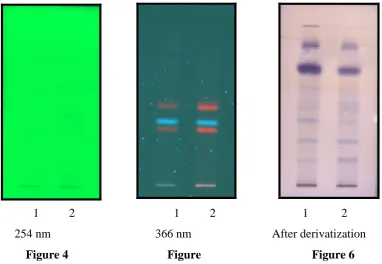
application positions X and Y were both 10 mm, to avoid edge effects. Linear ascending development to a distance of 80 mm with Toluene: Ethyl acetate 9:1 (v/v) and as mobile phase for both n-hexane extract was performed in a twin-trough glass chamber (20 cm × 10 cm) previously saturated with vapors of mobile phase for 20 min. The plates were dried in air and visualized under λ 254 nm and λ 366 nm for ultra violet detection and taken the
fingerprints as evident in Figures 4 – 5. Further, the same TLC plate was derivatized with anisaldehyde-sulphuric acid reagent and visualized in white light obtained fingerprints were as evident in Figures 6 using CAMAG Reprostar and WinCATs software (V 1.4.2; CAMAG). HPTLC of ethyl acetate extract and alcoholic extract of both drugs were performed with same procedure in the mobile phase of Toluene: Ethyl acetate 8: 2 (v/v) and
Toluene: Ethyl acetate 6:4(v/v) and then visualized in λ 254 nm, λ 366 nm and white light
www.wjpr.net Vol 4, Issue 07, 2015.
508
[image:6.595.107.490.70.334.2]1 2 1 2 1 2 254 nm 366 nm After derivatization
Figure 4 Figure Figure 6
Figure 4-6: TLC fingerprint of n- hexane extract of S. asper (1= St.; 2= Sm. Br.)
1 2 1 2 1 2
[image:6.595.102.471.372.638.2]254 nm 366 nm After derivatization
Figure 7 Figure 8 Figures 9
www.wjpr.net Vol 4, Issue 07, 2015.
509
[image:7.595.118.483.70.338.2]
1 2 1 2 1 2 254 nm 366 nm After derivatization
Figure 10 Figure 11 Figures 12
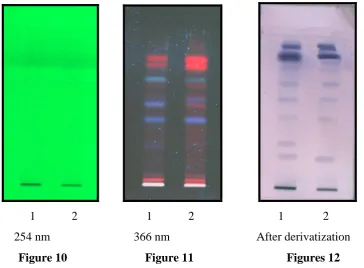
Figure 10-12: TLC fingerprint of ethanol extract of S. asper(1= St.; 2= Sm. Br.)
Table 1: Rf value of phytochemicals present in n-hexane, ethyl acetate and ethanol extract of S. asper (St. Bk. and Sm. Br.) at different wave-lengths.
Wave-length n- Hexane extract Ethyl acetate extract Ethanol extract Stem bark Small branches Stem bark Small branches Stem bark Small branches
254 No band No band No band No band No band No band
366 0.36,0.40, 0.51 0.36,0.40 ,0.49,0.51 0.10, 0.22,0.34, 0.51,0.58, 0.62,0.66, 0.74 0.10,0.22,0. 32,0.38,0.50 ,0.58,0.62,0. 66,0.74 0.09,0.26, 0.42,0.51, 0.64,0.67, 0.78,0.81 0.09,0.42,0.51,0. 55,0.64,0.67,0.7 8,0.84 Visible light after derivatization 0.16,0.28,0. 39,0.48,0.52 , 0.72,0.88 0.16,0.28,0. 39,0.48,0.52 ,0.72,0.88 0.07,0.26, 0.40,0.52, 0.64,0.80, 0.88 0.07,0.26,0. 40,0.52,0.64 ,0.80,0.88 0.07,0.21, 0.27,0.44, 0.56,0.64, 0.82,0.89 0.07,0.20,0.44,0. 56,0.82,0.89
RESULTS AND DISCUSSION
[image:7.595.40.559.417.603.2]www.wjpr.net Vol 4, Issue 07, 2015.
510 Phytochemical fingerprints of n-hexane extract of stem bark and small branches under 254 nm showed no band in stem bark and small branches, thus no band was found similar. Under 366 nm UV detection, stem bark and small branches showed three and four band respectively, out of which, three bands at Rf 0.36 (red), 0.40 (blue) and 0.51(red) were found similar. After TLC plate derivatized with Anisaldehyde sulphuric acid reagent and visualized under white light, total seven bands were visible in both the parts and all seven bands at Rf 0.16 (blue), 0.28 (blue), 0.39 (blue), 0.48 (blue), 0.52 (blue), 0.72 (violet), 0.88 (violet) were similar.
Ethyl acetate extract of stem bark and small branches (stem) under 254 nm showed no band in stem bark and small branches, thus no band was found similar. Under 366 nm UV detection, stem bark and small branches showed eight and nine bands respectively, out of which, six bands at Rf 0.10 (blue), 0.22 (blue), 0.58 (red), 0.62(red), 0.66(red), 0.74(blue) were found similar. After derivatized with Anisaldehyde sulphuric acid reagent and visualized under white light, total seven bands were visible in both the parts and all seven
bands at Rf 0.07 (blue), 0.26 (blue), 0.40 (blue), 0.52 (violet), 0.64 (blue), 0.80 (violet), 0.88 (violet) were similar.
Phytochemical fingerprints of ethanol extract of stem bark and small branches under UV detection at 254 nm showed no band in stem bark and small branches, thus no band was found similar. While under 366 nm UV detection, total eight bands were visible in both the parts, out of which, six bands at Rf 0.09 (blue) ,0.42 (red), 0.51 (red), 0.64 (blue), 0.67 (red),
0.78 (red) were found similar. After TLC plate derivatized with Anisaldehyde sulphuric acid reagent and visualized under white light, stem bark and small branches showed eight and six bands respectively, out of which five bands at Rf 0.07,0.44,0.56,0.82,0.89(all are blue) were similar in both parts (St. Bk. and Sm. Br.) as evident in Table 1 and Fig.10-12.
CONCLUSION
The phytochemical fingerprint profiling of stem bark and small branches of S. asper were
www.wjpr.net Vol 4, Issue 07, 2015.
511 provided valuable clue regarding presence or absence of various photochemical or metabolites of the plants.
ACKNOWLEDGMENTS
Authors are thankful to Director General, Central Council for Research in Ayurvedic Sciences, New Delhi to provide the financial support under IMR scheme for this research work. Authors are grateful to Dr. R. K. Tiwari, NVRI&H Lucknow for providing the genuine plant materials.
REFERENCES
1. Kirtikar KR, Basu BD. Indian Medicinal Plants, Allahabad: Lalit Mohan Basu Publications, 1933; 3: 2291.
2. Bhakuni DS, Dhar ML, Dhar MM, Dhawan BN, Mehrotra BN. Screening of Indian plants for biological activity. Indian J Exp Biol, 1969; 7: 250–62.
3. http://en.wikipedia.org/wiki/Streblus_asper site accessed on 26/03/2015. 4. http://STREBLUS.ASPER.Lour..html site accessed on 27/03/2015.
5. Ibrahim NM, Ishak M, Vuanghao L, Ahmad R, Antioxidant Activity and Phenolic Content of Streblus asper Leaves from Various Drying Methods, Antioxidants, 2013; 2: 156-166.
6. Taweechaisupapong P, Klanrit P, Singhara S, Pitiphat W, Wongklam S,Inhibitory effect of Streblus asper leaf extract on adhesion of Candida albicans to dentene acrylic. J. Ethnopharmacol, 2006; 106: 414–417.
7. Rastogi S, Kulshreshtha DK, Rawat AKS, Streblus asper Lour. (Shakhotaka): A review of its chemical, pharmacological and ethnomedicinal properties. Evid. Based Complement Altern. Med, 2006; 3: 217–222.
8. Gaitonde BB, Vaz, AX, Patel JR, Chemical and pharmacological study of root bark of
Streblus asper Lour. Indian J. Med. Sci, 1964; 18: 191–199.
9. Zhang XS, Wu ZY, Zao ZY, The Plant Index of China; Scientific Press: Beijing, China, 1985; 23: 38.
10.Khare MP, Bhatnagar SS, Schindler O, Reichstein T. Die glykoside von Streblus asper
Lour. Helv Chim Acta, 1962; 45: 1515–34.
11.Khare MP, Bhatnagar SS, Schindler O, Reichstein T. Die glykoside von Streblus asper
www.wjpr.net Vol 4, Issue 07, 2015.
512 12.Manzetti AR, Reichstein T. Die glykoside von Streblus asper Lour. Helv Chim Acta,
1964; 47: 2303–20.
13.Manzetti AR, Reichstein T. Die glykoside von Streblus asper Lour. Helv Chim Acta, 1964; 47: 2320–30.
14.Chaudhuri HN. Pharmacognostic studies on the stem bark of Streblus asper Lour. Bull Bot Surv India, 1968; 10: 260–2.
15.Jain SK. Dictionary of Indian Folk Medicine and Ethnobotany, New Delhi: Deep Publications, 1991; 172.
16.Singh NP, Singh VK. Streblus asper Lour—an ancient Indian drug for cure of filariasis. Acta Bot Indica, 1976; 15: 108–9.
17.Singh NP, Ram ER, Filaria and its herbal cure, New Botanist, 1988; 15: 201–5. 18.Useful Plants of India, New Delhi: NISCOM, 1992; 603–4.
19.http://wikiwel.com/wikihealing//index.php?title=Streblus_Asper site accessed on 27/03/2015.