ISOLATION, CHARACTERIZATION AND MOLECULAR
IDENTIFICATION OF BURKHOLDERIA CEPACIA FROM
CURCUMA
LONGA
USING 16S RRNA SEQUENCING
Prasanthi Donipati*1 and Dr.S.Harasreeramulu2
1
Research Scholar, Dr.V.S.Krishna Govt. College Visakhapatnam.
2
Professor & Head of the Dept. of Biotechnology Dr.V.S.Krishna Govt. College Visakhapatnam.
ABSTRACT
Curcuma longa is well known for its use as spice and medicine. The
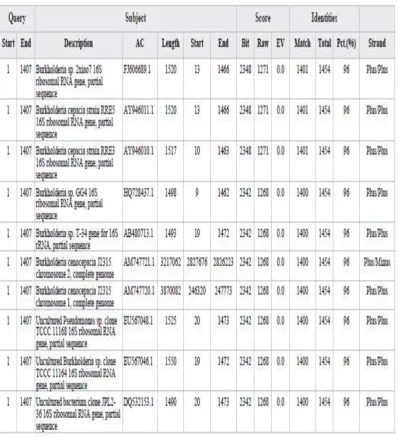
remarkable feature of the plant is the presence of rhizome, which provides an interesting habitat for association by various groups of bacteria. The present study deals with isolation, identification and analysis of bacteria from Curcuma longa through 16S rRNA based molecular technique and samples were obtained from Curcuma longa. The Bacterial strain was isolated and characterized using various biochemical tests and confirmed through molecular approach and 16S rRNA gene was amplified using suitable primers. The amplified 16S rRNA gene sequence was compared with the sequence in NCBI sequence database the bacterial strain was identified. Phylogenetic and molecular evolutionary analyses were conducted using 16S rRNA sequencing. The sequences when submitted to NCBI gene bank database using BLAST showed 99 – 100% maximum identity and have shown good similarity with Burkholderi sps. 2xiao7 strain Burkholderi cepacia strain RRE5, Burkholderi cepacia strain RRE3, Burkholderi cepacia strain CG4, Burkholderi
cepacia T-34gene. In the present study we investigated extracts of Curcuma longa rhizomes. Among the isolates, Burkholderi cepacia isolate was the most active.
KEYWORDS: Curcuma longa, rhizomes, Burkholderia cepacia, NCBI.
INTRODUCTION
Plants have the major advantage of being the most effective and cheaper alternative source of drugs. Historically, pharmacological screening of compounds of natural origin has been the
Volume 4, Issue 3, 1685-1695. Research Article ISSN 2277– 7105
Article Received on 04 Jan 2014,
Revised on 29 Jan 2015, Accepted on 23 Feb 2015
source of innumerable therapeutic agents. Burkholderia cepacia was first described by Walter Burkholder of Cornell University in 1949 when he determined it to be the cause of bacterial rot of onion bulbs. They are rod-shaped, free-living, motile Gram- negative bacteria Since then, few species have been described: Burkholderi sps. 2xiao7 strain Burkholderi cepacia strain RRE5, Burkholderi cepacia strain RRE3, Burkholderi cepacia strain CG4, Burkholderi cepacia T-34gene .Keeping these above facts in view Identification of bacteria is traditionally performed by isolation of the organisms and study of their phenotypic characteristics, including Gram staining, morphology, culture requirements and biochemical reactions. To
study bacterial phylogeny and taxonomy, the 16S rRNA gene sequences are very useful due to its presence in almost all bacteria, often existing as a multigene family, or operons, the
function of the 16S rRNA gene over time has not changed, suggesting that random sequence changes are a more accurate measure of time and the 16S rRNA gene (1,500 bp) is large enough for informatics purposes. Its gene sequence informatics is to provide genus and species identification, where the isolates that do not fit any recognized biochemical profiles or for taxa that are rarely associated with human infectious diseases. The usefulness of 16S rRNA gene sequencing as a tool in microbial identification is dependent upon two key elements, deposition of complete unambiguous nucleotide sequences into public or private databases and applying the correct labelǁ to each sequence. The primary structure of the 16s rRNA is highly conserved and species having 70% or greater DNA similarity usually have more than 99% sequence identity. These 3% or 45-nucleotide differences are not evenly scattered along the primary structure of the molecule but are concentrated mainly in certain hyper variable regions. Phenotypic biochemical analysis is not sufficient to identify genus of bacteria, but sequencing of 16S rRNA gene sequencing is essential for exact identification. Universal primers are used for experimental purpose. These primers used to polymerize entire 16S rRNA gene or part of it. In order to know new species, there is a requirement of entire length of sequence (1500bp). Unknown bacterial 16S rRNA sequences can be compared with database sequences, in order to know taxonomic position of unknown bacteria. From this, at least genus of particular unknown strain can be defined. 16S rRNA
MATERIALS AND METHODS
Preparation of extracts from rhizomes of Curcuma longa.
The rhizomes of Curcuma longa were collected from Allavaram, Amalapuram, Andhra Pradesh, India during the month of March 2012. Shade dried rhizomes of Curcuma longa were powdered and separately extracted in a Soxhlet apparatus for 6 hrs successively with hexane, chloroform and methanol, concentrated to dryness under vacuum at temperature of 45°C by using rotary evaporator (Buchi, Switzerland), dried completely and stored in desiccator. The samples were collected in a sterile plastic container and transported to
laboratory for bacteriological analysis. Bacterial isolates were screened on nutrient Agar (NA) plates by the standard pour plate method. Plates were incubated at 37°C/24 h and a total
of one hundred and forty four isolates were obtained, from that one isolate was selected and used for further studies. The isolated bacteria were identified based on colony characteristics, gram staining methods shown in Figure 1 and Figure 2. The shape and colour of the colonies were examined under the microscope after Gram staining. Isolates were biochemically analyzed for the activities of Oxidase, Catalase, MR-VP test, Urease test, Motility, Indole production and Citrate utilization shown in Table 1. The tests were used to identify the isolates according to Bergey's Manual of determinative bacteriology. Bacterial genomic DNA was isolated as per the standard protocol (Hoffman and Winston, 1987). [28] The extracted genomic DNA was used as template DNA for amplification of the 16S rRNA gene.
Test organisms
The microorganisms used in the experiment were procured from MTCC, IMTECH-Chandigarh.
PCR Amplification of 16S rRNA Gene
Add 1 μl of template DNA in 20 μl of PCR reaction solution. The universal primers (Forward
RESULT
Figure 1:- Gram stain of Burkholderia cepacia
Figure 2:- Colony morphology of Burkholderia cepacia
Table 1:- Biochemical Characteristics of Isolated Bacteria Colour Morphology
Size Colour Form Texture Elevation Margin
Medium Opaque Irregular Mucoid Raised Entire
Microscopic observation
Gram’s reaction Negative
Oxygen requirement O/F
Facultative Positive
[image:4.595.207.388.273.415.2]Nitrate test Negative Urease test Positive
IMViC tests
Indole Negative Voges proskauer Positive Citrate Positive
Hydrolysis
Gelatine Negative
Pathogenic properties
Hemolysin Negative
Amino acid &derv
Arginine Negative
Lysine Positive Ornithine Negative
carbohydrate utilization polysaccharides Starch Negative
Raffinose Negative
Disaccharides
Sucrose Positive Lactose Negative Maltose Positive Cellobiose Positive
Pentoses
Hexoses
Dextrose Positive Manose Negative Galactose Negative Fructose Positive
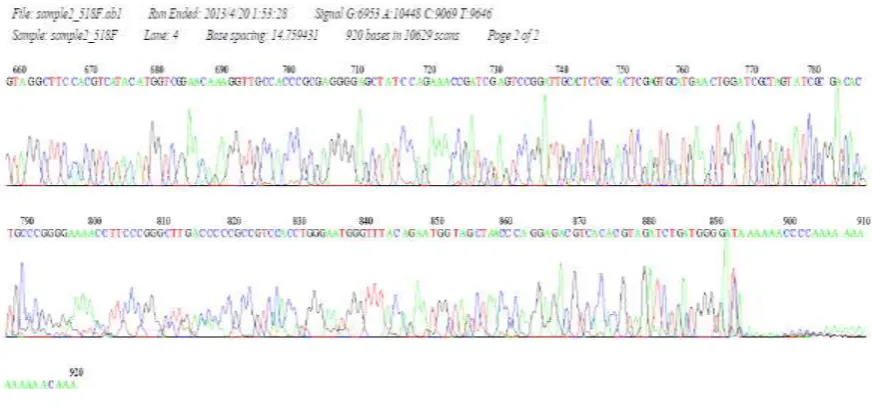
Figure 3: 16s rRNA gene sequence of the Burkholderi cepacia sp. obtained by forward and reverse primers
Include a positive control (E.coli genomic DNA) and a negative control in the PCR. The PCR product was sequenced using the 518F/800R primers. Sequencing reactions were performed using a ABI PRISMR BigDyeTM Terminator Cycle Sequencing Kits with Ampli TaqR DNA polymerase (FS enzyme) (Applied Biosystems) PCR reaction was performed in a gradient thermal cycler and then perform 35 amplification cycles at 94°C for 45 sec, 55°C for 60 sec and 72oC for 60 sec. Single pass sequencing was performed on each template using below 16s rRNA universal primers. The Fluorescent labeled fragments were purified from the unincorporated terminators with an ethanol precipitation protocol. The samples were resuspended in distilled water and subjected to electrophoresis in an ABI 3730xl sequencer (Applied Biosystems). The sequence obtained was subjected to BLAST search and the bacterial species were determined shown i n figure 4. The percentages of sequence matching were also analyzed and the sequences was submitted to NCBI-Gen Bank and obtained accession number.
Figure 4: Burkholderi cepacia sp.BLAST results
CONCLUSION
The most current research on Burkholderia cepacia includes its use in the agricultural industry to protect plants from pathogens. Burkholderia cepacia can colonize the roots of many plants where it produces compounds that protect against soil-borne pathogens. In absence of these pathogens, plant growth has been noted to improve. The eradication of Burkholderia cepacia as a human pathogen will become increasingly important in the years to come
REFERENCES
1. Anonymous. Pseudomonas cepacia—more than a harmless commensal? Lancet, 1992; 339: 1385–6.
2. Aggarwal N, Garg S, Pannu HS, Kler TS. Fatal Burkholderia cepacia early prosthetic valve endocarditis: a very rare case and a reviewof the literature. J Heart Valve Dis, 2005; 14: 271–4.
3. Baligh M, Conway KE, Delgado MA. Production of ammonia by Pseudomonas cepacia interferes with seed germination and root elongation [Abstract]. Phytopathology, 1990; 80
(10): 1048.
4. Biddick, R., Spilker, T., Martin, A. & LiPuma, J. J. Evidence of transmission of Burkholderia cepacia, Burkholderia multivorans andBurkholderia dolosa among persons with cystic fibrosis. FEMS Microbiol Lett, 2003; 228: 57–62.
5. Burkholder, W.H.: Sour skin, a bacterial rot of onion bulbs. Phytopathology, 1950; 40: 15- 117.
6. Coenye, T., P. Vandamme, J. R. W. Govan, and J. J. LiPuma. Taxonomy and identification of the Burkholderia cepacia complex. J. Clin. Microbiol., 2001b; 39: 3427-3436.
7. CAMPBELL 3rd, P.W.; PHILLIPS 3rd, J.A.; HEIDECKER, G.J. et al. - Detection of Pseudomonas (Burkholderia) cepacia using PCR. Pediat. Pulmonol., 20: 44-49, 1995.
8. Cook, D.; Sequeira, L. Strain differentiation of Pseudomonas solanacearum by molecular genetic methods. In: Bacterial wilt: the disease and its causative agent, Pseudomonas solanacearum (Ed. by Hayward, A.C.; Hartman, G.L.), 1994; 77-93. CAB International, Wallingford, UK.
10.Govan, J.R., Hughes, J.E., Vandamme, P.: Burkholderia cepacia: medical, taxonomic and ecological issues. J. Med. Microbiol., 1996; 45: 395-407.
11.Halls, N. Burkholderia (Pseudomonas) cepa- cia a riefprofileforthepharmaceuticalmicro- biologist. Eur. J.Parent.Pharm.Sci., 2006; 11(2): 53.
12.Holmes, A.; Govan, J.; Goldstein, R.Agricultural use of Burkholderia Pseudomonas) cepacia A threat tohumanhealth? Emerg. Infect.Dis., 1998; 4(2): 221–227.
13.Jones AM, Dodd ME, Webb AK Burkholderia cepacia: current clinical issues, environmental controversies and ethical dilemmas. Eur Respir J., 2001; 17: 295-301.
14.LiPuma J. Currie B et al. 2007. Burkholderia, Stenotrophomonas, Ralstonia, Cupriavidus, Pandoraea, Brevundimonas, Comamonas, Delftia and Acidovorax. P 749-761. In PR
Murray. et al. (eds.) Manual of Clinical Microbiology, 9th Edition. Vol 1. Chapter 49. ASM press, Washington, DC.
15.LiPuma, J. J. Update on Burkholderia nomenclature and resistance. Clin. Microbiol. Newsletter, 2007; 29: 65-69.
16.Mahenthiralingam, E., J. Bischof, S. K. Byrne, C. Radomski, J. E. Davies, Y. Av-Gay, and P. Vandamme. DNA-based diagnostic approaches for the identification of Burkholderia cepacia complex, Burkholderia vietnamiensis, Burkholderia multivorans, Burkholderia stabilis, and Burkholderia cepacia genomovars I and III. J. Clin. Microbiol., 2000; 38: 3165–3173.
17.Mac Faddin J. F., 2000, Biochemical tests for identification of medical bacteria, Third edition, United States, Lippincot Williams & Wilkins Press.
18.Mohr CD, Tomich M, Herfst CA. Cellular aspects of Burkholderia cepacia infection. Microbes Infect, 2001; 3(5): 425-35.
19.Mukhopadhyay C, Bhargava A, Ayyagari A. Two novel clinical presentations of Burkholderia cepacia infection. J Clin Microbiol, 2004; 42: 3904–5.
20.Nzula S, Vandamme P, Govan RW. Influence of taxonomic status on the in vitro antimicrobial susceptibility of the Burkholderia cepacia complex. J Antimicrob Chemo, 2002; 50: 265-9.
21.Pathengay A, Raju B, Sharma S, Das T. Recurrent endophthalmitis caused by Burkholderia cepacia. Eye, 2005; 19: 358–9.
22.Phillips I, Eykyn S, Curtis MA, Snell JJ. Pseudomonas cepacia (multivorans) septicaemia in an intensive-care unit. Lancet, 1971; 1: 375–7.
24.Reik R, Spilker T, LiPuma JJ. Distribution of Burkholderia cepacia Complex species among isolates recovered from persons with or without cystic fibrosis. J Clin Microbiol, 2005; 43: 2926-8.
25.Saha SK, Hanif M, Khan WA, Rahaman D, Khan N, Hoq MS, et al. Fatal sepsis due to Pseudomonas cepacia. Singapore Med J, 1994; 35: 475–6.
26.Siddiqui AH, Mulligan ME, Mahenthiralingam E, Hebden J, Brewrink J, Qaiyumi S, Johnson JA, LiPuma JJ An episodic outbreak of genetically related Burkholderia cepacia among non-cystic fibrosis patients at a university hospital. Infect Control Hosp
Epidemiol, 2001; 22: 419-422.
27.Tablan OC, Chorba TL, Schidlow DV, White JW, Hardy KA, Gilligan PH, et al.
28.Pseudomonas cepacia colonization in patients with cystic fibrosis: risk factors and clinical outcome. J Pediatr, 1985; 107: 382–7.
29.Vermis K. et al., Evaluation of species-specific recA-based PCR tests for genomovar level identification within the Burkholderia cepacia complex, J. Med. Microbiol., 2002; 51: 937-940.
30.Whitby, P. W., L. C. Pope, K. B. Carter, J. J. LiPuma, and T. L. Stull. 2000. Species-specific PCR as a tool for the identification of Burkholderia gladioli.
31.Yabuuchi, E., Y. Kosako, I. Yano, H. Hotta, and Y. Nishiuchi. Transfer of two Burkholderia and an Alcaligenes species to Ralstonia gen. nov.: proposal of Ralstonia pickettii (Ralston, Palleroni and Doudoroff 1973) comb. nov., Ralstonia solanacearum (Smith 1896) comb. nov. And Ralstonia eutropha (Davis 1969) comb. nov. Microbiol. Immunol., 1995; 39: 897–904.