SuperVision: Playing with Gaze Aversion
and Peripheral Vision
Argenis Ramirez Gomez Lancaster University
United Kingdom [email protected]
Hans Gellersen Lancaster University
United Kingdom [email protected]
ABSTRACT
In this work, we challenge the Gaze interaction paradigm "What you see is what you get"to introduce"playing with peripheral vision". We developed the conceptual framework to introduce this novel gaze-aware game dynamic. We il-lustrated the concept withSuperVision, a collection of three games that play with peripheral vision. We propose per-ceptual and interaction challenges that require players not to look and rely on their periphery. To validate the game dynamic and experience, we conducted a user study with twenty-four participants. Results show how the game con-cept created an engaging and playful experience playing with peripheral vision. Participants showed proficiency in overcoming the game challenges, developing clear strategies to succeed. Moreover, we found evidence that playing the game can affect our visual skills, with greater peripheral awareness.
CCS CONCEPTS
•Human-centered computing→Interaction paradigms; Interaction techniques;
KEYWORDS
Peripheral Vision; Gaze Interaction; Games; Play; Interaction Design; Eye Tracking
ACM Reference Format:
Argenis Ramirez Gomez and Hans Gellersen. 2019. SuperVision: Playing with Gaze Aversion and Peripheral Vision. InCHI Con-ference on Human Factors in Computing Systems Proceedings (CHI 2019), May 4–9, 2019, Glasgow, Scotland Uk.ACM, New York, NY, USA, 12 pages. https://doi.org/10.1145/3290605.3300703
Permission to make digital or hard copies of all or part of this work for personal or classroom use is granted without fee provided that copies are not made or distributed for profit or commercial advantage and that copies bear this notice and the full citation on the first page. Copyrights for components of this work owned by others than ACM must be honored. Abstracting with credit is permitted. To copy otherwise, or republish, to post on servers or to redistribute to lists, requires prior specific permission and/or a fee. Request permissions from [email protected].
CHI 2019, May 4–9, 2019, Glasgow, Scotland Uk © 2019 Association for Computing Machinery. ACM ISBN 978-1-4503-5970-2/19/05...$15.00 https://doi.org/10.1145/3290605.3300703
1 INTRODUCTION
Gaze input has become a compelling tool for interaction in videogames. Eye trackers are now available as consumer devices at low cost, and mass market videogame franchises have begun to introduce gaze interaction features in their gameplay (e.g., [9, 30, 39, 49]). These include gaze interac-tions for control of the camera or the characters’ movements, aiming at targets and tagging of opponents, just by looking. Intuitively, gaze input is compelling because we naturally look at objects to interact with. Accordingly, the design of techniques has focused on gaze pointing, for acquisition of targets [24], or implicit indication of objects of interest [45]. In this work, we consider quite the opposite: we propose novel gaze interactions and game dynamics based onGaze Aversion, objects of interest that players mustnot look at, and tasks players must accomplish withperipheral vision.
We explore the concept ofplaying with peripheral vision based on three fundamental questions:
• Can Gaze Aversion create game experiences in periph-eral vision that are engaging and fun?
• Is it possible to succeed with gameplay in the visual periphery and develop strategies to overcome the chal-lenge?
• What are the benefits of playing with the periphery? Can players experience the development of their visual abilities for object detection?
We conducted a study of SuperVision with 24 users and a follow-up study with 5 users. To evaluate our concept for gameplay we assessed player experience using the Game Experience Questionnaire [20], and player performance and behavior based on game logs and gaze heatmaps. Besides, we evaluated the participants’ peripheral visual capabilities be-fore and after playing the games, to test for skill development. The results confirm the high level of challenge involved in playing with peripheral vision, and that this can provide an engaging and enjoyable experience. Participants were able to develop strategies to succeed. We also found a signifi-cant improvement in object recognition in the participants’ peripheral vision after playing the games.
Our work makes four main contributions. First, the con-ceptual framework ofplaying with peripheral vision, and novel game dynamic created by elements that players must perceive and manipulate without directly looking at them. Second, the description of 3 games that illustrate the im-plementation of the concept in playful and engaging experi-ences. Third, empirical insight into player experience, perfor-mance, and behavior in tackling perceptual and interaction challenges with peripheral vision. And fourth, evidence that games such as demonstrated can affect our visual skills.
2 RELATED WORK
Gaze and Games
Gaze has been widely explored as game input [50]. The main thrust has been to adopt gaze for accessibility, to replace or complement the original game controls [21–23, 44]. Other work has embraced gaze as implicit input, for example for gaze-responsive storytelling [45], camera viewpoint con-trol [33, 44] and social interaction with avatars [53]. The underlying principle is to leverage gaze as a pointer and selection mechanism for objects users align with their foveal vision. Our work is in sharp contrast, focusing on peripheral vision and how to engage the wider visual field for play.
The recent emergence of eye trackers in the consumer space has spurred interest in novel creative uses of gaze [48, 50], for instance, based on eye movements other than fix-ation [10, 54], player gaze [34, 37] and novel multi-modal combinations [51]. Some works are proposing to use gaze to make interactions more challenging, for example by adapting the level of difficulty to the player’s gaze perfor-mance [32]. Compelling examples of gaze interfaces that are challenging by design are Ekman et al.’sInvisible Eni, where players are challenged to control game elements with pupil dilation [11], and Vidal et al.’sShynosaurs, where players face a dilemma between staring down monsters and hand-eye coordination [52]. Our work follows in this spirit, in creating a game dynamic that makes interaction inherently more challenging by pushing it into the periphery of the
players’ visual field, while having the potential to enhance their visual awareness.
Gaze Aversion
Gaze interfaces are usually concerned with where users look, although it can be equally relevant to detect when they are not looking, for instance, to interpret manual input differ-ently depending on whether it concurs with visual atten-tion [36, 43]. In our work, "looking away" is not merely detected but required for successful gameplay.
In psychology and behavioral studies, "not looking" is considered as an action that can be related to social factors such as fear [42], or as a mechanism to manage cognitive load [8]. However, our approach is based on the shift of the visual focus as a perception tool. The proposed dynamic is based on inhibitory control of visual attention, i.e., the fundamental human ability to look away and resist a reflexive urge to look. In psychology, this is related to study paradigms such as the anti-saccade task [31].
There are prior examples of games requiring avoidance of game elements. In theSlender Man, though not based on eye tracking, the user needs to turn away when they glimpse the adversary. TheVirus Hunt [51] is a game idea where gaze spurs the growth of viruses which therefore must not be looked at. A variety of attention training games [6] have been proposed that include inhibition tasks training users’ ability to resist "automatic" attention to particular events. In our work, gaze aversion serves the purpose of moving game interaction into the visual periphery. Users must not only avoid looking at certain game elements but are challenged to complete tasks with peripheral vision.
Peripheral Vision
The role of peripheral vision is to process the wider visual field preattentively (i.e., without eye movement) as the basis for directing attention and eye movement to events that draw attention and relate to our goals. Many games involve the in-herent challenge of maintaining peripheral awareness of "the bigger picture" while focussing on one object or character at a time. Peripheral awareness is, for instance, an essential skill in many sports, and can be trained [26, 58].
Peripheral vision is generally considered for display of information that can be detected without a priori focus, in games [13] and other areas of HCI, for example, deliver no-tifications without disrupting the task in focus [25] (e.g., keeping the eyes on the road while driving [18]). Recently, Luyten et al.proposed a near-eye display for presentation of peripheral information that is positioned relative to the user’s eyes such that it is impossible to focus on it [28]. This relates in an interesting way to our work as it also enforces reliance on peripheral vision.
Peripheral Interactionhas also emerged as an area of HCI research concerned with tasks that can be handled in the periphery, in the sense of not requiring much conscious attention [1], and not disrupting a primary task [17]. In con-trast, the games we propose involve conscious and prolonged interaction with tasks presented in the visual periphery.
3 CONCEPTUAL FRAMEWORK
We proposeplaying with peripheral vision, to create a new type of game experience. Our concept is based on under-standing human peripheral vision to provide a framework for the design of games that challenge peripheral vision.
The human visual field covers approximately 135 degrees vertically and 210 degrees horizontally, of which the foveal region of highest visual acuity is limited to only around 2 degrees at the center (with up to 5 degrees considered as parafoveal) [15]. Outside the foveal region, visual acuity drops sharply, but peripheral vision plays a key role in situa-tional awareness and preattentive attention to features that visually pop out [4, 15, 41]. As peripheral vision has limited acuity, objects seen outside of the foveal region might be per-ceived smaller, distorted, blurrier, and more compressed [2]. This effect can be experienced even if we know what the ob-ject in the periphery is, or see an identical obob-ject in our foveal vision [35]. Peripheral vision is also limited to the number of objects that can be perceived without eye movement, and visual crowding can inhibit object detection [57].
Based on these insights, we put forward a framework to guide the design of peripheral vision games. We propose to useVisual Challengesto explore vision capabilities, and to createTasksthat players must accomplish, thus putting visual perception to the test. ARuleis needed to enforce that only peripheral vision is involved during the task-solving, andMetaphors are required to explain and forge theRule with eachTaskandChallenge. This framework is as follows:
Tasks:Aims or objectives of the game regarding: - Decision-making:Objects need to be assessed in the
periphery for later interaction based on different chal-lenges and rules.
- Interaction:Objects need to be explicitly manipulated (e.g., mouse clicks or hovers, aim by gaze) either in
the periphery or the focus. Inherently, different input modalities other than gaze must be used if interac-tion occurs in the periphery, which may introduce a challenging hand-eye coordination.
Visual Challenges:Exploiting visual theory and percep-tual capabilities to differentiate objects based on:
- Color.Objects that have distinct colors (vibrant, ob-scured, with information overlay).
- Size.Objects that can be identified because they are different in size (a large from a small).
- Focus blindness.Detection of objects that appear in the focus of our vision when the visual attention is on peripheral vision assessing other objects.
Rule:"Objects must not be looked at". This rule is sup-ported by the use of the Gaze Aversion mechanic. The rule is used to move interaction to the periphery through the following strategies:
- Reaction:Moving objects away from the focus to make it mechanically impossible to interact with them (e.g. An object that changes position when it is looked at). - Negative effects:Crowding of the visual area to lower perceptual capabilities (e.g. block object at the scene to make it"noisy").
- Penalization:Life losses when objects are looked at. Metaphors:The narrative technique to frame the rules with the tasks and challenges (e.g.,Looks that turn into stone, looks that kill,what you look is what you will ever look, etc.).
4 SUPERVISION
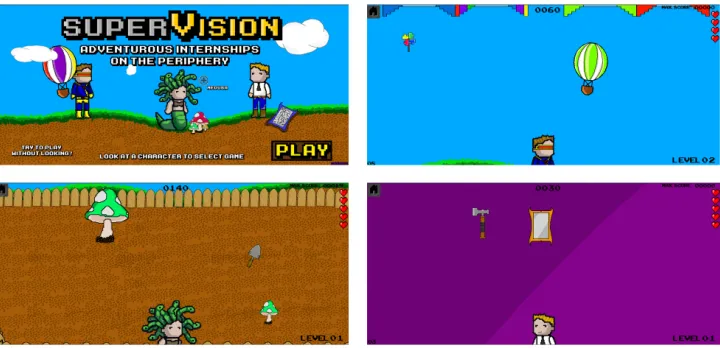
To address the conceptual framework ofplaying with periph-eral vision, we designed and developedSuperVisionwith 3 games examples (Figure1).Metaphorsfrom literature and pop culture characters represent each game because they experience a gaze challenge (influencing the way they look), and require the use of periphery. Players will assume their gaze hurdles and given tasks.
In each game, playerschallengeis to understand the game objects that appear in the scenario while keeping their eyes away from looking directly at them. Given that our eyes are attracted to objects that pop up, it is difficult for players to keep their gaze away and play the game efficiently. Thisrule creates a challenging experience. Players need to handle the constant stream of game objects that appear. Theirtaskis to carefully identify and decide how to manipulate with the mouse the objects, without looking at them and only being able to see them in their peripheral field of view.
Figure 1:SuperVision’s four different game scenes that require using peripheral vision to play. (Top-left) The game main page. (Top-right) The Cyclops’ game. (Bottom-left) Medusa’s game. (Bottom-right) Narcissus’ game.
Introducing SuperVision
In the introductory screen, players are invited to select the game they want to play by gaze pointing (SeeFigure1, top-left). This interaction aims at demonstrating to the player that the game is gaze aware. Further instructions can be extended by clicking on the plus signs next to each character.
Players need to click on the play button (size: 330x110 pixels) to start the game. When the mouse hovers the button, it is highlighted and has sound feedback. However, if players look at the button, it moves to the other side of the screen (Rule Reaction). This way, players need to click on the play button without looking directly at it (Interaction Task).
We introduced this interaction challenge being inspired by Dark Ridesdesign. A typical dark ride uses light-controlled passages to leave reality behind and transport riders to a different world [56]. Accordingly, we aimed to introduce the games’ concept inSuperVisionbefore playing them. We intended to break traditional gaze interaction from the start, to teach how to play with the periphery.
For each game, we introduced different interaction modal-ities with the mouse and visual perception challenges. We wanted to explore how well we can perceive differences be-tween objects in our periphery; how well can we act on them without looking directly; and how well we can control our gaze behavior. Moreover, each game is spanned across 12 levels of ascending difficulty. The level goes up after 10 el-ements have been correctly assessed. Players are provided with 5 lives that can be lost by making tasks mistakes or when the rule is neglected. If a life is lost, the game carries on until no lives are left.
Color:"The Cyclops in a Balloons’ adventure"
The Cyclops is a character from pop culture and the X-Men comic books published by Marvel Comics [27]. The Cyclops
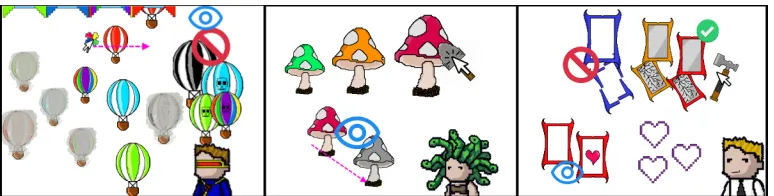
is a mutant who can release an energy beam from his eyes. In the context of the game, he cannot control his power, causing the destruction of anything he looks at directly (Metaphor). The Cyclopschallengeis to watch over colored hot air balloons traffic flow (seeFigure1 top-right). There are good balloons (red, blue, green or multi-colored) and bad balloons (Pirates), which can be eitherblackor camouflaged as good balloons but with askullsymbol (appearing from level 3). Balloons can be affected by air pollution, appearing with fog around them (all of the balloons, except the camouflaged ones, from level 4 onwards). SeeFigure 2, left, for visual details.
The gametaskis to move the balloons (size: 190x290 pixels) by guiding them while they fly from a randomized point on the x-axis, so they enter their color-related gate without staring at them. To move good balloons, players need to push them with the colorfulfan(on the mouse), moving it towards the desired direction (sideways). Failing to guide the balloons correctly will cause a game life loss.
Players need to correctly direct the good balloons while keeping an eye on the bad ones and do not allow them through. If the player looks at the good balloons, they will pop and fall, besides losing a game life (Rule Penalization). Players can look at the Pirates balloons to make them pop and fall too, so they do not pass. The balloons gates can change positions every 3 levels and speed increases slightly after every level.
Figure 2:SuperVisionelements and instructions. (Left) The Cyclops’ game. (Center) Medusa’s game. (Right) Narcissus’ game.
Size:"Medusa and the mushrooms’ attack"
Medusa is a character from Greek mythology [14]. With a head full of snakes for hair and a half human half serpent body, Medusa was known to be able to turn anything and anyone into stone by just looking at them (Metaphor).
Medusa’staskis to remove mushrooms from a garden (see Figure1 bottom-left). The gamechallengeis to do it without looking at them in descending size order, from the biggest to the smallest one. Failing to perform the task in the correct order will make extra mushrooms appear (1 to 3, chosen ran-domly) scattered around the parcel (screen). This will modify the size order scenario, as well as causing a life loss (Rule Penalization). As a consequence, the screen will get more crowded with mushrooms. Moreover, if the player looks at a mushroom, it turns into stone and cannot be removed, losing a game life, and crowding the screen (Rule Negative effect). These require players to concentrate more as it is harder to identify objects in a cluttered scenario (experiencing the crowdingeffect in their peripheral vision [41]).
Medusa’s game aims to explore the role of targets’ size in the periphery of vision. Every pair or group of mushrooms have a size difference of 50% between them, and it decreases gradually towards 10% difference after each level.
Focus blindness:"Narcissus and the cursed frames" Narcissus is another character from Greek mythology. He was known to be a very handsome man that could make anyone fall in love with him with just a glance from him. The nymph Echo fell for him, but he constantly ignored her, until shedied for love and turned in what it is known as the echo. As a consequence, the goddess ofLove, Aphrodite cursed Narcissus with the following warning. If he ever sees his reflection, he will fall in love with himself and be doomed to look at himself for eternity [14] (Metaphor).
Narcissus’ game is based on the gameFruit Ninja[16]. Players need to act as Narcissus and help to control the production of frames. During the game, both frames and mirrors (frames with a defect) are continually thrown in random orbital movements from the bottom of the screen from any position on the x-axis. Only one frame/mirror (size: 145x220 pixels) is released at a time, but the spawning speed
increases at every level from 2 seconds to 0.5 seconds. Beyond level 6, 2 elements can be randomly thrown at a time. Frames and mirrors can be either red, blue or orange, and the color is randomized during the gameplay.
The game’staskis to control that only frames pass. When a mirror appears, players need to break it with the hammer (size: 100x180 pixels, on the mouse) by hovering it. If a frame is accidentally broken, a game life is lost (Rule Penalization).
Thechallengeis to classify the frames and the mirrors while trying not to look at any of them. If players look at frames they will fall in love with them and crowd the screen (Rule Negative effect), creating a peripheralcrowding effect [41]. If a mirror is looked at, Aphrodite’s curse will be-come true, and the mirror will be stuck on the player’s gaze point, crowding the gaze focus (Rule Negative effect). More-over, while solving the gametaskin the periphery, messages of love from the nymph Echo in the shape of purple hearts (size: 50x40 pixels) will randomly appear around the player’s gaze (in a radius of 50 pixels, every 30 to 50 seconds). Players need to click on Echo’s hearts to collect them and win extra points. SeeFigure2 (right), for game elements reference.
Narcissus’ game aims to explore what happens to percep-tion in the gaze focus when the attenpercep-tion is on the periphery. We hypothesize that while players are solving the peripheral task (sorting frames and mirrors), there is afocus blindness, and anything appearing in focus will be ignored.
Implementation
SuperVisionwas developed using Unity Game Engine in 2D, custom graphics and creative commons sounds. The game requires the use of an eye-tracker and uses Tobii Gaming SDK for Unity to enable gaze interaction. The calibration of the eye-tracker is needed before playing the game.
5 EVALUATION
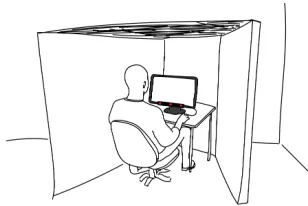
Figure 3: Sketch of the user study set up.
analysis during gameplay, using gaze heatmaps. Finally, we tested the influence of playing over time in a follow-up study.
Apparatus
To conduct the user studies we used aTobii EyeXeye-tracker under a 27" monitor (Resolution: 1920x1080; Aspect Ratio: 16:9) at 40cm from the user.
Participants played the game sitting in a custom-made booth with a covered ceiling (seeFigure3). The booth aimed at blocking the participants’ field of view so no visual dis-tractions could happen during the study.
Moreover, we built a 180◦cardboard Visual protractor with a 30 centimeters radius and a center nose hole. A protractor is an instrument for measuring angles, in the form of a flat semicircle (seeFigure4), used to test and measure peripheral vision [3, 5]. A visual protractor is traditionally employed in visual perception research to determine where in the users’ visual field the stimuli are going to be placed [40, 47].
We aimed to use the DIY protractor to test participants’ peripheral vision capabilities before and after playing the game, to check whether visual periphery skills development occurs.
Methodology
To assess the game experience of the game we used theGame Experience Questionnaire(GEQ) [20]. We used the short ver-sion of the GEQ, comprised of 14 items combining game-related statements that need to be rated on a 5-point Likert scale. GEQ is categorized and averaged into 7 experiential game measures, which are: Competence, Sensory and Imagi-native Immersion, Flow, Tension, Challenge, Negative Affect, and Positive Affect.
Competence refers to the ability to do something success-fully or efficiently. Immersion can be defined as the extent of deep but effortless involvement and reduced concern for the sense of time [46]. On the other hand, Flow is defined as the state of enjoyment in which players are completely absorbed in the gameplay [46]. Tension is related to the expe-rienced annoyance or frustration. Challenge is attributed to the mental or physical effort needed to succeed in the game.
Figure 4: Sketch of the peripheral vision test performed with the DIY cardboard protractor and the colored visual cues.
Affect refers to the difference that playing the game made in pleasantness (positive) or boredom (negative).
Positive affect, Competence, Challenge, and Tension are part of the Enjoyment dimension, whereas Negative affect, Flow and Immersion relate to game Engagement [12].
Moreover, in addition to the GEQ, we added 4 extra state-ments to measure how easy it was to adapt to the proposed dynamic of not looking (Easiness), and how eager they would be to play again (Repeatability). The statements are"I felt difficult not to look", and"I felt the game was easy"for Easi-ness;"I felt I would like to play this game again"and"I enjoyed playing with my eyes"for Repeatability.
We also used a custom-made questionnaire to ask about participant’s game preferences. The questionnaire asks users to choose which game was the easiest; the hardest; the one they enjoyed the most; the one they would like to play again; the game concept they like the most; the game concept they disliked the most; and the game they were not interested in playing again. Answers were closed to: None of them, Cyclops, Medusa, Narcissus or All of them. Finally, the ques-tionnaire asks participants to rateSuperVisionfrom 1 to 10, and to provide any comments they would like to share.
In order to perform the visual test, the protractor needs to be held up horizontally to the subject’s face with their nose in the nose hole. Participants are asked to keep their gaze on the black push-pin located in front of them at the edge of the protractor. While the participant focuses on the push-pin, the researcher holds a cardboard strip against the outer edge of the protractor on either side (seeFigure4). Then they will move it slowly and evenly along the curved edge towards the middle. Participants are asked to tell the researcher to stop the movement when they can see the strip in their periphery and guess which color is it or what is it drawn on it. The distance (in degrees) is recorded.
In the periphery visual test, we used different cardboard strips. They could feature 3 different colors (red, green, blue); and drawn in the pieces, 3 possible numbers (1, 2 or 3), 3 letters (A, B or C) or 3 shapes (circle, square, triangle).
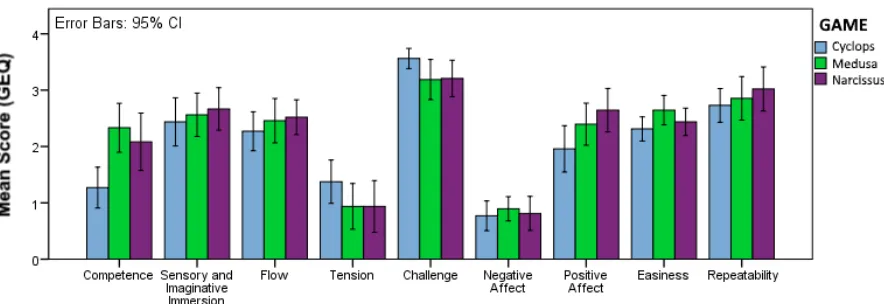
[image:6.612.98.252.91.194.2]Figure 5: Results for the 7 experiential game measures from the Game Experience Questionnaire (Competence, Immersion, Flow, Tension, Challenge, Negative and Positive affect) and the 2 extra added to measure Easiness and Repeatability.
Procedure
In the user study, we asked the participants to fill in a de-mographics questionnaire. It included close-ended questions about how frequent they play video games, cycle, drive or play any sports, to understand how trained their vision is.
Then, participants performed the protractor test. The or-der of colored cardboards and eye side were randomized. For each color and side, every extra feature was asked to participants only once (either letter, number or shape related to one of the colors).
After the visual test, we calibrated the eye tracker for the participant, using Tobii’s native application, and controlling the accuracy with the same app, before playing each game for 5 minutes. They played, on average, between 3 and 6 times. Participants were invited to continue playing for longer if they wished. The order of games was counterbalanced. After playing each game, participants were asked to fill in a GEQ. Subsequently, they played the next game.
In the end, we asked participants to rate the games and choose which one they preferred. The session was concluded with the repetition of the visual test, using another random-ized order to display the visual cues. Finally, they were in-vited to share their thoughts about the quality of the games and the concept. The study duration was around 40 minutes.
Participants were invited to a follow-up study. They were required to play the 3 games for at least 15 minutes (5 min-utes each) every day for 2 consecutive weeks, excluding weekends. On both Mondays, they were asked to perform the visual protractor test before playing, whereas the test was performed after on Fridays.
Participants
24 volunteer participants took part in the first user study (10 wearing glasses). 13 men, 10 women, and 1 undisclosed gender person participated in individual studies. 9 of them
had used an eye tracker before (6 considered themselves experienced).
Players were aged 20-39, with a mean of 27±4 years old. 11 participants indicated being used to play games regu-larly (between once a week and almost every day) during 2 hours or more, mainly First or Third person shooter, action and Real-Time games for PC. The rest of the participants (13) indicated playing sporadically to puzzle games on their phone.
12 participants indicated playing sports regularly (2 to 5 times a week) for at least 1 hour. Only 2 users reported to cycle or ride a motorbike for less than 1 hour between 2 and 3 times a week. Finally, 7 participants reported driving almost every day for 1 hour or more.
5 participants took part in the follow-up study. 4 men and 1 woman, with a mean age of 27±4 years old.
6 RESULTS
Player Experience
The player experience was measured using 7 scales from the Game Experience Questionnaire (GEQ) and 2 custom made. They measured the enjoyment, the engagement, the repeatability, and the easiness of the game concept.
Figure5 indicates that participants found the games enjoy-able. They reported feeling slightly to moderately successful and competent, and fairly to extremely challenged. All of the games were considered to be slightly frustrating (slight ten-sion) due to the unnaturalness of the dynamic, but pleasant and enjoyable. The Cyclops’ game was informed to be the most challenging and frustrating, scoring lesser pleasantness and the feeling of success.
games were considered to have a negative affect, Medusa’s game was indicated to be less engaging than the others.
Overall, participants indicated that the games were mod-erate to fairly easy to play and that they would like to play again. Narcissus’ game was rated to be the game with more interest; the Cyclops’ one, the least; and Medusa’s game qualified to be the easiest to play.
During the post-game discussion, participant 14 (P14) de-scribed the game as an"anti-game", referring that it is like a normal game, but you are mostly not allowed to look at the main action. They added that you have to force yourself not to look, something that is unusual to other games. P8 said "you have to trick yourself not to look, and then get frustrated when you look and don’t even notice! That’s quite funny!".
Player Performance and Preferences
We analyzed the game data logs for each participant to mea-sure success in each game. Gameplay logs show how the Cyclops’ game was the most difficult to succeed. The maxi-mum level achieved by players was level 5, from 12 levels of difficulty (M = 2.88±2.253). Medusa and Narcissus’ game show more players’ success. They were able to reach level 10 (Medusa: M = 4.58±2.28; Narcissus: M = 4.7±2.279). Players completed more than 80% of the levels of difficulty for at least Medusa and Narcissus’ games.
Participants with gaming experience reached higher profi-ciency in all the games, getting to higher levels of gameplay. However, using a One-way ANOVA, we did not find a sta-tistically significant difference for gameplay performance between players exposed to activities that demand peripheral awareness (cycling, driving, playing sports or gaming).
Moreover, we extracted from Narcissus’ game logs the ratio of success on noticing and collecting Echo’s hearts. It measured the influence the peripheral task had on the gaze focus attention. Players were able to collect the bonus objects a mean of 36.91%±3.6% of the times.
Further, 13 players thought none of the games were easy, with the Cyclops’ game chosen to be the hardest (by 14 par-ticipants). 10 users described Narcissus’s game as the most enjoyable, whereas 10 other participants preferred the Cy-clops’ game, and 4 could not decide between the three. More-over, 21 participants indicated they liked the concept. Only 1 participant reported they would not like to play again. Dur-ing the post-game discussions, P24 pointed out that"it was really hard, but because it was so frustrating I really wanted to play again". Participants rated the game concept with a mean score of 8.66±1.10 out of 10.
[image:8.612.332.544.92.286.2]On the other hand, results from the follow up study using a Wilcoxon signed-rank test show that playingSuperVision every day elicited a statistically significant improvement in performance, in the Cyclops’ game (Z = -2.023, p = 0.043) with mean 273.40 points±42.027 points the first day, and
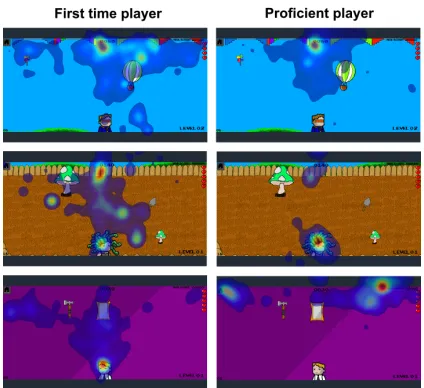
Figure 6: Gaze Heatmaps for First-time and proficient play-ing for each game.
mean 637.20 points±254.986 points the last day; and Narcis-sus’ Game (Z = -2.023, p = 0.043) with mean 2421.60 points ±1508.404 points the first day, and mean 7354.40 points± 4049.867 points the last day. No statistically significant dif-ference was found in Medusa’s game performance. These results illustrate how players developed proficiency in over-coming all the perceptual challenges the more they played.
Gameplay Behavior and Strategies
To analyze players behavior during gameplay we used all the logged gaze data, to create a series of gaze heatmaps for each of the games.
We divided the gaze data into two different groups accord-ing to players’ behaviors and success duraccord-ing the game:
• First time: Corresponds to the first played levels in which players are not familiar enough with the game to fully succeed.
• Proficient: Corresponds to the last played levels, show-ing the players’ success. We considered the last level played (maximum reached for each game) and the two previous ones (according to standard deviation). We produced a gaze heatmap for each behavior group and game. We decided to use the game data from levels 1 and 2 in each game for the First time playing behavior. Levels 8, 9 and 10 logs were used for the Proficient player behavior for Medusa and Narcissus’ game, whereas level 3, 4 and 5 logs were used for the Cyclops.
Table 1: Visual results before and after playing Super-Vision.
CUE Pre-game Post-game
Mean±SD Mean±SD Z p Color 80.14◦±6.33◦ 82.75◦±4.83◦ -5.232 < 0.0005
Drawn 40.85◦±14.08◦ 47.78◦±12.70◦ -5.722 < 0.0005
that popped up on the screen. Accordingly, there is evidence that players gaze was in motion rather than staying in a fixed point (green, yellow and red areas).
On the other hand, proficient players (Figure6, right) show fewer focus points and less movement around the screen. Figure6 (left) show how participants’ gaze turned more static towards the end of the game, once a strategy was adopted. The Cyclops’ game (top) presents a strong focal point on the top-center of the screen, common to all players. Medusa’s game (middle) indicates how different users chose between two distinct focal points. The majority of players focused on the characters’ head. Finally, during Narcissus’ game, players focused all around the top of the screen.
During the user study, 3 participants complained about objects moving towards their gaze focus rather than them looking at them on purpose. They reported their strategy was to be concentrated looking at a fixed point. P15 pointed out:"I was too focused on thinking where not to look that I forgot at times to move the mouse". Evidence shown inFigure6 (right) indicates that most players decided to keep their gaze point fixed in the same location while playing.
Results indicate how players developed a strategy to suc-ceed in the games the more they played. P18 said during a post-game discussion:"It was hard to find a strategy not to look at the start of the games, but playing them for at least once helped to decide on the strategy and become more successful".
Peripheral Vision Skills
We measured participants’ ability to detect and identify cues in their peripheral vision with a visual test using a protractor.
We wanted to determine whether the test results prior and after playing were significantly different.Table1 shows the mean position in degrees in the peripheral visual field where the 24 participants were able to identify the different color and drawn cues. We performed a Wilcoxon signed-rank test for both cues. Results indicate that playingSuperVision elicited a statistically significant change (improvement) in the detection of color and drawn cues in peripheral vision. Moreover, we did not find a statistically significant differ-ence between the test results for either eye; color cues (red, green and blue); or drawings (letters, numbers, and shapes); nor in the results from participants with or without visual correction (wearing glasses).
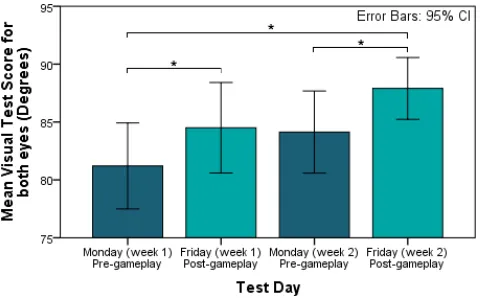
Accordingly, with our follow-up study, we wanted to know whether there would be a visual skills improvement over time by playing the games.Figure7 shows the visual test mean
Figure 7: Visual tests results during the 2 weeks follow-up user study performed every first and last day of the week.
scores during the study for the 5 participants. Results from a Wilcoxon signed-rank test indicate that playingSuperVision every day during 2 weeks elicited a statistically significant change in detection of color cues in peripheral vision during the first week, Monday to Friday, (Z = -3.222, p = 0.001) with mean 81.20◦±4.08◦(Monday) and 84.50◦±4.32◦(Friday); during the second week, Monday to Friday, (Z = -4.240, p < 0.0005) with mean 84.13◦±3.73◦(Monday) and 87.90◦± 2.73◦(Friday); and during the 2 weeks, first Monday to second Friday, (Z = -4.593, p < 0.0005). No statistically significant difference was found in the visual results due to not playing the game during the weekend (p = 0.521).
7 DISCUSSION
Playing with Peripheral Vision
The goal of our work is to challenge gaze-focus based design and to propose leveraging the capabilities of the wider vision. We provided a conceptual framework to"play with periphery", illustrated by three games examples. It is very unusual to demand users not to look to assess elements that will only be in their visual periphery, when they could do it easily by looking directly at them. Using this dynamic creates not only a challenge but also a task with high cognitive demand.
Results from the GEQ suggest that playingSuperVision was very challenging with a high perceived cognitive load. The perceived frustration when failing to overcome the per-ceptual challenges made players want to play more and try to succeed, and they rated the gameplay as a pleasant expe-rience.
[image:9.612.58.288.110.153.2]Challenges and Strategies
We also wanted to know if playing in the periphery was feasible and whether players could overcome the perceptual challenges by developing clear strategies. Our results show that differentiating different elements in the periphery is possible. Objects with bright colors, with color variations (skulls for Pirate balloons in the Cyclops’ game), less vivid-ness, with a difference of more than a 10% in size from their counterpart, can be differentiated in the periphery.
On the other hand, designing for the periphery poses different questions on how to effectively use color saliency, contrast, size, shape, interaction modes and feedback for the detection of visual cues in the periphery.
Overall, the players showed proficiency in overcoming the perceptual tasks by developing a clear strategy to find a space where they could"park"their gaze. This effect might limit the experience when designing the graphics of the game. When gaze remains static, there could be no reason to create "beautiful"graphics or too elaborate game objects and stories, as they would only be seen in the periphery.
Nevertheless, our results suggest how the use of metaphors for gaze interaction might have affected the perceived experi-ence of immersion. Further, the proposed challenges may be of interest for entirely different types of games (e.g. serious games to train peripheral vision awareness, or for behavioral training for inhibitory control).
Visual Skills Development
Moreover, we wanted to know if playing games that hap-pen in the periphery could influence the development of players’ visual abilities. Although we do not have visual skill development data from a baseline group which did not play the games, our results suggest that playingSuperVision could improve visual awareness, as peripheral vision can be trained [59]. This poses our games’ conceptual framework as a potential peripheral vision awareness training tool.
Playing with Peripheral Visionopens up opportunities that could have implications for the processing of peripheral no-tifications, that could be picked up without looking at them; the creation of serious games to train athletes, dancers or industrial workers; and the design of serious games for psy-chology assessment or behavioral training for cognitive stim-ulation based on inhibitory control.
Playful Inhibition
Given that human attention gets attracted to elements that pop out in the scene [15], players found hard not look, as they would do naturally.
The proposed "not looking" dynamic is related to a process of inhibitory control of the visual focus, which inSuperVision becomes an engaging and playful challenge. Players need to
be aware of the Gaze Aversion game rule which goes against their natural behavior. They attempt to control and resist this reflexive impulse to look, while there is additional stress from trying to solve the peripheral task.
During our user study, players reported struggling at first to control the impulse to look. This can be illustrated by Edgar Allan Poe’sThe imp of the perverse[38]. In Poe’s work, he reasons why people act against their self-interest (tempted by the symbol ofthe imp), only because they feel they should not. In our work, "looking" becomesthe perverseaction that needs to be controlled. Players could do just fine suppressing the impulse, but they cannot stop thinking about it. This compromises the inhibitory control, that can weaken further when an overload or stress is added [55].
In this way, players know they should not look, but the tasks in the periphery lower their control and make them indulge the reflex of looking, failing at the game. This forces them to train themselves to inhibit the impulse if they want to succeed. Moreover, our results (Figure6) show how par-ticipants overcame this challenge and were able to focus on the peripheral task, adopting a static gaze focus strategy.
In behavioral studies, inhibition is closely related to the Working Memory and can be trained [29], for example by showing negative cues (go/no-go test) [19] next to the im-pulse that wants to be controlled . In our work, given the evolution of the players’ success, our mechanisms to support the game rule (e.g., penalization plus sound feedback) served as negative cues to train the inhibitory control.
We can find similar dynamics in psychology studies us-ing the anti-saccades test [7, 31], or products to stimulate cognitively people living with ADHD or OCD [6]. In this way, even though our contribution is focused on presenting playing with periphery as an uncommon mechanic, it could become a potential tool to improve the design of gamified tests for psychology and cognitive assessment and serious games for behavioral change based on inhibitory control. Designing game challenges like inSuperVisioncan offer a promising way to lower the stress for psychology patients and make these tests more engaging and enjoyable.
8 CONCLUSION
REFERENCES
[1] Saskia Bakker, Elise van den Hoven, and Berry Eggen. 2010. Design for the Periphery.EuroHaptics 201071 (2010).
[2] Joseph Baldwin, Alistair Burleigh, Robert Pepperell, and Nicole Ruta. 2016. The Perceived Size and Shape of Objects in Peripheral Vision. i-Perception7, 4 (2016), 2041669516661900.
[3] Bernell. 2019. Bernell Vision Disk. https://www.bernell.com/product/ HS6015/807. Accessed: 2019-01-07.
[4] Jeremy Birnholtz, Lindsay Reynolds, Eli Luxenberg, Carl Gutwin, and Maryam Mustafa. 2010. Awareness beyond the desktop: exploring attention and distraction with a projected peripheral-vision display. InProceedings of Graphics Interface 2010. Canadian Information Pro-cessing Society, 55–62.
[5] Science Buddies. 2016. Put Your Peripheral Vision to the Test. https://www.scientificamerican.com/article/ put-your-peripheral-vision-to-the-test/
[6] CogniFit. [n. d.]. Inhibition or inhibitory Control - Cognitive Ability. https://www.cognifit.com/science/cognitive-skills/inhibition [7] Trevor J Crawford and Steve Higham. 2016. Distinguishing between
impairments of working memory and inhibitory control in cases of early dementia.Neuropsychologia81 (2016), 61–67.
[8] Gwyneth Doherty-Sneddon and Fiona G Phelps. 2005. Gaze aversion: A response to cognitive or social difficulty?Memory & cognition33, 4 (2005), 727–733.
[9] Crystal Dynamics. 2015.Rise of the Tomb Raider. Game [Xbox]. [10] Inger Ekman, Antti Poikola, Meeri Mäkäräinen, Tapio Takala, and
Perttu Hämäläinen. 2008. Voluntary Pupil Size Change As Control in Eyes Only Interaction. InProceedings of the 2008 Symposium on Eye Tracking Research Applications (ETRA ’08). ACM, New York, NY, USA, 115–118. https://doi.org/10.1145/1344471.1344501
[11] Inger M Ekman, Antti W Poikola, and Meeri K Mäkäräinen. 2008. Invisible eni: using gaze and pupil size to control a game. InCHI’08 extended abstracts on Human factors in computing systems. ACM, 3135– 3140.
[12] Brian J Gajadhar, Henk Herman Nap, Yvonne AW de Kort, and Wij-nand A IJsselsteijn. 2010. Out of sight, out of mind: co-player effects on seniors’ player experience. InProceedings of the 3rd International Conference on Fun and Games. ACM, 74–83.
[13] Kevin Grad, TC Graham, and A James Stewart. 2007. Effective use of the periphery in game displays. InProceedings of the 2007 conference on Future Play. ACM, 69–76.
[14] Robert Graves. 2017. The Greek Myths: The complete and definitive edition. Penguin UK.
[15] Carl Gutwin, Andy Cockburn, and Ashley Coveney. 2017. Periph-eral Popout: The Influence of Visual Angle and Stimulus Intensity on Popout Effects. InProceedings of the 2017 CHI Conference on Human Factors in Computing Systems. ACM, 208–219.
[16] Halfbrick. 2010.Fruit Ninja. Game [iOS][Android][Windows Phone]. [17] Doris Hausen. 2012. Peripheral interaction: facilitating interaction with
secondary tasks. InProceedings of the Sixth International Conference on Tangible, Embedded and Embodied Interaction. ACM, 387–388. [18] Renate Häuslschmid, Sven Osterwald, Marcus Lang, and Andreas Butz.
2015. Augmenting the Driver’s View with Peripheral Information on a Windshield Display. InProceedings of the 20th International Conference on Intelligent User Interfaces. ACM, 311–321.
[19] Katrijn Houben and Anita Jansen. 2015. Chocolate equals stop. Chocolate-specific inhibition training reduces chocolate intake and go associations with chocolate.Appetite87 (2015), 318–323.
[20] WA IJsselsteijn, YAW de Kort, and K Karolien Poels. 2013. The Game Experience Questionnaire. (2013).
[21] Poika Isokoski, Markus Joos, Oleg Spakov, and Benoît Martin. 2009. Gaze controlled games.Universal Access in the Information Society8, 4 (2009), 323–337.
[22] Poika Isokoski and Benot Martin. 2006. Eye tracker input in first person shooter games. InProceedings of the 2nd Conference on Communication by Gaze Interaction: Communication by Gaze Interaction-COGAIN 2006: Gazing into the Future. 78–81.
[23] Howell Istance, Aulikki Hyrskykari, Stephen Vickers, and Thiago Chaves. 2009. For your eyes only: Controlling 3d online games by eye-gaze. InHuman-Computer Interaction–INTERACT 2009. Springer, 314–327.
[24] Robert J. K. Jacob. 1990. What you look at is what you get: eye movement-based interaction techniques. InProceedings of the SIGCHI conference on Human factors in computing systems: Empowering people (CHI ’90). ACM, New York, NY, USA, 11–18. https://doi.org/10.1145/ 97243.97246
[25] Lee Jones, John McClelland, Phonesavanh Thongsouksanoumane, and Audrey Girouard. 2017. Ambient Notifications with Shape Changing Circuits in Peripheral Locations. InProceedings of the 2017 ACM Inter-national Conference on Interactive Surfaces and Spaces. ACM, 405–408. [26] Safal Khanal. 2015. Impact of visual skills training on sports
perfor-mance: Current and future perspectives. (2015).
[27] Stan Lee and Jack Kirby. 1963. The X-Men# 1.Marvel Comics Google Scholar(1963).
[28] Kris Luyten, Donald Degraen, Gustavo Rovelo Ruiz, Sven Coppers, and Davy Vanacken. 2016. Hidden in plain sight: an exploration of a visual language for near-eye out-of-focus displays in the peripheral view. InProceedings of the 2016 CHI Conference on Human Factors in Computing Systems. ACM, 487–497.
[29] Maria J Maraver, M Teresa Bajo, and Carlos J Gomez-Ariza. 2016. Training on working memory and inhibitory control in young adults. Frontiers in human neuroscience10 (2016), 588.
[30] Ubisoft Massive. 2016.Tom Clancy’s The Division. Game [Microsoft Windows].
[31] Douglas P. Munoz and Stefan Everling. 2004. Look away: the anti-saccade task and the voluntary control of eye movement. Nature Reviews Neuroscience5 (01 03 2004), 218 EP –. http://dx.doi.org/10. 1038/nrn1345
[32] Jorge Munoz, Georgios N Yannakakis, Fiona Mulvey, Dan Witzner Hansen, German Gutierrez, and Araceli Sanchis. 2011. Towards gaze-controlled platform games. InComputational Intelligence and Games (CIG), 2011 IEEE Conference on. IEEE, 47–54.
[33] Lennart E Nacke, Sophie Stellmach, Dennis Sasse, and Craig A Lindley. 2010. Gameplay experience in a gaze interaction game.arXiv preprint arXiv:1004.0259(2010).
[34] Joshua Newn, Eduardo Velloso, Fraser Allison, Yomna Abdelrahman, and Frank Vetere. 2017. Evaluating Real-Time Gaze Representations to Infer Intentions in Competitive Turn-Based Strategy Games. In Proceedings of the Annual Symposium on Computer-Human Interaction in Play (CHI PLAY ’17). ACM, New York, NY, USA, 541–552. https: //doi.org/10.1145/3116595.3116624
[35] Robert Pepperell. 2012. The perception of art and the science of per-ception. SPIE-IS&T.
[36] Ken Pfeuffer, Jason Alexander, Ming Ki Chong, Yanxia Zhang, and Hans Gellersen. 2015. Gaze-Shifting: Direct-Indirect Input with Pen and Touch Modulated by Gaze. InProceedings of the 28th Annual ACM Symposium on User Interface Software & Technology (UIST ’15). ACM, New York, NY, USA, 373–383. https://doi.org/10.1145/2807442. 2807460
Conference on Mobile and Ubiquitous Multimedia (MUM ’16). ACM, New York, NY, USA, 213–216. https://doi.org/10.1145/3012709.3012717 [38] Edgar Allan Poe. 2015.The imp of the perverse. Edgar Allan Poe. [39] Ubisoft Quebec. 2015.Assassin’s Creed Syndicate. Game [Microsoft
Windows].
[40] Luisa Jesús Quevedo Junyent, Fernando Palomar Mascaró, and José An-tonio Aznar-Casanova. 2017. Effective Visual Field Rehabilitation in Homonymous Hemianopia by Attaching Binocular Prisms to Lenses. American Research Journal of Ophthalmology and Optometry1, 1 (2017), 1–11.
[41] Ruth Rosenholtz. 2016. Capabilities and limitations of peripheral vision. Annual Review of Vision Science2 (2016), 437–457.
[42] Franklin R Schneier, Thomas L Rodebaugh, Carlos Blanco, Hillary Lewin, and Michael R Liebowitz. 2011. Fear and avoidance of eye contact in social anxiety disorder. Comprehensive Psychiatry52, 1 (2011), 81–87.
[43] Baris Serim and Giulio Jacucci. 2016. Pointing While Looking Else-where: Designing for Varying Degrees of Visual Guidance During Manual Input. InProceedings of the 2016 CHI Conference on Human Factors in Computing Systems (CHI ’16). ACM, New York, NY, USA, 5789–5800. https://doi.org/10.1145/2858036.2858480
[44] J David Smith and TC Graham. 2006. Use of eye movements for video game control. InProceedings of the 2006 ACM SIGCHI international conference on Advances in computer entertainment technology. ACM, 20.
[45] India Starker and Richard A. Bolt. 1990. A Gaze-responsive Self-disclosing Display. InProceedings of the SIGCHI Conference on Human Factors in Computing Systems (CHI ’90). ACM, New York, NY, USA, 3–10. https://doi.org/10.1145/97243.97245
[46] Penelope Sweetser and Peta Wyeth. 2005. GameFlow: A Model for Evaluating Player Enjoyment in Games.Comput. Entertain.3, 3 (July 2005), 3–3. https://doi.org/10.1145/1077246.1077253
[47] MPS To, BC Regan, Dora Wood, and JD Mollon. 2011. Vision out of the corner of the eye.Vision Research51, 1 (2011), 203–214. [48] Jayson Turner, Eduardo Velloso, Hans Gellersen, and Veronica
Sundst-edt. 2014. EyePlay: applications for gaze in games. InProceedings of the first ACM SIGCHI annual symposium on Computer-human interaction in play. ACM, 465–468.
[49] Ubisoft Montreal and Ubisoft Toronto. 2018. Far Cry 5. Game [Xbox][Windows][PlayStation].
[50] Eduardo Velloso and Marcus Carter. 2016. The Emergence of EyePlay: A Survey of Eye Interaction in Games. InProceedings of the 2016 Annual Symposium on Computer-Human Interaction in Play (CHI PLAY ’16). ACM, New York, NY, USA, 171–185. https://doi.org/10.1145/2967934. 2968084
[51] Eduardo Velloso, Carl Oechsner, Katharina Sachmann, Markus Wirth, and Hans Gellersen. 2015. Arcade+: A Platform for Public Deployment and Evaluation of Multi-Modal Games. InProceedings of the 2015 An-nual Symposium on Computer-Human Interaction in Play (CHI PLAY ’15). ACM, New York, NY, USA, 271–275. https://doi.org/10.1145/ 2793107.2793145
[52] Melodie Vidal. 2014. Shynosaurs: A Game of Attention Dilemma. In Proceedings of the First ACM SIGCHI Annual Symposium on Computer-human Interaction in Play (CHI PLAY ’14). ACM, New York, NY, USA, 391–394. https://doi.org/10.1145/2658537.2662979
[53] Melodie Vidal, Remi Bismuth, Andreas Bulling, and Hans Gellersen. 2015. The Royal Corgi: Exploring Social Gaze Interaction for Immersive Gameplay. InProceedings of the 33rd Annual ACM Conference on Human Factors in Computing Systems (CHI ’15). ACM, New York, NY, USA, 115–124. https://doi.org/10.1145/2702123.2702163
[54] Mélodie Vidal, Andreas Bulling, and Hans Gellersen. 2013. suits: Spontaneous Interaction with Displays Based on Smooth Pur-suit Eye Movement and Moving Targets. InProceedings of the 2013 ACM International Joint Conference on Pervasive and Ubiquitous Com-puting (UbiComp ’13). ACM, New York, NY, USA, 439–448. https: //doi.org/10.1145/2493432.2493477
[55] Daniel M Wegner. 2009. How to think, say, or do precisely the worst thing for any occasion.Science325, 5936 (2009), 48–50.
[56] Denise Chapman Weston. 2004. Interactive dark ride. US Patent 6,796,908.
[57] David Whitney and Dennis M Levi. 2011. Visual crowding: A funda-mental limit on conscious perception and object recognition.Trends in cognitive sciences15, 4 (2011), 160–168.
[58] Jean M Williams and Joel Thirer. 1975. Vertical and horizontal pe-ripheral vision in male and female athletes and nonathletes.Research Quarterly. American Alliance for Health, Physical Education and Recre-ation46, 2 (1975), 200–205.