145
Memory Grounded Conversational Reasoning
Seungwhan Moon, Pararth Shah, Anuj Kumar, Rajen Subba Facebook Assistant
{shanemoon, pararths, anujk, rasubba@}fb.com
Abstract
We demonstrate a conversational system which engages the user through a multi-modal, multi-turn dialog over the user’s memories. The system can perform QA over memories by responding to user queries to recall spe-cific attributes and associated media (e.g. pho-tos) of past episodic memories. The system can also make proactive suggestions to sur-face related events or facts from past memo-ries to make conversations more engaging and natural. To implement such a system, we col-lect a new corpus of memory grounded con-versations, which comprises human-to-human role-playing dialogs given synthetic memory graphs with simulated attributes. Our proof-of-concept system operates on these synthetic memory graphs, however it can be trained and applied to real-world user memory data (e.g. photo albums, etc.) We present the architec-ture of the proposed conversational system, and example queries that the system supports.
1 Introduction
[image:1.595.306.527.219.441.2]In the last few decades, people have been stor-ing an increasstor-ing amount of their life’s memories in the form of digital multimedia, e.g. photos, videos and textual posts. Retrieving one’s mem-ories from these memory banks and reminiscing about events from one’s personal and professional life is a prevalent desire among many users. Tra-ditionally, the interfaces to access these memories are either (i) keyword based search systems which demand specific keyword combinations to iden-tify and retrieve the correct memories, or (ii) cat-alog based browsing systems that allow scrolling through memories across a single dimension, most commonly, time of creation. However, we posit that a more natural way of interacting with one’s memories is through a flexible interface that can support fuzzy queries by referencing memories through various attributes, such as events, people,
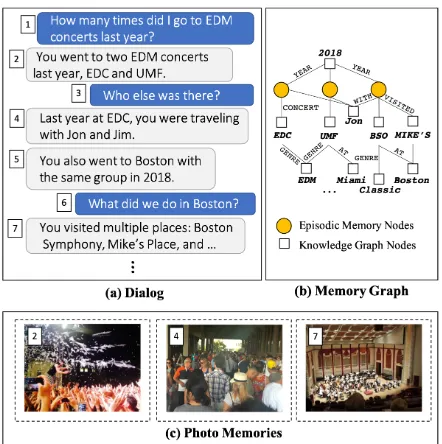
Figure 1: Memory Grounded Conversational Rea-soningbetween a user and the assistant with a parallel (a) dialog and (b) memory graph pair. Dialog transi-tions can be captured as walks over a memory graph. (c) Some of the memories can be inferred from pho-tos or other media, which are surfaced to the user when they are available and relevant.
locations or activities associated with them, and that can enable the user to explore other relevant memories connected through one of many dimen-sions,e.g. same group of people, same location, etc., thereby not being restricted to browsing only temporally adjacent memories.
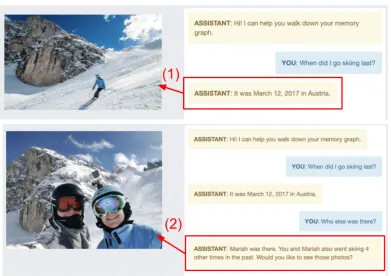
Figure 2:Memory Walker Chatbot UIfor memory grounded conversations between a user and the assistant.
Figure 1 shows an example interaction sup-ported by the demonstrated system, spanning mul-tiple episodic memories that are represented as a graph composed of memory nodes and related en-tity nodes connected via relational edges. The ex-ample above shows three key novel features of the demonstrated system: 1) the ability of query-ing a personal database to answer various com-plex user queries (memory recall QA), 2) surfac-ing photos most relevant to the dialog, and 3) iden-tifying other memories to surface that are relevant to conversational contexts, resulting in increased engagement and coherent interactions.
Our system consists of several components: First, we use the Memory Graph Networks (MGN) model, which learns natural graph paths among episodic memory nodes, conditioned over dialog contexts. MGN can introduce new memory nodes relevant to conversational contexts when memory nodes are activated as a result of graph walks. Sec-ond, the QA module takes as input user query utterances and infers correct answers given can-didate memory graph nodes activated with the MGN model. Specifically, we utilize multiple sub-module nets such as CHOOSE, COUNT, etc., to support discrete reasoning questions that can-not be handled directly via graph networks. Fi-nally, the photo recommender module then uses
the MGN graph node embeddings and the gener-ated attention scores to retrieve the most relevant photos for each dialog response.
Section2provides a detailed description of the system’s user interface, method and data collec-tion setup. Section 3 provides an analysis of demonstrations performed via the system, and Section4lists related work.
2 Memory Grounded Conversations
2.1 User Interface
The goal of the demonstrated system is to establish a natural user interface (UI) for interacting with memories. Figure 2shows the UI of the demon-strated system, composed of two main sections: the media section (left) and the chat section (right; highlighted yellow: assistant, blue: user). This is a simple yet powerful interface for interacting with memories, for the following reasons:
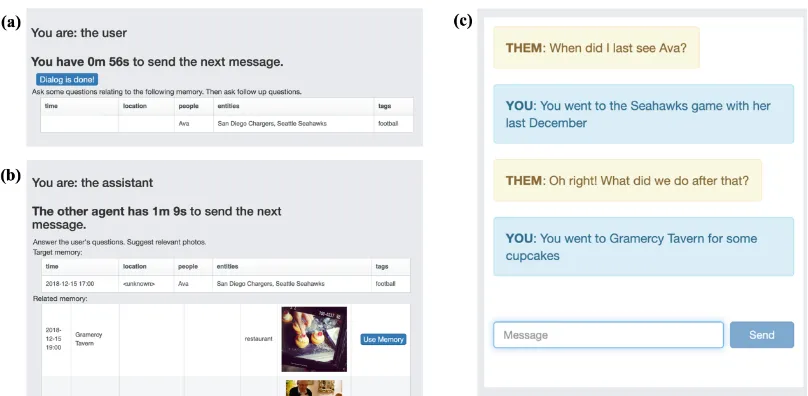
Figure 3:Memory DialogDataset Collection Interface, with an example. (a) User-playing agent is provided with partial memory information to query about. (b) Assistant-playing agent has the ground-truth information about the target memory as well as all related memories. (c) The two agents generate dialogs, grounded on the synthetic memories that they are presented with.
Visual. The UI can display visual content con-nected to the memories, and allow for further queries into the content of the image or video. Au-thors’ personal photos are used in the demonstra-tion, attached with synthetically generated mem-ory graphs.
Contextual. The system keeps track of the con-versational context within a user session, allowing the user to refer to entities present in the dialog or media. In Figure 2 part 2, the user refers to the event mentioned in the previous system response and asks a further question regarding who attended the event.
Proactive. The system can insert conver-sational recommendations for exploring related memories based on the system’s model of which memories are naturally interesting for users to consume in a particular context. In Figure2part 2, the system suggests to the user other memory in-stances that share the same activity and set of peo-ple. The system can make the suggestions more personalized by learning the sequences in which users like to explore memories, from the user’s past sessions.
2.2 Dataset:Memory Dialog
Synthetic Memory Graph: For the proposed sys-tem, we first bootstrap the large-scale memory col-lection through a synthetic memory graph gen-erator, which creates multiple artificial episodic memory graph nodes with connections to real en-tities appearing on common-fact KGs (e.g.
loca-tions, events, public entities). We first build a syn-thetic social graph of users, where each user is as-signed to a random interest profile as a probability distribution over the ‘activity’ space. We then iter-atively generate a memory node and its associated attributes and entities by sampling activities, par-ticipants, locations, entities, time,etc.each from a manually defined ontology. Through the realistic memory graph that is synthetically generated, we avoid the need for extracting memory graphs from other structured sources (e.g. photo albums) which are often private or limited in size. Note also that by representing the memory database in a graph format, it allows for flexible operations required for complex QA and conversational reasoning.
Wizard-of-Oz Setup: We collect theMemory Di-alogdataset in a Wizard-of-Oz setting (Shah et al.,
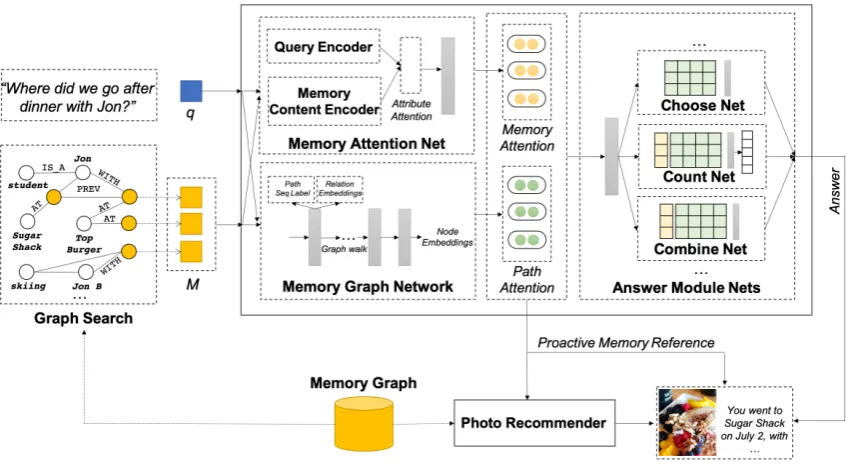
memo-Figure 4:Overall architectureof the demonstrated system. Candidate memory nodesm={m(k)}are provided
as input memory slots for each queryq. The Memory Graph Network then traverses the memory graph to expand the initial memory slots and activate other relevant entity and memory nodes. The output paths of MGN are then used to trigger proactive memory reference, if relevant. The Answer Module executes the predicted neural programs to decode answers given intermediate network outputs. The photo recommender is then called to retrieve relevant photos (e.g. photos of the reference memory that includes the answer to a query).
ries relevant to conversational contexts that would make the interaction more engaging and interest-ing (e.g. memories with the same group of peo-ple, at the same location as the reference mem-ory, etc.). The two agents continue this process to explore the given memory graph, until one of the agents decides to end the conversation.
2.3 Method
Figure4illustrates the overall architecture and the model components of the demonstrated system.
Input Module: For a given query q, its rele-vant memory nodesm={m(k)}K
k=1for slot size K are provided as initial memory slots via graph searches. The Query Encoder then encodes the in-put query with a language model. Specifically, we represent each textual query with a state-of-the-art attention-based Bi-LSTM language model ( Con-neau et al.,2017). The Memory Encoder then en-codes each memory slot based on both its struc-tural features (graph embeddings) and contextual multi-modal features from its neighboring nodes (e.g. attribute values). We construct memory graph embeddings to encode structural contexts of each memory node via the graph embeddings pro-jection approaches (Bordes et al.,2013), in which semantically similar nodes are distributed closer in the embeddings space.
Memory Graph Networks: To utilize encoded candidate memory nodes for memory recall QA and proactive memory reference, we first uti-lize the Memory Graph Networks (MGN) (Moon et al.,2019b). MGN stores memory graph nodes as initial memory slots, where additional con-texts and answer candidates can be succinctly ex-panded and reached via graph traversals. For each (q,m(k)) pair, MGN predicts optimal memory slot
expansion steps: p(k) = {[pe,t(k);p(n,tk)]}T t=1 for
edge pathspe and corresponding node pathspn. The LSTM-based sequence model is trained to learn the optimal path with ground-truth node and relation paths. The attended memory nodes are then used to answer user memory recall queries (QA module), and to predict relevant memory nodes to surface as a response to the previous con-versational contexts (Recommender Module).
QA Modules: An estimated answer aˆ = QA(m,q) is predicted given a query and MGN graph path output from initial memory slots.
We then define the memory attention to attenu-ate or amplify all activattenu-ated memory nodes based on their compatibility with query, formulated as follows:
β =MLP(q,{m(k)},{p(k)}) (1)
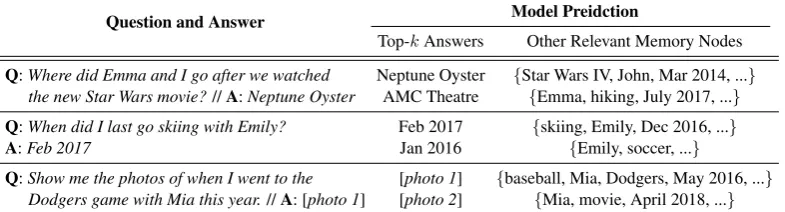
[image:4.595.87.513.61.293.2]Question and Answer Model Preidction
Top-kAnswers Other Relevant Memory Nodes
Q:Where did Emma and I go after we watched Neptune Oyster {Star Wars IV, John, Mar 2014, ...} the new Star Wars movie?//A:Neptune Oyster AMC Theatre {Emma, hiking, July 2017, ...}
Q:When did I last go skiing with Emily? Feb 2017 {skiing, Emily, Dec 2016, ...}
A:Feb 2017 Jan 2016 {Emily, soccer, ...}
[image:5.595.105.498.66.172.2]Q:Show me the photos of when I went to the [photo 1] {baseball, Mia, Dodgers, May 2016, ...} Dodgers game with Mia this year.//A: [photo 1] [photo 2] {Mia, movie, April 2018, ...}
Table 1: Example output: Model predictions the top-kanswers and the attended memory nodes are partially shown for each question and ground-truth answer pair.
Next, the model outputs a module program
{u(k)} for several sub-module networks (e.g.
CHOOSE,COUNT, ...) via the multi-layer percep-tion module selector network, which outputs the module label probability{u(k)}for each memory node:
{u(k)}=Softmax(MLP(q,{m(k)})) (3)
Each module network produces an answer vec-tor, the aggregated result of which determines the top-kanswers to be returned.
Photo Memory Recommender: The memory at-tention values (α) and the path outputs are then used to proactively recommend relevant photos as-sociated with each activated memory nodem(k):
{i(k)}=Softmax(MLP(α(k),p(k)))∀k (4)
where the output score is used to rank the can-didate photos. Photos with the top score (above threshold) are then finally surfaced along with their memory nodes. We leave this threshold as a tunable hyper-parameter that can determine the proactive behavior of the system in introducing other relevant memories given previous conversa-tional contexts.
3 Demonstration
Table 1 shows some of the example output from the demonstrated system given the input query and memory graph nodes. It can be seen that the model is able to predict answers by combining answer contexts from multiple components (walk path, node attention, neural modules, etc.) In gen-eral, the model successfully explores the respec-tive single-hop or multi-hop relations within the memory graph. The activated nodes via graph traversals are then used as input for each neural module, the aggregated results of which are the fi-nal top-k answer predictions. The model also at-tends on other relevant memory nodes which often
have some of the key attributes shared with the tar-get reference memory (e.g. same activity, people, location, etc.). At test time, we can proactively present these relevant memories to users along with their associated media contents for more en-gaging memory-grounded conversations.
4 Related Work
End-to-end dialog systems: There have been a number of studies on end-to-end dialog sys-tems, often focused on task or goal oriented dialog systems such as conversational recommendations (Bordes et al.,2017;Sun and Zhang,2018), infor-mation querying (Williams et al., 2017;de Vries et al., 2018; Reddy et al., 2018), etc. Many of the public datasets are collected via bootstrapped simulations (Bordes et al., 2017), Wizard-of-Oz setup (Zhang et al.,2018;Wei et al.,2018;Moon et al., 2019a), or online corpus (Li et al., 2016). In our work, we propose a unique setup for di-alog systems called memory-grounded conversa-tions, where the focus is on grounding human con-versations with past user memories for both the goal-oriented task (memory recall QA) and the more open-ended dialogs (proactive memory ref-erence). OurMemory Dialogdataset uses the pop-ular Wizard-of-Oz setup between role-playing hu-man annotators, where the reference memories are bootstrapped through memory graph generator.
QA Systems: Structured QA systems have been very popular due to the popularity of the retrieval assistant products, which solve fact-retrieval QA queries with large-scale common fact knowledge graphs (Bordes et al.,2015;Xu et al.,
that utilize Memory Networks with explicit mem-ory slots (Weston et al., 2014;Sukhbaatar et al.,
2016) are widely used for their capability of tran-sitive reasoning. In our work, we utilize Mem-ory Graph Networks (MGN) (Moon et al.,2019b) to store graph nodes as memory slots and expand slots via graph traversals, to effectively handle complex memory recall queries and to identify rel-evant memories to surface next.
Visual QA systemsanswer queries based on the contexts from provided images (Antol et al.,2015;
Wang et al., 2018; Wu et al.,2018). Jiang et al.
(2018) propose the visual memex QA task which addresses similar domains given a dataset com-posed of multiple photo albums. We extend the problem domain to the conversational settings where the focus is the increased engagement with users through natural multi-modal interactions. Our work also extends the QA capability by utiliz-ing semantic and structural contexts from memory and knowledge graphs, instead of relying solely on meta information and multi-modal content avail-able in photo albums.
References
Stanislaw Antol, Aishwarya Agrawal, Jiasen Lu, Mar-garet Mitchell, Dhruv Batra, C. Lawrence Zitnick, and Devi Parikh. 2015. VQA: Visual Question An-swering. InICCV.
Antoine Bordes, Y-Lan Boureau, and Jason Weston. 2017. Learning end-to-end goal-oriented dialog. ICLR.
Antoine Bordes, Nicolas Usunier, Sumit Chopra, and Jason Weston. 2015. Large-scale simple question answering with memory network.arxiv.
Antoine Bordes, Nicolas Usunier, Alberto Garcia-Duran, Jason Weston, and Oksana Yakhnenko. 2013. Translating embeddings for modeling multi-relational data. InNIPS.
Alexis Conneau, Douwe Kiela, Holger Schwenk, Lo¨ıc Barrault, and Antoine Bordes. 2017. Supervised learning of universal sentence representations from natural language inference data. InEMNLP.
Mohnish Dubey, Debayan Banerjee, Debanjan Chaud-huri, and Jens Lehmann. 2018. Earl: Joint entity and relation linking for question answering over knowl-edge graphs.ESWC.
Lu Jiang, Junwei Liang, Liangliang Cao, Yannis Kalan-tidis, Sachin Farfade, and Alexander Hauptmann. 2018. Memexqa: Visual memex question answer-ing. arxiv.
Jiwei Li, Michel Galley, Chris Brockett, Georgios P Spithourakis, Jianfeng Gao, and Bill Dolan. 2016. A persona-based neural conversation model. ACL.
Seungwhan Moon, Pararth Shah, Anuj Kumar, and Ra-jen Subba. 2019a. Opendialkg: Explainable conver-sational reasoning with attention-based walks over knowledge graphs.ACL.
Seungwhan Moon, Pararth Shah, Anuj Kumar, and Ra-jen Subba. 2019b. Walk the memory: Memory graph networks for explainable memory-grounded question answering.CoNLL.
Siva Reddy, Danqi Chen, and Christopher D Manning. 2018. Coqa: A conversational question answering challenge. arXiv preprint arXiv:1808.07042.
Pararth Shah, Dilek Hakkani-Tur, Bing Liu, and Gokhan Tur. 2018. Bootstrapping a neural conversa-tional agent with dialogue self-play, crowdsourcing and on-line reinforcement learning. InNAACL.
Sainbayar Sukhbaatar, Arthur Szlam, Jason Weston, and Rob Fergus. 2016. End-to-end memory net-works. NIPS.
Yueming Sun and Yi Zhang. 2018. Conversational rec-ommender system. SIGIR.
Harm de Vries, Kurt Shuster, Dhruv Batra, Devi Parikh, Jason Weston, and Douwe Kiela. 2018. Talk the walk: Navigating new york city through grounded dialogue. ECCV.
Peng Wang, Qi Wu, Chunhua Shen, Anthony Dick, and Anton van den Hengel. 2018. Fvqa: Fact-based vi-sual question answering. PAMI.
Wei Wei, Quoc Le, Andrew Dai, and Jia Li. 2018. Airdialogue: An environment for goal-oriented di-alogue research. InEMNLP.
Jason Weston, Sumit Chopra, and Antoine Bor-des. 2014. Memory networks. arXiv preprint arXiv:1410.3916.
Jason D Williams, Kavosh Asadi, and Geoffrey Zweig. 2017. Hybrid code networks: practical and efficient end-to-end dialog control with supervised and rein-forcement learning. ACL.
Qi Wu, Chunhua Shen, Peng Wang, Anthony Dick, and Anton van den Hengel. 2018. Image captioning and visual question answering based on attributes and external knowledge.PAMI.
Kun Xu, Siva Reddy, Yansong Feng, Songfang Huang, and Dongyan Zhao. 2016. Question answering on freebase via relation extraction and textual evidence. ACL.