Attention Modeling for Targeted Sentiment
Jiangming Liu and Yue Zhang
Singapore University of Technology and Design, 8 Somapah Road, Singapore, 487372
{jiangming liu, yue zhang}@sutd.edu.sg
Abstract
Neural network models have been used for target-dependent sentiment analysis. Previous work focus on learning a target specific representation for a given input sentence which is used for classification. However, they do not explicitly model the contribution of each word in a sentence with respect to targeted sentiment polar-ities. We investigate an attention model to this end. In particular, a vanilla LSTM model is used to induce an attention value of the whole sentence. The model is fur-ther extended to differentiate left and right contexts given a certain target following previous work. Results show that by us-ing attention to model the contribution of each word with respect to the target, our model gives significantly improved results over two standard benchmarks. We report the best accuracy for this task.
1 Introduction
Targeted sentiment analysis investigates the clas-sification of opinions polarities towards specific target entity mentions in given sentences (Jiang et al., 2011; Dong et al., 2014; Vo and Zhang, 2015; Tang et al., 2016; Zhang et al., 2016). The input is a sentence with given target entity mentions, and the output consists of two-way or three-way sen-timental classes on each target mention. For ex-ample, the sentence “She began to lovemiley ray
cyrussince 2013 :)” is marked with a positive
sen-timent label on the target “miley ray cyrus”. One important problem of targeted sentiment classification is how to model the relation be-tween targets and their context. Earlier methods defined rich features by exploiting POS tags and syntactic structures (Jiang et al., 2011; Dong et
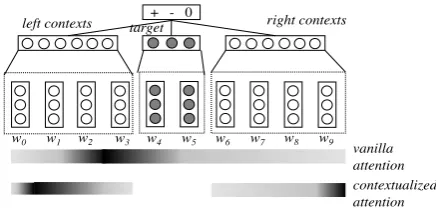
w0 w1 w2 w3 w4 w5 w6 w7 w8 w9
left contexts right contexts
target
+ - 0
[image:1.595.310.531.223.327.2]vanilla attention contextualized attention
Figure 1: Structures of modeling target, left and right contexts and the attention over words.
al., 2014). Compared with discrete manual fea-tures, embedding features are less sparse, and can be learnt from large raw texts, capturing distribu-tional syntactic and semantic information. Dong et al. (2014) use a target-specific recurrent neural network to represent a sentence. Vo and Zhang (2015) use the rich pooling functions to extract the feature vector for a given target.
One important contribution of Vo and Zhang (2015) is that they split a sentence into three sec-tions including the target, its left contexts and its right contexts, as shown in Figure 1. Zhang et al. (2016) represent words in the input using a bidi-rectional gated recurrent neural network, and then use three-way gated neural network structure to model the interaction between the target and its left and right contexts. Tang et al. (2016) learn target-specific sentence representation by combin-ing word embeddcombin-ings with the correspondcombin-ing tar-geted embeddings, and then using two recurrent neural networks to encode the left context and the right context, respectively.
The above methods use the different neural net-work structures to model the relation between con-texts and targets, but they did not explicitly model the importance of each word in contributing to the sentiment polarity of the target. For example,
the sentence “#nowplaying [lady gaga]0- let love down” is neural for the target “lady gaga”, where the contribution of “love”is little, despite that the word “love” is a positive word.
To address this, we utilize the attention mech-anism to calculate the contribution of each word towards targeted sentiment classes, as shown in Figure 1, where the gray level in the spectrum means the contribution of words. In particular, we build a vanilla model using a bidirectional LSTM to extract word embeddings over the sentence and then apply attention over the hidden nodes to estimate the importance of each word. Furthermore, following Vo and Zhang (2015), Tang et al. (2016) and Zhang et al. (2016), we differentiate the left and right contexts given a tar-get. Our final models give significantly improved results on two standard benchmarks compared to previous methods, resulting in best reported accuracy so far. Our source code is released at
https://github.com/LeonCrashCode/
AttentionTargetSentiment.
2 Related Work
Traditional sentiment classification methods rely on manual discrete features (Pang et al., 2002; Go et al., 2009; Mohammad et al., 2013). Re-cently, distributed word representation (Socher et al., 2013; Tang et al., 2014; Zhang et al., 2015) and neural network methods (Irsoy and Cardie, 2013; dos Santos and Gatti, 2014; Dong et al., 2014; Zhou et al., 2014; Zhang et al., 2016; Teng et al., 2016; Ren et al., 2016) have shown promising re-sults on this task. The success of such work sug-gests that using word embeddings and deep neural network structures can automatically exploit the syntactic and semantic structures. Our work is in line with these methods.
The seminal work using the attention mecha-nism is neural machine translation (Bahdanau et al., 2015), where different weights are assigned to source words to implicitly learn alignments for translation. Subsequently, the attention mecha-nism has been applied into various other natu-ral language processing tasks including parsing (Vinyals et al., 2015; Kuncoro et al., 2016; Liu and Zhang, 2017), document classification (Yang et al., 2016), question answering (He and Golub, 2016) and text understanding (Kadlec et al., 2016). For sentiment analysis, the attention mechanism has been applied to cross-lingual sentiment (Zhou
et al., 2016), aspect-level sentiment (Wang et al., 2016) and user-oriented sentiment (Chen et al., 2016). To our knowledge, we are the first to use the attention mechanism to model sentences with respect to targeted sentiments.
3 Models
We use a bidirectional LSTM to represent the in-put word sequencew0, w1, ..., wnas hidden nodes
h0, h1, ..., hn:
[h0;...;hn] = BILSTM([w0;...;wn]),
where the target is denoted as ht, which is the
average of word embeddings in the target phrase
[ht0;...;htm]. We propose three variants of atten-tion to model the relaatten-tion between context words and targets.
3.1 Vanilla Model
We build a vanilla attention model by calculating a weighted valueα over each word in sentences. The final representation of the sentence sis then given by1:
s=attention([h0;...;hn], ht) = n
X
i
αihi,
where
αi= Pexpn (βi) j exp(βj)
and the weight scores β are calculated by using the target representation and the context word rep-resentation,
βi=UTtanh(W1·[hi;ht] +b1).
The sentence representationsis then used to pre-dict the probability distributionpof sentiment la-bels on the target by:
p=softmax(W2s+b2).
We refer to this vanilla model as BILSTM-ATT.
3.2 Contextualized Attention
We make two extensions to the vanilla attention method. The first is a contextualized attention model (BILSTM-ATT-C), where the sentence is divided into two segments with respect to the tar-get, namely left context and right context (Vo and
Zhang, 2015; Tang et al., 2016; Zhang et al., 2016). Attention is applied on left and right con-texts, respectively. In particular, the representation of the left context is:
sl=attention([h0;...;ht0−1], ht),
and the representation of the right context is:
sr=attention([htm+1;...;hn], ht).
Together with the vanilla representations, the dis-tribution of sentiment labels is predicted by:
p=softmax(W1s+Wlsl+Wrsr+b1).
3.3 Contextualized Attention with Gates
A second extension is to add gates to control the flow of context information (BILSTM-ATT-G). This is motivated by the fact that sentiment sig-nals can be dominated by the left context, the right context or the entire sentence (Zhang et al., 2016). The three gates,z,zlandzr, controlled by the
tar-get and the corresponding context, are used.
z∝exp(W1s+U1ht+b1),
zl∝exp(W2sl+U2ht+b2),
zr∝exp(W3sr+U3ht+b3),
wherez+zl+zr = ~1. The linear interpolation
amongs,slandsris formulated as
˜
s=zs+zlsl+zrsr.
Then the probability distribution of sentiment la-bels is predicted by:
p=softmax(W4˜s+b4).
Training our models are trained to minimize a cross-entropy loss object with al2regularization term, defined by
L(θ) =−X
i
log pti +
λ
2||θ||2,
where θ is the set of parameters, pt is the
prob-ability of the ith training example given by the model and λis a regularization hyper-parameter,
λ = 10−6. We use momentum stochastic gradi-ent descgradi-ent (Sutskever et al., 2013) with a learning rate ofη = 0.01for optimization.
T-Dataset #target #positive #negative #neutral
training 6248 1561 1560 3127
test 692 173 173 346
Z-Dataset #target #positive #negative #neutral
training 9489 2416 2384 4689
development 1036 255 272 509
test 1170 294 295 581
Table 1: Experimental corpus statistics.
Parameters value
word dimension 200
LSTM hidden dimension 150 attention hidden dimension 100 dropout probability 0.5
Table 2: Hyper-parameter values.
4 Experiments
4.1 Data
We run experiments on two datasets, namely the benchmark training/test dataset of Tang et al. (2016) (T-Dataset) and the training/dev/test dataset of Zhang et al. (2016) (Z-Dataset), which consist of the MPQA corpus2 and Mitchell et al.
(2013)’s corpus3. Table 1 shows the corpus
statis-tics. Both dataset are three-way classification data.
4.2 Parameters & Metrics
The hyper-parameters are given in Table 24. We
use GloVe vectors (Pennington et al., 2014) with 200 dimensions as pre-trained word embeddings, which are tuned during training. Two metrics are used to evaluate model performance: the classi-fication accuracy and macro F1-measure over the three sentiment classes.
4.3 Development Experiments
We run three variants of targeted sentiment clas-sification models on the development section of Z-Dataset to investigate the effectiveness of atten-tion mechanism. A simple BILSTM without at-tention is deployed as our baseline. Table 3 shows the development results. We find that BILSTM-C gives a 0.6% accuracy improvement by differenti-ating the left and right contexts. However, surpris-ingly, BILSTM-G does not give much improve-ment despite using gates to control the contexts.
2http://mpqa.cs.pitt.edu/corpora/mpqa corpus/ 3http://www.m-mitchell.com/code/index.html
4The hyper-parameters are set following previous works
Model Accuracy Macro F1
BILSTM 74.0 71.6
BILSTM-C 74.6 71.4
BILSTM-G 74.3 71.7
BILSTM-ATT 75.1 72.8
[image:4.595.97.266.60.142.2]BILSTM-ATT-C 75.8 73.3 BILSTM-ATT-G 76.3 74.6
Table 3: Development results (%).
T-testset Z-testset
Model Acc F1 Acc F1
Jiang et al. (2011) 63.4 63.3 / / Dong et al. (2014) 66.3 65.9 / / Vo and Zhang (2015) 71.1 69.9 69.6 65.6 Tang et al. (2016) 71.5 69.5 / / Zhang et al. (2016) 72.0 70.9 71.9 69.6 BILSTM-ATT 72.4 70.5 73.5 70.6 BILSTM-ATT-C 72.5 70.9 74.1 71.3 BILSTM-ATT-G 73.6 72.1 75.0 72.3
Table 4: Final results (%).
This is different from the observation of Zhang et al. (2016), who find that gate mechanism improves accuracy without using attention. Finally, com-pared to baseline models without attention, our models give an average 1.2% accuracy improve-ment and a 1.8% macro F1 improveimprove-ment. Our fi-nal model (BILSTM-ATT-G) gives a 2.3% accu-racy significant improvement (p < 0.01 using t-test) and a 3.0% macro F1 improvement over the strongest baseline.
4.4 Final Results
We compare our models with previous work. The final results are shown in Table 4. Our final mod-els outperform both Zhang et al. (2016) and Tang et al. (2016) by achieving 73.55% accuracy and 72.07% macro F1 on T-Dataset, and 75.04% ac-curacy and 72.29% macro F1 on Z-Dataset, re-spectively. Compared with Zhang et al. (2016), our final models have significant improvements (p <0.05) on the Z-Dataset.
4.5 Analysis
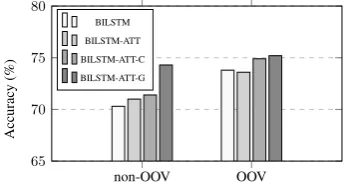
We compare the performances of various models against OOV rates. In particular, we split the test sentences into two sets, where one contains sen-tences that have no OOV and the other consist of sentences which have at least one OOV. The re-sults are shown in Figure 2. The BILSTM-ATT-G performs the best, especially on OOV sentences, which shows the robustness of the
BILSTM-ATT-non-OOV OOV
65 70 75 80
Accurac
y
(%)
[image:4.595.331.505.65.156.2]BILSTM BILSTM-ATT BILSTM-ATT-C BILSTM-ATT-G
Figure 2: Accuracy against OOV rates.
Model Positive Negative Neural
BILSTM 61.0 69.9 79.4
BILSTM-ATT 61.4 71.1 79.7
BILSTM-ATT-C 60.5 73.2 80.2 BILSTM-ATT-G 64.7 70.8 81.4
Table 5: F1 scores (%) of each distinct polarity.
G.
We compare the performances of various mod-els on each distinct polarity. The results are shown in Figure 5. Interestingly, compared to ATT without contextualized attention, BILSTM-ATT-C loses accuracies on positive (-1.1%). How-ever, BILSTM-ATT-G gives large improvements on positive (+4.2%) and neutral (+1.2%) targets but loses accuracy on negative (-2.4%). Overall, both BILSTM-ATT-C and BILSTM-ATT-G out-perform BILSTM-ATT on neural cases, which ac-count for 50% of all targets.
4.6 Examples
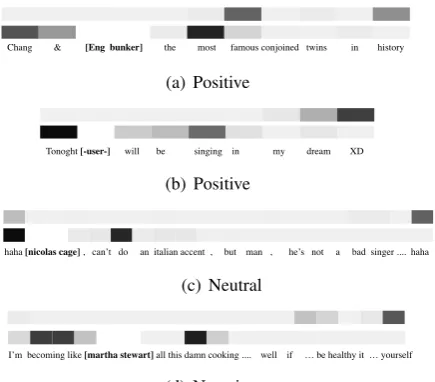
[image:4.595.81.283.181.294.2]Chang & [Eng bunker] the most famous conjoined twins in history
(a) Positive
Tonoght[-user-] will be singing in my dream XD
(b) Positive
haha[nicolas cage], can’t do an italian accent , but man , he’s not a bad singer .... haha (c) Neutral
I’m becoming like [martha stewart]all this damn cooking .... well if … be healthy it … yourself
(d) Negative
Figure 3: Attention visualization, where bold phrases are targets.
5 Conclusion
Prior work on targeted sentiment analysis in-vestigates sentence representation that are target-specific but do not explicitly model the contribu-tion of each word towards targeted sentiment. We investigated various attentional neural networks for targeted sentiment classification. Experiments demonstrated that attention over words is highly useful for targeted sentiment analysis. Our model gives the best reported results on two different benchmarks.
Acknowledgments
We thank the anonymous reviewers for their de-tailed and constructive comments. Yue Zhang is the corresponding author.
References
Dzmitry Bahdanau, Kyunghyun Cho, and Yoshua Ben-gio. 2015. Neural machine translation by jointly learning to align and translate. International Con-ference on Learning Representations.
Huimin Chen, Maosong Sun, Cunchao Tu, Yankai Lin, and Zhiyuan Liu. 2016. Neural sentiment classifi-cation with user and product attention. In Proceed-ings of the 2016 Conference on Empirical Methods in Natural Language Processing, pages 1650–1659. Association for Computational Linguistics.
Li Dong, Furu Wei, Chuanqi Tan, Duyu Tang, Ming Zhou, and Ke Xu. 2014. Adaptive recursive neural network for target-dependent twitter sentiment clas-sification. InProceedings of the 52nd Annual
Meet-ing of the Association for Computational LMeet-inguistics (Volume 2: Short Papers), pages 49–54. Association for Computational Linguistics.
Cicero dos Santos and Maira Gatti. 2014. Deep con-volutional neural networks for sentiment analysis of short texts. In Proceedings of COLING 2014, the 25th International Conference on Computational Linguistics: Technical Papers, pages 69–78. Dublin City University and Association for Computational Linguistics.
Alec Go, Richa Bhayani, and Lei Huang. 2009. Twit-ter sentiment classification using distant supervision.
CS224N Project Report, Stanford, 1:12.
Xiaodong He and David Golub. 2016. Character-level question answering with attention. In Proceed-ings of the 2016 Conference on Empirical Methods in Natural Language Processing, pages 1598–1607. Association for Computational Linguistics.
Ozan Irsoy and Claire Cardie. 2013. Bidirectional re-cursive neural networks for token-level labeling with structure. arXiv preprint arXiv:1312.0493.
Long Jiang, Mo Yu, Ming Zhou, Xiaohua Liu, and Tiejun Zhao. 2011. Target-dependent twitter sen-timent classification. InProceedings of the 49th An-nual Meeting of the Association for Computational Linguistics: Human Language Technologies, pages 151–160. Association for Computational Linguis-tics.
Rudolf Kadlec, Martin Schmid, Ondˇrej Bajgar, and Jan Kleindienst. 2016. Text understanding with the at-tention sum reader network. In Proceedings of the 54th Annual Meeting of the Association for Compu-tational Linguistics (Volume 1: Long Papers), pages 908–918. Association for Computational Linguis-tics.
Adhiguna Kuncoro, Miguel Ballesteros, Lingpeng Kong, Chris Dyer, Graham Neubig, and Noah A. Smith. 2016. What do recurrent neural network grammars learn about syntax? InEuropean Chapter of the Association for Computational Linguistics.
Jiangming Liu and Yue Zhang. 2017. Shift-reduce constituent parsing with neural lookahead features.
Transactions of the Association of the Computa-tional Linguistics.
Margaret Mitchell, Jacqui Aguilar, Theresa Wilson, and Benjamin Van Durme. 2013. Open domain tar-geted sentiment. InProceedings of the 2013 Con-ference on Empirical Methods in Natural Language Processing, pages 1643–1654. Association for Com-putational Linguistics.
[image:5.595.77.295.62.253.2]Bo Pang, Lillian Lee, and Shivakumar Vaithyanathan, 2002. Proceedings of the 2002 Conference on Em-pirical Methods in Natural Language Processing (EMNLP 2002), chapter Thumbs up? Sentiment Classification using Machine Learning Techniques. Jeffrey Pennington, Richard Socher, and Christopher
Manning. 2014. Glove: Global vectors for word representation. In Proceedings of the 2014 Con-ference on Empirical Methods in Natural Language Processing (EMNLP), pages 1532–1543. Associa-tion for ComputaAssocia-tional Linguistics.
Yafeng Ren, Yue Zhang, Meishan Zhang, and Donghong Ji. 2016. Context-sensitive twitter sen-timent classification using neural network. In Pro-ceedings of the Thirtieth AAAI Conference on Arti-ficial Intelligence, February 12-17, 2016, Phoenix, Arizona, USA., pages 215–221.
Richard Socher, Alex Perelygin, Jean Wu, Jason Chuang, D. Christopher Manning, Andrew Ng, and Christopher Potts. 2013. Recursive deep models for semantic compositionality over a sentiment tree-bank. In Proceedings of the 2013 Conference on Empirical Methods in Natural Language Process-ing, pages 1631–1642. Association for Computa-tional Linguistics.
Ilya Sutskever, James Martens, George E. Dahl, and Geoffrey E. Hinton. 2013. On the importance of initialization and momentum in deep learning. In
Proceedings of the 30th International Conference on Machine Learning, ICML 2013, Atlanta, GA, USA, 16-21 June 2013, pages 1139–1147.
Duyu Tang, Furu Wei, Nan Yang, Ming Zhou, Ting Liu, and Bing Qin. 2014. Learning sentiment-specific word embedding for twitter sentiment clas-sification. InProceedings of the 52nd Annual Meet-ing of the Association for Computational LMeet-inguistics (Volume 1: Long Papers), pages 1555–1565. Asso-ciation for Computational Linguistics.
Duyu Tang, Bing Qin, Xiaocheng Feng, and Ting Liu. 2016. Effective lstms for target-dependent senti-ment classification. In Proceedings of COLING 2016, the 26th International Conference on Compu-tational Linguistics: Technical Papers, pages 3298– 3307. The COLING 2016 Organizing Committee. Zhiyang Teng, Tin Duy Vo, and Yue Zhang. 2016.
Context-sensitive lexicon features for neural senti-ment analysis. In Proceedings of the 2016 Con-ference on Empirical Methods in Natural Language Processing, pages 1629–1638. Association for Com-putational Linguistics.
Oriol Vinyals, Ł ukasz Kaiser, Terry Koo, Slav Petrov, Ilya Sutskever, and Geoffrey Hinton. 2015. Gram-mar as a foreign language. In C. Cortes, N. D. Lawrence, D. D. Lee, M. Sugiyama, and R. Garnett, editors,Advances in Neural Information Processing Systems 28, pages 2773–2781. Curran Associates, Inc.
Duy-Tin Vo and Yue Zhang. 2015. Target-dependent twitter sentiment classification with rich automatic features. InProceedings of the Twenty-Fourth Inter-national Joint Conference on Artificial Intelligence, IJCAI 2015, Buenos Aires, Argentina, July 25-31, 2015, pages 1347–1353.
Yequan Wang, Minlie Huang, xiaoyan zhu, and Li Zhao. 2016. Attention-based lstm for aspect-level sentiment classification. InProceedings of the 2016 Conference on Empirical Methods in Natural Language Processing, pages 606–615. Association for Computational Linguistics.
Zichao Yang, Diyi Yang, Chris Dyer, Xiaodong He, Alex Smola, and Eduard Hovy. 2016. Hierarchi-cal attention networks for document classification. InProceedings of the 2016 Conference of the North American Chapter of the Association for Compu-tational Linguistics: Human Language Technolo-gies, pages 1480–1489. Association for Computa-tional Linguistics.
Meishan Zhang, Yue Zhang, and Tin Duy Vo. 2015. Neural networks for open domain targeted senti-ment. In Proceedings of the 2015 Conference on Empirical Methods in Natural Language Process-ing, pages 612–621. Association for Computational Linguistics.
Meishan Zhang, Yue Zhang, and Duy-Tin Vo. 2016. Gated neural networks for targeted sentiment anal-ysis. In Proceedings of the Thirtieth AAAI Con-ference on Artificial Intelligence, February 12-17, 2016, Phoenix, Arizona, USA., pages 3087–3093. Shusen Zhou, Qingcai Chen, Xiaolong Wang, and