University of Warwick institutional repository: http://go.warwick.ac.uk/wrap
A Thesis Submitted for the Degree of PhD at the University of Warwick
http://go.warwick.ac.uk/wrap/64012
This thesis is made available online and is protected by original copyright.
Please scroll down to view the document itself.
A stakeholder derived framework for safety assessment in the NHS
case management programme
Sarahjane Jones
In partial fulfilment for the Degree of Doctor of Philosophy (PhD)
University of Warwick, WMG
“Effective medicine could only begin when doctors began to count and to compare.”
C o n t e n t s
Figures and Tables ... ix
Dedication ... xv
Acknowledgements ... xvi
Declaration ... xvii
Abstract ... xviii
Glossary ... xix
Abbreviations ... xxi
Chapter 1 ... 1
1.1: Introduction ... 1
1.2: Safety and safety measurement ... 2
1.3: Case management as a case study ... 4
1.4: Research Problem ... 5
1.5: Research aim and objectives ... 5
1.6: Research design ... 6
1.7: Thesis outline ... 7
Chapter 2 ... 9
2.1: Introduction ... 9
2.2: Overview of patient safety ... 11
2.2.1: Systems approach to patient safety ... 11
2.2.2: Error ... 13
2.2.3: Harm, adverse events and patient safety incidents ... 14
2.2.5: Summary ... 16
2.3: Safety measurement methods... 17
2.3.1: Retrospective record review ... 18
2.3.2: Global trigger tools... 20
2.3.3: Incident reporting systems ... 21
2.3.4: Patient safety indicators ... 24
2.3.5: Prospective methods ... 29
2.3.6: Safety culture ... 31
2.3.7: NHS safety thermometer ... 33
2.3.8: Summary ... 34
2.4: Risk Measurement and Management... 36
2.4.1: Risk Measurement ... 36
2.4.2: Risk Management ... 37
2.4.3: Summary ... 40
2.5: NHS Performance Measurement ... 40
2.6: A recent proposal for progress ... 42
2.7: Conclusions ... 44
Chapter 3 ... 47
3.1: Introduction ... 47
3.2: Lessons from other industries: the case for performance measurement ... 48
3.2.1: Emergent themes in performance measurement frameworks: input, process and output ... 51
3.2.2: Designing a measurement system ... 53
3.3: Case Management: a response to the ageing demographic ... 55
3.3.1: Effectiveness of case management ... 58
3.4: Patients as stakeholders in safety ... 64
3.4.1: Patient perspectives of patient safety... 64
3.4.2: Patient involvement in improving safety ... 68
3.4.3: Patient contributions to safety ... 72
3.4.4: Summary of patients as stakeholders in safety ... 73
3.5: Structure, process, and outcome as measurement domains ... 74
3.5.1: Evidence for and against the SPO model ... 76
3.5.2: Summary of the utility of the SPO model ... 81
3.6: The integrated safety measurement model ... 83
3.7: Summary ... 86
Chapter 4 ... 89
4.1: Introduction ... 89
4.2: Philosophy ... 92
4.2.1: Ontology and epistemology ... 92
4.2.2: Intensive and extensive research design ... 93
4.3: Methodology – mixed method design ... 94
4.4: Method ... 97
4.4.1 Study I – case study ... 97
4.4.2: Study II – survey ... 108
4.5: Validity ... 109
4.5.1: Validity of the qualitative approach ... 109
4.5.2: Validity of the quantitative approach... 111
4.5.3: Triangulation ... 112
4.6: Summary ... 113
Chapter 5 ... 115
5.2: Study I protocol ... 115
5.2.1: Setting and participants ... 116
5.2.2: Data collection ... 119
5.2.3: Data analysis ... 121
5.3: Study II protocol ... 124
5.3.1: Data collection ... 124
5.3.2: Data Analysis ... 126
5.4: Summary ... 126
Chapter 6 ... 127
6.1: Introduction ... 127
6.2: Findings ... 128
6.2.1: Definition of safety ... 128
6.2.2: The existence of multiple stakeholders ... 132
6.2.3: Structure of care delivered in the home ... 137
6.2.4: Processes of home healthcare ... 157
6.2.5: Outcomes of home healthcare ... 166
6.3: Areas of further investigation ... 172
6.3.1: Competing definitions of safety ... 173
6.3.2: Identification of responsible stakeholders ... 173
6.3.3: Elements of structure, process and outcome ... 174
6.4: Summary ... 177
Chapter 7 ... 178
7.1: Introduction ... 178
7.2: Results ... 178
7.2.1: Demographics ... 179
7.2.3: Responsibility for key stakeholders ... 183
7.2.4: Elements of structure ... 187
7.2.5: Elements of Process ... 199
7.2.6: Elements of outcome ... 203
7.3: Summary ... 206
Chapter 8 ... 207
8.1: Introduction ... 207
8.2: Understanding patient safety in the case management programme ... 208
8.2.1: An alternative definition for patient safety in home delivered healthcare ... 208
8.2.2: Extended outcomes of safety ... 211
8.2.3: Patient inclusive processes ... 214
8.2.4: Whole system structures ... 216
8.3: A qualitatively validated model for the design of safety measurement systems ... 223
8.3.1: Key Stakeholders ... 224
8.3.2: The holistic safety measurement model: a revised model for safety measurement design ... 228
8.4: A proposed conceptual framework for safety measurement ... 230
8.4.1: Propositions ... 230
8.4.2: Components ... 231
8.5: Limitations of the research ... 234
8.5.1: Limitations of study I ... 234
8.5.2: Limitations of study II ... 236
8.6: Challenges of the research ... 238
8.6.1: Access to potential participants ... 238
8.6.2: Achieving a representative sample ... 239
8.6.4: Establishing consistency ... 240
8.7: Conclusion ... 241
Chapter 9 ... 243
9.1: Introduction ... 243
9.2: A model to inform the process of safety measurement design ... 244
9.3: An alternative definition of safety for the case management programme ... 246
9.4: A conceptual framework for safety assessment in the case management programme ... 247
9.5: Limitations and challenges of the research ... 248
9.6: Implications of the research ... 249
9.7: Future work... 253
9.8: Contribution to knowledge ... 256
9.9: Conclusion ... 258
References ... 260
Appendices ... 278
Appendix 1: Study I REC approval ... 279
Appendix 2: Staff information sheet ... 283
Appendix 3: Staff consent form ... 287
Appendix 4: Patient information sheet ... 288
Appendix 5: Carer information sheet ... 293
Appendix 6: Patient eligibility questionnaire... 296
Appendix 7: Patient and carer consent form ... 298
Appendix 8: Sample chart (framework analysis) ... 299
Appendix 9: Study II REC approval ... 300
Appendix 10: Participant information sheet – study II ... 302
Appendix 12: Thematic framework ... 310
Appendix 13: Evidence of processes of self-care and management sub-themes ... 312
Appendix 14: CM nurse transcript – service knowledge ... 314
Figures and Tables
Figure 1.1: Thesis outline 8
Figure 2.1: The Swiss cheese model 12
Figure 2.2: Process of retrospective record review 18
Figure 2.3: Clinical Negligence Scheme risk management standards 39
Figure 3.1: The Swiss cheese model and its relationship with input, process and
output 53
Figure 3.2: The NHS and Social Care long term conditions model 57
Figure 3.3: Relationships between patients’ rights and empowerment in healthcare
safety 70
Figure 3.4: SPO applied to a systems approach to patient safety 76
Figure 3.5: SPO applied to the Swiss cheese model 76
Figure 3.6: The relationships between SPO 77
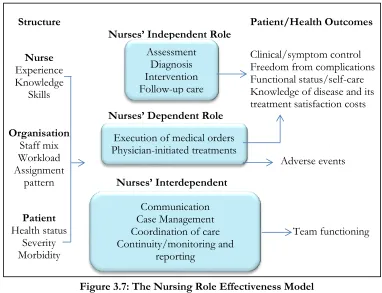
Figure 3.7: The Nursing Role Effectiveness Model 79
Figure 3.8: The integrated safety measurement model 86
Figure 4.1: Research aim 89
Figure 4.2: Research design framework 91
Figure 4.3: Case study design type proposed 101
Figure 6.1: Thematic framework for the a priori theme of ‘definition of safety 129
Figure 6.2: The existence of multiple stakeholders 133
Figure 6.3: Types of organisations involved in the care of NHS case managed
patients 136
Figure 6.4: Thematic framework for the domain of structure 137
Figure 6.5: Thematic framework for the domain of structure 157
Figure 6.7: Thematic framework for the domain of structure 167
Figure 7.1: Percentage of total participants by stakeholder group 180
Figure 7.2: Percentage of patient participants with and without an informal carer 180
Figure 7.3: Breakdown of participant’s gender by stakeholder group. 181
Figure 7.4: The average age of the participants within each stakeholder group 181
Figure 7.5: Preferred definition of safety by stakeholder group 182
Figure 7.6: Total responses (as a percentage) for each definition of safety 183
Figure 7.7: Q8. Who do you think has the greatest responsibility for ensuring the
safety of patients? 184
Figure 7.8: Q9. Who do you think has the greatest responsibility for ensuring the
safety of carers? 185
Figure 7.9: Q10. Who do you think has the greatest responsibility for ensuring the
safety of NHS staff? 186
Figure 7.10: Q11. The greater the number of patients that a single case manager is
responsible for, the greater the risk to patients 187
Figure 7.11: Q12. Patients who are self-funded are at greater risk of harm than those
who are state funded 188
Figure 7.12: Q13. Adequate equipment provision reduces patient risk and improves
safety 189
Figure 7.13: Q14.The availability of services is important for patient safety. 190
Figure 7.14: Q15. A 24 hour case management service would improve patient safety. 191
Figure 7.15: Q16.Specifically trained staff reduce the risk to patients and increase
positive patient outcomes 192
Figure 7.16: Q17.Knowledge of available services is important for correct and
Figure 7.17: Q18. Having a less cluttered and tidy environment reduces patient risk
and improves safety 194
Figure 7.18: Q19. An environment in which communication between key
stakeholders is encouraged can support patient safety 195
Figure 7.19: Q20. Uncooperative carers and family members can negatively influence
patient care, putting them at risk of poor outcomes 196
Figure 7.20: Q21. Communication equipment such as care lines can reduce risk and
improve patient safety 197
Figure 7.21: Disagree and agree aggregated responses for all stakeholder groups for
questions 11 to 21. 199
Figure 7.22: Disagree and agree aggregated responses for all stakeholder groups for
questions 23 to 33 202
Figure 7.23: Outcomes ranked 1st by stakeholder group 204
Figure 7.24: A comparison of outcomes ranked 1st, 2nd and 3rd (aggregated) by
stakeholder group 205
Figure 8.1: A nested system for the complex care of patients being case managed. 225
Figure 8.2: The holistic safety measurement model 228
Figure 8.3: A conceptual framework for assessment of safety in the case management
programme 233
Figure 9.1: Opportunities for future work 254
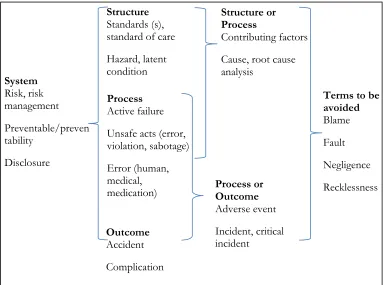
Table 2.1: Safety glossary 17
Table 2.2: Examples of incident reports submitted to the NRLS by incident type 23
Table 2.3: AHRQ Patient safety indicators 26
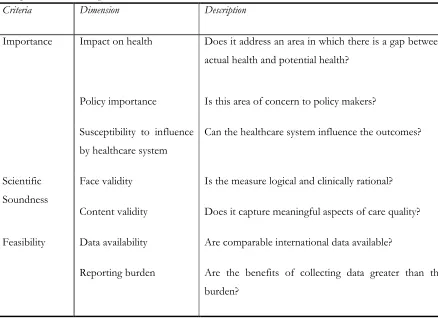
Table 2.4: Criteria and dimensions for OECD PSI selection 27
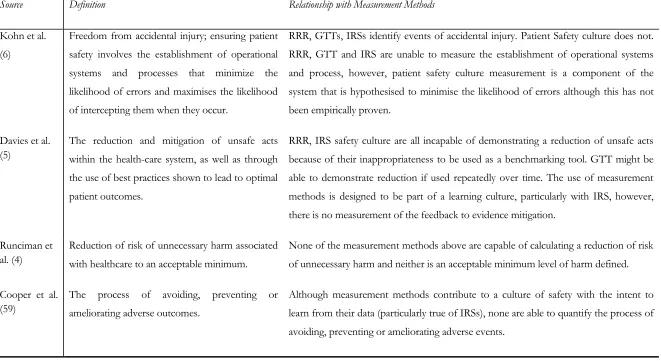
Table 2.6: Comparison between the definition of safety and functionality of safety
measurement methods 35
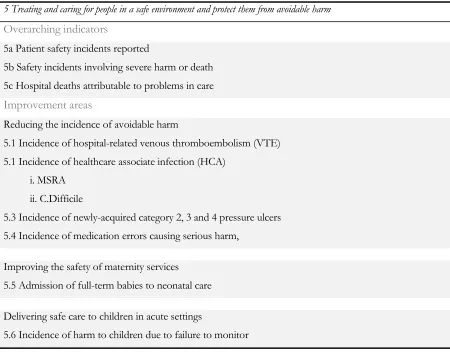
Table 2.7: NHS Outcomes Framework – Domain 5 42
Table 3.1: Performance measurement glossary 49
Table 3.2: NHS values 50
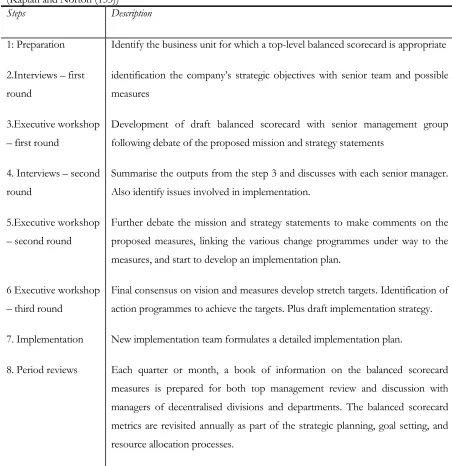
Table 3.3: Process of designing and implementing the balanced scorecard 54
Table 3.4: Desirable characteristics of a performance measurement system design
process 55
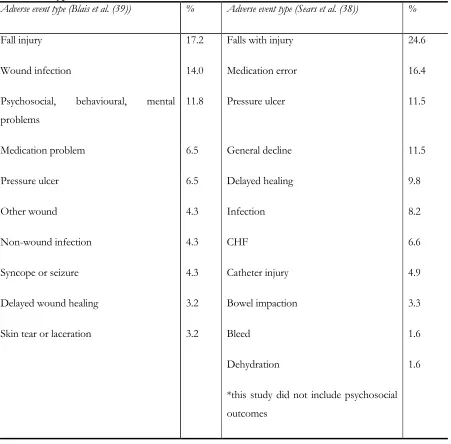
Table 3.5: Types of adverse events in Canadian home care 63
Table 3.6: Key themes of safety in the organisational care transfer setting 66
Table 3.7: Case studies of patient involvement in safety 71
Table 3.8: Findings from the Francis Report 80
Table 3.9: Evidence of the utility of the SPO 82
Table 3.10: Glossary of structure, process and outcome terms 83
Table 4.1: Ontological domains of critical realism 93
Table 4.2: Reasons and relevance of a mixed method research design 96
Table 4.3: Types of quantitative validity 112
Table 5.1: Staff participant numbers 117
Table 5.2: Patient and carer participant numbers 119
Table 5.3: Process of framework analysis 123
Table 5.4: Selection criteria for study II 125
Table 6.1: Participants of study I 128
Table 6.2: Examples of risk reduction 130
Table 6.3: An example of compliance with best practice 131
Table 6.5: Examples of patient and carer quotes in relation to the absence of
equipment 139
Table 6.6: Evidence relating to the environment as a component of safety 141
Table 6.7: Extract from a conversation in T3 about a 7 day service 144
Table 6.8: Examples of CM nurses in T1 identifying non-state funded patients as at
greater risk 146
Table 6.9: Evidence of the T2 CM nurses perceptions of the use of state funds 147
Table 6.10: Examples of the patients’ perceptions of finance 148
Table 6.11: Evidence of the patient and carer perspective of the communication
infrastructure 149
Table 6.12: Evidence relating to patient characteristics from patients and carers 151
Table 6.13: Evidence of carer characteristics 152
Table 6.14: Exert of a conversation on challenging carers 154
Table 6.15: Self-care and management subthemes 158
Table 6.16: Evidence of the micro-theme of medicating 160
Table 6.17: Evidence of micro-themes of adjusting to LTC 161
Table 6.18: Evidence of clinical care processes identified by patients and carers 163
Table 6.19: Evidence of how vital patients and carers believe the case managers to be 164
Table 6.20: Evidence of communicating as a process of care 165
Table 6.21: Evidence of the availability to communicate 165
Table 6.22: Evidence of the avoidance of hospitalisation 168
Table 6.23: Evidence of psychosocial outcomes 169
Table 6.24: CM nurse contribution to psychological harm 170
Table 6.25: Evidence of falls as an adverse event 171
Table 6.26: Evidence of the impact of falls 171
Table 6.28: Structures for further investigation 175
Table 6.29: Processes for further investigation 176
Table 7.1: Results for questions relating to process (questions 23 to 28) 200
Table 7.2: Results for questions relating to process (questions 29 to 33) 201
Table 8.1: Dimensions of care in the CM programme 229
Dedication
In loving memory of Jane Daniel: my mentor, my friend and my motivation. I shall forever strive to be
Acknowledgements
The successful completion of this thesis owes itself to a number of people, without whom, I would not
have traversed the turbulent journey that is the PhD process. I must thank WMG and the participating
NHS organisations for granting me the opportunity to conduct my research. In addition, I must thank
all the participants for allowing me access to their perspectives. Without which, there would have been
no research. The stories they shared with me will be with me forever. I would also like to thank
Professor Maxine Lintern and colleagues at Birmingham City University, who have supported me
during the write up of the thesis.
I am especially indebted to a select few, who gave their time and effort to review and provide feedback
on the progress and content of the thesis as it developed and especially towards the end. These people
include my little sister, Stacie Jones and friends: Carolyn Dawson, Emma Lock, Josh Miller, Leanne
Miller and Craig Nicholls. On this occasion, their red pen comments were welcome.
I owe my entire education, drive, motivation and tenacity to my parents, Margaret and Andrew Jones.
They taught me the value of knowledge. Their love, support and pride has spurred me on during the
difficult times.
Finally, I want to give thanks to Christopher Buckley and our girls, with whom I share my life,
including the trials and tribulations experienced throughout the PhD process. They have wiped my
tears, held my hand, comforted me, given me strength and sustained my motivation. This has all been
Declaration
I declare that this thesis is my own work and that it has not been submitted for a degree at another
Abstract
Patient safety measurement methods are dominated by outcome measurement, reducing them to counts of harm or adverse events. Performance measurement recognises the limitations of the sole use of outcome indicators and proposes the use of measures throughout the system, in particular the determinants of the desired outcomes. Furthermore, it promotes stakeholder engagement in the design of measures in order to understand their expectations and how they contribute. This is particularly important in healthcare services, such as the NHS case management programme, where patient contribution is growing. This programme is a response to the ageing population and the subsequent increase in complex long term conditions, aiming to deliver care in the home to empower patients so they are able to care for themselves to a greater extent. In comparison to the institutionalised setting, the home setting is relatively unexplored. Therefore, this research has provided an opportunity to examine the concept of safety in a care service with an increasing demand from a vulnerable population. The research aimed to develop a conceptual framework for safety measurement that was: 1) reflective of key stakeholders; 2) able to incorporate the system; and 3) representative of the home-delivered healthcare of the case management programme.
An exploratory, sequential mixed method design within the critical realist philosophy, which was guided by the principles of performance measurement, was adopted. A case study utilising 13 interviews with nine patients and six carers (two interviews were held jointly) and three focus groups with 17 case management nurses was deployed. This enabled in-depth exploration of their perspectives regarding safety, including: their definitions of safety, who was involved, the contributing factors, and which outcomes were most important. Intriguing, important or contradictory findings were further examined using a survey (patient n=35, carer n=19 and case management nurse n=26), which aimed to determine the level of agreement with these qualitative findings and identify any statistically significant differences between the stakeholder groups.
Glossary
Term Definition
A Performance Measure A metric used to quantify the effectiveness and/or efficiency of an action
A Performance Measurement System
A set of metrics used to quantify both efficiency and effectiveness of actions
Active Failure Errors committed at the sharp end of the service and whose effects are
felt immediately
Adverse Event 1) An unintended and undesired incident directly associated with
the care or services provided to the patient
2) An incident that occurs during the process of providing health care and results in patient injury or death
3) An adverse outcome for a patient, including injury or complication
Case management A targeting intervention to support patients with complex, multiple long
term conditions to empower and educate patients to better perform self-care through personalised care planning and integrated care services.
Case study The in-depth exploration of a particular bounded entity known as a case.
Error Failure of a planned action to be completed as intended or use of a wrong
plan to achieve an aim; the accumulation of errors results in accidents
Effectiveness The extent to which customer requirements are met
Efficiency A measure of how economically the firms resources are utilised when
providing a given level of customer satisfaction
Exploratory, sequential mixed method design
Harm Impairment of structure or function of the body and/or any deleterious effect arising there from’. Including disease, injury, suffering and disability.
Hawthorne Effect A phenomenon whereby the observation of workers modifies their
behaviour.
Latent Condition Errors within the system, which can lie dormant for years
Outcome The way things turn out; a consequence of an action.
Patient Safety The reduction of risk of unnecessary harm associated with healthcare to
an acceptable minimum, as well as the use of best practice shown to lead to optimal outcomes.
Patient Safety Incident A patient safety incident is any unintended or unexpected incident which could have or did lead to harm for one or more patients receiving [NHS] care.
Performance Measurement The process of quantifying efficiency and effectiveness of action
Process The actions of care.
Stakeholders A person with an interest or concern in something, particularly its success. This might include the patient, nursing staff, the GP, the pharmacy, carers.
Structure The setting and environment in which care takes place.
Survey A research methodology that uses a quantitative questionnaire across a
Abbreviations
Abbreviation Full term
AHRQ Agency for Healthcare Research Quality
CM Case management
DoH Department of Health
GTT Global trigger tool
HCUP Healthcare Cost Utilisation Project
HES Hospital episode statistics
ICD International classification of disease
HSMM Holistic safety measurement model
IRS Incident reporting system
NHS National Health Service
ISMM Integrated safety measurement model
NPSA National Patient Safety Agency
NRLS National Reporting and Learning System
OECD Organisation for Economic Cooperation and Development
OPCS Office of Population Consensus Surveys
PSI Patient safety incident
QIPP Quest for Quality and Improvement Performance
RRR Retrospective record review
Chapter 1
Introduction
1.1: Introduction
Safety in healthcare is a priority for policy makers, healthcare organisations, patients and other service
users worldwide. Methods to quantify harm have been available for over two decades (1, 2). However,
these methods are subject to the limitations of isolated outcome measurements, meaning that they are
incapable of predicting error, mitigating against it and defining a level of safety. This could be attributed to
the level of understanding required to develop such measurement systems. In addition, the design and
implementation of safety measurement systems is often done with little contribution from patients and
other service users. However, the patient perspective of safety is becoming increasingly important as the
care model shifts to one that not only puts patients at the centre of their own care, but also demands
greater contributions from them and places the onus on them to generate better health outcomes.
This thesis presents the development of a conceptual safety assessment framework for the case
management (CM) programme in the National Health Service (NHS). The conceptual framework is a
guide to the assessment of safety performance that is predicated upon the structure, process and outcome
model of quality care (3). It has been devised to address some of the issues of the current approach to
safety measurement and contribute to the progress of safety measurement. In particular, it identifies
contributory factors to safety throughout the system and incorporates the perspectives of patients, carers
and CM nurses through the exploration, examination and interpretation of their perspectives using a case
sequential, exploratory mixed method design, a survey study has attempted to further enhance the
reliability and validity of the findings by engaging with a larger sample size using a survey method. This
chapter provides an overview of the thesis: the gap in the literature, the premise upon which the research
is designed, an overview of the work and the structure in which it is presented.
1.2: Safety and safety measurement
Patient safety can be defined as ‘the reduction of risk of unnecessary harm associated with healthcare to an acceptable
minimum’ (4)pg19, as well as ‘the use of best practice shown to lead to optimal outcomes’ (5)pg221. The first large-scale
studies to measure safety used retrospective record review (RRR) and highlighted the extent of medical
error in America, implicating error in the deaths of as many as 98,000 people per year, 43.5% of which
were perceived to be preventable (1, 2, 6). The use of this measurement method around the world,
including in Britain (7), Australia (8) and Canada (9), has indicated a median overall incidence of adverse
events of 9.2% (10). However, despite an awareness of the issues and high profile reports proposing
recommendations to address them (6, 11), reports of lives lost still frequently appear in the media. Reports
such as the Mid-Staffordshire NHS Foundation Trust Public Inquiry (12) indicate signs of long-term
institutional abuse, suggesting that the needs of the organisation were put above the needs of the patients,
resulting in between 400 and 1,200 more deaths than expected between January 2005 and March 2009.
The counting of harms using RRR is unreliable and unrepeatable (13-16). The subjective nature of the
method means that there are issues with inter-rater reliability. Moreover, its time and resource
requirements often render it single use, meaning that the RRR is unable to reliably and longitudinally
measure harm. Ergo, it is unable to identify a reduction in harm over time or calculate a reduction in the
Since the application of RRR, other methods have been devised. These include: global trigger tools
(GTTs) (17), incident reporting systems (IRSs) (18), patient safety incidents (PSIs) (19), safety culture
assessment (20) and the NHS safety thermometer (21). However, with the exception of safety culture
assessment, all remain focused on the outcome of harm and suffer the same limitations as RRR.
Systems theory (22, 23) is a recognised theory of patient safety and other high-risk industries (24). Systems
theory dictates that error is caused by the alignment of multiple faults or flaws in the system (latent
conditions) that enable an individual to commit an error or omit an essential action (active failures). It is
accepting of human fallibility and advocates that appropriately designed systems reduce the opportunity
for error and improve safety. In order for this to be achieved, the system needs to be understood, and
contributing factors to error need to be identified. In this environment, errors are openly acknowledged,
and efforts are made to understand the systemic cause and rectify any underlying issues. However, despite
knowledge of the importance of the system and the conditions that contribute to safety, measurement is
still focused at the sharp end, on outcomes (adverse events). Consequently, these methods are also unable
to monitor the system upstream of the error to prevent it from occurring and reduce risk.
The field of performance measurement no longer supports the isolated use of outcome indicators (see
Chapter 3.2: Lessons from other industries: the case for performance measurement). Outcomes are
lagging indicators that give information only on what has been achieved in the past. Used in isolation, they
are unable to promote improvement because they lack information on their determinants; consequently,
they cannot predict future performance. In addressing the issues of lagging indicators, performance
measurement has sought to overcome these limitations. Essentially, indicators of performance should
utilise leading indicators capable of predicting outcomes, lagging indicators to ensure outcomes are being
met and process indicators to control consistency. These indicators should reflect the organisation’s
strategy at the ‘business operating system’ or ‘work unit’ level and should be devised with stakeholder
engagement, including consumer engagement, to understand demands and contributions (25-32).
scorecard (28)), provide a comprehensive understanding of a phenomenon by identifying a network of
linked concepts and relationships (33). For performance measurement, in particular, they also seek to
provide guidance on the design and implementation of measurement systems. The fundamental principles
of performance measurement provide an opportunity for learning and development in safety
measurement. By adopting this approach, progress in safety measurement could be achieved.
1.3: Case management as a case study
Healthcare organisations worldwide, including the NHS, face a growing burden with the increasing
prevalence of long term conditions (LTCs), which are strongly associated with the ageing demographic
(34). This burden stretches resources and places patients at greater risk. The NHS and Social Care long
term conditions model was introduced in 2005 to tackle the growing burden of LTCs, spearheaded by the
implementation of the CM programme (35). The CM programme aims to reduce the burden,
predominantly by reducing the number of hospital admissions experienced by the most complex and
severe cases of LTCs. Using a proactive and personalised care plan, the CM programme aims to empower
patients to take better care of themselves. In parallel, care is integrated by an advanced nurse practitioner,
through the coordination of the multiple health and social care services required by the patient group, in
order to deliver a single holistic service (35).
In comparison to institutionalised settings, little research has been conducted into safety in community
services where healthcare is delivered in the home, such as the CM programme (36). The evidence base
on safety in home healthcare is limited. However, studies have recently been published examining the
formal carer perspective of home care in Canada (37); the types of adverse events occurring (38, 39); and
the comparative perspectives of the service users, their families and healthcare professionals (40, 41). The
studies concluded that there was a large contrast between safety in the hospital setting and in the home
network of caregivers and stakeholders, the isolation of the patients and the healthcare professionals and
the greater role the patient plays in achieving health. A corollary to which is a need for a different
approach to safety measurement in this setting. However, these studies are relatively recent and have been
focused on home care in Canada. The equivalent research has yet to be conducted in the UK.
1.4: Research Problem
The initial exploration of the literature has indicated that safety measurement in healthcare is dominated
by outcome measures. The methods by which these measures are calculated suffer from individual
limitations. In addition, the isolated use of outcome measures is restricted to counting past performance
and does not facilitate an understanding of how the performance was achieved, nor does it hold any
predicative capability. The review of the performance measurement literature suggested the use of whole
system measures to address the limitations of isolated outcome measurement (i.e. identifying the
determinants of outcomes). Conceptual performance frameworks inform the identification of indicators
that represent the components of the system responsible for contributing to the desired outcomes. This
can be achieved by a comprehensive understanding of the system, including the consumer’s contribution.
Furthermore, the patient perspective, as a consumer of healthcare, is not well reflected in the literature but
is being recognised as an area for improvement. This is particularly important as care services, like the CM
programme, aim to more effectively engage patients in healthcare activities. Research to date has not yet
led to a comprehensive understanding of safety in the home care setting.
1.5: Research aim and objectives
To develop a framework for safety measurement for the NHS case management programme that is
reflective of key stakeholder perspectives to guide the assessment of safety.
The objectives are to:
1. Create a model that identifies the key stakeholders of the case management programme and the overarching domains for measurement to inform the research design
2. Validate the model
3. Explore the concept of safety from the stakeholders’ perspectives, as identified in the above model
4. Understand what it means to be safe in the home to the key stakeholders of this patient group and determine desired outcomes and influencing factors
5. Devise a safety performance assessment framework that manifests the perspectives of the key stakeholders
1.6: Research design
The aim of this research was to devise a framework to support safety measurement to be used when care
is delivered in the home that was reflective of both key stakeholder perspectives and the system. To
achieve this, the researcher has adopted a critical realist philosophy to facilitate the exploration of
unobservable mechanisms and test their acceptability amongst a large population. Therefore, the research
has explored, examined and understood the key stakeholders’ perspectives of safety in the CM
programme and has determined the acceptability of these perspectives. This was achieved using an
exploratory, sequential mixed method design (42). The first phase of this design was a case study (study I)
(43), and the second phase was a survey (study II) (44). Study I explored, through multiple methods
within a case study design, the perspectives of safety, including its definition, contributing factors and
desired outcomes. Methods of data collection included 13 interviews with nine patients and six carers, and
three focus groups with 17 CM nurses. Study II deployed a survey that determined the level of agreement
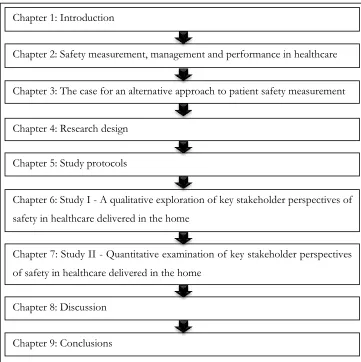
1.7: Thesis outline
This chapter has provided the background information to the research, introduced the research problem
and its subsequent aims and objectives. The following two chapters present the literature and the critical
evidence and argument needed for this research. In Chapter 3, the integrated safety measurement model is
presented as a prerequisite for the research design, which is discussed in Chapter 4. Chapter 4 specifically
describes the research design, and the two study protocols are given in Chapter 5. The findings of each
study are presented in Chapters 6 and 7. Chapter 8 discusses the findings of the preceding chapters in
relation to the aims of research, which enables the conceptual framework to be devised before giving
consideration to the limitations of the research. Finally, conclusions are drawn in Chapter 9, and possible
Figure 1.1: Thesis outline
Chapter 8: Discussion
Chapter 9: Conclusions
Chapter 6: Study I - A qualitative exploration of key stakeholder perspectives of safety in healthcare delivered in the home
Chapter 7: Study II - Quantitative examination of key stakeholder perspectives of safety in healthcare delivered in the home
Chapter 4: Research design
Chapter 5: Study protocols
Chapter 2
Safety measurement, management and performance in
healthcare
2.1: Introduction
Following the publication of the Institute of Medicine’s (IoM) report ‘To Err is Human: building a
safer health system’ (6), the issue of medical error became widely acknowledged. The statistics
published in the IoM report equated medical error to that of the 8th leading cause of death in America,
accounting for more deaths than breast cancer, and awakening the world to the extent of harm in
healthcare. These statistics were derived from two large scale American studies, which, when
extrapolated, indicated that between 44,000 (2) and 98,000 (1) deaths occurred as a result of medical
error each year. There is no single cause of error or an individual responsible, as will be explored here,
but the severity of error could be attributed to the increasingly complex and poorly understood systems
within which medicine is practiced (22).
Following the revelations of harm in healthcare in the U.S.A., other healthcare organisations worldwide
began to consider the extent of error experienced by their own patients and the cost implications of
such error. An Australian study indicated that 16.6% of hospital admissions were associated with an
adverse event, with 51% considered preventable (8). Another Australian study (45) determined that
adverse events added a further $6,826 to the cost of each admission. In England, one in ten hospital
Furthermore, the Department of Health (DoH), in ‘An Organisation with a Memory’ (11), estimates
that annually:
400 people die or are seriously injured involving medical devices
nearly 10,000 people are reported to have experienced serious adverse drug reactions
15% of hospital acquired infections are avoidable and cost an estimated £1 billion
the National Health Service (NHS) pays out about £400 million in the settlement of clinical negligence claims
Medical error is costly and patient safety presents an area of concern for policy makers worldwide. With
the incidence of hospital adverse events averaging 9.2% across eight large studies from around the world
(10), the evolution of patient safety has been lagging behind other components of medicine and, in
particular, other industries. It is difficult to cross compare industries because of differing units of
measurement however, in aerospace, during 2009 there were 685 global fatalities (46), which is
considerably lower than the figures calculated in healthcare. The IoM report (6) has been seminal in the
field of patient safety and subsequently, huge efforts have been made to quantify the incidence of error
and harm worldwide. Through the study of adverse events, there have been developments: new methods
to quantify error, improvement strategies devised and implemented, and a wealth of information
generated. As indicated by the number of hospital based statistics presented, efforts have been focused in
secondary care. However, there is an emerging trend towards primary care research and improvement
efforts. Despite these efforts, it is still unclear as to whether healthcare is now safer in either secondary or
primary care. This is because there is no longitudinal method available to validly and reliably track error,
harm or safety over time.
This chapter explores safety in healthcare, its measurement and performance, and aims to identify their
limitations. The chapter begins by introducing the current understanding of the concept of safety in
healthcare and the systems model (22). There will be an exploration of the definition of safety and other
harm to patients through the application of evidence based processes. A critique of the current
measurement methods will be presented in relation to how they achieve the goal of measuring safety.
Where measurement methods fail, risk management and safety performance provide some support to fill
the void. In concluding the chapter, attention is drawn to the aspects of the methods, which lead to the
hypothesis that the current safety measurement methods are inappropriate for comprehensive safety
measurement - where comprehensive safety measurement enables the measurement, monitoring and
management of risk to promote positive outcomes.
2.2: Overview of patient safety
2.2.1: Systems approach to patient safety
According to Reason (22), there are two main approaches to error and patient safety in healthcare: the
person approach and the systems approach. The person approach focuses on the individuals who commit
unsafe acts or violations at the sharp end, resulting in a culture of blame. Human behaviour is perceived
as being solely responsible for error as a result of things, such as forgetfulness, poor motivation,
recklessness and inattention. Countermeasures are directed at reducing variability in human behaviour
through disciplinary action, retraining or naming and shaming. The systems approach however, accepts
human fallibility and proposes that conditions within a system (latent conditions), upstream of an action,
predispose that system to error (active failures) and ultimately adverse outcomes. Ordinarily, a system will
have defensive layers that tolerate error; only upon alignment of holes in the defensive layers does an
error occur. This theory is presented in the Swiss cheese model, see Figure 2.1: The Swiss cheese model.
Conditions in the system that are risk factors for error include inadequate training, sleep deprivation,
Figure 2.1: The Swiss cheese model (22)
The systems approach to safety was first implemented in other industries. Understanding the processes
that were required for safe aviation, allowed the development of checklists and procedures that ensured
critical steps prior to take off were commissioned (24), preventing active failures. Furthermore,
understanding latent conditions, helped to inform policy and generate regulations that increased the safety
of the system. For instance, the identification of pilot fatigue as a risk factor for fatal crashes and
decreased performance in aviation, led to the creation of a pilot flight duty and rest proposal (24, 48).
Anaesthesiology is another discipline that has successfully integrated the systems approach to safety.
Previously, the risk of death was approximately one in 10,000 inductions (49), which has subsequently
been reduced to one in 200,000 inductions (50, 51) following the investigation of critical incidents from
the systems and human factors perspectives (47, 52). Successful implementation can be extremely
rewarding, and, as indicated in anaesthesia, can result in improvements to patient safety.
The growing interest in patient safety research has resulted in multiple definitions for terms and words
relating to patient safety in the literature. Inconsistency of language can hinder progress towards a better
understanding and inhibit comparisons between studies. One study found 25 definitions for error in the
literature (53), another study identified 17 definitions for error and 14 for adverse event. (54). The latter of
these studies provided evidence for the World Health Organisation (WHO) to pursue a project to
comprehensively classify patient safety (4). A patient safety glossary is required for this thesis to ensure Latent conditions:
dormant errors within a system
Active failures: errors committed at the sharp end
Hazard
consistency throughout and in line with the literature. Key terms include: error, harm, adverse events,
patient safety incident and patient safety. Their definitions will be discussed in the following sub-sections
and conclusions drawn on the most suitable.
2.2.2: Error
Reason (55) originally defined an error as the ‘the failure of planned actions to achieve their desired goal’ (55)pg81.
The IoM report expanded on this to include: ‘the failure of a planned action to be completed as intended or use of a
wrong plan to achieve an aim; the accumulation of errors results in accidents’ (6)pg4, and is the most commonly used
definition in the literature (53). Thus, given its wide use, it seems appropriate to adopt this definition for
the purpose of this thesis. Furthermore, there are two types of error originally described by Reason (56):
latent errors, and active errors. These were also adopted by the IoM report (6) and republished by Reason
(22) as latent conditions and active failures:
1. Latent conditions – errors within the system that can lie dormant for years
2. Active failures – errors committed at the sharp end of the service and whose effects are felt immediately
Understanding latent conditions provides an opportunity to proactively manage risk, potentially
preventing error, or mitigating against its effects. Davies et al. (5), in the Canadian Patient Safety
Dictionary, classified latent conditions under the term structure, which, was first proposed by Donabedian
(3)as ‘the settings in which it [care] takes place and the instrumentalities of which it is the product’ (3)pg694. Or, in other
words, the system within which, care is delivered, such as facilities, equipment, staff and the operation of
programmes. Davies et al. (5) describe structure to be ‘a supporting framework or essential parts. It includes all
elements of the health-care system that exist before any actions or activities take place’ (5)pg21. Given this, active failures
are more aligned with the process of care, also described by Donabedian (3), which referred to the
application and conduct of medical care. The definition of error provided above, encompasses errors of
wrong plan to achieve an aim). The use of the IoM report (6) definition of error, derived from Reason
(55), is supported here as it focuses on the structure and process of safety as described by Davies et al. (5),
rather than on an outcome and doesn’t claim that an error always results in a negative outcome or harm.
Other terms are available to describe errors that result in harm. Therefore, harm, adverse events and
patient safety indicators will be discussed.
2.2.3: Harm, adverse events and patient safety incidents
The WHO’s (4) classification defines harm as the ‘impairment of structure or function of the body and/or any
deleterious effect arising there from’ (4)pg21. Furthermore, it describes a harmful incident as ‘an incident that resulted
in harm to a patient’ (4)pg21. However, in the literature, the term adverse event prevails in popularity and is
used as the measurable indicator of the Harvard Medical Practice Study (2), which informed the IoM
report (6). The Harvard Medical Practice Study defined an adverse event as an injury caused by medical
mis-management that resulted in measurable disability rather than the underlying disease (2). Confusingly,
the term adverse event can also be used in reference to the action that led to harm (5). Furthermore,
adverse events can impose psychological trauma on patients when defined as ‘an event or omission arising
during clinical care and causing physical or psychological injury to a patient’ (11)pgxii.
In the homecare setting, the definition of adverse event, as proposed by Madigan (57), describes events or
occurrences, which manifest within the process of service delivery and is inclusive of additional
stakeholder outcomes. This latter aspect of the definition is innovative, but it could be argued that events
or occurrences may only become apparent post-service delivery, which is not considered in this definition.
By omitting harm that occurs in the absence of healthcare professionals, the definition potentially
excludes the proportion of care conducted by the homecare population during self-care.
The NHS utilises the term patient safety incident to describe the process of harm or potential for harm:
‘any unintended or unexpected incident which could have or did lead to harm for one or more patients receiving NHS care’
responsible for the actual or potential harmful outcome. However, as was explored previously, this is not
aligned with the systems approach to safety.
2.2.4: Patient safety
The IoM report (6), defines patient safety as ‘freedom from accidental injury; ensuring patient safety involves the
establishment of operational systems and processes that minimize the likelihood of errors and maximizes the likelihood of
intercepting them when they occur’ (6)pg211. Davies et al. (5) defined patient safety as ‘the reduction and mitigation of
unsafe acts within the health-care system, as well as through the use of best practices shown to lead to optimal patient
outcomes’ (5)pg12. Similarly, Runciman et al. (4), who were commissioned by the WHO to classify patient
safety terminology, present safety to be the ‘reduction of risk of unnecessary harm associated with healthcare to an
acceptable minimum’ (4)pg19. Cooper et al. (59) also refers to patient safety as the process of avoiding,
preventing or ameliorating adverse outcomes.
Noticeably, these definitions, although worded differently, refer to a reduction in the risk of delivering
negative outcomes. These definitions successfully describe the prevention of unsafe care, but only Davies
et al. (5) provide any clarity on what safe care is, by highlighting the use of best practices. Although, one
might consider them symbiotic, the avoidance of negative outcomes does not guarantee optimal
outcomes. The emphasis of most definitions is on the organisational practices to prevent error, rather
than promote safety. This may be due, in part, to the relative infancy of patient safety research and
practices in healthcare. Promotion of safety in the definition would require a level of understanding of the
conditions that would need to be met i.e. standards. However, definable safety standards across healthcare
have yet to materialise. Possibly because of the variability of standards required across all services,
development of them would be resource intensive. Despite this, Davies et al. (5) have made some effort
in recognising the use of best practices to optimise outcomes as a component of safety.
The definition proposed by Davies et al. (5) implies a focus on individuals, rather than on the systemic
using the term ‘unsafe acts’. The IoM report provides an in depth definition of the systemic nature of
patient safety and the development of systems that not only reduce the risk of error, but also increase the
opportunity to intercept should error occur. Similarly to both the IoM report (6) and Davies et al. (5),
Cooper et al. (59) express safety as a function of the removal and prevention of process which allow
adverse outcomes.
Runciman et al.’s (4) definition, without being explicit, acknowledges three factors of patient safety.
Firstly, it makes reference to the inherent, harmful nature of medicine through its use of the term
‘unnecessary harm’. For example, the very act of performing surgery is harmful; however, the benefits will
have been considered and weighed against the consequences of not treating the medical problem
surgically. Secondly, it acknowledges that healthcare, because of its inherent harmful nature and its
dependency on human interaction, will never be free of error. Subsequently, what is required in order to
be able to claim healthcare as safe, is to define, preferably quantifiably, what an acceptable minimum is.
This raises questions as to whose responsibility and right it is to make that decision. Finally, it describes
patient safety as a risk management exercise in seeking to reduce risk. This implies the on-going, active
process of continuous assessment, review and prioritisation of risk. This definition offers the most
comprehensive coverage of what patient safety means of the available definitions.
2.2.5: Summary
A summary of the key terms for use in this thesis relating to patient safety are reported in Table 2.1: Safety
Table 2.1: Safety glossary
Term Definition Source
Latent Condition
Errors within the system, which can lie dormant for years (6, 22)
Active Failure Errors committed at the sharp end of the service and whose effects are felt immediately
(6, 22)
Error Failure of a planned action to be completed as intended or use of a wrong
plan to achieve an aim; the accumulation of errors results in accidents
(6)
Harm Impairment of structure or function of the body and/or any deleterious effect arising there from’. Including disease, injury, suffering and disability.
(4)
Adverse Event 4) An unintended and undesired incident directly associated with the care or services provided to the patient
5) An incident that occurs during the process of providing health care and results in patient injury or death
6) An adverse outcome for a patient, including injury or complication (5)
Patient Safety Incident
A patient safety incident is any unintended or unexpected incident which could have or did lead to harm for one or more patients receiving [NHS] care.
(58)
Patient Safety The reduction of risk of unnecessary harm associated with healthcare to an acceptable minimum, as well as the use of best practice shown to lead to optimal outcomes.
(4, 5)
2.3: Safety measurement methods
To measure is ‘to ascertain the size, amount or degree (of something) by using an instrument or device marked in standard
2.3.1: Retrospective record review
Since retrospective record review (RRR) was first described as a methodology (61), the process has
changed very little, except to add greater validity to the findings. Originally a two stage process (1, 2, 7-9),
a third phase was added to clarify records for which consensus could not been achieved (62, 63). The
process of RRR has been summarised in Figure 2.2: Process of retrospective record review. In addition to
calculating the number of adverse events as a rate of hospital admissions, reviewers were able to
determine the impact in bed days, level of disability, likely cause and preventability.
Figure 2.2: Process of retrospective record review
Phase 1
Initial screening by trained
nurse or hospital
administrator against 18 criteria – progress to phase two is the identification on one or more criteria
Two trained physicians
analyse positively screened
records to determine
presence of adverse events
For records for which a consensus could not be reached, a third trained physician reviews and give final judgement
PROCESS
Phase 2
Phase 3
OUTCOME
Number of Adverse Events Impact of adverse event
Number of bed
days
Level of disability Likely Cause
RRR was the first real attempt to determine the incidence of adverse events in healthcare. However, since
its implementation, further investigation has uncovered some drawbacks. Neale et al. (13) report that
through comparing prompted incident reporting (14) and checking risk management and litigation files
(15), RRR misses up to 20% of adverse events (13). Due to the subjective nature of the process, because
of its reliance on physician judgement to detect the presence of an adverse event, inaccuracies exist that
generate data that seems to underreport the extent of adverse events. This is further supported by the
work of Thomas et al. (16), who described a poor inter-rater reliability between physicians. In addition, an
Australian study (8) demonstrated only 80% agreement on the presence of an adverse event between
physicians, and only 58% on whether they were preventable or not. Furthermore, RRR is susceptible to
hindsight bias i.e. knowing the severity of the outcome influences judgement (64). However, when cross
comparing methods, Michel (65) found RRR to be an effective method for estimating rates of adverse
events, but less effective than prospective methods for describing causes, and consequences of adverse
events, as well as for evaluating risk reduction programmes.
RRR has predominantly been utilised on the records of hospitalised patients but was recently adapted by
Sears et al. (38) in the Canadian home care setting, and published in mid-2013. It was recognised that the
screening criteria would not be wholly applicable to the home care setting and thus, using a Delphi
technique, the screening criteria used in phase 1 of the standard RRR process were modified and validated
by an expert panel. Sears et al. (38) determined a 13% incidence of adverse events amongst patients
receiving home healthcare with approximately one-third perceived to be preventable.
Although RRR has proven valuable in illuminating the extent of harm and error, it is not a method for
measuring safety but rather, is an epidemiological tool to study the distribution, patterns and causes of
adverse events. What RRR does not do, is determine a level of safety. Neither does it pursue a line of
improvement activity, although its findings could help shape the direction of improvement efforts by
detecting high incidence locations and/or types of events. RRR also relies on the use of outcome
realised for some time. In addition, by definition, a patient must experience harm in order for it to be
detected. The criteria and subsequently identified adverse events are also clinically focused, giving no
consideration to outcomes that are psychological or social in nature. This is possibly related to the care
setting of its origin: the hospital. The hospital care setting is heavily focused on clinical processes, which
are controllable and thus cause and effect relationships have been established with respect to clinical
outcomes. The time consuming and resource intensive nature of RRR reduces its use, more often than
not, to one time use in any organisation. This is evidenced by the lack of repeat use in any one
organisation published in the literature. Consequently, it lacks the capacity to make comparisons from
baseline over time to determine evidence of improvement.
The advancement of health informatics, through the deployment of electronic medical records, has seen
the development of an electronic equivalent of RRR using trigger tools, which are discussed in the next
section.
2.3.2: Global trigger tools
Global trigger tools (GTTs) are available to replace the preliminary screening phase of a RRR. The use of
triggers aims to facilitate a more focused and standardised review of patient records. Triggers are ‘easily
identifiable flags, occurrences and prompts in patient records’ (17)pg176, which are associated with the potential
presence of an adverse event. The Health Foundation in the U.K. promotes the use of trigger tools within
the NHS (66). They claim that trigger tools provide an opportunity to overcome the underreporting
nature of incident reporting, which is discussed in the next section. The focus of the GTT is to detect,
quantify and track adverse events by scanning a small sample of patient records regularly to direct
improvement efforts to where they are most needed.
The GTT has been able to identify up to 10 times more serious adverse events compared to other
identify fewer adverse events than prospective review and RRR (69, 70). Therefore, some authors
consider that this may limit its wider use (71), whilst others argue that good inter-rater reliability between
review teams and at different sites could prove useful in both individual organisations and nationally (70).
In 2010, the Health Foundation published ‘Evidence Scan: global trigger tools’ (66), in which it
highlighted that there was a ‘relatively small amount of published evidence about the use and benefits of global trigger
tools’ (66)pg7. They recognised the literature to be descriptive of how it is used and the data generated, yet
the Health Foundation advocates its wide scale use throughout the U.K., arguing that a lack of evidence
supporting its effectiveness is not indicative of lack of effectiveness. However, this approach is
contradictory to the evidence based medicine approach adopted by the NHS.
The retrospective nature of the trigger tool approach means that the limitations of the RRR endure. When
testing inter-rater reliability, Mattsson et al. (72) found only 31% of adverse events were identified by two
teams and suggested limiting their use until further evaluation was conducted. However, other studies
contradict this (71). The lagging outcome indicators are limited in their effectiveness to directly improve
safety and rely on an adverse event (harm or potential harm to patients) occurring and thus does not
intuitively reduce risk to patients. Reliance on clinical judgement post trigger tool use (phase 2 of Figure
2.2) incorporates subjectivity into the method as with RRR. Although GTTs show promise in
repeatability, they are unsuitable as benchmarking tools (73). Progress is also being made in adapting the
GTT to different settings, but this is yet to be achieved for the community setting.
2.3.3: Incident reporting systems
The use of incident reporting systems (IRSs) in safety management is common place in other high risk
industries, such as aviation (74). Their core purpose is to support continuous process improvement (55) as
well as to aid local incident management (75).This method of safety management has been embraced by
healthcare organisations worldwide following recommendations by the IoM (6), which have since been
prevent reoccurrence (6), by learning from past failures to improve patient safety, which is aligned with
the systems approach (22). The use of IRSs promotes ‘quadruple loop learning’, providing opportunities
for learning at personal, local, national and international levels (76). The IoM (6) promoted the use of two
types of reporting system: mandatory and voluntary, where mandatory systems aim to achieve
accountability for more severe incidents and voluntary systems provide opportunities to learn and
generate improvements from less serious incidents and near misses (prevented patient safety incidents).
The NHS is one organisation that has adopted the advice of the IoM and implemented a voluntary
reporting system. Following a recommendation in the 2000 DoH white paper, ‘An Organisation with a
Memory’ (11), the National Patient Safety Agency (NPSA) was set up in 2001. It sought to establish a
National Reporting and Learning System (NRLS), which was the first of its kind in healthcare worldwide
and is an example of a high level, national reporting system into which subsidiaries of the NHS are
encouraged to report. It has been hailed as “the most mature, country-level PSRS [Patient Safety Reporting System]
in existence...that could be emulated in the United States” (77) pg5. The NRLS is a mechanism for collecting data
on patient safety incidents, inclusive of near misses across the whole of England and Wales and enables
emerging trends and patterns to be detected nationwide that would otherwise be insignificant in low
numbers at the local level (78).
NHS organisations are strongly encouraged to submit all patient incidents to its online database. Between
July and September 2011, 77% of all organisations submitted at least one incident to the NRLS. Between
October 2010 and September 2011, the care group setting: community nursing, medical and therapy
service (incl. community hospital) accounted for 11% of the incidents, with the total of all other
non-acute care settings, accounting for less than 1% (0.913%). Examples of the types of incidents reported are
Table 2.2: Examples of incident reports submitted to the NRLS by incident type
(adapted from (73))
Incident type Description
Patient Accident Patient usually only mobile with assistance but walked to the toilet opposite their bed unaided. Was found behind toilet door on the floor trying to get up
Infrastructure Temperature within dialysis unit particularly by the window reached 35c, Patient and the parents feeling unwell due to heat. Staff finding it very difficult to work in these conditions. Parent wrote complaint letter
Clinical Assessment PT arrived for scan. The wrong form was given, as there were 2 pt with the same name for the same scan on the same day. The clinical details were similar. Images were taken on the wrong pt as a result.
There is little published evidence to support a meaningful change in the rate of improvement following
the implementation of an IRS, despite large volumes of reports being published (79). However, it cannot
be concluded that meaningful change isn’t occurring; it could either be unmeasured or unpublished. There
is limited data to support the effectiveness of reporting system, however; studies are available on their
ineffectiveness. Predominantly, they relate to the under-reporting nature of systems (80), which can
ultimately be attributed to the voluntary nature of many reporting systems. The disposition to report is
dictated by culturally systemic factors such as: severity of the outcome, rank of staff member and lack of
feedback (81-83).
The severity of the outcome can influence whether an incident is reported or not, with more serious
incidents more likely to be reported (83). Furthermore, it has been determined that organisations only take
action on more serious reports (84). This devalues the use of near-miss reporting or less severe but
potentially more frequent events, which would otherwise offer an opportunity to prevent sharp end
failures and severe outcomes.A study by Thomas et al. (75) identified incident reports as inadequate at