Effects of In-ovo
Injection of Different Nutrients on the Hatchability and growth
Performance in Broilers
M. Eslami
1, M. Salarmoini
2*, S. Tasharrofi
31,2Graduate Student and Associate Professor, respectively, College of Agriculture, Department of Animal Science, Sha-hid Bahonar University of Kerman, Kerman, Iran.
3Consultant of Agricultural Organization of Kerman, Iran. * Corresponding author, E-mail address: [email protected]
Abstract The aim of this study was to investigate the effects of in ovo injections of albumin, amino acid and dextrose into the amnion on the hatchability, growth performance and slaughter yield of Ross 308 broiler chicks. Fertile eggs (n=360) were assigned to 6 treatment groups (4 replicates of 15 eggs each) including: non-injected eggs (control), and eggs injected with 0.7 ml distilled water (sham), amino acids, albumin 20%, dextrose 20% and dextrose 10% . The injections were made on d 17.5 of the incubation period, and the hatch rate of fertilized eggs were recorded. Post-hatch per-formance of was determined weekly up to day 42. On d 42 of age, the weight of carcasses, thighs, wings, breast muscle, back and neck were determined. The results showed that in ovo injection of albumin increased body weight (P<0.05) on the first day of hatch compared to the control and shame groups. There were no significant effects of treatments on feed intake, feed conversion ratio, carcass characteristics and slaughter yields.
Keywords: amino acids, albumin, dextrose, in-ovo injection, broiler
Received: 25 Oct. 2013, accepted: 4 Mar. 2014, published online: 7 May. 2014
Introduction
Under commercial industry practices and current stand-ard feeding procedures, hatchlings are commonly held for 36 to 72 h from the time of actual hatch to placement on the farm (Decuypere et al., 2001). Under practical conditions, many birds do not have access to feed until 48 h after hatching. This has resulted in 7.8% decrease in body weight (BW) (Noy and Sklan, 1998). Under fasting conditions, hatchlings became more susceptible to pathogens (Dibner et al., 2008), their BW decreased (0.18 g/h) (Bigot et al., 2003 and Careghi et al., 2005), and experienced restricted developments in critical tis-sues and organs, such as the intestine (Geyra et al., 2001; Dibner and Richards 2004), immune system (Dibner et al., 2008) and pectoral muscle (Halevy et al., 2003; Moore et al., 2005). Several strategies have been proposed to improve performance during this initial phase, such as feeding at the hatchery (Dibner et al., 1998; Careghi et al., 2005), and in ovo feeding (Foye et al., 2006 and Tako et al., 2004) . In ovo injection tech-nology is a practical means for safe introduction of nu-trients into developing embryos, including amino acids (Ohta et al., 1999; Kadam et al., 2008), carbohydrates (Tako etal., 2004),vitamins(GoreandQureshi, 1997),
2 nosaccharide), maltose (a disaccharide), and dextrin (a polysaccharide) with or without β-hydroxy- β-methyl-butyrate (HMB, a leucine metabolite)] at d 17 or 17.5 of incubation improved embryonic intestinal development and increased total chick BW at hatch (Tako et al., 2004; Uni and Ferket, 2004; Uni et al., 2005; Smirnov et al., 2006). Ohta et al. (2001) suggested that higher BW of 7-d-old chicks following the injection of amino acids in to embryos would be related to the higher content of amino acids in the yolk or to better utilization of amino acids by the embryo. Halevy et al. (2000) observed lower BW and breast meat yield values at 41 d when broilers were fasted for 24 h after hatching in compare to those immediately fed, likely caused by a change in satellite cell activity, leading to subsequent changes in hyperplasia and an associated delay in muscle matura-tion.
The objective of this study was to evaluate the effects of
in ovo feeding of several subsances at d 17.5 of
embry-onic age on the hatch percentage, performance and car-cass characteristics in broilers.
Materials and methods
Incubation and injection
Broiler hatching eggs (Ross 308), at 36 wk of age were obtained from a commercial flock. On d 17.5 of incuba-tion,theeggswereindividually weighedandonly those that were not noticeably abnormal and were ±10% of the mean weight of all the eggs (58±2 g) were set randomly in each of 6 hatchery tray levels. Sixty eggs (4 replicates of 15 eggs) were assigned to each treatment group, and treatment groups were randomly represented at each tray level, with each tray level serving as a unit of repli-cation. The injection site was disinfected with alcohol and then 0.7 ml of each solution was injected into the amnion, using a 23- gauge needle with depth of 25 mm from the broad end of the egg. The holes were then sealed using a commercial glue (Zhai et al., 2008). The treatments were: without injection (control), and in-jection with distilled water (sham), amino acids1, albu-min2 20%, dextrose3 20% or dextrose4 10%. Control gr-
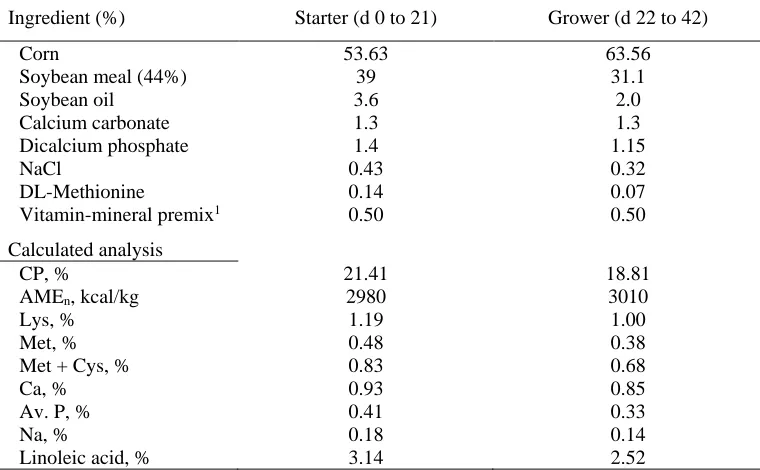
Table 1. Composition of starter and grower diets
Ingredient (%) Starter (d 0 to 21) Grower (d 22 to 42)
Corn 53.63 63.56
Soybean meal (44%) 39 31.1
Soybean oil 3.6 2.0
Calcium carbonate 1.3 1.3
Dicalcium phosphate 1.4 1.15
NaCl 0.43 0.32
DL-Methionine 0.14 0.07
Vitamin-mineral premix1 0.50 0.50
Calculated analysis
CP, % 21.41 18.81
AMEn, kcal/kg 2980 3010
Lys, % 1.19 1.00
Met, % 0.48 0.38
Met + Cys, % 0.83 0.68
Ca, % 0.93 0.85
Av. P, % 0.41 0.33
Na, % 0.18 0.14
Linoleic acid, % 3.14 2.52
1Provided per kilogram of premix: vitamin A 3600000 IU; vitamin D
3 80000 IU ; vitamin E, 7200 IU, vitamin K3, 800 mg; pyridoxine, 1176 mg; thiamin, 700 mg; riboflavin, 2640 mg; pantothenic acid, 3920 mg; niacin, 11880 mg; biotin, 40 mg; choline, 200000 mg; folic acid, 400 mg; vitamin B12, 6 mg; antioxi-dant, 1000 mg; Se, 80 mg; Cu, 4000 mg; I, 396 mg; Fe, 2000 mg; Mn, 39680 mg; Zn, 33880 mg.
1-B. Braun Co. (Germany), Each 1000 ml amino acids contained 5.10 g isoleucine, 8.90 g leucine, 5.60 g lysine, 3.80 g methionine, 5.10 g phenylalanine, 4.10 g threonine, 1.80 g tryptophan, 4.80 g valine, 9.20 g arginine, 5.20 g histidine, 13.70 g alanine, 7.90 g glycine, 8.90 g proline, 2.40 g serine, 0.30 g tyrosine and 1.3 g aspartic acid, 3.27 g asparagine, 0.50 g cysteine, 4.60 g glutamic acid and 2.51 g Ornithine. Total amino acid: 100 g/l. Total N: 16
g/l. Total energy: 400 kcal/l.
2-Fresenius Kabi Austria GmbH. (Austria), Each 1000 ml contained 200 g albumin, 2.31 g caprylate, 3.94 g N-acetyl-dl-tryptophanat and 2.8 g Na.
3-Mashhad Samen Medical Co., Each 100 ml contained 20 g anhy-drous dextrose.
3 oup were taken out of the incubator for 20 min to equal-ize the conditions for all treatment groups.
Bird housing
Hatched chicks of each treatment were randomly as-signed to 4 pens per treatment (13 hatchlings/1.2×1.2 m2 pen). Floor pens, equipped with manual self-feeder and drinker, were bedded with soft wood shavings. Chicks were raised under similar environmental conditions based on Ross 308 management recommendations (Aviagen, 2009) for 42 days, and had free access to feed and water. Diets were formulated according to NRC (1994) recommendations (Table 1).
Data collection
On the day of hatch (d 21 of incubation), hatchability was calculated and expressed as a percentage of ferti-lized eggs. The average body weight of birds in each pen was recorded on days 1 7, 14, 21, 28, 35 and 42 of age. Feed intake and feed conversion ratio (FCR) were cal-culated weekly. On d 42, one bird per replicate was weighed and slaughtered. Carcass weight and major parts including the breast, thighs, wings, back and neck were measured and expressed as percentages of live BW.
Statistical analysis
Results were analyzed by ANOVA using the GLM pro-cedure of SAS software (SAS Institute, 2008). Differ-ences between treatments were compared by the Dun-can’s multiple range test (P <0.05).
Results and discussion
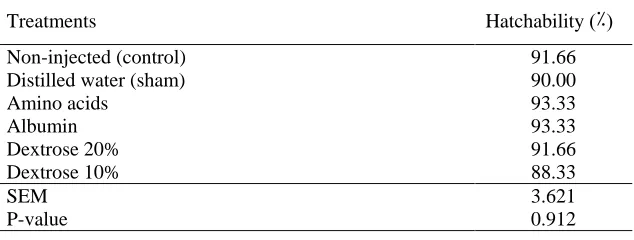
In ovo injection did not have any negative effects on hatchability percentage (Table 2). In ovo injection of carbohydrate solutions and maltose, a multivitamin sup-plement, zinc-glycine, glutamine, or a mixture contain-ing all these elements on d 18 or 18.5 of incubation did not affect rate of hatch (Zhai et al., 2011; Dos Santos et al., 2010). Pedroso et al (2006) reported that injection of GLU at d 16 did not influence rate of hatch but they ob-
served lower hatchability when injecting glucose in the amniotic fluid. Ohta et al. (1999) observed that injection of amino acids at 0 d of incubation reduced hatchability. The results showed that in ovo injection of albumin in-creased d 1 BW compared to the control and shame groups. There was not any significant difference be-tween treatments at other ages (Table 3). Rapid growth coupled with a high energy requirement, especially dur-ing late embryogenesis, may make in ovo feeding of supplemental carbohydrates beneficial to embryos. Muscles exclusively use glycogen derived glucose for a rapid and strong contraction that is essential to shell per-foration and chick emergence (Moran, 2007). The inoc-ulation of carbohydrates and protein, β-hydroxy-β-methylbutyrate (HMB), and carbohydrate increased hatching weight and BW of 7-d-old chicks (Foye et al., 2006). Chicken eggs are rich in protein and lipids but are poor in carbohydrates (Burley and Vadehra, 1989). For the homeostatic control of blood glucose levels. The embryos rely on gluconeogenesis to metabolize glycerol and amino acid substrates liberated by lipolysis and proteolysis, respectively (Klasing, 1998). Subse-quently, increased gluconeogenic degradation of pro-teins toward the time of hatch may limit embryonic growth. Because the late-term embryo orally consumes the amniotic fluid (comprised primarily of water and al-bumen protein) prior to pipping, in ovo feeding of dex-trose, amino acids or albumin may help to overcome any nutrient deficiency that may limit embryonic growth. Thus, it was hypothesized that administration of carbo-hydrates to the amnion may improve the energy level of the broiler embryo and reduce internal energy consump-tion (proteins and lipids) during pipping, thereby in-creasing chick BW (Zhai et al., 2011). Digested proteins provide free amino acids, the possible substrates for he-patic gluconeogenesis. The uptake of glucose and amino acids by skeletal muscle is mediated by the action of in-sulin (Xu et al., 1998). Studies have shown that dietary amino acids are important signaling mediators in pan-creatic β-cell insulin secretion in vitro and release of in-sulin-like growth factors in vivo (Xu et al., 1998). Partic- Table 2. Effect of in-ovo injection of nutrients on egg hatchability
Hatchability )٪( Treatments
91.66 Non-injected (control)
90.00 Distilled water (sham)
93.33 Amino acids
93.33 Albumin
91.66 Dextrose 20%
88.33 Dextrose 10%
3.621 SEM
4
Table 3. Effect of in ovo feeding of nutrients on live weight (g) in broilers from 1 to 42 days of age
d 42 d 35 d 28 d 21 d 14 d 7 d 1 Treatments 2128.27 1565.42 1018.86 601.25 280.45 105.31 38.06b Non-injected (control) 2223.60 1661.91 1090.83 639.58 295.59 109.41 37.97b
Distilled water (sham)
2291.70 1653.26 1063.18 628.69 283.07 106.56 39.15ab Amino acid 2186.53 1628.56 1075.02 603.63 293.52 110.72 40.35a Albumin 2029.55 1567.15 1029.55 599.50 281.36 105.10 39.15ab Dextrose 20% 2187.74 1643.84 1071.25 626.74 272.50 105.31 38.65b Dextrose 10% 55.280 33.751 33.539 18.466 8.179 2.149 0.475 SEM 0.213 0.203 0.633 0.523 0.382 0.316 0.020 P-value1
a,b, Values within a column with different superscripts differ significantly (P < 0.05).
ularly, leucine has been shown to be an insulin secreta-gogue and to potentiate glucostimulated insulin se-cretion in pancreatic β-cells (Tsuruzoe et al., 1998). In-sulin, an inhibitor of hepatic gluconeogenesis (Pocai et al., 2005) may have metabolically shifted the use of di-etary protein (in ovo feeding of protein) away from glu-coneogenesis (Foye et al., 2006). Conversely, these die-tary proteins (in ovo feeding of protein) may have be-come more available to provide the building blocks for muscle protein. These amino acids and peptides would have been absorbed by the muscles due to the action of insulin and incorporated into protein (Foye et al., 2006). Therefore, albumin injection may increase hatchability and body weight on the first day of hatch in comparison to other treatments.
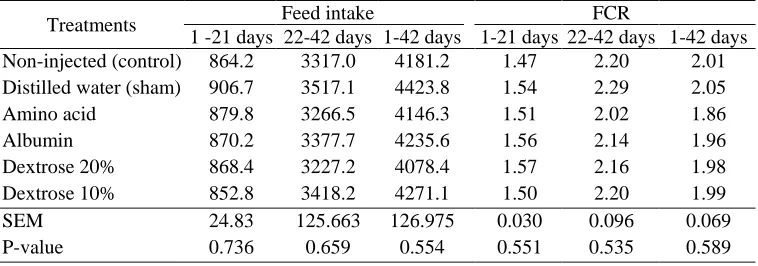
Leitão et al. (2006) did not observe any differences in BW gain between 0 and 10 d in chicks supplemented with glucose at 16 d of incubation. Lopes et al. (2006) injected glutamine to 16-d-old embryos and did not find BW gain differences in 10- to 21-d-old broilers. In tur-keys, addition of 10 IU of vitamin E did not influence the broiler BW at hatch and 35 d of age (Gore and Qureshi, 1997). Feed intake and feed conversion ratio (Tables 4) were not affected by in ovo inoculation of nutritional solutions at d 17.5 of incubation. In ovo in-oculation of several nutrients (maltose, a multi-vitamin supplement, zinc-glycine, glutamine and a mixture con-taining all these elementsandL-carnitin)to18-d-old em-
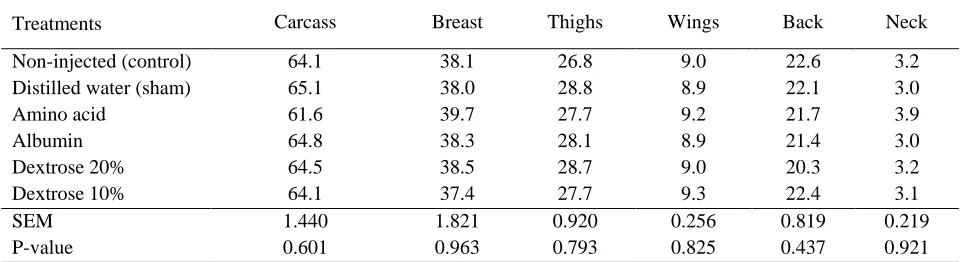
bryos did not influence feed intake and feed conversion (Dos Sontos et al., 2010; Keralapurath et al., 2010; Doley et al., 2011). Pedroso et al. (2006) did not observe any differences in feed intake or feed conversion ratio of chicks inoculated with glucose at 16 d of incubation which are in agreement with the present study. In ovo feeding did not have any significant effects on carcass traits (Table 5). Previosly published data also showed that in ovo injection of several nutrients at 18 d of incu-bation did not influence carcass traits (Dos Sontos et al., 2010; Keralapurath et al., 2010; Doley et al., 2011). Foye et al. (2006) observed higher breast weights at hatch in turkey poults injected with a protein solution at 23 d of incubation; however, in the present work, breast weight at d 14 of growing period was not affected by in ovo injection of several nutrients. Injection of carbohy-drate solution in 18-d-old broiler embryos promoted higher breast meat yields at hatching and at 7 d of age (Uni and Ferket, 2004). Uni et al. (2005) observed higher breast weight at hatch, 10 and 25 d of age in chicks injected with carbohydrates and hydroxy-methylbutyrate at 18 d of incubation which are different from the results of the present experiment (injection of dextrose and protein).
Conclusions
Injection of different nutrients into fertile eggs had no detrimental effects on the hatchpercentage,butalbumin
Table 4. Effect of in ovo feeding of nutrients on feed intake (g) and feed conversion ratio FCR Feed intake Treatments 1-42 days 22-42 days 1-21 days 1-42 days 22-42 days 1 -21 days
2.01 2.20 1.47 4181.2 3317.0 864.2 Non-injected (control) 2.05 2.29 1.54 4423.8 3517.1 906.7
Distilled water (sham)
5
Table 5. Effect of in ovo feeding of nutrients on carcass traits at d 42 of age (% live BW)
Neck Back
Wings Thighs
Breast Carcass
Treatments
3.2 22.6
9.0 26.8
38.1 64.1
Non-injected (control)
3.0 22.1
8.9 28.8
38.0 65.1
Distilled water (sham)
3.9 21.7
9.2 27.7
39.7 61.6
Amino acid
3.0 21.4
8.9 28.1
38.3 64.8
Albumin
3.2 20.3
9.0 28.7
38.5 64.5
Dextrose 20%
3.1 22.4
9.3 27.7
37.4 64.1
Dextrose 10%
0.219 0.819
0.256 0.920
1.821 1.440
SEM
0.921 0.437
0.825 0.793
0.963 0.601
P-value
injection seemed to improve chicks birth weight (P<0.05) although subsequent growth performance and slaughter yield at post-hatch period were not affected.
References
Aviagen, 2009. Ross broiler management manual pp: 1-114. Scotland, UK. www.aviagen.co
Bigot, K., Mignon-Grasteau, S., Picard, M., Tesseraud, S., 2003. Effects of delayed feed intake on body, intestine, and muscle development in neonate broilers. Poultry Science 82,781–788.
Bottje, W., Wolfenden, A., Ding, L., Wolfenden, R., Morgan, M., Pumford, N., Lassiter, K., Duncan, G., Smith, T., Slagle, T., Hargis, B., 2010. Improved hatchability and posthatch performance in turkey poults receiving a dextrin-iodinated casein solution in ovo. Poultry Science 89, 2646– 2650.
Burley, R.W., Vadehra, D.V., 1989. The Avian Egg Chemis-try and Biology. John Wiley and Sons, New York, NY.
Careghi, C., Tona, K., Buyse, J., Decuypere, E., Bruggeman, V., 2005. The effects of the spread of hatch and interaction in delayed feed access after hatch on broiler performance until seven days of age. Poultry Science 84, 1314–1320.
Decuypere, E., Tona, K., Bruggeman, V., Bamelis, F., 2001. The day-old chick, a crucial hinge between breeders and broilers. World’s Poultry Science Journal 57, 127–138.
Dibner, J.J., Richards, J.D., 2004. The digestive system: Chal-lenges and opportunities. Journal of Applied Poultry Re-search 31, 86–93.
Dibner, J.J., Knight, C.D., Kitchell, M.L., Atwell, C.A., Downs, A.C., Ivey, F.J., 1998. Early feeding and develop-ment of the immune system in neonatal poultry. The Jour-nal of Applied Poultry Research 7,425–436.
Dibner, J. J., Richards, J.D., Knight, C.K., 2008. Microbial imprinting in gut development and health. Journal of Ap-plied Poultry Research 17,174–188.
Dooley, M., Peebles, E.D., Zhai, W., Mejia, L., Zumwalt, C.D., Corzo, A., 2011. Effects of L-carnitine via in ovo inje-
ction with or without L-carnitine feed supplementation on broiler hatchability and posthatch performance. The Journal of Applied Poultry Research 20, 491– 497.
Dos Santos, T.T., Corzo, A., Kidd, M.T., McDaniel, C.D., Araújo, L.F., 2010. Influence of in ovo inoculation with var-ious nutrients and egg size on broiler performance. The Journal of Applied Poultry Research 19, 1–12.
Foye, O.T., Uni, Z., Ferket, P.R., 2006. Effect of in ovo feed-ing egg white protein, β-hydroxy-β-methylbutyrate, and carbohydrates on glycogen status and neonatal growth of turkeys. Poultry Science 85, 1185–1192.
Geyra, A., Uni, Z., Sklan, D., 2001. The effect of fasting at different ages on growth and tissue dynamics in the small intestine of the young chick. British Journal of Nutrition 86, 53–61.
Gore, A.B., Qureshi, M.A., 1997. Enhancement of humeral and cellular immunity by vitamin E after embryonic expo-sure. Poultry Science 76, 984–991.
Halevy, O., Geyra, A., Barak, M., Uni, Z., Sklan, D., 2000. Early posthatch starvation decrease satellite cell prolifera-tion and skeletal muscle growth in chicks. Journal of Nutri-tion 130, 858–864.
Halevy, O., Nadel, Y., Barak, M., Rozenboim, I., Sklan, D., 2003. Early posthatch feeding stimulates satellite cell pro-liferation and skeletal muscle growth in turkey poults. Jour-nal of Nutrition 133, 1376–1382.
Henry, M.H., Burke, W.H., 1999. The effects of in ovo ad-ministration of testosterone or an antiandrogen on growth of chick embryos and embryonic muscle characteristics. Poul-try Science 78, 1006–1013.
Jochemsen, P., Jeurissen, S.H., 2002. The localization and up-take of in ovo injected soluble and particulate substances in the chicken. Poultry Science 81, 1811–1817.
6 Keralapurath, M.M., Corzo, A., Pulikanti, R., Zhai, W.,
Pee-bles, E.D., 2010. Effects of in ovo injection of L-carnitine on hatchability and subsequent broiler performance and slaughter yield. Poultry Science 89, 1497–1501.
Klasing, K.C., 1998. Carbohydrates. Pages 201–209 in: Com-parative Avian Nutrition. CAB Int., New York, NY.
Kocamis, H., Yeni, Y.N., Brown, C.U., Kenney, P.B., Kirk-patrick- Keller, D.C., Killefer, J., 2000. Effect of in ovo ad-ministration of insulin-like growth factor-I on composition and mechanical properties of chicken bone. Poultry Science 79, 1345–1350.
Leitão, R.A., Leandro, N.S.M., Pedroso, A.A., Stringhini, J.H., Oliveira Neto, J.R., Café, M.B., 2006. Effect of glu-cose in ovo supplementation at starter performance of broil-ers. Brazilian Journal of Avian Science 7, 69.
Lopes, K.L.A., Pedroso, A.A., Leandro, N.S.M., Stringhini, J.H., Barbosa, C.E., 2006. Glutamine in ovo inoculation ef-fect at the starter on performance of broilers. Brazilian Jour-nal of Avian Science 8,103.
Moore, D.T., Ferket, P.R., Mozdziak, P.E., 2005. The effect of early nutrition on satellite cell dynamics in the young tur-key. Poultry Science 84,748–756.
Moran, E.T., 2007. Nutrition of the developing embryo and hatchling. Poultry Science 86, 1043–1049.
Noy, Y., Sklan, D., 1998. Yolk utilization in the newly hatched poult. British Poultry Science 39,446–451.
NRC, 1994. Nutrient Requirements of Poultry. 9th rev. Ed., National Academy Press, Washington, D.C.
Ohta, Y., Kidd, M.T., Ishibashi, T., 2001. Embryo growth and amino acid concentration profiles of broiler breeder eggs, embryos, and chicks after in ovo administration of amino acids. Poultry Science 80, 1430–1436.
Ohta, Y., Tsushima, N., Koide, K., Kidd, M.K., Ishibashi, T., 1999. Effect of amino acid injection in broiler breeder eggs on embryonic growth and hatchability of chicks. Poultry Science 78, 1493– 1498.
Pedroso, A.A., Chaves, L.S., Café, M.B., Leandro, N.S.M., Stringhini,J.H.,Menten,J.F.M.,2006.Glutamine as broilers embryos nutrient. Brazilian Journal of Avian Science 8, 43.
Pocai, A., Lam, T.K., Gutierrez-Juarez, R., Obici, S., Schwartz, G.J., Bryan, J., Aguilar-Bryan, L., Rossetti, L., 2005. Hypothalamic K+ (ATP) channels control hepatic glu-cose production. Nature 434, 1026–1031.
SAS Institute, 2008. SAS Proprietary Software. Release 9.2. SAS Inst. Inc., Cary, NC.
Smirnov, A., Tako, E., Ferket, P.R., Uni, Z., 2006. Mucin gene expression and mucin content in the chicken intestinal goblet cells are affected by in ovo feeding of carbohydrates. Poultry Science 85, 669–673.
Tako, E., Ferket, P.R., Uni, Z., 2004. Effects of in ovo feeding of carbohydrates and β-hydroxy-β- methylbutyrate on the development of chicken intestine. Poultry Science 83, 2023–2028.
Tsuruzoe, K., Araki, E., Furukawa, N., Shirotani, T., Matsu-moto, K., Kaneko, K., Motoshima, H., Yoshizato, K., Shi-rakami, A., Kishikawa, H., Miyazaki, J. A., 1998. Creation and characterization of a mitochondrial DNA-depleted pan-creatic beta-cell line: Impaired insulin secretion induced by glucose, leucine, and sulfonylureas. Diabetes 47, 621–631.
Uni, Z., Ferket, P.R., 2004. Methods for early nutrition and their potential. World’s Poultry Science Journal 60, 101– 111.
Uni, Z., Ferket, P.R., Tako, E., Kedar, O., 2005. In ovo feed-ing improves energy status of late-term chicken embryos. Poultry Science 84, 764–770.
Xu, G., Kwon, J., Marshall, C.A., Lin, T.A., Lawrence, J.C., McDaniel, M.L., 1998. Branched-chain amino acids are es-sential in the regulation of PHAS-I and p70 S6 kinase by pancreatic β-cells. Journal of Biological Chemistry 273, 28178–28184.
Zhai, W., Neuman, S., Latour, M.A., Hester, P.Y., 2008. The effect of in ovo injection of L-carnitine on hatchability of White Leghorns. Poultry Science 87, 569–572.
Zhai.W., Rowe, D.E., Peebles, E.D., 2011. Effects of com-mercial in ovo injection of carbohydrates on broiler embry-ogenesis. Poultry Science 90, 1295–1301.
7
هجوج تیلباق رب یذغم داوم قیرزت ریثات یسررب
یتشوگ یاه هجوج درکلمع و یشک
م
.
م ،یملاسا
.
ینیعمرلااس
*
و
ش
.
یفرشت
:کینورتکلا تسپ ،لوئسم هدنسیون
هدیکچ یهدزاب و دشر درکلمع ،یشک هجوج تیلباق رب زورتسکد و هنیمآ یاهدیسا ،نیموبلآ قیرزت تارثا قیقحت نیا رد
ار هیوس یتشوو یاه هجوج ههشلا 803
زا شیامزآ نیا رد .تفرو رارق یسررب دروم 860
یارب روراب غرم مخت ددع 6
ماش توینمآ هب ریز ی یم داوم قیرزت و ودهاشا قیرزت تودب بدهش دااتهسا ریز رامیت 7
/ 0 یاهدیسا ،رطقم بآ رتیل یلیم
نیموبلآ ،هنیمآ 00
% زورتهسکد ، 00
% زورتسکد و 00
% رامیت ره هب . 4
یواح رارکت 01
قیرزت .دش داد صاصتخا غرم مخت
زور رد 1 / 07 ات و ی تاه روه هب اهاآ درکلمع تازیم تآ ابادب و یههشک هجوج تیلباق تازیم و دیدرو گاماا یههشک هجوج
نههس 40 هههشلا هلتخم یاه تمههسق و باختاا رارکت ره زا هجوج جی رود تایای رد .تفرو رارق یههسررب دروم یوزور
اتا اسارب .دیدرو نیزوت .دیدرو تزو شیازفا ببس رطقم بآ و دهاش رامیت هب تبسا ،نیموبلآ قیرزت یوزور جی رد ،جی