Pronunciation Barriers and Computer Assisted Language Learning
(CALL): Coping the Demands of 21
stCentury in Second Language
Learning Classroom in Pakistan
Perveen Akhter Farhat1 & Hisham Dzakiria2 1School of Languages, Civilization and Philosophy, University Utara Malaysia
E-mail: [email protected]
2School of Languages, Civilization and Philosophy, University Utara Malaysia
Received: April 3, 2017 Accepted: May 22, 2017 Online Published: June 20, 2017
Abstract
Pronunciation of English language is a very important sub-skill of speaking module in second language learning process. However, it is ignored, neglected, and even never gotten least attention by the teachers, administrators, and stakeholders especially in Pakistan. Grammar, vocabulary, and the other linguistic skills such as reading and writing are emphasized whereas pronunciation has never been focused in language classes. That is why, Pakistani learners have to face a lot of pronunciation problems and they are unable to speak English even after years of learning English. Computer technology provides its learners with a wide variety of different pedagogical tools for pronunciation learning and teaching. Computer augmented instructions have always been proved beneficial. Teachers and learners can use computer technology for the production and articulation of the sounds and they can be familiar with stress and intonation pattern resulting in the reduction of the pronunciation barriers. This article discusses the status of pronunciation and prevailed approach of pronunciation teaching in Pakistan. So, the purpose of this study is to highlight the importance of computer aided instructions for pronunciation teaching at the school level in Pakistan.
Keywords: pronunciation, segmental, suprasegmental, computer-aided teaching, multimedia
1. Introduction
English language is considered as an international currency of science and technology along with main lingua franca of trade and business. As pronunciation is a fundamental skill of spoken aspect and plays a vital role in successful communication; it affects someone’s level of confidence and self-esteem to a greater extent. However, it is treated as the most neglected area of language learning (Derwing, 2010; Egwuogu, 2012; Shahazada, 2012).“Communicative efficiency can be guaranteed by correct pronunciation” (Pourhosein Gilakjani, 2016, p. 3). Zhang and Yin (2009) shed light that learners sometimes develop habitual systematic pronunciation mistakes and they create their own version of pronunciation. Pronunciation errors are generated by the non-native learners systematically rather abruptly or accidently. That is why; they mispronounce the words and generate confusion and misunderstanding by the listener. However, to get mastery over pronunciation is considered a difficult job because of its complicated non-phonemic and stress-timed feature (Harmer, 2001). Furthermore, wrong pronunciation is more problematic rather than poor vocabulary and grammar skill (Eskenazi, 1999; Patil, 2008). Pronunciation problems can lead towards failures in spoken communication (Arslan, 2013). Fraser (2001) highlights that “excellent grammar can be completely masked by poor pronunciation” (p. 5). Majority of English language teachers focuses on grammar and vocabulary and emphasize on functional items and they make little effort to teach pronunciation. They are nervous about the sounds and intonation and assert that even without teaching formal pronunciation syllabus, students would be able to acquire functional pronunciation of their studies (Harmer, 1998).
Unfortunately, in Pakistan, pronunciation teaching and learning have never been the part of the second language learning classrooms. Pronunciation has always been neglected and no attempt is performed to realize the importance of this very basic and significant skill of English language. So, all the features of pronunciation such as segmental and
suprasegmental are not given appropriate attention by the teachers. Learners as well as teachers do not know the basic features of pronunciation such as vowels, monophthongs, diphthongs, short, long vowels, voiced, unvoiced consonants, stress, rhythm, and intonation.
Moreover, 21st century is the era of learner-centered or more probably the learning centered approaches to cope with
the modern demands and diversity of ESL perspective. Now researchers and teachers of second language learning are trying to investigate new trends and pedagogies of pronunciation teaching such as computer-assisted language learning (CALL) or computer-assisted pronunciation teaching (CAPT). These newly developed techniques are getting popularity among second language learners.
Chapelle (2001) argued that in 1980s people used to ask the question whether or not computer should be used for language teaching. Whereas, in 1990s, this question was replaced by “How can the computer best be used in second language teaching?” While 21st century necessitated this bond of technology and language learning as a reality of life
in applied linguistics especially in second language learning. “Teachers need to learn to use computer technology for constructing and implementing materials for teaching and assessing English and they have to engage in innovative teaching and assessments through the use of technology (p. 31)”. However, “the most important developments may not be those that occur in the technological realm, but rather those that take place in our own conceptions of teaching and learning” (Warschaueur, 2004, p. 3-5).
In Pakistan, the usage of computers in education has been increasing day by day; nevertheless, their usage is limited to academic purposes and the idea of employing computer for pronunciation teaching is quite a new trend. The use of computer in Pakistan is limited to writing papers, sending and receiving e-mail, and for World Wide Web browsing (Irshad & Ghani, 2011). Hawkes (2009) suggested that apart from the PowerPoint, advert, video clips, websites, music videos and songs could be used in lessons. He also points out that we must keep in mind the interest and level of the learners, some other techniques could also be employed such as some short clips of movies on the video-sharing website and YouTube to get opinions of the learners.
Currently, Pakistani Government is also trying to facilitate the learners with modern digital devices. As bright students are awarded laptops as well as computers have been assigned to all Government High schools particularly in Punjab (province of Pakistan). In Khaber Pakhtoonkhaw (another province of Pakistan) young learners are given tablets for educational purposes. This availability of computers, laptops, tablets, computer lab along with necessary equipment is indicating that government is showing special interest to make educational institutions fit for globalized and digitized world to cope with the demand of 21st century. Ashraf (2016) expresses that students should have laptop
facility along with internet in Wi-Fi zones at university level and this accessibility of the grant would discover new potentials for teaching and learning. The purpose of this study is to discuss the different CALL/CAPT programs and to realize the availability of CALL laden instructions for teaching of English pronunciation at the school level in Pakistan.
2. Review of the Literature
2.1 Teaching of Pronunciation in Pakistani Traditional Classroom
Pronunciation teaching is not the part of English language classroom in Pakistan. Other components such as reading, writing, grammar, and vocabulary are taught with good attempt in classroom teaching, while pronunciation is almost not touched upon and very few Pakistani have English pronunciation at understandable level (Shahzada, 2012). On the one hand, the productive skills like listening, speaking, and pronunciation are mentioned in National Curriculum for English language. On the other hand, there is a lack of authentic materials in textbooks regarding pronunciation as no effort is done practically and these skills are never taught by the teachers at the school level (Majoka, Khan, & Khan, 2016).
2.2 Factors behind Negligence of Pronunciation
In Pakistan, inadequate and outdated language teaching methods and techniques are employed for language teaching. There is no room for practicing of oral skill or learning pronunciation and there is no availability of A.V. aids (Kanwal & Khurshid, 2012). Additionally, there is also a lack of sufficient organized materials and textbooks regarding pronunciation teaching. Grammar Translation Method (GTM) is considered the only available option to teach English language and teachers are unknown to Communicative Teaching Methods (CTM) as well (Hashmi, 2012; Taveeno,
2011). However, the importance of GTM can’t be denied in language teaching because it is very simple and economical in both time and monetary terms, feasible and approachable in Pakistani context along with providing the learner a conceptual depth via mother tongue of the learner. Furthermore, it has been serving the nations throughout the history. That is why it does not realistic to blame solely GTM for language problems. Nevertheless, this method has no concern to improve pronunciation skill of the learners (Aqel, 2013).
Moreover, some other factors are involved behind this negligence such as lack of time and less experienced teachers; teachers emphasize on grammar and vocabulary without paying attention on pronunciation. In addition, teachers never do proper preparation to teach pronunciation or receive any additional training in this field. They do not have appropriate knowledge of micro-level and macro-level pronunciation features and taught the learners in this way as they could just pass the written exam. Patil (2008) points out that too much emphasis is given on (1) rote learning of trivial and irrelevant data, (2) literary competence at the neglect of communicative competence, and (3) accuracy at the expense of fluency and appropriateness (p. 229). He also indicates that our language learning system does not make learning enjoyable rather it frustrates the learners.
Although, Pakistani teachers are competent enough regarding their subject matter in their respective fields; however, with regards to pronunciation skill, they lack special training, appropriate pedagogical awareness, and different learning styles. They are unaware of learners’ wants, needs, and demands and drive all the learners with one stick. Old and obsolete teaching methodologies are still used by Pakistani teachers and the purpose is to pass the exam rather than to get competence in all over language including communicative skill (Nawab, 2012). So, the Grammar Translation Method (GTM) is considered the only guarantee to teach English language and make the students to be able to pass the subject instead of getting competence in oral skill of English pronunciation. Teachers should develop their awareness of different sound structures, perception of pronunciation variations, which are faced by ESL learners (Line, 2014).
Derwing (2010) expresses that pronunciation skill would be better if it is assessed in exams. Micro-level pronunciation teaching such as vowels, consonants, and consonant clusters help learners to generate the sounds correctly (Harmer, 2001; Morley, 1991). The current study is an attempt to highlight the significant role of technology and it will motivate the teachers to pay particular attention to utilize computer for pronunciation teaching to get over segmental and suprasegmental features of pronunciation. It is hoped that by utilizing computer, teachers as well as learners can improve their own fossilized version of pronunciation through consulting native models. They could acquire understanding of suprasegmental features such as stress, rhythm and intonation, variations, dialect diversity, and challenges in learning standardized English articulation (Lin, 2014).
3. Pronunciation Teaching through Computer-Assisted Language Learning (CALL)
Despite CAPT development programs, many countries still do not use such technologies for teaching pronunciation in their curriculum and Pakistan is one of those areas where the notion of pronunciation teaching through computer device is in infancy. However, to cope with the 21st century demand, there is a dire need to do researches on such
issues to solve the communicative problems as much as possible. Morley (1991) suggests that the last quarter of the 20th century was proved very beneficial for pronunciation regarding changing instructional technology and one can
find abundant varieties of computer applications in classroom and learning center laboratories. Computer can provide a relaxed and enjoyable environment to its learners. Warschauer and Healey (1998) describe that many pronunciation programs have voice recording and playback to compare the learners’ own recordings with native and experts models. Digitized pronunciation software permits learners to employ boundless opportunities in naturalistic setting along with prompt, mechanical, and individual feedback (ibid).
Hua (2006) denotes that unexhausted and non-judgmental nature of the computer permits students to use limitless opportunities of selecting materials and getting additional assistance by the system. Computer-Assisted Pronunciation Teaching (CAPT) software does allow students to do work with autonomy and freedom and they can use the functions repeatedly and frequently. Apart from this, teacher can also use CAPT software in teaching pronunciation classes as it provides drilling and practice which are considered boring and time consuming by the teachers. Through using computer, learners can observe the mouth description, the position of the tongue, and they can get auditory and visual feedback and make correction by themselves without teacher’s scolding and exertion. “Electronic Visual feedback
enables learners to improve their pronunciation of both segmental and suprasegmentals by showing the exact sound features of their production that need to be changed” (Lambacher, 1999).
Levis postulates that “computers can provide individualized instruction, frequent practice through listening discrimination and focused repetition exercises, and automatic visual support that demonstrate the learners how closely their own pronunciation approximates model utterances” (Levis, 2007, p. 184). Computer provides a wide variety of exposure to the learners get mastery over pronunciation by drilling, with native like models. Learners can utilize computer in a purposeful way without any hesitation and without being exhausted.
3.1 Multimedia Input/Visual Aided Devices (A Dual Processors Approach)
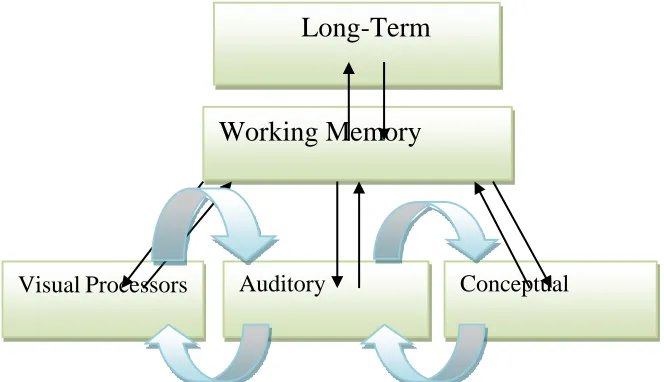
Computer provides ample varieties of delivery mode for language learning instructions and for pronunciation teaching. Multimedia is one form of delivery of materials thorough the usage of both words and pictures, i.e., illustrations, photos, graphs, maps, diagrams, and dynamic graphics as animation or video (Ehsani & Knodt, 1998; Mayer, 2014). Knowles (2004) mentions that a neuropsychologist Donald Hebb (1949), gave the notion that “neurons that fire together wire together” supports this CALL idea in which brain synthesizes auditory, phonological, and visual system in one motion. He also believes that the process of language learning without employing media-rich courseware becomes panic, time consuming, and make learners disappointed. He continued that similarly in multimedia study, several parts of the brain work simultaneously. When learners listen, look at the visual display, and process the information they then record the information. This process awakens many parts of the brain and supplies long-term learning.
Figure 1. Learning process through multimedia (Knowles, 2004)
Knowles (2008) interprets that by using multimedia, well-designed (language class) activities trigger and coordinate the appropriate processors. These processors interact and become active while indulging with working memory and long-term memory and join different chunks together along with clarifying language and sensory input. He also opines that “long-term memory, visual information, and conceptual processors work together to help decode and fill-in comprehension gaps” (p. 4).
Consequently, when learners are taught pronunciation by using devices such as showing videos, using computer, multimedia techniques, and the usage of laptops in language classrooms, they are involved in using their triple senses, i.e., eyes, ears, and minds while listening to pronunciation models of native people; consequently, their performance will have better outcomes as compared to simple traditional classrooms taught by the teachers.
Long-Term
Memory
Working Memory
Visual Processors
Auditory
Processors
Conceptual
Processors
3.2 Empirical Researches on CALL/CAPT Software
Several studies have been conducted in CALL/CAPT context with improved results. The findings of the studies indicated that CALL-laden approaches proved beneficial for language and pronunciation teaching and these sorts of activities enhanced students’ skill and performance to a greater degree. Interactive technology can enable students to organize information so that it can be connected to their prior knowledge or existing schemata (Sosa, Berger, & Mary, 2011). Lambacher (1999) used pronunciation software to forty primary school Japanese learners. Participants improved their perception and production of consonant sounds and they performed repeatedly at their own with prompt feedback.
Similarly, AbuSeileek (2007) conducted his study to evaluate the effectiveness of computer-assisted pronunciation instruction to enhance the ability of suprasegmental features of stress. The researcher selected 50 EFL learners. He used the software of Mouton Interactive Introduction to Phonetics (segmental features) and Phonology (suprasegmental features). Learners showed significant improvement in learning suprasegmental features of stress. Kim (2012) analyzed the usefulness of the ‘Technology Enhanced Accent Modification (TEAM) program to improve students’ pronunciation skill. In this case study, the participants were two Korean graduate (male) students and the main focus was put on improving suprasegmental features of pronunciation. The findings showed that visual feedback enhanced native pronunciation regarding prosody features such as fluency and quality. However, less improvement was noticed regarding their segmental features.
Lee (2008) has used MYET program at Chinmin Institute of Technology in Mio Li County, Taiwan to improve the pronunciation of 153 Taiwanese College and University students. They were studying English as a foreign language as part of their course work. Lee found beneficial effects of using pronunciation software on improving the pronunciation of English language learners. Another study was performed by Hardison (2004) through using computer-assisted training for suprasegmental aspects and segmental accuracy as well as finding out the relationship between suprasegmental features and lexical information in long-term memory. A real-time computerized pitch display was used for prosody training. Results of the study indicated that the learners got significant awareness regarding different facets of speech and they produced the second language sounds more confidently. Gorjan, Hayati, and Pourkhoni (2013) performed a study to evaluate the effects of computer software (Praat) for suprasegmentals of English language. Findings showed that the participants who were taught through computer technology outperformed as compared to the control group in their study.
Levis (2007) suggests that PRAAT and WASP or some other expensive materials as Computerized Speech Lab (CSL) must be employed in training courses of pronunciation. Hardison (2004) adds that Computer-Assisted Pronunciation Teaching (CAPT) has definitely positive impact over the traditional classroom instruction. Firstly, CAPT never exhausts like teacher. Secondly, there is much consistency in CAPT program and it is always the same in presenting its stimulus materials and the feedback as teachers most of the time are not having this capability. Thirdly, in CAPT there is a large variety of numbers of voices used in models and the opportunities for visual feedback. Finally, in CAPT, there is a greater chance to fulfill the variety of individual needs more than any other teacher can do. Moreover, there is an approach of learner autonomy that can be utilized while working on computer according to their demands and needs with full liberty and freedom.
Recently, in this modern digitized educational scenario, CALL provides electronic dictionaries for second language learners. Dwaik (2015) used online digital dictionary device on 148 Arts and Sciences students at two local universities in Palestine. Three types of dictionaries called print, electronic, and online ones were used eight weeks and learners were trained to use digital dictionaries on daily basis to complete their assignment. Students showed noticeably improvement in their overall language proficiency. Some authentic and well-known online dictionaries are Cambridge Dictionaries Online, Word Reference, Collins English Dictionary, and Marriam-Webster’s Learners’ Dictionary. Apart from this, Cambridge Advanced Learners’ Dictionary is also available and could be installed in a personal computer (Santamaria, 2013).
Eskenazi (1999) postulates that CALL program fulfills five main conditions for the effective learning: (1) learners hear large quantities of speech, (2) learners produce large quantities of speech, (3) learners receive effective feedback, (4) learners feel at ease, and (5) learners receive ongoing assessment (p. 448). He also opines that the major aspect of CALL program is that it must provide related and applicable feedback by providing learners visual comparison of
his/her own utterance with the native models. Therefore, CALL/CAPT programs could be manipulated for the solution of pronunciation related issues in language learning classroom. Furthermore, CAPT program grants an interactional approach in a variety of modes such as small group, whole class, pair work, as well as interaction between learners and teacher (Pennington, 1999). Moreover, CALL offers remedial couching for second language learners and provides comparisons between target language and learners’ native language (Ehsani & Knodt, 1998).
4. Challenges and Limitations in Employing CAPT/CALL Program
There are some complications in utilizing CAPT program. As Levis (2007) interprets three hurdles faced by CAPT program, i.e., pedagogical, technological, and some difficulties related to teacher’s preparedness. Pedagogical hurdles refer to a disparity or clash between CAPT application and the goals set by current pronunciation theory and methodology. He further states that the applications with solid and appropriate grounded theory are not very common with CAPT program. Because of this, the gradual development of pronunciation cannot be measured by inconsistent nature of those applications. Secondly, the technologically CAPT systems fail to provide the learners a perfect and reasonable feedback and mechanical diagnosis of their pronunciation errors. Lastly, a large number of teachers are not well aware of this newly developed CAPT system. They lack knowledge while using the technology and do not have sufficient training in teaching pronunciation. Levis (2007) suggested that the teachers and software manufacturers should have more intelligent users of CAPT.
There is a lot of criticism regarding using pronunciation software with limited application of pedagogical theories. Some software do not represent contextualized presentation. As Pennington (1999 as cited in Hua, 2006) points out that most pronunciation software focus on decontextualised mechanic articulation. Some other software attract the teachers and learners by their innovative presentation of software through computer; however, they do not fulfill the linguistic requirement (Chun, 1998; Derwing & Munro, 2005).
A wide range of tools and approaches now exists in CALL but it is not always clear how those tools are selected, adapted, developed, implemented, and evaluated in teaching contexts. By looking at the use of CALL in one type of pedagogical environment we can again insights into which tools are favored in practice and which approaches to learning and teaching they support (Zhang & Barber, 2008, p.470).
Chun (1998) expresses that a wide variety of CAPT software, although apparently look nice and advantageous but in fact, the graphic wave forms displayed in software do not present meaningful output for learners. So due to all of these complications and limitations, exclusive and modified software programs are required which could be utilized in language classrooms with better methodological advantages (Chapelle, 1997).
Kilickaya (2007) summarized the advantages of CALL program. He states that computer-assisted language learning or computer-assisted pronunciation teaching provide
Learner autonomy (learners can do their practice whenever or wherever without any restricted school schedule),
Repetitive practice,
Immediate and detailed feedback to learners regarding their progress and mistakes,
Flexible learning (anytime, anywhere, anything learners want),
Non-linear learning,
Increased motivation,
Less frustration, and
New types of exercises.
However, technology is not a magic stick that could resolve all language related issues. Some delimitations of CALL prescribed by Kilickaya (2007) are discussed below:
High cost of equipment and software,
Low capacity of the equipment,
Lack of CALL software of high quality,
Lack of trained teachers,
Computer anxiety among students and teachers, and
Not suitable for all learners (different learning styles).
Warschauer and Healey (1998) emphasized that we should develop such software that could supply an integrated teaching solution and that could (1) offer diverse, realistic, native speaker models of the language, (2) provide a language learning curriculum, (3) assess learner’s needs and wants, (4) identify the best next options for the learner along with practice with the particular skills, (5) make record of students’ performance as well as their evaluation, (6) be available at any time without any charging of extra payment or advantages (p. 59). Moreover, CALL program which gives feedback to the users in the way just “Right” or “Wrong, try again” are not very helpful in real sense. Good software not only give appropriate feedback to the learners on their performance but also provide remedies and solution towards their problems and supply some suggestions for the advanced level or some additional practice at the current level or previous level (Warschauer & Healey, 1998).
To sum up, language teachers must keep in their minds all these mentioned-above issues regarding teaching pronunciation using CALL/CAPT program and formulate such activities through which they can get familiarity with all of the phonetic sounds, basic features of pronunciation, vowel, consonant, short and long, voiced, unvoiced sound, stress, rhythm, and intonation to teach their learners in a best way. They could have a large variety of native models for drilling and practice. The most important thing is that there is a need to train the teachers regarding functioning of the CALL program, selection, adaptation, and developmental and technological limitations. If teachers use computer they could observe the native models of pronunciation. They can watch mouth descriptions, tongue, lips, and jaw position and other articulatory organs and pronunciation barriers could be lessened through the appropriate use of computer technology.
5. Recommendations
Learners are in the custody of teachers during the entire language learning process and their learning would be shaped and refined according to the teachers’ concerns, beliefs, capabilities, and attitudes. Therefore, highly motivated teachers are required to perform the CALL program. Teachers are expected to keep in their minds some very crucial points regarding pronunciation. Language teachers must maintain their own objectives at the class level, pay attention to the learners’ lacking areas (digital or non-digital), their wants, desires, individual needs, age, and levels. Some important suggestions are discussed as:
1. Both segmental and suprasegmental features must be taught to the learners.
2. An oral exam must be conducted by the teacher with scoring (just for 2-3 minutes per each student) to check their proficiency level in English pronunciation.
3. Easy access to digital dictionaries must be sustained and utilized for prompt feedback for the learners’ fossilized pronunciation at the right place and at the right time.
4. Teachers must keep up-to-date knowledge of newly developed researches and pedagogical implications. 5. Native models of pronunciation, large variety of pronunciation software, movie clips, and phonetic videos
must be stalked with other assisting materials inside the classroom instead of language lab.
6. The rule of ‘less time more progress’ must be kept in the mind of the teacher which is possible just by technological normalization.
6. Conclusion
Pronunciation is a very basic skill in language learning. This skill is more significant than vocabulary and grammar. However, in Pakistan, it is always being neglected and no attention is paid to pronunciation throughout the language learning process. There are many factors behind this negligence. CALL/CAPT provides the solution for pronunciation problems. Learners can do practice, utilize CALL/CAPT program as much as they want without making exhausted their teachers repeatedly. Teachers must have full awareness of goals and objectives of language learning. Otherwise, technology alone cannot be a good option and it would be wastage of time without any result. It is true that business
prone CALL programs are having overwhelming trends; nevertheless, the focus must be shifted to curriculum-specific CALL packages, along with particular content as well as age and experience of the learners. There is also a need to normalize the technology in language classroom. Bax (2003) signifies that the ultimate goal of CALL for technology is normalization. It means that there is a need to change the concept of technology from specialty to normalization and it must be the part of everyday classroom practices. It must not be treated like a special tool and adjoining device rather it must be seen everywhere in language learning classroom like other teaching aids such as white board, board marker, table, and chairs. Although, at this time, it is a very difficult task and it will take time to get ultimate purpose of digitized pronunciation, but it is not impossible and just necessitates rethinking the pedagogical implications in second language learning perspectives. Teachers must be trained regarding availability of wide varieties of CALL/CAPT. Teachers should also have awareness of learners’ needs, their demands, current level, and feasibility of the program. Therefore, the actual purpose of language learning especially pronunciation learning will be fulfilled with better performance and good results.
References
AbuSeileek, A. F. (2007). Computer-assisted pronunciation instruction as an effective means for teaching stress. JALT
CALL Journal, 3(1-2), 3-24. Retrieved from
https://www.google.com/search?q=The+JALT+CALL+Journal+2007+%5BVol.+3.1-2%5D&oq
Aqel, I. M. (2013). The effect of using grammar-translation method on acquiring English as a foreign language.
International Journal of Asian Social Science, 3(12), 2469-2476.
Arslan, R. S. (2013). Enhancing non-native prospective English langauge teachers comptency in sentential stress patterns in English. Pamukkale University Journal of Education, 34(11), 183-195. doi:10.9779/PUJE 625. Ashraf, M. (2016). The effectiveness of integrating computer assisted language learning (CALL) into the
textbook-based syllabus of English language: teachers’ and learners’ perspectives. Research Journal of Language &
Linterature (RJLL),1(1), 115-140. Retrieved from
https://www.google.com/search?q=An+Analysis+of+the+Vowel+Sounds+of+Pakistani+English&oq
Bax, S. (2003). CALL: Past, Present and future. System,31(1), 13-28. dx.doi.org/10.1016/S0346-251X(02)00071-4. Chapelle, C. A. (2001). Computer application in second language acquisition. Foundation for teaching testing and
research. Cambridge: Cambridge University Press.
Chun, D. M. (1998). Signal analysis software for teaching discourse intonation. LanguageLearning & Technology, 2(1), 74-93. Available at http://llt.msu.edu/vol2num1/article4/
Derwing, T. M. (2010). Utopian goals for pronunciation teaching. In J. Levis & K. LeVelle (eds.), Proceedings of the
1st Pronunciation in Second Language Learning and Teaching Conference, Iowa State University, Sept. 2009.
(pp. 24-37), Ames, IA: Iowa State University. http://psllt.org/index.php/psllt/2009/paper/view/7/3
Derwing, T. M., & Munro, M. J. (2005). Second language accent and pronunciation teaching: A research-based approach. TESOL Quarterly, 39 (3),379-397. Retrieved from http://www.jstor.org/stable/3588486
Dwaik, R. A. A. (2015). English Digital Dictionaries as valuable blended learning tools for Palestinian College Student. English Language Teaching, 8(11), 1-10. doi:10.5539/elt.v8n11pl
Egwuogu. C. B. (2012). Challenges and techniques in the teaching of English pronunciation in junior secondary school in Nigeria. Asian Journal of Social Sciences & Humanities, 1(4), 212-219. Available at http://www.ajssh.leena-luna.co.jp/ajsshvol1n4.php
Ehsani, F., & Knodt, E. (1998). Speech technology in computer-aided langauge learning: strengths and limitations of a new CALL paradigm. Langauge Learning & Technology, 2(1), 54-73. Retrieved from https://www.google.com/search?q=Ehsani%2C+F.+Knodt%2C+E.+(1998).+Speech+technology+in+computer -aided+langauge+learning
Eskenazi, M. (1999). Using a computerin foreign langauge pronunciation training: What advantages? CALICO
Journal, 16(3), 447-469. Retrieved from
https://www.google.com/search?q=Eskenazi&oq=Eskenazi&aqs=chrome..69i57j0l5.1303j0j7&sourceid
Fraser, H. (2001). Teaching pronunciation:A handbook for teachers and trainers. Department of Education Training and Youth Affairs, Canberra.
Gorjian, B., Hayati, A., & Pourkhoni, P. (2013). Using Praat software in teaching prosodic features to EFL learners.
Procedia: Social and Behavioral Sciences, 84, 34–40.
Hardison, D. M. (2004). Generalization of computer-assisted prosody training: Quanitative and qualiatative findings.
Language Learning and Technology, 8(1), 34-52. Avaialble at
https://www.google.com/search?q=Hardison%2C+D.+M.+(2004).+Generalization+of+Computer-Assisted+prosody+training
Harmer, J. (1998). How to teach English. Malaysia: Addison Wesley Longman Limited. Harmer, J. (2001). The practice of English language teaching. Harlow: Longman.
Hashmi, F. A. (2012). Omission of schwa in Pakistani English. Elixir Linguistics, 44c, 7093-7101. Retrieved from https://www.google.com/search?q=Hashmi%2C+F.+A.+(2012).+Omission+of+schwa+in+Pakistani+English. +Elexir+Linguistics
Hua, T. P. (2006). Bridging pedagogy and technology: User evaluation of pronunciation oriented CALL software.
Australasian Journal of Educational Technoloy, 22(3), 375-397. Available at
https://www.google.com/search?q=Hua%2C+T.+P.+(2006).+Bridging+pedagogy+and+technology
Irshad, S., & Ghani, M. (2011). Effectiveness of computer-assisted language learning (CALL) in Pakistani ESL perspective: A quasi-experimental study. Proceedings of the 3rd International Conference of Teaching and Learning (ICTL 2011) INTI International University, Malaysia.
Kanwal, W., & Kurshid, F. (2012). University student difficulties in learning English language skills. Language in India Strength for today and bright hope for tomorrow, 12(2), 327-337.
Kilickaya, F. (2007). The effect of computer assisted language learning on Turkish learners’ achievement on the
TOEFL exam. Middle East Technical University, Ankara, Turkey. Retrieved from
https://www.google.com/search?q=Kilickaya%2C+F.+(2007).+The+effect+of+computer+assisted+language+l earning+on+Turkish+learners’+achievement+on+the+TOEFL+exam
Kim, A. (2012). Investigating the effectiveness of computer-assisted language learning (CALL) in improving pronunciation: A case study. Multimedia-Assisted Language Learning, 15(3), 11-33. Retrieved from https://www.google.com/search?q=Kim%2C+A.+(2012).+Investigating+the+effectiveness+of+computer-assisted+language+learning+(CALL)+in+improving+pronunciation
Knowles, L. (2004). The evolution of CALL. Journal of Communication & Education, 1-8. www.languagemagazine.com
Knowles, L. (2008). Recursive hierarchical recognition: A brain-based theory of language learning. FEELTA/NATE
Conference Proceedings. Available at https://msu.edu/course/esl/094/Dyned%20V2.7/DynEd/doc/tgtheory.pdf
Lambacher, S. G. (1999). A CALL tool for improving second language learning acquisition of English consonants by Japanese learners. Computer-Assisted Language Learning. Research Gate, 12(2), 137-156. doi:10.1076/call.12.2137.5722
Lee, S. T. (2008). Teaching pronunciation of English using computer-assisted learning software: An action research study in an Institute of Taiwan. (Doctoral dissertation unpublished). School of Education, Faculty of Education. Australian Catholic University Research Services.
Levis, J. (2007). Computer technology in teaching and researching pronunciation. Annual Review of Applied Linguistics, 27, 84-202. doi:10.107/So267190508070098
Lin, L. C. (2014). Understanding pronunciation variation facing ESL students. International Journal of Humanities
and Social Sciences, 4(5), 16-20. Available at
https://www.google.com/search?q=Lin%2C+Liang-Chen.+(2014).+Understanding+pronunciation+variation+facing+ESL+students
Majoka, M. I., Khan, M. J., & Khan, M. I. (2016). Pronunciation teaching: The missing link in English teaching in
Pakistani schools. Journal of Elementary Education, 26(1), 1-16.
https://www.researchgate.net/publication/316701927_Pronunciation_Teaching_The_Missing_Link_in_English _Teaching_in_Pakistani_Schools
Mayer, R. E. (2014). The Cambridge handbook of multimedia learning(2nd ed). USA: Cambridge University Press.
Morley, J. (1991). The pronunciation component in teaching English to speakers of other languages. TESOL
Quarterly, 25(1), 51-74. Retrieved from
https://deepblue.lib.umich.edu/bitstream/handle/2027.42/90128/3586981.pdf?sequence=1
Nawab, A. (2012). Is it the way to teach language the way we teach language? English language teaching in rural
Pakistan. Academy Research Institute. 2(2), 696-705.
https://www.google.com/search?q=Nawab%2C+A.+(2012)+Is+it+the+way+to+teach+language+the+way+we +teach+language
Patil, Z. N. (2008). Rethinking the objectives of teaching English in Asia. Asian EFL Journal, 10(4), 227-240. https://oanimpress.wikispaces.com/file/view/English+Teaching+in+Asia.pdf
Pennington, M. C. (1999). Computer-aided pronunciation pedagogy: Promise, limitations, directions. Computer-Assisted Language Learning, 12, 427-440.
Pourhosein Gilakjani, A. (2016). English pronunciation instruction: A literature review. International Journal of Research in English Education, 1(1), 1-6. Retrieved from https://ijreeonline.com/article-1-21-en.pdf
Shahzada, G. (2012). Views of the teachers regarding the students’ poor pronunciation in English language. Journal of Educational and Social Research. 2(1), 309-316. doi: 10.5901/jesr.2012.02.01.309.
Sosa, G. W., Berger, D. E., & Mary, J. C. (2011). Effectiveness of computer-assisted instruction in statistics: A meta-analysis. Review of Educational Research, 81(1), 97-128. doi: 10.3102/0034654310378174
Taveeno, R. A. (2011). Challenges in teaching and learning of English at secondary level class-x. International Journal of Human Resource Studies, 1(2), 27-35. doi:10.5296/ijhrs.v1i2.1029
Warschauer, M. (2004). Technological change and the future of CALL. In S. Fotos & C. Brown (Eds.), New Perspectives on CALL for Second and Foreign Language Classrooms (pp. 15-25). Mahwah, NJ: Lawrence Erlbaum Associates.
Warschauer, M., & Healey, D. (1998). Computers and language learning: An overview.
Lang.Tech. 31, 57-71. Cambridge University Press.
Zhang, F., & Yin, P. (2009). A study of pronunciation problems of English learners in China. Asian Social Science,
5(6), 141-146. Available at
https://www.google.com/search?q=A+Study+of+Pronunciation+Problems+of+English+Learners+in+China&o q