ing the translation of Origin of Species into German, and (more intriguingly) diachroni-cally, as scientists reworked older words such as “perfection” and “type” to lend them new meanings. Gliboff’s own clear, crisp prose is key to the success of this analysis, as he deftly leads his reader through dense philosophical and terminological thickets with nary a thorn scratch. This is some of the best close reading I have seen. It also represents a profound chal-lenge to our standard picture of 19th-century German biology.
The old story, crudely put, is that Haeckel’s version of evolution was a Darwinism in name only, best understood as an update on early-19th-century idealistic morphologists such as Carl F. Kielmeyer and J. F. Meckel that retained their teleology, their typological emphasis on form, and their linear recapitula-tionism. This story, emphasizing the long per-sistence of a German transcendental approach to nature, has been deeply entrenched in the history of biology.
Gliboff challenges this history right from the beginning. The ascription of simple linear recapitulationism to the views of Romantic embryologists, he notes, owes much to a carica-ture developed by Karl Ernst von Baer in a polemical context, then adopted uncritically by influential historians such as E. S.
Russell and Stephen Jay Gould. Gliboff’s fresh reading of the orig-inal sources interprets Kielmeyer and Meckel as far less rigidly typological in their orientation and much more attentive to nature’s variability than has been seen before. Both for these early-19th-century naturalists and for their intellectual heirs, Gliboff argues, the critical issue was to understand nature’s manifold variety while seeking out underlying strict natu-ral laws to account for it.
This provides a new starting point for analyzing Darwin’s first translator, the prominent paleon-tologist H. G. Bronn—a figure lit-tle attended to in the standard story but the lynchpin of Gli-boff’s. Intriguingly and plausibly, Gliboff argues that Bronn’s use of terms like “vervollkommnet” (perfect) as translations for Dar-win’s “improved” or “favored” were not about dragging Darwin backward into a German teleo-logical view of nature (as has been claimed by those who have paid attention to Bronn at all). Instead, Gliboff asserts, Bronn’s
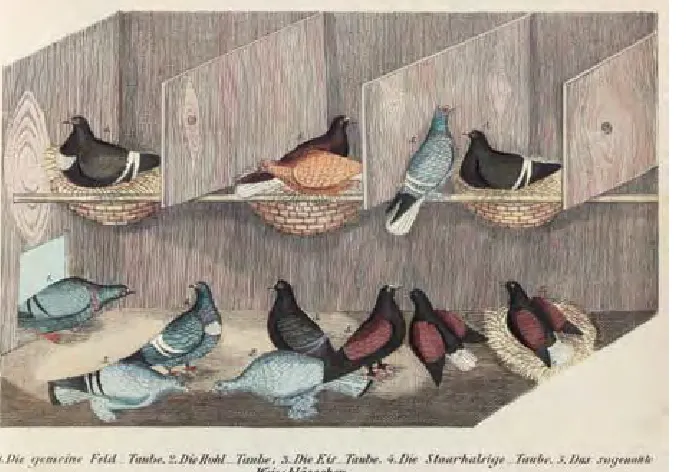
translations involved an attempt to recast exist-ing German terms in a newer, more up-to-date mode that encompassed selection yet tamed Darwin’s emphasis on unpredictability to meet the more rigorous requirements of a German academic scientist’s understanding of a “law” of organic nature. Simultaneously, Bronn sought to translate Darwin’s ideas about selec-tion into a language without an exact equiva-lent for the term, and for an academic audience lacking the gentlemanly traditions of breeding pigeons and dogs so central to Darwin’s expo-sition. The selection metaphor was further fraught with an anthropomorphism foreign to Germans, who were not brought up on British natural-theological assumptions about a per-sonified God who had created a perfectly adapted nature. Bronn’s translation, though it altered key ideas to make Darwin comprehen-sible to a German academic audience, was not a conservative throwback. It represented the dynamic engagement of a leading paleontolo-gist who had also long been working on many of the questions Darwin claimed as his own— a critical yet generous equal, who saw himself as moving science forward through the modi-fications he made to Darwin’s flawed theory. Bronn’s death in 1862 afforded him little chance to steer the conversation further.
And so, finally, we come to Haeckel. Gliboff ’s key insight here is that Haeckel originally read Bronn’s translation of Darwin, not Darwin in the original. Gliboff shows Haeckel as both echoing and responding to Bronn’s concerns, rather than either reflect-ing directly on Darwin’s original writreflect-ing or reaching directly back to the Romantic embryologists. (Although Gliboff acknowl-edges the centrality of monism to Haeckel’s thought, he focuses on the working evolution-ary theorist, not the popular ideologue.) Like Bronn himself, Haeckel made further amend-ments both terminological and intellectual, and Gliboff rereads Haeckel’s research pro-gram as one not dominated by a typological and linear-recapitulationist mindset but rather as continuing to wrestle with the need to account for variability and unpredictable change in terms of mechanistic laws of nature—among which Haeckel included, at the top of his list, natural selection. Haeckel’s Darwinism thus shows continuity with early-19th-century concerns, mediated through Bronn. But those concerns were always more flexible than has been acknowledged, and their articulation changed over time. Of course Haeckel’s Darwinism was not Darwin’s own, but it was not an aberration or a distortion of some true theory, any more than any other post-Darwinian additions or adjustments were. It was science moving on.
Gliboff’s overall picture of scientific advance, in contrast to Richards’s emphasis on charisma and passion, is one of scientists building and innovating incrementally, work-ing with what their predecessors have handed them and sculpting it into something new yet understandable to those around them. His sen-sitive reading allows us to see post-1859 German evolutionists as rational actors rather than irrationally stuck in some early-19th-century moment with unmodern commit-ments. By challenging the very foundations of the standard narrative of German morphol-ogy, this careful, compelling account does at least as much as Richards’s to undermine the association of 19th-century German Darwin-ism with a dangerously exceptional view of nature. But the two books offer very different reads. Is scientific progress a matter of per-sonal anguish and triumph, or of intellectual chugging along? Our concept of it should be capacious enough to include both.
References and Notes
1. E. Haeckel, Generelle Morphologie der Organismen (Georg Reimer, Berlin, 1866).
2. The reviewer previously served as a press reader for both books at the manuscript stage.
10.1126/science.1169621
www.sciencemag.org SCIENCE VOL 323 27 FEBRUARY 2009
1171
CREDIT
: ERNST
HAECKEL/FROM
W
ANDERBILDER
(W
. KOEHLER,
GERA-UNTERMHAUS,
1905)
A painter, too.Haeckel’s oil landscape of highlands in Java, from Wanderbilder(1905).
BOOKS
ETAL.0227Books 2/20/09 1:38 PM Page 1171
presence of two lineages that co-occur in the ad-jacent refugia. In all species, average net nucle-otide differences across localities (22) reflects high geographic structure within refugia (2.6 to
6.2% divergence). In contrast, sites located outside (south of) the refugia are genetically more similar to each other, although to a lesser extent inH. faber(0.1 to 1.6%). Signatures of
population expansion (23) are found in the unstable area forH. albomarginatusandH. faber, as well as in the Bahia refugium area forH. faber
and H. semilineatus. The lack of signature of
Fig. 2.Genetic diversity in putative refugial (stable) versus unstable areas in the Brazilian Atlantic rainforest. (Top) Species-specific stability maps; modeled refugia in black. (A) H. albomarginatus, (B)H. semilineatus, (C)H. faber. Note the absence of large stable regions in the southern portion of the forest (south of the Bahia and São Paulo refugia) relative to the central and northern areas. Asterisks denote refugia inferred beyond the current ranges of the target species. Symbols indicate localities sampled for molecular analysis. Scale bar, 400 km. (Bottom) The 50% majority-rule con-sensus Bayesian phylogenetic trees, rooted with sequences from the oth-er two congenoth-eric species studied (root not shown). Thick internodes de-note clades with posterior probability greater than 90%. Percentages indicate Tamura-Nei corrected distances between clades (20).
7% 5.4%
5.6%
7.8%
4% 5.3 –
5.8%
Pernambuco refugium
Bahia refugium
Sã o Paulo refugium
A B
*
*
C
Table 1.Population genetic summary metrics used in model validation.n, Sample size;S, number of segregating sites. The diversity parameterqand mean Daacross localities are given per base pair (bp).Hstest (23) is used to detect population expansion. BA, Bahia; SP, São Paulo refugia. Because predicted refugia were often larger than predicted unstable (recently colonized) areas,n,S,
q, and averageDavalues of the former were obtained not only from the total number of samples, but also from all possible combinations of spatially contiguous localities distributed within the geographic extension of the unstable area. Parentheses encompass minimum and maximum values from subsamples. Pvalues in bold highlight statistical significance at 0.05 probability level.
Species Area n
(min.; max.)
S (min.; max.)
q (min.; max.)
MeanDa (min.; max.)
Hs (Pvalue)
Mantel’s corr. coef. (Pvalue)
H. albomarginatus (970 bp)
Stable (BA) 36 (13; 23)
207 (81; 155)
0.076 (0.034; 0.072)
0.062 (0.020; 0.082)
–20.546 (0.141)
0.499
(0.001)
Unstable (south of BA)
27 22 0.003 0.001 –11.498
(0.004)
–0.140 (0.580) H. semilineatus
(718 bp)
Stable (BA) 28 (6; 13)
71 (14; 58)
0.031 (0.009; 0.034)
0.036 (0.007; 0.041)
–17.778 (0.029)
0.054 (0.460) Unstable
(south of BA)
15 9 0.003 0.004 0.114
(0.357)
0.436 (0.248) H. faber
(771 bp)
Stable (BA) 28 (13; 23)
94 (42; 80)
0.018 (0.012; 0.022)
0.026 (0.001; 0.044)
–38.111 (0.003)
0.803
(0.0003)
Stable (SP) 15 48 0.023 0.028 –5.981
(0.115)
0.305 (0.221) Unstable
(south of SP)
18 40 0.015 0.016 –13.255
(0.014)
0.0001 (0.456)
www.sciencemag.org SCIENCE VOL 323 6 FEBRUARY 2009 787
REPORTS
ORIGINS
Stockholm. “When we started,the search profile was bigger, a magnolia [flower],” she recalls. But 30 years ago, she and others discovered tiny ancient flowers by sieving through sand and clay sedi-ments. With this technique, they have now collected hun-dreds of millimeter-size flowers, some preserved in three dimensions, from Por-tugal and other locations with Cretaceous deposits 70 mil-lion to 120 milmil-lion years old. This fossil diversity shows that angiosperms were thriving, with several groups well-established, by 100 mil-lion years ago. In some, the flower parts are whorled like those of modern flowers; in others they are spiraled, con-sidered by some researchers
as the more primitive arrangement. Some flower fossils have prescribed numbers of petals, another modern feature, whereas in others the petal count varies.
In 1998, Chinese geologist Ge Sun of Jilin University in Changchun, China, came across what seemed to be a much older flower. The fossil, called Archaefructus, was an aquatic plant that looked to be 144 mil-lion years old. By 2002, Sun and David Dilcher of the Florida Museum of Natural History (FLMNH) in Gainesville had described an entire plant, from roots to flow-ers, entombed on a slab of rock unearthed in Liaoning in northeastern China.
In one sense, Archaefructuswasn’t much to look at. “It’s a flowering plant before there were flowers,” Dilcher notes. It lacked petals and sepals, but it did have an enclosed carpel. When Kevin Nixon and colleagues at Cornell University compared its traits with those same traits in 173 living plants, Archaefructuscame out as a sister to living angiosperms and closer to the com-mon ancestor than even Amborella.
Archaefructus’s distinction was short-lived, however. Within months, better dat-ing of the sediments in which it was found yielded younger dates, putting this first flower squarely with other early fossil flower parts, about 125 million years old. Also, a 2009 phylogenetic analysis of 67 taxa by Doyle and Peter Endress of the University of Zurich, Switzerland, placed the fossil in with water lilies rather than at the base of the angiosperms, although this conclusion is contested.
These fossils often spark debate because specimens tend to be imperfectly preserved and leave room for interpretation. To help remedy that, Friis and her colleagues have begun to examine flowers using synchro-tron radiation to generate a 3D image of their inner structures, allowing the fossil to remain intact while Friis peers inside it from many angles (Science, 7 December 2007, p. 1546). “We can get fantastic reso-lution,” says Friis. “It’s really exciting.” But so far, the flowers Friis finds are too diverse to trace back to a particular ancestor. “From these fossils, we cannot say what is the basic form,” she says.
Before flowers Although they have yet to find the oldest fossil flowers, researchers assume that the ances-tral angiosperm evolved
from one of the nonflowering seed plants or gymnosperms, whose heyday was 200 million years ago. Modern gymnosperms include conifers, ginkgoes, and the cycads, with their stout trunks and large fronds. Before angiosperms came along, these plants were much more diverse and included cycadlike species, such as the extinct Bennettitales, and many woody plants called Gnetales, of which a few representatives, including the joint firs, survive today (see family tree, p. 31). Also common in the Jurassic were seed ferns, a group now long gone; their most famous member is Caytonia, which seems to have precarpel-like structures. These groups’ perceived relevance to flower evolution and their relationships to angiosperms have ping-ponged between camps, depending on how the evolutionary trees were constructed.
In the mid-1980s, Peter Crane, now at the University of Chicago in Illinois, pro-posed a solution, the anthophyte hypothesis. Using several lines of evidence and noting that both Bennettitales and
Gnetales organize their male and female organs together
in what could be con-strued as a preflower, he considered them, along with angiosperms, as comprising a single angiosperm entity called anthophytes. For the next decade, most family trees based on morphology
sup-29 Out of the past. Tiny Amborellasits at the bottom of the angiosperm family tree.
www.sciencemag.org SCIENCE VOL 324 3 APRIL 2009
“We are realizing that this
huge diversity is probably
the result of one
innova-tion piled on top of
another innovation.”
—Peter Crane, University of Chicago
CREDITS
(TOP
TO
BOTTOM):
COUR
TESY
OF
STEPHEN
MCCABE,
UC
SANT
A
CRUZ;
PHOTO
BY
JENNIFER
SVITKO,
COUR
TESY
OF
WILLIAM
L.
CREPET
, CORNELL
UNIVERSITY
Larger than life.Although merely 2.2 millimeters in diameter, this 3D fossil flower shows that grasses date
back to 94 million years ago.
0403NewsFocus.qxp 3/30/09 5:23 PM Page 29
Introduction
2 Darwin’s Inspiration, Darwin’s Legacy Andrew Sugden
Articles
3 On the Origin of Life on Earth Carl Zimmer
Science 9 January 2009 323: 198-199
5 On the Origin of Art and Symbolism Michael Balter
Science 6 February 2009 323: 709-711
8 On the Origin of Photosynthesis Mitch Leslie
Science 6 March 2009 323: 1286-1287
10 On the Origin of Flowering Plants Elizabeth Pennisi
Science 3 April 2009 324: 28-31
14 Alexander von Humboldt and the General Physics of the Earth
Stephen T. Jackson
Science 1 May 2009 324: 596-597
16 Making German Evolution: Translation and Tragedy Lynn K. Nyhart
Science 27 February 2009 323: 1170-1171
18 Darwin’s Originality Peter J. Bowler
Science 9 January 2009 323: 223-226
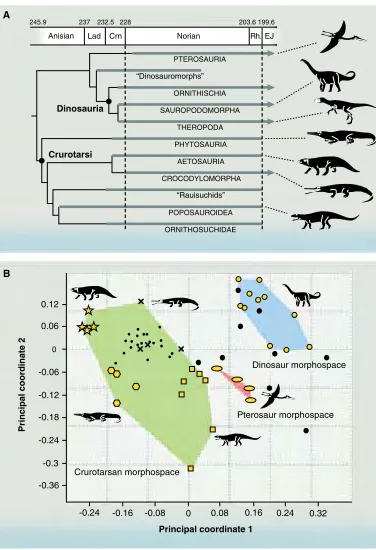
22 The Red Queen and the Court Jester: Species Diversity and the Role of Biotic and Abiotic Factors Through Time Michael J. Benton
Science 6 February 2009 323: 728-732
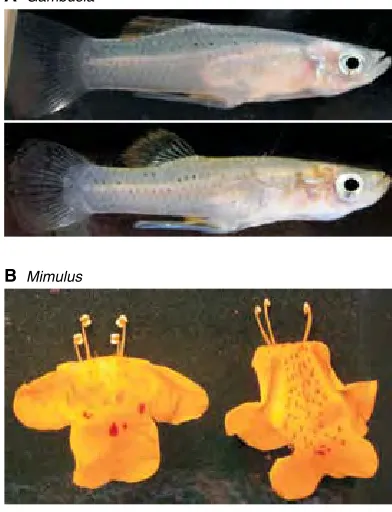
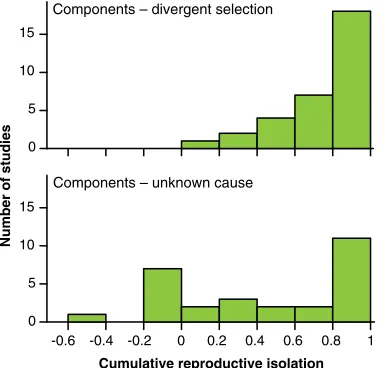
26 Evidence for Ecological Speciation and Its Alternative Dolph Schluter
Science 6 February 2009 323: 737-741
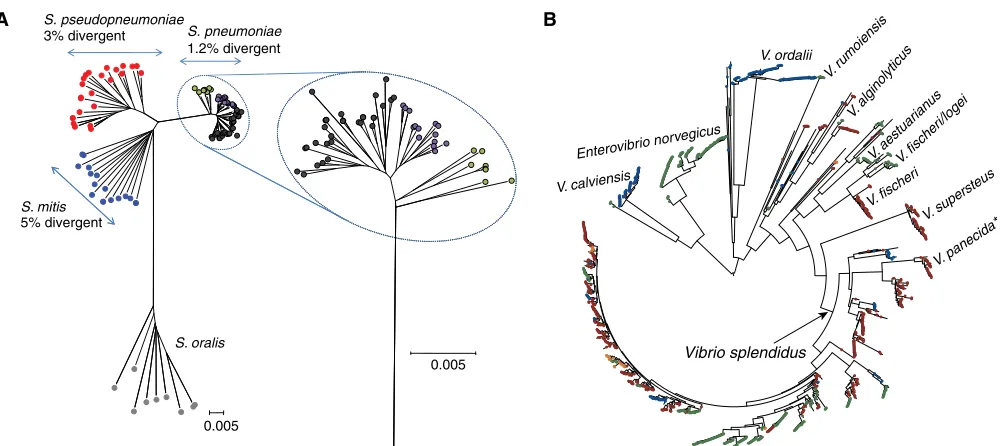
30 The Bacterial Species Challenge: Making Sense of Genetic and Ecological Diversity
Christophe Fraser, Eric J. Alm, Martin F. Polz, et al. Science 6 February 2009 323: 741-746
36 Stability Predicts Genetic Diversity in the Brazilian Atlantic Forest Hotspot
Ana Carolina Carnaval, Michael J. Hickerson, Célio F. B. Haddad, et al. Science 6 February 2009 323: 785-789
Contents
page 10
page 16
page 36
Around the world, governments turn to AAAS as an objective, multidisciplinary scientific authority to educate public officials and judicial figures on today’s most pressing issues. Our goal is to promote informed policy decisions that benefit society. And this is just one of the ways that AAAS is committed to advancing science to support a healthy and prosperous world. Join
us. Together we can make a difference.aaas.org/plusyou/policy
Science funding
Climate regulation
Human rights
© 2009 by The American Association for the Advancement of Science. All rights reserved. Cover image: ©Tui De Roy/Minden Pictures/FLPA
2
3
AN AMAZON OF WORDS FLOWED FROMCharles Darwin’s pen. His books covered the gamut from barnacles to orchids, from geol-ogy to domestication. At the same time, he filled notebooks with his ruminations and scribbled thousands of letters packed with observations and speculations on nature. Yet Darwin dedicated only a few words of his great verbal flood to one of the biggest questions in all of biology: how life began.
The only words he published in a book appeared near the end of On the Origin of
Species: “Probably all the organic beings which
have ever lived on this earth have descended from some one primordial form, into which life was first breathed,” Darwin wrote.
Darwin believed that life likely emerged spontaneously from the chemicals
it is made of today, such as carbon, nitrogen, and phosphorus. But he did not publish these musings. The English naturalist had built his argument for evolution, in large part, on the processes he could observe around him. He did not think it would be possible to see life originating now because the life that’s already here would prevent it from emerging.
In 1871, he outlined the prob-lem in a letter to his friend, botanist Joseph Hooker: “But if (and Oh! what a big if!) we could conceive
in some warm little pond, with all sorts of ammonia and phosphoric salts, light, heat, elec-tricity, etc., present, that a protein compound was chemically formed ready to undergo still more complex changes, at the present day such matter would be instantly devoured or absorbed, which would not have been the case before living creatures were formed.”
Scientists today who study the origin of life do not share Darwin’s pessimism about our ability to reconstruct those early moments. “Now is a good time to be doing this research, because the prospects for success are greater than they have ever been,” says John Sutherland, a chemist at the University of Man-chester in the United Kingdom. He and others are addressing each of the steps involved in the transition to life: where the raw materials came from, how complex organic molecules such as RNA formed, and how the first cells arose. In doing so, they are inching their way toward making life from scratch. “When I was in grad-uate school, people thought investigating the origin of life was something old scientists did at the end of their career, when they could sit in an armchair and speculate,” says Henderson James Cleaves of the Carnegie Institution for Science in Washington, D.C. “Now making an artificial cell doesn’t sound like science fiction any more. It’s a reasonable pursuit.”
Raw ingredients
Life—or at least life as we know it—appears to have emerged on Earth only once. Just about all organisms use double-stranded DNA to encode genetic information, for example. They copy their genes into RNA and then translate RNA into proteins. The genetic code they use to translate DNA into pro-teins is identical, whether they are emus or bread mold. The simplest explanation for this shared biology is that all living things inherited it from a common ancestor— namely, DNA-based microbes that lived more than 3.5 billion years ago. That common ancestor was already fairly complex, and many scientists have wondered how it might have evolved from a simpler predecessor. Some now argue that membrane-bound cells with only RNA inside predated both DNA
and proteins. Later, RNA-based life may have evolved the ability to assemble amino acids into proteins. It’s a small step, biochemically, for DNA to evolve from RNA.
In modern cells, RNA is remarkably versa-tile. It can sense the levels of various com-pounds inside a cell and switch genes on and off to adjust these concentrations, for example. It can also join together amino acids, the build-ing blocks of proteins. Thus, the first cells might have tapped RNA for all the tasks on which life depends.
For 60 years, researchers have been honing theories about the sources of the amino acids and RNA’s building blocks. Over time, they have had to refine their ideas to take into account an ever-clearer understanding of what early Earth was like.
In an iconic experiment in 1953, Stanley Miller, then at the University of Chicago, ignited a spark that zapped through a chamber filled with ammonia, methane, and other gases. The spark created a goo rich in amino acids, and, based on his results, Miller sug-gested that lightning on the early Earth could have created many compounds that would later be assembled into living things.
By the 1990s, however, the accumulated evidence indicated that the early Earth was dominated by carbon dioxide, with a pinch of nitrogen—two gases not found in Miller’s flask. When scientists tried to replicate Miller’s experiments with carbon dioxide in the mix, their sparks seemed to make almost no amino acids. The raw materials for life would have had to come from elsewhere, they concluded.
In 2008, however, lightning began to look promising once again. Cleaves and his col-leagues suspected that the failed experiments were flawed because the sparks might have pro-duced nitrogen compounds that destroyed any newly formed amino acids. When they added buffering chemicals that could take up these nitrogen compounds, the experiments gener-ated hundreds of times more amino acids than scientists had previously found.
Cleaves suspects that lightning was only one of several ways in which organic com-pounds built up on Earth. Meteorites that fall to Earth contain amino acids and organic carbon molecules such as formaldehyde. Hydro-thermal vents spew out other compounds that could have been incorporated into the first life forms. Raw materials were not an issue, he says: “The real hurdle is how you put together organic compounds into a living system.”
Step 1: Make RNA
An RNA molecule is a chain of linked nucleotides. Each nucleotide in turn consists of three parts: a base (which functions as a
On the Origin of
Life on Earth
THE YEAR OF
This essay is the first in a monthly series, with more on evolutionary roots online at blogs. sciencemag.org/origins
DARWIN
CREDITS
(TOP
TO
BOTTOM):
KA
THARINE
SUTLIFF/
SCIENCE
; GEORGE
RICHMOND/BRIDGEMAN
AR
T
LIBRAR
Y,
LONDON
(SUPERSTOCK)
198
9 JANUARY 2009 VOL 323 SCIENCE www.sciencemag.orgNEWSFOCUS
0109NewsFocus.qxp 1/5/09 6:38 PM Page 198
The English
naturalist had
built his
argu-ment for
evo-lution, in large
part, on the
processes he
could observe
around him.
.CREDIT
: KA
THARINE SUTLIFF/
SCIENCE
L
ike many other scientists raised in temperate latitudes, Charles Darwin was enthralled by his first glimpse of the tropical rain forest. His Beagle diary entry conveyed those immediate and thrilling first impressions, but the encounter with the Brazilian Atlan -tic Forest had an enduring influence on the development of his ideas over the following decades, with resounding echoes even today in 21st century evolutionary science.The collection reprinted here is a sample of the articles published in 2009 by Science magazine in celebration of the Darwin bicen-tenary. We start with four of the essays from our “On the Origin of” series, prepared by Science’s news writers; further essays in this series are appearing monthly in Science throughout the year. A Per-spective by Stephen Jackson then considers the legacy of Alexander von Humboldt, for whom, like Darwin, the South American tropics were a critical inspiration, and who died 150 years ago in the year of the publication of Darwin’s Origin. (Humboldt’s Personal Nar-rative of his tropical explorations was acknowledged by Darwin as ‘far exceed[ing] in merit anything I have read’ on the subject.) A book review by Lynn Nyhart explores two recent volumes on Ernst Haeckel’s work, his interpretations of Darwin and his contributions to evolutionary thought.
In the first of four Review articles reprinted here, Peter Bowler ana -lyzes the originality of Darwin’s contribution to the understanding of the diversity and diversification of the living world. Michael Benton
Darwin’s Inspiration, Darwin’s Legacy
The day has passed delightfully. Delight itself, however, is a weak term to express
the feeling of a naturalist who, for the first time, has wandered by himself in a
Brazilian forest. The elegance of the grasses, the novelty of the parasitical plants,
the beauty of the flowers, the glossy green of the foliage, but above all the general
luxuriance of the vegetation, filled me with admiration. A most paradoxical mixture
of sound and silence pervades the shady parts of the wood. The noise from the
insects is so loud, that it may be heard even in a vessel anchored several hundred
yards from the shore; yet within the recesses of the forest a universal silence appears
to reign. To a person fond of natural history, such a day as this brings with it a
deeper pleasure than he can ever hope to experience again.
—
Charles Darwin,
The Voyage of the Beagle,
Feb 29th [1832]
examines the extent to which biotic and abiotic factors have shaped species diversity in the fossil record. Dolph Schluter reviews how research on speciation has shifted in focus from morphological evolution to reproductive isolation, tracing the links between Dar-win’s ideas and current thinking. Christophe Fraser and colleagues discuss the contentious area of microbial species formation, an is-sue that would surely have vexed Darwin horribly had the bewil-dering diversity of microbes been known in his day.
Finally, with a focus on conservation, a Report by Ana Carnaval et al., who model evolutionary processes in endemic tree-frog spe-cies in the Brazilian Atlantic Forest, the very biodiversity hotspot that so inspired Darwin on his South American landfall, and that is now reduced to a collection of small fragments scattered along the coast. Darwin returned to the Brazilian coast on his final homeward leg, more than four years after his first landfall there. His enthusi -asm for the tropical forested landscape was undiminished. In my last walk I stopped again and again to gaze on these beau-ties, and endeavoured to fix in my mind for ever, an impression which at the time I knew sooner or later must fail … they will leave, like a tale heard in childhood, a picture full of indistinct, but most beautiful figures.
—Charles Darwin, The Voyage of the Beagle, August 1836 Andrew Sugden, Deputy Editor
4
5
EVOLUTIONARY
ROOTS
“letter” in a gene’s recipe), a sugar molecule, and a cluster of phosphorus and oxygen atoms, which link one sugar to the next. For years, researchers have tried in vain to synthe-size RNA by producing sugars and bases, joining them together, and then adding phos-phates. “It just doesn’t work,” says Sutherland. This failure has led scientists to consider two other hypotheses about how RNA came to be. Cleaves and others think RNA-based life may have evolved from organisms that used a different genetic material—one no longer found in nature. Chemists have been able to use other compounds to build backbones for nucleotides (Science, 17 November 2000, p. 1306). They’re now investigating whether these humanmade genetic molecules, called PNA and TNA, could have emerged on their own on the early Earth more easily than RNA. According to this hypothesis, RNA evolved later and replaced the earlier molecule.
But it could also be that RNA wasn’t put together the way scientists have thought. “If you want to get from Boston to New York, there is an obvious way to go. But if you can’t get there that way, there are other ways you could go,” says Sutherland. He and his col-leagues have been trying to build RNA from simple organic compounds, such as formalde-hyde, that existed on Earth before life began. They find they make better progress toward producing RNA if they combine the compo-nents of sugars and the compocompo-nents of bases together instead of separately making com-plete sugars and bases first.
Over the past few years, they have docu-mented almost an entire route from prebiotic molecules to RNA and are preparing to pub-lish even more details of their success. Dis-covering these new reactions makes Suther-land suspect it wouldn’t have been that hard for RNA to emerge directly from an organic
soup. “We’ve got the molecules in our sights,” he says.
Sutherland can’t say for sure where these reactions took place on the early Earth, but he notes that they work well at the temperatures and pH levels found in ponds. If those ponds dried up temporarily,
they would concentrate the nucleotides, making conditions for life even more favorable.
Were these Darwin’s warm little ponds? “It might just be that he wasn’t too far off,” says Sutherland.
Step 2: The cell If life did start out with RNA alone, that RNA
would need to make copies of itself without help from proteins. Online in Science this week (www.sciencemag.org/cgi/content/ abstract/1167856), Tracey Lincoln and Ger-ald Joyce of the Scripps Research Institute in San Diego, California, have shown how that might have been possible. They designed a pair of RNA molecules that join together and assemble loose nucleotides to match their partner. Once the replication is complete, old and new RNA molecules separate and join with new partners to form new RNA. In 30 hours, Lincoln and Joyce found, a population of RNA molecules could grow 100 million times bigger.
Lincoln and Joyce kept their RNA mole-cules in beakers. On the early Earth, however, replicating RNA might have been packed in the first cells. Jack Szostak and his colleagues at Harvard Medical School in Boston have been investigating how fatty acids and other mole-cules on the early Earth might have trapped
RNA, producing the first protocells. “The goal is to have something that can replicate by itself, using just chemistry,” says Szostak.
After 2 decades, he and his colleagues have come up with RNA molecules that can build copies of other short RNA molecules. They have been able to mix RNA and fatty acids together in such a way that the RNA gets trapped in vesicles. The vesicles are able to add fatty acids to their membranes and grow. In July 2008, Szostak reported that he had figured out how proto-cells could “eat” and bring in nucleotides to build the RNA. All living cells depend on complicated channels to draw nucleotides across their membranes, raising the question of how a primitive protocell membrane brought in these molecules. By experimenting with different recipes for membranes, Szostak and his col-leagues have come up with protocells leaky enough to let nucleic acids slip inside, where they could be assembled into RNA, but not so porous that the large RNA could slip out.
Their experiments also show that these vesicles survive over a 100°C range. At high temperatures, protocells take in nucleotides quickly, and at lower temperatures, Szostak found, they build RNA molecules faster.
He speculates that regular temperature cycles could have helped simple protocells sur-vive on the early Earth. They could draw in nucleotides when they were warm and then use them to build RNA when the temperature dropped. In Szostak’s protocells, nucleotides are arranged along a template of RNA. Strands of RNA tend to stick together at low tempera-tures. When the protocell warmed up again, the heat might cause the two strands to pull apart, allowing the new RNA molecule to function.
Now Szostak is running experiments to bring his protocells closer to life. He is devel-oping new forms of RNA that may be able to replicate longer molecules faster. For him, the true test of his experiments will be whether his protocells not only grow and reproduce, but evolve.
“To me, the origin of life and the origin of Darwinian evolution are essentially the same thing,” says Szostak. And if Darwin was alive today, he might well be willing to write a lot more about how life began.
–CARL ZIMMER Carl Zimmer is the author of Microcosm: E. coliand the New Science of Life.
www.sciencemag.org SCIENCE VOL 323 9 JANUARY 2009
199
“Now making an
artificial cell doesn’t
sound like science
fiction any more. It’s
a reasonable pursuit.”
—HENDERSON JAMES CLEAVES, CARNEGIE INSTITUTION FOR SCIENCE
CREDIT
: JANET
IW
ASA Protocell.Researchers at
Harvard are trying to make simple life forms, shown here in a computer image. 0109NewsFocus.qxp 1/5/09 6:38 PM Page 199
ORIGINS
www.sciencemag.org SCIENCE VOL 323 6 FEBRUARY 2009
709
Since their discovery by French spelunkers in 1994, the magnificent lions, horses, and rhinos that seem to leap from the walls of Chauvet Cave in southern France have reigned as the world’s oldest cave paint-ings. Expertly composed in red ochre and black charcoal, the vivid drawings demon-strate that the artistic gift stretches back more than 30,000 years. These paintings are almost sure to be mentioned in any arti-cle or paper about the earliest art. But what do they really tell us about the origins of artistic expression?
The prehistoric humans who decorated Chauvet’s walls by torchlight arrived at the cave with their artistic genius already in full flower. And so, most researchers agree that the origins of art cannot simply
be pegged to the latest discovery of ancient paintings or sculp-ture. Some of the earliest art likely perished over the ages; much remains to be found; and archaeologists don’t always agree on how to interpret what is unearthed. As a result, instead of chasing after art’s first appear-ance, many researchers seek to understand its symbolic roots. After all, art is an aesthetic expression of something more fundamental: the cognitive abil-ity to construct symbols that
communicate meaning, whether they be the words that make up our languages, the musi-cal sounds that convey emotion, or the dra-matic paintings that, 30,000 years after their creation, caused the discoverers of the Chau-vet Cave to break down in tears.
While sites like Chauvet might be vivid examples of what some researchers still consider a “creative explosion” that began when modern humans colonized Europe about 40,000 years ago, an increasing num-ber of prehistorians are tracing our sym-bolic roots much further back in time—and in some cases, to species ancestral to Homo sapiens. Like modern humans themselves, symbolic behavior seems to have its origins in Africa. Recent excavations have turned up elaborate stone tools, beads, and ochre dating back 100,000 or more years ago, although researchers are still debating which of these finds really demonstrate symbolic expression. But there’s wide-spread agreement that the building blocks of symbolism preceded full-blown art. “When we talk about beads and art, we are actually talking about material technologies for symbolic expression that certainly post-date the origins of symbolic thought and communication, potentially by a very wide margin,” says archaeologist Dietrich Stout of University College London.
The evolution of symbolism was once thought to have been as rapid as “flicking on a light switch,” as archaeologist Clive Gamble of the Royal Holloway, University of Lon-don, put it some years ago. But given new evidence that symbolic behavior appears long before cave paintings, Gamble now says that his much-cited comment needs to be mod-ified: “It’s a dimmer switch now, a stuttering candle.”
As they more precisely pin-point when symbolic behavior began, scientists are hoping they might one day crack the tough-est qutough-estion of all: What was its evolutionary advantage to humans? Did symbols, as many researchers suspect, serve as a social glue that helped tribes of early humans to survive and reproduce?
Venus, phallus, or pebble?
“I don’t know much about Art, but I know what I like,” quipped the humorist and art critic Gelett Burgess back in 1906. For archaeo-logists, distinguishing art from nonart is still quite a challenge. Take the 6-centimeter-long piece of quartzite known as the Venus of Tan-Tan. Found in Morocco in 1999 next to a rich trove of stone tools estimated to be between 300,000 and 500,000 years old, it resembles a human figure with stubby arms and legs. Robert Bednarik, an independent archaeologist based in Caulf ield South, Australia, insists that an ancient human deliberately modified the stone to make it look more like a person. If so, this objet d’art is so old that it was created not by our own species, which first appears in Africa nearly 200,000 years ago, but by one of our ances-tors, perhaps the large-brained H. heidelbergensis, thought by some anthropologists to be the common ancestor of mod-ern humans and Neandertals. That would mean that art is an extremely ancient part of the Homo repertoire. “Ignoring the few specimens we have of very early paleoart, explaining them away, or rejecting them out
of hand does not serve this discipline well,” Bednarik wrote in a 2003 analysis of the Venus of Tan-Tan in Current Anthropology.
Yet many archaeologists are skeptical, arguing that the stone’s resemblance to a human figure might be coincidence. Indeed, the debate over the Tan-Tan “figurine” is rem-iniscent of a similar controversy over a smaller stone discovered in 1981 at the site of Berekhat Ram in the Israeli-occupied Golan Heights. To some archaeologists, this 250,000-year-old object resembles a woman, but others argue that it was shaped by natural forces, and, in any case, looks more like a penguin or a phallus. Even after an exhaustive microscopic study concluded that the Berekhat Ram object had indeed been etched with a tool to emphasize what some consider its “head” and “arms,” many researchers have rejected it as a work of art. For some, proof of symbolic behavior requires evidence that the symbols had a commonly understood
mean-On the Origin of
Art and Symbolism
THE YEAR OF
This essay continues our monthly series. See more on humans’ evolutionary journey online at blogs. sciencemag.org/origins.
DARWIN
CREDITS
(TOP
TO
BOTTOM):
KA
THARINE
SUTLIFF/
SCIENCE
; THE
BOXGROVE
PROJECT
; GEORGE
RICHMOND/BRIDGEMAN
AR
T
LIBRAR
Y,
LONDON
(SUPERSTOCK)
Symmetry in stone.
Some stone tools require a mental image to create. 0206NewsFocus.qxp 2/2/09 7:13 PM Page 709
EVOLUTIONARY
ROOTS
“letter” in a gene’s recipe), a sugar molecule, and a cluster of phosphorus and oxygen atoms, which link one sugar to the next. For years, researchers have tried in vain to synthe-size RNA by producing sugars and bases, joining them together, and then adding phos-phates. “It just doesn’t work,” says Sutherland. This failure has led scientists to consider two other hypotheses about how RNA came to be. Cleaves and others think RNA-based life may have evolved from organisms that used a different genetic material—one no longer found in nature. Chemists have been able to use other compounds to build backbones for nucleotides (Science, 17 November 2000, p. 1306). They’re now investigating whether these humanmade genetic molecules, called PNA and TNA, could have emerged on their own on the early Earth more easily than RNA. According to this hypothesis, RNA evolved later and replaced the earlier molecule.
But it could also be that RNA wasn’t put together the way scientists have thought. “If you want to get from Boston to New York, there is an obvious way to go. But if you can’t get there that way, there are other ways you could go,” says Sutherland. He and his col-leagues have been trying to build RNA from simple organic compounds, such as formalde-hyde, that existed on Earth before life began. They find they make better progress toward producing RNA if they combine the compo-nents of sugars and the compocompo-nents of bases together instead of separately making com-plete sugars and bases first.
Over the past few years, they have docu-mented almost an entire route from prebiotic molecules to RNA and are preparing to pub-lish even more details of their success. Dis-covering these new reactions makes Suther-land suspect it wouldn’t have been that hard for RNA to emerge directly from an organic
soup. “We’ve got the molecules in our sights,” he says.
Sutherland can’t say for sure where these reactions took place on the early Earth, but he notes that they work well at the temperatures and pH levels found in ponds. If those ponds dried up temporarily,
they would concentrate the nucleotides, making conditions for life even more favorable.
Were these Darwin’s warm little ponds? “It might just be that he wasn’t too far off,” says Sutherland.
Step 2: The cell If life did start out with RNA alone, that RNA
would need to make copies of itself without help from proteins. Online in Sciencethis week (www.sciencemag.org/cgi/content/ abstract/1167856), Tracey Lincoln and Ger-ald Joyce of the Scripps Research Institute in San Diego, California, have shown how that might have been possible. They designed a pair of RNA molecules that join together and assemble loose nucleotides to match their partner. Once the replication is complete, old and new RNA molecules separate and join with new partners to form new RNA. In 30 hours, Lincoln and Joyce found, a population of RNA molecules could grow 100 million times bigger.
Lincoln and Joyce kept their RNA mole-cules in beakers. On the early Earth, however, replicating RNA might have been packed in the first cells. Jack Szostak and his colleagues at Harvard Medical School in Boston have been investigating how fatty acids and other mole-cules on the early Earth might have trapped
RNA, producing the first protocells. “The goal is to have something that can replicate by itself, using just chemistry,” says Szostak.
After 2 decades, he and his colleagues have come up with RNA molecules that can build copies of other short RNA molecules. They have been able to mix RNA and fatty acids together in such a way that the RNA gets trapped in vesicles. The vesicles are able to add fatty acids to their membranes and grow. In July 2008, Szostak reported that he had figured out how proto-cells could “eat” and bring in nucleotides to build the RNA. All living cells depend on complicated channels to draw nucleotides across their membranes, raising the question of how a primitive protocell membrane brought in these molecules. By experimenting with different recipes for membranes, Szostak and his col-leagues have come up with protocells leaky enough to let nucleic acids slip inside, where they could be assembled into RNA, but not so porous that the large RNA could slip out.
Their experiments also show that these vesicles survive over a 100°C range. At high temperatures, protocells take in nucleotides quickly, and at lower temperatures, Szostak found, they build RNA molecules faster.
He speculates that regular temperature cycles could have helped simple protocells sur-vive on the early Earth. They could draw in nucleotides when they were warm and then use them to build RNA when the temperature dropped. In Szostak’s protocells, nucleotides are arranged along a template of RNA. Strands of RNA tend to stick together at low tempera-tures. When the protocell warmed up again, the heat might cause the two strands to pull apart, allowing the new RNA molecule to function.
Now Szostak is running experiments to bring his protocells closer to life. He is devel-oping new forms of RNA that may be able to replicate longer molecules faster. For him, the true test of his experiments will be whether his protocells not only grow and reproduce, but evolve.
“To me, the origin of life and the origin of Darwinian evolution are essentially the same thing,” says Szostak. And if Darwin was alive today, he might well be willing to write a lot more about how life began.
–CARL ZIMMER Carl Zimmer is the author of Microcosm: E. coliand the New Science of Life.
www.sciencemag.org SCIENCE VOL 323 9 JANUARY 2009
199
“Now making an
artificial cell doesn’t
sound like science
fiction any more. It’s
a reasonable pursuit.”
—HENDERSON JAMES CLEAVES, CARNEGIE INSTITUTION FOR SCIENCE
CREDIT
: JANET
IW
ASA Protocell.Researchers at
Harvard are trying to make simple life forms, shown here in a computer image. 0109NewsFocus.qxp 1/5/09 6:38 PM Page 199
Recent
excavations
have turned
up elaborate
stone tools,
beads, and
ochre dating
back 100,000
or more
years ago.
CREDITS (LEFT TO RIGHT): KA
THERINE SUTLIFF/
SCIENCE;
THE BOXGROVE PROJECT
6
7
ing and were shared within groups of people. For example, the hundreds of bone and stone “Venus figurines” found at sites across Eura-sia beginning about 30,000 years ago were skillfully carved and follow a common motif. They are widely regarded not only as sym-bolic expression, but full-fledged art.
Thus many researchers are reluctant to accept rare, one-off discoveries like the Tan-Tan or Berekhat Ram objects as signs of symbolic behavior. “You can imagine [an ancient human] recognizing a resemblance but [the object] still hav[ing] no symbolic meaning at all,” says Philip Chase, an anthro-pologist at the University of Pennsylvania. Thomas Wynn, an anthropologist at the University of Colorado, Colorado Springs, agrees: “If it’s a one-off, I don’t think it counts. It’s not sending a message to anyone.”
Tools of the imagination Given how difficult it is to detect the earliest symbolic messages in the archaeological record, some researchers look instead for proxy behaviors that might have required similar cognitive abili-ties, such as toolmaking. Charles Darwin himself saw an evolu-tionary parallel between tool-making and language, probably the most sophisticated form of symbolic behavior. “To chip a flint into the rudest tool,” Darwin wrote in The Descent of Man, demands a “perfect hand” as well adapted to that task as the “vocal organs” are to speaking.
To many researchers, making sophisticated tools and using symbols both require the
capac-ity to hold an abstract concept in one’s head— and, in the case of the tool, to “impose” a pre-determined form on raw material based on an abstract mental template. That kind of ability was probably not needed to make the earliest known tools, say Wynn and other researchers. These implements, which date back 2.6 mil-lion years, consist mostly of rocks that have been split in two and then sharpened to make simple chopping and scraping implements.
Then, about 1.7 million years ago, large, teardrop-shaped tools called Acheulean hand axes appeared in Africa. Likely created by H. erectusand probably used to cut plants and butcher animals, these hand-held tools vary greatly in shape, and archaeologists have debated whether creating the earliest ones required an abstract mental template. But by about 500,000 years ago, ancient humans were creating more symmetrical Late Acheulean
tools, which Wynn and many others argue are clear examples of an imposed form based on a mental template. Some have even argued that these skillfully crafted hand axes had symbolic meanings, for example to display prestige or even attract members of the opposite sex.
The half-million-year mark also heralded the arrival of H. heidelbergensis, which had a much larger brain than H. erectus. Not long afterward, our African ancestors began to create a wide variety of finely crafted blades and projectile points, which allowed them to exploit their environment in more sophisticated ways, and so presumably enhance their survival and reproduction. Archaeologists refer to these tools as Middle Stone Age technology and agree that they did require mental templates. “The tools tell us that the hominid world was changing,” says Wynn.
As one moves forward in time, humans appear able to imagine and create even more elaborate tools, sharpening their evolution-ary edge in the battle for survival. By 260,000 years ago, for example, ancient humans at Twin Rivers in what is now Zambia could envision a complex finished tool and put it together in steps from different compo-nents. They left behind finely made blades and other tools that had been modified— usually by blunting or “backing” one edge— to be hafted onto handles, presumably made of wood. These so-called backed tools have been widely regarded as evidence of sym-bolic behavior when found at much younger sites. “This flexibility in stone tool manufac-ture [indicates] symbolic capabilities,” says archaeologist Sarah Wurz of the Iziko Muse-ums of Cape Town in South Africa.
Similar cognitive abilities were possibly required to make the famous 400,000-year-old wooden spears from Schöningen, Germany. One recent study concludes that these spears’ creators—probably mem-bers of H. heidelbergensis —car-ried out at least eight preplanned steps spanning several days, including chopping tree branches with hand axes and shaping the spears with stone flakes.
The idea that sophisticated toolmaking and symbolic thought require similar cognitive skills also gets some support from a surprising quarter: brain-imaging studies. Stout’s team ran positron emission tomography scans on three archaeologists— all skillful stone knappers—as they made pre-Acheulean and
6 FEBRUARY 2009 VOL 323 SCIENCE www.sciencemag.org
710
Symbolic start. Some scientists argue that this 77,000-year-old engraved ochre shows symbolic capacity.
ORIGINS
CREDITS
(TOP
TO
BOTTOM):
FRENCH
MINISTR
Y
OF
CUL
TURE
AND
COMMUNICA
TION/DRAC
RHONE-ALPES/DEP
AR
TMENT
OF
ARCHAEOLOGY
; CHRIS
HENSHIL
WOOD
AND
FRANCESCO
D’ERRICO
A roaring start.Researchers agree that Chauvet Cave’s magnificent paintings, including these lions, are full-blown art.
“If it’s a one-off, I don’t think
it counts. It’s not sending a
message to anyone.”
—THOMAS WYNN, UNIVERSITY OF COLORADO, COLORADO SPRINGS 0206NewsFocus.qxp 2/2/09 7:13 PM Page 710
Late Acheulean tools. Both methods turned on visual and motor areas of the brain. But only Late Acheulean knapping turned on cir-cuits also linked to language, the team reported last year.
Color me red
At Twin Rivers, it’s not just the tools that hint at incipient symbolic behavior. Early humans there also left behind at least 300 lumps of ochre and other pigments in a rainbow of col-ors: yellow, red, pink, brown, purple, and blue-black, some of which were gathered far from the site. Excavator Lawrence Barham of the University of Liverpool in the United Kingdom thinks they used the ochre to paint their bodies, though there’s little hard evidence for this. Most archaeolo-gists agree that body painting, as well as the wearing of personal orna-ments such as bead necklaces, was a key way that early humans symbolically communicated social identity such as member-ship in a particular group, much as people today declare social allegiances and individual person-alities by their clothing and jewelry.
Yet while the Twin Rivers evidence is suggestive, it’s hard to be sure how the ochre was actually used. There’s little sign that it was ground into powder, as needed for decoration, says Ian Watts, an independent ochre expert in Athens. And even ground ochre could have had utilitarian uses, says archaeologist Lyn Wadley of the University of Witwatersrand in Johannesburg, South Africa. Modern-day experiments have shown that ground ochre can be used to tan animal hides, help stone tools adhere to bone or wooden handles, and even protect skin against mosquito bites.
“We simply don’t know how ancient peo-ple used ochre 300,000 years ago,” Wadley says. And since at that date the ochre users were not modern humans but our archaic ancestors, some experts are leery of assign-ing them symbolic savvy.
Yet many archaeologists are willing to grant that our species,
H. sapiens, was creating and
using certain kinds of symbols by 75,000 years ago and per-haps much earlier. At sites such as Blombos Cave on South Africa’s southern Cape, people
left sophisticated tools, including elabo-rately crafted bone points, as well as perfo-rated beads made from snail shells and pieces of red ochre engraved with what appear to be abstract designs. At this single site, a number of what many archaeologists
consider diagnostic elements of symbolic behavior came together. And in work now in press, the Blombos team reports finding engraved ochre in levels dating back to 100,000 years ago (Science, 30 January, p. 569).
There are other hints that the modern humans who ventured out of Africa around this time might also have engaged in sym-bolic behavior. At the Skhul rock shelter in Israel, humans left 100,000-year-old shell beads considered by some to be personal orna-ments (Science, 23 June 2006, p. 1731). At the 92,000-year-old Qafzeh Cave site nearby, modern humans apparently strongly preferred the color red: Excavators have studied 71 pieces of bright red ochre
associ-ated with human burials. Some researchers argue that this represents an early case of “color symbolism,” citing the universal importance of red in historical cultures worldwide and the apparently great lengths to which early humans went to gather red ochre. ”There is very strong circumstantial evidence for the very great antiquity of the color red as a symbolic category,” says anthropologist Sally McBrearty of the University of Connecticut, Storrs.
These finds of colorful ochre, fancy tools, and beads have convinced many researchers that the building blocks of symbolism had emerged by at least 100,000 years ago and possibly much earlier. But why? What selective advantages did using symbols confer on our ancestors? To some scientists, the ques-tion is a no-brainer, especially when it is focused on the most sophisticated form of symbolic communication: language. The ability to communicate detailed, concrete information as well as abstract concepts allowed early humans to cooperate and plan for the future in ways unique to our species, thus enhancing their survival during rough times and boosting their repro-ductive success in good times. “What aspects of human social organization and adaptation wouldn’t benefit from the evolu-tion of language?” asked Terrence Deacon, a biological anthropologist at the University of California, Berkeley, in his influential book The Symbolic Species: The
Coevolu-tion of Language and the Brain. Deacon
went on to list just some of the advantages: organizing hunts, sharing food, teaching toolmaking, sharing past experiences, and raising children. Indeed, many researchers have argued that symbolic communication is what held groups of early humans together as they explored new environments and endured climatic shifts.
As for art and other nonlinguistic forms of symbolic behavior, they may also have been key to cementing these bonds, by expressing meanings that are difficult or impossible to put into words. In that way, artistic expression, including music, may have helped ensure the survival of the fittest. This may also explain why great art has such emotional force, because the most effective symbols are those that convey their messages the most powerfully— something the artists at Chauvet Cave seem to have understood very well.
–MICHAEL BALTER
www.sciencemag.org SCIENCE VOL 323 6 FEBRUARY 2009
711
ORIGINS
CREDIT
: FRANCESCO
D’ERRICO
AND
APRIL
NOWELL
Eye of the beholder.Archaeologists debate whether this modified stone was meant to represent a woman.
Online
Hear author Michael Balter discuss the roots of art at
www.sciencemag.org/ darwin.
sciencemag.org
8
9
Try to picture the world withoutphoto-synthesis. Obviously, you’d have to strip away the greenery—not just the redwoods and sunflowers, but also the humble algae and the light-capturing bacteria that nourish many of the world’s ecosystems. Gone, too, would be everything that depends on photo-synthetic organisms, directly or indirectly, for sustenance—from leaf-munching bee-tles to meat-eating lions. Even corals, which play host to algal partners, would lose their main food source.
Photosynthesis makes Earth congenial for life in other ways, too. Early photosynthesizers pumped up atmospheric oxygen concentra-tions, making way for complex multicellular life, including us. And water-dwellers were able to colonize the land only because the oxygen helped create the ozone layer that shields against the sun’s ultraviolet radiation. Oxygen-producing, or oxygenic, photo-synthesis “was the last of the great inventions of microbial metabolism, and it changed the planetary environment forever,” says geo-biologist Paul Falkowski of Rutgers Univer-sity in New Brunswick, New Jersey.
Given its importance in making and keep-ing Earth lush, photosynthesis ranks high on the top-10 list of evolutionary milestones. By delving into ancient rocks and poring over DNA sequences, researchers are now trying to
piece together how and when organisms first began to harness light’s energy. Although most modern photosynthesizers make oxygen from water, the earliest solar-powered bacteria relied on different ingredients, perhaps hydro-gen sulfide. Over time, the photosynthetic machinery became more sophisticated, even-tually leading to the green, well-oxygenated world that surrounds us today. In the lab, some biochemists are recapitulating the chemical steps that led to this increased complexity. Other researchers are locked in debates over just when this transition happened, 2.4 billion years ago or much earlier.
Looking so far into the past is difficult. The geological record for that time is skimpy and tricky to interpret. Eons of evo-lution have blurred the molecular vestiges of the early events that remain in living organisms. But “it’s a terribly important problem,” says biochemist Carl Bauer of Indiana University, Bloomington, one well worth the travails.
To catch a photon
Over more than 200 years, researchers have ironed out most of the molecular details of how organisms turn carbon dioxide and water into food. Chlorophyll pigment and about 100 other proteins team up to put light to work. Plants, some protists, and cyano-bacteria embed their chlorophyll in two large protein clusters, photosystem I and photosystem II. And they need both systems to use water as an electron source. Light jump-starts an electrical circuit in which electrons flow from the photosystems through protein chains that
make the energy-rich molecules ATP and NADPH. These mole-cules then power the synthesis of the sugars that organisms depend on to grow and multiply. Photosystem II—the strongest naturally occurring oxidant— regains its lost electrons by swiping them from water, gener-ating oxygen as a waste product.
However, some bacteria don’t rely on water as an elec-tron source, using hydrogen sul-fide or other alternatives. These nonconformists, which today
live in habitats such as scalding hot springs, don’t generate oxygen. Their photosynthetic proteins huddle in relatively simple “reaction centers” that may have been the predecessors of the two photosystems.
Envisioning the steps that led to this complex biochemistry is mind-boggling. Similarities between proteins in photo-synthetic and nonphotophoto-synthetic bacteria suggest that early microbes co-opted some photosynthesis genes from other metabolic pathways. But protophotosynthesizers might also have helped each other piece these pathways together by swapping genes. Biochemist Robert Blankenship of Washington University in St. Louis, Mis-souri, and colleagues say they’ve uncovered traces of these lateral gene transfers by comparing complete bacterial genomes. For example, their 2002 study of more than 60 photosynthetic and nonphotosynthetic
bacteria (Science, 22 November 2002,
p. 1616) suggested that bugs had passed around several photosynthesis genes, including some involved in synthesizing the bacterial version of chlorophyll.
Gene-sharing might also explain the puz-zling distribution of the photosystems, Blankenship says. A cell needs both photo-systems to carry out oxygenic photosynthesis. Yet modern nonoxygenic bacteria have the presumptive predecessor either of photo-system I or of photophoto-system II, never both. To explain how the two protein complexes wound up together, Blankenship favors “a large-scale lateral [gene] transfer” or even a fusion of organisms carrying each photo-system. However, other researchers remain skeptical, arguing that one photosystem evolved from the other, possibly through the duplication of genes, creating an ancient cell with both. No one knows for sure.
The electron thief
Either way, it took some fancy fiddling to convert the primitive reaction centers to oxygen-generating photosystems. Oxygenic photo-synthesis was a huge upgrade, leading to a land of plenty, says biochemist John Allen of Queen Mary, University of London. “Water is everywhere, so the organisms never ran out of elec-trons. They were unstoppable.”
But water clings to its elec-trons. With its oxidizing power, photosystem II can wrench them away, but the reaction centers in nonoxygenic photosynthesizers cannot. Biochemists James
On the Origin of
Photosynthesis
CREDIT
: K.
SUTLIFF/
SCIENCE
1286
6 MARCH 2009 VOL 323 SCIENCE www.sciencemag.orgTHE YEAR OF
This essay is the third in a monthly series. More on evolution online at blogs.sciencemag.org/ origins.
DARWIN
0306NewsFocus.qxp 3/2/09 4:45 PM Page 1286
On the Origin of
Given its
importance in
making and
keeping earth
lush,
photo-synthesis ranks
high on the
top- 10 list of
evolutionary
milestones.
Allen (no relation to John Allen) and JoAnn Williams of Arizona State University, Tempe, and col-leagues are working out how a bacterial reaction center could have evolved photosystem II’s appetite for electrons.
Taking a hands-on approach, they have been tinkering with the reaction center of the purple bac-terium Rhodobacter sphaeroides to determine if they can make it more like photosystem II. First they targeted bacterio-chlorophyll, the bacterial version of chlorophyll that’s at the core of the reaction center, and altered the number of hydrogen bonds. Adding hydrogen bonds hiked the molecule’s greed for electrons, they found.
The water-cleaving portion of photosystem II sports four manganese atoms that become oxidized, or lose electrons. So the team equipped the bacterial reaction center with one atom of the metal. In this modified version, the added manganese also underwent oxidation, the researchers reported in 2005. James Allen says that their cre-ations aren’t powerful enough to split water. But eventually, they hope to engineer a reaction center that can oxidize less possessive molecules, such as hydrogen peroxide, that would have been present on the early Earth. Even if the researchers never replicate photosystem II, “if we define the intermediate stages, we’ve accomplished a lot,” he says.
Something in the air
How the photosystems got their start is cru-cial for understanding the origin of photo-synthesis. But the question that’s drawn the most attention—and provoked the most wrangling—is when photosynthesis began. Most researchers accept that nonoxygenic photosynthesis arose first, probably shortly after life originated more than 3.8 billion years ago. “Life needs an energy source, and the sun is the only ubiquitous and reliable energy source,” says Blankenship.
The sharpest disputes revolve around when organisms shifted to oxygenic photo-synthesis. At issue is how to interpret a watershed in the fossil record known as the great oxidation event (GOE). In rocks from
about 2.4 billion years ago, geologists see the first unmistakable signs of significant, sustained levels of atmospheric oxygen. These signs include red beds, or layers tinged by oxidized iron, i.e., rust. Further support that the GOE marks an atmospheric revolution comes from a technique that detects skewed abundances of sulfur iso-topes that occur if the air lacks oxygen. These imbalances persisted until the GOE, when they vanished.
Hard-liners construe these data to mean that oxygenic photosynthesis could not have emerged until shortly before the GOE. But other scientists disagree. “We are finding more and more hints that oxygenic photo-synthesis goes deeper into the fossil record,”
says astrobiologist Roger Buick of the University of Washington, Seattle. These hints could push the origin back 600 million years or more.
One line of evidence is oil biomarkers that researchers think are the remains of cyano-bacteria. They’ve turned up in rocks that are up to 2.7 billion years old. And in western Aus-tralia, thick shale deposits that are 3.2 billion years old hold rich bacterial remains but no traces of sulfur or other possible electron sources, suggesting that the microbes were using water to make energy.
Geologist Euan Nisbet of Royal Holloway, University of London, and colleagues found additional support for an early origin when they went search-ing for traces of RuBisCO, a key photosynthetic enzyme. RuBisCO feeds carbon dioxide into the reactions that yield sug-ars. The enzyme version found in oxygenic photosynthesizers plays favorites: It prefers carbon dioxide that contains the carbon-12 isotope over the bulkier car-bon-13. In 2007, Nisbet and his colleagues found dispropor-tionately low carbon-13 values indicative of RuBisCO activity when they analyzed organic matter in rocks from three sites in Zimbabwe and Canada that are between 2.7 billion and 2.9 billion years old. Nisbet concludes that oxygen-making photo-synthesis began at least 2.9 billion years ago. The early-origin case isn’t ironclad. For example, a 2008 paper that has some researchers fuming claims that the oil bio-markers are contaminants that seeped in from younger rocks. Advocates also have to explain why it took hundreds of millions of years for oxygen to build up in the air.
Although the last word on the origins of oxygen-making photosynthesis isn’t in, researchers say they are making progress. One thing is for certain, however: Without this innovation, Earth would look a lot like Mars.
–MITCH LESLIE
www.sciencemag.org SCIENCE VOL 323 6 MARCH 2009
1287
CREDIT
: NEALE
CLARK/GETTY
IMAGES
Oxygenic photosynthesis “was the
last of the great inventions of
micro-bial metabolism, and it changed the
planetary environment forever.”
—Paul Falkowski, Rutgers University
Catching rays.Long before plants got
IN 1879, CHARLES DARWIN PENNED A LETTER
to British botanist Joseph Dalton Hooker, lamenting an “abominable mystery” that threw a wrench into his theory of evolution: How did flowering plants diversify and spread so rapidly across the globe? From rice paddies to orange groves, alpine mead-ows to formal gardens, prairies to oak-hickory forests, the 300,000 species of angiosperms alive today shape most terres-trial landscapes and much of human life and culture. Their blooms color and scent our world; their fruits, roots, and seeds feed us; and their biomass provides clothing, building materials, and fuel. And yet this takeover, which took place about 100 mil-lion years ago, apparently happened in a blink of geological time, just a few tens of millions of years.
The father of evolution couldn’t quite fathom it. Darwin had an “abhorrence that evolution could be both rapid and poten-tially even saltational,” writes William Friedman in the January American Journal of Botany, which is devoted to this “abominable mystery.” Throughout his life, Darwin pestered botanists for their thoughts on the matter, but they couldn’t give him much help.
Now, 130 years later, evolutionary biol-ogists are still pestering botanists for clues about what has made this plant group so successful, as well as when, where, and
how flowers got started—and from which ancestor. Today, researchers have analytical tools, fossils, genomic data, and insights that Darwin could never have imagined, all of which make these mysteries less abom-inable. Over the past 40 years, techniques for assessing the relationships between organisms have greatly improved, and gene sequences, as well as morphology, now help researchers sort out which angiosperms arose early and which arose late. New fossil finds and new ways to study them—with synchrotron radiation, for example—pro-vide a clearer view of the detailed anatomy of ancient plants. And researchers from var-ious fields are figuring out genomic changes that might explain the amazing success of this fast-evolving group.
These approaches have given researchers a much better sense of what early flowers were like and the relationships among them. But one of Darwin’s mysteries remains: the nature and identity of the angiosperm ances-tor itself. When flowering plants show up in the fossil record, they appear with a bang, with no obvious series of intermediates, as Darwin noted. Researchers still don’t know which seed- and pollen-bearing
organs eventually evolved into the comparable flower parts. “We’re a bit mystif ied,” says botanist Michael Donoghue of Yale University. “It doesn’t appear that we can locate a close relative of the flowering plants.”
Seeking the first flower One of two major living groups of seed plants, angiosperms have “covered” seeds that develop encased in a protective tissue called a carpel (picture a bean pod). That’s in contrast to the nonflowering gymnosperms, such as conifers, which bear naked seeds on scales. An angiosperm’s carpel sits at the center of the flower, typically surrounded by pollen-laden
sta-mens. In most flowers, the carpel and stamens are surrounded by petals and an outer row of leaflike sepals. Seeds have a double coating as well as endosperm, tissue surrounding the
embryo that serves as its food supply. Darwin was perplexed by the diversity of flowering plants; they were too numerous and too varied, and there were too few fos-sils to sort out which were more primitive. Throughout much of the 20th century, mag-nolia relatives with relatively large flowers were leading candidates for the most primi-tive living flowers, although a few researchers looked to small herbs instead.
In the late 1990s, molecular systematics came to the rescue, with several reports pre-senting a fairly consistent picture of the lower branches of the angiosperm tree. An obscure shrub found only in New Caledonia emerged as a crucial window to the past.
Amborella trichopoda, with its 6-millimeter greenish-yellow flowers, lives deep in the cloud forests there. In multiple gene-based assessments, including an analysis in 2007 of 81 genes from chloroplast genomes belonging to 64 species, Amborellasits at the base of the angiosperm family tree, the sister group of all the rest of the angiosperms.
Given that placement, Amborella’s tiny flowers may hint at what early blossoms were like. It’s one of “the most similar living flower[s]” to the world’s first flower, says James Doyle of the University of Califor-nia, Davis. The petals and sepals of its sin-gle-sex flowers are indistinguishable and vary in number; so too do the numbers of seed-producing carpels on female flowers and pollen-generating stamens on male flowers. The organs are spirally arranged, and carpels, rather than being closed by fused tis-sue as in roses and almost all familiar flowers, are sealed by a secretion.
Most genetic analyses showed that water lilies were the next branch up the angiosperm tree, followed by a group represented by star anise, which also has a primitive look about it, says Doyle, “though each of these has deviations from the ances-tral type.”
Fossil records
Although some fossil pollen dates back 135 million years, no credible earlier fossil evidence exists. In Darwin’s day, and for many decades afterward, pale-obotanists primarily found leaves or pollen but almost no fossil flowers. They had the wrong search image, says Else Marie Friis of the Swedish Museum of Natural History in
On the Origin of
Flowering Plants
CREDITS
(TOP
TO
BOTTOM):
REPRODUCED
WITH
THE
KIND
PERMISSION
OF
THE
DIRECTOR
AND
THE
BOARD
OF
TRUSTEES,
ROY
AL
BOT
ANIC
GARDENS,
KEW
; GEORGE
RICHMOND/BRIDGEMAN
AR
T
LIBRAR
Y,
LONDON
(SUPERSTOCK)
28
3 APRIL 2009 VOL 324 SCIENCE www.sciencemag.orgTHE YEAR OF
T