Open Access
Study protocol
Protocol for the Locomotor Experience Applied Post-stroke
(LEAPS) trial: a randomized controlled trial
Pamela W Duncan*
1,2,3, Katherine J Sullivan
4, Andrea L Behrman
5,6,
Stanley P Azen
7, Samuel S Wu
8, Stephen E Nadeau
6,9, Bruce H Dobkin
10,
Dorian K Rose
11, Julie K Tilson
4for The LEAPS Investigative Team
Address: 1Division of Doctor of Physical Therapy, Department of Community and Family Medicine, Duke University, Durham, North Carolina, USA, 2Center for Clinical Health Policy Research, Duke University, Durham, North Carolina, USA, 3Center for Aging, Duke University, Durham, North Carolina, USA, 4Department of Biokinesiology and Physical Therapy, University of Southern California, Los Angeles, California, USA, 5Department of Physical Therapy, Brooks Center for Rehabilitation Studies, University of Florida, Gainesville, Florida, USA, 6Department of Veteran Affairs Brain Rehabilitation Research Center, Gainesville, Florida, USA, 7Biostatistics Division, Department of Preventive Medicine, University of Southern California, Los Angeles, California, USA, 8Department of Epidemiology and Health Policy Research, University of Florida, Florida, USA, 9Geriatric Research, Education and Clinical Center, Malcom Randall VA Medical Center, Gainesville, Florida, USA, 10Department of Neurology, University of California, Los Angeles, California, USA and 11Department of Aging and Geriatric Research, University of Florida, Gainesville, Florida, USA
Email: Pamela W Duncan* - [email protected]; Katherine J Sullivan - [email protected];
Andrea L Behrman - [email protected]; Stanley P Azen - [email protected]; Samuel S Wu - [email protected]; Stephen E Nadeau - [email protected]; Bruce H Dobkin - [email protected]; Dorian K Rose - [email protected]; Julie K Tilson - [email protected]
* Corresponding author
Abstract
Background: Locomotor training using body weight support and a treadmill as a therapeutic modality for rehabilitation of walking post-stroke is being rapidly adopted into clinical practice. There is an urgent need for a well-designed trial to determine the effectiveness of this intervention.
The objective of the Locomotor Experience Applied Post-Stroke (LEAPS) trial is to determine if there is a difference in the proportion of participants who recover walking ability at one year post-stroke when randomized to a specialized locomotor training program (LTP), conducted at 2- or 6-months post-stroke, or those randomized to a home based non-specific, low intensity exercise intervention (HEP) provided 2 months post-stroke. We will determine if the timing of LTP delivery affects gait speed at 1 year and whether initial impairment severity interacts with the timing of LTP. The effect of number of treatment sessions will be determined by changes in gait speed taken pre-treatment and post-12, -24, and -36 sessions.
Methods/Design: We will recruit 400 adults with moderate or severe walking limitations within 30 days of stroke onset. At two months post stroke, participants are stratified by locomotor impairment severity as determined by overground walking speed and randomly assigned to one of three groups: (a) LTP-Early; (b) LTP-Late or (c) Home Exercise Program -Early. The LTP program includes body weight support on a treadmill and overground training. The LTP and HEP interventions are delivered for 36 sessions over 12 weeks.
Published: 8 November 2007
BMC Neurology 2007, 7:39 doi:10.1186/1471-2377-7-39
Received: 25 June 2007 Accepted: 8 November 2007
This article is available from: http://www.biomedcentral.com/1471-2377/7/39
© 2007 Duncan et al; licensee BioMed Central Ltd.
Primary outcome measure include successful walking recovery defined as the achievement of a 0.4 m/s gait speed or greater by persons with initial severe gait impairment or the achievement of a 0.8 m/s gait speed or greater by persons with initial moderate gait impairment.
LEAPS is powered to detect a 20% difference in the proportion of participants achieving successful locomotor recovery between the LTP groups and the HEP group, and a 0.1 m/s mean difference in gait speed change between the two LTP groups.
Discussion: The goal of this single-blinded, phase III randomized clinical trial is to provide evidence to guide post-stroke walking recovery programs.
Trial registration: NCT00243919.
Background
Of the 730,000 individuals who will survive a stroke each year, 73% will have residual disability [1]. Locomotor ability is an important factor in determining the degree of physical disability after stroke [2]. The impact of stroke on walking is significant, with only 37% of stroke survivors able to walk after the first week post-stroke [3-5]. Sixty to eighty percent of individuals who achieve independent ambulation, walk at speeds less than 0.8 m/s, which is insufficient to function effectively in the community [6]. Significant residual deficits in balance persist with a 73% incidence of falls among individuals with mild to moder-ate impairment 6 months post-stroke [7,8]. Walking and balance deficits contribute substantially to long-term dis-ability post-stroke. In the Northern Manhattan Stroke Study, over 40% of individuals with stroke living at home required assistance with walking at 6 months. Among the 60% of individuals considered independent walkers by ADL indices, significant disability due to limitations in community ambulation skills persisted [9]. Ambulatory stroke patients experience a 4-fold increase in falls risk, and among those who fall, a 10-fold increase in hip fracture [10].
A body weight support system and treadmill (BWST) is one therapeutic modality for locomotor training that is rapidly being adopted into physical rehabilitation to improve walking after stroke. There are 20 clinical studies that have examined the efficacy of this treatment approach [11,12]. The most recently published trials of walking programs that included treadmill training in acute [13] and chronic [13-15] stroke patients reported improved gait speed compared to individuals who partic-ipated in non-specific low intensity exercise programs. However, the conclusions of the Cochrane systematic review and meta-analyses report that there is "not enough evidence from trials to determine the effect of treadmill training with or without body weight support for walking after stroke [16]."
Of 20 trials of treadmill training, only 14 are RCTs and 8 of the 14 trials had 30 or fewer participants and the
maximum number of participants was 100. These trials vary substantially in training intensity (i.e., walking time, treadmill speed, and percent of weight support), fre-quency of training sessions per week, total number of ses-sions, timing of training (acute, subacute or chronic), and locomotor impairment severity (non-ambulators to com-munity ambulators). Due to the differences between exist-ing studies, there is lack of evidence concernexist-ing (1) when this intervention is most effective post-stroke (e.g. acute, subacute, chronic), (2) the effect of locomotor impair-ment severity on achieving clinically significant outcomes and, (3) the optimal duration for the locomotor training intervention. The studies have also failed to consistently evaluate parameters of training, such as speed. Yet, recent studies have consistently shown that treadmill training (with or without BWS) at higher speeds (i.e., higher inten-sity) is more effective at improving walking after stroke than training at slower speeds [17-19]. Given the current heterogeneity in study protocols and the inconclusive results of systematic analysis of the trials, the Cochrane review states that there is an "urgent need for well-designed large-scale studies to evaluate the effects of tread-mill training and body weight support on walking after stroke [11]."
The Locomotor Experience Applied Post-Stroke (LEAPS) trial is a 5-year, phase-III, single-blind, 5-site, randomized controlled trial (RCT) to determine if there is a difference between treatment groups in the proportion of partici-pants who at one year post-stoke successfully recover walking ability, as defined by gait speed. The intervention groups under study are: (1) a specialized locomotor training program (LTP) that includes use of body weight support and a treadmill as a rehabilitation modality pro-vided 2 months post-stroke (LTP-early), or (2) 6 months post-stroke (LTP-late), and (3) a non-specific, low inten-sity home-based exercise (HEP) intervention provided 2 months post-stroke.
0.4 m/s gait speed or greater for persons with initial severe gait impairment (< 0.4 m/s), or as having achieved a 0.8 m/s gait speed or greater for persons with initial moderate gait impairment (≥ 0.4 m/s – < 0.8 m/s). A clin-ically significant difference will be defined as a greater than 20% difference in the proportion of participants who achieve successful recovery.
We hypothesize that both the LTP-early and LTP-late groups will have more success than the home exercise group. We will also determine if the timing of LTP delivery (early vs. late) affects the improvement in gait speed at 1 year and whether initial locomotor impairment severity interacts with the timing of LTP delivery. We anticipate that earlier intervention will be more efficacious because it is conducted at a time when the endogenous neuroplas-tic processes that follow stroke are more active [20]. How-ever, we also suspect that there will be a timing by severity interaction effect: participants with modest deficits may be able to take full advantage of the neuroplastic effect and thereby benefit more from early LTP, whereas partici-pants with more severe deficits may have to experience more extended spontaneous recovery to be able to take full advantage of the LTP, thereby benefiting more from late LTP. The LTP and HEP interventions are delivered for 36 sessions over 12 weeks to 16 weeks. The effect of number of treatment sessions will be determined by changes in gait speed measured pre-treatment, post-12, post-24, and post-36 sessions. We anticipate that more treatments will yield greater benefit, but that there may be a severity interaction effect here also: participants with milder deficits may be more likely to asymptotically approach maximum therapeutic benefit in less than 36 sessions, whereas participants with more severe deficits, by virtue of a slower rate of improvement, may continue to improve throughout the entire 36-session course.
Methods/Design
All procedures conducted during this trial with human participants were carried out in compliance with federal and institutional ethical standards and in compliance with the Helsinki Declaration. All research procedures were approved by an Institutional Review Board at each participating site: Duke University Health System Institu-tional Review Board (protocol #9500-07-3RO), Univer-sity of Florida Health Science Center Institutional Review Board (protocol #262-2005), University of Southern Cal-ifornia Health Sciences Campus Institutional Review Board (protocol # HS-05-00365), Brooks Center for Reha-bilitation Studies approved by the University of Florida Health Science Center Institutional Review Board (proto-col #262-2005), Centinela Freeman Regional Medical Center approved by Western Institutional Review Board (study # 1077658), Florida Hospital Institutional Review Board (protocol # 2005.09.11), Long Beach Memorial
Hospital Memorial Health Service Research Council (pro-tocol #286-05) and Sharp Rehabilitation Center Sharp HealthCare Institutional Review Board (protocol #050896).
Type of Design
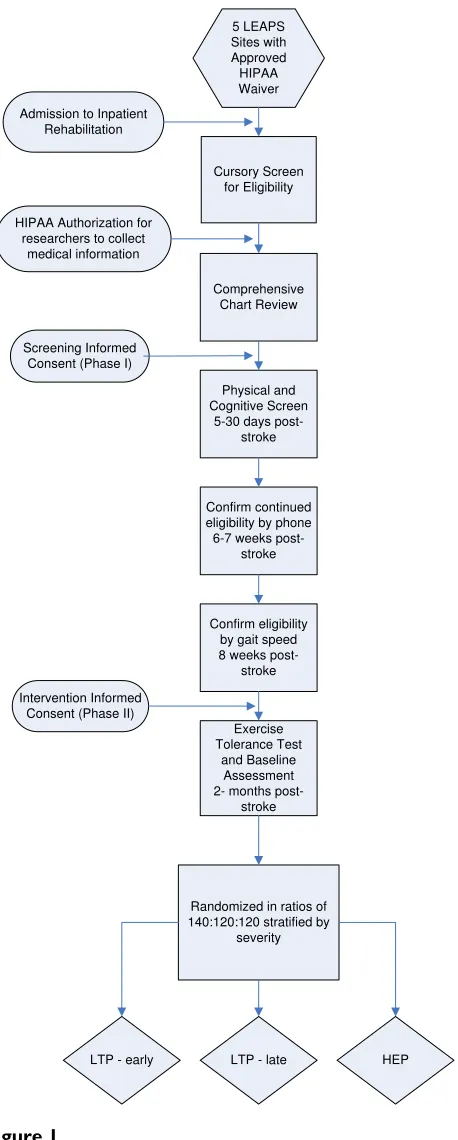
This is a three arm, single blinded, phase III randomized controlled trial of a locomotor training program provided at 2 months post-stroke or 6 months post-stroke versus a home exercise program provided at 2 months post-stroke. Participants are randomized to the three intervention groups at 2 months post-stroke. The primary outcome is the proportion of participants who successfully recover walking one year post-stroke. The sequence from screen-ing, enrollment and to randomization is represented in Figure 1.
Study Enrollment
Individuals post- stroke over the age of 18 are recruited 5– 30 days post-stroke from five clinical sites. The five clinical intervention sites: Brooks Rehabilitation Hospital in Jack-sonville, Florida; Centinela Freeman Regional Medical Center in Inglewood, California; Florida Hospital in Orlando, Florida; Long Beach Memorial Hospital in Long Beach, California and Sharp Rehabilitation Center in San Diego, California. Each site is expected to recruit approxi-mately 80 participants.
Informed Consent
Informed consent for study participation and enrollment occurs in two phases: (1) a screening informed consent to
participate in a physical screen to determine study eligibil-ity is obtained after the HIPAA authorized chart review and (2) an intervention informed consent is obtained at 8 weeks post-stroke that provides consent for an exercise tolerance test, baseline and follow-up assessments, and intervention. Participants are informed that successful completion of the exercise tolerance test is required prior to randomization to an intervention group.
Screening Process
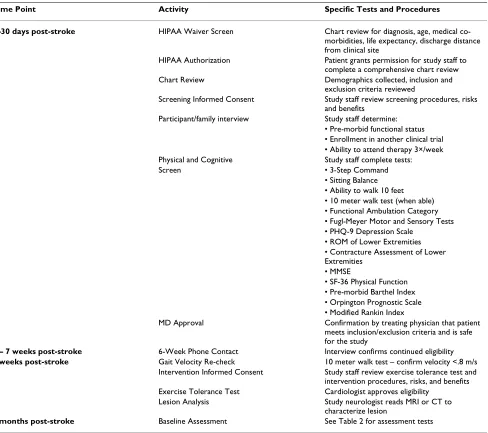
Table 1 summarizes the consent, screening processes, and assessments that are conducted at 5–30 days, 6–8 weeks, and at 2 months post-stroke, prior to randomization.
The purpose of the 5–30 day screening phase is to deter-mine if the individual post-stroke is willing to participate in the LEAPS trial and meets preliminary inclusion and exclu-sion criteria for study participation. If the participant volun-tarily provides informed consent and successfully completes all 5–30 day physical and cognitive screens, the participant's treating physician is asked to review the LEAPS inclusion and exclusion criteria and provide a letter of sup-port for inclusion in the study. At 6 weeks post-stroke, a phone contact is made by a study team member to confirm interest and to determine continued eligibility. The pant or a proxy family member is asked about the partici-pant's current health status, recent hospitalizations, changes in residential status (i.e., moved to a nursing home) and whether or not they wish to continue in the trial. Specific questions are asked regarding possible cardiac conditions, recurrent stroke, possible fractures and new medical events that may limit activities of daily living. At 8 weeks post-stroke, the participant returns to the study site to confirm that gait speed is < 0.8 m/s, provide the phase 2 informed consent, and complete the exercise tolerance test. The exercise tolerance test, the baseline assessments, and the analysis of the most recent available CT or MRI scan are completed prior to randomization. The CT or MRI scan is reviewed by one of the study's consulting neurologists.
When the participant is a non-English speaker, an inter-preter, either a family member, friend, or professional who can communicate with the participant, is available during screening, assessment and intervention sessions
Inclusion and Exclusion Criteria
Stroke Diagnosis
Participants are individuals with recent onset of ischemic or hemorrhagic stroke. For purposes of inclusion in this study, a stroke is defined according to the World Health Organization definition as, "a rapid onset event of vascu-lar origin reflecting a focal disturbance of cerebral func-tion, excluding isolated impairments of higher function and persisting longer than 24 hours [21]." Stroke diagno-sis is confirmed by CT or MRI scan or, if scan is not avail-able, by clinical criteria.
Sequence of participant screening, enrollment and randomi-zation
Figure 1
Sequence of participant screening, enrollment and randomization.
5 LEAPS Sites with Approved HIPAA Waiver
Cursory Screen for Eligibility
Comprehensive Chart Review HIPAA Authorization for
researchers to collect medical information
Physical and Cognitive Screen
5-30 days post-stroke
Exercise Tolerance Test
and Baseline Assessment 2- months
post-stroke Admission to Inpatient
Rehabilitation
Confirm continued eligibility by phone 6-7 weeks
post-stroke
Confirm eligibility by gait speed 8 weeks
post-stroke
Randomized in ratios of 140:120:120 stratified by
severity
LTP - early LTP - late HEP
Screening Informed Consent (Phase I)
Inclusion Criteria
Inclusion criteria for the trial include (1) age ≥ 18, (2) stroke within 30 days, (3) residual paresis in the lower extremity (Fugl-Meyer lower extremity score < 34), (4) ability to sit unsupported for 30 seconds, (5) ability to walk at least 10 feet with maximum 1 person assist, (6) ability to follow a three-step command, (7) physician approval for patient participation, (8) provision of informed consent, (9) self-selected 10 meter gait speed less than 0.8 m/s at the 2 month assessment, (10) success-ful completion of the bicycle ergometer exercise tolerance test at the 2 month assessment (see below) and, (11) liv-ing in the community at 2 months post-stroke or if they are living in a nursing home they are expected to be dis-charged to home and will be able to travel to the interven-tion site to participate in the LTP program or will be able to receive the HEP program in the nursing home facility.
Exclusion Criteria
Exclusion criteria for participation in this study include: (1) Lived in nursing home prior to stroke, (2) Unable to ambulate at least 150 feet prior to stroke, or intermittent claudication while walking less than 200 meters, and (3) Serious cardiac conditions (hospitalization for myocar-dial infarction or heart surgery within 3 months, history of congestive heart failure, documented serious and unstable cardiac arrhythmias, hypertrophic cardiomyopathy, severe aortic stenosis, angina or dyspnea at rest or during activities of daily living). Anyone meeting New York Heart Association criteria for Class 3 or Class 4 heart disease is excluded. Those who have undergone coronary artery bypass grafts (CABG) or have had mitral valve replace-ments within the last 3 months are excluded if their par-ticipation is not approved by 2 physicians. One of the physicians making the determination must be a cardiot-horacic surgeon and the other must be either a cardiolo-gist or the participant's primary care physician.
Additional exclusion criteria include: (4) History of seri-ous chronic obstructive pulmonary disease or oxygen dependence, (5) Severe weight bearing pain, (6) Preexist-ing neurological disorders such as Parkinson's disease, Amyotrophic Lateral Sclerosis (ALS), Multiple Sclerosis (MS), dementia, or previous stroke with residual motor deficits, (7) History of major head trauma, (8) Lower extremity amputation, (9) Non-healing ulcers of a lower extremity, (10) Renal dialysis or end stage liver disease, (11) Legal blindness or severe visual impairment, (12) A history of significant psychiatric illness defined by diagno-sis of bipolar affective disorder, psychodiagno-sis, schizophrenia or medication refractory depression, (13) Life expectancy less than one year, (14) Severe arthritis or orthopedic problems that limit passive ranges of motion of lower extremity (knee flexion contracture of > 10°, knee flexion ROM < 90°, hip flexion contracture > 25°, and ankle
plantar flexion contracture > 15°, (15) History of sus-tained alcoholism or drug abuse in the last six months, and (16) major post-stroke depression as indicated by a Patient Health Questionnaire (PHQ)-9 score of greater than 10 in the absence of documented management of the depression by a health care provider (either anti-depres-sant medication or psychotherapy), (17) History of pul-monary embolism within 6 months, (18) Uncontrollable diabetes with recent weight loss, diabetic coma, or fre-quent insulin reactions, (19) Severe hypertension with systolic blood pressure greater than 200 mmHg and diastolic blood pressure greater than 110 mmHg at rest, that can not be medically controlled into the resting range of 180/100 mmHg, (20) Previous or current enrollment in a clinical trial to enhance stroke motor recovery, (21) Residence more than 50 miles from the training sites, (22) Inability to travel 3 times per week for outpatient training programs; and (23) Intracranial hemorrhage related to aneurysmal rupture or an arteriovenous malformation (hemorrhagic infarctions will not be excluded).
Exercise Tolerance Test
The bicycle ergometry protocol used successfully in the Kansas City Post-Acute Stroke Study[22] is used to assess exercise tolerance in this trial. This exercise tolerance test is conducted in cardiac stress test laboratories at the respective sites. When sitting on the bicycle, the participant's resting diastolic BP must be less than 100, systolic BP less than 180, and heart rate less than 100 to begin the testing session. The bicycle ergometry protocol requires pedaling at 40–60 RPM with a workload increase of 10 watts (from initial 0 watts) per minute. Testing con-tinues until maximal effort is achieved. Maximal effort is defined as achievement of 90% maximal predicted heart rate (220-age). The test is terminated prior to achieving 90% maximum heart rate if the person experiences onset of limiting symptoms or meets criteria for halting the test due to blood pressure, oxygen desaturation or abnormal electrocardiographic changes. Participants will be asked to report their rate of perceived exertion, using the Borg Scale, at 10 W increments. During the graded exercise test, blood pressure readings are obtained every minute. Heart rate is obtained from the 12-lead EKG. In patients who are taking beta blockers the test is terminated if the partici-pant reports a Borg score of greater than 18.
Assessments
Methods and Timing of Assessments
Two month baseline assessments are conducted prior to randomization. Participants are subsequently educated to refrain from discussing assignment group during evalua-tions. In addition, posters are placed in the evaluation labs to remind patients not to reveal their group assign-ment. To determine the effectiveness of our single blinded assessments, we ask both the per diem therapist-evalua-tors and the participants to complete a brief assessment to determine if group assignment was revealed during evalu-ations. All follow-up measures are performed at times and places where training does not occur.
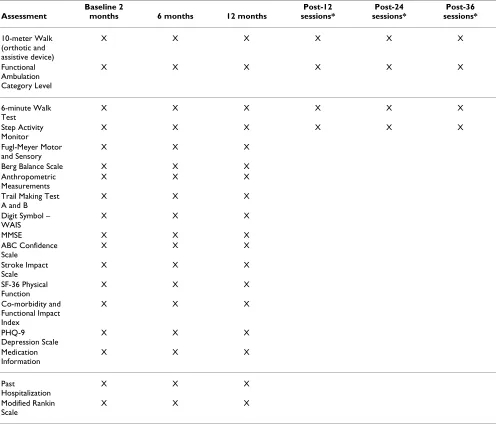
All participants undergo evaluation of primary and sec-ondary outcome measures at baseline (2 months post-stroke), 6 months and 12 months post-stroke. In addi-tion, during the intervention phase assessments of gait
speed, walking endurance, and amount of daily walking after 12, 24, and 36 training sessions are recorded. Table 2 provides a list of the measures and the timing of assessments.
Measures
Primary Measure of Walking: Gait Speed
Gait speed at one year has been selected as the primary outcome measure for this study and is measured during a 10-meter walk. Individuals are given a 3 meter warm-up distance for walking, preceding the 10 meter distance and 3 meters beyond the 10 meters to continue walking. The time that it takes to traverse the 10 meters at the partici-pant's usual pace is recorded. Increasing walking speed is critical for community ambulation and measures reserve and adaptability [2] Gait speed is related to the severity of
Table 1: Timeline for Consent, Screening Processes and Assessments up to Randomization
Time Point Activity Specific Tests and Procedures
5–30 days post-stroke HIPAA Waiver Screen Chart review for diagnosis, age, medical
co-morbidities, life expectancy, discharge distance from clinical site
HIPAA Authorization Patient grants permission for study staff to complete a comprehensive chart review Chart Review Demographics collected, inclusion and
exclusion criteria reviewed
Screening Informed Consent Study staff review screening procedures, risks and benefits
Participant/family interview Study staff determine: • Pre-morbid functional status • Enrollment in another clinical trial • Ability to attend therapy 3×/week Physical and Cognitive Study staff complete tests:
Screen • 3-Step Command
• Sitting Balance • Ability to walk 10 feet • 10 meter walk test (when able) • Functional Ambulation Category • Fugl-Meyer Motor and Sensory Tests • PHQ-9 Depression Scale
• ROM of Lower Extremities • Contracture Assessment of Lower Extremities
• MMSE
• SF-36 Physical Function • Pre-morbid Barthel Index • Orpington Prognostic Scale • Modified Rankin Index
MD Approval Confirmation by treating physician that patient meets inclusion/exclusion criteria and is safe for the study
6 – 7 weeks post-stroke 6-Week Phone Contact Interview confirms continued eligibility
8 weeks post-stroke Gait Velocity Re-check 10 meter walk test – confirm velocity <.8 m/s
Intervention Informed Consent Study staff review exercise tolerance test and intervention procedures, risks, and benefits Exercise Tolerance Test Cardiologist approves eligibility
Lesion Analysis Study neurologist reads MRI or CT to characterize lesion
impairment in the home and the community. Perry et al.[2] placed study participants into one of 6 functional walking categories to relate social outcomes of patients with gait impairments. The most significant difference between groups was preferred walking speed, with mean speeds ranging from < 0.4 m/s for household walkers, 0.4 – 0.8 m/s for limited community walkers, and > 0.8 m/s for community walkers. Schmid, Duncan, Studenski et al. recently demonstrated that transitioning from one ambu-lation class to another was correlated with improvement in physical functioning and quality of life [23]. They con-cluded that outcomes assessments based on transitions within a mobility classification scheme that is rooted in gait velocity yields meaningful indicators of clinical bene-fit. Additionally, in a geriatric population Studenski, Dun-can et al. revealed that gait speed < 0.6 m/s is a strong indicator of future health care utilization and functional decline [24]. Excellent (ICCs ≥ .97) interrater and intra-rater reliability estimates for self-paced timed forward walking using a stopwatch have been reported [17].
Secondary Measures of Walking
In addition to walking speed, the distance a person can walk and the amount of daily walking that a person is able and willing to do are strong indicators of his or her health and condition [17]. Thus, LEAPS also obtains a 6-minute walk test and monitors community ambulation using a step activity monitor. The six-minute walk is a measure that was originally developed to assess cardiopulmonary function [25,26], but it has been used extensively as an endurance measure in the elderly and in individuals with stroke [17]. Participants perform the 6-minute walk using a previously standardized protocol [17]. In this test, par-ticipants are allowed 6 minutes to walk as far as they can at their usual pace. During the 6-minute walk test, the par-ticipants use their customary assistive devices and orthot-ics. The distance they cover in 6 minutes is recorded.
To measure the amount of self-selected walking over an extended period of time, LEAPS uses a Step Activity Mon-itor (SAM). The device is safe, highly accurate, unobtru-sive for the wearer, capable of continuously recording data in short time increments, and capable of withstanding daily home and community use [27]. The device has a 99% accuracy for recording steps with a variety of gait pat-terns [27-29]. The device has also been successfully tested in monitoring ambulatory activity in persons with mild to moderate impairments post-stroke [30]. High test re-test reliability (r = 0.81) has been demonstrated across three separate 4-day weekday recording epochs conducted within a 3-week period in persons with chronic stroke [30]. A demonstration and written instructions are pro-vided to participants in appropriate use of the device. Fol-low-up phone calls by the therapists are made during the
4-day intervals to enhance compliance and respond to any problems.
Functional Ambulation Classification
This functional ambulation classification system catego-rizes participants according to basic skills necessary for functional ambulation, without assessing the factor of endurance. The screening therapist uses standardized def-initions to classify the participant according to one of six categories during the 6 minute walk. The participants are rated at their most independent level of function with regard to supervision or physical assistance needed from another person [31].
Sensory and Motor Control Fugl-Meyer Motor Assessment
The Fugl-Meyer sensory motor assessment is probably the most widely known scale of motor and sensory recovery after stroke [32,33]. It is used for both clinical and research purposes. The Fugl-Meyer includes items of upper and lower extremity function that require progres-sively more complex movements, hand grasps, and meas-ures of speed, coordination, light touch, and proprioception. Each item is graded on a three-point scale (0 cannot perform, 1 performs partially, and 2 performs fully). Standardized protocols for administration are followed [32].
Balance
Balance is measured by the Berg Balance Scale [34]. The scale consists of 14 items that require participants to maintain positions of varying difficulty and perform spe-cific tasks such as rising from a chair and timed stepping. Each item is graded 0 to 4. A standardized protocol for administration is followed [34]. The Berg Balance Scale has been tested in a stroke population and has well-established reliability and validity [34].
Cognitive Measures
The Mini Mental Status Examination (MMSE) is used to assess cognitive function [35-37]. The Digit Symbol – Coding from the WAIS III [38] and Trail Making Test A and B [39,40] are additional cognitive measures.
For Digit Symbol-Coding the participant copies symbols that are paired with numbers. Using a key, the participant draws each symbol under its corresponding number. The participant's score is determined by the number of sym-bols correctly drawn within the 120-second time limit.
Balance Efficacy
The Activities-Specific Balance (ABC) Scale [41] is a self-report measure and is used to assess perceived efficacy (self-reported confidence) in maintaining balance while performing a number of activities common in commu-nity-dwelling older adults such as bending, reaching, and walking both inside and outside the home. This measure has good reliability and internal consistency [41].
Depression Screen
The Patient Health Questionnaire nine-item depression scale (PHQ-9) is used to measure depression. The PHQ-9 is increasingly used in primary care and other medical populations [42-44]. Its usefulness as a depression
screen-ing and diagnostic instrument has been recently estab-lished for individuals with stroke [45]. The PHQ-9 is a summed scale with scores ranging from 0 (no depressive symptoms) to 27 (all symptoms occurring daily). Cutoff points of 5, 10, 15, 20 represent the thresholds for mild, moderate, moderately severe, and severe depression. A PHQ-9 score of ≥ 10 in individuals with stroke has 91% sensitivity and 89% specificity for major depression [46].
Stroke Specific Disability Measure, the Stroke Impact Scale
The Stroke Impact Scale (SIS) is a comprehensive and psy-chometrically robust stroke-specific outcome measure [46-48]. The SIS was developed from the perspective of patients, caregivers, and health professionals with stroke
Table 2: Summary of baseline and follow-up assessments for all subjects at each time point
Assessment
Baseline 2
months 6 months 12 months
Post-12 sessions*
Post-24 sessions*
Post-36 sessions*
10-meter Walk (orthotic and assistive device)
X X X X X X
Functional Ambulation Category Level
X X X X X X
6-minute Walk Test
X X X X X X
Step Activity Monitor
X X X X X X
Fugl-Meyer Motor and Sensory
X X X
Berg Balance Scale X X X
Anthropometric Measurements
X X X
Trail Making Test A and B
X X X
Digit Symbol – WAIS
X X X
MMSE X X X
ABC Confidence Scale
X X X
Stroke Impact Scale
X X X
SF-36 Physical Function
X X X
Co-morbidity and Functional Impact Index
X X X
PHQ-9 Depression Scale
X X X
Medication Information
X X X
Past
Hospitalization
X X X
Modified Rankin Scale
X X X
expertise [48]. In version 3.0, there are eight domains and 59 items. The domains are: strength, hand function, activ-ities of daily living/instrumental activactiv-ities of daily living, mobility, communication, emotion, memory, and think-ing, and social participation [49]. A comparison of the SIS (physical and social functioning domains) and the Short Form-36 (SF-36) has been completed [50]. The results of the study indicated that the SIS is better at capturing phys-ical functioning and social well-being in patients with stroke then the SF-36 [51].
Other Measures SF-36 Physical Function
The physical functioning portion of the SF-36 consists of 10 items and assesses the impact of a participant's health on their physical functioning. Participants are asked to answer the questions regarding activities that they might do in a typical day and whether or not their health limits these activities. This information is collected at baseline assessment and at the 6-month and 12-month assess-ments. During screening phase the physical functioning portion of the SF-36 is administered in relation to the par-ticipant's pre-morbid functioning at one month prior to stroke onset. The measure is used during post-randomiza-tion assessments to measure the participant's current functioning.
Co-Morbidity and Functional Impact Scale
A disease and symptom co-morbidity index developed and tested in a stroke population by Rigler, Studenski, Wallace, Reker and Duncan to predict post-stroke func-tion is administered at baseline [52].
Anthropometric Measures
Measures of height, weight and waist circumference are taken. Height is a major indicator of general body size and bone length. It is important in the interpretation of weight. Weight is a composite measure of total body size. Strictly, this measurement is of mass rather than weight, but the latter term is well-established in the common lexicon. Waist circumference is an index of deep adipose tissue and is related to fat-free mass. These measures are taken at baseline (2 months post-stroke) 6 month and 12 month post-stroke assessments.
Falls
All participants are asked to keep a falls diary. Each partic-ipant is given a definition of falls and a supply of 30-day calendars on which to keep a record of falls. Each partici-pant is given a packet of self-addressed postcards to mail if he or she experiences a fall. If a postcard is received, the participant receives a structured phone call to obtain information about the location and conditions of the fall as well as about any injuries. These methods have been
utilized in previous studies by Studenski and Duncan [53,54].
Usual Care Intervention Logs
The purpose of the Usual Care Intervention Log is to track the amount of physical and occupational therapy LEAPS participants receive during enrollment in the trial (2 months to 12-months post-stroke) from outside sources. Participants are instructed to write in the time (in min-utes) of occupational or physical therapy they receive out-side of their participation in the LEAPS clinical trial on monthly calendars provided for them. They turn in a monthly calendar to the intervention therapist during the intervention period indicating any additional physical or occupational therapy during that time. When the partici-pants are not actively enrolled in the intervention they are provided stamped, addressed envelopes to return their monthly calendar via mail to the clinical site for the dura-tion of LEAPS follow-up. Participants are prompted to return these calendars at the monthly phone call. Partici-pants turn in a calendar monthly, even if no occupational or physical therapy was received.
Medication Information
Information on the medications taken by a participant are recorded at baseline and at the 6- and 12- month assess-ments. Participant's are asked to bring a list, or the actual medication containers, of all over-the-counter and pre-scription medications that they have taken in the past week. The list of medications, the overall number of med-ications and whether dizziness is a side effect of any of the medications is recorded.
Standardization of Assessments
Standardization of data collection methods is achieved through a systematic training and competency assessment program for all per diem physical therapists masked to the intervention. The assessors are introduced to each of the outcome measures in a lecture and demonstration style educational setting. This is followed by practice on volun-teers (usually persons with stroke) under the supervision of the study's clinical research coordinators and site team leaders. The assessor must pass a competency-based eval-uation, which is videotaped. At least 90% achievement of standardized skills must be documented for all primary outcome measures, including the Fugl-Meyer Motor and Sensory Assessment, and the Berg Balance Test. Perform-ance of all outcome measures is reviewed and approved by the study clinical research coordinators to ensure standardization. Continual training and feedback is pro-vided to ensure sustained quality of outcome measures.
Randomization Methods
(3) HEP. Treatment allocation occurs when a participant is eligible for the intervention, baseline assessments at 2 months post-stroke are complete, and the consent for randomization has been obtained. The study coordinator registers the patient, enters the baseline data into the web-based database system, and then obtains group assign-ment from the data manageassign-ment and analysis center.
Because of concern that a simple randomization might yield significant imbalance in baseline impairment sever-ity within the three treatment groups at each site, an adap-tive treatment allocation procedure has been adopted. Participants are stratified by the baseline impairment severity rating into two strata (< 0.4 m/s and ≥ 0.4 – < 0.8 m/s), and for each severity stratum within each clinical site, they are randomly assigned to the LTP-early, LTP-late and HEP groups in the proportions of 140:140:120. As each participant is presented to the web-based system for random allocation, the system determines the difference between the true accumulations and the target distribu-tion across the three groups. If there is imbalance, a partic-ipant is assigned to the underrepresented group with 80% probability and to the other two groups with 10% proba-bility each. As an example, we may define imbalance as di = maxj |fij - Fij | being larger than three, where fij and Fij are the realized and expected frequencies of participants from the ith stratum in the jth treatment group within the site. Rules and cutoffs are determined by the DMAC.
Interventions
Participants are randomized to 1 of three intervention groups, each receiving 3 treatment sessions per week for 12 to 16 weeks (36 total sessions):
1. Early Locomotor training (LTP-early) – High intensity locomotor training program that includes both walking training on a treadmill with partial body weight support and overground provided 2 months after stroke.
2. Late Locomotor training (LTP-late) – High intensity locomotor training program that includes both walking training on a treadmill with partial body weight support and overground provided 6 months after stroke.
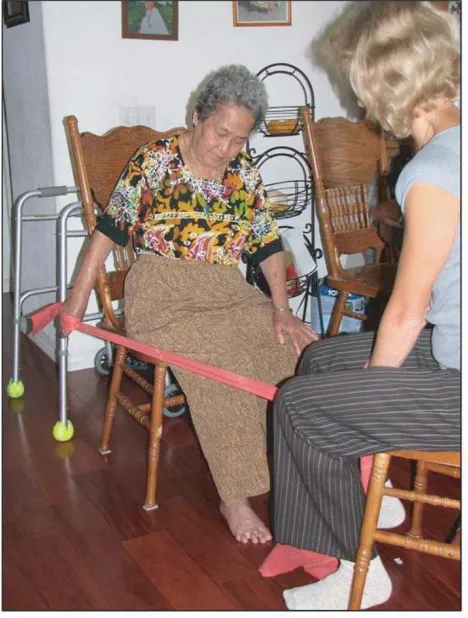
3. Home-based exercise (HEP-early) -, Low-intensity exer-cise program focused on strength, balance and coordina-tion provided in the home 2 months after stroke.
In addition to the LTP and HEP interventions, all partici-pants receive any prescribed usual and customary care during the intervening periods. There are several reasons to allow individuals to receive usual and customary care. First, facilities may be less likely to refer clients to this trial if they believe they will lose revenues from outpatient or home health treatments. Second, participants may be
inhibited from enrolling if they believe trial participation will reduce their opportunities to participate in other ther-apy. However, participants are required to abstain from any therapeutic intervention during the full period of their enrollment and participation that uses a treadmill or body weight support device (either over a treadmill or overground) unless under the supervision of the trial. Usual care interventions are monitored with participant self report logs.
Prior to initiating the intervention, each participant is pro-vided a Participant's Guide for orientation to the study team, intervention, and expectations. The trainer reviews the guide content with the participant across several ses-sions. The guide content covers contact information for the primary PT, schedule, falls calendar, an overview of the responsibilities and role of the training team and par-ticipant, and overview of the LTP or HEP and how to make the most of gains after the program is completed. Partici-pants are asked to identify their primary walking goal, i.e. "I want to walk my dog in the park", "I want to be able to drive my lawnmower equipment". At each training ses-sion, specific training goals are reviewed with the partici-pant and in the context of achieving the participartici-pant's goal. As the participant's skills progress during the training, the trainers also ask the participant, "what is limiting you from achieving your goal relative to walking?". Trainers may use the response to tailor the goals and parameters of the training session.
Locomotor Training Program
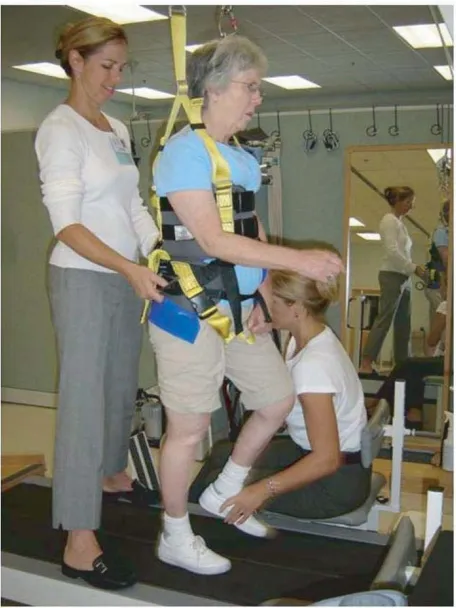
Because the overall goal of the LTP is to achieve independ-ent community walking within the range of normal walk-ing speed uswalk-ing an optimal steppwalk-ing pattern. The structured LTP, by training across two environments: the treadmill with a body weight support and treadmill (BWST) system (see Figure 2) [55] and overground (see Figure 3), targets the essential control and functional requirements of walking: (1) a reciprocal stepping pat-tern, (2) dynamic equilibrium during propulsion, and (3) adaptability to behavioral goals of the participant and environmental constraints.
kin-ematics. Good stepping is defined as walking with (1) an upright trunk with pelvic rotation to achieve limb load-ing, (2) symmetrical stride length, (3) symmetrical swing and stance time, (4) hip and knee flexion moments dur-ing swdur-ing initiation and swdur-ing, and (5) hip and knee extensor moments during stance and push-off with proper stance and swing kinematics.
Parametric training targets include: (1) gradually decreas-ing BWS from 40% to 0%, (2) initiatdecreas-ing treadmill speed in the range of normal walking speeds and increasing as tolerated, and (3) providing manual assistance initially when the participant is unable to independently step or control upright posture, and decreasing manual assistance to afford skill and control progression by the participant. One to three trainers assist the participants with verbal instructions and manual assistance to practice and achieve good stepping and posture. The progression of LTP train-ing parameters durtrain-ing the course of the intervention are listed in Table 3. When bout duration of 5 minutes and total step time of 20 minutes are achieved, then the number of bouts may be decreased and the length of each bout increased. The target exercise capacity is 20 minutes of continuous, independent, good stepping on the tread-mill at 0% BWS.
Goals for each session address achieving training duration of 20 minutes, a minimum target training speed of 2.0 mph, and maximal body weight load while maintaining the kinematics and posture associated with walking. An early training priority is to achieve an upright symmetrical posture with spatial-temporal symmetry of the stepping pattern. Initially, the participant may walk with a shorter step length for the non-paretic limb and the step centered in the middle of the treadmill as a means to compensate for deficits in paretic limb and trunk control. A trainer thus initially works with the participant to verbally cue or manually assist with foot placement of the non-paretic limb.
The next phase of training continues repetitive practice of walking, but also provides opportunity for the participant to control his/her trunk and limb control. The priority is to gain trunk control first, then limb control. Achieving trunk/pelvic control is a necessity for overground walking. The speed may be decreased or BWS increased to allow independent practice of trunk control, limb control, or the entire stepping pattern. Errors will occur as partici-pants tests their control abilities. As independence and control are achieved, the treadmill speed is increased and BWS decreased to continue to challenge the individual and to progress. As independence and control are achieved with minimal BWS and walking speed of 2.0 mph, then the last phase of training is introduced. Adapt-ability is challenged both in the treadmill and overground
environments. Specifically, the participant adapts to con-ditions such as changes in the treadmill speed from slow to fast to slow again, sudden stops or starts, turning the head while walking, uneven terrain, or obstacles in the environment.
Step training using the BWST modality is followed by fif-teen minutes of assessment and community ambulation training in the overground environment. The aim of com-munity ambulation training is to transfer stepping capacity and skills from the BWST environment to overground walking. Participants stand and walk in the overground environment with guarding and/or manual assistance of trainers as transfer of stepping skills is assessed. Dimensions of stepping in the BWST environment that fail to transfer to overground walking are identified and appro-priate instructions provided. The trainer and participant identify daily activities that support the overall goal of walking to be incorporated on a daily basis at home or in the community. Goals for the next treatment session using the BWST modality are set, based on the overground per-formance. Practice instructions for home may include use of an AFO or assistive device/support. As the stepping pat-tern and dynamic equilibrium improve and independence is achieved, the particular challenges of community ambu-lation are addressed by targeting performance of transi-tions (start and stopping), techniques to maximize endurance, walking over variable terrain, and negotiating obstacles. Evaluations and recommendations are made at the 12th, 24th, and 36th training sessions regarding spe-cific use of assistive devices or braces.
For participants with poor proximal upper extremity mus-cle control, the hemiparetic arm may feel heavy and potentially painful during locomotor training. Addition-ally a heavy, flaccid upper-extremity can pull the trunk forward inhibiting good stepping. During training, the arm may be supported using a humeral cuff sling or with hand-hold support from a trainer. If shoulder range is available and voluntary movement is present and pain-free, armswing is encouraged.
Home Exercise Program
credible training program so that the participants would consider themselves involved in meaningful therapy activity. To match the LTP group, the home exercise group receives 36 therapy visits (3 times per week for 12 weeks) with length of HEP and LTP training sessions the same. Cardiovascular response monitoring during exercise is identical to that done in the LTP groups. In these ways, the HEP intervention will plausibly control for Hawthorne effect but exclusively through interventions that have been shown to have little or no impact on gait speed.
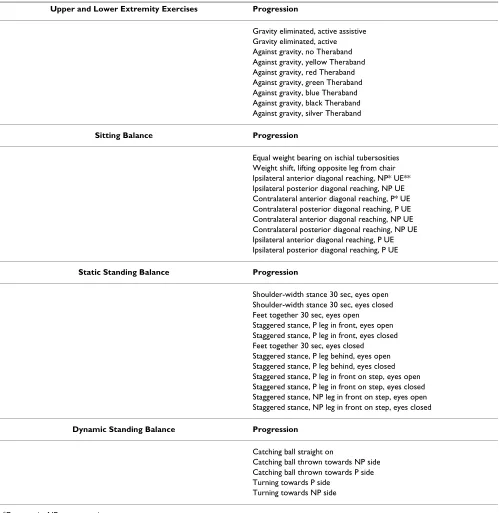
The exercise program is divided into three 4-week phases to provide the participants with a sense of progression. The first phase consists of upper extremity resistance exercise, lower extremity active exercises against no resist-ance, and sitting balance tasks. Each major joint of the upper and lower extremities is addressed. The second phase adds minimal resistance to the lower extremity, strengthening exercises, coordination tasks and static standing balance exercises. The third phase adds low rep-etitions of sit-to-stand practice and dynamic standing
bal-ance activities. At the end of each session, participants are encouraged to walk every day. Each participant is individ-ually progressed according to their ability within each phase. Table 4 outlines examples of progression of exer-cises/activities. To ensure that all groups receive the same advice regarding the use of assistive devices for walking, the home exercise group participants are evaluated for assistive device needs after the 12th, 24th, and 36th session.
Vital Sign Monitoring for LTP and HEP Interventions
Blood pressure (BP) and heart rate (HR) are monitored prior to a session, during a session, and at the completion of each session. BP and HR must be within normal range for the participant prior to initiating each training session. HR must be less than 100 bpm to begin the training session. Participants' resting diastolic BP must be less than 100 and systolic BP less than 180 to begin the training ses-sion [56]. During the 20–30 minute training sesses-sions, BP, HR, blood oxygen saturation, and the Borg scale Rate of Perceived Exertion are monitored every 5 minutes initially to assure that they remain within acceptable limits. The American College of Sports Medicine criteria for terminat-ing an in-patient exercise session are followed accordterminat-ing to guidelines shown to be effective for persons post-stroke with multiple comorbidities [56]. Persons that are on beta blockers are identified prior to initiating the training. Exercise tolerance for these individuals is specifically assessed using the Borg scale Rate of Perceived Exertion.
The criteria for termination of a training session include complaints of light-headedness or moderate or severe dys-pnea, or the development of paleness and excessive sweat-ing or confusion; complaints of feelsweat-ing ill; onset of angina; pressure changes (systolic BP greater than 200 mm Hg, diastolic BP greater than 110 mm Hg), drop in systolic BP greater than 20 mmHG and inappropriate bradycardia (drop in heart rate greater than 10 beats per minute). In addition, should the participant's HR exceed 80% of the predicted maximum HR (220 – age) or the participant report a Borg exertion rate of greater than 12–13, then the training ceases. Should training be halted, the participant is asked to rest (sitting or standing) while BP and HR are monitored and training will resume only when vital signs have returned to within an acceptable range and excessive dyspnea or chest pain have resolved. If any of these conditions persist after rest, the patient's primary physician is called and the patient referred for evaluation. If the patient complains of angina at rest, loss of consciousness occurs, or cardiac arrest, emergency med-ical services through 911 are called immediately. All train-ers are CPR certified and aware of signs of cardiac complications. All trainers and assistants are trained in procedures to afford quick and safe removal of a patient from the BWST system in the case of an emergency.
Locomotor Training Program (LTP) – Body weight support with treadmill training
Figure 2
Standardization for the Interventions
The LTP and HEP interventions are standardized to achieve consistent implementation of the intervention across clinical sites. Standardization assures that the training teams successfully implement a common intervention through application of six critical elements: (1) knowledge of the protocol; (2) goal setting, decision-making and progression; (3) participant safety and moni-toring; (4) equipment use; (5) hands-on training skills; and (6) participant's role and participation. Documenta-tion procedures are standardized across sites and require trainers to record in a computerized database all training parameters for the BWST and overground training.
A competency-based training program was used to train the trainers across all sites. The intervention teams met together for a 5-day training course, returned to their
clin-ical sites for 2–3 months of pilot training, with follow-up sessions at each of the 5 sites to complete competency-based training and testing. Competency is required in each of the six knowledge and application domains and includes both written and practical components.
After individual therapists/trainers and the site achieve competency status, they are approved to admit partici-pants to the RCT. Competency status is maintained throughout the trial by each trainer at every site and is systematically reviewed during the first participant’s training after 1, 4, 8, and 11 weeks; then every 3 months by the Co-PIs (or an independent reviewer).
Turnover in trainers across sites is anticipated across a 3 year span of participant entry and training. The inter-vention site team leader is responsible for training new
Locomotor Training Program (LTP) – Overground training
Figure 3
staff. The trainer, in accordance with her/his specific role and responsibilities in the trial, must achieve intervention competency before joining the site training team in treat-ing enrolled participants. Any deviation from established competency standards requires immediate remediation and reevaluation. No trainer is allowed to conduct treat-ment without established and maintained competency. The Clinical Research Coordinator and co-PIs are respon-sible for maintaining standardization and competency throughout the trial.
Communication between site lead trainers, clinical research coordinators, and the co-PIs is maintained through weekly conference calls. A web-based, discussion board specific to each intervention provides timely responses to questions from the training teams with responses available to all training personnel. This list of questions and responses is recorded throughout the trial and used to refine or clarify the training manual. The Clin-ical Research Coordinators conduct weekly to bi-monthly visits to each site and relay any intervention-related con-cerns to the Co-PIs. As a follow-up to site visits or interim standardization reviews of training session videos and training session documentation, pertinent aspects of the HEP and LTP interventions are highlighted and discussed on conference calls to maintain consistency in decision-making and progression. Finally, the investigators have prepared an intervention training manual for therapists available on the LEAPS website. In addition, all
Home Exercise Program (HEP)
Figure 4
Table 3: Locomotor Training Progression
Phase and Sessions
Training Priorities on the
Treadmill
Treadmill (TM) Speed
Body-Weight Support
Intensity/ Endurance
Manual Assistance
Overground/ Community Ambulation
Phase I (1–12) 1. Intensity 2. Speed 3. Independence at non-paretic leg
1.6 mph minimum (goal of 2.0 mph)
30 – 40% Four 5-minutes bouts to attain 20
mins of stepping
As needed at trunk, paretic and
nonparetic leg. Decrease assist at
non-paretic leg.
1. Attempt skills observed/trained on the treadmill 2. Educate on use beyond clinic Phase II (13–24) 1. Intensity at 2.0
mph and decrease BWS 2. Progress independence at trunk/pelvis with short bouts (decrease speed, increase BWS as needed)
2.0 – 2.8 mph 20% – 35% Increase bout duration with decrease in number of bouts to attain 20 mins
of stepping
Decrease assist to first trunk/pelvis, then paretic leg
1. Attempt skills observed/trained on the treadmill 2. Transfer skills/ speed 3. Introduce assistive device and orthosis, as needed
Phase III (25–36) 1. Intensity to 30 mins 2. Progress independence with increased bout length, then increase speed, decrease BWS. 3. Adaptability (speed variations, stop/starts, incline)
2.0 – 2.8 mph and increasing speeds
0 – 20% Increase total stepping time to
30 mins
participants received a Participant Manual for the LEAPS trial specific to either the HEP or LTP intervention to inform them of what to expect, goal-setting, progression across the sessions, and the role of the participant and trainers throughout the training.
Statistical Analysis
Sample Size and Participant Accrual
LEAPS is powered to detect a difference of 20% in the proportion of participants achieving a successful locomotor recovery (defined as >0.4 m/s gait speed for participants
Table 4: Home Exercise Program
Upper and Lower Extremity Exercises Progression
Gravity eliminated, active assistive Gravity eliminated, active Against gravity, no Theraband Against gravity, yellow Theraband Against gravity, red Theraband Against gravity, green Theraband Against gravity, blue Theraband Against gravity, black Theraband Against gravity, silver Theraband
Sitting Balance Progression
Equal weight bearing on ischial tubersosities Weight shift, lifting opposite leg from chair Ipsilateral anterior diagonal reaching, NP* UE** Ipsilateral posterior diagonal reaching, NP UE Contralateral anterior diagonal reaching, P* UE Contralateral posterior diagonal reaching, P UE Contralateral anterior diagonal reaching, NP UE Contralateral posterior diagonal reaching, NP UE Ipsilateral anterior diagonal reaching, P UE Ipsilateral posterior diagonal reaching, P UE
Static Standing Balance Progression
Shoulder-width stance 30 sec, eyes open Shoulder-width stance 30 sec, eyes closed Feet together 30 sec, eyes open
Staggered stance, P leg in front, eyes open Staggered stance, P leg in front, eyes closed Feet together 30 sec, eyes closed
Staggered stance, P leg behind, eyes open Staggered stance, P leg behind, eyes closed Staggered stance, P leg in front on step, eyes open Staggered stance, P leg in front on step, eyes closed Staggered stance, NP leg in front on step, eyes open Staggered stance, NP leg in front on step, eyes closed
Dynamic Standing Balance Progression
Catching ball straight on
Catching ball thrown towards NP side Catching ball thrown towards P side Turning towards P side
Turning towards NP side
with initial severe impairment, and >0.8 m/s for those with moderate impairment) between the locomotor training groups (LTP-early and LTP-late) and the HEP group, and a 0.1 m/s mean difference in gait speed change between the two locomotor training groups (LTP-early and LTP-late).
Power calculations indicate that a total of 340 participants are needed (120 in each of the two LTP training groups and 100 in the HEP group) in order to detect with 85% power a difference of 20% between each of the LTP treatment groups and the HEP group at the significance level = 0.05. In addition, with a sample size of 120 in each of the two LTP training groups, LEAPS will have 85% power to detect a difference of 0.1 m/s between each of the LTP groups using a two-sample t-test at the 0.05 significance level (two sided).
Because LEAPS is anticipating a 15% attrition rate at 1-year post-stroke, we plan to recruit and randomize 400 partici-pants (140 in each of the two LTP training groups and 120 in the HEP group) in order to achieve our sample size goal. To achieve our recruitment goal of 400 participants from 5 sites in 2.5 years (32/site/year), LEAPS expects that for each year, each site will be able to train 24 participants with a BWST modality for 36 sessions.
Primary Statistical Analyses Baseline
Demographic and baseline levels of clinical variables will be compared between the three randomized groups using analysis of variance (ANOVA) for comparison of means and chi-square tests for comparison of proportions. Vari-ables found to be significantly different between the treat-ment groups will be considered in the endpoint analyses, in addition to the pre-specified covariates (e.g., severity, clinical site, age, stroke type, lesion location, and depression).
Specific Aims Specific Aim 1
To determine if a structured locomotor training program (LTP) delivered early (2 months) or late (6 months) post-stroke is more successful in achieving clinically significant gains in locomotor recovery at 1-year post-stroke than the home exercise program (HEP) intervention.
Hypothesis 1
At 1-year post-stroke, there will be a clinically significant difference between each of the training groups (LTP-early, LTP-late) and the HEP group in the proportion of partici-pants who successfully recover walking ability. Successful recovery of walking is defined as having achieved a 0.4 m/ s gait speed or greater for persons with initial severe gait impairment (< 0.4 m/s) or as having achieved a 0.8 m/s gait speed or greater for persons with initial moderate gait
impairment (≥ 0.4 m/s – < 0.8 m/s). A clinically significant difference will be defined as a greater than 20% difference in the proportion of participants who achieve successful recovery. We expect that both the LTP-early and LTP-late groups will have more success than the HEP group.
Analysis Plan
The purpose of this analysis is to test the hypothesis that there will be a clinically significant difference in successful recovery between the three randomized groups (LTP-early, LTP-late and HEP). First, we will provide summary statistics on the success proportions for each of the three groups by severity. Then, we will conduct a logistic regres-sion with successful recovery of walking (yes/no) as the dependent variable, and two independent variables (X1, X2) indicating each of the training groups (early, LTP-late, and the HEP as the reference group). Other explana-tory factors will include severity, clinical site, age, stroke type, lesion location, and depression. The odds ratios for achieving successful outcome for each treatment relative to the HEP group will be estimated. As indicated in the sample size section, the 20% difference in success propor-tions translates into an odds ratio of 2.33 for each treat-ment. Formally, if we let pij denote the probability of successful recovery at one year post-stroke for the jth par-ticipant in the ith treatment group, and define Z
difference has been established does it make sense to ask when the treatment should take place and whether sever-ity of impairment influences optimal timing of treatment (the foci of specific Aim 2).
Specific Aim 2A
To determine if the timing of LTP delivery (early vs. late) affects the improvement in gait speed at 1-year post-stroke.
Hypothesis 2A
The improvements of gait speed from baseline to 1-year post-stroke for participants trained at 2 months will be significantly greater than for participants trained at 6 months
Specific Aim 2B
To test whether initial locomotor impairment severity interacts with the timing of LTP delivery to affect the improvement in gait speed at 1-year post-stroke.
Hypothesis 2B
The timing of LTP delivery will interact with baseline loco-motor impairment severity such that (1) individuals with more severe initial walking impairment will demonstrate greater improvements in gait speed from LTP-late than LTP-early and (2) individuals with less severe initial walk-ing impairment will demonstrate greater improvements in gait speed with LTP-early than LTP-late.
Analysis Plan
The rationale behind this analysis is that, once a clinically significant difference between the LTP and HEP groups has been established (Specific Aim 1), then any statisti-cally significant difference in timing effect or in timing by severity interaction effect will become clinically relevant. If at least one of the two individual null hypotheses is rejected in the analysis for Specific Aim 1, we will con-duct formal statistical inference to compare the two treat-ment groups (trained during the sub-acute or chronic periods post-stroke) based on improvement in gait speed from 2-month baseline assessment to 1-year post-stroke. This second primary analysis will fit a linear model for the gains of gait speed. The explanatory factors will include study group, severity, clinical site, age, stroke type, lesion location, and depression. Let Yij denote the improvement in gait speed at 1-year follow up for jth the participant in the ith treatment by severity group, where i = ES, LS; EM, LM. (ES, early severe; LS, late severe; EM early moderate; LM, late moderate). We define Zij as the baseline covariates for the corresponding participant. The linear model can be written as follows: Yij = αi + Zijβ+ εij. In this model, αi is the mean of gait speed improvement within ith treatment by severity group and βis the covariates effect on response. The error term εij is assumed to have normal distribution with zero mean and variance σ2. Similar to
the Specific Aim 1, we will employ the Hochberg step-up procedure [xx] to test two individual null hypotheses αES = αLS and αEM = αLM, with the larger p value compared to 0.05 and the smaller p value compared to 0.025. If the null hypothesis αES = αLS is rejected, we would conclude that the timing of intervention delivery affects mean 1-year outcome for the severe group. Similarly, we may conclude αEM ≠αLM which indicates a timing effect for the moderate group. In addition, we would perform post-hoc tests to determine whether the timing effects are the same for the two severity levels.
Secondary Statistical Analyses Specific Aim 3A
For each LT group, to determine if the number of locomo-tor training sessions affects the outcome of gait speed immediately following the 12th, 24th, and 36th sessions.
Hypothesis 3A
There will be a significant increase in gait speed for partic-ipants when assessed following increasing numbers of training sessions, such that gait speed after the 24th ses-sion will be greater than after the 12th session and gait speed after the 36th session will be greater than after the 24th session.
Specific Aim 3B
To test whether initial locomotor severity interacts with the number of treatment sessions to affect the gait speed immediately following the 12th, 24th, and 36th sessions.
Hypothesis 3B
The number of locomotor training sessions will interact with baseline locomotor impairment severity such that (1) individuals with more severe initial walking impair-ment will demonstrate greater improveimpair-ments in gait speed from an increasing number of training sessions and (2) individuals with less severe initial walking impair-ment will not benefit from more extended training.
Analysis Plan
Tertiary Statistical Analysis
Additional analyses will assess the differences in improve-ments between the three groups in the Fugal-Meyer Motor Scores, the Berg Balance Score, distance walked in 6 min-utes, community ambulation (as measured by the step activity monitor), and self-reported quality of life (as measured by the Stroke Impact Scale -Participation domain). We will also assess differences in the incidence of depression between the three groups. A multivariate ANOVA (or ANCOVA) will be conducted to compare the 2-month to 12-month change scores between the three groups: LTP-early, LTP-late and HEP. If there are signifi-cant differences among the three groups, then linear con-trast tests will be employed to detect pairwise differences. We will conduct a logistic regression with incidence of depression (yes/no) as the dependent variable. In addi-tion, a Poisson regression will be conducted to assess whether the intervention reduces the number of falls. Lastly, a regression analysis will be conducted with gait speed change from 2-month to 12-month post-stroke as dependent variable for the HEP group. The explanatory factors will include severity, clinical site, age, stroke type, lesion location and depression.
Missing data
For participants who drop out and cannot complete the one-year evaluation, we will impute outcome based on the last available assessment value, with the proviso that, for those who dropped out due to a related adverse event, the dichotomous outcome will be imputed as failure in the logistic regression analysis and the improvement in gait speed as the minimum of zero and the change from the baseline and last assessment in the linear regression analysis. More precisely, the change in gait speed will be defined as Δ = min(0, glastobs - glastobs) for those who dropped out due to a related adverse event, and as Δ = g
las-tobs - glastobs for all other "non-completers"; the successful recovery of walking (yes/no) is defined correspondingly.
In addition, we will perform sensitivity analyses by com-paring results from the intent-to-treat analyses described above with the subgroup of participants with one-year fol-low-up data, as well as those obtained using different imputation procedures, including: (1) missing one-year outcome predicted by participant gait speed trajectory; (2) missing one-year outcome predicted by participant gait speed trajectory, plus baseline demographic and clinical factors, and (3) missing one-year outcome predicted by a model that takes into account participant dropout bias. For this last model, we will evaluate participant dropout bias through the following four steps: (1) determine demographic and clinical variables that characterize differences between "completers" and "non-completers"; (2) develop a model predicting outcomes for the "compl-eters" using the significant independent variables from
the previous step; (3) use the resulting model to predict outcomes for the non-completers; and (4) redo the pri-mary analyses for the full dataset.
Adverse Event Monitoring and Reporting
Adverse events are carefully monitored at every level of the LEAPS trial. The teams at the clinical intervention sites monitor and report all minor and serious adverse events that occur with any participant from the point of enroll-ment through the 12-month final follow-up assessenroll-ment.
The LEAPS trial is supported by an NIH appointed Medi-cal Safety Monitor, independent of the study executive committee, who reviews all serious adverse events. An NIH appointed Data Safety Monitoring Board provides oversight and meets biannually. All adverse events are reported to the DSMB every 6 months.
The LEAPS clinical intervention sites report adverse events to their local Institutional Review Boards (IRBs). All seri-ous, unexpected and related events at any site are reported to every IRB within one week. Some of the site IRBs require reporting of all serious adverse events, regardless of whether or not they were expected or related, within the one week timeframe. Other site IRBs allow for the report-ing of expected and/or unrelated serious adverse on a yearly basis. All minor adverse events are reported to the site IRBs once a year at the time of renewal of IRB approval.
Definitions for adverse event monitoring Serious Adverse Events
Using general IRB guidelines the LEAPS trial has specifi-cally defined what constitutes a serious adverse event: The following events are considered serious: death, life-threat-ening adverse event (stroke, MI, fracture), inpatient hospi-talization, a persistent or significant disability or incapacity that lasts more than 48 hours and limits activities of daily living.
Serious adverse events are reviewed to determine whether or not the event is expected. An expected adverse event is one that is part of the normal disease progression or one that is listed in current investigator brochure, protocol, or informed consent form. The initial determination of whether or not an event is expected is made by the site medical director. The medical safety monitor also judges whether or not the event is expected.