Reviewable v1 NIH Grant Proposal
Brain Graph Interface
Arno Klein
‡ Columbia Unversity, New York, United States of America
Corresponding author: Arno Klein ([email protected])
Received: 11 Apr 2016 | Published: 19 Apr 2016
Citation: Klein A (2016) Brain Graph Interface. Research Ideas and Outcomes 2: e8817. doi: 10.3897/ rio.2.e8817
Executive summary
We will analyze variations in brain anatomy and create the first integrated software environment to extract patterns from brains and target differences related to inter-individual variability, pathology, development, or degeneration. We will evaluate how well these differences can help diagnose and predict treatment outcome for major depressive disorder, which affects millions of Americans, but our work is intended to be applied to any mental illness, such as Alzheimer’s disease, bipolar disorder, schizophrenia – indeed to analyze differences in brain anatomy between any two populations.
Keywords
brain imaging, graphical display, interface, interactive GUI
Research & Related Other Project Information
Facilities & Other Resources
Columbia University and Columbia University Medical Center (CUMC) Columbia University was founded in 1754 by the royal grant of George II of England and its purpose was for the instruction of youth in the Learned Languages, and the Liberal Arts and Sciences. A medical faculty was organized in 1767, and was the first institution in the North American
‡
Colonies to bestow the degree of Doctor of Medicine. In 1814, Columbia College merged with the College of Physicians and Surgeons, which had obtained an independent charter in 1807. Its use was primarily for servicing the Presbyterian populace. However, it soon began welcoming everyone and became, as noted on a tablet that remains on the hospital today, "For the Poor of New York without Regard to Race, Creed, or Color." An agreement was signed in 1911, between Columbia University the College of Physicians and Surgeons and Presbyterian Hospital. Finally in 1928, the Columbia-Presbyterian Medical Center opened up for operation in the Washington Heights section of Manhattan. Since that time, Columbia University Medical Center has experienced phenomenal growth and development and is now situated on a 20 acre campus and makes up almost half of the close to $2 billion budget of Columbia University. Columbia University Medical Center provides international leadership in basic, pre-clinical, and clinical research, in medical and health sciences education, and in patient care. The medical center trains future leaders and includes the dedicated work of many physicians, scientists, public health professionals, dentists, and nurses at the College of Physicians and Surgeons, the Mailman School of Public Health, the College of Dental Medicine, the School of Nursing, the biomedical departments of the Graduate School of Arts and Sciences, and allied research centers and institutions. Columbia University Medical Center is home to Columbia’s College of Physicians & Surgeons, which is among the most selective medical schools in the country, and the largest medical research enterprise in New York and one of the largest in the United States. It currently boasts some 13 Howard Hughes Medical Institute investigators, 47 members of the Institute of Medicine, 26 members of the American Academy of Arts and Sciences, and 16 Nobel laureates in Medicine or Physiology –- two of which are presently on staff. For more information, please visit www.cumc.columbia.edu.
Environment – Contribution to Success:
bridges connect the new building to the Kolb Annex and the Milstein Hospital Building. In 1985 the Lawrence C. Kolb Research Annex was added to the original facility, which has 50,000 square feet of laboratory space plus the clinical research units described above, office library, and other areas designed for its functioning as a hospital. The Annex also contains the Howard Hughes Institute supporting Nobel Laureate Dr. Eric Kandel and affiliated investigators. This state supported facility is on the campus of the CUMC and has been one of the leading institutions for psychiatric research for over 100 years. Its resources, research faculty and staff, combined with those of the Research Foundation for Mental Hygiene at NYSPI and Columbia University Department of Psychiatry, have made it one of the nation’s foremost psychiatric research centers.
CLINICAL, LABORATORY, AND SUPPORT FACILITIES
The New York State Psychiatric Institute’s newest building was dedicated in May of 1997 and is now known as the Pardes Building. This 6-story building contains approximately 330,000 sq ft of state-ofthe- art laboratory, clinical research and educational facilities, including the inpatient research units and outpatient clinics that are heavily utilized by the fellows and mentors in this program. Trainees also have access to a host of laboratories and clinical facilities at CUMC and NYPH, especially the structural and functional imaging resources in the Department of Radiology, the Irving Center for Clinical Research (GCRC) and the Center for Neurobiology and Behavior, which are all in nearby buildings. Trainees have full access to an excellent library, computer facilities, photocopying, and the animal care facilities in the Kolb Annex building and elsewhere at CUMC. The Department of Psychiatry/Division of Molecular Imaging and Neuropathology (MIND) at Columbia University/NYSPI comprises several components: wet laboratories including biochemistry, neurophysiology, molecular biology, pharmacology, neurohistology and an image analysis facility for quantitative autoradiography and quantitative morphometry. The MIND division has clinical office space for screening, evaluation, and treatment of study participants. We also have a bank of -80°C freezers for storage of samples.
Specific research plan
Specific aims
The largest clinical trial of major depressive disorder (MDD) ever conducted, STAR*D, indicates that two-thirds of patients treated with a first-step antidepressant do not achieve remission of symptoms [Trivedi et al. 2006]. Depression is a heterogeneous condition whose biological endophenotypes are difficult to categorize and therefore difficult to tailor treatment for. More robust and specific biomarkers of depression that can distinguish these endophenotypes would allow for more effective psychiatric treatment and prediction of treatment outcome. Researchers have recently reported prediction of major depressive disorder (MDD) severity measures from brain grey matter volumes of individual magnetic resonance imaging (MRI) scans [Mwangi et al. 2011]. Other anatomical measures derived from neuroimaging such as cortical thickness and gyrification index have been used to characterize depression [Penttilä et al. 2009, Mangin et al. 2010 ]. To our knowledge, however, no one has attempted to clinically diagnose or predict any mental disorder, including depression, based on the folding pattern of the brain, which is thought to be implicated in the pattern of brain wiring and in heritable and developmental constraints.
Our hypothesis is that differences in the folding pattern of a brain can provide biomarkers for depression. The difficulty in testing this hypothesis is that there is no established way to rigorously identify or compare the folding patterns across brains in a detailed way, let alone to transition one pattern into another to elucidate differences across brains or across time. And any anatomical differences that could be attributable to depression are masked by the great natural variation that exists across brains. Therefore, to find biomarkers that distinguish endophenotypes of depression, we need to first catalog this natural variation and variation within categories of depressed patients. Then we need to establish a means by which we can compare folding patterns across brains. To this end we propose to introduce automated and robust algorithms for extracting, formally depicting, and quantifying the shapes of folding patterns of the brain in order to target differences related to interindividual variability, pathology, development, or degeneration. We will show that the automated brain feature extraction and anatomical labeling open source software infrastructure that we have built, called
Mindboggle, is uniquely suited to the development of such algorithms. Cataloging variations in the folding pattern of the human brain will permit researchers to situate an individual’s brain pattern within the distribution of possible patterns that characterize healthy conditions and depression. To identify folding pattern biomarkers of depression we will pursue the following goals:
Aim 2: To generate a visual representation of a single or multiple brain graphs (Aim 1) that can be interpreted by a non-neuroscientist or clinician, we will automatically construct an intuitive tree diagram that will enable one to visually pinpoint differences in anatomy across individuals or groups of individuals.
Aim 3: To determine which features of a folding pattern act as diagnostic and predictive biomarkers of MDD, we will visually and quantitatively assess differences (Aim 2) across healthy, remitter, and nonremitter MDD populations.
By enabling researchers to explore and analyze individual and group brain folding patterns, the proposed coherent and comprehensive software interface will aid researchers in their search for biomarkers of depression and other mental disorders.
Research strategy
1 Significance
Depression is a heterogeneous condition whose biological endophenotypes are difficult to categorize and therefore difficult to tailor treatment for. More robust and specific biomarkers of depression that can distinguish these endophenotypes would allow for more effective psychiatric treatment and prediction of treatment outcome. Researchers have recently reported prediction of major depressive disorder (MDD) severity measures from brain grey matter volumes of individual magnetic resonance imaging (MRI) scans [Mwangi et al. 2011]. Other anatomical measures derived from neuroimaging such as cortical thickness and gyrification index have been used to characterize depression [Penttilä et al. 2009, Mangin et al. 2010].
To our knowledge, however, no one has attempted to clinically diagnose or predict any mental disorder, including depression, based on the folding pattern of the brain, which is thought to be implicated in the pattern of brain wiring and in heritable and developmental constraints. There is recent evidence supporting developmental timing of differential cortical growth [Xu et al. 2010] and heritable aspects to cortical folding [Bartley 1997, Dubois et al. 2007, Dubois et al. 2008, Rogers et al. 2010]. Given this and heritable changes in cortical folding associated with disorders [Sheen and Walsh 2003, Guerrini et al. 2008], including for example schizophrenia [Sallet et al. 2003, Harris et al. 2004, Stanfield et al. 2008], Williams syndrome [Van Essen 2006], epilepsy [Guerrini and Carrozzo 2001], and bipolar disorder [Penttilä et al. 2009], we expect that such a tool will be applied much more broadly than the research we are proposing here.
Problems with conventional imaging methods for finding biomarkers of mental disorders
Clinical diagnosis or prediction of treatment outcome for a mental disorder demands that consistent differences be found between a group of individuals with and without the disorder. If these differences are to be detected in brain images, they must be located in corresponding regions across the brains. To establish correspondences across brain images, scientists ubiquitously co-register the images with each other, usually via a template image. However, registering makes three primary assumptions that compromise the search for individual or group differences: 1) Where two images are similar, their anatomical location is the same. However, similar looking portions of two images may represent different anatomical regions. Conversely, two very different images with different underlying anatomy can be forced into alignment such that they appear identical. 2) If two points in one brain correspond to two points in another brain, the intervening points also match. However, there isn’t a one-to-one, let alone continuous mapping of points across any two brains. 3) The template is representative of the group being studied. Because of the great variation across brains and across imaging centers, off-the-shelf templates are suspect, particularly when they are constructed from subjects with different demographics than those of interest to the researcher. Other factors that affect registration quality are often ignored. For example, the P.I. has demonstrated that registration algorithms vary widely in their accuracy [Klein et al. 2009] and even the best require removal of non-brain matter. Our approach outlined below analyzes anatomical features independent of registration.
The challenge of treating Major Depressive Disorder (MDD)
Major Depressive Disorder is the leading cause of disability in the U.S. for ages 15-44 (ww w.who.int/healthinfo/global_burden_disease/GBD_report_2004update_AnnexA.pdf)
Major Depressive Disorder affects approximately 14.8 million American adults, or about 6.7% of the U.S. population age 18 and older (www.census.gov/popest/national/asrh).
Mindboggle features
Our neuromarkers will be derived from an analysis of features extracted with the Mindboggle software (www.mindboggle.info), which automates anatomical labeling of human brain MR data. The original version was created by the P.I. and has been downloaded by users in over 20 countries. Publications describing Mindboggle (PMID: 15627570, 16202176) have been cited 37 times and downloaded many times (the latter has been accessed over 10,000 times from Biomed Central’s website; they state that “overall statistics indicate that your article will have been accessed on PubMed Central a roughly equivalent number of times...”).
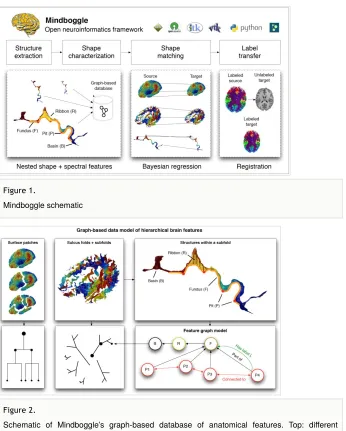
The “Mindboggling Shape Analysis and Identification” grant (MH084029-03) which concludes in June of 2012 is currently addressing three needs of the neuroscience community: (a) manually labeled, gold standard brain image data from many individuals, (b) morphometric data to better understand variation of brain structures, and (c) accurate, consistent, and efficient software for automated anatomical labeling of neuroimaging data, in the form of new open source Mindboggle software. A Bayesian framework incorporates the shape information from (b) applied to the labeled brain images from (a) as priors, so that each application of Mindboggle to a new brain image uses these priors in its anatomical feature matching and label assignment (Fig. 1).
Our features are nested as follows: sulcal pits (points) lie along sulcal fundus curves, which lie along the depths of sulcal basins. Mindboggle stores the nested features as graphs in a
Neo4j database that uses a graph-based data model as opposed to a standard relational database (Fig. 2). The primary advantage of nested, hierarchical features is that we can prioritize (or weight) the influence of the features on comparison, matching, or diagnosis in
Figure 1.
Mindboggle schematic
Figure 2.
a level-sensitive manner. For example, if there were measurable differences between two populations at the level of the sulcal pits vs. at the level of the sulcal basins, or at the level of primary vs. secondary sulcal folds, this would inform us about how subtle or pathological the differences are. We could also ascribe a level of confidence about the discriminability between the two populations based on the variability of the features at a given level, and perhaps even make inferences about the stage of morphological development when the deviation took place. Finally, Mindboggle identifies corresponding features across brains by quantifying features and collections of features using shape analysis measures. For each cortical surface mesh vertex within a sulcal basin, fundus or pit, Mindboggle will compute curvature, convexity, cortical thickness, and depth [Kao et al. 2007]; for basins and fundi, spectral quantities using the Laplace-Beltrami operator [Reuter et al. 2009].
2 Innovation
• We will introduce a completely new visualization and analysis method for studying individual and group brain anatomy and their variation.
• No one has ever used a network visualization approach to transform one individual’s brain pattern into the pattern of another individual, to the best of our knowledge.
• Our approach focuses on individual variability by matching, quantifiying, and visualizing an individual’s data without resorting to conventional template-based registration methods.
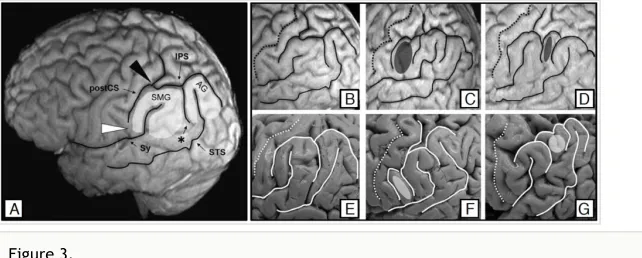
Figure 3.
3 Approach
3.1 Specific Aim 1: Catalog variations of nested anatomical features
To catalog the most prominent variants of brain folding patterns in healthy and depressed individuals, we will use the Mindboggle software and anatomical database under development by the P.I. to automate extraction and identification of anatomical features such as sulcal fundi from hundreds of MRIs and depict each folding pattern as a graph.
We will use Mindboggle’s entire database of anatomical features (Fig. 2) to catalog the variations in the features across many brains. The database contains brains of healthy individuals, so to study variations in individuals with MDD, we will process MDD data from two different grants for which our Significant Contributor Ramin Parsey, a leading researcher of depression, is a P.I. (Arno Klein (P.I.) is also a Co- Investigator on the second). We will develop our methods on data from the first grant to determine the range of variation of our features, and will validate on data from the second (U01) grant to try and diagnose individuals with MDD and predict treatment outcome based on remitter/non-remitter data. The U01 is a large, multi-site project acquiring multimodal brain imaging data from 400 individuals, specifically designed to make data available to establish MDD biomarkers.
— “Biological Predictors of Response to Antidepressants” (MH074813)
— “Biosignature Discovery for Personalized Treatment of Depression” (1U01MH092250-01)
3.2 Specific Aim 2: Tree diagram representation of brain patterns
To generate a visual representation of a single or multiple brain graphs (Aim 1) that can be interpreted by a non-neuroscientist or clinician, we will automatically construct an intuitive tree diagram that will enable one to visually pinpoint differences in anatomy across individuals or groups of individuals.
3.3 Specific Aim 3: Application to major depressive disorder data
To determine which features of a folding pattern act as diagnostic and predictive biomarkers of MDD, we will visually and quantitatively assess differences (Aim 2) across healthy, remitter, and nonremitter MDD populations.
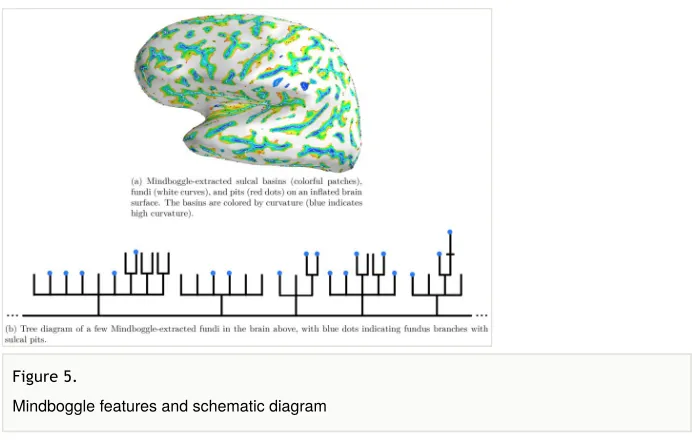
For this aim we will combine the different tree diagrams generated from all of the brain data in the Mindboggle anatomical database (Fig. 2) as well as from all of our MDD data (3.1) into a single, multi-brain tree diagram (Fig. 5 ). Similar individuals are expected to have similar trees, and it will be clearly apparent when two anatomies differ by differences in their schematic representation. For example, visually comparing a given sulcus in 100 brains is untenable, even if it has only two subfolds. But if one were to schematically represent that sulcus as a root node in a tree diagram with two branches representing the two subfolds, then any deviations from this folding pattern would appear as extra or missing branches in the tree diagram. If one then arranged the 100 schematics as frames in a movie or in a 3-D slice stack, one could very quickly see any differences among them. If a portion of the frames or slice-stack were generated from healthy controls and the remaining portion from populations with MDD, then this visual comparison could guide one to structures implicated in the different conditions. We will build on top of Mindboggle’s web browser-based webgl interface to include the individual and collective tree diagrams, and interactive selection and highlighting of branches and branch points to reference the corresponding individual brains and populations of brains. By enabling researchers to visually explore and assess brain folding variation across individuals in an elegant and efficient interactive software interface, we will provide a means of finding brain folding biomarkers of depression. We will measure success by diagnostic and prognostic accuracy
a b
c
Figure 4.
These three diagrams correspond to the three folding patterns in Fig. 3 (left to right): typical, PreSMG, and PreAG. Red dots indicate a critical node that distinguishes the typical and PreSMG folding patterns.
compared with gold standard psychiatric evaluations. If the diagnosis and prediction attempts fail, our alternatives would include applying our methods to other clinical data and to simulated data (to evaluate sensitivity and robustness under controlled conditions).
Project
We will analyze variations in brain anatomy and create the first integrated software environment to extract patterns from brains and target differences related to inter-individual variability, pathology, development, or degeneration. We will evaluate how well these differences can help diagnose and predict treatment outcome for major depressive disorder (MDD), which affects millions of Americans, but our work is intended to be applied to any mental illness, such as Alzheimer’s disease, bipolar disorder, schizophrenia – indeed to analyze differences in brain anatomy between any two populations. The specific aims of this proposal are as follows:
Aim 1: To catalog the most prominent variants of brain folding patterns in healthy and depressed individuals, we will use the Mindboggle software and anatomical database under development by the P.I. to automate extraction and identification of anatomical features such as sulcal fundi from hundreds of MRIs and depict each folding pattern as a graph.
Aim 2: To generate a visual representation of a single or multiple brain graphs that can be interpreted by a non-neuroscientist or clinician, we will automatically construct an intuitive tree diagram that will enable one to visually pinpoint differences in anatomy across individuals or groups of individuals.
Figure 5.
Aim 3: To determine which features of a folding pattern act as diagnostic and predictive biomarkers of MDD, we will visually and quantitatively assess differences across healthy, remitter, and nonremitter MDD populations.
By enabling researchers to explore and analyze brain variation across individuals in a coherent and comprehensive software interface, we will enhance our understanding of brain variation and change and enrich our characterization of individual brain patterns, or “neural signatures.” These signatures are intended to provide the biomarkers sought in our pursuit of personalized medicine.
Call
NIH PAR-09-219: Exploratory Innovations in Biomedical Computational Science and Technology (R21)
Hosting institution
Columbia University
Ethics and security
Protection of Human Subjects
This research is exempt by Exception 4.
All data to be analyzed in this proposal have already been acquired, and for the most part are freely and publicly available for distribution and data analysis (OASIS brain image repository). Data will be stripped of all identifying information before they are sent to the investigators. Data were acquired from a wide range of subjects representing broad demographics with respect to age, gender, race, etc. (including minorities). The OASIS dataset consists of a cross-sectional collection of 416 subjects covering the adult life span aged 18 to 96 including individuals with early-stage Alzheimer’s Disease (AD).
Author contributions
AK conceived of and wrote this proposal.
Conflicts of interest
References
• Bartley A (1997) Genetic variability of human brain size and cortical gyral patterns. Brain 120 (2): 257‑269. DOI: 10.1093/brain/120.2.257
• Cachia A, Paillère-Martinot M, Galinowski A, Januel D, Beaurepaire Rd, Bellivier F, Artiges E, Andoh J, Bartrés-Faz D, Duchesnay E, Rivière D, Plaze M, Mangin J, Martinot J (2008) Cortical folding abnormalities in schizophrenia patients with resistant auditory hallucinations. NeuroImage 39 (3): 927‑935. DOI: 10.1016/
j.neuroimage.2007.08.049
• Dubois J, Benders M, Cachia A, Lazeyras F, Leuchter RH, Sizonenko SV, Borradori-Tolsa C, Mangin JF, Huppi PS (2007) Mapping the Early Cortical Folding Process in the Preterm Newborn Brain. Cerebral Cortex 18 (6): 1444‑1454. DOI: 10.1093/cercor/ bhm180
• Dubois J, Benders M, Borradori-Tolsa C, Cachia A, Lazeyras F, Leuchter RH, Sizonenko SV, Warfield SK, Mangin JF, Huppi PS (2008) Primary cortical folding in the human newborn: an early marker of later functional development. Brain 131 (8): 2028‑2041. DOI: 10.1093/brain/awn137
• Guerrini R, Carrozzo R (2001) Epilepsy and genetic malformations of the cerebral cortex. American Journal of Medical Genetics 106 (2): 160‑173. DOI: 10.1002/ ajmg.1569
• Guerrini R, Dobyns W, Barkovich AJ (2008) Abnormal development of the human cerebral cortex: genetics, functional consequences and treatment options. Trends in Neurosciences 31 (3): 154‑162. DOI: 10.1016/j.tins.2007.12.004
• Harris JM, Whalley H, Yates S, Miller P, Johnstone EC, Lawrie SM (2004) Abnormal cortical folding in high-risk individuals: a predictor of the development of schizophrenia? Biological Psychiatry 56 (3): 182‑189. DOI: 10.1016/j.biopsych.2004.04.007
• Holsboer F (1996) Antidepressants and hypothalamic-pituitary-adrenocortical regulation. Endocrine Reviews 17 (2): 187‑205. DOI: 10.1210/er.17.2.187
• Im K, Jo HJ, Mangin J-, Evans AC, Kim SI, Lee J- (2009) Spatial Distribution of Deep Sulcal Landmarks and Hemispherical Asymmetry on the Cortical Surface. Cerebral Cortex 20 (3): 602‑611. DOI: 10.1093/cercor/bhp127
• Im K, Pienaar R, Paldino MJ, Gaab N, Galaburda AM, Grant PE (2012) Quantification and Discrimination of Abnormal Sulcal Patterns in Polymicrogyria. Cerebral Cortex 23 (12): 3007‑3015. DOI: 10.1093/cercor/bhs292
• Im K, Pienaar R, Lee J, Seong J, Choi YY, Lee KH, Grant PE (2011) Quantitative comparison and analysis of sulcal patterns using sulcal graph matching: A twin study. NeuroImage 57 (3): 1077‑1086. DOI: 10.1016/j.neuroimage.2011.04.062
• Kanonchayos P, Nishita T, Yoshihisa S, Kunii TL (2002) Topological morphing using Reeb graphs. Proceedings of the First International Symposium on Cyber Worlds 3.2: 465‑471.
• Kao C, Hofer M, Sapiro G, Stern J, Rehm K, Rottenberg D (2007) A Geometric Method for Automatic Extraction of Sulcal Fundi. IEEE Transactions on Medical Imaging 26 (4): 530‑540. DOI: 10.1109/tmi.2006.886810
• Klein A, Andersson J, Ardekani B, Ashburner J, Avants B, Chiang M, Christensen G, Collins DL, Gee J, Hellier P, Song JH, Jenkinson M, Lepage C, Rueckert D, Thompson P, Vercauteren T, Woods R, Mann JJ, Parsey R (2009) Evaluation of 14 nonlinear deformation algorithms applied to human brain MRI registration. NeuroImage 46 (3): 786‑802. DOI: 10.1016/j.neuroimage.2008.12.037
• Li G, Liu T, Nie J, Guo L, Wong SC (2008) A Novel Method for Cortical Sulcal Fundi Extraction. Lecture Notes in Computer Science. URL: http://
dx.doi.org/10.1007/978-3-540-85988-8_33 DOI: 10.1007/978-3-540-85988-8_33
• Lohmann G, Cramon DYv (2000) Automatic labelling of the human cortical surface using sulcal basins. Medical Image Analysis 4 (3): 179‑188. DOI: 10.1016/s1361-8415 (00)00024-4
• Lohmann G, von Cramon D, Colchester ACF (2007) Deep Sulcal Landmarks Provide an Organizing Framework for Human Cortical Folding. Cerebral Cortex 18 (6): 1415‑1420. DOI: 10.1093/cercor/bhm174
• Mangin J, Jouvent E, Cachia A (2010) In-vivo measurement of cortical morphology: means and meanings. Current Opinion in Neurology 23 (4): 1. DOI: 10.1097/ wco.0b013e32833a0afc
• Mwangi B, Matthews K, Steele JD (2011) Prediction of illness severity in patients with major depression using structural MR brain scans. Journal of Magnetic Resonance Imaging 35 (1): 64‑71. DOI: 10.1002/jmri.22806
• Penttilä J, Cachia A, Martinot J, Ringuenet D, Wessa M, Houenou J, Galinowski A, Bellivier F, Gallarda T, Duchesnay E, Artiges E, Leboyer M, Olié J, Mangin J, Paillère-Martinot M (2009) Cortical folding difference between patients with early-onset and patients with intermediate-onset bipolar disorder. Bipolar Disorders 11 (4): 361‑370. DOI: 10.1111/j.1399-5618.2009.00683.x
• Rettmann M, Han X, Xu C, Prince J (2002) Automated Sulcal Segmentation Using Watersheds on the Cortical Surface. NeuroImage 15 (2): 329‑344. DOI: 10.1006/ nimg.2001.0975
• Reuter M, Wolter F, Shenton M, Niethammer M (2009) Laplace–Beltrami eigenvalues and topological features of eigenfunctions for statistical shape analysis. Computer-Aided Design 41 (10): 739‑755. DOI: 10.1016/j.cad.2009.02.007
• Rogers J, Kochunov P, Zilles K, Shelledy W, Lancaster J, Thompson P, Duggirala R, Blangero J, Fox P, Glahn D (2010) On the genetic architecture of cortical folding and brain volume in primates. NeuroImage 53 (3): 1103‑1108. DOI: 10.1016/
j.neuroimage.2010.02.020
• Sallet P, Elkis H, Alves T, Oliveira J, Sassi E, de Castro C, Busatto G, Gattaz W (2003) Reduced Cortical Folding in Schizophrenia: An MRI Morphometric Study. American Journal of Psychiatry 160 (9): 1606‑1613. DOI: 10.1176/appi.ajp.160.9.1606
• Sheen V, Walsh C (2003) Developmental genetic malformations of the cerebral cortex. Current Neurology and Neuroscience Reports 3 (5): 433‑441. DOI: 10.1007/
s11910-003-0027-8
• Stanfield A, William T, Moorhead J, Harris J, Owens DC, Lawrie S, Johnstone E (2008) Increased Right Prefrontal Cortical Folding in Adolescents at Risk of Schizophrenia for Cognitive Reasons. Biological Psychiatry 63 (1): 80‑85. DOI: 10.1016/
j.biopsych.2007.04.012
Fava M, Team SS (2006) Evaluation of Outcomes With Citalopram for Depression Using Measurement-Based Care in STAR*D: Implications for Clinical Practice. American Journal of Psychiatry 163 (1): 28‑40. DOI: 10.1176/appi.ajp.163.1.28
• Van Essen DC (2006) Symmetry of Cortical Folding Abnormalities in Williams Syndrome Revealed by Surface-Based Analyses. Journal of Neuroscience 26 (20): 5470‑5483. DOI: 10.1523/jneurosci.4154-05.2006