
REVIEW
Lignin–carbohydrate complexes:
properties, applications, analyses, and methods
of extraction: a review
Dmitry Tarasov
1,2, Mathew Leitch
2and Pedram Fatehi
1*Abstract
The complexity of lignin and hemicellulose segmentation has been known since the middle of the ninetieth century. Studies confirmed that all lignin units in coniferous species and 47–66% of lignin moieties in deciduous species are bound to hemicelluloses or cellulose molecules in lignin–carbohydrate complexes (LCC). Different types and propor-tions of lignin and polysaccharides present in biomass lead to the formation of LCC with a great variety of composi-tions and structures. The nature and amount of LCC linkages and lignin substructures affect the efficiency of pulping, hydrolysis, and digestibility of biomass. This review paper discusses the structures, compositions, and properties of LCC present in biomass and in the products obtained via pretreating biomass. Methods for extracting, fractionating, and analyzing LCC of biomass, pulp, and spent pulping liquors are critically reviewed. The main perspectives and chal-lenges associated with these technologies are extensively discussed. LCC could be extracted from biomass follow-ing varied methods, among which dimethyl sulfoxide or dioxane (Björkman’s) and acetic acid (LCC-AcOH) processes are the most widely applied. The oxidation and methylation treatments of LCC materials elucidate the locations and frequency of binding sites of hemicelluloses to lignin. The two-dimensional nuclear magnetic resonance analysis allows the identification of the structure and the quantity of lignin–carbohydrate bonds involved in LCC. LCC applica-tion seems promising in medicine due to its high anti-HIV, anti-herpes, and anti-microbial activity. In addiapplica-tion, LCC was successfully employed as a precursor for the preparation of spherical biocarriers.
Keywords: Lignin–carbohydrate complex (LCC), Sustainable chemicals, Milled wood lignin, NMR, Fractionation
© The Author(s) 2018. This article is distributed under the terms of the Creative Commons Attribution 4.0 International License (http://creat iveco mmons .org/licen ses/by/4.0/), which permits unrestricted use, distribution, and reproduction in any medium, provided you give appropriate credit to the original author(s) and the source, provide a link to the Creative Commons license, and indicate if changes were made. The Creative Commons Public Domain Dedication waiver (http://creat iveco mmons .org/ publi cdoma in/zero/1.0/) applies to the data made available in this article, unless otherwise stated.
Background
Biomass shows great potential for fuel and non-fuel applications. It is a mixture of cellulose, hemicellulose, lignin, and extractives [1], which are considered as the most common natural polymers on earth [2].
Lignin, hemicellulose, and cellulose form unique and complex structures in wood. Softwood species include 33–42% cellulose, 22–40% hemicellulose, 27–32% lignin, and 2–3.5% extractives [3, 4]. Hardwood species con-tain 38–51% cellulose, 17–38% hemicellulose, 21–31% lignin, and 3% extractives [4, 5]. The amount of lignin,
hemicelluloses, cellulose, and extractives in herbaceous plants are 0–40%, 20–50%, 25–95%, and 4–9%, respec-tively [5–7].
These polymers are widely applied for manufacturing different products. For example, hemicelluloses are used for ethanol or xylitol production [8, 9]. Lignin is used for producing carbon fibers and dispersants [10, 11]. Cel-lulose is used in pharmaceuticals and the papermaking industry [12–14].
To produce value-added products, biomass’ compo-nents should be separated. Hydrolysis, pulping, and bioconversion processes are considered the dominant fractionation processes of biomass. Hydrolysis aims at separating hemicelluloses from other components of bio-mass. Pulping processes are common methods to obtain cellulosic materials used for producing various paper
Open Access
*Correspondence: [email protected]
1 Chemical Engineering Department, Lakehead University, 955 Oliver
Road, Thunder Bay, ON P7B 5E1, Canada
grades. Bioconversion procedures can also be applied for separating cellulosic sugars from biomass. These meth-ods are based on the liberation of the bonds of lignin and holocellulose.
Despite its effectiveness, biomass fractionation is char-acterized by some challenges, one of which is the dif-ficulty in separating lignin from carbohydrates [15, 16]. Lignin and carbohydrate moieties are chemically bound in native biomass forming a lignin–carbohydrate com-plex, LCC [17, 18]. LCC linkage plays a crucial role in wood structure, since all lignin moieties in softwoods [19] and 47–66% of lignin fragments in hardwoods [20] are bound to carbohydrates, mainly to hemicellulose [21]. Numerous studies report the presence of LCC in native biomass materials in coniferous, deciduous, and non-wood plants [19, 22–25]. Due to its strong bonding, the presence of LCC affects the overall extraction of lignin and carbohydrates [16, 24, 26]. For example, a low yield of kraft pulping process is related to the challenge in breaking lignin–carbohydrate linkages in hardwood spe-cies [27], which can be attributed to the alkaline stability of LCC bonds. In addition, the formation of lignin–hemi-cellulose linkages in kraft pulp has been suggested [28, 29]. Several studies confirm the existence of lignin–hemi-cellulose linkages in softwood [30] and in hardwood kraft pulps [20, 31]. Chen et al. [32] report that autohydroly-sis of hardwood results in extracting xylan in the initial stage of autohydrolysis, whereas the isolated xylan units are found to be associated with lignin in the later stage of autohydrolysis. Another study reports that the efficiency of enzymatic hydrolysis of poplar is significantly affected by LCC linkages [33]. Carbohydrates are covalently anchored and shielded by lignin in plant cell walls, which reduces the area of cellulose accessible for enzymatic attacks [34, 35]. The cleavage of LCC bonds is reported to improve the enzyme accessibility to biomass [36, 37]. In addition, the existence of covalent cross-linkages in for-age grasses significantly affects the ability of ruminants to digest, due to the limited access of rumen fermentation microorganisms to carbohydrates in the fodders [36]. Therefore, a better understanding of LCC structure may help to determine appropriate processes to break lignin– carbohydrate bonds, and thus to extract lignocelluloses from biomass effectively and selectively [18].
The molecular weight (MW) of lignin is reported to be an essential parameter for its application as a flocculant and dispersant [38]. The low content of methoxyl groups reduces the heat capacity (Cp) of lignin and increases its glass transition temperature (Tg) [39, 40]. The heating values of lignocellulosic material are, to a large extent, dictated by the presence of inorganic compounds [41], which also affect the Tg value of lignin [42]. Lignin with a low Cp and a high heating value can be utilized as fuel
or a binder for pellet production [42]. The hydrophilic-ity and structural plastichydrophilic-ity of lignin is reported to have a positive correlation with its phenolic groups [39, 43].
The properties of hemicelluloses and cellulose also impact their applications. It is reported that low-molec-ular-weight (MW) sugars are favorable for biofuel pro-duction [44, 45], while hemicelluloses with a high MW can be used in cosmetics and pharmaceutical products [46, 47]. Moreover, high MW polysaccharides can be employed in the food industry. For example, galactoglu-comannan obtained from process waters of thermome-chanical pulping process demonstrates an MW between 39,000 and 46,000 g/mol [48] and can be applied as a replacement for gear or xanthan gums [47]. However, the relatively low heating values of hemicelluloses and cellu-lose [49, 50] limit their applications as fuel.
According to our knowledge, there is no report avail-able to discuss the properties of LCC and their impact on its end-use applications. This study intends to (1) introduce LCC and its properties, (2) describe methods followed in literature to produce LCC, (3) describe the methods used to quantify and analyze the compositions, structures, and properties of LCC, and (4) review the proposed LCC applications.
Lignin–carbohydrate linkages
In 1838, Paymen proposed an “incrustation theory”, which assumes that lignin crusted cellulosic materials. The “incrustation theory” is based on the observation that cellulose in the cell walls has different properties when non-cellulosic materials are isolated from wood [51]. Erdmann [52] explained the complexity of disunit-ing lignin from carbohydrates by the fact that these poly-mers were associated with “glycolignose” materials [53]. Recent research has confirmed that lignin and hemicel-luloses are covalently bound and form lignin–carbohy-drate complexes [1, 54]. There is now more information about the bonds between lignin and cellulosic molecules. Eriksson et al. [55] suggests a fractional bonding between lignin and cellulose units in softwoods. Lam and Iiyma [56] propose lignin–cellulose linkages in rice straw. Jin et al. [54] report that over 50% of lignin units in soft-woods and 17% in hardsoft-woods are covalently (molecu-larly) bound to cellulose moieties in wood. The linkages between lignin and pectin units are also suggested in wood [57, 58].
Linkages between lignin and carbohydrates are gener-ated under the conditions of lignin biosynthesis. During nucleophiles supplement to quinone methides, the inter-mediate connections are developed due to p
-hydrox-ycinnamyl alcohol oxidation [59]. There are eight
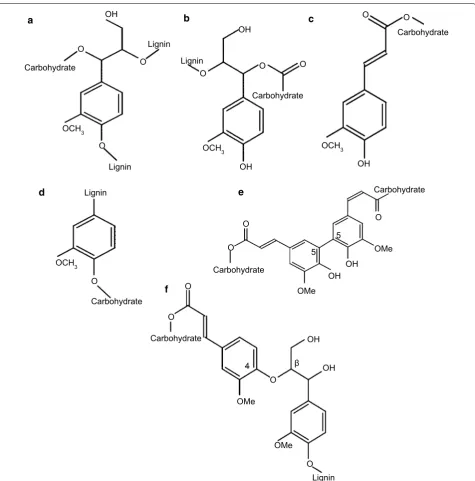
hemiacetal or acetal linkages, and ferulate or diferulate esters that are linked to lignin at 4-OH and 4-O positions [37, 55, 60–62]. Figure 1 presents the structures of the main types of LCC bonds. Benzyl ester bonds connect lignin and carbohydrate moieties through uronic acid of sugars and hydroxyl group of lignin; benzyl ether and phenyl glycosidic link glycosyl or mannosyl residues of carbohydrates and phenolic or hydroxyl groups of lignin
[53, 62]. Glycosidic bonds link carbohydrates and side chain hydroxyl groups of lignin [37]. Acetal bond is the linkage generated by the carbonyl groups of phenylpro-pane structural fragments of lignin and hydroxyl groups of carbohydrates [51]. Ferulate and deferulate esters present the major part of LCC linkages in grasses and other non-wood plants [37]. It has been found that high amounts of ferulate and coumarate acids are bound to
O Lignin OCH3
O
Carbohydrate O
Lignin OH
a
O O O
OH OCH3 Lignin
OH
Carbohydrate b
Carbohydrate
OH OCH3
O O
c
Carbohydrate O
OCH3 Lignin d
Carbohydrate O
O
OMe O
OH
OH β
4
OMe O
Lignin f
Carbohydrate
O O Carbohydrate
OMe OH
OH
OMe 5
5 e
O
carbohydrates in cell walls in different herbaceous plants [62]. Ferulic acid demonstrates the ability to oxidatively couple with lignin, proteins, and other ferulic acids [63]. Due to the presence of carboxylic acid groups at the end of propenyl groups, ferulate acid is able to produce ester linkage with polysaccharides [63]. Consequently, ferulate esters of polysaccharides are linked with lignin via oxida-tive coupling and form “lignin–ferulate–polysaccharide” (LFP) complexes [24, 64]. Due to the abundance of ferulic acids in herbaceous plants and lack of information about ferulic acid existence in the wood fibers, there are lim-ited studies about ferulate linkages in wood. The bark of softwood materials is reported to possess some ferulate esters [65]. Reiter et al. [66] propose ferulic acid forma-tion in the kraft pulping process due to the cleavage of aryl parts of ethers.
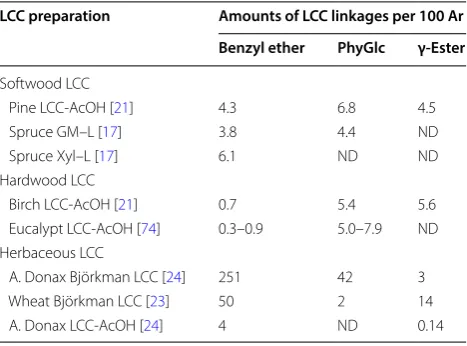
Benzyl ether (BE), ester, and phenyl glycosidic (PhyGlc) are the most typical lignin–carbohydrate linkages [21, 62], showing varying strengths under different condi-tions. Benzyl ether bonds are reported to be alkaline-sta-ble [53, 59]. However, benzyl ether linkages with phenolic hydroxyl groups are proposed to be alkali-liable [67].
Benzyl ester linkages are easily cleaved in alkaline con-ditions [53, 59]. Silva et al. [27] report that hardwoods with a high content of PhyGlc linkages show the lowest kraft pulping yield performance, which could be related to the alkaline-stable nature of the PhyGlc bonds [68, 69]. In another study, it is noted that the hydrolysis of PhyGlc bond leads to only 4% cleavage in neutral aqueous con-ditions, whereas 96% of the bond can be cleaved via acid treatment, which is proposed to be generated dur-ing hydrothermal treatment of hardwood species [70]. Consequently, a high acid liability and alkali resistance of PhyGlc linkages are suggested. Benzyl ether and ester bonds are also not stable under acid hydrolysis condi-tions [67, 71].
Ferulate esters are highly alkali-liable and can be cleaved by alkaline hydrolysis at room temperature [53]. However, due to the affinity of ferulate acid to generate ester bonds with hemicelluloses and ether linkages with lignin, the alkali treatment of herbaceous plants results in the extraction of lignin and ferulic acid molecules [53, 72].
Quantity of lignin–carbohydrate bonds in wood and non‑wood species
It can be postulated that the benzyl ether bonds are dominant in softwood LCC [17, 21, 73]. The phenyl glycosidic linkages are prevalent in hardwood LCC, while the amount of ester linkages greatly varies in different species [21, 74]. Herbaceous plants show sig-nificantly higher amounts of LCC linkages than woody materials. The quantification of lignin–carbohydrate
linkages in herbaceous plants demonstrates the exist-ence of a vast majority of phenyl glycosidic linkages in LCC [23, 24]. The quantification of lignin–carbohy-drate linkages in various LCC is presented in Table 1. Each lignin monomeric unit contains aromatic rings, which is equivalent to mol percentage of aromatic hydrogen or carbon atoms [18, 75–77]. The estima-tion of lignin’s substructures and LCC bonds is mostly expressed as number per 1 or 100 aromatic units (Ar) [21, 75, 76].
Softwood LCC structure
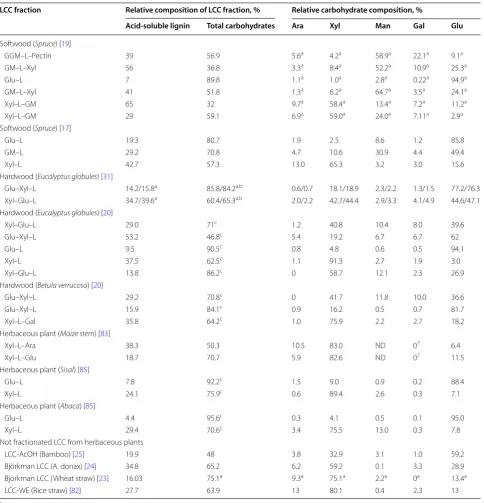
Table 2 depicts the compositions of LCC fractions
extracted from various biomass sources. There are a few hypotheses about the LCC structures and compositions for softwoods. Balakshin et al. [21] stated that the ben-zyl ether linkages in softwood LCC mainly involve man-nose. In another study, Giummarella et al. [73] suggest that xylose is the main carbohydrate with ether bonds, whereas mannose is linked by PhyGlc bonds. Lawoko et al. [19] suggest that lignin involved in LCC has two different structures: one type attached to xylan and the other one connected to glucomannan. It is proposed that xylan is linearly linked to lignin, while GM–L complexes have branched structures [19].
Another study reports that Xyl–L and Glu–L fractions isolated from spruce wood have condensed and linear structures, respectively [17]. Oinonen et al. [78] hypoth-esize random crosslinks between galactoglucomannans, xylans, and lignin in Norway spruce. It is reported that the glucomannan–lignin fraction is water soluble, which suggests a low crosslinking degree in this complex, since extensively cross-linked polymers are typically insoluble
Table 1 Quantification of lignin–carbohydrate linkages in LCC
LCC preparation Amounts of LCC linkages per 100 Ar Benzyl ether PhyGlc γ-Ester Softwood LCC
Pine LCC-AcOH [21] 4.3 6.8 4.5
Spruce GM–L [17] 3.8 4.4 ND
Spruce Xyl–L [17] 6.1 ND ND
Hardwood LCC
Birch LCC-AcOH [21] 0.7 5.4 5.6 Eucalypt LCC-AcOH [74] 0.3–0.9 5.0–7.9 ND Herbaceous LCC
in water [53]. Takahashi and Koshijima [69] also assume that softwood LCC consists of small and repeating lignin units bound to the polysaccharide chain.
Hardwood LCC structure
Dammstrom et al. [22] propose that xylan in hardwood presents in three forms, one of which is glucuronoxy-lan attached to cellulose units, the second form xyglucuronoxy-lan is a part of xylan–lignin complexes, and the third one Table 2 Compositions of LCC fractions from wood and herbaceous plants
a Converted to % based on the data presented in the source
b 12/24 h of ball milling
c Calculated by authors by subtraction the portion of lignin (%) presented in the LCC fraction from 100%
LCC fraction Relative composition of LCC fraction, % Relative carbohydrate composition, %
Acid-soluble lignin Total carbohydrates Ara Xyl Man Gal Glu Softwood (Spruce) [19]
GGM–L–Pectin 39 56.9 5.6a 4.2a 58.9a 22.1a 9.1a
GM–L–Xyl 56 36.8 3.3a 8.4a 52.2a 10.9a 25.3a
Glu–L 7 89.8 1.1a 1.0a 2.8a 0.22a 94.9a
GM–L–Xyl 41 51.8 1.3a 6.2a 64.7a 3.5a 24.1a
Xyl–L–GM 65 32 9.7a 58.4a 13.4a 7.2a 11.2a
Xyl–L–GM 29 59.1 6.9a 59.0a 24.0a 7.11a 2.9a
Softwood (Spruce) [17]
Glu–L 19.3 80.7 1.9 2.5 8.6 1.2 85.8
GM–L 29.2 70.8 4.7 10.6 30.9 4.4 49.4
Xyl–L 42.7 57.3 13.0 65.3 3.2 3.0 15.6
Hardwood (Eucalyptus globules) [31]
Glu–Xyl–L 14.2/15.8a 85.8/84.2a,b 0.6/0.7 18.1/18.9 2.3/2.2 1.3/1.5 77.2/76.3 Xyl–Glu–L 34.7/39.6a 60.4/65.3a,b 2.0/2.2 42.7/44.4 2.9/3.3 4.1/4.9 44.6/47.1 Hardwood (Eucalyptus globules) [20]
Xyl–Glu–L 29.0 71c 1.2 40.8 10.4 8.0 39.6
Glu–Xyl–L 53.2 46.8c 5.4 19.2 6.7 6.7 62
Glu–L 9.5 90.5c 0.8 4.8 0.6 0.5 94.1
Xyl–L 37.5 62.5c 1.1 91.3 2.7 1.9 3.0
Xyl–Glu–L 13.8 86.2c 0 58.7 12.1 2.3 26.9
Hardwood (Betula verrucosa) [20]
Glu–Xyl–L 29.2 70.8c 0 41.7 11.8 10.0 36.6
Glu–Xyl–L 15.9 84.1c 0.9 16.2 0.5 0.7 81.7
Xyl–L–Gal 35.8 64.2c 1.0 75.9 2.2 2.7 18.2
Herbaceous plant (Maize stem) [83]
Xyl–L–Ara 38.3 50.3 10.5 83.0 ND 07 6.4
Xyl–L–Glu 18.7 70.7 5.9 82.6 ND 07 11.5
Herbaceous plant (Sisal) [85]
Glu–L 7.8 92.2c 1.5 9.0 0.9 0.2 88.4
Xyl–L 24.1 75.9c 0.6 89.4 2.6 0.3 7.1
Herbaceous plant (Abaca) [85]
Glu–L 4.4 95.6c 0.3 4.1 0.5 0.1 95.0
Xyl–L 29.4 70.6c 3.4 75.5 13.0 0.3 7.8
Not fractionated LCC from herbaceous plants
LCC-AcOH (Bamboo) [25] 19.9 48 3.8 32.9 3.1 1.0 59.2
Björkman LCC (A. donax) [24] 34.8 65.2 6.2 59.2 0.1 3.3 28.9
Björkman LCC (Wheat straw) [23] 16.03 75.1a 9.3a 75.1a 2.2a 0a 13.4a
is free xylan. Koshijima and Watanabe [53] state that xylose is the main sugar for benzyl ether linkages. In other research, it is reported that 50% of glucan moie-ties are involved in benzyl ether linkages with 5–10% xylan contribution [18]. Takahashi and Koshijima [68] state that lignin and glucuronoxylan are linked by benzyl ester bonds with 30% uronic acid. Takahashi and Koshi-jima [69] propose hardwood LCC structure in the form of a very long polysaccharide chain linked to a few large lignin moieties.
Non‑wood LCC structure
The LCC of grasses mainly includes arabinoxylans bridged to lignin via ferulate esters [62, 79]. Arabinoxy-lans play an important role in LCC linkage formation, due to the conceivable existence of covalent bonding between arabinose, xylan, and lignin moieties in forage crops [80]. In addition, xylan is reported as a main com-ponent-binding lignin and carbohydrates in bamboo, rice straw, and ryegrass [72, 81–83]. It is proposed that lignin in wheat straw is bound to glucan and xylan moieties via ferulate acid and PhyGlc linkages, respectively [23, 84]. In another study, You et al. [24] suggest that PhyGlc bonds exist between cellulose and lignin in herbaceous plants due to the abundance of these bonds. However, Rio et al. [85] report that no signs of benzyl ether, ester, or PhyGlc linkages are found in a glucose–lignin fraction of sisal and abaca. It is also proposed that xylan is linked to lignin via PhyGly bonds in bamboo [25]. Other work confirms that PhyGlc is bound to guaiacyl and syringyl lignin units with xylan moieties in abaca and sisal [85].
LCC in softwood pulp
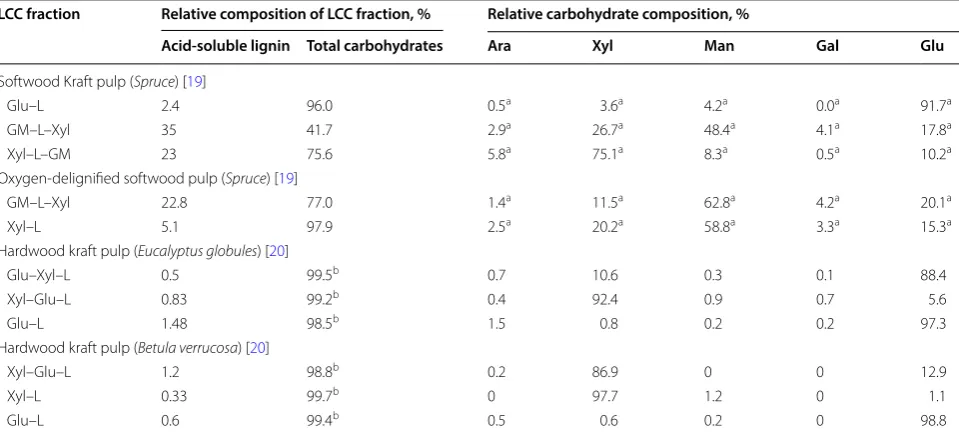
As stated earlier, LCC can exist in pulp, and it can also be extracted from spent liquor. The analysis of pulp reveals that 85–90% of lignin remains in softwood kraft pulp linked to carbohydrates in LCC forms [30, 86]; whereas, in oxygen-delignified pulp, all lignin units are involved in LCC [86].
Due to the galactoglucomannan decomposition dur-ing kraft pulpdur-ing, LCC is present in kraft pulp as Glu–L, GM–L–Xyl, and Xyl–L–GM fragments with 12, 45, and 27% of total relative amounts of lignin found in pulp, respectively [19]. It is apparent that hemicellulose–lignin complexes contain both xylan and glucomannan in dif-ferent proportions, implying that lignin crosslinks with xylan and glucomannan in softwood kraft pulp [30]. Ten-kanen et al. [29] reported that the degradation of xylan during the enzymatic hydrolysis of pine kraft pulp sig-nificantly enhances the decomposition of glucose, while the hydrolysis of glucomannan does not improve the decomposition of cellulose in the same manner as that of xylan. In addition, it is found that the hydrolysis of
glucomannan increases after a considerable removal of xylan. These results imply that xylan is partially covered by glucomannan, whereas, in pine kraft pulp, xylan is entrapped by glucose [29]. The increment in the degree of oxygen delignification leads to the degradation of Glu–L complexes, whereas the GM–L–Xyl and Xyl–L fractions obtained from oxygen-delignified softwood pulp included 80% and 20% of total lignin content in pulp, respectively [19, 86]. Therefore, it is proposed that GM–L–Xyl complex is resistant to oxygen delignification, which might be attributed to the high alkali resistance of phenyl glycosidic and benzyl ether bonds present in this complex.
In addition, with the increment of oxygen delignifica-tion intensity, the relative amount of xylan in the GM–L– Xyl fraction decreases, while the relative content of lignin in these complexes increases. At the highest severity of oxygen delignification, almost all lignin moieties in pulp have been found to be linked to glucomannan units. This leads to the conclusion that the main issue of oxygen delignification of softwood species is attributed to glu-comannan LCC [86].
LCC in hardwood pulp
LCC fractionation of eucalyptus kraft pulp shows that Glu–Xyl–L and Xyl–L fractions include 8% and 12% of total lignin present in the eucalyptus pulp, respectively. The compositional analysis of LCC fractions present in birch kraft pulp shows that Xyl–L–Glu contains 34% of total lignin and Xyl–L contains 16% of lignin units [20]. Table 3 lists the composition of LCC fractions extracted from softwood and hardwood kraft pulps.
LCC in spent liquors
It is suggested that lignin–carbohydrate complexes can be extracted and dissolved along with lignin and hemi-celluloses in the spent liquors of biomass pretreatment [19, 87]. Tamminen et al. [88] proposed the existence of xylan–lignin and galactan–lignin complexes in the spent pulping liquor (black liquor) of the kraft process. It is proposed that some of xylan and glucomannan moieties are dissolved in black liquor along with lignin [29].
89% of lignin moieties bound to carbohydrates in the hydrolysate are generated under a high temperature and lower L/S ratio [90].
LCC properties
The MW of LCC is not widely discussed in the literature. Table 4 tabulates the properties of LCCs extracted from various sources. The MW of LCC prepared from pop-lar is reported to range from 9800 to 17,500 g/mol [91]. LCC extracted from non-wood species features a very wide range of molecular weights. The MW of LCC from Prunella vulgaris is estimated to be 8500 g/mol [92], whereas the MW of wheat straw LCC is around 38,700 g/ mol [23].
The molecular weights of xylan (Xyl)- and glucan (Glu)-rich LCC complexes obtained from softwood kraft pulp are estimated to be in the range of 8000–35,000 g/ mol and 15,000–45,000 g/mol, respectively [86]. It is reported that the MW of lignin and hemicelluloses pre-sent in these LCC fractions is related to the relative lignin
content of kraft pulp. The Xyl–L fraction obtained from pulp with lower lignin content possesses lignin and hemi-celluloses with a higher MW [86]. In addition, hardwood PHL and SL of NSSC process are reported to contain LCC with the molecular weights of 2000 and 1500 g/mol, respectively [89].
The thermal stability of LCC is affected by various fac-tors, such as interunit structures, functional groups, degree of condensation, and molecular weights [93]. Experimental conditions also impact LCC’s thermal sta-bility. In one study, Nassar and MacKay [94] report that LCC from spruce starts to decompose in the tempera-ture range from 220 to 260 °C, whereas the degradation onset temperature (Tonset) of spruce lignin is reported to be 210–220 °C. This difference could be related to the hemicellulose presence in LCC, as hemicelluloses contain more inherent moisture than does lignin [94]. Another study states that softwood LCC possessed Tonset of 236 °C, whereas LCC and carbohydrate-free lignin from bagasse started to decompose at 277 and 268 °C, Table 3 Composition of LCC fractions from softwood and hardwood kraft pulp
a Converted to % based on the data presented in the source
b Calculated by authors by subtraction the portion of lignin (%) presented in the LCC fraction from 100%
LCC fraction Relative composition of LCC fraction, % Relative carbohydrate composition, %
Acid-soluble lignin Total carbohydrates Ara Xyl Man Gal Glu
Softwood Kraft pulp (Spruce) [19]
Glu–L 2.4 96.0 0.5a 3.6a 4.2a 0.0a 91.7a
GM–L–Xyl 35 41.7 2.9a 26.7a 48.4a 4.1a 17.8a
Xyl–L–GM 23 75.6 5.8a 75.1a 8.3a 0.5a 10.2a
Oxygen-delignified softwood pulp (Spruce) [19]
GM–L–Xyl 22.8 77.0 1.4a 11.5a 62.8a 4.2a 20.1a
Xyl–L 5.1 97.9 2.5a 20.2a 58.8a 3.3a 15.3a
Hardwood kraft pulp (Eucalyptus globules) [20]
Glu–Xyl–L 0.5 99.5b 0.7 10.6 0.3 0.1 88.4
Xyl–Glu–L 0.83 99.2b 0.4 92.4 0.9 0.7 5.6
Glu–L 1.48 98.5b 1.5 0.8 0.2 0.2 97.3
Hardwood kraft pulp (Betula verrucosa) [20]
Xyl–Glu–L 1.2 98.8b 0.2 86.9 0 0 12.9
Xyl–L 0.33 99.7b 0 97.7 1.2 0 1.1
Glu–L 0.6 99.4b 0.5 0.6 0.2 0 98.8
Table 4 LCC properties
LCC source Mw, g/mol Thermal properties [94, 95, 99] Elemental analysis, % [95, 102] Tonset, °C Degradation
at 590 °C, wt % Tg, °C, C H N S O
Hardwood 9800–17,600 [91] ND ND ND 51.9 5.8 ND ND 42.4
Softwood 12,000 [101] 220–260 45.7 ND 59.6 6.3 1.1 2.2 ND
respectively [95]. At 590 °C, the weight of softwood LCC decreases by 45.7%, whereas LCC isolates from bagasse and carbohydrate-free lignin experiences 55.6 and 52.5% weight loss, respectively [95]. A lower degradation of softwood LCC could be related to their bonding extent, which decomposes slowly at elevated temperatures [95]. Molecular weight, molecular weight distribution, and degree of crosslinking impact Tg value of LCC [96]. In the past, lignin was reported to have Tg between 80 and 193 °C [97], while hemicellulose and cellulose had Tg in the range of 200–250 °C and 150–220 °C, respec-tively [98]. The Tg of LCC from bamboo is reported to be 166 °C [99].
The elemental analysis of softwood and bagasse LCC is reported by Singh et al. [95]. Carbon and hydrogen contents of both LCCs are estimated as 63–60% and 5.4–6.3%, respectively. These values are similar to carbo-hydrate-free bagasse and softwood kraft lignin [95, 100].
Another important parameter of LCC is anti-UV activity. The anti-UV activity is determined by selec-tive index (SI) [103, 104]. SI is defined as the ratio of two parameters: 50% cytotoxic concentration (CC50), which is defined as the amount of the compound (μg/mL) required for the reduction of the number of living cells by 50%, and 50% effective concentration (EC50) that raises the viability of UV-irradiated cells by 50% [105, 106]. In other words, SI quantitatively expresses the ability of the compound (LCC) to defend cells from UV-induced dam-age [104].
It is reported that the LCC produced from pine cone and pine seed shell extracts shows anti-UV activity with SI of 24.8–38.1 and 25.6, respectively. A similar anti-UV activity (SI = 38.5) is reported for herbaceous LCC (Sasa senanensis Rehder leaves), whereas the lignin extracted via alkali treatment shows a significantly higher anti-UV activity with an SI of 61.5 [103].
LCC extraction
Different researchers claim the presence of LCC for altered materials in different studies. In 1935, Hibbert and coworkers proposed the presence of lignin–xylan complexes in spent liquor obtained from extraction of spruce saw meal treated with a mixture of anhydrous ethylene alcohol glycol and hydrogen chloride [107]. In a later study, Merewether [108] reported the presence of xylan–lignin complexes in the spent liquor produced via ethanolysis (in the presence of sodium bicarbonate) of eucalyptus wood meal. In 1953, Traynard [109] and coworkers reported the extraction of LCC from poplar species via water hydrolysis at 140 °C [53]. However, the extraction of LCC via fractionation studied by Björkman systematically for the first time [110, 111].
Björkman LCC
The methods for LCC extractions established by Björk-man [110, 111] became a milestone in the investigation of lignin and LCC’s structure and composition. Figure 2 outlines Björkman’s procedure for LCC preparation. In this method, biomass is saturated with toluene prior to milling for 48 h [111, 112]. Afterward, the milled mate-rial is mixed with 1,4-dioxone/water (96/4 vol./vol.) solution in a wood/solvent ratio of 1/10 wt/wt and is stirred for 24 h at ambient temperature under a nitrogen atmosphere [112]. Then, the solution is centrifuged. The evaporation of its solvent from supernatants will help separation of milled wood lignin (MWL) [112].
It is reported that MWL represents up to 50% of total lignin content of wood [51, 111]. The precipitates of the centrifugation are then extracted with dimethylforma-mide (C3H7NO) or dimethyl sulfoxide ((CH3)2SO)). The obtained material is purified by dissolution in 50/50 vol/
Dioxane/H2O
Milled sample
Extractive-free biomass
Ball milling
Extraction
MWL
CH2Cl2/C2H6O AcOH/H2O
C3H7NO
Residue Supernatant Supernatant Extraction
Dissolution
Precipitation
Björkman LCC Residue
Solution
Supernatant Residue
vol acetic acid/water (AcOH/H2O) mixture followed by precipitation via washing with a dichloromethane/etha-nol (CH2Cl2/C2H6O) mixture. The produced precipitates are considered as Björkman LCC. This product is com-prised of 16–34 wt% lignin and 66–84 wt% carbohydrates [111, 112].
LCC extraction via acetic acid (LCC‑AcOH)
Björkman’s procedure uses solvents with high boiling points, such as dimethylformamide or dimethylsulfoxide [53]. Balakshin et al. [15, 21] and You et al. [24] reported the procedures for LCC extraction from softwood (pine), hardwood (birch), and herbaceous biomass (A. donax). Figure 3 presents the process of LCC preparation using acetic acid (AcOH). In this method, extractive-free wood sawdust is ground by planetary ball milling for 5 h and 600 rpm [21]. In case of herbaceous biomass, the extrac-tive-free material is subjected to planetary ball milling for 12 h and 450 rpm [24]. Then, the produced material is treated by 96/4 vol./vol. 1,4-dioxane/water mixture in accordance with the Björkman’s procedure. Afterward, the solvent is evaporated in vacuum, and then, a few drops of deionized water are added to the solid material
to remove traces of dioxane followed by rotary evapora-tion. The dried material is considered as MWL. Then, MWL is dissolved in 90% aqueous AcOH (at 20 mL/g ratio). The addition of water to the mixture leads to pre-cipitations of purified MWL. Then, the supernatant of this process is collected and lyophilised. Furthermore, the dried material is treated with a few drops of water for AcOH removal. After repeating the purification proce-dure three times, the dried material is considered to be LCC-AcOH [21, 24].
LCC extraction with hot and cold water treatment
Another method for LCC extraction was developed by Watanabe [113] and coworkers in 1987. Figure 4 outlines the procedure for LCC-WE preparation. In this method, woody materials are ground, and then, MWL is extracted using an 80/20 vol./vol. dioxane/water solution. The obtained residue is first treated with cold water (20 °C), and washed and then treated again with hot water (at 80 °C). The dissolved materials of these processes are pre-cipitated with ethanol (C2H6O) and considered as LCC-WE [53, 113].
LCC fractionation
Softwoods, hardwoods, and non-woods have different morphologies and compositions of lignin and carbohy-drates, which results in variations in their LCC proper-ties. LCC extracted from softwood is claimed to have hemicelluloses, such as galactoglucomannan (GGM),
glucomannan (GM), arabino-4-O
-methylglucoronox-ylan (Xyl), and arabinogalactan (Gal), bound to lignin (L) moieties [82]. Sugars of LCC in hardwoods consist of 4-O-methylglucoronoxylan, whereas LCC from
non-woods are composed of arabino-4-O
-methylglucoron-oxylans [82]. LCC fractionation procedures reveal more detailed information regarding the structure and com-position of various LCCs, which present in biomass and pulps.
LCC fractionation via enzymatic hydrolysis and barium hydroxide
Lawoko proposes a combination of ball milling, enzy-matic hydrolysis, and treatment with barium hydroxide (Ba(OH)2) for fractionating LCC [19, 30, 86, 114]. The pro-cedure for LCC fractionation via this method is shown in Fig. 5. First, the extractive-free spruce wood species are ball-milled for 3 h. Next, the milled substance is treated with endoglucanase enzymes (Novozyme 476) followed by centrifugation. Then, the hydrolysate of this enzymatic treatment is treated with 5% aqueous barium hydrox-ide ((Ba(OH)2) for 2 h after centrifugation, which leads to the precipitation of solid material [114, 115]. The gener-ated precipitate is dissolved in 1/1 AcOH/H2O solution Extractive-free biomass
Supernatant Dioxane/H2O
Milled sample Ball milling
Extraction
LCC-AcOH Solution
AcOH/H2O Dissolution
Precipitation
Purified MWL H2O
Supernatant
Residue
Drying
MWL
Residue
and then precipitated again via ethanol supplement. After dialysis and drying, the produced material is considered GGM–L–Pectin fraction [2, 114]. The precipitates of enzy-matic hydrolysis are swollen in urea for 24–48 h at room temperature. Afterward, the soluble part of the urea mix-ture is mixed with Ba(OH)2, resulting in the formation of two LCC fractions; GM–L–Xyl is found in residue due to its poor solubility, and highly soluble Xyl–L–GM fraction dissolves in supernatant. Next, GM–L–Xyl and Xyl–L–GM fractions are separated by centrifugation. Then, GM–L–Xyl fraction is purified with AcOH/H2O solution and re-pre-cipitated in ethanol as described above. Xyl–L–GM por-tion, remaining in the barium hydroxide solupor-tion, is also dissolved in 50% aqueous AcOH solution and precipitated in ethanol. Afterward, the obtained fractions are dialysed and freeze-dried [2, 114].
LCC fractionation via DMSO/tetrabutylammonium hydroxide (TBAH) mixture
The degradation of β-O-4 interunits of syringyl lignin and high solubility of these lignin segments in water after endoglucanase hydrolysis and urea treatment
indicates the fact that the procedure should be modi-fied for hardwood LCC preparation [20]. Li et al. [31] proposed a method for fractionation of hardwood LCC, which includes ball milling for 12–24 h and dissolution in 50/50 vol./vol. DMSO/tetrabutylammonium hydroxide (TBAH) mixture. This leads to the dissolution of cellulose components of hardwood, but the lignin structures in LCCs remain intact [31]. Mixing the product with water results in the precipitation of LCC. The lyophilisation of the precipitates generates Glu–L fraction in the precipi-tates and Xyl–L in the solution.
LCC fractionation via alkaline extraction and enzymatic hydrolysis
Sipponen et al. [83] reported an efficient method for the isolation of alkali-soluble LCC fractions from non-wood plants (Maize stem) via combined application of alkaline extraction and enzymatic hydrolysis. Figure 6 depicts the procedure for alkali-soluble LCC isolation. This proce-dure describes the extraction of extractive-free biomass with 0.5 M sodium hydroxide (NaOH) solution for 24 h at room temperature under nitrogen (N2) atmosphere. This treatment leads to the formation of precipitates and dissolved substances. The product is centrifuged, and the generated residue and supernatant are separated. Then, the pH level of the obtained supernatant is adjusted to 2 by hydrochloric acid (HCl) supplement. The acidified solution is kept for 16 h in the dark and then centrifuged for collection of the insoluble part. The generated sus-pension is lyophilised, and the obtained solid material is considered as Xyl–L–Ara complex. The precipitate pro-duced from the initial NaOH solutions is treated with Novozyme 476 enzyme, which leads to the generation of hydrolysed suspension. The suspension is centrifuged, and hydrolysed solids are precipitated, washed, and lyophilised. Then, the dried residue is extracted with 2 M
NaOH at ambient temperature under N2 atmosphere.
Afterward, Xyl–L–Glu complex is isolated from alkaline extract via acidification, as described above [83].
LCC fractionation via universal method
Du et al. [115] reported a universal fractionation process for LCC from lignocellulosic biomass, which combines the procedures developed by Lawoko et al. [19] and Li et al. [31]. Figure 7 depicts the procedure for universal fractionation of LCC. In this method, the extractive-free biomass is first ground by ball milling and then dis-solved in DMSO/TBAH solution in accordance with the method developed by Li et al. [31]. It is reported that, after 12 h of ball milling, the milled materials of hard-wood, softhard-wood, and herbaceous species entirely dis-solve in DMSO/TBAH mixture [31, 115]. The obtained solution is diluted with water, generating two phases
Residue Dioxane/H2O
Milled biomass
Extractive-free biomass
Ball milling
Extraction
Extraction
Precipitation
Residue MWL
20°C H2O
Residue
C2H6O
LCC-WE Supernatant
Extraction 80°C H2O
Residue
Supernatant
Supernatant
of residue and supernatant. The generated residue is washed with water and lyophilised to obtain the Glu–L fraction. The produced supernatant is saturated with Ba(OH)2, which leads to the aggregation of barium ions with GM–L fraction and its further precipitation. Both the precipitate and the supernatant are neutralized with HCl, then purified and dried. The materials collected from the precipitate and supernatant are considered as GM–L and Xyl–L fractions of LCC, respectively [115]. It is also reported that the molecular weight of LCC gener-ated in this process is extremely high. Glu–L, GM–L, and Xyl–L fractions have the MW of 490,000 g/mol, 63,000– 160,000 g/mol and 18,000 g/mol, respectively [115]. Con-sidering the complete dissolution of the examined wood
and herbaceous species in DMSO/TBAH mixture, it is suggested that this method can be applied for the frac-tionation of LCCs present in pulp and other processed lignocellulosic materials [115].
Fractionation of pulp LCC
It is well known that the pulping process leads to a sig-nificant delignification of biomass. As stated earlier, benzyl ether and phenyl glycosidic lignin–carbohydrate linkages are alkali-stable, and, hence, will persist through the pulping process [30]. Gierer and Wannstrom [28] suggest the formation of new LCC bonds during the pulping process. In another study, Tenkanen et al. [29] investigated the existence of linkages between lignin and
Residue
Residue
Supernatant Solution
Solution Supernatant
Saturation Ba(OH)2
Centrifuging Residue
GGM-L-Pectin Residue
Precipitation C2H6OH
Dissolution
C2H6OH Precipitation
GM-L-Xyl Xyl-L-GM Dissolution Supernatant
Supernatant Residue
AcOH/ H2O Urea Swelling
Residue
Saturation Ba(OH)2
Centrifuging
AcOH/H2O
Dissolution AcOH/H2O
Precipitation C2H6OH Solution Solution
Solution
Extractive-free biomass
Hydrolysis Ball-milling
Novozyme 476
Centrifuging Milled biomass
Residue
carbohydrates in softwood and hardwood kraft pulp via selective enzymatic hydrolysis of cellulose, xylan, and mannan units. The association between lignin and xylan, glucomannan, and glucose units in pine kraft pulp and lignin–xylan bonding in birch kraft pulp is proposed [29]. To quantify LCC formation in these processes, Lawoko and et al. [30] designed a protocol for fractionation of the
LCC obtained from softwood kraft pulp and oxygen-del-ignified pulp. Figure 8 outlines the protocol for fractiona-tion process of LCC material present in pulp.
In this process, pulp is hydrolysed with endoglucanase (Novozyme 476) enzyme for 48 h. Then, the produced hydrolysate is centrifuged and the precipitated mate-rial is separated. The residue is swollen in urea solution Centrifuging
Solution pH 2
Solution pH 2 Extractive-free biomass
Xyl-L-Glc Hydrolysis
Residue
Centrifuging
Residue
Extraction NaOH
Centrifuging
pH adjustment HCl
Residue
Residue Supernatant
NaOH Extraction
Novozym e 476
Supernatant Centrifuging
Supernatant
Supernatant
Supernatant
Xyl-L-Ara
pH adjustment HCl
Centrifuging
Residue N2
Solution
overnight at room temperature. Afterward, the mate-rial is centrifuged to separate the insoluble part from the supernatant. The insoluble part is then washed with water for the removal of urea and is dissolved in alkaline (18% NaOH) borate (4% H3BO3) solution for 4 h at ambi-ent temperature for the dissolution of mannose polysac-charides [20]. The precipitate generated via centrifuging of the alkaline borate solution is washed and recycled to enzymatic hydrolysis stage. The supernatant obtained via centrifugation of alkaline borate solution is subjected to pH adjustment via acetic acid supplement causing pre-cipitation of Glu–L fraction at pH 12. Glu–L fraction is separated with centrifugation; where the pH of the solu-tion drops to 7. Since no precipitate is formed at pH 7, the solution is dialyzed and lyophilised, and then, the dried material is dissolved in 0.2 M NaOH. The produced solution is treated with 5% aqueous Ba(OH)2, which leads to the precipitation of glucomannan rich material. The obtained fraction is collected and re-dissolved in 0.2 M
NaOH and again is precipitated with barium hydroxide solution. After that, the precipitate is mixed with 1/1 AcOH/H2O vol./vol. solution and then precipitated via ethanol supplement. After the generated solid material is dialyzed and freeze-dried, it is considered GM–L–Xyl fraction. The suspension obtained after the second
treat-ment with aqueous Ba(OH)2 and GM–L–Xyl fraction
separation is mixed with 50% aqueous AcOH solution and then precipitated as described above. After the pro-duced substance is purified, it is considered Xyl–L–GM portion. The application of this procedure for fractiona-tion of LCC present in oxygen-dignified softwood pulp results in Xyl–L–GM fraction [30, 86].
The method established by Björkman is a widely used procedure for LCC extraction. However, this technique is time-consuming and involves the usage of solvents with a high boiling point. The application of AcOH or dioxane significantly reduces the time required for LCC extraction. LCC fractionation with enzymatic hydrolysis
Residue pH7 Extractive-free biomass
H2O
H2O DMSO/TBAH
Milled biomass Ball milling
Supernatant Residue
Glu-L
Residue
Ba(OH)2 Dissolution
Solution
Washing Saturation
HCl HCl
Residue pH 7
Mixing
pH
adjustment adjustmentpH
GM-L Xyl-L
Supernatant
Supernatant pH 7
in combination with Ba(OH)2 or alkaline treatment is a suitable method for softwood and herbaceous species. However, syringyl lignin moieties became water soluble after enzymatic hydrolysis, which makes enzymatic treat-ment inapplicable for fractionation of hardwood LCC.
The application of DMSO/TBAH along with Ba(OH)2
is considered a universal method for LCC fractionation.
However, the LCC fragments obtained after universal LCC fractionation demonstrate extremely high molecular weights, which hinders its analysis with NMR due to its low solubility in solvents required for NMR analysis. For facilitating NMR analysis and molecular weight reduc-tion, the obtained LCC fractions could be hydrolyzed with enzymes, but enzymatic treatment can be expensive
Residue Pulp
Supernatant Supernatant
Urea
Residue Hydrolysis
Swelling
Dissolution Residue Novozyme 476
Centrifuging NaOH/H3BO3
AcOH
Residue at pH 12
Supernatant Residue
Fractionation
Glu-L
Supernatant further pH drop to 7
AcOH/H2O AcOH/H2O
Saturation Ba(OH)2
Precipitation
Supernatant Residue
C2H6OH Dissolution
NaOH
Dissolution
C2H6OH Precipitation
GM-L-Xyl Xyl-L-GM Dissolution Solution
Dialysis
Solution Residue
Solution Drying
Residue Solution
and time-consuming. A new or improved method is needed for fractionating LCC more effectively.
Analysis of LCC
NMR has primarily been used for analyzing the structure of LCC. However, other methods such as alkaline, acidic degradation, oxidation, methylation, and enzymatic anal-ysis are also useful for LCC structure’s analanal-ysis [18, 116, 117].
Ester linkage analysis via alkali degradation of LCC
Alkali degradation is widely applied for ester bond iden-tification in hardwood [68] and softwood LCC [118]. The analysis is based on ester bond saponification, lignin, and polysaccharide disassociation [118, 119]. The pro-cedure for alkali degradation of LCC is presented in Fig. 9a. According to this methodology, LCC is dissolved in sodium hydroxide (0.1 M NaOH) solution for 1.5–2 h at room temperature [68, 118]. The solution is then neu-tralized with AcOH to pH 6.5 and centrifuged. The pre-cipitate is washed with water and lyophilised [118]. The comparative IR analysis of untreated LCC and alkali-treated LCC demonstrates the absence of 1730 cm−1 in the spectrum of alkali-treated LCC, which confirms the complete saponification of ester bonds in alkali-treated LCC preparation [68, 118]. Obst [118] reported that 10–20% of linkages in LCC are presented in the form of esters in the alkali degradation method.
Moreover, the existence of ester linkages can be
esti-mated via sodium borohydride (NaBH4) reduction
method [68, 118]. In this method, LCC is dissolved in water with the addition of NaBH4 and NaOH [118]. This treatment leads to the reduction of esters to the neutral sugars [68]. In one analysis, the comparison of glucuronic acid concentration before and after borohydride reduc-tion reveals that approximately 30% of linkages in beech LCC are ester-type [68]. However, the linkages degraded due to the alkali treatment are not necessary ester bonds, as benzyl ethers with hydroxyl groups are also alkali-lia-ble [67].
Ether linkage analysis via acid degradation of LCC
The existence of ether bonds in LCC is investigated via the combined application of sodium borohydride reduc-tion, followed by acid treatment of reduced LCC [55, 120]. This method is based on the analysis of new phe-nolic and benzyl alcohol hydroxyl groups generated due to the hydrolysis of ether linkages [55, 120]. The proce-dure for the combined acid and alkali degradation of LCC is shown in Fig. 9b. In this method, enzymatically (enzyme hemicellulase 680) treated spruce LCC is first subjected to the sodium borohydride treatment for the reduction of esters as described above [55, 68]. Then,
the reduced LCC is subjected to the selective hydroly-sis of linkages between arabinose side chains and xylan (arabinofuranosidic bonds) by dissolution of the mate-rial in aqueous mixture of H2SO4/AcOH 1/1 vol./vol. at 90 °C for 2 h. Hydrolyzed LCC is precipitated from the obtained solution via treating with ethyl ether (C4H10O) followed by centrifugation. Afterward, the produced resi-due is washed with ethyl ether and dried [55, 120]. The obtained material of acidified LCC is dissolved in 1 M NaOH under N2 conditions at ambient temperature for 40 h [55, 120]. Then, the pH of the obtained solution is adjusted to 4 by supplement of 2 M HCl solution and the material is precipitated as described above [120]. This treatment is supposed to saponify all remaining glucu-ronic acid ester bonds between glucuroxylan and lignin [55, 68]. It is suggested that xylan units remaining in the LCC after this treatment are bound to lignin by ether bonds to xylose moieties [55, 120].
Phenyl glycosidic linkage analysis via Smith degradation of LCC
The glycosidic linkages in softwood LCC are studied via the degradation method developed by Smith and et al. [121]. This method allows the conversion of glycosidic linkages into acyclic acetal bonds, which are liable to acid hydrolysis and can be decomposed via mild acid hydroly-sis treatment [55]. The procedure for Smith degradation of LCC is presented in Fig. 10. This method involves peri-odate oxidation, borohydride reduction, and acid hydrol-ysis stages. It is proposed that sugar moieties, remained in LCC after these treatments, are bound to lignin [55, 122]. The LCC is first dissolved in 1/1 vol./vol. of H2SO4/ AcOH solution at the approximate LCC/solution ratio of 10/1 wt/wt. The solution is then mixed with sodium peri-odate (NaIO4) and kept for 72 h at 5 °C in a dark place. Afterward, the insoluble material generated in the oxida-tion is collected and subjected to treatment with sodium borohydride (NaBH4) in water for 12 h. Then, the treated material is suspended in H2O/AcOH mixture and then hydrolyzed with 0.25 M H2SO4 solution for 8 h at ambi-ent temperature. The precipitates of this process are col-lected, washed with water, and treated with sulfuric acid at 100 °C for 12 h [55]. In a related work [122], the oxida-tion of LCC is performed for 220 h. Then, the soluoxida-tion is purified via dialysis and treated with NaBH4 for 15 h; after which the solution is treated with H2SO4 for 15 h followed by centrifugation for precipitate separation. The collected precipitate is washed with water and ethanol, and then dried [122].
Supernatant NaOH
LCC
Mixing
Solution
pH adjustment
Centrifuging
Alkali-LCC Solution pH 6.5 AcOH
Residue Dissolution
a
Hemicellulase 680 LCC
NaOH/NaBH4
H2SO4/AcOH
Solution Dissolution Hydrolysis
Hydrolysed LCC Supernatant
Reduction
Reduced LCC
Supernatant Mixing
Acidified/alkali-LCC
C4H10O
Residue Dissolution
NaOH N2
Solution
HCl pH adjustment
Supernatant Mixing
Acidified-LCC
C4H10O
Solution pH 4
b
Centrifuging
Centrifuging
enzymes could be applied for benzyl ester and ferulic acid ester bond studies of LCC [123, 124].
Paper electrophoresis
LCC structure was studied via paper electrophoresis in 1958 by Lindgren [51, 53, 125]. Electrophoresis is the method of separating ionic particles and its migration with certain velocity as a result of the application of the external electric field [126, 127]. In the paper elec-trophoresis system, two chambers (anode and cath-ode) are filled with a conductive medium (electrolyte) and connected by paper strip, which is soaked in the electrolyte at the opposite ends [126]. The velocity of migration is determined by the mobility of charged particles and field strength. The electrophoretic mobil-ity depends on charge densmobil-ity, size, and shape of par-ticles [127]. In this analysis, Björkman LCC and MWL isolated from fir wood are pre-colored with Procion dye and then deposited on the glass–fiber paper strips near the anodic side at two different spots [51, 53, 128]. Then, the ends of the paper strips are placed in the 0.05 N sodium hydroxide solution and the current of 1.8 kV is applied for 45 min [51, 53]. In this work, the LCC was separated into two parts: the slower moving part is composed of carbohydrates and the faster part contained both lignin and hemicellulose moieties. LCC
spot was found to move slower than the MWL spot, which confirmed the hypothesis that MWL is a product of dissociation of L–C bonds [51, 53].
Determination of LCC structure via methylation
In the 60s, the methylation analysis was employed as a standard procedure for identifying the chemical struc-tures of oligosaccharides and polysaccharides [129, 130]. This method is based on carbohydrate treatment with methylsulphinyl carbanion and methyl iodide, which leads to the complete hydrolysis of methylated polysaccharides into partially methylated monosaccha-rides and acetylation of hydroxyl groups [130]. Meth-ylation analysis could be employed as an alternative to NMR spectroscopy for structural analysis of poorly soluble carbohydrates and LCCs [69, 131, 132]. Meth-ylation is also used for studying lignin–carbohydrate linkages [69, 131–133]. The protocol for methylation of LCC of biomass or pulp is presented in Fig. 11a. LCC produced is methylated in accordance with the pro-cedure described by Hakomori [134]. In this method, LCC is dissolved in dimethyl sulphoxide (DMSO) in a nitrogen atmosphere. Afterward, a mixture of sodium hydride (NaH) and methyl iodide (CH3I) is added to the solutions. Then, the solution is mixed with chloroform and filtered for sodium iodide removal (NaI). Finally, DMSO is removed from the solution via extraction with water and chloroform is evaporated via drying over anhydrous sodium sulfate (Na2SO4) [134].
The methylation of LCC generated from kraft pulp can be performed via the method developed by Ciu-cane and Kerek [135]. In this process, LCC is dissolved
in DMSO and mixed with NaOH and CH3I solution
[131, 132]. The mixture is sonicated for 30 min at ambi-ent temperature for carbohydrate suspension. Then, the sample is mixed with water until a pH of 2.5 is reached. The suspension is then centrifuged at 6000g for 20 min [132]. The generated precipitate can be lyophilised and considered as methylated LCC. The success of the methylation process is confirmed by reduction of absorption in hydroxyl group region at 3400 cm−1 [133] and increment of absorption in methyl group regions, 2930 cm−1 in FTIR analysis [132].
After the methylation, an acid methanolysis of the methylated samples is performed [131, 132] to yield methylated monosugars [18]. The solution is then acet-ylated, and the obtained alditol acetate mixture is sub-jected to GC/MS and gas–liquid chromatogram (GLC) analysis [18] for the identification of carbohydrates bond-ing in acetylated LCCs [68]. The nature of carbohydrate bonding is specified in accordance with unmethylated (but acetylated) sites of monosaccharides [18].
Supernatant Supernatant H2SO4/AcOH
LCC
Dissolution
Solution
Oxidation NaIO4
Reduction Residue
NaBH4/H2O
Hydrolysis Solution
H2SO4
Residue
Smith degraded LCC Solution
Centrifuging
Determination of LCC structure via combined oxidation and methylation
Methylation analysis allows for studying the nature of LCC bonds. The relative amount of carbohydrates and the specification of linkage in sugars involved in benzyl ether can be determined following another approach.
Watanabe and coworkers [136] designed a
proce-dure that included methylation and oxidation with of 2,3-dichloro-5,6-dicyanobenzoquinone (DDQ) for identifying the location and frequency of the bonding sites of sugars to lignin. It is also reported that DDQ particularly attacks nonphenolic benzyl ether linkages, but is neutral to glycosidic bonds in LCC [101, 137].
Figure 11b outlines the procedure of combined appli-cation of methylation and DDQ oxidation for the LCC analysis. In this process, methylation is conducted with methyl trifluoromethanesulphonate (CF3SO3CH3) [138] along with the cleavage of ether linkages by DDQ oxida-tion [136, 139]. The softwood LCC is first acetylated with acetic anhydride ((CH3CO)2O)) and pyridine (C5H5N) at 40 °C for 18 h for hydroxyl group protection. Then, the acetylated material is treated in solution of 50% aqueous dioxane and 50% of DDQ at 40 °C for 24 h. This treatment does not affect the acetyl group and glycosidic bonds between sugars, but it separates benzyl ethers from elec-tron-donative benzene skeleton due to oxidation. In this LCC
Dissolution DMSO
Solution
NaOH/CH3I Mixing
Solution
Sonication
pH adjustment H2O
Centrifuging
Supernatant
Methylated LCC Solution 2.5 pH
Residue
a b LCC
Carbohydrates-DDQ
Acetylation (CH3CO)2O/ C5H5N
Acetylated LCC
(Dioxane/ H2O) /DDQ DDQ-oxidation
DDQ neutralization C6H8O6
Methylation CF3SO3CH3
Centrifuging
Supernatant
Oxidized/Methylated carbohydrates Residue
Solution
analysis, carbohydrates bound to lignin by ether and ester linkages at the α- and γ-conjugated positions are released due to disruption of lignin–carbohydrate linkages caused by DDQ oxidation [15]. The new hydroxyl groups of car-bohydrates liberated from the cleaved LCC bonds are subjected to a methylation procedure for further analysis. For this purpose, the effect of DDQ oxidation is termi-nated by ascorbic acid (C6H8O6) supplement. Then, the obtained carbohydrates are methylated, in accordance with Prehm [138] by CF3SO3CH3 at 50 °C for 3 h, and methylated carbohydrates are recovered via centrifuga-tion [138]. Afterward, the obtained methylated samples are hydrolysed, reduced with sodium borohydride, and acetylated [136, 138]. This product contains partially methylated alditol acetates, which are subjected to the GC/MS analysis [136]. The position of methoxyl group specifies the location of monosaccharide bonding to lignin [18]. Monosaccharides are indicated in accordance with their retention times by mass spectrometry [136, 138]. Thus, a combined application of methylation and DDQ oxidation allows for the identification of positions and types of carbohydrate bonds to lignin in LCC by α- and γ-ether and ester linkages [68, 136].
Determination of LCC presence with gel permeation chromatography (GPC) analysis
In other work, the existence of LCC is identified with gel permeation chromatography (GPC) via applying the triple detection technique [87, 89, 90]. The molecular weight of lignin is estimated via UV detector at 280 nm wavelength; the MW of carbohydrates is analyzed using reflective index (RI) and intrinsic-differential pressure (IV-DP) detectors [89]. Similar retention times obtained for UV, IR, and IV-DP pulses suggest the interlinkages between lignin and hemicelluloses, and, hence, the pres-ence of LCC [87, 89]. This method is employed for the investigation of LCC presence in SL of NSSC process, PHL, auto hydrolysis liquor, and hydrothermally treated biomass [87, 89, 90]. In addition, the application of this method allows the estimation of the MW of LCC and carbohydrate-free lignin [89, 90].
However, the GPC analysis does not disclose any specific perception about the nature and amount of lignin–carbohydrate linkages present in the analyzed materials. The presence of ester, ether, and phenyl gly-cosidic linkages and approximate quantification of these bonds could be determined via alkali, acid, and Smith degradation methods, respectively. In addition, the structure of LCC fractions and location of lignin–car-bohydrate bonds could be estimated by methylation or combined with 2,3-dichloro-5,6-dicyanobenzoquinone oxidation/methylation treatment via gas chromatogra-phy–mass spectrometry and gas–liquid chromatography
analyses. The main drawback of these methods, in com-parison with NMR technology, is the complexity of sam-ple preparation.
Application of NMR technology for LCC analysis
The nuclear magnetic resonance spectroscopy (NMR) technology is widely employed for analysis of the chemi-cal structure and composition of biomass [76, 140, 141]. The main principle of NMR is based on the fact that all atomic nuclei are electrically charged and many of them have a spin moment, which is the result of unpaired spins of the protons and neutrons generating a nuclear mag-netic moment [142]. An evaluation of LCC structure and composition via NMR technology is a major landmark in the LCC analysis [18]. Different LCCs have different solu-bility in various solvents; some LCCs could be dissolved in deuterium oxide (D2O), deuterated dimethyl sulfoxide (DMSO-d6) or 50/50 vol./vol. D2O/THF-d8 solutions, but some are insoluble in organic solvents, such as tet-rahydrofuran-d8 (THF-d8) and chloroform [143]. In gen-eral, the high solubility of LCC in DMSO-d6 makes the application of this solvent attractive for the NMR analysis [24].
1H NMR, 13C NMR, and 2D NMR are widely used
for lignin and hemicelluloses analysis [76, 140, 141]. Recently, due to the superimposition of 1H and 13C fre-quencies of LCC linkages with other signals of carbohy-drates and lignin, the two-dimensional heteronuclear single quantum coherence (HSQC) 1H–13C NMR tech-nology has been applied for the structural analysis of LCC bonds [21, 144]. The main advantage of two-dimen-sional technology over one-dimentwo-dimen-sional technology is its affinity to avoid the overlapping of signal from 1H nucleus by correlating it with signals from 13C nucleus [145]. This is critical in LCC bond analysis due to a significantly higher dispersion of lignin and carbohydrates signals [146], which leads to a noticeably improved resolution of NMR spectra [145] and more accurate determination of the structure of LCC [146].
1H-NMR is reported to provide information on the
the LCC formation/extraction [102]. In another study, Kosikova et al. [148] investigated the effect of alkaline and acid hydrolysis on the composition of LCC isolated from beech wood via 1H-NMR spectroscopy. It is found that both types of hydrolysis do not affect the structure of insoluble lignin in LCCs as no significant changes in distribution of protons in aromatic region are observed [148]. Prior to the 1H-NMR studies, LCC samples could be acetylated [102] for a better resolution in NMR anal-ysis [21, 115]. However, acetylation may cause chemi-cal modifications of lignin, which is undesirable [150]. 1H NMR analysis takes only a few minutes [151], but the data obtained during 1H-NMR assessment may be indistinct due to signal overlapping [53] originating from the short chemical shift dispersion (δH 12–0 ppm) of 1H NMR spectra [150].
13C-NMR is reported to provide information on the composition of lignin or carbohydrate parts of LCC [18, 24] and the positions of lignin–carbohydrate bonds on lignin’s side chains [152]. In one study, lignin–carbohy-drate bonds are reported to be located at the Cα-position of lignin moieties in the LCCs isolated from Ginkgo wood [152]. In another study, 13C-NMR analysis of the LCC isolated from oat wheat confirms sugar bonds with lignin at α-position of lignin [153]. The natural abundance of 13C isotope is as low as 1.1%, which leads to the losses of magnitude in sensitivity [145]. 13C NMR technology has a significantly wider shift range (δC 0–200 ppm) than 1 H-NMR spectroscopy. However, in the LCC analysis, inten-sive signals of carbons present in carbohydrates could impede the accurate designation of signals from carbons present in lignin moieties of LCC [152]. Xie et al. [152] apply a method where LCCs are chemically modified for 13C-enrichment of the side chain carbons of lignin. This alteration allows for increasing the intensity of signals produced from LCC linkages [152]. Barakat et al. [153] also observed a peak at 81 ppm of 13C-NMR spectrum of non-wood LCC, which is assigned to benzyl ether groups. However, these results are not conclusive, as these signals could also be attributed to aryl glycerol and spiro-dienone substructures of lignin and carbohydrates [15, 154]. The 13C NMR analysis of lignin material iso-lated via ball milling can be used for the structural analy-sis of LCC [155]. It is reported that phenyl glycosidic, benzyl ether, and ester linkages can be indicated by the clusters at δC 103–96 ppm, 90–78 ppm, and 65–58 ppm in 13C NMR spectra, respectively [155]. However, Bal-akshin et al. [18] stated that 13C-NMR analysis cannot be considered as a dependable method for LCC linkage analysis as its signals overlap the signals from lignin or carbohydrate units. In addition, 13C-NMR is a very time-consuming analysis, as it takes more than 24 h to obtain a reliable spectrum [151].
Qualitative analysis using NMR technology
For the accurate investigation and detection of lignin carbohydrate bonds, a combined analysis of signals from both protons and carbons should be conducted. This analysis can be executed with the use of two-dimensional
1H–13C NMR technology. Numerous two-dimensional
NMR techniques are applied for investigating LCC’s structure and composition, such as heteronuclear mul-tiple bond coherence (HMBC) [15], total correlation spectroscopy (TOCSY) [156], and heteronuclear single quantum coherence (HSQC) [17, 21, 140]. The HSQC technology is the most widely employed method due to its diversity in representing structural features and modifications of lignin and carbohydrate units [151]. The HSQC NMR is reported to provide information on lignin carbohydrate linkages in LCC obtained from various softwoods [17, 21, 73], hardwoods [21, 144], and herba-ceous plants [23–25]. Balakshin and colleagues reported the direct detection of phenyl glycosidic linkages in the LCC of eucalyptus [18] and pine [15]. In addition, two-dimensional NMR analysis of pine LCC indicates the presence of benzyl ether linkages [15], which confirms the findings reported by Watanabe et al. [136] via DDQ oxidation technique. The absence of signals from α-ester linkage is reported in two-dimensional NMR studies of LCC [15, 17, 141]. Balakshin et al. [15] observed a signifi-cant presence of γ-ester in pine LCC, whereas Yuan et al. [144] reported that the signals of γ-esters on the two-dimensional NMR spectra of poplar LCC are indistinct. The two-dimensional NMR technology is also applied for investigating the presence of γ-ether in LCC linkages. However, the region, where these linkages may be located (δC/δH 65–75/3.0–4.5 ppm), extensively overlapped other areas of the spectrum [18]. Three-dimensional (3D) NMR technology could be employed for deeper investigation of lignin and carbohydrates structural features [18, 157]. 3D HSQC-TOCSY technology provides a combined analy-sis of 1H–1H and 1H–13C correlations. HSQC spectros-copy demonstrates the interconnectivity of protons and carbons spectroscopy, while TOCSY projection associ-ates these with other hydrogen nuclei of the 1H–1H spin system [158]. Thus, the three-dimensional NMR analysis allows collection of more accurate information regarding certain structural features of lignin and carbohydrates. However, long experimental period (24–48 h) [145] and ability to collect the majority of structural data of lignin and carbohydrates via one-dimensional and two-dimen-sional NMR spectroscopies impede the application of three-dimensional NMR technology [151].
![Fig. 2 Björkman’s method for LCC preparation [111, 112]](https://thumb-us.123doks.com/thumbv2/123dok_us/401274.2037448/8.595.307.540.326.704/fig-bjorkman-s-method-lcc-preparation.webp)
![Fig. 3 LCC-AcOH preparation procedure [21, 24]](https://thumb-us.123doks.com/thumbv2/123dok_us/401274.2037448/9.595.56.291.384.708/fig-lcc-acoh-preparation-procedure.webp)
![Fig. 4 LCC-WE preparation procedure [113]](https://thumb-us.123doks.com/thumbv2/123dok_us/401274.2037448/10.595.58.291.86.423/fig-lcc-we-preparation-procedure.webp)
![Fig. 5 LCC fractionation with combined application of enzymatic hydrolysis and barium hydroxide solution [2, 114]](https://thumb-us.123doks.com/thumbv2/123dok_us/401274.2037448/11.595.60.538.88.504/fractionation-combined-application-enzymatic-hydrolysis-barium-hydroxide-solution.webp)
![Fig. 6 Procedure for isolation of alkali-soluble LCC fractions [83]](https://thumb-us.123doks.com/thumbv2/123dok_us/401274.2037448/12.595.60.537.88.605/fig-procedure-isolation-alkali-soluble-lcc-fractions.webp)
![Fig. 7 Procedure for universal LCC fractionation [115]](https://thumb-us.123doks.com/thumbv2/123dok_us/401274.2037448/13.595.60.539.82.476/fig-procedure-for-universal-lcc-fractionation.webp)