Supporting Information
Recycling cathode scrap of spent Lithium-ion batteries as easily
recoverable peroxymonosulfate catalyst with enhanced catalytic
performance
Xu Wanga, Xuefeng Zhanga, Lei Daia, Hao Guoa, Penghui Shia, b, *, Yulin Mina, b,
Qunjie Xua, b, *
a Shanghai Key Laboratory of Materials Protection and Advanced Materials in Electric
Power, Shanghai University of Electric Power, Shanghai 200090, P. R. China
b Shanghai Institute of Pollution Control and Ecological Security, Shanghai 200090, P.
R. China.
* Corresponding author. Tel.: +86 18801618059
E–mail addresses: [email protected] (P. Shi); [email protected] (Q. Xu)
Number of pages: 23 Number of figures: 15 Number of tables: 3
Text S1. Materials
Oxone (2KHSO5•KHSO4•K2SO4, 4.5 % to 4.9 % active oxygen) was obtained from
Shanghai Ansin Chemical Co. Ltd. and used as an oxidant. Orthophenylphenol (OPP) (C12H10O), 2,4-Dichlorophenol (2,4-DCP) (C6H4Cl2O) and Rhodamine B (RhB)
(C28H31ClN2O3) were obtained from Shanghai Aladdin Reagent Co. Ltd. and used as
an organic pollutant. Sodium phosphate dibasic dehydrate(Na2HPO4, 99 %), Sodium
phosphate monobasic dehydrate (NaH2PO4•2H2O), N-Methyl pyrrolidone (NMP,
C5H9NO) and Persulfate (PS) were provided by Shanghai Aladdin Reagent Co. Ltd.
Fe3O4 and Co3O4 were also obtained from Shanghai Aladdin Reagent Co. Ltd. H2O2
was obtained from Sinopharm Chemical Reagent Co., Ltd. Mn2O3 was obtained from
Shanghai Macklin Biochemical Co., Ltd. LiMn2O4 powder was obtained from
Shanshan Technology Co., Ltd. All of these chemicals were used as received without any further purification.
The related treatment process of the spent LIBs
The spent LIBs were firstly soaked in a 5 wt% NaCl solution to completely discharge and avoid short-circuiting and self-ignition.1
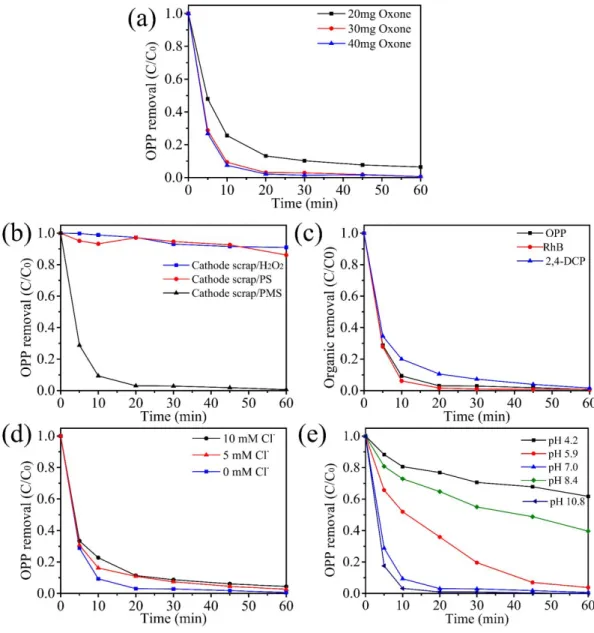
the increase of the PMS concentration (0.20-0.40 g/L). However, only slight increase could be observed with continued increasing the PMS concentration to 0.4 g/L, which was ascribed to the excess PMS could lead to the competitive reactions that may adversely affect the generation of reactive species (SO4−• + SO4−• → SO82-, •OH +
SO4−• → HSO5−). 3
Several oxidants, such as PMS, PS and H2O2, are usually used as oxidants in
Fenton-like catalytic reaction. As shown in Figure S8b, the effect of different oxidants on the catalytic oxidation of OPP was also carried out. The results shown that the order of activity was PMS > PS ≥ H2O2, which indicated that the unsymmetrical character of
PMS made it easy to be activated. This result is similar to the previously reported literature4.
The performance of the cathode scrap/PMS coupled process was evaluated by degrading several other model pollutants under the similar conditions. As shown in Figure S8c, the results indicated that the oxidative degradation of various organic using cathode scrap in PMS activation. The degradation rates involved in the removal of three organics differed from each other, which may be attributed to the difference in molecular structures. The removal efficiency of this process on multiple organic pollutants indicated that the excellent catalytic performance of the recycled cathode scrap toward the oxidation of organic pollutants.
As shown in Figure S8d, the impact of chloride ions was investigated in the cathode scrap/PMS system. The result suggested that the reaction rate was slightly decreased
the degradation by competitive reactions with SO4−• and •OH to produce chloride
radicals (Cl•), which possess a lower redox potential.5 Moreover, the Cl¯ also compete
with the organics to donate an electron to form Cl• via the nonradical process.6-7
However, the Cl• with a relative low redox capability result in a decreased performance for organic degradation.
As shown in Figure S8e, the impact of pH was investigated in the cathode scrap/PMS system. Previous studies have shown that the solution pH influenced the catalytic behaviors of heterogeneous catalysts from different aspects, for example, the ionization of PMS and pollutant molecules, the surface charges of the catalysts, the transformation from SO4−• to •OH and their oxidation potentials.8 Under acidic environment, the
cathode scrap/PMS system exhibits relatively weak OPP degradation, because the strong H-bonding between H+ and PMS will disturb the interaction between the cathode scrap and PMS, finally inhibiting the generation of SO4−•.9 Simultaneously, the
acidic/basic condition of the reaction solutions can impact the catalytic performance of metal catalysts as the strong acidic condition can destroy the metal crystalline structure.5 The surface charge of the cathode scrap is changed from positive to negative
further promoting the catalytic reaction.
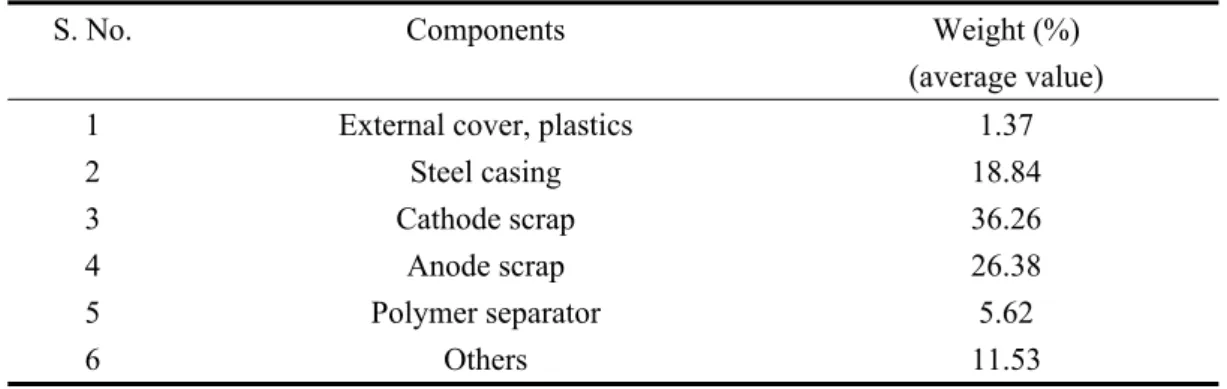
Table S1. Average composition of spent 18650 type LIBs
S. No. Components Weight (%)
(average value)
1 External cover, plastics 1.37
2 Steel casing 18.84
3 Cathode scrap 36.26
4 Anode scrap 26.38
5 Polymer separator 5.62
6 Others 11.53
Table S2. The metal contents of the cathode active material
Content Li Mn Al
Figure S1. Recycling process of spent lithium-ion battery
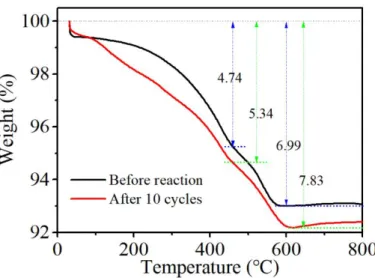
Figure S2. The TG curves of the spent active materials from the coating of the cathode scrap before and after 10 cycles
Figure S3. (a) The comparative experiment, (b) The catalytic activity of cathode scrap with different active component. The reaction conditions are based on: [OPP] =
20 mg/L, catalyst loading = 1 piece, Oxone loading = 0.30 g/L, and T = 25 °C
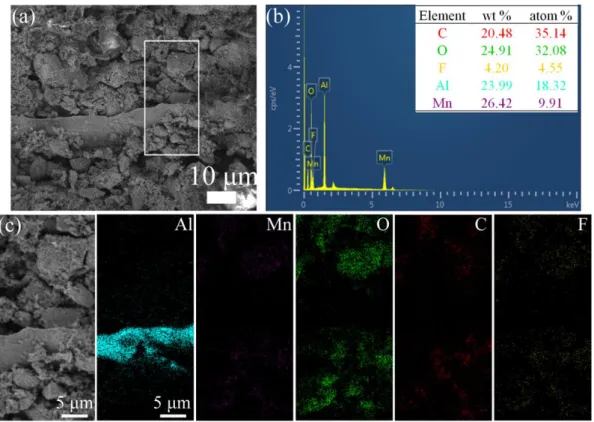
Figure S4. SEM-EDS analysis with mapping of elements in LiMn2O4 cathode scrap.
(a) SEM image, (b) EDS analysis of selected area, (c) SEM image of selected area and corresponding element Mapping images
Figure S5. The TEM images. (a) and (b) pristine LiMn2O4, (c) and (d) spent LiMn2O4
Figure S6. The photos of the cathode scrap bending experiment. (a) slight curvature, (b) obvious curvature, (c) severe curvature
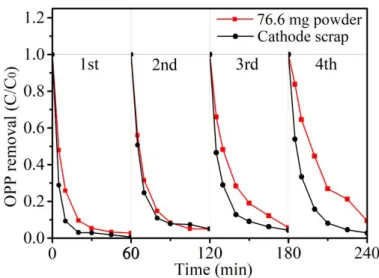
Figure S7. Reusability and stability of LiMn2O4-containing cathode scrap after 4
cycles. OPP = 20 mg/L, catalyst loading = 1 piece, the powder catalyst = 76.6mg, Oxone loading = 0.30 g/L, and T = 25 °C
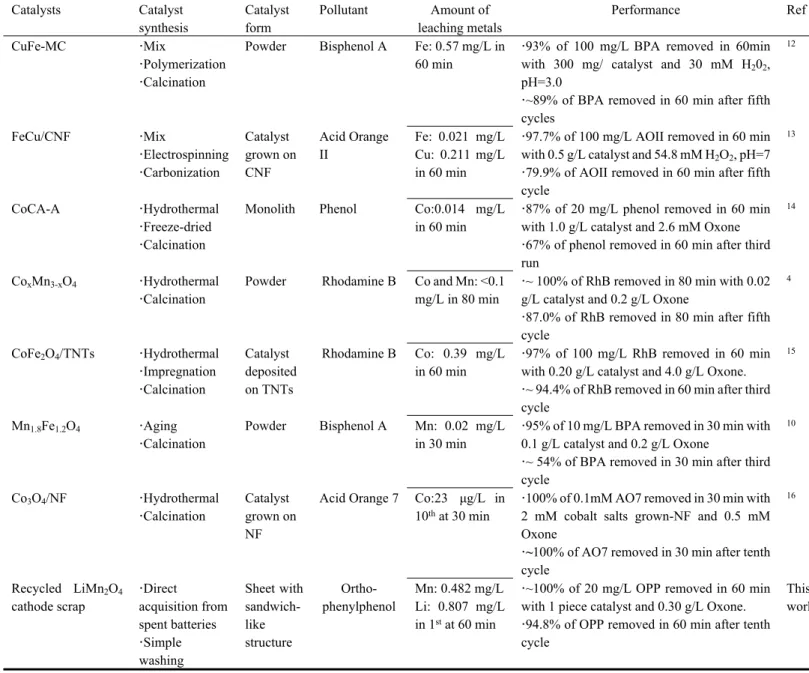
Table S3. Different types of catalysts for oxidants activation and organic degradation Catalysts Catalyst synthesis Catalyst form Pollutant Amount of leaching metals Performance Ref CuFe-MC ·Mix ·Polymerization ·Calcination
Powder Bisphenol A Fe: 0.57 mg/L in
60 min
·93% of 100 mg/LBPA removed in 60min with 300 mg/ catalyst and 30 mM H202,
pH=3.0
·~89% of BPA removed in 60 min after fifth cycles 12 FeCu/CNF ·Mix ·Electrospinning ·Carbonization Catalyst grown on CNF Acid Orange II Fe: 0.021 mg/L Cu:0.211 mg/L in 60 min
·97.7% of 100 mg/L AOII removed in 60 min with 0.5 g/L catalyst and 54.8 mM H2O2, pH=7
·79.9% of AOII removed in 60 min after fifth cycle
13
CoCA-A ·Hydrothermal
·Freeze-dried
·Calcination
Monolith Phenol Co:0.014 mg/L
in 60 min
·87% of 20 mg/L phenol removed in 60 min with 1.0 g/L catalyst and 2.6 mM Oxone
·67% of phenol removed in 60 min after third run
14
CoxMn3-xO4 ·Hydrothermal
·Calcination
Powder Rhodamine B Co and Mn: <0.1
mg/L in 80 min
·~ 100% of RhB removed in 80 min with 0.02 g/L catalyst and 0.2 g/L Oxone
·87.0% of RhB removed in 80 min after fifth cycle 4 CoFe2O4/TNTs ·Hydrothermal ·Impregnation ·Calcination Catalyst deposited on TNTs Rhodamine B Co: 0.39 mg/L in 60 min ·97% of 100 mg/L RhB removed in 60 min with 0.20 g/L catalyst and 4.0 g/L Oxone.
·~ 94.4% of RhB removed in 60 min after third cycle 15 Mn1.8Fe1.2O4 ·Aging ·Calcination Powder Bisphenol A Mn: 0.02 mg/L in 30 min
·95% of 10 mg/L BPA removed in 30 min with 0.1 g/L catalyst and 0.2 g/L Oxone
·~ 54% of BPA removed in 30 min after third cycle 10 Co3O4/NF ·Hydrothermal ·Calcination Catalyst grown on NF
Acid Orange 7 Co:23 μg/L in 10th at 30 min
·100% of 0.1mM AO7 removed in 30 min with 2 mM cobalt salts grown-NF and 0.5 mM Oxone
·~100% of AO7 removed in 30 min after tenth cycle 16 Recycled LiMn2O4 cathode scrap ·Direct acquisition from spent batteries ·Simple washing Sheet with sandwich-like structure Ortho-phenylphenol Mn: 0.482 mg/L Li: 0.807 mg/L in 1st at 60 min
·~100% of 20 mg/L OPP removed in 60 min with 1 piece catalyst and 0.30 g/L Oxone.
·94.8% of OPP removed in 60 min after tenth cycle
This work
Figure S8. (a) The degradation curve of OPP under different oxidant concentration, (b) different oxidants, (c) different organics, (d) Influent of Cl¯ on the OPP
degradation, (e) Influent of pH on OPP degradation. The reaction conditions are based on: [OPP]=[PS]=[H2O2] = 20 mg/L, organic concentration= 20mg/L, catalyst loading
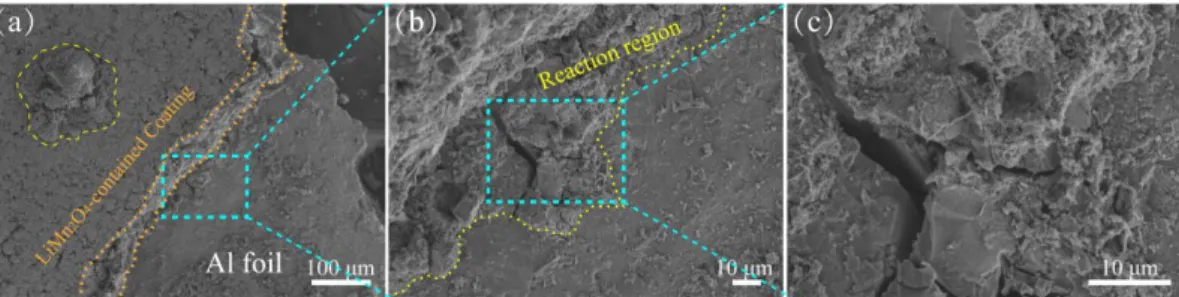
Figure S9. The surface structure of the LiMn2O4-containing cathode scrap with bare
Figure S10. The SEM images and EDS analysis of the LiMn2O4-containing cathode
scrap after 10 cycles. (a-d) the inside structure of the cathode scrap, (e-f) the edge structure of the cathode scrap
Figure S11. The surface structure of the LiMn2O4-containing cathode scrap after 10
cycles. (a-c) the surface morphologies of the cathode scrap, (d) and (f) the EDS analysis, (e) the surface morphology of the cathode scrap with spot
Figure S13. XPS full scan spectra of the cathode scrap before and after 10 cycles
Figure S15. The proposed green process for the recycling of cathode scrap from the spent LiMn2O4 battery
Simplified assessment of economic and energy consumption
The proposed simple washing-recycling process on the cathode scrap from spent LiMn2O4 batteries as catalysts involves several steps, including NaCl-discharging,
dismantling, washing, and catalytic oxidation. We assume that one ton of spent LiMn2O4 batteries were treated by our green recycling process in china. The working
day is 300 days per year (average 25 days per month), and the average wage of per labor is $975($39 per day, 1$=6.367 CNY) that based on the working time is 8 hours every day. Meanwhile, the industrial electricity charge and water price are $0.20/kWh (maximum) and $0.40/t (maximum) respectively.
Considering the residuals rate and interest rate, depreciation cost of equipment is calculated as Eq. (S1) while the cost of equipment maintenance cost is calculated as Eq. (S2)
(S1) 𝐶𝐷=𝐶0(1― 𝑖)
𝑖 1 + (1 +𝑖)―𝑛
CD−−− Depreciation cost of equipment
CO−−− Acquisition cost of equipment
r−−− Residuals rate of equipment,4%
i−−− Interest rate,10%
n−−− Service life, year
(S2) MC= CO× 0.05
MC−−− Maintenance cost of equipment
(S3) CP= P × t × pe
CP−−− Cost of electricity
P−−− Equipment power, kW
t−−− Working time of equipment, h
Pe−−− Electricity price for industrial uses, $0.20/kWh
(S4) CW=𝑉×𝑃𝑊
CW−−− Cost of water
V−−− Water consumption, ton/day
Pw−−− Water price for industrial uses,$0.4/t
(S5) CL= m × ps
CL−−− Cost of labor
m−−− Number of workers
PS−−− Wage of per labor, $39/day
Process I: NaCl-discharging
Requirement: discharging in 5 wt% NaCl solution for 12 h, batteries/solution = 1:10 w/w (assume that the discharging is done at the night before); about 0.5 ton of NaCl and 10 ton of water were needed in the discharging process; a set of automatic conveyor
(S6) (S7) MC= CO× 0.05 =
(
$2000 × 1 300)
× 0.05 = $0.33 (S8) CP= P × t × pe= 7.5kW × 1h × $0.20kW/h = $1.50 (S9) 𝐶𝑁𝑎𝐶𝑙+𝐶𝑊=0.5𝑡×$58𝑡+10𝑡× $0.91 = $38.91 (S10) CL= m × ps= 1 × $39 = $39 Total costs: $81.43However, the NaCl solution can be used repeatedly to reduce the consumption. Therefore, where their costs are not included in the total cost of discharging in the view of single recycling process.
The final total costs is calculated as $42.52.
Process II: Dismantling
Dismantling: based on the proposed recycling process, there is a need for obtaining the integral cathode scrap from spent LiMn2O4 batteries as possible as catalysts. But there
is no commercial automatic dismantling equipment on the market, a small automated dismantling device was designed for spent LiFePO4 batteries was used as a reference device (P=2kW, maximum capacity=10kg/h, work time=100h).17
(S11) CP= P × t × pe= 2kW × 100h × $0.20kW/h = $40
Compared with mechanical dismantling, the cost of manual dismantling is also calculated.
(manual dismantling maximum capacity=5kg/h, work time=200h, number of workers=25)
After this process, about 362.60 kg spent LiMn2O4 cathode scraps can be obtained in
this study.
Process III: Washing and filtering
Washing and filtering: washing with the ethanol and water,batteries/solution = 3:1 w/w and 2:1 w/w; about 0.3 ton of ethanol and 1.5 ton of water were needed in the washing process; A set of frame filter (P=10Kw, per price=$8350, maximum capacity = 30 m2/per, service life = 5 years) is needed to work for 2 h.
CD= CO× (1―r) × i 1―(1 + i)―n=
(
$8350 × 1 300)
× (1―4%) × 10% 1―(1 + 10%)―5 (S13) = $7.05 (S14) MC= CO× 0.05 =(
$8350 × 1 300)
× 0.05 = $1.42 (S15) CP= P × t × pe= 10kW × 2h × $0.20kW/h = $4.00 (S16) 𝐶𝐸𝑡ℎ𝑎𝑛𝑜𝑙+𝐶𝑊=0.3𝑡× $990 +1.5𝑡× $0.91 = $298.37 (S17) CL= m × ps= 1 × $39 = $39 Total costs: $349.84Note that the ethanol and water can be used repeatedly to reduce the consumption. In the process of catalyst synthesis, the ethanol and water were used unavoidably to wash the residue within the catalysts. Therefore, where their costs are not included in the total
amounts of water that don’t affect the catalytic performance.
But, note that the obtained cathode scarp as catalysts can be used repeatedly, where the total cost of recycling process of spent batteries should be shared from the number of uses of catalysts. In addition, the recovery of scrap metals can be obtained certain economic benefits. In summary, when dealing with 1 ton spent LiMn2O4 batteries, the
total cost in this study are $133.99.
References
(1) He, L.-P.; Sun, S.-Y.; Mu, Y.-Y.; Song, X.-F.; Yu, J.-G. Recovery of Lithium, Nickel, Cobalt, and Manganese from Spent Lithium-Ion Batteries Using l-Tartaric Acid as a Leachant. ACS Sustainable Chem. Eng. 2016, 5 (1), 714-721, DOI: 10.1021/acssuschemeng.6b02056.
(2) Qin, X.; Fang, S.; Zhao, L.; Shi, P.; Fan, J.; Min, Y.; Xu, Q.; Yao, W. Cobalt super-microparticles anchored on nitrogen-doped graphene for aniline oxidation based on sulfate radicals. Sci. Total. Environ. 2017, 601-602, 99-108, DOI: 10.1016/j.scitotenv.2017.05.198.
(3) Li, X.; Wang, Z.; Zhang, B.; Rykov, A. I.; Ahmed, M. A.; Wang, J. FexCo3−xO4
nanocages derived from nanoscale metal–organic frameworks for removal of bisphenol A by activation of peroxymonosulfate. Appl. Catal. B Environ. 2016, 181, 788-799, DOI: 10.1016/j.apcatb.2015.08.050.
(4) Yao, Y.; Cai, Y.; Wu, G.; Wei, F.; Li, X.; Chen, H.; Wang, S. Sulfate radicals induced from peroxymonosulfate by cobalt manganese oxides (Co(x)Mn(3-x)O4) for
Fenton-Like reaction in water. J. Hazard. Mater. 2015, 296, 128-37, DOI: 10.1016/j.jhazmat.2015.04.014.
649-658, DOI: 10.1016/j.carbon.2017.01.058.
(6) Yang, Y.; Pignatello, J. J.; Ma, J.; Mitch, W. A. Comparison of Halide Impacts on the Efficiency of Contaminant Degradation by Sulfate and Hydroxyl Radical-Based Advanced Oxidation Processes (AOPs). Environ. Sci. Technol. 2014,48 (4), 2344-2351, DOI: 10.1021/es404118q.
(7) Yang, Y.; Jiang, J.; Lu, X.; Ma, J.; Liu, Y. Production of Sulfate Radical and Hydroxyl Radical by Reaction of Ozone with Peroxymonosulfate: A Novel Advanced Oxidation Process. Environ. Sci. Technol. 2015, 49 (12), 7330-7339, DOI: 10.1021/es506362e.
(8) Fang, G.-D.; Dionysiou, D. D.; Wang, Y.; Al-Abed, S. R.; Zhou, D.-M. Sulfate radical-based degradation of polychlorinated biphenyls: Effects of chloride ion and reaction kinetics. J. Hazard. Mater. 2012, 227-228, 394-401, DOI: 10.1016/j.jhazmat.2012.05.074.
(9) Guan, Y. H.; Ma, J.; Li, X. C.; Fang, J. Y.; Chen, L. W. Influence of pH on the formation of sulfate and hydroxyl radicals in the UV/peroxymonosulfate system.
Environ. Sci. Technol. 2011,45 (21), 9308-14, DOI: 10.1021/es2017363.
(10) Huang, G.-X.; Wang, C.-Y.; Yang, C.-W.; Guo, P.-C.; Yu, H.-Q. Degradation of Bisphenol A by Peroxymonosulfate Catalytically Activated with Mn1.8Fe1.2O4
Nanospheres: Synergism between Mn and Fe. Environ. Sci. Technol. 2017, 51 (21), 12611-12618, DOI: 10.1021/acs.est.7b03007.
(11) Guan, Y. H.; Ma, J.; Ren, Y. M.; Liu, Y. L.; Xiao, J. Y.; Lin, L. Q.; Zhang, C. Efficient degradation of atrazine by magnetic porous copper ferrite catalyzed peroxymonosulfate oxidation via the formation of hydroxyl and sulfate radicals. Water
as an efficient Fenton catalyst. Appl. Catal. B: Environ. 2017, 207, 316-325, DOI: 10.1016/j.apcatb.2017.02.032.
(14) Hu, P.; Long, M.; Bai, X.; Wang, C.; Cai, C.; Fu, J.; Zhou, B.; Zhou, Y. Monolithic cobalt-doped carbon aerogel for efficient catalytic activation of peroxymonosulfate in water. J. Hazard. Mater. 2017,332, 195-204, DOI: 10.1016/j.jhazmat.2017.03.010. (15) Du, Y.; Ma, W.; Liu, P.; Zou, B.; Ma, J. Magnetic CoFe2O4 nanoparticles
supported on titanate nanotubes (CoFe2O4/TNTs) as a novel heterogeneous catalyst for
peroxymonosulfate activation and degradation of organic pollutants. J. Hazard. Mater.
2016,308, 58-66, DOI: 10.1016/j.jhazmat.2016.01.035.
(16) Yuan, R.; Hu, L.; Yu, P.; Wang, H.; Wang, Z.; Fang, J. Nanostructured Co3O4
grown on nickel foam: An efficient and readily recyclable 3D catalyst for heterogeneous peroxymonosulfate activation. Chemosphere 2018,198, 204-215, DOI: 10.1016/j.chemosphere.2018.01.135.
(17) Yang, Y.; Meng, X.; Cao, H.; Lin, X.; Liu, C.; Sun, Y.; Zhang, Y.; Sun, Z. Selective recovery of lithium from spent lithium iron phosphate batteries: a sustainable process. Green Chem. 2018,20 (13), 3121-3133, DOI: 10.1039/C7GC03376A.