E
XECUTIVE
C
OACHING
:
P
ERSPECTIVES
OF
E
FFECTIVENESS FROM
E
XECUTIVES
AND
C
OACHES
Graham Hill
Master of Education (USQ)Bachelor of Engineering (1 Honours) (QUT)
Submitted in partial fulfilment of the requirements for the degree of Master of Business (Research)
Faculty of Business
Queensland University of Technology
Executive Coaching: Perspectives of Effectiveness from Executives and Coaches i
Keywords
Abstract
Over the past two decades there has been a remarkable expansion in the use of executive coaching as an executive development technique. The increasing prominence of executive coaching has been attributed to the emergence of new organisational cultures and the subtler competencies needed by executives in these faster moving organisations.
The widespread popularity of executive coaching has been based largely on anecdotal feedback regarding its effectiveness. The small body of empirical research has been growing but conclusive outcomes are rare. The prominent question for those with the business imperative to implement executive coaching has been what are the ingredients of the process that engender an effective outcome?
This investigation has focused on the factors of executive coaching that contribute to effectiveness. A qualitative methodology facilitated an in-depth study of the experiences of the participants of executive coaching with the perceptions of both executives and coaches being sought. Semi-structured interviews and a focus group provided rich, thick descriptions and together with a process of inductive analysis produced findings that confidently identify the key factors that contribute to coaching effectiveness. Six major themes were identified, each comprising a collection of meanings. These themes have been labelled Executive Engagement, Preliminary Assessment and Feedback, Coaching Process, Coach‟s Contribution, Trusting Relationship and Support from the Organisation. One theme, Coaching Process, comprises three significant sub-themes, namely, Encouragement and Emotional Support, Challenge and Reflection and Enhancing Executive Performance.
The findings of this study add value to the field by identifying factors contributing to coaching effectiveness, and providing for the coaching practitioner a basis for enhancing their practice of executive coaching to better meet the needs of executives and their organisations.
Executive Coaching: Perspectives of Effectiveness from Executives and Coaches iii Table of Contents Keywords ...i Abstract ... ii List of Figures ... vi List of Tables... vi
Statement of Original Authorship ... viii
Acknowledgements ... ix
CHAPTER 1 INTRODUCTION AND OVERVIEW ... 1
Research Questions ... 4
Significance ... 5
Methodology ... 5
Definitions ... 6
Delimitations and Assumptions ... 7
Outline ... 7
CHAPTER 2 LITERATURE REVIEW ... 9
Introduction ... 9
Definition of executive coaching ... 10
The practice of executive coaching ... 13
Executive coaches ... 14
Executive Coaching Research ... 15
Executive coaching and related disciplines ... 15
Executive coaching in literature ... 18
The challenges for executive coaching research ... 19
Focus of the current study ... 20
Review of Published Studies Based on Empirical Evidence ... 22
Outcome studies ... 23
Literature reviews... 32
Longitudinal studies ... 34
Studies of coaches‟ practices ... 36
Review of Selected Unpublished Theses ... 37
Compilation of Findings ... 40
Summary ... 41
Purpose of Current Study ... 42
CHAPTER 3 METHOD ... 43
Qualitative Research Design ... 43
Context ... 43
Value of qualitative approach ... 44
Industry Partner ... 46
AIM coaching model... 47
Ethical considerations ... 47
Method of Data Collection ... 48
Selection of coaches ... 48
Procedure ... 48
Selection of executives ... 50
Data collection – coaches ... 51
Analysis of Data ... 53
Data reduction ... 53
Data display ... 56
Conclusion drawing and verification ... 56
Summary ... 58
CHAPTER 4 RESULTS AND DISCUSSION ... 59
Overview ... 59
Results ... 59
Context ... 65
Discussion ... 66
1 Executive Engagement ... 66
Summary of 1 Executive Engagement ... 71
2 Preliminary Assessment and Feedback ... 71
Summary of 2 Preliminary Assessment and Feedback ... 74
3 Coaching Process ... 75
Summary of 3 Coaching Process ... 80
Discussion of sub-themes 3a to 3c ... 80
3a Encouragement and Emotional Support ... 80
Summary of 3a Encouragement and Emotional Support... 84
3b Challenge and Reflection ... 84
Summary of 3b Challenge and Reflection ... 89
3c Enhancing Executive Performance ... 89
Summary of 3c Enhancing Executive Performance ... 92
4 Coach‟s Contribution ... 93
Summary of 4 Coach‟s Contribution ... 96
5 Trusting Relationship ... 96
Summary of 5 Trusting Relationship ... 103
6 Support from the Organisation ... 103
Summary of 6 Support from the Organisation ... 106
Chapter Summary ... 106
CHAPTER 5 CONCLUSION ... 109
Key Findings ... 112
1 Executive Engagement ... 112
2 Preliminary Assessment and Feedback ... 113
3 Coaching Process ... 114
3a Encouragement and Emotional Support ... 115
3b Challenge and Reflection ... 117
3c Enhancing Executive Performance ... 118
4 Coach‟s Contribution ... 119
5 Trusting Relationship ... 121
6 Support from the Organisation ... 122
Summary of Findings ... 123
Practical Application ... 124
1 Executive Engagement ... 125
2 Preliminary Assessment and Feedback ... 125
3 Coaching Process ... 126
3a Encouragement and Emotional Support ... 126
3b Challenge and Reflection ... 127
3c Enhancing Executive Performance ... 128
4 Coach‟s Contribution ... 129
Executive Coaching: Perspectives of Effectiveness from Executives and Coaches v
6 Support from the Organisation ... 130
Limitations ... 130
Future Research ... 132
Conclusion ... 134
REFERENCES ... 135
APPENDICES ... 144
Appendix A Summary of Published Empirical Articles ... 144
Appendix B Factors Contributing to Effective Coaching ... 148
Appendix C Memorandum of Agreement with Partner Organisation ... 154
Appendix D AIM‟s Coaching Process ... 157
Appendix E National Ethics Application Form – Pages 1 to 4 ... 160
Appendix F Ethics Approval ... 164
Appendix G Communication with Coaches ... 165
Appendix H Informed Consent for Coaches ... 176
Appendix I Sampling Matrix Showing Dimensions of Variation of Executive Sample ... 179
Appendix J Summary of Coaches‟ Responses to Preliminary Survey Regarding Factors Contributing to Coaching Effectiveness ... 182
Appendix K Data Gathering Format for Semi-structured Interviews with Executives ... 185
Appendix L Communication with Executives ... 191
Appendix M Informed Consent for Executives ... 196
Appendix N Codes used in Data Analysis... 199
Appendix O What are the Main Themes Concerning the Effectiveness of Coaching that are Evident in Relevant Literature? ... 209
Appendix P Major Themes, Pattern Codes, and Code Frequency ... 214
List of Figures
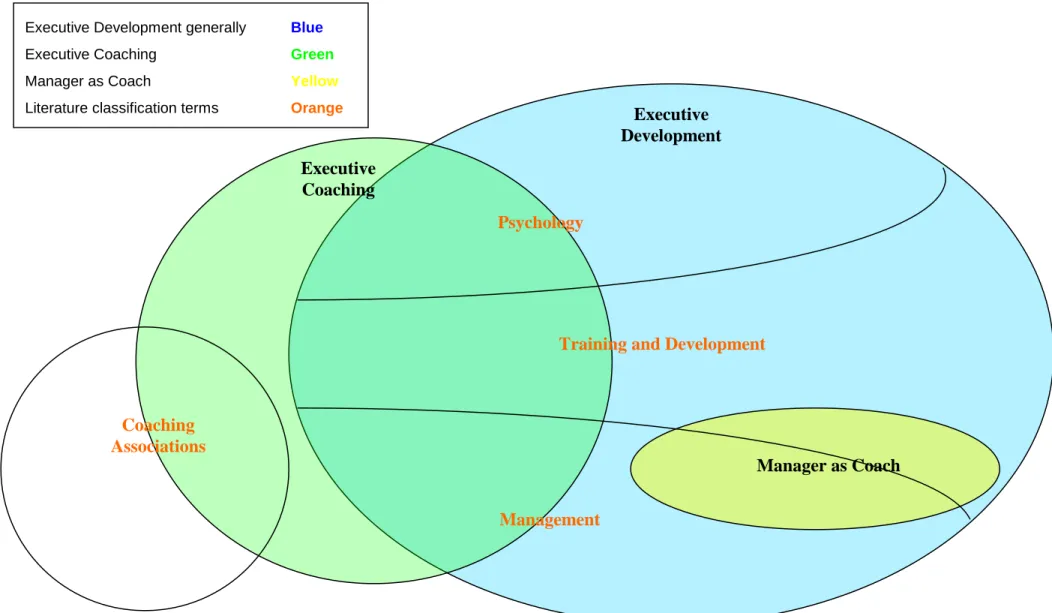
Figure 2.1. Map of relevant fields of literature within executive development... 17
List of Tables Table 2.1 Discipline Based Categories of Executive Coaching Literature ... 16
Table 2.2 Factors Contributing to the Effectiveness of Executive Coaching: Summary of Four Outcome Studies ... 28
Table 2.3 Factors Contributing to the Effectiveness of Executive Coaching: Summary of Thirteen Outcome Studies (* indicates mentioned as significant from coaches‟ perspective) ... 32
Table 2.4 Factors Contributing to the Effectiveness of Executive Coaching: Summary of Nine Literature Reviews and Coaches‟ Studies (* indicates mentioned as significant from coaches‟ perspective) ... 34
Table 2.5 Some Variable Aspects of Executive Coaching ... 35
Table 2.6 Factors Contributing to the Effectiveness of Executive Coaching: Summary of Selected Unpublished Theses ... 39
Table 2.7 Factors Contributing to the Effectiveness of Executive Coaching: Compilation of Findings of Current Literature Review ... 40
Table 4.1 Major Themes emerging from the current study ... 60
Table 4.2 Factors Contributing to Coaching Effectivenessa ... 63
Table 4.3 Executive Perceptions of How Coaches Contributed to Trust ... 99
Table 4.4 Factors Contributing to the Effectiveness of Executive Coaching: Comparison of Findings of Literature Review and Current Study... 108
Table A1 Summary of Published Studies Based on Empirical Evidence ... 144
Table A2 Summary of Published Empirical Studies Based on Literature Review ... 146
Table A3 Summary of Published Empirical Studies by Coaching Association or by Practitioner ... 147
Table B1 Factors Contributing to Effective Coaching: Summary from Published Studies Based on Empirical Evidence, Part 1 ... 149
Table B2 Factors Contributing to Effective Coaching: Summary from Published Studies Based on Empirical Evidence, Part 2 ... 151
Table I1 Sampling Matrix Showing Dimensions of Variation of Executive Sample – Part 1 ... 180
Table I2 Sampling Matrix Showing Dimensions of Variation of Executive Sample – Part 2 ... 181
Table O1 Published Articles 1 ... 209
Table O2 Published Articles 2 ... 210
Table O3 Theses ... 211
Table O4 Theses ... 212
Table O5 Theses ... 213
Executive Coaching: Perspectives of Effectiveness from Executives and Coaches vii
List of Abbreviations
AIM Australian Institute of Management
HR Human Resources
ICF International Coach Federation
ROI Return on investment
Statement of Original Authorship
The work contained in this thesis has not been previously submitted to meet requirements for an award at this or any other higher education institution. To the best of my knowledge and belief, the thesis contains no material previously published or written by another person except where due reference is made.
Signature: _________________________
Executive Coaching: Perspectives of Effectiveness from Executives and Coaches ix
Acknowledgements
There are a number of people who have generously contributed their time, wisdom and support to enable this project to reach completion. To these people, I express my profound gratitude.
My principal supervisor, Dr Amanda Gudmundsson, for your astute academic guidance, and careful attention to the finer details, but mostly for the enthusiastic support and encouragement which always made the task seem achievable.
My initial supervisor, Dr David Robinson, for taking on the project, seeing the possibilities, and continually stretching my thinking and actions.
Dr Fran Finn, for generously sharing your expertise in coaching research, and for so willingly assisting with the supervisory role.
Colin Noyes, my coach-mentor, who launched me on the journey of discovery called executive coaching which has opened wider horizons than I ever imagined, and also for continuing to ask the hard questions as the journey continues.
Peter Evans, who first sowed the idea of undertaking this research degree and whose professional standard has continued to inspire its completion.
Gary Hourigan, who willingly immersed himself in the analysis to assist with the code checking – your time and expertise were invaluable.
Australian Institute of Management for participating as a partner in the project and trusting me with access to their valued professional clients.
The participating coaches and executives who will remain anonymous – your willingness to freely give of your time and share your inner world has made this project possible.
My wife Helen and my family, who have consistently encouraged, supported and believed in me even when I faltered, and made selfless adjustments to enable me to focus on this project.
Chapter 1: Introduction and Overview 1
Chapter 1
Introduction and Overview
The use of executive coaching as a developmental intervention for managers has increased dramatically in the last two decades (Feldman & Lankau, 2005; Joo, 2005). The widely reported success of executive coaching and the pressing need for competent executives have prompted many corporations to adopt this strategy to improve executive performance (Paige, 2002). At present the widespread popularity of executive coaching is based largely on anecdotal feedback from executives and coaches regarding its effectiveness. There is a small but growing body of empirical research into this area, however, conclusive outcomes remain rare (Baron & Morin, 2009a; Finn, Mason, & Bradley, 2007) and consistent agreement on the nature of those outcomes is lacking (MacKie, 2007).
Executive coaching is typically viewed as a short to medium-term relationship between an executive and a consultant with the purpose of improving the executive‟s work effectiveness (Feldman & Lankau, 2005). It provides practical, confidential one-on-one development for executives within a trusting relationship, where the outcomes are geared to the strategic objectives of the organisation (Feldman & Lankau, 2005; Jones, Rafferty, & Griffin, 2006; Passmore & Gibbes, 2007). The executive coaching engagement may be designed to improve executive performance or behaviour, to enhance career progression or prevent derailment, and to work through organisational issues or change initiatives (Hall, Otazo, & Hollenbeck, 1999).
The widespread interest in executive coaching and its increasing prominence are attributed in the literature to the rapidly changing nature of business since the 1980s (Sherman & Freas, 2004). The emergence of new organisational cultures and structures has placed increasing expectations on executives to expand their knowledge base and deal effectively with the many changes that are happening around them. Organisations have become increasingly willing to provide a coach to assist executives adjust to the growing expectations and balance the many competing demands their position may entail (Paige, 2002). Some of the factors driving these
changes have been identified as: greater executive autonomy, new and subtler competencies needed in faster moving organisations (Sherman & Freas, 2004), a shift from command and control management to consultation and empowerment (Wales, 2003), adaptability to rapid change (Kets de Vries, 2005), and a perceived lack of opportunities for executive growth (Kiel, Rimmer, Williams, & Dolye, 1996).
The available literature indicates that the growth in executive coaching is a global phenomenon within western cultures, and this is evident in Australia (Blackman, 2006; Dagley, 2006; Finn, et al., 2007; Jones, et al., 2006). Many of the world‟s notable corporations and government organisations utilise executive coaching, and the interest in executive coaching continues to escalate (Finn, 2007). With potentially large financial returns to successful coaches, the field has attracted many practitioners. Estimates of the number of professional coaches in the United States of America (for which figures have been published) have soared from more than 10 000 in the mid-nineties (Astorino, 2002) to in excess of 50 000 a decade later (Joo, 2005).
Coaching is an unregulated field – anyone can label themselves a coach, even a coach of executives (Feldman & Lankau, 2005). The only real entry criterion is the practitioner‟s ability to solicit clients (Brotman, Liberi, & Wasylyshyn, 1998; Garman, Whiston, & Zlatoper, 2000). Coaching is not established as a recognised profession in western nations, and moves toward recognition and regulation face significant challenges (Bennett, 2006). There are currently no accepted identifiable and distinct skills for coaches, no consistently defined theory on which coaches base their practice, and no established community of practitioners (MacKie, 2007). Of the various professional bodies seeking to represent coaches, the largest of these – the International Coach Federation (ICF) – can claim membership of less than half the estimated coaches in the world (Bennett, 2006). The absence of regulation and consistency associated with a recognised profession has prompted professionals in related fields to voice concerns about quality and effectiveness in the conduct of executive coaching (Kampa-Kokesch & Anderson, 2001).
There has been increasing attention given to executive coaching in the popular and professional business press (Kampa-Kokesch & Anderson, 2001) and in the majority of cases it is viewed positively. From the business practice point of view at
Chapter 1: Introduction and Overview 3
least, there is a rapidly growing body of personal testimonials and case studies that give clear indications that coaching has a positive impact both on people and on organisational results (Dagley, 2006).
Academic literature has also explored the practice, although the majority of published articles present executive coaching from the practitioner perspective (Feldman & Lankau, 2005; Thach, 2002) citing vignettes, case studies and own experiences as sources of evidence (Dawdy, 2004; Smither, London, Fluatt, Vargas, & Kucine, 2003). These studies have contributed to the field by differentiating executive coaching from other styles of developmental intervention, defining what takes place in coaching, and identifying the expected outcomes of effective coaching (Feldman & Lankau, 2005).
There are a limited number of published articles which empirically study the practice of executive coaching (these are reviewed extensively in Chapter 2). These various studies have explored aspects of coaching outcomes and benefits, the impact of coaching on executive performance, coaching effectiveness and the experiences of the various participants in the process. There is also a growing body of postgraduate research in this area, much of which remains unpublished to date. Researchers observe that a number of the unpublished studies suffer from design limitations (small sample sizes, no control groups, no random allocation of participants) and/or failure to adequately define the coaching intervention that was employed in the study (MacKie, 2007; Passmore & Gibbes, 2007). Nevertheless, there remains a lack of research which provides systematic data on the impact of coaching on executive performance, what methodology of executive coaching works best, the active ingredients of the process that engender an effective outcome, and under which conditions executive coaching will translate into greater organisational effectiveness (Baron & Morin, 2009a; Feldman & Lankau, 2005; Finn, 2007; Linley, 2006).
The current study aims to address one of those empirical gaps, one which is of particular interest to practitioners in this field. Given the existing anecdotal evidence supporting claims of executive coaching efficacy, practitioners and researchers are interested in empirically identifying the factors that contribute to the effective outcome of a coaching program (Dagley, 2006; Feldman & Lankau, 2005; MacKie, 2007). Some practitioners argue that there is no professional consensus as to what
constitutes effective coaching (De Meuse, Dai, & Lee, 2009). It is the purpose of this research to explore the factors of the executive coaching process that contribute to its effectiveness. This has been the subject of previous research of various designs, often presented from the viewpoint of either the coaching practitioner or, to a lesser extent, the executive. This Australian study will build upon the existing knowledge by investigating the factors contributing to coaching effectiveness from the viewpoints of both the executives and coaches, with data collected from instances of executive coaching in a range of organisations where the outcome has been defined as effective by both the executive and the coach.
Research Questions
This study aims to acquire a deeper understanding of the factors contributing to the effective outcome of executive coaching. In the current unregulated field of executive coaching, organisations engaging external coaches for their executives are faced with the challenges of determining the key characteristics of the coaching process that will achieve the desired development in the executives and outcomes in the organisation, and the essential competencies required for an effective coach in the specific organisational context.
This research program will investigate executives‟ experiences of coaching within a range of organisations which have implemented similar coaching interventions. It will investigate how executives experience coaching, and which experiences, in their opinion, contribute to effective behavioural outcomes. It will also investigate the coaches‟ perspectives of the coaching interventions for these executives, that is, what the coaches perceived were the key aspects of their coaching practice that contributed to effectiveness.
This investigation will explore the answers to two questions:
1. What are executives‟ perceptions of the factors contributing to the effectiveness of executive coaching?
2. What are coaches‟ perceptions of the factors contributing to the effectiveness of executive coaching?
Chapter 1: Introduction and Overview 5
Significance
This study will add value to the field of executive coaching by identifying factors contributing to its effectiveness for the coach and the executive. With this knowledge, executive coaches may enhance their practice by addressing factors perceived to be more effective for an organisational context; and organisations may be better able to plan and engage in coaching interventions that are effective in meeting their needs and the needs of their executives.
Methodology
Since the theoretical concepts of executive coaching are not currently well defined (Baron & Morin, 2009a; Feldman & Lankau, 2005; Kampa-Kokesch & Anderson, 2001), this study has adopted a constructivist qualitative design. This research seeks to discover the subjective experience of coaching participants, their reality, particularly with reference to coaching effectiveness (Patton, 2002).
The design of the study requires the gathering of rich and complex data from both coaches and executives. Selection of an industry partner who provides coaching to executives in South East Queensland provided access to a population of both coaches and executives whom they had recently coached. Four experienced coaches were available to participate in the study, all of whom use the coaching approach approved by the industry partner. The investigation of the coaches‟ perceptions of factors that contribute to coaching effectiveness utilised a focus group discussion. This means of data collection provided the benefit that group dynamics helped to focus the discussion on the most important topics and produced a wide range of insights (Robson, 2002).
Semi-structured interviews were selected as the most appropriate method of qualitative data collection from executives to uncover rich and complex memories and opinions from each individual concerning their experiences of coaching effectiveness (Cavana, Delahaye, & Sekaran, 2001). The coaches proposed candidates from the executives that they had recently coached, and from a population of seventeen candidates a sample of twelve was chosen to maximise variation where possible.
The focus group and interviews were recorded and transcribed. Analysis was performed manually by data reduction, data display and conclusion drawing and verification providing rich perspectives from thorough immersion by the researcher. The emergent themes provide a greater understanding of the factors contributing to coaching effectiveness and the means by which these can be practically applied to enhance the delivery of executive coaching in the future.
Definitions
Definitions adopted by researchers may not be uniform so the key terms used in this study are here defined. It is therefore clear what is meant by the subject under study (executive coaching), who is included, and how these can be differentiated from other interpretations.
Executive refers to persons who are at the top and upper level of leadership positions or roles of authority in their organisation and lead others who in most instances are managers of teams. They have the potential of making a significant contribution to the mission and purpose of the organisation (Executive.Coaching.Forum, 2004; Kilburg, 1996).
Executive Coaching is defined as
a helping relationship formed between a client who has managerial authority and responsibility in an organisation and a consultant who uses a wide variety of behavioural techniques and methods to help the client achieve a mutually identified set of goals to improve his or her professional performance and personal satisfaction and, consequently, to improve the effectiveness of the client‟s organisation within a formally defined coaching agreement (Kilburg, 1996, p. 142).
Effectiveness: there are at present no universally accepted criteria for what constitutes effectiveness of executive coaching (De Meuse, et al., 2009; MacKie, 2007). This study will adopt the generally held view that effective executive coaching is that which achieves positive outcomes or impact for both the executive and the organisation (Dagley, 2006; Feldman & Lankau, 2005; Kombarakaran, Yang, Baker, & Fernandes, 2008).
Chapter 1: Introduction and Overview 7
Delimitations and Assumptions
In order to achieve findings of some significance, the researcher has determined the scope of the study to be bounded by the assumptions and delimitations below.
The assumptions upon which this study is based include:
1. Executive coaching is a phenomenon that is socially constructed.
2. There is an essential structure to the participant‟s experience of coaching which can be extracted from the participant‟s verbal narrative.
3. Participants would provide accurate reports of the experiences of executive coaching.
4. Coaches would utilise a relatively consistent coaching approach across all of the executive coaching engagements included in this study (discussed in Chapter 3).
This study is delimited by the definition of executive coaching stated above which eliminates from inclusion executive development techniques such as mentoring or coaching by an executive‟s manager or HR personnel. The aim of the study will not be to prove the efficacy of executive coaching, or to establish the benefits of executive coaching, or to investigate the theoretical models for executive coaching. This study will investigate the factors of the executive coaching process that contribute to its effectiveness and therefore will explore in detail effective executive coaching relationships but not derailed coaching relationships.
The study is further delimited by the context defined for executive coaching being that in which the executive elected or agreed willingly to participate in coaching, the coaching was funded by the organisation, and the coaching was viewed as a standalone executive development process not integrated into a structured organisational leadership program.
The study has been fully conducted within Australia
Outline
The research program is presented as follows: Chapter 2 reviews the literature associated with executive coaching as defined by this study. The current research on
executive coaching is presented with a particular focus on studies based on empirical evidence, both published and unpublished. Relevant studies are reviewed in some detail to determine a collective picture of the currently established factors contributing to coaching effectiveness and what remains to be investigated to be able to state these factors with greater certainty. Chapter 3 describes the methodology used for the study including the qualitative design, the data collection, and the details of the analysis. Chapter 4 presents the findings of the investigation and the interpretation of these based on the context of this study. Furthermore these findings are compared and contrasted with the findings of similar studies. Chapter 5 draws conclusions, identifies practical applications of the findings and recommends areas for future research.
Chapter 2: Literature Review 9
Chapter 2 Literature Review
Executive coaching emerged as a leadership development practice a little over two decades ago and is now among the most widely used executive development techniques (McGovern et al., 2001). To critically examine executive coaching research, this chapter commences by presenting an Introduction to the field of executive coaching. Here a definition of executive coaching (as adopted in Chapter 1) is critiqued, the emergence of executive coaching is explored, and its application in relation to other executive development techniques is outlined.
In the next section, Executive Coaching Research, the existing literature on executive coaching is overviewed and critiqued to identify what has been researched, where research is lacking and to ascertain the outstanding questions needing to be answered. Based on the identified gaps in the literature, a focus for the research is selected, that is, the factors contributing to the effective outcomes of executive coaching.
With this perspective established, the major section of this chapter presents a Review of Published Studies Based on Empirical Evidence. These studies are categorised, and then systematically analysed and critiqued to determine the key concepts for the current study. In the following section, Review of Selected Unpublished Theses, this group of literature is also consulted for its contribution to the emerging concepts.
The chapter concludes with a Compilation of Findings, and a Summary of the theoretical framework for the research.
Introduction
The origin of executive coaching is difficult to pinpoint precisely (Kampa-Kokesch & Anderson, 2001), although it appears to be an outgrowth of corporate executive development programs requiring a more individual focus and flexible structure in a rapidly changing world of business. The term was first used in the late 1980s (Tobias, 1996). Since then its growth has been rapid and widespread, with
many of the world‟s most admired corporations investing significant sums in coaching of executives thereby creating a global US$2 billion per annum market (Passmore & Gibbes, 2007; Sherman & Freas, 2004). The corresponding growth of related literature has not been as rapid, so executive coaching is an area where practice is leading theory (Joo, 2005). The growing body of literature has largely taken a practitioner perspective with academic research to date lagging far behind (Baron & Morin, 2009a; Feldman & Lankau, 2005).
Definition of executive coaching
A wide variety of definitions of executive coaching exist within the related literature reflecting the diversity of approaches in this field. Two selected examples will be discussed before arriving at the definition which has been adopted for this study.
From a business perspective executive coaching may be simply defined as
A process of one-on-one relationship between a professional coach and an executive (coachee) for the purpose of enhancing coachee‟s behavioural change through self-awareness and learning and thus ultimately for the success of the individual and organisation (Joo, 2005, p. 468).
The profession of psychology has contributed much to the field of executive coaching, defining the process with greater precision. A leading Australian coaching psychologist Anthony Grant defines coaching in the workplace using solution focused approach as
a solution-focused, result-orientated systematic process in which the coach facilitates the enhancement of work performance and the self-directed learning and personal growth of the coachee (Grant, 2001, p. 8).
Both of these definitions capture some vital elements of executive coaching. The definition by Joo (2005) highlights the coach‟s standing external to the organisation, the executive‟s learning and behaviour change, and the organisational benefit. Grant (2001) emphasises the systematic process which results in improved work performance. However, neither definition specifically states the significance of the executive role, nor the relation to a defined coaching agreement nor the involvement of the executive in forming the goals of the coaching. These elements
Chapter 2: Literature Review 11
are captured in a comprehensive and widely accepted definition of executive coaching developed by Richard Kilburg who pioneered much of the coaching psychology research in the United States (Kilburg, 1996, p. 142):
Executive coaching is defined as a helping relationship formed between a client who has managerial authority and responsibility in an organisation and a consultant who uses a wide variety of behavioural techniques and methods to help the client achieve a mutually identified set of goals to improve his or her professional performance and personal satisfaction and, consequently, to improve the effectiveness of the client's organisation within a formally defined coaching agreement.
This definition by Kilburg (1996) includes the strengths of the other definitions and also aspects that were missing. Accordingly, the definition by Kilburg (1996) will be used in this study to define the executive coaching variable.
Executive coaching is seen as a confidential personal learning process that focuses on both interpersonal and intrapersonal issues (Kiel, et al., 1996) in an ongoing relationship that may last from a few months to a few years (Kampa-Kokesch & Anderson, 2001). Some authors suggest that executive coaching was originally conceived as a remedial intervention for derailed or at-risk executives (Judge & Cowell, 1997; Kampa-Kokesch & Anderson, 2001). With greater acceptance of executive coaching the predominant current application of this practice has become performance enhancement for high-potential executives (Feldman & Lankau, 2005; Joo, 2005; Kampa-Kokesch & Anderson, 2001).
With executive coaching becoming more clearly defined and widely accepted as a commercial practice, it has become increasingly distinct from other forms of executive development which may be closely related e.g. mentoring, training, consulting and counselling. All of these forms of intervention provide some means of help, support, or capability enhancement for executives; however, they have distinctly different goals and outcomes from executive coaching. The extent and nature of these distinctions have been detailed by a number of researchers (Dawdy, 2004; Feldman & Lankau, 2005; Grant, 2001; Ingram, 2004; Kampa-Kokesch & Anderson, 2001) and so will be stated briefly here.
Mentoring is the helping process provided typically by a senior, more experienced employee to a younger, less experienced employee to become proficient in his or her role in the organisation (Feldman & Lankau, 2005).
Training focuses on learning the skills, knowledge and attitudes required to initially perform a job or task or improve upon the performance of a current job or task (Ingram, 2004).
Consulting involves the hiring of an expert in order to find a solution to a problem or needed transition (Dawdy, 2004).
Counselling or psychotherapy is conducted by registered psychologists who clinically treat clients for their emotional and behavioural problems. It is a specialised relationship with a remedial client to achieve more effective ways to deal with distress. In contrast, executive coaching is a more collegial relationship with a healthy client to enhance future behaviour and performance (Feldman & Lankau, 2005; Kampa-Kokesch & Anderson, 2001).
Executive coaching is distinct from other forms of development by virtue of a confidential one-on-one relationship between an executive and a coach external to the organisation, conducted for a defined time period. Furthermore a holistic or systems perspective is adopted with a view to achieve both individual and organisational benefits. It is generally focused on specific leadership competencies or solving specific problems and includes regular follow-up on progress to monitor behaviour change (Garman, et al., 2000; Hall, et al., 1999; Judge & Cowell, 1997; Kampa-Kokesch & Anderson, 2001). A unique feature of coaching, unlike other methods of executive development, such as conferences and training sessions, is that behavioural practice is its central component (Kombarakaran, et al., 2008). Through coaching the executive is encouraged to develop new approaches and behaviours, practice them, re-evaluate their impact and try a revised approach for improved effectiveness. A major strength of coaching is that it respects the individual style and the authority of the executive and provides constructive feedback on the impact of the executive‟s behaviour (Kombarakaran, et al., 2008).
Chapter 2: Literature Review 13 The practice of executive coaching
The reported outcomes of executive coaching for the executive and the organisation are many, although the support for these claims is often anecdotal. A survey of coaches indicated that executives generally choose to concentrate on leadership development (45%), transitions and change management (25%) and team building (24%) (Grant & Zackon, 2004). Other outcomes of coaching reported by executives included developing specific skills to improve performance on the job, for example modifying interaction style (Judge & Cowell, 1997), organisational goal setting and focus on priorities (Hall, et al., 1999), enhancing career advancement (Smither, et al., 2003) and improved job satisfaction (Thach, 2002).
Some coaches may be contracted by individual executives, although in many cases, executive coaching occurs within a triangular relationship formed among the coach, the executive, and the client who pays for the service (Peterson, 1996; Sherman & Freas, 2004). The client may include the executive‟s supervisor and/or the organisation‟s human resource manager. The role of the client in the coaching relationship may vary from very little (simply pays for the service) to closely involved in setting desired outcomes and monitoring progress.
Where a program of executive coaching within an organisation is defined (for a tender process for example), this triangular relationship adds the dimension of commoditisation to executive coaching. In such instances the delivery of coaching may require some shift to meet the demands of structured psycho-educational approaches and/or return on investment criteria of the organisation (Dagley, 2006).
While executive coaching is by nature flexible and tailored to the unique needs of the executive, there is general agreement among scholars that the process includes six broad stages: relationship building, assessment, feedback, planning, implementation, and evaluation (Kampa-Kokesch & Anderson, 2001; Olivero, Bane, & Kopelman, 1997; Peterson, 1996). Some coaches would expect to deliver this entire process in a relatively seamless fashion, whereas other coaching providers make it a point of difference to have the assessment and feedback performed by a specialist rather than the coach.
Executive coaches
Executive coaching is an unregulated field and the qualifications of executive coaches vary greatly. Because of the increased demand executive coaching has attracted professionals from business consultancy, management, teaching, workplace training, and psychology (clinical, organisational, sports) amongst others. Each of these professions has its own knowledge base and significant contribution to make to the emerging field of executive coaching (Feldman & Lankau, 2005; Grant & Cavanagh, 2004). There have been few studies of the qualifications of coaches (Grant & Cavanagh, 2004) and fewer relating to executive coaches in particular (Binstead & Grant, 2008; Brooks, 2007). A survey of 60 executive coaches by Judge and Cowell (1997) identified that the large majority have in excess of two decades of work experience, have postgraduate qualifications in business or social sciences, and are members of a professional association.
With no consistently defined body of theory upon which coaches base their practice, there exists debate among scholars and practitioners about what are the optimum qualifications for the effective practice of executive coaching (Feldman & Lankau, 2005). Some scholars argue that psychologists are most qualified to conduct executive coaching due to their particular skills (Brotman, et al., 1998; Wasylyshyn, 2003). Others see psychology qualifications as less relevant (Garman, et al., 2000), emphasising instead an understanding of business disciplines, management principles and leadership as the critical core competencies of executive coaches (Kampa-Kokesch & Anderson, 2001; Tobias, 1996). This spread of opinion is noticeably evident in the executive coaching literature.
With executive coaches coming from such diverse backgrounds each having their own academic and intellectual tradition as well as years of experience, it is little wonder there is huge variety in the approaches taken by coaches to induce behaviour change in executives (Feldman & Lankau, 2005). The approach to executive coaching adopted by any practitioner generally consciously or sub-consciously reflects their professional background (Bluckert, 2005b). Scholars and practitioners from the psychology field typically define coaching in terms of behavioural change (Bluckert, 2005b). Generally, their concern is with identifying and accurately implementing the theoretical foundation which serves to guide the coach/client
Chapter 2: Literature Review 15
relationship and coaching process. A range of approaches are proposed, be it cognitive, behavioural, psycho-dynamic, or solution focused to name a few (Bennett, 2006; Peltier, 2001; Whybrow & Palmer, 2006), although it is acknowledged that few coaching psychologists adhere to a single model (Passmore & Gibbes, 2007). Grant (2001) cautions that it has not yet been empirically established that clinical techniques are applicable to coaching non-remedial clients since these techniques are concerned with identifying and ameliorating dysfunctional issues, a problem-focused approach. He presents instead a psychological underpinning for a solution-focused approach to executive coaching.
Executive coaching scholars and practitioners from a business management background tend to major on the performance theme, seeing coaching as about skills development (Bluckert, 2005b). They are generally less concerned with the theory undergirding their approach to coaching, and in some studies do not even mention this matter. A survey of 59 executive coaches in New Zealand (Brooks, 2007) revealed that 47% used simple rational models without any reference to theoretical frameworks. These approaches included a managerial problem solving model and a basic solution focused model (Whitmore, 2002), both of which reflect a business orientation toward outcomes rather than the psychologists‟ orientation toward the intervention. This wide variety of discipline-related approaches to executive coaching presents a major challenge for research since it is difficult to compare across theoretical perspectives (Feldman & Lankau, 2005) or to generalise results from one model of coaching intervention to others.
Executive Coaching Research
Executive coaching and related disciplines
The majority of existing literature on executive coaching lies within the broader related field of executive development. This literature clusters within three groups – management consulting, learning and development, and consulting psychology – with each group focusing on their unique perspective of the executive coaching process and outcomes (Feldman & Lankau, 2005; Kampa-Kokesch & Anderson, 2001); see Table 2.1.
Table 2.1
Discipline Based Categories of Executive Coaching Literature
Discipline Focus of the literature
Management outcomes – executive and organisation Learning and development developmental states
Psychology process, psycho-dynamic
Consulting psychology has contributed a significant proportion of the academic literature concerning executive coaching making a particular contribution to the techniques and methodologies theme which is of particular interest to this intellectual tradition (Kampa-Kokesch & Anderson, 2001). Management literature explores executive coaching generally from the perspective of how it contributes to successful changes in managerial behaviours and increases in organisational effectiveness (Feldman & Lankau, 2005). Similarly those with an academic background in the field of learning and development have explored executive coaching from a transformative, developmental paradigm based on the interaction of developmental states of both the executive and the coach (Laske, 1999).
In the current decade another body of coaching literature has emerged; these are studies published by coaching associations. Much of the literature in this sector deals with coaching in a general sense rather than specifically executive coaching in an organisational leadership context, for which a particular defined skill set is required (Mackenzie, 2007; O'Neill, 2000). The coaching association literature while making a valuable contribution cannot be expected to consistently reflect an independent position on the question of executive coaching efficacy, since its purpose is to enhance the acceptance and practice of the field of coaching. Some studies and evaluations which are produced by coaching providers are best treated as marketing materials (Dagley, 2006; Grant & Cavanagh, 2004).
In the interest of depth rather than breadth, this study will analyse literature addressing executive coaching and exclude the broader field of executive development (effectiveness of 360 degree feedback, mentoring, theories of executive learning, models of training and development, behaviour change studies). The selection of literature for this study is illustrated in Figure 2.1 (opposite).
Psychology
Training and Development
Management Manager as Coach Executive Coaching Coaching Associations Executive Development
Executive Development generally Blue
Executive Coaching Green
Manager as Coach Yellow
Literature classification terms Orange
The literature included in the study will be that in the field Executive Coaching including the overlap with other related fields of psychology, training and development, management and coaching associations. Furthermore the literature on “manager as coach” will not be included since a manager with formal authority providing coaching presents a distinctly different dynamic to that of an external executive coach (Feldman & Lankau, 2005).
Executive coaching in literature
There are a limited number of published empirical studies that support the anecdotal evidence that executive coaching produces positive outcomes (Dagley, 2006; Feldman & Lankau, 2005; Finn, 2007; Kombarakaran, et al., 2008; MacKie, 2007; Passmore & Gibbes, 2007). The large majority of these studies (forty-one) are listed in Appendix A with some categorisation according to research design and origin of the study. Of these studies, less than twenty have investigated executive coaching with systematic research methods, with only a few of these published in top tier academic journals.
Some of these studies provide limited support for the effectiveness of executive coaching through positive self reported behaviour change (Hall, et al., 1999; Kombarakaran, et al., 2008; Paige, 2002; Stevens, 2005; Wales, 2003). A few of the studies report more detailed longitudinal investigations with data collected from observers other than the executive, and hence establish some conclusive evidence that executive coaching improves aspects of leadership performance (Finn, 2007; Grant, Curtayne, & Burton, 2009; Smither, et al., 2003; Thach, 2002). However most of the published studies to date have been inconclusive in establishing measurable outcomes of executive coaching personally or for the organisation. In a number of cases this has been due to design or reporting limitations of the studies themselves (Kampa-Kokesch & Anderson, 2001; Passmore & Gibbes, 2007).
There is a growing body of unpublished research in this area, mostly postgraduate theses. The low rate of transition from research to publication in this emerging field is a matter of interest and perhaps some concern. Some scholars observe that a number of the studies suffer from design limitations (small sample sizes, no control groups, no random allocation of participants) and/or failure to
Chapter 2: Literature Review 19
adequately define the coaching intervention that was employed in the study (MacKie, 2007; Passmore & Gibbes, 2007).
The challenges for executive coaching research
Researchers in the field of executive coaching face numerous difficulties which are to be expected for an emerging discipline. One of the first steps in useful research is defining what needs to be asked and why this is of value (Linley, 2006). A number of scholars share some agreement that the important questions are (a) what is the impact of coaching on executive performance? (b) what methodology of coaching works best, when and with whom? (c) what are the active ingredients of the process that engender an effective outcome? and (d) under which conditions does executive coaching translate into greater organisational effectiveness? (Feldman & Lankau, 2005; Linley, 2006; Passmore & Gibbes, 2007). While there may generally be an interest in answering all these questions, the researcher‟s professional background is likely to determine which of the questions they are most seeking to answer and therefore the direction they take in their research.
The primary concern would appear to be question (a) above – executive coaching efficacy, that is, does it work? Establishing credible causal linkages between variables requires longitudinal studies of robust design (large sample sizes, control groups, and random allocation). Such studies regarding executive coaching face design difficulties in determining what is to be measured due to the sheer number of targets for executive development, the most common being performance, motivation, behaviour change or leadership (MacKie, 2007; Passmore & Gibbes, 2007). The model of coaching used for the executives in the study requires some structured consistency to allow comparison of outcomes; however this may shift the emphasis away from the individual dynamic that is inherent in personal coaching relationships with executives (Dagley, 2006; MacKie, 2007). Another consideration is the style of developmental intervention to be provided to the control group to remove the Hawthorn effect (Passmore & Gibbes, 2007). Practical difficulties also arise. These include the impact of organisational change, participant attrition, and unrelated variables affecting executive performance during the period of the study (Stober, 2005). Finally there is the understandable reluctance of business to randomly allocate executives participating in coaching to research and control groups,
especially when there is a general, if unsubstantiated consensus that coaching is an effective worthwhile endeavour (Luthans & Peterson, 2003; MacKie, 2007; Stober, 2005).
With these challenges in view it is understandable that the number of studies providing reliable data on the efficacy of executive coaching is small, although increasing postgraduate research along these lines is promising. It is important that coaching research progress using robustly designed studies to determine objective quantitative outcome measures thus establishing a scientific base (Grant & Cavanagh, 2004; Greif, 2007; Lowman, 2005; Passmore & Gibbes, 2007).
However the question of efficacy of executive coaching is not the issue driving coaching research for some who have greater interest in other questions identified above. Coaching psychologists appear to be more likely to frame research around question (b) what methodology of coaching works best, when and with whom? (Whybrow & Palmer, 2006). Similarly those with a business imperative to make coaching work (practitioners) are likely to be drawn to question (c) what are the active ingredients of the process that engender an effective outcome? (MacKie, 2007). The difficulties in addressing question (d) “impact on organisational effectiveness” are complex; it may be that coaching is too many causal links away from financial performance to demonstrate significant results (Feldman & Lankau, 2005; MacKie, 2007).
It can be seen that in any study, the question to be answered will determine the perspective with which executive coaching is viewed, what literature is seen as significant and the way that literature is interpreted (Fillery-Travis & Lane, 2006). For example two recently published studies which contribute significant evidence to the case for executive coaching efficacy offer few details concerning the nature of the coaching intervention that contributed to the effective outcome (Evers, Brouwers, & Tomic, 2006; Finn, 2007).
Focus of the current study
This study will be developed with the perspective of the practitioner in mind, that is, those with the business imperative to design and implement effective coaching programs, be they managers, HR professionals or executive coaches
Chapter 2: Literature Review 21
themselves. The main interest of these practitioners is not whether executive coaching is effective, but what makes it so? In a survey of seventeen Australian human resource professionals Dagley (2006, p. 44) concluded:
To be able to comment on whether or not executive coaching is, on average, effective as an intervention is not particularly helpful to those considering establishing programs. A logical extension to the current study would be the investigation of the various factors that influence the success of executive coaching programs.
By adopting this stance, the research can focus more specifically on the questions confronting these professionals, in particular, what are the factors of the executive coaching process that contribute to its effectiveness? (De Meuse, et al., 2009)?
The viewpoint of both the coach and the executive will be valuable in exploring this question (Joo, 2005); therefore both will be included in this study. However, few of the published articles focus in depth on the perspectives of the executives actually experiencing the coaching process (MacKie, 2007; Stevens, 2005). Interpretive research that examines the perspectives of the executives being coached could add significantly to the knowledge of executive coaching (Joo, 2005). Exploring in some depth the perspective of the executive being coached can be especially useful because what the coach or program designer view as most important in a process of change may not be what was seen as most helpful by the executive (Blackman, 2006). The executive perspective has recently become the subject of investigation in a number of unpublished theses (Ballinger, 2000; Bougae, 2005; Bush, 2004; Luebbe, 2005; Olsen, 2005; Seamons, 2006; Sztucinski, 2001; C. A. Turner, 2004).
Thus far, this review of the existing literature has clarified the viewpoint from which this study will be approached (that of the coaching practitioner) and the question to be addressed – what are the factors of the executive coaching process that contribute to its effectiveness? The perspectives of both coaches and executives will be included in the study.
The contributions of previous researchers in identifying these factors will be determined by a detailed review of the literature, in particular studies based on
empirical evidence. The review will commence with published articles and then proceed to unpublished studies.
Review of Published Studies Based on Empirical Evidence
Forty-one published research studies which investigate executive coaching based on empirical evidence were identified, including those published by coaching associations. These are summarised in Appendix A.
It is helpful in reviewing these studies to consider the purpose for which they were undertaken – this will determine their significance for the questions being investigated in this study. The studies have been placed into five categories according to their purpose so as to better understand the field and to provide some clear structure for the discussion. The five categories with examples of each are:
1. Investigation of the outcomes of executive coaching, and factors contributing to success, generally by self report data from executives or coaches (Kombarakaran, et al., 2008; Stevens, 2005).
2. Literature reviews to integrate the findings of research to date and propose directions for future research (Feldman & Lankau, 2005; Joo, 2005).
3. Longitudinal studies of efficacy of executive coaching with pre and post test of leadership outcomes (Finn, 2007; Smither, et al., 2003).
4. Investigation of executive coaches‟ qualifications and practices (Grant & Cavanagh, 2004).
5. Longitudinal studies of efficacy of coaching by manager or expert within the organisation (internal coach) to measure the efficacy of a leadership development initiative (Baron & Morin, 2009b; Olivero, et al., 1997; Sue-Chan & Latham, 2004).
In addressing the research questions regarding the factors contributing to effectiveness of executive coaching, the studies which investigate outcomes of executive coaching and the literature reviews will be most relevant. The longitudinal studies of the efficacy of executive coaching may contribute to the investigation. These groups of literature will be reviewed in detail in the order stated above with
Chapter 2: Literature Review 23
one subsection devoted to each category – Outcome studies, Literature reviews, Longitudinal studies.
Some of the studies of coaches‟ practices may contribute to the question regarding coaches‟ perceptions of coaching effectiveness, these will be critiqued also in the subsection Studies of coaches‟ practices. Articles which present studies of executive coaching but are in fact studies of coaching by managers or experts are unlikely to be as relevant and will be dealt with lightly.
An initial review of literature in all the categories was conducted to determine what these scholars conclude are the factors contributing to effectiveness of executive coaching. These factors are recorded in table form in Appendix B where each entry denotes a mention of that factor, not the degree of conviction with which it is proposed. Some of the articles did not address this matter in a conclusive way and are therefore not included in the table.
Outcome studies
The studies based on empirical evidence which explore the outcomes of executive coaching and factors contributing to these are generally based on self report data gathered at one point in time. These studies may be quantitative (typically surveys) or qualitative (structured or in-depth interviews), or some combination of both. In order to establish generally applicable findings, the studies require robustness in the design of sampling methods, sample size, data collection, and data analysis. Many of the articles reviewed in this category do not provide this detail of the study, perhaps because it was lacking in the design or alternatively it may not have been considered necessary for publication in the particular journal.
This group of thirteen outcome studies will be reviewed by initially considering one early study which was first in the field, followed by three studies which demonstrate more robust design, then the remaining studies will be reviewed as a group of five qualitative studies and four quantitative.
An early study of the outcomes of executive coaching conducted by Hall, Otazo, and Hollenbeck (1999) in USA has made an important contribution to building the knowledge of executive coaching. Even though it has noticeable design limitations (discussed below), it has been quoted and reviewed by a number of
researchers as an entry point for their studies (Evers, et al., 2006; Joo, 2005; Smither, et al., 2003). The study by Hall et al.(1999) consisted of interviews with over 75 executives participating in coaching and fifteen coaches considered leaders in their field. These are significant sample sizes and in a well designed study should contribute to conclusive results.
The study concludes that executives most frequently rated their coaching experience as “very satisfactory” which was point 4 on a 5 point scale. Executives identified factors contributing to “good” coaching as results-oriented, honest reliable challenging feedback, good action ideas, good listening, and clear objectives. Importantly the executives also identified some factors that diminish coaching effectiveness, namely, coach‟s personal agenda, feedback that is all negative, and feedback without action ideas.
Hall et al. (1999) noted the different emphasis placed on these success factors by the coaches as compared with the executives. While agreeing with good action ideas and good listening, the coaches were more focused on the importance of the relationship with their clients, and the classic non-directive helping qualities of reflecting, caring, integrity and commitment to client success. Coaches indentified the factors that diminish coaching effectiveness as being judgmental and poor timing or impatience regarding executive readiness.
However, the study by Hall et al. (1999) is limited by its general approach to the discussion rather than relating the stated findings specifically to the data. It does not provide details of the methodology or the data analysis, nor does it discuss any limitations of the study which may have included skewing of the sample, variations in the executives‟ coaching experience and researcher bias. In some parts of the article it is unclear whether the content is drawn from the results of the research or informed by the practical executive coaching experience of the authors. The article could more accurately be considered a statement of position by the authors with support from their research.
The majority of the twelve remaining published outcome studies demonstrate similar design limitations to Hall et al. (1999). However, three recent studies
present more robust designs. These studies by Kombarakaran et al. (2008), Jones and Spooner (2006), and Mackenzie (2007) will next be investigated and compared
Chapter 2: Literature Review 25
with Hall et al.‟s (1999) early findings. A short overview of each will be provided before discussing the findings of these studies.
Kombarakaran et al. (2008) surveyed 114 executives and 42 coaches who had completed a six month coaching program in a multinational company based in USA. The authors present some details of their research design and methodology indicating the thoroughness of their approach. These include the survey instrument design being validated by external “experts”, design of the coaching program for consistent application, high survey response rates (91% and 69%) and data analysis revealing robust instrument reliability and convergence of themes.
The key finding of the study was that the coaching engagement had achieved its goal and effected positive executive change in five areas of performance. The study was focused on exploring and justifying the outcomes of executive coaching and dealt with factors contributing to effectiveness by general statement rather than in relation to specific results.
Some of the success factors identified include coaches knowledgeable of the company culture and business, coaches‟ high standards of professional behaviour, executive commitment to behavioural change, and supervisor support for executives. Kombarakaran et al. (2008) do discuss some limitations of the study, for instance it is based entirely on self-report data which is uncorroborated by others and thus participants can tend to be overly positive in favour of the process they have experienced.
The practice of coaching high achievers in the fields of both business and sport in UK was explored by Jones and Spooner (2006). The aim was to determine the coaching needs of high achievers, and recommendations for coaching them more effectively. The results of the study reveal factors for effectively coaching high achievers, such as a professional respectful coaching relationship, add value quickly, make the client‟s goals the central focus and coach who is credible and confident, however these are not presented in any order of ranking. Semi-structured interviews were conducted with a sample of fourteen high achievers and seven coaches of high achievers (all from business or sport) selected purposively. Jones and Spooner (2006) do not discuss limitations of their study such as variations in coaching techniques and interview techniques across the sample, and impact of researcher bias.