UC Riverside
UC Riverside Electronic Theses and Dissertations
Title
Architectural Support for Securing Systems Against Software Vulnerabilities
Permalink
https://escholarship.org/uc/item/27k7m46pAuthor
Khasawneh, Khaled N.Publication Date
2019 Peer reviewed|Thesis/dissertationUNIVERSITY OF CALIFORNIA RIVERSIDE
Architectural Support for Securing Systems Against Software Vulnerabilities
A Dissertation submitted in partial satisfaction of the requirements for the degree of
Doctor of Philosophy in
Computer Science by
Khaled Nofan Khasawneh September 2019
Dissertation Committee:
Professor Nael Abu-Ghazaleh, Chairperson Professor Laxmi Bhuyan
Professor Rajiv Gupta Professor Zhiyun Qian
Copyright by Khaled Nofan Khasawneh
The Dissertation of Khaled Nofan Khasawneh is approved:
Committee Chairperson
Acknowledgments
Finishing up this dissertation mixes up my feelings; while I am certainly happy and excited to start a new chapter in my life, the past five years here at Riverside have been some of the most wonderful in my life, actually, if you ask me, I would prefer to never leave! There is a large number of people that I would like to thank individually for making this happens, and I do apologize in advance if I (inevitably) miss some :)
First of all, I would like to express my sincere gratitude to my research advisor, professor Nael Abu-Ghazaleh. He has supported me in my professional and personal lives by providing guidance and mentorship. His big enthusiasm and wealth of technical knowledge about research inspired and motivated me to keep forward to overcome the all difficulties and challenges. In the personal aspect, he always accommodated to my personal needs and gave me a lot of freedom. It is my great pleasure and honor to have known him.
I am also thankful to my dissertation committee members; professors Laxmi Bhuyan and Zhiyun Qian for providing me invaluable feedback. In addition to professor Rajiv Gupta whom was always generous in giving guidance regarding my professional development.
I also want to thank my collaborators, Dmitry Ponomarev, Lei Yu, Chengyu Song, Dmitry Evtyushkin and Daniel Townley. Without their collaborations, I would never finish and publish my work in the past few years. I also like to thank my colleagues in our group: Hoda Naghibijouybari, Fatemah Alharbi, Ahmed Abdo, Hodjat Asghari, Abdulrahman Bin Rabiah, Shafiur Rahman, Shirin HajiAminShirazi, Sakib Md Bin Malek, and specially Esmaeil (Reza) Mohammadian Koruyeh. I would never forget the time I have spent with them. Also, I would like to thank my friends: Ahamed
Alzoubi, Raed Shawabkah, Khawla Bawadi, Haifa Khrais, Noor Alshareef, Mohammad Mansi, Derar Issa, Hadi Zamani, and Khaled Abu Rajab who have always got my back. Without you, my PhD life won’t be this fascinating.
It goes without saying, without support from my parents, Nofan Khasawneh, and Samar Al-Awamleh, this work is not possible. In addition to my brother Amro Khasawneh, and sisters, Rand Khasawneh and Roaa Khasawneh. They have tolerated my desire to be a student for seemingly as long as possible. Throughout my life, their love and support has enabled me to pursue what truly interests me and has made me the person I am today. Also, I would like to thank my cousins, who inspired me and supported me, since I was a child, to finish my graduate studies.
I would like to thank my in-laws, Abdel Muti Alsyouri, Salwa Bawadi, Zaid, Haneen, Hussam, and not to forget my best friend Rahaf Al-Sayouri (who was also incredibly supportive to help me through this process). I wouldnt have reached this far without their constant and unconditional love and support.
Finally, and also most importantly, the contributions of my wife, Saba Al-Sayouri, are invaluable; she sacrificed by doing her PhD remotely just to stay with me. In addition, to being wonderfully understanding during my dissertation and job hunting process. Without her support and her frequent reminders to stay sane and healthy, none of this work would have seen the light of the day.
ABSTRACT OF THE DISSERTATION
Architectural Support for Securing Systems Against Software Vulnerabilities by
Khaled Nofan Khasawneh
Doctor of Philosophy, Graduate Program in Computer Science University of California, Riverside, September 2019
Professor Nael Abu-Ghazaleh, Chairperson
Cyberattacks are the fastest growing crime in the U.S., and they are increasing in size, sophistication, and cost. These attacks use vulnerabilities to compromise systems to leak Information (Yahoo 2016, Marriott 2018, and Facebook 2019), steal identity infor-mation (Equifax 2017), or even affecting politics (by attacking the governmental election process). Traditionally, security researchers and practitioners have viewed security as a software problem – originating in software and to be solved by software. Recently, the Spectre and Meltdown attacks have shown that hardware should also be consid-ered when evaluating the system security. Conversely, because many aspects of security are computationally expensive, hardware can play a role in promoting software security through computational support as well as the development of new abstractions that promote security. Under this general umbrella, the research in this dissertation pursues two research directions that demonstrate how hardware can promote software security, and how we can design hardware that is secure against Spectre and Meltdown attacks. In the first direction, security exploits and ensuant malware pose an increasing challenge to computing systems as the variety and complexity of attacks continue to increase. In response, software-based malware detection tools have grown in complexity,
thus making it computationally difficult to use them to protect systems in real-time. Against this drawback, hardware-based malware detectors (HMDs) are a promising new approach to defend against malware. HMDs collect low-level architectural features and use them to classify malware from normal programs. With simple hardware support, HMDs can be always on, operating as a first line of defense that prioritizes the appli-cation of more expensive and more accurate software-detector. In this dissertation, our goal is to make HMDs practical for deployment in two ways:
(1) Improving the detection accuracy of HMDs: We use specialized detectors targeted towards a specific type of malware to improve the detection of each type. Next, we use ensemble learning techniques to improve the overall accuracy by combining detectors. We explore detectors based on logistic regression (LR) and neural networks (NN). The proposed detectors reduce the false-positive rate by more than half compared to using a single detector, while increasing their sensitivity. We develop metrics to estimate detection overhead; the proposed detectors achieve more than 16.6x overhead reduction during online detection compared to an idealized software-only detector, with an 8x improvement in relative detection time. NN detectors outperform LR detectors in accuracy, overhead (by 40%), and time-to-detection of the hardware component (by 5x). Finally, we characterize the hardware complexity by extending an open-core and synthesizing it on an FPGA platform, showing that the overhead is minimal.
(2) Make them resilient to evasion attacks: we explore the question of how well evasive malware can avoid detection by HMDs. We show that existing HMDs can be effectively reverse-engineered and subsequently evaded, allowing malware to hide from detection without substantially slowing it down (which is important for certain types of malware). This result demonstrates that the current generation of HMDs can be easily defeated by evasive malware. Next, we explore how well a detector can evolve if it is
exposed to this evasive malware during training. We show that simple detectors, such as logistic regression, cannot detect the evasive malware even with retraining. More sophisticated detectors can be retrained to detect evasive malware, but the retrained detectors can be reverse-engineered and evaded again. To address these limitations, we propose a new type of Resilient HMDs (RHMDs) that stochastically switch between different detectors. These detectors can be shown to be provably more difficult to reverse engineer based on resent results in probably approximately correct (PAC) learnability theory. We show that indeed such detectors are resilient to both reverse engineering and evasion, and that the resilience increases with the number and diversity of the individual detectors. Our results demonstrate that these HMDs offer effective defense against evasive malware at low additional complexity.
In the second direction, the recent Spectre and Meltdown attacks show that speculative execution, which is used pervasively in modern CPUs, can leave side effects in the processor caches and other structures even when the speculated instructions do not commit and their direct effect is not visible. Therefore, they utilize this behavior to expose privileged information accessed speculatively to an unprivileged attacker. In particular, the attack forces the speculative execution of a code gadget that will carry out the illegal read, which eventually gets squashed, but which leaves a side-channel trail that can be used by the attacker to infer the value. Several attack variations are possible, allowing arbitrary exposure of the full kernel memory to an unprivileged attacker. In this dissertation, we introduce a new model (SafeSpec) for supporting speculation in a way that is immune to the side-channel leakage necessary for attacks such as Meltdown and Spectre. In particular, SafeSpec stores side effects of speculation in separate structures while the instructions are speculative. The speculative state is then either committed to the main CPU structures if the branch commits, or squashed if it does not, making
all direct side effects of speculative code invisible. The solution must also address the possibility of a covert channel from speculative instructions to committed instructions before these instructions are committed (i.e., while they share the speculative state). We show that SafeSpec prevents all three variants of Spectre and Meltdown, as well as new variants that we introduce. We also develop a cycle accurate model of modified design of an x86-64 processor and show that the performance impact is negligible (in fact a small performance improvement is achieved). We build prototypes of the hardware support in a hardware description language to show that the additional overhead is acceptable. SafeSpec completely closes this class of attacks, retaining the benefits of speculation, and is practical to implement.
Contents
List of Figures xiii
List of Tables xvi
1 Introduction 1
1.1 Motivation: Limitations of State of the art . . . 3
1.1.1 Malware Detection . . . 4
1.1.2 Speculation Attacks . . . 5
1.2 Contributions of the Dissertation . . . 6
1.2.1 Malware Detection . . . 6
1.2.2 Speculation Attacks . . . 8
1.3 Organization of This Dissertation . . . 9
2 Related Work 13 2.1 Malware Detection . . . 13
2.1.1 Hardware Malware Detection . . . 14
2.1.2 Adversarial Machine Learning . . . 19
2.2 Speculation Attacks and Defenses . . . 22
2.2.1 Speculation Attacks . . . 22
2.2.2 Speculation prevention . . . 23
2.2.3 Secret data protection: . . . 26
2.2.4 Side-channel prevention: . . . 26
3 Specialized Hardware Mawlare Detectors 28 3.1 Approach and Evaluation Methodology . . . 29
3.1.1 Data Set . . . 30
3.1.2 Feature Selection . . . 32
3.2 Characterizing Performance of Specialized Detectors . . . 34
3.2.1 Specialized Detectors: Is There an Opportunity? . . . 35
4 Ensemble of Specialized Hardware Mawlare Detectors 39 4.1 Malware Detection Using Ensemble Learning . . . 40
4.1.1 Decision Functions . . . 42
4.1.2 Ensemble Detectors . . . 43
4.1.3 Offline Detection Effectiveness . . . 46
4.1.4 Online Detection Effectiveness . . . 48
5 Advantage of Using Hardware Mawlare Detectors 55
5.1 Two-level Framework Performance . . . 57
5.1.1 Assumptions and Basic Models . . . 58
5.1.2 Metrics to Assess Relative Performance of TLD . . . 59
5.1.3 Evaluating Two Level Detection Overhead . . . 63
5.2 Resilience to Malware Evolution . . . 64
6 Reverse Engineering the Hardware Malware Detectors 68 6.1 Threat Model and Limitations . . . 70
6.2 Data and Methodology . . . 71
6.3 Reverse-Engineering HMDs . . . 73
6.3.1 Target Detector Classification Period . . . 77
6.3.2 Target Detector Feature . . . 77
6.3.3 Performance of Reverse-engineered HMD . . . 79
7 Evading Hardware Malware Detectors 80 7.1 Developing Evasive Malware . . . 81
7.2 Retraining Victim Detectors . . . 87
8 Evasion-Resilliance Hardware Malware Detectors (RHMD) 93 8.1 Evasion-Resilient HMDs . . . 94
8.2 Theoretical Basis for RHMD . . . 98
8.2.1 Learnability of Deterministic Classification . . . 98
8.2.2 Learnability of Randomized Classification . . . 100
8.2.3 Evasion Without Reverse Engineering . . . 102
9 SafeSpec: Leakage-Free Speculation 105 9.1 Speculation Attacks and Threat Model . . . 107
9.1.1 Speculative Execution in Modern Processors . . . 107
9.1.2 Speculation Attacks . . . 109
9.1.3 Threat Model . . . 113
9.2 SafeSpec: Leakage-free Speculation . . . 114
10 Leakage-Free Memory Hierarchy 117 10.1 SafeSpec for Caches and TLBs . . . 118
10.2 Evaluation . . . 122
10.2.1 Performance Analysis . . . 123
10.2.2 Security Analysis . . . 125
10.2.3 Hardware overhead . . . 126
11 Transient side channel attacks 128 11.1 Transient Speculation Attacks: Covert Channels in the Speculative State 129 12 Conclusions and Future Work 133 12.1 Accurate Hardware Malware Detectors . . . 134
12.2 Evasion-Resilient Hardware Malware Detectors . . . 135
12.3 Leakage Free Speculation . . . 139
List of Figures
1.1 Dissertation overview . . . 9
1.2 Building accurate HMDs project overview . . . 10
1.3 Building evasion-resilience HMDs project overview . . . 10
1.4 Leakage-free speculation project overview . . . 11
3.1 Building accurate HMDs project overview . . . 28
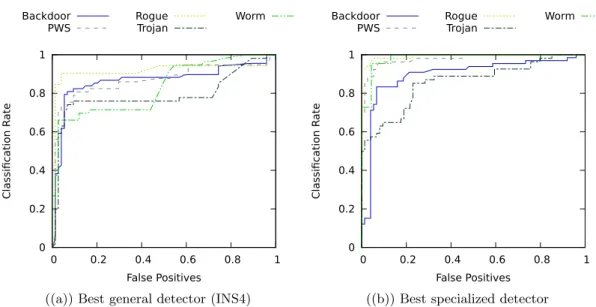
3.2 ROC improvement opportunity; comparing the ROC of detecting each malware type by the best general and the best specialized detector . . . 37
3.3 AUC improvement opportunity; comparing the AUC of detecting each malware type by the best general and the best specialized detector . . . 37
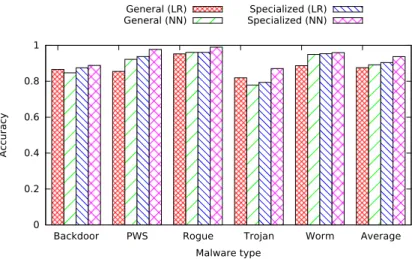
3.4 Accuracy improvement opportunity; comparing the best accuracy of de-tecting each malware type by the best general and the best specialized detector . . . 38
4.1 Building accurate HMDs project overview . . . 39
4.2 Overview of a combined detector; combining the decisions of multiple base detectors using a decision function to produce a final decision . . . 41
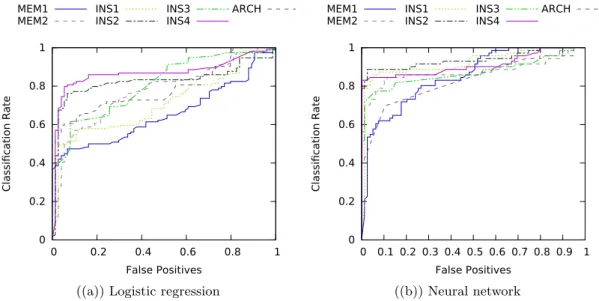
4.3 General detectors comparison; comparing the general detectors perfor-mance using ROC curves . . . 43
4.4 Online detection time; time it takes to detect a malwre during it’s ex-ecution. This Figure shows the cumulative probability distribution of the detected malware programs as a function of the number of decision windows for both specialized ensemble detectors Logistic Regression and Neural Networks. . . 50
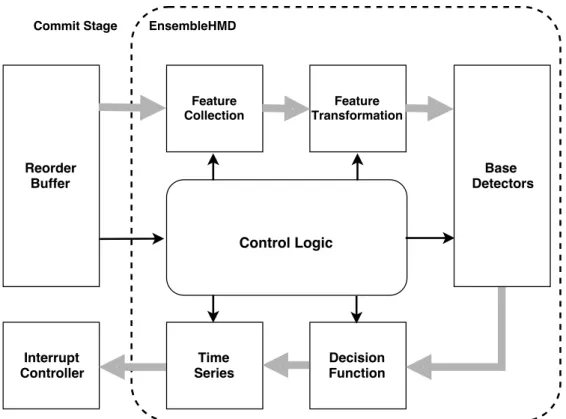
4.5 Overview of the ensemble malware detection framework attached to the commit stage of the pipeline. . . 51
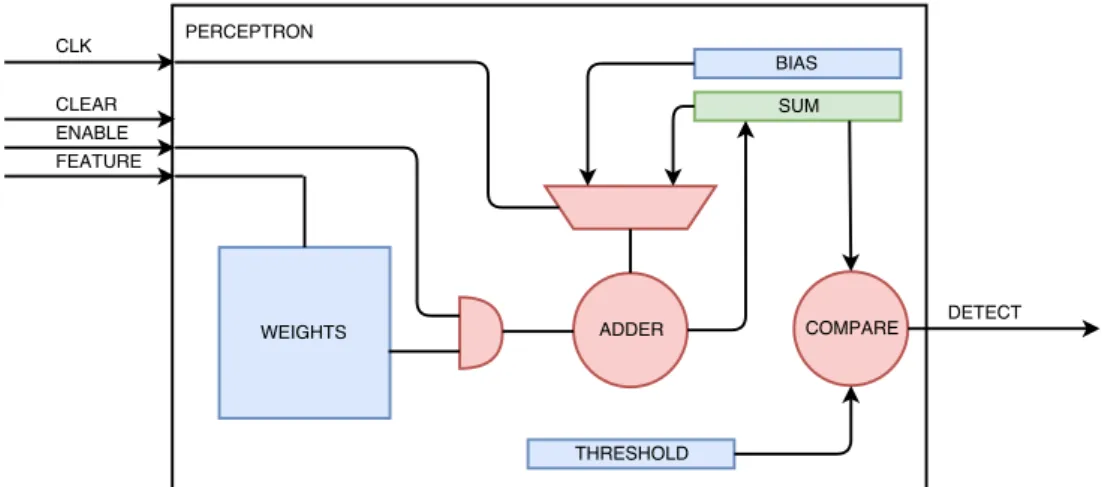
4.6 Optimized perceptron hardware implementation. . . 52
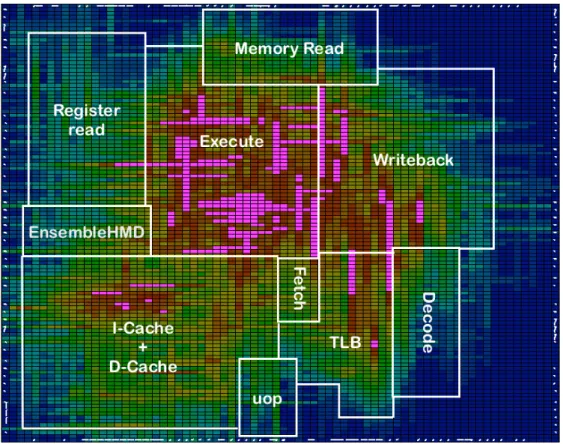
4.7 FPGA layout of EnsembleHMD integrated into AO486 processor core. . 54
5.1 Building accurate HMDs project overview . . . 55
5.2 Online detection performance, in terms of time and work advantage as a function of malware rate, for different combined detectors and different training algorithms (Logistic Regression and Neural Networks). . . 65
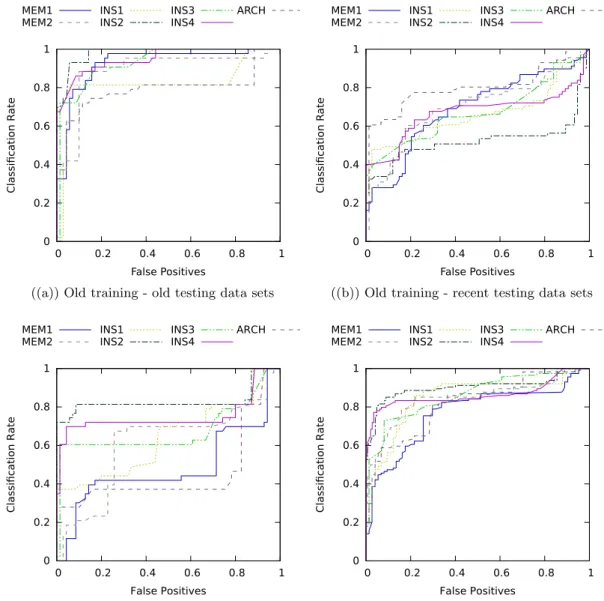
5.3 Malware evolution; detection performance of detectors trained using old malware in detecting new malware and vice versa. . . 66
6.2 Overview of reverse-engineering the HMDs process as well as the process
of evaluating the reverse-engineered detector. . . 74
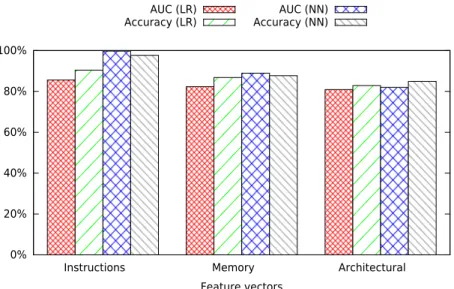
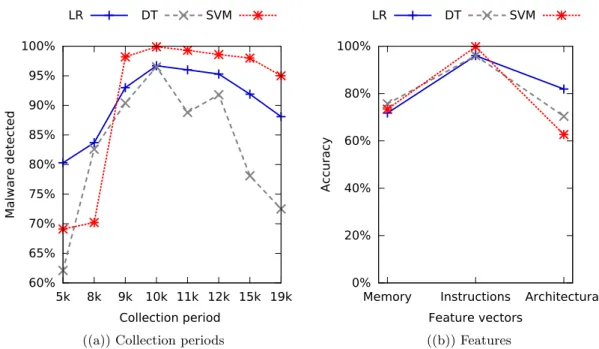
6.3 Performance of individual detectors (general detectors) for different fea-ture vectors. Performance is represented using AUC values and Accuracy. 76 6.4 Reverse-engineer victim detector configurations: (a) collection period and (b) feature vector . . . 78
6.5 Reverse-engineering efficiency; accuracy of reverse-engineering the victim detectors using different machine learning algorithms. . . 79
7.1 Building evasion-resilience HMDs project overview . . . 80
7.2 Methodology for generating evasive malware (an overview). . . 82
7.3 Detection performance of evasive malware created using random instruc-tion injecinstruc-tion . . . 84
7.4 Neural network with one hidden layer overview . . . 86
7.5 Detection performance of evasive malware using the least weight instruc-tion injecinstruc-tion method . . . 87
7.6 Injection static and dynamic overhead of injecting instructions both at the basic block level and the function call level . . . 88
7.7 Detection performance of evasive malware using the weighted injection method. . . 89
7.8 Effectiveness of retraining; can retraining the detectors with evasive sam-ples detect evasive malware? . . . 90
7.9 Illustration of effect of retraining a linear and non-linear classifiers with data that includes evasive malware. . . 91
7.10 Evasive malware detection performance of NN detector for each retraining on evasive malware generation. . . 91
8.1 Building evasion-resilience HMDs project overview . . . 93
8.2 Reverse engineering RHMD that have different features vectors for base detectors. . . 96
8.3 Reverse engineering RHMD that have different features vectors and de-tection periods for base detectors. . . 96
8.4 RHMD evasion resilience; performance of detection evasive malware using different configurations of RHMDs. . . 97
8.5 Impact of Randomization on Evasion . . . 102
9.1 Leakage-free speculation project overview . . . 105
9.2 Overview of speculation attacks. . . 109
9.3 Secret-revealing gadget. . . 110
9.4 SafeSpec overview . . . 115
10.1 Leakage-free speculation project overview . . . 117
10.2 SafeSpec extension to the CPU pipeline to create leakage-free memory hierarchy (caches and TLBs). . . 119
10.3 I-cache variant of Spectre . . . 121
10.4 Shadow structure size that fits 99.99% of caches and TLBs accesses. . . 122
10.5 SafeSpec relative performance to non-secure OoO execution CPU using IPC values of running SPEC2017 benchmarks. . . 123
10.6 d-cache read miss rates including shadow d-cache . . . 123
10.8 i-cache miss rate including the shadow i-cache . . . 125
10.9 Percentage of hits on shadow i-cache . . . 125
10.10Commit rate of shadow state . . . 126
11.1 Leakage-free speculation project overview . . . 128
11.2 Transient speculation attack (TSA) overview . . . 131
List of Tables
3.1 Malware data set breakdown; showing the number of samples that is used for training, testing, and validation from each malware type. . . 32 4.1 General ensemble base detectors threshold values. Threshold values, are
the values used to classify malware from regular programs based on a probability of a program being a malware; if the probability >threshold: program is classified as malware, else: program is classified as regular program. . . 44 4.2 Specialized ensemble base detectors threshold values. Threshold values,
are the values used to classify malware from regular programs based on a probability of a program being a malware; if the probability >threshold: program is classified as malware, else: program is classified as regular program. . . 45 4.3 Logistic regression mixed ensemble base detectors threshold values.
Thresh-old values, are the values used to classify malware from regular programs based on a probability of a program being a malware; if the probability
>threshold: program is classified as malware, else: program is classified as regular program. . . 46 4.4 Neural networks mixed ensemble base detectors threshold values.
Thresh-old values, are the values used to classify malware from regular programs based on a probability of a program being a malware; if the probability
>threshold: program is classified as malware, else: program is classified as regular program. . . 47 4.5 Offline detection performance for multiple combined detectors that are
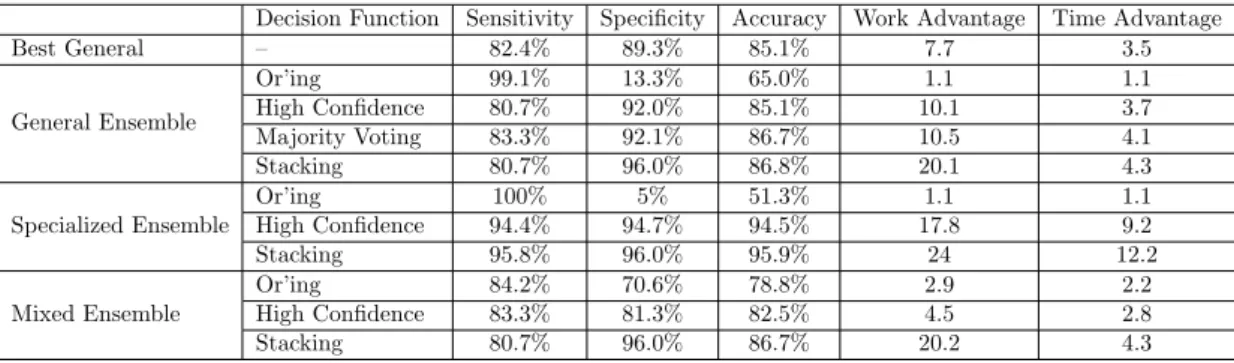
trained using Logistic Regression. Performance is represented as sensitiv-ity, specificsensitiv-ity, accuracy, work advantage, and time advantage. . . 47 4.6 Offline detection performance for multiple combined detectors that are
trained using Neural Networks. Performance is represented as sensitivity, specificity, accuracy, work advantage, and time advantage. . . 47 4.7 Online detection performance for multiple combined detectors that are
trained using Logistic Regression. Performance is represented as sensitiv-ity, specificsensitiv-ity, and accuracy. . . 49 4.8 Online detection performance for multiple combined detectors that are
trained using Neural Networks. Performance is represented as sensitivity, specificity, and accuracy. . . 49
10.1 Configuration of the Simulated architecture . . . 122 10.2 Security Analysis of Meltdown/Spectre . . . 126 10.3 SafeSpec hardware overhead at 40nm. . . 126
Chapter 1
Introduction
We live in an increasingly connected and autonomous world where security breaches to computing systems not only threaten our data but also our safety and liveli-hood. Critical infrastructure is increasingly interconnected and offers interfaces open to malicious actors. Cyberattacks are the fastest growing crime in the U.S., and they are increasing in size, sophistication, and cost [152] – even major companies such as Marriott [119], Equifax [44], Yahoo [102], and Facebook [66] find themselves the tar-get of serious cyber attacks; the leaks of information from Yahoo in 2016, Marriott in 2018, and Facebook in 2019 directly affected 500M, 500M, and 540M users respec-tively [102, 119, 66]. Identity information, including the social security numbers, of 143M Equifax U.S. customer, were stolen in 2017 [44]. Furthermore, affecting even poli-tics, specifically the governmental election process is not immune to cyber attacks [130]. Therefore, cybersecurity is a fundamental requirement that should be considered when designing and evaluating computing systems on par with performance, functionality, or power consumption.
Traditionally, security researchers and practitioners have viewed security as a software problem – originating in software and to be solved by software. However, in this dissertation, we argue that hardware can be used to help defenses but also offers vulnerabilities:
• On one hand, much attention has been directed to the study of security defenses at the system and application levels for many reasons, such as they are easier to deploy and to update. However, these defenses may incur high overhead to the system since it would consume hardware resources, which limit it’s use. Therefore, hardware support can offer an advantage in terms of performance overhead by providing accelerators for them in the hardware.
• On the other hand, the recent Spectre and Meltdown attacks, which target specu-lative execution, a computer architecture technique used for performance, showed that vulnerabilities can arise from the architecture even if there are no weaknesses in the software.
Therefore, this dissertation pursues approaches to building defenses in the ar-chitecture in two directions: (1) Hardware support for accelerating software defenses and (2) Hardware support for closing hardware vulnerabilities. In the first direction, we were able to show that using the hardware support we can build not only accurate hardware malware detectors (HMDs) that offer performance advan-tage for the dynamic malware detection problem but also resilient to evasion attacks from attackers. In the second direction, we examine vulnerabilities in computer hard-ware that are exploitable by softhard-ware and how to design systems that are not exposed by such vulnerabilities. In particular, we developed an architectural principled solution that can close all variants of Spectre and Meltdown.
In the remainder of this chapter, we will first describe the research problems this dissertation is trying to solve and the limitations of existing solutions in Section 1.1. Then, we will follow by describing the contributions of this dissertation in Section 1.2. Finally, we will describe the organization of this dissertation in Section 1.3.
1.1
Motivation: Limitations of State of the art
This dissertation pursues approaches to building defenses in the architecture in two directions: (1) Hardware support for accelerating software defensesand (2) Hardware support for closing hardware vulnerabilities. Figure 1.1 shows an overview of this dissertation; in the first direction, to demonstrating an important class of defenses that can be helped by hardware we choose malware detection. In particular, dynamic malware detection since it requires monitoring the programs at all times, which incur high overhead to the system that resulted in limiting it’s use in practice. Against this drawback, this dissertation explores building practical hardware accelerators to solve the dynamic malware detection limitations.
On the second direction, to demonstrating an important hardware vulnerability we choose speculation attacks. Speculation attacks is a very dangerous class of attacks that showed that vulnerabilities can arise from the architecture even if there are no weaknesses in the software. Against this class of attacks, this dissertation explores developing an architectural principled solution to close this class of attacks.
In this section, we will describe both problems (malware detection and specu-lation attacks) that this dissertation is trying to solve and show the limitations of state of the art solutions.
1.1.1 Malware Detection
Malware detection is important since computing systems are under continuous attacks by increasingly motivated and sophisticated adversaries; for example, over 900 million malware sample were reported by AV TEST in their malware zoo, with over 50 million coming in the first half of 2019 [11]. These attackers use vulnerabilities to compromise systems and deploy malware (malicious software) [6]. Malware is created for profit through forced advertising (adware) [31], spreading illicit and contraband material or email spam (botnets) [137], stealing sensitive information (spyware) [26], or to extort money (ransomware) [62]. Although significant efforts continue to be directed at making systems more difficult to attack, the number of exploitable vulnerabilities is overwhelming, and attacks could be installed by fooling users through phishing and repackaged malware [178].
Since preventing malware from compromising the system is impossible, the second approach of defense is to detect malware while/before compromising the system. Traditionally, two techniques are used for malware detection: static malware detection and dynamic malware detection. Static malware detection looks for signatures in the executables. Example of static malware detection is antivirus software [166]. However, it can be easily defeated by using various code obfuscation techniques [178]. On the other hand, dynamic malware detection monitors the behavior of the running program to detect malicious activities. However, the complexity and difficulty of dynamic mon-itoring have traditionally limited its use due to constrained resources (10x slowdown is common) [43].
Against this backdrop, researchers (and some commercial products [132]) have been exploring the use of hardware malware detectors (HMD), which are always on and
which have little to no impact on performance and complexity, to protect computing systems. Specifically, HMDs are envisioned as the first line of defense to alert/prioritize the activities of more accurate but more expensive software detectors [124]. However, these detectors are not mature enough for practical deployment; (1) accuracy is not very high and (2) their resilience to adversarial attacks has not been studied. Therefore, this dissertation addresses the state of the art solutions limitations to bring HMDs closer for practical deployment. In particular, this dissertation explores ways of building more accurate HMDs using ensemble techniques and make them resilient to evasion attacks.
1.1.2 Speculation Attacks
Security and privacy are important due to the increasing amount of secret and sensitive data that share the same infrastructure. Sharing the infrastructure allow ad-versaries to steal information thought a side-channel [75,115,73]. Side channel attacks are one of the most dangerous vulnerabilities to the could since it exploits weaknesses in the implementation of otherwise secure systems and algorithms. Even isolated exe-cution environments with enforcing strict access control are not immune to information leaks through hardware resources. The recent dangerous speculation attacks, such as Meltdown and Spectre [98, 89, 58, 106], target speculative execution (a standard mi-croarchitectural technique used in virtually all modern CPUs to improve performance) to access sensitive data and leak it through a side-channel. Several attack variations have been demonstrated, including arbitrary exposure of the full memory of other pro-cesses, OS kernel, hypervisor, and even SGX enclaves [29] to an unprivileged attacker, making this a dangerous open attack vector on modern systems.
Although several defenses and software patches have been proposed to miti-gate Spectre and Meltdown [159,53], they often address only one aspect of the attack,
leaving attackers with other possible variations that are still available. Besides, these patches often lead to high overheads: 10-30% reported on average, but often much higher. For example, Netflix reported 800% slowdown with the Meltdown patches on their systems [158,52].
1.2
Contributions of the Dissertation
The research in this dissertation focuses on showing that architecture support for security can help software be more secure by providing acceleration for software solutions that are not practical due to their high overhead or by re-designing the archi-tecture to close software exploitable vulnerabilities that software solution would incur high overhead on the system, need recompilation of the programs, and/or need user input/feedback (example, marking the secret data).
Therefore, in this section, we describe our contributions towards solving the problems described in the previous section (Section 1.1); malware detection and specu-lation attacks.
1.2.1 Malware Detection
We explored two research questions within this space: (1) How to build accu-rate and inexpensive hardware detectors using ensemble learning techniques? and (2) how to make detectors resilient to evasion from attackers?
(1) Accurate Hardware Malware Detectors (HMDs)
Hardware-based malware detectors (HMDs) are a promising new approach to defend against malware. HMDs collect low-level architectural features and use them to classify malware from normal programs. With simple hardware support, HMDs can be
always on, operating as a first line of defense that prioritizes the application of more expensive and more accurate software-detector. In this project, our goal is to increase the accuracy of HMDs, to improve detection, and reduce overhead. We use specialized detectors targeted towards a specific type of malware to improve the detection of each type. Next, we use ensemble learning techniques to improve the overall accuracy by combining detectors. We explore detectors based on logistic regression (LR) and neu-ral networks (NN). The proposed detectors reduce the false-positive rate by more than half compared to using a single detector, while increasing their sensitivity. We develop metrics to estimate detection overhead; the proposed detectors achieve more than 16.6x overhead reduction during online detection compared to an idealized software-only de-tector, with an 8x improvement in relative detection time. NN detectors outperform LR detectors in accuracy, overhead (by 40%), and time-to-detection of the hardware component (by 5x). Finally, we characterize the hardware complexity by extending an open-core and synthesizing it on an FPGA platform, showing that the overhead is minimal.
(2) Evasion-Resilient Hardware Malware Detectors (HMDs)
Several aspects of the HMDs construction have been explored, leading to de-tectors with high accuracy. However, in this project, we explore the question of how well evasive malware can avoid detection by HMDs. We show that existing HMDs can be effectively reverse-engineered and subsequently evaded, allowing malware to hide from detection without substantially slowing it down (which is important for certain types of malware). This result demonstrates that the current generation of HMDs can be easily defeated by evasive malware. Next, we explore how well a detector can evolve if it is exposed to this evasive malware during training. We show that simple detectors, such as
logistic regression, cannot detect the evasive malware even with retraining. More sophis-ticated detectors can be retrained to detect evasive malware, but the retrained detectors can be reverse-engineered and evaded again. To address these limitations, we propose a new type of Resilient HMDs (RHMDs) that stochastically switch between different detectors. These detectors can be shown to be provably more resilient to evasion based on resent results in probably approximately correct (PAC) learnability theory. We show that indeed such detectors are resilient to both reverse engineering and evasion, and that the resilience increases with the number and diversity of the individual detectors. Our results demonstrate that these HMDs offer effective defense against evasive malware at low additional complexity.
1.2.2 Speculation Attacks
We explored building a principled solution for speculation attacks that can be used to protect against all variants of attacks with minimum impact on performance.
Leakage Free Speculation
Speculative attacks, such as Spectre and Meltdown, target speculative execu-tion to access privileged data and leak it through a side-channel. To solve this problem, we introduce (SafeSpec), a new model for supporting speculation in a way that is im-mune to the side-channel leakage by storing side effects of speculative instructions in separate structures until they commit. Additionally, we address the possibility of a covert channel from speculative instructions to committed instructions before these in-structions are committed. We develop a cycle accurate model of modified design of an x86-64 processor and show that the performance impact is negligible.
1.3
Organization of This Dissertation
Hardware Support for Security
Close Hardware Vulnerabilities Accelerate Software Defenses Dynamic Malware Detection Speculation Attacks Accurate HMDs: Chapters 3,4,5 Evasion-Resilience HMDs: Chapters 6,7,8 Leakage-Free Speculation: Chapters 9,10,11
Figure 1.1: Dissertation overview
The goal of this dissertation is to show the importance of hardware support in security; either through providing acceleration for software defenses or through closing vulnerabilities that originate from the hardware. Therefore, in Chapter 2, we will de-scribe the related works for the example problems that are used to support the goal of this dissertation; malware detection and speculation attacks. The rest of this disserta-tion will be organized into two main parts as follows:
PART 1: Hardware support for accelerating software defenses
This part is about exploring acceleration solutions for software defenses through hardware support. Therefore, to solve the high overhead of the dynamic malware de-tection solution through hardware support and make the hardware support for malware detection more practical for deployment, this part can be divided into two main projects
(1) Accurate HMDs: building accurate and inexpensive hardware detectors using en-semble learning techniques(2) Evasion-Resilience HMDs: building HMDs that are resilient to evasion attacks. The organization of the two projects is as follows:
Accurate HMDs
Chapter 3 Chapter 4 Chapter 5
Specializing HMDs Combining HMDs HMDs advantage
Figure 1.2: Building accurate HMDs project overview
(1) Accurate HMDS: in Chapter 3, we investigate whether specialized HMDs, each targeting a specific type of malware, can more successfully classify that type of mal-ware. In Chapter 4, we combine multiple detectors, general or specialized, to improve the overall performance of the detection and we analyze the implications on the hard-ware complexity of the different configurations. In Chapter 5, we develop metrics that translate detection performance of HMDs to overhead and time-to-detection advantages of the whole system and we conducted a longitudinal study to explore whether detec-tors trained on a set of malware continue to be effective over time as malware evolves. Figure 1.2 shows an overview of the chapters that compose this project.
Evasion-Resilience HMDs
Chapter 6 Chapter 7 Chapter 8
Reverse-Engineering
HMDS Evading HMDs
Evasion Resilience HMDs
(2) Evasion-Resilience HMDS: in chapter 6, we describe our threat model and investigate wither HMDs be reverse-engineered. In Chapter 7, we explore wither having a model of the detector, can malware developers modify malware to avoid detection. Then we study the ability of malware to evade detection even if the detector is re-trained with some samples of the evasive malware. In Chapter 8, we explore whether new HMDs can be constructed that are robust to evasion and if they fundamentally increase the difficulty of evasion or simply present another hurdle that can be bypassed by attackers. Figure 1.3 shows an overview of the chapters that compose this project.
PART 2: Hardware support for closing hardware vulnerabilities
This part is about closing vulnerabilities that originate from the hardware through hardware support. Therefore, we selected one of the most dangerous class of attacks that exploit a hardware vulnerability (speculation attacks) to defend against through hardware support. The organization of this project is as follows:
Leakage-Free Speculation
Chapter 9 Chapter 10 Chapter 11
Principle & threat model
Leakage-free memory hierarchy
Transient Specualtion Attacks
Figure 1.4: Leakage-free speculation project overview
Leakage-Free Speculation: to defend against speculation attacks, in Chapter 9, we present the background needed and describe our principled solution (SafeSpec). In Chapter 10, we describe the design of building a memory hierarchy (caches and TLBs) that are free from speculation-induced leakage and presents a performance, complexity, and security analysis of SafeSpec. In Chapter 11, we show that a covert channel can
be created as a byproduct of applying SafeSpec (we call this type of attacks transient speculation attacks (TSAs)) and explore how to construct the shadow state to mitigate TSAs. Figure 1.4 shows an overview of the chapters that compose this project.
Chapter 2
Related Work
In this chapter, we present the related work of this dissertation. The orga-nization of this chapter will be as follows: Section 2.1 will present the related work in the malware detection space, hardware malware detection, and adversarial machine learning. In Section 2.2, we will review all variants of speculation attacks. Then, we will continue to present the state of the art defense that where proposed to protect against speculation attacks.
2.1
Malware Detection
In this section, we discuss related work organized into two main parts. First, we review related work in malware detection. In the second part, we discuss adversarial classification and some important recent results in that domain.
2.1.1 Hardware Malware Detection
Malware detection is an area that has attracted extensive research and com-mercial interest over the past decade. In general, malware detection techniques are either static (focusing on the structure of a program or system) or dynamic (analyzing the behavior during execution) [64].
Static approaches including virus and spyware scanners are the first line of de-fense in malware detection. Originally, these scanners operated using pattern matching to look for signatures of known malware. However, these approaches can be easily evaded using program obfuscation or simple code transformations that preserve the function of the malware but make it not match the patterns known to the scanner [114]. More advanced detectors based on semantic signatures have been proposed, and significantly improved the performance of static scanners [32]. Static approaches are limited and can be bypassed by sophisticated attackers [111]. In particular, code obfuscation techniques (polymorphic malware), and malware encryption (packing or metamorphic malware) are both sufficient to hide even from these more advanced detectors [111].
On the other hand, dynamic detection approaches observe the behavior of the program (or the system) as it runs and interacts with the environment. Dynamic behavior-based detection attempts to detect deviations from normal behavior of a pro-gram as it operates. It detects anomalies in the observed behavior compared to its model of normal behavior, which is often program-specific, to identify malware. A large number of software malware detectors have been investigated that vary in terms of the monitored events, the normal behavior model, and the detection algorithm [57, 135, 71, 64, 91]. The advantage of dynamic detection is that it is resilient to metamorphic and
polymor-phic malware [111,107]; it can even detect previously unknown malware. However, the disadvantages include a typically high false positive rate, and the high cost of monitoring during run-time. Moreover, since detection is a one time (or periodic) process, malware can evade detection either probabilistically or by recognizing that it is being observed and acting normally for that period.
Hardware based Malware Detectors (HMD) have attracted significant interest recently because they can be always on and essentially free in terms of performance and resource impact. Bilar et al. were the first to use the frequency of opcodes occurrence in a program as a feature for discriminating normal programs from malware [18]. Santos et al. and Yan et al. use opcode sequence signatures as a feature [139,172]. Runwal et al. use similarity graphs of opcode sequences [136]. Recently, Demme et al. suggested using features based on performance counters [37]. Tang et al. conducted a similar study but used unsupervised learning [153]. Kazdagli et al. [77] introduced several new improvements to the construction methodology for both supervised and unsupervised learning based HMDs applied to mobile malware. All of these studies conduct offline analysis; none of the studies explore online detection or implementation using hardware. On the other hand, similar to our work, a real-time hardware malware detector was built by Ozsoy et al. [122]. However, they used a single detectors while our work uses an ensemble of specialized detectors.
Chavis et al. proposed an enterprise-class antivirus analysis framework, called SNIFFER [27]. Similar to our work, each machine in the network collect low-level features online using hardware. For each detection period, each machine transfers its collected features securely to a server which classifies them (hardware feature collection, but software classification). The detectors are general detectors; we believe that the ensemble techniques that improve the accuracy can reduce the false positives in this
system as well. Both the settings and the malware types (network attacks) considered by the paper are different than our environment.
Ensemble learning is a well-known technique in machine learning to combine the decisions of multiple base detectors to improve accuracy [169]. Ensemble learning is attractive because of its generalization ability which is much powerful than using one learner [39]. For ensemble detector to work, the base detectors have to be diverse; if the detectors are highly correlated, there is little additional value from combining them [134]. In this work, the diversity is based on different features (general ensemble detector), data sets (mixed ensemble detector), or both (specialized ensemble detector). In contrast to traditional machine learning approaches that use the training data to learn one hypothesis, some of our ensembles learn a set of subset-hypotheses (specialized detectors) and combine them. Ensemble learning may be considered a form of two-stage detection with the base detectors in the first stage, and the synthesis of their decision in the second. A two stage anomaly detector was proposed by Zhang et al. [181, 182] who use machine learning classifiers to build network traffic dependency graph, and then they used a root-trigger policy to identify outlier network requests. These works focus on the dependency knowledge of the first level, while our work focuses on combining the results of detectors that are trying to answer different questions.
The specialized ensemble detector combines multiple specialized detectors and dynamically collects the features to perform online detection. Researchers built ensem-ble malware detectors [180,101,175,10,116,45, 177, 103, 145, 146, 61, 121,49,128], based on combining general detectors. Moreover, most of them used off-line analy-sis [175,10,145,146,45,177,61]. A few used dynamic analysis [116,49,128] and some used both static and dynamic analysis [101, 103, 121]. None of these works uses archi-tecture features or is targeted towards hardware implementation (which requires simpler
machine learning algorithms). Specialized detectors were previously proposed [92] for use in malware classification (i.e., labeling malware). Labeling is used to classify col-lected malware using offline analysis which is a different application than the one we consider.
We present a few recent examples of the use of ensemble learning for malware detection in more detail. Zhang et al. [180] extracted n-gram features from the programs binary code and used it in malware detection. The ensemble composed of multiple prob-abilistic neural network (PNN) classifiers and the Dempster Shafer theory was utilized to combine them. Sami et al. [138] used API calls extracted from the Portable Executable (PE) Import Address table to build an ensemble detector using random forests. Mehmet et al. [121] created an ensemble detector for android malware by creating base detectors based on different features and learning algorithms. After that, the base detectors were combined using stacking or majority voting to form the ensemble system. However, the previous work does not try to combine specialized detectors to build the ensemble sys-tem. Smutz et al. recently explored the use of a diversified ensemble detector to classify possibly evasive PDF malware [149]. Note that all the above techniques use software detectors, on rich features and using advanced machine learning algorithms.
This work extends our prior work [82] which considered ensembles of only LR detectors. The NN ensemble detectors presented in this work are over 20% faster than the best LR ensemble detector while requiring 40% less overhead. Additionally, we study the speed of hardware component in detecting malware online and show that NN ensemble is 5x faster than the LR ensemble detector, potentially limiting the damage of the malware. This work also presents a hardware design of the NN ensemble detectors and analyzes their complexity. The malware longitudinal study in Section 5.2 is also a new contribution of this project, and demonstrates the need for HMDs to be retrainable.
Zhou et al., argue against the practicality of using hardware performance coun-ters (HPCs) for malware detection [184]. They categorize the drawbacks that they observed into the following classes:
1. Dynamic Binary Instrumentation (DBI).
2. Virtual Machines (VMs).
3. No Cross-Validations or Insufficient Validations
The first class of drawbacks is using Dynamic Binary Instrumentation (DBI). DBI can be used to instrument the monitored program in order to collect features dur-ing it’s execution. Examples of these tools are Pin [104], QEMU [13], Valgrind [117], or DynamoRIO [20]. The reason DBI is a drawback is that it introduces a substantial amount of performance overhead and is thus not suited to run in an always-on, online protection setting, which is the default use-case for current anti-malware suites. How-ever, in our work we use DBI to collect features for two main reasons: (1) DBI feature collection is much more accurate and stable than HPCs [36], which results in more stable and accurate results (2) DBI was used just for experiments and identifying the features. However, as we show in Chapter 4.2, we extended the processor implementation by integrated a feature collection unit to the end of the commit stage of the processor’s pipeline eliminate the overhead from using DBI for features collection.
The second class of drawbacks is using virtual machines (VMs) to run the mon-itored programs. The reason for using VMs in a drawback is that HPCs are limited and shared resource between the host and all VMs. Thus, virtualizing HPCs is a challenge in itself [36], which results in inaccurate HPCs values. However, using DBI to instrument programs inside a VM does not affect the results of the DBI.
The third drawback class is not using cross-validation in the experiments. Cross-validation [7] is used to prevent the machine learning model from overfitting [55] by examining the model with different inputs of training-and-testing examples. How-ever, in our experiments, we used 10-folds cross-validation to make sure that we have made sufficient validation of the models.
Another issue of using HPCs for malware detection is the adversary arability to create evasive samples that can evade the detection [36]. Therefore, in our following work [79] (Chapters 6,7,8), we explored how malware writers may attempt to evade HMDs. The work shows that NN detectors are amenable to retraining when malware evolves. The work proposed creating multiple diverse detectors and switching between them randomly, which makes HMDs provably more robust to evasion attacks. While such detectors use multiple base detectors they use only one at a time. It is interesting to explore the combination of ensemble and evasion resilient HMDs.
2.1.2 Adversarial Machine Learning
Several studies have looked at attacking machine learning models. Attacks can be classified into two types: poisoning and evasion attacks [12]. In poisoning at-tacks, the adversary focuses on injecting malicious samples in the training data as an attempt to influence the accuracy of the model [17, 87]. For evasion attacks, similar to our own, the adversary crafts input samples that aim to be misclassified by the model [171, 96, 15, 50, 126]. Several evasion attacks were studied in the image clas-sification field. An adversary can make changes to the pixels of an image to cause miss-classification of the image but will not change the visibility of the image to the human eye [15,50,126]. Since images have high entropy they can be easily manipulated
without changing the appearance of the image. On the other hand, in the malware detection domain, manipulating malware programs have different challenges since the functionality of the malware needs to be preserved. Evasion attacks in contexts outside image classification have also been considered. Such attacks are called mimicry at-tacks [21,165]. Although recent studies [16,35,162] have provided theoretical grounds for randomization as a possible solution in adversarial classification, practical algorithms have yet to be developed for this problem.
Related to our evasion attack on malware detectors, researchers recently pro-posed evasive attacks on PDF malware detectors [171,96]. These works consider static classifiers using structural features present in the PDF image. In contrast, our contri-bution targets detectors for a wide range of malware and we consider run-time anomaly detection using microarchitectural features. Besides the different nature of the applica-tion, our work makes a number of contributions relative to these recent works including showing how to reverse engineer the classifiers, reverse-engineering driven instruction injection to evade detection (they use random modifications), exploring the impact of retraining, and providing theoretical insights based on PAC theory into the structure of the problem. Moreover, these studies do not explore resilient classification.
Similar to the reverse engineering component of our work, Tram`er et al. [155] were able to reverse-engineer machine learning models against production Machine Learning-as-a-service (MLaaS) providers. However, they assumed that they know the features used by the target classifier. In addition, Shokri et al. [148] were able to use reverse-engineered models to perform a membership inference attack (given a data record and black-box access to a model, determine if the record was in the model’s training dataset) against MLaaS providers. In both works, they attempt reverse engineering using random noise [155,148]. We believe that this approach does not work in our threat model where
we do not have access to the classifier confidence (we see the output as a label, not as a probability), and where classification is a continuous process, which makes it difficult to assess incremental changes.
Khasawneh et al. used ensemble learning to improve the accuracy of HMDs [83,
78, 97]. Superficially, ensemble learning is similar to RHMD since it combines the out-put of multiple diverse detectors through a combiner function such as majority voting to improve the overall detection performance. However, since ensemble classifiers are deterministic, they can be reverse engineered and evaded. In contrast, the stochastic switching between individual detectors in RHMD makes both reverse-engineering and evasion difficult with a difficulty that increases with the number and diversity of the individual detectors. Smutz et al. also studied the use of an ensemble for PDF mal-ware detection [149]; when the baseline detectors disagree, they consider this a possible indicator of evasive malware.
Although hardware-supported malware detection offers many advantages as it can be always on and has a low overhead on both power and performance, if HMDs are widely deployed, we must expect that attackers will attempt to evade detection as is the case in any adversarial setting. In this work, we show that without hardening HMDs, it is possible to reverse engineer and evade them, bringing into question the effectiveness of HMDs. Our work also explores whether retraining can be used to continue to track malware evasion, as well as the construction of resilient hardware malware detectors. With these results we believe evasion resilient HMDs become practical, bringing such solutions closer to practical deployment.
2.2
Speculation Attacks and Defenses
In this section, we discuss related work to speculation attacks organized into two main parts. First, we review variants of speculation attacks. In the second part, we discuss deployed and proposed defenses against speculation attacks.
2.2.1 Speculation Attacks
Since the initial announcement of Spectre and Meltdown in January of 2018, multiple variants of Spectre [90,86,93,105,48,59,29,143] and Meltdown [99,156,160,
141,161,110,140] have been proposed. Spectre attacks are characterized by manipulat-ing the prediction mechanisms to trigger speculation to an attacker chosen gadget. They differ in what they exploit to trigger speculation: branch direction predictor (variant 1, variant 1.1) [90, 48, 86], branch target predictor (or branch target buffer) for variant 2 [90], return stack buffer for Spectre-RSB (also called variant 5) [93,105], or load-store aliasing predictor for variant 4 [59].
On the other hand, Meltdown attack exploits speculative out-of-order instruc-tions that lead to an exception. Multiple variants have been proposed: the original Meltdown [99], Foreshadow [160,167], and RIDL [161] exploit thepage fault, Meltdown variant 1.2 [86] exploit the bound range exceeded exception, Lazy FP [151] exploit the
device-not-available exception, Meltdown variant 3a [9] exploit the general protection fault, Fallout [110] exploit thewrite transient forwarding, and ZombieLoad [141] exploit thefill-buffer logic. Canella et al. summarize these and additional variants [23].
To mitigate these attacks, several software and hardware defenses ranging from programming guidelines for cryptographic software developers [24] to
architec-tural changes [81,173] have been proposed. In general, these solutions are ad hoc, often focused on a specific attack. Moreover, most result in substantial performance impact. In this section, we will overview these defenses categorized into three categories (1) speculation prevention: prevent speculation execution, (2) Secret data protection: pro-vides secret data isolation, (3) Side-channel prevention: that interfere with side channel communication.
2.2.2 Speculation prevention
These defenses focus on preventing speculation by preventing misprediction [67,
120, 159, 68, 86] or faults [160]. Intel, AMD, and ARM proposed to use instructions that serialize the execution (e.g. lfence) to stop speculation around branches (e.g. both directions of the branch) [67,8,2]. Although liberal serialization (e.g., at every branch instruction) can mitigate some Spectre attacks, doing so severely hurts performance [67]: serializing all branch instructions will eliminate the performance benefit of the branch predictor (e.g., up to 10x slowdown [120]). Against this drawback, multiple proposals tried to reduce the number of serializing instructions introduced using static analysis to serialize execution around exploitable gadgets only [67, 108, 65, 164]. However, these approaches miss some of the gadgets that can be exploited [88]. Another weakness about these defenses is that even though they stop speculative execution around exploitable gadgets, they do not stop speculative code fetches and other micro-architectural be-haviors before execution (e.g., instruction cache and iTLB fills) which can still leak data [143].
Furthermore, Speculative Load Hardening (SLH) [25] and You Shall Not By-pass (YSNB) [120] tried to reduce the high overhead of using liberal fences. Therefore, they proposed to identify Spectre gadgets, then injecting artificial dependencies between
branches and identified gadgets. Doing so will reduce the speculation window of the at-tack. Although this would results in performance advantage over liberal fencing, they still have 36%-60% performance overhead [154].
Google proposed Return Trampoline (retpoline) [159] as a software mitiga-tion technique that defends against Spectre-BTB by replacing indirect branches with push+return instruction sequence that prevent BTB poisoning. However, this solution has high performance overhead since it stops speculation (similar to serialization). In addition, it can be bypassed using ret instructions since they cause miss-speculation through BTB; this is a by-product of a feature on Intel’s Skylake+ processors (starting from Skylake) that allow processors to predict the address of aretinstruction from BTB in case of RSB underfilling. To solve this exploit, RSB stuffing [69] was proposed to intentionally fill the RSB with benign delay gadgets to avoid misspeculation on con-text switches. Although this technique can partially mitigate Spectre-BTB (when using
ret to trigger speculation through BTB), it can also defend against SpectreRSB cross-domains attack. However, since we are filling the RSB on context switch, stored entries for the currently running process will be lost when execution is switched back to the current process (i.e. performance loss due to losing speculation information). Against this drawback, saves committed RSB entries per process in case of a context switch out of the process and restores them when execution returns to the process, which results in improving the prediction performance ofret instructions.
Intel and AMD added new instructions to their instruction set architecture (ISA) that can control indirect branches to defend against Spectre-BTB [70, 2]. The addition consists of three controls:
• Indirect Branch Restricted Speculation (IBRS): allows processors to enter IBRS mode (privileged mode) and execute indirect branches that are not influenced by less privileged mode.
• Single Thread Indirect Branch Prediction (STIBP): will not allow a hyperthread running on a core to use branch predictor entries inserted by the other thread running on the same core.
• The Indirect Branch Predictor Barrier (IBPB): allows processors to flush BTB and clear their state. This way the code executed before the barrier cannot impact branch prediction of the code executed after this instruction.
These new ISA instructions defend only against Spectre-BTB. In addition, they have a high performance overhead; up to 24% on Skylake and up to 53% on Haswell [41]. Moreover, SLoth [86] is a group of micro-architectural defenses that constrain store-to-load forwarding to defend against Spectre v1.1 and v4; (1) SLoth Bear: mi-crocode update that prevents store-to-load forwarding from either speculative stores or to speculative loads. (2) SLoth: choose candidates for forwarding based on compiler marking instructions. (3) Arctic SLoth: apply dynamic detection of load and store pairs to determine candidates for forwarding. Nevertheless, this approach does not de-fend against Spectre v1 and require software, compiler, and hardware changes that result in performance overhead and implementation complexity.
An attractive hardware solution is Context-Sensitive Fencing (CSF) [154]. CSF is a micro-code mitigation technique were serialization instructions are added dynami-cally based on run-time conditions that identify potential exploit execution. Injecting serialization instructions dynamically reduces the impact of stopping speculation on performance which results in low performance overhead. Moreover, CSF proposed to
defend against Spectre v2 and Spectre-RSB using a special fence that would flush the BTB/RSB when transferring control to higher domains. However, flushing BTB and RSB would hurt performance since it will result in more mis-predictions. In addition, in simultaneous multithreading (SMT) processor, flushing the BTB/RSB after control transfer is not enough to protect against Spectre-BTB and Spectre-RSB since they can be polluted after the control transfer using other threads.
ConTExT [142] introduced protecting secret data from speculative execution. Basically, they proposed a new memory mapping (called non-transient mapping) which indicates data that must not be accessed by speculative instructions. Nevertheless, this solution requires changes to the architecture and the operating system, the developer involvement by annotating the secret data, and incur high performance overhead for security-critical applications.
2.2.3 Secret data protection:
These defenses focus on making sure that secret data can not be reached [53,
99]. However, they have limitations: Kernel Page-Table Isolation (KPTI) [53, 99] have performance overhead and some privileged memory locations must always remain mapped in user space due to x86 design [23], and Site Isolation [131] limits the amount of data that is exposed to side-channel attacks but attacks are still possible.
2.2.4 Side-channel prevention:
Since speculation attacks use a side-channel to communicate secret data out of the speculative execution gadget, these type of defenses is designed to prevent such communication. The benefits from such defenses are: (1) performance since they allow speculation (2) defend against all attack variants since all variants use side-channels to
leak the secret data. Furthermore, this category of defense is most relevant to our work since SafeSpec falls into this category.
Dynamically Allocated Way Guard (DAWG):DAWG [85] is a method to securely partition the cache at the cache way granularity to provide isolation between protection domains. Therefore, it requires changes to the cache and coherence protocol. In addition, it requires domains enforcement management in software. While this solution, similar to our defense, prevents leaking the data through a side-channel, it only protects across isolation domains and not those performed within the same address space or isolation domain.
InvisiSpec: most relevant to our work, and developed concurrently with it (SafeSpec technical report was disclosed in June, 2018 [81]), is an architectural solution called InvisiSpec [173]. Like SafeSpec, InvisiSpec is designed to make transient loads invisible in the cache hierarchy. InvisiSpec focus is on cache coherence and memory consistency rather than understanding the implications on a single core. They did not consider transient side channels on the shadow structures, sizing issues, or carry out overhead characterization. Moreover, InvisiSpec was focusing on protecting the d-cache while we developed attacks and defenses on i-cache and the TLB, applying the principle more widely.
Chapter 3
Specialized Hardware Mawlare
Detectors
Accurate HMDs
Chapter 3 Chapter 4 Chapter 5
Specializing HMDs Combining HMDs HMDs advantage
Figure 3.1: Building accurate HMDs project overview
Computing systems at all scales face a significant threat from malware; over 900 million malware sample was reported by AV TEST in their malware zoo, with over 50 million coming in the first half of 2019 [11]. Obfuscation and evasion techniques increase the difficulty of detecting malware after a machine is infected [178]. Zero-day exploits – novel exploits never seen before – defy signature based static analysis since their signatures have not been yet encountered in the wild. Thus, dynamic detection techniques [43] that can detect the malicious behavior during execution are needed [33,
94], to protect against such attacks. However, the difficulty and complexity of dynamic monitoring in software have traditionally limited its use.
Recent studies have shown that Hardware Malware Detectors (HMDs) that carry out anomaly detection in low-level feature spaces such as hardware events, can distinguish malware from normal programs [37, 18]. Then, an online HMD was intro-duced as hardware supported classifier trained using supervised learning that contin-uously monitors and differentiates malware from normal programs while the programs run [123, 124]. To tolerate false positives, this system is envisioned as a first step in malware detection to prioritize which processes should be dynamically monitored using a more sophisticated but more expensive second level of protection.
In this chapter, we pursue approaches to enhance the classification accuracy of HMDs. Improving accuracy increases their ability to detect malware, and reduces the overhead that results from false positives. Therefore, in this chapter, as shown is Figure 3.1, we explore whether specialized detectors, each targeting a specific type of malware, can more successfully classify that type of malware. After confirming that specialized detectors perform better than general detectors, we identify the features that perform best for each specialized detector. We characterize how specialized detectors trained for specific malware types perform compared to a general detector and show that specialization has significant performance advantages.
3.1
Approach and Evaluation Methodology
We consider a system with a hardware malware detector (HMD) similar to those recently proposed in literature [37,123,77]. HMD exploit the fact that the com-putational footprint of malware differs from that of normal programs in low-level feature spaces. Detectors built using such features appear to be quite successful; Qualcomm an-nounced the use of a similar technology in their Snapdragon processor [133]. Early
studies relied on opcode mixes [18, 139, 172, 136]. More recently, Demme et al. [37] showed that malware programs can be classified effectively by the use of offline machine learning model applied to low-level features; in this case they used features available through hardware performance counters of the ARM processor collected periodically.
This work improves on prior work by Ozsoy et al. [123] who built an online
hardware-supported, low-complexity, malware detector. The online detection problem uses a time-series window based averaging to detect transient malware behavior. As detection is implemented in hardware, simple machine learning algorithms are used to avoid the overhead of complex algorithms. This work demonstrated that low-level architectural features can be used to detect malware in real-time.
In this study, our goal is to improve the effectiveness of online HMD. Improv-ing the detection performance leads to more malware beImprov-ing detected with fewer false positives. We explore using specialized detectors for different malware types to improve detection. We show that specialized detectors are more effective than general detec-tors in classifying their malware type. Furthermore, in Chapter 4, we study different approaches for combining the decisions of multiple detectors to achieve better classifi-cation. In this section, we present some details of the methodology including the Data Set and the choice of features for classification.
3.1.1 Data Set
Our data set consists of 3,653 malware programs and 554 regular Windows programs (the malware samples that we use are Windows-based). This regular program set contains the SPEC 2006 benchmarks [56], Windows system binaries, and many popular applications such as Acrobat Reader, Notepad++, and Winrar. The malware programs were chosen from the MalwareDB malware set [118].
The group of regular and malware programs were all executed within a virtual machine running a 32-bit Windows 7 with the firewall and security services for Windows disabled. We observed that this desktop malware does not require user interaction to operate maliciously, in contrast to prior work that showed that mobile malware does not run correctly without user interaction [77]. We verified that a large sample (more than half) of our malware ran correctly by manually checking run-time behaviour. In fact, the intrusion detection monitoring systems on our network were tripped several times due to malware trying to search for and attack other machines. Eventually, we set up the environment in an independent subnet. However, for the regular programs, we manually interacted with them to trigger an expressive representation. The Pin instrumentation tool [34] was used to gather the dynamic traces of programs as they were executed. Each trace was collected after 150 system calls for a duration of 5,000 system calls or 15 million committed instructions, whichever is first.
The malware data set consists of five types of malware:
1. Backdoors: bypass the normal authentication of the system.
2. Password Stealers (PWS): steals user credentials using a key-logger and sends them along with the visited website to the attacker.
3. Rogues: pretend to be an antivirus program and try to sell the victim its services.
4. Trojans: appear to be harmless programs but contain malicious code.
5. Worms: attempt to spread to other machines using various methods.
We selected only malware programs that were labeled as malware by Microsoft and used the Microsoft classification for their type [109]. Each malware set (correspond-ing to the malware type) and the regular programs set were randomly divided into three
subsets; training (60%), testing (20%) and validation (20%) as shown in Table 3.1. These are typical ratios used in training classifiers. The training and testing sets were used to train and test the detectors respectively. The validation set was used for exploring the settings of training and detection.
We note that both the number of programs and th