Performance of SMEs within FP7
An Interim Evaluation of FP7
components
This report has been prepared by a consortium led by Panteia from the Netherlands, consisting of:
The authors are: Koos van Elk, Jacqueline Snijders, Yvonne Prince, Petra Gibcus, Sophie Doove (Panteia); Paul Simmonds, Katharina Warta, Barbara Good, (Technopolis Group); Sascha Ruhland, Sonja Sheikh (The Austrian Institute for SME Research).
Zoetermeer , May 2014
This document has been prepared for the European Commission however it reflects the views only of the authors, and the Commission cannot be held responsible for any use which may be made of the information contained therein.
The responsibility for the contents of this report lies with Panteia. Quoting numbers or text in papers, essays and books is permitted only when the source is clearly mentioned. No part of this publication may be copied and/or published in any form or by any means, or stored in a retrieval system, without the prior written permission of Panteia. Panteia does not accept responsibility for printing errors and/or other imperfections.
Table of Contents
Executive summary ... 5
Part I Background ... 15
1 Introduction ... 17
1.1 The Interim Evaluation ... 17
1.2 Structure of the report ... 19
1.3 Methodologies applied ... 20
1.4 Introduction to evaluation aspects in Parts II and III ... 23
1.5 Selected issues discussed more in detail ... 25
2 SMEs and the EU RTD Framework Programme ... 33
2.1 Rationale for supporting SMEs within the FP ... 33
2.2 The EU RTD Framework Programme ... 38
2.3 The FP7 Cooperation Programme ... 39
2.4 The FP7 Capacities Programme ... 42
Part II Evaluation of the Cooperation Programme ... 45
3 Relevance, effectiveness and efficiency of the Cooperation Programme .... 47
3.1 Relevance ... 47
3.2 Effectiveness ... 54
3.3 Efficiency ... 67
4 Impact of the Cooperation Programme on participating SMEs and society . 73 4.1 Impacts ... 73
4.2 European Added Value (EAV) ... 88
4.3 Behavioural additionality ... 93
4.4 Innovation ... 94
Part III Evaluation of the Research for the benefit of SMEs initiative in the Capacities Programme ... 97
5 Relevance, effectiveness and efficiency of the Research for the benefit of SMEs initiative ... 99
5.1 Relevance ... 99
5.2 Effectiveness ... 106
5.3 Efficiency ... 119
6 Impact of RSME on participating SMEs and society ... 123
6.1 Impacts ... 123
6.2 European Added Value (EAV) ... 134
6.3 Behavioural additionality ... 138
6.4 Innovation ... 140
Part IV Findings and recommendations ... 143
7 Overview findings and comparison of the two programmes ... 145
7.1 Reflections on findings ... 145
7.2 Comparison of the two initiatives ... 148
8 Recommendations ... 155
8.1 Brief overview of conclusions for the seven evaluation aspects ... 155
8.2 Recommendations ... 158
8.3 Concluding remarks ... 166
Bibliography ... 169
Appendix 1 Glossary taken from ‘Evaluating EU Activities, a practical guide for the Commission services’ ... 173
Appendix 2 Abbreviations used ... 175
Appendix 3 Overview tables for 7 evaluation aspects ... 177
Appendix 4 R&D Expenditure by Member State ... 185
Executive summary
The Interim EvaluationThis is the Interim Evaluation of the participation of Small and Medium-sized Enterprises (SMEs) in the Cooperation Programme and the Research for the benefit of SMEs (RSME) schemes under the Capacities Programme of the Seventh Framework Programme for Research, Technological development and Demonstration activities 2007-2013 (FP7).
FP7 has two main elements in favour of SMEs:
A commitment to spend at least 15% of the Cooperation Programme budget with SMEs;
A commitment to SME-specific schemes that aim to strengthen the innovative capacity of low and medium tech SMEs through support for outsourcing R&D (Research for SMEs) and tackling more generic challenges (Research for SME associations).
The overall objective of this interim evaluation is to assess the relevance, efficiency effectiveness of the two FP7 initiatives (the Cooperation Programme and RSME) and their impacts on the participating SMEs and on society1. This includes impacts on
economic performance and innovation, European Added Value (EAV) and behavioural additionality.
The report is based on several methodologies applied such as quantitative analysis of company financial databases, SME and stakeholder interviews and cases studies across EU28 and beyond. The analysis was guided by the evaluation questions provided in the Terms of References (listed in Section 1.1 of the report).
Here follows a résumé of findings arranged by evaluation theme.
Main Findings Relevance2
Both initiatives score highly with regard to relevance. Pertinent to SMEs but mostly to rather research intensive SMEs. Especially with regard to Research for the benefit of SMEs (RSME) this is a critical remark because the programme aims to target low- to medium-technology SMEs. Secondly Research and Technology Organisations (RTOs) rather often take the initiative for projects in RSME. These projects may still bring benefits for SMEs but they are not in the driver’s seat as intended.
Overall it is a point that objectives are nearly all formulated in a rather general way such as “strengthening the innovation capacity of European SMEs”3 and not in a
SMART way (i.e. Specific, Measurable, Attainable, Relevant and Time-based) that would not only make it possible to determine whether the objectives are actually reached, but could also be of assistance in implementing more focussed programme criteria and other support actions to reach these goals. The target that 15% of the
1 Obviously economic effects, e.g. additional employment, are important for society at large. In this
report attention is paid to these economic effects on the one hand, and societal effects on the other. Implying that when discussing societal effects with participating SMEs etc. the focus was on the non-economic effects, i.e. improvement in public health or environmental improvements.
2 Observations with regard to relevance are made in Sections 3.1 for the Cooperation Programme and
5.1 for the Research for the Benefit of SMEs initiative. An overview is presented in Table A3.1 in Appendix 3.
3 Corrigendum to Council Decision 2006/974/EC, 19-12-2006, section objectives of RSME, page L
budget of the Cooperation Programme should be allocated to SME is a positive exception.4
Overall these directional goals are clearly communicated, partly because many different parties in Europe such as National Contact Points (NCPs) and SME associations assist in ‘translating’ more formal texts of the Commission to reach target groups with a more business like language.
Effectiveness5
Both the Cooperation Programme and the RSME scheme have met their targets with regard to participation of SMEs. Notably, the target that 15% of the Cooperation Programme budget should go to SMEs is achieved.
In the RSME scheme, SMEs more often fulfil the role of coordinator, and are more often involved in taking the initiative, as compared with the Cooperation Programme. Albeit there may be a difference between the formal and the actual roles of the SMEs within projects, where the actual role of SMEs may be more passive than foreseen in the project proposal. RTOs are often the prime movers in projects, rather than the SMEs.
For both the Cooperation Programme and the RSME scheme, most participants report more intangible than tangible outcomes; this might be related to the fact that this is an Interim Evaluation, i.e. projects are just finished and it is often too early to have market effects. Figure 1.3 in Section 1.5 of the report shows an overview of R&D-investments and their effects in different moments in time with things like collaboration in phase 1 (short-term) and business opportunities in phase 2 (medium-term). The many intangible outcomes reported, increased knowledge, networking and international contacts, are important as they are instrumental in subsequently reaching tangible outcomes.
The role of SME associations in the Research for SME association scheme is especially important in ensuring relevance and in dissemination.
About one out of ten Cooperation projects is coordinated by an SME6, and in 66% of
the projects in Research for the benefit of SMEs an SME fulfils the role of coordinator. However, more in-depth research show that only 12% of the latter claimed they initiated the project and another 23% were at least part of a joint decision making process7. Case studies show that SMEs subcontracting RTOs ideally
allow SMEs to define their needs. However, if the RTO took the initiative, this is often not the case. Rather often, SMEs complain that they cannot efficiently impose their needs and requirements on RTOs, who finally dominate the research project. The picture is different with RSME projects that are initiated and dominated by strong and innovation based SMEs. For them, the programme design is optimal, and most efficient, as they can perfectly tailor their demand and can easily access knowledge provided by RTOs. Cases where RTOs invited SMEs to participate do at first glance not correspond to programme objectives in so far as the Research for SMEs scheme should give a better chance to SMEs to pursue their own innovation goals. At second glance, it still appears that also in these cases, SMEs might considerably benefit and increase their innovativeness further, as they gain in confidence and visibility related to their capacities.
4 Council Decision No. 1982/2006/EC, 18-12-2006, page L412/8.
5 Observations with regard to effectiveness are made in Sections 3.2 for the Cooperation Programme
and in 5.2 for the Research for the Benefit of SMEs initiative. An overview is presented in Table A3.2 in Appendix 3.
6 See Figure 3.7 in Section 3.2.3 and Section 5.2.3. 7 See Section 5.2.3
Efficiency8
The great majority of participants judge the initiatives to be an efficiency use of public funds. In Cooperation 64% of participating SMEs state that the benefits already outweigh the costs (and another 27% expect this to happen in future); for the RSME scheme, the current figure is lower: 43% now, however, an additional 42% expect the benefits to outweigh costs ultimately. So the totals – current and future – for the two initiatives are not quite so dissimilar, respectively 91% and 85%.
SMEs are broadly satisfied with various aspects of the management efficiency of the programme. Administrative requirements for application score relatively poorly, but the balance of opinion is still basically positive. In Cooperation 32% (very) satisfactory vs 22% (very) unsatisfactory, and in RSMEs, the figures are a bit lower, respectively 28% vs. 31%. For Cooperation the expected outputs are not very clearly formulated, in RSME the score is better. As one might expect given their respective goals, the Cooperation Programme treatment of SME objectives is very much more diffuse than is the case for the RSME initiative. It might be helpful from a communication perspective if SME specific objectives are described also at a more general level for the Cooperation Programme.
Impacts9
The results of the various econometric analyses all show that SMEs participating in the framework programmes score much better than the control group with regard to employment growth and operating revenue for FP7 as well as for FP6.
Also participating SMEs report a range of impacts that have a positive effect on their competitiveness, e.g. more cooperation, new knowledge, improved innovation competences. In Cooperation, 54% of all SMEs report a positive impact on turnover, for employment the figure is 50% and for exports it is 38%. Where participants were able to estimate the degree of improvement, the average increases were substantial: turnover is +22%, employment +25% and export +28%.
In the RSME scheme, 32% of SMEs report impacts on turnover, for employment 30% and exports 27%. Firms reported on average 16% higher turnover, employment and exports. Measurement of economic impacts on participating firms might be improved if enterprises are requested to report some basic performance data when applying for the project and for example 2 and 5 years later.
Very little other effects on society are reported (yet) for either programme.
European Added Value (EAV)10
EAV is generally considered to be rather high. EAV is highest for those SMEs located in Member States with low levels of national support for research and innovation. Especially in RSME, participants report a high EAV as these projects provide a framework to international performance that is otherwise out of reach for participating SMEs. International cooperation with access to technological knowledge from abroad is highly valued. Funding from FP7 is often complementary to national funding that might be used as a step to accessing EU funding.
8 Observations with regard to efficiency are made in Sections 3.3 for the Cooperation Programme and in
5.3 for the Research for the Benefit of SMEs initiative. An overview is presented in Table A3.3 in Appendix 3.
9 Observations with regard to impacts are made in Sections 4.1 for the Cooperation Programme and in
4.2 for the Research for the Benefit of SMEs initiative. An overview is presented in Table A3.4 in Appendix 3.
10 Observations with regard to EAV are made in Sections 4.2 for the Cooperation Programme and in 6.2
Behavioural additionality11
A significant proportion of all participating SMEs report a positive effect on their innovation behaviour. For most aspects, this concerns about 35% of SMEs in the Cooperation Programme12 and nearly 40% of the SMEs in the Research for SMEs
scheme13; however in both cases 59% report increased involvement in collaborative
research and innovation.
Additionality scores also relatively high. Only a very small percentage of SMEs state that they would have undertaken the project the same way without EC funding (full deadweight effect is only 2% in Cooperation and 4% in the RSME schemes). A significant minority of SMEs report that they would have proceeded with the project in some form, probably with a reduced scope at a later date or would have started searching for other public support. As much as 53% of SMEs in Cooperation and 62% of SMEs in the RSME schemes state they would not have been able to undertake the project at all without EC funding.
Innovation14
The majority of participating SMEs has made progress with their innovation plans. Mostly these are (as yet) intermediate results, i.e. new innovation related partnerships, more aware of benefits, indeed managed to work on bringing innovations to the market. In Research for SMEs this score is somewhat higher and in Research for SME associations a bit lower.
In the SME interviews, 70% of SMEs in Cooperation and 67% of SMEs in the RSME schemes report that following participation in the FP7 project they implemented an innovation. These percentages are rather high, but one should keep in mind that innovation is understood by the respondents as being available to the market and not necessarily being successful already. The insight developed from the case studies is that the number of innovations successfully implemented in the market is more modest. Mostly the actual commercialisation only takes place after completion of the FP7 project, and needs considerable additional effort and financing.
11 Observations with regard to behavioural additionality are made in Sections 4.3 for the Cooperation
Programme and in 6.3 for the Research for the Benefit of SMEs initiative. An overview is presented in Table A3.6 in Appendix 3.
12 These other aspects are: get involved in research with a longer ‘time-to-market’, 38%;
professionalised its research and innovation activities, 36 %; conduct research and innovation more often, 35% and 32% conduct research and innovation more regularly.
13 These other aspects are: professionalised its research and innovation activities, 42%; get involved in
research with a longer ‘time-to-market’, 41% ; conduct research and innovation more often, 38%; conduct research and innovation more regularly, 37%.
14 Observations with regard to innovation are made in Sections 4.4 for the Cooperation Programme and
in 6.4 for the Research for the Benefit of SMEs initiative. An overview is presented in Table A3.7 in Appendix 3.
Recommendations
The results summarised above and discussed in more detail in Chapter 3 and 4 for the Cooperation Programme and in Chapters 5 and 6 for the Research for the benefit of SMEs schemes are generally rather positive. However there are some specific issues that may be further improved. Our six recommendations are summarised below. In the full text presented in Section 8.2 more substantiation is included with each recommendation.
1 - Develop overall SME support strategy with clear distinctions between different SME target groups
Retain the SME quota within any future EU applied research programme, as it forces the wider community to recognise the contribution SMEs can make and it contributes to the competitiveness and growth of SMEs. In addition a specific SME strategy should be developed making a distinction between different target groups of SMEs, which acknowledges the different technological positions and different contributions various types of SME can make.
Specific actions that might be taken
1. Develop a proper definition of the type of SMEs that is considered to be the target group of a specific measure. A substantial proportion of participants registered in FP7 as SMEs are consultancies and private technology centres, whereas the
primary beneficiaries of public support for SMEs, especially in the Research for the benefit of SMEs schemes, are meant to be SMEs that are participating to solve any issues with regard to their own manufacturing or service process (production processes or products to be marketed). The Commission’s monitoring data do not easily reveal the split between consultants15 and other SMEs, this classification
should be improved
2. Define different target groups within the SME population and relate specific programme objectives (for example within thematic priorities) to these target groups.
3. For the SME-specific parts of the programme, really put the focus on non-R&D performing SMEs, when selecting consortia for funding, in order to increase effectiveness of the programme (e.g. to reach specific objectives as making more SMEs oriented towards innovation).
4. Especially firms new to research and innovation support measures might struggle to grasp the goals and rules, so a translation of formal texts into more business friendly language is useful to communicate with the wider business community in Europe that is not yet participating. This to assure a sufficiently high inflow of newcomers. Such efforts are important to avoid that the system develops into a ‘closed shop’, i.e. only regular participants reacting adequately on calls for proposals as they know the system and the procedures required.
See also monitoring the share of first time participants among SMEs, mentioned with Recommendation 2.
15 It is important to distinguish between different types of consultants. One group are for example
project management firms that specialise in coordination of FP projects. Another group are (technical) consultants and engineering design firms. They are knowledge-intensive business services (KIBS) and certainly may contribute to innovations.
2 - Collect more information to properly assess type of SME and improve monitoring
The Commission should register various characteristics of participating SMEs that are relevant for future R&D and Innovation support measures such as size, innovation and export performance (as well as growth of these) right from the application phase to assure that the proper target groups are reached.
Enterprises might also be requested to provide such data during and after the closure of the project to provide useful input for monitoring, for example after 2 and after 5 years.
Specific actions that might be taken
1. Monitor for example the share of first time participants among SMEs. Not only classify participants adequately but also monitor the shares of the budgets that go to projects in which SMEs are involved that participate for the first time in an EC funded R&D project (newcomers) and to SMEs that have participated earlier in an EC funded project. A maximum might be specified for the share of participants that are not newcomers and the share of budget that is allocated to them to avoid the programme developing into a closed shop.
3 - Develop objectives that are more SMART, i.e. Specific, Measurable, Attainable, Relevant and Time-based
Clear and concrete ideas should be developed with regard to what constitutes a success or failure of a future R&D and Innovation support measure with regard to SME issues. SMART objectives should be developed in accordance with these ideas so that stakeholders at various levels as well as SMEs themselves are clear on and agree on what is to be achieved by the programme. In addition SMART objectives are important for future evaluations.
Specific actions that might be taken
1. Quantify objectives to a reasonable extent, because it is not necessarily useful in every case. “Goal overload” should be avoided especially because as analysed in the report, efforts to incentivise greater SME participation and specific targets set might also encourage a degree of game playing, with SMEs included in bids for cosmetic reasons, simply to improve the prospects of the proposal in the evaluation process (cf. ‘who is in the driver’s seat’ with recommendation 4). 2. Clearly formulated objectives should include both strategic and operational aims.
Where there are multiple objectives, as in the initiatives evaluated in this Interim Evaluation, the relationship among the different objectives should be clearly described so that they form an integrated and transparent system or hierarchy of objectives.
3. Based on this hierarchy of objectives specific actions and criteria shall be derived, ensuring, that the programmes are implemented in an efficient and effective way, thus, contributing to reaching their respective objectives and the intended
impacts.
4. Indicators for monitoring and evaluation derived from this system of objectives can subsequently be formulated, in order to ensure that the programmes will be implemented and its effectiveness and efficiency evaluated in a proper way.
4 - Assure better insight in actual role of SMEs within the projects (are they in the driver’s seat?)
The Commission needs to address situations such as those in the Research for the benefit of SMEs scheme where SMEs are not in the driver’s seat - as intended by the programme - but taken on board by RTOs only after the proposal has already been developed (See substantiation provided with findings of effectiveness above). More efforts should be made to ensure the formal presentations are in line with the actual situation, are SMEs actually in the driver’s seat?
Specific actions that might be taken
1. The Commission might address such situations by adjusting financial procedures, i.e. pay money to each participant directly and not via the project coordinator. As a small company may have difficulties to get the securities – a bank guarantee – for the total project budget, the present practice makes it more difficult for SME to act as coordinator. If, in the RSME schemes, SMEs actually receive the budget allocated to them and subsequently spend this money to outsource R&D to RTOs, they have more possibilities to ensure that efforts of RTOs are indeed focussed on the needs of SMEs and this will have a positive effect on their active interest and involvement; SMEs getting more power to influence the course of events.
2. The Commission and evaluators of the applications should look more closely at project proposals (and contract negotiations) to ensure SME participants are appropriately engaged in the project, and that they remain content with this partnership construction over time.
5 - Include more instruments for commercialisation of project results
For SMEs return-on-investment is crucial for their economic well-being and also for European R&D and innovation support measures, commercial aspects are highly relevant. Therefore the need to support the exploitation of results obtained, especially by SMEs is apparent and should be encouraged in future projects.
Specific actions that might be taken
In order to facilitate / accelerate commercialisation of project results a number of improvements and changes are suggested:
1. Extended and updated PUDK should be made mandatory. Project consortia are required to develop so called Plans for Using and Disseminating the Knowledge (PUDK). However, these often do not reflect the real-world complexity of the commercialisation processes and are of mixed overall quality. Therefore, the PUDK should be extended to reflect the reality of commercialisation processes and the different commercial interests of the project partners. Updates (as the
commercial interests of the project partners may change during implementation of the project) and adhering to the PUDK should be made mandatory. In order to further facilitate the development and use of such a strategic document, the Commission should provide and apply a quality standard.
2. Carry out adequate market research. Commercialisation of research results tends to be most successful, prompt and effective if there is knowledge and information about the whole variety of potential markets, customers and applications.
Especially for SMEs, the respective costs could be funded as part of the project. 3. Include external expertise on regulation and standardisation. With SMEs’ limited
market power, standardisation and regulation often prove to be decisive elements for strategies to achieve commercialisation.
6 - Set up support structure for SME associations
SME associations typically represent their members’ interests in the economy. They might have limited capacity and capability to lead Research and Technology
Development (RTD) projects. Their natural role is the dissemination of project results and communicating their members’ needs to the consortium. In order for SME associations to be in the driver’s seat, as specified by programme objectives, and to safeguard their members’ interests, it is essential that SME associations should be involved in the development of the project idea and influence project progress. To address the generally limited capacity and capability of associations to actually manage RTD projects and to handle Intellectual Property Rights (IPR) issues, specific support should be provided in future projects that are similar to RSME projects.
Specific actions that might be taken
The associations do not necessarily have to coordinate projects but they should be in the driver’s seat, i.e. influencing project design and project progress, making sure the project is fulfilling the needs of their members.
To support associations in performing the roles that the programme expects them to have the following actions could be considered:
1. Include management consultancies in the consortia to support associations with managing the overall project.
2. Include technology transfer organisations in the consortia. Associations may not have the right know-how and expertise to see to it that project results get
implemented on the market. The involvement of technology transfer organisations may facilitate project results reaching the market, so that a broader range of SMEs can benefit from the results of an association project.
3. Provide assistance with IPR application and management. It should be ascertained that other partners in the consortium/members of the association can use
knowledge and technologies developed in the project. Otherwise the fact that the final beneficiary of the results of a project is the sector association remains a weakness in the Research for SME associations scheme.
Concluding remarks
It is of course important to note that FP7 was running from 2007-201316. However
the conclusions and recommendations presented in this report are lessons from the Interim Evaluating of FP7. Some recommendations might be considered when implementing future R&D and Innovation support measures, but some elements of the recommendations presented above are still useful for ongoing FP projects in the next 2 or 3 years, i.e.:
policy officers to keep in touch with other partners in the project than just the coordinator (see recommendation 4 below);
support commercialisation (see recommendation 5 below);
support for SME Associations in managing projects (see recommendation 6 below).
16 The last FP7 calls for proposals were published in December 2013 and the
decisions / contract negotiation process for some of the larger more complex projects may take a while. Hence a small proportion of FP7 SME projects might be be ongoing in 2016 and 2017
In addition it should be realised that the fact that a substantial part of the total FP7 project portfolio will conclude one or two years after the launch of H2020 (running from 2014-2012), presents a risk to the programme’s ultimate value as officials and the more active participants switch focus to the new programme. This may result in a loss of momentum, and we have seen from our research here that project success (and impact) is contingent on the commitment of the project leadership / partners to exploitation. Hence we also recommend that DG RTD / the Research Executive Agency (REA) seek to protect staffing capacity sufficient to maintain an active ‘client’ interest in this long tail of FP7 projects, pushing for quality deliverables, end-of-project events and exploring opportunities for follow-on advice or financial support to strengthen commercialisation.
There remains a question about the extent to which the Commission’s communication efforts are effective in reaching the full extent of potential SME participants. The number of applicants and participants – by definition, those SMEs that are well aware of the objectives etc. of the programme – accounts for only a few percent of the total research and innovation active SME population. However, the question is to what extent the large majority of SMEs is informed about the programme. Hence it is also recommended to conduct further research into the effectiveness of the various communication activities, as a minimum including additional questions within the annual survey among National Contact Points.
1
Introduction
1.1 The Interim Evaluation
This is the Interim Evaluation of the participation of SMEs in the Cooperation Programme and the Research for the benefit of SMEs’ schemes (RSME) under the Capacities Programme of the Seventh Framework Programme for Research, Technological development and Demonstration activities 2007-2013 (FP7).
Schemes to be evaluated in this Interim Evaluation
The Seventh Framework Programme for Research, Technological development and Demonstration activities (FP7) has two main elements in favour of Small and Medium-sized Enterprises (SMEs):
the aim to enable at least 15% of the funding available under the Cooperation Programme of FP7 to go to SMEs;
strengthening innovative capacities of SMEs and their ability to benefit from research under the Capacities Programme, two schemes: Research for SMEs and Research for SME associations.
The overall objective of this evaluation is twofold:
to assess the relevance, efficiency and effectiveness of the two initiatives; to assess the impacts on the SMEs participating in the two initiatives and on
society17, including the impacts on economic performance, European Added Value
(EAV), behavioural additionality and innovation.
The evaluation results of the two programmes of FP7 are presented in separate parts of the report, thereafter a brief comparison is made.
This Interim Evaluation is implemented by a consortium led by Panteia from the Netherlands with the following other members:
Technopolis Group with offices in eight countries;
KMU Forschung Austria - Austrian Institute for SME Research; IKEI Research & Consultancy, Spain;
TEPAV Türkiye Ekonomi Politikaları Araştırma Vakfı (Economic Policy Research Foundation of Turkey), Turkey.
The Tender Specifications listed several evaluation questions for each of the aspects to be evaluated (an introduction to these aspects is given in Section 1.4).
Relevance (i.e. the extent to which an intervention’s objectives are pertinent to
needs problems and issues addressed):
Q1. Are the overall objectives of the two initiatives adequately and clearly specified?
Q2. To what extent are the two initiatives’ objectives pertinent in relation to the evolving needs and priorities of SMEs?
Q3. Are the objectives clearly communicated to and understood by the SMEs?
17 Obviously economic effects, e.g. additional employment, are important for society at large. In this
report attention is paid to these economic effects on the one hand, and societal effects on the other. Implying that when discussing societal effects with participating SMEs etc. the focus was on the non-economic effects, i.e. improvement in public health or environmental improvements.
Effectiveness (i.e. the extent to which objectives set are achieved):
Q4. What are SMEs’ roles in the projects? Are there differences between the different thematic programmes and the two dedicated SME schemes? Q5. What are the outputs of the two initiatives?
Q6. To what extent has the two initiatives’ output contributed to achieving its specific objectives and general objectives?
Efficiency (i.e. the extent to which the desired effects are achieved at reasonable
cost):
Q7. How economically have the two initiatives’ inputs been converted into outputs (input-output ratio)?
Q8. Have the expected outputs been clearly formulated?
Impacts (i.e. a measure of all significant effects of a development intervention,
positive or negative, expected or unforeseen, on its beneficiaries and other affected parties):
Q9. What have the impacts of the two initiatives been on society and on the participating SMEs?
Q10. How have employment, turnover and profitability (economic effects) of the participating SMEs developed in comparison to the control group?
European Added Value (i.e. the necessity and added value of EU action):
Q11. Has the support from the two initiatives resulted in values which are additional to the values that would have resulted from Research and Technology
Development (RTD) funded at regional and national levels by both public authorities and the private sector?
Q12. To what extent do actions at EU level complement and enhance the impact of measures taken at national level by governmental and non-governmental (private sector) actors?
Behavioural additionality (i.e. the effects on the funded SMEs’ behaviour and
strategy as a result of a government intervention):
Q13. Have the participating SMEs changed their behaviour as a result of the participation in the two initiatives?
Q14. Have participating SMEs increased their collaboration with new partners at national/
EU level (enterprises, research organisations, universities as a result of participating the project?
Innovation (i.e. the implementation of a new or significantly improved product
(good or service), or process, a new marketing method, or a new organisational method in business practices, workplace organisation or external relations (OSLO Manual)):
Q15. Have the SMEs participating in the programmes become more innovative, in terms of for example introduction of innovations new to the company or the market?
The Interim Evaluation is based on several methodologies applied such as quantitative analysis of databases, SME and stakeholder interviews and cases studies that are briefly introduced in Section 1.3.
As this Interim Evaluation focusses on Small and Medium-sized Enterprises (SMEs), a brief description of the EU definition of SMEs is provided in Text box 1.1.
Text box 1.1 EU definition of Small and Medium sized Enterprises (SMEs)
“SME” stands for small and medium-sized enterprises as defined in EU law: EU recommendation 2003/361. The main factors determining whether a company is an SME are: number of employees and either turnover or balance sheet total.
The category of micro, small and medium-sized enterprises consists of enterprises which employ fewer than 250 persons and which have either an annual turnover not exceeding 50 million euro, or an annual balance sheet total not exceeding 43 million euro.
Small enterprises are defined as enterprises which employ fewer than 50 persons and whose annual turnover or annual balance sheet total does not exceed 10 million euro.
Micro enterprises are defined as enterprises which employ fewer than 10 persons and whose annual turnover or annual balance sheet total does not exceed 2 million euro.
These ceilings apply to the figures for individual firms only. A firm which is part of larger grouping may need to include employee/turnover/balance sheet data from that grouping too.
Source: http://ec.europa.eu/enterprise/policies/sme/facts-figures-analysis/sme-definition.
1.2 Structure of the report
This report focuses on the main findings with regard to the various evaluation questions arranged by the different aspects as listed in Section 1.1. As requested in the Tender Specifications this has been done in different parts for the two initiatives studied, i.e. the Cooperation Programme in Part II and the Research for the benefit of SMEs schemes in Part III. Detailed results from the different activities implemented such as case studies and SME interviews are presented in six annexes in Volume II of this report.
PART I Background
Chapter 2 ‘SMEs in FP7’ describes the rationale and objectives for SME participation in the two initiatives of the Seventh Framework Programme (FP7) of the European Commission. The chapter is an introduction to SME participation in FP7 and as such provides the background to the subsequent evaluative parts of the report.
PART II Cooperation Programme
In Chapter 3 findings with regards to the evaluation questions in the areas relevance, effectiveness and efficiency are presented, whereas Chapter 4 focuses on impacts on participating SMEs and society and covers the aspects: impacts, additionality in general, European Added Value (EAV), behavioural additionality and innovation.
PART III Research for the benefit of SMEs schemes
This part has a similar structure as Part II on the Cooperation Programme. Chapters 5 and 6 are the evaluation chapters focusing on the two schemes in the Capacities Programme specially designed for SMEs:
Research for SMEs;
Research for SME associations.
Part IV Synthesis
In this part the main findings from Parts II and III are presented and major differences with regard to the two programmes identified. In Chapter 7 overall conclusions are presented, whereas Chapter 8 focuses on opportunities for further improvement in supporting R&D and innovations of SMEs by formulating recommendations.
1.3 Methodologies applied
First a brief overview is provided of the activities implemented. Thereafter some issues are discussed that are relevant for both of the programmes evaluated, the Cooperation Programme in Part II and the Research for the benefit of SMEs schemes in Part III. For example additionality in general and the definition of European Added Value are discussed in this introductory part to avoid covering the same topic twice in Part II and in Part III. In addition to this Volume I there is a Volume II that not only presents more detailed results of the different methodologies applied, but also technical details, e.g. econometric techniques, sampling for interviews, selection of case studies, and questionnaires for SME interviews.
1.3.1 Desk research
In addition to the research tools described below, desk research was carried out with two main objectives:
identify additional information from websites and publications (see bibliography); provide a basis for developing research instruments, such as a checklist for
in-depth interviews.
1.3.2 Econometric analyses
The relative performance of Small and Medium-sized Enterprises (SMEs) that have participated in projects of FP7 is investigated in this Interim Evaluation of FP7.
The basic approach to measure impact on the participating SMEs is to:
compare the business performance before (2006) and after participation in FP7 focusing on three indicators: employment, operating revenue and profit margin; compare the performance of this group of participants with a control group over
the same period.
As described in Text box 1.2, two specific methodologies18 have been used:
Propensity Score Matching and the Difference-in-Difference method. Text box 1.2 Propensity Score Matching and Difference-in-Difference approach
The two methodologies used are:
Propensity Score Matching (PSM), first introduced by Rosenbaum and Rubin (1983), is a statistical method to select a group of non-participating SMEs to construct a control group that resembles the group of SMEs that participated as much as possible. This is done by selecting SMEs having the same chance of participating in FP7 based on characteristics such as country, sector, age of SME, type of SME (autonomous, linked and partner SME), size (in terms of employment, operating revenue) and capital intensity in 2006. If the resemblance between the two groups is acceptable the outcomes observed for the matched group (the control group) approximate the counterfactual. Hence differences in outcomes between the two groups can be attributed to participation in FP7 (more details in Annex 1, Volume II).
Difference-in-Difference method. This method can be used to compare the SMEs participating in FP7 with the control group on several performance indicators to quantity the impact of FP7. Outcomes are observed for two groups for two time periods. The treatment group is exposed to a treatment in the second period but not in the first period. The control group is not exposed to the treatment during either period. Two differences are calculated. The first difference measures the change in the impact indicator before and after the FP7 programme for both the participating and non-participating SMEs. The second difference measures the difference in the rate of change in the impact indicators between the participating SMEs and non-participating SMEs.
In order to implement these two methodologies, company-level data was needed. The following two existing databases have been used for this purpose:
eCORDA is a database from the European Commission that contains data on applicants/proposals and signed grants/beneficiaries with regard to a specific Framework Programme for Research. On 7 March 2013 the Consortium received
18 The Propensity Score Matching method and the difference-in-difference method as applied are
the datasets from DG RTD of the European Commission. The datasets include information on FP7 Grant Agreements and Participants and FP7 calls for proposals and its applicants from 2007 up to 26 February 2013.
Information on innovation and business performance of the FP7-participants is not available in eCORDA. Therefore ORBIS, an extensive database of Bureau van Dijk on millions of enterprises in Europe and beyond, was used to supplement
business information on eCORDA. ORBIS provides a.o. financial data on enterprises, also on enterprises not included in eCORDA that was used to construct a control group.
The matched database of eCORDA and ORBIS is used for propensity score matching and the Difference-in-Difference method. The database of eCORDA was also analysed to provide answers on the evaluation questions concerning effectiveness. More details on both datasets and on the matching process are described in Annex 1 in Volume II.
1.3.3 Stakeholder interviews
In-depth interviews with relevant stakeholders in the following categories were held: A. Commission services;
B. European associations of SMEs; C. European industry associations; D. Member State SME associations;
E. Member State officials responsible for comparable SME-specific research, development and innovation programmes.
1.3.4 SME interviews
In FP7 about a third of the SMEs are participating in the dedicated Research for SMEs scheme. This has been the basis to opt for dividing the sample of over 400 standardised interviews with SMEs in two strata: about 2/3 focusing on the Cooperation Programme (n=254) and about 1/3 on the Research for SMEs scheme (n=150). SMEs participating in the Research for SME associations scheme were not interviewed. A representative sample across sectors of activity and countries was designed. Thematic priority and country were used as stratification criteria for the Cooperation Programme whereas sector was used for the Research for SMEs scheme. Three different types of countries were distinguished:
A) Member States with low engagement in the Cooperation Programme; B) Member States with high engagement in the Cooperation Programme; C) Associated countries.
The interviews were all carried out by the core team and by various researchers from our subcontractors in different Member States. Findings presented in this report are based on weighted results.
1.3.5 Case studies
Three types of cases were distinguished:
SMEs participating in the Cooperation Programme; SMEs participating in the Research for SMEs scheme;
SME associations participating in the Research for SME associations scheme. In total more than 150 case studies were done, 145 provided complete information and were included in the analysis:
69 cases in the Cooperation Programme and 48 cases in the Research for SMEs scheme, each focussing on one SME participating in an FP7 project. The case studies provide insight in the EAV of the participation, outcome and estimated longer-term impacts. They were also instrumental in understanding motivations,
framework conditions and the concrete functioning of the programmes on the level of SMEs. Case studies rely on several interviews as well as on desk research and data from databases.
28 association cases. A “case” is defined as an SME association in a project funded under the Research for SME associations scheme. Also these case studies rely on several interviews, e.g. with the selected SME association, the project coordinator, a Research and Technology Organisation (RTO) and several SMEs, as well as on desk research and data from databases. By the end of 2012, a total of 40 association projects had been completed. This means that the 28 case studies cover 70% of these association projects, almost representing a census. Hence, the 28 cases are considered to be representative of all projects.
When the case studies were carried out, all projects covered by these case studies had been completed, so that outputs and possible impacts could be observed. For each type of case study, a specific research and reporting template was defined. Case studies on SMEs were selected using a purposeful sampling approach zooming into the high variety of situations, to select information-rich cases whose in-depth study would illuminate the questions under study (See Text box 1.3 below).
Only SMEs that have received at least 90 000 EUR of funding are included in the samples. SMEs that took the role of service providers in project coordination, with no ambition in research and innovation, have been excluded.
Cases have been analysed along the key evaluation questions, based on information about the SME (association), its involvement in the project and the benefit it has had from the project. The complete analysis can be found in three annexes in Volume II of this report:
Annex 4 - Results 28 case studies in the Research for SME associations scheme; Annex 5 - Results 69 case studies in the Cooperation Programme plus 48 cases in
the Research for SMEs scheme;
Annex 6 - Show cases, narrative of selected cases. These are narratives highlighting the variety of possible SME involvement in FP7, the context and resulting innovations.
Text box 1.3 Purposeful sampling
The logic and power of purposeful sampling lies in selecting cases from which one can learn a great deal about issues of central importance to the purpose of the research. For example, if the purpose is to increase the effectiveness of a programme in reaching SMEs, one may learn a great deal more by focusing in-depth on understanding the needs, interests, and incentives of a small number of carefully selected groups of SMEs than by gathering standardised information from a large, statistically representative sample of the whole programme. Purposeful sampling aims to select information-rich cases whose study will illuminate the questions under study (Patton, 1990).
There are different logics underpinning sampling approaches in qualitative and quantitative research: qualitative inquiry typically focuses in-depth on relatively small samples selected purposefully, whereas quantitative methods typically depend on larger samples selected randomly.
The logic and power of random sampling depends on selecting a truly random and statistically representative sample that will permit confident generalisation from the sample to a larger population. The purpose is generalisation. In contrast, in the context of qualitative social research, scholars sometimes refer to ‘analytical generalization’. Analytical generalisation is not generalisation to some defined population that has been sampled, but to a theory of the phenomenon being studied, a theory that may have much wider applicability than the particular case studied (Yin, 2009).
1.4 Introduction to evaluation aspects in Parts II and III
In the second half of this section some concepts are discussed that are relevant for both the evaluation Chapters 3 and 4 on the Cooperation Programme and Chapters 5 and 6 on the Research for the benefit of SME schemes. First a general overview of the evaluation aspects is presented.
This overall objective of this Interim Evaluation is to look into several evaluation aspects shown in Figures 1.1 and 1.2.
Figure 1.1 Relevance, effectiveness and efficiency
1. Relevance
Relevance can be defined as:
The appropriateness of the explicit objectives of the programme in relation to the socio-economic or technological problems it is supposed to address.
The extent to which the objectives of a development intervention are consistent with beneficiaries’ requirement, country needs, global priorities and partners’ and donors’ policies.
Consequently, the basic purpose is to assess to what extent the objectives of the two initiatives’ are pertinent and properly instrumented in relation to the needs and priorities of SMEs in terms of facilitating an adequate framework (financial means, networks, etc.) for technological development and innovation.
2. Effectiveness
When talking of public policies, effectiveness refers to whether the objectives formulated in a programme are achieved, what the successes and difficulties have been, and how appropriate the solutions chosen have been and what is the influence of external factors. Thus, effectiveness assessments include a measure of all
significant effects of the development intervention, positive or negative, expected or
unforeseen, on its beneficiaries and other affected parties.
In this sense, the purpose is twofold. Firstly, to evaluate to which degree the general objectives of the schemes have been achieved in terms of budget execution, number and type of projects developed, participation of SMEs (by size, sector, etc.) and SME associations, projects’ dimension, etc. Secondly, to assess to what extent the
S S
RELEVANCE EFFECTIVENESS
EFFICIENCY
ASSESSMENT OF SCHEMES ACTIVITY
RESPONSE TO SMEs’
NEEDS
Costs & Use of
Resources Input / Output Ratios Pertinence of Objectives Adequacy of Instruments Achievement of Schemes’ Objectives Achievement of Projects Objectives
projects and the participating SMEs and associations have reached their overall objectives (e.g. scientific, financial, exploitation objectives, etc.) and how the projects relate to the objectives of the schemes.
3. Efficiency
Efficiency is a measure of the relationship between outputs, i.e. the products or services of an intervention, and inputs, i.e. the resources that it uses. The efficiency is assessed by comparing the results obtained and the resources mobilised. In other words, are the effects obtained commensurate to the inputs?
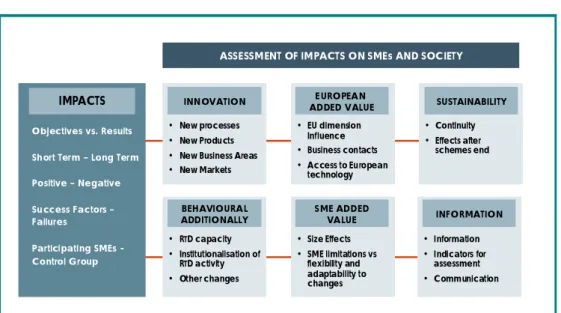
Figure 1.2 Impacts on SMEs and society in general
4. Impacts
Impact is a measure of all significant effects of a development intervention, positive or negative, expected or unforeseen, on its beneficiaries and other affected parties. The objective here is to identify and assess all significant effects of the schemes (i.e. the RTD projects developed) on its beneficiaries (SMEs and their associations); other affected parties (RTD performers and others) and where possible on society.
5. Innovation
The evaluation will intend to assess the effects of the schemes on the innovation capacity of participating SMEs, this is to say, to which extent - as a result of the projects - have SMEs increased their ability to create better or more effective products, processes, services, technologies, or ideas that can be subsequently accepted by markets and society in general.
6. Behavioural additionality
Apart from effects such as increased turnover, enhanced productivity, etc. (output additionality) and others such as the induction to SMEs to spend additional resources on RTD (input additionality), the schemes may have supplementary effects on the enterprises’ RTD behaviour. This section of the evaluation focusses on the identification of changes in firms’ routines, trying to assess if participation in the schemes has made them become more involved in R&D activities and if there have been permanent changes in the conduct of companies and particularly on the institutionalisation of innovation and R&D-activities.
Objectives vs. Results Short Term – Long Term Positive – Negative Success Factors –
Failures
Participating SMEs -Control Group
ASSESSMENT OF IMPACTS ON SMEs AND SOCIETY
• New processes • New Products • New Business Areas • New Markets • EU dimension Influence • Business contacts • Access to European technology • Information • Indicators for assessment • Communication • RTD capacity • Institutionalisation of RTD activity • Other changes • Size Effects • SME limitations vs flexibility and adaptability to changes • Continuity • Effects after schemes end
IMPACTS INNOVATION ADDED VALUEEUROPEAN
INFORMATION BEHAVIOURAL
ADDITIONALLY SME ADDED VALUE
7. European Added Value (EAV)
The focus of this section is on the European dimension of the schemes and the derived results. This is, the effects obtained from the intervention at European level that could not have been obtained if interventions had taken place at regional or national level. For EAV, the establishment of business contacts with SMEs from other countries, the access to technological know-how not available at national level, etc., is relevant.
8. Sustainability
Sustainability is a measure of whether the benefits of a development intervention are likely to continue after external support has been completed (long term impacts). In this sense, the evaluation will intend to assess whether the diverse results and impacts of participation in the schemes are durable over time and if they will continue when there is no more public funding.
9. Information and dissemination
Under this heading a series of operational issues are dealt with, regarding information and indicators for future monitoring and assessment of the schemes, communication with SMEs and dissemination of good practices.
1.5 Selected issues discussed more in detail
All evaluation aspects are introduced in Section 1.4 above. In this section some important elements are discussed in more detail, i.e.:
additionality;
European Added Value; behavioural additionality;
becoming more innovative as item to be evaluated; time lag challenge in impact assessment.
Additionality
Additionality can be easily defined19 as “…the extent to which something happens as
a result of an intervention (any project, programme or policy that is implemented or supported by the public sector) that would not have occurred in the absence of the intervention”. However measuring this is more complicated. It does not suffice to measure something just before and after the intervention, because subjects not affected by the intervention will also show development over time. To tackle this - as in this Interim Evaluation - a Difference-in-Difference method is often applied. This method compares a treatment group and a control group, both before and after the intervention.
A few basic concepts with regard to additionality are presented in Text box 1.4 below.
In the framework of this Interim Evaluation various aspects of additionally are distinguished, e.g.:
Basic additionality. For example if an enterprise would have undertaken the same actions with regard to R&D and innovations if no public support would have been received, the basic additionality is zero.
If in absence of the support by FP7, national innovation measures would have supported the enterprises concerned in a similar way, the support as such may
19 As for example defined in a UK Additionality Guide, a standard approach to assessing the additional
impact of interventions, English Partnerships (UK Agency, now Homes and Communities Agency) Additionality Guide, Third Edition, 2008.
result in additionality, but European additionality is not there. See the section below for a more elaborated introduction of EAV.
Additionality on specific aspects, for example the behaviour of the enterprise concerned in areas of R&D and innovation. If a certain subsidy has resulted in a new production technology applied by the enterprise this may result in
additionality in terms of turnover and employment; but if the enterprise does not react differently with regard to opportunities to get engaged in R&D and
innovation activities as before, there is no ‘behavioural additionality’. See section below.
Text box 1.4 Additionality
Based on a paper from Gerhard Streicher et al. (2004) some basic characteristics of the concept additionality are presented here.
Additionality is the key issue of subsidy-based funding. Additionality implies that government spending does not crowd out but rather stimulates additional private R&D investment. Several different forms of additionality can be distinguished:
input additionality of R&D subsidies: do public contributions to private research boost total private R&D expenditures - and if so, do they boost them by an amount which is larger than the amount of taxpayers’ money which was used in this way?
output additionality: what is the effect of the subsidies research on a firm’s turnover, profit, etc.?
behavioural additionality: in how far does the existence and availability of public subsidies alter firms’ research decisions?
Reactions of own R&D expenditures to a subsidy:
full crowding out occurs when firms perceive the subsidy as “windfall gains”. Firms do not change their R&D plans, but rather use the subsidy to reduce their own spending;
partial crowding out occurs if firms raise their total R&D expenditures, but less than the amount of the subsidy;
unchanged level of own R&D expenditures: in this case, the firm uses the subsidy to extend total research by the full amount of the subsidy;
crowding in. After receiving the subsidy, the firms also increase its own expenditure on R&D. For example the bank perceives the grant as a positive signal, resulting in an extension of the credit line or the R&D grant acts as a stamp of approval for the R&D department that might succeed in obtaining a larger budget share in overall resources of the firm.
European Added Value (EAV)
The Council decision of 19 December 200620, starts in the first section with “…priority should be given to those areas and projects where European funding and cooperation is of particular importance and provides added value”. However it seems that EAV has not a common operational definition. In a report of 2000 on the issue of EAV in RTD support21 (focusing on FP5), the definition given to start the
discussion is “the value resulting from EU support for RTD activities which is additional to the value that would have resulted from RTD funded at regional and national levels by both public authorities and the private sector”. But there is no operational definition of EAV which facilitates its measurement. The report mainly focuses on reviewing the concept of EAV and its implementation in EU RTD Programme life-cycles and especially on suggesting improvements in the way EAV can be captured. The paper states that it proves rather difficult to conclude that EAV has actually been achieved and the authors state that the main challenge is not arriving at an operational definition allowing measuring EAV but that the primary challenge is to maximise EAV. Hence the paper mainly focuses on programme
20 Decision No 1982/2006/EC concerning FP7.
21 Identifying the constituent elements of the European Added Value (EAV) of the EU RTD programmes:
conceptual analysis based on practical experience”; Final Report, Study performed by: Yellow Window Management Consultants SA/NV, Technofi SA and Wise Guys Ltd., commissioned by DG RTD, 20 November 2000 (see:
http://ec.europa.eu/research/evaluations/pdf/archive/other_reports_studies_and_documents/fp5 _monitoring_eu_added_value_of_rtd_programmes.pdf).
cycle changes which may optimise EAV. The report suggests selection principles in order to assure activities are EAV-compliant. The prime consideration is that all actions and activities should be aimed at the realisation of one or more high-level EU goals. In addition, they should comply with one or more specific conditions.
Allowable actions and activities are those which: are necessitated by the requirements of the Treaty; cannot be supported by individual Member States alone; help avoid duplication of effort in the Member States;
complement work conducted within the Member States on issues and problems which have a European dimension;
are trans-national in character because they require the involvement of participants from different Member States;
have potential net benefits which are trans-national in character.
It is stated that the concept of EAV is actually a composite of a number of tricky concepts, e.g. the ‘EU concepts’ of subsidiarity and proportionality, the concept of additionality and the generic - but still difficult to define - concept of value itself. Also today the concept EAV is not used in a uniform way, as is demonstrated in the following two examples.
In October 2013 the website of DG Justice and Home Affairs22 of the EC stated, a.o.: European projects mean … that at some time the project will have relevance for
all the Member States of the EU. The project should generally ‘operate’ in more than one EU country.
European added-value includes geographical coverage of a project but most of all analysis and experimentation that leads to recommendations for common models, protocols, guidelines, structures, mechanisms, policies and processes.
In practice, to build ‘European added-value’ into a project, it is necessary not only to attempt to run the project in a number of Member States and build
multinational partnerships, but also to look beyond the confines of the project to find the broader European relevance of the issues, the actions and the output of the project.
A second example is an explorative study23 initiated by the Bertelsmann Stiftung and
implemented in cooperation with the Centre for European Economic Research (ZEW) in relation to the use of the concept of European Added Value by the Commission when it released its EU budget proposal for 2014 to 2020. According to the EC, added value “is best defined as the value resulting from an EU intervention which is additional to the value that would have been otherwise created by Member States alone”. In the opening section of this report, EAV is defined. From an economic point of view, public spending at the European level ideally fulfils two criteria. For one, it should entail positive net benefits, i.e. the benefits should exceed the costs of public
spending. Second, it should entail EAV of public spending, i.e. the net benefits of
public spending at the European level should be larger than those at the national level. In other words, EAV essentially compares the net benefits of spending by national governments with those that arise from spending in the same category at the European level. In this sense, added value is technically the difference between the net benefits of spending at the EU level and the national level. It is important to note that the magnitude of net benefits and EAV are not conceptually connected. For
22 http://ec.europa.eu/justice_home/daphnetoolkit/html/launching_project/dpt_launching_project_12_en.html 23 European Added Value of EU Spending: Can the EU help its Member States to Save Money?
Exploratory Study, 2013 Bertelsmann Stiftung, Gütersloh Germany (see: http://www.bertelsmann-stiftung.de/cps/rde/xbcr/SID-C811381D-433DAAF5/bst/xcms_bst_dms_38323_38324_2.pdf).
instance, even if net benefits are negative, provision at the EU level may still be advantageous.
From the formulation of evaluation question Q11 (see Section 1.1) it is evident that here the formulation as used in the report from 2000 commissioned by DG RTD is still followed.
Behavioural additionality
SMEs innovate less than they might because of the risks involved in developing and commercialising new solutions and because of concerns over the extent to which they can capture enough of the resulting benefits. However, changing the cost of innovation is only part of the story. SMEs need to assign people and resources to these activities, possibly increasing their technical staff, and being prepared to work with third parties possibly even rivals on innovation projects that otherwise make no sense.
The term behavioural additionality has come into general use as the name for this wide-ranging collection of internal changes in attitude, outlook, resourcing and behaviour that one finds in organisations that are becoming more innovative.24
Changing SMEs’ behaviour around innovation may be more important than the individual innovations made possible by the FP. If behaviour change persists then a greater proportion of European SMEs will be in a position to take forward opportunities revealed through their trading relationships or professional networking: they will be able to appropriate knowledge from any quarter and take advantage of technological externalities.
Becoming more innovative as item to be evaluated
Innovation is a critical intermediate step between the specific objectives of FP7 (accelerating technological advance) and the more challenging goals of Europe’s economic strategy, as set out in the Lisbon Strategy at that time.25 In this
(contemporaneous) strategy, innovation is seen as the motor of economic growth and innovation is spurred on when economic actors create or gain access to new knowledge and technology.26 From this perspective, FP7 ought to produce the
knowledge, technology and relationships necessary to contribute to an increase in the quantum of innovation. There is an argument in the innovation literature that smaller firms are more innovative than larger firms and more inclined to pursue radical innovation. Moreover, the literature suggests that these more radical developments have a greater likelihood of transforming economic performance or seeding new economic sectors and so contribute more strongly to longer-term improvements in productivity and competitiveness. By implication, SMEs and their disruptive technologies are more deserving of public support. There are questions about the extent to which all innovations are equally valuable and always make positive contributions to sectoral productivity or customer value, however, the evidence suggests this is true in aggregate notwithstanding the fact that specific cases may contradict this headline.
In Text box 1.5 some findings of a recent study into innovations because of FP7 support are presented.
24 The original idea of behavioural additionality was arguably driven more by the needs of evaluators and
policymakers looking for interesting programme effects they could measure and report to budget holders alongside the more conventional outputs of publications and IP.
25 The European Parliament website lists the conclusions of the European Council, held in Lisbon 23 and
24 March 2000, setting out an economic strategy for the next 10 years.
26 Innovation economists believe that what drives economic growth in today’s knowledge-based economy
is not primarily capital accumulation, but innovative capacity spurred by appropriable knowledge and technological externalities.