UNM Digital Repository
English Language and Literature ETDs Electronic Theses and Dissertations
Summer 5-9-2019
Multilingual Writers and Online Writing
Instruction: Expanding Our Theoretical and
Instructional Frameworks
Mariya V. Tseptsura
University of New Mexico - Main Campus
Follow this and additional works at:https://digitalrepository.unm.edu/engl_etds Part of theOther English Language and Literature Commons
This Dissertation is brought to you for free and open access by the Electronic Theses and Dissertations at UNM Digital Repository. It has been accepted for inclusion in English Language and Literature ETDs by an authorized administrator of UNM Digital Repository. For more information, please [email protected].
Recommended Citation
Tseptsura, Mariya V.. "Multilingual Writers and Online Writing Instruction: Expanding Our Theoretical and Instructional Frameworks." (2019).https://digitalrepository.unm.edu/engl_etds/274
Mariya Tseptsura Candidate English Department
This dissertation is approved, and it is acceptable in quality and form for publication: Approved by the Dissertation Committee:
Todd Ruecker , Chairperson
Tiffany Bourelle
Bethany Davila
Susan Miller-Cochran
MULTILINGUAL WRITERS AND ONLINE WRITING INSTRUCTION: EXPANDING OUR THEORETICAL
AND INSTRUCTIONAL FRAMEWORKS
by
MARIYA TSEPTSURA
B.A./M.A., Russian New University, 2010 M.A., English, University of South Dakota, 2013
DISSERTATION
Submitted in Partial Fulfillment of the Requirements for the Degree of
Doctor of Philosophy English
The University of New Mexico Albuquerque, New Mexico
ACKNOWLEDGEMENTS
First, I would like to thank Dr. Todd Ruecker for his continuous guidance and unwavering support throughout my graduate career at UNM. He provided invaluable advice and feedback at every stage of this project and remained my mentor from the first year of my doctoral program. Some of the most valuable lessons about research and teaching I learned from collaborating with Dr. Ruecker on research projects and taking coursework with him on composition theory, pedagogy, and research methods.
I would also like to thank my dissertation committee members for their important contributions to this project and their guidance in my writing process. Dr. Tiffany Bourelle not only introduced me to online writing instruction and provided unique insights into the workings of the eComposition program at UNM but also helped me design and implement this study. I am deeply grateful to her for believing in this project and for allowing me to take a deep and unbiased look into the students’ and instructors’ experiences in the program. I also greatly appreciate the opportunity to work with Dr. Bethany Davila on revising and shaping this manuscript. Dr. Davila’s continuous guidance and unique insights helped me be more aware of the complexities of my research participants’ experiences.
Furthermore, I would like to thank all of the participants in this study. Without their generous help and openness, this project would not have been possible. I especially
appreciate all the instructors who not only met with me multiple times to talk about their online pedagogy and their students but also shared with me their courses for this research project. I am equally grateful to all the student participants whose candor and willingness to help allowed me to gain invaluable insights into their experiences.
I would like to thank my fellow graduate student colleagues who helped me keep my focus and calm through the long writing process: Soha Turfler, Melisa Garcia, and
Elise Piotrowicz. I am grateful to Anna Shkireva for her continuous support and for
providing me with the space, both literal and figurative, for completing this work. Finally, I would like to thank my husband Nicholas and his parents Sheila and Joe for believing in me and supporting me in multiple ways throughout my doctoral studies.
MULTILINGUAL WRITERS AND ONLINE WRITING INSTRUCTION: EXPANDING OUR THEORETICAL AND INSTRUCTIONAL FRAMEWORKS
by
Mariya Tseptsura
BACHELOR AND MASTER OF ARTS, LINGUISTICS AND TRANSLATION STUDIES
MASTER OF ARTS, ENGLISH
DOCTORATE OF PHILOSOPHY, ENGLISH ABSTRACT
This dissertation is based on a year-long mixed-methods study of linguistically diverse students in one online composition program. It focuses on the experiences of students and instructors from 27 online sections of first and second-year college writing courses. Using student and instructor surveys and interviews, it analyzes how second language writers’ success was affected by the online environment, especially by the issues of technology and digital divide, students’ online identity construction, and the lack of authentic online classroom learning communities. The manuscript provides a broader overlook of students’ experiences across linguistic backgrounds and uses four case studies to offer a detailed, in-depth account of four multilingual students’ paths through their online writing courses. This dissertation provides writing instructors and administrators with recommendations to re-envision online writing courses, mobilizing the affordances of online venues to promote the success of students from all language backgrounds.
TABLE OF CONTENTS
LIST OF FIGURES ... ix
LIST OF TABLES ... xi
CHAPTER 1: LINGUISTIC DIVERSITY AND ONLINE WRITING INSTRUCTION ... 1
Introduction ... 1
On Terminology... 5
Chapter Overview... 7
CHAPTER 2: LITERATURE REVIEW ... 10
Second Language Writing’s Place in OWI Literature and Practice ... 10
Second Language Writers’ Unique Characteristics and Needs ... 12
Instructional Design and The Nature of Online Writing Courses ... 15
Digital Divide and L2 Writers ... 18
Possibilities of OWI and CMC for Multilingual Students: From Feedback and Tutoring to L2 Writers’ Identity ... 21
CHAPTER 3: RESEARCH DESIGN AND METHODOLOGY ... 29
Institutional Context... 29
Research Design ... 33
Research Questions ... 33
Case Study Research ... 34
Research Instruments ... 37
Data Collection ... 40
Participant Overview ... 43
Theoretical Frameworks: From Poststructuralist Identity to the Community of Inquiry
Framework ... 48
Identity in L2 Acquisition and L2 Writing ... 48
Community of Inquiry Framework and OWI ... 51
Limitations ... 57
CHAPTER 4: STUDENTS’ EXPERIENCES IN ONLINE WRITING COURSES 59 Introduction ... 59
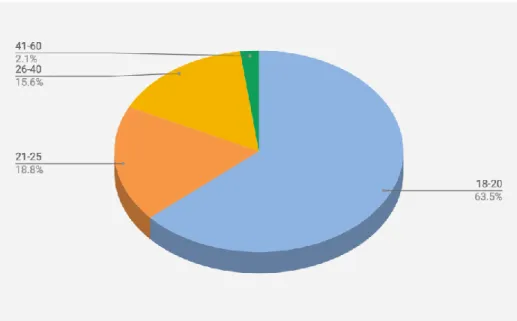
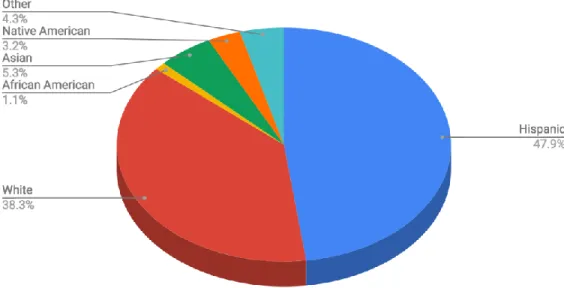
Survey Results: Student Participants Overview and Demographics ... 59
Student Participants’ Linguistic Backgrounds ... 61
Survey Results: Students’ Challenges in Online Writing Courses ... 64
Survey Responses: Comparing Online and Face-to-face Courses ... 68
Students’ Technology Use: Navigating Online Courses ... 70
Classroom Community, Social Presence, and Peer Interaction ... 87
Conclusion ... 102
CHAPTER 5: DETAILED CASE STUDIES OF MULTILINGUAL STUDENTS IN OWCS ... 103
Introduction ... 103
Anika: Resourcefulness and recent-arrival immigrant identity ... 104
Self-Positioning and Constructing Identity: Passing for a NES Online ... 112
Conclusion ... 115
Diego: Building L2 writer confidence can be complicated ... 116
Engaging with the curriculum and using technology ... 119
Student-instructor relationship: ... 125
Classroom community: L2 writers sticking together... 128
Diego’s online identity: language learner confidence and insecurity ... 130
Conclusion ... 133
Tai: When the Outcomes Are Less than Ideal... 134
Digital Literacy and Technology Use... 135
Classroom community: A Little Help from My Friends ... 141
Identity and Positioning: Immigrant Narrative and the American Dream ... 143
Conclusion ... 149
Camila: Being on Your Own ... 149
Engaging with the curriculum and technology; interacting with instructor ... 153
Identity and Community: English-only and a Virtual “Classroom of Three” ... 156
Conclusion ... 160
CHAPTER 6: DISCUSSION AND IMPLICATIONS ... 162
The Challenges of Increased Reading and Writing Load ... 162
Usability, Technology, and Navigating the Online Course ... 166
Identifying Multilingual Students and Students’ Identities ... 175
Identity, Social Presence, and Classroom Community ... 182
Recommendations for OWI Instructors and WPAs ... 188
Concluding Thoughts... 191
REFERENCES... 194
APPENDIX A: STUDENT SURVEY QUESTIONS ... 213
APPENDIX B: INSTRUCTOR SURVEY QUESTIONS ... 221
APPENDIX C: STUDENT INTERVIEW QUESTIONS ... 226
APPENDIX D: STUDENT USABILITY WALKTHROUGH QUESTIONS ... 228
LIST OF FIGURES
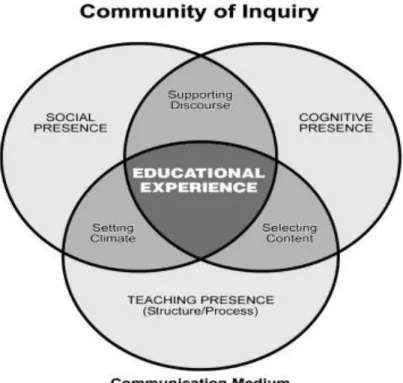
Figure 2.1. Visual representation of the Community of Inquiry Framework...52
Figure 4.1. Age of student participants (in years) ...59
Figure 4.2. Students’ ethnicity ...60
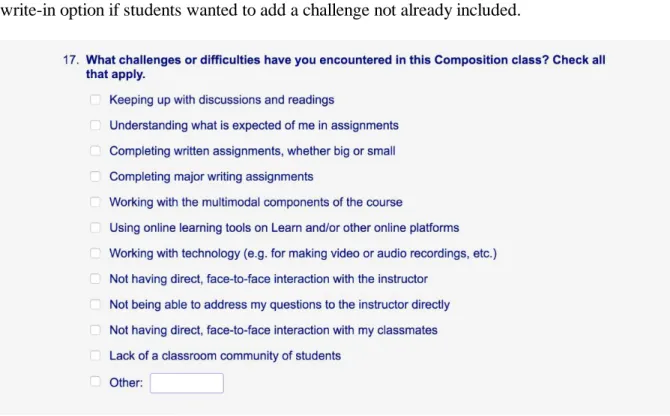
Figure 4.3. Question 17 on the student survey ...63
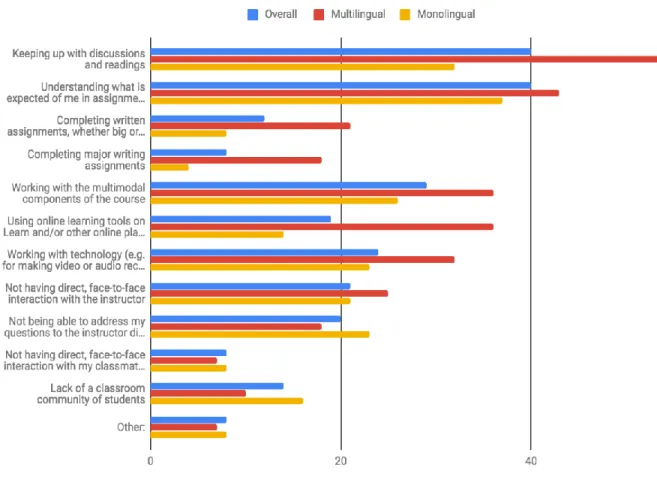
Figure 4.4. Challenges in online writing courses. Students’ responses to Question 17 (in percentages) ...65
Figure 4.5. A screenshot of Tai’s usability walkthrough ...72
Figure 4.6. The “To Do List,” the only item inside Week 16 in Hannah’s English 219 class ...74
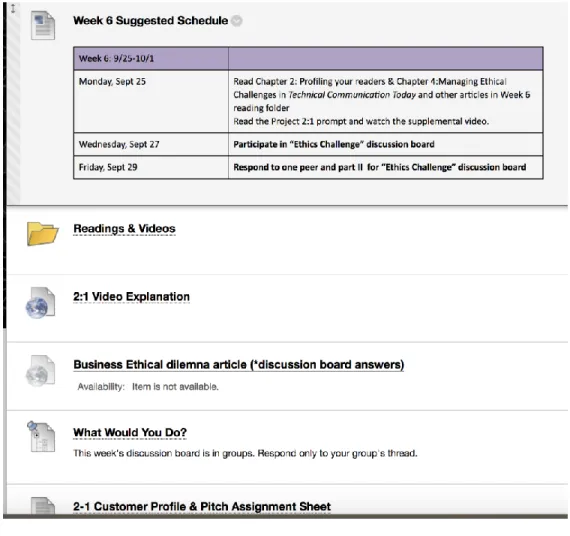
Figure 4.7. The view from inside Week 6 folder in Hannah’s English 219 course ...76
Figure 4.8 The view of Week 6 folder from “Project 1” page in Hannah’s course ...77
Figure 4.9. “Turn in assignments here” page in Hannah’s English 219 course ...78
Figure 4.10. A screenshot of Lee’s “Assignment Prompts” page in her English 219 course ...79
Figure 4.11. A screenshot of Stage II page during Diego’s walkthrough ...80
Figure 4.12. A screenshot of Stage II page taken at a later time ...81
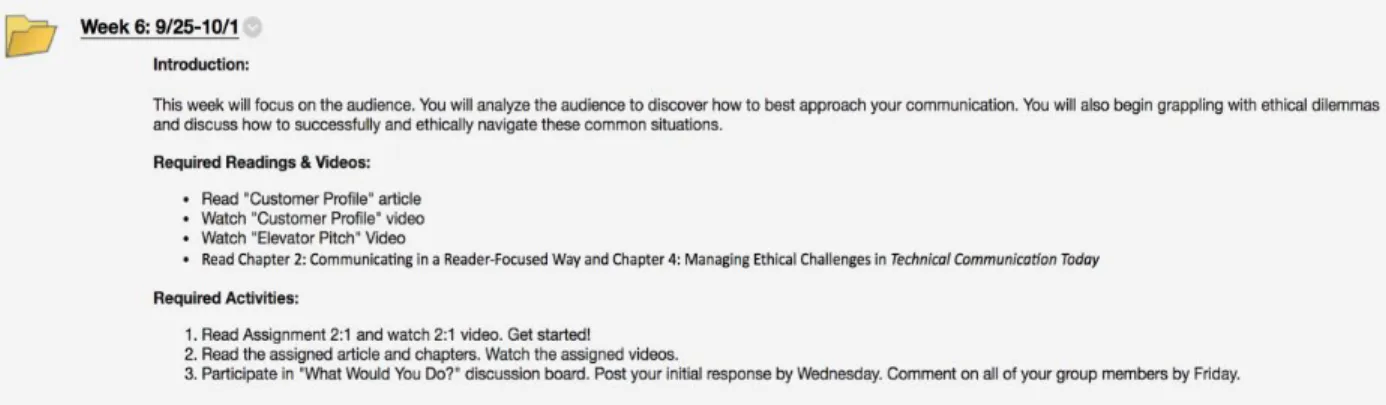
Figure 4.13. A screenshot of Week 6 folder during Diego’s usability walkthrough ...82
Figure.5.1. One of the slides from Anika’s elevator pitch presentation ...107
Figure 5.2. An example of Jessica’s positive feedback on Anika’s use of parallel sentence structures ...108
Figure 5.3. An example of Jessica’s carefully worded criticism and suggestions for improvement for Anika’s word choice ...109
Figure 5.4. Diego’s company profile website (homepage). ...119
Figure 5.5. Jessica’s instructions for making the Elevator Pitch video ...121
Figure 5.6. Jessica’s instructions for accessing her feedback ...123
Figure 5.8. An example of Hannah’s feedback ...136 Figure 5.8. An example of Tai’s response to a student he was not familiar with
outside of class ...145 Figure 5.9. Tai’s response to a friend in the first third of the semester ...146 Figure 5.10. Tai’s response to a friend’s post towards the end of the semester ...146 Figure 5.11. One of the slides from Camila’s instructional video for how to make
chocolate-covered strawberries ...152 Figure 5.12. An excerpt from Camila’s analytical report ...153 Figure 5.13. One of Camila’s first responses to a peer’s post on the discussion
board ...158 Figure 5.14. Camila’s last comments on a peer’s post ...158
LIST OF TABLES
Chapter 1: Linguistic Diversity and Online Writing Instruction Introduction
The last two decades in the history of higher education in the United States have been marked by greater diversity on multiple levels: greater cultural and linguistic diversity of its student demographics and higher diversity across instructional modes. Online and hybrid courses have become a common feature for most public and private higher education institutions. Online education has been steadily growing over the past two decades, and now at least one in three students is taking at least one online class every semester (“Online Consortium Report,” 2017). Moreover, the demographics of students taking courses online have shifted from primarily distance students to increasingly local students choosing to take a mix of onsite and online courses (e.g., Friedman, 2018). According to the latest Online Learning Consortium’s report, a total of 6,359,121 students were taking at least one online course in the Fall 2016, which represented 31.6% of all students studying at higher education institutions in the US. This number grew by 5.6% between 2015 and 2016, and while the total number of students studying on campus dropped by over a million (or 6.4%) between 2012 and 2016, the number of students who are not taking any online courses dropped even more over the same period of time—by 11.2%, or 1,737,955 students. It is clear that the growth of online education is a well-established trend that is unlikely to change, especially as more students prefer to take a combination of onsite and online courses to reconcile the demands of school and work.
With this growth, there has been some hope that online programs will make higher education more accessible. Online education has been praised for providing much needed convenience to students overtaxed with busy work and study schedules and for making college education available to those groups of students who would normally struggle in
traditional face-to-face courses. A recent article in The Chronicle of Higher Education
cited a common perception among university faculty members that online education “can bring together students from more diverse backgrounds — and allow them more chances to connect with each other — than many traditional classrooms do” (Blumenstyk, 2018).
But despite all the optimism surrounding online education, retention rates in online courses have been significantly lower than in face-to-face classes; according to some research, as many as six or seven times lower (Gaytan, 2015). Students at community colleges, it was found, are also less likely to succeed if they take online courses (Barshay, 2015) even if taking online courses helps them complete their degrees. Some polls also suggest that faculty across disciplines remain skeptical of the promise of online education; according to the Online Consortium 2015 Report, “Only 29.1% of academic leaders report that their faculty accept the ‘value and legitimacy of online education.’” Furthermore, research shows underrepresented and academically underprepared students (including English language learners) are the ones that are most likely to fail in online courses (E.g. Harrington, 2010; Jaggars & Bailey, 2013; Xu & Jaggars, 2013). The CCCC OWI (Online Writing Instruction) Committee’s 2011 State of the Art report confirms these finds and states that “some students and faculty will be better suited to the online educational environment than others” (p.2). It appears that multilingual writers are among those who will have better chances of succeeding in a traditional classroom.
At the same time, research outside of the writing studies field shows that digital technology and various affordances of online spaces have the potential to improve
multilingual students’ learning and language skills development – if these affordances have been utilized appropriately and with due care. From being liberated from the time
instructional materials in different mediums to having more tools to re-create their social identity in the online spaces, multilingual students have a number of benefits to explore in an online writing course (OWC).
However, the experiences and needs of multilingual writers in fully online English composition courses remain largely underrepresented in research and in theory. How do distinct needs of multilingual writers, well-documented in research over the last three decades, change - or remain unchanged - when the writing course goes virtual? What are the conditions that allow multilingual writers to take advantages of the unique affordances of online spaces? What kinds of curricular and design strategies are best suited for ensuring multilingual writers’ success? My project aims to help answer these questions by providing a close look at the experiences of resident and international multilingual writers in one online writing program. My initial goals were to uncover the main factors defining multilingual writers’ experiences in online writing courses as well as their instructors’ perspectives on what pedagogical strategies are most effective in working with multilingual students online. As my data collection progressed, I came to pay particular attention to the ways all students and multilingual students in particular navigated their online courses and engaged with the course materials, their peers, instructors, and the technology. In my description and discussion of the findings, I pay particular attention to the instances where usability aspects of the course (the ease and intuitiveness of navigation, the ways instructors designed and structured their courses, as well as the ways students engaged with the LMS) hindered or jeopardized students’ success. As analyzed student interviews, students’ written work, and instructor interviews, I also discovered some important themes in how students created their identity online and positioned themselves in the class by disclosing or withholding certain details about their backgrounds. While students’ social identity was one
of my main foci from the start, the focus on classroom community developed later out of my observations of students’ interactions with their peers and their experiences with their online and offline communities. As I found the topic of community insufficiently developed in the OWI literature, I turned to the Community of Inquiry framework (Garrison,
Anderson, & Archer, 2000) that provided a useful theoretical lens in looking at both students’ peer interactions and identity construction. As I argue, in the last chapter of this manuscript, that the Community of Inquiry (CoI) framework should be more widely adopted into OWI research as a theoretical and analytical tool, I also point to ways the CoI framework needs to be problematized and expanded to account for the presence of
linguistic diversity in online classrooms.
As the student demographics in higher education institutions are undergoing
significant changes, linguistic diversity needs to become the default setting for program and curriculum design across disciplines and especially in composition studies. As Matsuda (2006) argued over a decade ago, “all composition teachers need to reimagine the
composition classroom as the multilingual space that it is, where the presence of language differences is the default” (p. 649). And while this call might not be a nouvelle idea, recognizing and accounting for the linguistic diversity in composition classrooms become even more imperative when these classrooms become virtual. This study provides one insight into how a group of multilingual and monolingual students navigated their
mainstream OWCs in one online writing program, facing new and unique challenges but also uncovering the opportunities this instructional mode provides. It is important to expand our research efforts to provide OWI scholars and practitioners sufficient data upon which a more inclusive theory and practice of OWI can be built.
This research project provides an important insight into the factors that shape multilingual students’ experiences in fully online writing courses. Not all of the findings are generalizable, but the detailed accounts of students’ experiences paint vivid pictures of the challenges multilingual students faced and the strategies they used to overcome them. This project is a needed contribution to the field that seeks to make sure that OWI succeeds as “part of the new culture-wide, digital landscape” while growing “in positive ways, without overlooking the interests of any one group” (Newbold, 2015, p. xv).
On Terminology
When talking about linguistic minority students, assigning labels to the students’ lived experiences is an inevitable and ideologically complicated task. Multiple terms have been used in different disciplines and at different times: ESL students, ELL, ESOL, LEP, EFL, NNES, second language (L2) writers, linguistic minority, multilingual, or bilingual students. However, as Cox, Jordan, Ortmeier-Hooper, and Schwartz pointed out (2010), “all of these terms mask the complexity of second language writers’ identities” (p. xv). Paul Kei Matsuda (2006) commented that none of these terms are without shortcomings: “Each of these terms comes with its own history, some more contended than others… when does a person stop being an English language learner? What is the bar- level of expertise? Furthermore, ‘ESL’ and ‘ESOL’ are often seen as negative markers that stay with students long after they have exited from formal programs” (p. 4). Indeed, “ESL,” “ESOL,” or even “ELL” have been associated with negative connotations (e.g., Costino & Hyon, 2007; Ortmeier-Hooper, 2008; Rucker, 2011), and students have experienced their stigmatizing effect. Matsuda (2006) further acknowledges the limitations of the term “second language writers” as well: indeed, for multilingual students, English might be their third or fourth, or fifth language. Based on the findings of this study, I would like to add that it might be even
more complicated than that: some student participants identified English as their first language even though it was not the language they learned when they first learned to speak. However, because it had become their primary language in both school and home settings, students considered English to be their main - and consequently first - language.
As my intent is to represent the student participants’ perspectives as accurately and truthfully as possible, I have chosen to use the term “multilingual” when talking about all students who are proficient in more than one language, whether they consider English to be their first, second, or third language, and regardless of their legal status (international students, permanent residents, US-born citizens, and everything in between). This term brings more positive connotations and creates a broader umbrella for students from very diverse backgrounds that would be next to impossible to clearly separate into “L1” or “L2” categories. Using a broader term, however, comes with its own consequences. While Miller-Cochran (2015) also used the terms “multilingual,” she noted that it united students from vastly different backgrounds: “These students might be proficient in academic writing in their first language or perhaps in multiple languages but probably not in English. By contrast, some students might not have developed written literacy in their first languages, of which English may be one” (p. 291). She further added that because of these highly diverse backgrounds multilingual students might be coming from, “identifying students who might benefit from a pedagogical approach designed for language diversity can be incredibly difficult” (p. 292). To that argument, I want to point out that traditional, English-only speaking students will benefit from more accessible course design and more inclusive pedagogies as well. Furthermore, since most of the curriculum and course design for OWCs is completed before the instructor even knows who her students would be, making sure that all OWCs are created with linguistic diversity in mind becomes imperative.
In addition, I use the term “monolingual students” to refer to the traditional, Native English-speaking students who are not proficient in another language. While this term has its own limitations, I use it in contrast to the “multilingual” term I use to describe the linguistically multiliterate students in my study. Some of the students who were grouped under the “monolingual” term indicated some knowledge of another language (e.g., one or two years of Spanish in high school), but all of them indicated their knowledge was very limited and normally they did not use the other language outside of the foreign language classroom. At the same time, the term “monolingual” does not come without limitations as it obscures the variety of regional, class, and other types of dialects of English represented by the participants grouped under this umbrella term. Nonetheless, I chose to use this term as it provides better readability by making a clear distinction between multilingual and monolingual students. While the experiences of speakers of dialects other than
Standardized American English might in some aspects be similar to those of students speaking multiple languages, the confines of the present study did not allow me for a deeper look into the “weaker forms of language differences,” in Matsuda’s term (2006), of the linguistic variation that native English speaking student participants represented.
A more detailed description of student participants’ backgrounds will follow in Chapter 3. Finally, I use the terms “second language” (L2) writers or “ELL” in Chapters 2 and 3 when referring to the published literature in the fields of second language writing and second language acquisition in order to represent the author’s voices more accurately and to connect my work to the existing conversations in the fields.
Chapter Overview
The next two chapters lay the foundation for the findings and analysis of this project. Chapter 2 discusses some of the main trends in the scholarly literature covering the
intersections of second language writing, online writing instruction, and community of inquiry framework. The chapter discusses the available research on linguistic diversity in digital and online composing. The chapter takes a look at different perspectives, from second language acquisition to second language writing, composition studies and OWI, and community of inquiry framework. I point to some of the main theories and pedagogical suggestions presented in these diverse scholarly perspectives while also identifying the gaps in OWI and CoI literature regarding addressing linguistic diversity. Chapter 3 describes the design and methodology of my study; I provide an overview of the institutional context, describe the research questions and methods, and give a brief
overview of the data collection and analysis as well as a preview of the study participants. The next two chapters focus on the main findings of the study. Chapter 4 opens with a discussion of survey results and proceeds to explore issues of technology use and CMS navigation as well as classroom community and social interaction. Chapter 4 pays particular attention to the experiences of multilingual writers, and it compares survey results of monolingual versus multilingual students. However, it explores the central research questions across student linguistic backgrounds in order to better understand how online writing instruction impacts students’ experiences across social, cultural, and
linguistic borders. Chapter 4 opens with an overview of the student participant
demographics, followed by a more detailed look at students’ linguistic backgrounds. Next, it discusses the challenges students faced in their online courses, comparing student responses across language backgrounds. The next section offers a brief overview of what differences students perceived between online and face-to-face courses. The last two sections explore in more detail students’ engagement with the course management system (CMS) and the ways students interacted with peers and the issues of building effective
learning communities. These last two sections draw on survey results as well as interview and usability walkthrough data. Chapter 4 thus describes the main findings of this study and lays the foundation for the arguments further elaborated in Chapter 6.
Chapter 5 presents detailed case studies of four multilingual students. These four students were selected for a closer analysis as they represent a range of experiences and perspectives: three of these students were born outside of the United States, and two (Diego and Anika) had lived in the country for less than two years before enrolling in the study, while one of them (Tai) came to the US with his family as a child. The fourth
student, Camila, was born in the US into an immigrant family and considered Spanish to be her first language even as she was equally comfortable with English and Spanish. Among the students’ first languages were Spanish, Vietnamese, and Gujarati. These students also had strikingly different approaches to building their online identities and their online or offline learning communities. I also trace students’ engagement with technology and the challenges they faced in navigating their OWCs.
Chapter 4 and 5 thus present the main findings of this project. Chapter 6 then offers a discussion of these findings and the implications they have for further developing our theoretical frameworks and practice-oriented guidelines. I discuss in more detail the challenges multilingual writers faced, the issues of technology and CMS use, and the ways students were - or were not - able to build learning communities. The chapter closes with some recommendations for writing instructors and WPAs.
Chapter 2: Literature Review
Second Language Writing’s Place in OWI Literature and Practice
At this point in the history of writing instruction, it is rather a truism to say that online education has grown exponentially over the past few decades together with the increasing proliferation and sophistication of digital technology. It has been 20 years since Cynthia Selfe gave her CCCC Chair’s Address on the perils of not paying attention to how technology is changing the literacy landscape of the country, and in these years, the field of composition studies has been devoting increasingly more attention to the roles technology has come to play in writing, whether in the form of online writing instruction (OWI) or multimodal composing, with multiple studies and publications on the topic (e.g. growing number of publications in Computers and Composition several journals of distance education; books and edited collections by Hawisher & Selfe, 1999; Bolter, 2001;
Takayoshi & Huot, 2003; Selfe & Hawisher, 2004; Shipka, 2011; Warnock, 2009; Hewett & Ehmann, 2004; Hewett & DePew, 2015).The research published over the last three decades informed the Principles for Online Writing Instruction, adopted by the CCCC in 2013, which have become a set of guidelines frequently used in online writing programs across the US.
However, there are still some significant gaps in OWI research and practice,
especially at its intersection with Second Language Writing (SLW, or L2 Writing). When it comes to second language1 writers in online writing courses, research has been far from
sufficient. In CCCC OWI’s 2011 State of the Art of OWI report, for instance, the authors simply state that “The needs of EL2 [English language] learners and users are vastly
unknown and insufficiently addressed in the online setting – both fully online and hybrid” (Hewett & DePew, 2015, p.19). In the eight years since that report, the situation has not seen a sufficient change, with occasional publications or inclusions like Miller-Cochran’s chapter in Foundational Practices for OWI (2015) being rather an exception than the rule.
In part, the lack of more deliberate attention to L2 writers can be explained by what Matsuda (2006) called the myth of linguistic homogeneity: “the tacit and widespread acceptance of the dominant image of composition students as native speakers of a privileged variety of English” (p. 638). Scrutinizing the mechanisms of linguistic containment, Matsuda stressed that this myth means that not only L2 writers’ needs are likely to be treated as an afterthought in research or policy design, but that composition teachers will be eager to relegate L2 writers and their concerns to dedicated agents such as writing tutors or ESL courses. Based on the results of this study, thirteen years after the publication of Matsuda’s piece, the situation with institutional policies and instructor
attitudes has not changed to a very significant degree: L2 writing concerns are rarely part of a programmatic agenda, and instructors often feel underprepared to work with L2 writers, especially if they have to translate any experience and expertise they have in that area into online spaces.
The influence of this “myth” can be exacerbated in online environments as they tend to erase diversity to some extent or have a dehumanizing effect (Hewett, 2015, p.3).
Indeed, the lack of in-person interaction might affect teachers’ perception of their students. For example, in Matsuda, Saenkhum, and Accardi’s study (2013) of writing instructors’ perceptions of the presence and needs of L2 writers, the majority of instructors indicated
1 In this chapter, I use the term “second language writers” to connect to the body of literature existing in the
that they identified L2 writers in their class either through self-disclosure or by certain features of their spoken language. The researchers even noted that “One instructor
indicated that multilingual students were not identified because he or she taught all courses online” (p.75). Similarly, online instructors in this study indicated that they relied primarily on students’ self-disclosure to determine their language background. Thus, it becomes all too easy for writing instructors to overlook how diverse their classrooms are. Furthermore, writing instructors might also be compelled to design their courses for a “universal user” rather than “a universe of users” (Bowie, 2009) who all come with various experiences, abilities, skills, predispositions, etc. that affect the way they learn and interact with the curriculum.
Second Language Writers’ Unique Characteristics and Needs
Instructors’ awareness of the presence and needs of L2 writers in their online classes might often be lacking. However, apart from knowing who their students are, instructors also need to be able to tell what unique needs they might have and how to best address them. Research into the distinct needs of L2 writers in traditional writing
classrooms has a long history and a substantial record. While publications on Second Language Writing appeared in 1970s and 1980s, the interest in L2 writing really flourished in the 1990s with the rise in international student admissions and increased globalization. Many of the commonly cited works outlining the unique needs and characteristics of L2 writers (Silva, 1993; Valdés, 1992; Leki, 1992; Reid, 1998; Hyland, 2003; Freidrich, 2006; Ortmeier-Hooper, 2008; among others) demonstrate how L2 writers differ from their monolingual L1 peers in terms of language acquisition and cultural integration, educational backgrounds and history, learning styles, and attitudes towards language usage and
students is not a homogenous mass and that there is a wide range of differences between international L2 students and domestic L2 or bilingual students.
In one of the first comprehensive overviews of the unique characteristics of L2 writing, Silva (1993) concluded, among other things, that “adult L2 writing is distinct from and simpler and less effective (in the eyes of L1 readers) than L1 writing. Though general composing process patterns are similar in L1 and L2, it is clear that L2 composing is more constrained, more difficult, and less effective. . . Their transcribing was more laborious, less fluent, and less productive - perhaps reflective a lack of lexical resources” (p. 668). While Silva’s review focused largely on international student writers (and some would argue followed the deficit view of second language writers), some of its main findings, like the more limited vocabulary or the longer composing time, might still raise concerns when we consider the additional literacy load of online courses (Warnock & Gasiewski, 2018).
A number of studies published in 1990s and early 2000s (e.g., Váldez, 1992; Friedrich, 2006; Reid, 1998, among others) pointed out some important distinctions between between international ESL students, resident ESL or bilingual students, and in some cases, basic monolingual NES writers. Most of these scholars agree on a few key distinctions: resident L2 students might be more familiar with and proficient in spoken language (to the extent that some features of spoken, informal language might influence their writing) while international L2 students are often more comfortable with more formal written English and may lack the knowledge of many colloquial and informal features of English. International L2 students also tend to have more extensive metacognitive language awareness and explicit knowledge of linguistic features and rules whereas resident ESL or bilingual students may not have very extensive knowledge of the formal structure of English. Therefore, strategies that rely on explicit grammar instruction, for instance, might
not work equally well for these two groups of L2 students. These distinctions between different populations often grouped together under the umbrella of “L2 writers” lead some scholars to recommend using multiple modalities in communicating with students and in teaching materials such as creating text-based and video instructions or providing written notes for video lectures (e.g., Miller-Cochran, 2015).
Furthermore, international students specifically might face additional challenges when acquiring proficiency in academic English writing as they might be used to very different discursive and rhetorical practices that are often culturally-bound and are not addressed explicitly in EFL classrooms. Steinman (2003) cited a number of cases where L2 writers faced “collisions regarding voice, organization, reader/writer responsibility, topic, and identity” (p. 80). Similarly, Li (2014) attested that “In my learning to write in English I found that what was hardest for an outsider was not grammar, but those hidden, unarticulated values about good writing” (p. 105), and Canagarajah (1999) affirmed that “To be academically literate in English, second language students have to acquire not only linguistic skills, but also the preferred values, discourse conventions and knowledge content of the academy” (p. 147). Thus, mastering academic writing in English requires a more sophisticated understanding of discourse and rhetoric, and more specifically Western ideas of discourse and rhetoric: “Learning to write in English for academic purposes presents a significant challenge for non-native speakers. Not only must they deal with the obvious linguistic and technical issues such as syntax, vocabulary, and format, but they must also become familiar with Western notions of academic rhetoric” (Steinman, 2003, p. 80).
Considering all of these distinct characteristics, challenges, and needs that L2 writers bring into mainstream composition classroom, it is not surprising that most scholars believe L2 writers need additional support in terms of language development and
adaptation into the mainstream US academic writing and that writing instructors and programs need to be prepared to work with L2 students and provide them with this appropriate support, be it in the form of feedback (Ferris, 1999, 2003; Hyland & Hyland, 2006; Matsuda, 2009), individual guidance (e.g. Liu, Weiser, Silva, Alsup, Selfe & Hawisher, 2008; de Oliveira & Lan, 2012), placement options (Braine, 1996; Costino & Hyon, 2007; Silva, 1994), and assessment (Hamp-Lyons & Kroll, 1996; Leki, 1995; Weigle, 2002, among others). However, even if instructors have sufficient training in or experience with L2 writing in traditional settings, it is often difficult to say how prepared instructors are to work with L2 students in online environments and whether they are able to transform these best practices designed for face-to-face courses into their online classes. Most importantly, instructors and WPAs need to be aware of not only the distinct needs of L2 writers but also how those needs transform in online settings, and how the new medium of instruction might affect different groups of L2 writers (e.g., resident bilingual students versus international students) in different ways. This study adds to existing knowledge of these unique challenges and experiences.
Instructional Design and The Nature of Online Writing Courses
Even if the instructors are aware of the diversity of their classes and are prepared to accommodate it, the learning management system (LMS) employed by any specific school may lend itself to more or less flexibility. Ideally, instructors should have control over the design features of their class to make it user-centered and user-friendly; for instance, Blythe (2001) offered ways instructors can make sure their courses follow the best principles in instructional design through usability tests. However, in some situations instructors might have few opportunities to change the way their courses are designed.
Approaching course design from a global perspective, Rogers, Graham, and Mayes’s study (2007) probed into how educational technology developers approach cultural differences. While most instructional designers the researchers interviewed agreed that culture, among other factors, “has a strong impact on human-computer interaction” (p.198), they also confessed insufficient knowledge of the multitude of possible cultural differences. The researchers also pointed out that “instructional designers are frequently isolated physically and mentally from the learners for whom they are designing instruction” (p.207); interestingly, the study also found that “when the language of cross-cultural instruction was English, instructional designers tend to forget about the impact of other cultural issues and misunderstand the level of the English learners can handle” (p.205). Along the same lines, Gunawardena and LaPointe (2008) offered a more detailed
discussion of the sociocultural factors that impact online education on the global scale, from diverse learning styles and educational experiences or communication styles to language issues and differences in interpreting icons, symbols, and other elements of Web design. The authors also gave practical recommendations for design development. However, there are other factors that can affect L2 writers’ success in online classes.
Online courses might pose an additional challenge to L2 writers because all
instruction takes place in written form: “the instruction both is written and is written about the act of writing” (Hewett, 2015, p.3). The sheer amount of reading might be a challenge
in itself for L2 students; as Griffin and Minter (2013) pointed out, the amount of reading in online classes is “more than 2.75 times greater than in face-to-face classes” (p.153). Furthermore, as Hirvela’s (2005) study demonstrated, students might lack preparation for academic writing expected in writing-intensive courses; for instance, they might not be prepared to work with sources in the expected way and can inadvertently turn to
plagiarizing when they find that previous instruction failed to prepare them for work in content courses. While Hirvela (2005) called for better collaboration among instructors across curriculum, it is also worth noting that students in his study sometimes struggled with technology in various ways and sometimes had to improvise in order to overcome these challenges (e.g. one student printed out all of the course articles because she did not want to read them on her screen).
As Jaggars and Bailey (2010) demonstrated in their meta-analysis of studies comparing learning outcomes between onsite and online courses, fully online courses did not pose any significant advantages for students across socio-economic backgrounds and were in fact found to be potentially damaging to the progress of low-income and
academically underprepared students. They further argued that “In order for increased online course offerings to translate to improved academic success and postsecondary progression for low-income and academically underprepared students, we need to develop and evaluate programs and practices explicitly designed to improve such students’
retention in online courses” (Jaggars & Bailey, 2010, p. 12). Finally, Harrington (2010), studying the effects of hybrid writing courses on ESL and EFL students, similarly found that this format – and, by extension, fully online courses as well – can pose particular challenges for language learners who were likely not only to struggle with the text-heavy environment as well as new technologies and the plethora of online activities but also to choose to “self-mute” due to their low comfort levels with using English or feeling intimidated by the native English-speaking students in the course. He argued:
The same technologies which hold the promise of improving ESL/EFL students’ writing also hold the potential for creating feelings of acute self-consciousness and anxiety; increased opportunities for open discussion and
sharing of ideas also create increased opportunities for intimidation. The same classroom social community which should allow for the creation of an academic self also has the potential for fragmenting that self, perhaps even preventing its creation all together. (Harrington, 2010, p. 9)
Harrington (2010) further called on researchers to investigate “the issues regarding identity, discourse development, forced individualism, and muting due to switching between the two instructional livery methods” (p. 9).
Digital Divide and L2 Writers
The fact that L2 students often find themselves struggling with the technological aspects of the class is supported by the research on digital divide. The terms “digital divide” has been introduced to the public and academic discourses in the mid-1990s. Selwyn (2004) cites a definition given in 2000 by the US Department of Commerce that reflects many of the common understandings of the term:
[Some individuals] have the most powerful computers, the best telephone service and fastest Internet service, as well as a wealth of content and
training relevant to their lives . . . Another group of people don’t have access to the newest and best computers, the most reliable telephone service or the fastest or most convenient Internet services. The difference between these two groups is . . . the Digital Divide. (p. 344)
This dichotomous approach has been persistent in public debates and studies that often show how inequalities in access to technology exist along “the lines of socioeconomic status, income, gender, level of education, age, geography and ethnicity” (Selwyn, 2004, p. 344). A number of studies explored these inequalities in access; for example, Guillen and
Suárez (2005) looked at the digital divide across countries arguing that the divide is closing with the spread of telecommunication technologies and advent of democracy and
cosmopolitanism. But while conceptualizing the divide in terms of technology haves and have-nots provides a dichotomy that is easy to use for the purposes of large-scale
quantitative research or public policies, scholars have pointed out that such approach obscures the complexities of what it means to be well-adapted in today’s technology-driven world. As many scholars (e.g., Gunkel. 2003; Selwyn, 2004; Warschauer, 2003; Monroe, 2004, Banks, 2006) have pointed out, it’s not simply the access to the Internet and
technology, but rather the kind of access and kinds of uses that matter.
Gunkel (2003) argued that the term “digital divide” is misleading in representing the situation as a binary opposition between information haves and information-have-nots. According to him, the term promotes “potentially disturbing forms of prejudice” (p.508), and Gunkel called the field to practice self-reflection and use the term with caution. Selwyn (2004) also urged not to conflate access with use: contrary to the presumption that access inevitably leads to use or is equal with use, having physical access “is meaningless unless people actually feel able to make use of such opportunities” (p.347). Selwyn also stressed that there is a hierarchy of access (e.g. someone with a broadband Internet access on multiple devices at home and someone accessing the web at a public library clearly have different kinds of access) and a hierarchy of uses.
A number of later studies investigated the divide in terms of these finer hierarchies. Jones, Johnson-Yale, Millermaier, and Seoane Perez (2009) looked at the patterns of Internet use among college students of different races and genders and found that
differences in use were greater between White, Hispanic, and Black non-Hispanic students than they were between students of different gender. Lu Wei’s (2012) study of Internet use
showed that female, less educated, older, or poorer Internet users only use the web for very few applications. Warf’s (2012) study of digital divides across the US likewise showed that there are significant differences in the kinds of access between racial and socio-economic groups, with age, income, ethnicity, and educational background being the most significant factors. Warf also points out that as technology develops and changes, so does the divide: as Internet traffic becomes heavier, broadband access becomes more imperative even if it is still far from universally affordable. Broadband access is thus the new frontier in the digital divide, but it also follows along racial and socio-economic lines: according to Pew
Research Center’s 2015 report, the rates of broadband subscription for Whites is 73%, while for Hispanics and Blacks, it is 48% and 55% respectively.
Finally, Ruecker’s (2012) study of two high school students transitioning to college highlighted how the digital divide was present at secondary and post-secondary educational institutions as manifest not in access to technology but rather the uses of it: the school described in the study utilized its technology for remedial “drill-and-skill” programs that did not facilitate students’ digital literacy development, and the students had to rely on resources outside of school. While the study also stressed the importance of the students’ own agency in bridging the digital literacy gap, the author remained skeptical of the promises of technology: “Technology, while promised as a great equalizer, served to replicate existing divides in education, especially at the remedial levels” (p.249). Indeed, the gap in access to technology and its uses is not likely to disappear; we are bound to see significant differences in students’ preparedness to work with the different digital tools required in our online classes. Resident L2 writers coming from economically
chances to succeed in an online course where they already might be facing linguistic challenges.
Affordances of OWI and CMC for Multilingual Students: From Feedback and Tutoring to L2 Writers’ Identity
However, despite the potential challenges that digital technology might pose, it can also be utilized to the benefit of all students and L2 students specifically. The affordances of online environments and computer-mediated communication (CMC) have been
documented in a substantial body of research; chief among these affordances are those for teacher or tutor feedback and those for L2 writers’ individual language skill improvement. Digital tools not only facilitate the task of giving instructor feedback but offer new ways of doing it. Dana Ferris (2012) gives an overview of the common computer tools such as Microsoft Word or Web 2.0 resources that instructors can use to improve the effectiveness of their feedback. From text editing and commenting to using macros, audio-recording, Web 2.0, or other tools for providing feedback, these tools provide opportunities to improve the quality of corrective feedback and direct student learning towards student autonomy. Similarly, Yang (2010) argued for the use of collaborative editing tools such as Google Docs in language learning classrooms across delivery modes.
Ducate and Arnold (2012) took a closer look at two of computer-mediated feedback tools: screencast feedback (a combination of audio and video) and more commonly used comment function of a word processing software tool. The authors found that students overwhelmingly preferred the screen-cast type of feedback delivery and while the difference in feedback effectiveness was not significant, the authors noted that
screencasting “might have facilitated, even encouraged, the instructor to provide more detailed and/or learner-friendly feedback that can function as scaffolding during the revision
process” and it “might have more ‘corrective force’” (p.46). The latter finding is reinforced by Elola and Oskoz’s study (2016) of the two feedback delivery methods; the authors found that instructors tended to give different types of feedback depending on the type of delivery: “when using the screencast software, the instructor provided additional and
lengthier comments on content, structure, and organization; the instructor was more explicit on form when using the coding system in Word” (p.58). Similarly, Vincelette (2013) argued that “screencast assessment fits into students’ daily experiences with technology, uses familiar interfaces, and can provide more effective feedback to students about their writing than can text-based feedback alone” (108).
Online environments might also provide opportunities for more effective tutoring for L2 students. Hewett and Lynn (2007) looked into online conferencing with L2 students and gave an excellent set of guiding principles for instructors, such as using more explicit language, taking the time to find out more about the student and the issue for which they are seeking assistance, etc. Jones et al (2006) also argued that online tutoring allows for more equal participation between the tutor and student.
It has been argued that computer-mediated communication can also provide a “safe house” for L2 writers who might be traditionally marginalized or who might choose to remain silent for fear of being criticized in traditional face-to-face classrooms (Canagarajah, 1997). In online settings, students might be more free to battle stereotypes about
themselves (Warschauer, 1999) and to exercise the rhetorical traditions of their home cultures, expressing them in English (Bloch, 2004). Carmen Kynard’s study (2007) also showed how African American students in an online writing course were able to
re-envision their own identity and resist the stereotypes and the pull of Standardized American English. On the other hand, Hafner’s more recent piece (2015) explores how students make
use of existing written artifacts and “whether this practice of remix promotes or compromises the expression of learner voice” (p.486).
Besides promising benefits for teacher- or tutor-student interaction, the use of Internet also offers a number of advantages for L2 writer’s language skills development. Thus, a number of studies have investigated the use of various social media and online communication tools and their effects on L2 writers. Fong, Lin, and Engle (2016)
investigated how English language learners communicated in a public online chat room for language learners, co-constructing their language identities. The authors claimed that online communication instruments like online chat sessions may foster positive identity
development of L2 learners. Boas (2011) similarly argued for the use of blogs and Internet more broadly in L2 writing because online tools create “conditions for idea generation, research, and collaboration, especially with teenage learners who are accustomed to interacting online with social media” (p. 27).
Other researchers have looked at how multilingual writers use their multiple literacies in constructing their identities in various online spaces and what affordances and challenges the new communication environments offer to language learners. Thus, DePew and Miller-Cochran’s study (2009) of L2 writers’ use of social networks also demonstrated students’ engagement with sophisticated rhetorical considerations in constructing their identity online, something that instructors can mobilize for developing students’ academic writing. Nguyen and Kellogg (2005) analyzed L2 students’ online discussion posts in a content-based hybrid course to demonstrate that “L2 students do not simply acquire new language forms; rather, they learn to construct themselves in the second language” (p. 130). Barton and Lee’s (2013) comprehensive overview of language diversity in public online venues included a few case studies demonstrating how social media users were
constructing their identities through language choices, demonstrating their alliances to certain cultural or national narratives in multicultural multilingual settings. The authors argued that “The dynamics presented by new media enable people to constantly display, construct, perform, shape and reshape different sense of the self online through linguistic means” (Barton & Lee, 2013, p. 84), adding that the participants in their study utilized different self-representation strategies depending on their real or imagined audience, the specifics of the social media, and their goals.
Similarly, Chen (2013) examined the literacy practices to two multilingual writers on social media sites, demonstrating how the writers “developed multiple, and sometimes competing identities through different types of literacy activities and social interactions in the social networking community” (p. 163). As the participants utilized their multiple languages and multiple available mediums and technologies in creating their online presence, the study served as an illustration of how “languages and literacies function as symbolic resources within digitally mediated spaces as promoted by globalization and emerging technologies” (Chen, 2013, p. 163). The author further emphasized that language learning should be viewed as symbolic competence, in Clair Kramsch’s term, that “places students’ semiotic choices of resources, meaning-making processes, and identity formation in the center of language learning” (p. 163). Furthermore, in a later study, Schreiber (2015) demonstrated one English language learner engaged in translingual language
practices in online social media spaces, where he integrated “diverse linguistic and semiotic resources into a unified expression of identity, relying on the multimodal affordances of digital writing to accomplish his communicative goals” (p. 69). Schreiber (2015) also showed that these translingual practices were not part of the student’s ESL course, which was seen as a much more restricted – and restricting – place. Schreiber’s study is not the
only one that pointed to the disconnect between multilingual students’ everyday language practices and the constrained monolingual spaces on composition classrooms. Researchers like Canagarajah, Horner, Lu, and Trimbur, among others, have called for a paradigm shift in composition studies that would taking into the consideration the impact of World
Englishes, as well as the hybrid nature of modern cultures and discourses, and embrace the multiliterate (or translingual) practices of multilingual writers. Despite these calls, the field still has not fully distanced itself from the monolingual ideologies that have historically shaped its underlying ideologies.
Besides student or learner identity, researchers also investigated teacher identity in online spaces. DePew’s earlier piece on online teacher identities (2008) also offered a discussion of how instructors made use of digital environments’ affordances in order to construct their desirable instructional identity. DePew (2008) highlighted the unique opportunities of online spaces, claiming that “CMC applications allow the individual to be whomever the individual can compose themselves to be” (p. 212). While this statement holds true regarding both instructors and students in online courses, DePew discussed how two particular writing instructors constructed their online identities. One of them, an “Asian ITA” (p. 214) requested to teach a hybrid course after receiving complaints from his onsite students regarding his accented English. In the hybrid course, he “used multiple CMC and DC applications – from a course Web site, to e-mails, to Microsoft PowerPoint and Microsoft Word – to communicate with the students both face-to-face and outside of the classroom” in order “to appear more proficient in English” (p. 215). This case study provided a useful insight into how language learners can utilize the new technological possibilities to their advantage. DePew (2008) also pointed out that as online education becomes more and more common, “instructors will have to ask themselves how the
technology shapes the ways their students perceive them,” further adding that “While instructors may instinctively try to replicate their face-to-face instruction when they teach hybrid or online courses, they should resists that call” (p.217).
However, it is impossible to discuss identity without acknowledging some of the foundational studies done on the subject in L2 writing and acquisition fields. In SLA, one of the most notable contributions was made over 20 years ago by Bonny Norton who studied the experiences of immigrant English language learners in Canada. Drawing on Bourdieu’s theories of cultural reproduction and linguistic exchanges, Norton (1995) problematized ideas of competence and motivation. Norton used Bourdieu’s idea of “the power to impose reception” (p. 18) to show that “opportunities to speak are socially structured” (p. 26) and that immigrant language learners often struggle to be accepted in their new country’s society. Norton (1995) maintained that social identity was “multiple, a site of struggle, and subject to change” (p. 9) and a language learner’s ability to speak the language or “impose reception” depended on having access to social networks. Lam’s (2004) study provided a similar account of young Chinese female immigrants who struggled to be accepted in school because of their limited English ability; Lam’s study, however, had one important difference: the participants were able to practice their English in online chat rooms designed for English-Chinese bilinguals. While these studies
demonstrate that social identity is fluid and changeable, they also make it clear that it is both constructed by and constructive of the social surroundings. For language learners unable to be accepted in their new society and to be seen as worthy of conversation, creating new social circles and using the new language becomes a challenge.
Ortmeier-Hooper (2008) further complicated the issues of labeling and student identities in her investigation of immigrant university students enrolled in composition
courses. She argued that for students, labels such as “ESL,” “ELL,” or “Generation 1.5” bore complications that were “emotional as well as tactical” (p. 390). She further asked, “what exactly does it mean for a student to be ‘ESL’? and when, if even, does a student stop being an ‘ESL’ student?” (p. 390). While the terms might seem purely descriptive (e.g., an ESL student is someone who speaks another language as his/her first language), the term is “also an institutional marker, pointing to a need to additional services and also to the status of someone still marked as a novice in the English language” (p.390). Further expanding research on identity to include students’ agency as a mediating factor between their individual traits and the environment, Varghese (2012) explored how one successful linguistic minority student created her agency through a discursive presentation of herself as someone “capable of overcoming significant challenges” (p.154), combined with some forms of cultural and social capital and resources. Varghese analyzed the cultural narratives and discourses the student drew upon in constructing her narratives and further contended that “it is important to consider not only the material actions and effects of student agency, but also how students construct and narrate themselves as agentive through the discourses they avail themselves of and articulate” (p.154). Student agency can be all the more important if we consider Kanno and Varghese’s (2010) claims that many resident L2 students tend to self-eliminate and avoid situations where they need to be more assertive for their own benefit.
On the whole, research on identity in L2 writing has demonstrated the importance of considering the interconnectedness of the social environment and L2 students’ sense of self, as well as what consequences student identity might potentially have for their learning trajectory. Being able (or unable) to construct a desirable online identity impacts language learners’ motivation and investment in learning. After all, as Gonzalez and Hancock (2008)
demonstrated, public self-representations are likely to be internalized; in other words, we adopt or internalize the qualities of our online identities. Furthermore, students who are not able to construct a positive representation in their online courses might choose to self-mute (in Harrington’s term 2010) or stop participating in the online discussions. In a setting where online participation is not only mandatory but often plays a defining role in students’ success, any obstacle to full and effective participation needs to be investigated. In this study, I paid particular attention to what opportunities students had in creating their online self-representation, how they positioned themselves in online interactions with their peers and instructor, and what effects their online identities played in their learning trajectories.
Overall, online courses bring a number of affordances that new technology and internet use have introduced to second language learning. There are, however, some inherent disadvantages that might jeopardize multilingual students’ success, such as increased literacy and technology load, lack of direct interaction, or limited number of means students can utilize in constructing their identity.
Chapter 3: Research Design and Methodology Institutional Context
The study was conducted at the University of New Mexico, the state flagship university with close to 30,000 students on its main and branch campuses. The state demographics indicate that 46% of the state’s population are Hispanic2, 41% White, 9%
Native American, and less than 2% are Asian or African American. In addition, the US Census Bureau states that 35.7% of the state’s population speak a language other than English at home. The student demographics at UNM are representative of the state
numbers: according to the UNM Official Enrollment Report for Fall 2017 (when this study was launched), 48.5% of undergraduates were Hispanic, 32.5% were White, 5.6% were American Indian, 3.9% were Asian, and 2.3% were African American. Finally, 3.5% of students were labeled “two or more races,” and 2% were foreign. UNM student
demographics thus have higher numbers of Hispanic and Asian students than state averages and lower numbers of Native American students. While the university does not track students’ linguistic backgrounds, it is reasonable to assume the number of students speaking a language other than English at home or as their first language is similar to, if not higher than, the state average. Finally, the university also enrolls over 1,000 international students, with almost a half pursuing an undergraduate degree. While the Core Writing program at UNM offers one or two sections of first-year composition specifically designed for international students, a large number of international students are placed in regular English Composition courses where instructors might not always be aware of their background. Placement of international students is most often handled by the Global
Education Office at UNM, and the Core Writing program has few ways to influence students’ placement. So far there have been no online courses offered for international students specifically. I taught an experimental cross-cultural first-year composition course in 2016-2017, but that course did not become a regular offering as issues with student recruitment, curriculum design, and staffing made it difficult to offer it on a recurrent basis. For more details on that course, see Tseptsura (2017).
The eComp (short for Electronic Composition) program at UNM was founded in 2013 in response to the university’s efforts to expand its online course options. The program was also made possible by the addition of two new faculty members specializing in online writing instruction (Bourelle & Bourelle, 2015). At its beginning in Spring 2013, the program offered only two online pilot sections of first-year composition. At the time this study was conducted, the program offered up to 20 online sections of 100-level first-year composition and 200-level technical and professional writing courses. In the 2017-2018 academic year during which this study was conducted, the eComp program offered online sections of English 110 and 120, a two-part first-year composition course, although there were more sections of English 120 than English 110 offered, as the Core Writing program deemed it necessary to have the majority of English 110 sections on campus. The eComp program also offered a large number of English 219, Technical and Professional Writing, and some sections of English 220, a higher-level Expository Writing course.
All eComp courses follow the curricular principles and student learning outcomes set by the UNM Core Writing program. The program follows genre approach and its learning outcomes focus on developing students’ rhetorical knowledge, reflective and
2 Here and below, I use the official state and school-used labels, despite their problematic
research skills, genre awareness and argumentative strategies, as well as grammar skills and other conventions of academic writing. The students work with a variety of genres and create a portfolio at the end of the course. The portfolio is delivered in the form of a
website, completed with students’ detailed reflections on the student learning outcomes, revised projects, and a home page detailing students’ progress in the course and revision process. There are eight outcomes for English 110 courses and ten for English 120, which has two additional outcomes focused on research skills. For both English 110 and 120, two learning outcomes bring the focus closer on linguistic diversity: outcome B states that by the end of the course, students should be able to “describe the social nature of composing, particularly the role of discourse communities at the local, national, and international level,” and outcome E states students should be able to “analyze and describe the value of
incorporating various languages, dialects and registers in your own and others’ texts.” These two outcomes were implemented to help initiate conversations focused on diverse registers, dialects, and languages, as well as develop students’ awareness of how their own writing is shaped by the social and discourse communities to which they belong. However, an assessment study conducted by the eComp directors (Bourelle & Bourelle, 2015) discovered that these two outcomes showed consistently lower student performance compared to the other outcomes and to face-to-face courses. To remedy that, the eComp directors, in collaboration with other faculty members in the Rhetoric and Writing program, introduced a number of measures over the last few years. First, an experimental section of English 120 was developed to allow a more explicit focus on language variation. The course was first introduced by the eComp directors; later, I developed it into a fully cross-cultural section that aimed to accommodate linguistic minority students as I recruited resident and international multilingual students to take the course (Tseptsura, 2018). Next,