ScholarWorks
Walden Dissertations and Doctoral Studies Walden Dissertations and Doctoral Studies Collection
2019
Examination of Adoption Theory on the DevOps
Practice of Continuous Delivery
Andrew John Anderson
Walden University
Follow this and additional works at:https://scholarworks.waldenu.edu/dissertations
Part of theComputer Engineering Commons, and theDatabases and Information Systems Commons
This Dissertation is brought to you for free and open access by the Walden Dissertations and Doctoral Studies Collection at ScholarWorks. It has been accepted for inclusion in Walden Dissertations and Doctoral Studies by an authorized administrator of ScholarWorks. For more information, please [email protected].
Walden University
College of Management and Technology
This is to certify that the doctoral dissertation by
Andrew J. Anderson
has been found to be complete and satisfactory in all respects, and that any and all revisions required by
the review committee have been made.
Review Committee
Dr. Jean Gordon, Committee Chairperson, Management Faculty Dr. Robert DeYoung, Committee Member, Management Faculty Dr. Raghu Korrapati, University Reviewer, Management Faculty
The Office of the Provost
Walden University 2019
Abstract
Examination of Adoption Theory on the DevOps Practice of Continuous Delivery by
Andrew J. Anderson
MBA, Dowling University, 2006
BS, State University of New York Plattsburgh, 1995
Dissertation Submitted in Partial Fulfillment of the Requirements for the Degree of
Doctor of Philosophy Management
Walden University November 2019
Abstract
Many organizations have difficulty adopting advanced software development practices. Some software development project managers in large organizations are not aligned with the relationship between performance expectancy, effort expectancy, social influence, and facilitating conditions, as moderated by experience, with intent to adopt the DevOps practice of continuous delivery. The purpose of this study was to examine the statistical relationships between the independent variables—performance expectancy, effort expectancy, social influence, and facilitating conditions, as moderated by experience— and the dependent variable of behavioral intent to adopt a continuous delivery system. Venkatesh, Morris, Davis, and Davis’s unified theory of acceptance and use of
technology provided the theoretical framework. A stepwise multiple linear regression analysis was performed on survey data from 85 technical project managers affiliated with LinkedIn project management groups. The analysis reflected that only performance expectancy was significant in predicting intent to adopt continuous delivery. The findings may contribute to social change by providing project managers with the information they need to support organizational change, collaboration, and facilitation. The knowledge gained may additionally help organizations develop operational efficiency, competitive advantage, and generate higher value to their clients and society.
Examination of Adoption Theory on the DevOps Practice of Continuous Delivery by
Andrew J. Anderson
MBA, Dowling University, 2006
BS, State University of New York Plattsburgh, 1995
Dissertation Submitted in Partial Fulfillment of the Requirements for the Degree of
Doctor of Philosophy Management
Walden University November 2019
Dedication
I would like to dedicate this work to Daniela and Emma. Daniela, you have continued to inspire me to be a better person every day. Thank you for your
understanding, encouragement, and support as you have helped me realize a lifelong goal. Words cannot express how much I love and appreciate you.
My dearest daughter, Emma, some day you will understand the world from a much bigger perspective, and I am sure when that day comes we will reconnect. I hope this work proves that goals, dreams, and persistence are the essence of life. I have learned that health, happiness, and peace comes from knowing who we are and being smart and selective with whom we associate. My hope is that you also find health, happiness, and peace. Until the day we meet again I will be waiting in the place where lost things go. I love you more than words can say and miss you more with every passing day. Wǒ ài nǐ, Daddy.
Acknowledgments
I would like to acknowledge everyone who has given me the encouragement to pursue academic excellence. The pursuit of an advanced degree takes time, patience, and support from others. Professors, friends, and colleagues have all cheered me along the decade-long journey to realize my goal.
I want to thank my committee, Dr. Gordon, Dr. DeYoung, and Dr. Hazari, for helping me keep momentum along this journey. Their feedback addressed the items that mattered the most and they were patient in observing me learn and adapt. The path of becoming a researcher is a personal one where a student becomes a peer. Mentors must choose feedback carefully to be critical yet constructive. I have become a much better researcher and writer as a result of their conscious efforts.
It takes support from many to accomplish great things. Walden Librarian Audrey Butlett-Swenson, Walden Writing Center’s Jenny Martel, Walden Editor Angie Drennen, Cassie Bowland, Dr. Sherman, and Dr. Storlie have been behind the scenes giving me pointers that have helped me avoid obstacles and build confidence. I can say that without a doubt I would not be able to achieve this goal without the Walden University Writing Center, Library, Writing Intensive, and other academic services. When I was stuck and losing hope, Audrey was there to give me a quick response to affirm my assumptions yet show me a solution. Jenny could quickly glance at my work and offer ways to make me write with more clarity. Dr. Sherman spent time with me to understand the nuances of populations at a time when I was struggling with details. Dr. Storlie helped me align my work in anticipation of results. Thank you all for being a part of my journey.
To my friends, Gabe, Rick, Mark, Ralph, Eric, and Tommy, thank you for listening to me over the years as I struggled with priorities, sacrifice, and life. I am forever indebted to you for your kindness, patience, and encouragement. I am blessed to call you friends. Please know that I will always be there for you when you need someone.
To my colleagues, Ralph and Peter, thank you for giving the support I needed for the last mile of this journey. The time requirements it takes to build a body of work, as substantial as a dissertation, is immense. You allowed me to become a better version of myself and that is one of the greatest gifts anyone can ever be afforded. Thank you both.
To my expert panel, Scott, John, and Ralph, thank you for helping me jump the final hurdle in my proposal. It was a fantastic feeling to know that relationships I have forged with colleagues stood the test of time. Thank you for accepting the challenge, renewing my spirit, and giving me a boost when I needed it most.
To Tom and Vince, thank you for showing me the value of guidance, persistence, and professionalism. Without you I would not have restarted this process. Thank you both for giving me the strength, wisdom, and tools I needed to chase my dreams.
To the Writing Intensive gang, Jim C., Steve, Alex, Scott, Vantrice, Emmitte, Lorraine, Khadija, Jeff, and Jim M. Thank you for your support, encouragement, and laughter. It was truly amazing to be humble, joyous, and accepted by all of you. I am looking forward to celebrating our prodigious achievements at graduation.
i
Table of Contents
List of Tables ...v
List of Figures ... vii
Chapter 1: Introduction to the Study ...1
Background of the Study ...3
Lean Principles and Agile Methods ... 4
DevOps and Continuous Practices ... 7
Problem Statement ...11
Purpose of the Study ...12
Research Questions ...13
Theoretical Foundation ...15
Nature of the Study ...18
Definitions...19
Assumptions ...21
Scope and Delimitations ...22
Limitations ...23
Significance of the Study ...24
Significance to Practice... 24
Significance to Theory ... 25
Significance to Social Change ... 25
ii
Chapter 2: Literature Review ...28
Introduction ...28
Literature Search Strategy...29
Theoretical Foundation ...31
Assumptions ... 34
Similar Applications ... 34
Model Selection Rationale ... 35
Research Question Importance ... 36
Literature Review...37
Unified Theory of Acceptance and Use of Technology (UTAUT) ... 37
UTAUT Research in Information Technology ... 40
Project Management Research ... 57
DevOps and Continuous Delivery Adoption History ... 76
Continuous Delivery Research ... 84
Summary and Conclusions ...95
Chapter 3: Research Method ...98
Introduction ...98
Research Design and Rationale ...98
Methodology ...102
Population ... 102
iii
Procedures for Recruitment, Participation, and Data Collection ... 104
Instrumentation and Operationalization of Constructs ... 105
Data Analysis Plan ... 111
Threats to Validity ...114 Ethical Procedures ...117 Summary ...117 Chapter 4: Results ...119 Introduction ...119 Data Collection ...119
Baseline Descriptive Statistics ... 121
Demographics ... 122
Construct Descriptive Statistics ...127
Study Results ...127
Statistical Analysis of the Findings ... 127
Research Questions ... 128
Multiple Linear Regression Analysis... 130
Research Assumptions ... 135
Correlation Analysis ... 139
Summary ...140
Chapter 5: Conclusion...142
iv
Interpretation of the Findings...143
Limitations of the Study...146
Recommendations ...147
Implications...148
Significance to Practice... 149
Significance to Theory ... 149
Significance to Social Change ... 150
Conclusion ...151
References ...154
Appendix A: Permission of UTAUT Author to Use Model, Instrument, and Images ...170
Appendix B: Permission of UTAUT Publisher to Use Model, Instrument, and Images ...171
Appendix C: Permission to use Dwivedi et al. (2017) Figures ...172
Appendix D: Permission to use Chen (2015) Figures ...173
Appendix E: Survey Instrument...174
Appendix F: Model Summary for Behavioral Intent ...183
v List of Tables
Table 1. Group Survey Response Rates ... 120
Table 2. Tendency and Variance of Independent and Dependent Variables ... 122
Table 3. Frequency of Participants by Group ... 122
Table 4. Frequency of Participant Location ... 123
Table 5. Frequency of Company Industry ... 124
Table 6. Frequency of Organization Size ... 125
Table 7. Frequency of Revenue Size ... 125
Table 8. Frequency of Agile Method Used ... 125
Table 9. Frequency of Years of Experience ... 126
Table 10. Frequency of Counts of Agile Projects ... 126
Table 11. Frequency of Project Duration ... 127
Table 12. Stepwise Multiple Linear Regression Analysis of Behavioral Intent and Independent Variables... 131
Table 13. Backward Stepwise Beta Coefficients for the Behavioral Intent Equation .... 132
Table 14. Backward Stepwise Beta Coefficients for the Behavioral Intent Equation for Six or Fewer Years of Experience ... 133
Table 15. Backward Stepwise Beta Coefficients for the Behavioral Intent Equation for Seven or More Years of Experience ... 133
Table 16. Backward Stepwise Beta Coefficients for the Behavioral Intent Equation for Six or Fewer Projects of Experience ... 134
vi
Table 17. Backward Stepwise Beta Coefficients for the Behavioral Intent Equation for Seven or More Projects of Experience ... 135 Table 18. Variance Inflation Factor for Behavioral Intent ... 139 Table 19. Pearson Bivariate Correlation Coefficients and p Values of Behavioral Intent
vii List of Figures
Figure 1. Unified theory of acceptance and use of technology (UTAUT) ... 16 Figure 2. Augmented technology acceptance model ... 33 Figure 3. Continuous integration, continuous delivery, and continuous deployment
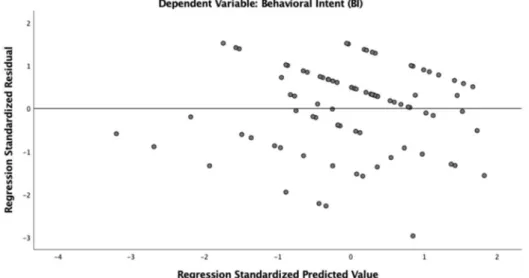
operations ... 78 Figure 4. Scatterplot of regression standardized residual versus regression standardized
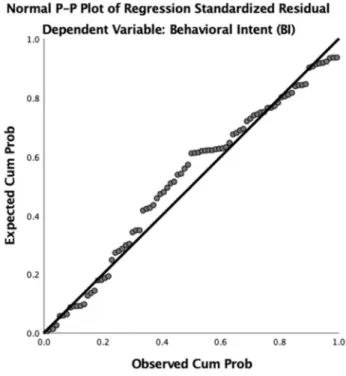
predicted value for behavioral intent ... 136 Figure 5. Normal P-P plot of expected cumulative probability versus observed cumulative
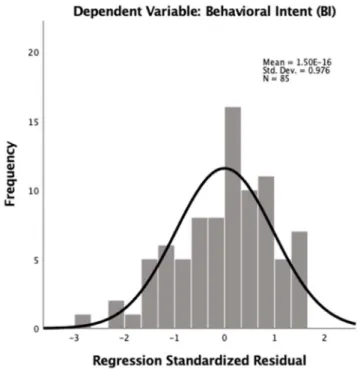
probability for behavioral intent ... 137 Figure 6. Histogram of frequency versus regression standardized residual for behavioral
Chapter 1: Introduction to the Study
Software development organizations work for market share and improving profitability by focusing on efficiency. For example, Internet-based application
development companies like Facebook, Amazon, and Netflix have gained competitive advantages by responding to changes in user behavior by increasing their rate of product release (Parnin et al., 2017). Increasing the pace of releases has allowed companies to concentrate on automating software build, testing, and monitoring by using automatic metric collection and telemetry to measure performance and user behavior (Rose, 2013), which helps companies to visualize how customers use their applications and
consequently support the creation or removal of software features and artifacts inside the products they promote or sell (Lesser & Ban, 2016). Using tools and information to improve the efficiency of development practices has become a mandatory practice for vendors seeking a competitive advantage in the software solution market (Parnin et al., 2017). Older methods of developing software may not be sufficient for achieving a competitive advantage in the marketplace (Rodríguez et al., 2018).
Traditional methods of software development, such as waterfall methodologies and associated organizational roles and responsibilities, do not allow rapid changes and releases to respond to customer feedback and may not support improved efficiency (Bishop, Rowland, & Noteboom, 2018). Traditional methods of software development involve sequential, gated methods for collecting requirements, designing, developing, and releasing new products and features, which can take months or weeks (Bishop et al., 2018). Gaining quick feedback from customers by shortening the time between releases
requires a more advanced method of development and changes to managerial organizational roles and responsibilities to reduce the time between conception of
changes and collection of customer feedback (Subramanian, Krishnamachariar, Gupta, & Sharman, 2018).
The reduction of cycle times to days, hours, or minutes has provided a significant competitive advantage for organizations that have adopted continuous practices.
However, adopting and using continuous delivery is not easy (Laukkanen, Itkonen, & Lassenius, 2017) because it requires significant social and technical changes (Laukkanen, Paasivaara, Itkonen, & Lassenius, 2018). Social and technical challenges are managed by project managers in agile software development teams that are responsible for the
planning and successful delivery of products to clients (Banerjee, 2016). But traditional project management methods conflict with methods required in agile software
development (Gandomani & Nafchi, 2016). Project managers in agile software
development environments are required to shift from controlling behaviors in favor of more facilitating methods to achieve their job responsibilities (Bishop et al., 2018). Project managers must focus more on leadership skills such as empowerment and
encouragement as opposed to planning and controlling their team’s efforts and outcomes (Drury-Grogan, Conboy, & Acton, 2017). Thus, changing management styles and the introduction of continuous practices has provided project managers with new challenges. Project manager preferences and perceptions have played a significant role in behavioral intention to adopt continuous practices such as continuous delivery (Bishop et al., 2018), the focus of this study.
This study was an examination of the perceptions of software development project managers on the practice of continuous delivery and how these perceptions affect behavioral intent to adopt continuous delivery. I selected project managers as the focus for this study because they are responsible for the daily coordination and orchestration of software development projects from inception to customer delivery (Banerjee, 2016; Bishop et al., 2018). Project managers have the option to adopt and influence the adoption of tools, practices, and processes they believe assisted them with planning and delivery of software projects (Taylor, 2016). The perceptions of project managers provided the scope necessary to view the development and operations integration required to achieve continuous delivery practices.
Chapter 1 will include the introduction and background of this study. The background section covers lean, agile principles, DevOps, continuous practices, project management, and continuous delivery. Chapter 1 will also include a definition of the problem, purpose, research questions, theoretical foundation, nature, assumptions, scope, delimitations, limitations, and significance of this study. A summary and transition to Chapter 2 is provided at the end of this chapter.
Background of the Study
Roles and responsibilities in software development organizations have mirrored those associated with product manufacturing organizations (Baydoun & El-Den, 2017). Software-intensive businesses have typically created products in a way that emulates traditionally engineered goods (Rodríguez et al., 2018), requiring occasional maintenance but not physically changing over time (Papadopoulos, 2015). However, software
solutions differ from traditionally manufactured goods because they are dynamic,
malleable, and limited only by creativity (Ghezzi, 2018). Roles and responsibilities in the field of software development need to change to support changing customer demands on software solutions that have increased as customers have realized they could expect more features, functionality, and quality from their investment.
As customers have expected software products to evolve into adaptable
instruments to support competitive advantage (Lesser & Ban, 2016), enterprise software businesses have required a better way to innovate and serve customers in a flexible and quality-driven manner. Traditional software development methods to conceive, develop, and deploy software require months or years to reach customers (Karvonen et al., 2017) and are not flexible or capable of supporting improvements to quality. In traditional software development environments, as customers have increased demands on software capability, internal pressure has also increased as product permutations, code paths, and bug reports have increased. Project managers, responsible for converting business inputs into technical outputs, need a new way to please their customers by improving output quality while reducing time, cost, and workers (Taylor, 2016)—a case of managing uncertainty and satisfying business demands while driving technical efficiency and quality.
Lean Principles and Agile Methods
New software development practices were conceived after the introduction of agile methods, which are based on lean principles (Mäkinen et al., 2016). Agile methods define the process of creating and maintaining software, asynchronously, to collect
requirements and feedback, design, develop, and release changes in days or hours (Karvonen, Behutiye, Oivo, & Kuvaja, 2017). Agile software development has replaced the sequential, gated process followed by project managers associated with traditional software development with smaller, asynchronous, iterative cycles (Serrador & Pinto, 2015). Agile software development practices provide a way for feedback from
stakeholders, especially customers, to affect software product development at any stage in the development cycle, which was once considered impossible (Serrador & Pinto, 2015). Agile methods promote small iterative changes, allowing frequent releases of the software to happen whenever code changes are complete and quality is in an acceptable state (Denning, 2015). In agile development practices, each function of the development lifecycle operates autonomously and continuously where bottlenecks are significantly minimized (Mäkinen et al., 2016).
Agile methods were influenced by lean principles, which refer to ways to eliminate waste in the production process. For example, in the late 1980s, Toyota implemented a set of waste reduction processes called the Toyota Production System to help them gain a competitive advantage by achieving higher production and efficiency by eliminating waste (Rodríguez et al., 2018). Reducing waste to improve production
efficiency is the focus of the lean approach (Alahyari, Gorschek, & Berntsson Svensson, 2019) ,which improves the flow of value to customers by driving down time to market and cost of goods, creating a leaner process. Focusing on making manufacturing techniques more efficient provides the added benefit of improving worker attitudes and reported job satisfaction (Fitzgerald & Stol, 2017). These methods of manufacturing
physical goods can apply to engineering software because they share many of the same wasteful elements uncovered by the lean approach.
Principles influenced by the lean approach were introduced to the software engineering community when Fowler and Highsmith published the agile manifesto (2001), a new method for developing software dynamically (Serrador & Pinto, 2015). Organizations struggling with the uncertainty and resource constraints of traditional software development reviewed the agile manifesto and realized lean principles could revolutionize the software industry. Agile principles detailed in the agile manifesto (Fowler & Highsmith, 2001) described changes in the way software is developed and how organizations can interact with their customers to build a mutually beneficial relationship. Agile’s purpose was defined as eliminating waste, similar to the Toyota Production System (Rodríguez et al., 2018), by (a) favoring individual interaction over tools and processes, (b) prioritizing software that works instead of large amounts of documentation, (c) personal interaction with clients instead of negotiating contracts with them, and (d) allowing constant change instead of time-intensive planning (Serrador & Pinto, 2015). The principles of agile favor increased face-to-face interaction between all roles in the software development lifecycle, especially customers (Serrador & Pinto, 2015). Agile’s underpinnings of facilitating discussion and suggesting direction replaced direct command and control over the people and processes involved with software development (Taylor, 2016; Bishop et al., 2018). Organizations adopting agile principles have needed to adapt the project manager’s role, responsibilities, and approach to align
with agile principles to realize software development efficiencies in search of competitive advantage for themselves and their customers.
One agile software development practice is DevOps, a hybrid created in 2009 from the terms development and operations (Elberzhager, Arif, Naab, Süß, & Koban, 2017). DevOps is a set of principles and guidelines that encourage the merger of developer and operational methods and skills. Merging and managing developer and operational skills has created new practices such as continuous integration, delivery, and deployment. Continuous practices such as continuous integration, continuous delivery, and continuous deployment break down organizational barriers and allow significantly shorter time, a matter of minutes in some cases, between customer reaction and the creation of feedback-infused changes to customers, also known as cycle time (Shahin, Babar, & Zhu, 2017). Shortening cycle time between releases by implementing DevOps principles can support competitive advantage in the market place, the desired effect not achievable by managers using traditional methods of software development.
DevOps and Continuous Practices
DevOps is the embodiment of technical and social skillsets necessary to merge development and operations functions, such as automated development and deployment, and system monitoring needed to achieve continuous delivery (Ebert, Gallardo,
Hernantes, & Serrano, 2016). Adoption of DevOps practices such as continuous delivery could improve cycle time 30% and decrease costs by 20% (Ebert et al., 2016), making the software development process more efficient. Some examples of organizational elements that impact DevOps practice adoption included departmental silos and lack of trust
(Leppänen et al., 2015). Additionally, organizational adoption of DevOps practices, such as continuous integration, continuous delivery, and continuous deployment, require organizational changes to roles and responsibilities responsible for all aspects of software engineering and delivery (Claps et al., 2015). The roles and responsibilities of project managers in agile software development include successful and efficient project delivery (Taylor, 2016). Project managers can choose to adopt continuous delivery to reduce their operational costs while achieving a higher degree of software delivery success.
After the introduction of the agile manifesto (Fowler & Highsmith, 2001), software development organizations began experimenting with new agile software development methods like DevOps by pushing larger volumes of updates and new features to clients. Organizations, such as Mozilla, began seeking competitive advantage in web-browsing software by adopting rapid releases (Karvonen et al., 2017),
continuously adjusting and redeploying their Firefox web browser product to customers. Mozilla enabled regular updates that might consist of new features, fixes to bugs reported only weeks before, or both, which was a departure from their yearly product release cycles (Souza, Chavez, & Bittencourt, 2015). Mozilla used agile principles and methods that eliminated waste by introducing continuous practices, automating and parallelizing the steps associated with traditional software development methods that developers execute (Shahin et al., 2017). Updating software using agile methods included similar steps associated with traditional software development such as collection of
requirements, designing, coding, testing, and deploying (Karvonen et al., 2017; Souza, Chavez, & Bittencourt, 2015). The agile execution of these concepts in a parallel and
continuous fashion was new (Subramanian et al., 2018). Other software development organizations recognized that Mozilla was reducing cycle time by using agile methods, practices, and tools and attempted to adopt the agile principles they employed (Denning, 2015; Laukkanen et al., 2018, Parnin et al., 2017).
One example of automating software engineering steps was characterized by software developers requiring a way to keep the flow of code changes continuously available for automatic integration into their product, a practice known as continuous integration (Shahin, Zahedi, Babar, & Zhu, 2018). Continuous integration was the first continuous practice most software development organizations implemented in adopting agile development and competitive advantage (Shahin et al., 2018). Continuous
integration is focused on detecting changes in source code and then automatically compiling code, testing functions and features, logging information, warning and errors, and staging output (Balalaie, Heydarnoori, & Jamshidi, 2016). Early interpretations of continuous integration excluded information technology (IT) operations testing and acceptance by nondevelopers in the software development supply chain. Continuous integration automated the process of shuttling software through various levels of automated and manual testing to ensure quality and confidence. Completion of a successful continuous integration cycle results in a new software artifact that could be manually or automatically deployed to a variety of supported platforms (Balalaie et al., 2016; Shahin et al., 2018).
To advance the software development process toward eventual release to customers, operations staff consisting of a group of nondevelopers and the last
department in the software supply chain would install new versions of the developed software to measure nonfunctional requirements such as performance, network, and security elements (Chen, 2017). The separation of development and nondevelopment disciplines in software-intensive businesses was viewed as a barrier that restricted further reduction in cycle time and potentially limited competitive advantage. Organizations soon realized that this last stage of the software development and deployment process was an area that might also benefit from automation by applying agile principles (Nybom, Smeds, & Porres, 2016).
Continuous delivery, a DevOps practice, was introduced to consume the output of continuous integration and automate the steps of software developer and software
operations responsibilities for always keeping a software solution in a releasable state. The continuous delivery practice includes testing and acceptance of continuous integration output yielding operational readiness (Shahin et al., 2018). As continuous practices of a software development organization have matured, an increasing number of operational tests have been merged into continuous delivery, further blending
development and operational functions. Merging operational functionality into the continuous delivery practice used the shift-left principle whereby functions traditionally executed toward the end of a deployment cycle, by operations staff, move to an earlier stage of the overall process, shifting to the left in software engineering and deployment workflow diagrams (Fitzgerald & Stol, 2017). Shifting processes to earlier stages in the agile software development lifecycle reduce waste by identifying and focusing only on software build outputs that pass as many tests as possible (Fitzgerald & Stol, 2017),
improving the possibility of efficiency in the software development process and yielding a more significant competitive advantage.
Project managers seeking alignment with agile principles need to improvise more and adapt to continuous change (Taylor, 2016). Improvising means relying less on tools and processes and increasing transparency and negotiation to affect outcomes positively. Though project managers are aware of the benefits of agile principles, research has indicated that adapting to agile software development practices is challenging for project managers in enterprise software-intensive businesses (Bishop et al., 2018; Taylor, 2016). Thus, I conducted this study on project managers’ behavior and its effects on adoption of continuous delivery.
Problem Statement
Organizations make significant investments in advanced technology and practices to improve the efficiency and competitive advantage that can provide increased value to their internal and external customers (Lesser & Ban, 2016). The general problem was that many organizations have difficulty adopting advanced software development practices such as continuous delivery (Laukkanen et al., 2018). The specific problem was that some software development project managers within large organizations are not aligned with the relationship between performance expectancy, effort expectancy, social
influence, and facilitating conditions, as moderated by experience, with behavioral intent to adopt continuous delivery.
The inability to adopt advanced software development practices restricts the possibility of gaining market share and competitive advantage in the marketplace.
However, in a survey on adopting new technology, 78% of organizations were not prepared to capitalize on emerging technology trends such as mobile device proliferation and cloud platforms and solutions, and only 22% of organizations used advanced
practices consistently (Lesser & Ban, 2016). Additionally, 75% of software projects fail, resulting in billions of dollars of lost capital and operational investment (Bishop et al., 2018). Further research has shown that adopting software development advanced practices to address emerging markets is a challenge because changes in social and technical aspects of an organization are required (Claps et al., 2015).
Research has identified the benefits and challenges of the adoption of continuous delivery requires more study to determine the specific organizational elements that predict positive outcomes (Rodríguez et al., 2017). Although there are studies regarding benefits, challenges, and maturity of continuous delivery, there have been no quantitative studies that applied the UTAUT (Venkatesh et al., 2003) to project manager behavioral intent to adopt continuous delivery. Additionally, there is literature associating
organizational change to continuous delivery exists, but there are few research studies on how to help organizations adopt continuous delivery (Chen, 2015). Further, little is known about manager preference concerning agile development methods (Bishop et al., 2018). Therefore, I addressed behavioral intention of project managers in this study to understand possible effects on continuous delivery adoption.
Purpose of the Study
The purpose of this quantitative, regression analysis study was to examine the extent to which the unified theory of acceptance and use of technology (UTAUT;
Venkatesh et al., 2003)—with the independent variables of performance expectancy, effort expectancy, social influence, and facilitating conditions—statistically relates to the behavioral intent (dependent variable) to adopt continuous delivery for software
development project managers in software development organizations. The independent variables were generally defined as the software development project manager’s
perception after comparing expectations of continuous delivery implementation and actual continuous delivery implementation. The dependent variable, behavioral intent to adopt, was generally defined as behavioral intent to adopt continuous delivery and was statistically controlled in this study. A stepwise multiple linear regression analysis and bivariate analysis were used to determine the strength and direction of independent and dependent variable relationships.
Research Questions
The following research questions addressed the relationship between performance expectancy, effort expectancy, social influence, and facilitating conditions (independent variables), as moderated by experience, and behavioral intent to adopt continuous delivery (dependent variable).
Research Question 1: What is the relationship between performance and continuous delivery adoption?
H01: No statistically significant relationship exists between performance
expectancy and behavioral intent to adopt continuous delivery.
Ha1: A statistically significant relationship exists between performance
Research Question 2: What is the relationship between effort expectancy and continuous delivery adoption?
H02: No statistically significant relationship exists between effort expectancy and
behavioral intent to adopt continuous delivery.
Ha2: A statistically significant relationship exists between effort expectancy and
behavioral intent to adopt continuous delivery.
Research Question 3: What is the relationship between social influence and continuous delivery adoption?
H03: No statistically significant relationship exists between social influence and
behavioral intent to adopt continuous delivery.
Ha3: A statistically significant relationship exists between social influence and
behavioral intent to adopt continuous delivery.
Research Question 4: What is the relationship between facilitating conditions and continuous delivery adoption?
H04: No statistically significant relationship exists between facilitating conditions
and behavioral intent to adopt continuous delivery.
Ha4: A statistically significant relationship exists between facilitating conditions
and behavioral intent to adopt continuous delivery.
Research Question 5: How does experience moderate the relationship between effort expectancy and behavioral intent to adopt continuous delivery?
H05: Experience has no moderating effect on the relationship between effort
Ha5: Experience has a moderating effect on the relationship between effort
expectancy and behavioral intent to adopt continuous delivery.
Research Question 6: How does experience moderate the relationship between social influence and behavioral intent to adopt continuous delivery?
H06: Experience has no moderating effect on the relationship between social
influence and behavioral intent to adopt continuous delivery.
Ha6: Experience has a moderating effect on the relationship between social
influence and behavioral intent to adopt continuous delivery.
Research Question 7: How does experience moderate the relationship between facilitating conditions and behavioral intent to adopt continuous delivery?
H07: Experience has no moderating effect on the relationship between facilitating
conditions and behavioral intent to adopt continuous delivery.
Ha7: Experience has a moderating effect on the relationship between facilitating
conditions and behavioral intent to adopt continuous delivery.
Theoretical Foundation
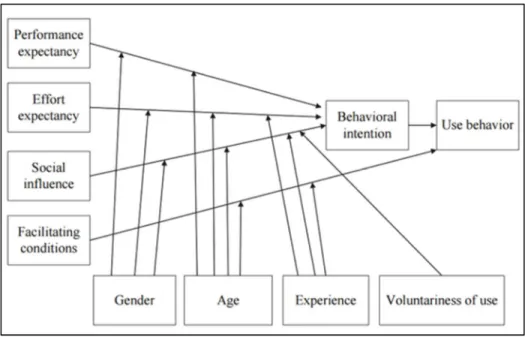
The theoretical base for this study was Venkatesh et al.’s (2003) UTAUT (see Figure 1) model. The UTAUT model includes performance expectancy, effort
expectancy, social influence, and facilitating conditions—as moderated by experience— and age, gender, and voluntariness of use as factors influencing the behavioral intention to adopt technology (Venkatesh et al., 2003). The UTAUT model is consistent with understanding factors that affect behavioral intention to adopt technologies.
Figure 1. Unified theory of acceptance and use of technology (UTAUT). From “User Acceptance of Information Technology: Toward a Unified View,” by V. Venkatesh, M. G. Morris, G. B. Davis, and F. D. Davis, 2003, MIS Quarterly, 27(3), p. 447. Reprinted with permission.
Venkatesh et al. (2003) created a survey for performance expectancy, effort expectancy, social influence, facilitating conditions, and behavioral intent. In the current study, experience, as a moderator of the relationship between effort expectancy, social influence, and facilitating conditions, with behavioral intent to adopt continuous delivery, were included. Use of experience as a moderator has been supported by previous research on agile transformation (Gandomani & Nafchi, 2016). Moderators such as age, gender, and voluntariness of use were not included in this study because there was evidence that they have little or no effect on behavioral intent in studies related to continuous delivery (Alotaibi, 2016; Shahin et al., 2017). Use behavior, as a dependent variable, was also not
included in this study because the property shared by all continuous practices was
continuous use, and continuous delivery is continuous by definition (Shahin et al., 2018). Further, there was no need to determine actual usage once continuous delivery was adopted (Walldén, Mäkinen, & Raisamo, 2016). The removal of use behavior required changing the relationship of facilitating conditions, as an independent variable, to point to behavioral intent instead.
There is evidence that modifications of the UTAUT model can be used in different technology disciplines (Magsamen-Conrad, Upadhyaya, Joa, & Dowd, 2015). Though facilitating conditions were not indicated as a predictor of behavioral intent in the original UTAUT model (Venkatesh et al., 2003), facilitating conditions can be a predictor of behavioral intent by executing a stepwise regression (Magsamen-Conrad et al., 2015). The results of the stepwise regression indicated that facilitating conditions positively predicted 24% of behavioral intent variance concerning mobile tablet use, indicating that the change in relationship was valid for the purpose of this study. Use behavior, in the original UTAUT model did not include examples of questions, so removing it does not affect the original Cronbach alpha calculation of the model. Each survey question was used to determine the effect of each contributing factor on the phenomenon of intent to adopt continuous delivery that software development project managers experienced. Multiple regression methods were used to determine which factors affect behavioral intent to adopt continuous delivery.
Nature of the Study
The nature of this study was quantitative with regression analysis. The rationale for the selection of quantitative methods was based on limited access to professional project managers working in enterprise software-intensive companies. Quantitative methods are scientifically objective, validate constructed theory, and are suited for a large number of participants (Carr, 1994). Quantitative research helped validate the
relationship between the independent variables (performance expectancy, effort
expectancy, social influence, and facilitating conditions, as moderated by experience) and the dependent variable (behavioral intention to adopt continuous delivery). Performance expectancy is the degree to which a person perceives that using a specific system helps them achieve higher job performance (Venkatesh et al., 2003). Effort expectancy is the degree to which a person perceives the difficulty associated with using a specific system (Venkatesh et al., 2003). Social influence is the degree to which a person perceives that other important people encourage the use of a specific system (Venkatesh et al., 2003). Facilitating conditions is the degree to which a person perceives that technical and
organizational help exists to support the use of a specific system (Venkatesh et al., 2003). Behavioral intent to adopt continuous delivery was defined as the degree to which a person intends to adopt continuous delivery practices.
The population for this study was a globally distributed group of
English-speaking project managers. The target population consists of 1,485,444 members in five LinkedIn project management groups. The sample size for this study was 82 and is described in more detail in Chapter 3. Participants included project managers working
with, or having worked with, continuous delivery systems in enterprise software solution companies. Simple random sampling (de Mello, Da Silva, & Travassos, 2015), targeting a random collection of project managers from organizations, was used to collect
responses. To determine the effects of the independent variables, as moderated by experience, on the dependent variable, data were gathered from an online survey. Quantitative analysis of this data, using multiple linear regression analysis (Cohen, Cohen, West, & Aiken, 1983) and bivariate analysis, helped clarify how project management behavior affects continuous delivery adoption and use.
Definitions
Throughout this document, I use the terms software development project manager
and project manager as well as and continuous delivery practices and continuous delivery
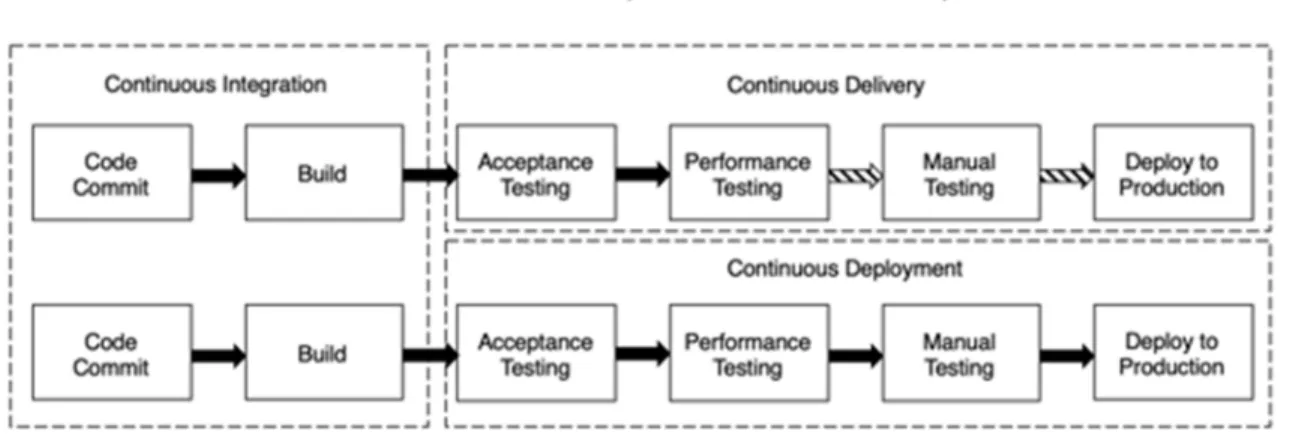
interchangeably. The terms continuous delivery and continuous deployment are sometimes used synonymously in literature even though they are different disciplines because they only differ by changing the final step of continuous deployment, manual deployment to production, to automatic deployment to production in continuous delivery (Chen, 2015; Chen, 2017; Laukkanen et al., 2018). In this study continuous deployment and continuous delivery were used interchangeably where appropriate to point out similarities and distinctions between them. Following are the operational definitions associated with the variables identified in the hypotheses and model.
Agile software development (ASD): A contemporary software development
factor and instead focusing on small, manageable changes that can be released iteratively and continuously to customers (Drury-Grogan et al., 2017).
Continuous deployment: A DevOps practice that extends the continuous delivery
practice by automatically deploying new changes directly to production (Shahin et al., 2018). Authors in the field of continuous practices often make no distinction between continuous delivery and continuous deployment because continuous deployment only changes deployment to production, the last step, from manual to automatic triggering.
Continuous delivery: A DevOps practice focused on keeping a software solution
in a releasable state at all time (Shahin et al., 2018). Again, authors in the field of continuous practices often make no distinction between continuous delivery and continuous deployment.
Continuous experimentation: A DevOps practice defined as the process of
continuously testing the value of features to organically evolve a software solution (Lindgren & Münch, 2015).
Continuous integration: A DevOps practice whereby developers merge code into
a versioned source control repository on a daily, or more regular, frequency. Merging new code triggers tasks that build and test using automation tools and scripts. Automating the process of building and testing helps to ensure the consistency and reliability of the code (Shahin et al., 2018)
Lean principles: A collection of principles that include (a) empowering the team,
(b) building integrity in, (c) seeing the whole, (d) deciding as late as possible, (e) amplifying learning, and (f) eliminating waste (Mäkinen et al., 2016). These principles
traditionally applied to product manufacturing and have been extended to software development with the introduction of agile software development.
Rapid release: The release cadence with which a software solution is released.
Rapid release indicates a software solution is released in weekly, daily, or more frequent cycles (Karvonen et al., 2017).
Traditional release: The release rate for a software solution. Traditional release indicates that a software solution is released in monthly or yearly cycles (Karvonen et al., 2017).
Waterfall methodology: A software development method where each step in the
software development lifecycle (requirements gathering, design, development, testing, localization, documentation, release) occurs in a sequential manner (Bishop et al., 2018).
Assumptions
The examination of a project manager’s behavior to adopt continuous delivery in this study was based on several assumptions. First, the participation of all respondents was voluntary. Second, each respondent had experience with agile software development practices and continuous delivery. Third, the respondents answered each survey question honestly and objectively, without influence and bias from management or other sources. Fourth, the population of respondents was large enough to provide a statistically
significant depiction of behavioral intention to adopt continuous delivery in enterprise agile software development organizations. The assumptions presented were essential to provide a common understanding of the respondent’s motivations and environment. These assumptions helped ensure the credibility and dependability of this study.
Scope and Delimitations
The purpose of this quantitative, regression analysis study was to test the independent variables of the UTAUT (Venkatesh et al., 2003) with behavioral intent to adopt continuous delivery for software development project managers in large software development organizations. Small and medium software development organizations were not included. Experience was included as a moderator, and age, gender, and voluntariness were excluded moderators because of evidence suggesting that they do not have
statistically significant effects (Alotaibi, 2016; Shahin et al., 2017). Use behavior was not included as a dependent variable because evidence suggested that it was redundant and was a subjective self-measurement (Shahin et al., 2018; Walldén et al., 2016). The removal of use behavior required changing the relationship of facilitating conditions, as an independent variable, to point to behavioral intent. Facilitating conditions have positively predicted 24% of behavioral intent variance concerning mobile tablet use (Magsamen-Conrad et al., 2015), indicating that the change in relationship was valid for the purpose of this study. Project managers for domains other than software development were also excluded. Responses from project managers participating in open-source projects may be included in the results due to the prevalence of open-source projects in large enterprise organizations.
A survey was adapted from Venkatesh et al. (2003) to suit the purpose and participant pool of this study. Project-specific information such as size, duration, and location were also collected. The quantitative survey instrument utilized to collect data from project managers may be used by other researchers studying human and technical
factors involved with technology adoption. The survey was distributed online to LinkedIn project management group members over the age of 18 for 4 weeks to maximize
participation.
In addition to the survey that was used in this study, peer-reviewed literature on continuous delivery adoption and agile project management from the past 5 years was gathered and analyzed to help analyze the data collected and produce a conclusion. Research in the area of agile project management as it relates to continuous delivery was limited. However, project management in the broader spectrum of agile software
development was widely researched and provided support where necessary.
Limitations
The online survey was offered in English-only, which may prevent participation from project managers located in specific regions. Given the globally distributed nature of most large enterprise agile software development organizations and the communicative aspects of a project manager’s roles and responsibilities, English-only participation was a limitation but not a prohibitive factor. The language limitation may reduce the
generalization of survey results to some degree.
The online survey targeted enterprise software solution project managers, which exclude project managers in small and medium businesses and open-source projects associated with entrepreneurs and non-profit organizations. The limitation of enterprise software solution project managers was intended to attract professional project managers with varying levels of experience in their domain. Similar to the English-only restriction
of the survey, the project manager scope limitation may also reduce the generalization of findings.
Significance of the Study
The significance of this study includes adding to the existing body of knowledge on adopting continuous delivery as it pertains to a single organizational role, project managers. Project managers may use the findings of this study to help them adopt continuous delivery and further achieve improvements such as increased project
predictability, increased customer satisfaction, and improved software release reliability and quality (Laukkanen et al., 2017), increasing project efficiency. Research has reflected that project managers who increased project efficiency realized a 20% software
development cost savings (Ebert et al., 2016). There is also evidence that continuous practices can affect project efficiency, so this study may provide the knowledge and support for project managers to more effectively adopt continuous delivery to impact project efficiency, improve profitability, and gain competitive advantage.
Significance to Practice
Organizational structure affects behavioral intention to adopt continuous delivery (Chen, 2017; Lustenberger, 2016). It is important to create a collaborative organizational culture in place of a traditional hierarchal structure (Chow & Cao, 2008; Stankovic, Nikolic, Djordjevic, & Cao, 2013). After organizations have adopted continuous delivery, they have experienced improved software quality, improved collaboration, better lines of communication, and an increase in the number of implemented features per software product release, among many other benefits (Riungu-Kalliosaari, Mäkinen, Lwakatare,
Tiihonen, & Männistö, 2016). Evidence-based information regarding how performance expectancy, effort expectancy, social influence, and facilitating conditions, as moderated by experience, affect behavioral intent to adopt continuous delivery holds significance to practice, as it may improve awareness, alignment, and reduce the time and cost associated with adopting a continuous delivery system (Chen, 2017). Studying the effects of these factors may improve project managers’ awareness of how they influence continuous delivery adoption efforts, which may provide greater project efficiency and increase the competitive advantage of their companies.
Significance to Theory
The UTAUT has been implemented over 1,200 times in more than 50 different journals and has been integrated with other models or extended more than 60 times (Venkatesh, Thong, & Xu, 2016). Yet there are no studies that apply the theory to behavioral intention to adopt continuous delivery. For example, Laukkanen et al. (2017) suggested that organizational and human challenges, within the context of continuous delivery adoption, could be analyzed with general theories of organizational change like Venkatesh et al.’s (2003) UTAUT model. Studying the constructs of the UTAUT with behavioral intent to adopt continuous delivery practices holds significance to theory because it will add to the body of knowledge concerning the validity of the UTAUT model (Venkatesh et al., 2003).
Significance to Social Change
Software solutions empower people to make social change by providing users with tools to solve complex problems in a faster, more efficient way. Determining how
differences in performance expectancy, effort expectancy, social influence, and facilitating conditions, as moderated by experience, affect behavioral intent to adopt continuous delivery may provide software development project managers with the
information needed to promote organizational change. The knowledge has significance to social change, as it may help organizations develop operational efficiency, effectiveness, and generate greater value to their clients and society.
Summary and Transition
Chapter 1 introduced the background of continuous delivery and problem that some project managers are not aligned with the relationship between performance
expectancy, effort expectancy, social influence, and facilitating conditions and behavioral intent to adopt continuous delivery. Research on continuous delivery and project
management reflects a lack of research in agile project managers’ attitudes and behaviors on introducing continuous delivery practices. This chapter also included the research questions, theoretical foundation, definitions of terms, assumptions, scope, limitations, and significance of the study.
Chapter 2 contains a literature review of peer-reviewed journal articles over the previous 5 years to add support to the methods used to examine continuous delivery and project management. In addition to information on continuous delivery and project management, the literature search strategy and an explanation of the theoretical foundation are presented. Chapter 3 presents the research design and rationale,
explanation of methods used to collect and analyze participant responses, and discussion of validity considerations. Chapter 4 is focused on reporting of survey data results,
analysis of data collected, and discussion of validity. Chapter 5 includes the interpretation of findings, limitations of the study, future research considerations, and a conclusion.
Chapter 2: Literature Review
Introduction
This study addressed the problem that some software development project managers in large organizations are not aligned with the relationship between
performance expectancy, effort expectancy, social influence, and facilitating conditions, as moderated by experience, with behavioral intent to adopt continuous delivery. The purpose of this quantitative, regression analysis study was to examine the statistical relationships between the independent variables from the UTAUT (performance
expectancy, effort expectancy, social influence, and facilitating conditions, as moderated by experience) and the dependent variable (behavioral intent to adopt continuous
delivery) for software development project managers at large software development organizations. I used the UTAUT because although it has been applied in many studies, it has not been applied to behavioral intent to adopt continuous delivery (Venkatesh et al., 2003). This choice was also supported by previous research indicating that traditional technology acceptance models like the information system development acceptance model (Hardgrave & Johnson, 2003) and the UTAUT (Venkatesh et al., 2003) could be adapted, extended, and applied to contemporary practices such as continuous delivery (Laukkanen et al., 2017; Masombuka & Mnkandla, 2018).
This study addressed several gaps in the knowledge regarding continuous delivery adoption. Organizations that have adopted continuous delivery have reported benefits such as accelerated time to market, effective feature creation, and improved efficiency and productivity (Chen, 2015). Additionally, findings have indicated that continuous
delivery is beneficial to improving project efficiency and project managers have
influence over continuous delivery adoption (Banerjee, 2016; Bishop et al., 2018; Chen, 2015, 2017; Taylor, 2016; Shahin et al., 2018). Further, project efficiency has been associated with lower cost and may lead to improved software quality (Parnin et al., 2017), which may promote competitive advantage (Rodríguez et al., 2017). However, challenges need to be addressed with control over continuous delivery adoption, which is primarily management related (Chen, 2017). A review of research related to project management and adoption of continuous delivery reflected project manager behavioral intent to adopt continuous delivery lacked research. Thus, this study was necessary to examine adoption of continuous delivery by software delivery teams and its effect on project efficiency that may lead to competitive advantage.
Chapter 2 includes the literature search strategy, a discussion of the theoretical foundations, and a comprehensive literature review. The literature review includes a summary and synthesis of the research in the areas of the UTAUT, traditional and agile project management, and continuous delivery from the past 5 years. Chapter 2 concludes with a chapter summary and a transition to Chapter 3.
Literature Search Strategy
Articles selected for this literature review were related to project mangers’ behavioral intent to adopt continuous delivery within large, agile software development organizations. The keywords searched were continuous delivery, continuous integration,
continuous deployment, agile project management, project management, agile software
UTAUT model in the databases ACM Digital Library, IEEE Xplore Digital Library, Computers and Applied Sciences Complete, SpringerLink, Science Direct, EBSCO Academic Search Premier, Google Scholar, ProQuest Dissertations & Theses Global, a Thoreau multi-database search, and a search through peer-reviewed engineering and project management related journals. The search included peer-reviewed journal articles, conference proceedings, seminal literature, books, and dissertations from 2014 to 2019.
Most of the literature discovered surrounding continuous delivery adoption was focused on qualitative case study research, which was not the design of this study. The literature search for articles focused on the application of Venkatesh et al.’s (2003) UTAUT model in the field of agile software development yielded more than 400 results. However, fewer than 10 articles of the 400 were focused on continuous delivery in the field of IT, and the UTAUT was mentioned seldom in the articles found. The lack of quantitative, peer-reviewed articles addressing the application of UTAUT to behavioral intent to adopt continuous delivery by project managers in large enterprise organizations was one reason why a quantitative study on this subject was essential. During the
literature search process, it was necessary to go back further than 5 years to discover why the number of UTAUT-related studies in the field of agile software development were lacking. I also altered the literature search strategy to include peer-reviewed articles related to combining UTAUT with additional independent variables and moderators such as quality of service and education (Alotaibi, 2016), convenience from online access (Chauhan & Jaiswal, 2016), competitive advantage (Wagaw, 2017), hindrances such as perceived security (Alsmadi & Prybutok, 2018), and articles related to unaltered use of
TAM-based methods to gain further understanding of the deficiency (Davis, 1989; Magsamen-Conrad et al., 2015; Walldén et al., 2016).
Theoretical Foundation
The theoretical base for this study was Venkatesh et al.’s (2003) UTAUT. The UTAUT includes performance expectancy, effort expectancy, social influence, and facilitating conditions, as moderated by experience, as factors influencing the behavioral intent to adopt technology. The UTAUT model was consistent with understanding factors that affect behavioral intention to adopt technologies.
Venkatesh et al. (2003) based the UTAUT model on a review and synthesis of eight previously defined acceptance models, which include:
• Theory of reasoned action (Fishbein & Ajzen, 1975),
• TAM (Davis, 1989) and TAM2 (Venkatesh & Davis, 2000),
• Theory of planned behavior (Ajzen, 1991),
• Motivational model (Davis, Bagozzi, & Warshaw, 1992),
• Combined TAM (Davis, 1989) and theory of planned behavior (Ajzen, 1991;
Taylor & Todd, 1995),
• Model of PC utilization (Thompson, Higgins, & Howell, 1991),
• Innovation diffusion theory (Rogers, 1995) developed and introduced in 1962 and then applied to individual technology acceptance by Moore and Benbasat (1991), and
• Social cognitive theory (Bandura 1986) as applied to computer utilization by Compeau and Higgins (1995).
Venkatesh et al. (2003) executed a 6-month longitudinal study collecting information from four different organizations at three different intervals. The UTAUT was
constructed using the four major determinants of behavioral intention and use behavior common to the eight models analyzed, which accounted for 17 to 53% of variance found in a user’s behavioral intent to adopt IT (Venkatesh et al., 2003). Venkatesh et al.
included four moderators: (a) age, (b) gender, (c) experience, and (d) voluntariness of use. I applied the UTAUT to examine the behavioral intention to adopt continuous delivery by project managers in software intensive organizations.
It was necessary to make modifications to the UTAUT used in this study. Research indicated a decline in the use of methods derived from the technology acceptance model (TAM; Davis, 1989) like UTAUT due to the diametric alignment of behavioral intent and use behavior of IT (Walldén et al., 2016). For example, Turner, Kitchenham, Brereton, Charters, and Budgen (2010) stated that behavioral intent based on perceived usefulness and perceived ease of use did not align with actual use behavior. Turner et al. also posited that TAM-based instruments like the UTAUT were not good predictors of actual use behavior because these models use subjective, self-reported measurement of use behavior without the support of objective measurement validation (see also Walldén et al., 2016). Objective measurement includes items such as application logs to validate actual use of IT (Turner et al., 2010). Further, because the UTAUT is a general technology acceptance theory, the use of the model in environments where mandatory use of technology is implicit reduces predictive strength (Evwiekpaefe & Haruna, 2018). In the current study, although adoption of continuous delivery was not
mandatory, use behavior of continuous delivery is implicit because it is continuous by nature, so it was possible that the UTAUT would not offer effective predictions.
Therefore, I made modifications to the UTAUT in this study based on suggestions in the research (Dwivedi, Rana, Jeyaraj, Clement, & Williams, 2017; Evwiekpaefe & Haruna, 2018). Evwiekpaefe and Haruna (2018) suggested combining the UTAUT model with other domain-specific models to improve the explanation of variances.
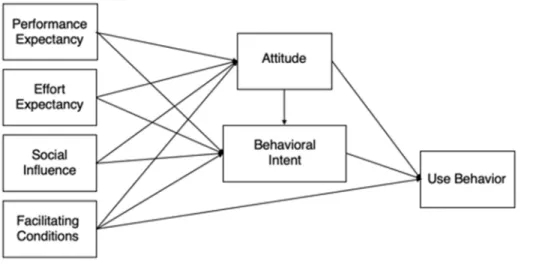
One example of altering the UTAUT was proposed by Dwivedi et al. (2017), who resynthesized the UTAUT by adding attitude as an independent variable and relating facilitating conditions to behavioral intent and use behavior (see Figure 2).
Figure 2. Augmented technology acceptance model . From “Re-examining the Unified
Theory of Acceptance and Use of Technology (UTAUT): Towards a Revised Theoretical Model,” by Y. K. Dwivedi, N. P. Rana, A. Jeyaraj, M. Clement, and M. D. Williams, 2017, Information Systems Frontiers. Reprinted with permission.
Preceding technology acceptance models such as theory of reasoned action (Fishbein & Ajzen, 1975) and theory of planned behavior (Ajzen, 1991) also included attitude as an independent variable; however, suggesting relationships between facilitating conditions and behavioral intent was a new alteration to the UTAUT. In addition to the inclusion of attitude as a construct, Dwivedi et al. proposed other changes to the UTAUT by relating performance expectancy, effort expectancy, social influence, and facilitating conditions, as moderated by experience, to attitude as well as relating attitude to use behavior, which meant that attitude and behavioral intent were similar constructs.
Assumptions
An additional assumption that was necessary in modifying the use of the UTAUT was that actual use, also known as use behavior, specific to continuous delivery was not a property that required objective measurement such as inspection of continuous delivery access logs, because once adopted, continuous delivery is continuously used. The property shared by all continuous practices was the basic continuous use required, and continuous delivery is continuous by definition (Shahin et al., 2018). Thus, there was no need to determine usage once continuous delivery was adopted (Walldén et al., 2016). Use behavior, as a dependent variable, was therefore not included in this study.
Similar Applications
The research on UTAUT application to technologies created for specific disciplines has included many examples similar to this study’s examination of project management adoption of continuous delivery. The disciplines of mobile tablets
Bwalya, & Mutshewa, 2016), and mobile technologies use in knowledge transfer by employees (Kuciapski, 2017) contained a resurgence of nonaugmented UTAUT. The disciplines of enterprise resource planning (ERP) software training (Chauhan & Jaiswal, 2016), homegrown ERP systems (Wagaw, 2017), and Software as a Service (Alotaibi, 2016) contained augmented UTAUT models. These studies were focused on domains requiring continuous change and improvement to store or communicate emergent and relevant information that are similar to continuous delivery. The Literature Review section of this chapter includes several examples of applying modified and unmodified UTAUT models to technology acceptance in specific domains of research.
Model Selection Rationale
The UTAUT measures human and technical factors that affect technology adoption and use (Venkatesh et al., 2003). The UTAUT was a suitable method for
studying an enterprise software-intensive business project manager’s behavioral intent of adopting continuous delivery because it was consistent with examining changes in software development team structure and objectives that depend on human factors (Amrit, Daneva, & Damian, 2014). The research indicated an interest in understanding the technical and social drivers behind technical adoption and use in the field of software development to support the intersection of the UTAUT and project management behavior (Amrit et al., 2014).
Agile software development was another area of significant research in the peer-reviewed literature that supports the purpose and selected model of this study. For example, Fowler and Highsmith (2001) stipulated that agile software development
principles encourage collaboration over documentation. Subramanian et al. (2018) expanded on Fowler and Highsmith by contending that agile software development principles reinforce self-forming, self-managing, continuously evolving teams to conceive, produce, and support continuous improvement of software solutions collaboratively. There are also many obstacles that come with nonagile principles, as organizations charged with designing systems are constrained to design systems that emulate the communication structure of the organization, which can lead to
communication gaps in noncollaborative environments like those defined by traditional software management methods (Conway, 1968). However, agile software development principles encourage collaboration over documentation (Fowler & Highsmith, 2001; Subramanian et al., 2018). Project managers in enterprise software development businesses facilitate the human interaction within a software development team, using systems, tools, and methods to build collaboration, trust, and culture (Kukreja, Ahuja, & Singh, 2018). Project managers’ behavioral intent to adopt continuous delivery may affect the adoption of a continuous delivery system, may overcome organizational constraints, provide greater project efficiency, and support gains in competitive advantage. Thus, I used the UTAUT as the theoretical foundation of this study.
Research Question Importance
The UTAUT includes constructs such as performance expectancy, effort
expectancy, social influence, and facilitating conditions, as moderated by experience, and their relationship to behavioral intent to adopt technology (Venkatesh et al., 2003). The research questions and hypotheses in this study embodied the scope required to examine