Theses and Dissertations
2017
Cognitive knowledge, attitude toward science, and skill
Cognitive knowledge, attitude toward science, and skill
development in virtual science labratories
development in virtual science labratories
Mahya Babaie
Follow this and additional works at: https://digitalcommons.pepperdine.edu/etd Recommended Citation
Recommended Citation
Babaie, Mahya, "Cognitive knowledge, attitude toward science, and skill development in virtual science labratories" (2017). Theses and Dissertations. 769.
https://digitalcommons.pepperdine.edu/etd/769
This Dissertation is brought to you for free and open access by Pepperdine Digital Commons. It has been accepted for inclusion in Theses and Dissertations by an authorized administrator of Pepperdine Digital Commons. For more information, please contact [email protected] , [email protected].
Graduate School of Education and Psychology
COGNITIVE KNOWLEDGE, ATTITUDE TOWARD SCIENCE, AND SKILL DEVELOPMENT IN VIRTUAL SCIENCE LABORATORIES
A dissertation submitted in partial satisfaction of the requirements for the degree of Doctor of Education in Learning Technologies
by Mahya Babaie February, 2017
Mahya Babaie
under the guidance of a Faculty Committee and approved by its members, has been submitted to and accepted by the Graduate Faculty in partial fulfillment of the requirements for the degree of
DOCTOR OF EDUCATION
Doctoral Committee:
Kay Davis, Ed.D. Chairperson John F. McManus, Ph.D. William Moseley, Ph.D.
© Copyright by Mahya Babaie (2017) All Rights Reserved
TABLE OF CONTENTS
Page
LIST OF TABLES ... vi
LIST OF FIGURES ... viii
DEDICATION ... x
ACKNOWLEDGEMENTS ... xi
VITA ... xii
ABSTRACT ... xiii
Chapter 1: Introduction ... 1
The Digital Era and Science Education ... 1
Virtual Learning Environments as Simulated Learning ... 6
Virtual Science Laboratories ... 7
Problem Statement ... 7
Purpose of Study ... 9
Research Hypotheses ... 10
Study Design ... 11
Assumptions and Delimitations ... 12
Theoretical and Conceptual Foundation ... 12
Definitions of Terms ... 16
Significance of the Study ... 18
Chapter 2: Literature Review ... 21
Science Literacy ... 22
Domains of Learning ... 28
Constructivist Learning Theory ... 36
Simulation-Based Learning ... 41
Attitude Toward Science ... 54
Summary ... 60
Chapter 3: Methods ... 64
Research Design ... 64
Variables ... 65
Hypotheses ... 65
The Buoyancy and Density VSL ... 67
Setting ... 69
Study Group ... 69
Page
Tools and Instruments ... 74
Human Subjects Considerations ... 76
Proposed Analysis ... 78
Means to Ensure Study Validity ... 78
Chapter 4: Results ... 80
Description of Participants ... 82
Cognitive Knowledge Findings ... 83
Attitudes Toward Science Findings ... 86
Skill Development Findings ... 107
Summary of Key Findings ... 112
Chapter 5: Discussion ... 114
The Issue and Significance ... 114
Theoretical and Conceptual Foundations ... 115
Methods ... 119
Key Findings ... 120
Conclusions, Implications, and Recommendations ... 121
Study Validity and Limitations ... 128
Closing Remarks ... 129
REFERENCES ... 132
APPENDIX A: Pre Buoyancy and Density Test ... 153
APPENDIX B: Post Buoyancy and Density Test ... 156
APPENDIX C: Virtual Laboratory Packet (VLP) ... 159
APPENDIX D: Pre Attitude Toward Science Inventory ... 168
APPENDIX E: Post Attitude Toward Science Inventory ... 170
APPENDIX F: ATSI Information Sheet ... 172
APPENDIX G: Parental Consent Information Sheet ... 173
APPENDIX I: Student Assent Information Sheet ... 176
APPENDIX J: IRB Approval ... 177
LIST OF TABLES
Page
Table 1. Descriptive Statistics for Pre and Post BDT ... 84
Table 2. Frequency Distribution of Pre and Post BDT ... 84
Table 3. Paired Samples t-Test for BDT ... 86
Table 4. Chronback's Alpha Coefficient Values ... 87
Table 5. Descriptive Statistics for Overal Pre and Post ATSI Scores ... 88
Table 6. Descriptive Statistics for ATSI Subscales ... 89
Table 7. Frequency Distribution of Pre Value of Science in Society ... 90
Table 8. Frequency Distribution of Post Value of Science in Society ... 91
Table 9. Paired Samples t-Test for Pre and Post Value of Science in Society ... 93
Table 10. Frequency Distribution of Pre Enjoyment of Science ... 94
Table 11. Frequency Distribution of Post Enjoyment of Science ... 95
Table 12. Paired Samples t-Test for Pre and Post Enjoyment of Science ... 96
Table 13. Frequency Distribution of Pre Motivation in Science ... 97
Table 14. Frequency Distribution of Post Motivation in Science ... 98
Table 15. Paired Samples t-Test for Pre and Post Motivation in Science ... 100
Table 16. Frequency Distribution of Pre Anxiety Toward Science ... 101
Table 17. Frequency Distribution of Post Anxiety Toward Science ... 102
Table 18. Paired Samples t-Test for Pre and Post Anxiety Toward Science ... 103
Table 19. Frequency Distribution of Pre Self-Concept Regarding Science ... 104
Table 20. Frequency Distribution of Post Self-Concept Regarding Science ... 105
Page
Table 22. Statistical Analyses for Mathematical Skills ... 107
Table 23. Frequency Distribution of Mathematical Skills ... 108
Table 24. Statistical Analyses for Scientific Skills ... 109
Table 25. Frequency Distribution of Scientific Skills ... 110
Table 26. Statistical Analyses of Journal Questions ... 111
LIST OF FIGURES
Page
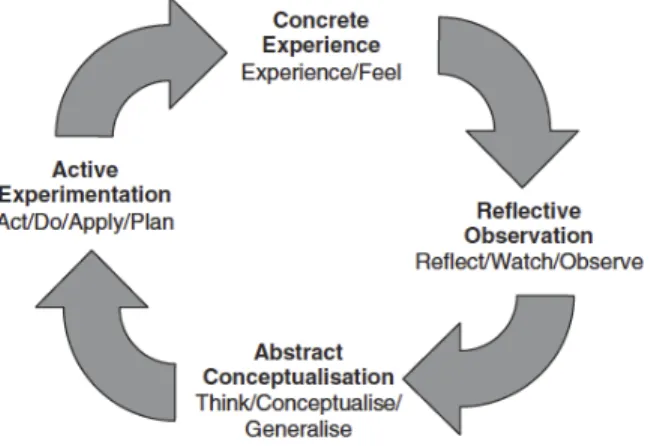
Figure 1. Theory model of Kolb’s model of experiential learning ... 47
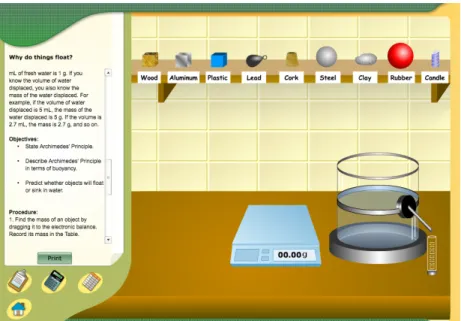
Figure 2. McGraw-Hill’s density and buoyancy virtual laboratory. ... 68
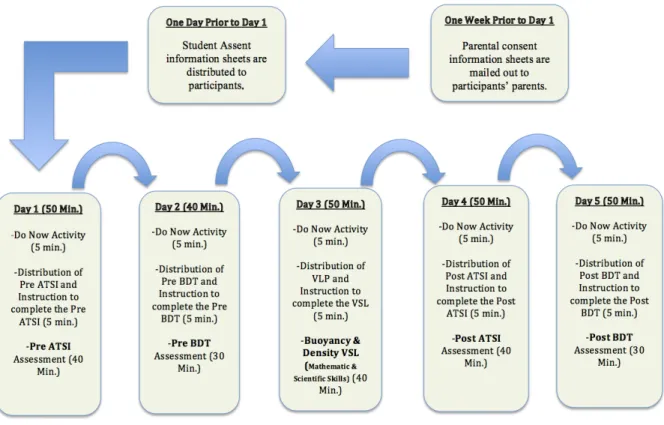
Figure 3. Procedures and data collection process. ... 71
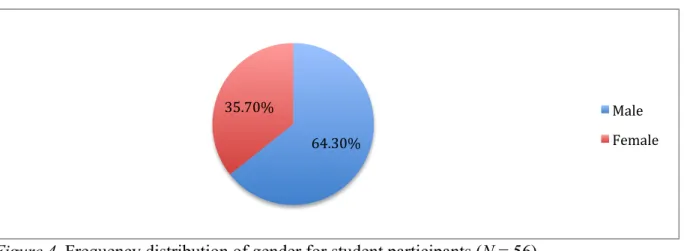
Figure 4. Frequency distribution of gender for student participants ... 82
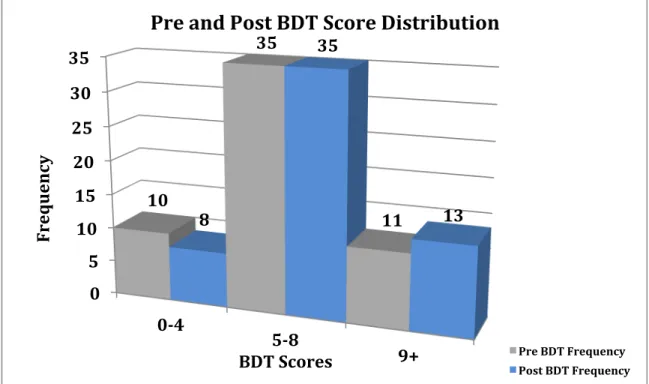
Figure 5. Frequency distribution of pre and post BDT. ... 85
Figure 6. Mean scores for pre and post BDT ... 85
Figure 7. Mean scores for pre and post ATSI. ... 88
Figure 8. Mean scores for pre and post value of science in society subscale ... 90
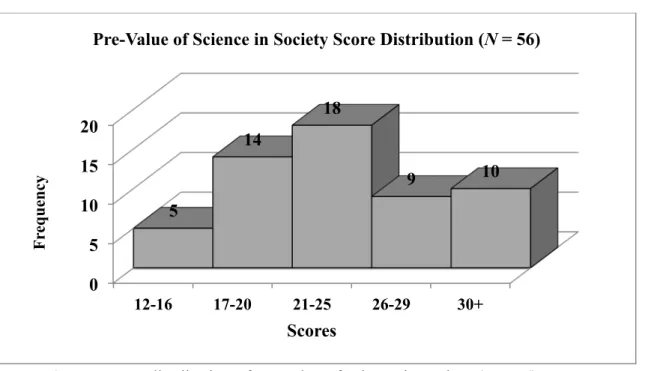
Figure 9. Frequency distribution of pre value of science in society ... 91
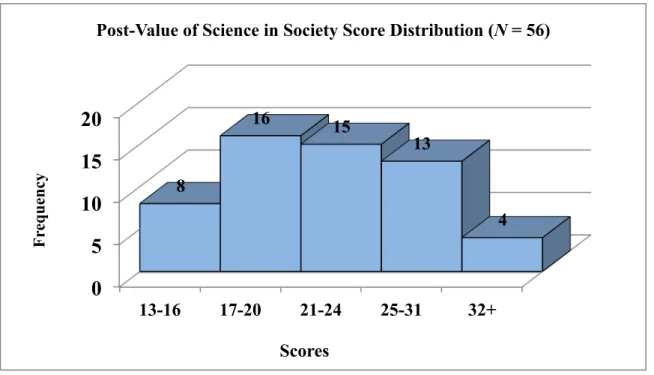
Figure 10. Frequency distribution of post value of science in society ... 92
Figure 11. Mean scores for pre and post enjoyment of science subscale ... 93
Figure 12. Frequency distribution of pre enjoyment of science ... 94
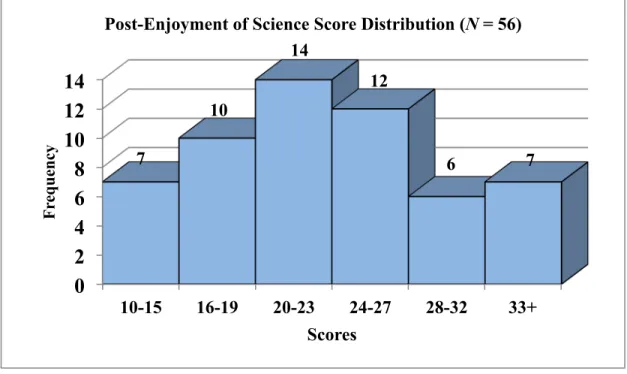
Figure 13. Frequency distribution of post enjoyment of science ... 95
Figure 14. Mean scores for pre and post motivation in science subscale ... 97
Figure 15. Frequency distribution of pre motivation in science ... 98
Figure 16. Frequency distribution of post motivation in science ... 99
Figure 17. Mean scores for pre and post anxiety toward science subscale ... 100
Figure 18. Frequency distribution of pre anxiety toward science ... 101
Figure 19. Frequency distribution of post anxiety toward science ... 102
Figure 20. Mean scores for pre and post self-concept regarding science subscale ... 104
Page Figure 22. Frequency distribution of post self-concept regarding science ... 106
Figure 23. Frequency distribution of mathematical skills ... 108
DEDICATION
This dissertation is dedicated to several people who encouraged me to start, continue, and finish this life long journey.
My family members’ love and support made it possible for me to reach the finish line and complete this great journey.
My lifelong partner, Hashem, who was with me every step of the way and never stopped encouraging me throughout this journey.
ACKNOWLEDGEMENTS
I would like to thank my family and close friends for their help, support, and guidance; without their encouragements, I could not have finished this challenging, yet rewarding journey. I would like to thank my chairperson, Dr. Kay Davis for her unconditional support and guidance. Her vital feedback and assistance helped me through this expedition.
I am thankful for my dissertation committee, Dr. Kay Davis, Dr. John F. McManus, and Dr. William Moseley for the time they have spent to provide me with meaningful suggestions and feedback.
Finally, I would like to thank my Cohort members and my professors at Pepperdine University. I will always cherish the time we spent in our classes. I value the experiences I have shared with every one of them and the perseverance I have gained through our collaboration for the past three and half years.
VITA
EDUCATION
Ed.D. Pepperdine University. Learning Technology 2017
M.A. California State University of Northridge. Science Education 2012 B.A. California State University of Northridge. Biological Science 2008
PROFESSIONAL EXPERIENCE
Academic Coordinator/Science Department Chair 2016-2017 Magnolia Science Academy # 6
Science Department Chair/STEM Coordinator 2012-present Magnolia Science Academy # 6
Science Instructor (6th- 8th) 2012-present
Magnolia Science Academy # 6
RESEARCH EXPERIENCE
• Cognitive Knowledge, Attitude Toward Science, and Skill Development In 2013-2016 Virtual Science Laboratories. Dissertation.
• The Affect of Virtual Lab On Students’ Achievement and Engagement in 2010-2012 Secondary Science Classrooms. Action Research
EDUCATIONAL INTERESTS
• Virtual Learning Environments (VLEs) • Virtual Science Laboratories (VSLs) • Science education
ABSTRACT
The purpose of this quantitative, descriptive, single group, pretest posttest design study was to explore the influence of a Virtual Science Laboratory (VSL) on middle school students’ cognitive knowledge, skill development, and attitudes toward science. This study involved 2 eighth grade Physical Science classrooms at a large urban charter middle school located in Southern California. The Buoyancy and Density Test (BDT), a computer generated test, assessed students’ scientific knowledge in areas of Buoyancy and Density. The Attitude Toward Science Inventory (ATSI), a multidimensional survey assessment, measured students’ attitudes toward science in the areas of value of science in society, motivation in science, enjoyment of science, self-concept regarding science, and anxiety toward science. A Virtual Laboratory Packet (VLP), generated by the researcher, captured students’ mathematical and scientific skills. Data collection was conducted over a period of five days. BDT and ATSI assessments were administered twice: once before the Buoyancy and Density VSL to serve as baseline data (pre) and also after the VSL (post). The findings of this study revealed that students’ cognitive knowledge and attitudes toward science were positively changed as expected, however, the results from paired sample t -tests found no statistical significance. Analyses indicated that VSLs were effective in supporting students’ scientific knowledge and attitude toward science. The attitudes most changed were value of science in society and enjoyment of science with mean differences of 1.71 and 0.88, respectively. Researchers and educational practitioners are urged to further examine VSLs, covering a variety of topics, with more middle school students to assess their learning outcomes. Additionally, it is recommended that publishers in charge of designing the VSLs communicate with science instructors and research practitioners to further improve the design and analytic components of these virtual learning environments. The results of this study contribute to the
existing body of knowledge in an effort to raise awareness about the inclusion of VSLs in
secondary science classrooms. With the advancement of technological tools in secondary science classrooms, instructional practices should consider including VSLs especially if providing real science laboratories is a challenge.
Chapter 1: Introduction The Digital Era and Science Education
In educational settings, computer technology and the Internet have opened new pathways of learning (Keengwe, Onchwari, & Wachira, 2008). With the increasing usage of computers and technology, students are becoming better and faster at using computers and the Internet. Today’s students have been raised on a steady diet of technology; they are digital natives who are
expected to use computers on a regular basis for a wide range of educational tasks (Robin & Sharon, 2011). The recent attention that educational technology has received has turned
educators’, practitioners’, and researchers’ focus toward the effects that these tools may have on student performance, both academically and behaviorally. Even though the use of technological tools such as educational games, online simulations, and virtual learning environments have increased in the field of education over the past few decades, educational researchers need to better understand how these technological tools can affect learning (Harasim, 2000). Changes in education policy regarding the implementation of educational technology have opened new avenues to instructional pedagogies. From Learning Management Systems (LMSs) to virtual avatars in digital games, virtual environments have found their way into educational systems. Virtual Learning Environments (VLEs) are computer-generated environments that allow participants to interact and communicate with their peers. One reason why educational
communities accepted VLEs had to do with learners’ and instructors’ ability to communicate and interact with the objects in these environments (Kotsilieris & Dimopoulou, 2013). VLEsallow learners to visualize concepts that cannot be seen in real life. Students are able to view, interact, and experiment with certain visual effects, such as the molecular structure of compounds, that
they may not see in their traditional face-to-face environment in a science classroom (Trindale, Fiolhais, & Almeida, 2002).
The word science refers to a body of knowledge and the process of obtaining information (Millar, 2004). Yager (1983) described science education as a discipline that fuses science and society. The sharing of discovered knowledge and knowledge that is yet to be discovered by the members of society is achieved through the process of science education. The aims of science education are as:
(1) to help students to gain an understanding of as much of the established body of scientific knowledge as is appreciate to their needs, interests and capacities; (2) to develop students’ understanding of the methods by which this knowledge has been gained, and our grounds for confidence in it. (Millar, 2004, p. 1)
Science education, with a basis in inquiry learning, could clearly benefit by using the
technological capability afforded by VLEs. For instance, some of the chemistry concepts such as phases of matter require students to visualize the behaviors of water molecules that without specific materials or high-tech equipment, can be difficult for students to see and experience.
Though VLEs used in creating a graphical representation of such concepts have shown to increase student understanding, further research is necessary to determine whether the field of science education could benefit from the use of VLEs (Trindale et al., 2002). In placing emphasis on inquiry learning, educators are encouraged to follow science curricula that are composed of directed activities that are not effective in engaging students in learning (Pedersen & Irby, 2014). With the transformation in educational technology and advancement in technological tools, educators have not yet been able to benefit from this change to its fullest capacity (Cuban, Kirkpatrick & Peck, 2001). With emphasis on inquiry learning and content standards dictating
what students need to know and be able to do, educators feel apprehensive about including technological tools and computers in their classrooms. One reason may be due to the emphasis placed on inquiry learning in secondary science and the process of conducting experiments in laboratories. Inquiry learning refers to various ways in which scientists study the world using scientific methods (Hofstein & Lunetta, 2004). In order for scientists to learn about the natural world, they need to observe, gather information, analyze findings, and state their conclusions, all while using the necessary tools during laboratories. According to Hofstein and Lunetta (2004), science laboratories are a crucial part of every science classroom and rich learning benefits result from participating in laboratory activities. Moreover, according to the National Science
Education Standards’ (NSESs’) benchmarks for science literacy, students need to develop methods of inquiry as well as thinking skills that are similar to those used by scientists (Hofstein & Lunetta, 2004). These skills can be acquired via the well-planned laboratory activities that students perform in science classrooms.
Hofstein and Lunetta (2004), defined science laboratory activities as “learning experiences in which students interact with materials and/or with models to observe and understand the natural world” (p. 31). This assertion implies that in order to understand the nature of science (NoS), students ought to experience learning in laboratory settings where they can use tools and evidence to draw conclusions about the phenomena that they observe. The practice of going through a well-designed laboratory enables students to appreciate the process of gaining knowledge by navigating through a series of steps and using the available tools to complete the given tasks. The process through which every citizen undergoes in order to thrive in modern society is fundamentally based in the ability to make decisions. It is also important for every citizen to recognize the cause and effect relationship in the process of communicating
opinions that makes science education a crucial part of any individual’s educational experience (Marincola, 2006). In order for future generations to become independent thinkers, they need to think like scientists and understand how science functions as a part of their daily lives. The act of using available science laboratory equipment to conduct a laboratory experiment as well as make sense of what the results mean give students an opportunity to view science education as a process of learning and reflecting.
Using laboratory equipment to conduct experiments allows students to gain the 21st century skills necessary to become future problem solvers and active participants in society (National Science Teachers Association [NSTA], 2009). Moreover, science laboratories not only play a role in promoting positive attitudes toward science, but also enhance students’ interest in science as well (Luketic & Dolan, 2013). Although making science laboratories part of everyday curriculum may sound appealing, many educators and practitioners face challenges when
educational resources such as laboratory equipment become limited (Quigley, 2014). With the push to meet state standards and mandated testing sessions, secondary science educators have been left with only one choice when covering the mandated curriculum: eliminating laboratory experiences from their curriculum.
Aside from focusing on the science standards, increase in classroom sizes and limited classroom space have added to the obstacles educators face in instructional environments. A safety audit report conducted during academic school year of 2006-2007 in the Kansas City region indicated that more than 50% of middle and high school laboratories need more space and the majority of these science laboratories did not meet National Science Teachers Association (NSTA) safety standards (Roy, 2008). The barriers science educators face when trying to include science laboratories in their daily agenda reflect more than just monetary cost. Classroom size,
safety test driven curriculum, and teachers’ science background and preparation are also serious impediments to including science laboratory activities in middle and high school classrooms (Hamidu, Ibrahim, & Mohammed, 2014).
Although it is clear that laboratories are an important part of science education, increased class size, lack of necessary science laboratory equipment due to lack of funding, insufficient amount of time to prepare the laboratories, and shortage of experienced science teachers are all factors that have led to the decreasing frequency of such activities (Hamidu, Ibrahim, &
Mohammed, 2014; Sun, Wang, Xie, & Boon, 2014). In spite of all of these obstacles in implementing science laboratories in secondary education, many researchers and practitioners still find that central laboratory activities play a pivotal role in students’ scientific knowledge development, enhancing attitude, and providing motivating to learn science (Hofstein & Lunetta, 2004; Wong, Firestone, Luft, & Weeks, 2013).
Throughout the development period in the public education system, educational researchers have become aware of the connection science education has to other content areas and our lives outside of an educational settings. The quest to find answers to these questions requires individuals to take a series of steps that resemble methods used by scientists. However, science education is not just for scientists, but rather a way to teach critical thinking (Marincola, 2006). To help students to become scientifically literate, they must be engaged in activities that include experimentation, evaluation, and reflection. Scientific literacy refers to “one’s
understanding of the concepts, principles, theories, and process of science, and one’s awareness of the complex relationships between science, technology, and society” (Abd-El-Khalick, Bell, & Lederman, 1998, pp. 417-418). Though activities such as science laboratories promote scientific thinking and “an appreciation of the construction of scientific assertion,” (p. 1,230)
their availability in most middle and high school settings is much lower than expected
(Yacoubian & BouJaoude, 2010). The focus of this research will be to suggest how the use of a VLE to simulate the live laboratory experience could bridge this gap and ensure that all students have the opportunity to build critical reasoning and scientific thinking skills.
Virtual Learning Environments as Simulated Learning
Simulated learning refers to the learning that occurs in a simulated environment. In simulated environments, objects and tools are designed and represented visually to model and represent the real environment. Through their interactions with simulated environments, learners are given opportunities to make decisions, become part of an environment that is impossible to create in reality, and receive immediate feedback on their decisions (Smetana & Bell, 2012). Used in the fields of military preparation and health care education, simulations used in Virtual Learning Environments (VLEs) have subsequently found their way into the education system. Mikropoulos and Natsis (2011) defined VLEs as learning environments that are “based on a certain pedagogical model, incorporates one or more didactic objects, provide users with experiences they would otherwise not be able to experience in the physical world and redounds specific learning outcomes” (p. 770).
The inspiration behind designing VLEs emerged from the popularity of commercial gaming software that incorporated virtual environments, Virtual Reality (VR), into their designs. VR not only captured students’ interests but also promoted learning among participants
(Kontogeorgiou, Bellou, & Mikropoulos, 2008), which has inspired educational researchers since 1990 to design and create VLEs that promote learning. A study by Kontogeorgiou et al. (2008) concluded that participants’ sense of presence played an important role in students’ learning due to their ability to visualize and manipulate information in the virtual environment. With
considerable attention given to the design of VLEs, educational researchers have examined different avenues by which students gain lifelong learning skills. For example, a study by Chen (2010) found that, although the presentation and interaction of materials are genuine and real in virtual laboratories, laboratory tasks are simplified for students in these environments. Concerns regarding overall learning outcomes of using VLEs have called for educational researchers’ attention and clearly called into question whether or not VLEs can be as effective as real learning environments (Chou & Liu, 2005).
Virtual Science Laboratories
A computer simulation that enables essential functions of laboratory experiments to be carried out on a computer is called a Virtual Laboratory (VL); (Harms, 2000). Availability of VSLs in current science curricula and resources (e.g., McGraw-Hill’s virtual laboratories at http://www.glencoe.com) offer science educators opportunities to expose students to the process of experimentation and inquiry. The visual representation of tools and equipment in VSLs resemble the artifacts students observe and utilize while conducting science experiments. In order to make students’ VSL experience authentic, designers provide the tools and equipment needed to complete the experiment. From saving time and lowering expenses to minimizing ethical and safety issues, VSLs present a milestone in providing students with unlimited opportunities to experience scientific phenomena through experimentation and simulation.
Problem Statement
Unfortunately, due to the lack of time, school budget constraints, and focus on content-based standards, providing real, authentic science laboratories has become a struggle for many secondary schools. Without science laboratories, science instruction becomes purely factual and hypothetical, and the content under study becomes a series of steps that students have to
memorize. The bigger problem results in students’ lack of problem solving skills and interest in science-related career fields. New statistics in STEM education are very alarming. A report by Dieker, Grillo, and Ramlakhan (2012), stated that only 29% of eighth grade students performed at a proficient level in a nationwide test during the year of 2005. Due to students’ low academic performance, STEM education has received a great deal of attention in regard to students’ interest in STEM fields. These results will lead to bigger issues, such as losing economic status in industries that are driven by science-related fields. The decline in international test scores every decade presents an alarming wake up call for secondary science education.
With no time required for setting up, breaking down, or clearing equipment, VSL experiences can be integrated seamlessly into the instructional process without losing any time on housekeeping tasks (Jona & Adsit, 2008). With all of the advantages that VSLs have to offer, educators and practitioners still wonder about their educational outcomes and whether or not they can offer more than just a virtual world. Recent technological advancements have made VSLs highly accessible to K-12 educators. However, the effects of these tools have not yet been explored in middle school settings. Although prior research findings have demonstrated the effectiveness of VLs in higher education, little has been done to examine students’ cognitive knowledge, skill development, and attitudes toward science in middle and high school science classrooms (Scalise et al., 2011). “Existing studies present conflicting and confusing findings about learning in simulated science environments” (Scalise et al., 2011, p. 1,054). Though some findings showed the improvement in students’ educational performance in VSLs (Martinez-Jimenez, Pontes-Pedrajas, Polo, & Climent-Bellido, 2003), other researchers emphasize the importance of hands-on laboratories, where students interact with real laboratory equipment and acquire professional skills in order to use such equipment during experimentation (Ma &
Nickerson, 2006). Additionally, some studies also have suggested that VSLs are as effective as real science laboratories in providing students with environments that are easy to use and safe to conduct experiments in (Tatli & Ayas, 2013). Given the mixed findings about the effectiveness of VLs in secondary science classrooms, these technological tools are still not being
implemented in science classrooms on a regular basis. The doubts about VSLs and their effects on students’ learning have rendered these tools little more than supplemental curiosities that instructors may or may not use. More specifically, cognitive knowledge, attitude toward science, and attitude toward science with respect to VSLs have not yet been studied extensively in middle school science classrooms.
Purpose of Study
This study explored the influence of a Virtual Science Laboratory (VSL) on middle school students’ cognitive knowledge, skill development, and attitudes toward science. Inspired by Bloom’s domains of learning (Bloom, Engelhart, Furst, Hill, & Krathwohl, 1956), this study explored each for a selected science activity. Cognitive knowledge of specific science concepts; attitude toward science falls within the affective learning domain, and skill development such as mathematical and scientific skills signifies the psychomotor domain of learning (Kasilingam & Chinnavan, 2014).
The purpose of this descriptive, single group, pretest-posttest design study was to assess gains within each of Bloom’s domains of learning outcomes following participation in a VSL for eighth grade students at Magnolia Science Academy # 6 charter middle school in Southern California. The VL focused on science content specific to principals of object mass and how mass affects whether the object will float or sink. Virtual equipment and materials within the laboratory enabled students to calculate various objects’ density and predict the buoyancy of the
objects. Four dependent variables were tested. First, cognitive knowledge gain was determined from pre and posttest scores. The second dependent variable, attitude toward science, was defined as a participant’s behavior toward the subject of science, which was assessed prior to the activity and then again following completion of the activity. The third and fourth dependent variables were mathematics skills development and science skills development, respectively. Mathematical skills were defined as steps necessary to calculate objects’ density. Scientific skills were defined as steps necessary to complete data observation and data collection. These skills were assessed by reviewing each individual student’s recorded calculations and predictions during the virtual experience.
Research Hypotheses
This study attempted to demonstrate whether the amount or extent of improvement of cognitive knowledge, attitudes toward science, and skill development is stronger when today’s middle school children are engaging with more technologically enhanced learning activities. Research hypotheses relate to each of Bloom’s (2001) three domains of learning: cognitive knowledge, psychomotor skills, and affective domain. For knowledge and affective domain (attitudes), positive changes were anticipated from pretest to posttest and pre survey and post survey. Psychomotor skills were measured during the virtual activity. Study hypotheses include:
• 𝐻!: Participating in Virtual Science Laboratories will improve cognitive knowledge.
• 𝐻!: Participating in Virtual Science Laboratories will enhance students’ attitude toward
science.
o 𝐻!!: Participating in Virtual Science Laboratories will enhance students’ enjoyment of science.
o 𝐻!!: Participating in Virtual Science Laboratories will enhance students’ motivation toward science.
o 𝐻!!: Participating in Virtual Science Laboratories will enhance students’ value of
science in society.
o 𝐻!!: Participating in Virtual Science Laboratories will enhance students’ self-concept of science.
o 𝐻!!: Participating in Virtual Science Laboratories will diminish students’ anxiety toward science.
• 𝐻!: Participating in Virtual Science Laboratories will affect mathematical skills.
• 𝐻!: Participating in Virtual Science Laboratories will affect students’ scientific skills.
Study Design
This descriptive, single group, pretest-posttest design study was conducted in a public middle school located in Southern California. The group involved two sections of an eighth grade science class purposely selected by the researcher. Each section had a common lesson plan, learning objectives, and instructor. The participants in this study were placed into sections of physical science by the administration team at the beginning of the academic school year; therefore, no randomization of students was possible. The independent variable in this study was a VL addressing the scientific concepts of buoyancy and density. The pretest-posttest design involved measurement of cognitive knowledge and attitudes prior to and after the VL experience. Skills were recorded manually by the individual student using a Virtual Laboratory Packet (VLP) during the VL activity. The researcher is a middle school science instructor and was the
instructor of record for the two sections of physical science. The study was conducted at the same middle school where the researcher works.
Assumptions and Delimitations
Assumptions of the study included that participating students have a sufficient and common level of knowledge and experience with computers. This study focused on eighth grade students with similar socio-economic demographic background. The available technological tools were limited to those provided by the school in which the research study was conducted.
Student participants were enrolled in an eighth grade physical science class for the first time. The course included four units: Motion and Forces, Structure of Matter, Chemical
Interaction, and Earth and Space. This study focused on the first unit of the course, Motion and Forces, and laboratory activities were conducted in a VSL.
Theoretical and Conceptual Foundation
Learning theory provides an applicable framework for studying the effects of VSLs on students’ cognitive learning, skill development, and attitudes toward science. Each learning domain is essential in science education. For cognitive knowledge and skill attainment, a constructivist learning perspective is taken. The constructivist theory of learning, developed by Jean Piaget, has been used commonly in science classroom settings (Narli, 2011). The
constructivist learning theory is a theoretical approach that explains how learners construct new knowledge and skills by interacting with their environment and using their prior knowledge (Lord, 1998). In a learning environment where the constructivism learning theory is practiced, individual learners construct or modify existing knowledge by initially making an interpretation of new experiences until they have constructed a personal view or understanding about the new information (Karagiorgi & Symeou, 2005). What learners experience and interact with in a learning environment shapes their understanding and beliefs about new ideas and knowledge. Developing a positive attitude toward the content of science and learning why the concepts are
applicable to their lives allow the learners to become aware of the value of the content being discussed and as a result become engaged in the process of learning. When engaged and
motivated, students look for ways to find answers to their questions in which they will construct their own understanding about a particular scientific concept. They do not necessarily have to rediscover scientific concepts, but in turn build and construct their own understandings about the scientific concept. “We learn through a continual process of constructing, interpreting, modifying of our own representation of reality that is based on our experiences with reality” (Harper,
Hedberg, & Wright, 2000, p. 164). Through their daily experiences, scientists discover patterns that shape their own understanding about a scientific phenomenon; this teaching strategy promotes active learning. The constructivism theory of learning allows students to participate actively in activities, construct new knowledge, and gain an understanding about the content under study (Kim & Reeves, 2007). When students are actively seeking answers to the questions they might have about various concepts, they are building new knowledge in a relevant way to which they can relate. In this case, the knowledge is not constructed by the teacher, but rather by the students.
When applied to educational settings, constructivism learning theory identifies learners as individuals that construct knowledge by asking questions and proposing solutions (Yilmaz, 2008). With its popularity in science education and curriculum development, constructivism learning theory involves experiential and discovery learning as well. More specifically, knowledge comprehension through inquiry learning suggests that learners are independent thinkers that take necessary steps to find answers to their questions. The process of learning from a failed science experiment and reflection on experiences reveals the importance of learners’
experiences in learning environments and how they can lead to the construction of new knowledge or the modification of existing knowledge.
One conceptual area of the study involves simulation-based learning through the use of a Virtual Learning Environment (VLE). A virtual environment is defined as one “that is based on a certain pedagogical model, incorporates or implies more didactic objectives, provides users with experiences they would not otherwise be able to experience in the physical world” (Mikropoulos & Natsis, 2011, p.770). In secondary science classrooms, it is not possible for students to fly to space and analyze atmospheric composition of planet Earth, so educators must find alternative ways to allow their students to interact with this concept. The essential piece in a VLE is learners’ presence or users’ “sense of being there” (Mikropoulos & Natsis, 2011, p. 770). Computers being identified as cognitive tools and as a gateway to VLEs have extended human capabilities in cognition (Kim & Reeves, 2007). These environments are simulations of reality that allow learners to complete the required tasks or activities similar to those in physical
learning environments. Learners in such environments use the tools available to them in order to conduct experiments by collecting data, re-doing part of the experiments, and practicing skills such as inquiry. VLEs are considered to be meaningful environments because they are authentic, constructive, and interactive (Mundkur & Ellickson, 2012). Furthermore, a study by Morton Uhomoibhi (2011) indicated that VLEs create a student-centered space where learners are able to take ownership for their learning. Although laboratory settings have previously provided these experiences, the costs and limitations are no match for the possibilities that technology has created.
VSLs have opened new doors and created opportunities for students to conduct
a VSL, students’ interactions with the simulations may hinder facilitators’ guidance and
interaction (Ma & Nickerson, 2006). As a result, researchers and practitioners wonder about the effectiveness of VLEs in comparison to traditional learning environments. In VLEs, instead of interacting with a real laboratory environment, participants interact with a simulation that
represents a real laboratory environment. A key question is whether a VLE can be as effective as real learning environments in promoting students’ knowledge comprehension and skill
development.
Inquiry, discovery, and experiential learning theories have received considerable
attention from science educators and practitioners. Practicing inquiry learning in VSLs has made these technological tools an effective learning environment where students become engaged with the scientific content (Ketelhut & Nelson, 2010). What students experience and discover in a science laboratory may impact their attitude toward science and ultimately influence their performance in secondary science. In this learning process, science becomes a collection of experiences that engage students in practices that can lead to discovery learning; learners will have opportunities to become more aware of the NoS and their own thinking (Houseal & Ellsworth, 2014).
Attitudes toward a topic or instructional approach can influence the way knowledge is comprehended and constructed (Pyatt & Sims, 2012). In the secondary science classroom, students are expected to actively question, analyze, and discuss new ideas in order to make sense of them and generate their own understanding about the concept that is being discussed. Having a positive attitude toward the subject being discussed will not only enhance students’ motivation, but also provide students with a sense of being connected to the topic being discussed. The Nature of Science (NoS) requires students to engage in thinking and asking meaningful
questions. To master these skills, students need to stay motivated and engaged during class time. Engaged learning is generally defined as a situation in which learners are active in their learning and student activities involve active cognitive processes (Iqbal, Kankaanranta, & Neittaanmäki, 2010). When students are engaged and participating in the classroom, they are active learners and stay motivated throughout the lesson. Another study by Smith and Cardaciotto (2011) concluded that active learning leads to a variety of positive outcomes, including better student attitudes, greater motivation, improvements in students’ thinking and writing, greater memory for information taught, and improved exam performance.
Motivated students are more likely to pay attention during course activity, take time to use effective learning and studying strategies, and seek help from others when needed (Jones, 2009). After reading many similar reviews, it is possible to assert that most educators look for ways to improve students’ attitudes toward their subject matter; this will help students stay on task, participate in class discussions, and ultimately improve their content literacy. Engagement refers to active involvement, commitment, and concentrated attention, in contrast to superficial participation, apathy, or a lack of interest (Park, 2005).
Definitions of Terms
Constructivist learning: A method of generating and constructing knowledge as a result of interactions between what is known (prior knowledge) and the new knowledge with which one comes into contact (Richardson, 2003).
Cognitive Constructivist learning: A process of individuals’ knowledge constructing at various levels of cognitive development through the stages of self-organization (Ackermann, 2001).
Cognitive knowledge: Intellectual processes that involve remembering, understanding, and recalling knowledge (Bloom, Engelhart, Furst, Hill, & Krathwohl, 1956), where knowledge is described as “organized bodies of information” (Gagne, 1972, p. 8). In this research, cognitive knowledge will be measured using the BDT multiple-choice questions that are extracted from McGraw-Hill’s TestGen®, a computerized Test Bank from Exam View.
Socio-Constructivist learning: An approach to learning in which learners construct knowledge through their interactions with peers by using languages that are mediated by culture (Kanselaar, 2002).
Constructionist learning: A method of learning in which learners build relationships between prior knowledge and new knowledge through interaction with others, creating tangible artifacts or objects (Kafai, 2006).
Inquiry learning: Involves a series of authentic activities that involve observation and the examination of phenomena through the lens used by scientists to evaluate and communicate their discoveries (Kubieck, 2005).
Discovery learning: A system of learning when learners are not provided with target information; instead, they seek the information independently with the materials provided to them (Alfieri, Brooks, Aldrich & Tenenbaum, 2011).
Experiential learning: “A process whereby knowledge is created through the transformation of experience” (Kolb, 1984, p. 41).
Simulation learning: Experiential instructional technique used in simulated learning environments that use technological tools to create significant features of a real learning environment (Rutten, van Joolingen, & van der Veen, 2012).
Virtual Learning Environment (VLE): A computerized, 3D space that promotes
interactive and meaningful opportunities to enhance learning and comprehension (Dillenbourg, Schneider, & Synteta, 2002).
Traditional science laboratory: Instructional environment equipped with science related tools and instruments to conduct science experiments.
Virtual Science Laboratories (VSLs): Computerized 3D learning environments that simulate the real science laboratory space and allow students to use scientific equipment to conduct experiments. In this study, the specific scientific content of the VSL is focusing on buoyancy and density.
Science Attitudes: An individual’s behavior, emotion, and belief toward an object or a phenomenon. In this research, attitudes toward science will be measured using the ATSI, an established tool that measures five specific areas of attitudes (Weinburgh, 2000).
Mathematical skills: “Tasks involving ranking numbers, translating numbers from one representation to another, quantity discrimination, as well as more complex number skills such as arithmetic computation” (Alloway & Passolunghi, 2011, p. 134). Students in this study will record their mathematical calculations in a laboratory packet.
Science skills: Steps involving manipulation of laboratory equipment, instruments, and tools to carry out observation, data collection, and data analysis. Students in this study will record scientific predictions in a laboratory packet.
Significance of the Study
Science laboratories are an important part of science education, as they significantly influence students’ learning by helping them develop scientific reasoning and ultimately enhancing students’ cognitive outcomes (Luketic & Dolan, 2013). In science laboratories,
students use tools and equipment in order to experience thinking and working like a scientist by conducting experiments, collecting data, and analyzing findings. Given the importance of science laboratories and their role in the world of inquiry learning, it is clear that such environments should not only be commonplace in science curriculum, but also become part of the daily agenda in secondary science classrooms. VSLs have shown positive effects on students’ learning where students who participated in VSLs scored higher in their post assessment tests (Yang & Heh, 2007).
Though little is known about the potential of virtual environments in students’ learning process, the results from a study by Chou and Liu (2005) concluded that students in technology-mediated VLEs scored higher on their midterms and final assessments than students in
traditional classroom settings. Additionally, VLEs have transformed science education and engaged students in inquiry activities where they took ownership over their learning goals
(Pedersen & Irby, 2014). VSLs could offer more than just a virtual environment. Although these technological tools have been used wildly in secondary science classrooms, their potential in enhancing cognitive knowledge, students’ attitude toward science, mathematical skill
development, and science skill development has not yet been studied in depth.
This research study will contribute to the pool of findings about the effects of VSLs on students’ learning in secondary science classrooms. Since most of the current studies have focused on the use of VSLs in higher education, it is appropriate to shed some light on outcomes that these environments may influence in secondary science classrooms. With only a few studies having been conducted on VSLs in middle schools, the need to study the influences of VSLs on students’ learning have called for present and future research to be conducted in the middle school setting. The findings from this study will help policymakers, administrators, and
practitioners draw more concrete conclusions regarding the implementation of these tools in secondary science classrooms. The results from this research project will offer instructors a better understanding of VSLs and clarify any uncertainty educators may have regarding these educational tools. In other words, the results will contribute to the larger body of findings on this subject to determine whether VSLs can be effective enough to replace traditional science
laboratories in regard to students’ cognitive knowledge, attitudes toward science, and skill development.
Laboratory experiments have historically been a part of middle school education in subjects such as biology, chemistry, and physics. However, with the growing costs associated with education and increasing classroom sizes, many teachers and schools can no longer afford the financial, health, and legal risks associated with laboratory experiences. When laboratories are removed or not implemented sufficiently in secondary science classrooms, students may not acquire necessary skills and may lose interest in pursuing careers in science. A lack of strong science education and laboratory implementation in secondary school has been negatively affecting the U.S.’s ability to compete in the global economy. Therefore, this study will explore the potential for VLs to serve as effective, cost-efficient digital tools in facilitating inquiry-based learning for middle school science classrooms.
Chapter 2: Literature Review
With so much attention given to secondary education and the skills students need to develop in order to become active participants in 21st century society, science education has outshined other content areas in the secondary school system. As mentioned in the NSES, “learning science is something that students do, not something that is done to them” (National Research Council, 1996, p. 2). The majority of content knowledge acquired in science
classrooms has to do with students’ interactions with the learning environment; experiences that students gain when completing tasks using the scientific method. Science requires not only cognitive knowledge but also specific skills and positive attitudes of the learner. The educational scientist Benjamin Bloom (Forehand, 2010) established a three-domain model for learning in the mid-20th century. Although learning theories have continued to evolve, the distinctions among cognitive learning, skill attainment, and attitudes remain critical for preparing students to succeed as adults (Krathwohl, 2002; Krathwohl, Bloom & Masia, 1964; Simpson, 1971).
This literature review begins with a discussion of science literacy and expands to include a discussion of Bloom’s classical model for distinguishing among domains of learning, followed by discovery learning theory (Bruner, 1961), and a pedagogical method referred to as inquiry learning (Connors & Perkins, 2009). For this research, the foundation lies in various theories of how knowledge is constructed and how learning occurs. The constructivist learning theory is branched into several components: pioneered by Jean Piaget, cognitive or individual
constructivism is one the constructivist perspectives that emphasizes how a child’s view about the world changes through developmental stages (Ackermann, 2001); social constructivism established by Lev Vygotsky, also referred to as the socio-cultural constructivist perspective (Kanselaar, 2002); and constructionist learning theory founded by Seymour Papert (1980), which
enables the learner to create meaning by constructing a model or tangible object (Hay & Barab, 2001). Simulation-based educational practices are also explored to provide the foundation for Kolb’s (1975) experiential learning model to help explain how skills are developed. This provides the connection to the concepts and principles of VLEs. Inherent in all aspects of
learning is Bloom’s third domain of learning: students’ attitudes toward the content area. For this research, previous writings about students’ attitude or affinity toward science will be explored to understand what engages and motivates them to learn within a science classroom.
Science Literacy
What is science and why should educators care about making sure our future generation is scientifically literate? “The word ‘science’ used in ordinary discourse in English refers to a product (a body of knowledge), to a process (a way of conducting enquiry) and to an enterprise (the institutionalized pursuit of knowledge of the material world)” (Millar, 2004, p. 1), and science literacy involves investigative skills such as making observations, reviewing analysis, and initiating communication. Historically, the term scientific literacy was introduced to the general public in the late 1950s in a publication titled Science Literacy: Its Meaning for
American School (Laugksch, 2000). The period that followed this decade focused on educational policy reforms that highlighted the importance of science education and its role in society. In a society where information is obtained easily, everyone needs to find, choose, and use the
information to function in a society that requires its members to think, make decisions, and solve problems (National Research Council, 1996). Science literacy is more than memorizing
countless numbers of facts and different past discoveries; rather, it’s more about mastering the skills that allow one to make observations, and being able to use the information that was gathered to construct meaning effectively. A century ago, acquiring scientific knowledge in
secondary schools was confined to transferring a collection of facts and procedures to students (Sawyer, 2008).
The NSES define teaching science as a process where students ask questions, identify their assumptions, seek explanations, generate hypotheses, test their hypotheses, and
communicate their findings (Colburn, 2000). This process allows students to construct new knowledge or modify their existing knowledge by reflecting on their prior knowledge as well as finding ways to reflect on their learning as the result of an authentic assessment. In authentic assessments, student learning is evaluated through real world problem-solving situations or laboratory experiments (Colburn, 2000).
Recently, the U.S. has faced nationwide challenges that have resulted in very poor student performance compared to other countries. According to an international performance report, in areas of mathematics, science, and reading literacy, prepared by Kelly et al. (2013), only 7% of 15-year-old students from United States scored proficient, level 5 or above. The information in this report refers to the 2012 PISA results (Program for International Assessment). The PISA scores from 3 years prior raked U.S. science literacy 13th among 33 other OECD countries (Fleischman, Hopstock, Pelczar, & Shelley, 2010). OECD, the Organization for Economic Co-operation and Development, “traces its roots to the Marshall Plan, a group of 30 member countries committed to democratic government and the market economy, which provides a forum where governments can compare and exchange policy, identify good practice, and promote recommendation” (Organisation for Economic Co-operation and Development [OECD], 2009, p. 8). While total expenditures for public elementary and secondary schools in the U.S. were estimated to be $621 billion in 2011-2012, the performance results mentioned above shows otherwise (Kena et al., 2015). These results have led to a call for action, and the
National Research Council (NRC), the National Science Teachers Association (NSTA), and American Association for the Advancement for science (AAAS) have responded to these outcomes accordingly. From the American Association for the Advancement of Science (1989) to the reform of the 1996 National Science Education Standards (NSES) and the new Next Generation Science Standards (NGSS), it is apparent that knowledge construction through inquiry learning prepares U.S. students to become future problem solvers, critical thinkers, and more importantly active members of society. Many of the skills described in the NGSS refer to tasks and activities that are conducted in science laboratories. In fact, one of the first exposures to authentic, hands-on learning is participation in a science laboratory that involves
experimentation (Scalise et al., 2011). What goes beyond a memorable activity is students’ knowledge and skill development in secondary science classrooms. Laboratory experiences help develop skills such as reasoning, technical expertise, negotiation skills, and practical skills that in turn will allow students to understand the NoS (Luketic & Dolan, 2013). Learning environments such as science laboratories can bridge what is discussed and taught during lectures to what they can do with the information presented to the students during the lecture.
Science laboratories offer a playground for activities that permit students to put scientific knowledge into practice. Hofstein and Lunetta (2004) defined science laboratory activities as “learning experiences in which students interact with materials and/or with models to observe and understand the natural world” (p. 31). Thinking like scientists requires more than just generating hypotheses and researching about scientific concepts. Future scientists are equipped with skills that allow them to retrieve and apply their knowledge that is applicable to specific tasks (Bransford, Brown, & Cocking, 1999). In addition to enhancing students’ abilities to solve problems, gaining a sense of scientific methods, and practicing inquiry, science laboratories give
students opportunities to use tools and laboratory equipment to conduct experiments related to a scientific phenomenon. Including science laboratories in secondary science classrooms creates opportunities for students to practice inquiry learning and take ownership of their science education (Domin, 1999).
The importance of science laboratory tasks in science classrooms is mentioned repeatedly in the literature as a quintessential way of teaching scientific knowledge (Hamidu et al., 2014). From inquiry learning to experiential learning, science laboratories give students an opportunity to learn skills scientists use to explore the natural world and construct explanations for scientific phenomena. Summarized by Yacoubian and BouJaoude (2010), the goal of science laboratories is to train students to develop scientific knowledge by constructing and reflecting on their own experiences, which ultimately engage students in practicing inquiry learning. Engaging students in learning science is not about earning the highest score in academia; it is more about learners’ attitudes toward science that may reflect on an individual’s future decision in picking careers (Ornstein, 2006). Ornstein (2006) emphasized that although many factors including home environment and past experiences may influence students’ attitude toward science, science laboratory activities positively influence students’ attitude toward science as the inquiry experiments became more challenging.
With so many opportunities for science laboratories provided to students and instructors, their implementation in science classrooms may be difficult and challenging. Studies in the field of science education and implementation of laboratory activities have found that meaningful laboratory experiences are a result of sufficient time for students to reflect on the conducted activities (Hofstein & Lunetta, 2004). In other words, instructors should set aside a time frame to discuss and reflect on their students’ experience and address any areas of confusion or questions.
With emphasis on standardized testing and the constant pressure to teach to the content
standards, instructors find it challenging to include additional time for reflection, discussion, and questions after laboratory activities.
Because scientific knowledge depends heavily on academic language and key terms to describe the phenomena, certain pedagogical strategies such as personal interaction between students during and after the laboratory activities and reflection on students’ experience as well as observations to develop students’ language also play a crucial role in an effective laboratory activity (Wright, 2009). In her study, which involved observing 68 hours of video that captured students’ experiences in a middle school science class during laboratory activities, Wright (2009) noted that students’ knowledge development in science laboratories is most effective when students use the laboratory activity to develop a meaningful language that “decontextualize[s] and recontextualize[s] knowledge for future learning situations” (p. 221). As Millar (2004) noted, the data collection that occurs during laboratory (action) and data analysis (reflection) that happens after the laboratory activity are part of a practical task and should not be separated from one another. These researchers indicate that instructors need to allow a sufficient amount of time to reflect and draw conclusions on students’ experiences as well as their understanding in
secondary science classrooms, particularly middle school science classrooms.
With budget shortages and increasing classroom sizes, science instructors have faced challenges that ultimately prohibit them from including practical experiences such as science laboratories in their curriculum. With the increase in the number of students, teachers are discouraged from conducting more laboratory activities and often complain about their inability to create rigorous and meaningful experiences that promote inquiry learning during class
assess, science instructors’ concerns about the safety of their students prohibits them from including such activities in their curriculum. Laboratories involving hazardous chemicals and laboratory tools could pose serious safety concerns for students and the instructor. The increase in the number of accidents and injuries in science laboratories has created expenses that include not only the cost of damages on facilities, but also the cost of insurance, and lawsuits. According to a survey that conducted among teachers in Texas, 36% of teachers reported a total of 460 minor accidents during the year of 2000-2001 school year and 13% reported 85 major accidents that required medical attention over the prior 5 years (Schweingruber, Hilton & Singer, 2005).
Science laboratories are considered to be areas equipped with scientific tools that will help learners conduct their experiments and activities. Though the demand to increase science literacy nationwide is continuously growing, many school facilities’ lack of science laboratory classrooms adds to the reasons why including laboratory activities have become increasingly challenging. In a survey conducted by Schneider (2003), close to 60% of teachers in Chicago and Washington reported that they either do not have any science laboratories or that the science laboratories at their facilities are somewhat or very inadequate. In a survey study of teachers in Iowa, American Lab Report found that 70% of them work in science laboratories that are not only old, but also very unlikely to be in compliance with current building codes (Schweingruber et al., 2005). As a result, many science educators opt out of using and implementing laboratories. At the same time, with so much emphasis placed on including laboratory activities in secondary science, educators hope to find other ways to keep students engaged and motivated.
How students learn, comprehend, and process information depends on the science of learning, where becoming literate is not limited to learning the facts and information, but rather includes understanding the learning process and domains of learning. In the next section,
domains of learning will be discussed in detail to emphasize the importance of cognition, skill development, and attitude toward a particular content area.
Domains of Learning
With the advancement of educational technologies and the move toward a digital era, educational institutes in primary, secondary, and higher education look for instructional
strategies that are tailored toward learners’ needs. With this movement toward learner-centered instruction, the need to maximize students’ learning has become a crucial part of the education system. When considering the science of learning across various content areas, it is essential to identify the various domains of learning. Kraiger, Ford, and Salas (1993) identified three categories of learning outcomes that are based on Bloom and Gagne’s taxonomy. The three learning outcomes include: knowledge organization, skill-based outcome (which includes technical and motor skills), and affective outcome of attitude and motivation. Bloom’s
taxonomy, which was introduced by Benjamin Bloom during the 1950s, has divided educational objectives intro three domains: cognitive, psychomotor, and affective (Kasilingam & Chinnavan, 2014). The input from curriculum designers, instructional researchers, assessment specialists, and educational psychologists has identified and distinguished the three domains of learning as knowledge that consists of six levels, attitude consist of five levels, and skills consist of seven levels (Kasilingam & Chinnavan, 2014). In addition to Bloom’s three domains of learning, Gagne proposed five major categories for learning outcomes that were listed as verbal information, intellectual skills, cognitive strategies, attitude, and motor skills (Driscoll & Driscoll, 2005). Gagne’s contribution to this theory is important because he created a taxonomy of learning outcomes that included cognitive, psychomotor, and affective domains of learning. The verbal information outcomes directly related to the knowledge and comprehension segments
of Bloom’s taxonomy where intellectual skill learning outcome proposed by Gagne resembled the remaining four levels of Boom’s taxonomy (Driscoll & Driscoll, 2005). The next section will describe each domain and further explain how each domain of learning operates.
The cognitive domain of learning is described as “the domain that deals with the recall or recognition of knowledge and development of understandings and intellectual abilities”
(Reigeluth & Moore, 1999, p. 52). Implemented by many educational institutes, the cognitive domain of learning emphasizes comprehending, recognizing, applying, and synthesizing information (Bolin, Khramtsova, & Saarnio, 2005). The cognitive domain of learning is one of three domains introduced by Bloom that uses taxonomy to organize educational objectives. Educators all over the world respect and use the educational objective portion of Bloom’s Taxonomy. Referred to it as a “thinking domain,” (p. 28) the cognitive domain emphasizes intellectual skills that may be categorized in basic to advanced levels (Kasilingam & Chinnavan, 2014). The main levels of Bloom’s Taxonomy are knowledge, comprehension, application, analysis, synthesis, and evaluation. Knowledge is identified as a lower level objective where students recall and remember information, comprehension focuses on students’ ability to understand and translate information, application directs students to apply what they have learned to a situation or problem, analysis enables students to break down information and describe the relationship between the pieces of information, synthesis allow students to create products from their previous experiences, and evaluation empowers students to judge the value behind information or ideas (Reigeluth & Moore, 1999). As learners move up in this sequence, their level of comprehension and understanding increases.
Whether at work or home, completing a task requires a set of skills that enables the individual to complete the activity successfully. The second domain of learning is the
psychomotor domain. This domain of learning addresses the need for skill development that involves operating equipment and various manual tasks (Rovai, Wighting, Baker, & Grooms, 2009). Seen in various content areas such as the laboratory in science classes, physical education, performing arts, and vocational courses, skills that learners attain allow them to complete the given task accurately and efficiently. The stages of the psychomotor domain of learning are: action, coordination, formation, and production (Kasilingam & Chinnavan, 2014). In the first stage, action, an individual takes an initial step to determine what needs to be accomplished in a task. Learners will use their senses to decide what steps should be taken. In the second stage, coordination, the learner completes the given task with the guidance and help of the instructor or expert. During the third stage, formation, the learner is able to complete the task with less
assistance. In the final stage, production, the learner can independently practice and complete a specific task or activity without the support of the instructor. The ability to develop motor skills to use tools and equipment in science classrooms, for example, would allow the learner to place his or her knowledge into practice. For example, the practice of measuring and recording the mass of an object using a triple beam balance requires a specific set of sensory and motor skills. The study by Rovai et al. (2009), defined five products of learning associated with the
psychomotor domain of learning:
(a) Perception, such as detecting cues to act; (b) guided response such as being able to perform a specific act under the guidance of a teacher; (c) mechanism or the ability to perform a learned task without supervision; (d) complex overt response, or the ability to perform a complex pattern of acts; (d) adaptation, or the ability to alter an act to respond to a new situation; and (e) origination, or the ability to develop new acts. (p. 8)
Learning also happens in a third domain referred to as the affective domain, which includes attitudes, emotions, and values (Savic & Kashef, 2013). When learners recognize the value in learning something, it leads them to develop a worldview based on that value
(Muehleck, Smith & Allen, 2014). The five behavioral levels of affective learning lead to learning; the primary level is called receiving. In this stage, learners notice a process or phenomenon by using their senses. The next stage is responding, where learners react to what they have seen or observed. Learners’ reactions may involve asking questions where clarification of information is needed. The third stage is valuing where learners determine whether the
received information is valuable enough to integrate it into their existing values. This leads to the fourth stage called organization, where learners organize and inte