John, Gilbert (2014) Exploring ESL students’
perceptions of their digital reading skills. EdD thesis,
University of Nottingham.
Access from the University of Nottingham repository:
http://eprints.nottingham.ac.uk/14080/1/Gilbert_Re-formated_Thesis_Draft.pdf Copyright and reuse:
The Nottingham ePrints service makes this work by researchers of the University of Nottingham available open access under the following conditions.
· Copyright and all moral rights to the version of the paper presented here belong to the individual author(s) and/or other copyright owners.
· To the extent reasonable and practicable the material made available in Nottingham ePrints has been checked for eligibility before being made available.
· Copies of full items can be used for personal research or study, educational, or not-for-profit purposes without prior permission or charge provided that the authors, title and full bibliographic details are credited, a hyperlink and/or URL is given for the original metadata page and the content is not changed in any way.
· Quotations or similar reproductions must be sufficiently acknowledged.
Please see our full end user licence at:
http://eprints.nottingham.ac.uk/end_user_agreement.pdf A note on versions:
The version presented here may differ from the published version or from the version of record. If you wish to cite this item you are advised to consult the publisher’s version. Please see the repository url above for details on accessing the published version and note that access may require a subscription.
Exploring ESL Student
s’
Perceptions of Their Digital Reading Skills
JOHN GILBERT, BA, M.S.Ed
Thesis submitted to the University of Nottingham
for the degree of Doctor of Education
Just as food nourishes us and we need it for life, so too—in the 21st century and the modern age—we need technology. You cannot survive without the communication tools; the productivity tools are essential."
Abstract
This study investigates English language learners’ interaction with paper text and web text reading. Four main research questions shape the study: 1) What evidence exists to suggest that ESL learners use different strategies when reading printed text as opposed to reading web text? 2) What metacognitive strategies do ESL students use and report when reading and learning from printed and web-based texts? 3) What issues do ESL learners identify in relation to their use of the Internet? and 4) What are the
implications for ESL pedagogy? While research has increasingly been focused on second language reading, it has primarily been centered on how the learner interacts and decodes printed text. However, little research has been conducted on how the English language learner processes web text, navigates the Internet, or evaluates and comprehends what he/she is reading through the use of digital literacy skills and metacognitive strategies.
The intention of this study was to gain insight into the online reading strategies of English language learners in order to explore if there was a need for the Teaching of English to Students of Other Languages (TESOL) profession to teach digital literacy in the language classroom. A subjectivist approach was used to examine the
metacognitive online reading strategies of intermediate and upper intermediate ESL students. The present writer acted in the role of both workshop facilitator and
researcher during the eight-week study between September and November 2011. Data were drawn from the researcher’s observation notes, interviews with the student participants, group discussions, and student participants’ journals. As a result, data generation included both public views (expressed orally through interviews) and private and reflective views (expressed through journal writing). Thus, the data contained both
real time and ex post facto viewpoints. The central voices heard were the researcher and the student participants. The research methodology for the study was interpretive and qualitative. Data triangulation was achieved through a series of interviews and text analysis.
The findings of this thesis suggest that while students may appear digitally literate enough to randomly surf the Net, they lack sufficient skills to effectively research and evaluate information online. In addition, the study shows that language learners engage in characteristically different reading practices and strategies when reading print and web text. The research also indicates that there is a need for digital literacy skills to be taught in conjunction with the teaching of the target language in the TESOL settings studied.
Recommended pedagogical practices include suggestions to teach digital literacies in conjunction with print-based literacy practices; to provide both TESOL teachers-in-training and seasoned TESOL educators the means to develop digital literacy skills through formal instruction or through professional development
workshops; to emphasize the need for lifelong learning of digital skills to keep current with the constant changes and development of digital technology; to reshape TESOL curricula to accommodate digital literacy and language teaching practices to meet the needs of the language classroom in the 21st century; to create literacy lesson sequences that will help the language learner develop, strengthen, and apply critical reading strategies; and to promote the wider adoption of more interactive teaching.
Dedication
To my wife, Vera, I thank you for your love, patience, and understanding. I know my dissertation journey has not been an easy one for you to accompany me on.
Acknowledgements
I thank Dr. Mary Bailey and Dr. Julio Gimenez for their supervision. The completion of my doctoral journey could not have been achieved without Dr. Bailey’s steadfast support and faith in me. In addition, I am grateful to Jodie Smith for her kind heart and encouragement and to Dr. Peter Gates whose counsel helped me at a crucial point in my dissertation experience.
I would also like to express my sincere appreciation to Dr. Ashley Hastings and Dr. Brenda Murphy whose suggestions, advice, and support helped me along my journey, as well as to former mentor, teacher, and family friend, Dr. Charles Downs, whose personal interest and enthusiasm in my graduate and post graduate education helped me to achieve dreams that I never thought possible.
A special thanks must also be given to my classmates whose knowledge helped to increase my own, and to my friends Kizmet Oz, Mary-Anne Finlayson, Tatiana Rey, and Rosemary Painter for their friendship, encouragement and counsel.
I am grateful also to my best friend, Dr. Llewellyn (Llew) Rowe, M.D., who since our childhood has always been on the sidelines rooting for me.
Kate Wright deserves a special thank you for her second set of eyes, which were invaluable in the proof reading and editing process of the thesis.
I am grateful also to the language college that allowed me to conduct my study in their institution and to the student participants who agreed to take part in my study.
Finally, my deepest gratitude goes to my family. I wish to thank my mother whose support, generosity, and love made everything possible. To my beloved cat, Mr. B., I thank you for helping me to laugh on those days when no one else could. What a wonderful dear friend you are.
Table of Contents Page Abstract ... iii Dedication ... v Acknowledgements ... vi List of Tables ... xi Chapters: 1. INTRODUCTION 1.1 Statement of Purpose ... 1
1.2 Research Aims and Questions ... 7
1.3 Basic Assumptions ... 8
1.4 Organization of Thesis ... 10
2. REVIEW OF THE LITERATURE 2.1 Introduction ... 11
2.2 Second Language Reading ... 11
2.2.1 The Linguistic Interdependence Hypothesis (LIH) ... 13
2.2.2 The Linguistic Threshold Hypothesis (LTH) ... 14
2.2.3 The Metaphorical Reading Models ... 17
2.2.4 Top-down Model ... 18
2.2.5 Bottom-up Model ... 20
2.2.6 Interactive Model ... 22
2.2.7 Conclusion ... 24
2.3 Digital literacy and Digital Literacies ... 25
2.3.1 Digital Literacy ... 25
2.3.2 Digital Literacies ... 28
2.4 Pedagogy ... 30
2.4.1 A Competency Measure ... 30
2.4.2 Generation Gap ... 36
2.4.3 The Competency Conundrum ... 38
2.4.4 Defining a Pedagogy ... 39
2.4.5 Developing a Framework ... 40
2.4.6 Teaching that Promotes a Blend ... 44
2.5 Modern Literacy ... 45
2.5.1 Text: From the Printed Page to the Monitor Screen ... 45
2.5.2 Printed Text ... 47
2.5.3 Web Text ... 48
2.5.4 Skimming and Scanning ... 52
2.5.5 Reading Challenges ... 54
2.5.6 Digital Overload ... 55
2.5.7 The Hyperlink ... 58
2.5.8 Mashups and Mix-ups ... 62
2.5.10 Preferences ... 67
2.5.11 Meta-Reading ... 68
2.5.12 Metacognitive Strategies ... 70
2.5.13 Models for Strategy Instruction ... 71
2.5.14 Same but Different ... 76
2.6 Do ESL Learners use different strategies when reading printed text as opposed to web text? ... 77
2.7 Overall Summary ... 81 3. METHODOLOGY 3.1 Introduction ... 82 3.2 Methodological Framework ... 82 3.2.1 A Constructivist Paradigm ... 82 3.2.2 Epistemological Orientation ... 83 3.3 Trustworthiness ... 84 3.4 Triangulation ... 85 3.5 Research Design ... 86
3.6 The Research Site ... 87
3.7 Details of the Study’s Participants ... 87
3.8 Data Generation Methods ... 90
3.9 The Students' Projects ... 92
3.10 Observation of workshops ... 94
3.11 The Student Interviews ... 96
3.12 The Students’ Journals ... 99
3.13 Data Analysis ... 100
3.14 Overall Summary ... 101
4. DISCUSSION OF THE FINDINGS 4.1 Introduction ... 103
4.2 Data Generated from Interviews, Journals, and Observations ... 103
4.3 Research Questions 2, 3, and 4 ... 106
4.4 Research Question # 2 ... 106
4.4.1 Printed Text Reading Attitudes ... 107
4.4.1.1 Text Preference and Purpose ... 107
4.4.2 Printed Text Reading ... 113
4.4.2.1 Reading Strategy ... 113
4.4.3 Web Text Reading Behaviors ... 115
4.4.3.1 Reading Strategy ... 115
4.5 Access, Search, and Evaluation Strategies ... 117
4.5.1 Search Engine Preferences ... 117
4.5.2 Purpose and Evaluation ... 119
4.5.3 Multitasking ... 120
4.5.4 Summary ... 122
4.6 Research Question #3 ... 124
4.6.1 Challenges Posed by Online Reading ... 124
4.6.1.1 Loss of Concentration ... 124
4.6.1.3 Language and the Net ... 126
4.6.1.4 Hyperlinks and Overload ... 127
4.7 Research Question #4 ... 129
4.7.1 Digital Competency ... 129
4.7.1.1 Participants’ Perceptions of Digital Skills ... 129
4.7.2 Digital Literacy Development ... 130
4.7.3 Desired Skills to be Taught ... 130
4.7.4 Views on the Teaching of Digital Skills in Class ... 132
4.8 The Research Questions Revisited ... 135
Question 2 ... 135
Question 3 ... 138
Question 4 ... 142
4.9 Overall Summary ... 145
5. CONCLUSIONS, IMPLICATIONS, AND FUTURE RESEARCH 5.1 Introduction ... 147
5.2 Implications of the Study ... 147
5.3 Suggestions for Future Research ... 155
5.4 Limitations of the Study ... 157
5.5 Overall Summary ... 159
REFERENCES ... 161
Appendices: APPENDIX A ETHICS APPROVAL FORM ... 186
APPENDIX B STUDENT CONSENT FORM ... 187
APPENDIX C STUDENT INFORMATION SHEET ... 188
APPENDIX D SAMPLE EXCERPTS OF OBSERVATION NOTES ... 189
APPENDIX E INTERVIEW SCHEDULE ... 190
APPENDIX F TRANSCRIPTION CONVENTIONS ... 192
APPENDIX F.1 EXCERPT OF INTERVIEW WITH PARTICIPANT H ... 193
APPENDIX G JOURNAL PROMPTS ... 197
APPENDIX H EXCERPT FROM MARIA’S JOURNAL ... 198
APPENDIX I SUMMARY OF WORKSHOP READING STRATEGIES ... 200
APPENDIX J SCAVENGER HUNT QUESTIONS ... 202
APPENDIX K
HILDA’S ENTRIES FOR SCAVENGER HUNT QUESTION #3 ... 203 APPENDIX L
EXCERPT OF CODING CHART ... 205 APPENDIX M
EXCERPT OF JOURNAL CODING ... 207 APPENDIX N
SCREEN SHOT OF INTERNET CLASSROOM ASSISTANT ... 208 APPENDIX O
EXAMPLE OF INTERNET HOMEWORK TASK ... 209 APPENDIX P
LIST OF TABLES
Table Page
Table 1: Models for Learning Strategy Instruction ... 73
Table 2: Demographic Information of Student Participants ... 89
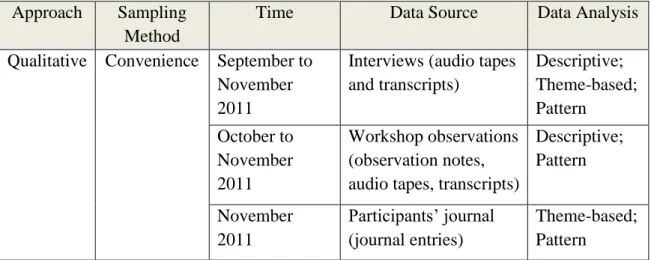
Table 3: Overview of the Data Generation Instruments... 92
CHAPTER 1: INTRODUCTION
1.1 Statement of Purpose
Within a span of a decade or two, the world has been redefined by a digital information era. However, the profession of Teaching English to Speakers of Other Languages (TESOL) within the language schools, community colleges, city programs, and academic institutions where I have either taught or observed within the Washington Metropolitan area (U.S.A.) seems to remain hesitant or reluctant to make the transition from a paper-based learning environment to a wholly digital learning environment. It has become clear to me that the more progressive “cutting edge” of TESOL higher education in the UK and elsewhere has shifted away from a non-digital environment and the tradition of reading on paper and has embraced both digital technology and digital text. However, my college and the largely private college TESOL environments with which I am familiar in the United States work within an orthodoxy of print-text mode where reading practices and skills are shaped by the textual production of an era gone by. Despite the fact that many TESOL educators, whom I know either as
colleagues or friends, are aware that the digital age has caused literacy to evolve into a totally different concept from what it was fifty years ago, they continue to resist modifications to how they teach reading skills and to introducing the new medium of the Internet into their classrooms. While this is, of course, not the case in all TESOL settings, it is important to acknowledge this phenomenon in many local settings, divorced from the influence of university TESOL teacher-education institutions and research, perhaps particularly in private schools. Although reasons for this resistance are numerous, and include social, historical, and cultural factors in particular settings,
some are arguably based on issues such as “personal teaching philosophies, time -honored beliefs and additional burdens” (Arnold and Ducate, 2006, as cited by Blake, 2008, p.25).
It is not altogether surprising that digital technology has not had the same profound impact on language teaching as it has had in other subject areas. Because of the performative, rather than declarative, nature of language learning, TESOL tends to follow its own methods of teaching English and moves outside the circle of core subjects, such as math, history, or science. This discrete position, however, does not deflect the need for TESOL teachers and students to be digitally literate, especially considering the literacy "metamorphosis" that digital technology is creating and the change in reading cultures from printed text to web text. Further, technology has
provided the language classroom with numerous tools to help teach language beginning
with Comenius’ pictured “phonics” in 17th
century books to the use of Edison’s photographic recordings in the 19th century to utilizing BBC produced DVDs in this new century.
Recent research conducted in the field of second language education has for some time suggested that technology can enhance the language learning process (Gee and Hayes, 2011; ACT, 2004; CEO Forum, 2001). Web pages, for example, have the potential to increase the volume of comprehensible input (Krashen, 1985). Research has also shown that language learners are motivated to spend more time reading online than when offline because they find web text more interesting and stimulating than the artificial or non-authentic information found on the printed page of language course books (Nginye, 2011). Carrier (1997, p.282) observes that prolonged exposure to the
authentic language, such as that found on web pages, appears to be quite beneficial to the learner.
Despite the fact that digital technology can be beneficial to second language acquisition, and disregarding the recommendation included in the American Council on
the Teaching of Foreign Languages Position Statement, which “acknowledges and
encourages using the potential of technology as a tool to support and enhance classroom-based language instruction” (ACTFL, 2011, para. 4), there still remains debate amongst TESOL professionals who teach ESL (English as a second language) in accredited academic institutions within the National Capital Region as to whether teaching digital literacy is a part of their job description. Maglic (2007, p.6) observes: "At first sight, one could agree: a language teacher has to teach language." However, one of the goals of the English as a second language teacher (ESL) is to develop the language learner's communication skills so that he/she can actively participate in modern society. Therefore, it is important that TESOL educators not focus on developing a second language learner’s reading skills without acknowledging the importance of digital literacy education.
As Regan and Osborn (2002, p.135) suggest, the foreign language teacher has
traditionally recognized that his/her role is not only to teach students the “linguistic
basics" of the target language but also to provide the language learner with a taste of the culture and literature of the target language as well. While this suggestion would indicate that it is not unreasonable for the TESOL educator to reconsider the digital needs of the learner, many TESOL professionals in settings in the USA with which I am familiar continue to see their role as primarily teaching the language through
especially when it appears that the language learner seems content and satisfied with the traditional basic skill areas of reading, speaking, listening, and writing—all appropriate to the paper medium. Such a traditional view may be held because these TESOL teachers believe that they lack the digital knowledge and skills to utilize technology-enhanced language learning as a learning tool or because they believe
“basic issues of participation, engagement in learning, and fundamental skills stand out
as priorities ahead of learning about complex new communication and information technologies" (Bruce, 2003, p.70). Unfortunately, such a perspective only serves to highlight the lack of awareness of the new teaching responsibilities that are necessitated by an Internet-driven society.
To be considered fully literate in the 21st century, a person must be able to collect, evaluate, and use digital resources to problem solve and make informed decisions. Warschauer and Healey (1998, p.57) note that in a world of information, search strategies are essential and a student needs "the ability to respond and adapt to changes rather than training in a single way to approach a task." In addition, the increasing use of digital libraries is promoting digital reading and forcing students to move beyond the realm of paper-based texts (Armstong and Warlick, 2004; Brown, 2001; Parrot, 2003). Bruce (2003, p.2) expands on this point by contending that with the "proliferation of information needed for academic purposes, students are exposed not only to conventional text presentation but also to electronic texts." TESOL teachers, as a whole, need to expand literacy skills to encompass online reading in order to meet the current needs of their language learners.
The challenge for the second language learner is not only to develop and strengthen their ability to effectively use English but also to acquire the digital literacy
skills that will allow him/her entrance into the social, academic, and workforce environments of the 21st century (Kasper, 2000). The global job market in particular seeks applicants who not only possess strong critical thinking skills but who are also digitally literate and technologically savvy. This reality has not only become clear in developed nations, but in developing nations as well. As Muthui Kariku, the
spokesperson for the current Kenyan government, which has initiated a program to give
laptops to Kenyan school children, observes, “We are in a digital age, and from the
young people we train we will get the next managers of the ‘Silicon Valley’ spurring growth and creating jobs. Technology is the only remaining frontier” (Kariku as cited by Odula, 2013, p.A-11).
The Internet can be seen as a key means for the ESL learner to participate in both the target language society and his/her native language culture. In addition, both web and digital reading skills can serve as a means of student empowerment. Solomon,
Allen, and Resta (2006, p.444) support this view by asserting that “…technology
prepares individuals in a democratic society to express their unique talents and fulfill
their personal potentials. Much of technology’s empowering capacity rests in the natural creative talents of people themselves.” Consequently, if one of the key
responsibilities of an ESL student is to succeed in the world beyond the classroom, then TESOL educators must be under an obligation to provide the student with literacy skills ensuring the ability to negotiate and critically engage with the numerous texts,
modalities, and technologies that exist beyond the classroom (Ramanathan and Kaplan, 2000). In my view Mieskill, Mossop and Bates (2000) sum this up best when they suggest:
Different qualities of mind are needed to efficiently integrate these new forms of symbolic representations into coherent, individually crafted wholes. These qualities include the convergent involvement of both analytical and patterned thinking, the ability to suspend judgment in favor of temporarily riding
ambiguities, openness to new stimuli, new ideas, new attitudes, new forms, and increased intuitiveness, and a propensity for tinkering and taking risks.
(Mieskill, Mossop and Bates, 2000, p.1)
As TESOL makes the necessary transition from its traditional print-focused literacy teaching methods toward a digital text environment, its teachers, as well as the profession itself, must connect with the digital age by examining how second language learners perceive different text types and what cognitive processes and strategies they employ to comprehend what they are reading.
As a step toward such awareness, this study investigates the reading behaviors of English second language learners. It focuses on how language learners transition from a printed text environment to a web text environment, drawing upon their own strategies. The study also not only broadens an understanding of the literacy practices of the ESL learner in online reading, it also underscores the need for reading strategy awareness training within the ESL classroom so that second language learners can meet the new literacy demands of the 21st century. In addition, possible factors that support
or complicate a language learner’s ability to comprehend, search, and evaluate online information are explored.
1.2 Research Aims and Questions
The focus of this study is to explore second language learner perceptions of reading in both a print and a non-print environment and to investigate the reading strategies that they construct and apply to succeed in achieving their learning outcomes. My primary objectives are to investigate the ESL learner's awareness of strategies in reading web text as well as the metacognitive reading strategies the language learner uses when reading printed text versus web text. Following this investigation, a further objective is to consider whether there is a need to rethink classroom reading practices to
accommodate web text reading strategies.
The study aims to provide data to help expand an understanding of ESL
learners’ interaction with paper-text and web text reading and to contribute to the reshaping of reading practices not only within my institute, but also in similar TESOL teaching facilities that have yet to expand in second language (L2) literacy beyond the printed page.
The study is guided by the following four general research questions that support the objectives:
1) What evidence exists to suggest that ESL learners use different strategies when reading printed text as opposed to web text?
2) What metacognitive strategies do ESL students use and report when reading and learning from printed and web-based texts?
3) What issues do ESL learners identify in relation to their use of the Internet? 4) What are the implications for ESL pedagogy?
While it can be said that data generated from the participants’ perceptions of their
self-reported and may be subjective because the participant may not have self-reported truthfully, it can be argued that it represents a promising, albeit indirect means that a researcher has to identify the mental processing of a student. As Grenfell and Harris
(1999, p.54) defend, “…it is not easy to get inside the ‘black box of the human brain
and find out what is going on there. We work with what we can get which, despite the limitations, provides food for thought…”
1.3 Basic Assumptions
Carrell (1989), along with other educational researchers, contends that reading
competence not only guarantees success for the language learner in his/her mastery of the target language but is also essential in helping the learner meet academic and career goals. The growing popularity of the World Wide Web has many students making the move from reading for information in a print environment to screen-based text (Kress, 2003). Amer, Al Barwani, and Ibrahim (2010, p.103) further point out that “online reading has become a major source of input for EFL/ESL readers because it provides
them with authentic language input.”
Additionally, as Lai (2008, p.133) suggests, “a basis of improving in any language is through reading and the Internet could be a good reading tool”; however, data from recent studies show that new literacy skills and reading strategies may be necessary for the language learner to process and effectively decode less linear digital texts (Balcytiene, 1999). As a result, the notion of effective reading strategies is gaining popularity as a means of helping students increase their ability to read web text.
Research indicates that a student’s metacognitive awareness of his/her reading
Mokhtari, 2001). Israel (2007) further argues that as learners become more
knowledgeable of their cognition, they simultaneously become more focused on their own learning and assume responsibility for it. If language learners are consciously aware of their metacognitive and cognitive reading strategies, they are not only able to make sense of the large amount of information encountered through online reading, but they are also aware of why they are online in the first place.
While there have been many studies of the way ESL/EFL students read printed text (e.g. Anderson, 1991; Cohen, 1998; Sheorey and Mokhtari, 2001), there have been relatively few studies of ESL students’ web text reading strategies (Anderson, 2003a; Coiro and Dobler, 2007; Huang, Chern, and Lin, 2009). More research is needed to better understand if and how students are adapting to new forms of text by
incorporating reading strategies to understand and cope with the nonlinear, non-sequential, interactive text that is part and parcel of on-screen reading. Although my study focuses on L2 students, some of its findings might also be applied to the experiences of first language (L1) students. As Armstrong and Warlick (2004, p.1)
argue, it is crucial for teachers and educators today to “teach the students literacy skills that reflect the information environment of the present…” In order to reshape and
effectively instruct in the digital era classroom, language teachers, as well as teachers in other disciplines, need to be aware of the way students approach and perceive print-based reading as opposed to the way they engage with and process web text
1.4 Organization of Thesis
The first and key research question, which provides the foundation for the other research questions—What evidence exists to suggest that ESL learners use different strategies when reading printed text as opposed to web text?—will be explored through the evidence presented in the literature in the following chapter. Chapter 2 will begin focusing on second language reading theory, and then proceed on to an overview of relevant literature on digital literacy, and ways that digital literacy can be taught in the ESL classroom. Next, I present an examination of environments of printed text and web text and explain the meta-reading process as well as strategy instruction that can
strengthen a learner’s ability to locate and process the information that he/she
encounters online. At the end of the Chapter 2, I present a summary of my findings for the first research question.
In Chapter 3, I present my research methodology, which includes my data collection techniques that consisted of qualitative observations, interviews, and student journals. I also present my research design and ways in which I achieved the
trustworthiness of my study in this chapter. The proceeding chapter, Chapter 4, discusses my research methods for the data collection and analysis, as well as answer Research Questions 2, 3 and 4 through the evidence generated by my data.
Chapter 5, the final chapter, discusses the implications of the findings, propose possible suggestions for future studies, and reflect on what I view to be the potential limitations of my study.
CHAPTER 2: REVIEW OF THE LITERATURE
2.1 Introduction
This chapter focuses on a review of the literature that addresses the first research question: What evidence exists to suggest ESL Learners use different when strategies reading printed text as opposed to reading web text? The first section examines the literature around second language reading theory; the second delves into what has been written about the theoretical construct of digital literacy, and the evolution of digital literacy; the third provides a discussion on metacognitive reading strategies and how literacy skills needed to read the printed page differ from those needed to read a web page. Finally, this chapter concludes with a summary of the findings of the first research question.
2.2 Second Language Reading
In order to understand the perceptions that second language learners hold about their metacognitive reading strategies, it is essential to understand the theory behind second language reading. However, it is important to note before proceeding further that the relationship between L1 and L2 reading cannot be easily or neatly explained by one
particular model or theory because the reading process is cloaked within the reader’s
mind, making it a silent and internalized activity that does not lend itself to the tangible and known. However, there are basic elements that researchers believe influence the
second language learner’s ability to read in the target language. Karim (2003, p.49)
observes: “reading in both first and second language context includes the reader, the text, and the interaction between the reader and the text.” This interplay between the
language systems requires the language learner to draw upon knowledge of context, form, and linguistic schema (Singhal, 1998) as well as to engage in multiple cognitive processes to construct meaning from the text (Horiba, 1996). Moreover, Fitzgerald (1995), drawing upon findings from research done in the United States on ESL students, concluded that there is a close link between L1 and L2 reading because the second language learner will enlist L1 reading knowledge to comprehend what he/she reads in the target language. Arguably though, there is a dividing point in which L2 reading fundamentally distinguishes itself in terms of processes that are uniquely tied to
the second language learner’s reading experience. These processes, which have been
the focus of much research, include translation (Kern, 1994) and cultural differences (Parry, 1996). In addition, Koda (1996) considers that the key variable that sets L2 reading apart from L1 reading is the fact that it involves two languages, which makes it a cross-linguistic process.Still, the cross-linguistic process appears tied to L1
knowledge, which the language learner will use along with various reading strategies to facilitate reading in the target language (Karim, 2003). This application of L1
knowledge to L2 acquisition is commonly referred to as “language transfer” (Lado,
1957, p.57). Benson (2002, p.69) contends that transfer occurs “consciously, as a deliberate communication strategy, where there is a gap in the learner’s knowledge or unconsciously either because the correct form is not known or because, although it has
been learned, it has not been completely automatized.”
The complex phenomenon of transfer is the core of two main positions on the relationship between L1 and L2 readings: the Linguistic Interdependence Hypothesis (LIH) and the Linguistic Threshold hypothesis (LTH). Both acknowledge the existence of transfers, but they have opposing views as to when transfer occurs during the L2
reading process (Bernhardt, 2005; Grabe, 2009). These two theories will be explored in more detail in the following sections.
2.2.1 The Linguistic Interdependence Hypothesis (LIH)
The key assumption behind the Linguistic Interdependence Hypothesis (LIH) is the language learner does not have to reacquire the ability to read in the target language once he/she has “developed an ability to deal with ‘cognitive academic’ or ‘context
-reduced’ uses of language” (Cummins, 1979, pp.23-24) in their L1. In clearer terms, the Linguistic Interdependence Hypothesis can be defined in the way the language learner transfers L1 knowledge over to his/her L2 reading process. Cummins (1979) developed the LIH as a means to explain how L1 reading skills transfer over to the target language
and asserts that fundamental similarities link the learner’s first language skills to his/her
second language skills and that these skills can be seen as interdependent. Yamashita (2002, p.12) observes that the LIH assumes that “there is a common underlying
cognitive ability between L1 and L2, and it implies that we do not need to learn reading
in L2 if we have a certain level of L1 reading ability.” Transfer then, according to the
LIH, happens automatically.
Possessing L1 linguistic knowledge and literacy skills are critical components
of the LIH, without which transfer, based on the LTH, will not occur. Cummins’ (1979)
argument holds that it is essential for language learners to be literate in their L1 before exposure to L2. Within its application, re-teaching reading skills in the L1 would be seen as redundant because once language learners have adequate knowledge of a set of L1 language operations, such as reading and writing, they will be able to develop the same operations within L2 contexts (Yanping, 2002, p.2). The LIH can be seen as
relevant to this study because of the implication that language learners have the ability to apply the metacognitive reading strategies that they possess in their L1 to their L2 reading skills. Additionally, the reading strategies that language learners have
knowledge of in their L1 can be used to develop and strengthen their proficiency in the meta-language of the Web—skimming and scanning techniques to find key words and to grasp the gist of web content via digital literacy instruction in the new language.
There is a large volume of research (e.g. Carson, Carrel, Silberstein, Kroll, and Kuehn, 1990; Bernardt and Kamil, 1995; Droop and Verhoeven, 2003; and Van Gelderen et al., 2007) that supports the LIH and upholds Cummins’ view that
underlying L1 linguistic proficiency assists in literacy development. Verhoeven (1991,
p.72) noted that “literacy skills being developed in one language strongly predict
corresponding skills in another language acquired later in time.” However, many of the findings that support LIH come from studies done on child ESL learners whose literacy skills in their L1 and L2 are still in development (Bernhardt and Kamil, 1995). Current research has revealed that transfer does not occur in every case (August, 2006). An alternative to the LIH is the Linguistic Threshold Hypothesis, which will be discussed in the next section.
2.2.2 The Linguistic Threshold Hypothesis (LTH)
The Linguistic Threshold Hypothesis (LTH) is based on the idea that the second
language learner’s use of reading strategies in the target language is dominated by
his/her L2 proficiency. Formulated by Clark (1980) during the late 70s, the LTH proposes that the second language learners will need to acquire a certain amount of linguistic proficiency in the target language before they can transfer their L1 reading
skills over to their L2 reading comprehension (Jiang, 2011). Unlike the LIH, the LTH posits the language learners cannot effectively read in the new language unless they
have gained a “languageceiling” (Clark, 1980) or enough of a solid foundation in the
target language to allow their L1 reading skills to cross over to their L2. According to the LTH, it is not important whether or not the language learners read well in their L1
because the successful application of any transfer of the learners’ L1 reading skills to their L2 reading is dependent on if they have acquired the necessary “threshold level of linguistic competence” (Lee and Schallert, 1977, as cited by Jiang, 2011, p.178). If a
language learner’s second language skills are weak, and he/she attempts to apply L1 reading knowledge to the target language, according to the LTH, the learner’s L1 reading strategies will “short circuit,” (Clarke, 1980) causing the learner’s good L1
reading abilities to revert back to poor reading strategies when attempting to read challenging passages in the target language (Bosser, 1991).
Top-down reading processing plays an important role in the LTH. Unlike the LIH, where reading is viewed as a bi-oriented process (neither oriented from the top nor the bottom but a combination of top-down and bottom-up knowledge), L1 reading in the LTH is seen as solely dependent on top-down processing that changes to
bottom-up processing in the L2 because of the reader’s inadequate level of proficiency in the
target language (Yildiz-Genc, 2009).
The Linguistic Threshold Hypothesis received significant validation because of field research done by Alderson in the early 1980s, whose findings supported Clarke’s
theory as opposed to Cummins’ theory (Yamashita, 2003). Alderson’s research was inspired by one key question: “Reading a foreign language: a reading problem or a language problem?” (Alderson, 1984). At the end of a broad review of research,
Alderson concluded that L2 reading derived from both a language and a reading problem. The L2 could be seen as a reading problem when a language learner possessed a high level L2 proficiency and as a language problem when the learner possessed a low level L2 proficiency. This finding supported the LTH.
After Alderson’s (1984) research, a number of studies were done (e.g.
Bernhardt and Kamil, 1995; Lee and Schallert, 1997; Eskey, 2005) showing that learners whose L2 proficiency was under linguistic ceiling failed to transfer their L1 reading skills to L2 reading no matter how strong their L1 reading skills were.
Similar to the relevance the LIH holds to this study, knowledge of the LTH provides a background in what may be the best way towards digital literacy
development in ESL learners. Based on the LTH, digital literacy skills can be taught in the language classroom in conjunction with traditional literacy skills in gradual steps as learners increase their language skills, eventually opening a window for learners to utilize their L1 reading strategies once they have established a good understanding of the target language. Thus, strategy skills can be enhanced by the crossover of L1 reading skills to the target language reading environment.
Although research has shown evidence of a linguistic threshold, the LTH has not been conclusively supported by empirical research (August, 2006). Moreover, existing research that supports the LTH has been criticized for methodological shortcomings and insufficient sampling sizes (Sohn, 2005). What appears to cast the most doubt on the findings from the LTH studies is a failure on the part of researchers to identify the linguistic threshold in absolute terms (Yanping, 2002).
In summary, the process behind second language is not black and white.
and the Linguistic Threshold Hypothesis (LTH)—in an attempt to provide a clearer picture of the way in which the second language learner gains reading competence in the target language. Researchers that support the LIH believe language learners transfer their reading competence in their first language over to reading their second language. On the other hand, researchers that back the LTH suggest that the ability to read a second language is dependent upon language learners first developing their second language reading skills in order to trigger their first language reading knowledge. While the intent of this study is not to establish the validity of either theory, knowledge of both the LTH and the LIH are important to this study because they share a common feature—both are linked to the cognitive and metacognitive strategies the second language learner employs (e.g. Morrison, 2004; Singhal, 2001; Brisbois, 1995). Additionally, studies that have examined L2 reading indicate that language learners draw upon metacognitive reading strategies when reading in either their L1 or in the target language (e.g. Fitzgerald, 1995; Pritchard, 1990).
2.2.3 The Metaphorical Reading Models
Beyond the hypothetical, researchers often use three metaphorical models of reading when discussing the processes involved in L2 reading comprehension—top-down, bottom-up, and interactive. These models, as Grabe and Stoller (2002, p.31) observe,
“represent metaphorical generalizations that stem from comprehension research conducted over the past four decades. All involve cognitive processing.”
Currently, the interactive model is supported by recent research (e.g. Bramford and Day, 2004; Kern, 2000). However, while the top-down and bottom-up models may not help to define more current research done in L1 and L2 reading, they do serve as a
foundation to reflect upon reading comprehension (Grabe and Stoller, 2002) and thus factor into L2 reading behaviors of the participants of this study. As Pookcharoen et al (2009) notes recent studies reveal that common L2 reading strategies are generally labeled as either top-down or bottom-up in nature. Both the top-down and bottom-up models and their applicability to this study will be discussed in greater detail in the sections that follow.
2.2.4 Top-down Model
In a very general and metaphorical way, the top-down model can be viewed as a mental map that the reader constructs to meet his/her reading goals and expectations. Theorists such as Goodman (1967) and Smith (1971) are responsible for the development and refinement of the top-down model. Within this model, readers are caught in a continuous cycle of hypothesizing the meaning of the text they are engaging.
The top-down model is seen as concept-driven and dependent upon what the reader brings to the text (Liu, 2010). For example, readers approach the text with the cultural and world knowledge they possess, along with very general cognitive
processing strategies to make sense of large segments of information presented in the form of sentences, paragraphs, or stories (Birch, 2007). In applying a top-down approach to reading, learners use high-level processing strategies to make predictions
about such things as “what the text is going to be like, inferences about the motivations of the characters, and decisions about how certain events are related in the reading”
(Birch, 2007, pp.4-5). Goodman (1967, p. 127) describes this prediction process as a
In regard to L2 reading, the top-down model has had a tremendous impact on ESL teaching and materials design (Villanueva de Debat, 2006, p.9). This impact can be attributed to the whole language method, which is considered a top-down approach (Reyhner, 2008) and is widely used in ESL curricula (Heugh, 2013). However, the emphasis on top-down reading practices for ESL literacy education should not be seen as superior to the other reading models because, as Hill (2011, p.71) cautions, the
top-down approach is “not necessarily the most effective approach for each and every reading situation.”
Because of the participant’s engagement with top-down reading processing, the top-down model’s relevance to this study can be seen in two key ways. First, the
participant’s top-down strategy usage, discussed in Chapter 4, is directly linked to his/her metacognitive reading process in the form of what Sheorey and Mokhtari (2001)
label “global reading strategies,” which help the reader set reading goals and self-monitor reading processes. Examples of global strategies include skimming and scanning techniques, the use of context clues, and the activation of prior knowledge. Second, the application of the top-down approach gears the reader toward setting expectations about text information and sampling enough information from the text to determine if it meets his/her expectations (Grabe and Stoller, 2002). This sampling process manifests in F-Pattern reading (Nielsen, 2006), observed in the participants and discussed later in this chapter, in which the reader does not read for details when reading online but instead makes a determination about the information by the keywords and links he/she notes within the text.
On the negative side, if learners rely too much on top-down reading skills, they will attempt to comprehend a text by using mostly background knowledge and
unsupported assumptions. Critics have suggested two major issues with the top-down model. The first states that it is impossible for readers to make predictions if they do not have sufficient knowledge of different text environments. The second asserts that even skilled readers who can generate predictions while reading take much longer to comprehend the text when they rely solely on a top-down approach (Stanovich, 1980).
2.2.5 Bottom-up Model
Putting together a reading puzzle by correctly piecing together segments of text is the way the bottom-up model can be metaphorically defined because within its design the reader pieces together individual units of language to help construct an overall
interpretation of the text (Celce-Murcia, 2001). Its development is attributed to research done by Gough (1972) and LaBerge and Samuels (1974).
Bottom-up reading requires the reader to draw upon stimuli from the outside world in the form of letters and words. Thus, reading is seen as proceeding from part to whole and is text driven (Liu, 2010). Phonics, for example, is considered a "bottom up" approach through which students "decode" the meaning of a text (Reyhner, 2008).
Unlike top-down reading, asCarrell and Eisterhold (1983, p.557) note, “bottom -up processing ensures that the readers will be sensitive to information that is novel or that does not fit their own ongoing hypotheses about the content or structure of the
text” whereas “top-down processing helps the readers resolve ambiguities or to select
between alternative possible interpretations of the incoming data.”
The bottom-up model’s importance to L2 reading is tied to the mental mechanics second language learners use to construct a mental translation of the
knowledge (Grabe and Stoller, 2002). The bottom-up strategies that second language
learners use in this process can be defined as “focusing on individual words, pausing
for grammatical difficulties and repeated readings” (Eunjeo, 2009, p.2).
The relevance of bottom-up reading strategies to this study can be linked to Sheorey and Mokhtari’s (2001) metacognitive strategy classification of problem solving strategies and support strategies. Problem solving strategies allow learners to internally, through cognitive processes, overcome comprehension obstacles while support strategies are external reference tools that learners use to help improve their understanding of a text. Problem solving strategies include guessing the meaning of unknown words, visualizing what has been read, and focusing on the details within the text; support strategies rely on the use of physical items such as a highlighter to
highlight text information or a dictionary to look up the meaning of new words. The findings (see Chapter 4) indicate that the study participants often drew upon bottom-up reading strategies to help them comprehend text in printed or electronically generated form.
Although the bottom-up model is very detailed, it fails to account for exactly
how a reader’s creativity and ability permits movement from lower level processing to higher level processing. As a result, the bottom-up model has been criticized for being too fixated on the inflexibility of the representation, which is mainly seen as serial and linear (Zainal, 2003). Also an over-dependence on bottom-up reading processing can result in the reader not moving on the word level and mostly relying on lexical
knowledge. Further, Hill (2011, p.71) warns that cognitive overload can result from the bottom-up reading process because when a bottom-up approach is applied to reading,
“it does not automatically contribute to the improvement of contextual awareness in a given text.”
2.2.6 Interactive Model
Contrasting the top-down and bottom-up models is the interactive model, created as result of a new generation of researchers (e.g. Rumelhart, 1977;Stanovich, 1980; LaBerge and Samuels, 1981; Rayner and Pollatsek, 1989) who felt that neither the top-down nor the bottom-up models accurately described the interactive nature of the reading process. Davis and Bistodeau (1993) further expanded upon this interactive process to specifically focus on second language reading. Through their research, Davis and Bistodeau(1993) proposed that L1 and L2 reading is a combined process, asserting that novice L2 readers automatically combine bottom-up strategies, constrained by limited L2 linguistic knowledge, and top-down strategies developed in L1. More current researchers, such as Baynham (1995) and Grabe and Stoller (2002), continue to
expand upon research within an interactive paradigm in which “decoding contributes to comprehension and comprehension strategies, such as prediction and activating
background knowledge” (Murray and McPherson, 2006, p.21).
It should be made clear that the word “interactive” is not a reference to the
interplay between the reader and the text but refers to the interaction between the
reader’s top-down and bottom-up processing skills (Villanueva de Debat, 2008). The basic idea behind the interactive model is that the reader takes useful ideas from a bottom-up viewpoint and combines them with the main ideas from a top-down
perspective (Grabe and Stoller, 2002). In this way, “word recognition needs to be fast
understanding, as does inferencing and predicting what will come next in the text” (Grabe and Stoller, 2002, p.8). By combining the reading processes in both the top-down and bottom-up models, the learner goes through an ongoing reading process,
“which involves the continuous process of sampling from the input text, predicting
what will come next, testing and confirming predictions, and so on” (Singhal, 2002,
p.6). Birch (2002) observes that the interactive model makes reading an interactive process in three ways:
1) The different processing strategies, both top and bottom, along with the knowledge base, interact with each other to accomplish the reading. 2) The reader’s mind interacts with the written text so that the reader can
understand the message.
3) The reader interacts indirectly with the writer of the text across time and space because it is the writer who is communicating information to the reader, but it is the reader who must grasp the information from the writer. Out of all of the metaphorical reading models, the interactive models appear to be the best in defining L1 and L2 reading comprehension processes. The interactive model also seems a suitable compromise in the conflict over favoring either the top-down or the bottom-up models. However, the interactive model is not free of criticism.
Some critics note that the interactive model is “self-contradictory” (Grabe and Stoller, 2002, p.33). Grabe and Stoller (2002, p.29) argue that “key processing aspects of bottom-up approaches, that is, efficiently coordinated automatic processing in working memory such as word recognition, are incompatible with strong top-down controls on
Although the interactive model may have its flaws, it is the most favored in current reading research because of its balance and integrated nature (Birch, 2007). In order to address its shortcomings, Grabe and Stoller (2002, p.29) suggest the creation of
a “modified” or “hybrid bottom-up/top-down model.”
2.2.7 Conclusion
The relationship between L1 and L2 readings is a complex one that follows a winding path of interrelated concepts, opinions, and assumption, leading to no general
consensus on exactly how they interact. While research has provided models and two schools of thought to explain the correlation between L1 reading processes and L2 reading processes, as well as the way second language learners transfer their prior reading and cognitive skills from their first language to facilitate the ability to read in their second language, it seems clear that second language reading cannot be pinned down to one particular theory, model, or approach. As Singhal (1998) observes, effective reading is accomplished in both the L1 and L2 by a combination of top-down and bottom-up strategies regardless of when transfer actually occurs. From the findings discussed in Chapter 4, the participants in this study used both top-down and bottom-up approaches when reading online—using high-level, top-down processing in their use of global strategies, as seen in their skimming and scanning techniques, while drawing upon data-driven, bottom-up processing, as exhibited in their problem-solving
strategies such as their application of “the chunking technique.” Therefore, any
pedagogical approach to teach L2 reading must be open to draw upon a number of processes that enlist “a learner’s prior knowledge and continually challenges the learner
From this discussion on L2 reading, the review proceeds on to examining the concepts of digital literacy, which is explored in the following sections.
2.3 Digital literacy and digital literacies
In this section, I discuss the theoretical constructs of ‘digital literacy’ and ‘digital literacies’ as they appear in the literature and the relationship between them.
2.3.1 Digital Literacy
The phrase “digital literacy,” first introduced during the 1990s and made popular by Paul Gilster’s 1997 book of the same name, has become the commonly used generic
expression to denote “the ability to understand and use information from a variety of
digital sources” (Lankshear and Knobel, 2008, p.18). It can also be conceived in a broader context, in that people must draw upon their cognitive, motor, sociological, and emotional skills to successfully navigate within a digital environment (Eshet-Alkalai, 2004, p.93). Even though attempts have been made, and continue to be made, to
create alternative variants for the expression of “digital literacy,” such as “silicon literacy” (Snyder, 2002), “e-literacy” (Kaplan, 1995), “techno literacy” (Lankshear, Snyder and Green, 2000), “computer literacy” (Molnar, 1978), etc., the term “digital
literacy” appears to be the most appropriate and most widely accepted phrase.
However, as Bawden (2001, p.24) notes, “It is not of importance whether this [literacy]
is called information literacy, digital literacy, or simply ‘literacy’ for an information age. What is important is that it be actively promoted, as a central core of principles and
practice of the information sciences.” To ensure consistency and clarity, and to explain
paper to define the skills needed to achieve digital competence. These skills, as set forth
by the European Commission, encompass the ability to “retrieve, assess, store, produce, present and exchange information, and to communicate and participate in collaborative
networks via the Internet” (European Communities, 2007, p.7). I caution that one
should not be misled in believing digital literacy gravitates toward one particular skill set because it does not. Instead it umbrellas multi-literacies consisting of Information and Communication Technology (ICT) Literacy (Stevenson, 1997), Technological Literacy (Molnar, 1997), Information Literacy (Zurkowski, 1974), Media Literacy (Desmond, 1997), Visual Literacy (Debes, 1969), and Communication Literacy (Winnipeg School Division, 1997).
Although digital literacy can be perceived as drawing upon a person’s cognitive, emotional, and social abilities to effectively use digital texts, tools, and technologies,
the words “digital” and “literacy” are not so tidily packaged when examined separately. While the word “digital” can easily be defined as a representation of information in
binary form (Jones-Kavalier and Flannigan, 2006) and has come to be used in
association with information and communication technology, the term “literacy” is not
so simply explained because it is an extremely complex and controversial concept and is subject to a wide variety of interpretations. While there is little consensual agreement on the concept of literacy (Soares, 1992), it appears that most interpretations align themselves on a technological or educational perspective. For example, researchers such as Gee and Hayes (2011, p. 20) define literacy “as a technology, just like cars, tapes, tape recorders, televisions, and digital cameras. Like other technologies, it exists
to help us do work that was done without the technology.” Such a technological
complete paradigm shift from a culture of the handwritten word and printed page to a culture of the digital text and new digital media. This belief supports a form of
teleological thinking that Roepke (2011, p.3) suggests “…conceptualizes history as a
progression through (among other things) technological innovation, and that is driven by the (modernist) belief that technological progress will ultimately lead to an increase
in economic, political and cultural welfare.” On the other hand, educational theorists such as Dubin and Kuhlman (1992) view literacy as more human—more knowledge-induced opposed to technologically-evolved. They acknowledge that the word
“literacy”has come to mean: “competence, knowledge and skills. Take, for example,
common expressions such as ‘computer literacy,’ ‘civic literacy,’ ‘health literacy,’ and
a score of other usages in which literacy stands for know-how and awareness of the
first word in the expression” (Dubin and Kuhlman, 1992, p.vi). Unlike the technological stance, the educational viewpoint of literacy is less fatalist and
historically driven; it encompasses a more sociological and inclusive interpretation that views literacy as a means of empowerment for diverse populations and as a force that democratizes across cultural, political, and socioeconomic boundaries (Roepke, 2011, p.3).
However, the point on which educational and technological perspectives join ranks is in conceiving literacy as undergoing a transition and being redefined in broader terms. The once conventional means of becoming literate by learning how to read (decoding a text) and write (encoding a text) appears to be only half the battle in the new digital age because in this fast-paced point-and-click society, the process of literacy goes beyond simply accessing networked computer resources and decoding what appears in an online text; it also includes collecting, analyzing, and engaging in
information to derive its meaning. However, it is worth noting that this contemporary
view of “literacy” as a multifaceted concept is not a new one generated by the advent of
digital technology. Print literacy arguably requires different literacies to read different
types of texts, and language “has always been ‘multimodal’ (combining words, images,
and sounds) as many messages conveyed via digital media” (Gee and Hayes, 2011, p.1). However, digital literacies and traditional literacy part ways here in that digital
literacies require competence “in an even more diverse set of functional, academic,
critical, and electronic skills” (Kasper, 2000, p.2), for example search engine use,
hyperlink navigation, and electronic posting. Following this argument, I would claim that the ability to critically assess search engine results, hyperlink paths, and the trustworthiness of information posted online requires the development of active, strategic, and critical thinking processes that are outside the realm of critical reading practices used for conventional, linear text.
2.3.2 Digital Literacies
Because the conceptualization of digital literacy is becoming more fragmented, there are some researchers, such as Spalter and Tenneson (2006), who argue that such a
construct cannot collectively be housed under the single roof of one “literacy”, but
needs to be pluralized to “literacies”. Spalter and Tenneson (2006) also advocate the
expansion of the expression “digital literacy” to “digital visual literacy,” due to the
highly visual nature of digital technology. Spitzer, Eisenberg and Lowe (2004) go further by suggesting that digital literacies need to be separated and categorized under two distinct classes: tool literacies and representational literacies. Tool literacies consist of the skills needed in the collection and integration of information from a variety of
sources whereas representation literacy comprises of competences associated with the ability to interact with images, sound/music and the intertextuality of web text.
However, it can be argued that because of the interrelationship and often interdependency between tool and representational literacies they can be linked
together in a single unified concept of digital literacy. As Lankshear and Knobel (2008,
p.164) observe, “In some cases, the definitions of the different literacies are almost
identical and only nuanced in different directions, as a result of their pathways from pre-digital foci and their sense of the concerns of the particular community they have
developed to serve.” Since all of the multi-literacies that digital literacy encompass share the same common aim of a student-centered pedagogy and the development of critical and reflective skills (Lankshear and Knobel, 2008), I do not treat them as distinctly separate literacies. Additionally, Li and Ranieri (2010, p.1031) note:
“Nowadays, there is wide agreement among researchers that different types of literacy related to ICTs and generally to the media, all converge to the concept of digital literacy, together with other life skills (Buckingham, 2006: Martin, 2005; Midoro, 2007; Tornero, 2004).”
Whether the phrase digital literacy/literacies is adequate enough to identify and represent all the multi-literacies that digital technology is producing remains to be seen (Tornero, 2004). However, what is apparent is that the modern definition of literacy is no longer confined to understanding the reading experience as primarily a solitary act of engaging with a printed page, but is now conceptualized as a shared activity, which
Gilster (1997, p.31) asserts is “partly about awareness of other people and our
expanded ability to contact them to discuss issues and get help.” Such a transformation extends digital literacy into a “three dimension state of personal, technological and
social processes…” (UNESCO, 2003, p.48). As Kasper (2000, p.2) asserts: “Indeed, the
development of literacy is ‘a dynamic and ongoing process of perpetual transformation’ (Neilsen, 1989, p.5)…influenced by a person’s interests, cultures and experiences.”
Pedagogical avenues that might best support L2 reading within a digital text environment follow.
2.4 Pedagogy
Philosophies, theories, and pedagogies continue to clash over the best way to develop pedagogical approaches to teach digital literacies. The debate appears centered on: 1) how to define benchmarks to define digital competencies, and 2) what is the best way of teaching these skills in terms of structured lessons dictated by a curriculum or student-centered tasks integrated by a teacher as part of the overall lesson being taught. This section begins with a discussion about frameworks designed to set measures for digital competency and concludes with suggested approaches for teaching digital literacy within ESL learning environments.
2.4.1 A Competency Measure
Although digital literacy can be perceived as a co-evolutionary process in which its activities can never be frozen (Bruce, 2003), there is arguably a need to be able to judge levels of competency in areas of digital literacy in order to establish a set of standards to define them for teaching purposes. Literacy research over the past two decades has inspired different authors and researchers to construct frameworks and draw up itemized lists of components and competencies in an effort to establish a set of core
which provided the foundation for others to follow, was created by Gilster (1997, pp.2-3) who felt people could be deemed digitally literate if they had the ability to:
Think critically
Read and understand the hypertext environment of the web page
Obtain information from a variety of sources, with “the ability to collect and
evaluate both fact and opinion, ideally without bias” Use Internet search engines
Manage the “multimedia flow” through the use of information filters and agents
Devise a “personal information strategy”
Communicate with other online users and interact with them through discussion or seek out their advice
Be able to back up traditional forms of content with networked tools
Be cautious when judging the validity and completeness of materials referenced by hypertext links.
Over the course of the next decade, Tuckett (1989) and Ohles and Maritz (1998) tinkered with the framework of digital competencies that Gilster originally inspired by providing minor yet significant upgrades. The Tuckett (1989) model focused on the accuracy and understanding of digital literacy, meaning general knowledge of the capabilities of computers, sufficient ability to use them in an effective way, and high confidence in an ICT environment. In contrast, Ohles and Maritz (1998) shifted the focus from knowledge needed to use the technology to information-centered
These competencies included the ability to use e-mail, acquire information through search engines, and navigate the World Wide Web (WWW).
Undoubtedly, the models Gilster, Tuckett, and Ohles and Maritz constructed can be credited for giving form, focus, and cohesiveness toward a workable means to identify and access digital competency. However, it was not until 2002, with the release
of the report, “The Definition and Selection of Competencies (DeSeCo),” by the Organization for Economic Co-operation and Development, European Union (OECD, EU), that digital literacy was officially recognized and suggested benchmarks were offered to define it.
The DeSeCo report categorized digital literacy competencies into three main
areas which the OECD felt were essential for a “successful life and a well-functioning
society” (DeSeCo, 2002, p.3). The first category, “Interacting in heterogeneous groups,” “relates to an ability of one to interact and collaborate with people from
different backgrounds and cultures” (DeSeCo, 2002, p.9). “Acting autonomously,” the next category, targeted the empowerment and the way in which people managed their lives in constructive and responsible ways. It also included critical competencies, which allowed people to make judgments and to effectively engage in the world around them.
The final category, “Using tools interactively,” takes into account both the
competencies needed to master ICT skills and the socio-cultural tools in terms of language, information, and knowledge. One important element of this category is that it
“does not simply mean having the technical skills to use a tool (e.g. read a text, use a computer mouse, etc.), but assumes a familiarity with the tool itself and an
understanding of how the tools change the way one can interact with the world and how the tool is used to accomplish broader goals” (DeSeCo, 2002, p.9). Because they