A University of Sussex DPhil thesis
Available online via Sussex Research Online:
http://sro.sussex.ac.uk/
This thesis is protected by copyright which belongs to the author.
This thesis cannot be reproduced or quoted extensively from without first
obtaining permission in writing from the Author
The content must not be changed in any way or sold commercially in any
format or medium without the formal permission of the Author
When referring to this work, full bibliographic details including the
author, title, awarding institution and date of the thesis must be given
Please visit Sussex Research Online for more information and further details
WHAT’S THE CHARGE?
PERCEPTIONS OF BLAME AND RESPONSIBILITY FOR CREDIT
CARD DEBT
BY
JANE ELIZABETH CLAYDON
A thesis submitted to the University of Sussex in fulfillment of the requirements for the
degree of Doctor of Philosophy in Sociology
University of Sussex
(January 2014)
I hereby declare that this thesis has not been and will not be, submitted in whole
or in part to another University for the award of any other degree.
Abstract ... i
Introduction ... iii
Research Design ... viii
Chapter 1. Corporate Social Responsibility: development, theories and critique ... 1
Chapter 2. Respondents' Perceptions of CSR in the consumer credit sector………...23
Chapter 3. Consumption, Consumerism, Credit and Debt ... 47
Chapter 4. Why people use consumer credit: the debtors’ responses ... 64
Chapter 5. The ‘Deviance’ of Debt ... 82
Chapter 6. Labelling and Societal Reaction: respondents’ perceptions of debt ... 110
Chapter 7. Financial Regulation: the failures attributing to increasing consumer debt
132
Chapter 8. The Blame Game and the Consumer Debt Crisis ... 149
Conclusion ... 173
Bibliography ... 184
Appendices ... 195
Appendix I: Glossary of terms ... 196
Appendix II: List of figures ... 198
Appendix III: List of interview, focus groups, questionnaire and survey questions
199
1. Interview questions for National Debt Line respondents ... 1992. Interview Questions for Vince Cable ... 199
3. Debt Collector Interview Questions ... 200
4. Questions for Debt Collector Focus Groups ... 201
5. Questions for National Debt Line Debtor Questionnaire ... 201
6. Questions for National Debt Line Interview Debtor respondents ... 201
7. Online survey on the National Debt Line webpage ... 201
Appendix IV: Consent form ... 204
Appendix V: Emails to gatekeepers ... 205
1. National Debt Line ... 205
2. Vince Cable ... 206
Appendix VI: Email template to the debtor respondents ... 207
Appendix VII: Current consumer debt statistics (up until March 2013) ... 208
Abstract
The purpose of the research conducted for this thesis was to investigate perceptions of responsibility and blame for rising levels of consumer debt in the UK, focusing on two key stakeholder groups often associated with the issues relating to consumer debt: individual borrowers and consumer credit lenders. Research was conducted with these stakeholders; debtors represented the individual borrowers and debt collectors from a large multi national credit card company represented lenders. Three central research questions lay at the heart of the research: what are the respondents’ perceptions of why and how debtors use consumer credit; how are debtors perceived and treated by their creditors (i.e. through contact with debt collectors); what are the respondents’ perceptions of who is to blame for consumer debt? A mixed method approach was adopted, using primarily qualitative research methods in accordance with the interpretivist approach of the research. An online survey and in-depth interviews were adopted for the debtor respondents and focus groups and in-depth interviews were adopted for the debt collector respondents. The debtor respondents were recruited from the National Debt Line website, the biggest online money advice website in the UK, by posting an online survey on the site. The debt collector respondents were recruited from the shared employer of the respondents and the researcher, a large multi national credit card company. In answer to the research questions, the research revealed that, firstly, the majority of debtor respondents perceived that their consumer credit use was to supplement their low income, which contradicted previous stereotypes of debtors as reckless spendthrifts and, instead, proposed they are agentic rational decision makers. Secondly, debtors were negatively perceived and treated by their creditors (debt collectors) in that they were stigmatised and labelled as deviant. This occurred during the debtors’ social interaction with debt collectors during the debt collection process. In line with the labelling theory of deviance, this societal reaction then led to self-labelling by the debtors, who expressed feelings of shame. Thirdly, therefore, both the debtors and debt collectors primarily blamed the debtor stakeholder group as responsible for increasing levels of consumer debt, although the debtors also placed some of the blame on the creditors for acting unethically in their lending practices, namely by lending irresponsibly to debtors without an accurate assessment of the affordability of the loan.
This thesis makes an original contribution to sociological knowledge of the ways in which blame and responsibility for increasing levels of debt is perceived by different societal groups. A key part of the thesis’ originality exists in its utilisation of concepts drawn from different
strands of sociological theory to explore perceptions of debt, in particular the sociology of deviance and symbolic interactionism, such as labeling, stigma and shame.
Introduction
The credit card industry has experienced unprecedented growth in the last few decades, particularly in Western society, which has been driven by a trend for consumers to use credit for consumer purchases (Burton 2008: 1). At the end of 2012, there were 56.4 million credit cards in issue in the UK alone, generating a total spend of £13.7 billion in
the second quarter of 2013 (UK Cards Association, September 2013). In 2011, 62% of
the UK adult population owned a credit card and even 1% of the population owned a credit card but not a debit card (The Telegraph, December 2011). Credit card companies, such as Company A at the centre of this empirical research, rely on credit card
consumers revolving their balances (i.e. not paying off the full balance each month) and accruing of interest to maximize their profit. Unfortunately, revolving balances and ultimately paying monthly interest has become the norm for many credit card users, resulting in increasing their total debt owed. At the end of September 2013, UK credit card users paid a daily amount of £163 million in interest on their personal debt, and outstanding unsecured consumer credit debt stood at £158.7 billion, an increase of £1.2
billion from the previous month(The Money Charity, September 2013). In the US, 60%
of credit card users do not pay off their full balance at the end of each month, meaning they revolve and pay interest on their balances (CreditCards.com).
This thesis aims to explore two stakeholder groups’ perceptions of responsibility for consumer debt in the UK: borrowers and lenders. Consumer debt is defined as ‘short-term debt that carries a high interest rate’ (Baek and Hong 2004: 360) and is usually collateralised or unsecured, in that the debt is not secured against or tied to the debtor’s assets. It is categorised into either instalment debt (i.e. loans that are paid over time and usually have a fixed payment amount) or revolving credit card debt (Tippett 2010: 15), which is debt accumulated via credit card and not paid off in full at the end of each month. This thesis focuses specifically on credit card debt as opposed to instalment debt, as the debt collector respondents were recruited from a credit card company. Further, credit card debt accounts for more than 90% of unsecured revolving debt (Tippett 2010: 15), so it is clear that it is the most widely used form of unsecured revolving debt and, thus, extremely important to study.
Three central research questions lay at the heart of the research: what are the
respondents’ perceptions of why and how debtors use consumer credit; how are debtors perceived and treated by their creditors (i.e. through contact with debt collectors); what are the respondents’ perceptions of who is to blame for consumer debt? The
respondents’ represented two key stakeholder groups most commonly referred to in academic literature and media rhetoric as the key actors in contributing to rising levels of consumer debt; lending companies and debtors. I also explored the respondents’ perceptions of a third stakeholder, government financial regulators, although this was not a participant group in itself. The research respondents representing lending companies were composed of a group of twelve debt collectors from a particular UK based multi-national credit card company. The research respondents representing the debtors were a group of one hundred and ninety five debtors who took part in a survey that was posted on the National Debt Line website, ten of whom voluntarily took part in in-depth interviews and three of whom voluntarily completed an additional online questionnaire.
The topic for this thesis research was heavily influenced by my position of employment within the consumer credit sector at the time this research commenced in 2006. Working in the consumer credit industry was undoubtedly the driving force behind my interest in the topic of consumer debt. At the time the research began, it quickly became evident that more and more people in the UK were defaulting on their credit card payments. In April 2007 the total amount of personal debt in the UK stood at £1,325 billion, an increase of 10.4% from the previous year. The total amount of unsecured (consumer credit) lending was £213bn, an increase of 5.4% from the previous year. In April 2007, Britain's personal debt was increasing by £1 million every 4 minutes (Credit Action,
April 2007).By May 2012, the total amount of personal debt stood at £1.458 trillion,
over ten times the figure from April 2007 and solely unsecured (consumer credit) lending stood at £208 billion (The Money Charity, May 2012). Although the amount of consumer credit lending had decreased since April 2007, these statistics demonstrate how the levels of personal debt in the UK were rising steadily throughout the period of this research, which evidences the importance of research being conducted to investigate issues around consumer debt. This socio-economic activity has escalated to what I propose to be a consumer debt ‘crisis’, and is the driving force for my research into the issue.
I begin the thesis by outlining the Research Design adopted for the thesis. It reveals how my epistemological position as an interpretivist affected the primary methods used for the research; qualitative in-depth interviews and focus groups. The importance of my position as ‘insider’ researcher is also explored through a strong argument in favour of this approach, whilst recognising its limitations. The next seven chapters are dedicated to the three stakeholder groups at the focus of the research: financial lending companies,
consumers/debtors and government/financial regulators. These chapters outline academic narratives regarding the three stakeholder groups. The narratives are then compared against the perceptions of the research respondents to assess whether the academic narratives were evident within the respondents’ perceptions. It is important to note here that the literature review is not a single chapter, as is traditional for Sociology Doctoral theses, but embedded within each of the chapters.
Chapters One and Two explore perceptions of Corporate Social Responsibility (CSR) and conclude that many of the respondents felt companies had not demonstrated CSR before, during or after the crisis, and furthermore felt that CSR may not even be feasible within the financial lending sector. Chapters Three, Four, Five and Six focus on the perceptions of consumerism and debt to assess how the literature frames the reasons behind consumerism and debt, and makes a comparison against the debtors’ real lived experiences of them, thus answering the research question ‘What are the respondents’ perceptions of why and how debtors use consumer credit’. Although there is extensive literature on historical and contemporary societal consumption and consumerism, there has been a lack of attention to consumer credit specifically (Burton 2008: 30).
Therefore, Chapter Three aims to close this knowledge gap by linking theories on consumption and consumerism with theories on credit use. Further, though there are previous studies exploring the use of consumer credit, which are helpful in assessing the reasons behind soaring levels of debt in the UK in the past, such as the PSI report (Berthoud and Kempson 1992) a more contemporary study in the wake of another UK recession is necessary to comprehensively explore consumer credit and the reasons for debt. By exploring the nature and cause of indebtedness in contemporary UK society, my research can build on previous research by: trying to identify the extent and nature of indebtedness and the patterns of credit use; interviewing a wider range of people; and bringing in the institutional aspect of the lender’s attitude to its customers. In Chapter Four then, it will be revealed that the majority of debtors obtained credit not for typically luxury ‘consumer’ items as suggested in some of the literature, but for daily living expenses to supplement their low incomes. This chapter also explores the
significance of life course events in building up debt. Chapters Five and Six focus on the narratives and perceptions of debtors as a socially ‘deviant’ group, to understand how debtors are portrayed in previous academic literature and how the respondents also perceived them, thus answering the research question ‘How are debtors perceived and treated by their creditors? (i.e. through contact with debt collectors). These chapters also assert that there appears to exist a paradox within Western capitalist society regarding perceptions of debt, in that it is encouraged yet simultaneously condemned. Specifically,
I argue in Chapter Six that respondents perceived the debtors as social deviants, which mirrors the values of the Protestant Ethic and Puritanism regarding debt.
Although this thesis focuses on perceptions of the responsibility that companies, borrowers and government regulators have for mounting consumer debt in the UK, it is evident that the ‘subprime crisis’ and subsequent Global Financial Crisis have both affected and been affected by increasing personal consumer debt. Subprime lending emerged in the US in the early part of the millenium as a type of loan offered at a rate above prime to high credit risk individuals who do not qualify for prime rate loans (Gilbert 2011: 89). Typically, subprime customers represented a socio-economic group less secure in employment with impaired credit scores (Burton 2008). Although subprime lending referred primarily to mortgage lending, this borrowing sector quickly began to struggle to keep up with their mortgage repayments, as a consequence of the socio-economic uncertainties these low income borrowers continually faced, and so began relying on other types of credit, including unsecured consumer credit products. Although subprime lending was primarily a US phenomenon, the effects of its collapse were felt all over the world, especially the UK, as is often the case with financial crises (Holton 2012: 4). Simultaneously, the UK government failed to provide adequate regulatory oversight of the UK consumer credit industry, which is a major contributing factor to the consumer debt crisis. This was apparent in primarily two key areas: the structure of the UK financial regulatory system before the crisis, which was based on a ‘principles based’ or self-regulatory approach and proved to be highly ineffective at regulating the industry; and the role that credit rating agencies played, in that they were ineffectively rating borrowers. These events, then, played a critical role in forming what I deem to now be a consumer debt crisis in the UK and are further explored in Chapter Seven. This chapter also examines the respondent groups’ perceptions of financial regulation as a contributing factor to the crisis. Their perceptions are examined to the extent in which they thought each of the key failures of financial regulation explored in the previous chapter were responsible for the crisis. It will be revealed that although the respondents generally felt that the government has a responsibility for regulating the lenders, there were significant differences in the areas of regulatory failure scrutinized by each of the respondent groups. In fact, it shall be argued throughout the thesis that the respondents’ perceptions regarding the responsibility of each of the stakeholder groups is influenced by their position, i.e. whether they are a debtor or debt collector determines whom they blame for the crisis. This will be explored in depth in Chapter Eight, which assesses who the respondents perceive to be blameworthy for the consumer debt crisis, thereby addressing the question ‘What are the respondents’ perceptions of who is to
blame for consumer debt?’. I will reveal in this final findings chapter that, though the respondents attributed some of the blame for the crisis to the lending companies, it was actually the borrowers who were attributed with the majority of the blame by both the debt collectors and the debtors.
To sum, based on interviews with debt collectors and debtors, and findings from an online survey with debtors, this thesis explored the perceptions of the respondents towards each of the three stakeholder groups at the heart of the debate surrounding who is to blame for the consumer debt crisis, to make an original contribution to sociological knowledge. I found that the respondents’ perceptions towards each of the stakeholder groups and their opinions about who should be held responsible and to blame for the crisis was strongly influenced by their role either as debtor or debt collector. The debtors and debt collectors primarily blamed the debtor stakeholder group as responsible.
Research Design 1. Introduction
This chapter provides an explanation and analysis of the methodological approaches taken during the research. Firstly, I provide a rationale of the methods used, focusing on the epistemological considerations. Secondly, I conduct an exploration of the research methods used and the practical considerations that arose in the research. Thirdly, I address the potential challenges of my position as ‘insider’ researcher, which is a key aspect of the research design in that it contributes theoretically to the knowledge of insider research (Hodkinson 2005: 139). Finally, I explore the approach taken in my primary data analysis, focusing specifically on issues of generalizability and reliability.
2. Epistemological considerations
i. Interpretivism
The epistemological position that a researcher takes before conducting research is key to understanding the researcher’s motivations and preconceptions of the social world they are about to study. Epistemology centres around questions of what should be regarded as acceptable knowledge in a discipline and, more specifically, whether there is a universal social ‘truth’ that exists which can be revealed and explained (Bryman 2008: 13). I have adopted an interpretivist position, which asserts that social ‘facts’ and ‘truths’ are not considered things in themselves or universal and the social world can be assessed upon subjective observation and interpretation of human behaviour (Petrunik 1980: 216). Therefore, my data will provide accounts of narrative constructions and self-presentation rather than realist direct descriptive accounts of the ‘facts’ behind their indebtedness. It is important to note here that my interest is in subjective
interpretations but, of course, this is not the only possible approach for social science.
Individuals are social actors; their positionality is fluid and their sense of self is constantly influenced and changed by their social environment. Individuals construct their understanding of their social world by reacting to it in a cyclical process where social interaction determines understanding and vice-versa. This extends to social research, as ‘all research is interpretive, and reality is being constructed at every stage of a research process’ (Maitland-Gholson and Ettinger, 1994: 18). My research did not aim to reveal universal social ‘truths’ about debt in order to assign indebted individuals into one category or another of a certain ‘type’ of debtor. Rather, it aimed to explore social perceptions of debt and indebtedness. Furthermore, as an
interpretivist it is important to adopt a reflexive research approach by making constant
assessments about the ways in which the researcher made decisions during the research process, which ultimately affects the direction and content of the research (Maitland-Gholson and Ettinger 1994: 27). I hope this chapter can sufficiently unveil the ways in which my reflexivity and reflectivity was achieved throughout the research process.
Interpretivist research aims to recognise the way in which social actors provide accounts of events that are examples of ‘unanticipated or untoward behaviour’ (Scott and Lyman 1968: 46). These accounts are an attempt of the social actor to justify, excuse or blame others for such actions. Though they provide strategies to avoid such accounts in a research environment, these accounts in my own research provide useful insight into the understanding debtors have of societal attitudes towards debt in the way that they seek to justify, excuse or blame others for their indebted situation. Reflecting on my research, some of the respondents explained their indebtedness was due to external factors outside of their influence, for example life course events (as shall be explored in Chapter Four), rather than internally attributing it to their own spending patterns. Further, analysing people’s understanding and perceptions of why they are in debt is more interesting and relevant to my sociological investigation than asserting these self perceptions are an accurate account of why people are in debt. Accounting procedures such as these that the debtors used in the interviews I conducted is discussed in later chapters.
ii. Induction
The approach I have adopted in assessing the relationship between theory and research is ‘inductive’ in that the theory has been generated as a result of the research conduct (Bryman 2008: 4). This approach is typically associated with qualitative research (ibid., p.13) where there is sometimes a lack of a solidified hypothesis for which the primary research is to test.
However, as I had already devised a small number of research questions that were used to conduct an exploratory investigation, this may suggest the existence of a level of pre-conceived expectations of the research outcomes. Further, Miles and Huberman (1984) assert ‘any
researcher, no matter how unstructured or inductive, comes to fieldwork with some orienting ideas, foci and tools’ (1984: 27, cited in Silverman, 2005: 79).
3. Insider Research
A large portion of my primary research was conducted by holding focus groups with debt collectors of a large multi national credit company. I had been an employee of the company, working in the debt collection department, which put me in the position as ‘insider’ researcher. I
now turn to a critical discussion outlining the considerations of the position and power of the insider researcher.
i. Ethical considerations
My position as insider researcher conforms to the British Sociological Association’s guidelines for conducting ethical research, outlined in their ‘Statement of Ethical Practice’ (March 2002). In gaining access to the research field as an insider, I obtained permission from the manager of the debt collectors for them to be involved in the focus groups, providing that the identity of the company and the respondents remained anonymous. The individual respondents also consented to participate and each signed a copy of the research statement, which guaranteed anonymity and confidentiality. All respondents were provided with a summary of the research objectives before they took part in the research were offered a copy of the transcript after. All respondents were aware that their participation in the research was voluntary, so they did not feel obligated to participate.
ii. Definition and Structure
The method of ‘insider’ research has evolved over time. The more traditional method involved ethnographers from the outside infiltrating into the culture of those they were studying to become ‘native’ (Eriksen 2004: 13). Yet, a modern and increasingly popular approach to insider research allows the researcher to undertake academic research within an institution or
organisation of which they are already a member (Brannick and Coghlan 2007: 59). Indeed, it is this approach that has been adopted for the purpose of my research.
Banks (1998) has proposed a comprehensive typology of insider/outsider research, within which there are four possible positions: the indigenous-insider is one who endorsed the values,
perspectives, behaviours, beliefs and knowledge of his or her community who can speak with authority about it; the indigenous-outsider has experienced high levels of cultural assimilation into an outsider culture but remains connected with their indigenous community; the external-insider rejects much of their indigenous community and endorses those of another to become an adopted insider; and the external-outsider is socialised within a community different from the one in which the researcher is doing research (1998: 8). My own research position can be associated with the indigenous-insider. Being an employee of the company used for research required me to endorse, in a professional context at least the values, perspectives, behaviours and beliefs of the company culture and the knowledge of this culture allowed me to speak with authority about it, as explained by Banks above. However, assertions that the researcher is
always either an insider or an outsider have been rejected (Merriam et al 2001; Aguilar 1981) in that there is inherent complexity in an insider’s status. With each research situation and
subsequent research participant, the status of insider and outsider are fluid and constantly changing depending on the culture, gender, race, education, religion, age and socio-economic class of the researcher and research participant (Merriam et al 2001: 412). Hodkinson (2005) asserts that individuals within such social groups ‘cross-cut a variety of different groups rather than attaching themselves substantively to any in particular’ and thus concluding that ‘the notion of being either an insider or an outsider in an absolute sense is inadequate’ (2005: 133).
Reflecting on my own researcher status, it can certainly be argued that I shared both insider and outsider status during the research process, not only due to the fact that I had a dual identity as co-worker and researcher but due to the fact that the respondents themselves also owned dual or even multiple identities. Many of the respondents were not only employees of the credit card company but also undergraduate students and employees of other companies. For those that were undergraduate students, this may have added another level of complexity with my position of power as my status of ‘postgraduate’ may have led some of the undergraduate students to perceive such a status to be superior to theirs. The implications of power imbalance between respondents and researcher as a result of this position shall be addressed later.
In attempting to clarify the definition of insider status, then, insider research is a ‘non absolute concept intended to designate those situations characterised by a significant degree of initial proximity between the socio-cultural locations of researcher and researched’ (Hodkinson 2005: 134). Thus, whilst no researcher can holistically be characterised as ‘insider’, as individuals within groups own more than one single identity with which the researcher can share, a researcher can associate themselves with insider status if they share a socio-cultural identity with a certain social group which allows them access to a field. Whilst I did not share all parts of my respondents identities, my experience with debt collection in the credit card company allowed me to consider myself an insider of this group, making the ‘transition from insider to insider research’ (2005: 138).
iii. Aims and strengths
One of the most important factors in any academic research is the issue of access into the desired research field. This is one of the most beneficial aspects to insider research as access is already secured. Another key advantage insider research has lies in its ability to produce rich data, which is rooted in the researcher’s ability to gain a ‘unique position to study a particular issue in depth and with special knowledge about that issue’ (Costley et al, 2010: 3).
The insider possesses the ‘cultural competence’ (Hodkinson 2005: 136) necessary to enable more effective communication with the respondents by being able ‘to move interviews towards a situation of two-way exchange rather than the usual question-and-answer format’ (Hodkinson 2005: 139).
This ability is particularly advantageous in a focus group context where the role of the
moderator is to ‘clarify ambiguous statements’ and ‘enable incomplete sentences to be finished’ (Barbour and Kitzinger 1993: 13). These advantages were certainly evident within my research, particularly during the focus group I conducted with the debt collectors of the credit card company. For example, whenever a particular company policy or industrial phrase or acronym was referred to, I had knowledge and shared understanding of this specific language, allowing the conversation to flow without having to stop to ask for clarification from the respondents on the meaning of the language used. For an outsider researcher, having to ask for clarification on the language could significantly disrupt the discussion and lead to a more descriptive
conversation where respondents would be constantly needing to explain the terms they refer to, rather than discuss how these feel about them. Thus, the insider researcher enjoys a more emotive and comprehensive conversation than the outsider researcher.
Further, I was able to bring my own experiences of the work place to the conversation, which allowed the respondents to feel more confident with sharing their own experiences and establish a relationship of trust with me. Concluding his insights on insider research, Hodkinson (2005) asserts that no outsider researcher who has temporary positioning within the socio-cultural group being studied ‘can compete with the privileged view possessed by genuine insiders’ (2005: 141). Insider research, he asserts, ‘may offer significant potential benefits in terms of practical issues such as access and rapport, at the same time as constituting an additional resource that may be utilised to enhance the quality of the eventual understanding produced’ (2005: 146).
Some social scientists see being an insider as a prerequisite to social research in being able to secure data within symbols and other coded language shared between insider and participant (Wax 1985: 3). Further, by using their close position to the objects of the research and reflexive awareness insider researchers are able to articulate implicit knowledge that has been deeply segmented through a process of socialisation in an organisation by reframing it as theoretical knowledge (Brannick and Coghlan 2007: 60). Therefore, the insider researcher who has experience and understanding of issues within the organisation is able to draw out certain un-communicated or silent collective agreements and formulate such agreements into credible theoretical arguments. The insider has ‘pre-understanding’ of the group or institution they are
researching which can help build theoretical understanding (Coghlan 2001: 49) and allows them to observe and understand forms of communication, definitions of good and bad behaviour, social roles and meanings for the phenomena of every day life for the social group being researched Wax (1985: 4).
Further, the ‘cultural competence’ that the insider researcher possesses is not only important during the data gathering stage, but also at the point of transcription and data analysis.
Researchers often have transcription problems with focus group data as identifying individual speakers can be challenging (Barbour and Kitzinger 1999: 15). However, this was not
problematic for me as an insider as having already established relationships with the
respondents meant that I could easily identify all the voices heard during the transcription stage.
iv. Critiques of insider research
Despite these evident advantages, there are two key considerations for insider research, which must be reflected on before entering and during the time in the research field.
Firstly, though having a ‘pre-understanding’can be beneficial to the insider researcher, it also has its drawbacks. Insider researchers are criticised for being too close to the research setting and subjects and therefore not able to achieve credible objective research (Brannick and Coghlan 2007: 60). Further, it can often be dangerous for an insider researcher to assume they share the same views as other community members or that their views are representative of the consensus ideology of the group (Aguilar 1981: 23). It has been further argued that the insider researcher may have such a comprehensive pre-understanding, they normalise social and cultural practices and behaviour which outsiders deem to be ‘strange’ as they have lost the ability to think outside of the organisation they are immersed in (Brannan et al 2007: 400). Further, the insider might fail to ask even the most basic questions they must overcome this by finding ways of ‘identifying and asking such questions themselves’ (Hodkinson 2005: 139). Lastly, this pre-understanding is not only potentially problematic during the research conduct itself but can also be challenging during the writing up stage, as conveying ‘code talk’ is far less easy to explain to outsiders (Brannan et al 2007: 398).
Secondly, it is important to consider the ‘researcher effect’ during insider research regarding the type of response insider researchers may receive (Brannan et al 2007: 400) and relations of power between researcher and participant. Having a dual identity can be dangerous for the participant in that the researcher may treat participants as friends (Homan 1980: 55). The same reflections of my dual identity are pertinent as I had a unique position as researcher and
colleague to the respondents. I used my already existing relationships with the respondents to obtain access to their feelings, perceptions and attitudes, whilst simultaneously using their disclosures for my personal benefit. This delicate balance can have significant impact on the issue of power between researcher and respondent in the research environment.
The issues above can be overcome by adopting a transparent approach and allowing respondents or others to verify or contest accounts (Costley et al 2010: 6), which helps to establish a
‘relationship of trust’ (Dickinson, 2010: 115). I can be confident that any researcher effect my respondents experienced was moderated by the integrity, honesty and transparency I maintained during the research process. Further, I tried to achieve this in my research setting by sharing some of my own experiences of debt collection in order to demonstrate that I was also putting myself ‘on the line’ by providing sensitive information in an attempt to create trust with the respondents and encourage dialogue.
Further, despite the challenges the insider researcher can have with relationships of power between themselves and the respondent, the insider researcher does have the ability to actually empower the research respondent, as a result of the open and honest conversations that
respondent’s can have with the interviewer who is ‘familiar with their work problems and may in some cases be able to solve some of them’ (Costley et al, 2010: 34). The insider can generate ‘a relaxed atmosphere conducive to open conversation and willingness to disclose’ (Hodkinson 2005: 139). The cathartic nature of the discussions held between insider researcher and research respondent was evident within my own research, as one of the debt collector focus group respondents began passionately discussing the management team. Although this was not strictly relevant to the specific topic intended for discussion around their perceptions of debtors, it demonstrated that the research environment proved to be somewhat liberating for the
respondents. Further, this demonstrated that the respondents felt comfortable within the research setting, which is an important consideration within insider research and shall be discussed later in this chapter.
To sum, the potential for content rich data that insider research has is, in my opinion, matchless. Yet, it is important to consider some theoretical and practical obstacles that often make the insider experience problematic. At almost every moment in academic research we are either insiders or outsiders of some socio-cultural or socio-economic group. It is important to remain reflexive throughout any research practice, not just insider research, to ensure that the position of insider is beneficial rather than detrimental to the research. Further, although I was positioned as an insider by conducting research on my place of employment at the time, I was also an indigenous outsider in many respects, which helps to reduce bias in the research setting.
Sociology academics researching deviance are often biased toward the deviant, in that they express sympathy toward the ‘subordinate’ versus the ‘superordinate’ (i.e. they take the side of the drug addict rather than the police officer) (Becker 1967: 242). However, bias is common in academic research as the researcher often picks a side to choose and it has historically been the case that the individuals being researched are perceived by the researcher in a hierarchical relationship to one another. Specifically within deviance research, the official or professional figure of some institution is often propagated as the ‘superordinate’ and the ‘subordinate’ is an individual who is a service user of that institution. The mistake that deviance researchers make is not to sympathise with the subordinate figure, but to critique their and others’ work for portraying such ‘bias’ towards the subordinate figure. In doing so, the researcher is reinforcing such a hierarchical relationship and placing the authority on the superordinate. Therefore, demonstrating bias towards the subordinate should neither be critiqued nor have to be justified, as this will only further demonstrate that the researcher is placing the two individuals within a hierarchical relationship to one another, which in itself reinforces the hierarchy (Becker 1967: 245). Further, sociologists should accuse other sociologists who are biased towards the
superordinate figures in their research (Becker 1967: 245), which is the approach taken in one of the chapters later in this thesis. Within this thesis, I represent perceptions of both the
superordinate (lender) and subordinate (debtor) and the representation of the latter is extremely important in that this group is often under-represented in academic research.
Lastly, my pre-understanding of the values and culture that the employees within the company share will help me to decipher ‘code talk’ (Brannan et al 2007: 398), but ensuring reflexivity of my position I am able to communicate such cultural language and symbolic meaning to the outsider through my academic writing. Regarding issues of my position of power as insider researcher, an attempt to dilute this concern was achieved by allowing respondents to opt for having a copy of the transcript of the interview or focus group so they could validate my transcription.
4. Methods used
Not only are the issues of pre-understanding and researcher effect important to consider
reflexively when undertaking insider research, but also the appropriateness of the methods used is a key consideration (Costley et al 2010: 81). I shall now provide such a discussion of the research methods used in terms of their structure, benefits to the research and sampling strategy used.
The online survey I conducted was primarily used as a recruitment technique for the debtor interview respondents, although the data from the survey has been used as evidence of
respondents’ perceptions within several of the chapters in this thesis. It is, therefore, important to briefly address the type of survey that I adopted and the other benefits it offered my research. Respondents (debtors) were recruited by posting the survey on the National Debtline website. With over 400,000 site visitors in 2009 (www.nationaldebtline.co.uk), the National Debtline is the UK’s most widely used debt advice website. I obtained access to posting the survey on this site through a contact at the Money Advice Trust, the charity which runs the National Debtline website, whom I met whilst networking at a Money Advice Group conference in London in 2008. The survey obtained a total of 195 respondents. I adopted an online self-completion survey rather than choosing to conduct the survey face to face with respondents. There are a number of benefits to this method, primarily in that it is cheaper and quicker to administer and more convenient for the respondents but also in that it lacks interviewer presence which can often detrimentally effect responses (Bryman 2008: 217-218). This was particularly pertinent for the sensitive nature of the topic being researched (i.e. personal debt). Lastly, four of the online survey respondents also chose to partake in an online qualitative questionnaire, which provided more valuable qualitative information about the debtors’ reasons for indebtedness and relationship with their creditors.
Sampling, representativeness and validity
An important consideration is that the self-completion survey method often results in a lower response rate than if conducted with the researcher present (Bryman 2008: 219). This has a detrimental effect on the representativeness of these surveys in that they have increased bias, ‘unless it can be proven that those who do not participate do not differ from those who do’ (ibid). Despite this, I was satisfied with the number of responses I received from the survey (195) and this is largely due to the fact that the survey was posted on the National Debt Line website. Further, it is important to again note here that the surveys were primarily conducted in order to recruit participants for the in-depth interviews, although, as already mentioned, the data generated has been used within the thesis. Therefore, statistical representativeness of the survey respondents is not a key consideration in my research design.
b. Focus groups
For the focus groups, respondents (debt collector staff of the credit card company) were recruited via confidential email invitations. I held three focus groups with a total of twelve respondents; the first session had five respondents, the second session had four respondents and the final session had three respondents. A more comprehensive discussion of the sampling strategy adopted is outlined below.
According to Greenbaum (1998), there are three types of focus groups: ‘full group’, consisting of eight to ten people and lasting ninety to one hundred and twenty minutes; ‘minigroup’, of the same time as a full group but with four to six people; and a ‘telephone group’, for which the focus group is conducted via a conference call (1998: 1-2). From this definition, it is apparent that my focus groups can be categorised as minigroups, as they consisted of three to five respondents and the sessions ran from sixty to ninety minutes each. The advantage of adopting the minigroup approach is that it allows the researcher to obtain more information from each individual (ibid., p.3), which enables empowerment of the respondents, a key characteristic of the focus group method (Barbour and Ketzinger, 1999: 18-19).
Regarding the number of focus groups to be held, it is essential to conduct more than one to observe patterns in behaviour and to ensure the results are valid (Knodel 1993: 42). Yet, on a practical level there are important practical considerations, such as the time and resource the researcher has to conduct, transcribe and perform analysis on the sessions (ibid., p.41). As a part time self-funded researcher, my access to both time and resource was limited, thus I conducted three focus groups. Further methodological considerations that have practical elements relate to the location of the venue for the focus group. Many researchers aim for a ‘neutral’ setting which is free from influence from the surroundings (Barbour and Kitzinger 1999: 11). Although I chose a venue that belonged to the credit card company, it was used solely, and rarely, for conferences and meetings. As a company employee I had authorisation to use the venue for free after normal working hours, which accommodated the budget restraints. Further, as the
employees spent the majority of their daily working time in the call centre, located in a different building, the respondents had little or no familiarity with the venue and thus some level of neutrality was achieved. Lastly, as the venue was located close to the main office building where the employee’s worked, this ensured ease of access to the venue for the respondents.
Focus groups should comprise of participants with ‘control characteristics’ (Knodel 1993: 37) of homogeneity as they are able to provide ‘the highest quality discussion’ (Greenbaum 1998: 2) by ‘debating a set of questions’ (Barbour and Kitzinger 1999: 4). As people are most likely to have already shared experiences and have discussed the topical issues being addressed in the focus group, many social science researchers prefer to work with ‘naturally-occurring’
pre-existing groups (Barbour and Kitzinger 1999: 9). This was the rationale for my focus groups, as those I deemed to be qualified for participating in a discussion about the lending practices of the credit card company were debt collector employees of the company who had knowledge of company practices and shared experience in dealing with debtors. Each of these different types of focus groups featured a moderator who ‘functions as the leader of the discussion and stimulates discussion among the participants, saying as little as possible during the group’ (Greenbaum 1998: 2). I conformed to the role of researcher as ‘moderator’ without power or influence (Kreuger and Casey 2000: 9) in that my voice was silenced as much as possible by asking just three leading questions1, allowing the respondent to discuss freely.
Minimal moderation was achieved by the use of visual discussion aids to stimulate conversation (Bruseberg and McDonagh 2003: 31). I created a collage of images for the focus groups relating to debt and credit to help initiate conversation around the issues at the heart of the research questions. Specifically, the collage comprised of images showing debtors locked in chains, credit cards posed as bait in the middle of animal traps and sharks dressed in business suits, all of which depicted consumer credit and debt as ‘problematic’ in an attempt to provoke the respondents into expressing their attitudes on the topic. However, this approach could be critiqued in that showing images to respondents potentially places ideas in their heads and therefore influences their responses.
Aims and strengths
Primarily, the role of the focus group is to explore attitudes and experiences around particular subjects and to observe the way in which such attitudes are constructed and expressed through the interaction that takes place during the session (Barbour and Kitzinger 1999). Exploration of debt collector’s attitudes towards debtors and the credit card company’s lending practices was certainly one of the key aims of the research, thus the focus group method most suited the research aims. Focus groups have an advantage over individual interviews in that the group can build upon the topic of discussion themselves, often without much prompting from the
researcher (Langford and McDonagh 2003: 3). This results in the possibility of the conversation going in a direction, which is far less predictable and more interesting. Morgan (1996) asserts ‘the real strength of the focus group is not simply in exploring what people have to say, but in providing insights into the sources of complex behaviours and motivations’ (1996: 139) via the ‘group effect’ (ibid). This was especially pertinent for my own research in assessing how the workplace culture of debt collection was reflected in the attitudes and perceptions of debtors
expressed during the focus groups. Further, the focus group researcher is able to ask participants to compare their experiences, which eliminates the need to collate individual data and speculate about why attitudes differ (ibid). The discovery of differing opinions may not have been possible if I had analysed the individual interview transcripts separately. Lastly, Morgan asserts that there are ‘promising new uses for focus groups. The most notable of these involves
researchers who are more actively engaged with the participants and their concerns’ (ibid., p.149). Regarding the use of focus groups for my own research, this certainly fits with Morgan’s vision, as my status as insider researcher allowed me to engage more with the respondents and listen to their concerns with credibility and interest.
Sampling, representativeness and validity
The sampling strategy I adopted for the focus group method was not statistically representative as this is not the aim of most focus group research (Barbour and Ketzinger 1999: 17). Rather, the appropriate number of respondents and groups depends on the research question, ensuring that the sampling strategy is topic specific by comprising the group of homogenous individuals who have knowledge on the issue being discussed (Morgan 1996: 143). I adopted a ‘purposive’ (Bryman 2008: 458) qualitative sampling strategy for the focus groups in that I chose research participants who had the most knowledge and experience of the issue being discussed.
Respondents were chosen based on two key characteristics; tenure in the role and subject matter expertise. With regards to tenure, all respondents had over eighteen months experience in the debt collector role, which was above the department average for employees in that position. Regarding subject matter expertise, the respondents had specialised roles as senior debt collectors, whereby they were required to train junior debt collectors and assist them with difficult customer telephone conversations. This resulted in the respondents having more understanding of the lending policies of the company, more exposure to meetings held at senior management level and more experience with lengthier, more difficult and varied conversations with debtors. Both of these factors resulted in the respondents having most knowledge and experience with the issues being discussed in the focus group, which enabled a fuller and richer discussion revealing the attitudes of debt collectors towards the debtors and the credit card company’s lending practices.
c. In-depth interviews
Definition and composition
strategies and recruitment strategies for this have already been explained above. Of the one hundred and ninety five survey respondents, in depth semi-structured investigative interviews, lasting between forty and eighty minutes, were conducted with a total of ten respondents who volunteered to take part via the survey. The interviews with the debt collectors were held with three of the focus respondents approximately one year after the focus groups were held. A further interview was conducted with Vince Cable who, at the time of this writing is the UK government’s Business Secretary but, at the time of being interviewed in 2009, was the Shadow Chancellor for the Liberal Democrat party. Vince Cable was specifically recruited as an expert informant as shortly before the commencement of this research, his book ‘The Storm’, which provided insight into the subprime and global financial crises, was published and received wide critical acclaim. Between the years of 2006 and 2009 during which time the Global Financial Crisis and subsequent recession hit the UK, Cable was considered by many politicians and journalists to be a key spokesperson on the events, given his background as an economist, both in a corporate and academic context. However, as stated earlier in the thesis, he shall not be considered as a respondent as he does not represent any of the stakeholder groups at the focus of this research.
Silverman (2005) observes that the increased used of the interview method in social research may mirror its increased popularity in everyday culture, suggesting we live in ‘what might be called an interview society in which interviews seem central to making sense of our lives’ (2005: 111). However, it is for this reason that Silverman advises it is essential to question whether interviews can really help in addressing the topic of researcher, rather than the
researcher adopting the method simply because of the ‘prominence of interviews in the media’ (ibid., p.48). Typically, then, interviews are a method for collecting qualitative data relating to research questions that are exploratory in nature and aim to ask ‘how’ and ‘why’ questions. The interviewee’s, not researcher’s, point of view is the aim of the investigation of the qualitative data (Bryman 2008: 192). Interviews can be either: structured, with a reasonably large number of direct questions that the researcher will ask; semi-structured, with a small number of leading questions that the researcher will ask; or unstructured, where the researcher may either ask the interview to provide a biography or the researcher will ask questions that have not been predetermined but dependent on the interviewee’s response and are more conversational in nature (ibid., p.437). Further, interviews can vary in duration, ranging from in-depth interviews, which can last several hours and explore several social issues, to shorter interviews of thirty minutes or less duration, which focus on a few key thematic social issues.
My research aimed to understand two key socio-economic issues for the debtor group: debtors’ perceptions of credit and debt; and debtors’ perceptions of and relationships with their creditors.
Essentially, the interviews asked the debtors ‘about their identity’ as debtors (Silverman, 2005: 59). Thus, my interviews were aiming to investigate quite a specific set of social issues
(Bryman 2008: 196) of which the debtors had experience. Further, although a brief overview of the socio-economic and socio-cultural background was provided from each of the debtors to place their indebted situation in a wider social context to assess implications for social mobility, I was not aiming to obtain a full biography of the debtors or to explore every social relationship they ever had. For these reasons, I chose to conduct semi-structured, in-depth interviews of approximately an hour duration with nine questions2, as a sort of ‘interview guide’ (ibid., p.438). The questions were designed to encourage interviewees to express their opinions and share their experiences, even if this account telling led to off-topic ‘rambling’ (ibid., p.437) in a direction, that I did not expect.
Lastly, logistical considerations are important when discussing the research design, particularly in light of the fact that the interviews I conducted with the debtors were telephone interviews, rather than face to face. The reasons for choosing to do so were both practical and
methodological. Practically, it was not possible for me to travel all over the country to meet the interviewees from a time and cost perspective. Methodologically, social researchers have recognised that telephone interviewing can be more appropriate for more sensitive topics, such as personal debt, ‘since interviewees may be less distressed about answering when the
interviewer is not physically present’ (ibid., p.456).
Aims and strengths
Many social researchers have recognised that interviews are the most preferred method within social science research (Silverman 2005; Bryman 2008). One of the main advantages for the use of qualitative interviews is when aiming for a reconstruction of events in the research
participant’s life, which cannot easily be achieved through other methods (Bryman 2008: 440). This was a particular requirement of my own research in that I wanted the debtors to recall their specific experiences with getting into debt and the relationships with their creditors. This type of account is too lengthy to be captured in an online survey or focus group, where individuals are often battling for their voices to be heard. Roulston (2010) highlights the way in which high quality interviews can be an effective and data rich method in qualitative research. Such quality can be assured using six criteria whereby interviews: are characterised by the ‘spontaneous, rich, specific and relevant answers from the interviewee’ (2010: 202); contain significantly more dialogue from the respondent than the researcher; demonstrate the researcher following up
to clarify the meanings of answers where necessary; are, to a large extent, interpreted
throughout the interview; contain moments where the interviewer verifies their interpretation of the respondent’s answer during the interview itself; are ‘self communicating’ in that they require little explanation (Kvale 1996: 145). Reflecting on my research, the interviews I
conducted with both sets of respondents met the criteria outlined above. It was evident from the transcripts that the respondents, particularly the debtors, produced a large amount of content rich data. Additionally, during the often hour long interviews there were very few pauses or points where I would have to interject in order to provoke a response and the respondents had significantly more input than me. Further, where necessary I followed up with the respondents for clarification on the meaning of answers. Yet, there was little requirement for me to do so for either group (i.e. debtors and debt collectors), as my insider knowledge on the areas discussed meant that I was almost always aware of the language and terms being referred to. The only instances where such clarification occurred were in instances where a respondent’s answer may have been interpreted in multiple ways and so validation of the interpretation was performed during the interview.
Sampling, representativeness and validity
The recruitment process for the focus group debt collector respondents differed to the debtor interviews, as the debt collectors were chosen based on their tenure with the credit card company. It is important to note that in relation to the number of debtor respondents who completed the online survey (one hundred and ninety five), those who opted to take part in the interview (ten) was relatively low in comparison. Yet, this small number of interviews still produced a large amount of qualitative quality-rich data.
Regarding validity, ensuring the credibility of interviews by evidencing the source and
procedure for obtaining the information ‘has been important for qualitative inquirers’ (Roulston 2010: 201). Briggs (1986) has asserted the importance of the researcher asking questions in ways that might be understood by participants (1986: 25). For the interviews conducted with the debt collectors this was a relatively easy task as my insider status enabled me to have the knowledge and experience on the topic being discussed, which informed the questions to be asked of the participants. Knowing the right questions to ask the debtors during the interviews was more difficult, as I had no previous connection with them. However, again my extensive knowledge and experience of the consumer credit sector enabled me to ask questions that I knew would be relevant to the debtors’ experiences with debt and their creditors. The researcher must also design an appropriate methodology (ibid., p.97). The research outline I wrote for the doctoral thesis was my dissertation essay for the MSc in Cross Cultural and Comparative
Research Methods I undertook prior to conducting the doctoral research. The MSc provided me with both the skills to write a sophisticated research design and gave me the opportunity to obtain extensive feedback and approval for the design from my lecturers and supervisors. Therefore, I am confident that the research design was appropriate and fit for the research. Further, the research process must be reflexive, by conducting an analysis of interviewing procedures and data and adopting a multiple method approach for data generation (ibid., p.101). Reflexivity during my research was ensured by reading thoroughly on the literature around the interview method before, during and after the interviews had been conducted for the purpose of preparation and analysis. This links into the importance on analysing interview data as
‘metacommunicative events’ (Roulston, 2010: 201), which was achieved by reflecting on and communicating to the reader about how I communicated to the respondents, in order to analyse the data obtained from the interviews and ensure their validity and credibility.
In terms of representativeness, 80% of the debtor respondents were women, suggesting the sample was not representative of the general population. Yet, women are more likely to obtain higher volumes of consumer debt3, seek debt advice and ‘disclose personal problems’ (Hayes 2010: 287). Therefore, it may have actually been more representative of the target population. Further important to note is how my own gender affected those respondents who chose whether to take part in the research or not. Silverman (2005) notes that ‘where the researcher was the same gender as the informant, people were far more likely to discuss their sexual interests’ (2005: 264). Though this evidence related to research conducted on sexuality, which has very obvious relevance to issues of gender, this would have affected my own research as debt is as sensitive, if not more so, than sex (Burton 2008: 32). Research conducted on a US audience concluded that Americans will talk about sex before credit card debt4. Therefore, as a female, it is perhaps not surprising and even inevitable and unavoidable that my research respondents were primarily female, even though I approached many male survey respondents who declined being interviewed. As debt is such a taboo subject, making it difficult to research (ibid., p.31), this makes this research project even more valuable in contributing to the knowledge on debt in society.
d. Mixed Methods approach
It could be considered that I used a mixed methods approach in two ways: firstly, by adopting both quantitative and qualitative research methods; and secondly by adopting two different
3 (http://www.consumerassist.co.za/media_info_091.html; http://www.nationaldebtline.co.uk/pdf/media_statistics.pdf)
qualitative methods, focus groups and interviews. However, as mentioned earlier in this chapter the rationale for adopting a quantitative method to support my two qualitative methods was primarily strategic. As already discussed, I used the online surveys as a recruitment process for the debtor interviewees. Thus, the definition of ‘mixed methods’ for the purpose of my research and this chapter shall focus on the use of two qualitative methods; focus groups and in-depth, semi-structured interviews. It is important to note here that wherever a quotation from a respondent is used within the thesis, this quotation has been taken from the individual interviews (for the debtors) or from the focus groups or interviews (for the debt collectors), although it does not specifically state this after the quotation.
Michell (1999) highlights the benefits of adopting a mixed methods approach when using focus groups to research social phenomena. She outlines the ways in which her secondary school children respondents formed a consensus towards pre-existing public knowledge of particular social issues. Michell points out ‘Focus groups were thus a rich and productive way of gaining access to well rehearsed ‘public knowledge’ and highlighting the way in which social exchange reinforced such hierarchies’ (1999: 36). However, whilst some members dominated the group discussions and ensure their voices were heard, the voices of other more passive group members were silenced (ibid., p.37). Though it is the role of the moderator to ensure that all participants have a chance to express themselves (Morgan 1996: 140), this is not always achievable, particularly with more vulnerable respondents. Michell, then, explains the way in which the voices ‘in interview, revealed feelings and personal information which helped to develop an understanding of bullying and victimisation’ (1999: 37). Morgan (1996) corroborates that adopting a mixed method approach in qualitative social research is beneficial, particularly by combining individual interviews with focus groups as it results in the ‘greater depth of the former and the greater breadth of the latter’ (1996: 134). The original driver for my choice to combine focus groups and interviews for some of the debt collector respondents was for the purpose of validity; i.e. to ensure that the individual’s opinions and attitudes expressed in the focus group were consistent with the attitudes and opinions expressed in the one to one interview. However, it is apparent that not only did this comparison reveal the validity of the research but also reveals how groups refer to pre-existing social perceptions and stereotypes of certain other social groups and issues. This is evidenced in my own research, whereby the respondents formed a consensus that the individual debtor has primary responsibility for their own indebtedness (as shall be explored later in this thesis), yet did not always express this opinion within the individual interviews. This is demonstrated by the responses below from Rob (debt collector), firstly within the focus group and then within the individual interview.
“I think the company has some responsibility but I think ultimately the responsibility should lie with the individuals. I think that although people say they’ve been given a bad deal I think ultimately it really does lie with the individuals”.
Individual interview response:
“I think its kind of a lack of education as opposed to people, I just think people just aren’t aware, there’s just not enough information. I think people just aren’t aware they can get themselves into that much trouble. And I think it’s that that’s the problem. So, to say that the individual isn’t responsible because they think it’s all going to be OK, I can see an argument for that….So, yeah, I can see the argument saying that someone shouldn’t be sort of blamed if they get themselves out there”.
This suggests groups form a consensus on certain social issues, which is reflected by the wider pre-existing social perceptions around the issues, rather than being reflective of their own attitudes and opinions. This is likely a result of attitudes becoming more extreme after group discussion (Morgan 1996: 140).
Michell (1999) asserted that the primary reason for the difference in responses from focus groups and interviews was the difference in levels of confidentiality or privacy and awareness of peer feedback respondents had with each research setting (1999: 37). Further, the interviews were important for Michell to obtain the full picture of the research respondent’s experiences, as there were several more reticent respondents who did not voice their opinions in the focus groups (ibid., p.40). Reflecting on my focus groups, there was generally an equal level of participation from each of the respondents5. I achieved this by purposefully selecting respondents who were of equal experience and seniority levels (i.e. they were all ‘senior’ representatives). This lowered the risk that some of the respondents in the group would perceive themselves to be the minority and thus become reticent. Additionally, Michell observed the way in which respondents would talk about their family and social relationships exclusively in the interview environment (ibid., p.36). This was certainly true for one of my respondents, Jim, who talked about wider society in the focus group, however during the one to one interview made several references to his own family and friends’ situations with debt.
5 For the largest focus group, 3/5 respondents had around 25% contribution each, 2/5 shared the remaining 25% between them.
Silverman (2005) further highlights the importance of adopting a mixed method approach in relation to the dangers he perceives with using interviews at the sole method in social research. His argument centres on the critique of interviews that the narrative of the interviewee is not necessarily an accurate reflection of their lived experiences (2005: 239). Having said that, I have outlined above that the actual experience of the debtor is in many ways less important than the debtor’s perception of their experiences and indebted socio-economic situation, a position informed by the phenomenological nature of my research.
5. Primary Data Analysis
i. Coding
Over the past two decades Computer Assisted Qualitative Data Analysis Software (CAQDAS) has become widely used tool amongst social researchers for the analysis of qualitative texts, such as interview transcripts to help the researcher ‘bridge the gap between research and practice’ (Macgowan and Beaulaurier, 2005: 55). ‘Atlas.ti’ has been considered one of the most ‘full featured’ (ibid., p.48) qualitative data analysis software packages with a ‘more complex inter-connected, hypertext structure’ (Barry 1998). For this reason and based on advice from my research supervisors, I chose to use the software program Atlas.ti to conduct qualitative analysis on the primary data obtained from the focus groups and interviews.
A key strategy that has been adopted by social science researchers in analysis qualitative research is to break their data into smaller, more meaningful segments via the process of ‘coding’ (Macgowan and Beaulaurier, 2005: 49). Through this method, segments of text and quotations can be grouped and coded into “named concepts” (ibid., p.49). The key benefits of CAQDAS software are in its ability to automate and thus speed up the coding process, the way in which it enables a more complex way of assessing the relationships in the data and in that it aids more conceptual and theoretical thinking about the data (Barry 1998). Additonally, these coded concepts can then be interlinked with one another into visual diagrams called ‘networks’, allowing the researcher to ‘display complex relationships and links between concepts’
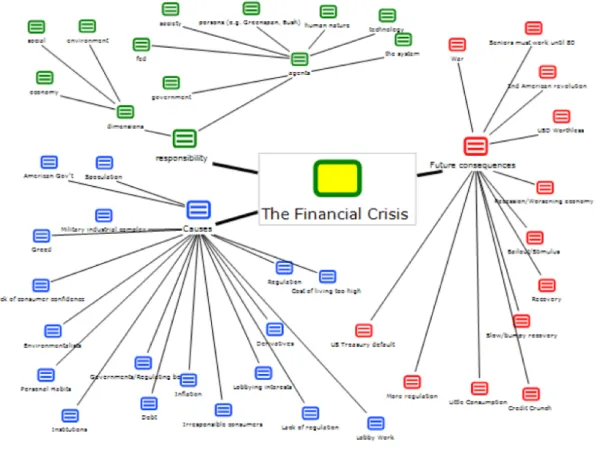
(Macgowan and Beaulaurier, 2005: 54), which encourages the ‘creative process of sparking ideas and pattern recognition’ (Barry 1998). Whereas my research assesses perceptions of blame and responsibility for consumer debt, Kuckartz and Sharp (2011)take a similar approach by assessing perceptions of blame and responsibility for the financial crisis, also using qualitative data. Similarly to my research, their methodology also includes coding, whereby they would ‘find all instances of the word “responsibility” or “blame” in the data set, and then code that word, the sentence, the paragraph, or even a certain number of paragraphs before and after the