Duquesne University
Duquesne Scholarship Collection
Electronic Theses and Dissertations2015
Teachers' Perceptions of an Online Social Network
as an Instructional Platform: The Impact of an
Edmodo-Based Professional Development
Workshop
Ashley Hodge
Follow this and additional works at:https://dsc.duq.edu/etd
This Immediate Access is brought to you for free and open access by Duquesne Scholarship Collection. It has been accepted for inclusion in Electronic Theses and Dissertations by an authorized administrator of Duquesne Scholarship Collection. For more information, please contact
Recommended Citation
Hodge, A. (2015). Teachers' Perceptions of an Online Social Network as an Instructional Platform: The Impact of an Edmodo-Based Professional Development Workshop (Doctoral dissertation, Duquesne University). Retrieved fromhttps://dsc.duq.edu/etd/653
TEACHERS’ PERCEPTIONS OF AN ONLINE SOCIAL NETWORK AS AN INSTRUCTIONAL PLATFORM: THE IMPACT OF AN EDMODO-BASED
PROFESSIONAL DEVELOPMENT WORKSHOP
A Dissertation
Submitted to Duquesne University
Duquesne University
In partial fulfillment of the requirements for the degree of Doctor of Education
By Ashley Hodge
Copyright by Ashley Hodge
TEACHERS’ PERCEPTIONS OF AN ONLINE SOCIAL NETWORK AS AN INSTRUCTIONAL PLATFORM: THE IMPACT OF AN EDMODO-BASED
PROFESSIONAL DEVELOPMENT WORKSHOP
By Ashley Hodge Approved March 16, 2015
________________________________ Misook Heo, Ph.D.
Associate Professor of Instruction and Leadership in Education
(Committee Chair)
________________________________ James Schreiber, Ph.D.
Professor of Educational Foundations & Leadership
(Committee Member)
________________________________ Marie Martin, Ed.D.
Adjunct Professor
Doctoral Program in Instructional Technology
(Committee Member)
________________________________ Olga M. Welch, Ed.D.
Dean and Professor School of Education
________________________________ Joseph Kush, Ph.D.
Director, Doctoral Program in Instructional Technology
ABSTRACT
TEACHERS’ PERCEPTIONS OF AN ONLINE SOCIAL NETWORK AS AN INSTRUCTIONAL PLATFORM: THE IMPACT OF AN EDMODO-BASED
PROFESSIONAL DEVELOPMENT WORKSHOP
By Ashley Hodge
May 2015
Dissertation supervised by Dr. Misook Heo
Today’s students are learning and communicating in increasingly digital ways, which is challenging instructors to rethink their practice in order to meet their students’ needs. These needs include instant access to information, student-centered learning, and control over their own learning. With the rapid adoption and progression of technology in education, understanding instructors’ perceptions of technology that supports digital-age learners becomes important, as instructors’ perceptions can influence the
effectiveness of technology integration. This study examined one particular technology, the Online Social Network (OSN), using Edmodo in light of how it is perceived as an instructional platform. Additionally, whether the OSN supports a professional learning community was investigated, and the influence of this type of professional development design on the participants’ perceptions was analyzed.
Generally, the OSN was perceived as an instructional platform particularly for instruction aimed at student-centered and blended learning. It was evident that the OSN is capable of supporting a professional learning community, as participants in this study thoroughly and collectively worked to design student-centered learning modules within the platform while at the same time inquiring on topics pertinent to their professional growth. The findings provide relevant information for instructors looking to implement a platform that supports a student-centered approach to instruction, as well as, an example for administrators seeking a platform that supports a professional learning community. With this information, it is hopeful that the educational practice can improve, as
instructors perceptions are better understood and their desire to participate in an online learning community is manifest.
DEDICATION
This dissertation is dedicated to the love and support of those nearest and dearest to my heart. My husband Joshua, you grounded me and brought me back to reality when I needed it most. You stood by my side and celebrated even the smallest landmarks throughout this process. And you brought joy and light into my life when I felt as if there was no escape. You, my darling, are a testament to true love and devotion. Thank you, thank you, thank you!
I would be remiss not to mention my dog, Marley. Although his encouragement was unconventional, there was not a day that went by that he did not put a smile on my face and that was cherished more than he will ever know.
Finally, to my family and friends, both near and far for providing encouragement, expressing interest in my journey, and simply being there throughout the years, I
sincerely thank you. You each have taught me the value of commitment and that I can do anything I set my mind to. To my mother and father for showing me how to be a hard worker, teaching me the value of dedication, and for being my greatest admirers in life; you are and always will be a great inspiration.
ACKNOWLEDGEMENT
My sincere gratitude to Dr. Misook Heo for enduring with me as my advisor throughout the research and writing of my dissertation. Her guidance, efficiency and general care throughout the years are much appreciated and each greatly impacted my ability to succeed. She provided constant and meticulous support, and for that I am unquestionably fortunate and grateful to have received.
My appreciation to my dissertation committee members, Dr. Marie Martin and Dr. James Schreiber for their assistance in strengthening my body of work. They have generously provided their expertise and time throughout this process, for which I express my deep thankfulness.
My cohort members, from IT4, for your inspiration along the way. It was
undoubtedly a blessing to go through the program with each and every one of you and to share this experience with such a great group of individuals. As I learned from each of you in different ways, I appreciate you for broadening my knowledge and helping me grow throughout the years.
Finally, to professors Dr. David Carbonara, Dr. Jason Margolis, and Dr. Nihat Polat; appointed as their graduate assistant throughout my doctoral studies, I attribute my growth as a researcher to each of them. I am grateful for the opportunity they afforded me in publishing scholarly manuscripts and their genuine guidance to become a stronger researcher.
TABLE OF CONTENTS
Page
ABSTRACT ... iv
DEDICATION ... vi
ACKNOWLEDGEMENT ... vii
LIST OF TABLES ... xiii
LIST OF FIGURES ... xiv
Chapter I Introduction ...1
Statement of the Problem ...4
Purpose of the Research ...7
Research Questions ...8
Significance of the Study ...8
Limitations and Delimitations of the Study ...9
Definition of the Terms ...11
Chapter II Literature Review ...13
Online learning...13
Defined ...13
Advantages and disadvantages ...16
Interaction ...18
Social presence...20
Cognitive presence ...22
Teaching presence ...23
Defined ...24
Technology and pedagogy ...25
Integrating technology within curriculum ...26
Addressing barriers to technology integration ...27
Perceptions of technology in the classroom ...30
Professional development in technology ...35
Transition from isolation to professional learning communities ...36
Learning Theories ...38
Online instruction...41
Defined ...41
Online instruction versus face-to-face instruction ...42
Developing online instruction ...44
Online social networks (OSNs) ...49
Defined ...49
Perceptions of OSNs in education ...50
Online learning and OSNs ...52
Instruction within OSNs ...66
Summary ...68
Chapter III Methodology ...70
Introduction ...70
Research Questions ...70
Expected Results ...71
Description of the Online Self-Paced Workshop ...74
Participants ...81
Data Collection Methods ...81
Procedures ...83 Data Analysis ...85 Summary ...86 Chapter IV Findings ...88 Introduction ...88 Data Presentation ...88 Participant demographics. ...88 Participant profiles. ...92
Research question one...95
How do instructors perceive the OSN as an instructional platform? ...95
Research question two. ...105
To what extent does the OSN support a professional learning community? ...105
Research question three. ...112
How do instructors’ perceptions change over the course of the online workshop? 112 Summary ...114
Chapter V ...115
Conclusions and Recommendations ...115
Introduction ...115
Discussion ...116
Theme 1: Enhancing learning. ...117
Theme 2: Supportting integrated instruction. ...121
RQ2: To what extent does the OSN support a professional learning community? 126 Theme 3: Promoting collective learning. ...126
Theme 4: Performing as a collective interface. ...128
RQ3: How do instructors’ perceptions change over the course of the online workshop? ...130
Theme 5: Influence of professional development. ...131
Application of Findings ...133
Implications for instructors. ...133
Implications for administrators. ...135
Limitations of the Study...137
Suggestions for Future Research ...139
Summary ...140
References ...142
Appendix A: Survey and Interview Questions ...192
A1 Participant Demographics and Background ...192
A2 Technology Acceptance Model ...195
A3 Online Learning Value and Self-Efficacy Scale ...196
A4 Dichotomous OSN Usage Questions ...197
A5 Semi-structured Interview Questions ...198
Appendix B: Session One Materials ...200
B2 Text Based Tutorial Example ...201
Appendix C: Session Two Materials ...202
C1 ISTE Technology Standards for Students ...202
C2 Bloom’s Taxonomy Reinvented...204
C3 Implementing Technology Standards...205
C4 7 Ways to use Edmodo in the Classroom ...206
C5 15 More Ways to use Edmodo in the Classroom ...207
Appendix D: Session Three Materials ...210
D1 Discussion Rubric ...210
D2 Posting Rubric ...211
D3 Math Blog Rubric...212
D4 Summarization Rubric ...213
Appendix E: Pre-validated Instruments and Construct Definitions ...214
Appendix F: Questions for Implementation ...218
F1 Participant Profile Questions ...218
F2 Technology Acceptance Model ...220
F3 Online Learning Value and Self-Efficacy Scale ...221
Appendix G: Protocol Forms ...222
G1 Subject Recruitment Message ...222
LIST OF TABLES
Page
Table 1 Participant Demographics (N = 5) ...89
Table 2 Participant experience with professional development courses (N=5) ...90
Table 3 Participants Computer Use and Social Network Use Experience (N=5)...91
Table 4 Participants’ Routine Use of OSNs (N=5) ...92
Table 5 Participants’ Lesson Construction ...101
Table 5 Participants’ Lesson Construction (Cont’d) ...102
LIST OF FIGURES
Page
Figure 1. Listed news feed in Edmodo ...56
Figure 2. Prompted discussion in Edmodo ...57
Figure 3. Inquiry based post in Edmodo ...58
Figure 4. Facebook real-time news feed revealing informal communication ...59
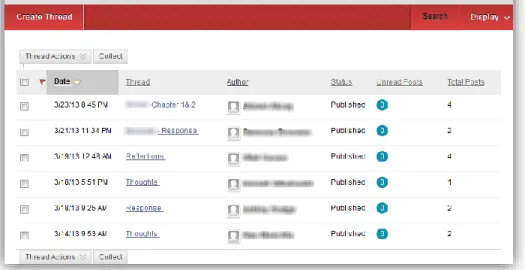
Figure 6. Discussion thread in Blackboard 9.0: First step ...61
Figure 7. Discussion thread in Blackboard 9.0: Second step ...62
Figure 8. Discussion thread in Blackboard 9.0: Third step...63
Figure 9. Listed structure of a news feed in Edmodo ...64
Figure 10. Google site to begin Edmodo workshop ...76
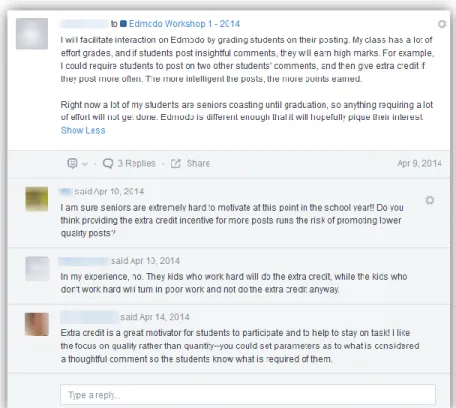
Figure 11. Online Conversations in Edmodo. To protect the privacy of the participants, sensitive information is redacted. ...107
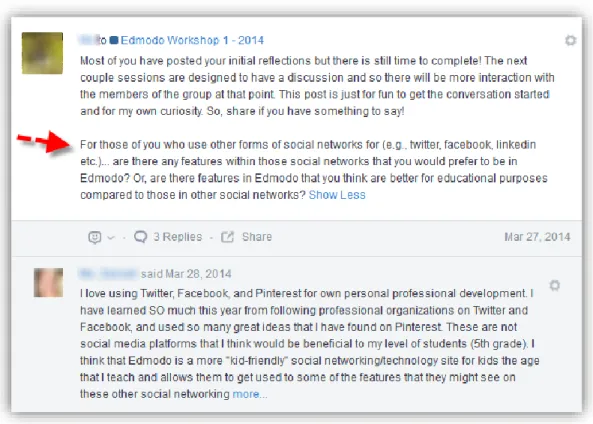
Figure 12. Online Conversation in Edmodo. To protect the privacy of the participants, sensitive information is redacted. ...108
Chapter I Introduction
As technology continually evolves, it impacts ever more significantly on the way society learns and communicates (Hilbert & Lopez, 2011; Schaffer, 2001). Technology explicitly transforms the way individuals think (Schaffer, 2001), which has impacted the way human beings’ minds are stimulated and how they function (Oblinger & Oblinger, 2005; Palfrey & Gasser, 2008; Prensky, 2001; Tapscott, 2009). For example, individuals who have continually been exposed to technology throughout their lives are more
inclined to process information in a non-linear fashion (Baker, Matulich, & Papp, 2007; Oblinger & Oblinger, 2005). The technology revolution of the 20th century brought the rise of innovative technologies, including online learning and online social networks (OSNs). These innovations have influenced younger generations to speak and learn in a different language, that is digital and technological (Prensky, 2001; Schaffer, 2001). Younger generations now view technology, in particular social networking, as an integral part of everyday life (Oblinger & Oblinger, 2005) and expect technology to be a natural part of the learning process (Greer & Sweeney, 2012). In order to maximize younger generations’ educational experiences, supporting a profusion of students’ personal experiences in education is important (Dewey, 1902 & 1915). Traditional instructional processes where the instructor practices direct instruction (e.g., transmission learning) (Freire, 1968 & 1993) still exist however; this becomes an issue because direct
instruction does not well coincide with the way today’s students are communicating and learning. Constant investigation on educational technologies that can augment student-centered teaching and learning and promote a learning community, thus, is necessary as
they continue to evolve. One of the educational technologies believed to have the capability to promote a learning community and enhance the social and digital needs of today’s students is the OSN (Baird & Fisher, 2005; Rennie & Morrison, 2013). The simple adoption of educational technology, however, will not make student-centered teaching and learning work as instructor dispositions, such as readiness to use, beliefs on, proficiency in, and perceptions of educational technology, have been evidenced to impact the effectiveness of technology integration on student learning (Bitner & Bitner, 2002; Ertmer & Ottenbreit-Leftwich, 2010; Hew & Brush, 2007; Inan & Lowther, 2010; Vannatta, Beyerbach, & Walsh, 2001; Wozney, Venkatesh, & Abrami, 2006). Understanding instructor perceptions of OSNs as instructional platforms is, therefore, critical for effective integration of OSNs that can support social learning for today’s learners. Unfortunately, there exists limited research on instructors’ perceptions of OSNs for teaching and learning; studies that identify ways to effectively use OSNs in teaching and learning may address this gap in the literature.
Albert Bandura’s theory of social learning (1962, 1977) assumes that through observing the behaviors of others, or observational learning, knowledge is developed. This theory has been adopted throughout the years and is pervasively used in teaching and learning (Ormrod, 2008). Bandura believes human behavior is influenced by continuous and common interactions that are guided by cognitive and behavioral foundations. Social learning is rooted in intrinsic learning (e.g., learning for one’s own sake), observation, which includes someone or something that models a particular behavior and a student who observes the behavior, and perceived high-levels of self-efficacy (e.g., a strong belief that one can complete a particular task) (Ormrod, 2008).
This theory has long been utilized in education and is responsible for many of the developments in traditional face-to-face (F2F) education (Ormrod, 2008).
Still up for debate is how to effectively facilitate social learning among students who are more inclined to communicate in a digital manner. As society moves down the trajectory toward blended learning, online learning (OL), and an increased use of
educational technology, meeting the needs of today’s students becomes important. Often referred to as digital-age or millennial learners, and the Net/Y Generation, modern-day students have grown up in a world comprised of digitally-based communication and learning and are revealing a desire to construct knowledge by way of a learning community, where members collectively share and obtain information (Le Rossignol, 2009). Some instructors and instructional designers look to OSNs to support a collective community of learners while stimulating curiosity and communication among students (Fisher & Baird, 2005; McLoughlin & Lee, 2010; Rennie & Morrison, 2013). Facebook and Twitter, for example, have been successfully utilized within education; Facebook has demonstrated its ability to increase student-student and student-instructor interaction, promoting collective communities and social interface (Munoz & Towner, 2009) and it has been suggested that Twitter can enhance both student and instructor engagement while supporting more gainful learning outcomes (Junco, Heibergert, & Loken, 2010). Research suggests that OSNs engage students in informal learning and promote
interaction and socialization among students (Leskovec, Huttenlocher, & Kleinberg, 2010; Livingstone & Brake, 2010; Roblyer, McDaniel, Webb, Herman, & Witty, 2010). Technology has enabled society to build immense and powerful OSNs, and these
setting in which natural learning can occur (Barczyk, Nareddy, & Duncan, 2012; Ma & Yuen, 2010).
Statement of the Problem
Societal acceptance of OSNs is apparent in today’s world, as the public is spending over 700 billion minutes per month on Facebook (Hurn, Chamberlin, Hambright, Portwood, Schat, & Bevan, 2011). Although the breadth of opportunity social networks lend to socialization and interaction is recognized outside of education (Leskovec et al., 2010; Roblyer, et al., 2010) practitioners of education exhibit conflicting perspectives regarding the adoption of OSNs as instructional platforms. Those who support social media in the classroom have found it promotes creative, active and responsible learning (Dalsgaard, 2006; Livingstone & Brake, 2010; Waddington, 2011) yet, 72% of school districts firewall OSNs because they believe OSNs hinder learning (Waddington, 2011).
There have been instances where negative implications regarding OSNs in education have been documented (e.g., Dohn, 2008; Notley, 2008; Sharples, Graber, Harrison, & Logan, 2009). The surrounding skepticism suggests the freedom and vulnerability of OSNs to be unsafe and a potential threat to privacy (Bonneaua, Anderson, & Danezis, 2009; Jones & O’Neill, 2010; Notley, 2008). Research has suggested that OSNs sustain bullying, racism, and violent materials among younger generations as well (Notley, 2008); OSNs have also been recognized as difficult to implement because of the digital divide and, in some cases, there exists a fear of learning a new technology among instructors (Dohn, 2008).
Regardless of the aforementioned negative connotations associated with OSNs, there have been studies highlighting the benefits of social networks (Maranto & Barton, 2010; Notley, 2008; Roblyer et al., 2010; Sharples et al., 2009; Waddington, 2011). Rather than banning students from OSNs, advocates believe appropriate implementation strategies can promote safe, responsible learning and shape model digital citizens
(Maranto & Barton, 2010; Notley, 2008; Roblyer et al., 2010; Sharples et al., 2009; Waddington, 2011). OSNs are proven to be successful when facilitating self-regulated learning (Dabbagh & Kitsantas, 2012), which is a person’s ability to manage his/her own learning by setting goals, observing the content, forming conclusions, and acting in response to their learning (Bandura, 1986; Schunk, 1989, 1996), and, when implemented systematically, can promote social interaction (Leskovec et al., 2010; Livingstone & Brake, 2010; Roblyer et al., 2010). Techniques like self-reflection, communities outside the classroom, and student-guided discussions have shown their impacts on students’ self-regulation skills (Fisher & Baird, 2005), and each of these techniques can easily be facilitated within an OSN. In this regard, withholding OSNs prevents students from a potentially effective student-centered learning tool (Fiedler & Valjataga 2008; Friedman & Hershey, 2011). OSNs have continued to develop and have perceivably proved their dominance in our society as an interactive social medium. The question now remains as to how OSNs are perceived by instructors as instructional platforms.
Research supports both advocates and skeptics of OSNs but it is difficult to argue against OSNs’ presence in our society. It has been found that 90% of adolescents use the Internet with over half utilizing OSNs (Waddington, 2011). OSNs are proving to be effective instructional platforms in some cases while having no effect in others, which
brings into question the reason for this discrepancy. While OSNs promote social interaction, simply implementing OSNs for teaching and learning will not necessarily result in social interaction among students (Kreijns, Kirschner, & Jochems, 2003); identifying how to effectively incorporate OSNs as instructional platforms and providing an appropriate balance between cognitive and social aspects of learning can further be examined (Kreijns et al., 2003). An effective infrastructure and complementary support may provide instructors with the necessary proficiency and readiness to utilize OSNs and perhaps influence instructors’ perceptions of OSNs, as educators are often unsure of how to take advantage of these inter-connected systems as instructional platforms.
A study examining social media adoption within 4-year institutions across the United States revealed that while 100% of these institutions were utilizing social media in some capacity (Barnes & Lescault, 2011), faculty members who were interviewed
throughout the study were more likely to use OSNs for personal use rather than for educational purposes (Barnes & Lescault, 2011). Educational protocols are being re-positioned, nonetheless, to facilitate online, hybrid and collaborative learning models (The New Media Consortium Report, 2012). Instructors may benefit from a shift in practice in order to better support learners in managing immense amounts of information in what is considered to be the “knowledge era” (Garrison, 2011). OSNs, positioned as learning communities, can support the emerging didactic perspective that underscores the importance of facilitating both meaningfully and collectively constructed knowledge (Garrison, 2011). Instructors considerably influence the learning environment (Garrison, 2011); understanding their perceptions of instructional platforms, thus, could be an
important step in enhancing the effectiveness of integrating platforms that benefit the learning process.
Many researchers have focused on students and the use of OSNs in learning environments (Lockyer & Patterson, 2008; Veletsianos & Navarrette, 2012; Yuen & Yuen, 2008); however, there is limited insight into instructors’ perceptions of OSNs. Specifically, instructors’ perceptions of OSNs as instructional platforms are limited in the literature. Given that the voice of the instructor is lacking from relevant literature
(Veletsianos & Navarrete, 2012), understanding instructors’ perceptions of OSNs as instructional platforms and whether instructors’ personal background and experience with technology influences their perceptions warrants examination. Besides, studies that enhance our understanding of instructor perceptions of OSNs in education can increase the potential of OSNs being integrated within learning environments; this, in turn, will contribute to uncovering the potential of OSNs to provide students with a meaningful and socially interactive learning experience.
Purpose of the Research
The teaching and learning process is evolving to accommodate the needs of today’s learners. Various educational technologies have been studied for their impacts on student learning and/or have been used to enhance student learning. This study focuses on the effectiveness of the OSN used as an instructional platform, which promotes a professional learning community. Despite their proven dominance in society outside of the education field, OSNs have been delimited in education by differing perspectives, misunderstandings of use, and general resistance to change among instructors. The
purpose of this qualitative case study is, therefore, to understand instructors’ perceptions of OSNs as instructional platforms, which promotes a professional learning communities.
This study used a professional development workshop, which was designed and developed to introduce an OSN as an instructional platform and to promote a learning community. The workshop included the basic navigation features of a chosen OSN for the study, how to translate pedagogy to the use of OSNs and how to assess student learning within an OSN. Traditional education theories (e.g., social learning theory, cognitive learning theory, and behavioral learning theory), best practices, and multimedia learning principles served as the foundation for this framework. This framework was anticipated to provide instructors with the necessary support for integrating technology while promoting a professional learning community; the specific technology being an OSN.
Research Questions
In order to reveal instructor’s perceptions of an OSN as an instructional platform, which promotes a professional learning community, this study is guided by the following research questions:
1. How do k-12 instructors perceive the OSN as an instructional platform? 2. To what extent does the OSN support a professional learning community? 3. How do instructors’ perceptions change over the course of the online
workshop? Significance of the Study
This study aims to contribute to the general understanding of OSNs as an
following areas in which it contributes to the literature: instructors’ perceptions of OSNs as instructional platforms, whether the OSN promotes a professional learning community, and if the design of the professional development influences the instructors’ perceptions. Considering the voice of the instructor has been minimally heard in pertinent literature (Veletsianos & Navarrete, 2012), the current research is anticipated to contribute to an understanding of instructors’ perceptions of OSNs as instructional platforms to improve their practice to parallel the needs of today’s students. Additionally, examining the functionality of the OSN as designed to support a professional learning community serves as a foundation for administrators to promote more effective professional development. Considering their dominance in our society (e.g., Waddington, 2011) and the presence of more digitally-inclined learners (e.g., Prensky, 2001; Schaffer, 2001), understanding instructors’ perceptions of OSNs will support the integration process and the
effectiveness of OSNs being used for teaching and learning. Limitations and Delimitations of the Study
While OSNs are the technology of focus in this study, it should be recognized that as with any other technology, OSN use and preference is dynamic. The popularity of OSNs in general, or of any specific OSN, will eventually change. This does not indicate that OSNs are becoming obsolete, however, as technologies are continually being reinvented. Usage rates of OSNs will, therefore, change with the creation of newer technologies or modernization of OSNs. As new OSNs emerge and gradually change over time it is important to focus not on how the number of users increases and decreases but on how present OSNs are and will continue to be in society. The
more social forms of learning and how online learning can support this need through the use of OSNs.
Considering the workshop was self-paced and asynchronous, the researcher recognizes the influence that this could have on the data collection and analysis. First of all, there are instances where participants might have interacted privately regarding the online workshop (e.g., through private messages or email) that was not made available to the researcher. Even with the best effort of the researcher, it is possible that some
communications might have been interpreted differently than were intended by the participant and therefore, it is thus asserted that the results provided are one
understanding of the findings.
In addition to this particular understanding, the study was intended to investigate one specific group of instructors from a select school district. The workshop was
designed and intended for school districts that are well equipped with and knowledgeable of educational technology. This specific type of school district was targeted to keep the focus of the study on the perceptions recorded in the online workshop and not on how to participate in online professional development. It is, therefore, suggested to bear this in mind when generalizing the results; the school districts who participated were top-performing schools in a rural north eastern state. Considering this, results may vary in a lower-income or lower-performing school.
Furthermore, the findings regarding instructors’ perceptions of implementing the OSN may differ from how students respond to the implementation of the OSN as an educational technology. Although this study examined the perceptions of instructors, future studies may benefit from analyzing students perceptions; revealing student
reactions to the implementation process could provide further information regarding the use of OSNs in education that was unable to be entirely represented during the
examination of instructor perceptions. Within the current study, however, student reactions were not documented.
Definition of the Terms
Online Learning Environment (OLE)
An OLE is a virtual space for which learning can occur and consists of at least 80% of online content (Allen & Seaman, 2011). It is rare that students and instructors will meet F2F throughout the duration of an online course (Allen & Seaman, 2011).
Online Social Network (OSN)
An OSN is a web-based service that allows users to communicate with other individuals that are within their extended network, OSNs usually consist of a profile page unique to each user, connectivity characteristics of its users (e.g. a list of a specific users’ connections within the network), and capabilities for navigating within the network (Boyd & Ellison, 2007).
Blended Learning
Blended learning is a crossbreed of both face-to-face and online learning. It allows for learning to occur beyond the brick-and-mortar walls of traditional classrooms and involves some type of educational technology to facilitate the learning beyond the classroom.
Theory of Social Learning
Albert Bandura’s (1989) theory of social learning assumes that through observing the behaviors of others, or observational learning, knowledge is developed. Bandura
believes human behavior is influenced by continuous and common interactions that are guided by cognitive and behavioral foundations.
Intrinsic learning
Intrinsic learning means learning for one’s own sake, which occurs when the student’s knowledge is expanded due to inherent motivation(s) (Ryan & Deci, 2000). Intrinsic motivation is often correlated with meaningful learning which makes it a vital part of the recipe for effective instruction (Ryan & Deci, 2000).
Self-regulated learning
Self-regulated learning requires the student to be responsible for managing their own learning with the support of the facilitator. While achieving self-regulated learning, the student is capable of setting their own goals, observing the content, making their own inferences and forming their understanding of the content and reinforcing and punishing themselves when they do or do not meet their proposed performance goals (Bandura, 1986; Ormrod, 1999; Schunk, 1989, 1996).
Social presence
An individual’s social presence is determined by the extent to which that individual is perceived to be pertinent in a particular interaction and the significance of the interpersonal connection is dependent on the perceived social presence (Short, Williams, & Christie, 1976).
Pedagogy/pedagogical curriculum
Pedagogy is the formal profession of teaching and the methodology behind curriculum design, instructional techniques, and learning experiences. Pedagogical curriculum provides a framework for the active practice of educating students.
Chapter II Literature Review Online learning
Defined
Online learning has long been revolutionized since it originated in the form of postal mail, dating back to the 18th and 19th century (Bower & Hardy, 2004; Peters, 1998). Correspondence learning was the technical term used for sending educational lessons to those wanting to learn at a distance (Bower & Hardy, 2004). Using print sources, educators would accommodate those who lived in remote areas or had other difficulties in accessing F2F learning by sending lessons via the postal service (Bower & Hardy, 2004). Isaac Pitman was among the first to develop a postcard with learning content that was mailed to the students for transcription; his idea spread so rapidly that correspondence colleges were developed in the mid 1800’s. As the world became industrialized, correspondence learning eventually took on the alias distance education; areas with already established institutions were at an advantage because they were more equipped with resources and funds to support distance learners at that time (Bower & Hardy, 2004; Moore & Anderson, 2003). A desire to learn at a distance became apparent among the educationally deprived regions (Moore & Anderson, 2003). With the advent of the technology revolution in the late 20th century, distance education moved from print mediums to technology mediums for communicating information (Bower & Hardy, 2004). Ranging from audio to video based communication, distance education is now associated with online mediums for learning, with the Internet acting as the connection for students and instructors to have an educational experience. Currently, there is a range
of online courses, taken at a distance, that are implemented in K-12 settings, higher education curriculum, corporate training programs and the like.
The International Association for K-12 Online Learning (iNACOL) (2011)
estimated 1.8 million students are enrolled in at least one online course, within the United States and reported online learning to be most accessible in North America, Western Europe, Asia, and Australia/New Zealand. Across the globe, urbanized areas tend to offer more opportunity and access to online programs (iNACOL, 2011). With a 40% annual growth rate and a breadth of opportunities for non-traditional students and
families, online programs are evolving to provide an adaptable and personalized learning environment (Patrick & Vander Ark, 2011). OL programs have made a considerable impact on education and continue to mature (Watson, 2008). These learning programs are housed in OLEs, which facilitate knowledge construction through responsive and interactive technology-based mediums (Colorado & Eberle, 2010). Delivery of content may be implemented in an asynchronous, synchronous or hybrid manner and it is
suggested that to qualify as an online course at least 80% of content must be given online (Allen & Seaman, 2011). The term ‘synchronous’ implies immediate presence of the students and instructors within the online environment, whereas ‘asynchronous’ involves self-paced learning where instructors provide the resources necessary for the students to access and complete on their own time, although required completion dates are not uncommon. The first signs of self-paced learning are documented in Keller’s (1968) development of the Personalized System of Instruction (PSI), which was intended for classroom-based instruction. This idea was founded to support differentiated learning and consists of learning modules that guide students through the learning process (Keller,
1968). The PSI used a different approach regarding lecturing and modeling of material; the PSI uses these techniques to motivate students rather than emphasize significant points of information. According to the PSI, the instructor is responsible for selecting the content, structuring the way the content is to be presented, developing assessment
materials, and evaluating the students’ progress; the students were supported by course proctors, who were responsible for communicating and encouraging students in times of need (Keller, 1968). Keller’s (1968) work recognized the changing role of the instructor from authoritative to facilitative, and society has witnessed that role grow even further as OL continues to develop. Keller’s model dominated behavioral research in the 70s and 80s; yet it seemed nonexistent in the 1990’s (Eyre, 2007). Considering its success with improving student learning (e.g. Gibbs 1992; Hambleton, Foster, & Richardson, 1998; Jacobs, 1983; Keller, 1968; Kulik, Kulik, & Cohen, 1979; Kulik & Kulik, 1989), the PSI has been modified into the computer-aided personalized system of instruction (CAPSI) (Pear & Crone-Todd, 1999) and is now a suggested technique for designing and
structuring OL courses (Cracolice & Roth, 1996; Grant & Spencer, 2003). There are many terms under the umbrella of OL: distance learning, e-learning, virtual learning and other comparable designations are often used in the same context. Each term shares several common characteristics, including freedom from co-location between the students and instructor, a technology-based vehicle for sharing information and learning, and support that sustains the students’ capabilities to perform (Ally, 2004). For the purposes of this literature, the term online learning will be used to cover variations of the term.
Advantages and disadvantages
Early researchers believed that successful learning experiences were not affected by technology, as the sole purpose of the technology was to deliver the content (Clark, 1983) and the desired learning outcomes were only achieved by systematic strategy and content (Schramm, 1977). Initial research on learning from media revealed that
technology did not influence knowledge construction and that instructional and student characteristics may be the determining factors in student achievement (Clark, 1983). This rationale was later debated as research showed technology to actually enhance student motivation and facilitate student interaction (Kozma, 1994).
Despite early findings that associate OLEs with social isolation and ineffective learning experiences (Bennett et al., 1999), more recent research found effectively designed online environments to provide an engaging learning experience that promotes higher learning (Revere & Kovach, 2011). An effectively designed online curriculum can also address differentiated learning preferences and achieve desired learning outcomes (Ally, 2004), resulting in a more personalized learning experience. These environments are, in fact, transforming education from static and routine instruction to differentiated instruction that adapts to fit many schedules and learning needs (Patrick & Vander Ark, 2011). In addition to fostering interaction and personalized learning
experiences, some researchers believe educational productivity may be enhanced with online learning (U.S. Department of Education, 2011). It is believed that those who reinforce the potential outcomes of online learning are affiliated with online courses in some capacity and those who are not subjected to online learning are less inclined to
support its capabilities (Allen & Seaman, 2011). The reported skepticism may, therefore, be in part to lack of experience with or exposure to the field of online learning.
Although it continues to improve, online learning still faces some challenges in integrating technology with content, providing quality instruction at a distance, and finding properly trained instructors to deliver the content online (Johnson & Aragon, 2003; Lee & Hirumi, 2004; Revere & Kovach, 2011). Many learning platforms have been developed for online content delivery, yet these environments are not reaching a certain level of desired engagement (Revere & Kovach, 2011). Some reasons for this may include confusion resulting from students being exposed to too many modes of communication at once (i.e. text/chat log, audio from the live class, and information from the content board), missing nonverbal communication that does not occur in an audio-based online environment, and unwanted anxiety caused by technological problems that can occur in online environments (McBrien, Jones, & Cheng, 2009). Lack of feedback, unclear expectations and minimal support in OLEs may also be responsible for low levels of student engagement (Palmer & Holt, 2009). Research has detected a lack of student-centered approaches being utilized in online environments, which may be attributed to an absence in instructors’ preparedness to teach in online settings and their inability to keep up with rapidly changing technology (Lee & Hirumi, 2004; Revere & Kovach, 2011). Considering the challenges associated with engaging students in OLEs, it may be beneficial to implement other mediums that can enhance online communication, as interaction is a powerful segment of online learning (Bodomo, 2008). The various types of and ways to promote interaction will briefly be examined to further understand how to provide effective and meaningful online learning experiences.
Interaction
Interaction has become a central focus in OL research, as it has been evidenced to impact the learning experience (Fulford & Zhang, 1993; Garrison & Cleveland-Innes, 2005; Gunawardena & Duphorne, 2001; Swan, 2001). Considering interaction is a critical part of online learning, more systematically designed interaction has been
recommended (Garrison & Cleveland-Innes, 2005); interaction is not to be confused with interactivity, however. Some researchers believe defining interaction is no different than defining interactivity (see Gilbert & Moore, 1998) and some are in opposition, supposing that these terms can be differentiated in an online environment (see Wagner, 1994). In distinguishing between the terms, interactivity involves the attributes of a technology whereas interaction occurs when two or more objects (e.g., individual-individual, individual-system) reciprocally influence one another (Woods & Baker, 2004). Therefore, the technology itself supports interactivity in which different modes of interaction can occur (Roblyer & Ekhaml, 2000).
Moore (1989) pioneered the role that interaction plays in online education today by identifying three points of contact for students: student-teacher, student-content, and student-student. According to social constructivist foundations, interactions can
influence deeper learning and higher-level thinking (Ormrod, 2008; Palincsar, 1998), and the importance of observing and learning from others is emphasized in social learning theory (Ormrod, 1999). As the medium for interaction differs in OLEs to traditional F2F classrooms (Anderson, 2003) its position in online settings has been studied closely. Social constructivists believe the instructor (or an expert model) plays a critical role in mediating interactions among students (or novices) and guiding student learning within
the communicative context (Palincsar, 1998). Considering interactions can occur both socially and cognitively, instructors and curriculum designers may guide students to socially interact with others involved in the course and cognitively interact with the material.
In an online environment, human interactions are mediated by technology. For seamless interactions via online, thus, technology should be able to support the individual to access and interact with the information presented by the technology (Ally, 2004), just as the individual would naturally access and interact with information provided face-to-face by an instructor or peer. This technology mediation is often referred to as student-interface interaction. Developed by Hillman, Willis and Gunawardena (1994), this type of interaction is prerequisite for the other three types of interaction (identified by Moore), as the learner must interact with the technology in order to interact with any content, other students, or instructors present in the technology medium (Chou, 2003). Instructors’ interaction with the technology is equally important as it allows them to monitor students’ activity (Yang, Yeh, and Wong, 2010). This type of interaction can ultimately influence student interaction, and instructors who neglect to interact with the technology medium may impede the learning process.
Learning is a dynamic process and can be influenced by continual interaction and meaning negotiation (Sharples, Taylor, & Vavoula, 2007). Although interactions are considered to be active behaviors, the quality rather than the quantity of interaction is believed to be an essential part of providing meaningful learning (Garrison & Cleveland-Innes, 2005). For example in a study examining the perspectives of online students, researchers found discontent among the participating students regarding the absence of
F2F interaction (Stodel, Thompson, & Macdonald, 2006); the authors reported that the quality of the online interaction may influence the way the online environment is perceived. In fact, passive interactions are identified as indication of misunderstanding while active interactions are recognized as indication of knowledge construction (see Yang et al., 2010). In addition to social interactions, facilitating particular forms of presence (e.g., social, cognitive, teaching) can also enhance the online learning experience, making the interactions more substantial (Garrison & Cleveland-Innes, 2005). Simply stated, presence is determined by an individual’s perceived degree of connectedness to, sense of being in and ability to interact with others in an online course (Picciano, 2002). In an online environment, a mix of cognitive, social and teaching presence is suggested to achieve a constructivist approach to learning (Garrison & Arbaugh, 2007).
Social presence
Social presence is measured by the extent to which people feel socially aware of each other (Richardson & Swan, 2003). There have been studies demonstrating a positive relationship among the level of perceived social presence and the degree of online learning that occurs (Gunawardena, 1995) and communication mediums’
effectiveness is influenced by the degree of social presence (Richardson & Swan, 2003). This implies that students’ sense of connectedness in OLEs is subject to their perceptions of OLEs and students’ level of comfort in OLEs may determine the amount of
communication and connectivity, or social presence that occurs.
In an attempt to provide reasoning for various levels of social interaction taking place in web-based settings, the social presence theory (SPT) was conceptualized (Short
et al., 1976). The researchers recorded audio-based conversations void of any graphical representation to classify social presence by the degree of communication that occurs between individuals. Short et al. (1976) found that mediums involving F2F interaction reveal stronger social presence, with text-based mediums revealing the least amount of social presence. The SPT helps researchers measure the extent of communication that can occur in online settings that lack F2F capabilities.
Social presence’s constructs have been debated, as some researchers believe that users’ perceptions of the medium determine the immediacy of communication and the amount of social interaction (Olaniran, 1993; Rice & Love, 1987; Short et al., 1976; Tu, 2002; Tu & McIsaac, 2002) and others believe that the quality of the communication medium determines the amount of perceived social presence (Hu, 2001; Walther, 1992). Social presence has an unclear and comprehensive domain resulting in an inadequate definition; however, this does not mean that practitioners in the field of education should ignore its ability in teaching and learning (Biocca, Harms, & Burgoon, 2003). While too vague or too narrow a definition of social presence is considered inefficient, how social interactions are mediated and the aspects of the medium that result in social responses can offer a more persuasive explanation of social presence (Biocca et al., 2003). Although social presence is necessary for meaningful learning in online settings, it may be insubstantial to depend solely on social aspects of presence; the support of cognitive and teaching presence may be critical in providing the highest quality of interaction (Garrison & Cleveland-Innes, 2005).
Cognitive presence
Cognitive presence is measured by progressive stages of inquiry that begins with basic comprehension of an issue, and results in exploring, integrating and applying the new information (Garrison & Arbaugh, 2007). In online learning, cognitive presence is constructed by reflection and collaboration; students need the opportunity to internally reflect on their learning experience and externally participate in collaborative activities to meaningfully grasp the learning material (Garrison, 2003). Cognitive achievement, often referred to as higher-level learning, may be accomplished through structured design and facilitated guidance (Garrison & Cleveland-Innes, 2005).
Research has continually emphasized the role comfort level plays in providing an effective online learning experience (Hooper & Rieber, 1995; Shea & Bidjerano, 2009; Song, Singleton, Hill, & Koh, 2004). Through this research, it is suggested that
instructors provide guidance for their students to gain confidence and become comfortable learning in an OLE (Muirhead, 2002; Shea & Bidjerano, 2009). This is where the reflective construct of cognitive presence plays its role, as allowing students to reflect on why they are feeling uncomfortable or are lacking confidence to perform in the OLE is suggested (Shea & Bidjerano, 2009). Structured and feasible content and clear understanding of what is expected are also considered to be essential components of providing meaningful learning experiences (Garrison & Cleveland-Innes, 2005). The authors further explain the importance of progressive communication, beginning with fundamental understanding, moving through forward thinking, and resulting in application.
Cognitive and social presences both distinctively contribute to encouraging meaningful approaches to learning (Gunawardena, 1995; Garrison & Cleveland-Innes, 2005), yet they may demonstrate more effective roles if supported by comprehensive instruction. Although cognitive and social presences are components of meaningful knowledge construction, it is suggested that teaching presence may be needed to move from social inquiry to cognitive awareness (Garrison & Cleveland-Innes, 2005).
Teaching presence
Teaching presence is measured by the instructors’ success with organizing effective content, facilitating dialogue and providing direct instruction to students (Shea, Li, & Pickett, 2006). Some argue that teaching presence is a necessity for providing meaningful learning experiences in OLEs (Garrison & Cleveland-Innes, 2005). Effective teaching presence involves instructors who implement and facilitate well designed social and cognitive processes, which may be achieved by confirmation checks, generating discourse on relevant topics, providing a range of resources for knowledge construction, and acknowledging misinterpretations (Shea et al., 2006).
A study examining students’ perceptions in an online course revealed a positive relationship among students’ perceived teaching presence and perceived sense of community (Shea et al., 2006), implying that the stronger the online teaching presence the more likely students will develop a sense of community. Instructors and designers should be cautious they are not implementing or developing teacher-centered instruction, while seeking to enhance teaching presence (Garrison & Cleveland-Innes, 2005). The proper balance of teacher intervention and facilitation is critical (Garrison & Cleveland-Innes, 2005; Kirikiadis, 2008) as inadequate guidance will result in insufficient reasoning
and minimal cognitive engagement among students (Angeli, Valanides, & Bonk, 2003). Effective teaching presence supports students on a learning trajectory to understand new content and connect new-found information with existing knowledge (Anderson & Dron, 2010). Teaching presence is also credited for its ability to foster both social and
cognitive processes of students, when effectively designed (Garrison, Cleveland-Innes, & Fung, 2010). A main objective of teaching presence is to guide students in achieving expected learning goals (Garrison, Cleveland-Innes, & Fung, 2010). Pedagogy plays a role in ensuring the success of presence in online learning (e.g. Anderson & Dron, 2010); it is thus essential to further understand pedagogy and its role in online learning.
Pedagogy Defined
Pedagogy is the composition or framework of education (Compayre, 1886); it involves exercising instruction (Olson, 2003) and delivering content (Seixas, 1999). Pedagogy not only conceptualized the necessary subjects of study we focus on today, but it revealed the means for constructing knowledge of these subjects and when properly practiced, yields a benefit to learning (Compayre, 1886). Originally emphasized by liberal undertones, pedagogy was developed to facilitate social, constitutional, and systematic learning to provide students with the necessary skills to prosper in life (Sheldon, 1901). Pedagogy is comprehensive, as it plays a role in all variations of teaching and allows for more effective learning experiences to occur (Ascough, 2002), which is why designers and instructors of online courses may pay mind to its ability.
Technology and pedagogy
Practitioners of education have relied on traditional pedagogical implications while new forms of learning continue to emerge (e.g., online learning, blended learning). A well-versed approach to further developing the methodologies behind pedagogy may be necessary to reach the fullest potential of technology integration, specifically with OLEs (Couran & Goulding, 2012; Revere & Kovach, 2011) and blended learning environments (Mayes & De Freitas, 2013). Although online courses are technology-based, the focus should be on the comprehensive application of the medium in view of pedagogy rather than the technology itself (Dede, 1995). Technology should not be treated as a transposable object; it should be regarded as an element of instruction (Okojie, Olinzock, & Okojie-Boulder, 2006). Considering technology integration is recognized as a continual process, instructors should be careful not to implement technology for the purpose of one activity (Okojie et al., 2006). Instructors should also pay mind to the appeal and novelty that is associated with new technology; the purpose of technology integration should be to enhance learning experiences not to implement technology simply for the appeal (Couran & Goulding, 2012). In addition to taking a conscious approach to technology integration, some researchers believe that this process needs an established policy and curriculum to guide technology use in education
(Wozney et al., 2006). With the right intentions (Couran & Goulding, 2012) and proper infrastructure (Wozney et al., 2006), technology can positively influence learning experiences (Krentler & Willis-Flurry, 2005; Shana, 2009).
Technology has been shown to enhance learning experiences in a variety of ways; a range of technologies from straightforward discussion forums (Krentler &
Willis-Flurry, 2005; Shana, 2009) to more complex Web 2.0 tools (Augar, Raitman, & Zhou, 2004; Bush & Hall, 2011) and social media platforms (Wolf, Wolf, Frawley, Torres, & Wolf, 2012) have been effectively used in education. Student-centered approaches have been a central focus for successfully integrating technology (Hannafin & Land, 1997; Jonassen & Land, 2000). Self-regulation and retention are reported to be enhanced with the support of online technologies (Fisher & Barid, 2005), which impacts learners’ metacognition (Garrison, 2003). Although the selection of the technology is critical in providing an effective online learning experience, equally as critical is identifying effective instructional techniques and developing appropriate skills among instructors to support the integration process.
Integrating technology within curriculum
Technology, when integrated properly, can be used to develop instructional practice that more effectively concentrates on the needs of today’s learners. There are, however, barriers that need to be considered to increase chances of effective integration (Hew & Brush, 2007). Instructors’ technology proficiency can contribute to the success of technology integration (Zhao, Pugh, Sheldon, & Byers, 2002). Instructors’ ability to understand technology-infused pedagogy (O’Bannon & Judge, 2004; Zhao et al., 2002) and their personal perceptions (Chen, 2008) can also affect the outcome of learning situations (Chen, 2008; O’Bannon & Judge, 2004; Zhao et al., 2002). In addition to instructors’ personal perceptions and technology capability, there are other contextual factors that influence instructors’ abilities to successfully integrate technology (Ertmer, 2005) and can affect instructors’ responses to change (Bitner & Bitner, 2002). For example, instructors may have concerns regarding the changes that implementing
technology can produce, such as the anxiety that comes with transforming the classroom or the fear that resides in utilizing an unusual tool for instruction (Bitner & Bitner, 2002). Internal factors such as instructors’ anxiety or fear of a new technology, instructors’ lack of motivation to use a new technology and the instructors’ inability to accept failure are circumstantial features that need to be addressed prior to the integration process (Bitner & Bitner, 2002). External factors such as the amount of basic training and professional development available and the amount of accessible onsite support also need to be addressed (Bitner & Bitner, 2002; O’Bannon & Judge, 2004).
In order for instructors to conceptualize how certain tools are utilized to facilitate learning, it is suggested that teaching models be provided for the instructors who are in the process of technology integration (Bitner & Bitner, 2002). A research study
examined a model that was created to enhance accessibility, provide professional
development, and provide ongoing support, all of which contributed to the success of the study (O’Bannon & Judge, 2004). The model, which intended to increase instructors’ success with technology integration, yielded positive results; the model successfully increased the instructors’ capabilities with technology integration (O’Bannon & Judge, 2004). The authors, however, emphasize the importance of continuing these actions to ensure the sustainability of the integration process (O’Bannon & Judge, 2004).
Addressing barriers to technology integration
Many strategies have been identified as elements to overcoming barriers ranging from external approaches such as developing systematic technology plans to internal approaches such as addressing instructor motivations for using technology. Developing a technology plan is emphasized in research to implement a shared vision among all
involved in the technology integration (Hache, 2000; Hew & Brush, 2007; Moore, 1994; Richart, 2002). Levy (2003) recommends the design and implementation of online programs be supported by a structured technology planning process, as this is believed to influence the effectiveness of the program. A study that investigated the efficiency of a technology plan on successfully integrating technology in the classroom revealed that a technology plan is, in fact, effective in establishing a framework and staff development (Espey, 2000). While the technology plan serves as a guide for communicating
technology goals and processes among instructors and administrators (Hew & Brush, 2007), the instructors may be better equipped to meaningfully integrate technology with additional curriculum support (Espey, 2000). Hew and Brush (2007) further emphasize the need for providing instructors with a sufficient amount of resources and support for technology-based curriculum. Assessment measures are also addressed in technology integration (Hew & Brush, 2007) and finding ways to provide instant feedback and innovative assessment of student learning are recommended (Oncu & Cakir, 2011).
Instructors’ motivation to use a technology can also impact the effectiveness of technology integration. Earlier research revealed that instructors desire a certain level of perceived gain in learning and personal development as motivation for using technology (Sheingold & Hadley, 1990); instructors must perceive a reason to improve or modify their professional practice in order to increase their chances of using a technology (Cox, Preston, & Cox, 1999a). Other research revealed instructors’ motivation to use
technology depends on the convenience of the technology medium (Beak, Jung, & Kim, 2008) and their perceived ability to use a technology medium (Cox, Preston, & Cox, 1999b).
Various types of motivation are present and can be used to explain the intentions behind an individual’s actions. Individual interactions with a technology can be
explained by an individual’s motivation to use the technology (Agarwal & Karahanna, 2000). Identifying whether an individual is intrinsically motivated to complete a task for personal reasons (e.g., satisfaction, interest, enjoyment) or extrinsically motivated to complete a task because of an external motive (e.g., reward, compensation, increased performance) may support the technology integration process. For instance, an individual who perceives a technology to be personally enjoyable illustrates intrinsic motivation to interact with a technology and individuals who see a correlation between the use of a technology and an increase in performance reveal extrinsic motivation to use a particular technology (Agarwal & Karahanna, 2000).
Another aspect of motivation, incentive motivation, indicates that an individual completes a task derived from a particular goal or performance related variable (Schunk, Pintrich, & Meece, 2008). This is relevant to the integration process, as teachers would need incentive in order to justify taking their time to acquire new skills in technology integration (Brand, 1997). Some even believe that without an incentive, instructors will not see any reason for meaningfully using technology for teaching and learning (Ertmer, Conklin, & Lewandowski, Osika, Selo, & Wignall, 2003). Improving teaching with technology, thus, may be most effective if there were more incentive to do so (Warschauer & Matuchniak, 2010).
In addition to developing systematic frameworks for technology integration and providing incentives to enhance instructors’ motivation to use technology, addressing their perceptions of technology implementation is another strategy for overcoming
barriers (Hew & Brush, 2007). Without addressing the instructors’ perceptions,
administrators and designers are susceptible to be faced with reluctant faculty that resists the transformation to online learning (Levy, 2003). Students also influence the degree of success in technology integration (D’Souza & Wood, 2004; Li, 2007; Groff & Mouza, 2008) as their individual experiences with and perceptions of technology have an impact on the effectiveness of integration (Groff & Mouza, 2008).
Perceptions of technology in the classroom
Perceptions of technology integration have long been studied in the field of education (Vannatta et al., 2001; D’Angelo & Woosley, 2007; Gorder, 2008; Wang, Hung, Hsieh, Tsai, & Lin, 2012a; Witt Boriak et al., 2012) and researchers have emphasized the important influence that instructors’ personal perceptions have on effective technology integration (Bitner & Bitner, 2002; Brunner, 1992; Ertmer & Ottenbreit-Leftwich, 2010; Hew & Brush, 2007; Vannatta et al., 2001; Wozney et al., 2006). Considering instructors’ perceptions can influence the success or lack thereof with technology integration (Ertmer, 2005; Ottenbreit-Leftwich, Glazewski, Newby, & Ertmer, 2010; Su, 2009; Wood, Mueller, Willoughby, Specht, & Deyoung, 2005), if instructors have negative perceived ability in technology implementation, they may be uncomfortable with the task of implementation or they may not even attempt integration at all (Wozney et al., 2006). These preconceptions are often linked to the amount of professional support that instructors are exposed or have access to for technology integration (Hutchison, 2012; Vannatta et al., 2001; Wang et al., 2012a). The personal pedagogical style of the instructor is also an influencing factor on perceptions of
analysis conducted to determine factors that affect technology integration (Inan & Lowther, 2010) yielded findings consistent with other research that emphasizes the influence of instructor perceptions (Bitner & Bitner, 2002; Brunner, 1992; Ertmer & Ottenbreit-Leftwich, 2010; Hew & Brush, 2007; Vannatta et al., 2001; Wozney et al., 2006) and support (Beudin, 2002; Groff & Mouza, 2008; Jacobsen, 1998; Lipscomb, 2004; Schoepp, 2005) on technology integration. Instructors’ readiness, however, was identified as the most influential variable on technology integration when all other variables were controlled, with computer efficiency having the greatest effect on teacher readiness; this proficiency is associated with the instructors’ ability to appropriately select and properly convey the benefits of a technology (Inan & Lowther, 2010).
Selecting the most suitable technology is a precondition for integration (Bitner & Bitner, 2002), whereas the instructors’ perceptions of technology use ultimately determines whether the technology facilitates and enhances the curriculum (Brunner, 1992; Bitner & Bitner, 2002). It is thus recommended to gradually increase the instructors’ perceptions of technology use (Brunner, 1992; Bitner & Bitner, 2002; Hew & Brush, 2007; Levy, 2003).
Considering student perceptions can affect the success of technology
implementation (D’Souza & Wood, 2004; Groff & Mouza, 2008), it is recommended that instructors address students’ personal learning needs and preferences (Groff & Mouza, 2008). Students’ comfort level with the technology can influence the technology integration process; this indicates a need to familiarize students with the anticipated technology to minimize anxiety and maximize motivation among students (Groff & Mouza, 2008) and suggests that preparing students to learn in an online environment may
impact the effectiveness of the technology (Levy, 2003). D’Souza and Wood (2004) conducted a study that examined students’ perceptions of using computer-based spreadsheets in a mathematics course. Findings revealed concerns among students regarding the specific software being implemented, which affected the students’ comfort level with the technology (D’Souza & Wood, 2004). The students were concerned with the fact that they were relying on a program instead of their personal ability to produce results, as well as the time spent learning the program and the reality that the computers did not always operate properly (D’Souza & Wood, 2004).
Although students have occasionally faced challenges while learning with technology (D’Souza & Wood, 2004; Groff & Mouza, 2008), research on students learning with technology generally revealed a positive relationship among technology and student engagement (Beeland, 2002; Li, 2007) and increased student achievement (Dori & Belcher, 2005; Kulik, 1994; Mann, Shakeshaft, Becker, & Kottkamp 1999; Sivin-Kachala, 1998). A study investigating technology in the classroom examined student perceptions of the effectiveness of certain technologies, like PowerPoint and video-based tools, on student learning (D’Angelo & Woosley, 2007). Findings revealed a variety of perceptions regarding technology use and that pedagogy style was related to the students’ perceptions of the amount of learning potential associated with a technology (D’Angelo & Woosley, 2007). Another study (Gorder, 2008) examining k-12
instructors’ perceptions of technology use in relation to their demographic and
background characteristics revealed that instructors’ technology use varied depending on the grade level they taught. In particular, high school instructors were more likely to use technology than the other grades’ instructors (Gorder, 2008). Instructors also showed