August 30, 2015
This publication was produced for review by the United States Agency for International Development. It was prepared by Chemonics International Inc. The author’s views expressed
PROJECT
COMPLETION REPORT
ALBANIAN JUSTICE SECTOR STRENGTHENING PROJECT
(JuST)
PROJECT
COMPLETION REPORT
ALBANIAN JUSTICE SECTOR STRENGTHENING PROJECT
(JuST)
Contract No. 182-C-00-00105-00
Contracting and Agreement Officer: Tracy Sando Contracting Officer Representative: Elina Koçi Chief of Party: John Carver
CONTENTS
Acronyms ... i
Executive Summary ...1
Component 1: Increased Court Transparency, Fairness, and Efficiency ...7
More Accurate Trial Records Through Digital Audio Recording ...9
Improved Court Management Leading to More Transparent and Efficient Court Operations, Including Court Hearings that are More Open to the Public ... 24
Mediation as an Alternative for Dispute Resolution ... 28
Implementation Challenges Faced and Lessons Learned ... 30
Component 2: Strengthened Civic Engagement to Help Stem Government and Justice Sector Corruption ...35
Capacity Development for the Judges’ Association ...35
Justice and Good Governance Grants Program ... 37
Capacity Development for Civil Society Organizations ... 42
Strengthened Role of Media in Reporting Corruption Cases ...44
Establish and Maintain an Independent Venue for Investigative Journalists to Publish ... 47
Implementation Challenges Faced and Lessons Learned ... 48
Component 3: Strengthened Legal Profession ...52
More Professional Lawyers: Continuing Legal Education Program ...52
Better-Qualified Law School Graduates: Clinical Legal Education Program ... 60
Implementation Challenges Faced and Lessons Learned ... 66 Annexes
Annex A. Results of Active Case Management ... A-1 Annex B. Grants Table ... B-1 Annex C. Communications Summary ... C-1 Annex D. Success Stories ... D-1 Annex E. Final Performance Monitoring Plan ... E-1 Annex F. Index of Reports and Information Products Produced ... F-1
ACRONYMS
AJJ Association of Journalists for Justice CLCI Center for Legal and Civic Initiatives CLE continuing legal education
CSO civil society organization DAR digital audio recording
EU European Union
HCJ High Council of Justice
IAJ International Association of Judges
ICMIS integrated case management information system
IT information technology
JuST Albanian Justice Sector Strengthening Project LSFJ Law School for Journalists
NCA National Chambers of Advocates NCM National Chamber of Mediators NSA National School of Advocates
OSCE Organization for Security and Co-operation in Europe PAKS Automated Calendar Management System
UAJ Union of Albanian Judges
EXECUTIVE SUMMARY
Chemonics International is pleased to present this project completion report,
summarizing the work and the results of the USAID-funded multifaceted, five-year, $9,750,298 Albanian Justice Sector Strengthening Project (JuST). JuST focused on advancing U.S. objectives in strengthening the rule of law and good governance in Albania, with an emphasis on improving justice delivery and increasing public demand for accountability in the justice sector.
Albania is now well into its third decade of transition from communist rule to democratic governance. A powerful incentive driving this transition is the hope that one day Albania will be welcomed into the European Union (EU), ushering in a new age of rising prosperity and political stability. Prosperity and economic growth cannot thrive in an environment where the judiciary is perceived to favor powerful interests over the impartial application of law. JuST worked in three components to assist Albania in improving the environment of the justice sector, all of which focused on strengthening democratic institutions and establishing a rule-of-law culture. The first component engaged with courts and government institutions and sought to increase court transparency, fairness, and efficiency in the judicial system. The second component promoted civic engagement at the grassroots level to hold government institutions accountable. An important element of this civic engagement strategy was to strengthen the skills and ensure the independence of investigative journalists — a critical component in fighting corruption and improving performance among
government institutions. The third component focused on justice system practitioners and was designed to improve legal training and education not only for law students, but also for practicing attorneys.
Summary of Key Results, Component 1 – Court Transparency, Fairness, and Efficiency
DIGITAL AUDIO RECORDING
• Installed digital audio recording (DAR) equipment in all 38 courts in Albania, (including the new administrative courts) totaling 160 courtrooms.
• Digital audio recordings are now the official record, the recognized standard for accurate trial records. The Civil Procedure Code was amended to reflect this new reality. A unifying decision by the High Court in April 2015 removed all doubts about the status of audio recording in criminal trials.
• The project installed a central record archive for audio recording files in Tirana and connected and configured all courts for nightly back-ups of mission-critical data.
• Following the successful deployment of the central record archive for audio recordings, all judicial inspectors were trained on how to access court recordings from their office computers.
• The number of court hearings audio recorded continues to rise, with 15 courts now exceeding the 90 percent threshold.
COURT MANAGEMENT
• The Court Calendar Management Application (PAKS+) was created and installed in the 35 Albanian courts using an integrated case management information system (ICMIS).
• In cooperation with the Organization for Security and Co-operation in Europe (OSCE), USAID’s JuST project supported two pilot courts to demonstrate the application of “active case management” to reduce court delay and improve court efficiency in Kruja and Korcë. As the positive results became known, two more courts (Tropoja and Pukë) adopted similar techniques with equally
positive results.
COURTS AND CITIZENS
• USAID’S JuST project carried out several nationwide public-awareness campaigns on digital audio recording and the rights of citizens to obtain copies of these recordings.
• The project supported renovation of public information offices in three courts — Kavaja, Kurbin, and Pogradec — and worked with an international public service and information area expert to produce a set of standards to guide future projects, reinforcing an architectural and service standard for future courts.
MEDIATION AS ALTERNATIVE DISPUTE RESOLUTION
• JuST implemented mediation programs in five courts — Durres, Korca,
Gjirokaster, Permet, and Saranda — with 1,084 cases mediated nationwide and 868 resolved through the mediation process.
• The team prepared initial and advanced training curricula on commercial and family mediation and implemented several awareness campaigns on alternative dispute resolution.
• The project supported establishment and organizational strengthening of the National Chamber of Mediators (NCM).
Summary of Key Results, Component 2 – Civic Engagement UNION OF ALBANIAN JUDGES
• Support to the Union of Albanian Judges (UAJ) has brought the organization international recognition, contributed to its sustainability and membership growth, and facilitated its active engagement in key policy issues for the independence of the judiciary.
INVESTIGATIVE JOURNALISM
• JuST helped establish the Association of Journalists for Justice (AJJ), an organization dedicated to investigative reporting and tackling a series of issues in many Albanian government institutions. It supported the AJJ in partnering with the more-established investigative reporting centers in the region.
• The project helped establish an independent media venue, www.investigim.al, to publish investigative reports (written and video) uncovering corruption. To date, 63 corruption-related cases have been published.38 journalism students are now trained on investigative techniques and are playing an active role in producing investigative reports.
CIVIL SOCIETY
• The project awarded 19 grants to civil society organizations (CSOs) that worked on issues related to women’s issues, the environment, social services, DAR campaigns, public health, and exposing corruption through investigative journalism.
Summary of Key Results, Component 3 – Education of the Legal Profession CONTINUING LEGAL EDUCATION FOR PROFESSIONALS
• JuST established the first Continuing Legal Education (CLE) Program in Albania and completed three years of CLE in six regional chambers: Vlorë, Durrës, Fier, Korcë, Shkodra, and Tirana. During the 3 years of the CLE pilot program 1,115 lawyers and assistant lawyers were trained.
• Early success of the CLE Program informed the establishment of the National School of Advocates (NSA). JuST assisted the NSA with organizational strategies while still in its first steps. The NSA immediately took up the initial training and trained over 750 assistant-lawyers over the past two years. NSA is expected to take over the continuing training of lawyers as well.
• The project team worked with the National Chamber of Advocates to draft legal provisions for amendments to the Law on the Legal Profession, which included making the CLE program mandatory for all attorneys.
• JuST helped establish the bar journal, Avokatia, which achieved sustainability by the seventh issue and is continuing to publish high-quality quarterly journals without USAID financial support.
CLINICAL LEGAL EDUCATION AND OPPORTUNITIES FOR STUDENTS
• The team assisted the University of Tirana Law Faculty (UTLF) in establishing a legal clinic, which is officially part of the school’s curriculum and is
functioning as a legal aid provider to assist people in need with their court cases. So far, 152 students of the clinic, along with 15 volunteers at a local legal aid
provider (Center for Legal and Civic Initiatives [CLCI]), have taken part in trial preparation.
• Since its establishment, 258 students have enrolled in the Legal Clinic, and 52 individuals have sought assistance from clinic students.
• JuST organized the first Professional Internship Program for law school students at the State Advocate’s Office in collaboration with the Ministry of Social Welfare and Youth and the State Advocate’s Office. A total of 21 UTLF
students engaged in the first six-month internship program, which included daily work in trial preparation and was supervised by state advocates.
• A searchable database of unifying Supreme Court decisions was completed in cooperation with the Magistrates School, and was launched on the 100th anniversary of Albanian Justice Day.
Last year, Albania achieved a significant milestone when ministers from EU member states, based on a recommendation of the European Commission, granted EU
candidate status to Albania. Reaching this first step on the road to accession has been a long and arduous process, and much remains to be done. Often identified as the single most important priority for Albania’s EU aspirations, judicial reform has been a major focus of assistance from USAID, as well as other international donors.
Although EU annual progress reports have been critical of the justice sector,1 USAID’s investment and the Albanian government’s strong commitment to court audio recording technology have been cited with favor in the two most recent EU progress reports2 as one measure of progress toward higher standards of transparency and accountability in courts.
Key areas in the justice sector have shown measurable improvement. The most
visible, but by no means only, change is in the courtrooms of Albania. No longer must parties rely on partial, handwritten summaries of their trials if they wish to exercise their appellate rights. Today, in all 160 courtrooms in 38 courts in Albania, state-of-the-art digital recording technology exists to provide a verbatim record, capturing not only the words but also the tone of the proceedings. Just the fact that trials are now recorded has enhanced the dignity and the solemnity of the process. Moreover, there are a growing number of courts (including Kruja, Korça, Tropoja, Puka, Lezha, and Kukes) committed to best practices of trial court management. By focusing their efforts on cutting down on the number of non-productive hearings and reducing court delay, these courts are now among the best in Europe when measured by the length of time from case filing to final disposition. Although there remain many problems to overcome, the changes are real, and building blocks are now firmly in place for improving the environment of the judicial sector, and as a result, eventually reversing the public’s low regard for the judiciary.
Much has changed during the project, and JuST is leaving a legacy of positive contributions. Some of these contributions have transformed the way institutions operate and are likely to last far beyond USAID’s assistance in Albania. This report
1
The 2011 EU Progress Report noted the “climate of mistrust not only between political forces but also vis-à-vis State institutions” as well as continued “polarization between ruling majority and opposition.” On the judiciary, the report noted that “no progress has been made in combating corruption within the judiciary,” and “no further progress has been made as regards the independence of the judiciary.”
2
“Audio recording, which is already being used in 19 district and appeal courts, should be further extended.” Albania 2013 Progress Report, page 38. See also the June 24, 2014, decision on candidate status.
describes how this was achieved, including accomplishments against the work plan, final status of benchmarks and tangible results, lessons learned during
implementation, and suggested ways to resolve identified constraints. What implementation strategies were used? What techniques were used to encourage change? Why were they so successful in Albania? What lessons can be learned for future USAID projects? This final project summary focuses on the larger picture of what JuST is leaving behind after five years of committed work by a dedicated team of Albanian professionals, all sharing a common drive to make a positive contribution to their country.
COMPONENT 1
Increased Court Transparency, Fairness, and Efficiency
A lack of transparency in the judicial system in Albania is one of a number of factors that increase opportunities for corruption and undermine public confidence in the courts. The fairness of court proceedings is open to question when judges do not publish their decisions or articulate the basis for decisions. Moreover, the practice of conducting hearings behind closed doors (in private offices) with no verbatim record of what transpired further undermines confidence in the judiciary.
At a fundamental level, the rule of law requires a clear and consistent legal
framework, where public officials and institutions are held accountable, disputes are settled peacefully and effectively, and citizens have confidence in the operations of their justice system. USAID assistance to Albania consists of strategies designed to bring justice sector institutions closer to these ideals. These ideals begin with improved due process, which requires a reviewable record — thus the need for record-making technology. Citizen confidence in the justice system requires transparency and openness — thus the emphasis on holding trials in public
courtrooms. Public satisfaction with the administration of justice requires a level of efficiency and a basic belief in the fairness in court procedures — thus the
encouragement to apply modern management principles to the processing of cases passing through the court system. These elements are inter-related, with success in one area yielding dividends in other areas. More accurate trial records, through the introduction of audio recording, immediately result in more transparency and eventually increase public trust in the judiciary.
To advance these rule-of-law aspirations, JuST has provided assistance toward a set of mutually reinforcing goals. The most visible legacy is without a doubt assistance to the institutions and courts of Albania in deploying digital audio recording technology, which for the first time produces a verbatim record of court proceedings. Because trials held in offices do not meet even minimum requirements for basic fairness and due process and produce no verbatim record, JuST proposed better case management techniques supported by software programs to help courts optimize available
courtrooms. To assist courts in managing their workload and parties in resolving their legal disputes, JuST supported mediation as an alternative to litigation. JuST also introduced the concept of active case management to reduce the amount of time wasted on non-productive hearings. Finally, to promote better access for citizens to courts, JuST worked with the Office of Budget and Judicial Administration to support renovations of public spaces in three courts (Kavaja, Kurbin, and Pogradec),
inaugurating new, state-of-the-art public information offices and in the process yielding a set of standards that will help the Albanian government with future customer-friendly construction projects.
These diverse activities support the larger objectives of increasing court transparency, fairness, and efficiency. Each will be described in this section, with emphasis on specific strategies and techniques used to secure full and sustainable implementation.
SNAPSHOT
Establish and Implement New Standards for Courts’ PSIA
A successful public service andinformation area (PSIA) design serves the public by improving access to the court system, cultivating a transparent justice environment, and better serves citizens seeking fairness in the courts. An effective PSIA also improves staff ability to efficiently deliver services to the public and to the courts.
To ensure sustainability of the PSIA model already created of the
Pogradeci, Kavaja, and Kurbini district courts, JuST collaborated with OAJB and a U.S. courthouse architect to prepare a set of design guidelines for PSIAs in Albanian courthouses.
PSIA Generic Layout The above layout is an example of a generic PSIA with three public counters. The layout is intended to show how the guiding principles may be addressed in a project, although for an actual PSIA project specific project needs should be assessed, including the number of public counters, seats in the waiting area, and staff space needs.
One of JuST’s areas of work was to enhance court public information capacities. The PSIA is an important component of a modern Albanian courthouse, where citizens can access court records and information, initiate filings, submit legal documents, and receive assistance from court administrative staff.
JuST renovated public spaces at the Kavaja and Kurbin district courts, transforming how these courts interact with the public. JuST also supported improvements to the public information function as part of a court renovation project in the Pogradec District Court.
Before JuST Intervention After JuST Intervention PSIA Kavaja District Court
PSIA Kurbini DC after JuST Intervention
More Accurate Trial Records through Digital Audio Recording
A verbatim trial record is one of the key elements that define due process and
fundamental fairness. Due process consists of a number of elements: notice of charges, the right to confront witnesses, reviewability, and the right to appeal. Without a verbatim record, the right of reviewability is seriously
compromised.
Pre-implementation Planning
For a good idea and sound proposal in judicial reform to be successful, a great deal of analysis and preparation is required, followed by close engagement with empowered individuals who can actually make things happen.
Preparations for introducing audio recording began soon after the JuST project was launched. A needs assessment of every court (at the time, 114 courtrooms and 30 courts) in Albania was carried out in 2011 to obtain an accurate picture of the courts’ use of technology, how they produced records of trials, and the technical
infrastructure in each court building. A few courts had experience with analog audio recording, but by the time of the JuST assessment, no courts were recording trials, and previously supplied recording equipment was not being used. All courts were
producing written summaries of court proceedings, with some still using handwritten reports produced by court secretaries. For the handful of courts with some level of audio recording equipment, the JuST team inquired about court staffers’ and judges’ experiences with audio recording, specifically, why they had stopped using it.
Based on this early assessment and analysis, the JuST team formulated an installation timetable and a general implementation strategy to guide future project activities with respect to the deployment of DAR equipment. Court practices needed to change so that making a verbatim record would become a routine practice, not an exception to the rule. This meant the equipment had to be installed in every courtroom. Unlike the previous experience with audio recording where only the court information
technology (IT) specialist had the knowledge to operate the equipment, the technology had to be simple enough to operate by court secretaries as well. This conclusion required an Albanian-language interface with the digital recording software. Finally, to the extent possible, the digital audio solution needed to be something that would not conflict with the court case management system, or require duplicate entry of basic data. All of these conclusions emerged from the early court assessment and formed the basis for the functional requirements for a major
procurement of digital audio recording equipment. Following a competitive process, For the Record was selected as the solution for providing equipment and software to Albanian courts.
KEY DAR SUCCESSES
• 784 justice sector personnel in courts received training.
• 81 percent of all cases heard by courts are being audio recorded.
• 100 percent of all courts in Albania are fully equipped with DAR equipment.
• All courts are backing up their audio recording files to a national server, providing greater data security and online access for authorized users.
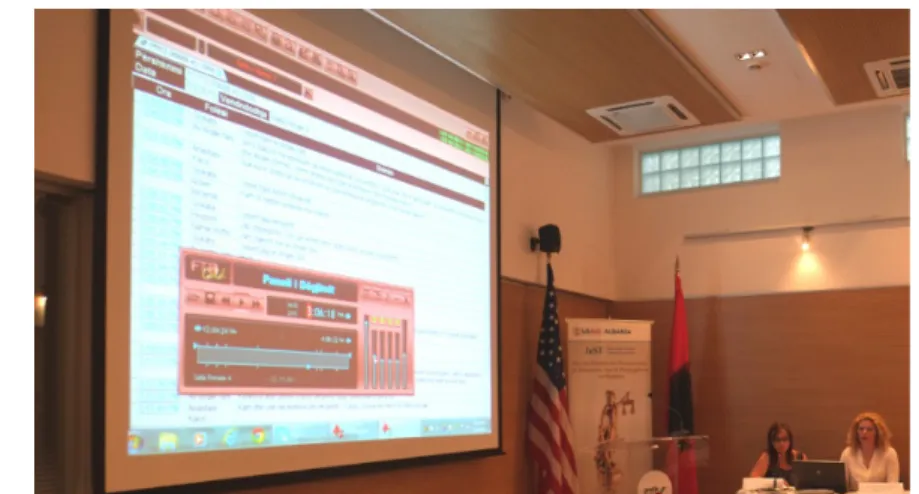
Exhibit 3. DAR Recording
JuST selected user-friendly software for audio recording and translated the user interface into Albanian.
Selection of the initial implementers was as important as the selection of the right technology. Change is never easy, and court cultures are by nature resistant to new ways of doing things. It was clear early on that not everyone welcomed the idea that their every word would be recorded. The JuST team recognized the importance of selecting early-adopters who truly believed in the value of audio recording. Any early failure could provide ammunition to the naysayers and doom the entire effort. The district courts of Lezhë and Korçë were chosen based almost entirely on the leadership qualities and the interest shown by the two chief judges.
Another early step designed to promote successful implementation was a decision to modify the existing court case management software to permit court secretaries to begin the recording process within their normal workflow. Throughout the project, the JuST team has been sensitive to the role of court support staff and sought ways to enhance rather than impede their performance in carrying out their customary duties.
Part of pre-implementation planning involved producing a variety of
public-awareness materials such as posters and signs to inform the public that sessions were being recorded and that they were entitled to a copy of the recording. The project also developed detailed procedures in consultation with court leaders, which included forms to standardize the process for parties to obtain a copy of the audio recording of their trial.
Following successful implementation of audio recording in the first two courts, JuST settled into a methodical routine of going court by court, first with installation of hardware and second with training of judges, court staff, and even court stakeholders, including prosecutors and lawyers.
Strategies for Successful Implementation of DAR
JuST followed its basic strategy throughout the implementation phase. Sometimes issues that seemed problematic in the beginning faded in importance as more courts found the process to be straightforward. Over time, the benefits became obvious and resistance to change faded. Throughout the process, JuST remained flexible, yet adhered to a set of principles designed to achieve success.
SNAPSHOT
Standardization of Court Audio Record Copy for
Public Distribution
The process of producing DAR copies for the public brought uniform procedures to all courts, conveying the explicit message that the public record of court proceedings is now available to the public.
DAR form displayed in the court.
An important activity in the acceptance of digital audio recording and its transformative changes has been a targeted program to standardize the DAR copy production work process in the courts.
The main objectives of this program were:
• Unification of the procedure
• Efficiency and a clear assignment of tasks and time limits to the court
• Predictability and transparency to the public
• Opportunity for assessment and further improvement
As a result, a unified court procedure workflow and standard request form were developed by JuST, in consultation and with approval from the chief judges participating the project’s advisory board meetings.
Parties and attorneys are using the DAR copy of the court sessions to support their claims when they appeal to the higher courts referring to the exact times in which specific judge/parties statements were made.
Through its grants activities, JuST conducted a nationwide awareness and advocacy campaign on DAR and the right of the public to acquire DAR records. Above is an awareness campaign poster.
An informative leaflet for the public on how to request DAR copies was made available in every court.
JuST Communication Director Rudina Mullahi, presenting DAR copies distribution workflow to the project’s advisory board.
While presenting DAR implementation in his court at the Shkodra Regional Leadership Conference in 2015, the chief judge of the Shkodra District Court, Arben Zefi, said, “I was also encouraged from the impact that the DAR system has brought to the public. I was approached by a citizen who asked me specifically that all hearings should be audio recorded. Many such requests have come to the court thanks to the DAR public awareness campaign.”
JuST used different communications methods, including in-court posters, television and radio spots, informative seminars, and court open days, to publicize the benefits of audio recording and to make the public aware of its right to acquire audio records.
Listening to users has been a key to successful implementation of this new technology. JuST employed two parallel strategies to hear from users and achieve more buy-in.
The first strategy for listening to users was establishment of an advisory board for digital audio recording. The format that evolved for these quarterly meetings consisted of participation by policymakers from the principal institutional counterparts: the High Council of Justice (HCJ) and the Ministry of Justice. In addition, a revolving selection of chief judges regularly participated, from courts that had already gone through the installation and training process, as well as from courts scheduled for
installation in the immediate future. This format was useful in two ways. It provided reassurance to future courts that the software was easy to use, the training was thorough, and the implementation process straightforward. Immediate benefits could be shared with still-skeptical peers. In addition to benefits to the primary
implementers (chief judges) the meetings also kept high-level policymakers in tune with the practical issues being faced in the courts. In retrospect, this was important. It facilitated the issuance of guidance in the form of formal instructions from the
Ministry of Justice, which assisted with implementation. It was one of many repeated messages “from the top” that digital audio recording was now a national priority and anything short of full implementation was simply not acceptable.
The second and related strategy for listening to users was introduction of a post-installation, post-training
methodology to solicit feedback, incorporate suggestions, and reinforce the benefits of audio recording.
Following the completion of equipment installation and training in each
appellate judicial district, JuST organized district-wide regional conferences, inviting all judges, court secretaries, court chancellors, and IT specialists to participate. By the close of the project, six such events had been held in each of the appellate districts (Shkodra, Korçë, Durres, Tirana, Vlora,
and Gjirokastra). Judges, secretaries, court chancellors, and IT professionals participated in every regional conference, with attendance at nearly 100 percent for each. The importance of DAR as a government priority was continually reinforced by participation of the minister of justice and members of the HCJ at almost every
Courts Advisor Olta Lolo leads a discussion with court chancellors at a regional conference on DAR in Vlora.
The DAR Advisory Board was convened quarterly to identify problems and increase buy-in.
gathering. New implementation steps, such as additional software for the convenience of users, were introduced based on feedback collected from the participants at each regional conference.
In addition to the exchanges on experiences in implementing and using DAR, the regional conferences always included a presentation of each court’s performance as reflected by statistical reports and graphs developed by JuST and made available to courts and to inspectorates of the Ministry of Justice and the HCJ. This use of statistical data not only served to track implementation progress, but also was designed to incentivize and create peer pressure among court leaders to be among those courts publicly recognized as
outstanding. The tables and charts depict the percentage of cases that are audio recorded. The highest-performing courts consistently maintain a 100 percent level. These good examples created a persuasive argument for
the JuST training team when they entered a new court and encountered doubts about the feasibility of audio recording everything. Moreover, as chief judges realized that their statistics were being scrutinized each month by the HCJ and the Ministry of Justice, their commitment to full implementation increased. This was seen throughout a series of regional conferences and was especially evident by the end of the project when online access to audio records was made available to judicial inspectors.
Increasing public-awareness, including awareness of the right to obtain recordings of public trials, was an important part of JuST’s implementation strategy. In the final two years of the project, JuST, working through Albanian Legal and Territorial Research Institute, a local NGO, intensified its public outreach efforts through a program entitled Regional Campaign of Awareness and Advocacy for Digital Audio Recording in Courts. The campaign organized open court days in 16 courts where attendees could view a mock trial performed by law students to demonstrate the use of audio recording. At each event, chief judges of the courts, along with key court staff, made themselves available for questions. The campaign also included roundtables and public events in nine additional municipalities, as well as street promotional stands set up all over Albania to distribute printed and electronic materials. Finally, TV spots ran repeatedly on local and national TV stations, highlighting the existence of audio recording and the benefits to the public.
At every DAR public event, JuST articulated two simple goals or performance measures: First, that all court hearings should be held in courtrooms, and second, that all hearings should be recorded. Because a number of courts are, in fact, consistently meeting these goals, they can be held up as examples for courts that have not yet achieved this benchmark.
Close attention to the legal framework was another element of JuST’s implementation strategy. From early in the project, it was clear that full
ADDITIONAL SOFTWARE FOR COURTS Log Notes. Software installed on every judge’s computer that creates a time-stamped guide to permit easier review of audio recordings.
Manager Software. Installed on all secretaries’ computers to permit development of audio recording copies from the convenience of the office, rather than requiring secretaries to return to the courtroom.
PAKS+. A calendar and reporting tool that connects ICMIS with DAR to allow court staff to efficiently schedule hearings and review use of the audio recording system in the court.
implementation would not be achieved without clear legal guidance. Skeptical judges were quick to assert that the use of DAR was not mandated by Albanian procedural codes. Therefore, JuST continually analyzed the legal issues, researching procedural approaches from other European countries, and drafting language to resolve legal questions. JuST drafted amendments to the Civil Procedure Code that required the use of DAR when available. These amendments were approved by the Albanian
Parliament. The project drafted similar language for the Criminal Procedure Code and submitted it to the Ministry of Justice. An instruction setting forth detailed procedures for the use of DAR, along with managing and archiving rules, was drafted by JuST and approved by the minister of justice. Finally, a unifying decision of the Joint Colleges of the High Court in the final months of the project resolved all remaining issues, holding that in criminal proceedings, the audio recording is the official record. This ongoing focus on the legal framework proved to be an important element of the strategy to achieve full implementation of DAR.
One of the most important steps taken by JuST in its efforts for full implementation of DAR technology was development of simple management reports showing the extent of DAR implementation by court, by case type, or by judge. The initial idea for these reports was to provide support for the Ministry of Justice, which early on had issued a formal instruction requiring the use of DAR, including a requirement that the chancellor of each court report on implementation progress. The report designed by JuST enabled the chancellors to meet their new obligation. More importantly, it became a performance indicator for the courts themselves, unleashing their natural competitiveness to excel. Their performance, expressed in percentage terms, was easy to measure and easy to understand. It measured the number of cases recorded as a percentage of the total number of cases on the docket. Good courts quickly reached the 100 percent mark and were determined to remain there. Other courts aspired to reach this level, especially knowing that institutions (such as the Ministry of Justice and the HCJ) were monitoring their performance. It was clear to all that the principle from the reinventing government literature3 — “what gets measured, gets done” — was at work in Albania.
During the final two years of the project, JuST focused on reliably and securely backing up mission-critical data: the audio recordings. As more installations were completed and as the legal framework evolved, it became essential to ensure data integrity and accessibility. To guarantee absolute reliability of each court’s data, JuST decided to install a central record archive where the data could be maintained with high levels of security. Centralizing the storage of data also opened the possibility of online access for authorized users, obviating the need for physical CDs to transmit the verbatim record. Online access would also mean that appellate judges or judicial inspectors would have immediate access to the audio recording when needed. After consultations with counterparts, the existing data center at the National Agency for Information Society was selected, based on its multiple levels of data protection. By the end of the project, each court was linked to this central record archive and was uploading data every evening. The final step in the audio recording infrastructure has solidified the technology as a permanent feature of Albanian judicial practice.
3
Osborne, David, and Ted Gaebler. 1992. Reinventing Government: How the Entrepreneurial Spirit Is Transforming the Public Sector. Reading, MA: Addison-Wesley
SNAPSHOT
Supreme Court Unifies Criminal Practice of Audio Recording
The Supreme Court of Albania, sitting en banc, issues a unifying decision applicable in all courts establishing that audio recording itself (rather than the written summary) is the official record of the trial.
“Recently the Joint Colleges of the High Court took a very important decision to consider audio recording as a process in full compliance with the Criminal Procedure Code. Audio recording is a tool that substantially increases the performance,
efficiency and transparency of trials.”
Chief Justice Xhezair Zaganjori July 14, 2015
“In reply to the question raised for unification, the Joint Colleges reached the conclusion that keeping the minutes of the judicial hearings with audio and audio-video
recording is not only in compliance with Article 115 and subsequent articles of the Criminal Procedure Code, but being foreseen by this article as one of the means to keep the minutes, increases the efficiency and guarantees the transparency in the judicial hearings by fulfilling in an exhaustive and autonomous way the documenting function of the procedural actions.”
Unifying Decision of the High Court No. 2, April 27, 2015
A legal milestone was recently achieved when the Supreme Court ruled that audio recording is now the official record in criminal trials. (Previous amendments to the Civil Procedure Code had resolved questions on the civil side.) The issue was joined when a three-judge panel of the Tirana Court of Appeals reversed a Tirana District Court decision on the grounds that the court secretary had neglected to write down the statement of a witness, notwithstanding the existence of the full audio recording of the witness’s statement in the file. The case was sent back to the Tirana District Court for a retrial by a new panel of judges, and the decision was appealed by the defendant to the Supreme Court.
The Supreme Court saw the need to unify the practice in criminal trials regarding the role of audio recording in documenting court hearings. JuST Chief of Party John Carver was invited to submit an amicus curiae
brief to the Albanian Supreme Court in 2015. At the end of the hearing, the Joint Colleges of the Court, composed of 16 Supreme Court justices, ruled (with only one dissent) that the audio record of court proceedings is a procedural document and should be reviewed by the higher courts.
The unifying decision issued by the Supreme Court, due to its binding nature on the judges of the lower courts, puts an end to any possible contrary interpretation of the provisions of the Albanian Criminal Procedure Code.
Government Buy-In of DAR Usage
USAID has long enjoyed support from the highest levels of the Albanian government. Institutional counterparts of JuST consistently welcomed and supported U.S.
assistance for digital audio recording. As the project progressed and the benefits became evident, government support became even more vocal and committed. The installation of DAR was something political leaders could point to as evidence of progress toward EU standards of judicial accountability and transparency. Midway through the project, there was a change of governments, with the appointment of new ministers. Fortunately, the new minister of justice was as supportive of DAR as the previous minister. Over time, commitment for audio recording became embedded in all levels of the judiciary and the executive branch.
JuST’s sustained emphasis on performance gained support among institutional partners in a variety of ways and at different levels of government. For example, at a hearing of the HCJ to take up reappointment of a chief judge for another term, several questions were focused on his court’s use of audio recording. The chief judge was proud to report that his court consistently maintains its 100 percent usage of audio recording. He described the impact on court operations as “revolutionary,”
characterizing the technology as easy to use and essential for transparency. His appointment was approved for another four-year term.
The importance of consistently using DAR became a criterion in evaluating individual judges and courts, as shown by a recent example in which a judge was disciplined for not using the technology. Because procedural law now requires the use of audio recording technology when available, the Judicial Inspectorate of the HCJ is monitoring judicial compliance. JuST’s support in the recent establishment of a nationwide central server for audio recording files, which comes with online connectivity for judicial inspectors to access trial recordings of, has provided better tools for monitoring compliance and evaluating judges. Word has spread that full implementation of audio recording is a factor to be considered in evaluating judicial performance. This is the effect that JuST sought to achieve in developing the PAKS+ reporting tool and in providing training to stakeholders on how to use the information. Providing online access and training to judicial inspectors is reinforcing the message that full and routine use of audio recording is expected of all judges in all courts.
As a final step to promote acceptance and understanding of the benefits of DAR, JuST installed audio and video recording in the moot courtrooms of the Magistrate School and the Law Faculty. JuST prepared and submitted training curricula for use of DAR to the Magistrate School responsible for training judges and prosecutors, as well as to the Ministry of Justice,responsible for training court chancellors and secretaries.
Although initially faced with considerable skepticism, it is now clear to almost everyone in Albania that DAR technology is bringing new levels of accountability to the judiciary and may eventually contribute to a better public perception of the courts. Illustrative of this change over time are statements from judges.4 These opinions, voiced by judicial leaders, illustrate the extent of the changes brought about by the introduction of record-making technology.
Exhibit 5. Cumulative DAR Assistance
YEAR 1 YEAR 2 YEAR 3 YEAR 4 YEAR 5 TOTAL
Courthouses 0 7 12 6 13 38 Courtrooms 0 26 59 27 48 160 Court Staff Trained 0 154 420 99 151 784 4
“The audio recording has established an important standard for increasing transparency in court sessions. It helps in the increase of the responsibility and accountability of judges not only regarding the law but also to the parties. The audio recording is a necessity in an environment with problematic perception of the public regarding the work of the judiciary, and for all the above mentioned reasons I would like to thank USAID JuST for their support to the judiciary in Albania,” Chief Judge Fatri Islamaj of the Tirana District Court.
“I was one of the most skeptical persons regarding the usage of audio recording for documenting the court sessions. I had a lot of questions and doubts, but now I am convinced that it has value. It helps in increasing the transparency, correctness, solemnity and fair implementation of the legal procedures. Meanwhile there have been no problems from its usage,” Gjovalin Pernoca, chief judge of the Serious Crimes Appellate Court.
“The usage of audio recording for documenting the court sessions is in compliance with the provisions of the Criminal Procedure Code. It is very easy to hear the audio recording. The recording turns out to be very important in criminal trials, especially during witness testimonies. They can speak now freely without the judge asking them to stop time after time in order to give time to the secretary to write down the testimony,” Judge Gerd Hoxha of the Tirana Criminal Court.
SNAPSHOT
Tracking Performance to Promote DAR Implementation
Focusing on performance proves to be a key factor in promoting full implementation of digital audio recording.
The following graphic depicts the percentage of hearings audio recorded by individual courts. Low usage generally is a result of not enough courtrooms.
The chart below depicts the
percentage of cases audio recorded during the implementation phase in Kruja. By the 4th month, almost all
cases are being recorded.
The information in these charts can be generated at any time, and is updated monthly. The results are shared monthly with the Ministry of Justice and the High Council of Justice.
The development of PAKS+ has proven to be a significant factor that has contributed to the success in reaching full implementation of audio recording. This software, which evolved from a courtroom calendaring application designed by JuST, links court scheduling data with audio
recording data. The software can produce tables and charts depicting the use of audio recording technology by court, courtroom, judge, or case type.
The graphic above presents the DAR usage report by judge.
Presenting the tables and charts from PAKS+ became a regular part of the format for the regional court leadership conferences. The effect was
profound. For example, at the Gjirokatra Regional Conference, following the presentation of each court’s performance, Pashk Gjaci, chief judge of the Përmet District Court, acknowledged to the group that his court’s initial performance following DAR installation was not satisfactory, and he pledged improvement. He announced to his colleagues that his court would have 100 percent usage of DAR by the next reporting period. The following chart shows this achievement.
At the Shkodra Court Leadership Regional Meeting in 2015, the chief inspector of the High Council of Justice, Mrs. Xhaferllari, said “The
inspectorate has started to verify to what extent the judges actually use the DAR system. Chief Judges now report once a month to the High Council of Justice regarding the implementation of the system in their respective courts. Therefore, if we will find judges with a low percent of usage, our inspectors will identify the causes for such a low percentage. Although the Inspectorate acknowledges the limitations in court infrastructure (lack of courtrooms), it will not tolerate any open non-usage of DAR.”
The Ministry of Justice conducted a DAR implementation analysis based on PAKS+ results and instructed the courts to take immediate measures for the usage of the system, emphasizing that noncompliance with the procedural
disposition (DAR is now the official court record in civil and criminal proceedings) will result in the initiation of administrative and legal disciplinary measures against judges.
Overall usage of DAR in the country is running at 80 percent of all sessions nationwide, as depicted in the following chart. The gap between current performance and 100 percent full implementation is a direct result of an inadequate number of courtrooms in the three largest courts of Albania. These deficiencies in courtroom infrastructure are being addressed by the Albanian government, with new courtrooms planned for those courts that do not yet meet the Albanian standard of one courtroom per two judges.
In July 2015, JuST organized one of its final public events designed to inaugurate the central record archive (implemented in 2015) and to convey a single message to ensure sustainability of DAR. The message was that court audio recordings will be scrutinized to investigate citizen complaints and to assist in regular evaluation of judges. The chief judges from every court in Albania were the primary audience. The key vehicle for delivering the message was a demonstration by two judicial inspectors showing how they can access the audio recordings of specific court sessions to carry out their inspections. Minister of Justice Nasip Naço, Chief Justice Xhezair Zaganjori, and U.S. Ambassador Donald Lu, also attended to reinforce the message. The minister of justice reminded participants of a recent case where he had called for removal of a judge based on the judge’s refusal to use audio recording technology available in his courtroom.5 Chief Justice Zaganjori discussed a recent unifying decision of the High Court that removes all doubt that audio recording is now the official record in criminal cases.6 Finally, Mr. Lu repeated his message that the Albanian public deserves a judicial system free of corruption. The demonstration by two judicial inspectors, paired with speeches from these high-level political figures, was a
powerful reminder to court leaders that judges will now be held to a greater standard of accountability, thanks to the existence of audio recording technology, coupled with easy access by judicial inspectors. Honest, hardworking judges understand and
appreciate the fact that their good practices are open to scrutiny. In the long run, the quality of the judiciary will rise as a direct result of this technology.
As the project draws to a close, JuST is pleased to report that sustainability has been achieved. The legal framework now fully supports the idea that audio recording is the official record of the trial. First, amendments to the Procedure Code resolved all issues on the civil side. Then, the Supreme Court issued a unifying decision noting that “the Joint Colleges reach the conclusion that keeping the minutes of the judicial hearings with audio and audio-video recording, not only is in
compliance with the article 115 and
subsequent ones of the Criminal Procedure Code, but … increases the efficiency and guarantees the transparency in the judicial hearings.”7 The efforts in installing equipment, training users, and promoting good practices have led to permanent changes in the way courts operate. Albania now has a cadre of JuST-trained IT personnel in each court who are familiar with network configuration and product support. Moreover, JuST has left a package of manuals and training guides with each court and the Ministry of Justice. Equipment breakdowns have been minimal, and warranties have been transferred to the Office of Administration and Judicial Budget. The office has allocated funds for routine computer maintenance and replacement. Finally, JuST has installed DAR training (with video) in the School of Magistrates and the Law Faculty and has supplied curricula for future justice system practitioners.
5
Citing the PAKS+ report developed by JuST, the minister noted that the audio recording system was used in only 3.9 percent of the cases before that judge.
6
The chief justice noted with favor the consultations with JuST, and the amicus curiae brief submitted by the JuST chief of party.
7
Unifying Decision of the High Court No. 2, April 27, 2015.
SUPREME COURT UNIFIES DAR PRACTICE IN ALBANIAN COURTS
“Recently the Joint Colleges of the High Court took a very important decision to consider the audio recording as a process in full compliance with the Criminal Procedure Code. The audio recording is a tool that increases substantially the performance, efficiency and transparency of trials.”
— Chief Justice Xhezair Zaganjori at the inauguration of the central record archive, July 14, 2015
SNAPSHOT
JuST Connects Court Audio Recordings to Central Data
Center
Adding higher security and greater efficiency, JuST links each court server to a high-capacity central server
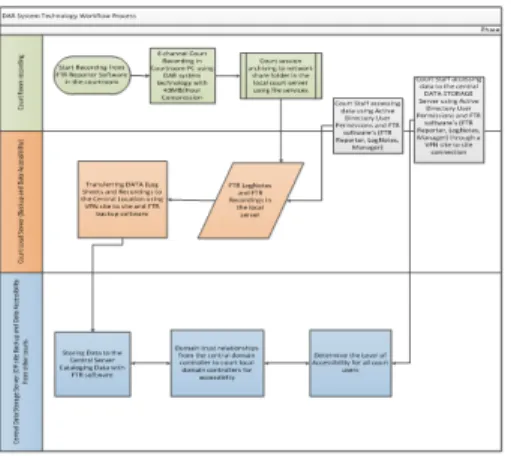
The architecture has been configured so that data (audio records and “Log Notes”) transfer will be conducted automatically every day after close of business from court servers to the central data center.
JuST, in collaboration with the Ministry of Justice, prepared and submitted to NAIS the Terms and Reference for the Installation and Configuration of the Central Archive. The ToR are in compliance with the DCM No. 945 dated on 2.11.2012 for the Approval of the Regulation for Administering the State Databases regarding availability, integrity, and confidentiality.
Diagram representing the central
As with any other court record, higher courts and judicial inspectors often need access to the official audio recording of a trial. Previously, that access required locating a physical CD and playing it from a desktop computer. Production of CDs for every court case imposed certain costs on court budgets, required time to produce them, and did not take advantage of modern methods for maintaining and transmitting electronic records. To make full use of the digital audio recording technology installed in all Albanian courts, JuST, in cooperation with the Ministry of Justice, decided to eliminate the requirement for producing CDs in every case and move directly to online access of electronic records.
The establishment of a central record archive at the premises of the National Agency for Information Society was a significant
development with regard to DAR implementation. This central server provides very high levels of data security, as well as the ability for authorized users (such as judges and judicial inspectors) to access audio records remotely.
The authorized users enjoy a read-only type of access. Data
modification is not permitted, thus guaranteeing the integrity of the audio record.
Figure 1. Network configuration diagram utilized by the Central Record Archive.
To guarantee appropriate usage, JuST prepared several installation manuals for court information technology personnel and user guides for court users.
The data transfer was first piloted in the Korça District Court. The chief judge said that “As a result of implementing the DAR central archive in our jurisdiction, Korça District Court, in exercising its constitutional and legal functions has now eliminated the court administration’s manual work, which previously required the preparation of CDs containing copies of audio records, to be then
server workflow
Interconnectivity has been
achieved for all 38 Albanian courts.
attached to every case file. This is an achievement that has brought about a reduction of both cost and time. Moreover, court records are now saved in a digital format, thus guaranteeing that all audio records are securely saved.”
In addition to the benefits within the courts, the new central record archive has also brought greater productivity for judicial inspectors, who are responsible for investigating complaints against judges, as well as evaluations of judicial performance. Many complaints can now be investigated immediately, without the need for travel to the courts.
Figure 2. HCJ inspectors demonstrating how to access court audio records from the Central Record Archive.
At the Inauguration Ceremony of the Central Archive, Minister of Justice Nasip Naço said that “The central audio records archive currently aims at improving the process of monitoring judicial proceedings by the higher level courts, inspectorates of the High Council of Justice and the Ministry of Justice, making the use of CDs unnecessary, thus directly enhancing the level of court transparency and efficiency, reducing the financial costs of parties involved in the process, improving the way the rules of ethics are applied during the court proceedings by the parties, and above all, saving through this type of access on time, as well as on financial and human resources.” Chief Justice Zaganjori said “The establishment of this archive is of great importance to the justice system operators and constitutes a valuable, reliable and accurate source of information, which can be very quickly and easily accessed by the inspectors of the High Council of Justice and Ministry of Justice who now have a very effective tool in their hands to control and verify how court
proceedings take place, as well as their correctness in documenting the actions of both the court and the parties involved in the judicial process.”
Improved Court Management Leading to More Transparent and Efficient Court Operations, Including Court Hearings that are More Open to the Public
If confidence in the judiciary is to rise, steps must be taken to eliminate the biggest cause of public dissatisfaction: court delay. During the first two years of the project, efforts to improve court management and promote more efficient court operations focused on Albania’s two largest and most crowded urban courts: the district courts of Tirana and Durres. JuST conducted a courtroom usage study, documenting and
quantifying the longstanding and frequently criticized practice of holding trials in judges’ offices. Acknowledging the lack of courtrooms in these two district courts, the study found that even the courtrooms that were available were rarely used, showing that courtrooms were used an average of only 18 minutes per day in the Tirana District Court.
To encourage the two courts to address these serious problems in court delays and courtroom usage, JuST engaged the services of an experienced U.S. court
administrator, Susan DiPietro, who was embedded for six months in these courts early in the project. During her time working in these courts, she acquired a deep
understanding of the workflow and made numerous recommendations to the two chief judges, but many of her recommendations were not immediately adopted. However, the seeds had been planted. Eventually, some of the suggestions of Ms. DiPietro and several recommendations from the courtroom usage study were implemented in a manner that exceeded expectations. One result of her work was development of a simple court calendar view program that could pull data from the court case
management system and display it on a simple electronic calendar, which could then be used for finding available courtrooms and reserving them for future hearings.
This simple solution, known by its Albanian acronym “PAKS,” turned out to be an important milestone. It was enhanced and eventually made available to every court in Albania. As described elsewhere in this report, PAKS, followed by an updated and enhanced version known as PAKS+, became a powerful tool not only for managing
courtrooms, but also for promoting the successful implementation of digital audio recording — a change
that has transformed court operations.
With Ms. DiPietro laying the foundation for decreasing court delays in 2011, a change in leadership in the Tirana District Court in Year 3 marked the moment when tangible change began to pick up speed and court scheduling began to improve. The new chief judge, Fatri Islamaj, began implementing a number of key recommendations from the
JuST advisor Susanne DiPietro presents (then) Chief Judge Ervin Metalla of the Durres District Court with a copy of the courtroom usage study. Judge Metalla helped design an online courtroom management program, “PAKS”, which eventually became standard in all courts of Albania.
courtroom usage study and from Ms. DiPietro’s recommendations. For example, he reconfigured the courthouse space, establishing three public waiting areas separating litigants from court staff and judges. He devised procedures to summon parties to their hearings once a courtroom was available. He allocated blocks of courtroom time to each judge to maximize the use of courtrooms and reduce the use of office space to conduct trials. He implemented a special version of the courtroom management program designed by JuST and adapted to the case management system8 still being used in the Tirana District Court. Although these measures did not resolve the serious problems resulting from inadequate courtroom infrastructure, they improved the previously chaotic conditions in the court, while optimizing the use of available courtrooms. Chief Judge Islamaj worked tirelessly to find a solution to the serious lack of courtrooms and succeeded in inaugurating 13 new courtrooms in July 2015. Although much remains to be done, Albania’s largest court is now far more orderly and efficient than it was five years ago. Originally developed for one court, PAKS+ is now installed in all courts running the ICMIS case management software.
Exhibit 6. PAKS+ Court Calendar
Justice without Delays Pilot Courts
During its fourth year, JuST shifted its approach to addressing the chronic problem of court delay and inefficient case processing procedures. Working jointly with the OSCE Justice Project, JuST engaged a court willing to implement recommendations in OSCE’s court monitoring study, “Towards Justice,”9 the findings of which were presented at JuST’s Third Annual Court Leadership Conference. Emerging from the conference was the idea that JuST and OSCE, working as partners, could select a court willing to try something new by experimenting with practices that had been successful in other court systems. The evolution of this approach illustrates a key factor in the success of JuST. When the team saw new opportunities to advance component objectives and was willing to take a chance on a new approach, thus
8
The older case management system, known as ARK-IT, is still in use in the Tirana District Court, whereas a separate system known as ICMIS is the software approved and supported by the Ministry of Justice for all courts.
9
J. Faafeng, M. Goldstein, A. Kraja, and F. Azizi. Organization for Security and Co-operation in Europe Presence in Albania. “Towards Justice: Analysis of Civil Proceedings in the District Courts.” 2012.
furthering its strategic objective to “improve court management, leading to more transparent and effective court hearings,” they seized an opportunity to leverage and enhance project impact by partnering with another international donor that had been working in a different manner on the same problem of poor case management.
After careful consideration, the all-women Kruja District Court was selected as the first demonstration court to determine the feasibility of applying active case
management principles to the chronic problem of court inefficiency in Albania. In a nutshell, active case management is a collection of proven principles and common-sense approaches for managing the court’s workload. These include the principles of trial date certainty, good pretrial preparation by the parties, firm control by the judge who manages the pace of litigation, adherence to the principle that each court
appearance is meaningful, and finally, that trial postponements should be the exception, not the rule.
All of these principles may seem self-evident, but in the context of Albanian practice they represent a significant change in court culture. Changing the culture includes changing expectations of the public, litigants, and lawyers. To bring about the desired changes in behavior and expectations, several things were done. Brochures were prepared to inform court stakeholders and the public about the new way of doing business. Forms for use by court chancellors and judges were designed to guide implementation. Finally to launch the program, the entire court met with stakeholders to describe what they intended to do and what the benefits to everyone would be. Once they actually began applying these principles and taking steps to cut down on needless and non-productive hearings, the results were immediate, well received by court stakeholders, and measurable. The project was supported by the Ministry of Justice and HCJ — institutions with a strong interest in improving court efficiency.
Given the success of this first demonstration court, JuST and OSCE, in consultation with institutional stakeholders and partners, selected the much larger Korça District Court for a second demonstration. Early results from Korça have been equally impressive.
Through this initiative, judges have been encouraged to take control of their calendars in new and creative ways. Each problem that leads to court delay can be addressed. Solutions can be found — sometimes unorthodox solutions. By acting in a unified manner in the first two demonstration courts, the judges have achieved remarkable success almost overnight. The average number of hearings to resolve a civil case in Kruja fell from 14 to four. The number of hearings to conclude a criminal case in the same court dropped from eight to three. Judges are handling more than twice as many cases as they did previously. Not surprisingly given these favorable results, the Exhibit 7. In Kruja, the average number of hearings to resolve a civil case fell from 14 to 4.4 with the advent of active case management.
Albanian president has publicly described this USAID initiative as a model that should be adopted in all courts of Albania.
Court Buy-In for Active Case Management
JuST’s final Annual Court Leadership Conference in 2014 brought together the chief judges of all courts in Albania and focused exclusively on active case management principles and the remarkable results that have been achieved. Moderating the discussion was Senior D.C. Superior Court Judge Truman A. Morrison, who had worked intensively with judges of the two courts to encourage them to take control of the court process. In addition to the chief judges, the entire trial benches of the two demonstration courts attended the conference and shared their experiences.
The conference was structured around the idea of practical problem-solving in managing court caseloads. This is not an idea that comes naturally to many judges, many of whom look to the Procedure Code for guidance on all matters and are reluctant to do anything not explicitly authorized in the code. Such a narrow approach can lead to absurd results. One message that Judge Morrison and the JuST/OSCE team have repeatedly stressed is the notion that no procedure code — no matter how carefully drafted — can cover all situations up in a courtroom. Therefore, the operating principle should be that
unless a particular measure is specifically prohibited by the code, it should be
permitted, as long as it makes sense and serves the administration of justice. Through close engagement with project staff, judges of both courts have internalized and applied this approach and have changed the legal culture in their courtrooms in a short time, with remarkably promising results.
As discussions progressed throughout the conference, it became clear that active case management is a win-win for all involved. The chief HCJ judicial inspector noted that complaints against judges have dropped in these two courts. Representatives from state institutions are pleased that they no longer need to appear repeatedly in court simply because someone else is absent. In Korça, the judges, on their own initiative, organized training for postal employees to orient them to the court’s needs in serving notices. Most importantly, citizens find their cases resolved more quickly and are slowly gaining a measure of trust in their
U.S. JUDGE REFLECTS ON ALBANIAN COURT EFFICIENCY
Reflecting on their accomplishments after the conference, Judge Morrison said, “I frankly thought as I left first the Kruja retreat and then the Korça retreat that while they had many good ideas and were learning to collaborate with each other about ways of doing things, it was going to take them quite a while to figure out how to execute these ideas. Much to my surprise, they began to execute very quickly. I began to get reports about their statistics. Then on this visit, I’ve seen proof from talking with them that they have made amazing progress. In my view, it is remarkable that these judges, in this country, where there is a tradition of judges ‘butting out’ and letting the lawyers and the parties and everybody else run the show with regard to litigation – that these judges have acclimatized themselves to new ways of thinking with just amazing speed.”
U.S. Judge Truman A. Morrison discusses the judicial role in managing court calendars with colleagues from all over Albania.
court system. Before the conference was over, a number of courts, including the Tirana District Court, which has jurisdiction over 70 percent of all cases in Albania, were requesting JuST assistance to launch similar initiatives. JuST’s partner, OSCE, has pledged to continue working in this area.
As a result of the 2014 Court Leadership Conference, two chief judges, from the district courts of Puka and Tropoja, concluded that they too could adopt the
techniques of their fellow judges in Kruja and Korça. Conferring with their colleagues and reviewing the informational materials and forms already developed, they
launched their own programs of “Justice without Delays.” Preliminary data gathered from these courts by OSCE have again demonstrated that with effort and leadership, courts are fully able to analyze the causes of delay in their communities and find solutions. The solutions always involve taking an activist and problem-solving approach to case management, and the rewards are worth the effort.
Mediation as an Alternative for Dispute Resolution
There are several ways to reduce case backlogs that clog courts, frustrate litigants, and
undermine faith in the justice system. One way is to adopt modern case management practices, which, as described above, have been effective in Albania. Another way is to resolve disputes outside normal litigation through alternative
dispute resolution or mediation. If a resolution can be worked out among parties themselves, facilitated by a trained mediator, the parties are satisfied, and there is no room for corruption or the perception of corruption. Disputes resolved through
mediation also reduce the court workload, so everyone wins. USAID is one of several international donors that have promoted mediation as a means of reducing court case backlogs, along with other benefits.
JuST support for mediation has taken three forms. First, building on previous support from other donors, JuST provided direct support to two court-connected programs operated by an NGO, the Albanian Foundation for Conflict Resolution. This support began in the Durres District Court and was expanded to the Korça District Court. The partnership with the foundation included a training sessions designed to increase the number of mediators, strengthen the profession, and increase awareness among court stakeholders of the nature and benefits of alternative dispute resolution. Second, through a small grant, JuST supported further development of mediation in three southern courts: Gjirokastra, Permeti, and Saranda. In addition to providing traditional mediation services through court offices, this program expanded the concept to local municipalities, police, and probation services, and demonstrated that some disputes can be resolved without the necessity of a formal arrest. Third and finally, following enactment of the Law on Mediation in February 2011, which created a new National Chamber of Mediators as a free profession, JuST provided substantial assistance to establish and nurture the new legal entity. The guiding principle of this assistance was to strengthen the chamber to a point where mediation would no longer be completely donor-dependent.
KEY MEDIATION SUCCESSES
• 1,084 cases mediated
• 868 cases resolved through mediation
• Demonstrated that mediation cases can be resolved quickly, in 10 to 12 days
SNAPSHOT
Sharing Judicial Experiences with Colleagues
Kruja judge documents what