DigitalCommons@University of Nebraska - Lincoln
DigitalCommons@University of Nebraska - Lincoln
Theses, Dissertations, and Student Research inAgronomy and Horticulture Agronomy and Horticulture Department
7-2020
Evaluating Opportunities for Integrated Crop Livestock Systems in
Evaluating Opportunities for Integrated Crop Livestock Systems in
Eastern Nebraska
Eastern Nebraska
Elizabeth Kay ChristensonUniversity of Nebraska - Lincoln
Follow this and additional works at: https://digitalcommons.unl.edu/agronhortdiss
Part of the Agricultural Science Commons, Agriculture Commons, Agronomy and Crop Sciences Commons, Botany Commons, Horticulture Commons, Other Plant Sciences Commons, and the Plant Biology Commons
Christenson, Elizabeth Kay, "Evaluating Opportunities for Integrated Crop Livestock Systems in Eastern Nebraska" (2020). Theses, Dissertations, and Student Research in Agronomy and Horticulture. 197. https://digitalcommons.unl.edu/agronhortdiss/197
This Article is brought to you for free and open access by the Agronomy and Horticulture Department at
DigitalCommons@University of Nebraska - Lincoln. It has been accepted for inclusion in Theses, Dissertations, and Student Research in Agronomy and Horticulture by an authorized administrator of DigitalCommons@University of Nebraska - Lincoln.
EVALUATING OPPORTUNITIES FOR
INTEGRATED CROP LIVESTOCK SYSTEMS IN EASTERN NEBRASKA
by
Elizabeth K. Christenson
A THESIS
Presented to the Faculty of
The Graduate College at the University of Nebraska
In Partial Fulfillment of Requirements
For the Degree of Master of Science
Major: Agronomy
Under the Supervision of Professors Daren Redfearn and Rob Mitchell
Lincoln, Nebraska
EVALUATING OPPORTUNITIES FOR
INTEGRATED CROP LIVESTOCK SYSTEMS IN EASTERN NEBRASKA
Elizabeth Kay Christenson, M.S.
University of Nebraska, 2020
Advisors: Daren Redfearn and Rob Mitchell
Current agricultural systems focused on production of few commodities are facing production, economic, and environmental challenges. To address these challenges,
Integrated Crop Livestock Systems (ICLS) have emerged through three primary methods 1) perennial grasslands for grazing and/or hay production, 2) crop residue grazing, and 3) cover crop grazing. To evaluate potential of ICLS mitigating current challenges, a field-scale model ICLS was developed in 2015. The ICLS includes 4-ha each of ‘Newell’ smooth bromegrass (Bromus inermis L.), ‘Liberty’ switchgrass (Panicum virgatum L.),
and ‘Shawnee’ switchgrass. The ICLS also included 8-ha of continuous corn (Zea mays
L.). In 2016, only hay was harvested from perennial grasslands and in 2017, 2018, and
2019 the perennial grasslands were grazed. Following grazing, the switchgrass varieties were harvested for residual biomass production post-senescence. Continuous corn included residue removal treatments with and without a cover crop. This thesis reports results from three studies. To evaluate the response of cool-season annual grass cover crops to defoliation, a greenhouse study, in conjunction with a replicated field
experiment, was conducted in 2018-2019 and 2019-2020. Results showed small grains used as cover crops had decreased survivability and biomass production when defoliated during early plant establishment. Production data from the ICLS was used to construct
enterprise budgets to evaluate system profitability on marginally productive cropland. The ICLS was not consistently more profitable than continuous corn production.
However, baling hay only and removing grazing from the ICLS was more profitable than continuous corn production. To evaluate ICLS as a mitigation strategy for soil GHG emissions, soil N2O and CH4 were measured during each growing season in the perennial grasslands and continuous corn. Results suggested that 1) grazing perennial grasslands did not consistently impact soil GHG emissions, 2) crop residue and cover crop
management may impact soil N2O emissions, and 3) continuous corn production resulted
in greater soil N2O emissions than perennial grasslands due to higher application amounts of synthetic N fertilizer. The results from this research can provide options for producers implementing ICLS and insight for further development of ICLS for Eastern NE that meet production, economic, and environmental challenges.
COPYRIGHT
Elizabeth K. Christenson
DEDICATION
I dedicate my work to my Lord, Savior, and Friend Jesus Christ. I pray that my work brings honor and glory to the Kingdom of God. I thank Jesus for providing me with the knowledge, energy, and wisdom to complete this work. I also dedicate this work to my wonderful, loving, caring, compassionate, supportive husband, Nate. Thank you for your endless love and support. I cherish you.
ACKNOWLEDGEMENTS
First and foremost, thank you to my wonderful, knowledgeable, patient, and supportive advisors Daren and Rob. Thank you for your endless feedback and
encouragement. Thank you, Mom and Dad, for giving me so many opportunities growing up. Mom, thank you for running me to all the events that helped me gain the experience needed to succeed in my academic career. Dad, thank you for planting a passion deep in my heart for beef cattle and for teaching me how to work hard and never give up. Nicole, thank you for challenging me to be the best student I could be, I always looked up to you as a child. Nate, thank you for doing the dishes, cooking, and supporting me emotionally on this journey. I cannot wait to continue living this life with you, one step at a time. Thank you to my Elevate Church Family in Lincoln, your support has helped me tremendously. Thank you to all of the mentors, teachers, and professors in my life, you have helped shape me into the woman I am today. Thank you to the Wiedenhoeft’s for planting a seed in my heart and watering it for regenerative agriculture and human health.
Thank you to all of the undergrad and summer help I had. This research would not have been possible without you. Also, thank you to Marty Schmer, the corn expert, and Virginia Jin the GHG expert. Their insight for this project was extremely valuable. A huge shout-out and thank you to Joshua Wehrbein and Dr. Eskridge for helping me with the statistical analyses of these studies. Thank you to Mary Drewnoski and Jay Parsons along with their graduate students for helping brainstorm ideas and edit the economic analysis.
GRANT INFORMATION
This research is supported by the United States Department of Agriculture
National Institute of Food and Agriculture, Coordinated Agriculture Projects, Award No. 2016-68004-24768. This research is also supported by the Arthur W. Sampson
TABLE OF CONTENTS
List of Tables……...……….xii
List of Figures…….………xiii
CHAPTER 1 – Exploring Opportunities for Crop Livestock Integration on Marginally-Productive Dryland Cropland in Eastern Nebraska ... 1
Introduction to the Review... 1
Integrating Crop-Livestock Systems with Perennial Pasture... 5
Environment ... 6
Production ... 12
Economics ... 15
Integrating Crop and Livestock Production with Crop Residue ... 17
Environment ... 18
Production ... 24
Economic Impact of Crop Residue Grazing ... 26
Integrating Crop and Livestock Production using Cover Crop/Annual Forage Grazing ... 27
Environment ... 28
Production ... 33
Conclusion ... 37
References ... 39
CHAPTER 2 Response of Cool-season Annual Grasses to Defoliation During Early Plant Establishment ... 50_Toc46913409 Abstract ... 50
Introduction ... 52
Materials & Methods ... 55
Greenhouse Study ... 55 Field Study ... 58 Results ... 61 Greenhouse Experiment ... 61 Field Experiment ... 68 Discussion ... 69 Conclusions ... 74 References ... 91
CHAPTER 3 An Economic Analysis of a Model Integrated Crop Livestock System in Eastern Nebraska ... 94
Abstract ... 94
Introduction ... 96
Field-scale Model Demonstration Site... 99
Perennial Grass Management ... 100
Row- Crop Management ... 101
Evaluating ICLS System Profitability ... 101
Assessing the Potential of Other Management Scenarios for the Site ... 107
Sensitivity Analysis ... 109
Results ... 111
System Profitability ... 111
Cost & Revenue Potential ... 112
Establishment Costs ... 112
Alternative Systems ... 113
Sensitivity Analysis ... 113
Productivity & Commodity Pricing ... 116
Discussion ... 117
Conclusion ... 123
Supplementary Information ... 136
References ... 161
Chapter 4 Soil GHG Emissions are Variable and Management Dependent ... 165
Abstract ... 165
Materials & Methods ... 171
Field-scale Model Demonstration Site... 171
Perennial Grass Grazing Management... 172
Row-crop Management ... 174
Baseline Soil Sampling ... 174
Soil GHG Emissions ... 175
Statistics ... 177
Results ... 179
Growing season soil CH4 emissions ... 179
Growing season soil N2O emissions ... 181
Comparison of perennial grass versus corn soil GHG emissions ... 182
Discussion ... 184
Pasture ... 184
Continuous Corn ... 186
Pasture vs Continuous Corn ... 188
Limitations ... 190
Conclusion ... 190
List of Tables
Table 2- 1. Week the experimental unit (EU) was removed from the study in 2018 and
2019... 76
Table 3- 1. Web soil survey map units. ... 125
Table 3- 2. Herbicide application rate for continuous corn in 2018 and 2019. ... 126
Table 3- 3. The revenue, cost, and profit per hectare for each enterprise by year. ... 127
Table3- 4. Comparison of net returns for the alternative systems using custom corn operations. ... 128
Table3- 5. Production and market price of each commodity in 2018 and 2019. ... 129
Table3- 6. Cattle performance based on forage type for each year. ... 130
Table4- 1. Table Web Soil Survey Map Units………...………192
Table4- 2. Table Herbicide Application Rate. ... 193
Table4- 3. Table Initial Soil Properties. ... 194
Table4- 4. Perennial grassland CH4 LS Means. ... 195
Table4- 5. Perennial grassland N2O LS means. ... 196
Table 4- 6. Corn CH4 LS means. ... 197
List of Figures
Figure 2- 1. Field map of cover crop and grazing treatments. ... 77
Figure2- 2. Residual above-ground biomass of oats, winter wheat, winter triticale, and cereal rye at each clipping height in 2018. ... 78
Figure 2- 3. Residual above-ground biomass of oats, winter wheat, winter triticale, and cereal rye at each clipping height in 2019. ... 79
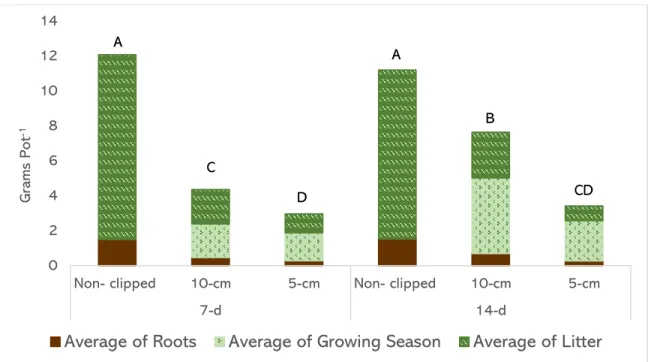
Figure 2- 4. Root biomass of oats, winter wheat, winter triticale, and cereal rye at each clipping height in 2018. ... 80
Figure2- 5. Root biomass of oats, winter wheat, winter triticale, and cereal rye at each clipping height in 2019. ... 81
Figure2- 6. Above-ground biomass production during the simulated grazing season averaged across species and clipping height in 2018... 82
Figure2- 7. Above-ground biomass production during the simulated grazing season of oats, winter wheat, winter triticale, and cereal rye averaged across clipping height and frequency in 2018. ... 83
Figure2- 8. Above-ground biomass production during the simulated grazing season of oats, winter wheat, winter triticale, and cereal rye averaged across clipping height in 2019... 84
Figure 2- 9. Total biomass production of species in 2018. ... 85
Figure2- 10. Total biomass production at the height by interval interaction level in 2018. ... 86
Figure2- 11. Total biomass production at the species by height interaction level in 2019. ... 87
Figure2- 12. Frequency of occurrence for non-grazed and grazed triticale during autumn
2018 and spring 2019. ... 88
Figure2- 13. Biomass production for non-grazed and grazed triticale during autumn 2018 and spring 2019. ... 89
Figure2- 14. Biomass production of triticale during autumn 2019 and spring 2020. ... 90
Figure3- 1. Monthly precipitation in Mead, NE……...……….131
Figure 3- 2. Web soil survey map………...132
Figure3- 3. Management by component by year………...133
Figure3- 4. Grazing sequence in 2018 and 2019………...134
Figure3- 5. The revenue, cost, and net return of systems………...135
Figure4- 1. Figure Web Soil Survey Map……….…….199
Figure4- 2. Average precipitation, high and low temperature during growing season. 200 Figure4- 3. Figure management by component by year. ... 201
Figure4- 4. Treatment map... 202
Figure4- 5. 2017 CH4 emission contrasts... 203
Figure 4- 6. 2018 CH4 emission contrasts... 204
Figure4- 7. Figure 2019 CH4 emission contrasts ... 205
Figure 4- 8. 2017 N2O emission contrasts. ... 206
Figure4- 9. 2018 N2O emission contrasts. ... 207
CHAPTER 1
EXPLORING OPPORTUNITES FOR CROP LIVESTOCK INTEGRATION ON MARGINALLY-PRODUCTIVE DRYLAND CROPLAND IN EASTERN
NEBRASKA Introduction to the Review
Following World War II, American agriculture became highly specialized. Farms have specialized by focusing on the production of single commodities. These specialized agricultural systems have succeeded at meeting global food demand. However, they have also resulted in negative environmental impacts, production challenges, and small profit margins. Current agricultural production practices can cause soil erosion, nutrient loss, greenhouse gas (GHG) emissions, and loss of soil organic matter (SOM). Among environmental implications, specialized agriculture has become reliant on synthetic inputs. The synthetic inputs provide tools to manage pest and fertility problems.
Unfortunately, the reliance on inputs has created many production challenges such as pest resistance. In addition to these challenges, farmers are facing low commodity prices and high input costs. Researchers have proposed a solution: integrated crop livestock systems (ICLS). Re-integrating crop and livestock agriculture has the ability to mitigate
environmental change, solve production problems through biodiversity, and provide economic resiliency (Russelle, Entz, and Franzluebbers 2007). Interest in ICLS has been rising as a solution to the negative impacts of specialized agriculture.
Several literature reviews have been conducted on the potential of ICLS to solve the known challenges associated with specialized agriculture (Russelle, Entz, and Franzluebbers 2007; Lemaire et al. 2014; Hilimire 2011; Sulc and Franzluebbers 2014; Sulc and Tracy 2007). Different opportunities to integrate crop and livestock agriculture
exist. The literature reviews have explored three ways to integrate crop and livestock production on farm. The first way is to integrate ruminant livestock by introducing perennial vegetation back into the crop rotation. The perennial vegetation provides a valuable feed resource for ruminants. Second, crop-livestock integration can occur through ruminants grazing crop residues. Third, livestock can be re-integrated by grazing cover crops as annual forages on existing crop fields. Below is a summary of what previous literature reviews have concluded on the three types of on-farm integration.
Integration through Perennials:
In general, incorporating perennial grasses improves soil quality and provides feed for ruminant livestock. In addition, perennial grassland has the potential to mitigate the negative environmental consequences of intensifying cropland production (Lemaire et al. 2014). Additionally, incorporating perennial forages into crop rotations can improve soil quality by increasing soil organic carbon (SOC), soil tilth, water holding capacity, and nutrient cycling (Russelle, Entz, and Franzluebbers 2007; Hilimire 2011). Increased nutrient cycling can lead to reduced nitrogen (N) losses. In addition to the environmental benefits, crop yield can increase from adding perennial forages into the cropping rotation. The increased diversity can help decrease insect, disease, and weed pressure, leading to increased yields. Among these well-known benefits, the reviewers concluded that the effect of grazing perennial grasses on GHG emissions is not well known. In agreement with the benefits listed in the previous reviews, reviewers outlined the opportunities in the United States for integrating perennial grass sod into crop rotations (Sulc and
Franzluebbers 2014). The reviewers cite two main conclusions. First, current research in the US suggests perennial sod can be added to the crop rotation to increase environmental
sustainability while meeting production goals. Second, incorporating livestock into these rotations is the most efficient way to utilize forage resources and increase nutrient cycling. Another review also found numerous benefits to incorporating perennial vegetation (Sulc and Tracy 2007). Perennial pastures, especially legumes, when rotated with grain crops have positive environmental and economic benefits. However, the studies in the review harvested the forage mechanically instead of grazing. Therefore, after reviewing the literature, researchers concluded that more information is needed on the impact of grazing forages on crop productivity, soil parameters, and profitability in the US Corn Belt.
Integration through Residue Grazing:
A simpler way to integrate crop and livestock production is by having ruminant livestock graze crop residue. Crop residue provides feed for livestock during the perennial forage gap in autumn and winter while potentially improving profitability. Hillmire (2011) concluded that crop residue used as feed for ruminants can produce high quality animal protein, improve land use efficiency, and increase profitability. Sulc and Tracy (2007) noted that cattle grazing crop residue in the US Corn Belt is one of the simplest and most economical ways to integrate crop and livestock production. Additionally, the grazing recommendations for the Corn Belt are well known and successfully minimize the risk of negatively impacting soil quality. Sulc and
Franzluebbers (2014) reported that cattle grazing corn residue is more economical than harvesting and feeding the residue. They also reported that compaction from grazing can be eliminated or decreased by proper grazing management. Overall, researchers
concluded that increasing system diversification through residue grazing is possible in all regions of the US.
Integration through Cover Crops:
To provide a higher quality forage for grazing on existing croplands, cover crops can be planted for grazing. Little is known about integrating crop and livestock
production through cover crop grazing, but it is well known that cover crops can help mitigate the negative environmental effects of annual cropping systems (Lemaire et al. 2014; Sulc and Tracy 2007). Despite the environmental benefits cover crops offer, planting and managing cover crops is costly. Livestock grazing the cover crop biomass could provide a way to offset the cost of cover crop management. Hillmire (2011) suggested cattle grazing cover crops can improve profitability. However, Sulc and Tracy (2007) concluded that little is known about proper grazing management strategies that maximize the environmental benefits cover crops provide. However, after analyzing research in the Midwest, others concluded that cover crop grazing is a viable option (Sulc and Franzluebbers 2014). Cover crop grazing has the potential to increase crop yield, improve soil quality, and reduce inputs.
Opportunities in NE
From the current reviewed literature, it is apparent that ICLS can help solve the environmental, productivity, and economic challenges associated with specialized agriculture. In Nebraska, agricultural systems have become highly specialized by focusing on the production of single commodities. Farms in Nebraska are facing the environmental, production, and economic challenges. Implementing ICLS in the region
could help producers mitigate the challenges producers are facing from specialized production systems. For example, most economic challenges facing producers are tied to commodity production with highly correlated prices. Implementing ICLS introduces diversification which can help meet this challenge through distributing risk among enterprises. However, potential opportunities for ICLS in Nebraska have not been thoroughly explored. One possible location for ICLS in Nebraska is marginally
productive cropland. Introducing ICLS on marginally productive cropland could improve profitability, environmental impact, and production challenges. In Nebraska, there are 1.34 million hectares of marginally productive cropland available (Gopalakrishnan, Negri, and Snyder 2011). Marginally productive cropland is defined as land that is poorly drained, frequently flooded, or produces less than 9 tonnes ha-1 of corn grain. Despite the existence of marginally productive cropland and the promises of ICLS, the most viable methods of integration for Eastern NE are not well known. Additionally, the methods of integration that best solve the problems facing producers are not well known. Therefore, the purpose of this paper is to review the literature on the three potential ways crop and livestock enterprises could be integrated on marginally productive dryland in Eastern Nebraska. In addition, the potential impact of integration on 1) Productivity 2) Environment and 3) Economics is detailed.
Integrating Crop-Livestock Systems with Perennial Pasture
The environmental benefits of planting perennial vegetation are well known. Despite this fact, many grasslands in the Northern Great Plains (NGP) have been
converted to cropland (Clay et al. 2014; Wright and Wimberly 2013). Bringing perennial vegetation back to the landscape provides an opportunity for ruminant animals to be
incorporated back into the production system. Integrating livestock into cropping systems by adding perennial vegetation has been previously outlined (Sulc and Franzluebbers 2014; Entz et al. 2002; Lemaire et al. 2014; Russelle, Entz, and Franzluebbers 2007; Sulc and Tracy 2007). However, the best way to integrate livestock and crop production with perennials in the Western Corn Belt (WCB) is not well known. The following section outlines the current literature on how integrating perennial vegetation impacts the environment, crop and animal productivity, and farm profitability. The primary purpose is to explore opportunities for crop livestock integration by incorporating perennial grasses in Eastern Nebraska on marginally-productive dryland cropland.
Environment
Three important environmental areas impacted by the incorporation of perennial pasture are nutrient cycling, SOC, and soil GHG emissions. Below, literature was
explored to identify how these environmental components are impacted by incorporating perennial pasture.
Nutrient Cycling
Efficient nutrient cycling is essential for creating a sustainable system. A recent review of the literature found integrating perennials into annual cropping systems can reduce nutrient leakages by using N more efficiently (Asbjornsen et al. 2014).
Researchers have thoroughly studied the impact perennial legumes have on nutrient cycling in crop rotations. The most well-known legume to improve nutrient cycling is alfalfa (Medicago sativa L.). Integrating alfalfa into crop rotations can reduce the need
for synthetic N fertilizer (Luna et al. 1994; Liebman et al. 2008). In return, reduced fertilizer inputs decrease N leaching. A review of literature in the NGP focused on
integrating perennials into crop rotations found that adding perennial forages to the crop rotation decreases nitrate leaching (Entz et al. 2002). Additionally, in the central US if cropland used for ethanol production was converted to low input perennial grasses, N leaching could be reduced (Davis et al. 2012). Clearly, perennial grasses can play a role in reducing N leaching. Perennial grasses are good N scavengers, especially C-4 warm-season grasses. In New Mexico, grasslands accumulated 13% more total N than
croplands (Ghimire et al. 2019). Perennial grasslands are often grazed by ruminant animals. Grazing management can reduce the need for N fertilizer (Luna et al. 1994). Reduced synthetic N fertilizer can decrease N losses. However, more recently, grazing has been shown to impact the length and volume of root biomass (Bonin et al. 2013). Decreased root length and biomass in perennial grasslands could potentially influence nutrient cycling (Bonin et al. 2013). However, they concluded that more information is needed on how grazing management influences perennial grass root growth and nutrient cycling (Bonin et al. 2013).
It is well known that when cropland is turned into perennial vegetation, N leaching can be reduced. However, more information is needed to develop grazing recommendations that maximize nutrient cycling.
Soil Organic Carbon (SOC)
The positive impact perennial vegetation has on soil C sequestration has been previously summarized (Asbjornsen et al. 2014; Sanderson and Adler 2008; Hendrickson, Liebig, and Sassenrath 2008; Entz et al. 2002). Specifically, switchgrass (Panicum
virgatum L.) grown for bioenergy production increases SOC in the NGP and CGP (Liebig et al. 2008; Schmer et al. 2011; Follett et al. 2012).
Pasture and grasslands have more organic C than conventionally tilled continuous corn production (Jastrow 1996). In New Mexico, grasslands accumulated 18% more SOC than cropland (Ghimire et al. 2019). SOC and soil organic matter (SOM) are closely related. Cultivated croplands lose SOM at a greater rate than undisturbed soil
accumulates SOM (Schlesinger, William 1990). When perennial grasslands are converted to row-crop production, a significant amount of C is lost (Qin et al. 2016; Gelfand et al. 2011). Researchers estimate re-paying the C debt created from the land conversion would take 40 years (Gelfand et al. 2011). Fortunately, when cropland is converted back to perennial grassland, SOC is accrued (Qin et al. 2016). Land planted to perennial grass through the Conservation Reserve Program (CRP) has shown an increase in active soil C and N, as well as an increase in soil microbial biomass (Baer, Rice, and Blair 2000). On active farms in the Prairie Pothole Region of North Dakota, soils under CRP management for at least 15 years had 9-16% higher SOC than adjacently managed annual cropland (Phillips, Eken, and West 2015). Similarly in Germany, 18 years after poorly drained cropland was converted to perennial grassland, a significant increase in SOC was observed (Auerswald and Fiener 2019). Restored prairies can also recover SOM lost through cultivation (Matamala et al. 2008). In addition, restored prairie has shown the ability to sequester C well into the future as long as it remains a prairie (Matamala et al. 2008). Perennial vegetation can help restore SOM and SOC while being used for agriculture production. Perennial vegetation can be used for livestock feed and biofuel production.
Specifically, switchgrass has been increasingly considered for use as a cellulosic biofuel. When existing grasslands were converted to switchgrass no change in SOC was
observed (Qin et al. 2016). When cropland was converted to switchgrass for bioenergy production in the NGP and CGP, SOC increased (Liebig et al. 2008; Schmer et al. 2011). Importantly, in the same study, the SOC accrued over five years of switchgrass
vegetation across 10 on-farm sites varied (Liebig et al. 2008; Schmer et al. 2011). In Eastern Nebraska, after 9 years of switchgrass managed for bioenergy production, SOC increased at the 0-150 cm depth (Follett et al. 2012). Additionally, the results from that study indicate that N fertilizer and harvest management can influence the amount of SOC accrued (Follett et al. 2012). In North Dakota, after 3 years of switchgrass growth, SOC increased (Frank et al. 2004). In Pennsylvania, 7 years after planting and clipping switchgrass, an increase in SOC was observed (Sanderson and Adler 2008). A European biogeochemical model found that 15 years of switchgrass after annual grain crop
production has the potential to increase the SOC inventory (Nocentini and Monti 2019). Increased root biomass has been observed in switchgrass when compared to cultivated cropland. The increased root biomass is what likely leads to the observed increases in SOC (Liebig et al. 2005). In North Dakota there was more root biomass in perennial grassland soils than continuous wheat (Triticum aestivum L.) or a wheat fallow rotation.
Similarly, researchers concluded that increased root biomass likely leads to greater SOC content (Frank, Liebig, and Tanaka 2006). Harvesting perennial grass does not adversely affect SOC. However, the impact of grazing perennial grass on SOC is not well known.
Introducing grazing animals may impact SOC. Researchers found that grazing decreased root volume when compared to non-grazed plots (Bonin et al. 2013). As root biomass increases, SOC increases. Therefore, grazing perennial grasses could potentially
is planted and grazed, an increase in SOC can be seen (Gamble et al. 2019). In addition, sites with a long history of perennial grass production that are grazed show no change in SOC (Sanderson and Adler 2008).
In summary, converting perennial vegetation to row crop production results in a decrease in SOC. Fortunately, when cropland is converted back to perennial grassland, SOC increases. Switchgrass has been shown to accrue SOC when harvested, although, rate and amount of accrual are dependent on location and management. Despite the known benefits of perennial vegetation on SOC, little is known about the impact of grazing perennial vegetation on SOC. A few studies suggest grazing should have no negative impact on SOC. However, more information on the best grazing management practices to maximize SOC accrual is needed for specific regions.
Soil Greenhouse Gas (GHG) Emissions:
In addition to a positive increase in SOC, perennial vegetation can decrease soil GHG emissions. Agricultural practices have a significant impact on the environment due to GHG emissions (Seguin et al. 2007). Temperature, moisture, cropping system, and fertilization all impact GHG emissions. Soil CO2 emissions occur at different times of the year for perennial and annual crops and are largely influenced by temperature (Nocentini and Monti 2019; Lee, Doolittle, and Owens 2007). Soil N2O emissions are also impacted by groundwater content on fertilized peat soils (van Beek, Pleijter, and Kuikman 2011). When pasture is grazed and fertilized, soil N2O emissions increase (Liebig et al. 2006). However, little is known about the sole effect grazing perennial grasses has on soil GHG emissions. In New Zealand, soil N2O increased when pastures were grazed (Saggar et al. 2008). However, grazing bahiagrass at moderate stocking rates in the Southeastern
United States had no negative impacts on soil GHG emissions (Gamble et al. 2019). In Texas, adaptive multi-paddock grazing of native prairie, reduced N2O and CH4 emissions when compared to continuously grazed prairie (Dowhower et al. 2020). Additionally, adaptive multi-paddock grazing has the potential to mitigate GHG emissions when compared to feedlot finishing (Stanley et al. 2018). The evidence suggests that grazing management may be able to help mitigate soil GHG emissions.
Perennial grasslands harvested for biomass can mitigate soil GHG emissions. Current cropland has the potential to mitigate GHG emissions if converted to low-input perennial grassland for bioenergy production. In Italy, if marginally productive cropland or areas with a surplus of grain production were converted to switchgrass production, GHG savings could be maximized (Nocentini and Monti 2019). In the central US, if cropland used for ethanol production was converted to low input perennial grasses, GHG emissions could be reduced (Davis et al. 2012). Additionally, perennial grass systems have the potential to be net GHG sinks. In eastern Nebraska, switchgrass grown for bioenergy production mitigated GHG emissions (Jin et al. 2019). Conversely, continuous corn grain production maintained GHG emissions (Jin et al. 2019). Unfortunately, when perennial land is converted back to annual grain production, the soil releases GHG into the atmosphere (Asbjornsen et al. 2014).
Converting cropland to perennial grassland for bioenergy production reduces GHG emissions. However, the impact of grazing perennial grassland on soil GHG emissions is not as well known. Current research suggests that grazing management effects GHG emissions. For grazed grasslands to mitigate soil GHG exchange, grazing strategies that minimize soil GHG emissions in the CGP need to be developed.
Production
In addition to the previously mentioned environmental benefits, incorporating perennial vegetation into annual crop rotations can increase grain yield and produce excellent forage for cattle.
Grain Yield
Integrating perennial legumes into annual crop rotations can increase grain yield per hectare. When alfalfa is integrated into annual cropping systems, subsequent grain yield increases. For example, investigators who conducted a literature review of the NGP found that wheat yields are significantly higher when following 3 years of alfalfa
production than when following other annual crops in wetter soils (Entz et al. 2002). In central Iowa, greater yields in corn and soybean grain occurred when rotated with alfalfa (1 or 2 years of production) instead of the typical corn-soybean rotation (Liebman et al. 2008). Mixed legume and grass perennial pastures also demonstrated an ability to
increase grain yield. In the NGP, researchers found growing perennial grasses and alfalfa together for four to five years increases the following wheat yield (Franco et al. 2018). The previous two studies did not integrate livestock on the same land base. The forage was harvested and then fed to livestock. Integrating livestock into these diverse cropping systems on the same land base can be challenging. One way to meet this challenge is by integrating long-term perennial grass pasture. For example, researchers in Illinois had cattle graze perennial pastures during the growing season. When perennial pastures were dormant in the autumn, winter, and early spring, cattle grazed cover crops and crop residues. The researchers found that integrating livestock directly on to the cropland
increased grain yield in the subsequent year (Tracy and Zhang 2008; Maughan et al. 2009).
Incorporating perennial legumes into crop rotations increases subsequent crop yield. Perennial grass pastures are important for integrating livestock onto cropland because they allow for ownership of the cattle throughout the production system. However, little is known about how grass pasture converted back to corn production effects corn grain yield.
Animal Gains
In addition to increasing grain production, cool- and warm- season perennial grass pastures provide an excellent forage resource for cattle. In the Midwest, the need for stored feeds can be reduced by grazing excess perennial forage growth (Janovick et al.
2000). Smooth bromegrass (Bromus Inermis L.) is one cool-season species commonly
used for pasture in the Midwest. In eastern Nebraska, plant breeders developed ‘Newell’ smooth bromegrass. Grazing Newell produced 1.43 kg hd-1 d-1 over an average of 37 grazing days when stocked at three steers per 0.4-ha (Vogel, Mitchell, Waldron, et al. 2014). Warm-season grasses in the Midwest also have potential to produce adequate cattle gains. A 3-yr study in Iowa found an average of 529 kg of beef ha-1 was produced on rotationally grazed switchgrass over 35 days of grazing (George et al. 1997). The same study found that rotationally grazed big bluestem (Andropogon gerardii L.)
produced an average of 397 kg of beef ha-1 over 48 days (George et al. 1997). Researchers who conducted a 3 year study in Nebraska, found that cattle grazing
switchgrass gained between .59-.73 kg hd-1 d-1 on average (Anderson et al. 1988). During 1973-1975 in South Dakota, researchers demonstrated that switchgrass pastures could be
grazed by yearling steers during July and August and produce adequate gains (0.93 kg hd -1 d-1 or 146 kg of beef ha-1)(Krueger and Curtis 1979). Furthermore, Nebraska extension
experts say when cattle graze warm season grasses throughout the summer the expected cattle gain is between 0.64-1.3 kg hd-1 d-1 (Mitchell and Anderson 2008). They also mention different varieties of warm-season grass pastures and the gain expected on each pasture. In Eastern Nebraska, cattle grazing ‘Trailblazer’ switchgrass gained 1.0 kg hd-1 d-1 producing 560 kg ha-1; cattle grazing ‘Bonanza’ big bluestem gained 1.3 kg hd-1 d-1 producing 454 kg ha-1; cattle grazing ‘Scout’ indiangrass (Sorghastrum nutans L.) gained 0.9 kg hd-1 d-1 producing 429 kg ha-1 (Mitchell and Anderson 2008). Warm- and cool-season grass pastures can be used synergistically to produce cattle gains. For example, in Iowa, when cattle grazed smooth bromegrass in the spring and autumn and switchgrass in the summer, cattle gained on average between 53.0-111.8 kg animal-1 (Moore et al. 2004). Additionally, perennial grassland has the potential to be used as a dual-purpose crop.
In Oklahoma, when cattle are stocked at light rates (2.5 steers ha-1) to graze switchgrass, the cattle gain on average 0.83 kg hd-1 d-1 over 81 days producing 167 kg of beef ha-1with an additional 10.6 Mg ha-1of harvested residual forage (Mosali et al. 2013). These findings illustrate the potential for switchgrass to be used for feed for livestock and biofuel production. Due to the interest in switchgrass as a biofuel feedstock, researchers developed a new variety ‘Liberty’, specifically for biofuel production (Vogel, Mitchell, Casler, et al. 2014).
The beef production potential of cool- and warm- season grass pasture is well known for specific regions. In the WCB, switchgrass and smooth bromegrass perform
well. Switchgrass also has the potential to offer management flexibility. Producers can use cattle to graze the switchgrass and/or harvest the switchgrass for biomass production. More information is needed on how switchgrass performs as a dual-purpose crop in Nebraska. Additionally, the beef production potential of ‘Liberty’ switchgrass and its ability to be a dual-purpose crop are not known.
Economics
Including perennial vegetation on a farm needs to be profitable for producers to consider adopting perennials into their management system. System profitability is important because producer decisions are usually due to economic constraints (Seguin et al. 2007). Incorporating alfalfa into cropping rotations can increase profitability. In central Iowa, a diverse cropping system with alfalfa was found to be more profitable than the typical corn-soybean rotation in the area (Liebman et al. 2008). However, this system did not integrate cattle on the same land base. Using data from the same study,
researchers found that integrating cattle by feeding the crops produced in diversified systems is profitable (Poffenbarger et al. 2017). However, the diversified system required greater capital and labor than corn-soybean rotations (Poffenbarger et al. 2017). Another way to integrate livestock into the production system is by grazing perennial grasses.
The profitability potential of perennial grass pasture is well known in specific regions. Recently, economic studies have been conducted to evaluate the profitability of grazing different perennial forages. In the NGP, yearling steers grazing perennials before feedlot entry have higher profitability potential than yearling steers directly entering the feedlot (Şentürklü et al. 2018). In Mississippi, grazing big bluestem was found to have the lowest annual pasture cost and the highest net return when compared to a diverse
warm season pasture mix and a bahiagrass pasture (Rushing et al. 2019). In Nebraska, grazing big bluestem was found to be a profitable alternative to dryland corn production (Mitchell et al. 2005). In Oklahoma, when various switchgrass grazing and bioenergy feedstock scenarios were considered, moderately grazed switchgrass was the most profitable when bioenergy feedstock was valued at $0 (Biermacher et al. 2017). In Tennessee, risk averse and profit maximizing producers would select switchgrass for grazing (Boyer et al. 2019). Clearly, perennial grass pasture can be profitable in different states. Recently, there has been an increase in the interest of growing perennial grasses for cellulosic biofuel production. Switchgrass is one species that has been increasingly considered as a candidate for biofuel production. Switchgrass produces large quantities of biomass which can be used for biofuel feedstock, grazing, or both biofuel feedstock and grazing. In Oklahoma, lightly grazing switchgrass and then harvesting the residual growth for biofuel could earn $232-523 ha-1 depending on the price of the harvested feedstock (Biermacher et al. 2017). Switchgrass provides flexibility to the producer because it can either be grazed and/or harvested for bioenergy production (Mitchell et al. 2010).
Integrating perennial legumes into cropping rotations is profitable with and without cattle. Perennial grass grazing system profitability is determined based on the location and definition of the system. Different warm-season perennial grasses are profitable in different locations of the United States. However, little is known about the profitability of grazing switchgrass in Nebraska. Switchgrass can be used as a purpose crop profitably in Oklahoma. However, the profitability of switchgrass as a dual-purpose crop in Nebraska is unknown.
Integrating Crop and Livestock Production with Crop Residue
Integrating perennials and livestock to form ICLS requires additional labor and capital. A less intensive way to integrate crop and livestock production is by using crop residue as a feed resource for ruminant animals. In addition, crop residues are readily available when perennial grass pasture is dormant. In developing countries, crop residue grazing by ruminant livestock is a common practice. The practice of livestock grazing crop residue is mutually beneficial. The livestock provide fertility to the soil through excreta and the residue provides feed to the livestock (Rufino et al. 2011). The global impact of grazing crop residues on soil and crop production has been thoroughly outlined (Rakkar and Blanco-Canqui 2018). In general, livestock grazing crop residue is mutually beneficial for crop and animal productivity. Additionally, livestock grazing residue with dry soil conditions prevents damage to soil quality. Furthermore, residue grazing is more economical than feeding harvested forages. Crop residue grazing can improve the
ecosystem services of cropland while maintaining crop productivity and soil quality (Rakkar and Blanco-Canqui 2018). Another way to utilize crop residue is by baling the residue. Harvested corn residue has been increasingly considered for both livestock feed and cellulosic ethanol production. Baling residue has more negative effects on soil and crop productivity than grazing, mainly due to a higher residue removal rate than the rate removed by grazing.
The primary purpose of this section is to outline the existing literature on the impacts of grazing and harvesting crop residue on 1) indicators of soil quality and GHG emissions, 2) animal and crop production and 3) economic value of crop residues. Because an extensive global literature review has been conducted, the focus of the
following section will outline literature directly pertaining to corn production and/or the Central Great Plains (CGP). If no studies were found on corn and/or in the specified region, other studies with different crops and regions were reviewed. Narrowing the focus of the review will help to better outline the positive and negative impacts of crop residue removal in eastern Nebraska.
Environment
Soil Quality
The impact of residue removal on soil quality is site specific. Many factors influence the change in soil quality from grazing. Factors include soil type, residue removal rate, precipitation, and crop rotation (Blanco-Canqui and Lal 2009).
General soil quality and soil structure are not highly impacted by crop residue grazing. However, residue removal may negatively influence soil quality. In Iowa, after two years of residue removal for biofuel feedstock, soil quality declined (Al-Kaisi and Guzman 2012). Soil quality was measured by changes in SOC, bulk density and water infiltration. Researchers also found that the rate of decline was highly dependent on the tillage practice and N management employed in the field (Al-Kaisi and Guzman 2012). In a long-term study on crop residue grazing in Eastern NE, researchers found that grazing residue had no impact on soil structural quality (Rakkar et al. 2017). Additionally, after conducting a study across the precipitation gradient in Nebraska, researchers concluded time and duration of grazing are better predictors of changes in soil quality than
precipitation or soil type (Rakkar et al. 2018). Therefore, grazing management is the most important tool for maintaining soil quality. Below is a description of how crop residue grazing has affected multiple soil properties in the region and in corn production.
Overall, compaction, erosion, soil water, soil microbial biomass, nutrient cycling, and soil C can all be maintained or improved through proper grazing management.
Compaction
In general, soil compaction from livestock grazing can be mitigated via manure addition or freeze thaw cycles (Rakkar and Blanco-Canqui 2018). Also, when grazing at proper soil moisture on no-till fields with proper stocking rates, limited to no compaction can be expected (Rakkar and Blanco-Canqui 2018). Even if an increase in compaction occurs, the compaction is below the threshold to limit crop growth (Rakkar and Blanco-Canqui 2018).
Grazing corn residue typically has little to no effect on soil compaction in the CGP region. In Eastern Nebraska on irrigated cropland planted to a corn-soybean rotation with 16 years of crop residue grazing in the fall, no impact on soil compaction was
observed (Rakkar et al. 2017). However, when cattle grazed residue in the spring, a minor effect on soil compaction was observed (Rakkar et al. 2017). But, the effect was below the threshold for root restrictive growth, so crop yields were not impacted by the slight increase in compaction (Rakkar et al. 2017). Generally as you move along the
precipitation gradient in NE, grazing corn residue has little to no effect on soil
compaction (Rakkar et al. 2018). The compaction observed from livestock grazing is due to residue management. Precipitation, soil texture, and organic matter content of the soil do not influence compaction. In a common corn-soybean rotation in Iowa, researchers tested compaction after cattle grazed corn residue. They found changes were minimal if grazing occurs while soils are frozen (Clark et al. 2004). In Illinois, there was a chance of compaction from livestock, but corn yields were not affected (Tracy and Zhang 2008;
Maughan et al. 2009). In Illinois, under continuous corn, continually grazing or strip grazing the residue did not significantly affect soil penetration resistance despite
increased bulk density from grazing (Lehman 2015). Residue baling also appears to have minimal effect on soil compaction. Residue grazing and baling can increase soil bulk density, but the effect is highly dependent on soil type and location (Blanco-Canqui et al. 2016).
The risk of soil compaction can be reduced in Eastern Nebraska by following recommended grazing management practices such as not grazing under wet soil
conditions. Likewise, susceptibility to wind and water erosion can be managed by grazing management practices such as stocking rate and the amount of residue left after grazing (Rakkar and Blanco-Canqui 2018).
Erosion
The chance of wind and water erosion caused by grazing crop residue can be easily managed in the region. In Illinois, under continuous corn, grazing corn residue decreased wet aggregate stability, increasing the risk of erosion (Lehman 2015).
However, in a corn-soybean rotation in Iowa, grazing did not impact aggregate stability, therefore, grazing did not influence erosion (Clark et al. 2004). In a long term (16-yr) residue grazing study in Nebraska, grazing had no effect on aggregate stability (Rakkar et al. 2017). Therefore, grazing corn residue does not appear to affect erosion (Rakkar et al. 2017). On the contrary, corn residue baling may increase erosion. In Nebraska,
researchers found residue baling at rates greater than 50%, increased the risk of soil erosion (Rakkar et al. 2018). In a no-till corn system in west-central NE, baling residue
increases the risk of wind erosion when compared to grazing the residue (Blanco-Canqui et al. 2016).
The risk of wind erosion in crop residue systems in Eastern NE can be managed by not removing more than 50% of the residue and employing grazing as the primary residue removal strategy. Similarly, soil water can be influenced by residue management.
Soil Water
Soil hydraulic properties are not negatively affected by grazing crop residues when proper stocking rates are used. When proper residue cover is retained, the soil water content is not negatively affected (Rakkar and Blanco-Canqui 2018). However, high rates of residue removal by baling decrease the surface soil water content (Rakkar et al. 2018).
They found that soil water content was more dependent on the residue management than differences in soil texture, soil organic matter content, or precipitation (Rakkar et al. 2018).
Microbial Biomass and Nutrient Cycling
The impact of residue removal on soil biology has been both positive and negative (Rakkar and Blanco-Canqui 2018). Across the precipitation gradient in NE researchers found that changes in microbial biomass from residue grazing or baling is largely due to tillage and cropping system (Rakkar et al. 2018). However, one study in Eastern NE found that after 16 years of grazing residue, microbial biomass increased, specifically the actinomycetes (Rakkar et al. 2017). Increased microbial biomass in these systems may improve nutrient cycling. In general, grazing crop residues, increases soil nutrients (Rakkar and Blanco-Canqui 2018). Continual grazing of corn residue in Illinois increased soil nitrate levels (Lehman 2015). In general, more research is needed to
determine the effects of crop residue removal on soil microbial populations. Carbon is an important player in soil microbial populations, serving as the microbes’ main food source.
Soil Carbon
Soil C can be improved through livestock grazing crop residue but is management dependent. A review of the global literature found that the effect of residue removal on soil C is variable (Rakkar and Blanco-Canqui 2018). The residue removal rate and manure input determine the effect of grazing residue on soil C (Rakkar and Blanco-Canqui 2018). When soil C is saturated, grazing does not impact soil C, however, soils not saturated with C can increase or decrease soil C based on management (Rakkar and Blanco-Canqui 2018). Generally, moderate grazing can increase SOM (Rakkar and Blanco-Canqui 2018). However, a recent meta-analysis found that returning residue to the soil increased SOC (Liu et al. 2014).
Residue grazing in the region does not appear to effect SOC. Long term grazing of corn residue in Nebraska does not cause a reduction in soil C (Rakkar et al. 2017). In Illinois, livestock grazing corn residue increased microbial biomass C. Total C
concentration also increased in the ICLS when compared to continuous corn production (Tracy and Zhang 2008). Similarly, when residue was baled in Eastern NE, SOC did not change. However, when stover was retained, SOC increased (Jin et al. 2019). In west-central NE a non-significant trend of decreased particulate organic matter was found when residue was baled (Blanco-Canqui et al. 2016). In Ohio, under continuous corn production when residue was baled at rates greater than 25% there was a significant decrease in SOC (Blanco-Canqui and Lal 2007).
In Eastern Nebraska, if residue removal rates do not exceed about 50%, no decrease in SOC should be observed from grazing or baling.
Greenhouse Gas (GHG) Emissions
The impact of grazing crop residue on GHG emissions is not well studied. Generally, GHG emissions are based on residue management, manure input, and micro-climatic changes near the soil surface (Rakkar and Blanco-Canqui 2018).
They concluded the effect of residue removal on GHG emissions is inconsistent (Rakkar and Blanco-Canqui 2018). Some studies have concluded that residue removal does not have a significant effect on GHG emissions. In a no-till, corn-soybean rotation in Iowa, N2O and CO2 emissions were not negatively affected when corn stover was removed (Johnson and Barbour 2010). In Ohio, under continuous corn no-till stover removal did not have a significant effect on CO2 emissions (Blanco-Canqui and Lal 2007). Other studies have found that GHG emissions increase with residue removal.
Across the US corn belt when stover was baled, CO2 and N2O emissions
decreased (Jin et al. 2014). The same study found that averaged across 9 locations, stover removal decreased soil GHG emissions by 5%. In Eastern NE under high N fertilization,
N2O emissions decreased when residue was removed compared to when residue was
retained (Jin et al. 2019). In Iowa, when corn residue was removed, the continuous corn
field remained a sink for atmospheric CO2 (Al-Kaisi and Guzman 2012). On the contrary,
studies have found GHG emissions decrease when stover is removed. In South Dakota when corn stover was baled, N2O fluxes increased during the soybean growth phase. However there was no impact of residue harvest on GHG emissions during the corn growth phase (Lehman and Osborne 2016). Another study found that removing residue
can increase global warming potential (Guzman, Al-Kaisi, and Parkin 2015). More studies assessed the effect of retaining residue on GHG emissions.
In general, when residue is retained, N2O emissions decrease, and C GHG emissions increase. In North Dakota, in a corn-SB rotation, when residue was retained, researchers observed a decrease in N2O emissions 2 out of 3 years (Wegner et al. 2018). In Ohio, when stover was retained, CO2 fluxes tended to be higher (Blanco-Canqui and Lal 2007). A recent meta-analysis also found that when residue is returned to the soil, CH4 and CO2 emissions may increase (Liu et al. 2014). Unfortunately, the effect of grazing residue on GHG emissions is not well known. Only one study in the Midwest has assessed the effect of grazing residue on GHG emissions. In Illinois when residue was grazed, CO2 effluxes were inconsistent when related to soil compaction and cattle presence (Tracy and Zhang 2008). Clearly the impact of residue removal on GHG emissions is contradictory.
Jin et al. (2014) states that site specific management is essential to mitigate GHG emissions. In conclusion, site specific management is essential because GHG emissions vary spatially, temporally, and based on environmental conditions (Jin et al. 2014). Additionally, it is important to note that little is known about the impacts of grazing residue on soil GHG emissions.
Production
Grain Yield
In general, livestock grazing crop residue does not negatively impact grain yield (Rakkar and Blanco-Canqui 2018). However, if grazing occurs when the soil is too wet,
grain yield can be negatively influenced. Below are findings on the impact residue removal has on grain yield related to corn production and the CGP region.
In the Midwest grain yields are not negatively influenced by crop residue grazing. In Illinois, when a diverse crop rotation including winter cover crops was used and where corn stover was grazed one year and winter cover crops were grazed the next, corn grain yields increased (Tracy and Zhang 2008; Maughan et al. 2009). In Eastern NE, under irrigation and a corn soybean rotation, grain yields were not negatively affected by cattle grazing crop residue (Rakkar et al. 2017). In Iowa, grazing corn residue had little to no impact on the following soybean yield as long as grazing occurred when the soil was frozen or the field was disked before planting (Clark et al. 2004). In Illinois, under tillage and continuous corn production, grazing residue did not influence the following grain yield (Lehman 2015). In Eastern Nebraska, under a corn-soybean rotation, corn residue grazing increased soybean yield and did not affect corn yield (Drewnoski et al. 2016). Across multiple sites and crop rotations in Nebraska, grazing corn residue did not influence corn grain yield (Ulmer 2016). In West-Central NE, residue grazing or baling did not significantly affect corn grain yield (Stalker et al. 2015). Grazing or harvesting crop residue appears to have little to no effect on grain yield.
In South Dakota, under rain-fed conditions, in a no-tillage corn or soybean rotation, grain yield was not impacted by corn residue removal at a rate of 55% (Lehman and Osborne 2016). In Iowa, in a no-till corn soybean rotation, grain yield was not affected by corn stover harvest (Johnson and Barbour 2010). In Ohio, under continuous corn production when stover was baled at rates greater than 50%, corn grain yield was
reduced (Blanco-Canqui and Lal 2007). In Nebraska, no difference in corn yield was observed between land with and without stover removal (Jin et al. 2014).
In general grazing and harvesting crop residue does not negatively impact corn grain yield. Corn residue can be grazed in Eastern NE when soils are dry at proper stocking rates without negatively impacting yield. Corn stover may be harvested and baled at a 50% removal rate with no likely negative impact on crop yield.
Cattle Production
Grazing crop residue provides a valuable feed resource for ruminant livestock (Rakkar and Blanco-Canqui 2018). In west central NE, beef cows in late gestation that grazed corn residue gained weight at light (2.5 AUM ha-1) and heavy (5 AUM ha-1) stocking rates (Stalker et al. 2015). Cows grazed corn residue from late November to early February with initial average body weights of 440 and 443 kg hd-1 for the groups stocked at 2.5 AUM ha-1 and 5 AUM ha-1, respectively (Stalker et al. 2015). The cattle at lower stocking rates gained more than those at heavy stocking rates (Stalker et al. 2015).
Grazing crop residue maintains mature cow weight and can provide an excellent source of roughage for growing cattle in Nebraska. Additionally, grazing crop residue provides an economic advantage to both crop and livestock enterprises.
Economic Impact of Crop Residue Grazing
In addition to serving as a winter feed source, grazing crop residue provides an economic advantage to both crop and livestock enterprises. Adopting residue grazing can reduce winter feed cost and improve the profitability of livestock operations (Karn et al. 2005). Because there are no negative impacts on soil properties and an economic
advantage to residue grazing, producers in the region have readily adopted the practice. Residue provides a valuable feed resource for cattle and a way to diversify the income stream crop producers receive. In NE, SD, KS, and ND corn stover grazing is worth $95 million for the crop sector and $191 million for the livestock sector (Redfearn et al. 2019)
In Nebraska, researchers studied how cattle grazing crop residue impacted system profitability. When cows and their calves grazed crop residues, profitability potential increased (Anderson et al. 2005). Cows grazed residue in the winter, and calves grazed residue after weaning. Following residue grazing, the calves were moved to pasture during spring and summer, then sent to the feedlot for finishing. The calves that grazed residue before feedlot entry had lower weaning and slaughter breakeven than calves that entered the feedlot after weaning (Anderson et al. 2005). There was also a lower cost per weaned calf in the treatment where cows grazed residue and were fed hay, compared to cows only fed hay (Anderson et al. 2005). Therefore, in Nebraska, crop residue grazing is a viable tool for improving crop and livestock enterprise profitability.
Crop residue is an extremely valuable resource to the crop and livestock producer in Nebraska to aid in farm profitability. When crop residue is used for grazing, livestock should be stocked at proper rates to maintain no more than 25% residue removal in Nebraska (Rasby, Drewnoski, and Stalker 2014). The practice has been widely adapted and should be considered to integrate crop and livestock production.
Integrating Crop and Livestock Production using Cover Crop/Annual Forage Grazing
The practice of planting cover crops is rising in popularity due to the various ecosystem services they offer. Cover crops reduce erosion, nutrient losses, GHG
emissions and run off (Kaspar and Singer 2015). Cover crops also increase soil C and support soil biology (Kaspar and Singer 2015). In Nebraska, producers plant cover crops primarily to reduce soil erosion and suppress weeds (Oliveira, Butts, and Werle 2019). However, cover crop adoption has been limited because cover crops do not provide immediate financial return to the farmer (Kaspar and Singer 2015). Grazing cover crops can provide a form of livestock integration that increases land use efficiency, potentially leading to improved profitability (Carvalho et al. 2018). In Brazil, cattle moderately grazing cover crops produces sustainable production of both animal protein and grain (Carvalho et al. 2018). The synergy between the two systems has the potential to lead to higher profits and increase system resilience (Carvalho et al. 2018).
Environment
Compaction
Compaction caused by grazing animals on cropland may be a barrier to adopting cover crop grazing as an ICLS strategy. However, the compaction caused by animals grazing cover crops, if observed, is minor and does not affect subsequent plant growth. In Georgia, grazing cover crops did not impact soil penetration resistance in no-till
production (Franzluebbers and Stuedemann 2008b). In Alberta, researchers found that grazing intensity can be used to manage soil compaction when annual forages are grazed. However, all grazing intensities resulted in compaction levels below the level that
restricts root growth (Twerdoff et al. 1999). In Ohio, after a cover crop was grazed, compaction increased but did not impact yield and was gone within a year (Faé et al. 2009). In southern Iowa, preliminary data showed that cattle grazing cereal rye (Secale
Compaction caused by grazing animals does not appear to be a problem in ICLS.
Water
Water holding capacity of soil is important for agroecosystem function both to prevent runoff and hold water for crop growth. In Georgia, the stability of soil aggregates was not affected by grazing cover crops, but, water infiltration decreased when cover crops were grazed compared to non-grazed cover crops (Franzluebbers and Stuedemann 2008b). In North Dakota, infiltration rate was not affected by swath grazing in winter when no till management was used (Liebig et al. 2011). In the Texas High Plains, an ICLS with annual forage grazing compared to continuous cotton production reduced the need for irrigation water by 24% (Allen et al. 2007; Johnson et al. 2013; Allen et al. 2005). Therefore, ICLS could provide an opportunity for producers in areas where wells are running dry or where water withdrawal is either limited or regulated (Allen et al. 2007; Johnson et al. 2013; Allen et al. 2005).
ICLS with ruminant grazing animals appears to potentially improve water use efficiency.
Plant Organic Matter Production (roots/litter)
Addition of plant litter, root biomass, and root exudates increase soil C and provide multiple environmental benefits. Benefits include reduced soil erosion through cover cropping practices. When a cover crop is grazed, the accumulation of belowground (root) biomass is the most important factor that contributes SOC (Faé et al. 2009).
Little research has been done to determine the impact of cover crop grazing on root growth. In Ohio, researchers found evidence that cover crop grazing negatively
impacts root growth. However, the grazed cover crop area still had greater root biomass than the area without a cover crop (Faé et al. 2009). Additionally, grazing intensity did not significantly affect triticale (xTritosecale) root mass (Mapfumo et al. 2002). Litter or
above-ground plant biomass also can be an important contributor to soil health. The litter of triticale decreased as grazing intensity increased in both fall and spring (Mapfumo et al. 2002). Decreased litter contribution led to decreased C and N pools (Mapfumo et al. 2002). Additional research has been done on dual-purpose crops used for both grain and grazing.
In Australia, canola (Brassica Napus L.) has been used as a dual-purpose crop for
grazing and oilseed production. Researchers found that grazing reduced plant dry matter, but if proper irrigation was provided the following yield was unaffected (McCormick, et al. 2012). In another study, researchers observed that when well-established wheat was grazed as a dual-purpose crop, root depth, rate of penetration, and above-ground biomass was unaffected (Kirkegaard et al. 2015). The biomass production was unaffected because the plant re-growth was able to keep up with the defoliation from grazing animals
(Kirkegaard et al. 2015). However, when the wheat was repeatedly defoliated at the four-leaf stage, researchers observed decreased rooting depth (Kirkegaard et al. 2015).
Additionally, repeated defoliation during early plant establishment decreased above-ground biomass (Kirkegaard et al. 2015).
Little is known about the impact of grazing or defoliation on above and below ground biomass production. Additionally, how the grazing affects the ecosystem services provided by cover crops is not well known.
Soil Nutrients
Cover crops increase SOC and reduce N leaching. In Illinois, after 12-yrs of cover crops, SOC increased (Olson, Ebelhar, and Lang 2014). In the Northern Corn Belt, a rye cover crop in a corn-soybean rotation, following corn, decreased nitrate leaching (Strock, Porter, and Russelle 2004). Unfortunately, there is limited information on how grazing cover crops impacts their ability to increase SOC and reduce N leaching.
In Georgia, researchers concluded that grazing cover crops was a viable option because grazing did not consistently negatively impact soil C and N (Franzluebbers and Stuedemann 2008b). Similarly, in Brazil, 9 years of light and moderate grazing intensities resulted in similar C and N stocks to non-grazed plots (Assmann et al. 2014). However, heavy grazing intensity did lead to soil deterioration (Assmann et al. 2014). In the southeastern U.S., grazing cover crops did not impact N mineralization (Franzluebbers and Stuedemann 2015). Additionally, grazing cover crops appears to boost microbial content in the soil. Researchers observed that grazing cover crops increased particulate organic C and microbial biomass (Faé et al. 2009). Under no-till management, they also observed an increase in soil microbial C when grazing of cover crops was compared to no grazing (Franzluebbers and Stuedemann 2015).
Limited information is available on how grazing of cover crops affects the C and N cycle. However, it appears that grazing cover crops does not negatively impact the soil C and N content.
Soil GHG
Cover crops also have the potential to decrease GHG emissions through reduced fertilizer use. In Minnesota, when cover crops and reduced tillage were implemented into
a corn-soybean rotation, CH4 fluxes were negligible (Bavin et al. 2009). However, in the
same study, N2O emissions were higher when no cover crop was used (Bavin et al. 2009).
Researchers concluded the increase was due to different fertilizer use (Bavin et al. 2009). Anhydrous ammonia was applied in the conventional system whereas urea was applied to the system with reduced tillage and cover crops (Bavin et al. 2009). In agreement with this finding, monocropping was found to increase N2O emissions because of the need for higher synthetic fertilizer (Abagandura et al. 2019). These findings indicate that fertilizer source and rate impact soil GHG emissions. In the Great Plains, cover crops have been proven to decrease N2O emissions. In South Dakota, 2 of 3 years, they observed that cover crops decreased nitrous oxide emissions (Wegner et al. 2018). Cover crops can decrease soil N2O emissions.
However, the impact of livestock grazing cover crops on soil GHG emissions is contradictory. When an ICLS with winter cover crop grazing was compared to a continuous cropping system, N2O emissions increased (Piva et al. 2014). Researchers hypothesize the increase was likely due to additional fertilizer and observed compaction in the ICLS (Piva et al. 2014). However, another study found that an ICLS in Brazil with
cover crop grazing mitigated N2O emissions when compared to continuous cropland
(Dieckow et al. 2015). Additionally, researchers found that grazing annual forages in South Dakota did not impact N2O or CH4 emissions but grazing did reduce CO2 (Abagandura et al. 2019).
These findings support that cover crop grazing may decrease GHG emissions but emphasize the need for more research. Additional research needs to be conducted to identify the impact of grazing cover crops on soil GHG emissions.