THE IMPACT OF REPRODUCTIVE TECHNOLOGIES ON BEEF CATTLE AND MANAGEMENT
A Dissertation
Submitted to the Graduate Faculty of the
North Dakota State University of Agriculture and Applied Science
By
Mellissa Renee Crosswhite
In Partial Fulfillment of the Requirements for the Degree of
DOCTOR OF PHILOSOPHY Major Department:
Animal Sciences
December 2016
North Dakota State University
Graduate School
Title
THE IMPACT OF REPRODUCTIVE TECHNOLOGIES ON BEEF CATTLE AND MANAGEMENT
By
Mellissa Renee Crosswhite
The Supervisory Committee certifies that this disquisition complies with North Dakota State University’s regulations and meets the accepted standards for the degree of
DOCTOR OF PHILOSOPHY SUPERVISORY COMMITTEE: Dr. Carl Dahlen Chair Dr. Joel Caton Dr. Robert Maddock Dr. Gary Goreham Approved:
November 13, 2017 Dr. Gregory Lardy
iii
ABSTRACT
Two experiments were conducted to evaluate producer management decisions that may impact beef cattle reproductive efficiency. The over-arching hypothesis was that critical breeding management decisions would positively influence pregnancy rate, calving distribution, and calf weaning weights in crossbred beef cows. In experiment 1, the objectives were to assess two different breeding systems on reproductive and offspring outcomes in North Dakota beef herds, conduct partial budget analyses on each operation, and evaluate production, performance and profit outcomes within/across herds for each breeding system with the use of surveys, tests of knowledge, and focus group discussions. Cattle from 10 commercial beef herds were randomly assigned to one of two breeding systems: 1) only exposed to natural service herd bulls (CON), or 2) exposed to ovulation synchronization and fixed-time AI followed by natural service bulls (TAI, fixed-time artificial insemination). Producers were also enrolled in the Cow Herd Appraisal Performance Software and the Farm Business Management programs. A greater proportion of calves were born early in the calving season to cows exposed to TAI and
subsequent calves were heavier at weaning compared to calves born from CON cows. Producer perceived understanding increased for every parameter tested by the end of the experiment. In experiment 2, the objective was to evaluate the use of an injectable trace mineral supplement on reproductive and offspring outcomes in North Dakota beef herds. Cattle from 4 commercial beef herds were randomly assigned to one of two treatments: 1) administered an injectable trace mineral supplement 30 d before breeding, or 2) administered no additional treatments prior to breeding. The injectable trace mineral supplement did not have any effect on pregnancy,
weaning weights of calves at the side of cows, or calving distribution. Producers may be able to enhance profitability with the use of selected management strategies including the use of estrus
iv
synchronization and AI, record keeping and performance programs, and the inclusion of injectable trace mineral supplements. Selection of management strategies that fit individual operations will be key in terms of increasing profitability as well as decreasing stress of producers.
v
ACKNOWLEDGEMENTS
I would like to extend my deepest gratitude to Dr. Carl Dahlen for allowing me the opportunity to continue my education and for believing that I could get to this point. You have helped me to uncover my true passions and for that I am forever thankful. I would also like to thank my wonderful committee, Drs. Joel Caton, Rob Maddock, and Gary Goreham who have each counseled and guided me to be the scientist and teacher that I am today. I appreciate all of the times that you listened and helped me and I am very fortunate to have you gentlemen on my committee.
I must also thank those outside of my committee. I can honestly say that I couldn’t have come this far without my amazing producers and extension agents and for that I am very thankful. You have all let me pester you and yet you still answer the phone when I call. I have loved the opportunity to work with each operation and have learned something from each of you. I would also like to thank those that have made my Ph.D. a greater and more rich experience, Bryan and Tammi Neville, Rodney Schmidt, Stephanie Becker, my wonderful office mates, and all of the graduate students and staff, I thank you.
Lastly, I would like to thank my wonderful family that love and support me all the way in North Dakota and my amazing husband for all of the love and support you have given to me. I would not be able to be the person I am today without all of you.
vi
TABLE OF CONTENTS
ABSTRACT ... iii
ACKNOWLEDGEMENTS ...v
LIST OF TABLES ... xiii
LIST OF FIGURES ... xiv
LIST OF ABBREVIATIONS ... xvi
CHAPTER 1. LITERATURE REVIEW ...1
Introduction ...1
Section 1: Beef Cattle Breeding Systems ...5
Description of Breeding Systems ...7
Natural Service...7
Bull Characteristics ...7
Breeding Soundness Exams ...8
Estrus Synchronization and Artificial Insemination ...10
Estrus Synchronization ...11
Artificial Insemination ...15
Estrus Synchronization Protocol Selection ...17
Progesterone ...18
Prostaglandin...20
GnRH ...22
Hormones Used Together ...23
Evaluation of Breeding Systems ...24
vii
3 P’s of Sustainability ...27
Partial Budget Analysis...28
Increased Returns ...29
Decreased Returns ...29
Decreased Costs ...30
Increased Costs ...30
Section 2: Mineral Supplementation ...31
Mineral Classifications ...31
Mineral Absorption and Metabolism ...33
Trace Minerals Supplemented to Ruminants ...36
Copper ...36
Manganese ...39
Selenium ...40
Zinc ...44
Mineral Supplementation Needs ...48
Mineral Supplementation Methods and Intake Variability ...49
Free-choice Mineral ...49
Mineral Boluses ...51
Injectable Mineral ...51
Effect of Mineral Products on Reproduction ...52
Conclusions ...56
viii
CHAPTER 2. EFFECTS OF BREEDING SYSTEM (NATURAL SERVICE OR ARTIFICIAL INSEMINATION) ON PREGNANCY RATES, DISTRIBUTION OF CALVING, AND CALF WEANING WEIGHTS OF COMMERCIAL BEEF COW
HERDS IN NORTH DAKOTA...72
Abstract ...72
Introduction ...74
Materials and Methods ...75
Treatments...75
Herd Descriptions ...78
Partial Budget Analysis...80
Statistical Analysis ...84
Results and Discussion ...84
Pregnancy ...84
Calving Distribution...88
Weaning Weights ...91
Partial Budget Analysis...94
Implications...101
Literature Cited ...101
CHAPTER 3. ANALYSIS OF VARIATION IN A TWO-YEAR MULTI-HERD STUDY EVALUATING THE EFFECT OF NATURAL SERVICE AND ARTIFICIAL INSEMINATION BREEDING SYSTEMS ...105
Abstract ...105
Introduction ...106
Materials and Methods ...107
Treatments...107
ix Results ...109 Comparisons 1 and 2 ...109 Comparison 3 ...111 Calving Distribution...112 Discussion ...113 Implications...116 Literature Cited ...116
CHAPTER 4. EFFECTS OF BREEDING SYSTEM (NATURAL SERVICE OR ARTIFICIAL INSEMINATION), COW HERD APPRAISAL PERFORMANCE SYSTEM, AND FARM BUSINESS MANAGEMENT PROGRAMS ON PRODUCER SELF-EVALUATION AND KNOWLEDGE BASE ...118
Abstract ...118
Introduction ...119
Materials and Methods ...121
Interviewees ...121
Instruments ...122
Data Collection ...123
Data Analysis ...123
Methodological and Ethical Issues ...124
Results ...124 Surveys ...124 Meetings 1 and 2 ...124 Meeting 3 ...130 Test of Knowledge ...134 Discussion ...136
x
Surveys ...136
Test of Knowledge ...138
Implications...139
Literature Cited ...139
CHAPTER 5. EFFECTS OF BREEDING SYSTEM (NATURAL SERVICE OR ARTIFICIAL INSEMINATION), COW HERD APPRAISAL PERFORMANCE SYSTEM, AND FARM BUSINESS MANAGEMENT PROGRAMS ON PRODUCER PERCEPTIONS ...142
Abstract ...142
Introduction ...143
Materials and Methods ...144
Interviewees ...144
Instruments ...145
Data Collection ...146
Data Analysis ...147
Methodological and Ethical Issues ...147
Results ...147
Meeting 1- Before participation in the research project ...148
Production ...148
Performance ...149
Profit ...153
Quality of Life...155
Meeting 2- After implementing breeding systems but before calves were born ...157
Production ...157
xi
Profit ...163
Quality of Life...164
Meeting 3- After all phases of the project had been completed ...166
Production ...166 Performance ...168 Profit ...170 Discussion ...171 Focus Groups ...171 Production ...171 Performance ...173 Profit ...175 Quality of Life...175 Implications...177 Producers...177 Future Research ...177 Literature Cited ...178
CHAPTER 6. EFFECTS OF PRE-BREEDING ADMINISTRATION OF INJECTABLE TRACE MINERAL SUPPLEMENTS ON SUBSEQUENT REPRODUCTIVE PERFORMANCE IN BEEF HERDS ...181
Abstract ...181
Introduction ...182
Materials and Methods ...184
Treatments and Sampling ...184
xii
Statistical Analysis ...190
Results and Discussion ...190
Blood Mineral Concentrations ...191
Pregnancy ...194
Weaning Weights ...197
Calving Distribution...198
Implications...200
Literature Cited ...200
CHAPTER 7. OVERALL CONCLUSIONS AND IMPLICATIONS ...203
APPENDIX A. EXPECTATIONS OF COOPERATING PRODUCERS ...205
APPENDIX B. SURVEY AND TEST OF KNOWLEDGE ...207
APPENDIX C. INSTITUTIONAL REVIEW BOARD APPROVAL ...215
xiii
LIST OF TABLES
Table Page
1.1. The format of a partial budget analysis ...29
1.2. Mineral requirements and maximum tolerable levels for beef cattle ...32
1.3. Summary of mineral information...47
1.4. Summary of mineral data with regard to reproduction ... 55
2.1. Partial budget overview for AI use on commercial beef operations ...82
2.2. Mean age of calves within 21-d calving intervals of the calving season ...90
2.3. Partial budget analysis for cows exposed to estrus synchronization and TAI compared with those exposed to natural service with a bull to cow ratio of 1 to 25 ($/cow) ...95
2.4. Partial budget analysis for cows exposed to estrus synchronization and TAI compared with those exposed to natural service with a bull to cow ratio of 1 to 39 ($/cow) ...96
3.1. Effects of breeding system on mean calving date across years (d of calving season) ...110
3.2. Effect of breeding system on calculated 205-d weaning weight (kg) across years ...110
3.3. Effect of breeding system on mean calving date within year (d of calving season) ...111
3.4. Effect of breeding system on calculated 205-d weaning weight (kg) within years ...112
3.5. Proportion of females calving in 21-d increments in two consecutive calving seasons (%) ...113
4.1. Mean correct test of knowledge response for each question by meeting ...135
5.1. Factors affecting beef cattle producer quality of life ...176
6.1. Mineral composition of feed samples ...186
6.2. Mineral composition of water samples ...187
xiv
LIST OF FIGURES
Figure Page
1.1. Estrus synchronization and AI protocols for beef cows as recommended
by the Beef Reproductive Task Force, 2016 ...13 1.2. Estrus synchronization and AI protocols for beef heifers as recommended
by the Beef Reproductive Task Force, 2016 ...14 2.1. Experimental protocol for the assigned breeding systems (natural service or
timed-artificial insemination)...77 2.2. The proportion of cows that became pregnant by the end of the breeding season
by herd ...86 2.3. The proportion of cows that became pregnant by the end of the breeding season
by days postpartum (DPP) and body condition scores (BCS) when categorized ...88 2.4. The proportion of cows calving by 21-d increments of the calving season ...89 2.5. The number of calves born by individual d of the calving season ...91 2.6. Effect of breeding system of origin on calf weaning weights within 21-d
periods of the calving season (weaning weight x calving season interaction) ...93 2.7. Effect of breeding system of origin on calculated 205-d calf weaning weights
within 21-d periods of the calving season (weaning weight × calving season
interaction) ...93 2.8. Effect of estrus synchronization and TAI on partial budget analysis when
bull:cow ratio remained the same (1:25; A) and when bull:cow ratio was
reduced (1:39; B) ...98 3.1. Data comparisons made between years and treatment groups ...108 4.1. Producer perceptions of their knowledge and understanding with regards to
various areas of beef cattle management ...126 4.2. Producer perceptions of their skill and ability with regards to various areas of
beef cattle management/project components ...127 4.3. Producer perceptions of their level of satisfaction with regards to various areas
xv
4.4. Proportion of producers anticipating various results after implementing AI for
meeting 1 ...129 4.5. Proportion of producers anticipating various results after implementing AI for
meeting 2 ...130 4.6. Producer perceptions of their knowledge and understanding with regards to
various areas of beef cattle management ...132 4.7. Producer perceptions of their skill and ability with regards to various areas of
beef cattle management/project components ...132 4.8. Producer perceptions of their level of satisfaction with regards to various areas of
beef cattle management...133 5.1. Diagram depicting the path of influence and the factors that affect quality of life
relative to natural service and AI breeding systems ...177 6.1. The proportion of cows that became pregnant during the producer defined breeding
season ...195 6.2. The proportion of cows that became pregnant when DPP was categorized ...197 6.3. The proportion of cows calved by 21-d increments of the calving season
between trace mineral treatments ...199 6.4. The mean calf birth date among herds ...199
xvi
LIST OF ABBREVIATIONS
µL ... microliter AI ... artificial insemination CIDR ... controlled internal drug release CL ... corpus luteum CON ... control TM...trace mineral d... day ES ... estrus synchronization GnRH ... gonadotropin releasing hormone hr ... hour IM ...intramuscular kg... kilogram kg/d ... kilogram per day mg ... milligram mg/kg ... milligram per kilogram mL ...milliliter PGF2α ... prostaglandin F2 alpha SEM ... standard error TMR ... total mixed ration Cu ... copper Co ... cobalt Fe... iron
xvii
Mn ... manganese mg/mL ... milligram per milliliter Mo ... molybdenum Se... selenium Zn ... zinc
CHAPTER 1. LITERATURE REVIEW
Introduction
The beef industry is a diverse system that is unlike many others found in production agriculture. In contrast to the swine and poultry industries, the U.S. beef industry is not vertically integrated (Ward, 1997); one proprietor involved in two adjacent stages of an industry (Carlton and Perloff, 1994). North America’s beef industry is comprised of 3 different segments, cow-calf, stocker/backgrounder, and feedlot operations (Galyean et al., 2011) with the cow-calf segment being by far the largest (McBride and Mathews, 2011). Commercial cattle, those
primarily raised for consumption, make up 76.3 percent of all herds in the U.S. (NAHMS, 2009). Of commercial cattle, 48.7 percent were crossbred or hybrid in their breed type, meaning that genetics varies greatly and thus the beef produced has similar variability.
The cow calf segment of the beef industry is the most diverse, with a large variety of production sizes and management styles. Troxel and Simon, (2007) stated in a summary of the Arkansas Beef Audit that small cow-calf producers are more likely to manage their herds based on family legacy and give high priority to the lifestyle that cow-calf production offers. The future of cow-calf production on the small scale will have more opportunity to make genetic
improvements while becoming more productive (Troxel and Simon, 2007). Larger operations, those consisting of 200 head of cows or more, have somewhat different characteristics. From a reproductive standpoint, herds of 200 or more are more likely to examine bulls for reproductive soundness including semen testing, scrotal measuring, and culturing for potentially harmful infections compared to smaller herds (NAHMS, 2009). Similarly, herds of 200 or more are increasing more likely to institute a reproductive technology compared to a smaller herd (19.3 and 5.7 for 200 or more and 1-49 head respectively (NAHMS, 2009).
Agricultural producers have distinct styles in which they conduct business based on values, mentality, economic standing, and personal views on agriculture (Schmitzberger et al., 2005). In addition, region, climate, feed sources, and breed type dictate a great deal about how cattle specifically are handled and cared for. Intensive management can be found both in all types of beef cattle production settings; however, “intensive” can have very different meanings to producers in each region. In a survey evaluating the management decision to calve during a specific time of the year, producers identified weather to be the largest factor (39.4 percent), while tradition (29.7 percent), forage availability (9.3 percent) and market cycle (5.7 percent) were less of a concern (Dargatz et al., 2004). Beef cattle raised in the northern climates are generally fed some type of stockpiled or stored forage to maintain body weight or lose minimal body weight during the winter months (Young, 1981). In addition, environmental modifications like shelters are often provided to increase rate of gain and reduce maintenance requirements during winter. Increased feeding costs, heavy snow cover, and cold external temperatures combined with increased maintenance expense of hauling equipment can lead to increased management for producers. Instead of snow cover, the Southeast contends with a lack of
moisture as well as poorer quality forage and extreme temperatures. Cattle production is not the primary industry in the Southeast, as producers own less land than in other regions (Short, 2001). This variation in management styles can affect the productivity of an operation and therefore the profit generated from that enterprise.
Of the best management practices (BMP’s), beef cattle producers are more likely to use those that would bring about the most economic benefits to their particular operation. Producers that adopt BMP’s are generally exposed to a greater amount of information than producers that receive insufficient information and cannot analyze the effect of a practice (Gillespie et al., 2007). In addition, producers adopting BMP’s are likely more familiar with proper methods of
BMP implementation. According to Gillespie et. al. (2007), producers being unfamiliar with BMP’s is the second most cited reason for not adopting BMP’s, identifying the cause to be information about different practices not reaching all producers. Of this group of non-adopters, a larger percent will not have attended college, will have another major source of income, and will rely less on others in extension or related fields (Gillespie et al., 2007). In a survey of North Dakota beef producers, the highest level of education reached by producers is a high school degree (44 percent), whereas 30.3 percent of producers have a bachelor’s degree (Dahlen et al., 2014). Greater adoption will come from an increase in education as well as an economic
incentive (Gillespie et al., 2007; Schmiztberger et al., 2005). Producers with plans of succeeding may have more intensive management in order to maintain the economic status for future
endeavors (Schmitzberger et al., 2005).
While production practices change based on geographic location, in order for the
propagation of beef cattle to continue, reproduction must be successful and a calf must be born. Therefore, the most important factor in any beef production setting is the birth of a live calf, and therefore, profit is based on cows becoming pregnant, calving, and raising a healthy calf to weaning (Ayers, 2011). From a management perspective, reproduction is key to any successful operation and can be affected in many different ways. Thus producers may be able to enhance overall reproductive efficiency and profitability by carefully selecting reproductive management strategies to implement on their operations. Choosing a breeding system, enrolling in record keeping and economic programs, or supplementing trace minerals are among the strategies that a producer may implement to enhance the reproductive efficiency of a beef herd.
Natural service breeding, in which a sire or several sires are placed in a pasture and allowed to breed a group of females, is the most commonly practiced breeding system among beef producers. Females in estrus will be bred throughout the breeding season time, without a
great deal of influence from the producer. An alternative to strictly allowing herd bulls to breed females at any given time is artificial insemination (AI). When using AI, producers indicated the use of estrus synchronization as always (46 percent), usually (26 percent), sometimes (28
percent), rarely (6 percent), and never (4 percent) in a national survey targeted at identifying use of AI in beef herds (Johnson and Dahlke, 2016). While hopefully resulting in a calf born, AI offers potential advantages like increasing the number of calves born early in the calving season and increasing the weaning weight of calves as well as increasing the potential for genetic improvement (Rodgers et al., 2012, Steichen et al., 2013).
Nutritional status of cattle is a key factor in reproductive efficiency and is often regarded as a limitation in breeding programs (Short et al., 1990). Different functions in the body take priority over others; maintaining metabolism, activity, and growth are of higher priority than pregnancy and lactation (Short et al., 1990). In a study conducted by Day and others (1986), attainment of puberty was evaluated when prepubertal crossbred beef heifers (217 ± 14 kg average body weight at the start of the experiment) were fed a control or growing diet
(formulated for 0.9 kg body weight gain/day) and when heifers were fed a restricted energy diet (formulated for 0.2 kg body weight gain/day) for a 175 d feeding period. The mean date of puberty occurred on d 120 ± 14 of the experiment for control heifers, whereas no heifers receiving the restricted diet reached puberty (Day et al., 1986). While whole animal nutrition is general measured by recording a body condition score, mineral needs can be overlooked. Animal performance can be greatly affected by mineral status with observable decreases in immunity and enzyme function as well as growth and fertility (Wikse, 1992).
This literature review will discuss some of the management tools currently available for producers that may impact reproduction. Section one will review concepts related to breeding systems and section two will review concepts related to mineral supplementation.
Section 1: Beef Cattle Breeding Systems
Infertility of the postpartum beef cow is caused by many factors, including general infertility, lack of involution of the uterus, shortened estrous cycles, and anestrus. Anestrus, or the quiescence of the estrous cycle, is a major factor contributing to postpartum infertility and can cause poor reproductive rates (Short et al., 1990). Decreases in efficiency of a beef
production system can be very costly and attributed to poor reproduction and infertility. Lamb and others (2008) estimate the cost of infertility to be $165 per exposed cow or $11 per cow exposed for every 1 percent decrease in the proportion of females becoming pregnant. The interval from calving to resumption of estrous cycles is controlled by a number of factors. Influencing or altering the nutrient supply to females and calf suckling are two ways in which postpartum interval can be affected to reduce the time a female in anestrus (Short et al., 1990).
Nutritional status of cattle is a key factor in reproductive efficiency and is often regarded as a limitation in breeding programs (Short et al., 1990). For this reason, nutritional status must be evaluated and maintained by producers. Body condition scores (BCS) are the only current production method in which one can evaluate the nutritional standing of an animal based on observation alone, and can be a useful management tool to ensure reproductive efficiency (Randel, 1990). Proper nutritional status will help to obtain optimal BCS’s for every stage of production based on the 1-9 scale, with 5-6 being ideal (Richards et al., 1986). Producers can use the BCS classification system to manage nutrient intake before and after calving, which are the most crucial times for reproductive efficiency (Bischoff et al., 2012). Energy intake, in all stages, affects BCS and the time between calving intervals. Because various bodily functions take priority over others (i.e. maintaining metabolism when compared to reproduction; Short et al., 1990), reproduction may falter due to inadequate nutrition, both over and under feeding. Cattle that remain in a moderate or ideal BCS during the postpartum interval are able to rebreed in a
shorter amount of time due to a higher energy intake (Houghton et al., 1990). Shorter postpartum intervals are also observed when cows were consuming a low-energy diet prepartum followed by a high-energy diet postpartum (Houghton et al., 1990), maintaining a positive energy balance prior to the time of breeding. In contrast, 14 month old heifers of adequate BCS fed a high gain diet (1300 g/d gain) had poor embryo production and blastocyst yields when evaluating dietary intake on in vitro collection compared to heifers of adequate BCS on a more restricted diet (Freret et al., 2006). Cow pregnancy status was evaluated in respect to BCS and researchers found that decreased pregnancy rates were observed for cows with low BCS (≤ 3: 31 percent, 4: 60 percent, and ≥ 5: 89 percent; Rae et a., 1993). Similarly, dairy cows with a BCS of ≤ 2+ or ≥ 4- on a 1-5 scale had a greater incidence of hoof problems than did cows of adequate body condition (Gearhart et al., 1990).
In addition to increasing the plane of nutrition, calf sucking is another major factor related to postpartum anestrus. Cows with increased suckling intensity have a longer postpartum interval and decreased ovarian activity (Wettemann et al., 1978). In a study evaluating the effect of sucking versus milking stimulus, when calves were restricted but allowed to suckle two times per d, d to first ovulation were similar to cows with calves present continuously (33.9 and 34.7 d, respectively; Lamb et al., 1999). For cows with weaned calves, restricted calves, and cows that were milked two times per d (both restricted and weaned), d to first ovulation was decreased compared to cows that were suckled (14.6 and 34.3, respectively). Data suggests that it is not milking that prolongs anestrus but the maternal bond with the calf (Lamb et al., 1999). The maternal bond is forged during the increased sensitive period after parturition, in which cues made by the calf including tactile, olfactory, and auditory cues enhance the responsiveness of the dam to the calf (Poindron, 2005). It is suggested that the removal of this responsiveness
Description of Breeding Systems Natural Service
The most commonly utilized breeding system among cow-calf producers is natural service, or the use of bulls to breed females in the herd with roughly, 95.7 percent of beef operations using only natural service breeding in their herds (NAHMS, 2009). When utilizing this breeding method, herd sires are turned into pastures with females for a designated period of time (a breeding season) or indefinitely. Breeding seasons can be developed to ensure calves are born within a desired timeframe. Breeding seasons are used to decrease the variability in calf age and size within a herd and increase the uniformity for marketing or replacement purposes.
Additionally, short breeding seasons can be used to more intensely monitor nutritional status of females as well as calving difficulties (NAHMS, 2009), potentially saving money. More than 50 percent of U.S. beef operations do not have a set breeding season, meaning that bulls stay with females 365 d a year (NAHMS, 2009). An economic evaluation of herds originating from Texas, Oklahoma, and New Mexico over a 10-year period, identified that the length of the breeding season, ranging from 11 to 365 d, negatively impacted the pounds weaned per exposed female (Ramsey et al., 2005). The remaining herds have 1 to 2 breeding seasons, with 34 percent having a single breeding season, generally during the months of May and June (NAHMS, 2009). Each operation may have their own desired breeding season in different regions of the U.S.
Bull Characteristics
The efficiency of natural service mating is dependent on the ability of a bull to effectively breed females. The bull:cow ratio is identified as the number of females that a bull is mated to (Chenoweth, 1981). Bulls are capable of servicing anywhere from 9-83 females in a 24-hr period, however, the ability for those females to become pregnant can be affected my many things including his libido and the social interactions of other bulls in the pasture (Chenoweth,
1981) as well as seminal traits (Pexton et al., 1990). National production averages of bull:cow ratios, as stated by APHIS (2009), are one mature bull per 25 females. Data collected from veterinarians over a two-year period confirms national results published by APHIS (2009) in which average number of bulls per female group were 1 bull per 24.8 females (Dahlen and Stoltenow, 2015). This number is slightly lower for yearling bulls; 1 bull per 17 females (APHIS, 2009). Greater pregnancy rates have been observed with older bulls (2 and 3+ year olds) when compared to yearlings in single sire mating groups (Pexton et al., 1990). In the same study, yearlings and mature (2 and 3+ years of age) bulls were observed for mountings in groups ranging from 1:7 to 1:51 bulls to cows with yearlings having significantly more mounts per cow compared to older bulls (Pexton et al., 1990). The selection of mature bulls by beef cattle
producers is observed in a national survey where the ratio of young bull to mature bull for breeding purposes was 3.6 to 15.6, respectively for a herd size of 200 head or greater (NAHMS, 2009).
In addition to the number of bulls used per number of females, other factors must also be considered when using natural service breeding. Risks are involved in any breeding system due to the nature of animal production, however, bull maintenance risks can vary greatly. Risks associated with natural mating include failure to pass a breeding soundness exam, infertility of a dominant bull, lameness or injury during the breeding season, damage to property/facilities, or possible transmission of diseases (Vishwanath, 2003). The ability of the bull to breed a group of females is also dependent on semen quality, libido, and social ranking within contemporary groups in each herd (Chenoweth, 1981), factors included in the following section.
Breeding Soundness Exams
Bull selection in the cow-calf sector can be influential in terms of profit generated by a herd and for this reason, tools have been created in order to facilitate the choosing of the correct
bulls. Breeding soundness exams are examinations done prior to the start of the breeding season that identify possible pitfalls that would make a bull unable to successfully breed. Guidelines for breeding soundness exams were established by the Society of Theriogenology (Ball et al., 1983) and include a physical examination, examination of the reproductive genitalia, and evaluation of semen morphology and motility. The physical examination evaluates overall health including eye and oral health, body condition, and conformation and body structure. Bulls should be in
adequate condition, not overly fat or excessively thin as well as having proper posture, hoof health and structural integrity. The genital examination evaluates the prepuce for lesions,
inflammation, and abscesses, the penis for any abnormalities, the scrotum for circumference and conformation, the testes and epididymis for size and tone, and finally the accessory sex glands including rectal palpation of the seminal vesicles. Bulls should be free of any lesions,
abnormalities, and testicle conformation should be adequate (not a cryptorchidic) while meeting the necessary requirements for scrotal circumference. During the semen examination, there is a visual evaluation of the semen including volume and gross appearance, as well as gross and individual motility and morphology of semen. Bulls must have a gross motility rating of at least 30 percent (generalized oscillation) in order to pass the exam. Additionally, an ejaculate must contain at least 70 percent normal morphological sperm to pass an exam, for example less than 30 percent defects including acrosomal defects, nuclear defects and underdeveloped sperm (Barth and Oko, 1989).
The Society of Theriogenology classifies bulls as either satisfactory potential breeders, unsatisfactory potential breeders, or deferred (Ball et al., 1983). When data was reported for over 14,500 bulls, proportions of yearling bulls that failed a breeding soundness exam were greater than proportions of mature bulls failing an exam (22.1 percent and 11.6 percent, respectively; Underdahl et al., 2016). Bulls classified as deferred can be reevaluated at a later date while
unsatisfactory breeders are recommended for culling due to one or more defects. If bulls, both yearling and mature, were being retested, greater proportions failed their retest exam than those that failed the initial exam (39.5 percent and 18.2 percent respectively). Yearling bulls were more likely to fail due to defects in semen morphology and penile warts whereas more mature bulls failed because of penile injuries/defects and issues with the conformation of their feet and legs (Underdahl et al., 2016). Bulls that are subfertile, meaning that they have reduced fertility, increase days to conception, prolong the calving season, and increase the number of culled females due to being open at the end of the breeding season (Kastelic and Thundathil, 2008).
Estrus Synchronization and Artificial Insemination
Estrus synchronization and artificial insemination are management techniques available for the advancement of herd genetics by selection of highly proven sires, without incurring the total costs of the advanced genetics of AI sires. As of 2009, use of AI in the beef industry was minimal with a reported 7.9 percent of operator implementation (NAHMS, 2009). Artificial insemination is used to a greater extent in heifers than in cows (12.4 percent and 4.1 percent, respectively; NAHMS, 2009). Bringing cattle through a chute to be AI bred required greater labor resources compared to natural service breeding, without or without the additional work brought on by estrus synchronization. Cited reasons for limited use of estrus synchronization and AI include labor and time (38.4 percent), cost (19.0 percent), and too difficult/complicated (16.6 percent; NAHMS, 2009). Although adoption is low, AI has the ability to offer potential
advantages like increasing the number of calves born early in the calving season and increasing the weaning weight of calves (Rodgers et al., 2012, Steichen et al., 2013). While previously cited implementation is low, a North Dakota beef producer survey reported increased utilization of AI in herds that were planning to continue in the beef industry for the next 10 years (Schook et al., 2014). Additionally, while total implementation numbers reported by NAHMS (2009) reflect
overall producer use, greater proportions of producers with herds of 200 head or more utilize estrus synchronization and AI when compared to smaller herds (NAHMS, 2009).
Estrus Synchronization
Estrus synchronization is the manipulation of the estrous cycle (Odde, 1990) to synchronize the ovulation of oocytes to facilitate insemination of a group of females at a predetermined time (Rathbone et al., 2001). Intensive research continues to be conducted in the area of estrus synchronization to increase the proportions of females that cycle for increased breeding efficiency (Foote, 2002). As synchronization of the estrous cycle is dependent on the manipulation of naturally occurring hormones (Twagiramungu et al., 1995), one must be familiar with those hormones and the normal cycle of that particular animal. Hormone functions and uses will be described in the following sections.
The development of estrus control and synchronization occurred in six phases (Patterson et al., 2003). The first, in the early 1960’s, was based on the discoveries that progesterone
inhibited ovulation and Prostaglandin F2α (PGF2α) would regress a corpus luteum (CL) (Patterson et al., 2003 and Lamb et al., 2010). The next phase included the use of exogenous progesterone for the purpose of prolonging the luteal phase of the estrous cycle (Patterson et al., 2003). Subcutaneous progesterone implants paired with estradiol were the make-up of the progesterone-estradiol phase (Synchro-Mate-B; Lamb et al., 2010). Simultaneously, multiple injections of prostaglandin were utilized to reduce the number of d required to detect estrus. Next, progestins were used in combination with prostaglandin to delay estrus after spontaneous luteolysis (Lamb et al., 2010). In 1988, Fortune et al., concluded that ovarian follicles grow in wave-like patterns with one follicle, generally the largest, becoming dominant. The process of ovulation occurs as antral follicles are synchronously recruited in a cohort to grow past the point of being atretic (Fortune et al., 2004). Ovulation occurs when one follicle has been selected for dominance and is
present at the time of luteal regression. In the cow, this wave like pattern occurs two to three times before concentrations of estradiol in the follicular fluid of the dominant follicle are great enough at luteal regression that the follicle can ovulate (Fortune et al., 2004). The next
generation of estrus synchronization systems were developed with the idea of manipulating the follicular phase and the timing of ovulation (Lamb et al., 2010). To more accurately control estrus, both the luteal and follicular phases had to be manipulated, resulting in the GnRH-prostaglandin phase (Patterson et al., 2003).
Protocols are now available that allow producers to synchronize the estrous cycles of a group of females and breed cattle at a fixed time point. In an ideal situation, the synchronization of estrus would cause a fertile and tightly synchronized estrus response in a high percentage of the females that are treated (Odde, 1990). In order for the ideal situation to occur, the follicular stage of the estrous cycle must be synchronized (Patterson et al., 2003). With a tightly
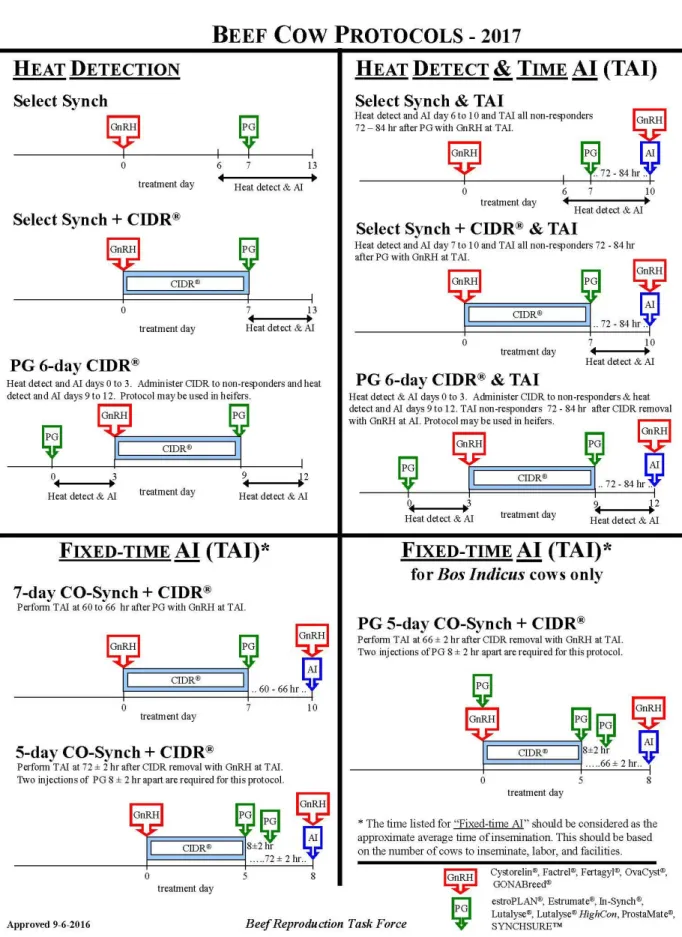
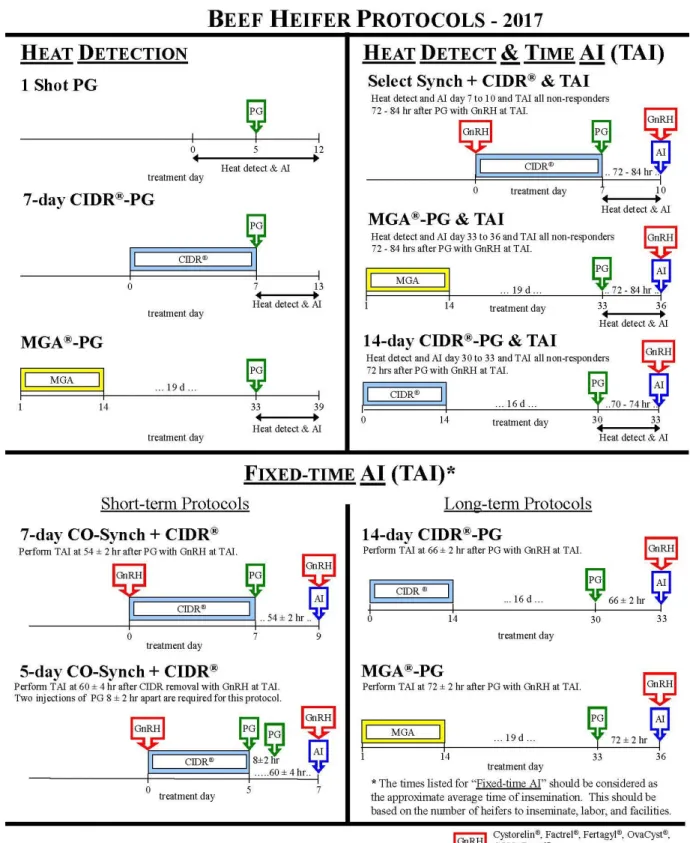
synchronized estrus and the ability to breed at a fixed time, pregnancy rates can resemble those found in bull breeding in the first 21-d period of the breeding season, roughly 65 percent of females; (Lauderdale, 2009). In addition to fixed time AI, other protocols exist and are updated annually by the Beef Reproductive Task force. Figures 1.1. and 1.2. detail the estrus
synchronization protocols recommended by the BRTF including those focusing on heat
detection, heat detection with timed-AI (TAI), and only TAI for both cows and heifers. Though several synchronization protocol options exist that facilitate the use of AI, compliance is critical in each case. If on any given d the compliance for giving the correct injection is done for 90 percent of the herd for an average of three working d, the appropriate response with not be
Figure 1.1. Estrus synchronization and AI protocols for beef cows as recommended by the Beef Reproductive Task Force, 2017
Figure 1.2. Estrus synchronization and AI protocols for beef heifers as recommended by the Beef Reproductive Task Force, 2017
obtained (0.90 x 0.90 x 0.90 = 72.9 percent). Taken together, a great deal of time and many resources have been spent to correctly synchronize females for the purpose of increasing
reproductive efficiency. If followed correctly, ovulation synchronization protocols should yield a synchronized estrus among a group of females exposed to the protocol.
Artificial Insemination
Artificial insemination is the process in which semen is used to impregnate a female without the act of natural breeding. Understanding the procedure of AI requires a knowledge base of the anatomy of a species as well as the timing of events and estrus to successfully breed a female. The ability and knowledge to be able to perform AI has been known for many centuries, however, understanding and proper timing is still being researched today.
The development of AI began hundreds of years before it was commercially available for beef cattle, research was being done with other species. This viable reproductive technology has been rumored to have been used by Arabs to inseminate their mares (undocumented) however was first recognized as being successful in 1784 by Spallanzani who inseminated a dog (Foote, 2002). Nearly one hundred years passed before AI was reported successful again, this time in isolated studies involving dogs, rabbits, and horses (Foote, 2002). Research continued over the next century, finally focusing on the ability to understand the estrous cycle. Initial research and understanding of estrous began in the 1920’s at the University of Missouri by F. F. McKenzie. This work focused on the estrous cycle, ovulatory schedule and semen production of sheep. Between the 40’s and the 60’s, researchers began looking at hormones that may be manipulated in order to manage estrus in a cyclic cow (i.e. estrus synchronization). It is now known that many variables can affect successful AI.
Nutrition, postpartum interval, and bulls can all affect reproductive rates of females. When describing AI, it is important to also understand the variability that occurs with the
application of techniques by different individuals. Factors such as handling cattle, detecting females when they come into heat, correctly handling semen, and working cattle in conditions that are favorable to breeding are all keys to success when utilizing AI (Dahlen et al., 2015). Cattle should be handled in a calm manner utilizing techniques that foster a low-stress environment. Additionally, weather conditions should be monitored, as adverse weather
conditions such as heat, cold, or excess precipitation can impact the AI program results (Dahlen et al., 2015). Producers should be spending appropriate amounts of time with females if heat detecting is necessary for the accurate identification of females as they come into estrus. Proper heat detection should include a minimum three visits totaling at least three hrs total in a given day (Johnson et al., 2013). After a female is detected in heat, she should be inseminated six to 12 hours after she is first observed in standing estrus (Johnson et al., 2013).
Proper breeding techniques must be used when implementing AI. Semen used for AI is stored in a tank filled with liquid nitrogen. Before semen is implanted into a cow, a semen straw is thawed in a 35 ± 2 °C water bath for a minimum of 45 seconds (Dejarnette et al., 2004). After semen is thawed, it is thermally and hygienically protected while being loaded into an
insemination rod. Once ready to inseminate, the semen gun is placed into the vagina with the technician’s dominant hand and is directed through the cervix to the uterine body, which is the site of semen deposition (Dejarnette and Nebel, 2012). Once the semen is deposited in the uterine body, the technician gently removes the instrument and proceeds to the next female.
Use of AI is often paired with an estrus synchronization protocol, that depending on the protocol selected will allow for breeding to occur after a period of heat detection or at a set time period (i.e. timed-AI). When timed AI is not used, the detection of estrus must be accurate to determine the proper time that females are receptive to breeding. In this case, the “AM/PM” rule is utilized and females that are observed in standing estrus are inseminated 12 hr after the initial
mounted (Dejarnette et al., 2004). Following the “AM/PM” rule, if a female is observed in standing estrus at eight o’clock AM, she should be inseminated at eight o’clock PM of the same d. In a survey representing 42 states in the U.S., respondents synchronizing cows and heifers more commonly used heat detection protocols for heifers (heat detection: 59% and timed-AI: 41%) and timed protocols for cows (heat detection: 33% and timed-AI: 67%; Johnson and Dahlke).
Estrus Synchronization Protocol Selection
While many estrus synchronization protocols are currently recommended for use in both beef and dairy cattle, protocols recommended for use in beef cattle will be the primary focus for the remainder of this literature review. Specific synchronization protocols should be selected based on end goals, available financial resources, free or available time, and experienced labor. Based on compliance with the synchronization protocols, great variation can exist between pregnancy rates obtained for each operation, group of females and individual AI technician. In a study observing the variation among technicians of obtained pregnancy rates of cows from seven different operations, pregnancy rates ranged from 15 to 82% (Sá Filho et al., 2009). While variation exists, pregnancy rates obtained with proper protocol compliance and adequate technicians typically range anywhere from 15 to 70% of the females inseminated becoming pregnant to AI (Larson et al., 2006, Schafer et al., 2007, Busch et al., 2007, Steichen et al., 2013).
In some of the following chapters, the 7-d CO-Synch + CIDR (Larson et al., 2006) synchronization protocol was used, consisting of a GnRH injection given at the time of CIDR insertion, followed 7 d later by the removal of the CIDR and an injection of PGF2α. Timed-AI is preformed 54 or 60-66 hrs later (for heifers and cows, respectively) and includes a second injection of GnRH. In this protocol, the addition of progesterone, in the form of a CIDR, could
potentially prevent the premature occurrence of estrus prior to the administration of PGF2α, which should improve pregnancy rates (Larson et al., 2006). Without the addition of a CIDR device, 10 to 20% of females exhibit estrus just before or immediately following the injection of PGF2α, causing females to not be in estrus at the time of TAI (Lamb et al., 2001). The increased number of cows coming into estrus due to the addition of progesterone would allow for more individuals to become synchronized and be more susceptible to fixed-time AI (Stevenson et al., 2000). The CO-Synch + CIDR protocol has been shown to have a wider application, based on time and labor constraints when compared to the MGA Select Synch protocol (Schafer et al., 2007).
Progesterone
Progesterone is a key component to not only the estrus cycle but also to the development and support of the calf while in utero. Progesterone is a steroid hormone produced by the corpus luteum (CL) of a cycling mammal. In ruminants, progesterone is also produced by the placenta during pregnancy (Senger, 2005). Progesterone receptors are expressed in the stroma and endometrial epithelium during the luteal phase in mammals and during pregnancy receptors are only found in the stroma and myometrium of the uterus (Spencer et al., 2004). A female is considered to be pubertal or cyclic and able to breed once the concentrations of progesterone have reached ≥ 1 ng/mL in blood serum (Perry et al., 1991). Concentrations of progesterone in the cyclic animal are the greatest during the luteal phase of the estrous cycle, which lasts for up to 80% of the cycle length (Senger, 2005).
After parturition, the first estrous cycle can vary in length and is often accompanied by a silent estrus, or females failing to show a behavioral estrus (Perry et al., 1991). Short estrous cycles are those less than 17 d in length with an average of 7 to 10 d and are generally observed between the first and second postpartum estrus (Odde et al., 1980). The CL formed after
ovulation is short lived due to a premature uterine secretion of prostaglandin F2α (Zollers, Jr. et al., 1993) and therefore produces progesterone for only a short period of time (Perry et al., 1991). Exposure to progesterone is a criterion for a normal behavioral estrus in many cases (Kyle et al., 1992) and it is thought that the progesterone produced during the short cycle is needed as a type of priming before the next ovulation and estrus cycle of normal length (Ramirez-Godinez et al., 1981). When breeding heifers, greater pregnancy rates were observed for females bred after their third estrus compared to their pubertal estrus, a potential sub-optimal fertility problem observed with the first estrus cycle (78 and 57 percent respectively; Byerley et al., 1987).
When exogenous progesterone is administered to females that have a regressing CL estrus is suppressed until the exogenous source is removed. In order for a female to cycle again, concentrations of progesterone must decrease and luteolysis must occur (Odde, 1990). Two forms of exogenous progesterone exist for the use of estrus synchronization, melengestrol acetate (MGA) and a controlled internal drug release (CIDR). Melengestrol acetate is an orally active progestin steroid (17-acetoxy-6-methyl-16-methyl-enepregna-4,6-diene 3,20-dione) developed to maintain pregnancy, promote endometrial proliferation, and delay estrus activity (Duncan et al., 1964). Melengestrol acetate is generally a pelleted product that has been established to be an effective method for synchronizing estrus in both cows (Patterson et al., 1989, Kojima et al., 2000) and heifers (Brown et al., 1988, Imwalle et al., 1998). While duration of feeding differs among protocols, a rate of 0.5 mg/(animal · d) is suggested per label recommendations (Zoetis, Parsippany, New Jersey). Melengestrol acetate is often fed to heifers in feedlot situations and is recommended for synchronizing estrus in heifers by the BRTF (Figure 1.2.). Problems with feeding MGA are observed when females do not consume the required amount necessary to suppress estrus and therefore estrus response is decreased (Patterson et al., 1989, Lamb, 2013). Adequate bunk space is recommended for use with MGA so animals have the opportunity to
consume feed simultaneously with other females (Patterson et al., 2003). Controlled internal drug release devices (CIDR) on the other hand are exogenous progestin steroids that cross through the vaginal mucosa into the bloodstream at a controlled rate (FDA, 2012). Controlled internal drug release devices are comprised of a t-shaped nylon center covered by a silicone layer and contain around 10% progesterone (pregn-4-ene-3,20-dione) by weight (1.38 to 1.9 g of progesterone; Canada and the United States, respectively). Upon insertion of the CIDR device, plasma concentrations of progesterone rise quickly, reaching 4-6 ng/mL within the first few hr of administration (Rathbone et al., 2002, Dahlen et al., 2014). The amount of progesterone released should control plasma progesterone concentration levels adequately for about 7 d (Chenault et al., 2003), with concentrations ranging between 2-3 ng/mL by d 7 for pubertal heifers (Dahlen et al., 2014). After CIDRs are removed, plasma concentrations of progesterone decrease rapidly within 24 hr, falling to levels lower than 1 ng/mL (Dahlen et al., 2014).
Prostaglandin
Prostaglandins were discovered in human semen and sheep seminal vesicles in the 1930’s and were shown to cause smooth muscle contraction and a change in blood pressure (Rathbone et al., 2001). The prostaglandin hormones are fatty acid bases with hormone like capabilities and were the first arachidonic acid products to be discovered (Senger, 2005). While several
prostaglandins exist, prostaglandin F2α will be the focus of discussion due to its role in the reproductive system. Prostaglandin F2αis a prostaglandin secreted by the uterus in a series of short pulses with each pulse lasting roughly an hr with approximately five pluses occurring in a 24-hr period (McCracken et al., 1984). Receptors for PGF2α are present on the luteal tissue of a CL, an endocrine gland formed by both large and small luteal cells (Arosh et al., 2004). The CL of the ovary is very sensitive to the pulse like fashion of PGF2α and responds quickly (Silvia et al., 1991), causing luteolysis in the absence of pregnancy and allows for the regression and
atresia of the CL (Odde, 1990), decreasing the amount of progesterone in the system (Silvia et al., 1991). Once luteolysis occurs and progesterone concentrations begin to decrease, the dominant or largest follicle on ovary, currently producing estradiol, increases its production of estradiol which stimulates an effect on the hypothalamic-pituitary axis, preparing the female for behavioral estrus (Rathbone et al., 2001). The increased production of estradiol stimulates a positive feedback system that causes the hypothalamus to release GnRH, stimulating the release of LH and FSH. The surge of LH and FSH causes the thecal and luteal cells to transform, releasing the oocyte from the follicle, causing ovulation and the formation of another CL (Rathbone et al., 2001).
For the purpose of estrus synchronization, PGF2αis administered to lyse a functional CL if present. If PGF2α is administered between d 5 to 15 or 16, of the estrous cycle, rapid luteolysis will occur (Rathbone et al., 2001). In a study evaluating the responsiveness of PGF2α on the CL’s of 24 dairy cows, researchers found that serum progesterone levels decreased to lower than 1 ng/mL in 12 hrs for every 100% of cows (4/4) administered 30 mg PGF2α from days eight to 12 of the estrous cycle compared with cows administered estradiol, sterile saline or corn oil (Seguin et al., 1979). Similarly, when cows were administered PGF2α and GnRH simultaneously on d eight or 10 of the estrous cycle, concentrations of progesterone decreased 24 hr later in all treated females (Stevens et al., 1993). The time period between PGF2α release and luteolysis can be affected by age, breed, and other physiological factors and for this reason, it can be variable. In the case that a female does not have a functional CL, there are no luteal cells present and
therefore no receptors for PGF2αto bind, causing aninjection to have no effect (Rathbone et al., 2001).
GnRH
Gonadotropin releasing hormone is a decapeptide hormone that is secreted by the hypothalamus (Senger, 2005). From the hypothalamus it is released in a pulse like manner into the anterior pituitary where it will bind to a specific G-protein and concludes with the stimulation of the release of follicle stimulating hormone (FSH) and luteinizing hormone (LH; Naor et al., 2000) from the anterior pituitary. Follicle stimulating hormone is responsible for the emergence of each follicular wave with concentrations peaking when the dominant follicle of a given wave reaches 4 mm (Ginther et al., 1996). When the dominant follicle diverges from all other growing follicles, concentrations of FSH decrease. During each follicular wave, recruited follicles
produce gradually increasing levels of estradiol (Wiltbank et al., 2002). At the time of FSH decrease, concentrations of estradiol are sufficient enough to induce an LH surge, causing the ovulation of the dominant follicle within 24 to 32 hr (Wiltbank et al., 2002). Exogenous GnRH allows for the induction of ovulation by way of luteinizing the dominant follicle when injected into postpartum beef cows (Mapletoft et al., 2003). Luteinizing the dominant follicle allows any bovine females with a large follicle (10 to 15 mm) to ovulate and begin a new follicular wave Lucy et al., 1992). One to four waves occur during the follicular phase in cattle (Lucy et al., 1992) with increases in fertility observed with increased numbers of waves (Celik et al., 2005).
With regard to estrus synchronization, GnRH is administered for the purpose of causing ovulation in females with a dominant follicle. In a study evaluating the effect of a single
injection of GnRH on ovulation at different stages of the estrous cycle in dairy cows, greater ovulation rates (86.5 percent) were observed for females in d 5-9 or 17-21 of the estrous cycle (Vasconcelos et al., 1999). When GnRH is administered to females with large dominant follicles (≥ 9 mm), the follicle either ovulates because of surging LH concentrations or regresses by atresia (Twagiramunhu et al., 1995). The follicles that ovulate with GnRH administration are
healthy and functionally dominant. Females will dominant follicles of 12 mm or greater at the time of a second GnRH injection, relative to the Co-Synch and Co-Synch + PGF2αprotocols (Figure 1.1), had greater pregnancy rates compared to females with dominant follicles smaller than 12 mm (Lamb et al., 2001). Fewer females (23 percent) ovulated in response to GnRH when in d 1-4 of the estrous cycle (Vasconcelos et al., 1999). This is most likely due to the greater concentrations of FSH stimulating the growth of a new follicular wave to begin the estrous cycle.
Hormones Used Together
Understanding how each hormone works with regard to use in estrus synchronization is vital to realizing the potential when all three products are used together. Stevenson and others (1997) were interested in understanding the impacts on fertility when GnRH, PGF2α, and norgestomet (a steroidal progestin) were used in concert for synchronizing estrus. When both cyclic and noncyclic females were administered two PGF2α injections 14 d apart (Control) or two PGF2α injections 14 d apart followed by GnRH and a norgestomet implant (Treatment),
conception rates were greater for cows in the treated group (60.1 percent) when compared to the control group (48.0 percent; Stevenson et al., 1997). Ovulation was either induced or
synchronized with the inclusion of PGF2α, progesterone, and GnRH in both cycling and
noncycling females. Furthermore, when the CO-Synch protocol was compared to the CO-Synch + CIDR protocol, the addition of progesterone increased pregnancy rates to AI (CO-Synch + CIDR: 54 percent and CO-Synch: 43 percent; Larson et al., 2006). Pregnancy rates to AI with use of the CO-Synch + CIDR protocol were similar when compared to those procedures including heat detection (Select Synch and TAI, Select Synch + CIDR and TAI, and a control consisting of a CIDR, PGF2α, and heat detection; Larson et al., 2006). Taken together, the addition of progesterone aided in nonclcyic females becoming pregnant, GnRH formed new luteal tissue by causing ovulation, and PGF2α lysed the function CL of those females that were
cyclic. In a recent national survey, the most frequently used estrus synchronization system for both heifers and cows was the 7-d CO-Synch + CIDR protocol, utilizing GnRH, progesterone, and PGF2α(Johnson and Dahlke, 2016).
Evaluation of Breeding Systems
Direct Comparisons of Breeding Systems
Accurately evaluating natural service and AI breeding systems requires assessing different areas of beef cattle production including pregnancy, calving, calf weaning weights, time, labor, costs, and overall management. Before a decision is made about which breeding system to implement the above listed factors must be considered.
Effects of AI on pregnancy rates when compared to those from natural service breeding vary in the published literature, with AI both increasing pregnancy rates as well as not changing pregnancy rates. Greater pregnancy rates were observed for both d 45 of the breeding season and the end of the breeding season in Nelore beef cows when the Syncro-Mate B estrus
synchronization protocol was used, followed by TAI and natural service breeding for cleanup purposes compared to cows bred by natural service sires only (Sá Filho et al., 2013). In opposition, pregnancy rates did not differ in the first 21-d period of the breeding season for season ending rates when compared to cows exposed only to natural service (Lima et al., 2009). Cows enrolled in the aforementioned studies were of Bos Indicus and dairy breed types,
respectively, as opposed to the Bos Taurus herds generally found in North Dakota. In a study evaluating AI and natural service breeding of angus-based commercial cows in ND, pregnancy rates did not differ between groups in the first 21-d of the breeding season; however, a greater proportion of females bred with TAI were pregnant on d 49 of the breeding season compared with natural service bred females (81.7 percent and 77.5 percent respectively; Steichen, 2013).
Proportions of cows calving in a calving season become quite important when evaluating breeding systems. When the calving season was distributed into 10 d calving intervals, the proportions of cows calving that were exposed to TAI were greater for the first and second 10-d intervals when compared to cows only exposed to natural service (TAI: 10 and 22 percent, respectively and NS: 6 and 16 percent; Rodgers et al., 2012). Similarly, after eight years of implementing such technologies as estrus synchronization and AI, Mercadante and others (2015) increased the number of calves born early from 50% in 90 d to 50% in less than 30d. It is also often theorized that AI can decrease the length of the calving season (Sprott, 1999, Larson et al., 2006, Lamb et al., 2010), however, the length of the calving season is not a function of calving, but of the length of time females are exposed to bull power. For example, if females are exposed to bulls for 45 d, the calving season will be shorter than if cows are exposed to bulls for 90 d (Rodgers et al., 2012).
Weaning weight can be affected by many factors, including geographic location of calves, genotype, postpartum environment, cow nutritional status and cow milk production (Spitzer et al., 1995). As previously stated, proportions of cows exposed to AI calved earlier in the calving season compared to cows exposed to natural service. The resulting calves born from AI are older and in published research these calves are heavier at weaning than their younger counterparts born to natural service (Rodgers et al., 2012, Steichen et al., 2013). When born from estrus synchrony and TAI, calves are older and heavier at marketing when they are compared to their herd mates born from NS (Sprott, 1999). Calves born earlier in the calving season may have a faster preweaning rate of gain and therefore may be able to utilize forage better than those born later in the calving season (Lesmeister et al., 1973). Additionally, increased calf weaning weights are attributed to calves being older in addition to improvements in genetic parameters related to growth (Johnson, 2002).
When comparing different breeding systems, producers are often more interested in whether or not they should put forth the time and effort to implement AI into their herds as opposed to tuning in herd sires, which require far less labor and time. Time, labor, difficulty of use and cost are the highest ranked reasons for producers not adopting the latest reproductive technologies (NAHMS, 2009). Artificial insemination as compared to natural service for
breeding can offer some potential advantages including, improving calf uniformity, calf growth, weight at weaning, and overall genetic value (Odde, 1990). In natural service breeding, not only do producers purchase an entire bull, but also must feed and maintain that bull throughout its productive years on the ranch (Anderson et al., 2008). Investment costs include but are not limited to feed and labor (Gugelmeyer, 2010), as well as bull veterinary costs (breeding soundness exams, vaccines, other health costs; Lima et al., 2010). With the use of AI, a large number or potentially an entire herd of cattle can be bred in one d, however, generally not all females will become pregnant to AI. Average pregnancy rates to AI range from 40 to 70 percent of the females inseminated becoming pregnant to AI (Larson et al., 2006, Schafer et al., 2007, Busch et al., 2007, Steichen et al., 2013) in controlled experiments. To increase the proportion of females pregnant each year, clean-up bulls are often used after AI has been performed to breed those females that do not conceive to AI.
In addition to potential cost benefits, AI allows producers the opportunity to keep more accurate records and can increase herd management (Cooke and Marquezini, 2009). With the use of more efficient records, producers are able to assess the both production and financial
operating systems independently as well as together to be more meaningful and useful for herd decisions. Records relative to breeding system include costs, proportions of females pregnant, calf weaning weights, and premiums possibly associated with calf sales (Pruitt et al., 2012). It is
with these sounder records that judgments can be made on choosing specific bull genetics to enter into that production system while also allowing for better culling decisions.
3 P’s of Sustainability
Sustainable agriculture can be defined as “practices that meet current and future societal needs for food and fibre, for ecosystem services, and for healthy lives, and all that do so by maximizing the net benefit to society when all costs and benefits of the practices are considered” (Tilman et al., 2002). Previous approaches to increase sustainability have included extension programming that strive to increase the acceptance and implementation of alternative production systems (Hinrichs and Welsh, 2003). In terms of herd management, success can be evaluated in a variety of ways, based on production, performance, and profit. For the following chapters,
production, performance, and profit were defined to be the “3 P’s of sustainability”. Productiveness of a herd can include the proportion of females that became pregnant in a breeding season, the weight of the calves sold, etcetera. Sustainability is the measurement of production that allows for further evaluation of the entire herd. Producers may also evaluate their herd performance. Programs are available to aid in data collection and management of a herd to better analyze and summarize herd information (Ramsay et al., 2016). The Cow Herd Appraisal Performance Software (CHAPS) program is a management tool in which information can be collected, stored, and evaluated for benchmarking and herd performance purposes (Ramsay et al., 2016). Lastly, success can be evaluated in terms of profit. Similarly, to the performance record keeping system, programs are available to summarize and analyze returns and costs associated with farming and/or ranching (NDFME, 2011). Financial data can be used isolate specific techniques or management decisions that are either lucrative or draining financially. Production, performance, and profit will be evaluated in the following chapters with regard to different breeding systems when used on commercial beef operations.
Partial Budget Analysis
Various management alternatives have financial implications, either positive, negative, or both. Understanding the financial implications of alternative strategies is critical for producers to make sound management decisions. Management changes could be as small as implementing a different feed source or as large as utilizing artificial insemination (AI) to breed a large
proportion of the female inventory. Understanding the financial implications of the respective alternatives could mean the difference between making money and losing money for a number of years, resulting in leaving the beef industry. Required labor, equipment, costs, and the additional income that could be generated must all be considered. Evaluating the success of a whole-farm operation includes completing some sort of budget or economic analysis. Understanding where their profit comes from, areas in which profits could be decreased, costs of the advancement, and savings made by implementing a new technique may be beneficial to increasing the productivity and profit of the operation. Partial budgets analyses are tools used to determine costs associated with making changes from standard practices in business, analyzed using the increased profit, decreased returns, cost of the advancement, and the saving made by the advancement (Alimi and Manyong, 2000).
In a partial budget analysis, total costs are subtracted from total revenues to analyze the economic effects of the change (Swinkles et al., 2005). This type of analysis can be used to determine the effects of substituting one enterprise for another, changing the level of a
technology, or changing to a new technology all together. If making a change to an operation, a partial budget analysis can aid in determining if the change has the ability to truly increase the profit of an operation. Partial budgets can help producers understand the financial implications of the management strategies they would like to employ. A partial budget analysis does not
revenue gained or lost due to a new advancement (Roth, 2002). To complete a partial budget analysis, four specific components are necessary; additional income (A), reduced income (B), reduced expenses (C), and additional expenses (D; Table 1.1.; Ehui and Rey, 1992).
Increased Returns
The top left box (box A), relates to the increased returns or additional income generated from the addition of the advancement or technology applied. Items included here could consist of greater prices for animals sold (perhaps through heavier calf weights or more desirable
phenotype), sale of more calves (a result of improved pregnancy rates), or a sale of more
harvested crop (a result of greater yield for a particular crop). Income included here must include realistic yields and averaged prices as to not skew the results and lead to inaccurate decisions (Roth, 2002).
Decreased Returns
The top right box (box B), refers to income that is currently being generated by the operation that will cease with the implementation of the advancement or technology. In some scenarios this will be difficult to determine and may even not exist. Items included here would comprise the decreased income from selling cull animals, a reduction in yield or product, or the loss of rental income (Ehui and Rey, 1992).
Table 1.1. The format of a partial budget analysis1 Increase Returns (A)
- - - Decreased Returns (B) - - - Decreased Costs (C) - - - Increased Costs (D) - - - 1Adapted from Rodgers et al., 2012