First trimester abortion
guidelines and protocols
Surgical and medical procedures
Acknowledgments
Written by Marcel Vekemans, Senior Medical Advisor, International Planned Parenthood Federation (IPPF) Central Office.
The IPPF Abortion Team gratefully acknowledges the contributions of the reviewers of the guidelines and protocols: Kiran Asif, Cherie Etherington-Smith, Jennifer Friedman,
Pak-Cheung Ho, Rebecca Koladycz, Celal Samad, Nono Simelela and Tran Nguyen Toan. Printing this publication was made possible through the financial contribution of an anonymous donor. Upeka de Silva’s contributions were essential to bring this publication to fruition.
over their own bodies, and therefore their destinies. A world where they are free to choose
parenthood or not; free to decide how many children they will have and when; free to
pursue healthy sexual lives without fear of unwanted pregnancies and sexually transmitted
infections, including HIV. A world where gender or sexuality are no longer a source of
inequality or stigma. We will not retreat from doing everything we can to safeguard these
important choices and rights for current and future generations.
Promoting the client’s right to dignity
4
Respecting the client’s right to make a free, informed decision
4
Guiding principles for organizing the work
5
First trimester abortion
6
Pre-abortion visit
6
Surgical or medical abortion?
8
Surgical abortion
9
Medical (drug-induced) abortion
16
Induced abortion: management of immediate, early and late complications 20
The issue of long-term consequences after safe first
trimester abortion
26
Post-abortion follow-up
27
Post-abortion contraception
28
The issue of repeat abortion
29
Equipment, instruments, supplies, drugs and
medications
30
Infection prevention
30
Aspiration using manual vacuum aspiration syringe or electric vacuum pump 30
Dilatation and curettage
30
Medical (drug-induced) abortion
30
Emergency room drugs, supplies and posters
31
Bibliography
32
Pre-abortion ultrasound and laboratory testing
34
Clinical management of abortion complications
35
Chart 1: Initial assessment
35
Chart 2: Shock
36
Chart 3: Severe vaginal bleeding
37
Chart 4: Intra-abdominal injury
38
Chart 5: Infection and sepsis
39
Acronyms and
abbreviations
BP blood pressure D&C dilatation and
curettage hCG human chorionic
gonadotropin IM intramuscular IV intravenous MVA manual vacuum
aspiration Rh rhesus SC subcutaneous
Chapter 2
Chapter 3
Chapter 4
Chapter 5
Chapter 6
Chapter 7
Annex 1
Annex 2
Introduction: Providing high
quality, client-centred services
IPPF strives to ensure access to safe, legal abortion services worldwide. In line with
this vision, these guidelines and protocols are intended to support service providers
to offer high quality, client-centred abortion and abortion-related services. The
document is grounded in the values and principles laid down in IPPF’s Charter on
Sexual and Reproductive Rights; the clinical procedures are based on the Quality of
Care Framework developed and implemented across all aspects of service provision
throughout IPPF.
Aim of these guidelines and protocols
The document integrates protocols, guidelines and standards in a broad framework to ensure that no aspect of care is overlooked when providing comprehensive abortion care in the first trimester of pregnancy. The intended audience is staff involved in abortion services – whether as direct providers of abortion care or as counsellors or educators – who might be interested in some of the medical aspects that this document addresses.
Our aim is to present the underlying principles and desired outcomes in a format that is as practical as possible. This reflects the World Health Organization statement: “Guidelines are systematically developed evidence-based statements which assist providers […] to make informed decisions about appropriate health interventions. Guidelines are formal advisory statements which should be robust enough to meet the unique circumstances and constraints of the specific situation to which they are being applied. The basic nature and intent of guidelines have also been
expressed under other formats variously labeled as protocols, best practice, algorithms, consensus statements, expert committee recommendations, and integrated care pathways […].” (World Health Organization: Guidelines for WHO Guidelines: see Bibliography on page 32.)
More comprehensive training tools on early abortion are available from TEACH at www.teachtraining.org – developed for use in the USA, they are very detailed, and offer useful additional information.
In addition to clinical protocols, a clinic providing abortion care should have a counselling protocol (including counselling on options when facing an unwanted pregnancy, on pre- and post-abortion care and on contraception), clear guidelines for patient flow, a written protocol for waiving or reducing the costs of the procedure for women in need, and a client satisfaction survey tool.1
Finally, all possible steps must be taken to ensure or improve service quality.
Disclaimer
This education resource is intended to be a supportive tool and does not dictate an exclusive course of management. It contains recognized methods and techniques of medical care that represent currently appropriate clinical practice. Variations in the needs of individual patients and in the resources available may justify alternative approaches to those contained in this resource. IPPF and its staff are not responsible for adverse clinical outcomes that might occur in the delivery of abortion services in which it is not expressly and directly involved in as the primary caregiver.
1 See, for example, Center for Health Training, Client Satisfaction Made Easy, www.centerforhealthtraining.org and Community Service Council,
IPPF is committed to upholding the rights of the client and the needs of providers in
order to ensure the highest possible standard of care.
Respecting a client’s right to confidentiality
Absolute respect for the patient’s right to privacy, discretion and confidentiality must be guaranteed. A woman presenting for abortion may be concerned that her parents, husband, partner, relatives, community members or law enforcement agents may find out about and disapprove of her decision. Providers need a good grasp of the legal context in which they operate in order to guide their clients. Where the law permits (or imposes) a breach in confidentiality (for example in cases of violence), both clients and providers need to understand and respect these provisions. However, the client’s right to safety should be maintained at all times.
In some countries, the provider cannot release medical information, even at the request of the patient. All such policies should be clearly understood by providers and clients.
Promoting the client’s right to dignity
All service providers, medical and non-medical, have a duty to respect a client’s dignity. Because of the sensitive nature of the abortion issue, clients presenting for abortion may feel particularly vulnerable when seeking care, and may be afraid of disapproval, or of poor or painful medical treatment. Service providers and all staff need to ensure that clients are treated with dignity and respect. It is the provider’s duty to support the client to maintain her self-esteem. Providers and allied staff should be aware of their attitudes and strive at all times to:
• have a positive, sensitive and empathic attitude towards the patient
• maintain a respectful relationship, through both verbal and non-verbal communication
• be aware of the ways in which their attitudes can impact on their interaction with the patient
• be warm, non-judgemental and supportive, without stigmatization: this is especially important with young women and with clients seeking a second, third or repeat abortion
Respecting the client’s right to make a free,
informed decision
It is a patient’s right to make decisions freely, express her views, obtain full, accurate and understandable information, and give consent for treatment after being informed about: • the procedures and, if relevant, the various options
available
• the risks, side-effects and possible complications (even those that could be fatal)
• the possibility that the procedure may fail, and the consequences of this
• the non-medical aspects (such as decision making, relationships with family/parents/partner/husband, possible social consequences and psychological aspects) Providers should be aware that clients may not always understand the information given and may be feeling particularly vulnerable. It is important to give clients the time and space to ask questions, so that clarifications can be made in a non-patronizing way.
It is important to remember that this information is not given to scare, judge or coerce a woman into a pre-determined course of action; the information is intended to help the client understand the procedure and to help her to make an informed decision.
Comprehensive abortion care:
prerequisites
Guiding principles for organizing the work
Providers of comprehensive abortion care should follow these guiding principles:
• Put in place a robust information, education and communication strategy to inform the community about the services offered.
• Encourage women contemplating abortion to seek care as early as possible.
• Offer the services without delay. Clients should ideally not be asked to come back on another day.
• Have a clear understanding of the national laws and regulations relating to abortion services. This is crucial to establish and maintain quality abortion services. Such knowledge must include the local laws and regulations about indications for legal abortion; gestational limits; mandatory waiting; notification requirements; rules regarding minors and, if relevant, married women; authorizations; licensing and approval of facilities; and training requirements for staff.2
• Organize the work to follow approved medical and surgical guidelines.
• Only perform techniques which they have received adequate training for.
• Ensure the availability of essential drugs and equipment. • Assess the validity of local infection prevention measures
and adhere strictly to the protocols.3
• Establish the eligibility of a client for a given procedure through screening and assessment (see Pre-abortion visit on page 6 and Surgical or medical abortion? on page 8). • Establish efficient referral systems that are of guaranteed
high quality, are monitored regularly and where clients can be followed up subsequently.
2 International Planned Parenthood Federation (2008) Access to Safe Abortion: A Tool for Assessing Legal and Other Obstacles, www.ippf.org 3 International Planned Parenthood Federation (2004) IPPF Medical and Service Delivery Guidelines for Sexual and Reproductive Health Services,
The duration of pregnancy (gestation duration) is conventionally divided into three
trimesters: first trimester, up to 14 weeks of gestation since the first day of the
last menstrual period; second trimester, 14–28 weeks; third trimester, 28 weeks to
delivery (at 40 weeks, on average).
4First trimester surgical abortion (up to 12 or 14
weeks) and medical abortion (up to nine weeks) should be performed as outpatient
procedures.
Pre-abortion visit
Counselling
As outlined in the Introduction, counselling must be supportive and empathetic. If the client is accompanied, make sure that some counselling time is set aside for the client alone. Involve the accompanying person later and also provide information to him or her on caring for the client.
If the woman agrees, explore the following issues: • Is she seeking to continue the pregnancy, to have the
baby adopted or to have an abortion?
• What support is available if she decides to continue the pregnancy or to opt for adoption?
• Is she being coerced into seeking an abortion? • The legal aspects of abortion, and the need to sign an
informed consent form.
• Her reasons for seeking an abortion, including her socio-cultural and economic circumstances. This is, however, not mandatory, so only explore these reasons if the discussion goes in this direction. Many women do not want to address these issues, and their wishes must be respected. If there are indications of violence, be ready to provide referrals for further support.
• Levels of anxiety and guilt.
• Support (or absence of support) from partner/friends/ family.
• The possibility of sexual abuse or gender-based violence. • The various options (if relevant) of abortion techniques
and pain control.
Clinical aspects
History taking
Take a note of the following: • The woman’s age.
• Her marital status (if necessary; not mandatory). • Previous pregnancies (children and their health,
miscarriage(s), ectopic pregnancy, induced abortions), as well as all types of complications during previous pregnancies.
• Duration of current pregnancy (since the first day of last menstrual period). Confirm with clinical examination. See General physical examination on page 7 and Gynaecological examination on page 7.
• Any attempt to abort current pregnancy (and details, if relevant).
• Past and present medical and surgical (especially abdominal) conditions that might affect an abortion procedure, for example a bleeding disorder, reproductive tract infections, allergies (to anaesthetics, antibiotics or other), medication taken, and contraception used, correctly or otherwise.
• Previous female genital mutilation: this could complicate the procedures.
• Past experience with contraceptive methods and future contraception being considered.
• If the pregnancy is not established, ask if symptoms of early pregnancy are present: breast tenderness and engorgement, nausea, fatigue, frequent urination and/or changes in appetite.
First trimester abortion
Chapter 2
Clinical assessment
a) General physical examination Check or examine:
• General health (pulse, blood pressure, heart, lungs and temperature). Check for anaemia, malnutrition and other signs of ill health. Refer if necessary to a higher level provider for a pre-abortion medical assessment. • Abdomen (ask the woman to empty her bladder
beforehand). Is it distended? Are there masses? Can the uterus be felt? If so, assess its size.
b) Gynaecological examination Pelvic examination and speculum
• Ask the woman to empty her bladder beforehand. • Ensure privacy and, where customary, the presence of a
female chaperone if the provider is male. • Ensure adequate light.
• Speak kindly to the woman; explain the procedures and help her relax.
• Wash hands and use sterile or disinfected gloves; proceed gently.
• Inspect the perineal area, and check for signs of sexually transmitted infections: ulcers, condyloma, discharge. Check for vulvitis, female genital mutilation and scars. Swab the vulva. Treat as needed.
• Gently insert a closed speculum, of the smallest effective size, moistened with warm water (gels and lubricants interfere with diagnostic accuracy for sexually transmitted infections). Avoid pressure on the urethra. Check for, diagnose and treat vaginal and cervical infections, according to local protocols.
• If indicated and available, perform cervical cytology or inspection (not a precondition to provide the abortion). Bimanual pelvic examination
• Wash hands and use sterile or disinfected gloves; proceed gently.
• Confirm pregnancy (soft cervix; enlarged, soft uterus). • Check that the size of the uterus corresponds to the
gestation duration. A discrepancy may be due to an error in the calculation, or indicate a problem with the pregnancy.
• A uterus bigger than expected suggests multiple pregnancy (polycyesis: more than one foetus), molar pregnancy or fibroids.
• A uterus smaller than expected suggests a miscarriage, no pregnancy or ectopic pregnancy. If pregnancy is suspected and the uterus is still small six weeks after the last menstrual period, use ultrasound for checking, or hCG, or refer. In the case of ectopic pregnancy, take immediate action by medical or surgical treatment, applying local guidelines, or refer immediately.
• Determine the position of the uterus (ante- or retroflexed; ante- or retroverted).
• Check for reproductive tract infections (uterine, tubo-ovarian), sexually transmitted infections and cystitis.
If antibiotics are indicated, start immediately, BEFORE the abortion, but do not delay the abortion once the antibiotics have been started.
• Record all the findings in the client’s file. c) Special investigations
Ultrasound and laboratory testing are special procedures, but their availability should not be a prerequisite for the provision of abortion services. See Annex 1 for details.
Prophylactic (preventive) antibiotics
Most, but not all protocols for comprehensive abortion care recommend the routine administration of prophylactic antibiotics. Follow local guidelines. World Health
Organization5 and IPPF guidance6 state that this reduces
the post-procedural risk of infection, but that abortion should not be denied where prophylactic antibiotics are not available.
Counselling: contraception, follow-up, questions and answers
a) Contraception
A wide choice of contraceptive methods should be made available, including sterilization (if relevant, although hasty decisions should not be made). Ensure that contraceptive information relating to the available options is made available before the procedure, before leaving the clinic on the day of the procedure, and during subsequent post-abortion visit(s), but not during the procedure itself when the woman is under emotional or physical stress.
5 World Health Organization (2003) Safe Abortion: Technical and Policy Guidance for Health Systems, www.who.int/reproductive-health/publications/ safe_abortion/safe_abortion.pdf
6 International Planned Parenthood Federation (2004) IPPF Medical and Service Delivery Guidelines for Sexual and Reproductive Health Services, www.ippf.org
Acceptance of contraception or of a particular method must never be a prerequisite for the provision of abortion-related services. See Chapter 5 for information about post-abortion contraception.
b) Explaining the procedure and the follow-up
Address the following issues: how long the procedure will take; the possible side-effects (for example pain, bleeding, nausea, diarrhoea, vomiting); the recovery time; possible complications and where to go for treatment; safety aspects and the risks (all medical interventions carry some risks); the choice of anaesthesia and options for pain management; and when to resume normal activities (including sexual intercourse). Stress the need for contraception and condom use, the need for follow-up and explain the content of the follow-up visit.
c) Questions and answers
Allow sufficient time for the client to ask questions and express any fears.
Surgical or medical abortion?
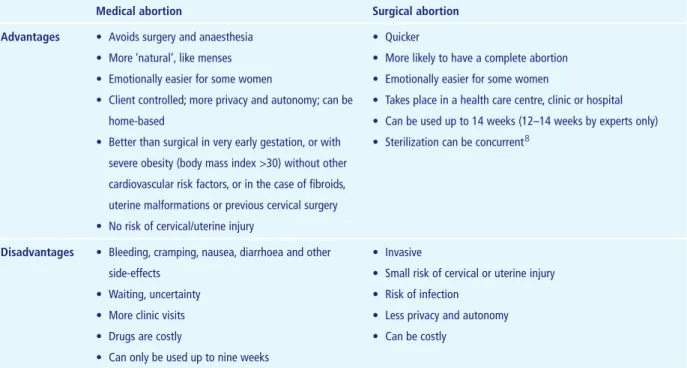
First trimester abortion can be provided using either medical drug-induced abortion, up to nine weeks, or surgical techniques. Both can be provided by trained mid-level staff (nurses, midwives and medical assistants, according to the defined scopes of practice at the national level). Table 1 summarizes the advantages and disadvantages of the two approaches. If both options are suitable, the patient’s choice should be respected.
Surgical abortion can be performed by aspiration (using an electric pump or a manual syringe) or by dilatation and curettage (sometimes called dilation and curettage or D&C).
Dilatation and curettage is an outdated surgical technique that should be replaced, whenever possible, by aspiration or medical (drug-induced) abortion which are better options, as recommended by the World Health Organization and IPPF.7
A surgical technique (preferably aspiration) should be used if:
• it is the woman’s choice
• concurrent sterilization is anticipated
• there are contraindications to medical abortion • a client is unable to come for follow-up after a medical
abortion as required
7 See notes 5 and 6 on page 7.
8 Concurrent sterilization should never be done without the patient’s informed consent, and never hastily without proper thought beforehand.
Table 1: Advantages and disadvantages of medical and surgical abortion
Medical abortion Surgical abortion
Advantages • Avoids surgery and anaesthesia • More ‘natural’, like menses • Emotionally easier for some women
• Client controlled; more privacy and autonomy; can be home-based
• Better than surgical in very early gestation, or with severe obesity (body mass index >30) without other cardiovascular risk factors, or in the case of fibroids, uterine malformations or previous cervical surgery • No risk of cervical/uterine injury
• Quicker
• More likely to have a complete abortion • Emotionally easier for some women
• Takes place in a health care centre, clinic or hospital • Can be used up to 14 weeks (12–14 weeks by experts only) • Sterilization can be concurrent8
Disadvantages • Bleeding, cramping, nausea, diarrhoea and other side-effects
• Waiting, uncertainty • More clinic visits • Drugs are costly
• Can only be used up to nine weeks
• Invasive
• Small risk of cervical or uterine injury • Risk of infection
• Less privacy and autonomy • Can be costly
Surgical abortion
Preparation
• Ensure that the consent form has been signed. • Ensure that the equipment is in working order. • Double check that the resuscitation equipment is in
working order.
Pain control (and its possible complications)
Pain may result from cervix dilatation, internal cervical os stimulation, uterus mobilization, scraping the uterine walls and reactive uterine muscular contractions. Intense pain can result from cervical dilatation that is too forceful or from intervention too soon after paracervical block. Pain thresholds vary; and fear and anxiety can augment pain. Providers should be calm, efficient, friendly and non-judgemental, and explain what is happening (or what the client should expect to experience) all the way through the procedure. Communication with the client should be maintained at all times.
Supportive verbal communication is also required during the procedure. Where possible, and preferably, a supportive person should accompany the patient throughout the procedure. Counselling, empathy, ‘verbal anaesthesia’ and fear reduction can all help, but pain control measures must always be available and provided. The following methods can be used singly or in combination. It should be noted that even if pain-relieving methods are used, including verbal anaesthesia, it is impossible to suppress pain totally.
Analgesia:Analgesics such as paracetamol
(acetaminophen) and ibuprofen ease pain. Opiates should be used with caution as post-abortion incidents have been described, such as falls on stairs and road accidents. To avoid this, the patient should be accompanied by someone who can try to avoid any problems and deal with any incident that may arise.
Tranquillizers (anxiolytics): These reduce anxiety and memory, but not pain, and relax the muscles. When using benzodiazepines, such as diazepam, the same advice as for opiates (see paragraph above) should be followed.
Paracervical block: This is always required for surgical abortion, unless the patient formally refuses it. Use a local anaesthetic such as lidocaine (lignocaine or xylocaine). Ensure there is no known allergy to lidocaine. Inject four doses of 5mL (total 20mL) of 0.5 per cent lidocaine (without
epinephrine) beneath the cervical mucosa at 2, 4, 8 and 10 o’clock around the cervix (be careful not to inject into a blood vessel). The World Health Organization provides a full description of the procedure.9
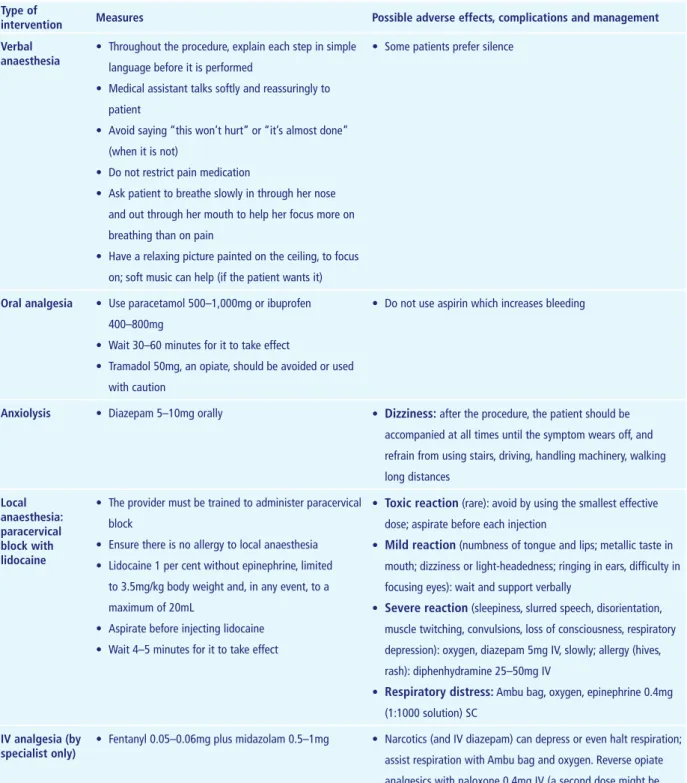
Signs of a toxic reaction and its treatment are described in Table 2.
Light (or conscious) sedation: This can replace the paracervical block. The procedure alters a woman’s state of consciousness, without the risks associated with general anaesthesia, helping her to feel more relaxed and less anxious during the abortion. The patient breathes normally and is easily roused. She can respond to physical stimuli and verbal commands.
The management of anaesthesia-related adverse effects and possible complications is presented in Table 2.
General anaesthesia is not recommended because narcosis adds risks. It can, however, be used on demand or in abortion procedures that are difficult, medically or emotionally. Skilled staff and the capacity to manage complications are essential.
Cervical dilatation (or ‘cervical priming’)
• Cervical priming is a pre-intervention dilatation of the cervix, making aspiration (or dilatation and curettage) easier and quicker, and reducing the risk of cervical laceration and, to a lesser degree, the risk of uterine perforation.
• Routine cervical preparation remains controversial because the advantages have been insufficiently proven. Some providers use priming only in specific circumstances, such as late first trimester abortions at 12–14 weeks of pregnancy, adolescents and young women, nulliparity, scarred or diseased cervix, perceived risk of cervical injury or uterine perforation, or inexperienced provider. • Dilatation and curettage can sometimes be performed
without any cervical dilatation, if it is very easy to pass the cannula through the inner cervical os.
• Cervical priming is done using laminaria tents
(Dilapan-S™ and Lamicel®, osmotic hydrophilic dilators)
introduced into the cervical canal, or a prostaglandin (for example misoprostol) or mifepristone. Compared to laminaria, vaginal misoprostol acts faster, is associated with less discomfort and is preferred by patients. Sublingual misoprostol (400µg), at least two hours before
9 World Health Organization (2003) Managing Complications in Pregnancy and Childbirth: A Guide for Midwives and Doctors, www.who.int/reproductive-health/impac/Procedures/Paracervical_block_P1_P2.html
Table 2: Pain control in first trimester induced abortion: possible adverse effects and their treatment Type of
intervention Measures Possible adverse effects, complications and management
Verbal anaesthesia
• Throughout the procedure, explain each step in simple language before it is performed
• Medical assistant talks softly and reassuringly to patient
• Avoid saying “this won’t hurt” or “it’s almost done” (when it is not)
• Do not restrict pain medication
• Ask patient to breathe slowly in through her nose and out through her mouth to help her focus more on breathing than on pain
• Have a relaxing picture painted on the ceiling, to focus on; soft music can help (if the patient wants it)
• Some patients prefer silence
Oral analgesia • Use paracetamol 500–1,000mg or ibuprofen 400–800mg
• Wait 30–60 minutes for it to take effect
• Tramadol 50mg, an opiate, should be avoided or used with caution
• Do not use aspirin which increases bleeding
Anxiolysis • Diazepam 5–10mg orally • Dizziness: after the procedure, the patient should be accompanied at all times until the symptom wears off, and refrain from using stairs, driving, handling machinery, walking long distances Local anaesthesia: paracervical block with lidocaine
• The provider must be trained to administer paracervical block
• Ensure there is no allergy to local anaesthesia • Lidocaine 1 per cent without epinephrine, limited
to 3.5mg/kg body weight and, in any event, to a maximum of 20mL
• Aspirate before injecting lidocaine • Wait 4–5 minutes for it to take effect
• Toxic reaction (rare): avoid by using the smallest effective dose; aspirate before each injection
• Mild reaction (numbness of tongue and lips; metallic taste in mouth; dizziness or light-headedness; ringing in ears, difficulty in focusing eyes): wait and support verbally
• Severe reaction (sleepiness, slurred speech, disorientation, muscle twitching, convulsions, loss of consciousness, respiratory depression): oxygen, diazepam 5mg IV, slowly; allergy (hives, rash): diphenhydramine 25–50mg IV
• Respiratory distress: Ambu bag, oxygen, epinephrine 0.4mg (1:1000 solution) SC
IV analgesia (by
specialist only) • Fentanyl 0.05–0.06mg plus midazolam 0.5–1mg • Narcotics (and IV diazepam) can depress or even halt respiration; assist respiration with Ambu bag and oxygen. Reverse opiate
analgesics with naloxone 0.4mg IV (a second dose might be necessary). Reverse diazepam with flumazenil 0.2mg IV
the procedure, is effective. Oral administration is also effective, but higher doses and longer treatment periods (8–12 hours) are required. Vaginal administration (400µg) results in the same dilatation (mean: 8.5mm) as oral administration with fewer side-effects (nausea, vomiting, diarrhoea and chills after vaginal misoprostol are 10, 8, 18 and 4 times lower, respectively, than after oral misoprostol). Oral mifepristone (600mg) is also effective in cervical priming when administered 48 hours before a first trimester abortion. However, the cost is high and availability low, in comparison with misoprostol. • Misoprostol or mifepristone can be self-administered.
Vacuum aspiration
Vacuum aspiration is a very safe, effective procedure which should, whenever possible, replace dilatation and curettage. It is used up to 12 weeks from last menstrual period. Expert providers can use it up to 14 weeks. Aspiration is more than 99.5 per cent effective. The incidence of haemorrhage, pelvic infection, cervical injury and uterine perforation is lower than with dilatation and curettage, and less cervical dilatation is necessary. The costs of the procedure, the staff time and resources needed are lower. No operating theatre or general anaesthesia is needed.
Manual vacuum aspiration
Manual vacuum aspiration requires a single or double valve syringe: the vacuum (at least 55mmHg) is generated by a 60mL hand-held syringe which accommodates flexible plastic cannulas ranging from 4mm to at least 12mm in diameter. A chart explaining the use of the syringe can be downloaded from Ipas.10
Infection prevention procedures and procedures for the reuse of manual vacuum aspiration instruments can be downloaded from Pathfinder International.11
The first visit (see Pre-abortion visit on page 6), the pain control techniques (see Pain control on page 9) and the cervical priming techniques (see Cervical dilatation on page 9) are the same as for dilatation and curettage and are described earlier.
Electric vacuum aspiration
This uses an electric pump. The technique is fundamentally the same as with manual vacuum aspiration.
Manual vacuum aspiration procedure
• Reassess the size, position (‘version’) and flexion of the uterus by bimanual examination.
• Prepare two syringes (in case one is defective; discard if it does not hold a vacuum).
• Prepare several cannulas according to uterine size (inspect and discard if there are cracks or defects or any signs of weakness or wear).
• Ask the patient, if conscious, to relax. Insert a comfortably warm sterile speculum of the smallest adequate size into the vagina.
• Carefully spread the labia with a gloved hand; slowly insert the speculum blades downward and inward. Slowly open the blades, letting the cervix appear between them. • Using a sponge forceps, wipe the cervix three times, in
a circular outward movement, using a compress with antiseptic.
• Grasp the cervix with the tenaculum that has been placed for injecting the paracervical block, or place a forceps at the 6 or 12 o’clock position. Straighten the uterus by exerting gentle traction on the tenaculum or the forceps placed on the cervix.
• Hysterometry: gently insert a uterine sound (hysterometer) bent to the estimated angle of the uterine flexion, until resistance is met. Read the depth of the uterine cavity by noting the level of the mucous or blood on the sound. Make a mental note of the depth of the uterine cavity.
Note that according to most practitioners and research results, this step is not only unnecessary but may also be dangerous because it carries a risk of perforation.
• Gently try to insert the cannula (without cervical dilatation if the passage is very easy, which is usually the case up to six weeks since last menstrual period). Carefully note the position and flexion of the uterus. Do not use force to dilate the cervix.
• If there is resistance in the passage, use dilators to open the cervix gradually.
• Once the cannula is inserted, use slow, gentle back and forth movements, and do not use excessive force (to avoid a perforation). Aspirate all tissues. There should be no scraping of the uterine walls: the endometrium detaches under the influence of the negative pressure. • When the uterus is empty, a strong uterine contraction
10 Ipas (2005) Tips for Using the Ipas MVA Plus, http://ipas.org/Library/Other/Tips_for_Using_the_Ipas_MVA_Plus.pdf
can be felt as the uterus grips the cannula, making the aspiration more difficult. Bubbles and red foam appear in the cannula. The provider can detect a rough sensation in the uterus. These signs indicate that the uterus is empty and that the procedure is complete. The last contents of the aspirate may be only a few drops of pure blood. When the uterus is empty, first stop aspirating, and only then remove the cannula. No additional curettage or ‘verification with curette’ is needed.
• The products of conception must be examined by the provider or medical assistant:
– to ensure complete evacuation; if incomplete, repeat the aspiration
– to check for molar pregnancy (send for histology, if necessary).
• In the absence of conception products, check for failure of the procedure, duplicate uterus, perforation or ectopic pregnancy. Routine laboratory examination of the products is not essential.
Early complications and their management
The management of early complications needs trained staff, adequate equipment and a functional referral system. Staff must be trained to re-evacuate the uterus.
A useful publication about complications after surgical abortion is available from the World Health Organization.12
Monitoring during the recovery period
• Check vital signs on the treatment table.
• No sedation or general anaesthesia: place the patient in a comfortable position in the recovery room. Observe for 30 minutes.
• After sedation or general anaesthesia, observe until the patient’s full recovery. Discharge after anaesthetist’s authorization.
• Record pain. Excessive pain could signal uterine perforation or acute haematometra (blood filling the uterus). See Table 4.
• Ensure the woman is able to pass urine before she is discharged.
Instructions to provide (verbal and written) and counselling
• How to use medications, if relevant.
• Some light bleeding or spotting may continue for several weeks.
• Normal menstruation should begin within 4–8 weeks. • Nausea, and sometimes vomiting, can last for up to 24
hours.
• Some cramps may occur over a few days. The patient should take analgesics (paracetamol).
• The patient must know where to go if there is excessive bleeding, excessive pain, fever, fainting or other worrying situations. An effective referral system must be in place. The referral must be to a place that is accessible at all times.
• No douching and no tampons.
• Sex: not until it is desired by the woman. No sexual intercourse until a few days after the main bleeding stops. • Stress the need to use contraception as soon as sexual
activity is resumed.
• Make a formal appointment for a follow-upvisit five weeks later, or earlier if preferred.
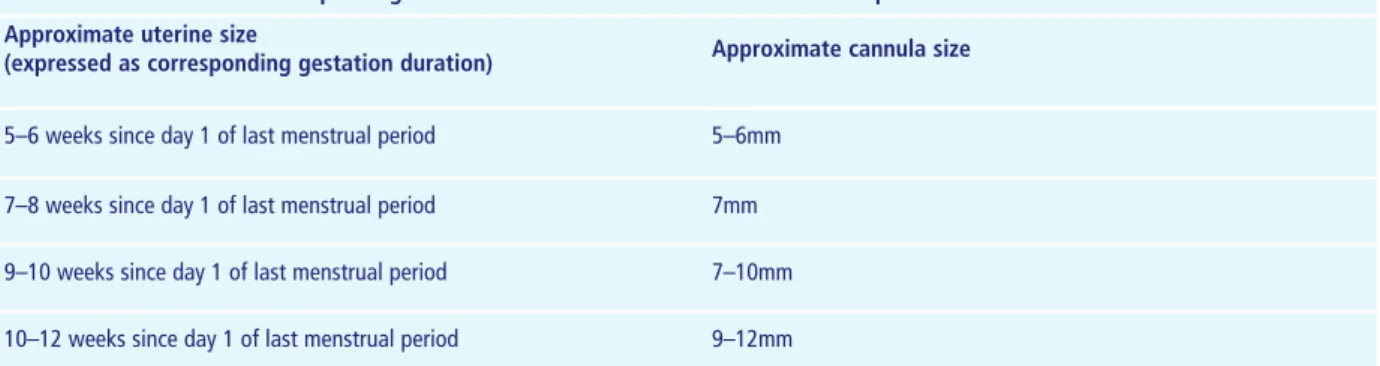
• The client should be given the opportunity to ask questions and seek any further support she may need. Table 3: Uterine size and corresponding cannula size to be used for manual vacuum aspiration
Approximate uterine size
(expressed as corresponding gestation duration) Approximate cannula size
5–6 weeks since day 1 of last menstrual period 5–6mm 7–8 weeks since day 1 of last menstrual period 7mm 9–10 weeks since day 1 of last menstrual period 7–10mm 10–12 weeks since day 1 of last menstrual period 9–12mm
12 World Health Organization (1994) Clinical Management of Abortion Complications: A Practical Guide, www.who.int/reproductive-health/publications/clinical_mngt_abortion_complications/text.pdf
Table 4: Early complications of surgically induced abortion (manual vacuum aspiration or dilatation and curettage) and their management
Complication Signs Verify Treatment
Uterus is found empty • Minimal material, or none, collected
• No pregnancy? Test • Ectopic pregnancy? Use
ultrasound if available • Possible recent complete
spontaneous abortion • Possible duplicate uterus: rare
• If (intrauterine) pregnancy is confirmed, repeat aspiration • Ectopic pregnancy is a
life-threatening complication. Provide emergency local treatment, or refer
Allergy to a drug • Hives (itchy skin eruption, swollen red bumps or patches), rash
• Occasionally: difficulty breathing
• Check drug allergies • Administer diphenylhydramine 25–50mg IV
• Severe reaction: 0.3cc epinephrine 1:1000 SC (can be repeated once, and then every 15–20 minutes)
• Oxygen, start IV, protect airway
Toxic reaction to lidocaine See Table 2
Incomplete evacuation • Tissue obtained does not correspond to the pregnancy duration. Signs can include vaginal bleeding and abdominal pain
• If there is any doubt this could be an indicator for using a curette. The procedure should be performed smoothly, and only by trained staff
• Repeat the procedure
Broken tip of plastic cannula
(rare) • Cannula is broken • Do not keep exploring the cavity. Use a fresh cannula to complete
the procedure. The detached tip can either be aspirated or left (it will be expelled spontaneously)
Perforation during hysterometry
(a procedure NOT recommended) • The instrument penetrates beyond the expected size of the
uterus
• Usually resolves without any need for surgical intervention. Observe for 24 hours or refer. Give ergometrine 0.2mg (add one or maximum two doses if bleeding is still present)
Suspected uterine or cervical perforation with incomplete evacuation
• Perforation during manual vacuum aspiration is rare when using flexible cannulas. Suspect perforation if the cannula passes through the uterine cavity without any resistance or goes in much further than expected given the uterine size, if it is difficult to withdraw the cannula, if omental fat or pieces of small bowel are found in the aspirate, or if there are signs of shock
• Stop the procedure
immediately and remove the cannula
• Manage shock if necessary (see Table 7); do not administer methergine or oxytocin if there is suspected omentum or intestinal loop hernia
• Transfer the patient to an obstetrics/gynaecology department at a hospital
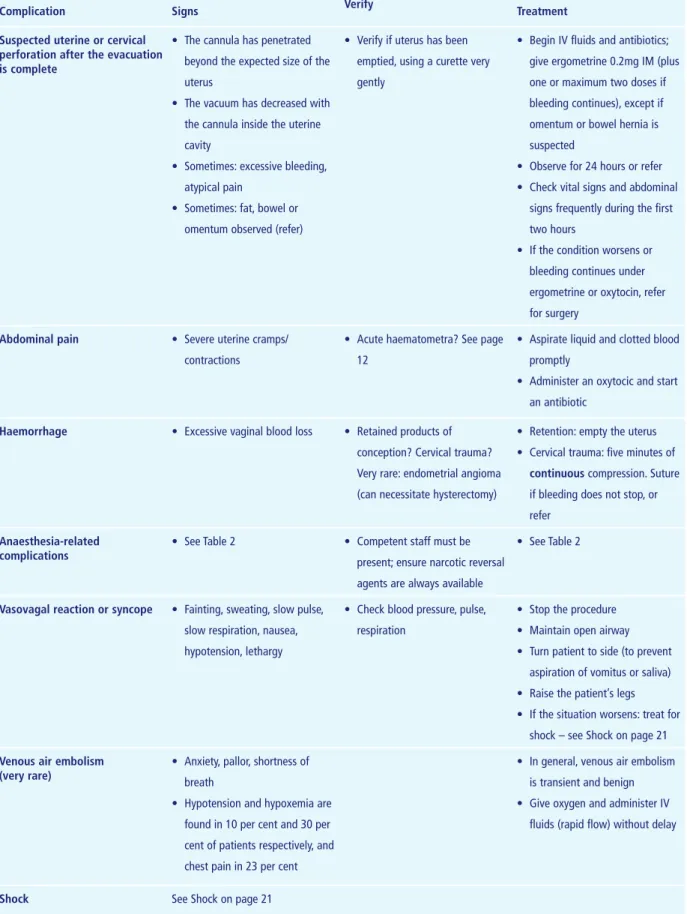
Table 4 continued: Early complications of surgically induced abortion (manual vacuum aspiration or dilatation and curettage) and their management
Complication Signs Verify Treatment
Suspected uterine or cervical perforation after the evacuation is complete
• The cannula has penetrated beyond the expected size of the uterus
• The vacuum has decreased with the cannula inside the uterine cavity
• Sometimes: excessive bleeding, atypical pain
• Sometimes: fat, bowel or omentum observed (refer)
• Verify if uterus has been emptied, using a curette very gently
• Begin IV fluids and antibiotics; give ergometrine 0.2mg IM (plus one or maximum two doses if bleeding continues), except if omentum or bowel hernia is suspected
• Observe for 24 hours or refer • Check vital signs and abdominal
signs frequently during the first two hours
• If the condition worsens or bleeding continues under ergometrine or oxytocin, refer for surgery
Abdominal pain • Severe uterine cramps/
contractions
• Acute haematometra? See page 12
• Aspirate liquid and clotted blood promptly
• Administer an oxytocic and start an antibiotic
Haemorrhage • Excessive vaginal blood loss • Retained products of conception? Cervical trauma? Very rare: endometrial angioma (can necessitate hysterectomy)
• Retention: empty the uterus • Cervical trauma: five minutes of
continuous compression. Suture if bleeding does not stop, or refer
Anaesthesia-related
complications • See Table 2 • Competent staff must be present; ensure narcotic reversal
agents are always available
• See Table 2
Vasovagal reaction or syncope • Fainting, sweating, slow pulse, slow respiration, nausea, hypotension, lethargy
• Check blood pressure, pulse, respiration
• Stop the procedure • Maintain open airway • Turn patient to side (to prevent
aspiration of vomitus or saliva) • Raise the patient’s legs • If the situation worsens: treat for
shock – see Shock on page 21
Venous air embolism
(very rare) • Anxiety, pallor, shortness of breath
• Hypotension and hypoxemia are found in 10 per cent and 30 per cent of patients respectively, and chest pain in 23 per cent
• In general, venous air embolism is transient and benign • Give oxygen and administer IV
fluids (rapid flow) without delay
Contraception
Provide contraception counselling: prescribe or provide the chosen method, and plan the follow-up. Give or prescribe emergency contraception. If contraception is not started, make an appointment for the initiation of contraception (if desired). All contraceptive methods are acceptable, including immediate intrauterine device insertion (in the absence of infection) if the woman fulfils the relevant World Health Organization eligibility criteria.13 Fertility awareness methods:
these can be started three months after the abortion, and meanwhile another method or abstinence should be used. Sterilization: to avoid regret later on, sterilization is only advisable if the choice is a rational one not influenced by the emotional stress that sometimes accompanies an abortion.
Follow-up during the next few weeks
Most providers make an appointment for follow-up after the procedure. The appointment is often fixed five weeks after the procedure, after the next menstruation. Some providers prefer two weeks. The date of an appointment also depends on the follow-up of contraception eventually started, prescribed or foreseen.
Make sure that the client is alert to signs that require urgent attention:
• bleeding for more than two weeks, or if the blood loss is greater than during the woman’s customary menses • severe pain of increasing intensity
• fainting; vomiting
• high grade fever for more than 24 hours; chills • foul-smelling or purulent vaginal discharge
See Table 4 for information about the early complications of surgically induced abortion and their management.
Dilatation and curettage
Usefulness
Dilatation and curettage is less safe and more painful than aspiration, so only use this method if aspiration or drug-induced abortion is not available. Managers and service providers should, if possible, replace dilatation and curettage by aspiration. Dilatation and curettage is used up to 12 weeks from last menstrual period. Expert providers can use it up to 14 weeks. The procedure is more than 99 per cent effective.
Dilatation and curettage procedure
The procedure involves dilating the cervix and scraping away the endometrium and the products of conception. Dilatation and curettage should never be performed forcefully, as uterine perforation, a complication that needs specialist management, can result.
Precautions
In case of acute cervicitis, endometritis or pelvic inflammatory disease, treat first by antibiotics, starting before the
dilatation and curettage (which can and should take place as soon as the antibiotic therapy has been started).
Pain control
See Pain control (and its possible complications) on page 9. Dilatation and curettage must be performed under paracervical block or, if needed, general anaesthesia, light sedation or spinal anaesthesia (level of L3–L4; inject 10–15cc of 0.25 per cent marcaine).
Technique
• Ask the patient, if conscious, to relax. Insert a comfortably warm sterile speculum of the smallest adequate size into the vagina.
• Carefully spread the labia with a gloved hand; slowly insert the speculum blades downward and inward. Slowly open the blades, letting the cervix appear between them. • Using a sponge forceps, wipe the cervix three times, in
a circular outward movement, using a compress with antiseptic.
• Grasp the cervix with the tenaculum that has been placed for injecting the paracervical block, or place a forceps at the 6 or 12 o’clock position. Straighten the uterus by exerting gentle traction on the tenaculum or the forceps placed on the cervix.
• Hysterometry: gently insert a uterine sound (hysterometer) bent to the estimated angle of the uterine flexion, until resistance is met. Read the depth of the uterine cavity by noting the level of the mucous or blood on the sound. Make a mental note of the depth of the uterine cavity.
Note that according to most practitioners and research results, this step is not only unnecessary but may also be dangerous and may carry a risk of perforation.
• Dilatation: start with the smallest Hegar dilator and gently insert it into the cervix. Proceed to the next larger size and continue size increase until the cervix is at least as open as the diameter of the loop of the curette that will be used (as a general rule, the dilator size will be equivalent to the number of weeks of gestation).
• Scrape the entire inner uterine cavity with an in and out motion; go to the depth of the uterus and scrape outward all along the uterine walls, in even strokes. Ensure that all products of gestation are removed (a grating sound/feeling will be noted). Do not scrape excessively as this may lead to intrauterine adhesions. • Withdraw the curette and check for bleeding. If there
is bleeding from the tenaculum site on the cervix, apply
continuous pressure with a gauze tampon for five minutes. Suture if needed.
• After the bleeding has stopped, remove the speculum.
Complications
The early complications and their management are described in Table 4. See section Induced abortion: management of immediate, early and late complications on page 20.
Post-operative care
• If necessary, place the patient on bed rest until fully conscious. Monitor vital signs every 30 minutes, or more often if needed. Do not leave the patient alone. Observation over 45–90 minutes is usually sufficient. • Attend to the patient’s emotional needs and concerns
during the recovery period. Counselling: discuss/start contraception; advise sexual abstinence for one week (and until desired by the patient); discuss possible pain and blood loss; possible complications; and alert signs (see section Induced abortion: management of immediate, early and late complications on page 20). Provide information on how and where to obtain care, day or night. Stress the need to use contraception as soon as sexual activity is resumed.
Medical (drug-induced) abortion
Drugs and timing
Medical abortion uses an anti-progestin, mifepristone (RU486), followed by a prostaglandin (misoprostol or gemeprost). Misoprostol can also be used alone, but the success rate is lower. Medical abortion is used from four up to seven or nine weeks, according to local protocols, and
after 14 weeks. Surgical methods are preferred from 9–14 weeks, but the efficacy of medical abortion during weeks 9–14 is being studied. Methotrexate, an anti-mitotic drug, followed by a prostaglandin, is sometimes used (see page 20).
Mifepristone and misoprostol do not require special storage and should be kept at room temperature (15–25°C; 59–77°F). Open bottles must be discarded after 30 days. Methotrexate and gemeprost should be kept in a cool place or in the refrigerator.
Precautions
A woman treated by medical abortion should have access to a medical facility equipped to provide emergency treatment of incomplete abortion, including aspiration (or dilatation and curettage), blood transfusion, treatment of shock and emergency resuscitation. Nevertheless, medical abortion is always safer than abortion induced by personnel who do not have the necessary skills or in an environment without the minimum medical standards.
A follow-up visit, usually two weeks later, is essential to confirm termination of pregnancy: bleeding is not proof of complete evacuation.
Abortion using mifepristone (RU486) followed by
misoprostol or gemeprost
Indications
See also Table 1 comparing surgical and medical abortion. • Woman’s preference.
• Very early gestation.
• Severe obesity (body mass index >30) without other cardiovascular risk factors.
• Fibroids.
• Uterine malformations. • Previous cervical surgery.
Contraindications
• Known allergy to mifepristone, misoprostol, gemeprost or other prostaglandins.
• Long-term corticosteroid therapy. • Chronic adrenal failure.
• Haemorrhagic disorder, concurrent anticoagulant therapy, severe anaemia.
• Confirmed or suspected ectopic pregnancy. • Undiagnosed adnexal mass.
• Intrauterine device in place (remove before administering mifepristone).
• Porphyria.
• Serious pelvic infection (signs: cervical motion tenderness, abnormal pelvic tenderness, adnexal mass, high fever, purulent cervical/vaginal discharge).
Conditions erroneously cited as contraindications
• Previous C-section(s), previous multiple birth(s), obesity, fibroids, uterine abnormalities.
• Controversy remains as to whether asthma, heart disease, cardiovascular risk factors, renal and hepatic insufficiency, epilepsy are or are not contraindications. Referral to a specialist is recommended.
• In breastfeeding women, although data are limited clinicians may advise women not to breastfeed (use pump, and discard breast milk) up to 72 hours after misoprostol or gemeprost administration.
Counselling
• Discuss the medical abortion methods available and the risks and benefits of each. Explain the side-effects (see Table 5). Explain sensibly the extremely (but not zero) small risk of major complications/death for all
options (there is a degree of risk involved in all medical interventions). The main complications – see Induced abortion: management of immediate, early and late complications on page 20 – are incomplete abortion, continuing pregnancy, haemorrhage, infection and adverse psychological sequelae (the latter in a very small number of women, influenced by pre-existing conditions). Bleeding and cramping indicate that the drugs are working.
• Discuss the symptoms that warrant contacting the on-call provider, which include the following.
– Heavy bleeding (give a criterion that is locally
understood, such as soaking two or more big tampons or pads each hour for two consecutive hours). Explain that with drug-induced abortion, bleeding may be greater than during a heavy period, and can be accompanied by clots. Ensure a supply of sanitary towels for hygienic management of bleeding. In very few cases, bleeding will need to be stopped by a surgical procedure. Spotting may last up to 30 days. Some women may experience a heavy bleeding episode 3–5 weeks after the abortion.
Table 5: Mode of action of drugs used for medical abortion, and their side-effects
Drugs Action Side-effects
Mifepristone • An anti-progestin that blocks the endometrial progesterone receptors
• Stops the pregnancy growing, softens the cervix, increases the uterine contractility, causes bleeding
• Nausea, vomiting, diarrhoea, headache, dizziness, fatigue, tachycardia
Misoprostol • A prostaglandin that makes the uterus contract • Cramping (more pain than menstrual pain in 25% of patients), nausea, vomiting, diarrhoea, transient fever, dizziness, headache, chills, rashes
Methotrexate • A folic acid antagonist that stops cellular division • Halts placental development
• Mild mouth sores, nausea, vomiting, gastro-intestinal disturbances, hot flushes, fever, chills
Gemeprost • A prostaglandin that makes the uterus contract • Nausea, vomiting, diarrhoea, transient fever, abdominal pain
Table 6: Regimens for medical abortion and their effectiveness
Regimens Effectiveness Use up to
Mifepristone + misoprostol or mifepristone + gemeprost
>96% 9 weeks from last menstrual period
Misoprostol alone >83% 12 weeks from last menstrual period
– No bleeding at all within 24 hours: after misoprostol, and if an intrauterine pregnancy was not confirmed before treatment, ectopic pregnancy must be considered and managed appropriately.
– Sustained fever (>38°C), or onset of fever in the days after misoprostol.
– Foul-smelling vaginal discharge.
– Severe, continuous or increasing abdominal pain. – “Feeling very sick” including weakness, nausea,
vomiting or diarrhoea, more than 24 hours after taking misoprostol.
• Discuss the length of time involved for the abortion to be complete and the need for several visits.
• Mifepristone is not teratogenic, but foetal malformations have been reported after first trimester use of misoprostol (and of methotrexate). Women must be strongly advised and motivated to complete the abortion, medically or using aspiration (or dilatation and curettage), once the initial medications have been administered. Inform the client that the follow-up visit to confirm complete abortion is essential. Make a formal appointment for day 14 (earlier visits may be needed if anxiety or complications arise).
• Vacuum aspiration must be available at any time for a patient experiencing a delay in the completion of the expulsion and who prefers aspiration rather than waiting for the medical abortion to be completed.
• Discuss contraception (see Chapter 5), to be started as soon as possible after the abortion. The formal appointment on day 14 should be used for checking that the procedure is complete, and discussing and providing contraception.
• Provide additional explanations:
– Oral administration means swallowing the tablet(s); in
buccal administration the tablets should be retained between cheek and gum for 30 minutes before swallowing; sublingual administration means putting the tablets under the tongue until they disappear. – Vaginal misoprostol insertion can be done at home:
the client must hand-wash before the insertion. Insert deeply, and lie still for 30 minutes.
• Pain control: the patient should have oral pain medications and instructions for use. Pain is typically
described as cramping, is most intense during expulsion and lasts 2–4 hours, after which it usually subsides. • Bleeding starts in 50 per cent of users before taking
misoprostol, but this drug is typically needed to complete the expulsion process.
• An embryo is small and is usually not seen before 6–7 weeks from last menstrual period.
Medical history, physical examination, laboratory, ultrasound
See Pre-abortion visit on page 6.
Regimens and follow-up
IPPF and World Health Organization recommended method
• Mifepristone 200mg followed 36–48 hours later by 800µg misoprostol (orally, sublingually, buccally or vaginally)14 at
once or in two doses of 400µg two hours apart,15 up to
nine completed weeks after last menstrual period.
US Food and Drug Administration method
• Day 1: Mifepristone 600mg (three 200mg tablets) taken as a single oral dose.
• Day 2: Rh-negative clients will be administered
Rh-immunoglobulin 50µg (the dose for pregnancies up to 12 weeks), no later than 48 hours after the abortion. • Day 3: Unless abortion has occurred and is confirmed
by clinical examination (or ultrasonography), administer misoprostol 400µg (two 200µg tablets) as a single oral dose.
14 This regimen (with vaginal misoprostol) is recommended by the World Health Organization. The continuing pregnancy rate is around 1 per cent, and the success rate is more than 96 per cent. See Bibliography, page 32: World Health Organization, 2003.
15 The World Health Organization states that repeated doses of misoprostol increase the side-effects while increased effectiveness is not proven. See Bibliography, page 32: World Health Organization, 2006.
Disclaimer
See Introduction on page 3. Some descriptions of medical abortion using mifepristone and misoprostol are partly based on a National Abortion Federation (NAF) protocol (March 2006) which reflects the US Food and Drug Administration (FDA)-approved labelling for mifepristone and which includes evidence-based alternatives to the FDA-approved regimen. NAF and FDA are not responsible for adverse clinical outcomes that might occur in the course of delivery of abortion services. NAF standards and protocols can be found at www.prochoice.org/pubs_ research/publications/downloads/professional_education/ cpgs_2007.pdf
• Day 14: Clinically assess for completion of abortion (or use ultrasonography or ß-hCG). Vacuum aspiration is recommended if a viable pregnancy is detected at this time because the pregnancy may continue and there is a risk of foetal malformation. Increase of hCG can indicate an ongoing pregnancy. If hCG levels have declined by 50 per cent in 24 hours, the pregnancy has probably ended. Serum hCG should be below 1,000 IU/L two weeks after mifepristone administration.
Other commonly used evidence-based regimens
Providers should be guided by accepted medical standards as well as by local regulations.
• Mifepristone 200mg followed 36–48 hours later by oral misoprostol 400µg, up to seven completed weeks after last menstrual period (it is less effective after seven weeks). After taking the prostaglandin, observe the woman for 4–6 hours. Inspect sanitary pads and bedpans to verify that abortion has taken place. Alternatively, misoprostol can be taken at home.
• These regimens can be completed with an additional dose of misoprostol 800µg administered orally or vaginally in women with an incomplete abortion on day seven. This is necessary in about 10 per cent of clients. Compared to oral misoprostol 400µg, using misoprostol 800µg vaginally has fewer gastrointestinal side-effects and increases the proportion of women with onset of bleeding and likely expulsion of pregnancy within four hours of misoprostol administration. Although misoprostol is formulated for oral use, it is more effective if given vaginally or sublingually. • Mifepristone 200mg, followed 36–48 hours later by
gemeprost 1mg vaginally is also used. Gemeprost is quite expensive, must be kept frozen and induces more side-effects.
• In China, five or six doses of 25mg mifepristone over three days, followed by a prostaglandin, is used up to 49 days of gestation.
• Other variants have been tested. Sulprostone and 15-methyl PGF2α are no longer used.
• Home administration of misoprostol has been found to be safe and effective and is highly acceptable to patients. If an Rh-negative client is going to take misoprostol at home, some protocols advise the administration of Rh-immunoglobulin on day 1. In a gestation of 6–12 weeks, administer 50µg IM; at or beyond 13 weeks’ gestation, administer 300µg IM.
Always ensure the availability of a back-up clinician to assess possible complications. This is critical with medical abortion as bleeding is less predictable, and heavy or persistent bleeding may occur at home. For treatment, vacuum aspiration, uterotonic agents, IV fluid administration and blood transfusion may be necessary, and can be provided in emergency only in primary health care clinics and hospitals.
Side-effects of the drugs
See Table 5.
Managing complications
See Induced abortion: management of immediate, early and late complications on page 20.
It is essential to have staff trained in re-evacuation of the uterus, adequate equipment and a functioning referral system.
Abortion using misoprostol alone
This regimen is less effective and has more side-effects than the combination regimens with mifepristone or methotrexate pre-treatment, but where these drugs are not accessible, medical abortion can be induced if misoprostol is the only drug available. Effectiveness is lower than for surgical methods (84 per cent compared with 95 per cent). However, the safety level is much higher than resorting to unsafe, clandestine, illegal abortion.
Other regimens have been recommended: • Repeated doses of misoprostol 800µg, vaginally or
sublingually (oral intake is less efficient), every three hours until abortion takes place, but with a maximum of three doses. With three-hourly intervals the side-effects are stronger than with 12-hourly intervals (see below). • Repeated doses of misoprostol 800µg vaginally every 12
hours until abortion takes place, but with a maximum of three doses. Sublingual or oral administration at 12-hourly intervals is not sufficiently effective: 9 per cent of pregnancies continue if used up to nine weeks’ gestation. The failure rate is likely to be even higher if administered up to 12 weeks’ gestation.
• With the two above regimens the complete abortion rate is 84 per cent, continued pregnancy rate is around 5 per cent, and the incomplete abortion (retained products) rate is approximately 11 per cent.
• Other protocols use misoprostol 800µg orally, vaginally or sublingually, which is repeated if abortion has not started by day 8, and again at day 11 if abortion has still not started. Follow-up is on day 21.
If Rh-immunoglobulin is provided to Rh-negative women, administer 50µg not later than 72 hours after the abortion. This is not necessary before six weeks after last menstrual period.
Foetal malformations have been reported after first trimester use of misoprostol. Therefore, women must be strongly advised to complete the abortion, either medically or surgically, once the medication has been administered.
Abortion using methotrexate + misoprostol
This regimen can be used where mifepristone is not
available. The combination is more than 90 per cent effective for pregnancies up to nine weeks after last menstrual period.
Once methotrexate is administered, the abortion must be completed, because both drugs are teratogenic. Therefore,
women must be strongly advised to complete the abortion, either medically or surgically, once the medication has been administered.
Contraindications
• Severe anaemia. • Known coagulopathy. • Acute liver or renal disease. • Uncontrolled seizure disorder. • Acute inflammatory bowel disease.
Administration
• Day 1: Administer methotrexate 75mg IM or 50mg oral. As with the combined mifepristone + misoprostol regimen, give instructions about side-effects, possible complications, follow-up and future contraception. After administering a prostaglandin (misoprostol, gemeprost or other), observe the woman for 4–6 hours. Inspect sanitary pads and bedpans to verify that abortion has taken place. The following next steps can take place at the health centre or at home, depending on distances and client’s preference.
• Days 5 to 7: If no bleeding has occurred, administer misoprostol 800µg orally, sublingually or vaginally. • Day 9: If no bleeding has occurred, administer a repeat
dose of misoprostol 800µg.
• Day 11: If no bleeding has occurred, administer a third dose of misoprostol 800µg. A maximum of three doses of misoprostol can be administered. If the client does not abort after the third dose, a surgical procedure is recommended (preferably aspiration; or a dilatation and curettage if aspiration is not available).
If Rh-immunoglobulin is routinely provided to Rh-negative women, administer at the same time as the misoprostol, or not later than 48 hours after the abortion. This is not necessary before six weeks after last menstrual period.
Induced abortion: management of immediate,
early and late complications
Staff must be trained and experienced, the equipment adequate and the referral system reliable. Staff must be able to (re-)evacuate a uterus, in cases of incomplete abortion or failure of medical abortion. Table 4 describes the early complications for surgical abortion and their management.
See also the World Health Organization publication on managing complications,16 especially the charts (which can
be printed and displayed on walls) on pages 9, 16, 34, 39 and 46. Slightly modified versions can be found in Annex 2 on pages 35–39 of this publication.
Complications which can occur after first trimester abortion, whatever the technique, are considered next. They are failed abortion, acute haematometra, shock, severe bleeding, infection and intra-abdominal injury.
Continuation of pregnancy (failed abortion)
Failed abortion can occur after surgical and medical attempts; it requires a repeat aspiration (preferably) or dilatation and curettage. There seem to be scarce data, if any, about medical abortion used in cases of failed abortion. Any woman presenting with an incomplete abortion may also be experiencing one or more life-threatening complications: shock, severe vaginal bleeding, infection and sepsis (see pages 21–24).
16 World Health Organization (1994) Clinical Management of Abortion Complications: A Practical Guide, www.who.int/reproductive-health/publications/clinical_mngt_abortion_complications/text.pdf
Acute haematometra (sometimes called post-abortion
syndrome)
Acute haematometra can occur from a few hours to three days after abortion. The uterus is tender and distended by blood, which causes rectal pressure. Cramping is present, together with vagal symptoms (tendency to faint, pallor, bradycardia, low blood pressure, low respiration, sweating). There is minimal or no vaginal bleeding. The treatment consists of prompt aspiration of both liquid and clotted blood, leading to rapid resolution. An oxytocic (misoprostol, oxytocin or ergometrin) is administered after the repeat evacuation. Antibiotherapy is added.
Shock
Signs
Shock results from blood loss and/or sepsis, pain being an aggravating factor. Oxygen supply to tissues is interrupted. It is a highly unstable condition with a high risk of mortality. Possible signs are fast (>110/minute) and weak pulse; low blood pressure; pallor of the skin around the mouth or on the palms; pale conjunctiva; rapid respiration (>30/minute); anxiety; confusion; dizziness; loss of consciousness. Treat immediately, and start IV perfusion at once. Treat the shock first; then treat the cause.
Initial treatment
Refer, if necessary, according to local capacities and protocols, but start initial treatment immediately. • Make sure airway is open.
• Check vital signs (pulse, blood pressure, breathing). • Secure IV line.
• Keep the patient warm.
• Turn body and head to the side (if the woman vomits, she is less likely to aspirate).
• Raise legs (or the foot of the bed). However, if this causes difficulty in breathing, there may be pulmonary oedema or heart failure. In this case, lower the legs and raise the head to relieve fluid pressure on the lungs.
• Give IV Ringer’s lactate or isotonic solution 1L for 15–20 minutes (16–18 gauge needle). It may take 1–3L to stabilize a patient in shock. Do not give fluids by mouth.
• If available, give oxygen 6–8L/minute (mask or nasal cannula).
• Remove any visible products of conception in the cervical os.
• If haemoglobin is <5g/dL or haematocrit <15%, a blood transfusion is necessary.
• Strictly monitor the amounts of fluids/blood given (use a chart).
Table 7: Signs of early and late shock
Signs of early shock (can usually be treated at
the primary health care level) Signs of late shock (must usually be treated at referral level)
Pulse >110/minute Fast and weak
Blood pressure Systolic <90mmHg Very low
Pallor Inner eyelid, palms, around the mouth Very pale
Breathing >30/minute Very fast and shallow
Awareness Awake, anxious Confusion or unconsciousness
Lungs Clear Dense
Haemoglobin ≥8g/dL <8g/dL
Haematocrit ≥26% <26%
Urine output ≥30mL/h <30mL/h
• Monitor urine output. If urine is very dark, if the output is decreased or absent, refer. Shock, blood volume depression (for example due to haemorrhage or severe diarrhoea), sepsis, and ureterine damage can cause oliguria or anuria. Rapid correction of the circulating volume is necessary, as well as the elimination of the underlying cause. Infuse quickly with fluids: 50–200mL of normal saline or lactated Ringer solution over a 10-minute period.
• If there is infection (fever, chills, pus) give broad spectrum antibiotics, IV preferably, or IM. No medications by mouth.
• Laboratory work is helpful but must not cause any delay in treatment. Request haemoglobin, haematocrit, blood group and rhesus pre-transfusion (type and cross-match), platelet count and, if available, blood electrolytes, pH, urea and/or creatinine.
Signs of stabilization
• Increasing blood pressure; systolic blood pressure ≥100mmHg.
• Heart rate <90/minute.
• Conscious, reduced confusion/anxiety. • Skin colour improves.
• Respiration rate decreases or is <30/minute. • Urine output increases and is >100mL/4h.
Continuing treatment for shock
• During the following steps prepare concomitantly for referral; if the situation worsens, refer without delay. • If patient is not stabilizing after 20–30 minutes:
– continue monitoring, oxygen and IV fluids – reassess the need for antibiotics
– promptly begin the treatment of underlying cause(s) of shock
• If patient is not stabilized after two hours, refer immediately.
• If patient is stabilizing:
– gradually shut off oxygen. If this causes worsening of some or all the signs in Table 7, turn oxygen back to 6–8L/minute
– decrease IV fluid administration to 1L/6–8h – continue antibiotics if they have been started – treat the underlying cause(s) of shock
Severe genital bleeding
Signs
• Mode