MEASURING THE COMPETITIVENESS OF SMALL, MEDIUM
AND MICRO ENTERPRISE CONTRACTORS THROUGH THE
USE OF THE REGISTER OF CONTRACTORS
By
Zanele Bridgette Nompumelelo Gasa
A thesis submitted in partial fulfilment of the requirements for the degree of Philosophiae Doctor in the Department of Construction Management, Faculty of Engineering, the Built Environment and Information Technology, Nelson Mandela
Metropolitan University.
Promoter: Professor W. Shakantu Co-Promoter: Professor J.J. Smallwood
ABSTRACT (ENGLISH)
This research focuses on and summarises the methodology followed to demonstrate that the South African construction industry can use the Construction Registers Service, in particular the Register of Contractors, as a tool to measure the competitiveness of Small, Micro and Medium Enterprises (SMMEs).
The Register of Contractors (RoC) was developed by the Construction Industry Development Board (cidb) in terms of the Construction Industry Development Board (cidb) Act 38 of 2000. As a tool, it was designed to offer a basis for sustainable constructor development, growth, improved delivery, performance and sustainable empowerment. It was also developed to be used by the construction industry to, inter alia, and provide statistical data which would enable the construction industry to better understand the contracting capacity in South Africa. Beyond providing the statistical data, the register of contractors was meant to be enhanced with functionalities that would measure the growth and performance of contractors as they apply business practices that improve their value offering to the construction industry as a whole.
This research looks at how this tool can be used by the construction industry to measure the competitiveness of the contractors within the selected grades, with the intent of demonstrating the overall value of the RoC as a tool. The research undertaken looks at how the use of the RoC can measure the competitiveness of a targeted group of small contractors. The research limits itself to the entry levels of contractors registered with the cidb between grades 2 and 5 with a view to establish a benchmark for contractor competitiveness within those bands. The research further proves the correlation between contractor capability and the ‘ability’ to be competitive in growing their value proposition and businesses. The unit of study for the purposes of this research is at firm level drawing from a reflection on who is an active participant in the South African construction industry particularly as it pertains to the smaller contractors within the targeted group elucidated above. The focus of the research is on the efficacy of the RoC as a tool that identifies the areas needing targeted development to support SMMEs and the subsequent demonstration of improved business processes within that sector.
The qualitative research methodology was followed through this study as its nature was such that there was no requirement to rely only entirely on statistics or numbers due to the articulated problem there needed to be a qualitative enquiry into data needed which would adequately land to a significant synthesis on the responses and arrive at suitable solutions to the identified problem. The qualitative research methodology followed by this study was used to gain insight into the construction SMMEs’ attitudes towards the sector within which they trade, their behaviours, their value systems [to the extent where this was possible], their concerns, their motivations and aspirations. All of these, the study concluded that they inform the business decisions which the SMMEs make. How structured information was collected and analysed provided a synthesis of themes and aided in extracting meaning.
The main findings of the research were that there is no shared understanding within the local construction industry of what contractor competitiveness is and to what extent it would benefit both the industry and the SMME sector. As a result of this competitiveness could not be measured and there was no clarity as to what tools of measure could be used to forecast the capabilities of the industry. This research was focused on exploring how the RoC can be used to measure improved capability and competitiveness on the part of SMME contractors.
The implications of these findings are that there would now be improved and measurable competitiveness allowing the contractors to bid for work both within their provincial regions but also outside of their geographical location and to measure their growth as they achieve higher grading statuses within the register of contractors (RoC). The efficacy of contractor development programmes would also improve as they go beyond enhancing contractor capacity but also include competence improvements, training for business acumen, improved capability and innovation.
The conclusion is that South Africa’s construction industry could achieve sustainable development and growth as a result of SMME contractors whose competitiveness would have been measured through the use of the RoC tool.
The main recommendation is that there be a clear understanding of competitiveness and what its benefits to the South African construction industry are whilst at the same time the RoC is acknowledged as the tool embedded with functionalities able to measure this competitiveness amongst graded contractors. The RoC would allow construction clients to not only measure contractor competitiveness but also that they may have an improved ability to measure the direct impacts of contractor development interventions.
OKUMAYELANA NALOLUCUBUNGULO (ZULU)
Lolucubungulo lugxile ekubhekeni izimo ezinqala ngaphakathi komkhakha wezokwakha. Lubuka igalelo losonkontilaka abasebancane kulomkhakha ekuzithuthukiseni kanti futhi nemizamo eyenziwe uHulumeni endimeni edlalwe uhlu olushicilwelwe iBhodi yomkhakha wezokwakha (i-cidb). Umbhali walolucubungulo ukholelwa ekutheni loluhlu lungasetshenziswa hhayi kuphela ekuthuthikiseni ononkontilaka kodwa futhi ekwenzeni ukuthi bakhule kulo lona loluhlu baze bakwazi ukuthola amathuba angcono emisebenzi.
Uhlu ekukhulunywa ngalo lapha lwashicilelwa i-cidb ngomgomo womthetho kaHulumeni we-Act 38 of 2000. Luyithuluzi elenzelwe ukuba likhulise umkhakha wezokwakha, lithuthukise osomabhizinisi abasebancane, likhuthaze imigomo efanelekile ekwakheni (improved delivery). Enye injongo yokushicilela lelithuluzi kwakuwukwenzela ukuthi kwaziwe inani labo osonkontilaka, ubulili babo nokuthi bagxile-phi ngokwezindawo zokusebenza. Konke loku kwakufanele ukuze uHulumeni kanye nabanye abaqashi bazi ukuthi uma kusikelwana ngemisebenzi bangaki na ononkontilaka abazokwazi ukufeza izidingo zemiphakathi esiphila kuyo?
Lolucubungulo luzobheka ithuluzi elasungulwa umkhakha wokwakha ekutheni lingakwazi na ukudlondlobalisa osonkontilaka abasafufusa phakathi kwalemikhakha (grades) ababekwe kuyo? Kuzobhekwa futhi ubugugu balo lona lelithuluzi. Akuzoqxilwa kubo bonke osonkontilaka, kodwa kulabo abasabancane ngokwamabhizinisi abo ababekwe emazingeni kusukela ku-2 kuya ku-5 ngokoshicilelo le-cidb. Kuzobhekwa amakhono abo labosonkontilaka, kubhekwe futhi izinkomba ezingabadlondlobalisa ngokwamabhizinisi.
Okunye okuhloswe yilolucubungulo ukubheka ukuthi umkhakha wezokwakha uyakwazi na ukukhiqiza amathuba anele isikhathi eside kwenzelwa osonkotilaka belu nokuthi uyakwazi na ukuqhubeka wakhe amathuba azokhuthaza ukukhula kwabo. Ekugcineni okufanele kufezwe yilolucubungulo wukuthi uhlu olushicilelwe losonkontilaka lungasiza ekukhuthazeni udlondlobalo losonkontilaka abancane.
TABLE OF CONTENTS
ABSTRACT (ENGLISH) ... i
OKUMAYELANA NALOLUCUBUNGULO (ZULU) ... iv
TABLE OF CONTENTS ... v
LIST OF TABLES ... xi
LIST OF FIGURES ... xiii
DECLARATION ... xv
NMMU DECLARATION STATEMENT ... xvi
ACKNOWLEDGEMENTS ... xvii
1.0 INTRODUCTION ... 1
1.1. The problem and its setting ... 1
1.2. The background ... 4
1.2.1. Universal definition of competitiveness ... 4
1.2.2. Local Definition of competitiveness ... 6
1.2.3. Competitiveness defined ... 9
1.3. Problem formulation ... 11
1.3.1. Defining the Research Problem ... 11
1.3.2. Feasibility of solving the formulated problem ... 15
1.4. The statement of the problem ... 16
1.5. The sub-problems ... 16
1.6. The hypotheses ... 17
1.7. The importance of the study ... 18
1.8. The aims and objectives of the study ... 19
1.9. The Research Methodology Outline ... 22
1.10. The delimitation of the study ... 23
1.10.1. Geographic delimitation ... 23
1.10.2. Study delimitation ... 24
1.11. Summary of the Problems sought to be solved by the study ... 25
1.12. The definition of terms ... 27
1.13. The abbreviations used in the study ... 31
1.14. The assumptions of study ... 32
1.14.1. 1 ... 32
1.14.2. 2 ... 32
1.14.4. 4 ... 32 1.14.5. 5 ... 33 1.15. Thesis structure ... 33 1.16. Concluding Remarks ... 36 2.0 LITERATURE REVIEW ... 37 2.1 Introduction ... 37
2.2 Global Definition of Competitiveness ... 38
2.3 The Small, Medium and Micro Enterprise Environment in South Africa and related Competitiveness ... 41
2.4 The effect of experience on contractors' competitiveness ... 47
2.5 Entrepreneurship and its effect on contractors' competitiveness ... 48
2.6 South Africa’s Outlook ... 50
2.7 Competition and competition law in South Africa ... 53
2.8 The Characteristics of the South African Construction Industry ... 55
2.9 Contractor Development Programmes in South Africa ... 58
2.9.1. The Eastern Cape Contractor Incubator Development Programme (EC CIDP) ... 59
2.9.2. How are the SMME contractors selected? ... 61
2.10 The Construction Management Discipline ... 62
2.11 The cidb and the Construction Registers Service ... 63
2.12 Contractor Competence ... 66
2.12.1. Intellectual competences ... 66
2.12.2. Managerial competences ... 67
2.12.3. Emotional competences ... 67
2.13 Small Medium Micro Enterprises (SMMEs) in Context ... 68
2.14 Qualitative and Quantitative Classification of Construction SMMEs ... 70
2.15 Globalisation and its effect on SMME contractors. ... 73
2.16 Growing small construction businesses ... 76
2.17 Economic Outlook of the Eastern Cape Province ... 78
2.18 Concluding Remarks ... 80
3.0 THEORETICAL AND CONCEPTUAL FRAMEWORK ... 81
3.1 Introduction ... 81
3.2 Theoretical Framework Development ... 82
3.5 Nature of methodology followed ... 88
3.5.1 What is the origin of the theory that is emerging? ... 88
3.5.2 What are the fields of research which influence this study? ... 89
3.5.3 What is the current focus of the RoC in relation to measurement of competitiveness? ... 90
3.5.4 What the RoC has not yet managed to achieve in relation to measurement of competitiveness? ... 91
3.5.5 What is the evident concept which is beginning to take shape? .... 93
3.5.6 Forward and Backward linkages of theoretical concept into pursued study. ... 95
3.6 Concluding Remarks ... 97
4.0 RESEARCH METHODOLOGY ... 98
4.1 Introduction ... 98
4.2 Research Philosophy and Methodology Design ... 101
4.2.1 Ontological Position/ View ... 102
4.2.2 Epistemological View ... 103
4.3 Reasoning Level ... 104
4.3.1 Deductive versus Inductive Reasoning ... 104
4.4 Data ... 108
4.4.1 Data Design ... 110
4.4.2 Data Recordal ... 111
4.4.3 Primary data ... 111
4.4.4 Secondary data ... 112
4.4.5 Criteria governing the admissibility of the data ... 112
4.4.6 Data collection... 113
4.4.7 Population and sampling ... 113
4.4.8 Validity/Reliability of data... 115
4.5 Summary of Research Methodology for this study ... 116
4.6 Concluding Remarks ... 118
5.0 INSTRUMENT DESIGN AND FIELDWORK ... 119
5.1 Introduction ... 119
5.2 Current Measurement initiatives within the construction industry ... 120
5.2.1 What is the South African Construction Industry measuring? ... 122
5.3 The cidb Assessment Criteria ... 124 5.3.1 Setting assessment criteria as a methodology for
competitiveness ... 125
5.4 Assessment Criteria of Construction SMMEs ... 126
5.5 Designing the instrument: Considerations for the Research ... 128
5.5.1 Dominant questions of The Research ... 130
5.6 Designing the instrument: Consideration for the SMME Contractor ... 131
5.7 Designing the instrument ... 132
5.7.1 The research instrument ... 132
5.8 Biographical Information ... 134
5.8.1 The respondents and context of the observations... 134
5.8.2 The research process ... 135
5.9 Analysis and results of study ... 137
5.9.1 Interpreting the results ... 137
5.9.2 Writing the Thesis ... 137
5.10 Concluding Remarks ... 138
6.0 DATA PRESENTATION, ANALYSIS AND INTEPRETATION. ... 139
6.1 Geographical context of the Eastern Cape ... 139
6.2 National context and comparisons ... 140
6.3 Context of Research Pool ... 142
6.4 Interviews and presentation of Data ... 142
6.4.1 Section A and B: Presentation of Data ... 143
6.4.2 Section C: Presentation of Data ... 148
6.4.3 Section D: Presentation of Data ... 152
6.4.4 Section E: Presentation of Data ... 153
6.4.5 Section F: Presentation of Data ... 156
6.4.6 Section G and H: Presentation of Data ... 160
6.5 Results from interview discussions ... 162
6.6 Findings and Analysis of Results from interviews ... 184
6.6.1 Section A: Coding Information ... 184
6.6.2 Section B: Particulars of Entrepreneur ... 185
6.6.3 Section C: Legal and Environmental Compliance ... 194
6.6.4 Section D: Performance Management ... 199
6.6.5 Section E: Awareness of the Environment ... 203
6.6.6 Section F: Business growth ... 208
6.7 Overall analysis of Results and evaluation of Hypotheses ... 219
6.7.1 Hypothesis 1: SMMEs fail to acquire all the resources they need to be successful in business; ... 220
6.7.2 Hypothesis 2: Construction SMMEs are inadequately trained for the work they are contracted to do; ... 221
6.7.3 Hypothesis 3.1: There is an insufficient amount of continuous work opportunities geared at SMMEs by the Construction industry, and ... 223
6.7.3 Hypothesis 3.2: SMMEs lack the requisite business competencies such as marketing and public relations; ... 223
6.7.4 Hypothesis 4: The focus on SMME development is not on business development, rendering the measurement of their competitiveness using the RoC unsuccessful. ... 225
6.7.5 Hypothesis 5: SMMEs lack the resources to establish operations nationally. ... 226
6.8 The RoC as a tool of Measure for Competitiveness ... 227
6.8 Concluding Remarks ... 231
7.0 SUMMARY, CONCLUSIONS AND RECOMMENDATIONS ... 232
7.1 Purpose of Chapter... 232
7.2 Research Overview ... 233
7.3 Research Problems and Questions ... 233
7.4 Research Aims and Objectives ... 234
7.5 Theoretical and Conceptual Issues ... 235
7.6 Methodological Framework ... 236
7.7 Summary of Key Findings ... 236
7.7.1 Findings concerning Certification and Continuous Learning: ... 237
7.7.2 Findings pertaining to Legal and Environmental Compliance: ... 237
7.7.3 Findings pertaining to Performance Management:... 238
7.7.4 Findings in relation to Awareness of Environment: ... 239
7.7.5 Findings regarding Business Growth: ... 239
7.7.7 Findings in relation to Innovation: ... 240
7.8 General Findings ... 241
7.9 Overall Conclusion ... 243
7.10 Implications of Research Findings ... 244
7.12 Critical Review of the Research Methodology followed ... 246
7.13 Recommendations ... 246
7.14 Recommendation for further research ... 250
7.15 Concluding remarks ... 250 8.0 REFERENCES ... 252 8.1 Bibliography ... 259 8.2 Internet Sources ... 259 8.3 Official Publications ... 260 ADDENDA ADDENDUM A: Nelson Mandela Metropolitan University Plagiarism Statement ... 263
ADDENDUM B: Declaration Statement ... 264
ADDENDUM C: Notification Letter ... 265
ADDENDUM D: SMMEs INTERVIEWED ... 267
ADDENDUM E: INTERVIEW GUIDE ... 275
LIST OF TABLES
(a) Table1.1: Checklist for testing the feasibility of the research problem ... 14
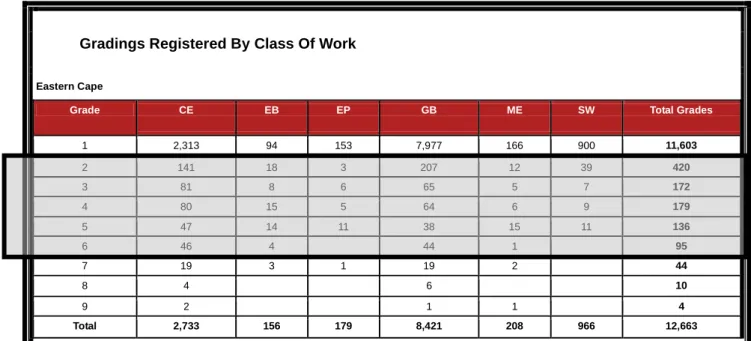
(b) Table 1.2: Eastern Cape registered contractors (2008) ... 26
(c) Table 1.3: Eastern Cape registered contractors (2011) ... 26
(d) Table 2.1: South Africa’s economic outlook ... 51
(e) Table 2.2: cidb Registered Contractors (nationally) 2010 ... 66
(f) Table 4.1: Philosophy of Research ... 102
(g) Table 4.2: Summary of research methodology pursued by study ... 116
(h) Table 5.1: Required qualifications ... 123
(i) Table 5.2: Assessment criteria per group per output ... 125
(j) Table 5.3: Instrument design according to the categories of interest ... 132
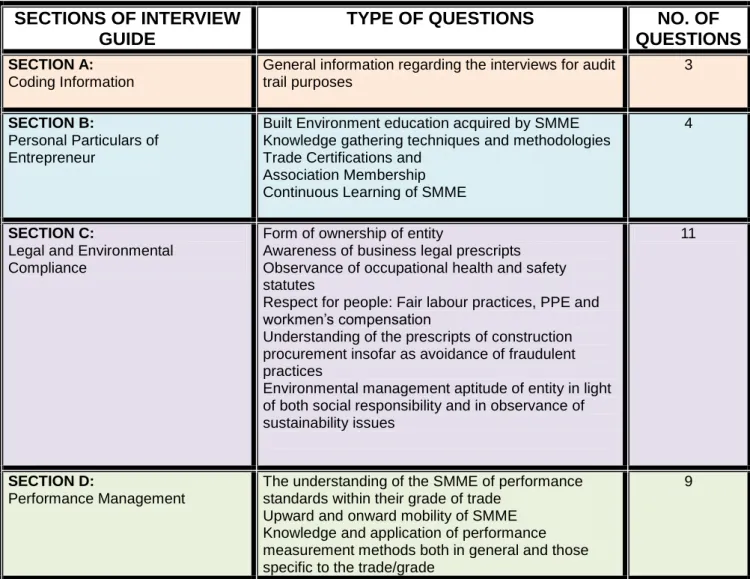
(k) Table 5.4: The interview guide and typical questions asked ... 133
(l) Table 5.5: Distribution of Questions ... 136
(m) Table 6.1: Number of registered contractors in the Eastern Cape ... 140
(n) Table 6.2: Regional breakdown of active registered contractors in all | Provinces of South Africa... 141
(o) Table 6.3: Contractors interviewed per grade per area of specialization ... 143
(p) Table 6.4: National representation ... 145
(q) Table 6.5: Frequency of bidding percentages for contractors interviewed per grade ... 157
(r) Table 6.6: Contractors Interviewed and the conclusivity of their responses ... 163
(s) Table 6.7: Individual responses to the interview guide: Sections A – B ... 168
(t) Table 6.8: Individual responses to the interview guide: Section C ... 171
(u) Table 6.9: Individual responses to the interview guide: Sections D and E ... 174
(v) Table 6.10: Individual responses to the interview guide: Section F ... 177
(w) Table 6.11: Individual responses to the interview Guide on Sections G and H ... 180
(x) Table 6.12 Findings on upgrades ... 187
(y) Table 6.13 Findings on built environment qualifications ... 187
(z) Table 6.14: Findings on highest level of qualification achieved ... 188
(aa) Table 6.15: Findings on knowledge extraction and its use within the business ... 188
(bb) Table 6.16: Findings on business efficiency ... 189
(cc) Table 6.17: Findings on legal form of ownership ... 195
(dd) Table 6.18: Findings on observance of health and safety statues ... 195
(ee) Table 6.19: Findings on workmen’s compensation ... 196
(ff) Table 6.20: Findings on contracts awarded since initial registration ... 200
(hh) Table 6.22: Findings on downgrades ... 201
(ii) Table 6.23: Findings on benefits of industry support programmes ... 205
(jj) Table 6.24: Findings on contractors’ understanding of the construction industry .... 205
(kk) Table 6.25: Findings on familiarity of contractors with SBDA ... 205
(ll) Table 6.26: Findings on location of business ... 210
(mm) Table 6.27: Finding on public relations and marketing done by contractors ... 210
(nn) Table 6.28: Findings on number of years established ... 210
(oo) Table 6.29: Findings on frequency of bidding ... 211
(pp) Table 6.30: Findings on exposure to contractor performance ... 211
(qq) Table 6.31: Findings on cancellation of contracts ... 214
(rr) Table 6.32: Findings on partnerships and alliancing ... 214
(ss) Table 6.33: Findings on procurement of contracts strategies ... 217
(tt) Table 6.34: Required financial and works capability for grade applied for ... 218
LIST OF FIGURES
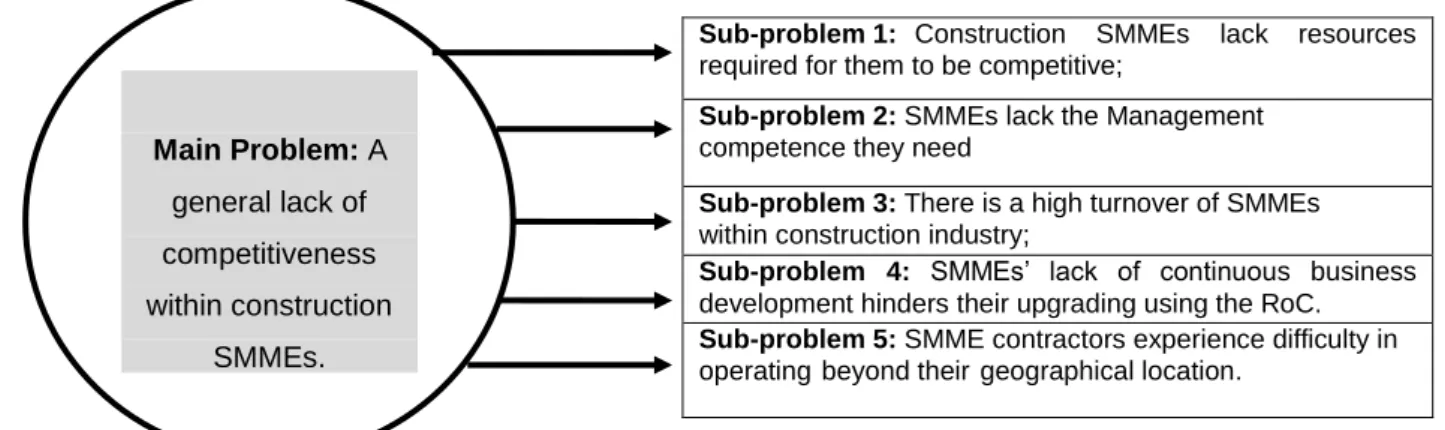
Figure 1.1: Pictorial representation of main problem and to sub-problems ... 17
Figure 2.1: SMME contractors and their capabilities ... 43
Figure 2.2: SMME contractors, capabilities added to competitiveness suite ... 44
Figure 2.3: Balance of competitiveness and what it yields... 47
Figure 3.1: Theoretical framework: Independent vs Dependent variables ... 83
Figure 3.2: Theoretical framework: Independent + Moderator = Dependent variables .. 84
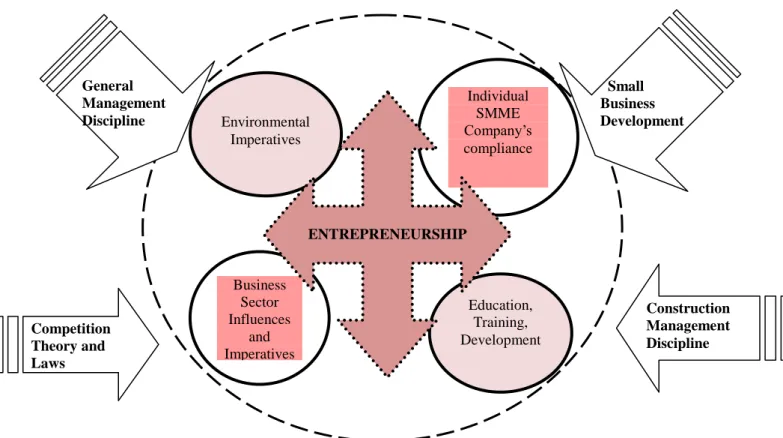
Figure 3.3: Theoretical framework: Independent + Intervening = Dependent variables 85 Figure 3.4 Disciplines affecting the conceptual framework ... 89
Figure 3.5 Forward and backward linkages of concept into study ... 90
Figure 3.6 Central location of conceptual framework ... 95
Figure 3.7 Linkages of theoretical concept ... 96
Figure 4.1: The extended ‘continuum’ in research methodology (ontology) ... 102
Figure 4.2: The extended ‘continuum’ in research methodology (epistemology)... 103
Figure 4.3: The extended ‘continuum’ in research methodology (reasoning) ... 105
Figure 4.4: The extended ‘continuum’ in research methodology (data) ... 108
Figure 4.5: The extended ‘continuum’ in research methodology (data) ... 110
Figure 4.6: The extended ‘continuum’ in research methodology (perception) ... 111
Figure 4.7: The extended ‘continuum’ in research methodology (output) ... 111
Figure 5.1: Distribution of questions ... 136
Figure 6.1: Percentage of sample: Contractors interviewed per grade ... 144
Figure 6.2: Contractors interviewed per grade and per area of specialization ... 145
Figure 6.3: Gender Split/ ratio of the total number of Contractors interviewed ... 147
Figure 6.4: Gender Split/ ratio of the total number of Contractors interviewed ... 147
Figure 6.5: Contractors interviewed relative to their qualifications ... 147
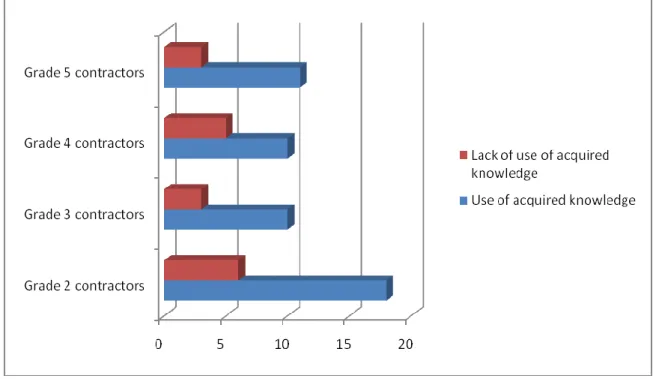
Figure 6.6: The extent to which SMME contractors use the knowledge acquired through their qualifications ... 148
Figure 6.7: Legal form of ownership of construction businesses interviewed ... 148
Figure 6.8: Contractors’ compliance with legislation per grade interviewed ... 149
Figure 6.9: Contractors’ registration with representative labour unions or the bargaining council ... 149
Figure 6.10: Respect for people: the extent to which the contractor observes safety, health statutes on site through the provision of protective equipment. ... 150
Figure 6.11: Results on contractors who have workmen’s compensation in place... 150
Figure 6.13: Adherence to Occupational Health and Safety Legislation
within the construction industry ... 151
Figure 6.14: Number of contracts awarded since their initial registration on the RoC ... 152
Figure 6.15: Contractors interviewed and their achievement of successful upgrades ... 152
Figure 6.16: Contractors’ exposure to performance measurement methods ... 153
Figure 6.17: Membership of industry Associations ... 153
Figure 6.18: Benefit from Industry support programmes ... 154
Figure 6.19: Percentage number of contractors who keep abreast with construction-related technologies. ... 154
Figure 6.20: The degree to which the interviewed contractors understand the attendant business and commercial risks. ... 155
Figure 6.21: The degree to which the interviewed contractors are familiar with the Small Business Development Act. ... 155
Figure 6.22: Location of businesses per grade... 156
Figure 6.23: The number of years over which the construction businesses have been established ... 156
Figure 6.24: The frequency of bidding of Contractors interviewed per grade ... 157
Figure 6.25: The extent to which the interviewed contractors aggressively market their business and promote their value propositions ... 158
Figure 6.26: Existence of Business Plan ... 158
Figure 6.27: The avenues used to source available work opportunities ... 159
Figure 6.28: Understanding of the culture within the sector ... 159
Figure 6.29: Contractors interviewed per grade and their experience of contract cancellation ... 160
Figure 6.30: Existence of environmental management plan ... 160
Figure 6.31: The application of technological advances and business savvy ... 161
Figure 6.32: Contractors with Alliances with others to benefit from greater opportunities ... 161
DECLARATION
I, Zanele Bridgette Nompumelelo Gasa, declare that:
The thesis hereby submitted by me for the degree: Philosophiae Doctor (Ph.D): Construction Management at the Nelson Mandela Metropolitan University is my own independent work and has not previously been submitted by me to another academic institution. I furthermore cede copyright of the thesis in favour of the Nelson Mandela Metropolitan University;
The thesis is the result of my own independent work and own experience in industry both as a previous Executive Manager responsible for Infrastructure Development but also as a President of the Africa Region of the Chartered Institute of Building;
All sources used or referred to, have been documented and recognised.
NMMU DECLARATION STATEMENT
In accordance with Rule G4.6.3, I hereby declare that the above-mentioned thesis is my own work and that it has not previously been submitted for assessment to another University or for another qualification. Opinions expressed and conclusions arrived at, are those of the researcher and are not necessarily attributed to any entity.
Signed:_____________________________ Date: ___________________________
ACKNOWLEDGEMENTS
I would like to thank the following people/organisations for their support and effort:
The Construction Industry Development Board (cidb), for its leadership of the construction Industry and for sharing current trends which added value to this study;
The Chartered Institute of Building (CIOB) for affording me the opportunity to lead the African Region between the years 2008 up to 2010; and sharing with me whatever studies were available especially with respect to contractor competitiveness;
The numerous SMME contractors who allowed me into their operations for me to gain a better understanding of how their competitiveness could be measured and enhanced;
The Vice-Chancellor of the Nelson Mandela Metropolitan University: Professor Derrick Swartz and the Dean of the Faculty of Engineering, the Built Environment and Information Technology: Professor Henk de Jager for their encouragement for me to complete this work. Thank you;
Professors JJ Smallwood and W Shakantu for their support and valued input which made a remarkable difference to the development of and the success of this study. I would also like to thank Dr. Kahilu Kajimo-Shakantu for being an inspiration and working till late hours to refine this study;
Professor Ghassan Aouad and Dr. Monty Sutrisna both of Salford University for their insights on research methodology and the philosophical posture of this research both of which have led to a remarkable difference in the development of and the success of this study;
My former employers in particular the cidb. A special mention goes to the founding CEO: Mr. Spencer Hodgson, for addressing the challenges faced by emerging contractors in South Africa and leading the strategies he did from which the outgoing CEO: Mr. Ronnie Khoza and his team have since built. I also would like to thank the Coega Development Corporation (CDC) for the opportunity granted to me to lead SMME development within the portfolio of Infrastructure Development. This helped build the basis from which this study is premised;
complete our research. Thank you for your exemplary discipline without which I would have been unable to complete in 2011. I also would like to thank Mr. Fidelis Emuze for cheerfully assisting whenever he could;
Njabulo Khuzwayo and Simphiwe Beyaphi both of the Small Enterprise Development Agency (SEDA) who helped tremendously with setting up the interviews with construction SMMEs. I appreciate very much what you did;
My staff at The Elilox Group Pty Ltd for according me time away so as to finish this research and efficiently handling matters at the office without compromising service notwithstanding managing the commitments of an absentee Chief Executive and Managing Director of the company. I value you so much: Hyginus Nwachukwu, Manka Kariuki and Nokubonga Msizi;
My colleagues in the National Planning Commission (NPC) who encouraged the completion of this study, in particular the Minister: Trevor Manuel who cheered the loudest at its completion. Thank you so much for handling some of my responsibilities with ease;
My spiritual parents: Pastors Jerome and Eunice Liberty and Baba uMfundisi uNdlovu – you are so proud of me, it makes me nervous.
Extended family members, friends, colleagues past and present who cheered for this and wondered when the study would be completed. A special mention goes to my only living Mothers: Aunt Idah Zondi (uMaGasa) and Aunt Nonhlanhla Mngomezulu. It is now done – I hope you are as proud as MaXoli would have been. Another special mention goes to my best friend Nomzamo Ntokozo Gumede who never tired of hearing my ramblings about the research and encouraged me throughout, I love you;
My four nephews: Thamsanqa, Amahle, Wandile, Siphesihle and only niece: Zabanguni – for giving me yet another reason to live and an opportunity to look at life through their ‘untainted’ eyes, and:
My siblings: Nomfundo, Nolwazi, Nelisiwe and Mduduzi. I am who I am because of your love for me, your acceptance of the choices I have made in life, your understanding and accommodating my pursuit of success and excellence. Your incredible support I could never buy with all the money in the world! A special mention to my brother who managed both my company and household in my absence to Scotland to put the final touches to this research. I will forever be indebted to you Nomndayi.
This work is dedicated to my late parents: Dr. Enoch Doctor Gasa and the Honourable Faith Xolile (uMaTshabangu) Gasa (MPL). In honour of a promise I made to you Baba in 2003, I submit this work forever grateful for your belief in that I would achieve extraordinary things in this life. It took me longer than I thought it would, but I have finished the race. I am grateful to you MaXoli for being the best Mother any child could ever ask for, for your unconditional support, encouragement and belief in the abilities of all your offspring. I thank you both for the exemplary parenthood and the sterling advice provided throughout our lives.
Life has never been the same without you and we undertake to establish your legacy in our lifetime. This work was always for you, never about me. I hope you are as proud as I imagine you would have been. I am indebted to the both of you always.
1.0 INTRODUCTION
This Chapter sets the problem statement within the context of the South African construction industry. It looks at the key organisation that was established to provide leadership to the industry and the programmes developed in particular to deal with the stated problem statement. The reader will find value in the following:
(i) A description of the overall problem which the researcher seeks to resolve and an indication of where this problem is indeed located, contextually;
(ii) A universal definition of competitiveness;
(iii) Understanding the challenges faced by the delineated group of SMMEs targeted for this study;
(iv) Understanding the main problem and the unit of study pursued by the research;
(v) A requirement for an interest in competitiveness within the construction industry and sector;
(vi) Appreciating the benefits accruing to the industry as a result of solving the main problem of the study, and;
(vii) Conclusion.
1.1. The problem and its setting
This thesis outlines the research focus and summarises the methodology that was followed to demonstrate how the construction industry can use the Construction Register Service (CRS) [in particular the RoC], as a tool, to measure the competitiveness of SMMEs in the South African construction sector. The definition of contractor competitiveness for the purposes of this research relates to the capability, capacity, competence, training and innovativeness of contractors registered in the RoC. It also looks at the extent to which handling that tender-value range allocated through the RoC limits their growth potential and how they could advance in the grading system and be more competitive.
The CRS was developed by the cidb in terms of Act 38 of 2000 which established the cidb. The RoC as a tool was designed to offer a basis for sustainable constructor development and growth, through improved delivery, performance and empowerment. The RoC provides statistical data through which construction clients, development agencies and financial institutions are enabled to understand the
This research investigates how the RoC can be used to measure the competitiveness of small contractors.
The research limits itself to contractors registered with the cidb in grades 2 to 5. Within these grades, the research investigates the criteria for assessment of the SMMEs as they apply to the cidb to upgrade their status and to what extent the criteria assists them in improving their competence. The research further establishes a benchmark which looks critically at the definition of business or organisational competitiveness. This is necessary in that there could be a direct correlation between contractor competitiveness and competence and their ‘ability’ to subsequently grow their value proposition and their businesses. The perceived correlation would either be scientifically supported or not supported by the findings of the research. The extent to which the outcomes of the research could shed light on the impact of SMME competitiveness at industry level is also explored.
The unit of study for this research is at organisation level; drawing from a reflection on who is an active participant in the South African construction industry. The research has its premise from an in-depth analysis of the South African construction industry, with a focus on the smaller contractors mentioned above. There is a subsequent demonstration of how improved business processes within the grades of the sector can result in enhanced competitiveness which could be measured using the RoC. During the research work, the focus was on the efficacy of the RoC as a tool that identifies the areas needing targeted development to support SMMEs in their pursuit of competitiveness.
In the research there is also a discussion on the theoretical and conceptual frameworks that underpin the methodology followed; supported through the requisite terminology and concepts. This detailed exposition serves to provide clarity and clear delineation, as these concepts recur throughout the literature review. The major sources that were explored in order to obtain the required data have been identified and briefly discussed in this thesis. Reference has been made to other methods of research that could be employed in future studies.
The ultimate objective of this research was to determine whether South Africa’s construction industry through its participant entities could achieve sustainable development and growth as a result of SMME contractors’ participation, whose competitiveness would have been measured through the RoC.
This study was focused on the Eastern Cape Province of South Africa. The downward trend in investment in building and construction began in 2008. Investment, which had been steadily rising since 1999, contracted sharply in 2008 from a high of 17.8 percent growth in 2007, as market sentiment changed and investors became more cautious at the onset of the financial crisis. Between 1999 and 2007, growth in investment had averaged 8 percent. Investment in building and construction works, buoyed by public sector investment, masked the private sector’s loss in business confidence: the first decline of 3 percent was only felt in 2010. The revised forecasts indicated recovery would be less sluggish than initially forecast: the rate of recovery would reach 10.1 percent in 2013 versus the growth projection of 7.6 percent made in 2009. However, recovery is expected to remain at growth rates below the pace achieved prior to the economic downturn.
This economic outlook means that construction firms face many risks and uncertainties. More so, construction SMMEs face particularly harsh business environments going forward, including those which are inherent in construction activity such as lack of job continuity owing to the project-based nature and unstable nature of the industry. It also means that those in the operating environment of the industry face difficulties in accessing finance, (Ofori, 2011).
Currently, SMMEs face even more risks and difficulties, including:
more exacting demands of more knowledgeable and better organised clients, beneficiaries and stakeholders;
more extensive regulations in efforts to address environmental, health and safety concerns;
greater competition from more firms offering same services or a diversified portfolio;
greater expectations from business partners as they seek to enhance their own competitiveness and project performance;
pressures to ensure continuity of business operations in a world facing increasingly more frequent natural and human disasters, and:
greater stress on professionalism and transparency to ward off collusive practices, (Ofori, 2011).
1.2. The background
1.2.1. Universal definition of competitiveness
There is both the global definition of competitiveness as well as a local definition. The global definition of competitiveness is that it is a measure of a country's advantage or disadvantage in selling its products in international markets. Competitiveness can be defined by country, region, industry, company or product. The global definition of competitiveness is also that it is:
an aggressive willingness to compete. It is the quality of being bold and enterprising. Competitiveness is defined as the degree to which an enterprise can, under free and fair market conditions, produce goods and services which meet the test of international markets, while simultaneously maintaining and expanding real incomes over the long term (Organisation for Economic Cooperation and Development - OECD, 2006).
The World Bank rates economic growth as one of the most effective ways of reducing poverty, and infrastructure development as one of the key pillars of growth in any economy. Providing a developing country with good infrastructure along with the other drivers of growth is fundamental to the mission of reducing poverty (World Bank, 2003). Furthermore, the World Bank (2006) consistently asserts the indispensable role played directly and indirectly by the construction industry as a contributor to economic growth and a significant employer of people. Construction is acknowledged as a creator of numerous economic opportunities for SMMEs provided that appropriate procurement mechanisms are put in place.
According to the OECD (2006), the concept of countries competing to increase their standard of living is not very well defined in economic terms. The most widely used indicator is a country's per capita gross domestic product, sometimes adjusted to purchasing power parity. The OECD (2006) argues that countries do vary in the way that they manage their relationships with the world business community. Both the OECD and the World Bank claim the existence of a traditional link between competitiveness and international aggressiveness of countries. This aggressiveness refers to increasing exports to other countries and soliciting foreign direct investment (FDI) from the global community. Germany, Japan and Korea, and more recently China, are examples of countries that have followed this strategy. On the other hand, and more recently, some countries manage their competitiveness by offering a more attractive investment destination. For example, Ireland and Singapore have significantly increased their GDP through incentives structured to enhance FDI as a result of their attractiveness.
Needless to say, the attractiveness and competitiveness of a country has a direct correlation to the attractiveness and competitiveness of businesses located within that country. This is purely an argument of cycle dependencies which is cited by the OECD (2006). Such businesses can be well established or emerging; and this concept of emerging in the South African context refers to or is equivalent to the SMME sector of the economy. Countries in and of themselves can be competitive according to the measure which they achieve when weighed against the competitiveness index of the World Bank. However, they cannot be regarded as if they were absolute business entities, wherein which competitiveness may be measured in a more finite detail as opposed to the macro indices later referred to in this study under sections 1.2.2 and 2.2 of this research. The question that is usually asked by those who measure country competitiveness is around the extent to which a country’s policies contribute to business competitiveness.
Aggressiveness through the universal definition of competitiveness can be said to generate greater income for countries, but this does not necessarily translate directly into more jobs. The corollary is that attractiveness can create jobs in countries where significant FDI has been achieved, but the increase in GDP may not be as high as it could have been if the incentives met global benchmarks. A study of the OECD
wealthy countries can ignore the importance of attractiveness and this would not have an adverse impact on their ability to create employment. On the contrary, the report argues that countries must continue to ensure that they are both attractive and aggressive in order to compete in the global market place.
Competitiveness is usually perceived as being synonymous with competition. The thesaurus definition of competition is that it is a contest between individuals, groups and nations for territory, a niche or a location of resources. It arises whenever two or more parties strive for a
goal which cannot be shared. This research is not focused on the primeval and external dispositive nature of competition; it rather lobbies for a self-introspective analysis of what it would take for individual SMME firms to be better than their current state – with or without the pressure that often comes with weighing oneself against another organisation which may be pursuing a strategy different to yours.
There is an argument to be made for the competitiveness of organisations and what is required to achieve that within their businesses. Fellows et al. (2006)tout strategic thinking as key in creating the competitive advantage for construction firms. Within this assertion they explicitly single out key areas within strategic thinking which they claim create this competitiveness advantage and they list them as follows:
Strategic management;
Managing people;
Managing money, and
Decision-making techniques.
These key areas are revisited later in the study when both their singular and collective impact is unpacked.
1.2.2. Local Definition of competitiveness
In sub-Saharan Africa, South Africa does particularly well in a number of areas typically reserved for rich, innovation-driven economies. According to the Global
Competitiveness Report by the World Economic Forum (2006), South Africa’s economic sophistication is reflected in high ranks for property rights, private institutions, goods and financial market efficiency, business sophistication and innovation. Since the political reforms of 1994, the South African economy has been undergoing structural transformation, with the implementation of macro-economic policies aimed at promoting domestic competitiveness, growth and employment.
South Africa is regarded as one of the more sophisticated and promising emerging markets in the world, offering a unique combination of highly developed first world economic infrastructure with a vibrant market economy. It is also considered to be one of the most advanced and productive economies in Africa. The following are some of the aspects considered to be incentives for doing business in South Africa:
Consistently sound economic policies;
Favourable legal environment;
World-class infrastructure, amplified by the recently built stadia and enhancement of
road infrastructure;
Being a ‘gateway’ into the rest of Africa;
Ease of doing business;
Industrial capability with cutting-edge technology, and
Competitiveness when engaging the global economy (SA Tourism, 2006). Against this backdrop it therefore means that a succinct local definition of competitiveness is one which includes: sound economic fundamentals, a stable and flexible economy, a capable labour force, the country’s marketing ability, its technological advances and innovation. South Africa is also considered to have a well-developed and regulated competition regime based on international best practice. The Competition Act of 1998 (SA Competition Commission, 1998) fundamentally reformed the country's competition legislation, strengthening the powers of the competition authorities along the lines of the European Union, United States, and Canadian models. The law places various prohibitions on anti-competitive conduct, and such conduct in the local context refers to restrictive practices such as: price fixing, predatory pricing, collusive tendering and abuses by
all sectors of the South African economy.
The Competition Act of South Africa further expresses the following precepts upon which fair trade is encouraged:
It was gazetted with the specific intention of providing all South Africans equal opportunity to participate fairly in the national economy;
It was legislated to ensure the achievement of a more effective and efficient economy;
To create greater capability and an environment for South Africans to compete effectively in international markets, and:
To restrain particular trade practices which undermine a competitive economy (as already referred to above);
Notwithstanding these noble intents of the Competition Act and its attendant prohibitions, there are still institutional weaknesses in the implementation, monitoring and punitive actions arising out of non-compliance with the competition legislation throughout all sectors of the South African economy. This thesis seeks to align its focus areas with a basis from which to have a singular approach towards a definition of competitiveness, separate from competition which the current “tendering” system seems to encourage. Achieving that goes a long way, at least in the construction industry; in outlining an integrated construction SMME development strategy that informs it on a holistic model that can yield both quantitative and qualitative outcomes. Both the South African government and the country’s construction industry are continuously engaged in a process of encouraging industrial growth and performance which in turn will support the country’s social and economic transformation.
A country such as South Africa with a population of approximately 50 million and a GDP of about US$ 287.2 billion is measured against 142 countries where the following matrices scored out of 7 are used. This is how South Africa fares:
How well governed and efficient the institutions are (5 out of a score of 7);
The state of infrastructure (4 out of 7);
Health and Primary education (4 out of 7);
Higher education and training (rated 4 out of 7);
Labour market efficiency (4.1 out of 7);
How developed the financial markets are (5.3 out of 7)
Technological readiness (3.5 out of 7)
Business sophistication (4.4 out of 7) and
How innovative the country is (3.5 out of 7), (Global Competitiveness Report 2010/11)
Against all matrices, South Africa’s standing in the globe is ranked 50, an overall improvement from 54 out of 142 countries (Global Competitiveness Report, 2009/10). The ultimate objective should always be sustainable growth, stability, employment, enhanced delivery, improved industry performance and competitiveness, value for money and empowerment (cidb, 2004). In selecting contractors to perform work activities, decision makers must be assured that the contractor selected has the capabilities to inter alia: (1) select the best innovative technologies, (2) conduct appropriate analysis of activities to be undertaken, and (3) respond quickly to new information that is obtained.
1.2.3. Competitiveness defined
The definition of competitiveness for the purpose of this thesis is therefore: the capability, capacity, competence, training and innovativeness of contractors registered in the RoC. It also looks at the extent to which handling that tender-value range allocated through the RoC limits their growth potential and how they could advance in the grading system. Borrowing from the OECD definition which refers to attributes of being aggressive and willing to compete and the local definition of competitiveness which is pegged only at a country level and what things (if in place) would render a country able to fare favourably when compared to its peers, this thesis defines competitiveness as all-encompassing, contractors being in a position to have resources both human and capital (capacity), being able to marshal those resources for effective use to generate a positive outcome (capability), being properly trained to undertake the work at hand and any future work (training), having
devise new ways of doing business – different from their rivals (innovativeness). This then becomes the total summation of competitiveness.
The aim of this research therefore should be premised on undertaking an evaluation of what measuring the competitiveness of construction SMMEs using the RoC would yield; and the extent to which this provides sustainability within the South African construction industry, its development and its growth. The objective should be related to identifying those variables that can be advanced as crucial in enhancing growth and sustained participation of construction SMMEs in the mainstream economy. The causes of what plagues the lower end of entry into the construction sectors bear investigation insofar as the underlying phenomena are concerned.
The aims of study that are listed above have already been premised by a thorough analysis of the South African construction industry which gave a sense of the contracting capability within the country and what may be required to improve the current levels of competitiveness. The focus of the problem identification was also around skills training, or lack thereof. Increased productivity, or lack thereof and improved competitiveness support afforded by the construction industry to SMME contractors. Considering key enablers of competitiveness at company level the following was expanded on:
What enhances the attractiveness of SMMEs to clients and more established contractors for partnering and alliancing purposes?
What can be used to empower SMMEs to approach work opportunities in a bold and enterprising manner so as to guarantee their attainment of work, continually?
The identified characteristics of competitiveness will be expatiated on in the research. The current lack of competitiveness is not just a perception but it has been proven to exist in the South African construction industry and can be referenced to the Quarterly Monitor as produced by the cidb since 2007 and BER statistics issued to date (cidb, 2008).
1.3. Problem formulation
This section provides an overview of the research problem and gives an indication as to how it was determined and why it is worth exploring. The assumption which underlies the intent to pursue this study was that in exploring the formulated problem, this study would prove to be beneficial for the targeted sector of the construction industry in serving as a blueprint of the required enhancements needed by the individual firms to improve their competitiveness. Both the theory followed and the practices observed are positively impacted as a set of new solutions are surfaced by this study. This section presents the main problem succinctly and proceeds to discuss the respective assumptions, sub-problems and hypotheses.
The process followed at the commencement of this thesis was one which involved identifying that which bothers and as a consequence finding a connection between that ‘bother’ at a micro-level and the much larger contextual problem (Shakantu, 2009). The connection drew upon the observations and ideas to those of previous work which had an interest in the same question and through that process, the formulated problem was collectively owned and setting out to answer it, led to the conclusion of this thesis.
1.3.1. Defining the Research Problem
The competitiveness of construction SMMEs is a field that has not been explored in the South African construction environment and therefore not enough research has gone into the expansion of its knowledge and expertise. Most of the research conducted to date by the cidb and its partnering organisations has largely covered in great detail the imperatives of growth, transformation and enhanced performance of the South African construction industry. As the contractor registration process has stabilised particularly over the past four years (2006-2010), the cidb has advanced with reporting on progress against stated strategic objectives but also looking at overall industry enhancement considerations. This it has done and communicated both to the industry and the government administration through two publications which it issues on a quarterly basis. The one being the Construction Industry
of the CII reports is to provide industry with a simple method of establishing a performance measurement system however this is largely based on a United Kingdom (UK) system of measuring performance within the industry, and it falls short of outlining what individual firms would need to do to achieve competitiveness.
Both the CII and Quarterly Monitor reports focus on construction activity across the country and the state of health of the industry and its participants. None of the work that is currently produced within the country gives a sense of whether the contracting fraternity of South Africa appreciates what it could do for the country if it had a thriving and competitive construction sector of the economy. The second challenge is that there is no tool, or measurement system in the country which provides an accurate gauge with which to measure the competitiveness of construction firms. The sector understands why government is investing as much as it is in infrastructure; however there is no record of a debate that has taken place amongst the participants within the construction industry arguing for competitiveness as a measure of growth and improved performance for this sector. As a subset to that discussion gap, there is no pronounced method of measurement notwithstanding the fact that the RoC could actually be used as this tool of measurement – there seems to currently be a limited appreciation of its added advantage. Moving from a base of R458 billion for the Medium-Term Expenditure Framework (MTEF) period of 2006/7/8 to the R787 billion investment in infrastructure which government has set aside for the MTEF period of 2009/10/11, the absence of such a debate and either a recognition of an existing tool or the design of an appropriate one, has led to a lack of clarity on where the investment is targeted and who within the construction sector will benefit and what would be the material effect of that benefit.
There is a great need therefore for a research focus that would provide an objective assessment of why the construction sector needs to be interested in the competitiveness of its SMME contractors. This is due to the fact that competitive forces continue to drive firms to seek new areas of growth, with either portfolio expansion or penetration into new markets. Although the forces that weigh heavily on a company are recognised, their influence in determining a company’s action in choosing a particular strategy is not as yet well understood by most of the contractors that fall within the band that is the focus of this thesis. This thesis recognises that this could be averted by appreciating the natural progression of
contractor capability as contractors move up the value chain of grading through the cidb registers. Construction markets in developed countries or regions favour those contractors who have real competitiveness.
There was a critical need for this research to have its main problem distinctly set apart from the general purpose and benefits of competitiveness. The National Guidance Research Forum (NGRF, 2004) advises that research usually originates from a need that arises. It was in that context that the approach to understanding the main problem as stated in the following section, Section 1.4, had to be premised by an even greater understanding of how the problem has arisen and why? The bother or worry which premised the problem formulation process about the particular phenomenon had to lead to the finding of the solution, which was achieved and is later outlined in the study.
In and of themselves purpose and methods become meaningless and when a study cannot solve the problem and find answers to the questions and this happening as a result of an absence of a clear problem formulation, (NGRF 2004). In this instance having had understood the benefits that could be derived from construction firm competitiveness, the thesis became ceased with identifying the limitations preventing a significant contribution from being made by the construction SMME sector to the growth of the South African construction industry which was the main issue.
The demarcation of a problem occurs within the context of asking the following questions:
What has occurred?
Why has it occurred?
Where is it occurring? and
Who is it affecting?
There are three sources acting as usual contributors to problem identification:
(i) The first is individual experience or the experience of others as being a potential source of problem supply (NGRF, 2004);
(ii) The second is scientific literature through which it is possible to read about certain findings to notice that a certain aspect was not addressed and choose to explore it further; and
(iii) Theories around a phenomenon are a third source.
The NGRF (2004) encourages that research problems should be stated in such a way that they would lead to analytical thinking on the research with the aim of arriving at concluding solutions to the stated problem. This research’s aim was to clarify or substantiate an existing theory; it was also to clarify contradictory findings about competitiveness in general. To that extent, the research thought of the causes for conducting this research (problem identification). The uppermost question that the research asked was: Are there questions about this problem to which answers have not been found up to the present? Further questions that were surfaced are hereunder reflected in Table 1.1:
Table1.1: Checklist for testing the feasibility of the research problem
Criteria of Questions YES NO
1 Is the research problem important? X
2 Will it have any value to the construction industry? X
3 Is the problem of current interest? X
4 Is the problem important to the researcher and is there sufficient
motivation to undertake the research? X
5 Will it be possible to apply the results in practice? X 6 Does the research contribute to the construction industry? X 7 Will the research surface new problems and lead to further research? X
8 Is there enough scope left within the area of research (field of
research)? X
9 Would it be possible to find an answer to the problem through
research? X
This thesis arrived at the idea for a research project through reflecting on the experience of practical problems in the field using the checklist in Table 1.1. This was achieved through observing what is happening within the construction sector and the confirmation by the sector that undertaking this research would assist in achieving an understanding on what plagues the lower end of entry into it. It was further strengthened by the evaluation notes of external supervisors who are active participants in the construction sector as well as well-regarded authorities within the arena of construction business development. Another set of research ideas arose from literature in the specific field of construction management. Literature and thinking of ways to extend previous research on the competiveness of construction SMMEs also helped. Due to the fact that the RoC was considered the tool to be investigated in relation to the extent to which it could be used to measure competitiveness, meant that there needed not to be an invention of such a tool of measure but there was already a framework provided through its current availability, made the applicability in practice more realisable.
There was sufficient scope left within this area of research as to date there had not been an enquiry particularly directed at contractor competitiveness especially within the selected grades.
1.3.2. Feasibility of solving the formulated problem
With respect to analysing the feasibility of bringing solutions to the formulated problem, the following were kept in mind:
The research ought to provide an outline of the general context to the problem area;
It needed to highlight the key theories, concepts and ideas which are current in this
area of research;
Identify the underlying assumptions of the area of research;
Explain why the issues that have been identified are important;
Conduct literature review around the subject in order to ascertain the contextual background; and
Identify unanswered questions, controversies and the most significant issues for further exploration.
Through the problem formulation process certain tradeoffs between research rigour and practicality were made. There were several practical considerations that almost always needed to be considered when deciding on the feasibility of this research project. First, there needed to be a consideration of the breadth of the research to be undertaken and secondly the possible ethical constraints which exist against the study and finally, the required cooperation from the SMME contractors under study.
1.4. The statement of the problem
The main problem is: There is a generallack of competitiveness within construction
SMMEs. Most construction SMMEs can hardly demonstrate the ability to meet upward movement measurement criteria of the RoC such as management competencies, capacity, training and innovativeness which could enable them to compete in a growing construction economy.
1.5. The sub-problems
The sub-problems that arise as a result of the above-stated main problem are:
Sub-problem 1: Construction SMMEs lack resources required for them to be
competitive;
Sub-problem 2: SMMEs lack the management competence they need to make
them competitive;
Sub-problem 3: There is a high turnover of SMMEs within the construction
industry.
Sub-problem 4: SMMEs’ lack of continuous business development hinders their
Sub-problem 5: SMME contractors experience difficulty in operating beyond their geographical location.
Figure 1.1: Pictorial representation of Main Problem and its connectedness to
sub-problems
1.6. The hypotheses
This research aims to proof that the cidb RoC can be utilised to measure the competitiveness of SMME contractors and it further demonstrates how this can be done. The hypotheses addressed in this research are:
Hypothesis 1: SMMEs fail to acquire all the resources they need to be
successful in business;
Hypothesis 2: Construction SMMEs are inadequately educated nor trained for
the work they are contracted to do;
Hypothesis 3.1: There is an insufficient amount of continuous work opportunities
geared at SMMEs by the construction industry, and
Hypothesis 3.2: SMMEs lack the requisite business competencies such as
marketing and public relations;
Hypothesis 4: The focus on SMME development is not on business
development, rendering the measurement of their competitiveness using the RoC unsuccessful.
Hypothesis 5: SMMEs lack the resources to establish operations nationally.
Sub-problem 1: Construction SMMEs lack resources required for them to be competitive;
Sub-problem 2: SMMEs lack the Management competence they need
Sub-problem 3: There is a high turnover of SMMEs within construction industry;
Sub-problem 4: SMMEs’ lack of continuous business development hinders their upgrading using the RoC.
Sub-problem 5: SMME contractors experience difficulty in operatingbeyond their geographical location.
Main Problem: A generallack of competitiveness within construction
1.7. The importance of the study
The importance of this study is in that it would present the SMME contractors with a proper understanding of how their competitiveness is assessed in a specific construction market and how this in itself could lead to the achievement of sustainable development and growth as a result of their participation as their competitiveness would have been measured through the RoC tool.
The specific benefits of this research are therefore:
(a) For the construction industry:
Improved forecasting of capabilities of the industry;
Improved efficacy of contractor development programmes;
Achievement of government’s socio-economic objectives; and
Since this research is exploratory in nature, it makes a substantial contribution to scientific knowledge and provide deeper insight into the subject matter.
(b) For construction clients:
Construction clients who implement construction projects using SMMEs need to reflect on the needs of this targeted group which go beyond access to start-up capital, skills and general business training. The findings of this research may encourage them to:
Look at instruments they can use to ensure that the development of SMME contractors is consciously targeted and yields the appropriate outcomes in relation to their competitiveness against other more established entities in the construction sector;
Take a considered view of where government should channel its development intent and how it could progressively deal with development features, at which grades and classes of work; and
Learn from construction clients who have successfully adopted the RoC to uniquely measure the competitiveness of SMME contractors and to whom they have made available opportunities of growth.
As the ultimate claim is policy-driven in nature and the tool was designed for capacity, construction clients need to further explore how the RoC can now be used for improved capability on the part of SMME contractors.
(c) For Contractors:
Improved and measurable competitiveness allowing the contractors to bid for work both within their provincial regions but also outside of their geographical location;
Development of diversified skills;
Enabled environment for the development of competitive strategies for SMMEs;
Improved operating capability of SMME contractors allowing them to adapt to
changing environments;
Thorough understanding of which tools can be used by potential employers to
measure the competitiveness of contractors, and;
Clear understanding of the important role the client plays in not only measuring contractor competitiveness but having an improved ability to measure the direct impacts of interventions.
1.8. The aims and objectives of the study
The major aim of this research was to undertake an evaluation of how to measure the competitiveness of construction SMMEs using the RoC and to look at the issues which are important to the sustainability of the South African construction industry, its de