A Dissertation Submitted to the Faculty
of
Drexel University by
Holly L. Whitworth in partial fulfillment of the requirements for the degree
of
Doctor of Education December 2016
This Ed.D. Dissertation Committee from The School of Education at Drexel University certifies that this is the approved version of the following dissertation:
Engaging the Ninth Grade Mind
Holly L. Whitworth
Committee:
W. Edward Bureau, Ph.D.
Sheila Barrett McCabe, Ed.D.
Kenneth J. Mawritz, Ph.D.
iv Dedication
To my parents, Hank & Sherry
Thank you for teaching me the value of hard work and for raising me to believe that with an education, I can do anything.
To my husband, Donnie,
I couldn’t have done this without you and your continued love and support!
To my sons, Will & Hesston
May you grow to love learning as much as I do.
To my Family, Friends and Teachers near and far
v
Table of Contents
LIST OF TABLES ... viii
LIST OF FIGURES ... ix
1. INTRODUCTION TO THE RESEARCH ...1
Introduction to the Problem ...1
Statement of the Problem to Be Researched ...3
Purpose and Significance of the Problem ...4
Research Questions Focused on Solution Finding ...5
Conceptual Framework ...6
Definition of Terms...8
Assumptions and Limitations ...10
Summary ...11 2. LITERATURE REVIEW ...13 Introduction to Chapter 2 ...13 Literature Review...14 Summary ...26 3. RESEARCH METHODOLOGY...27 Introduction ...27
Research Design and Rationale ...28
Site and Population ...29
Research Methods ...30
vi
4. FINDINGS, RESULTS, AND INTERPRETATIONS ...39
Introduction ...39
Findings...41
Results and Interpretation ...65
Summary ...68
5. CONCLUSIONS AND RECOMMENDATIONS ...70
Introduction ...70
Conclusions ...70
Recommendations ...75
Summary ...76
LIST OF REFERENCES ...78
APPENDIX A: TEACHER INTERVIEW PARTICIPANT DEMOGRAPHIC DATA ...86
APPENDIX B: STUDENT SURVEY PARTICIPANT DATA ...87
APPENDIX C: FREQUENCIES AND PERCENTAGES FOR HIGHEST LEVEL OF EDUCATION, GENDER, GRADE CATEGORY, AND CLASS TYPE ...88
APPENDIX D: FREQUENCIES AND PERCENTAGES FOR DISINTEREST, BOREDOM, TRANSFER, AND DROPPING OUT ...90
APPENDIX E: FREQUENCIES AND PERCENTAGES FOR CURIOSITY, EXCITEMENT, RELEVANCE OF WORK, AND SATISFACTION AS A STUDENT ...91
APPENDIX F: FREQUENCIES AND PERCENTAGES FOR EFFORT ITEMS ...92
APPENDIX G: FREQUENCIES AND PERCENTAGES FOR REASONS FOR ATTENDING SCHOOL ...93
APPENDIX H: MEANS AND STANDARD DEVIATIONS FOR CONTINUOUS VARIABLES ...95
vii
viii List of Tables
1. Timeline for Data Analysis and Reporting ...37
2. Interview Participants’ Current Role with Freshmen ...40
3. Table A: Teacher Interview Participant Demographic Data ...86
4. Table B: Student Survey Participant Data ...87
5. Table C: Frequencies and Percentages for Highest Level of Education, Gender, Grade Category, and Class Type ...88
6. Table D: Frequencies and Percentages for Disinterest, Boredom, Transfer, and Dropping Out ...90
7. Table E: Frequencies and Percentages for Curiosity, Excitement, Relevance of Work, and Satisfaction as a Student ...91
8. Table F: Frequencies and Percentages for Effort Items ...92
9. Table G: Frequencies and Percentages for Reasons for Attending School ...93
10. Table H: Means and Standard Deviations for Continuous Variables ...95
ix List of Figures
1. Conceptual framework ...8 2. Conceptual framework ...14 3. Themes and subthemes from data analysis ...42
x Abstract
Engaging the Ninth Grade Mind
Holly Whitworth, Ed.D.
Drexel University, December 2016 Chairperson: W. Edward Bureau
The purpose of this case study was to examine ninth grade student engagement at a comprehensive urban high school. Six hundred fifty ninth grade students were invited to participate in the High School Survey of Student Engagement (HSSSE). Of this group of ninth grade students, 10 were invited to participate in a focus group interview to closely look at individual cases of student disengagement and to understand the students’ perspectives of their own disengagement. In addition, 10 teachers participated in
individual interviews to gain an understanding of the different teaching methods utilized for lesson design and delivery in different content areas. Data collected sought to answer three research questions: (a) What are the contributing factors to ninth grade student disengagement/engagement in a large comprehensive, urban public high school?, (b) How do teachers impact ninth grade student disengagement/engagement?, (c) How does the transition between middle and high school address students’ academic, behavioral, and emotional disengagement needs?
The findings identified that connection, relationships, and availability of staff influenced student engagement in school. The research identified that school staff have the ability to facilitate engagement by connecting students’ background knowledge to the curriculum being taught in different subjects within the classroom. It was also identified that there is a need for students and their families to be connected to the larger school community. It is recommended that school staff and teachers develop positive
relationships with students and families before and as students enter high school. It is recommended that administrators develop and maintain positive behavior support
systems for all students in all high school grades to maintain a positive school culture. In addition, teachers need systematic support to effectively incorporate engagement
Chapter 1: Introduction to the Research
Introduction to the Problem
Tell me and I forget. Teach me and I remember. Involve me and I learn. (Benjamin Franklin)
A concerning number of students in America do not finish high school and graduate with a diploma. In fact, almost one quarter of public high school students drop out of school in the United States (Snyder & Dillow, 2010; Stillwell, 2010). Many factors can be considered when determining whether students will complete high school or drop out.
Hertzog and Morgan (1999) found the freshman year determines the outcome for a student’s entire high school career. Frequently, ninth graders struggle to feel connected to school and, therefore, experience failure. Often this period of failure is related to the developmental changes a ninth grade student experiences. Many ninth grade students struggle in various areas including behavior growth, social pressures, and adjusting to the rigidity of high schools (Mizelle & Irvin, 2000). The transition from middle to high school is an additional factor when considering the changes a ninth grade student is experiencing.
Researchers have found that personalizing high school for the developmentally unique ninth grade student can lead to academic success (Klem & Connell, 2004). Designing lessons and adapting classroom cultures to the needs of ninth grade students fulfills their “innate need to connect with others and interact effectively with their environment” (Fall & Roberts, 2012, p. 788). Ninth grade students need to find their
niche within the school culture, and transitions can take time. Transitional support and a focus on academic engagement may significantly increase graduation rates.
The Bureau of Labor Statistics publishes data showing the increase in
opportunities that a person with a high school diploma has in comparison to a person who has dropped out of high school. The data show that only 55% of high school dropouts were employed from the year 2000 through 2005 as opposed to 71% of high school graduates (Bureau of Labor Statistics, 2008). Although receiving an education is important to success later in life, students who drop out of high school do not receive a high school diploma, which is a problem on a national level (Townsend, Flisher, & King, 2007).
The fact that so many students never complete high school has a deep and wide-ranging impact on the U.S.’s long-term economic outlook. An individual without a high school diploma only qualifies for a small number of jobs. “Among adults in the labor force, a higher percentage of dropouts are unemployed than are adults who earned a high school credential (U.S. Department of Labor, 2010)” (National Center for Education Statistics, 2010, para. 1). Current unemployment rates are directly impacting the number of jobs available for individuals without a high school diploma. The stakes have only increased in the long run for those who drop out. The American Psychological Association (APA; 2010) reported the median earnings of families headed by a high school dropout declined by a third between 1974 and 2004. The median income of someone between the ages of 18 and 67 who had not completed high school was roughly $23,000 in 2008 (U.S. Census Bureau, 2000; U.S. Department of Commerce, 2009).
Educational completion (or lack thereof) can become a trend in some families. Making ends meet becomes a matter of survival, and children must pick up a part-time job, care for younger siblings, prepare meals, do household chores, etc., which takes priority over high school completion. At current dropout rates, a significant segment of the population will remain entrenched in poverty, while on a global scale, the
competitiveness of the American labor force will continue to lag behind (APA, 2010). Programs and practices designed to engage students in school have been implemented in schools across the country for decades. Unfortunately, the extent to which these interventions are systematically targeted for disengaged learners is unclear, and closer examination suggests many of these programs and practices lack research or evaluation data documenting their effectiveness (Lehr, Hansen, Sinclair, & Christenson, 2003). Additionally, the most recent previous federal administration has drawn increased attention to the need for educational decisions grounded in scientifically based evidence (Feuer, Towne, & Shavelson, 2002). Evidence for the need for ninth grade student support is clear, but there is a need for further data and research to determine the types of interventions that are most successful for this student population.
Statement of the Problem to Be Researched
The freshman year sets the foundation for a student’s entire high school career. A significant number of ninth grade students are academically, emotionally, and or
behaviorally disengaged from high school, which can lead to negative outcomes for the student.
Purpose and Significance of the Problem
Finding systematic solutions to engage and support students in high school will have a direct impact on the high school graduation rate. The purpose of this mixed methods case study was to examine the cause of ninth grade student disengagement at a comprehensive urban high school. Ninth grade students who are engaged in school have been able to make a connection through programs that personalize high school, engage students academically, and give students the skills they need to continue successfully throughout high school.
Ninth grade high school students who are academically engaged in school have a higher passing rate than students who are not. Academically engaged students exhibit on-task behaviors in the classroom and cause fewer classroom disruptions for
misbehavior. This student behavior can be understood through the relationship between engagement and dropping out (Fall & Roberts, 2012). Although the behavior has been researched, the degree of disengagement is unclear. The correlation between the two factors is an area to be researched. This study focused on ninth grade high school students, as they have been identified as the grade level group that will require extra attention due to their unique developmental qualities and the recognized importance placed on the ninth grade year.
Many schools across the nation have developed transition interventions focused on personalization aimed at addressing one or more developmental concerns of ninth grade students (McIntosh & White, 2006). The transition from elementary or middle to high school is just one area requiring engagement support through interventions for ninth grade students.
Interventions for ninth grade students have proven to be invaluable. Research has shown that interventions, even for students who are just slightly below average, have an impact on high school graduation rates (Allensworth & Easton, 2007). Ninth grade interventions have many variables. Each intervention program depends on available resources, need, and community acceptance. Each intervention is designed to address at least one of the following developmental factors of the ninth-grader: social, emotional, environmental, physical, and academic (Fields, 2005).
Hertzog, Morgan, Diamond, and Walker (1996) found that schools with engaging transition programs and interventions had significantly fewer student failures and lower dropout rates than schools without transition and intervention programs, clearly
indicating a need for extra support in connecting the ninth grade student to school. Unfortunately, the extent to which interventions are systematically targeted for
disengaged learners is unclear, and closer examination suggests many of the programs and practices lack research or evaluation data documenting their effectiveness (Lehr et al., 2003). The present study improves on previous knowledge by focusing on the degree of student disengagement from school.
Research Questions Focused on Solution Finding 1. What are the contributing factors to ninth grade student
disengagement/engagement in a large comprehensive, urban public high school?
3. How does the transition between middle school and high school address students’ academic, behavioral, and emotional disengagement/engagement needs?
Conceptual Framework
As a professional, the researcher has 12 years of experience in public secondary education. The researcher taught high school agriculture sciences for seven years and has worked as a high school assistant principal for five years. In the researcher’s current role, she has spent four years working with a cohort group of students. The researcher was the students’ administrator (when they were ninth graders) and worked with them regarding attendance, behavior, grades, and any concerns. The researcher was able to follow this cohort group as 10th grade students. The researcher has a strong awareness of the additional support needed for ninth grade students. From experience, the researcher has seen the students who have difficulty transitioning from middle school to high school, and she has witnessed students who either from the beginning of the school year or during their ninth grade year became completely disengaged from school. As disengaged students continued into 10th grade, the researcher saw either their realization that credit recovery was necessary or continued issues with behavior and or attendance because of their continued disengagement.
The researcher began with a social constructivist view; she has a need to make sense of the world and the idea that social identity is always being affirmed (or not) by others through interaction (Creswell, 2007, 2012). A case study falls within the constructivist and critical theory/advocacy research paradigm. The purpose of this research design was to look for findings with variation and to become immersed within
the topic. This type of research takes place within its natural environment and is focused on real-world situations. A mixed method case study was used to focus on the relationship between student and teacher perceptions of student engagement. The student survey quantitatively addressed the level of student engagement in school. The teacher interviews and student focus group interviews qualitatively targeted specific engagement factors.
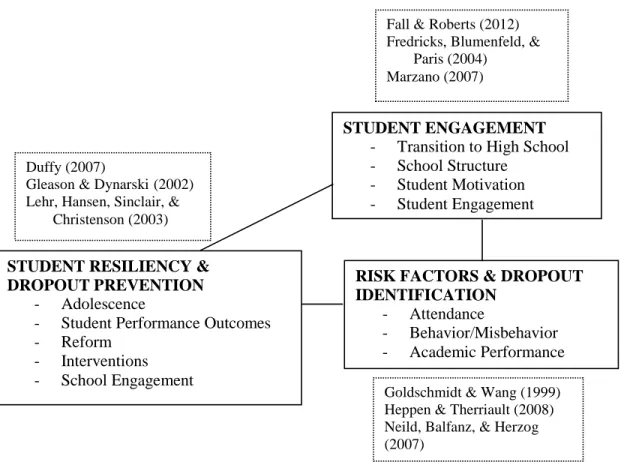
Literature indicates the need to develop a comprehensive system of services to support the differing needs, abilities, and preferences of youth to help them obtain a quality education and find success in high school. These comprehensive systems can be seen in the form of school reform models and or specific school interventions. Research indicates that student attendance, behavior (misbehavior), and academic struggle are key indicators of students who may drop out of high school, and they make up the risk factors and dropout identification stream.
The study of student resiliency helps illuminate students’ confidence, lived experiences, ability to overcome obstacles, social relationships, and the impact that family structure has on a student’s ability to continue in school. Such factors help identify risk factors. With the identification of risk factors, it is possible to put
interventions in place to help prevent high school dropout. This research makes up the student resiliency and dropout prevention stream of research.
Student engagement is believed to have a direct impact on high school completion and graduation (Willms, 2003). Data show that engagement is a multi-dimensional area of educational research (Fredricks, Blumenfeld, & Paris, 2004). Researchers have attempted to create different models to better understand student engagement
(Archambault, Janosz, Fallu, & Pagani, 2009; Greene, Miller, Crowson, Duke, & Akey, 2004; Nesbitt, 2011). Student engagement is identified as its own research stream.
Figure 1. Conceptual framework.
Definition of Terms Academic Engagement
An indicator that combined academic identification (which refers to getting along with teachers, having an interest in the subject matter, and related behaviors and attitudes) and academic participation, which captures the student’s work ethic
STUDENT ENGAGEMENT - Transition to High School - School Structure
- Student Motivation - Student Engagement
STUDENT RESILIENCY & DROPOUT PREVENTION
- Adolescence
- Student Performance Outcomes
- Reform
- Interventions - School Engagement
RISK FACTORS & DROPOUT IDENTIFICATION
- Attendance
- Behavior/Misbehavior - Academic Performance
Goldschmidt & Wang (1999) Heppen & Therriault (2008) Neild, Balfanz, & Herzog (2007)
Duffy (2007)
Gleason & Dynarski(2002) Lehr, Hansen, Sinclair, &
Christenson (2003)
Fall & Roberts (2012) Fredricks, Blumenfeld, &
Paris (2004) Marzano (2007)
both inside and outside of school (including hours spent on homework, meeting deadlines, not skipping classes, etc.).
Aeries Student Information System
A web-based information system used to track student attendance, grades, test scores, and student information data with teacher, parent, student, and
administrative access. At risk
Individual or population that exhibits known signs and symptoms for dropping out of high school
Dropping Out
A “process of disengagement” by which students do not persist towards graduation and drop out before gaining a high school diploma. This process is often incremental and may begin as early as elementary years (Bridgeland, Dilulio, & Morison, 2006).
Dropout Prevention Services and Programs
Services and programs intended to increase the rate at which students are staying in school, progressing toward graduation, or earning a high school credential Dropout Rates
A mathematical quantification of the number of events for students who have dropped out of school within a designated population. Dropout rates may occur as continuous numbers, ratios, or as percentages. For the purposes of this study, the term is further defined to mean the number of students who did not receive a traditional high school diploma at the end of their senior year in high school.
Dropouts
Those students who did not complete high school and did not receive a diploma General Education Development (GED) Certificate
A certificate awarded when a student has passed the GED Battery Test consisting of five content area assessments, which ensure the student has gained academic skills and knowledge at the high school level (GED Testing Service, 2010). Intervention
A means to intercede in an educational process such that the outcome is improved School Disengagement
School disengagement occurs when a student does not feel connected with the academic environment, which often reflects negatively on the grade point average and has the potential to lead to high rates of truancy (Henry, Knight, &
Thornberry, 2012). School Engagement
A student’s desire to attend school and participate in academic activities. Assumptions and Limitations
As a high school educator and administrator for 11 years, the researcher has included certain educated assumptions in the study. First, the researcher believes all students have the skills to graduate from high school. Secondly, the researcher believes demographic and motivational factors are independent of each other. Students’
background and life experience do not determine their level of motivation towards school. Third, the researcher believes interventions can prevent students from dropping out of high school. Early high school assessments can determine what interventions are
needed to support students. Additionally, the researcher believes the freshman year is the most important year of high school. Many students who fail their freshman year either continue to fail in the following grades and or choose to drop out of high school. Lastly, the researcher believed there would be an adequate number of students and teachers who would volunteer to participate in the survey, individual interviews, and focus group interview.
There were limitations to measuring ninth grade engagement and included the ability to systematically measure the degree to which a student is engaged in school. Factors that impact the ability to measure engagement include language and cognitive ability. Students whose primary language is not English are categorized as English language learners or EL students. A student’s language level and abilities may impact their grades and test scores. In addition, one EL student may have chosen not to volunteer to participate in the survey and or focus group interview. Special education students have specific learning needs and educational accommodations, which should be reflected in their grades. Some special education students have testing accommodations while others take the mainstream assessments. The study needed sufficient sample size for adequate data collection representation.
Summary
The high school dropout rate is a nationally identified epidemic. The problem of students dropping out before completing high school remains a concern because the economic impact of not obtaining a high school diploma is increasing (Chapman, Laird, & KewalRamani, 2010). A young person who does not earn a high school diploma will have significantly less potential for the amount of income earned annually as well as
within their lifetime. This impacts communities and our global economy. Dropouts aged 25 and older reported being in worse health than adults who are not dropouts, regardless of income (Pleis, Lucas, & Ward, 2009). In addition, there are social costs to dropping out of school. The loss of lifetime tax revenue, benefits, and retirement are other factors to be considered. High school dropouts are also associated with costs to the economy of approximately $250,000 over their lifetime because of lower tax
contributions, high reliance on Medicaid and Medicare, reliance on welfare, and higher rates of criminal activity (Levin & Belfied, 2007).
Student engagement is believed to have a direct impact on high school completion and graduation (Willms, 2003). Research exists in the areas of behavioral
disengagement, but cognitive and emotional disengagement are areas that could benefit from further research. Early identification of disengaged ninth grade students and the level/area of their disengagement will give schools an opportunity to provide systematic interventions. Determining what factors help identify disengagement was a focus of this case study.
Chapter 2: Literature Review
Introduction to Chapter 2
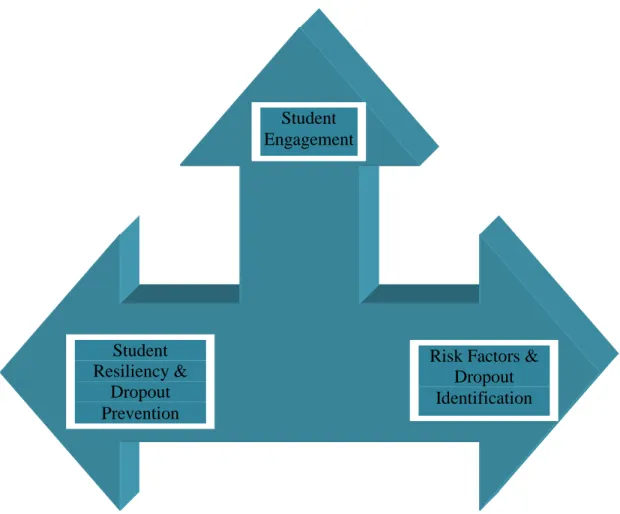
Engaging ninth grade students in a large comprehensive urban high school involves many factors. A review of the literature identified three relevant streams of research. A student’s resiliency to events that affect their lives coincides very closely with efforts that are being made within schools to prevent students from dropping out. The connections students make inside and outside the classroom can be identified as a stream about student engagement. A more in-depth look at student engagement leads to further information regarding behavioral, cognitive, and emotional engagement. There is no single risk factor that can be utilized to identify students who are at risk of dropping out of high school. A risk factor identification stream combines demographic studies as well as research on student attendance, behavior, and exam scores.
Figure 2. Conceptual framework.
Literature Review
Risk Factors & Dropout Identification
There is no single risk factor that can be used to accurately predict who is at risk of dropping out. Goldschmidt and Wang (1999) used National Educational Longitudinal Study (NELS) data to determine if students dropping out between 8th and 10th grades and those dropping out between 10th and 12th grades are affected differently by common risk factors. “The study examined how the effects of risk factors change over time and how
Student Engagement Student Resiliency & Dropout Prevention
Risk Factors & Dropout Identification
they vary between schools” (Goldschmidt & Wang, 1999, p. 716). There are variations between middle and high schools in regard to risk factors, and some are determined by the different stages of adolescence. Dropping out is a combination of factors that occur over time (Alexander, Entwisle, & Horsey, 1997).
Neild, Balfanz, and Herzog (2007) believe students are “metaphorically waving their hands and asking for help” (p. 28), sending strong distress signals for years that may go unnoticed. We must learn what risk factors to look for and when to look for them. The development of an early warning system can help schools identify students who are at risk; such a system requires consistent data review to identify the students who are sending distress signals. “Among students who sent their first serious distress signal in 9th grade, those who earned fewer than two credits or attended school less that 70 percent of the time had at least a 75 percent chance of dropping out of school” (Neild et al., 2007, p. 30). Many of these students did not drop out immediately but attempted to remediate their ninth grade year for another year or more before finally giving up on school altogether. Neild et al. (2007) found that 80% of the dropouts studied sent a distress signal in middle school or during the first year of high school.
Early engagement research focused on person-level factors that could not be changed, while more recent research is beginning to focus on student risk factors that can be modified through targeted interventions (Fredericks et al., 2004). Students from poor families, students who have parents who did not graduate from high school, and students raised by a single parent have more person-level factors that may influence them to drop out of school (Rumberger, 1995; Rumberger & Larson, 1998). Risk factors, on the other hand, include student school attendance, grade-level readiness, and student behavior.
Risk factors continue to be monitored and used to determine the status of students. Factors influencing the decision to drop out vary for different sources of risk.
Although risk and person-level factors continue to be a focus, race, gender, and socioeconomic status are still important demographic factors of some research studies. Shernoff and Schmidt (2008) found an engagement-achievement paradox between African American and white students and found that the highest levels of engagement and lowest levels of achievement were exhibited by African American students. Other studies also suggest that minority students are more engaged in school in general compared to white students (Johnson, Crosnoe, & Elder, 2001). Other researchers have found African American students to have more positive attitudes regarding education in comparison to white students (Ainsworth-Darnell & Downey, 1998; Blau, 2003). Stillwell (2010) found large differences in dropout rates between different ethnicities. These findings included dropout rates of 37% for Hispanic students, 38% for African American students, 9% for Asian students, and 20% for white students.
Risk factors and dropout identification help identify the factors that influence and inform a student who becomes at risk of dropping out of high school. Research has shown that the combination of multiple risk factors increases the likelihood of a student becoming at risk for dropping out (Croninger & Lee, 2001; Farmer et al., 2004).
Regardless of the source of risk factors, multiple risk factors greatly contribute to the risk of dropping out. Systematic identification provides a great deal of information to a school. Identification of at-risk students is a key component to the educational system and process.
Student Resiliency & Dropout Prevention
The high school dropout rate is remarkably high in the United States (Stillwell, 2010). Dropout research focuses on the status of students not on the process of high school dropout, making it difficult for educators to identify what they can do to remediate the problem and provide appropriate interventions. The study of student resiliency helps illuminate students’ confidence, lived experiences, ability to overcome obstacles, social relationships, and the impact that family structure has on a student’s ability to continue in school. Schools and their teachers play a critical role in developing resilience in at-risk children, which is achieved through providing protective factors such as caring education settings, positive and high expectations, and positive learning environments that are practical and relevant (Bernard, 1995).
Programs and practices designed to prevent dropouts have been implemented in schools across the country for decades. These practices vary and include counseling services, mentoring programs, tutoring, attendance monitoring, and after-school programs. Unfortunately, the extent to which these interventions are systematically targeted for disengaged learners is unclear, and closer examination suggests many of these programs and practices lack research or evaluation data documenting their
effectiveness (Lehr et al., 2003). The resources required for program implementation in terms of time, staff, and dollars point to the need for clear evidence of effectiveness. Additionally, the current federal administration has drawn increased attention to the need for educational decisions grounded in scientifically based evidence. As for education researchers, the field has been most directly influenced by this trend through the passage of the Education Sciences Reform Act of 2002, which created the Institute of Education
Science, the chief federal agency responsible for funding education research (Feuer et al., 2002). The expectation stated in Goals 2000 was to reach a 90% school completion rate by the year 2000. The most recent report indicates only 17 states have reached this goal (National Center for Education Statistics [NCES], 2002).
The concept of resilience is used to describe the ability of young people to overcome the many obstacles and conditions that impact their ability to progress and develop (Luthar, Cicchetti, & Becker, 2000). Luthar’s (1991) study of vulnerability and resilience of high school adolescents indicates the importance of various personality attributes as potential moderators of life stresses. The study found some youngsters faced with high stress reacted with emotional distress as well as behavioral difficulties, while others were able to function successfully in terms of societal expectations. “Low socioeconomic status is among the most commonly investigated sociodemographic variables in risk research” (Luthar, 1991, para. 4). Resilient children show abilities to manage and thrive in the face of adversity. “Resilience in children is that capacity to successfully overcome personal vulnerabilities and environmental stressors, to be able to bounce back in the face of potential risks, and maintain well-being” (Wang, 1998, p. 12).
Oswald, Johnson, and Howard (2004) found that certain environmental characteristics need to exist for an individual to develop various personal skills and successful coping strategies to overcome risk. “Resilience theory, though it is concerned with risk exposure among adolescents, is focused on strengths rather than deficits”
(Fergus & Zimmerman, 2005, p. 399). It is important to remember that resilience may be content and context specific. An adolescent may be resilient in the face of one type of adversity or risk but may be unable to overcome other types of risk. “This makes it
difficult to identify universal promotive factors and raises concerns that asset lists may be interpreted to operate in the same manner for all groups, all contexts, or all outcomes” (Fergus & Zimmerman, 2005, p. 405).
Studies have shown positive outcomes to be centered on the significant benefits of social support, even when parental support was lacking (Dumont & Provost, 1999;
Lessard, Fortin, Marcotte, Potvin, & Royer, 2009; Malecki & Demaray, 2002). Social support can promote positive academic outcomes and prevent negative psychological outcomes during middle and high school (Wang, Selman, Dishion, & Stormshak, 2010). The needed social support can be found within schools and educational systems.
Student Engagement
Student engagement may be explained using different definitions in different environments. In the high school classroom, it is believed students involved in the learning process with attention given to the lesson are academically engaged. Research shows students experience “increased engagement when the perceived challenge of the task and their own skills were high and in balance, the instruction was relevant, and the learning environment was under their control” (Schernoff, Csikszentmihayi, Schneider, & Shernoff, 2003, p. 158). Although a challenging task for the teacher, student engagement is important for student success in the classroom and throughout their educational career. Fall and Roberts (2012) believe the model for understanding high school dropout to be school engagement.
During the 1970s and 1980s, academic engagement developed as a concept that emphasized on-task behavior and student participation (McKinney, Mason, Perkerson, & Clifford, 1975; Smyth, 1980). Some of the student engagement models that existed were
very one dimensional and focused on the psychological aspects of engagement.
Student engagement is now understood as a multidimensional construct (Fredricks et al., 2004). Continued research on student engagement has shown that with additional years of education, disengagement is a major factor in student achievement and high school dropout (Fredricks et al., 2004). If students are disengaged when they are in school, they may not desire or have the skills necessary to continue to the next grade and may choose to drop out of school.
The term engagement can take on different interpretations. Even though the report titled Engaging Schools (National Research Council & Institute of Medicine, 2004) uses engagement and motivation interchangeably, engagement should not be confused with motivation. “Motivation describes the processes and factors that drive or move a student to take action” (Christenson, Reschly, & Wylie, 2012, p. 743). Students may be self-motivated or require external motivational factors. These factors may be different from or overlap those factors that affect student engagement.
The importance of student engagement is increasing as the role it plays in learning, achievement, and high school completion is better understood. Engagement is an area of focus when designing interventions that changes curriculum and or improves the classroom climate (Fredricks et al., 2004). Those working with high school students are especially concerned with the connection between disengagement and high school dropout (Willms, 2003). Factors that influence student academic engagement include instructional factors, environmental factors, as well as a difference in perception between students and adults within the educational realm.
Instructional factors. How instruction is delivered in the classroom by the teacher and received in the classroom by the student is an important engagement factor. Daily participation, attendance, paying attention, putting forth effort, and completing assignments are an important part of the school experience, as is how students feel about school. Low participation or school absence predicts disengagement from school and eventual withdrawal (Archambault et al., 2009). What the teacher teaches and how it is taught are equally important in influencing how students feel about school (Nesbitt, 2011). Nye, Konstantopoulos, and Hedges (2004) determined that teacher influence is independently important compared to anything else that happens in school.
Some classroom lessons and activities achieve higher levels of engagement than others. Students who achieve self-efficacy and personal achievement through goal setting in the classroom have exhibited higher levels of engagement (Walker & Greene, 2009). Marzano (2007) found that goals must be clear in terms of information and skill if learning is to be effective. In some situations, it is not the lesson itself, but how students interact during the lesson that has the largest impact. Students’ ability to fit within the social order and develop a sense of belonging has important consequences in the lives of students (Johnson et al., 2001).
Environmental factors. Maslow’s (1968) hierarchy shows that a student’s need for belonging and acceptance follow directly behind the need for food and shelter. Adults have a strong influence over the learning environment in which students interact. Students interact daily with adults in the classroom and across the school campus. Adult interactions are needed to support positive self-perceptions and identification with school
(Fall & Roberts, 2012). Students who report a sense of belonging also exert more cognitive effort (Walker & Greene, 2009).
Researchers have found environmental variations to be central to school engagement (Dotterer, McHale, & Crouter, 2007; Fredricks et al., 2004). Students’ desire to participate in educational experiences that are personal, relevant, meaningful, and active (Perry, 2011). The school/classroom environment that provides opportunities for participation, intellectual opportunities, and relationships has a larger impact, as student engagement may be socially or academically motivated (Fredricks et al., 2004). Garn, Ware, and Solmon (2011) found that “teachers who were able to find ways to consistently reinforce the importance of personal competence, stress improvement over ability, and educate students about accepting diversity helped to change students attitudes about learning” (p. 90).
Students who develop positive relationships with their teachers and experience low levels of conflict are more engaged and thus experience higher levels of academic achievement (Hamre, Pianta, & Downer, 2006; Pianta & Stuhlman, 2004). Researchers have suggested that students who have a warm relationship with their teachers exhibit a higher level of capability and motivation to meet classroom expectations and the expectations of their teachers (Furrer & Skinner, 2003; Gest, Welsh, & Domitrovich, 2005).
Difference in perceptions. There are differences between students’ and teachers’ perceptions of engagement (Trygstad, 2010). How teachers interpret student engagement in their classroom and students’ actual level of engagement may be different. “Young people need to know what adults expect regarding conduct, that consistent and
predictable consequences result from not meeting those expectations, and that the expectations are fair” (Klem & Connell, 2004, p. 262).
Marzano (2007) found teachers to be the single most influential factor of an effective and engaging school. While Finn (1993) stated that teacher perceptions have been missing from student engagement research, Fall and Roberts (2012) found great value in teacher and parent perceptions and found a strong connection between
engagement and dropping out of high school. Students form perceptions of school based on student attitudes towards what they are learning, perceptions of their own academic ability, and interests that guide their behaviors (Walker & Greene, 2009). Teacher and parent support positively influence students’ self-perceptions and school engagement (Fall & Roberts, 2012). Students desire to perceive their teachers as caring and supportive (Perry, 2011).
Types of engagement. Extensive research has been conducted on how students think, feel, and act.
The attempt to conceptualize and examine portions of the literature under the label “engagement” is potentially problematic; it can result in a proliferation of constructs, definitions, and measures of concepts that differ slightly, thereby doing little to improve concept clarity. (Fredricks et al., 2004, p. 60)
There is, however, a great deal of potential to view engagement as a multidimensional concept. Student engagement can be further broken down into behavioral engagement, emotional engagement, and cognitive engagement. Archambault et al. (2009) used behavioral, affective, and cognitive factors to predict high school dropout. Their study found behavior to show the highest connection to engagement and dropout. Fredricks et
al. (2004) found the study of engagement through behavior, emotion, and cognitive measures to provide more through data than individual study areas alone.
Behavioral engagement. Behavioral engagement has been studied through patterns of on-task student behavior versus misbehavior (Karweit, 1989; Peterson, Swing, Stark, & Wass, 1984). On-task behavior is any behavior that involves students following classroom and school rules. Misbehavior is described as any behavior that is disruptive. Student participation in academic, social, and extracurricular activities are examples of behavioral engagement (Harris, 2008). Finn (1993) and Kelly (2004) described
behavioral engagement based on student participation and effort. The 2006 National Center for School Engagement report includes persistence, concentration, attention, studying, attention, and asking questions in their descriptors of student engagement.
Finn (1989, 1993) created a hierarchical taxonomy for behavioral engagement. When students follow school/classroom rules, they are part of the first level of
engagement; when students participate in the educational environment, they are part of the second level; and when they take part in extracurricular activities and social
opportunities in school, they are part of the third level. Behaviors that correspond with the higher levels in the taxonomy are believed to be due to the level of student
engagement.
Emotional engagement. Student attitudes, interests, and values towards learning make up the emotional engagement focus (Eccles et al., 1983; Epstein & McPartland, 1976; Yamamoto, Thomas, & Karns, 1969). Skinner and Belmont (1993) found student self-reported indicators of happiness, anxiety, interest, and boredom to be effective measures of emotional engagement. The National Center for School Engagement Report
(NCSE; 2006, p. 3) showed that students exhibit a measurable appreciation for success in school when they are emotionally engaged.
Finn (1989) described emotional engagement as having a sense of belonging and importance to the educational institution. Emotional engagement is the most difficult area to study, as the source of student emotional reactions are not always clear. Students’ positive emotions can be the result of many different factors in school and in the
classroom (NCSE, 2006). Factors may include, but are not limited to, the teacher, technology (cell phones, etc.), lesson content, social interactions, extra-curricular activities, home life, etc.
Cognitive engagement. Cognitive engagement is “essentially defined as
motivation, effort and strategy use” (NCSE, 2006, p. 3). Goal setting and self-motivated learning are examples of cognitive engagement in the classroom (Boekarts, Pintrich, & Zeidner, 2000; Zimmerman, 1990). Students who are willing to go above and beyond minimum expectations in school, prefer a challenge, and strive for mastery are
consistently cognitively engaged in their learning (NCSE, 2006).
“A qualitative distinction is made between (cognitively) deep and surface-level” strategies used during the learning process (Fredricks et al., 2004, p. 64). Students who exert more effort are able to make connections between concepts and achieve a higher level of understanding (Weinstein & Mayer, 1986). However, physical participation does not guarantee that students are cognitively engaged. Lankshear and Knobel (2005) noted that students may be involved in off-task activities but have the ability to appear engaged in class.
Summary
Research has shown student engagement to be influenced by demographic, instructional, environmental, and individual perceptions. Student engagement is a multidimensional area of study that includes sub-categories of cognitive, emotional, and behavioral engagement (Fredricks et al., 2004; NCSE, 2006; Shernoff & Schmidt, 2008). The research reviewed helps solidify the importance of student engagement, risk factors and dropout prevention, and student resiliency and dropout identification as research streams.
Student engagement requires many tools and techniques to understand individual student or groups of students’ level of engagement. Research shows that previous studies have looked at individual components of student engagement, but direct connections to intervention development have not been made. As student risk factors are examined in an effort to prevent students from dropping out, it is clear that there is a strong connection to a student’s engagement in school. Factors to student resiliency beyond identified risk factors must be understood. If we combine a student’s level of engagement in school, their risk factors for dropping out of school, and their level of resiliency, we put together a comprehensive lens for dropout identification.
Chapter 3: Research Methodology
Introduction
The purpose of this mixed methods case study was to determine the cause of ninth grade student disengagement at a comprehensive urban high school. School
disengagement is a problem because the ultimate outcome of unresolved school
disengagement is high school dropout. This study explored the connection between ninth grade student engagement and the retention of these students in school. Through
quantitative inquiry, the researcher gathered data about ninth grade student engagement in three categories: cognitive/intellectual/academic engagement,
social/behavioral/participatory engagement, and emotional engagement on the High School Survey of Student Engagement. The researcher collected qualitative data regarding student and teacher perceptions of ninth grade student engagement in school through student focus group interviews and individual teacher interviews.
The following questions were used to guide the research: 1. What are the contributing factors to ninth grade student
disengagement/engagement in a large comprehensive, urban public high school?
2. How do teachers impact ninth grade student disengagement/engagement? 3. How does the transition between middle school and high school address
students’ academic, behavioral, and emotional disengagement/engagement needs?
The goal of this chapter is to discuss the target population for the study and the characteristics of the target population. A discussion of school site access and
information regarding this access is included. Data collection methods and data analysis procedures, as well as the research design and rationale, are introduced. Ethical
considerations are also discussed.
Research Design and Rationale Research Design
The study was conducted using a mixed methods case study as the research design. All ninth grade students at North C. High School were asked to participate in the High School Survey of Student Engagement. Students identified by the survey as having a low level of school engagement were asked to participate in a focus group interview. Teachers of ninth grade students were asked to participate in individual interviews. Rationale
A mixed methods case study was used to focus on the relationship between student and teacher understanding of school engagement. The student survey was a quantitative instrument used to measure the level of student engagement in school. The student focus group session provided a closer qualitative look at students who had been identified as having low engagement in school. The teacher interviews provided qualitative insight into teacher perspectives of student engagement/disengagement in their classes.
Site and Population Population Description
North C. High School (NHS) is located in the Northern California School District. The district is a large urban school system that serves 22,000 students kindergarten
through 12th grade. There are three comprehensive high schools and one continuation high school within the school district. North C. High School serves a population of 2,400 students. The diversity of the student population at North C. High School is 35%
Hispanic, 25% African American, 25% Caucasian, and 15% other. A majority of the student population is from lower to middle class socioeconomic backgrounds. The district had an 11.6% high school dropout rate at the time of the study.
The target population of this study was all ninth grade students at North C. High School, which totaled 650 students. The ninth grade class closely mirrored the diversity of the entire campus. Thirty-five percent of the ninth grade students attended Diamond Middle School, 35% attended Bear Middle School, and 30% attended a combination of the remaining middle schools.
Site Description
North C. High School is a 65-acre campus serving 2,400 students. The site was originally built in 1890 and has been renovated many times to accommodate the current population of students. The most recent renovations include a state-of-the-art library facility and a main office building.
North C. High School is the only high school in the district with an International Baccalaureate (IB) Diploma program. The goal of the International Baccalaureate program is to develop intellectual, personal, emotional, and social skills for their living,
learning, and working in a rapidly globalizing world. Students who qualify, apply, and maintain academic status are able to participate in the IB program. Approximately 30% of the student population participates in the academically challenging IB program. Site Access
Known issues of access included obtaining approval from the Northern California School District office administration to conduct a focus group interview with students identified as having low levels of school engagement and conduct teacher interviews with teachers of ninth grade students. As an administrator in the district, the researcher had daily Aeries access to student data but was required to obtain institutional review board (IRB) approval to access the data for the purposes of this study. The institutional review board process was followed to obtain approval for the research and ensure that it
protected the rights of the participants in the study. Further information on this topic is discussed in the ethical considerations section.
Research Methods
This study involved the triangulation of data sources to create a comprehensive view of student engagement at North C. High School. This study incorporated student survey responses, student focus group data, and teacher interview data.
High School Survey of Student Engagement
The High School Survey of Student Engagement is an online survey administered by Indiana University in Bloomington and coordinated through the Center for Evaluation and Education Policy. The purpose of the survey is to assess the extent to which high school students engage in educational practices associated with high levels of learning and development. The survey was administered to all ninth grade students at North C.
High School in the fall of 2013. North C. High School conducted the survey. The researcher ran the data through statistical analysis software to create a report to be utilized as a secondary data source for this study.
Participant selection. This study requested the participation of all ninth grade students at North C. High School. Although there was not an age requirement, students were enrolled in the ninth grade at North C. High School during fall 2013.
Identification and invitation. All ninth grade students enrolled at North C. High School were invited to participate in the study. Students received a handout explaining the survey and identifying the dates the survey would be administered. A passive consent form was given to all students, which gave them the opportunity to opt out of the survey as desired by students and parents.
Data collection. The survey was administered electronically at the beginning of the 2013-2014 school year. Ninth grade English classes received a schedule of dates and times to take the electronic survey in the school library computer lab. Make-up days were made available for students who were absent on the scheduled day and time for their class. Single school results were available a month after the survey was
administered.
Data analysis. North C. High School did not receive a customized data report from Indiana State University of the student survey data compared to the aggregate national data as originally planned. The customized report provided by BSU was to be divided into six sections. The first section was supposed to show an overview of survey results from North C. High School compared to an overview of respondents across the HSSSE in a given administration. The second section was supposed to show frequency
data showing the number and percentage of students who gave each response to the questions. This information was to be shown side-by-side to the data from all
respondents. The third section was to compare mean responses to North C. High School students and other students who participated in the survey. Overall mean comparisons were to be provided. Section four was supposed to provide comparisons of means within three critical dimensions of engagement measured on the survey. The three critical dimensions are cognitive/intellectual/academic engagement,
social/behavioral/participatory engagement, and emotional engagement. The fifth section was supposed to provide graphs of student responses. The sixth section was supposed to provide student responses to an open-ended question at the end of the survey. It should be noted that Indiana State University lost their funding for the HSSSE just prior to the survey being conducted at North C. High School. Consent was provided by Indiana State University to utilize the survey instrument, but all data analysis had to be conducted by the researcher. The researcher utilized Statwing, a web-based statistical analysis program so the researcher could analyze the data, find patterns, and identify outliers to ensure the data were represented appropriately. Although Statwing did not analyze for three critical dimensions of cognitive/intellectual/academic engagement,
social/behavioral/participatory engagement, and emotional engagement, the researcher analyzed the results from each of the groups of survey questions that related to the three critical dimensions.
Student Focus Group
Ten students were invited to participate in a student focus group. The students were identified as having low engagement in school based on a set of predetermined
criteria. The predetermined criteria included grades, misbehavior, standardized test scores, and course enrollment. The focus group offered an opportunity to look closely at individual cases of student disengagement and to understand the students’ perspectives of their own disengagement.
Participant selection. From the 650 ninth grade students enrolled at North C. High School, participants were individually selected from a predetermined set of data criteria. Students for the focus group were identified from student Aeries data. Aeries is the district-wide database used to store student identification and demographic
information as well as grades, counseling, behavior, course enrollment, test scores, and special programs. The criteria reviewed to select students for the focus group included grades, attendance, overall grade point average, standardized test scores, course
enrollment, junior high school attended, and parent education level. A diverse group of students with diverse life experiences was desired for this group. A balance of students with differing Aeries data was desired.
Identification and invitation. Students were identified from Aeries data and were contacted individually. The information regarding the focus group was explained, and students were given paperwork explaining the focus group as well as a form for the students and parents to sign giving consent to participate. Parents of the students were also called by phone so the study could be explained and to give them notification that the paperwork would be coming home.
Data collection. At the beginning of the focus group interview, the researcher gave participants a description of the focus group. Students were given a graphic
recording device was utilized to capture the focus group session. Students were told they could speak out loud and or write notes on their graphic organizer regarding their answer to each question asked. The researcher asked predetermined questions one at a time. As students responded to the questions, the researcher wrote notes on a large flip chart. At the end of the focus group session, participants were given an opportunity to state anything they may not have had an opportunity to say and or turn in their graphic organizer they utilized during the interview.
Teacher Interviews
Fifteen core area content teachers were invited to participate in an interview regarding ninth grade engagement in school. The goal was to have a minimum of five teachers participate in the individual interviews. The teachers represented different ninth grade subject areas including math, English, science, social science, and physical
education. The purpose of involving teachers of ninth grade students in different subject areas was to gain the perspectives of teachers of different content areas who may utilize various teaching methods for their lesson design and delivery.
Participant selection. Teachers of ninth grade students at North C. High School were invited to participate in the interviews. Teachers from different ninth grade subject areas were invited and those who accepted represented all ninth grade core subject areas. Identification and invitation. All teachers who taught only ninth grade classes were identified from the master schedule of all classes at North C. High School. The teachers were sent both an email and paper invitation to participate in the individual interview.
Data collection. Teachers were given an interview invitation at the beginning of the 2013-2014 school year. When teachers returned their consent to participate in the study, they were given a selection of times and dates from which they could schedule the interview. During the interview, participants were given a copy of the semi-structured interview questions. Data were collected by digital recording device and hand-written tones were taken. The notes from the digital recording were transcribed.
Data Analysis Procedures
North C. High School did not receive a customized data report of the High School Survey of Student Engagement data compared to the aggregate national data. The data were not analyzed in comparison to the national data from the survey administration or to previous years’ survey data. Instead, the data were analyzed via a statistical analysis program called Statwing for patterns and anomalies. The areas of behavioral, cognitive, and emotional engagement were analyzed.
The student focus group interviews were transcribed verbatim from an audio recording to a Microsoft Word document. The transcribed document was then analyzed for common themes and patterns utilizing the descriptive coding process, which allowed the researcher to organize and categorize what was stated in the interview and what was visible in the transcription. Participant responses were analyzed for specific terms and themes in student language used during the interview. Similar terms or information was grouped and categories were created while looking for patterns in the information. Recoding and re-categorizing was required for refining the data prior to identifying themes, concepts, and or theories. “Descriptive coding is the foundation for qualitative inquiry and captured what the researcher heard and saw during the interview” (Saldaña,
2009, p. 71). This study relied on the voices of the participants and the accurate representation of the descriptive data.
The individual teacher interviews were also transcribed verbatim. Descriptive coding was utilized during the coding process. Teacher interviews were analyzed for specific engagement strategies and emerging patterns/trends in participant responses. Stages of Data Collection
The timeline for data collection was three months. The first phase of student data collection involved the administration of the High School Survey of Student Engagement, which took approximately one month to collect results electronically, run the results through a statistical data analysis web-based program called Statwing, and then analyze the results to look for correlations. Teachers were asked to participate in individual interviews in September, at the beginning of the 2013-2014 school year. Individual interviews were scheduled during the month of September at a time and location was convenient for each individual teacher. Focus group interviews were held during October, after school, at a classroom location convenient for all students.
Table 1
Timeline for Data Analysis and Reporting
Activity Date Objective
Develop Research Proposal July 2013 Submit to SP
Committee Review & Revision
July 2013 Submit for approval to
dissertation committee IRB Certification – Drexel
University
July 2013 Approval required to begin
research Electronic Survey to all ninth
Grade Students
September 2013 Secure computer lab dates
Confirm electronic survey window
Schedule classes to visit computer lab and take survey Analyze survey and identify
students for focus group interview
September 2013 Identify patterns & anomalies Analyze behavioral, cognitive and emotional engagement data categories
Teacher Interviews September 2013 Secure informed consent
Interview protocol Audio recording Verbatim transcription Thank you letter to participants
Transcribe teacher interviews September/October 2013 Verbatim transcription Student Focus Group
Interviews
October 2013 Secure informed consent
Interview protocol Audio recording Verbatim transcription Thank you letter to participants
Transcribe student focus group interviews
October 2013 Verbatim transcription
Analyze interview data November 2013 Descriptive coding
Themes Triangulation
Complete Writing December 2016 Findings
Interpretations Conclusions Recommendations
Ethical Considerations
The ethical issues are related to data collection, analysis, reporting, and
presenting. Consideration of student privacy and protection of harm were considered. The human subjects were high school students as well as high school teachers; thus, institutional review board (IRB) approval was sought and granted from Drexel University. Permission to begin the study was sought from the Northern California School District. Research began when both IRB and district approval were received. The involvement of minors in the study required both student and parental permission for the focus group interview. Informed consent included a written statement of the basic elements of consent including risks, benefits, and confidentiality. A brief summary of the research methodology was provided to participants, and participants were assured of their individual confidentiality and anonymity. Participants were able to opt out of
Chapter 4: Findings, Results, and Interpretations
Introduction
The purpose of this mixed methods case study was to examine the cause of ninth grade student disengagement at a comprehensive urban high school. This chapter discusses the findings and results of the research with regard to this mixed methods study, opening with a review of the study’s purpose statement, followed by the research questions, the findings, and results of the study. This chapter describes the data
collection, findings, and results of the research study. Qualitative and quantitative data were collected and analyzed. The data were obtained from teacher interviews, a student survey, and a student focus group interview.
Description of the Participants
The participants in this study included 10 credentialed secondary school teachers in a large, urban public high school. Interviews were conducted with 10 participants. During the interviews, the researcher followed an interview protocol composed of 11 questions by which the researcher was able to navigate an exploration of teachers’
perceptions related to freshmen students’ perceptions of engagement and disengagement. All the interview participants primarily worked with freshmen students at the research site. Their current exposure to freshmen ranged from one class with freshmen to a roster of freshmen only. Table 2 provides detailed demographic information for each of the study participants who were teachers (see Appendix A for other demographic
Table 2
Interview Participants’ Current Role with Freshmen
Participant Current Role
BD Taught four courses, both Honors and CP.
LD Taught both Honors and CP; 3 out of 5 of these courses were freshmen courses.
CP Taught Academic Literacy, English CP, and AVID, almost exclusively workrf with freshmen.
DK Taught approximately 170 students, almost exclusively freshmen. BB Taught freshmen English CP and Honors, also worked with 45
freshmen through student activities. KT Taught freshmen in a lab class. CK Taught 160 freshmen.
MM Taught math to mostly freshmen.
VH Taught freshmen in four out five of the courses.
GH Taught college preparatory and honors classes, almost exclusively freshmen.
Data from the target high school’s 2013-2014 administration of the High School Survey of Student Engagement were analyzed to assess trends related ninth grade students’ connection to the school (see Appendix B). The survey was administered electronically during the students’ English classes. The dataset comprised responses for 510 students. The researcher created a full report from statistical analysis. The
of students’ perceived connection to the campus as it related to their school attendance, effort, and reasons for going to school (see Appendices C-H).
A focus group was conducted during October 2013. The focus group was comprised of 10 freshmen, eight male students and two female students. The students were asked 12 questions related to their experience at the target school, their engagement, and their suggestions for improving the engagement experience for future iterations of students (see Appendix I).
Findings
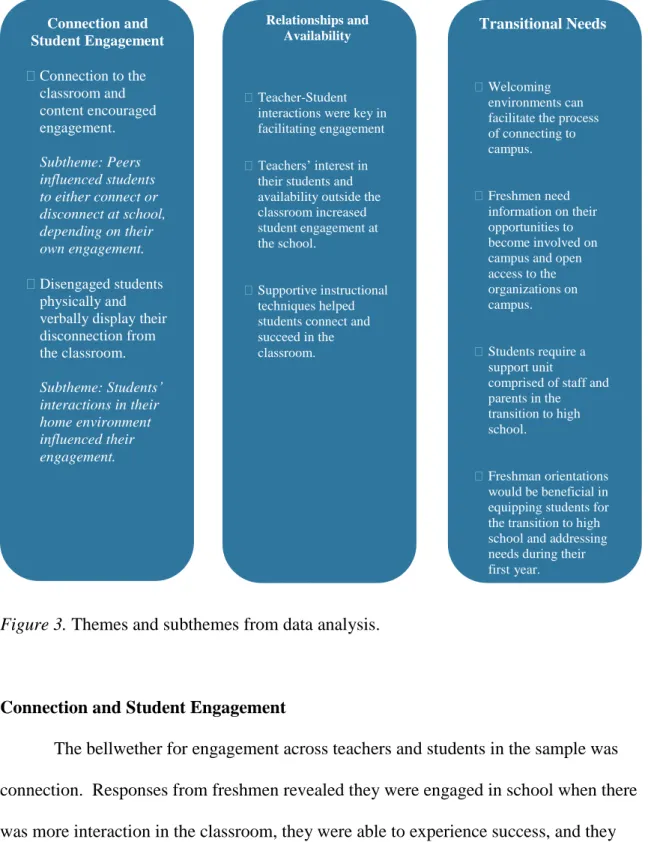
Responses from the survey, focus group, and interviews with teachers were analyzed to identify themes from the data, which arose from common codes or responses that appeared repeatedly across the focus group and interviews. The themes were
developed to respond to the research questions guiding the study, specifically to describe engagement in students’ and teachers’ words as well as to identify how engagement is influenced by various sources and how the transition from middle to high school
addressed the needs of students. Using descriptive coding, the researcher deconstructed participants’ responses to identify emerging patterns and trends, then reconstructed the findings into themes to present in this chapter (Saldaña, 2009). Figure 3 presents the themes uncovered during data analysis.