UCLA
UCLA Electronic Theses and Dissertations
Title
Walking with the Ghost: Contested Silences, Memory-Making, and Cambodian/American Histories of Violence Permalink https://escholarship.org/uc/item/93f7419q Author Chhun, Lina Publication Date 2019 Peer reviewed|Thesis/dissertation
eScholarship.org Powered by the California Digital Library
UNIVERSITY OF CALIFORNIA Los Angeles
Walking with the Ghost:
Contested Silences, Memory-Making, and Cambodian/American Histories of Violence
A dissertation submitted in partial satisfaction of the requirements for the degree Doctor of Philosophy
in Gender Studies
by
Lina Chhun
© Copyright by Lina Chhun
ii
ABSTRACT OF THE DISSERTATION
Walking with the Ghost:
Contested Silences, Memory-Making, and Cambodian/American Histories of Violence
by
Lina Chhun
Doctor of Philosophy in Gender Studies University of California, Los Angeles, 2019
Professor Michelle F. Erai, Co-Chair Professor Aisha Finch, Co-Chair
Commemoration is highly fraught; memory and history-making are dialectical processes, constituted by the contingent relationship between what is remembered and forgotten, and what Lisa Yoneyama terms the “forgetting of forgetfulness.” Memory-making is always punctuated by acts of forgetting, the proliferation of silences that produce historical amnesias as they also produce, paradoxically perhaps, affective remnants—what Ngô, Nguyen, and Lam (2012) refer to as “the particular resonances of…wars, refugee archives of feeling, and the recursive traces of both” (673). Challenging static renderings of history, “Walking with the Ghost: Contested Silences, Memory-Making, and Cambodian/American Histories of Violence” queries the complex relationships between registers of memory regarding the Cambodian Holocaust of 1975-79 and remembrances of the preceding U.S. bombing campaigns of 1964-1973. This study challenges historical models of “tragedy” and individualized models of trauma—as damage-centered, deviance-driven, and/or invested in abjection, vulnerability, and injury—which
iii
disavow the complex humanity of Cambodian survivors and the continually intersubjective ways in which knowledge about violence and Cambodia is produced and reproduced.
I begin with an analysis of passages from my father's interview regarding the U.S. bombing of Neak Loeung, highlighting the ways experiential registers contain the potential to reproduce as well as trouble dominant Cold War logics. From here, I analyze two cases—the Documentation Center of Cambodia’s framing of its archival mission and artist-documentarian Vandy Rattana’s body of work—addressing the ways archives function to produce different claims to “historical truth” in the afterlife of violence. Following Rattana’s 2009 exhibit “Bomb Ponds”—which photographically depicts the affective pull of landscapes in conjunction with the need to listen to experiential narratives—I then center the “landscape ethnography” as one site of memory-making concerning the U.S. bombing campaigns. Expanding the notion of “living archive,” I employ a capacious understanding of the everyday, assessing how landscapes and stories-in-motion make visible the violence of Cold War histories. Centering an analysis of the multiple meanings of crossing in two oral histories, I end with an exploration of the relational affects and effects of violence and trauma as they travel across time and space. Thinking through queer temporalities, (enforced) transit, and the phenomenon of return, I grapple with notions of justice and reparation in the afterlife of historical violence, thinking reparation not as “repair”— “to fix”—but as “amends,” “to mend,” and therefore, to do the work of care.
iv The dissertation of Lina Chhun is approved.
Thu-Huong Nguyen-Vo Juliet A. Williams
Michelle F. Erai, Committee Co-Chair Aisha Finch, Committee Co-Chair
University of California, Los Angeles 2019
v
TABLE OF CONTENTS
Page
Introduction Walking with the Ghost: 1
On Feminist Epistemologies and Feminist Praxis
Chapter One “Sometime American Can. . .Make Mistake Too. . .” 41
Memory, Documentation and Contested Framings of Violence
Chapter Two Living Archives and Spatial Histories: 74
Landscape Ethnography and an Accounting for the Present
Chapter Three Walking with the Ghost: 113
On Affective Archives and the Work of Care
Conclusion The Koh Tree 147
Notes 159
vi
LIST OF FIGURES
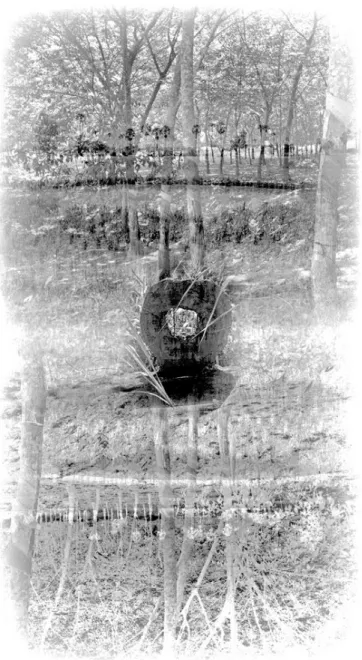
Page Figure 1. “Stone plaque” superimposed on “Rubber trees in formation” 5 and Takeo (2009) by Vandy Rattana.
Image by Mary Uyematsu Kao
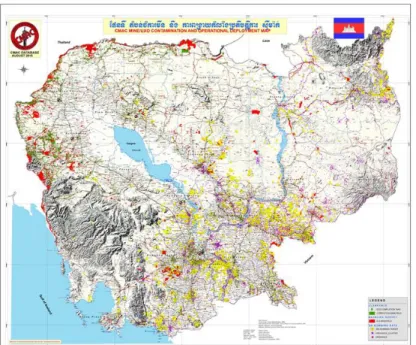
Figure 2. CMAC map of Cambodia, Landmines and Unexploded Ordnance 34
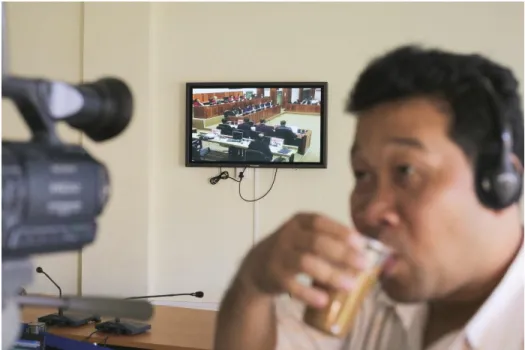
Figure 3. Khmer Rouge Trial 7 (2009). 59
Digital C-Print. 60 x 90 cm/Edition of 5 + 2AP. Photograph by Vandy Rattana
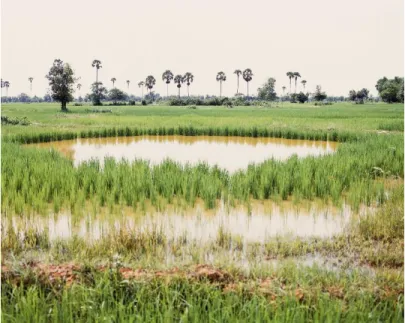
Figure 4. Takeo (2009). Digital C-Print. 91 x 111 cm. 61
Edition of 5 + AP. Photograph by Vandy Rattana
Figure 5. Kompong Thom, Sambor Prey Kuk (2009). 64
Digital C-Print. 91 x 111 cm. Edition of 5 + AP. Photograph by Vandy Rattana
Figure 6. Rubber trees in formation, Tbong Khmum Province (2015). 68 Photograph by Linda Chhath
Figure 7. Stone plaque, Tbong Khmum Province (2015). 69
Photograph by Linda Chhath
Figure 8. Bomb Crater at Lumphat, Ratanakiri Province (2016). 70
Photograph by Heang Chhun
Figure 9. Banana Tree in a Bomb Crater, Mondulkiri Province (2016). 81 Photograph by Lina Chhun
Figure 10. Crossing the Tonle San, Ratanakiri Province (2016). 89
Photograph by Lina Chhun
Figure 11. Bomb Crater at Lumphat, Ratanakiri Province (2016). 90 Photograph by Heang Chhun
Figure 12. Boundary marker at Lumphat, Ratanakiri Province (2016). 94 Photograph by Lina Chhun
Figure 13. Water tower at Lumphat, Ratanakiri Province (2016). 94 Photograph by Lina Chhun
vii
Figure 14. Interior of bombed building at Lumphat (2016). 99
Photograph by Lina Chhun
Figure 15. Exterior of second building at Lumphat (2016). 100
Photograph by Lina Chhun
Figure 16. Sign at Yeak Loam Lake, Ratanakiri Province (2016). 100
Photograph by Lina Chhun
Figure 17. History of Yeak Loam Lake, Ratanakiri Province (2016). 101 Photograph by Lina Chhun
Figure 18. Yeak Loam Lake, Ratanakiri Province (2016). 101
Photograph by Lina Chhun
Figure 19. Yeak Laom Lake nearing sunset, Ratanakiri Province (2016). 103 Photograph by Lina Chhun
Figure 20. Installation Piece, Cascading “Bombies,” COPE 107
(Cooperative Orthotic and Prosthetic Enterprise) Vistor Centre, Centre for Medical Rehabilitation (CMR), Vientiane, Laos (2016). Photograph taken by Lina Chhun
Figure 21. The new hospital in Neak Luong, Prey Veng Province (2017). 108 Photograph by Lina Chhun
Figure 22. Along the Mekong River, Neak Luong (2017). 109
Photograph by Lina Chhun
Figure 23. (Bomb) Ponds at Stung Sloat, Prey Veng Province (2017). 109 Photograph by Lina Chhun
Figure 24. Blue marker marking UXO, Stung Sloat (2017). 110
Photograph by Lina Chhun
Figure 25. Close up, blue marker marking UXO, Stung Sloat (2017). 110 Photograph by Lina Chhun
Figure 26. The Mekong river nearing sunset in Neak Loeung (2017). 112 Photograph by Lina Chhun
Figure 27. On the road to Battambang (2016). 142
Photograph by Lina Chhun
Figure 28. Pagoda grounds on the way back to Phnom Penh (2016). 143
viii
Figure 29. Pagoda on the way back to Phnom Penh (2016). 144
Photograph by Lina Chhun
Figure 30. Former grounds of labor camp (2016). 145
Photograph taken by Lina Chhun
Figure 31. Kapok tree at Ta Prohm Temple, 154
Angkor, Siem Reap Province, Cambodia.
Photographed by Victor Yezhov, Provided by Liny Chhun
Figure 32. Close-up of kapok tree at Ta Prohm Temple. 155
Photograph by Lina Chhun
Figure 33. Wide-Shot, Ta Prohm Temple, 158
Angkor, Siem Reap Province.
ix
ACKNOWLEDGEMENTS
There are so many people who’ve been an integral part of my graduate school journey and have supported me through the conceptualization, writing, and completion of the dissertation. First and foremost, I want to thank my Co-Chair and friend, Michelle Erai, whose mentorship began even before I officially accepted UCLA. Michelle, you have taught me to trust in my heart and mind, allowing what could’ve been categorized as “too much sensitivity” to emerge as the sensibility with which I’ve come to find my way, through this project and academia at large.
A version of Chapter One was published in Amerasia Journal; I thank the blind
reviewers, Arnold Pan, Keith Camacho, Cathy Schlund-Vials, Yen Le Espiritu, Lisa Yoneyama, and Mary Kao for their amazing feedback and support during the publication process. The dissertation also draws intermittently from a publication in The Feminist Wire, and I am thankful to Associate Editors Mick and Heather for their patience and time in working with me on this three-part series. A forthcoming article in Frontiers: A Journal of Women’s Studies draws from Chapter Three and the Conclusion, and I thank the two amazing blind reviewers, Judy Tzu-Chun Wu, and Cindy Cruz for their detailed and generative feedback and patience in working with me.
UCLA Graduate Division has provided invaluable funding in many forms over the last eight years, including a Eugene V. Cota-Robles Fellowship and a Dissertation Year Fellowship. I would like to extend my gratitude to the UCLA Center for Southeast Asian Studies for their immeasurable support in funding my language study, field research, and initial stages of dissertation writing through the Foreign Language and Area Studies Fellowship. I am also grateful to the Center for the Study of Women, the UCLA Asian American Studies Center, the UCLA International Institute, and the UC Critical Refugee Studies Collective for the generous financial support that allowed me to travel to conferences, symposia, and workshops to engage
x
and refine my work, supported my initial sixteen months of fieldwork and follow-up research trip of two months to Cambodia, and significantly contributed to the completion of this dissertation.
I want to thank the amazing faculty members I have been privileged to work with,
beginning with my dissertation committee members. An immense thank you to Aisha Finch, who generously filled the role of Co-Chair in the latter stages of my time at UCLA, offering
invaluable guidance and detailed feedback regarding the dissertation and writing more letters of recommendation on my behalf during my time on the academic job market, than I can count. Juliet Williams, thank you so much for teaching me to stand in the place I know and for
providing a model of pedagogy steadfast in its integrity. Thu-Huong Nguyen-Vo, thank you for your kind brilliance, unwavering support, and enduring grace all these years; my goal is and will continue to be “growing up to be like Thu-Huong.” Thank you to all the amazing faculty who have begun, walked alongside, and completed this journey with me: the late Aaronette M. White, to whom I owe a lifelong gratitude for the encouragement to engage my fears, leading to the turning point that would eventually lead me here; Bettina Aptheker, whose pedagogy of love and words of wisdom through two doctoral programs accompany me always. Many, many thanks to Purnima Mankekar, Mishuana Goeman, Lucy Burns, Mariam Lam, Michelle Caswell, Patrick Heuveline, Juliann Anesi and Joshua Guzman. I would like to thank the Gender Studies staff for keeping us all moving (and sane): Samantha, Richard, Jenna and Van. A significant thank you to the Center for Khmer Studies in Phnom Penh, Cambodia for their generous financial as well as administrative support during my initial sixteen months in Cambodia, and a thank you to the Documentation Center of Cambodia and Bophana Audiovisual Center in Phnom Penh, for access to archival materials integral to this project.
xi
To all my friends and colleagues in the U.S. and abroad who have been generous in their time, aid, feedback, advice, and presence, thank you: Trung Nguyen, Karen Hanna, Kong Pha, Pahole Sookkasikon, Jewel Pereyra, Sa Whitley, Freda Fair, Jacob Lau, Stephanie Santos, James Ong, Edith Gurrola, Danielle Kohfeldt, Leak Ly, Linda Chhath, Cheryl Yin, Mourng Kagna, Mao Kolap, Matt Reeder, Khiang Hei, Scott Ladd, Peter Tabada, Kelly Jones, and the best hairstylist a person could ask for, Aki. I would like to express my appreciation to Vandy Rattana for his warm invitation to Tbong Khmum and for supplying high-definition copies of
photographs from his “Khmer Rouge Tribunal” and “Bomb Ponds” exhibits. I would like to extend a special thank you to Susan Nguyen, a friend for life who has seen me through many a “hot mess” moment, has stood as my champion, and has supported me through good times and (socially) awkward times; you remind me there’s life outside academia. And lastly and most dearly, I would especially like to thank my family: my grandmother—the family matriarch, for gracing my sister and I with her story; my aunts and uncles and extended Cambodia kin who housed and fed me during my time abroad; my mother and father, who as refugees worked long, long hours and made a home with very little, teaching me the importance of family always; the fur babies, Batman and Ivy, for their (mostly) unconditional love; and my siblings and best friends, co-conspirators—“zen,” “ohgawd,” “high-pitched giggles,” “I’m not fussed”—and travel buddies—“lobster, lady”—Thea, Thra, and Liny; you all are why I am here.
xii
CURRICULUM VITAE
Education
2014 University of California, Los Angeles
Master of Arts in Gender Studies, Certificate in Asian American Studies Department of Gender Studies
2010 University of California, Santa Cruz
Master of Science in Social Psychology, Social Justice Emphasis Department of Psychology
2007 University of California, Davis
Bachelor of Arts and Science, Women’s Studies and Psychology, cum laude
Selected Publications
Chhun, Lina. “Walking with the Ghost: On Affective Archives and the Work of Care.” Frontiers: A Journal of Women’s Studies 40:3 (forthcoming).
Chhun, Lina. “Meditations on Occupying Our Present: Why I Continue to Turn to Intersectional Feminism in This Moment, PARTS ONE-THREE.” The Feminist Wire, March 2, 6, 9, 2017, hwww.thefeministwire.com/2017/03/meditations-one/.
Chhun, Lina. “‘Sometime American Can… Make Mistake Too…’ Contested Memory, Documentary Registers, and Cambodian/American Histories of Violence.” Amerasia Journal 42:2 (2016): 160-188.
Bullock, Heather E., Truong, Shirley V., and Lina Chhun. “Combatting Social Exclusion: ‘Safe Space’ and the Dynamics of Inclusion at a Homeless Farming Site.” Journal of Poverty 21:2 (2016): 166-192.
Kohfeldt, Danielle M., Chhun, Lina, Grace, Sarah, and Regina D. Langhout. “Youth Empowerment in Context: Exploring Tensions in School-based yPAR.” American Journal of Community Psychology 47 (2011): 28-45.
Chhun, Lina. “Living Archives and Spatial Histories: Landscape Ethnography and an Accounting for the Present.” In Imperial Coordinates: Militarization and Asian American Critique, edited by Cathy J. Schlund-Vials. Rutgers University Press (in process).
Selected Awards & Honors
University of California, Los Angeles 2011-2019 UCLA Eugene V. Cota-Robles Fellow
2019 University of California Critical Refugee Studies MRPI Grant 2017 UCLA Dissertation Year Fellowship
2016 NWSA Women of Color Caucus-Frontiers Student Essay Award 2016 Alice Belkin Memorial Scholarship
2016 21st Century Graduate Fellowship, UCLA Asian American Studies Center 2014-2015 Fellow, Recipient of Dissertation Research Grant, Center for Khmer Studies
xiii University of California, Davis
2006- Phi Beta Kappa 2003-2007 Regent’s Scholar
2003-2004 First Year Scholar
Selected Teaching Experience
Instructor of Record, University of California, Los Angeles
Spring 2018, Fall 2018 Human in a Time of War, Gender Studies Department Summer 2016, 2017, 2018 Introduction to Gender Studies, Gender Studies Department
Teaching Associate, University of California, Los Angeles
Spring 2019 Perspectives on Disability Studies
Winter 2018 Sex, Race and Difference in Transnational Film
Selected Conference Panels and Presentations
2018 “Walking with the Ghost: Occupying the Present in the Afterlife of War in Southeast
Asia,” American Studies Association Conference, Atlanta, GA 2017 “Beyond the Modality of the Interview: Thinking Through an Ethics of Acknowledgment
for War and its Afterlives,” Present Past: Time, Memory, and the Negotiation of Historical Justice, Columbia University, New York, NY
2017 Verge-sponsored roundtable presentation, Association for Asian American Studies Conference, Portland, OR
2016 “Feminist Re-readings and Affective Archives of Violence,” National Women’s Studies Association Conference, Montreal, Quebec
2013 “What’s in a Name… Change? Re-centering Feminist Intersectional Analytics in the Shift from “Women” to “Gender” Studies,” NWSA, Cincinnati, OH
2013 “Towards a Critical Paradigm of Silence, Trauma, and the Body: Feminism and Affective Archives of Violence,” Critical Ethnic Studies Association Conference, Chicago, IL,
Selected Academic Workshop Participation
April 2017 “Critical Perspectives on U.S.-Southeast Asia Relations” Workshop, Sponsored by the Weatherhead East Asian Institute at Columbia University, New York, NY July 2015 Summer Institute in Asian American Studies (SIAAS), National Taiwan Normal
University in Taipei, July 16-18, 2015; “The Subject(s) of Human Rights”
Selected Academic Service
Oct-Nov 2016 Review Committee, Thinking Gender, Imagining Reparations Conference April-May 2016 Conference Organizer, May 6-7, Is Separation the Solution?
2013-2014 Graduate Representative, UCLA Department of Gender Studies 2012-2014 Coordinator and Co-Creator, UCLA Gender Studies Graduate Student
“Fieldwork” Forums
o Monthly/quarterly departmental forum in which graduate students discuss the “state of the field” with Gender Studies faculty. Forum consists of reading and discussing recent and relevant texts pertinent to questions of definition, epistemology, method, and methodology in the field of “Gender Studies.”
1
INTRODUCTION Walking with the Ghost:
On Feminist Epistemologies and Feminist Praxis
A few months after returning from dissertation work abroad, I attended a talk…. The talk expanded on Aisha [Finch]’s recent book, explored gendered dimensions of slave insurgencies in Cuba and the sugar time of the plantation economy.
…
As I listened to Aisha speak all those months ago, I thought about the terror of carpet-bombing campaigns—the infinite time of terror that was sugar cropping on the plantation—and the perpetuity of insecurity accompanying the oftentimes indiscriminate nature of bombing campaigns (elsewhere of course, in our contemporary history). I thought about what happened to the body when it was obliterated in the U.S. carpet bombings of Cambodia in the 1960s and early 1970s. And I wondered about the body and how it might register that historical trauma in the present. I want to approach with caution here.1
When I began what would eventually become—through unexpected twists and serendipitous (re)turns—this dissertation project ten years ago, we seemingly were living in a different time. Ten years ago, after the George W. Bush two-term presidency that saw the beginnings of the ongoing “war on terror,” Barack Obama was elected to the office of the President of the United States of America on a wave of hope and a platform of change. Fast forward to March 2016, and I return to the U.S. after fourteen months of fieldwork in Cambodia, at the tail-end of the Obama administration and at the height of the Democratic and Republican primaries. As of this writing, it is June 2019, and we are in the third year of the Donald Trump presidency.
Ten years and much has changed, although through the production and reproduction of neo/liberal logics, much also remains the same—albeit in different form, possibly more insidious form, as Michelle Alexander argues regarding mass incarceration in the U.S. as the new Jim Crow during the “post-racial” Obama era: “We have not ended racial caste in America; we have merely redesigned it.”2 As a child of the ‘90s during Bill Clinton’s “welfare reform,” I came of
2
age at the turn of the millennium during the George W. Bush era, turning sixteen years old on September 11th, 2001. Within my lifetime, the entrenchment and naturalization of neoliberal logics and intensification of racial capitalism has produced a period of seemingly never-ending war, the war of compounding debt and what Neferti Tadiar terms “the war to be human.” In this time of entangled liberal war and liberal peace,3 Tadiar asserts that:
“Rather than propaganda in the service of war…the present war has been placed in the service of propaganda. By this I mean war is the means for propagating a long standing international and domestic order that the struggles of people everywhere trying to live and be free have placed in crisis.”4
Addressing the “war on terror” that officially began with the United States invasion of
Afghanistan on October 7, 2001, Tadiar’s analysis provides the foundation to link domestic sites to transnational sites of violence—Ronald Reagan’s “War on Drugs,” Bill Clinton’s
euphemistically-entitled “Personal Responsibility and Work Opportunity Act,” and George W. Bush’s “War on Terror,” all functioning in the service of producing and reproducing (neo)liberal empire and the wages of racial capitalism.
Beginning March 19th, 2003 with the U.S. invasion of Iraq, the devastating “shock and awe” campaign—the use of overwhelming power and spectacular displays of force to paralyze the enemy—of “Operation Iraqi Freedom,” in turn resonated with a multitude of historical predecessors, including Richard Nixon’s desire to induce “a little shock” via debilitating bombardment of Cambodia from 1970-1973 with “Operation Freedom Deal.” The U.S. war machine operates through the use of these technologies to debilitate and kill, producing the infinite time of terror that structures ongoing war, the perpetual insecurity that comes to structure the day to day. And although the immediate enemy is continually constituted and reconstituted, the “war on terror”—a war of terror—continues on, the amorphous specter of “terrorist” and “terrorism” retaining their utility and fungibility.
3
In this introduction, and throughout this dissertation, I think through the contours of terror, time, space, and the body and the registers of violence, memory, history, and reparation vis-à-vis Alexander Weheliye’s method and methodology of “bringing-into-relation”: the possibility of “think[ing] through the commonalities and disparities between…two spaces without awakening the demon of comparison.”5 Disentangled from the trap of comparative models, this “bringing-into-relation” forms the foundation of my work, offering an analytical lens to query the racialized and gendered logics that construct the world in which we live and die. “Bringing-into-relation” also opens up our understanding of what it means to be human in this deadly time of war,6 Weheliye’s intervention reiterating the necessity of anchoring our analysis of “the human” to a different “entry point” without conflating this subjectivity for all human experience.
For those of us who are citizens of the United States as well as guests on this stolen land, “bringing-into-relation” also provides the grounds for a reckoning with the colonial logics that shape/d the violent institutions of settler colonialism and transatlantic slavery.
In the wake of the election, on the morning of November 9, 2016, I woke up feeling a deep sadness. Feeling a kind of mourning that I knew many others across the United States and elsewhere were feeling too. Feeling a kind of setting in motion that feeling in my body I know too well… knowing that this was likely happening across the nation, too.
But if I am completely honest, I know the mourning started much earlier than this. Started even before the results were announced. Started the evening of November 8th, when I marked my ballot for Hillary Clinton and enacted my imperial privilege as a U.S. citizen. The mourning started before that, too.7
Through this “bringing-into-relation,” we might trace the continuities and discontinuities of these logics across time and space, within and across the constructed borders of the national and transnational.
4
I want to approach these understandings of violence with care, as Christina Sharpe has written, “I am trying, too, to find the words that will articulate care,”8 an ethics of care. In doing so, I hope to minimize the harm I might do in further extracting from vulnerable histories and communities, to do less violence to the silences of history, and honor—as my amazing friend Karen Hanna has recently articulated—the necessity of “challenging academic thievery.”9
When I began conducting familial oral histories ten years ago—regarding family members’ experiences growing up in Cambodia, living through civil war and genocide, and immigrating to the United States—I never could have imagined the paths I would come to take as a result of these familial stories. Feeling a kind of fraught ambivalence regarding the
collection of trauma narratives and dissatisfaction with much of the literature on Cambodian survivors and silence, I’ve experienced an unrelenting tension these last ten years. This tension however—oftentimes experienced as discomfort—has driven many of the unexpected twists and turns this dissertation would come to take, and this tension has served as a continual reminder to pause when necessary. This accompanying tension has served as a guide in the search for a language that might best articulate care, an epistemology and praxis that takes care not to
perpetuate the harm of “academic thievery;” this academic thievery manifested in both citational form as well as methodological form—scholarship invested in the extraction of trauma, in the appropriation of experiential violence, and in the consumption of the dead and dying.10
What I hope to do in this dissertation is to continue to find and refine the words that might articulate care. Such words ask how we account for silences in the historical record, remember and mediate violence, and engage with the ethics of harm in addressing ways of knowing and ways of being; knowing and being inextricably intertwined in what Christina Sharpe calls ‘the wake.’ In the way Christina Sharpe puts forth the possibility of ‘wake work’ as a mode of living otherwise—“we join the wake with work in order that we might make the wake and wake work our analytic, we might continue to imagine new ways to live in the wake of
5
slavery, in slavery’s afterlives, to survive (and more) the afterlife of property”11—I offer the possibility of ‘walking with the ghost’ as my capacious enactment of wake work in this dissertation. Through ‘walking with the ghost,’ I hope to continue to contribute to a language and praxis for knowing, living and being otherwise, to an imperfect ethics of care, in the wake of historical violence.
Figure 1. “Stone plaque” superimposed on “Rubber trees in formation” and Takeo (2009) by Vandy Rattana.
6 Cambodian/American Histories13
During the Cold War, a multitude of regional and global geopolitical events culminated to bring about the conditions that enabled the extremist regime known as the Khmer Rouge to come into power, ushering in the period of time William Shawcross has termed the Cambodian Holocaust.14 Between the years of 1975 to 1979, an estimated one-fifth of the population of the Southeast Asian country of Cambodia was decimated; within the span of these three years, approximately 1.5 to 2 million Cambodians died from starvation, disease, illness, murder, or torture. Along with this destruction of human life came the loss of cultural and social infrastructure.15
Before gaining independence from the French in 1953, Cambodia existed as a part of the Indochinese French colony composed of Cambodia, Vietnam, and Laos. During the Vietnam War of the 1960s, many North Vietnamese retreated into sanctuaries in Cambodia. Prince Sihanouk, head of Cambodia’s constitutional monarchy, adopted an official stance of neutrality at the beginning of the Vietnam War. In 1965, under President Lyndon B. Johnson’s
administration, the bombing of Cambodia began in an attempt to draw out the North Vietnamese that had retreated there. Selectively taking into account Cambodia’s neutrality, President
Johnson did not allow U.S. troops into Cambodia. This changed however, in 1969 with the administration of President Richard Nixon.16
In 1969, Nixon escalated the bombings begun under Johnson. In 2000, President Clinton released extensive Air Force data on American bombings in Southeast Asia from 1964 to 1975. The data released show that the bombing was nearly five times as extensive as previously thought; 2,756,941 tons were dropped on Cambodia. Owen and Kiernan give the following comparison for perspective: “the allies dropped just over 2 million tons of bombs during all of
7
World War II, including the bombs that struck Hiroshima and Nagasaki: 15,000 and 20,000, respectively. Cambodia may well be the most heavily bombed country in history.”17 Previously, about 50,000 to 150,000 Cambodians were estimated to have died from American bombing. Given the revised data concerning tonnage dropped on Cambodia, this number must be higher, with estimates ranging up to 500,000 deaths, in a country at the time of about 7 million.
Along with the deaths of Cambodians, the U.S. bombings contributed to driving the North Vietnamese further inside Cambodia, as well as to the mass exodus of an estimated two million displaced peasants from the countryside to the cities. Malnutrition, inflation, and military corruption added to the growing discontent of these rural refugees. Prince Sihanouk’s policies led to destabilization in Cambodia and the United States-backed coup instigated in 1970 by Lon Nol, a former general in Sihanouk’s army. This began a five-year civil war in Cambodia. In response to the coup, Sihanouk officially aligned himself with a Khmer Rouge coalition
backed by China. This move legitimized the Khmer Rouge and allowed for the group’s eventual takeover of the government.18
The Khmer Rouge came to power in April 1975. When the Khmer Rouge first took over the Cambodian capital, Phnom Penh, they were received as liberators and saviors. This soon changed. Upon seizing power, the Khmer Rouge evacuated Cambodia’s people from its cities into the countryside and forced the populace to work in cooperatives. When placing people in these rural work camps, the Khmer Rouge separated families and mandated collective eating. A vast number of people who died under the Khmer Rouge’s reign died of starvation, a result of the severe rationing of food. Medical care became nonexistent in the camps as doctors were targeted along with other “intellectuals” for extermination. Major purges took place as the Khmer Rouge sought to eliminate any perceived enemies of their revolution. Secret prisons were opened, the
8
most infamous being Tuol Sleng—known as S-21 during the genocide—which was converted from an old high school. At Tuol Sleng, close to 40,000 prisoners were interrogated, tortured, and then killed, their bodies buried in mass graves; these graves, along with other mass graves containing those who had died during this time period, came to be known as “the killing fields.” From 1975 to 1979, approximately 1.5 to 2 million Cambodians died under the Khmer Rouge regime from starvation, disease, illness, murder or torture.19
Mediations: Cambodian/American Histories
Although I write this overview of modern Cambodian history in the language of “facts,” as many critical theorists and scholars have illustrated, history writing—although cloaked in the guise of objectivity—is not neutral. Rather, the production of history (and the narrative of “the historical event”) is and has always already been, imbedded in cultural frames that determine what becomes highlighted and what goes missing (or silenced). In addition to determining what becomes history, these dominant frames—and the logics that undergird the naturalization of such frames—also come to establish the kinds of stories we tell about national as well as “world” history.
To illustrate the functioning of these predominant frames and the production of history, as well as foreground the intervention this dissertation hopes to make, I would like to take David Chandler’s 1979 article, “The Tragedy of Cambodian History” and his 1994, “The Tragedy of Cambodian History Revisited,” as one site of analysis. In his 1979 text, Chandler engages in a psychological (and potentially pathologizing) profiling of Cambodian culture—its people and leaders—in order to explain the historical violence of the Cambodian Holocaust. Chandler begins his article with the following statement:
9
“The word ‘tragedy’ springs to mind in writing about Cambodia, I think, because of the price its people have been made to pay for their Republic and their liberations, for their alliance and their war with the United States, for independence in the 1840s and French protection after that…and for the deeply ingrained notion that there are ‘big’ and ‘little’ people in society, which is in turn woven, right or wrongly, in a hierarchal design.”20 While gesturing towards “outside” complicity as well as geopolitical considerations in what becomes the “tragedy” of Cambodian history, Chandler ultimately frames historical violence in Cambodia as an internal affair. Mentions of Western intervention in the form of U.S.
imperialism or French colonialism of the era before, ring with a benign tone at best and what could be marked as paternalism at worse, as is evident in Chandler’s few references to French presence in Cambodia:
“In the 1960s, Cambodians would often say that the temples were the work of gods, or giants, even after French savants had proved they had been built by people who spoke (and wrote) recognizable Cambodian, or Khmer.”21 Later on, Chandler also writes: “During the colonial era, the French gave Cambodia back its past by deciphering
inscriptions, refining chronological frameworks, and roughing out notions of Angkorean law, religion, and society. Whether the gift was usable or not is another matter….” (emphasis mine).22
The framing of Cambodian history in this article reflects the kinds of Enlightenment and colonial logics that undergirded the violence of European expansionism. The investment in “truth”— oftentimes read as a superiority of rationality/reason the colonizer had over the colonized23—as well as progress narratives—the trope of benevolence that positioned the colonizer as morally advanced—foreground the author’s constructed authority to speak on behalf of Cambodian history and to project onto that history the interiority of the Cambodian people. Ultimately, Chandler frames Cambodian history as “tragic” due to fatalistic Cambodian legacies and cultural traditions: “Thus, the history of Cambodia before 1970 was tragic, because its people were exploited by their leaders and, in a sense, by their own way of looking at the world.
10
Powerlessness encouraged further exploitation, which was seen as ‘correct’ or ‘inevitable,’ perhaps because it so frequently succeeded.”24
Fifteen years later in 1994, Chandler’s “The Tragedy of Cambodian History Revisited” moves beyond its predecessor’s more discrete framings of “tragedy”—a framing that
predominates American popular consciousness of Cambodia. However, although Chandler moves beyond narratives of historical violence in Cambodia as contained, he continues to frame Cambodian history through oftentimes reductionist and essentialist approaches to Cambodian culture. Although the article makes attempts at explicating Orientalism (including Chandler’s own prior assumptions)—
“In 1978 Cambodia’s tragedy was not so much historical as it was a case of ongoing suffering. As I spoke Cambodians were saddled with the Khmer Rouge, home-grown fanatics who were still in power at the time. It was the ‘home-grown’ aspect that had attracted my attention and bewildered me. So did the apparently limitless ferocity of the regime, which was at odds with my sentimental and Orientalist recollection of the country, where I had lived and worked for two years in the early 1960s”25
—this is oftentimes followed by cases of Eurocentric framing. Chandler’s continual framing of Cambodian leaders (past and present) as “clownish,26 incompetent leaders”27 and Cambodia’s people as “cowed, bewildered subjects,”28 his positioning of France as savior—“Anticolonialism never struck very deep roots in Cambodia, where people were probably better off under France than they would have been as a backwoods minority in Thailand, Vietnam, or both”29—as well as his rhetorical question, “What was it about the society and its arrangements that angered Pol Pot and his colleagues, and led them to try to take the place and its traditions apart?,”30 construct a narrative both binary as well as isolationist, with Western and outside powers such as China, taking no part in the “tragedy” of Cambodian historical events.
In the second section explicitly devoted to the “revisiting” of Cambodian history, Chandler continues to expand on many of these narratives, this time in regards to the aftermath
11
and first set of elections in Cambodia in the 1990s. Here again, Chandler engages in a
psychobiography of the Cambodian people in the context of legacies of “uncontrolled power” producing a déjà vu in regards to human rights abuses— “Prior to the elections the party went out of its way to terrify the recently formed, inexperienced, and unarmed opposition parties, whose members often displayed the stubborn, foolhardy courage that is another characteristic of the Cambodian people.”31 Chandler ends this “revisited” text with a return to the benevolence trope in his first article, imagining “features that seemed to me peculiarly Khmer, such as the widespread belief that UNTAC would linger in Cambodia indefinitely, to protect the people against themselves.”32
To this benevolence trope is an imbuing of liberal logics and Enlightenment reason, “that politics in Cambodia can be changed and that such concepts as the rule of law, civil society, and respect for human rights can take root in Cambodian culture.”33 Chandler argues that progress can indeed happen if those in Cambodia and those among Cambodia’s neighbors learn to change their ways (to do “democracy”—here called “pluralism”—as we in the West do) and come to accept “freedom.” As Tyner, Sirik, and Henkin argue, like most “[c]onventional accounts of Cambodia’s recent violent past,” David Chandler’s texts “present a series of discrete, temporally bounded periods: war (1970-1975), genocide (1975-1979), occupation (1979-1989), and post-transitional (1989-present),”34 which participate in a dialectical history-making that petrifies this dominant periodization, making legible only those forms of violence marked as barbarism by liberal empire.
12 On Memory and History
Dialectical processes of memory and history-making are detailed in Haitian scholar Michel-Rolph Trouillot’s Silencing the Past: Power and the Production of History. Trouillot’s
text primarily addresses the how of history rather than the what—or “an abstract [and simultaneously essentialist] concern for the nature of history”35—focusing on the process of historical production as well as the purposes of historical narrative. In his discussion of history and its production, Trouillot distinguishes between what he calls “historicity 1”: the materiality of the sociohistorical process (i.e. “what happened”) and “historicity 2”: our knowledge of the historical process or the produced historical narrative detailing “[that] which is said to have happened;”36 historicity 2 always produced within a particular historical context. Although Trouillot is clear in describing these two dimensions of historicity, he is also careful to
“acknowledge both the distinction and the overlap between process and narrative. Thus although [his] book is primarily about history as knowledge and narrative, it fully embraces the ambiguity inherent in the two sides of historicity.”37
Attuned to the contingency regarding the production of historical narrative—“what history is changes with time and place, or better said, history reveals itself only through the production of specific narratives”38—Trouillot describes the ways in which an excavation of the overlapping processes of the two sides of historicity can lead to an understanding of “the
differential exercise of power that makes some narratives possible and silences others.”39 In tracing this exercise of power, Trouillot enumerates how “[s]ilences enter the process of historical production at four crucial moments: the moment of fact creation (the making of
sources); the moment of fact assembly (the making of archives); the moment of fact retrieval (the making of narratives); and the moment of retrospective significance (the making of history
13
in the final instance).”40 For the purposes of this dissertation project, I am most interested in how Trouillot describes these silences and their processes of incorporation in regards to what he positions as the “general silencing of the Haitian Revolution by Western historiography”41—a revolution and history that becomes what Trouillot conceives of as a “non-event.”
Similar to the ways in which Lisa Yoneyama—in a special issue of Amerasia Journal—
later theorizes what becomes the “unthinkability” of U.S. war crimes,42 Trouillot positions the erasure of the Haitian Revolution in History (with a capital “H”) as a consequence of
unthinkability during both the processes of historicity1 as well as historicity 2. Following Bourdieu, Trouillot defines the unthinkable “as that for which one has no adequate instruments to conceptualize.”43 Trouillot goes on to note that, “in spite of the philosophical debates, in spite of the rise of abolitionism, the Haitian Revolution was unthinkable in the West not only because it challenged slavery and racism but because of the way it did so…. very few in the Americas had been willing to acknowledge…the humanity of the enslaved.”44 Rather, ideologies of innate pathology and deviance were constructed in relation to racialized Others in order to reconcile the contradictions of slavery and colonialism with Enlightenment ideals.
Such an intervention into silenced histories and their underlying logics is also at the heart of W.E.B. Du Bois’ Black Reconstruction in America. Through his engagements with Marxist theories of labor-capital and his critiques of hegemonic historical accounts situated in a refusal to recognize Black humanity, Du Bois articulates the kinds of Enlightenment logics undergirding predominant narratives regarding slavery, the Civil War, and Reconstruction. Speaking back to “the propaganda of history,” a propaganda that would have us believe that “Negroes were the only people to achieve emancipation with no effort on their part,” and “That Reconstruction was a disgraceful attempt to subject white people to ignorant Negro rule,”45 Du Bois re-centers Black
14
labor and subjectivity, re-articulating the experience and meaning of the war for Black laborers in the South.
Articulating a Black agency silenced by an Enlightenment science invested in the biological (and thus intellectual, rational, and moral) inferiority of the racial Other, Du Bois re-imbues the Black laborer in the South with a different kind of reason—a reason that allowed “the Negro to wait, look and listen and try to see where his interest lay,”46 before withdrawing of his labor from the plantation South and transferring this labor to Northern armies. Du Bois’
argument regarding this transfer of labor by Black slaves, and the subsequent transformation of slaves from laborers to soldiers fighting for their own freedom, forms the crux of his critique of predominant historical narratives—those narratives embedded in the logics of white supremacy, for which Black agency and humanity were illegible. Articulating those colonial logics of white supremacy lodged in institutions of knowledge production, Du Bois—as Trouillot does regarding archival power’s ability to define the Haitian Revolution as “not a serious object of research and, therefore, of mention”47—materializes the conditions that erased the contributions of Black labor to the winning of the Civil War as well as the conditions that made Black thriving unthinkable during Reconstruction.
Trouillot and Du Bois’ theorizing of “unthinkability” as well as Trouillot’s discussions regarding formulas of erasure and banalization-trivialization (both formulas of silence), offer a generative framework in which to think through the complex relationship between historical “event” narratives of the Cambodian Holocaust of 1975-1979 and the preceding U.S. bombing campaigns of 1964-1973, as well as the varied ways in which the violence of these events are framed and come to take hold and register as human experience. Trouillot’s assertion that continual forgetting or silencing of the Haitian Revolution—“The revolution that was
15
unthinkable became a non-event”48—has been premised on a highlighting of Haiti’s fate itself— “Ostracized for the better part of the nineteenth century, the country deteriorated both
economically and politically—in part as a result of this ostracism. As Haiti declined, the reality of the revolution seemed increasingly distant”49—parallels the ways in which a historical narrative of “tragedy” regarding Cambodia obscures and elides international complicity and imperial violence and functions to strip Cambodian populations of their full humanity. Such considerations remind us of the necessity of being attuned to what Trouillot calls the “renewal” of practices of power, a renewal that requires historians to reckon with “the present as it re-presents the past”50 as well as the meanings of history in its purpose.51 In such an explication of power’s renewal, Trouillot turns our attention to the urgency of recognizing the forms
Enlightenment logics may take in the processes of memory-making, drawing our attention to the varied affects and effects of protracted histories of violence.
Processes of remembrance, commemoration, and memory-making are highly fraught;
how as well as what we remember is mediated, both individually as Khatharya Um notes— “memory…refracted by time, distance, and the trauma itself, hence mediated in many instances by the need to preserve and magnify the treasured fragments of prewar moments that intensifies against the starkness of the present condition”52 —as well as collectively, as Schlund-Vials details—“Cambodian American genocidal remembrance is imbued with an evidentiary impulse that ultimately militates against multiple forms of amnesia.”53 Memory and the forms of representation in which it becomes constituted, is always already54 mediated by various
nostalgias and motivations. As a result of these conditions, memory and remembrance is always punctuated by acts of forgetting,55 the proliferation of silences that consequently (and perhaps paradoxically) produce historical amnesias as they also produce affective remnants, what Ngô,
16
Nguyen, and Lam refer to as “the particular resonances of secret wars, refugee archives of feeling, and the recursive traces of both.”56
As Lisa Yoneyama notes, memory is a dialectical process, constituted by both
remembering as well as forgetting. Memories and historical narratives are constituted by this dialectical process, refracted through binary logics of race and gender. As Trouillot explicates in regards to history, the production of memory is neither innocuous nor passive; rather, memory and remembrance are inextricably bound to context as well as relationships of power. Even as such relationships of power function to make salient or visible in order to elide and obscure their machinations, they continue to leave behind recursive traces. These traces become legible along various registers, allowing for the epistemological and methodological shift the authors articulate in the introductory chapter to the 2012 special issue of Positions dedicated to Southeast Asian American Studies: “from descriptive efforts to ‘witness’ the presence of Southeast Asians in the United States,” toward “…haunted memory and trauma, cultural geography, alternative archives, and the political work of feelings.”57 Such a shift may allow for the expanded utility of Cathy Schlund-Vials’ usage58 of “memory work,” a term drawn from James Young59 “with regard to the collective articulation of large-scale human loss embodied in Holocaust memorialization debates” to explain what Cambodian/American cultural producers do to “mediate the unresolved question of justice through transnational frames of public remembrance.”60
On Logics and Empire
In contrast to traditional conceptualizations of empire as “the extra-territorial extensions of sovereign nations beyond their own boundaries,”61 a “model of nineteenth-century
17
form of empire produced as an effect of the increasing globalization of the world, the
transnational circulation and deployment of juridical discourses of morality.63 Here, “empire functions as a “decentred and deterritorializing apparatus of rule.”64 As Denise Ferreira da Silva expands, Hardt and Negri define “imperial authority” as having “two main attributes: (1) the juridical power to rule over exception and (2) the capacity to deploy political force;”65 da Silva iterates: “Unlike previous imperial political formation, the sovereign of the present global
configuration is a form of supranational juridical authority which enjoys the right to intervention, or in other words, the moral authority to declare ‘just wars.’”66
This deterritorialized formation of empire functions through both the hegemony and obfuscation of its logics, its epistemologies and structures of knowledge. The contemporary formulation of empire naturalizes its constitution through its operations of power—its
deployment of the exception and its rule over “reason,” the power to define “(humanist) freedom and enlightenment, justice and equality, prosperity and progress.”67 Thus, contemporary
empire’s ability to utilize abstraction—to determine and deploy logics of morality—further obscures its machinations and its violences, those places and peoples displaced and obliterated in the name of “pre-emption” and “freedom.”
Within the context of this dissertation, empire functions in deterritorialized form—
masking imperialist violence through selective historical memory and rubrics of value and justice (in regards to the Cambodian Holocaust) that commemorate one historical event at the expense of an interrogation of the relationships of power that determined its emergence. Empire
functioned in the implementation of the exception during the U.S. carpet bombings of Cambodia in the 1960s and 1970s, and empire functions in its forgettings, dictating the language of tragedy that overwhelmingly defines the U.S. public imaginary regarding Cambodia. Such a discourse of
18
tragedy fixes the “event” of the genocide at the expense of a reckoning with interconnected histories of colonialism and imperialism in Southeast Asia, and such a discourse of tragedy consequently fixes models of Western “juridical reconciliation” and clinical paradigms regarding the extraction of trauma, as the only means of “justice” or “solution” for the violence of the genocide’s afterlife. Such models are not in and of themselves necessarily problematic, but the predominant usage of such models functions as a smokescreen for the antecedents and afterlives of violence in Cambodia and transnationally.
However, as Neferti Tadiar describes, “language—or more broadly, figuration or codification—also matters to the extent that it is constitutive of the concrete material processes that sustain the idea of empire as well as the standpoint from which those processes, as the very facts that others accept, can be critically contested.”68 Language and the racialized, gendered cultures in which it is embedded, as contradictory formations, contain the possibility to intervene, to “challenge rather than accept the facts of empire,”69 and to materialize and de-naturalize empire’s histories, structures, and practices in order to imagine new possibilities for living and being. Interrogating language within the context of empire makes visible its practices of power as well as empire’s structures of continuity and entanglement.
Such discursive analysis is evident among many pieces in the 2005 special issue of
Amerasia Journal addressing the continuities of U.S. imperialism reflected in the United States’ “global war on terror” in the aftermath of the September 11th attacks on the World Trade Center. Khatharya Um’s analysis regarding the effects of naming—the dialectics of memory and
forgetting that naming invokes—mirrors the process by which narratives of “eventness” (making “events” discrete and bounded) functions to elide historical contextualization.70 As Um notes, “The common reference to the war itself as the ‘Vietnam War’ locates it politically and
19
geographically in a specific region and country. The war was promoted as being in, about, and
for Vietnam;”71 this “has the effect of reducing the conflict to a singular theatre.”72 In addition to U.S. discursive practices of remembering the Vietnam War that erase the Vietnamese people—as detailed by Marita Sturken73—Um attunes us to the ways in which discursive practices of
naming also serve imperialist interests through making discrete and singular, separating the violences of “Vietnam” from the structures of empire undergirding war and violence throughout Southeast Asia.
Just as Cambodia and Laos disappear as a result of the “Vietnam War” moniker, U.S. imperialism in Cambodia becomes displaced by a foregrounding of the event of the Cambodian Holocaust. The language and binary logics of empire de-historicize the spectacular violence of the genocide, de-coupling the “barbarism” of the Khmer Rouge from the “barbarism” of the indiscriminate and deadly U.S. bombing campaigns that eventually ushered in the Khmer Rouge’s rise to power. Such power over language and rubrics of morality reflect Lisa
Yoneyama’s discussion of the “(un)redressability of U.S. military violence” and the il/legibility of U.S. war crimes.74 The exception(alism) of U.S. imperialism allows the “U.S. to offer[] both violence and liberation as debts to the liberated…. [the economy of liberation] implies that the injured and violated bodies of the liberated do not require redress, for their liberation has already served as payment/reparation that supposedly precedes the U.S. violence inflicted upon them.”75 U.S. imperial power is upheld simultaneously by a claim to abstract ideologies of liberation-freedom as it is upheld by the ability to defer onto others the designation of “barbarism,” “war crimes,” and “human rights violations.”
Denise Ferreira da Silva expands further on the logics of U.S. imperial power through her discussion of the deployment of the language of Freedom and the construction of “friends” and
20
“enemies” of Freedom along racial rubrics.76 In the contemporary moment of empire, the U.S. has “waged war not to protect its territory and the lives of its citizens but to defend Freedom— the principle that for over two hundred years has been deployed to mark the ethical boundaries of post-Enlightenment Europe.”77 In order to do so, the “new (racially marked) friend” of freedom must be constructed in contrast to the “enemy of freedom,” such that the “true friends” of freedom (read: Western) have justification for a “’rescue and liberate’ narrative” as well as U.S. claims to innocence and the loss of innocence after 9/11.78 Such logics of freedom and
“friendship” provide discursive justifications for U.S. imperialism during the Cold War in Southeast Asia and U.S. imperialism in the contemporary moment in the context of the ongoing “War on Terror.” In the contemporary moment of global capital, the meaning of “freedom” shifts from state to attribute, becoming a “property of certain human beings” designated by the language and logics of empire. In a reflection of its continuities and transformations, the ethical boundaries of empire demarcate intrinsically “free” from “un-free” societies; such “un-free” societies the former “others of Europe” as potential “friends of freedom,” perpetually provide the grounding for the “killing of other persons and the invasions of other nations”79 that might “threaten” freedom (read: Western “free markets”).
The rubrics of morality that underlie the monopolization of “freedom” and
“unthinkability” of U.S. imperialist violence are disentangled in Jodi Kim’s Ends of Empire: Asian American Critique and the Cold War. Through her text, Kim explicates the origins as well as ends of the Cold War, engaging with the recursiveness of what she calls “Cold War
Manichean epistemology” underlying U.S. empire’s histories of violence and their continuities.80 In analyzing the various origins of the Cold War, Kim highlights the ways in which “this
21
against global decolonization movements as well as struggles for racial democracy in the United States.”81 Kim makes the argument that the Cold War was in many ways a response to national
anxieties—including racialized, gendered anxieties, a white masculine response to changing race and gender relations—just as much as a response to various international anxieties regarding decolonization and anti-imperialist (anti-capitalist) sentiment. The doctrine of containment particular to the Cold War was thus applied both internally and externally, as a mechanism for reproducing white heteropatriarchy.
In response to such Cold War logics, Kim demonstrates how “Asian American cultural productions shift, reframe, and critically extend dominant Cold War culture and historiography by showing the ways in which they stage the Cold War as a geopolitical, cultural, and
epistemological project of gendered racial formation and imperialism undergirding U.S. global hegemony.”82 Using Asian American cultural productions as a site of critique, Kim’s book challenges the privileging of European and American perspectives regarding “Cold War historiography in general and Cold War cultural criticism in particular”83 and manifests what “could be called the gendered racial political unconscious of the Cold War.”84 In Chapter five especially, Kim illustrates how Asian American critique might highlight the dialectics of memory and history-making within the context of empire, articulating how Asian American cultural production disarticulates “the masculinist hypervisibility of representations of America over ‘there’ in Vietnam,” invoking a reckoning with both “Vietnamese Americans over ‘here’ in the United States”85 and America’s anxieties regarding its “failure” as paternalistic “savior” of the Vietnamese people.
In the Introduction to her text, Kim also interrogates the multiple meanings of empire’s “ends,” explicating the various ways the history of the Cold War of American imperialism was
22
“in part a history of false endings.”86 This history reveals the ways the Cold War has outlived its discreteness as event; Kim’s attention to the plurality of empire’s ends attunes us to the ways in which the logics and epistemologies of the Cold War—its structures of knowledge and feeling— enjoy a recursiveness beyond the Cold War itself. She writes: “The Cold War is not only a historical period but also an epistemology and production of knowledge, and as such, it exceeds and outlives its historical eventness. This constitutes what I call the protracted afterlife of the Cold War.”87 This epistemology and production of knowledge displays such recursiveness through its protracted effects (and affects) as well as its resonances of antecedent genealogies in American settler colonialism of the sixteenth century. Such recursiveness of empire also
undergirds the paradoxical relationships between repression and return—silence and eruption— which characterize memory and remembrance in the afterlife of historical violence. Kim’s analysis regarding empire’s origins as well as ends and her usage of protracted afterlife to disarticulate the discreteness of the violence of empire, subsequently functions as an entry-point in which to query the effects, affects, and interventions of memory-making—especially by subjects in the diaspora—in the afterlife of historical violence.
Feminist Interventions: On the Ethical Politics of Work on Silence & Historical Violence
Much of Western European history conditions us to see human differences in simplistic opposition to each other: dominant/subordinate, good/bad, up/down, superior/inferior. …We speak not of human difference but of human deviance.
-Audre Lorde, Sister Outsider88
It may seem a bit curious to begin this discussion of feminist interventions with these excerpts from Audre Lorde’s “Age, Race, Class, and Sex: Women Redefining Difference.” Yet Lorde’s explications of the binary, her feminist theorizing of Western89 logics that divide,
23
demarcate, and assign hierarchical values to marked and unmarked populations, bodies and lives, undergird the kinds of silences this dissertation seeks to reckon with. I begin with Lorde to emphasize the ways in which Western colonial logics—epistemologies, “common sense,” and structures of knowledge—have and continue to simultaneously construct notions of deviance and normalcy, naturalizing particular claims to life that obscure the relationships of power underlying their genealogical (re)production. Such Western ways of knowing and claims to “reason,” have functioned to construct just-so-stories, historical narratives that become History—and a History in turn with effects, affects, and resonances for the present and future. As Patricia Hill Collins notes, silence is produced because those that write dominant histories as well as “those who control the schools, the media, and other cultural institutions are generally skilled in establishing their view of reality as superior to alternative interpretations,” thereby suppressing the “self-defined standpoints [of] oppressed groups.”90
As Lorde and many feminist and critical race theorists have long recognized however, silences do not necessarily mean absence—especially for those gendered and racially-marked Others oftentimes relegated to the margins of History. Rather, silences are sites potentially ripe with meaning—omissions, elisions, exceptions, and forgettings produced by power; and also, perhaps paradoxically, refusals, resistances, and illegible registerings of historical violence-trauma not so easily co-opted into (neo)liberal discourses. Although there has been a robust amount of feminist inquiry regarding silence (see MacKinnon and Herman for feminist
discussions of sexual violence; see Sedgwick for an engagement with silence in the field of queer studies91)—following Audre Lorde and bell hooks92—my project is most interested in an
24
As Sojourner Truth articulates in her 1851 speech “Ain’t I a Woman?”, and as Angela Davis argues in her groundbreaking Women, Race, and Class,93 silences and processes of silencing are always inflected and mutually constituted by structures of gender, race, class and sexuality. For Black women and women of color under slavery and colonial systems of rule, silences and absences in official and unofficial registers can only be understood via recognition of a simultaneous invisibility-hypervisibility of racially-marked bodies. As Davis and Hortense Spillers note, within the historical context of slavery and in its afterlife, a paradox of gender emerged; within the violent institution of transatlantic slavery, the captive became slave through what Spillers articulates as the subsequent “theft of the body” and “severing of the captive body from its motive will,”94 the production of “unprotected female flesh… female flesh
‘ungendered.’”95 This “ungendering” of female flesh did not equate to an ungendering of slavery’s violences however, as Davis, Spillers, and Saidiya Hartman96 articulate. Rather, the “ungendering” of the female captive under slavery functioned to make illegible her humanity and thus impossible her physical, sexual, and psychic violation. Understanding her silence and the silences of such violations—and the violence of such silencing—in the historical record consequently means understanding the paradox of gender produced by systems of slavery and colonialism.
Understanding the silences and absences of women of color in the afterlife of slavery also requires a reckoning with the hegemonic status of whiteness in feminist movements and
masculinity in antiracist movements. Kimberlé Crenshaw addresses such a double erasure of women of color under (neo)colonial and white, heteropatriarchal systems through her discussion of domestic violence in communities of color in the United States.97 Crenshaw develops
25
feminism [as organized movements]”98 and to gesture towards the “critical issues of power”99 that determine which experiences stand in for the whole and whose experiences are incorporated into the formulation of policy.
Although intersectional frameworks are predominantly associated with the ability to materialize silences or absences in political and historical spheres—following Ange-Marie Hancock’s100 reading of Crenshaw and Zinn and Dill’s101 formulation of multiracial feminism—I would also like to address the ways in which intersectional frameworks do not just materialize absent experiences and individual voices but also work to illuminate complex and
complementary systems of power and privilege, domination and oppression.102 As Patricia Hill Collins notes, such intersectional systems of domination and forms of knowledge production are grounded in Eurocentric, masculinist ideologies and structures of logic, the production and validation of knowledge already informed by Eurocentric, masculinist traditions. These
traditions—steeped in binary Enlightenment distinctions (e.g. rational /irrational; reason/feeling; mind/body; culture/nature; male/female)—position positivism as the standard measure for methodological rigor and authoritative forms of knowledge.
In response to such Eurocentric masculinist modes of knowing, Hill Collins articulates an Afrocentric feminist epistemology that provides the contours for Black feminist thought and scholarship. Such epistemology responds to positivism’s privileging of “factual knowledge” over experiential knowledge, centering racialized, gendered lived experience as a criterion of meaning, reflecting a feminist genealogy of lived experience as conduit for knowledge
production. Hill Collins’ positioning of material, immaterial and shared experience—knowledge located in and through the body—as mediating the abstract, disarticulates Eurocentric binaries, challenging hegemonic forms of knowledge and denaturalizing conventional knowledge’s claim
26
to absolute truth. Theorizing silences from the margins through an intersectional feminist lens means accounting for such gendered, racialized logics—neutralizing and naturalizing logics which funnel knowledge and experience into zero-sum ways of seeing the world, correct and incorrect ways of being in the world.
Taking an intersectional feminist approach to knowledge production requires being attuned to anticolonial approaches to silence, a feminist approach to studying violence that simultaneously recognizes what Veena Das103 and Audra Simpson104 refer to as the potential violence of visibility and “voice”—the violence of speech subject to masculinist standards of “objective truth” that undergirds much disciplinary and Western academic work—as well as the necessity of materializing traces and continuities of colonialism and imperialism. Such an anticolonial approach to silence must reckon with the gendering of colonial violence and its accompanying systems of legibility. As Anne McClintock argues, the violence of “voice” addressed by Das and Simpson is undergirded by the positioning of the visual as a technology of colonial conquest, a violent mapping of colonial and epistemic anxieties onto the unknown.105 Such mapping-marking followed from pre-existing gendered processes: “Knowledge of the unknown world was mapped as a metaphysics of gender violence—not as the expanded
recognition of cultural difference—and was validated by the new Enlightenment logic of private property and possessive individualism.”106 As the “world [was] feminized and spatially spread for male exploration,”107 “discovery” came to be defined in terms of the white, male gaze: a visual consumption that existed as retrospective act—“discovery” figured by the inventions of what McClintock terms (male) panoptical time and (female) anachronistic space.108
This translation of unknown to known, this production of knowledge via the visual technology of conquest, came to legitimate the violence of “discovery”: the figures of “woman,”