THE VICTORIA INSTITUTE
Professional development program to
embed inclusive and explicit teaching
practices in higher education
first year units
Claire Brown
Dr Vida Voncina Vodeb Professor Roger Slee Dr Maxwell Winchester
Professional development program to embed
inclusive and explicit teaching practices in higher
education first year units
Final report, February 2016
The Victoria Institute, Victoria University (lead institution)
Edith Cowan University (partner institution)
Project team
Ms Claire Brown (lead), Prof. Roger Slee, Assoc. Prof. Katie
Hughes, Dr Kathy Tangalakis, Assoc. Prof. Kerry Dickson, Ms
Monika Taylor, Dr Brian Zammit – Victoria University
Assoc. Prof. Mark McMahon – Edith Cowan University
Report authors
Ms Claire Brown, Dr Vida Voncina Vodeb, Prof. Roger Slee, Dr
Maxwell Winchester
Support for the production of this report has been provided by the Australian Government Office for Learning and Teaching. The views expressed in this report do not necessarily reflect the views of the Australian Government Office for Learning and Teaching.
With the exception of the Commonwealth Coat of Arms, and where otherwise noted, all material presented in this document is provided under Creative Commons Attribution-ShareAlike 4.0 International License http://creativecommons.org/licenses/by-sa/4.0/.
The details of the relevant licence conditions are available on the Creative Commons website (accessible using the links provided) as is the full legal code for the Creative Commons Attribution-ShareAlike 4.0 International License
http://creativecommons.org/licenses/by-sa/4.0/legalcode.
Requests and inquiries concerning these rights should be addressed to: Office for Learning and Teaching
Department of Education
GPO Box 9880,
Location code N255EL10 Sydney NSW 2001
Acknowledgements
The project team comprised, Dr Kathy Tangalakis, Assoc. Prof. Kerry Dickson, Ms Monika Taylor, Dr Brian Zammit and Assoc. Prof. Mark McMahon under the leadership of Ms Claire Brown, Prof. Roger Slee and Assoc. Prof. Katie Hughes. Dr Vida Voncina Vodeb undertook analysis of data and case studies’ research. Dr Maxwell Winchester provided the economic analysis for the project.
The broader project team comprised of an interdisciplinary team of teaching and research staff recruited from across Victoria University and Edith Cowan University. The team thanks both universities for providing support and encouragement throughout the project. The collaboration of the various groups within and across both universities became a highlight of the project as we sought to cross silos and build a professional learning community of higher education educators who were collaborative, cross-disciplinary, and collegiate.
We thank AVID Center for their generosity in supporting this project. The Advancement via Individual Determination (AVID) professional learning materials and programs are grounded in over 36 years of research to develop sustained, rigorous, high quality professional
learning. Currently in the USA there are over one million AVID students. In 2015, over 35,000 teachers participated in the annual AVID professional learning programs known as the AVID Summer Institutes.
The project team is very grateful to teaching staff at both universities who generously agreed to undertake the AVID for Higher Education professional learning program over two years, and to subsequently be surveyed, interviewed and filmed.
We also acknowledge the support of our professional team at the Victoria Institute for Education, Diversity and Lifelong Learning without whom the research and teaching could not be completed and presented in its final form. We thank our videographers and digital media colleagues from Kine Graffiti for their contribution to this project.
For their various contributions to the project, the team would especially like to thank:
Mr Jim Donohue, Mr Granger Ward and Ms Evie Hyatt, AVID Center
Mr Andrew Ewing, Edith Cowan University
List of acronyms used
ALTC Australian Council for Learning and Teaching
AVID Advancement via Individual Determination
AHE AVID for Higher Education
BLASST Benchmarking Leadership and Advancement of Standards for Sessional Teaching
College of H&B College of Health and Biomedicine, VU
ECU Edith Cowan University
OLT Office for Learning and Teaching
ROI Return on investment
SCA School of Communication and Arts, ECU
VU Victoria University
WICOR Writing for purpose
Inquiry-based learning
Collaborative learning strategies Organisational skills
Executive summary
Background
Higher education institutions across Australia employ large numbers of teaching staff, many having minimal or no teaching qualifications. As the Benchmarking Leadership and
Advancement of Standards for Sessional Teaching (BLASST) Report noted: “Up to 50 % of
teaching in Australian universities is provided by sessional staff. At individual departmental levels, this can rise to levels of 80% and more”. Sessional staff members do not have the same opportunities as ongoing staff to access learning and teaching professional learning programs. In addition, teaching by sessional staff members has typically not been highly valued by universities (Bexley, James, & Arkoudis, 2011, p. 46). In some universities, less experienced and temporary teaching staff are given the most important classes – large undergraduate classes of first-year, foundation units. This project focused on teaching staff of large, first year foundation units, both sessional and permanent.
The current project explores issues about the quality of higher education teaching similar to concerns raised in the 2010 United Kingdom based Browne Report (2010), and to
complement recommendations from the Southwell (2012), Devlin et al. (2012) and Harvey (2014) reports. The Southwell (2012) report provides recommendations for raising the quality and status of higher education teaching and identifies professional development in teaching for all academics as a key activity for achieving this improvement. The Devlin et al. (2012) report looks more holistically at providing practical advice for both teaching
academics and institutional leadership to address concerns over the quality of teaching and support, especially for students from low socioeconomic status backgrounds. The BLASST project “refined and validated national standards to support and enhance quality learning and teaching by sessional staff” (Harvey, 2014, p.9).
The project approach
In this study, the term educators was chosen to describe the people teaching higher education classes who had no formal teacher training qualifications. The term teacher is used only to describe a person who has undertaken formal teaching qualifications. This point is important as it underlines the value and recognition of formal teacher education skills in the higher education context. Although out of the scope of this project, the difference in the quality and teaching abilities, skills and practises of higher education practitioners with formal teaching qualifications and those without, appears to be a significant variable worthy of further investigation.
engaged teaching. AT Victoria University (VU), the targeted first year foundation units were originally to be taught by sessional staff only, but staffing changes meant that a mix of sessional and permanent staff taught the units. At Edith Cowan University (ECU), selected first year foundation units were taught largely by sessional staff.
An existing professional learning and teaching framework from the USA, the Advancement via Individual Determination (AVID) college/university readiness program, was selected to test its viability for the Australian higher education context. The AVID program has been operating for over 35 years and currently has over 1 million students across 46 states and territories in the USA. The AVID for Higher Education (AHE) component of the AVID program was developed about six years ago in response to requests from universities in the USA that had often enrolled AVID secondary school students and found them to be better prepared and more successful than non-AVID students.
Delivery of the AHE professional learning sessions uses an immersion model where the theory underpinning explicit teaching strategies is explained, and the strategies are then modelled and practised by the participants. Sessional and permanent staff from VU in Victoria and ECU in Western Australia were given the option of attending between one and six professional learning sessions. The sessions were offered over two years to help the educators build a repertoire of inclusive, explicit teaching strategies. Sessional teaching staff were paid for the hours they attended the professional learning sessions at a rate equivalent to marking or other activities. They were also provided with ongoing professional learning support from coordinators through the semester to build a collaborative professional learning community across discipline areas within their own university and with colleagues from the other university.
An earlier paper, The use of Explicit Teaching Strategies for Academic Staff and Students in
Bioscience Foundation Subjects (Tangalakis, Hughes, Brown, & Dickson, 2014) published
during the project provides detail about the customisation of the AHE professional learning model for Australia. It explains how the AVID explicit learning and teaching framework was implemented at VU for the Bioscience Foundation units. In addition to that paper, this report provides a summary of the findings from both case study sites, VU and ECU. The data have been used to formulate two short vignettes that demonstrate the implementation of the AHE professional learning model and its impact as experienced by the participants (see Appendices B and C). The data for these vignettes were derived from semi-structured interviews with educators, workshop attendance data, survey data, and video recorded teaching observations. ECU data contains students’ evaluation survey data from the
coordinator of the unit. These data were collected over a three-year period prior to and post AVID training. VU data contains the data on pass rates for one of the target units pre- and post-AVID. Following the case studies, three additional findings are discussed:
The economic argument: The return to universities on investing in professional learning for sessional teaching staff.
The case for videos of effective higher education teaching: How do educators with little or no teaching training know what effective higher education teaching looks like?
Summary of findings
This research investigated the issue of professional learning from both sessional and permanent teaching staff perspectives. The focus was on analysing the educators’ experiences in terms of their teaching capabilities and their identities as educators.
Traditionally, teaching has not been as highly valued as research in universities. This project sought to give voice to the professional teaching experience and professional learning needs of these educators. Consistent with findings in the Southwell (2012), Devlin et al. (2012), and Harvey (2014) reports, findings from this research identified the need for universities that wish to improve the quality of teaching to commit resources and to foster a change of culture, which encompass both teaching and institutional factors.
Findings relating to teaching factors
No single professional learning activity can provide a short cut to the years required to master the complex art of becoming and remaining an effective, accomplished teacher.
Professional learning programs should themselves be engaging and model effective teaching practices that can immediately be implemented in the next class.
The AHE collaborative, inquiry-based, practical model of professional learning was positively received by participants and customisable for Australia.
Effective higher education professional learning programs should include a mix of generic teaching strategies and examples customised for specific disciplines.
Video examples of highly effective higher education teaching are necessary. Video examples viewed in a context that includes clearly articulated standards for effective higher education teaching and that encourages a culture of supportive peer observation may help raise the quality of higher education teaching.
Findings relating to institutional factors
Paying sessional staff to attend professional learning appears to provide a return on investment in terms of improving the quality and engagement in teaching over time, but payment alone is not sufficient to ensure institutional factors allow all staff to attend and invest in professional learning opportunities. The tenuous nature of sessional employment disempowers educators to commit to or regularly attend.
Professional learning for both sessional and permanent staff needs to be collaborative, practical, sustained, scaffolded, supported and ongoing.
Table of contents
Acknowledgements ... 3
List of acronyms used ... 4
Executive summary ... 5
Background ... 5
The project approach ... 5
Summary of findings ... 7
Tables ... 9
Project context and aims ... 10
Project context ... 10
Purpose of this project – the project questions ... 10
Project approach and methodology used ... 12
The Learning and Teaching Framework ... 12
Delivery of AHE professional learning program... 13
The AHE participants ... 15
Project outputs and findings ... 17
Outputs ... 17
Key findings ... 18
Contribution to existing knowledge... 21
Interdisciplinary linkages ... 21
Critical success factors ... 22
Implementation in other institutions ... 22
Project impact, dissemination and evaluation ... 25
Impact ... 25
Dissemination ... 26
Evaluation ... 26
Suggestions for further research and development ... 26
Conclusion ... 26
References ... 28
Appendix B: VU Case Study ... 30
Tables
Table 1: ECU professional learning schedule ... 14
Table 2: VU professional learning schedule ... 14
Table 3: VU Arts Unit Pass Rates ... 32
Project context and aims
Project context
Higher education institutions across Australia employ large numbers of teaching staff, many having minimal or no teaching qualifications. As the 2014 Benchmarking Leadership and
Advancement of Standards for Sessional Teaching (BLASST) report noted: “Up to 50 % of
teaching in Australian universities is provided by sessional staff. At individual departmental levels, this can rise to levels of 80% and more” ("Blasst - The Project website," 2014). Sessional staff members do not have the same opportunities as ongoing staff to access learning and teaching professional development programs. In some universities, these less experienced and temporary teaching staff are given the most important classes – large undergraduate classes of first-year, foundation units. “Estimates show that 40 per cent to 60 per cent of undergraduate teaching is now tasked to causation [sic] sessional academic staff” (Matthews, 2014, p. 1). Teaching by sessional staff has typically not been highly valued by universities (Bexley et al., 2011, p. 46). In the last six years, at least three Office of Learning and Teaching (OLT) reports have focused on the need to improve the quality of higher education teaching (Chalmers, 2010; Hirschberg, Lye, Davies, & Johnston, 2011; Probert, 2015).
Purpose of this project – the project questions
This project investigated whether the Advancement via Individual Determination (AVID) professional learning framework could be adapted for an Australian context to stimulate greater engagement in higher education learning and teaching that leads to improvements in the quality of both. The focus was on higher education teachers who had had little or no formal teacher training and who taught large, first year foundation units. Typically, but not always, these were sessional teaching staff. Shortly after this project commenced, one of the case study sites, VU, experienced extensive staff restructuring. As a result, some of the identified first year units that were originally to be taught by sessional staff were
re-timetabled to use permanent staff. This project readjusted to offer professional learning for both sessional and permanent staff who taught these large first-year foundation units.
In particular, this research picks up on a specific issue raised in the BLASST report (Harvey 2014) on the need to identify effective higher education teaching practices and share them more widely. For sessional teaching staff, this is a particular issue given they are often only on campus for their actual teaching contact hours and do not receive much, if any,
professional learning during the semester and have limited interaction with other colleagues. As Matthews points out:
motivations of students is difficult and is at the heart of teaching…the capacity for university teaching develops over time and with experience (Matthews, 2014, p. 2).
The AVID learning and teaching framework and AVID for Higher Education (AHE)
professional learning program were selected because AVID has been operating successfully in the USA as a not-for-profit whole school and university teaching and learning
improvement system for more than 36 years. The AVID framework is constructed around well-researched, evidence-based, effective explicit teaching strategies. AHE was developed about six years ago in response to requests from universities in the USA that had enrolled AVID secondary school students and often found them to be better prepared and more successful than non-AVID students. AHE is implemented in over 40 universities across 13 USA states. http://www.avid.org/higher-education.ashx
This project provided evidence for the following questions:
1. Does providing ongoing professional learning using the AVID for Higher
Education (AHE) explicit teaching framework stimulate more engaged teaching?
2. Is there a return on investment for a university from providing
regular/continuous, supported professional learning to sessional and permanent teaching staff?
Project approach and methodology used
Sessional and permanent staff from two universities in different Australian states, Victoria University (VU) in Victoria and Edith Cowan University (ECU) in Western Australia, were given the option of attending between one and six professional learning sessions offered over two years to build a repertoire of inclusive, explicit teaching strategies using the
Advancement via Individual Determination’s (AVID) for Higher Education (AHE) learning and teaching framework and program. Sessional teaching staff were paid for the hours they attended the professional learning sessions at a rate of $37.49 per hour, which is the rate equivalent to marking or other activities. In some cases, they were also provided with additional professional learning support from unit or course coordinators through the semester with the aim of building a collaborative professional learning community across discipline areas within their own university and together with colleagues from the other university. Although this was not mandated in the aims of the project, where it occurred, it proved to be an important additional level of ongoing professional learning support.
Quantitative and qualitative data were collected using anonymous survey data, individual, semi-structured interviews conducted at different points in the research with two different members of the research team, attendance data, and a small number of teacher
observations that were captured on video. The videos provided evidence about the potential value in building a prototype database of effective higher education teaching video exemplars that could be further developed to create professional learning activities.
Using the AVID learning and teaching framework, a number of illustrations of effective higher education practice were edited for each of the practices. Having multiple examples of each of the practices as taught in different disciplines illustrates that there is no one “right” way to teach, but rather shows how effective higher education teaching is achieved by educators considering a number of factors for each class and every student at every contact period. Such considerations include both student and institutional factors (Brinkworth, McCann, Matthews, & Nordstrom, 2008; Coates & Goedegebuure, 2012; Devlin et al., 2012; Henard & Leprince-Ringquet, 2008; Kofod, Quinnell, Rifkin, & Whitaker, 2008; Krause, 2014; Reason, Terenzini, & Domingo, 2006).
The Learning and Teaching Framework
The AVID learning and teaching framework uses an acronym, WICOR, which encompasses:
Writing for purpose
Inquiry-based learning
Collaborative Learning strategies
Organisational skills
The WICOR learning and teaching framework promotes engaging, interactive learning activities that use inquiry-based strategies to stimulate deeper learning, facilitated by collaborative learning strategies. The WICOR framework builds a common language around learning and teaching for students, teachers and their communities that is shared across AVID schools and universities. This approach is consistent with strategies identified in related literature (Brinkworth et al., 2008; Coates & Goedegebuure, 2012; Henard &
Leprince-Ringquet, 2008; Kofod et al., 2008; Krause, 2014; Reason et al., 2006). AVID’s suite of explicit teaching strategies builds teachers’ and students’ metacognitive thinking
capabilities through the use of strategies like Socratic methodologies that engage students in dialogue in ways that promote critical thinking and that progressively work towards more abstract levels of thinking.
Promoting student engagement and learning communities is also likely to enhance the quality of student learning. Universities or teachers that give students incentives to study in groups will improve learning outcomes ... Indeed this teaching strategy enables the students to see the topic from multiple perspectives, thus gaining more deep understanding of the subject. (Kofod et al., 2008, p.28).
An OECD report investigating quality teaching in higher education described the
fundamental strategies upon which AVID’s WICOR framework is built. The report, Equity and
Quality in Education: Supporting Disadvantaged Students and Schools (OECD, 2012) cited
AVID as a case study of excellence for providing a highly effective college/university readiness system. AVID focuses particularly on diverse, disadvantaged and underachieving students seeking to raise their aspirations, sense of identity, academic, social and emotional capacity so that ultimately they are fully prepared for university entry and are equipped with the necessary social and academic skills to be successful once they get to university. AVID is a system of school-wide reform with specific programs for implementation at primary and secondary schools and post-secondary institutions.
Delivery of AHE professional learning program
Delivery of the AHE professional learning sessions used an immersion approach where the teaching strategies were modelled and practised by the participants in every professional learning session. Sessional staff members at both universities were paid for the hours they attended the professional learning sessions. For both VU and ECU permanent staff
Table 1: ECU professional learning schedule
DATE
No. TRAINING DAYS
ECU TYPE OF SESSION No. PARTICIPANTS
Feb 2013 2 days initial training 8
April 2013 2 days Booster 10
July 2013 2 days mid-semester new staff initial training 7
Sept 2013 2 days Booster 23
Dec 2013 3 days AVID Australia Summer Institute 38 Feb 2014 2 days Beginner and intermediate sessions 8 July 2014 1 day + optional day Staff chose to attend one or two days 20 Dec 2014 3 days AVID Australia Summer Institute 4 TOTALS 17-18 days
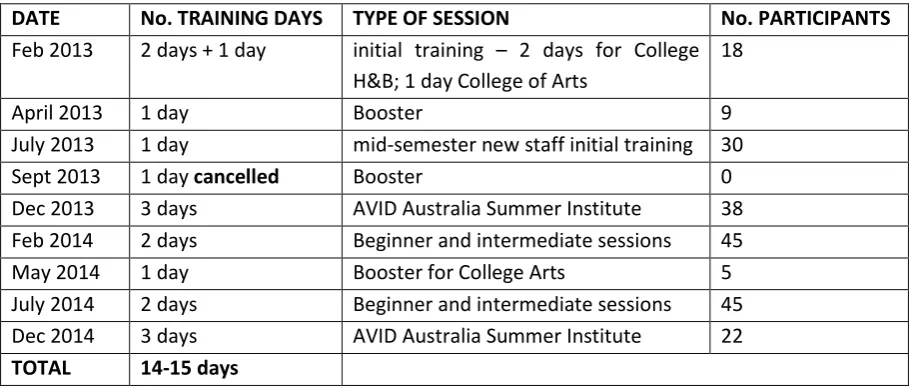
Table 2: VU professional learning schedule
DATE No. TRAINING DAYS TYPE OF SESSION No. PARTICIPANTS Feb 2013 2 days + 1 day initial training – 2 days for College
H&B; 1 day College of Arts
18
April 2013 1 day Booster 9
July 2013 1 day mid-semester new staff initial training 30 Sept 2013 1 day cancelled Booster 0 Dec 2013 3 days AVID Australia Summer Institute 38 Feb 2014 2 days Beginner and intermediate sessions 45 May 2014 1 day Booster for College Arts 5 July 2014 2 days Beginner and intermediate sessions 45 Dec 2014 3 days AVID Australia Summer Institute 22 TOTAL 14-15 days
Time in each professional learning session was provided to review teaching materials to determine how the AVID strategies could be embedded in the target units. An initial two-day training was provided before semester commenced with a one-two-day follow-up workshop provided mid-semester. This model was repeated for semester two, and the same process was applied in the subsequent year. At the end of each year, an additional three-day intensive training was offered through AVID’s main professional learning training event, known as the AVID Australia Summer Institute. Fees for attendance at the Summer Institute were paid for each participant, and sessional staff members were also paid an hourly rate for attending each day of the Summer Institute.
progressively working towards promoting higher levels of thinking. Participants practised how to make explicit the metacognitive thinking processes for analysing increasingly
complex ideas incorporating real-world connections, encouraging students to become more independent learners motivated to take intellectual risks. Participants practised how to scaffold lectures, tutorials, seminars and laboratory exercises using collaborative learning and small group strategies to provide more interactive learning experiences that better engaged students in deeper learning. Particular emphasis was given to the specific strategies of critical reading and writing, which AVID materials teach explicitly for each discipline. In addition, participants were trained to make explicit vital organizational skills necessary for tertiary academic success, such as the Cornell note-taking system.
The AHE participants
At both VU and ECU, the participating faculties and colleges in this project made a financial commitment to have a core group of staff trained in the delivery and use of AHE explicit teaching strategies for specific units. At VU, target units in the College of Health and
Biomedicine (H&B) and the College of the Arts were identified by academic, unit and course coordinators based on need identified through trend analysis of progress and attrition rates. The H&B foundation units were targeted because the College was experiencing a high attrition rate in first year. Staff in Health and Biomedicine had been aware that significant areas of its first year teaching had relied on sessional staff with limited teacher training or experience and it was difficult to attract any staff to teach first years. The target College of Arts unit was a foundation unit required for all students undertaking a Bachelor of Arts degree. It too had experienced variable progression rates and was rewritten several times. Attendance in the AHE professional learning for both VU Colleges was optional.
Conversely, permanent and sessional staff members from ECU’s School of Communication and Arts (SCA) were required to attend the AHE professional learning program in order to teach in the target unit. Additional teaching staff from ECU’s School of Education and UniPrep opted in to attend sessions. The UniPrep cohort reported that many of the AHE explicit teaching strategies were familiar given that their teaching focused on providing additional social and academic scaffolds for students who had not initially met requirements for direct entry in to ECU university courses. The School of Education cohort reported that AHE pedagogical approaches reinforced strategies they were using in teacher education courses and added some teaching practices that they would incorporate into their teaching. The SCA staff targeted a first-year foundation unit that was experiencing high levels of disengagement, poor attendance rates, and low levels of preparation by students when they did attend. Students usually had not done any of the pre-reading tasks prior to class.
Project outputs and findings
Outputs
The project deliverables were:
1. Adaptation and trial of AVID AHE professional development program with sessional staff tutoring in first year units in a range of disciplines.
This deliverable was achieved. AVID’s AHE program was successfully adapted for Australian educators and delivered at two sites over a two-year trial period. All of the educators who participated in the professional learning program reported that the training was very useful and that they had incorporated explicit teaching strategies into their teaching. They reported that their teaching was now more interactive and
students appeared to be more engaged in their learning as a result. In the final year, a random sample of classes from both universities were observed and filmed by the project leader. To varying degrees, where the educators were observed explicitly using high engagement interactive AHE teaching and learning strategies, students were more actively engaged in the learning activities than had been observed previously.
2. Development of prototype of practical resources to improve professional learning activities across the sector, including: a suite of video exemplars on tertiary teaching strategies; and professional learning workshops utilising the video exemplars.
This deliverable was achieved. A prototype website housing a suite of video exemplars showing various AHE explicit teaching strategies as they are taught across different disciplines can be found at www.vu.edu.au/the-victoria-institute/publications. These video exemplars could be incorporated in subsequent professional learning workshops.
3. Benchmarking of project findings with findings from AVID universities in the USA, where similar projects are being coordinated.
As the project progressed, the customisation of the AHE program for the Australian context meant that this deliverable was no longer relevant. The way that the AHE framework was adapted for the Australia universities did not provide data that was similar enough to the USA model to allow for meaningful benchmarking activities.
4. Development of a project website to disseminate resources and build a professional learning community.
This deliverable was achieved. A full report on the project and the two case studies are available on the project website at www.vu.edu.au/the-victoria-institute/publications.
for several courses and typically has an enrolment of about 450 students (see Appendix B).
ECU Case Study. The team at ECU focused their implementation of AVID on one of their first year core units. The unit’s main focus was creativity, however, being a first year core unit it also aimed to develop academic practices and metacognition. This feature was recognised as particularly well aligned with the AVID learning and teaching framework (see Appendix C).
5. Additional dissemination: journal articles, conference presentations and written report.
Brown, C., Tangalakis, K. and Hughes, K., (2013). Engaged Teaching for Engaged Students: Explicit, Inclusive AVID. 16th International First Year Higher Education Conference. Wellington, New Zealand.
Hughes, K. and Brown, C. (2014). Strengthening the Intersections Between Secondary and Tertiary Education in Australia: Building Cultural Capital, Journal of University Teaching & Learning Practice, 11(2). Available at: http://ro.uow.edu.au/jutlp/vol11/iss2/6
Tangalakis, K., Hughes, K., Brown, C. & Dickson, K. (2014). Explicit Teaching Strategies for Science Foundation Subjects. International Journal of Innovation in Science and Mathematics Education, 22(3), 42-51. http://www.ijisme.org/
Brown, C. (2015). What’s the best way to take notes on your tablet or laptop? The Conversation.
http://theconversation.com/whats-the-best-most-effective-way-to-take-notes-41961. 14th July 2015.
(Impact: >70,000 hits, tweets and reprints)
Brown, C. (2015). What’s the best, most effective way to take notes? The Conversation.
http://theconversation.com/whats-the-best-most-effective-way-to-take-notes-41961. 22nd May 2015.
(Impact: >300,000 hits, tweets and reprints)
Key findings
AVID learning and teaching framework was successfully implemented
The evidence-based, AVID explicit learning and teaching framework, WICOR, built around a collaborative, inquiry-based model of teaching and learning was successfully implemented. Analysis of the data showed that all interviewees valued the professional learning sessions.
Both sessional and permanent teaching staff from VU and ECU reported that their teaching capabilities and sense of teacher identity were enhanced by undertaking the AHE
professional learning program. Most participants believed that the positive impact on their teaching was due to particular features of this type of professional learning including:
Modelling of explicit teaching practices in an interactive, practical, hands-on workshop style format that enabled participants to practise strategies as they learned them.
Providing ongoing, supported, scaffolded professional learning rather than ad hoc, disconnected, one-off activities.
Modelling and practising an inclusive, collaborative approach to learning and teaching.
Learning and practising a range of strategies anchored in AVID’s WICOR framework.
No single professional learning activity can provide a short cut to the years required to master the complex art of becoming and remaining an effective, accomplished teacher.
The reported impact on participants’ teaching capabilities depended on the participants’ levels of higher education teaching experience. Teachers who had more than five years higher education experience reported that the workshops provided an effective scaffold that enabled them to:
Learn new teaching strategies that they could apply immediately to their classes.
Build on their existing knowledge of effective higher education teaching practice.
Reinforce good practices already being used.
Adapt and modify higher education teaching strategies to suit their discipline area.
Educators who had no teaching training and less than five years of higher education
teaching experience were often sessional or new recruits to their university. They reported that the AHE professional learning sessions helped them to build an initial understanding of the importance of developing foundation skills and theories of learning and teaching that they did not previously have, which helped restructure their teaching initially. Educators noted that having background knowledge of the science behind the complex art of teaching was essential. They observed that it was unlikely that their teaching would improve with random “snapshot” training. They commented that their teaching was more likely to improve if they could access ongoing support and mentoring, and if they had the
opportunity to form professional learning communities that would allow them to reflect and improve on their teaching practices.
Professional learning needs to be collaborative, practical, sustained, scaffolded, supported and ongoing
Consistent with other research, the AHE professional learning framework reinforced several important conditions required to build the competence and confidence of teaching staff, particularly those without any formal teaching qualifications and minimal experience.
Increasingly, research into academic development suggests sustained, ongoing teaching development activities are far more effective in
Professional learning programs should model effective teaching practices
Professional learning programs should themselves be engaging and model effective teaching practices that can immediately be implemented in the participant’s next class.
As Tangalakis et al. (2014) indicated, the AHE professional learning program and explicit teaching strategies prompted higher levels of engagement in teaching by higher education teaching staff because they had enjoyed learning the strategies as they were modelled and had practised them in an interactive, scaffolded way that enabled them to apply them immediately. Because participants saw value in the AHE training, they were motivated to reflect on students’ learning and their teaching throughout the semester.
Experienced academics who participated in this study have started to lead change in their discipline areas and formed communities of practice. In response, student satisfaction with teaching appears to be improving (Tangalakis et al., 2014, p.48).
The AHE collaborative, inquiry-based, practical model was positively received
The AHE collaborative, inquiry-based, practical model of professional learning was very positively received by participants. The evidence-based, AVID explicit learning and teaching framework, WICOR, built around a collaborative, inquiry-based model of learning and teaching was successfully implemented. Evidence for this is that teaching staff from both universities will continue using the AHE teaching strategies. A second College at VU plans to use the AHE framework, strategies and AHE professional learning model in 2016 to create a new foundation unit in another Bachelor program. Participants felt that the WICOR
framework provided a range of collaborative teaching practices that improved the
interactivity of the traditional lecture and tutorial structures. As a result, they reported that students appeared to be more engaged and participated more actively in learning tasks.
Higher education professional learning requires both generic and customised strategies
Talking to staff about set questions in tutorials is finally paying off. Staff are changing the way they teach their tutes!! Tutes are becoming collaborative sessions with better integration of [lecture] material. I think our discussions at AVID sessions and thereafter have obviously influenced this change (report received from VU course coordinator, March 2015).
Krause’s (2014) research on “academic staff perspectives on disciplinary communities and skill development in disciplinary contexts” also found this to be a complex issue. “Findings highlight discipline-based patterns in staff views about the value of generic skills” (Krause, 2014, p. 2).
Contribution to existing knowledge
This project explored findings from three reports focused on improving the quality of higher education teaching and examined some of the recommendations made in each. The
Australian Learning and Teaching Council’s (ALTC), Good practice report: revitalising the
academic workforce, noted that: “… the challenge is to equip all academics, not just some,
with teaching responsibilities for effective learning by their students in the 21st century” (Southwell, 2012, p. 3). This report made recommendations for improving the quality and status of higher education teaching.
A second project funded by a strategic priority grant from the ALTC, (now the OLT), Effective
teaching and support of students from low socioeconomic status backgrounds: Resources for Australian higher education (Devlin et al., 2012) advised universities to prioritise better
teaching for students from these previously identified backgrounds, in particular.
A third report, Benchmarking Leadership and Advancement of Standards for Sessional
Teaching, observed that:
The ongoing importance of sessional staff as teachers in higher education in Australia, and internationally, required a mechanism to identify effective practices and share them more widely. There was a need for multi-level, multi-disciplinary and cross-institutional standards (Harvey, 2014, p. 4).
This project’s intent and strategies were informed by these projects, national and
international literature relating to the teaching challenges of wider participation in higher education, and literature relating to improving first year higher education student
experience. Detail is available in the full project report at www.vu.edu.au/the-victoria-institute/publications.
Interdisciplinary linkages
silos and built a professional learning community of higher education educators who were collaborative, cross-disciplinary, and collegiate. Providing ongoing professional learning combining both generic skills training and discipline-specific material stimulated more engaged teaching. The sessions engaged all staff and the collegiality shown across the discipline groups were frequently nominated as a strength and a highlight.
Critical success factors
An important difference between VU and ECU ’s implementation of the AHE trial was that the Associate Director of Teaching and Learning in the Faculty of Education and Arts at ECU directed the AHE trial and oversaw the administrative and organisation of the professional learning sessions. With a single point of contact who was a senior academic in that Faculty, the ECU professional learning sessions were intentional, better organised and well
communicated in advance to potential participants. At VU, four course coordinators from two different Colleges were required to manage their regular responsibilities as well as organise and coordinate the professional learning sessions. During the period of this research, VU also underwent a restructure and reduction of professional staff across the institution, which meant that time consuming administrative tasks, such as organising and coordinating training, fell to the course coordinators. This proved to be less efficient.
Implementation in other institutions
In this project, the AHE WICOR strategies were customised across several higher education disciplines to deliver supported, ongoing professional learning sessions in Australia. The AHE professional learning model has been employed in many institutions in the USA and this project has demonstrated its potential to contribute to enhancement of learning and teaching in an Australian context.
This project reinforced previous research findings that universities wanting to improve the quality of teaching need to commit resources and foster a change of culture. In particular, institutional factors deemed to be important to effect institutional change, such as those identified in the Devlin, et al. (2012) report include:
Articulating and promoting higher education teaching standards.
Identifying senior staff who can direct, value, support and encourage sessional and permanent teaching staff to participate in professional learning activities.
Building supported, ongoing professional learning programs for all teaching staff, and particularly for those who have no formal teaching training.
Supporting professional learning programs that are intentional, scaffolded, continuous, valued and supported financially with appropriately qualified instructors/teachers/mentors.
Providing time for all teaching academics to plan curriculum and teaching material responsive to the inclusive learning needs of more diverse student populations.
Providing greater support for sessional teaching staff within their discipline and the broader university.
Providing financial and structural support and incentives for sessional teaching staff to engage with regular professional learning programs to improve the quality of higher education teaching.
Identifying leaders who can refocus university priorities that develop academics as highly skilled teachers as well as academics as highly skilled researchers.
In the VU case study, pass rates for this unit rose significantly from 53% (N=58) in 2012 to 81.01% (N=179) in 2013 after AHE strategies were embedded, particularly the community building activities at the start of semester. An observation shared by all tutors in the unit was that the improvement in the pass rates was indicative of more engaged students who were responding well to the new interactive approach to learning and teaching. The unit coordinator observed an important effect on the way the tutors were now teaching and collaborating. Having the common AHE framework encouraged the team to reflect and discuss their teaching experiences regularly using a shared language, which was not a practice they had engaged in previously before participating in the AHE training.
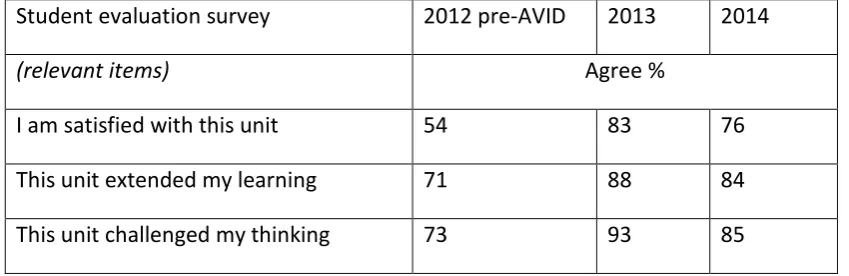
Similarly, in the ECU case study, student unit evaluation data showed a significant improvement on most items in the survey, which educators attributed to using AHE strategies in an explicit and coordinated way. Educators spoke about the students’ responsibility for learning increasing significantly from using the AHE strategies. They felt that this greater responsibility came particularly from having established stronger personal relationships within the class, more collaborative activities, and conveying an explicit purpose for learning tasks. Educators also reported that using the AHE scaffolded critical reading strategies resulted in more engaged students and consequentially a more satisfying teaching experience. All of the staff found the AHE training very beneficial, and that through the AHE professional learning activities, they became more engaged with their teaching. For the staff with more than a decade of teaching experiences, learning about AHE teaching strategies meant acquiring a very useful set of practices and a consolidation and
improvement of strategies they had been using already. For staff with little teaching experience this professional learning experience had a significant impact on their
Findings against the questions investigated
1. Does providing ongoing professional learning using the AVID for Higher Education (AHE) explicit teaching framework stimulate more engaged teaching?
It appears that implementing the AHE explicit teaching strategies stimulates more engaged teaching, but further longitudinal research is recommended to see how
learning is sustained over time. More generally, it appears that paying sessional staff to attend professional learning appears to provide a return on investment in terms of improving the quality and engagement in teaching over time, but payment alone is not sufficient to ensure institutional factors allow all staff to attend and invest in
professional learning opportunities. The tenuous nature of sessional employment, in particular, disempowers educators to commit to or regularly attend professional learning activities.
2. Is there a return on investment for a university from providing regular/continuous, supported professional learning to sessional and permanent teaching staff?
From the data in this project, it appears that there is a return on investment, but further longitudinal research is recommended and suggestions for how to conduct future research is discussed in the full project report available at www.vu.edu.au/the-victoria-institute/publications
3. Is there value in building a prototype database of effective higher education teaching video exemplars that could be further developed to build professional learning activities around them?
Findings from this project indicate that both experienced permanent and sessional staff valued having videos of effective higher education teaching to analyse and draw upon. It is likely that a database of effective Australian higher education video exemplars that focuses on a repertoire of teaching strategies illustrating effective teaching practices being taught across a range of disciplines would make a valuable contribution to higher education professional learning programs and would improve the quality of learning and teaching. Ideally, video exemplars of effective higher education teaching should also include a set of clear teaching standards and encourage supportive peer observation with accompanying observation frameworks that educators could use to reflect on their
Project impact, dissemination and evaluation
Impact
This project has had a positive impact for project team members and the sector more generally. All participants who were trained with the AVID teaching strategies reported that they continued to use the AVID explicit teaching strategies after the project ended as they felt using the explicit teaching strategies was improving their teaching and consequently, student learning. Since the conclusion of the official data collection period, participants have subsequently reported additional positive changes to their learning and teaching practice. These educators reported that students’ feedback in their 2015 Unit and Course Teaching Evaluations was more positive and they received higher satisfaction ratings than in previous years. AVID’s explicit teaching strategies and the AVID professional learning model has subsequently been implemented in a second VU College for delivery in 2016. Key staff in those units attended the AVID Summer Institute in December 2015 and will implement a new, revised unit with AVID’s student-centred, high engagement teaching strategies embedded throughout. The educators are using the collaborative strategies to work as a team and will meet weekly to ensure their teaching across the unit is consistent, highly engaged and student focused.
The relevance of customising a USA-developed university readiness system for an Australian context shows potential for growth. Having attended a presentation by members of the project team on the AHE project, another university in Melbourne has requested AHE training for several groups of staff across that university. Customised workshops will be provided on site in 2016.
A significant impact of this project is a connection between the Victoria Institute and Professor Eric Mazur, Harvard University, winner of the 2014 Minerva Prize. The Minerva Academy is an honorary institution “dedicated to promoting and rewarding extraordinary advancements and innovation in higher education teaching around the world”
http://institute.minervaproject.com/ Professor Mazur has invited the project leader to collaborate and develop a professional learning program for building high engagement learning and teaching strategies with peer support using electronic, interactive e-texts.
On a personal level, participating in this project assisted another VU staff member to
been professionally acknowledged and rewarded with a university prize for their work that acknowledged their contributions to this OLT project.
Dissemination
To date, the project has yielded two published journal articles, one international conference presentation, and two related articles published in the international e-publication, The
Conversation with very high impact results. Two more journal papers are being written
based on this project and it is anticipated that they will be submitted for publication in 2016. The two case studies are available for download from the project website. The prototype website with video examples of educators using AVID’s explicit teaching strategies in different contexts is available at www.vu.edu.au/the-victoria-institute/publications. A summary of these outputs can be found earlier in this report.
Evaluation
A reference group was established and met at critical points during the research. The reference group members included AVID Center AHE curriculum and staff developers, the Dean of an Education faculty from a university external to this project, and project team members from both case study universities. An external evaluator was appointed to the project and his summative report was prepared at the conclusion of the research period.
Suggestions for further research and development
Further research is needed to determine the best mix of generic versus discipline-specific professional learning models. Future research could build on developing the video
exemplars of explicit teaching strategies with online professional learning modules. A digital repository could be developed to showcase illustrations of effective higher education
practice. The Australian Institute for Teaching and School Leadership has developed a digital repository to exemplify effective school teaching that illustrates the Australian professional teaching standards and shows how effective teaching develops by career stage in different subject areas, see:
http://www.aitsl.edu.au/australian-professional-standards-for-teachers/illustrations-of-practice/find-by-career-stage.
Further examples of effective higher education teaching could be gathered from across disciplines to build a prototype website demonstrating how a digital repository with illustrations of highly effective higher education teaching could provide continuous, online professional learning activities for higher education educators. Further research should also be conducted to elicit the return on investment to universities, students and the economy from investing in professional learning for higher education educators over time.
Conclusion
This project investigated whether a US professional learning program, AVID for Higher Education that uses a teaching and learning framework of high engagement, explicit
the level of engagement in teaching for sessional and permanent staff. We investigated whether more engaged teaching improved students’ levels of engagement and success in large first year foundation units that had previously sustained high rates of failure.
We analysed any change over time on educators’ teaching capabilities and their identities as educators given that, traditionally, teaching has not been as highly valued as research in universities. This project sought to give voice to the professional teaching experience and professional learning needs of these educators. An unanticipated finding was that although sessional staff appreciated being paid to attend professional learning activities, of greater value to them was the act of being included in a professional learning community at their university. Several participants stated that the initial professional learning activities opened up opportunities for them to collaborate with permanent staff on unit redesign in a way that valued their expertise, and this positively impacted their personal and professional identities as educators.
The research found that the impact of the AHE professional learning program improved educators’ capabilities and sense of identity as an educator, particularly for those educators with little or no formal teaching training. Every unit in which the AHE strategies were
implemented with fidelity experienced significant improvement in student achievement and evaluation data. This finding indicates that for universities there is potentially a significant return on investment to improve both student learning and teaching outcomes by
implementing high quality, ongoing, scaffolded professional learning for sessional and permanent teaching staff.
The research also identified the need for Australian video exemplars of effective higher education teaching to be created for higher education staff with little or no teaching training in order for them to be able to see a variety of examples and learn what effective higher education teaching in their discipline might look like.
Consistent with findings in the Southwell (2012), Devlin et al (2012), and Harvey (2014) reports, findings from this research identified the need for universities that are serious about improving the quality of teaching to commit resources and foster a change of culture, which encompass both teaching and institutional factors.
References
Bereiter, C., & M., S. (1998). Beyond Bloom’s Taxonomy: Rethinking Knowledge for the Knowledge Age. In A. Hargreaves, A. Lieberman, M. Fullan & D. Hopkins (Eds.), International
Handbook of Educational Change (Vol. 5, pp. 675-692). Netherlands: Springer
Bexley, E., James, R., & Arkoudis, S. (2011). The Australian academic profession in transition: Addressing the challenge of reconceptualising academic work and regenerating the
academic workforce. Melbourne: Centre for the Study of Higher Education.
Blasst - The Project website. (2014). Retrieved 28 October 2015, from
http://blasst.edu.au/about.html
Brinkworth, R., McCann, B., Matthews, C., & Nordstrom, K. (2008). First year expectations and experiences: student and teacher perspectives. Higher Education. doi: 10.1007/s10734-008-9188-3
Browne, J. (2010). Securing a sustainable future for higher education: An independent review of Higher Education funding & student finance. London.
Chalmers, D. (2010). Rewarding and recognising quality teaching in higher education through systematic implementation of indicators and metrics on teaching and teacher effectiveness. In A. L. a. T. Council (Ed.). WA: UWA
Coates, H., & Goedegebuure, L. (2012). Recasting the academic workforce: why the attractiveness of the academic profession needs to be increased and eight possible strategies for how to go about this from an Australian perspective. Higher Education, 64, 875–889.
Costa, A. L. (1985). Developing minds: a resource book for teaching thinking. Alexandria, Vancouver: Association for Supervision and Curriculum Development.
Devlin, M., Kift, S., Nelson, K., Smith, L., & McKay, J. (2012). Effective teaching and support of students from low socioeconomic status backgrounds: Resources for Australian higher education. NSW: Departmentof Industry, Innovation, Science, Research and Tertiary Education.
Harvey, M. (2014). the blasst report. Sydney, NSW: Office for Learning and Teaching.
Henard, F., & Leprince-Ringquet, S. (2008). The path to quality teaching in higher education.
http://www1.oecd.org/edu/imhe/44150246.pdf
Kofod, M., Quinnell, R., Rifkin, W., & Whitaker, N. (2008). Is tutor training worth it?
Acknowledging conflicting agenda. Paper presented at the HERDSA: Engaging communities.
http://trove.nla.gov.au/work/153059702?versionId=166810234
Krathwohl, D. R. (2002). A Revision of Bloom's Taxonomy: An Overview. Theory Into Practice,
41(4), 212-218.
Krause, K.-L. D. (2014). Challenging perspectives on learning and teaching in the disciplines: the academic voice. Studies in Higher Education, 39(1), 2-19. doi:
10.1080/03075079.2012.690730
Matthews, K. (2014). A new look at how to teach and learn. Campus Review, (31st March 2014). http://www.campusreview.com.au/2014/03/a-new-look-at-how-to-teach-and-learn/
OECD. (2012). Equity and Quality in Education: Supporting Disadvantaged Students and Schools (pp. 168). Paris: OECD.
Probert, B. (2015). The quality of Australias higher education system: How it might be defined, improved and assured Office for Learning and Teaching Discussion Paper Series (Vol. Discussion Paper 4). NSW: Office for Learning and Teaching.
Reason, R., Terenzini, P., & Domingo, R. (2006). First things first: Developing academic competence in first year college. Research in higher education, 47(2), 149-175. doi: 10.1007/s11162-005-8884-4
Southwell, D. (2012). Good practice report: revitalising the academic workforce. Sydney, NSW: Office for Learning and Teaching.
Tangalakis, K., Hughes, K., Brown, C., & Dickson, K. (2014). The use of Explicit Teaching Strategies for Academic Staff and Students in Bioscience Foundation Subjects. International
Appendix B: VU Case Study
This vignette describes how AHE strategies were incorporated and practiced in one of the foundation units in the College of Arts, which is compulsory for several courses and typically has a large enrolment of about 450 students. This unit aims to build a strong foundation of core academic skills and academic metacognition. After participating in AHE professional learning sessions, a team of teaching staff decided to strategically embed AHE learning and teaching strategies for each of the 12 weeks of lectures and tutorials. They worked together with the two AVID staff developers to realign the curriculum. The unit coordinator, who is a permanent staff member with 14 years of higher education teaching experience, together with two of the sessional tutors who had a maximum five years of teaching experience, all participated in at least three AHE sessions. The unit coordinator had also participated in additional AHE sessions in previous years. One of the sessional and experienced tutors did not attend any of the AHE sessions, but was team teaching with colleagues who participated in several AHE professional learning activities.
In semester one, 2013, the team taught this foundation unit together. In the first four weeks, like ECU, they focused in particular on gradually introducing community building activities. One of the tutors reported:
...It was insane, it was absolutely unbelievable how quickly rapport was built, how people were relating to me differently themselves, definitely there was this
air of just honesty and connection and mutual support that I don’t think I often
see until weeks, weeks in once people opened up a bit more, and it was instant from first class and I thought that was unbelievable. (VU tutor #)
Later in the semester, different metacognitive frameworks such as Bloom’s Taxonomy (Bereiter & M., 1998; Krathwohl, 2002) and Costa’s Levels of Questioning (Costa, 1985), were introduced. By week four they started using strategies to promote critical thinking through discussion and dialogue using Socratic Seminars, Philosophical Chairs and World Café activities. Throughout the unit AHE strategies were used to develop critical reading and writing skills in the context of the unit’s topics.
The unit coordinator used two interviews, one conducted during the project and the second after the completion of the project, to reflect on the AVID experience. The training resulted in two significant changes to the unit coordinator’s teaching. First, more intentional and consistent explanations were given to students about the purpose of all activities
team to reflect and discuss their teaching experiences regularly using a shared language, which was not a practice they had engaged in previous to participating in the AHE training.
All teaching staff spoke very positively about their AHE professional learning experience. One stated:
So my experience of it, well personally it gave me a greater sense of control and also confidence in knowing what to do to sort of make sure engagement is high and get good outcomes out of students. In terms of how students experienced it,
they were incredibly engaged, motivated. You don’t see people sitting around
kind of just daydreaming when everyone has to stand and contribute to
something and you’re on a team, you know what I mean? (VU teaching staff #)
The pass rates for this unit have risen significantly from 53% (N=58) in 2012 to 81.01% (N=179) in 2013 after AHE strategies were embedded. An observation shared by all tutors in the unit was that the improvement in the pass rates is indicative of more engaged students who are responding well to their new interactive approach to learning and teaching.
Table 3: VU Arts unit pass rates
2012 2013 2014
Appendix C: ECU Case Study
The team at ECU focused their implementation of AVID on one of their first year core units. The unit’s main subject was creativity, however, being a first year core unit it also aimed to develop academic practices and metacognition. This feature was recognised as particularly well aligned with the AVID learning and teaching framework.
The typical cohort enrolled in this unit comprised a significant number of non-traditional students studying different majors from across the University. There were four staff members teaching this unit at the time of this research, two of them as permanent staff with at least 12 years of teaching experience and two sessional staff with at least five years of teaching experience. None of them had any relevant previous teaching training or qualifications. They all participated in AHE training, two of them in six sessions, and the other two in at least three sessions.
After the initial session, the unit coordinator analysed the unit’s curriculum to incorporate AHE learning and teaching strategies, and invited the sessional staff to contribute to that review process. Sessional staff commented that they felt a greater sense of commitment to the unit and felt valued as colleagues from their inclusion in this process. The AVID staff developers and the Associate Dean Teaching and Learning also provided support for this process.
The first significant change was an introduction of gradual community building strategies, which were incorporated into the first four weeks of the unit instead of only in week one. Tutors observed that these strategies were initially met with resistance from students (“it’s a waste of time”). Tutors persisted and following the AVID principle of explicit teaching which entails explicitly explaining to students the purpose of any given activity. Tutors reported that the inclusion of the additional community building activities made a
significant, positive difference in the level of students’ engagement. Tutors spoke about the students’ responsibility for learning increasing significantly from using the AHE strategies. They felt that this greater responsibility came particularly from having established stronger personal relationships within the class, more collaborative activities, and conveying an explicit purpose for learning tasks. One of the tutors explained how he experienced the impact of using AHE explicit teaching strategies:
I think it lets them in more. I think that allows them to feel more comfortable. But also, the flip side of that is it puts more onus and responsibility on them…. But when
you give them that idea that they’ve actually got control and a bit of power, they run
with that and they turn in work that’s just exceptional. (ECU tutor #)
incorporating a number of scaffolded, collaborative reading activities with non-traditional texts. Tutors reported that using these strategies resulted in more engaged students and consequentially a more satisfying teaching experience.
All of the staff found the AHE training very beneficial, and one of them stated:
It’s been a major factor in my rediscovering my love of teaching, but also my
ambition to want to do more of it. (ECU staff member #)
For the staff with more than a decade of teaching experiences, learning about AHE teaching strategies meant acquiring a very useful set of practices and a consolidation and
improvement of strategies they had been using already.
One of the participants reflected upon the strategies:
They give you some structure and they provide you a safe base from which to then explore teaching. So it allows you to sort of formalise and operationalize your teaching in such a way, that you're not having to worry about what you're doing in the classroom. (ECU staff member #)
For the staff with little teaching experience this professional learning experience had a significant impact on their engagement with their teaching, their sense of capability and feelings of confidence. One of the sessional tutors reflecting on the continuous aspect of AVID training pointed out the importance of this type of professional learning in relation to their own need for a professional learning community:
The refresher things are important. Repetition only in the sense that you come back to that same space. The space itself, I think, is very important. Because as a sessional
staff member, I get my three hours at university this semester, because I’ve only got
the one class. I don’t get a chance to talk much or interact much with other teachers.
So for that reason, it’s incredibly valuable. (ECU sessional tutor #)
Table 4: Selected Items from ECU Student Evaluation Survey
Student evaluation survey 2012 pre-AVID 2013 2014
(relevant items) Agree %
I am satisfied with this unit 54 83 76
This unit extended my learning 71 88 84
This unit challenged my thinking 73 93 85
In the students’ evaluation survey, one of the students affirmed the experience that the tutors had described in their observations about the change in their students’ level of engagement:
The tutorials generated my confidence and diminished my fear of public