TABLE OF CONTENTS:
Vol. 37, No. 2, March 1984
ARTICLES
99 100
104
111
116
122
127
130
133
135
140
142
147
152
156
159 163
165 166
172
President’s Address
Lightning Fires in North Dakota Grasslands and in Pine-Savanna Lands of South Dakota and Montana by Kenneth F. Higgins
Livestock Grazing Influences on Community Structure, Fire Intensity, and Fire Frequency within the Douglas-fir/Ninebark Habitat Type by G. Thomas Zim- merman and L.F. Neuenschwander
Economic Evaluation of Fire-based Improvement Systems for Macartney Rose by L. Garoian, J.R. Conner, and C.J. Scifres
Edaphic and Microclimate Factors Affecting Tobosagrass Regrowth after Fire by Leon F. Neuenschwander and Henry A. Wright
Acceptable Block Beef from Steers Grazing Range and Crop Forages by C. Wayne Cook, David A. Cramer, and Larry Rittenhouse
Early Weaning and Part-year Confinement of Cattle on Arid Rangelands of the Southwest by C.H. Herbel, J.D. Wallace, M.D. Finkner, and C.C. Yarbrough Horses and Cattle Grazing on the Wyoming Red Desert, III by G.E. Plumb, L.J.
Krysl, M.E. Hubbert, M.A. Smith, and J.W. Waggoner
Comparison of Grazed and Protected Mountain Steppe Rangelnnd in Ulukisla, Turkey by Tuncay Tukel
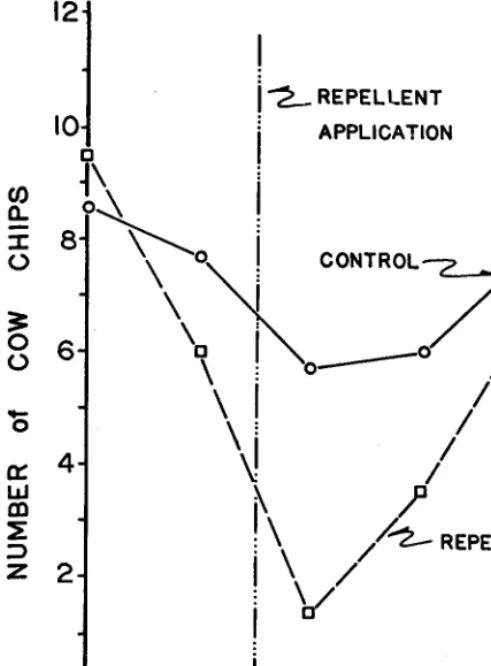
Effects of Soil Disturbance on Plant Succession and Levels of Mycorrhllal Fungi in a Sagebrush-Grassland Community by T.B. Doerr, E.F. Redente, and F.B. Reeves Repellent Effects on Distribution of Steers on Native Range by D.M. Engle and
J.G. Schimmel
Stream Water Quality as Influenced by Beaver within Grazing Systems in Wyo- ming by Quentin D. Skinner, John E. Speck, Jr., Michael Smith, and John C. Adams
Water Stress of Tallgrass Prairie Plants in Central Oklahoma by D.R. Hake, J. Powell, J.K. McPherson, P.L. Claypool, and G.L. Dunn
Economic Evaluation of Chemical Mesquite Control Using 2,4,5-T by D.E. Ethridge, B.E. Dahl, and R.E. Sosebee
Control of Aspen Regrowth by Grazing with Cattle by R.D. Fitzgerald and A. W. Bailey
Control of Leafy Spurge in Pastures Using Dicamba and 2,4-D by Paul N.P. Chow Influence of Range Seeding on Rodent Populations in the Interior of British
Columbia by Thomas P. Sullivan and Druscilla S. Sullivan Viewpoint: Trinomials Are in Poor Taste by Alan A. Beetle
Costs and Returns of Angora Goat Enterprises with and without Coyote Predation by Jerry H. Scrivner and J. Richard Conner
Published bimonthly-January, March, May, July, September, November
Copyright 1984 by the Society for Range Manage- ment
INDIVIDUAL SUBSCRIPTION is by membership in the Society for Range Management.
LIBRARY or other INSTITUTIONAL SUBSCRIP- TIONS on a calendar year basis are $58.00 for the United States postpaid and $88.00 for other coun- tries, postpaid. Payment from outside the United States should be remitted in US dollars by interna- tional money order or draft on a New York bank. BUSINESSCORRESPONDENCE, concerning sub- scriptions, advertising, reprints, back issues, and related matters, should be addressed to the Manag- ing Editor, 2780 West Fifth Avenue, Denver, Colo. 80204.
EDITORIALCORRESPONDENCE,concerningmanu- scriptsorothereditorial mattersshould beaddressed to the Editor, 2780 West Fifth Avenue, Denver, Colo. 80204.
INSTRUCTIONS FOR AUTHORS appear on the inside back cover of each issue. A Style Manual is also available from the Society for Range Manage- ment at theaboveaddress@$1.25for singlecopies; $1.00 each for 2 or more.
THE JOURNAL OF RANGE MANAGEMENT (ISSN 0022-409X) is published six times yearly for $58.00 per year by the Society for Range Management, 2760 West Fifth Avenue, Denver, Colo. 80204. SECOND CLASS POSTAGE paid at Denver, Colo. POSTMASTER: Return entire journal with address change-RETURN POSTAGE GUARANTEED-to Society for Range Management, 2780 West Fifth Avenue, Denver, Colo. 80204.
The Journal of Range Management serves
as a forum for the presentation and discus- sion of facts, ideas, and philosophies pertain- ing to the study, management, and use of rangelandsand theirseveral resources. Accord- ingly, all material published herein is signed and reflects the individual views of the authors and is not necessarily an official position of the Society. Manuscripts from any source- nonmembers as well as members-are wel- come and will be given every consideration by the editors. Submissions need not be of a technical nature, but should be germane to the broad field of range management. Editor- ial comment by an individual is also welcome and subject to acceptance by the editor, will be published as a “Viewpoint.”
180
185
189
Herbage Yields and Water-use Efficiency on a Loamy Site as Affected by Tillage, Mulch, and Seeding Treatments by William A. Berg and Phillip L. Sims
Impact of Presowing Seed Treatments, Temperature and Seed Coats on Germina- tion of Velvet Bundleflower by M.R. Haferkamp, D.C. Kissock, and R.D. Webster Germination of Texas Persimmon Seed by J.H. Everitt
BOOK REVIEWS
192 Temperate Deserts and Semi-Deserts (Ecosystems of the World 5). Edited by Neil E. West.
Managing Editor PETER V. JACKSON 111
2760 West Fifth Avenue Denver, Colo. 80204 Editor
PATRICIA G. SMITH
Society for Range Management 2760 West Fifth Avenue Denver, CO 80204 Book Review Editor RICHARD E. FRANCIS
Rocky Mountain Forest and Range Experiment Station 2205 Columbia SE.
Albuquerque, New Mexico 87106
ASSOCIATE EDITORS E. TOM BARTLETT
Dept. of Range Science Colorado State University Fort Collins, CO 80523 GARY FRASIER
780 West Cool Drive Tucson, AZ 85704 G. FRED GIFFORD
Range Science Dept. Utah State University Logan, UT 84322 W.K. LAUENROTH
Department of Range Science Colorado State University Fort Collins, CO 80523 LYMAN MCDONALD
Statistics Department
College of Commerce and Industry University of Wyoming
Laramie. WY 82071 ROBERT MURRAY
US Sheep Experiment Station Dubois, ID 83423
KIETH SEVERSON Forest Hydrology
Laboratory
Arizona State University Tempe, AZ 85281 DARREL UECKERT
Texas Agricultural Experiment Station 7887 N. Highway 87
San Angelo, TX 78901 BRUCE WELCH
Shrub Science Laboratory 735 N 500 E
Provo, UT 84701 LARRY M. WHITE
USDA ARS
S. Plains Range Research Station 200 18th St.
Woodward, OK 73801 KARL WOOD
Dept. of Animial and Range Sciences Box 3-1
Las Cruces, NM 88001 JAMES YOUNG
USDA ARS
Grass,
andfar
aStlM?~COUldSee.
Stirruphigh
Thatsthe~itwas.
That’sttae~itCanbe.
When the first ranchers pioneered Texas and
Oklahoma
they were greeted by grassland.
Ranging for miles and waving a welcome to the
strong-spirited ranchers and their grazing herds.
When the land was all taken, it was not all
taken care of. It was fenced and overgrazed.
It was parched by the dry years, and invaded
by deep-rooted
and “drouthy” brush. Brush
destined to invade nearly every ranch,
and to cut in half the grazing potential
of over 88 million acres.
But there’s a new pioneer spirit among
ranchers today. They want their land
back from the brush..
.and back to
its natural
beauty and bounty.
And there’s a new product that makes it
practical. It’s GraslanTM from Elanco.
Graslan is a new approach
to brush control.
It’s as revolutionary
and unique as were three
other Elanco products-Tylan@
and
Rumensin@ for your cattle and TreflarP
herbicide for soybeans and cotton.
To find out more about brush control with
Graslan, talk to your local SCS, Extension
Agent or Range Management
Specialist.
Or call the toll free Elanco hotline:
l-800-428-444 1.
Itcould be the most
important
call you’ll make for years to come.
Elanco Range Products
Elanco Products Company
A Division of Eli Lilly and Company
Indianapolis,
Indiana 46206
Pioneering anew era
in range management.
(Graslan”-tebuthluron. Elanco) ,.._..._..-... ..-. _ ._ . _ _ ._,
SOCIETY FOR
RANGE MANAGEMENT
Presi&nt
JOSEPH L. SCHUSTER Range Science Dept. Texas A&M University College Station, TX 77843 1st Vice-President EDWARD A. MCKINNON
Box 3474 Sta. B.
Calgary, Alta., Canada T2M2Ml 2nd Vkt-President
F.E. “FEE” BUSBY 1263 Park, Laramie, WY 82070 Executive Vke-Pm&lent PETER V. JACKSON III
Society for Range Management 2766 West Fifth Ave. Denver, Colo. 80204 (363) 571-0174 DimtO
1982-19n4 THOMAS E. BEDELL
Ext. Rangeland Res. Spec. osu
Corvallis, Oregon 97331 DON DWYER
Range Science Dept. UMC 52 Utah State University Logan, Utah 84322 198355
PAT 0. CURRIE
Livestock and Range Research Station Miles City, Montana
DAVID A. FISCHBACH Box 210
Faith, South Dakota 57626 l9til967
JOHN R. HUNTER Range 61 Wildlife Dept. Texas Tech University Lubbock, Texas 79499 DICK WHETSELL
P.O. Box 1209 Pawhuska, OK 740%
The term of office of all elected officers and direc- tors begins in February of each year during the Society’s annual meeting.
The Society for Range Management, founded in 1948 as the American Society of Range Monugernenr, is a nonprofit association incorporated under the laws of the State of Wyoming. It is recognized exempt from Federal income tax, as a scientific and educa- tional organization, under the provisions of Section 501(c)(3) of the Internal Revenue Code, and also is classed as a public foundation as described in Section 509(a)(2) of the Code. The name of the Society was changed in 1971 by amendment of the Articles of Incorporation.
The objectives for which the corporation is established are:
-to develop on understanding of range ecosystems and of the principles applicable to rhe management of range resources;
-to assist all who work wirh range resources to keep abreast of new findings and techniques in the science and art of range management;
-to improve the effectiveness of range management IO obtainfrom range resources the products and values necessary for man’s welfare:
-to create a public appreciation of the economic and social benefits to be obtained from the range environment;
-to promote professional development of its members.
Membership in the Society for Range Management is open to anyone engaged in or interested in any aspect of the study, management, or use of rangelands. Please contact the Executive Secretary for details.
Contribution Policy
The Society for Range Management may accept donations of real and/ or personal property, subject to limitations imposed by State and Federal Law. All donations shall be subject to control by the Board of Directors and their discretion in utilization and application of said donations. However, consideration may be given to the donor’s wishes concerning which particular fund account and/ or accounts the contribution would be applied.
President’s Address
GERALD W. THOMAS
A year in the Presidency of the Society for Range Manage- ment goes by with shocking speed when one looks at the “/ong”list ofgoals and objectives attempted for the year and the “short”list of accomplishments. But, then, that’s the nature ofthe process. Offic- ers change; Board members change; but the Society survives and prospers. It prospers because of the continuity in staff (and 1 want to thank the Denver staff for their excellent service in 1983); the Society survives because of the continuity in long-range plans and objectives. The Society prospers as long as there are we/l thought ourpolicies to help attain the major goals and well-designedproce- dures in place to guide the staff and rhe 5,000 orso volunleers who wmt, to help.
Our January retreat was designed to examine the existing poli- cies of SRM and look toward (1 dim but enchanring horizon. We plowed some old ground on the south 40-b,& we also turned over some new sod-Perhaps, I should hasten to add that we even recommended against turning over any sod where native rangeland could best serve society.
A year in the Presidency brought me to the full realiration, that while we need more members, those rhorpay fojoin are willingand anxious to help. Our members wont to contribute to the goals of the Society. They ask far more frequently, “What can 1 do to help strengthen the Society?” than “What has the Society done for me lately?”
A year in the Presidency has convinced me that our officers must become more involved in political issues, whether ornot they “jeer politically inclined. “We can win 100 battles on the technical front
and lose the war in Washington or in the State capitols. However, as we formulate guidelines for political involvement, we mwf remember that we are on “international” sociely and political issues can develop at any point and at any time. We must keep alert!
A year in the Presidency has demonstrated that the strength of SRM and the ejjecrivness of SRM rests with the Sections. That’s where it happens-in the field-our on the land! The Sections generate interest; the Sections enlist new members; the Sections move the Society toward its primary goals. I have been very pleased with our Section leadership this past year.
A year in the Presidency has reinforced my belief that we are members ofone ojthemostunique ondchallengingsocietiesin the world. I say “unique” because range management or range science is a “hybrid” field of endeavor, and we have the hybrid vigor 10 prove if! Our Society grew out of the void not covered by the agronomists, the animal scientists, the botanists, the economists, the biologists, the foresters, or even the basic ecologists. While all of these professions contribute to our understanding of the range resource, none of them carry the broad mission of integrating the art with the science to emphasize the term “management.” Research. Understnndingand Monagemenr ore our jocus-notpro- fecfion, per se.
In keeping with the “management” theme. we stillneed toplace more emphasis on service to users ofrange lands-particularly rhe livestock sector. We need to demonstrate fo the producers oj animalproducts that SRM members have the background and capabilities to assist them with their management decisions. We need more contact--more interaction-more advice from ran- chers. Our own rancher members and our Producer Afjairs Corn- mirree have helped to curry fhis message. 1 still have a serious concern that the goal of certain environmental interests is to elimi- nate domestic livestock from public range lands. This concern was elevated with the recent articles in Ourdoor Life, the Los Angeles
Times, etc. SRM has the knowledge and the responsibility to help bring these extremist views back into perspective.
A year in the Presidency has convinced me of the need to improve our interactions with other professional societies and organizations. We need fo join together when we have murual interests but maintain autonomy and independence when our pur- poses can be served best by acting at our own discretion.
A year in the Presidency has made this “Charter Member" of the Society more and more proud of SRM. The 1984 budget will he tight, but we still hope to keep our new Executive Vice-President in closeconfncr with Section field days and programs. Pere Jackson is providing the leadership necessary fo builda strongsociety. Please
give him your support as well as your suggestions for improving SRM.
Lastly, as the new officers and hoard members take over, we deliver to them the charge to move the Society to new levels of achievement. I ask you as members to give these new officers and directors your allegiance. With your help, our new President, Dr. Joe Schuster, will make 1984 another great year for SRM. Thank you.
Lightning Fires in North Dakota Grasslands
and in Pine-Savanna Lands of South Dakota
and Montana
KENNETH F. HIGGINS
Abstract
Lightning strike fires which occurred between 1940 and 1981 were studied in mixed-grass prairie grasslands and in pine-savanna lands in the Northern Great Plains region. A majority (73%) of ignitions occurred during July and August, while a lesser number was recorded in April, May, June, and September. The April- September period is also the average time of the freeze-free period and approximates the average distribution period for thunder- storm activity in this region. The area burned by each of 293 lightning firs (most of which were suppressed) ranged from 0.004- 1158.3 ha (X = 10.8 ha). The frequency of lightning fires in mixed- grass prairie grasslands averaged 6.0/yr per 10,000 km* in eastern North Dakota, 22.4/yr per 10,000 km* in southcentral North Dakota, 24.7/yr per 10,000 km* in western North Dakota, and 91.7/yr per 10,000 km2 in pine-savanna lands in northwestern South Dakota and southeastern Montana. The ecological role of lightning-set fires is discussed relative to the development of resource research and management plans and to the interpretation of historical records of natural fire occurrence in the Northern Great Plains region.
Climate and fires are strongly supported in recent reviews as primary agents affecting the origin and development of native grasslands in North America (Vogl 1974, Wright and Bailey 1980). Lightning has for many years been recognized as an important cause of forest fires (Komarek 1966, 1968; Stokes and Dieterich 1980) but there is less agreement about its importance as a natural cause of grassland fires.
Rowe (1969) and Vogl (1974) summarized historical perspec- tives of the arguments relative to the purported unimportance or absence of lightning fires in North American grasslands. However, authentic instances of lightning-caused fires have been reported in grasslands or steppes in Alberta (Nelson and England 1971), Sas- katchewan (Raby 1966, Rowe 1969, Coupland 1973), Kansas (Brock 1925, Malin 1956), Nebraska (Kirsch and Kruse 1973, Wolfe 1973, Westover 1977, Bragg 1978), and Washington (Uresk et al. 1976).
Komarek (1966) reported lightning-caused fires for South Dakota and Nebraska, all of which were associated with forest or forest-savanna vegetative types. Thus, lightning-caused fires are a natural phenomenon in the Central and Northern Great Plains grasslands but there is a paucity of information about their season- ality, frequency, and extent.
The present paper summarizes and characterizes the events of 294 known occurrences of lightning-caused fires in grasslands in North Dakota and in pine-savanna lands of nearby South Dakota and Montana.
The author is wildlife biologist, U.S. Fish and Wildlife Service, Northern Prairie Wildlife Research Center, Woodworth Station, Woodworth, N. Dak. 58496.
The author would like to thank H.A. Kantrud, A.D. Krusc, G.K. Clambey: R. Komarek, D.H. Johnson, H.D. Wickware, and D.P. Aicher for manuscript review, and K.A. Smith. C.T. Odell. and R. Riddle for assisting with data collection.
Manuscript received Au&t 20, 1982.
Study Areas
Lightning fire records were obtained for 4 areas within the Northern Great Plains (Fig. 1). These were the Sheyenne National Grasslands of Custer National Forest (1970-81), the brush hills
----a__ MONTANA
N.
DAKOTA.
A
Sheyenne grasslandsC
MedoraB Brush hills
D
Custer National Forestl----l
KMFig. 1. Location of study Oreo.
grassland area on the Missouri Coteau (1959-81), Theodore Roosevelt National Park (1949-8 1), and the Sioux Ranger District of Custer National Forest (1940-8 1). Thirteen lightning fires that occurred along the boundary of Theodore Roosevelt National Park were also included as part of the data for that study area.
The Sheyenne National Grasslands of the Custer National Forest in North Dakota are on a geologic formation known as the Sheyenne Delta, a formation at the mouth of the Sheyenne River as it discharged into glacial Lake Agassiz. The grasslands are composed of 4 major habitat associations: choppy sandhills, savanna, dry mixed-grass prairie, and moist mixed-grass prairie. These habitat associations support a variety of plant species repre- sentative of tall grass prairie, mixed-grass prairie, and oak-savanna lands. Barker (1974) listed the characteristic species for 9 native plant communities within these habitat associations and described their distribution by soil-moisture relationships.
The brush hills mixed-grass prairie area is privately owned rangeland on the Missouri Coteau in Stutsman County, N. Dak. Major plant species of this area were listed by Kiichler (1964). The area is steep to rolling with considerable variation in topographic relief.
The grasslands of Theodore Roosevelt National Park are mostly in the badlands of western North Dakota, an area of extremely
rugged topography. These grasslands are typical mixed-grass prairie and were described by Hanson and Whitman (1938) and Dix (1960).
The pine-savanna lands of the Sioux Ranger District of the Custer National Forest are in northwestern South Dakota and southeastern Montana. These savannas have a grass understory composed of mixed-grass prairie species (Hanson and Whitman 1938, Dix 1960) interspersed with scattered stands of ponderosa pine (Pinus ponderosa).
Methods
Records of lightningcaused fires were obtained from published reports, files of public agencies, and from personal observations. Size classes of lightning fires conform to the U.S. Forest Service codes.
Nearly all of the data were from federally owned or managed lands. Presumably, these records are the most consistent because of agency mandates relative to fire records and fire suppression. Personal observations were also included. Because of the doubtful circumstances and generalities in many newspaper accounts, no effort was made to retrieve records from this source. Records from local fire departments were used to substantiate personal observa- tions.
Results and Discussion
Records of 294 lightning-caused fires were obtained in the 4- study areas. The size of 1 lightning fire was undetermined for the brush hills study area. Lightning ignited fires in grasslands and pine-savanna lands during all months from April to September (Fig. 2). Seventy-three percent of lightning ignitions (Fig. 2) and
(12%)
(5%)
4-L
(1%)APRIL MAY JUNE JULY AUG. SEPT.
MONTH
Fig. 2. Monrhly distribution of 293 lightning-causedfires in rhe Northern Great Plains.
(33%)
O9
(30%)zz 80--
55
?I 6:
40 --
(14%) LZ
O’; (9%)
au 20 --
03%)
yi f
APRIL MAY JUNE JULY AUG. SEPT.
MONTH
Fig. 3. Monrhly distribution of 213 days with one or more lighming-caused fires in the Northern Great Plains.
68% of the days with fires (Fig. 3) occurred during July and August with lesser numbers in April, May, June, and September. Multiple ignitions (more than 1 fire in 1 area on a single calendar day) occurred in all months from June-September. Eighty-six percent of the days (n = 44) with multiple ignitions occurred from July l-August 3 I.
The area burned by ea_ch of 293 grassland lightning fires ranged from 0.004-I 158.3 ha (X= 10.8 ha). Eightyeight percent of these fires burned an area of 3.64 ha or less (Fig. 4). Mean monthly sizes of these fires are shown in Table 1. The largest mean area burned occurred in July, followed by May, August, June, September, and April. Fires of 40.5 ha or larger occurred in all months from May-August. Only 2 fires burned more than 405 ha; both occurred in July.
Frequency of lightning fires averaged 6.0/yr per 10,000 km2 in eastern North Dakota grasslands, 22.4/ yr per 10,000 km* in south- central North Dakota grasslands, 24.7/yr per 10,000 km2 in west- ern North Dakota grasslands, and 91.7/yr per 10,000 km2 in pine- savanna lands in northwestern South Dakota and southeastern Montana (Table 2). Fires caused by lightning strikes were about 4 times more frequent in pine-savanna lands than in grasslands with few trees. Although the period of record is relatively short (n = 12 years) for eastern North Dakota, fires caused by lightning strikes seemingly occurred more frequently west of the Missouri River in North Dakota than east of the river.
The mean size of 4 lightning fires where no suppression was applied was less than 8.1 ha (Table 3). This sample may not reflect the expected mean size of unsuppressed fires for northern grass- lands but it represents all the information currently available.
These data demonstrate that lightning is a common cause of fires in northern mixed-grass prairie grasslands. Fire records from 42 years (1940-8 1) show that lightning strikes caused periodic grass- land fires in all months during April-September. This period coin-
Table 1. Sizes of 293 lightning-caused fires in North Dakota grasslands and in nearby pine-savanna lands in South Dakota and Montana by months.
Variables April May June July August September Total
Number of fires 2 2:; 13; 98 116 5;21 293
Total hectares burned” 1.22 51 41 1884.38 905.18 3184.91
Mean tire size (hectares)’ 0.61 1578 3:22 19.23 7.80 1:19 10.87
These figures are minimal because nearly all tires were subject to suppression.
Table 2. Frequency of lightning-set fires in North Dakota grasslands and in pine-savanna lands in nearby South Dakota and Montana.
Variables Area (ha) Vegetative type
Period of record
Number of lightning- set fires
Sheyenne National Privately-owned
Grasslands in grasslands in
southeastern ND south-central ND
28,423 3,888
Tall grass prairie Mixed-grass prairie
1970-8 1 1959-8 1
(12 years) (23 years)
2 2
Theodore Roosevelt National
Park in western ND 28,350 Mixed-grass prairie
1949-8 1 (33 years)
36
Sioux Ranger District in northwestern SD &
southeastern MT 66,015 Mixed-grass prairie/ ponderosa pjne
1940-8 1 (42 years)
254 Fire frequency
> (no/W 0.17 0.09 1.09 6.05
Fire frequency
(no/yr/ 10,000 km*) 5.985 22.377 38.477 91.717
tides with the freeze-free period at these latitudes and approxi- mates the average distribution period for thunderstorm activity in this region (Jensen 1972).
Table 3. Size of lightning fires in North Dakota grasslands when suppres- sion was not applied.
Year
1971 or 1972” 1973’ 1978” 1981b
Means of Month Size (ha) extinguishment July or Aug. 6.1-8.1 Unknown
-8.1 Unknown
Aug. or Sept.
July ~8.1 Rain
May 2 4.05 Natural burn
out “Records from Karen Smith, Manager, Lostwood NWR, ND. bObservations by the author.
The incidence of grassland fires from lightning strikes in this study was greatest during July and August (73%), with lesser numbers in April, May, June, and September. This is understan- dable because (1) the fine fuels of grasslands are usually dry during this period, (2) July is the peak month for thunderstorms although they occur nearly as often in June and August (Jensen 1972), and (3) the highest average temperatures occur during July and August (Jensen 1972).
Other reports also support the premise that the probability of lightning-caused fires in grasslands is greatest but not exclusive to the summer and late-summer season in the Northern Great Plains. A 1792 quote from the journal of Peter Fidler (Nelson and England 1971) stated of the Canadian grasslands, “...lightning in the spring and fall frequently lights the grass.” Rowe (1969) noted the occur- rence of over 40 ignitions of grassland by lightning on 21 different dates in southwestern Saskatchewan and the nearby United States; all ignitions occurred during July, August, and September.
A very conservative perspective of the extent of lightning-set fires was demonstrated by the data in the present study because some degree of suppression was applied to nearly all of the fires on record. Nevertheless, if the assumption is made that equal initial suppressive efforts were applied to all of the fires, then the pattern of fire sizes should be somewhat reflective of their natural poten- tial. Consequently, relative fire sizes were greatest during July, the month with the highest mean temperature and peak numbers of thunderstorms. Furthermore, even with suppessive actions, 2 lightning-set fires in grasslands exceeded 405 ha, both in July. A limited number (n q 4) of lightning fires free of suppressive actions
averaged slightly less than 8.1 ha.
Lightning fires in the past century have been largely affected by cultural obstacles and practices-mainly roads, cultivated fields, heavy grazing, and new suppression techniques. Even with numer- ous obstacles, lightning has caused fires of considerable extent.
102
Rowe (1969) listed 2 large grassland fires (3, 110 and 4,666 ha) for southwestern Saskatchewan, and Wolfe (1973) reported a May lightning fire in Nebraska that originated on a prairie and burned over 7,290 ha of rangeland and forest. This fire skipped across the valley and Middle Loup River, a railroad right-of-way, and a highway right-of-way (Komarek 1966). These examples demon- strate that extensive grassland fires of lightning origin can occur even during recent times despite advanced suppressive techniques and cultural obstacles, if fuel and weather conditions are dry and winds are high. Large fires like these occur infrequently. Records indicate that the size of lightning fires in northern grasslands is frequently limited because of rain shortly after the frontal passage of a thunderstorm system.
Except for fire frequency, the temporal patterns of lightning-set fires were very nearly identical between the mixed-grass prairie grasslands in Theodore Roosevelt National Park and the ponde- rosa pine-savanna lands of the Sioux Ranger District. Fires caused by lightning strikes were slightly more than 4 times as frequent in the pine-savanna lands than in grasslands with few trees or shrubs. Lightning-set fires occurred as frequently as once in 12 years on 3,888 ha of privately owned pastureland in southcentral North Dakota, once in 6 years on 28,423 ha of grazed Forest Service
(48%)
(40%)
A
4 I
w4c)
1 ,;
<;) (? ,G l-
4% 40%
12:.5- 4oFs.o- 2026.0- 5 - 0.10 3.6 40.1 121.1 404.3 2024.6SIZE CLASSES IN HECTARES
Fig. 4. Distribution of 293 lightning-causedfires in the Northern Great Plains by size classes.
grasslands in eastern North Dakota, and once per year on 28,350 ha of mixed grasslands on National Park Service lands in western North Dakota. In earlier studies in mixed grasslands in western North Dakota, Quinnild and Cosby (1958) gave evidence that fire had not occurred for 16- 17 years, and the study areas of Dix ( 1960) were believed free from fire for at least 20 years. In pine-savanna lands in northwestern South Dakota and in southeastern Mon- tana, lightning-set fires occurred on an average of 6 times per year or once a month during the season for lightning fires (April-Sep- tember) on 66,015 ha of Forest Service lands. These data suggest that lightning-set fires occur at a higher frequency in the western part than in the eastern part of the region. The western parts of North Dakota and South Dakota and eastern parts of Montana are also more xeric than the eastern parts of the Dakotas.
Most fires in the pine-savanna lands were caused by lightning- to-tree strikes (D. Aicher, pers. comm.), whereas most fires in Theodore Roosevelt National Park and the Sheyenne National Grasslands areas of North Dakota were lightning-to-grass strikes (H. Wickware and R. Riddle, pers. comm.). Fires in the park were initiated most frequently on or near the tops of grassy buttes.
The ecological ramifications of fires in northern grasslands are multiple. However, if we accept the concept that for the past few hundred years northern grasslands have occupied their present ranges and that weather conditions have been fairly arid during this period (Will 1946, Dix 1964, McAndrews et al. 1967, Shay 1967, Wells 1970), then some ecological deductions can be made relative to past and present occurrences of lightning fires in grass- lands of the Northern Great Plains regions of the United States and Canada:
(1) Nearly all fires during the fall-winter period (October-- March) reported in journals and letters from the Northern Great Plains region since ca. 1750 were probably caused by sources other than lightning strikes, most likely man. This is an important inter- pretation factor relative to the cause and historical occurrence of natural fires in northern grasslands.
(2) A greater percentage and size of lightning-set fires during summer and early fall would tend to favor grasslands over wood- lands (except on areas of rougher and more dissected topography), mid to short graminoid vegetation over taller species, and cool- season species of graminoids over warm-season species. The natu- ral vegetation type was probably very similar to that described by Hanson and Whitman (1938) and Kiichler (1964).
(3) The frequency and extent of lightning fires have been con- founded by the cultural features of recent years. They were also confounded in the historic past by the patterns of grazing animals that unevenly reduced the fuel loads. However, the frequency and extent of historic lightning fires would probably be higher and greater than in the post-bison era because of continuum of fuel, regardless of height or density.
(4) Although historic journals dating back to ca. 1750 give many descriptions of accidental and intentional use of fire by American Indians, there are no records of fire suppression efforts by these peoples except to save occupied camp sites. Thus, lightning and cultural fires of pre-settlement times probably proceeded without event until interrupted by precipitation, cool atmospheric temper- atures, natural barriers of streams and wetlands, interruptions in fuels caused by grazing of wild herbivores, or by significant changes in topographic relief.
Many studies substantiate that the native flora and fauna of northern grasslands and savannas are strongly adapted to an eco- system with fire acting frequently as a functional entity in the evolutionary processes. These data suggest that the occurrence of lightning ignition was sufficient to produce ecological adaptions to lightning-set fires if they ocurred similarly during historic time. Even though the data identify general patterns of lightning-set
fires, resource managers should keep in mind that different man- agement objectives may also require different prescribed fire fre- quencies even on the same area.
Literature Cited
Barker, W.T. 1974. Native vegetation of the Lower Sheyenne River Basin. p. 18-29. In: Sheyenne River Basin Research Team, Lower Sheyenne River Basin: Water-Land-People. North Dakota State Univ., Fargo, N.D.
Bragg, T.B. 1978. Effects of burning, cattle grazing, and topography on vegetation of the choppy sands range site in the Nebraska Sandhills prairie. Proc. Int. Rang&nd Congr.i:248-253.
Broek, G.W. 1925. When lightning set the grass on fire. p. 219-225. In: J.M. Hunter, editor. The trail drivers of Texas. Cokebury Press, Nashville, Tenn.
Coupland, R.T. 1973. Producers: 1. Dynamics of above-ground standing crop. Can. Int. Biol. Programme Tech. Rep. 27.
Dix, R.L. 1960. The effects of burning on the mulch structure and species composition of grasslands in western North Dakota. Ecology 41:49-56, Dir, R.L. 1964. A history of biotic and climatic changes within the North
American grassland. p. 71-80. In: D.J. Crisp, editor. Grazing in terres- trial and marine environments. Blackwell Sci. Pub., Oxford.
Hanson, H.C., and W. Whitman. 1938. Characteristics of major grassland types in western North Dakota. Ecol. Monogr. 8:57-l 14.
Jensen, R.E. 1972. Climate of North Dakota. North Dakota State Univ., Fargo, N.D.
Kirsch, L.M., and A.D. Kruse. 1973. Prairie fires and wildlife. Proc. Tall Timbers Fire Ecol. Conf. 12:289-303.
Komarek, E.V., Sr. 1966. The meteorological basis for fire ecology. Proc. Tall Timbers Fire Ecol. Conf. 5:85-125.
Komarek, E.V., Sr. 1968. The nature of light&g fires. Proc. Tall Timbers Fire Ecol. Conf. 7:5-41.
Kiiehler, A.W. 1964. Potential natural vegetation of the conterminous United States. Amer. Geo. Sot. Spec. Pub. 36.
Malin, J.C. 1956. The grassland of North America: its occupance and the challenge of continuous reappraisals. p. 350-366. In: W.L. Thomas, editor. Man’s role in changing the face of the earth. Univ. of Chicago Press, Chicago, 111.
McAndrews, J.H., R.E. Stewart, Jr., and R.C. Bright. 1967. Paleoecology of a prairie pothole: a preliminary report. p. 101-I 13. In: L. Clayton and T.F. Freers, editors. Glacial geology of the Missouri Coteau and adjacent areas. N.D. Geol. Surv. Misc. Ser. 30.
Nelson, J.G., and R.E. England. 1971. Some comments on the causes and effects of fire in the northern grasslands area of Canada and the nearby United States, ca. 1750-1900. Can. Geogr. 15:295-306.
Quinnild, C.L., and H.E. Cosby. 1958. Relics of climax vegetation on two mesas in western North Dakota. Ecology 39~29-32.
Raby, S. 1966. Prairie fires in the northwest. Sask. Hist. 19:81-W. Rowe, J.S. 1969. Lightning fires in Saskatchewan grassland. Can. Field-
Nat. 83:317-324.
Shay, C.T. 1967. Vegetation history of the southern Lake Agassiz Basin during the past 12,000 years. Manitoba Univ. Dep. Anthropol. Occas. Pap. 1:231-252.
Stokes, M.A., and J.H. Dieterich. 1980. Proceedings of the tire history workshop. U.S. Forest. Serv. Gen. Tech. Rep. RM 81.
Uresk, D.W., J.F. Cline, and W.H. Rickard. 1976. Impact of wildfire on three perennial grasses in south-central Washmgton. J. Range Manage. 29:309-3 10.
Vogl, R.J. 1974. Effects of fire on grasslands. p. 139-194. In: T.T. Koz- lowski and C.E. Ahlgren, editors. Fire and ecosystems. Academic Press, New York, N.Y.
Wells, P.V. 1970. Postglacial vegetation history of the Great Plains. Science 167:1574-1582.
Westover, D.E. 1977. Nebraska wildfires. Dep. of Forestry, Univ. of Nebraska, Lincoln.
Will, C.F. 1946. Tree-ring studies in North Dakota. N.D. Agr. Exp. Sta. Bull. 338: l-24.
Wolfe, C.W. 1973. Effects of fire on a sand hills grassland environment. Proc. Tall Timbers Fire Ecol. Conf. 12:241-255.
Wright, H.A., and A.W. Bailey. 1980. Fire ecology and prescribed burning in the Great Plains-a research review. U.S. Forest Serv. Gen. Tech. Rep. INT 77.
Livestock Grazing Influences on Commun-
ity Structure, Fire Intensity, and Fire Fre-
quency within the Douglas-fir/Ninebark Habi-
tat Type
G. THOMAS ZIMMERMAN AND L.F. NEUENSCHWANDER
Abstract
Influences of livestock grazing on community structure, fire Cholewa (1977) and Froeming (1974) discussed the importance intensity, and normal fire frequency in the Douglas-fir/ninehark of the Douglas-fir/ ninebark habitat type. These communities sup-
(Pseudotsuga menziesii/Physocarpus malvaceus) habitat type port vegetation which provides adequate summer forage for live- were studied at the University of Idaho’s experimental forest in stock, summer and winter browse, and both visual and thermal northern Idaho. Livestock grazing caused increased tree numbers, cover for big game. Characteristically, this vegetation is dry in late decreased production, cover, and frequency of major palatable summer, creating a fuel layer of high continuity and flammability. grasses, and altered dominance of shrub and forb species. Grazing If an adequate supply of dry fuel particles in l-centimeter and influences on community structure were increased accumulation of smaller size classes is available, fire can be ignited easily and spread downed woody fuel in every size class, increased forest floor duff, rapidly (Dodge 1972). Livestock grazing has eased fire ignition and and decreased herbaceous fuels. Livestock grazing influences were spread by removing herbaceous undergrowth and reducing the discussed in light of their significance in potential fire intensity and number of fuel particles and by hastening decay of litter through fire frequency in Douglas-fir forest communities. trampling (Hatton 1920).
Historically, fire exerted a strong influence on the ecology of western forest communities, and the history has been widely stu- died. Arno (1976) reported the significance of fire in forest devel- opment. However, little information was available on the fre- quency and intensity of fires in the Douglas-fir/ ninebark (Pseudot- suga menziesiil Physocarpus malvaceusy habitat type. Wellner (1970) reported that these forests experienced fires that caused slight to extreme damage. Arno (1976) stated that fires in Douglas- fir forests of western Montana were frequent prior to 1900 (mean fire-free periods ranged from 7 to 19 years), and fire damage was usually not extreme. Fire was a major force in stand development, but during the last 50 years, its role has been reduced to one of minor significance because of effective fire suppression and logging activities.
This study was designed to determine influences of livestock use in the Douglas-fir/ninebark habitat type of northern Idaho. Spe- cifically, the goal was to determine changes in community struc- ture, composition, and distribution of fuel caused by livestock grazing, and to assess the extent to which these changes modify fire frequency and intensity.
Study Area
The study was conducted in the forested hills along the western slope of the Bitterroot Mountains on the University of Idaho Experimental Forest located approximately 20 km (12 mi) nor- theast of Moscow in Latah County, Idaho.
Since different animals have different food preferences, seasons of use, and grazing intensities, they influence the forest community structure differently. Changes in overstory structure and in shrubby and herbaceous density and composition can affect the intensity and frequency of fires in forest communities. Grazing has exerted strong influences on the ecology of forest communities (Daubenmire 1968). Livestock grazing has been effective in reduc- ing the fire hazard in the forests of the western United States (Adams 1975, Ingram 1931) since the early part of this century (Hatton 1920). Range managers have shown that grazing has influenced vegetal development and that it can change the path of secondary succession. Long-term interactions of livestock grazing wildfire, however, have not been reported.
Elevation of the area ranged from approximately 853 m (2,800 ft) to near 1,006 m (3,300 ft) with slopes varying from 5 to 40%. The area contained 2 main soil series. Areas with 5 to 20% slope, comprised of deep, moderately well-drained soils formed in deep loess, were classified as Carlinton silt loams. Steeper slopes, mod- erately well drained throughout, formed from granodiorite resi- duum with some loess influence, were classified as Uvi silt loams. Vegetation of the area was characteristic of Douglas-fir/ ninebark habitat type as described by Daubenmire and Daubenmire (1968). Vegetation was cover mapped by Basile (1954) and updated by Thilenius (1960). Overstories were a mixture of Douglas-fir and ponderosa pine (Pinusponderosa). Understories varied greatly but were generally dominated by ninebark (Physocarpus malvaceus), oceanspray (Holodiscus discolor), and snowberry (Symphoricar- pos albus). Graminoids, comprised primarily of pinegrass (Cala- magrostis rubescens), elk sedge (Carex geyeri), bluebunch wheat- grass (Agropyron spicatum), and Idaho fescue (Festuca idahoensis),
combined with an abundant number of forbs, formed the ground layer.
Authors are graduate research assistant and associate professor, College of Fore- stry, Wildlife, and Range Science, University of Idaho, Moscow.
This article is a cooperative study with the University of Idaho and the Fire in
Multiple-Use Management, Research Development and Application Program,
USDA Forest Service. Intermountain Forest and Ranne Exoeriment Station. North- ern Forest Fire Laboratory, Missoula, Mont. The effoits of’M. Hironaka, E. iisdale, C. Wellner, W. Krueger, J. Mitchell, W. Pope, E. Kinucan, S. Goodell, and M. Staubach are appreciated in the review and editing of this manuscript.
‘All scientific and common names follow Hitchcock and Cronquist (1973).
“High grade” logging occurred on the study area in 1925. Cut- ting practices ranged from light, selective cutting to clearcutting,
and most of the merchantable timber was harvested regardless of
species (Basile 1954). During the early 1940’s, unregulated grazing by both cattle and sheep occurred on the area. Construction of the enclosure excluded livestock, but at various locations the fence fell into disrepair and did not consistently restrict big game use of the area. Observations showed that whitetail and mule deer and elk utilized areas both inside and outside the enclosure throughout the year. From 1945 to 1967, the area was utilized by a large number of domestic livestock, and it was grazed very heavily. During this period, for 5 months each year, the stocking rate was nearly double the herbaceous carrying capacity.* In 1969 a management plan was written that provided for gradual reduction in animal numbers and for shortening the grazing season to 4 months. Currently, the area surrounding the enclosure is grazed by cattle during the spring, summer, and fall.
Utilization of the graminoids for the last 20 years averaged 85% (one animal per 13 ha) with a maximum of 99% in 1966 and a minimum of 43% in 1972 (U.S. Forest Service). Prior to 1968, utilization exceeded 9070, based on U.S. Forest Service records. Grazing records were incomplete prior to 1959 and grazing was not uniform across the study area, but the area was very heavily grazed. Browsing by big game was probably never very high in the study area and had been insignificant for the last 20 years (Thilenius and Hungerford 1967).
Organized fire protection has been provided in the area since sometime in the 1920’s. The only fire on record was a wildfire that burned a small portion, about 18 ha, of the study area in 1963. Fire scars on many mature ponderosa pines were evidence that perio- dic, low intensity fires historically occurred in the area about every 22 years. Fire frequencies were not adequately determined for these specific stands, but in similar Douglas-fir stands of western Mon- tana the mean fire frequency was 19 years (Arno 1976).
Methods
Vegetation was sampled in the Douglas-fir/ninebark habitat type using a series of macroplots established both inside and out- side the enclosure during 1978. Each pair of grazed and ungrazed macroplots were on the same slope, aspect, and soil series. At least a 3-m distance was maintained as the minimum buffer width between plots and the enclosure fence to eliminate any bias asso- ciated with the fence right-of-way. A total of eighteen 15 X 25-cm (375 m*) macroplots were sampled. Variables measured included cover, frequency, production, number of trees, basal area, shrub density, and accumulation of downed woody fuels.
Each macroplot was further subidived into three 5 X 25-m (125 m*) sections. Along the central section, fifty 20 X 50-cm (. I m*) microplots were placed at l-m intervals. In these microplots, the parameters of cover, frequency, and production were measured. Cover was estimated using 6 cover classes for plants inside the microplots (Daubenmire 1959). Rooted frequency was determined for all species. Herbaceous plant species in every third microplot were clipped, oven dried, weighed, and converted to kilograms per hectare to obtain production values. Grazing was unrestricted for the grazed plots, but very few animals were observed in the stands prior to the sampling period.
Trees were tallied by 1/2-dm diameter classes as measured at breast height (1.4 m). All trees of this height and taller were measured in the macroplot. Basal area was calculated by the formula:
ba = (%d)* X K,
where d equals diameter at breast height (Mueller-Dombois and Ellenberg 1974). Densities of trees less than breast height and shrubs were measured in 2 belt transects, 1 X 25 m, which were located along the central 5 X 25-m section of the macroplot. Average tree ages were estimated by obtaining increment cores
*Flat Creek-Hatter Creek Allotment Management Plan. Cooperative plan developed by the University of Idaho, Palouse Ranger District (USFS), and Latah Soil and Water Conservation District. On file at Palouse Range Station, Potlatch, Ida.
from a minimum of 2 trees per diameter class in each plot and counting annual rings. Downed woody fuel accumulations were measured by the planar intersect method (Brown 1974) in two 10-m line transects. This technique provided the following information:
1. Weights per hectare of downed woody material for:
Diameter size classes 0 to 0.6 cm (0 to 0.25 inch) 0.6 to 2.54 cm (0.25 to 1 inch) 2.54 to 7.62 cm (1 to 3 inches) Sound and rotten fuel particles of diameters of 7.62 cm larger.
Forest floor duff.
2. Depth of fuel and forest floor duff.
One-way analysis of variance and Student’s t-test were used for statistical analyses of differences between grazed and ungrazed stands for all variables. Throughout the paper the term significant refers to KO.05.
Results and Discussion Overstory Structure
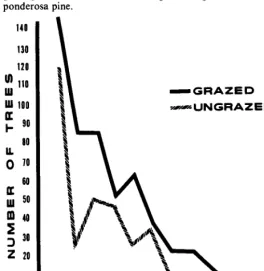
The largest number of trees in both grazed and ungrazed stands were in the smaller diameter classes. As diameters increased, total number of trees decreased. Number of ponderosa pine and Douglas-fir in grazed stands were greater than in ungrazed stands in every diameter class up to 4 dm (Fig. I, 2), but, more signifi- cantly, in the .5 to 2dm classes. There were no large or consistent
140
I
130 120 ul w 110
w 100 u I- go
-GRAZE.D -UNGRAZED
.5 1 15 2 2.5 3 3.5 I 4.5 5 55 6 6.5
DIAMETER CLASS
Fig. 1. Mean number of ponderosa pine trees by .5 decimeter diameter classes for grazed and ungrazed stands.
differences between the stands in the number of trees in diameter classes larger than 3 dm. In grazed stands there were more Douglas-fir trees than ponderosa pine in nearly every diameter class. In the ungrazed stand, with the exception of the .5dm diameter class, there was a similar number of each tree species. However, in grazed stands, Douglas-fir were more abundant than ponderosa pine in the smaller size classes.
Number of Douglas-fir seedlings was about the same (1,277.6/ - ha) on grazed and ungrazed stands. Number of ponderosa pine seedlings was significantly different, with only 55.6/ha on grazed stands but 555.61 ha on ungrazed stands. Many researchers have
found an increased number of seedlings following natural regener- ation on moderately grazed sites in freshly cut forested stands (c.f. Adams 1975, Young et al. 1942, Tisdale 1950), but this benefit is apparently reduced for ponderosa pine when succession advances. In grazed stands, ponderosa pine regeneration was reduced as the quantity of shading and duff increased. Douglas-fir is more shade tolerant than ponderosa pine, is climaxed on these sites, and has the greater ability to regenerate in both open areas of ungrazed stands and shaded areas of grazed stands. In the long term, heavy grazing is more beneficial for Douglas-fir regeneration than for ponderosa pine.
140
130 120 ; 110
w 100 a b go
10 IL 0 ‘O
60 u w 5o m 40 2
::
10
-GRAZED v-UNGRAZED
.5 I 1.5 2 2.5 3 3.5 4 4.5 5 5.5 6 6.5
DIAMETER CLASS
Fig. 2. Meon number of Douglas-fir by .J decimeter diomerer classes for grored and ungrozed sronds.
Increase in young tree densities has been attributed to the remo- val of the competing herbaceous layer by heavy grazing (Pearson 1923, Leopold 1924, Arnold 1950, Cooper 1960, Tisdale 1960, Pearson 1942, and Young et al. 1942). Weaver (1950) reported that overgrazing resulted in development of abnormally dense stands because it resulted in breakup of original sod and preparation of mineral seedbed. Rummell (195 1) concluded that heavy grazing was primarily responsible for dense tree reproduction in central Washington.
In the majority of diameter classes, tree growth rates in grazed stands were slightly less than in ungrazed stands (Table I). Lower growth rates in areas heavily grazed were reported by Adams (1975). Higher tree densities resulting from livestock grazing may have been the cause for decreased tree growth rates in grazed stands. Competition in dense stands reduced the growth and vigor of all trees, resulting in diameter growth reductions (Smith 1962).
Tree diameter classes which had the greatest difference between grazed and ungrazed stands (.5 to 2 dm), ranged in age from 16 to 56 years (Table I). Thus, most of smaller diameter trees had become established during the past 50 years, a period of heavy grazing. Livestock grazing was probably the principal factor in creating and maintaining conditions that favored increased tree regeneration.
There was a significantly higher mean basal area in grazed stands (37 mr/ ha) than in ungrazed stands (22 mr/ ha) (Fig. 3). This large difference may be attributed to increased number of smaller trees in the grazed stands.
Table 1. Average tree age by diameter class for ponderosa pine and Douglas-fir in grazed and ungrazed stands.
Diameter class
Age’
F’inus ponderoso Pseudotsugo menziesii’
(.5 dm) Grazed Ungrazed Grazed Ungrazed
.5 1.0 1.5 2.0 2.5 3.0 3.5 4.0 4.5 5.0 5.5 6.0 6.5
20.25 32.20 36.50 42.71 55.20 67.67 64.67 96.00 123.00*” 105.33
- 104.00* 165.00*
15.67 22.14
26.67 34.86
38.00 41.33 55.75 48.83 51.17 51.17 61.50 59.40 65.20 67.25 91.00; 81.00 74.00*b 97.75nb 119.00 80.00*
108.00 96.00
98.00*
22.50 30.00 35.60 32.202 41.33 43.00 39.00 112.00*
86.50b
-
lSpecies ages followed by different letters are significantly different at the 0.05 level. *Tree ages followed by different numbers are significantly different at the 0.05 level.
40
u
I 35 ,\2 30
u l5
{ 20
4 15 u 2 10
m
5
GRAZED UNGRAZED
Fig. 3. Mean bosol area for ponderoso pine and Douglas-jir in grazed and ungrozed sronds.
Shrub Layer
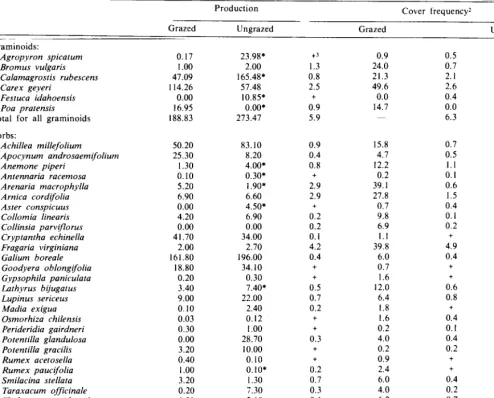
Total shrub density did not differ significantly between heavily grazed and ungrazed stands, but individual species density did (Table 2). Of the 12 shrub species sampled, only 3, serviceberry
(Amelanchier alnifolia), ninebark, and white spiraea (Spiraea betulifolia), had a greater density in grazed stands. Serviceberry was either very tall and out of reach of livestock and big game, or very small and unutilized. The 9 other species had greater densities in ungrazed stands, but only redstem ceanothus (Ceanothus san- guineus), chokecherry (Prunus virginiana), and yerba buena (Sarureja douglasii) densities were significantly greater. Redstem ceanothus, apparently suppressed through heavy use by livestock and big game, was nearly absent in grazed stands. Chokecherry and scouler willow (Salix scouleriana) occurred in such low densi- ties in all stands that comparisons were not meaningful. Yerba buena, kinnikinnick (Arctostophylos uva-ursi), and creeping Ore- gon grape (Berberis repens), were probably less resistant to tram- pling by livestock due to their small size and shallow rhizomes, and were present in lesser amounts in grazed stands. Little wild rose
(Rosa gymnocarpa) and snowberry also had higher densities in