Scholarship@Western
Scholarship@Western
Electronic Thesis and Dissertation Repository
7-31-2018 10:30 AM
Trophic and Competitive Interactions among Egg Parasitoids of
Trophic and Competitive Interactions among Egg Parasitoids of
Stink Bugs
Stink Bugs
Joanna K. KonopkaThe University of Western Ontario
Supervisor
McNeil, Jeremy N
The University of Western Ontario Co-Supervisor Gariepy, Tara D
The University of Western Ontario Graduate Program in Biology
A thesis submitted in partial fulfillment of the requirements for the degree in Doctor of Philosophy
© Joanna K. Konopka 2018
Follow this and additional works at: https://ir.lib.uwo.ca/etd
Part of the Behavior and Ethology Commons, Biology Commons, and the Entomology Commons
Recommended Citation Recommended Citation
Konopka, Joanna K., "Trophic and Competitive Interactions among Egg Parasitoids of Stink Bugs" (2018). Electronic Thesis and Dissertation Repository. 5598.
https://ir.lib.uwo.ca/etd/5598
This Dissertation/Thesis is brought to you for free and open access by Scholarship@Western. It has been accepted for inclusion in Electronic Thesis and Dissertation Repository by an authorized administrator of
i
The intra- and inter-trophic interactions in ecosystems can be disrupted by invasive
species, with lasting effects on population dynamics of native organisms. An invasive
species may be attractive as a prey or host to native species, but if unsuitable for
consumption or for development of the natural enemy’s progeny, it constitutes an
‘evolutionary trap’. A possibility of such a trap for native egg parasitoids (Hymenoptera:
Scelionidae) exists with the introduction of the exotic brown marmorated stink bug,
Halyomorpha halys (Hemiptera: Pentatomidae).The objective of this thesis is to enhance
the understanding of Pentatomidae-Scelionidae host-parasitoid interactions from a
behavioural ecology perspective, focusing on factors influencing successful host use by
egg parasitoids associated with stink bugs. Behavioural, molecular, and imaging
methodologies were employed to elucidate trophic and competitive interactions of native
egg parasitoids with invasive host, H. halys, and with an interspecific competitor, the exotic
Trissolcus japonicus (Hymenoptera: Scelionidae) egg parasitoid. First, sentinel egg masses
were exposed under natural conditions, followed by parasitism quantification, using both
traditional (parasitoid emergence) and molecular analysis. Second, the outcomes of
competitive interactions between exotic and native egg parasitoids using H. halys as host
were characterized and the possibility of their coexistence assessed. Third, an L9
orthogonal array (OA) design was used to rank the influence of host egg mass parameters
on parasitoid behaviour and development. Finally, the temporal pattern of parasitoid
development in H. halys was examined using a DNA-based approach (PCR) and visualized
ii
The key finding of this thesis is that the lack of success in H. halys eggs is linked to
native parasitoids’ inability to develop in this host (not the rejection of the host). This
failure occurs early in the parasitoid development, confirming the evolutionary trap
potential of H. halys. The maladaptive decision to oviposit in an unsuitable host is caused
by the mismatch between cues females use for host recognition and acceptance, and the
expected normal development of the progeny. For some native parasitoids, the impact of
the evolutionary trap can be reduced via facultative hyperparasitism of exotic parasitoids;
for others, the co-existence is possible due to counterbalance competition.
Keywords
host-parasitoid interactions, trophic interactions, competition, host acceptance behaviour,
iii
Dr. Jeremy N. McNeil and Dr. Tara D. Gariepy will be co-authors of all
manuscripts published from the contents of this thesis as they co-designed the experiments
and edited all the manuscripts.
Dr. Tim Haye is a co-author on the manuscripts published from the data presented
in Chapters 2, 3 and 4. Part of the data collection for the work described in Chapter 2, and
all experiments described in Chapters 3 and 4 were completed in collaboration with Dr.
Haye in his laboratory in CABI Switzerland. Dr. Haye assisted in experimental designs and
edited the manuscripts presented in those chapters.
Dr. Jinping Zhang will be a co-author on the manuscript published from Chapter 2
as she supervised and carried out sentinel egg mass exposures and parasitoid identification
in China. Dr. Ben Rubin will also be a co-author on the manuscript published from Chapter
2, as he assisted in data analysis using GLMM and provided feedback on the write-up.
Dr. Peter Mason and Dr. David Gillespie are co-authors on the manuscript
published from the data presented in Chapters 4, as they provided feedback and
recommendations for the manuscript.
Dr. Danny Poinapen will be a co-author on manuscripts published from the data
presented in Chapters 5 and 6, as he assisted with experimental design and edited both
chapters. He also assisted in orthogonal array design and analysis (Chapter 5), and
completed the micro-computed tomography scanning (data acquisition) and reconstruction
iv
Dr. David Holdsworth will be a co-author on a manuscript published from the data
presented in Chapter 6, as he assisted in experimental design, and will contribute in the
v
Acknowledgments
Among all people involved in various aspects of the work presented in this thesis,
I would like to start by expressing my deepest gratitude to Dr. Jeremy McNeil for his
supervision and guidance over the course of my doctoral degree. His immense knowledge
in all aspects of entomology and ecology, which he is always willing to share, has always
been of great value to me. Jeremy has always encouraged me to follow my research
interests and develop my research ideas, and he never dictated the direction of my research
or made decisions about methodologies that should be used. I had the total freedom to
initiate and adopt the methods most appropriate for my experiments. By allowing me total
independence in the type of work that I was doing and the way this work was done, Jeremy
has ensured my progression in my academic and professional development as a confident
scientist, passionate about the research I am doing. At the same time, he was always
available for discussion of ideas, providing feedback and suggestions in a way that
respected me and my work as his equal, not only as his student. In addition to conversations
about my research, Jeremy has shared with me his advice on navigating academia while
maintaining high standard of scientific integrity, especially in publishing and reviewing
practices. I also really appreciate his encouragement and support in activities not directly
related to my thesis (including peer reviewing, involvement in professional societies,
graduate business courses that I did not need for my degree, and carrying out collaborative
research not part of my PhD). While those activities sometimes meant less time spent on
my thesis, they undoubtedly allowed me to contribute significantly to the discipline, and to
vi
high standard, he never fails to give credit and high praise to those that reach it, and I was
humbled to discover the high regard and confidence he has in me. Jeremy’s approach to
research and life has taught me about the importance of quality over quantity, and about
the joy of following leads towards exciting scientific and personal discoveries. While I am
ready to follow my own research and career goals, Jeremy will always be a person from
whom I know I can seek advice and honest opinion, and with whom I will be happy to
share my progress and future successes.
Next, I would like to thank my co-supervisor, Dr. Tara Gariepy, in whose laboratory
I have completed most of the work presented in this thesis. Tara’s knowledge of molecular
diagnostic tools and biological control has provided me with new understanding of
host-parasitoid interactions. While in her laboratory, I was able to improve existing and gain
new molecular skills, which will undoubtedly be an asset for me going forward. She has
also entrusted me with supervising summer students, allowing me to improve my teaching
and communication skills, while being mindful of interpersonal differences in skills and
opinions. Seeing the importance of good organization and workflow in Tara’s molecular
laboratory has motivated to me stay organized and pay attention to details in my work. At
the same time, I have observed what is involved in running a laboratory, and how being a
government research scientist differs from working in a university setting. I now have a
better understanding of what is involved in managing a large international research
program, and the importance of developing fruitful collaborations. I am very grateful to
Tara for allowing me an opportunity to meet and work with her collaborators, especially
with Dr. Tim Haye in Switzerland. Tara’s support and encouragement in traveling and
vii
excel in my research, but also to understand how personal relationships are shaped by our
professional choices. I hope that going forward I will be able to use what I have learned
from Tara, and apply it effectively in my own career.
The person that I want to thank next is Dr. Tim Haye. He made my stay in
Switzerland productive and memorable. From the first day I arrived in Switzerland for my
6 month stay, Tim was open to my research ideas, and provided me with all the support I
needed by engaging in insightful conversations and giving helpful advice. Tim also spent
time helping me run experiments, both in the laboratory (including the ‘solitary
confinement’ of the CABI insect quarantine) and the field, to ensure I could complete my
ambitious plans. I also want to thank Tim for providing me with opportunities to serve as
a reviewer, and attend an international conference in Spain, both of which were valuable
experiences. Working with Tim, I’ve observed and was inspired by his genuine excitement
and passion about insects, and hobbies that he still found time for. All this with an
incredible sense of humor.
Although I have not had an opportunity to meet either of them in person yet, I am
thankful to Dr. Jinping Zhang and her students, especially Ting Cao, for collecting and
preserving samples for me in China. Having those samples was very important and allowed
me to complete a more comprehensive analysis. My confidence in the data analysis used
in most of the chapters of this thesis was possible through the advice and assistance from
Dr. Ben Rubin, and I want to thank him for his patience and expertise in statistical analysis
of ecological data. I also want to thank Elijah Talamas (Smithsonian Institution,
Washington, DC, USA), Lucian Fusu (University of Iasi, Romania), and Marie-Claude
viii
for taxonomic and molecular identification of parasitoids collected to start laboratory
colonies used in some of the experiments presented in this thesis. Furthermore, I want to
thank Dr. David Holdsworth for allowing me access to his laboratory and equipment. His
interest and encouragement in novel methods of insect imaging has led to a fruitful
collaboration that extends beyond the contents of this thesis. Thanks to his support we were
able to publish insect live imaging method that has generated worldwide interest and
coverage.
I would like to thank my advisory committee Dr. Cam Donly, Dr. Nusha
Keyghobadi, and Dr. Danielle Way, who provided advice and feedback in all aspects of
the experiments that are part of this thesis. Their suggestions allowed me to improve my
work and the way it is presented. Also, I extend my gratitude to my comprehensive
examination committee for pushing me into learning about aspects of trophic dynamics
(Dr. Hugh Henry), molecular ecology (Dr. Nusha Keyghodabi), and phylogenetics (Dr. M.
Andre Lachance), which undoubtedly expanded my knowledge and made me more aware
of the interconnectedness of all research.
A special thanks to Allison Bruin, who ensured that all the insect colonies at AAFC
were always fed and well taken care of, and for always answering my questions and helping
me find solutions to all kinds of problems. She is truly the kindest and most helpful
laboratory technician I have ever had the pleasure of working with. I also want to thank
Felix Longpre for bringing a positive attitude with a good sense of humour, and for
allowing me to maintain my own parasitoid rearing after he took over as a Biologist at the
ix
I am grateful to my field assistants in Canada for their help with set up and data
collection: Wesley Burbridge, Dominic Drapeau, with special thanks to Holly Deacon and
Cole Drake. I also want to thank my field and lab assistants in Switzerland for being great
company in quarantine, and not complaining for having to watch parasitoid behavior most
of the day: Rebeca Hagedorn, Anne Hayle, and Sophie Deluca. I of course would not forget
to thank the “CABI family” of summer 2015, who nicked-named me ‘quarantine queen’,
with special thanks to Judith Stahl, Pierre Girod and Tessa Ramburn for their friendship
and serious, as well as not so serious conversations.
I also want to acknowledge and thank administrative staff of the Biology
Department at Western University, especially Arzie Chant, Carol Curtis, and Diane Gauley
for always being helpful, kind, and understanding of graduate student needs and the
challenges they face. I would further like to acknowledge Biotron staff, especially Karen
Nygard and Dr. Richard Gardiner for providing assistance, advice, and training in sample
preparation for imaging, and critical point dryer use. I am also grateful to the engineering
staff at AAFC (with special thanks to John Vantyghem) for keeping the experimental room
and equipment running, and making adjustments as per my request.
I would like to acknowledge that I was able to focus on my project fully thanks to
scholarships from Natural Sciences and Engineering Council of Canada (NSERC), Ontario
Graduate Scholarship (OGS), and financial support from University of Western Ontario
for the duration of my degree. I am also grateful to the Entomological Society of Canada
for awarding me a Graduate Research Travel Scholarship that enabled me to travel to
Switzerland, and to the Entomological Society of America for a Student and Early
x
at the International Congress of Entomology in 2016 in Orlando, USA. I would also like to
acknowledge the Western Libraries for naming me a recipient of the Western Open Access
Fund that allowed me to publish one of my chapters as ‘Open Access’, making my research
more accessible.
Thank you to my family for learning the difference between bugs and insects to end
my frustration of having to correct them, which is ironic since during my PhD research, I
actually did work on bugs. My mom’s best intentions to understand what I actually do and
why, were often sidetracked, which always made me laugh and try to think of better ways
to explain my work. I also want to thank my Mauritian family, for the love and affection
they bestowed upon me, and the kindness with which they have welcomed me to their
home and their lives.
Finally, I want to express my deepest gratitude and appreciation to Dr. Danny
Poinapen– without him this thesis would not be possible. Danny is my biggest supporter
and my harshest critic, with his dual role as my research collaborator and life partner.
Danny has always encouraged and pushed me to aim for competence and excellence, and
to go beyond what is required of me, and offered constant encouragement, support, and
guidance. Talking with Danny about my ideas, I was challenged to reflect on
thought-provoking questions, and to consider many aspects of my research from a different
perspective. I admire Danny’s professional yet relaxed research approach, evident in the
commitment and care with which he conducts experiments, while at the same time always
being open to helping others with their research. Danny holds me accountable to a high
standard of scientific work and writing, so thanks to his insightful comments and
xi
scientific story in an exciting way. He has been an incredible source of information about
scientific etiquette, practices, and communication, always offering advice and guidance.
Danny has taught me many strategies for effective writing and preparing presentations,
allowing me to excel in both. His help with orthogonal array and micro-CT imaging has
been invaluable, with countless hours spent making sure that the data I was getting were
of highest possible quality. Danny is also the person who knows my thesis as well as I do,
thanks to his help in editing and proofreading, even if it meant spending his free time doing
it. Simultaneously, Danny showed care and forethought in encouraging me to take courses
and participate in workshops that could assist me in professional development, and is
unrivaled in his excitement for my future. I am extremely grateful to him for his
understanding in me spending time in Switzerland, no matter how hard it was for both of
us. While I was away, Danny was the person whom I knew I could count on for
encouragement and comfort when I needed it the most. Danny has always been there for
me, and I am so fortunate to have him in my life, both professionally and personally.
Together, we engage in insightful discussions and follow our scientific curiosities as far as
they take us. Danny is an amazing scientist and partner and I look forward to continue
xii
Table of Contents
Abstract ... i
Co-Authorship Statement... iii
Acknowledgments... v
Table of Contents ... xii
List of Tables ... xvii
List of Figures ... xix
List of Appendices ... xxiii
List of Abbreviations ... xxiv
Chapter 1 ... 1
1 General introduction ... 1
1.1 Animal trophic strategies ... 2
1.2 Parasitism in insects ... 4
1.3 Host- parasitoid interactions in Hymenoptera ... 5
1.4 Scelionidae: egg parasitoids ... 11
1.5 Host-parasitoid interactions and ecological roles of parasitoids ... 13
1.6 Invasive species introductions ... 15
1.7 Brown marmorated stink bug: an evolutionary trap for Scelionidae ... 16
1.8 Competitive interactions between egg parasitoids ... 19
1.9 Objectives... 20
1.10 Thesis outline ... 22
1.11 References ... 24
xiii
2 Exploitation of native and exotic pentatomids by native egg parasitoids in the introduced range of Halyomorpha halys: a molecular approach using sentinel
egg masses ... 35
2.1 Introduction ... 36
2.2 Materials and Methods ... 39
2.2.1 Field sites ... 39
2.2.2 Insect colonies ... 39
2.2.3 Sentinel egg mass preparation, field exposure and collection ... 41
2.2.4 DNA extraction and amplification ... 43
2.2.5 DNA sequencing... 45
2.2.6 Statistical analysis ... 45
2.3 Results ... 48
2.3.1 Parasitism in reared sentinel egg masses ... 48
2.3.2 Parasitism based on molecular analysis... 51
2.3.3 Parasitoid identification ... 54
2.4 Discussion... 59
2.5 References ... 65
Chapter 3………..71
3 Possible co-existence of native and exotic parasitoids and their impact on control of Halyomorpha halys ... 71
3.1 Introduction ... 72
3.2 Materials and Methods ... 74
3.2.1 Insect Rearing ... 74
3.2.2 Larval Competition ... 74
3.2.3 Adult competition ... 75
xiv
3.3 Results ... 77
3.3.1 Host acceptance and larval competition ... 77
3.3.2 Adult competition ... 80
3.4 Discussion... 81
3.5 References ... 85
Chapter 4 ... 89
4 An exotic parasitoid provides an invasional lifeline for native parasitoids ... 89
4.1 Introduction ... 90
4.2 Materials and Methods ... 92
4.2.1 Stink bug rearing... 92
4.2.2 Parasitoid rearing ... 92
4.2.3 Time- course developmental study ... 93
4.2.4 Egg mass (patch) guarding behavior ... 94
4.2.5 Statistical analysis ... 94
4.3 Results ... 95
4.3.1 Host acceptance behavior ... 95
4.3.2 Developmental success and interspecific larval competition ... 95
4.3.3 Egg mass guarding behavior ... 98
4.4 Discussion... 99
4.5 References ... 104
Chapter 5 ... 108
5 Understanding the mismatch between behaviour and development in a novel host-parasitoid association ... 108
5.1 Introduction ... 109
xv
5.2.1 Insect colonies ... 112
5.2.2 Orthogonal array ... 113
5.2.3 Experimental set up... 117
5.2.4 Statistical analysis ... 118
5.3 Results ... 119
5.3.1 Behaviour ... 119
5.3.2 Development ... 123
5.4 Discussion... 126
5.5 References ... 134
Chapter 6 ... 141
6 Timing of failed parasitoid development in Halyomorpha halys eggs ... 141
6.1 Introduction ... 142
6.2 Materials and Methods ... 144
6.2.1 Egg mass parasitization and processing... 144
6.2.2 DNA extraction and amplification ... 145
6.2.3 Sample preparation for micro-CT data acquisition... 146
6.2.4 Image reconstruction and 3D rendering... 147
6.2.5 Statistical analysis ... 147
6.3 Results ... 147
6.3.1 DNA analysis ... 147
6.3.2 Micro-CT 3D reconstruction of development ... 148
6.4 Discussion... 155
6.5 References ... 160
Chapter 7 ... 166
xvi
7.1 Ecological interactions ... 167
7.2 Towards enhanced understanding of Pentatomidae-Scelionidae host parasitoid interactions: summary of results ... 169
7.3 General discussion ... 174
7.4 Limitations and future work ... 176
7.5 Conclusion ... 177
7.6 References………...177
Appendices ... 179
xvii
List of Tables
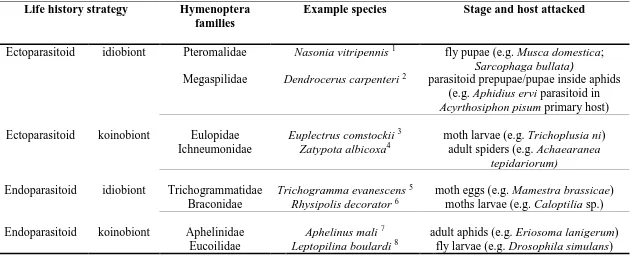
Table 1.1 Selected hymenopteran parasitoid families (and members) representing several
common parasitoid life history strategies. ...10
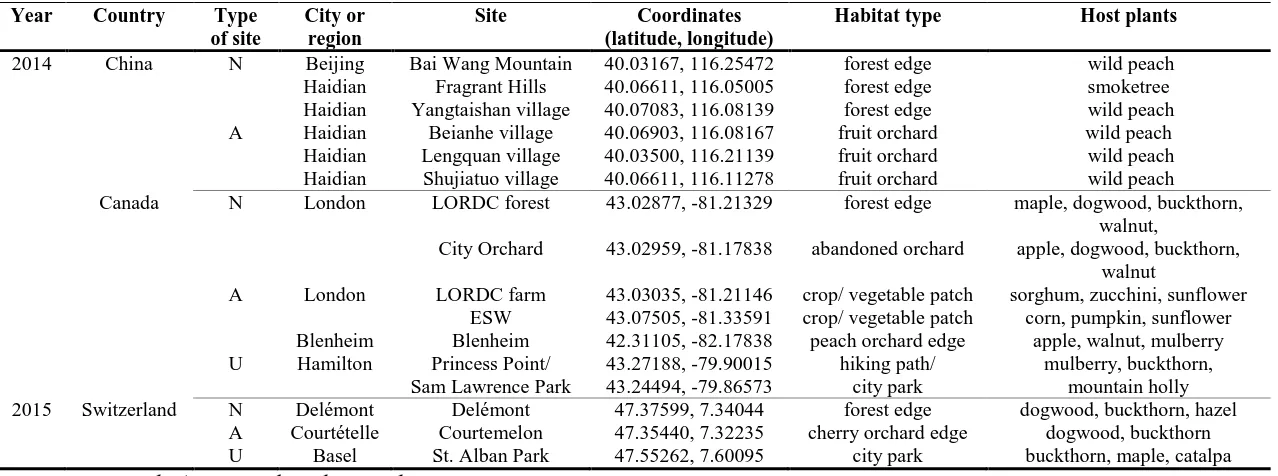
Table 2.1 Geographic coordinates and characteristics of natural, agricultural, and urban
field sites in China, Canada, and Switzerland used for exposure of native and exotic (H.
halys) stink bugs (Pentatomidae: Hemiptera) sentinel egg masses in 2014 and 2015 field
seasons. ...40
Table 2.2 Odds ratio and 95% confidence intervals of the fixed effects in the generalized
linear mixed effects model (GLMM) characterizing the effect of date, country, type of host,
type of site, and interaction between date and country on the presence of parasitism in
sentinel stink bug egg masses. ...52
Table 2.3 Odds ratio and 95% confidence intervals of the fixed effects in the generalized
linear mixed effects model (GLMM) characterizing the effect of date, country, type of host,
type of site, and interaction between date and country on the proportion of parasitized eggs
in sentinel stink bug egg masses.. ...53
Table 5.1 L9 standard orthogonal array indicating combination of factors (4 factors each
with 3 levels) and experiments (9 independent ones) to be performed. ...114
Table 5.2 Factors (and their respective levels) for the no-choice tests of Trissolcus euschisti
(Hymenoptera: Scelionidae) host acceptance and development on stink bug (Hemiptera:
Pentatomidae) egg masses. ...114
Table 5.3 An L9 orthogonal design with factor combination for the no-choice tests of
Trissolcus euschisti (Hymenoptera: Scelionidae) host acceptance and development on stink
xviii
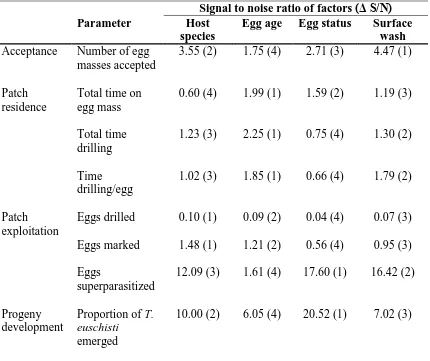
Table 5.4 Ranking of factor based on influence on T. euschisti egg parasitoid host
acceptance, patch residence, patch exploitation, and development from stink bug host egg
masses. ...121
Table 5.5 Summary of decision making of foraging egg parasitoid (Trissolcus euschisti)
xix
List of Figures
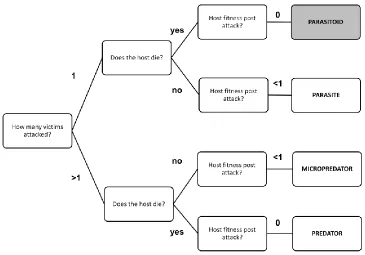
Figure 1.1 Schematic diagram of dichotomies used to determine which of the major three
trophic strategies animal belongs to, highlighting the parasitoid strategy.. ...3
Figure 1.2 The approximate relative percentage of parasitoids belonging to different insect
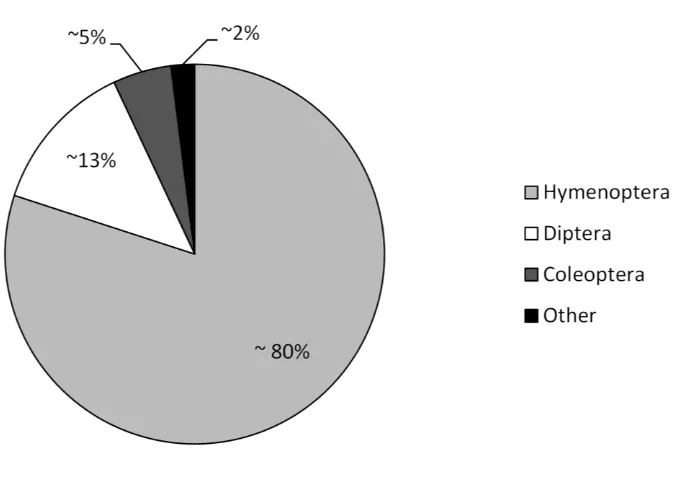
orders...5
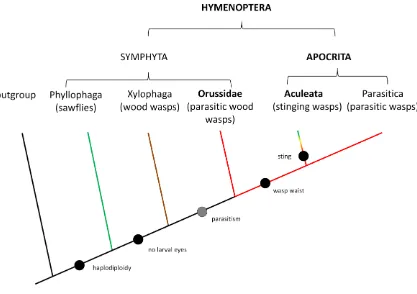
Figure 1.3 Cladogram depicting the evolution of parasitism (indicated by a grey circle) in
Hymenoptera.. ...6
Figure 1.4 Schematic of a general host searching and acceptance behaviours of a foraging
parasitoid female, with selected factors that may influence these behaviours.. ...8
Figure 1.5 A general schematic diagram of a simple host-parasitoid interaction between
two parasitoids and two herbivorous host species.. ...14
Figure 1.6 Brown marmorated stink bug, Halyomorpha halys a) adult b) egg mass and c)
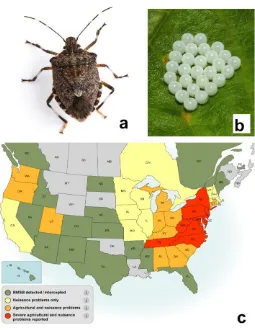
current distribution in Canada and USA (as of September 2017).. ...17
Figure 1.7 A Trissolcus cultratus female on Halyomorpha halys egg mass.. ...19
Figure 1.8 Possible interspecific interactions between exotic Trissolcus japonicus and
European native egg parasitoids (here Anastatus bifasciatus is used as an example) on egg
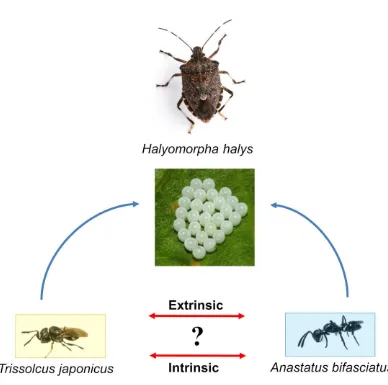
masses of exotic stink bug, Halyomorpha halys.. ...21
Figure 2.1 Mean (±SE) egg mass parasitism detected using rearing and molecular methods
in sentinel egg masses of a) stink bugs native to each area and b) introduced H. halys
exposed in native (China) and introduced (Canada and Switzerland) ranges of H. halys over
the 2014 and 2015 field seasons. ...49
Figure 2.2 Mean (±SE) egg parasitism detected using rearing and molecular methods in
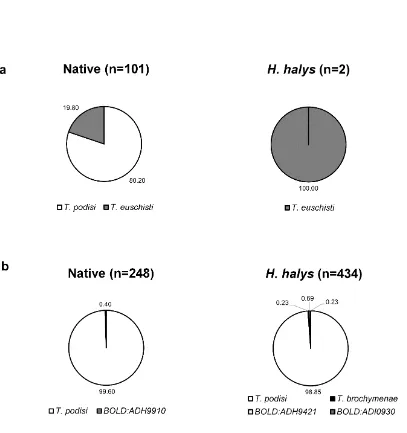
sentinel egg masses of a) stink bugs native to each area and b) introduced H. halys exposed
in native (China) and introduced (Canada and Switzerland) ranges of H. halys over the
xx
Figure 2.3 Parasitoid adults recovered from reared sentinel egg masses of stink bugs native
to each area and of H. halys exposed in a) Canada b) Switzerland and c) China over the
2014 and 2015 field seasons. Sample size (n) refers to the number of emerged parasitoids
across all sites within each country.. ...55
Figure 2.4 Parasitoid adults or DNA recovered from sentinel egg masses exposed in a
natural field site in Canada (LORDC-forest) using a) rearing (identified via DNA
extraction and analysis) and b) molecular methods.. ...57
Figure 2.5 Parasitoid adults or DNA recovered from a natural field site in Switzerland
(Délemont) using a) rearing (identified via DNA extraction and analysis) and b) molecular
methods. ...58
Figure 3.1 Mean proportion (± SE) of previously parasitized H. halys eggs attacked by a)
A. bifasciatus and b) T. japonicus. ...78
Figure 3.2 Mean proportion of H. halys eggs giving rise to T. japonicus, A. bifasciatus, H.
halys nymphs, or nothing, following multiparasitism by T. japonicus and A. bifasciatus at
different time intervals (ages) between attacks: (a) parasitized by T. japonicus first (b)
parasitized by A. bifasciatus first.. ...79
Figure 3.3 General schematic showing development outcomes from H. halys eggs
parasitized by a) T. japonicus b) A. bifasciatus c) T. japonicus followed by A. bifasciatus
and d) A. bifasciatus followed by T. japonicus. ...84
Figure 4.1 Mean proportion (±SE) of (unparasitized) fresh or frozen H. halys egg masses,
as well as fresh egg masses previously parasitized by T. japonicus which were a) drilled
and b) marked by T. cultratus as a function of age/time since parasitized by T.
japonicus. ...96
Figure 4.2 Mean proportion of T. japonicus, T. cultratus, H. halys nymph or nothing
emerging from different aged H. halys eggs that were a) fresh, b) frozen or c)
xxi
Figure 4.3 General schematic showing the temporal pattern of suitability of parasitized
and unparasitized H. halys eggs for T. cultratus as a function of their age. ...101
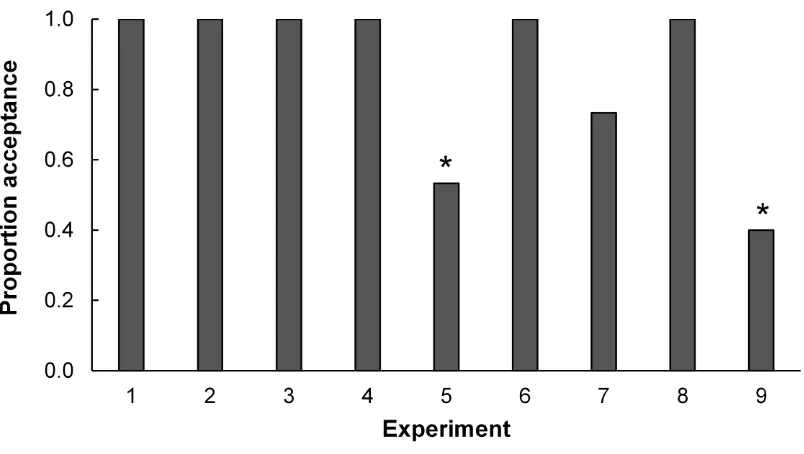
Figure 5.1 Proportion of host egg masses accepted by T. euschisti females in nine
experiments based on L9 (34) orthogonal array (OA) design.. ...120
Figure 5.2 Mean (± SE) a) time spent on egg mass b) total time spent drilling, and c) time
spent drilling per egg (for successful parasitization attempts) by T. euschisti females in nine
experiments based on L9 (34) orthogonal array (OA) design, summarizing behaviour of the
parasitoid on host egg masses.. ...122
Figure 5.3 Mean (± SE) proportion of eggs drilled, marked, and superparasitized by T.
euschisti females in nine experiments based on L9 (34) orthogonal array (OA) design, summarizing behaviour of the parasitoid on host egg masses.. ...124
Figure 5.4 Mean proportion of Trissolcus euschisti, Telenomus podisi, host nymphs
(Podisus maculiventris, Halyomorpha halys, or Euschistus variolarious) or nothing
emerging from egg masses parasitoized by T. euschisti females in nine experiments based
on L9 (34) orthogonal array (OA) design, summarizing development of the parasitoid on host egg masses.. ...125
Figure 6.1 Temporal pattern of COI parasitoid DNA (ng/µL; mean ±SE) following
parasitization by Trissolcus euschisti in fresh parasitized, frozen parasitized, and
non-parasitized stink bug eggs of a)Halyomorpha halys and b)Podisus maculiventris.. ...149
Figure 6.2 Temporal pattern of COI host DNA (ng/µL; mean ±SE) following parasitization
by Trissolcus euschisti in fresh, frozen, and non-parasitized stink bug eggs of a)
Halyomorpha halys and b) Podisus maculiventris. ...150
Figure 6.3 2D slices and 3D-CT volume reconstruction at 6 µm isotropic voxel spacing of
non-parasitized eggs of Podisus maculiventris (PN) (a and b) and Halyomorpha halys (BN)
xxii
Figure 6.4 2D slices and 3D-CT volume reconstruction at 6 µm isotropic voxel spacing of
parasitized frozen eggs of Podisus maculiventris (PZ) (a and b) and Halyomorpha halys
(BZ) (c and d) over 120 h of development (from the time of parasitization). ...153
Figure 6.5 2D slices and 3D-CT volume reconstruction at 6 µm isotropic voxel spacing of
parasitized fresh eggs of Podisus maculiventris (PF) (a and b) and Halyomorpha halys (BF)
(c and d) over 120 h of development (from the time of parasitization). ...154
xxiii
List of Appendices
Appendix A Field site locations and sentinel egg mass preparation and exposure ...180
Appendix B Seasonal parasitism based on rearing and molecular analysis of sentinel egg
masses from Canada, Switzerland, and China ...186
Appendix C Parasitoid development in fresh and frozen P. maculiventris eggs (7-11 days)
xxiv
List of Abbreviations
2D- twodimensional
3D- three dimensional
ANOVA- analysis of variance
BIN- Barcode Index Number
BMSB- brown marmorated stink bug
BF- fresh parasitized eggs of H. halys
BN- normal (non-parasitized)eggs of H. halys
BZ- frozen parasitized eggs of H. halys
BOLD- Barcode of Life Data System
CI- confidence interval
COI- cytochrome oxidase I
CPD- critical point drying
DNA- deoxyribonucleic acid
GLMM- generalized linear mixed model
HU- Hounsfield units
IPM- integrated pest management
Micro-CT- micro-computed tomography
NA- North America
OA- orthogonal array
ON- Ontario
OR- odds ratio
PCR- polymerase chain reaction
PF- fresh parasitized eggs of P. maculiventris
PN- normal (non-parasitized)eggs of P. maculiventris
PZ- frozen parasitized eggs of P. maculiventris
RH- relative humidity
RFU- relative fluorescence unit
xxv
S/N- signal to noise ratio
Chapter 1
1
General introduction
1.1
Animal trophic strategies
Within any given ecosystem, individuals of different species co-exist and the intra-
and interspecific interactions (positive, negative, or neutral) ensure ecosystem stability
(Smith and Smith 2009). The acquisition of nutritional resources is one of the most
ubiquitous interactions and constitute the food webs within the ecosystem (Molles and
Cahill 2008). The strategy organisms use to obtain energy for survival and reproduction
will depends on their trophic position within the food chain (Chapin et al. 2002). Unlike
plants, most animals are consumers as they cannot synthesize their own food and therefore,
must feed directly or indirectly on other living organisms.
An organism is considered a natural enemy when it exploits another species to
fulfill dietary and/or reproductive needs, and in doing so either reduces (i.e. kills) or
reduces its fitness (Lafferty and Kurtis 2002). There are three general categories of natural
enemies using different strategies: predators, parasites, and parasitoids (Figure 1.1),
although they may be subdivided into as many as 10 categories (Lafferty and Kuris 2002;
Poulin 2011). The classification is based on the number of victims the natural enemies
attack and exploit (at a particular stage of their life history), whether that attack reduces or
eliminates the fitness of the prey or host, and if this effect on host or prey is
intensity-dependent (Lafferty and Kuris 2002).
The parasitic life history, including different types of parasites and parasitoids
(Poulin and Randhawa 2015), has evolved independently multiple times across numerous
phyla. This life history represents one of the most striking cases of convergent evolution
pressures) (Poulin and Morand 2000; de Meeûs and Renaud 2002). Convergence of
morphology, function, transmission modes, and body size in many distinct taxa have been
achieved by following one of the few trajectories towards highest probability of survival
and reproduction, equivalent to one of few adaptive peaks on the fitness landscape (Wright
1984; Poulin 2011).
Figure 1.1 Schematic diagram of dichotomies used to determine which of the major three trophic strategies
Parasitoids represent one of the stable adaptive peaks. This strategy is distinct from
other parasitic ones because it always leads to host death (i.e. host fitness is zero), as
opposed to reducing the fitness and keeping the host alive, as seen in typical parasites
(Figure 1.1). Parasitoids are generally smaller than their hosts, as their growth is constrain-
ed by the hosts’ body size. Although organisms such as hairworms, nematodes and
polychaetes are parasitoid animals, insects are by far the most numerous and well known
group of parasitoids (Godfray 1994).
1.2
Parasitism in insects
Almost all insects with a parasitoid life history belong to the orders Coleoptera (e.g.
ground, rove, and blister beetles), Diptera (e.g. tachinid flies), or Hymenoptera (e.g. wasps)
(Fig. 1.2). Beetles and flies represent less than 20% of all insect parasitoids, but this life
history strategy evolved multiple times (more than 100 times, in ~14 and 21 families,
respectively) (Eggleton and Belshaw 1992; Quicke 1997). In contrast, the order
Hymenoptera contains the majority (~80%) of insect parasitoid species, but with a single
evolutionary origin of the parasitic life history (Eggleton and Belshaw 1992; Quicke 1997).
Sawflies and wood wasps, the basal lineages in Hymenoptera, are phytophagous
(i.e. feed on plant material), and xylophagous/mycophagous (i.e. feed on wood and fungi),
respectively (Grimaldi and Engel 2005). The parasitic life history in these basal lineages
first appeared in Orrusidae wood wasps, with subsequent changes leading to the evolution
of Aculeata (stinging wasps, bees, ants) and Parasitica (parasitoid wasps) (Whitfield 1998;
Although some groupings have been questioned, revised, or acknowledged to be
faulty (Brothers 1975; Schulmeister et al. 2002; Sharanowski et al. 2010), the single origin
of parasitism in Hymenoptera from xylophagy/mycophagy is supported by all
morphological and molecular analyses.
1.3
Host- parasitoid interactions in Hymenoptera
Hymenoptera underwent considerable radiation following the evolution of
parasitism, giving rise to a multitude of life history strategies. Many of those strategies
Figure 1.2 The approximate relative percentage of parasitoid species belonging to different insect orders.
were dictated by the interaction with hosts. In parasitic Hymenoptera, the adults are
free-living, while the larvae are parasitic and consume their host to complete development
(Eggleton and Belshaw 1992).
The success of a parasitoid is largely dependent on the host-searching abilities of
the adult female. She must first find a suitable habitat (habitat location), and then locate a
suitable host (host location), through host recognition and host acceptance (Vinson 1998;
Steidle and van Loon 2002). The cues used in these steps differ in their relative detectability
(the ease of cue recognition) and reliability (actual indication of host presence), and are not
constant in the environment. Therefore, females must be able to cope with high variability
and complexity of odours while foraging (Vet and Dicke 1992; Hilker and McNeil 2008).
Host searching and acceptance by parasitoid females are influenced by both intrinsic and
extrinsic factors, such as the physiological state of the female (e.g. age, egg load, mating
status, host search appetite), and environmental cues (Vinson 1976; Lewis et al. 1990;
Vinson 1998; Fatouros et al. 2008).
Foraging parasitoid females locate a habitat and a host by using olfactory cues from
the host (e.g. pheromones, excrement) or food plants of the host. Once in the vicinity of a
potential host, visual, mechano-sensory, and gustatory cues provide additional information
on its identity and suitability. The final decision whether to deposit eggs or not can depend
on the information obtained via antennation of the host and internal cues obtained by
ovipositor probing. These behaviours allow the female to determine important factors such
as host age, or presence of competitors (Fig. 1.4).
Once a suitable host has been located, the females’ oviposition behaviour
8
Figure 1.4 Schematic of a general host searching and acceptance behaviours of a foraging parasitoid female, with selected factors that may influence these
host (endoparasitoid) (Askew and Shaw 1986; Quicke 1997). Furthermore, most parasitoid
taxa have become specialized to exploit only a specific life stage of the host (i.e. egg,
nymph, larva, pupa, or adult), either killing or paralyzing it during parasitization
(idiobiont), or allowing further host development post-parasitization (koinobiont) (Quicke
1997; Harvey 2005) (Table 1.1).
The vulnerability of a host to parasitoid attack will in turn depend on how easily it
can be located, the behavioural and morphological defences it employs, and its ability to
eliminate the parasitoid via physiological reaction (e.g. encapsulation) once attacked
(Gross 1993; Reed et al. 2007). To overcome such host defences, many parasitoid females
inject venoms or other substances (e.g. polydnaviruses, Dufour’s gland secretions) during
parasitization. These secretions can alter host behaviour, physiology, and metabolism,
which increases the likelihood of successful parasitism, and create a more suitable
environment for the larval parasitoid. For example, some of these substances can induce
permanent paralysis, cause toxicity, up- or down-regulate metabolism, or arrest
development (Vinson and Iwantsch 1980; Stoltz 1986; Fleming 1992; Doury et al. 1997;
Nakamatsu and Tanaka 2003; Pennacchio and Strand 2006; Mitra 2013).
Once an egg/eggs has been deposited by the parasitoid female, the larva/larvae must
utilize a finite and limited amount of resources to successfully complete development
(Slansky 1986). The larvae are not, however, solely reliant on the factors injected by the
female during oviposition to overcome the host defences. They can overcome the defensive
reaction of the host by the production of protective coatings (Salt 1965), attrition of the
host through continuous feeding (Salt 1968), larval salivary secretions (Doury et al. 1997),
10
Table 1.1 Selected hymenopteran parasitoid families (and members) representing several common parasitoid life history strategies.
Life history strategy Hymenoptera families
Example species Stage and host attacked
Ectoparasitoid idiobiont Pteromalidae Nasonia vitripennis 1 fly pupae (e.g. Musca domestica; Sarcophaga bullata)
Megaspilidae Dendrocerus carpenteri 2 parasitoid prepupae/pupae inside aphids
(e.g. Aphidius ervi parasitoid in Acyrthosiphon pisum primary host)
Ectoparasitoid koinobiont Eulopidae Euplectrus comstockii 3 moth larvae (e.g. Trichoplusia ni) Ichneumonidae Zatypota albicoxa4 adult spiders (e.g. Achaearanea
tepidariorum)
Endoparasitoid idiobiont Trichogrammatidae Trichogramma evanescens 5 moth eggs (e.g. Mamestra brassicae) Braconidae Rhysipolis decorator6 moths larvae (e.g. Caloptilia sp.)
Endoparasitoid koinobiont Aphelinidae Aphelinus mali 7 adult aphids (e.g. Eriosoma lanigerum) Eucoilidae Leptopilina boulardi 8 fly larvae (e.g. Drosophila simulans)
Note: Numbers next to the species names indicate the following references: 1Rivers and Denlinger 1995; 2Otto and Mackauer 1998;
3Coudron and Brandt 1996; 4Takasuka et al. 2009; 5Waage and Ming 1984; 6Gauld 1988; 7Boivin et al. 2012; 8Kopelman and Chabora
Colazza 1992; Firlej et al. 2007; Strand 2014).
Furthermore, parasitoids can be challenged by intra- or inter-specific competitors,
both as an adult and during the larval stages (Cusumano et al. 2016). Adult females can
compete directly for resources when they locate a host simultaneously, or when one has
remained on a host following parasitization to defend it from potential competitors. The
actual outcome of the adult competition will largely depend on fighting abilities and
aggressiveness of the females, but it can be mediated by reproductive capacity, or
parasitism efficiency (Hardy et al. 2013; Wang et al. 2015; Cusumano et al. 2016). When
more than one female of the same species (superparasitism) or of different species
(multiparasitism) oviposits onto/into the same host, the developing larvae must compete
for the same limited resources. The winner of such competition will be determined by
several factors including rate of development, host quality, as well as the order of and time
interval between parasitization events (De Moraes et al. 1999; De Moraes and Mescher
2005; Irvin et al. 2006). In cases when several females oviposit into the same host,
facultative hyperparasitsim can occur. This process is the opportunistic utilization of a
primary parasitoid as a host by another primary parasitoid (van Baaren et al. 1995; Boivin
and Brodeur 2006).
1.4
Scelionidae: egg parasitoids
Among the parasitic Hymenoptera, wasps in the family Scelionidae are solitary
idiobiont endoparasitoids (i.e. they develop inside the host while preventing its further
development) of insect and spider eggs (Krombein et al. 1979; Jones 1988; Ehler 2002).
1993; Quicke 1997; Vinson 1998; Fatouros et al. 2008). Since eggs are small, immobile,
and inconspicuous in the environment, with no exploitable intense long-range odors
(Hilker and Meiners 2002; Fatouros et al. 2008), foraging females use chemical cues from
host plants (e.g. induced by herbivore feeding and oviposition), and cues left by the adult
stage of their host (e.g. kairomones such as sex pheromones, aggregation pheromones,
walking traces) (Colazza et al. 1999; Borges et al. 2003; Laumann et al. 2009; Mumm and
Dicke 2010; Fatouros et al. 2012; Hilker and Fatouros 2015; Michereff et al. 2016; Ponzio
et al. 2016). Once an egg or egg mass has been located and its suitability assessed by
antennation and ovipositor probing (Bin et al. 1993; Mattiacci et al. 1993; Borges et al.
2003; Silva et al. 2006; Laumann et al. 2009; Michereff et al. 2016), the female lays an egg
inside each individual host egg, using a hypodermic needle-like ovipositor (Austin 1983;
Bin et al. 1993; Field and Austin 1994). Following oviposition, the female deposits a
marking pheromone and she may remain on the egg mass to deter further oviposition by
other con- or heterospecifics (Roitberg and Mangel 1988; Hofsvang 1990; Bin et al. 1993;
Mattiacci et al. 1993; Colazza et al. 1996; Field and Calbert 1999).
Insect eggs are thought to lack immune response (at least at the early stages of
development before hemocyte formation in the host) (Salt 1968; Godfray 1994; Strand and
Pech 1995). Consequently, egg parasitoids do not need to inject venom to paralyze the host,
and many Scelionidae lack venom glands (Strand et al. 1983; Rosi et al. 2001). It has
however been suggested that female common oviduct secretions arrest development of the
host (Strand et al. 1983; Strand et al. 1986; Rosi et al. 2001). The host is further weakened
by the teratocytes produced by the immature parasitoid larva (Salt 1968; Dahlman 1990;
relatively well described biology of scelionid egg parasitoids, and the ability to effectively
control population dynamics of their hosts, they are ideal for studying host-parasitoid
interactions.
1.5
Host-parasitoid interactions and ecological roles of parasitoids
Host-parasitoid interactions can be influenced by spatial patchiness, intra- and
interspecific interactions, and metapopulation dynamics (Hassell 2000). Spatial and
temporal variation in host attack by parasitoids and the variation in the outcome of the
attack influence host population stability and spatial distribution of their mortality (Hassell
2000). Direct or indirect competition for resources between host or parasitoid species
regulates population growth rates, which shapes community structure (Holt 1977; Godfray
1994). Finally, the dispersal ability and frequency of the host or their natural enemies can
lead to a spatially separated local populations connected by movement of individuals (i.e.
metapopulations) affecting population persistence. All of these interactions determine the
existence and stability of diverse natural host-parasitoid communities (Fig. 1.5).
Scelionid egg parasitoids (including members of the genus Telenomus and
Trissolcus) have high searching and dispersal capacities, the ability to cause high host
mortality, and exhibit positive host density responsiveness (Orr 1988). These
characteristics allow them to significantly impact the population dynamics of their hosts,
including stink bugs (Hemiptera: Pentatomidae) (Jones 1988; Hoffmann and Davidson
1991; Ehler 2002). However, clearly identifying and characterizing the multitrophic
interactions (i.e. across trophic levels including plants, herbivores, and their natural
responsiveness (Orr 1988). These characteristics allow them to significantly impact the
population dynamics of their hosts, including stink bugs (Hemiptera: Pentatomidae) (Jones
1988; Hoffmann and Davidson 1991; Ehler 2002). However, clearly identifying and
characterizing the multitrophic interactions (i.e. across trophic levels including plants,
herbivores, and their natural enemies) is difficult (Vet and Godfrey 2008).
Our understanding of the interspecific interactions in the Pentatomidae-Scelionidae
host-parasitoid system is limited, at least in part due to the poor characterization of
scelionid communities. Naturally occurring stink bug egg masses are hard to locate, and
Figure 1.5 A general schematic diagram of a simple host-parasitoid interaction between two parasitoids
conventional methods for estimating parasitism in naturally-occurring or sentinel (i.e.
laboratory reared, field exposed) egg masses may underestimate the actual levels of
parasitism (Jones et al. 2014; Cornelius, Dieckhoff, Hoelmer, et al. 2016). Furthermore,
morphological identification of emerged parasitoid adults (obtained from reared host eggs)
and the immature larval stages (obtained from dissected host eggs) can be challenging.
Additionally, rearing and dissection data from field-exposed egg masses do not allow the
detection of multi- or hyper-parasitism, or the identification of parasitoid species involved
in such interactions under natural conditions. Understanding such interspecific interactions
at the same (e.g. between parasitoid species) or different (e.g. between stinkbug hosts and
their parasitoids) trophic levels is further complicated when invasive species are involved.
Those introduced species (either accidental or intentional) can disrupt the stability of
existing interactions, and hence the stability of the system.
1.6
Invasive species introductions
Invasive species can have positive or negative effects on native species at the same
or different trophic levels. Depending on whether these interactions are positive or
negative, the invasive species may increase or decrease the biodiversity of the native
community, respectively (Simberloff 1981; Schmitz and Simberloff 1997; Elton 2000;
Pimentel et al. 2000; Rodriguez 2006). Negative effects on native communities usually
result from competition or predation, while positive ones occur in the form of facilitation
or introduction of novel resources for the native species to exploit (Mooney and Cleland
2001; Rodriguez 2006; Martinson et al. 2013; Berthon 2015; Sugiura 2016).
The presence of an exotic species can benefit an indigenous natural enemy if it is a
increases the survival and reproduction of the native natural enemy (Rodriguez 2006).
However, success (fitness) of the native species can be reduced if the introduced species
produces cues normally indicative of an adaptive outcome (e.g. high reproductive success),
which are no longer reliable. For example, if a native parasitoid female accepts an invasive
species as a host, but her progeny fails to develop, then this host serves as an ‘evolutionary
trap’ for the parasitoid (Schlaepfer et al. 2002; Schlaepfer et al. 2005; Berthon 2015).
Potential of such an evolutionary trap for native scelionid parasitoids exists with the
introduction of the invasive exotic brown marmorated stink bug (Abram et al. 2014; Haye
et al. 2015).
1.7
Brown marmorated stink bug: an evolutionary trap for
Scelionidae
The brown marmorated stink bug (BMSB) (Halyomorpha halys Stål) is native to
East Asia, and has become established in North America, Europe, and more recently in
Eurasia, and South America (Hoebeke and Carter 2003; Gariepy et al. 2013; Xu et al. 2013;
Gapon 2016; Faúndez and Rider 2017; Valentin et al. 2017) (Fig. 1.6). This insect causes
severe agricultural and nuisance problems as it is highly polyphagous and tends to
aggregate in large numbers in man-made structures (Leskey et al. 2012; Rice et al. 2014).
While life history, ecology, and management of H. halys have been well studied (Lee et
al. 2013; Haye et al. 2014; Rice et al. 2014; Lee 2015), less attention has been given to
behavioural and population ecology of native natural enemies (predators and parasitoids)
attacking H. halys in North America and Europe. In fact, the main focus of research on
parasitoids and predators attacking H. halys has been to determine their potential as
caused by natural enemies) (Cornelius, Dieckhoff, Vinyard, et al. 2016; Roversi et al. 2016;
Abram et al. 2017; Dieckhoff et al. 2017).
While H. halys poses agricultural and nuisance problems in the introduced areas
and it is important to determine effective control measures against this insect, its presence
also provides an excellent opportunity to learn about interspecific interactions involving
Figure 1.6 Brown marmorated stink bug, Halyomorpha halys a) adult b) egg mass and c) current
exotic and native species. Species-specific host-parasitoid associations between the
Pentatomidae and the Scelionidae are poorly documented, and the interaction between
exotic H. halys and native parasitoids in recently invaded areas is largely unknown, despite
the increased attention it has received. Parasitism of H. halys egg masses under field
conditions is reported to be very low in the USA (Cornelius, Dieckhoff, Vinyard, et al.
2016; Cornelius, Dieckhoff, Hoelmer, et al. 2016; Ogburn et al. 2016; Dieckhoff et al.
2017), but it is unclear if the lack of parasitism is due to the rejection of H. halys as a host
by foraging female egg parasitoids, or due to the inability of larvae to develop in this host
(i.e. evolutionary trap for the parasitoids). The possibility of an evolutionary trap is quite
likely because, under laboratory conditions, females of native North American Telenomus
podisi (Ashmead) and European Trissolcus cultratus (Mayr) species (Fig. 1.7) readily
attack freshly laid BMSB egg masses, but their progeny seldom successfully complete
development (Abram et al. 2014; Haye et al. 2015). Conversely, adaptations that permit
these species to exploit the novel host, will allow them an escape from this mismatch.
This apparent mismatch between the behavioural acceptance and lack of
development by scelionid egg parasitoids in the invasive H. halys currently lacks a
mechanistic explanation. According to the preference-performance hypothesis, females
should oviposit in hosts most suitable for their offspring’s development (Gripenberg et al.
2010). To understand why scelionid egg parasitoids, at least under laboratory conditions,
deviate from predictions of this hypothesis, it is necessary to assess which cues foraging
females use, and their relative importance in the host selection process. Furthermore, after
the decision to oviposit in a host is made, it is unclear why the development of the parasitoid
Figure 1.7 A Trissolcus cultratus female on Halyomorpha halys egg mass. Photo credit: Tim Haye.
larval development fails within the H. halys egg. Establishing this timeframe is crucial to
understand the reason(s) or mechanisms behind failed development in the exotic H. halys
host.
1.8
Competitive interactions between egg parasitoids
The establishment of one exotic species can facilitate the establishment and spread
of additional non-indigenous species (Simberloff and Von Holle 1999; Simberloff 2006).
After the introduction of H. halys, the presence of Trissolcus japonicus (Ashmead) (Yang
et al. 2009; Talamas et al. 2013) was reported in the USA (Talamas et al. 2015; Herlihy et
al. 2016; Milnes et al. 2016). Trissolcus japonicus is a dominant parasitoid of H. halys in
Asia, but it is not host-specific (Yang et al. 2009; Zhang et al. 2017). The lack of host
specificity means that T. japonicus could attack and develop in eggs of native Pentatomidae
In addition to affecting native pentatomids, T. japonicus will encounter and interact
with native parasitoids. The outcomes of potential competitive interactions between the
Asian T. japonicus and native parasitoid species in North America and Europe are largely
unknown. Such interactions can be both extrinsic (between adult females competing for
access to the same egg mass) or intrinsic (between immature stages of developing larvae
inside multiparasitized eggs) (Fig. 1.8). The host-parasitoid model system involving H.
halys, thus presents an excellent opportunity to assess the possibility of different
interspecific interactions (e.g. competition, facilitation), between a native and exotic
parasitoid on a novel invasive host (H. halys), and to evaluate the impacts of these
interactions.
1.9
Objectives
To elucidate the interaction between H. halys and scelionid egg parasitoids, a
combination of behavioural, molecular, and imaging techniques was employed to:
1) determine which North American and European native species of parasitoids are
associated with H. halys in Canada and Switzerland (part of the introduced range of H.
halys);
2) study potential competitive interactions between the exotic T. japonicus parasitoid and
native parasitoids;
3) determine the ability of North American native egg parasitoids to exploit H. halys as a
host (in terms of host acceptance behaviour and progeny development); and
Together, the data generated from these experiments will serve to address the main goal of
this thesis: to enhance the understanding of Pentatomidae-Scelionidae host-parasitoid
interactions for successful or unsuccessful host use by egg parasitoids associated with
native and exotic stink bugs.
Figure 1.8 Possible interspecific interactions between exotic Trissolcus japonicus and European native egg
1.10
Thesis outline
This thesis is organized in the following way:
Chapter 1 introduces parasitism as a life history in animals including insects, and
details host-parasitoid interactions of hymenopteran parasitoids with their native and exotic
hosts. In this chapter, the current knowledge gaps associated with interspecific interactions
involving exotic species are identified. The occurrence of an evolutionary trap for native
egg parasitoids associated with the introduction of exotic Halyomorpha halys, establishes
the foundation for the work presented in this thesis.
Chapter 2 deals with Objective 1, using DNA-based molecular methods to detect
and identify the association of native parasitoids with potential hosts, using sentinel egg
masses of H. halys and native stink bugs in different habitats (natural, agricultural, and
urban) in Canada, Switzerland, and China. The data identify important host-parasitoid
interactions and demonstrates that egg masses of both native and exotic host species are
equally likely to be attacked under field conditions, supporting the evolutionary trap
potential of H. halys for native egg parasitoids.
Chapter 3 is based on Objective 2, and examines the outcome of intrinsic and
extrinsic competitive interaction between the exotic T. japonicus and the European native
eulpelmid egg parasitoids (Anastatus bifasciatus), both of which are capable of
development in fresh H. halys egg masses. The data show coexistence of native and exotic
parasitoids under natural conditions is possible, as a result of counterbalance competition.
Chapter 4, also based on Objective 2, investigates the outcome of competitive
interactions between the exotic T. japonicus (a parasitoid that is developmentally
parasitoids (generally not developmentally compatible with fresh H. halys eggs). The data
from this chapter demonstrate that the native parasitoid has a narrow window of
opportunity to escape the evolutionary trap posed by H. halys, by acting as a facultative
hyperparasitoid of the exotic T. japonicus.
Chapter 5 addresses Objective 3 through the use of an orthogonal array (OA) design
method to assess and rank the influence of several critical factors (host species, age of eggs,
status of the eggs, and surface wash) characterizing host resource on behaviour
(acceptance, patch residence and patch exploitation) and development (successful
emergence) of the North American Trissolcus euschisti egg parasitoid on native (Podisus
maculiventris and Euschistus variolarius) and exotic (H. halys) host egg masses. The data
indicate that the relative importance of individual factors changes at different steps in the
sequence of behaviours, suggesting that the maladaptive decision to oviposit in an
unsuitable host is a result of a mismatch between the cues used by foraging female
parasitoids and the expected outcome of this choice.
Chapter 6 addresses Objective 4 by examining the temporal parasitoid development
within suitable (Podisus maculiventis) and unsuitable (Halyomorpha halys) host eggs using
DNA-based molecular approach targeting the cytochrome oxidase I (COI) region of the
mitochondrial DNA, and in situ 3D visualization by X-ray micro-computed tomography
(micro-CT). The findings suggest there is limited or no larval development past 24 h
following initial parasitization, thus providing a time window for further investigation of
the mechanism behind failed development in H. halys.
Chapter 7 discusses the implications of the major findings of Chapters 2-6 of this
in Pentatomidae-Scelionidae system, set out for this thesis (Chapter 1). Limitations of the
current work and future studies in the context of this host-parasitoid interactions are also
discussed.
1.11
References
Abram PK, Gariepy TD, Boivin G, Brodeur J. 2014. An invasive stink bug as an
evolutionary trap for an indigenous egg parasitoid. Biol Invasions. 16:1387–1395.
Abram PK, Hoelmer KA, Acebes-Doria A, Andrews H, Beers EH, Bergh JC, Bessin R,
Biddinger D, Botch P, Buffington ML, et al. 2017. Indigenous arthropod natural
enemies of the invasive brown marmorated stink bug in North America and Europe.
J Pest Sci. 90:1009–1020.
Askew R., Shaw MR. 1986. Parasitoid communities: thier size, structure and development.
In: Waage JK, Greathead D, editors. Insect Parasitoids. New York: Academic Press.
pp. 225–264.
Austin AD. 1983. Morphology and mechanics of the ovipositor system of Ceratobaeus
Ashmead (Hymenoptera : Scelionidae) and related genera. Int J Insect Morphol
Embryol. 12:139–155.
van Baaren J, Boivin G, Nénon JP. 1995. Intraspecific hyperparasitism in a primary
hymenopteran parasitoid. Behav Ecol Sociobiol. 36:237–242.
Berthon K. 2015. How do native species respond to invaders? Mechanistic and trait-based
perspectives. Biol Invasions. 17:2199–2211.
Bin F, Vinson S, Strand M, Colazza S, Jones Jr W. 1993. Source of an egg kairomone for
Trissolcus basalis, a parasitoid of Nezara viridula. Physiol Entomol. 18:7–15.
Boivin G, Brodeur J. 2006. Intra- and interspecific interactions among parasitoids:
mechanisms, outcomes and biological control. In: Brodeur J, Boivin G, editors.
Trophic and guild interactions in biological control. Dordrecht: Springer
Netherlands. pp. 123–144.
Boivin G, Hance T, Brodeur J. 2012. Aphid parasitoids in biological control. Can J Plant
Sci. 92:1–12.