Electronic Thesis and Dissertation Repository
3-28-2018 2:00 PM
Students' Perspectives on Educational Acceleration
Students' Perspectives on Educational Acceleration
Lynn Dare
The University of Western Ontario
Supervisor
Nowicki, Elizabeth
The University of Western Ontario Graduate Program in Education
A thesis submitted in partial fulfillment of the requirements for the degree in Doctor of Philosophy
© Lynn Dare 2018
Follow this and additional works at: https://ir.lib.uwo.ca/etd
Part of the Educational Psychology Commons, and the Gifted Education Commons
Recommended Citation Recommended Citation
Dare, Lynn, "Students' Perspectives on Educational Acceleration" (2018). Electronic Thesis and Dissertation Repository. 5283.
https://ir.lib.uwo.ca/etd/5283
This Dissertation/Thesis is brought to you for free and open access by Scholarship@Western. It has been accepted for inclusion in Electronic Thesis and Dissertation Repository by an authorized administrator of
Abstract
This dissertation comprises three studies exploring Australian and Canadian
students’ perspectives on grade-based acceleration. The first study involved Australian
high-ability students, ages 9 to 14, in a two-phase group concept mapping exercise. First,
I interviewed participants to hear their beliefs about grade-based acceleration. From the
interview transcripts, I synthesized a list of 60 student-generated factors to consider when
deciding on acceleration. Next, participants who had accelerated sorted the list of factors
into groups, and rated the importance of each. I applied multi-dimensional scaling (MDS)
and hierarchical cluster analysis (HCA) to the sorted data, and identified six key concepts
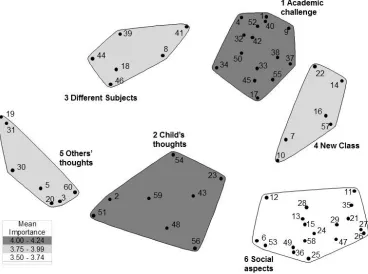
including (a) Academic Challenge, (b) Child’s Thoughts About Moving Up, (c) Different
Subjects, (d) New class, (e) Others’ Thoughts, and (f) Social Aspects.
The second study reports another group concept mapping exploration of factors to
consider when deciding on acceleration. This study involved students in inclusive grade
6, 7, and 8 classes in Ontario who participated in interviews and data structuring
activities. In this two-phase study, students sorted and rated a list of 53 statements they
had generated. Using MDS and HCA statistical analyses, I identified five key concepts
among student-generated factors to consider when deciding on acceleration: (a) Better for
the Fast Learner, (b), Concerns of Moving Up (c), Benefits for Others (d), Potential
Barriers to Acceptance and (e) Uncomfortable Feelings.
In the third study, I thematically analyzed qualitative data from the interviews
with Ontarian students. This study describes students’ overall perspectives on
grade-based acceleration, and reports student-generated strategies to support the inclusion of
inclusion of students who accelerate and emphasized behaviours classmates could
undertake to be inclusive. Findings suggest that fears about the potential for social
exclusion of accelerated students may need critical, contextual re-examination.
Taken together, the findings from these studies suggest that students believe
acceleration may provide benefits to students who accelerate, their classmates, and their
teachers. Students emphasized individual and contextual considerations in the decision to
accelerate, and generated various inclusive strategies to promote the social inclusion of
students who accelerate.
Keywords: acceleration, student beliefs, student perspectives, group concept mapping,
Co-Authorship Statement
I, Lynn Dare, acknowledge that the three integrated manuscripts included within this
thesis all resulted from collaboration with coauthors. In all three manuscripts, the primary
intellectual contributions were made by the first author, who researched and designed the
methodologies and methods, conducted literature reviews, sought appropriate ethical
approvals, recruited all participants, collected and transcribed all data, led the analysis of
all data, and led in the construction and writing of all manuscripts. The primary author
was also the primary contact for the publication process.
The contribution of coauthor Dr. Elizabeth Nowicki (Chapters 2, 3, and 4) was primarily
through her research supervision of the primary author, theoretical guidance, and support
in the intellectual and editorial process of creating the work and preparing it for
publication.
The contribution of coauthor Dr. Susen Smith (Chapter 2) was primarily through her host
supervision of the primary author’s research in Australia and her support in the
Acknowledgements
Financial support. I would like to acknowledge the Social Sciences and
Humanities Research Council of Canada and the Australian Government for their funding
support. Their financial support made my incredible doctoral journey possible.
Academic and emotional support. Many individuals helped along the way. My
sincerest gratitude to my supervisor, Dr. Elizabeth Nowicki for encouraging me to
continue and inspiring me to improve. Thanks to Dr. Perry Klein, my committee member,
for his candid suggestions and constant support. Thanks to Dr. Susen Smith, for having
faith in me and hosting my Australian research adventure. To the anonymous reviewers
who provided critical feedback on the individual papers, thank you for strengthening my
dissertation. To my fellow doctoral candidates, thanks for making this journey a team
effort. And special thanks to my family, for supporting it all.
Research participation. I’d like to extend warmest thanks to all who participated
in my doctoral studies. I deeply appreciate the efforts of those who spread the word about
my research, and I especially appreciate the willingness of parents of students who
participated. Without parents’ consent and implied trust in the research process, students’
voices would remain unheard. What’s more, many parents contributed their own time and
efforts by participating in my studies on parents’ perspectives. Due to space and
scheduling constraints, parents’ contributions are not included in this dissertation, but
have been, or will be, added to the literature through further articles. In total, I owe a debt
of gratitude to over 250 individuals (students, parents, and teachers) who participated in
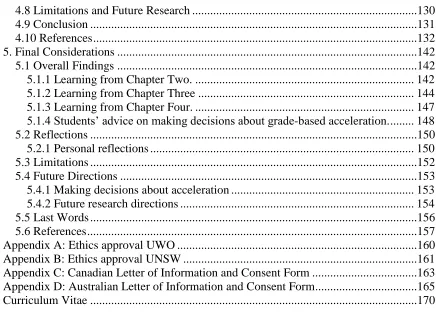
Contents
Abstract ... i
Co-Authorship Statement... iii
Acknowledgements ... iv
1. Introduction ...1
1.1 Research Questions ...2
1.2 Background on Acceleration ...3
1.2.1 Context for terms ... 3
1.2.2 Potential candidates for acceleration ... 5
1.2.3 Rationale for acceleration ... 5
1.2.4 Categories of accelerative interventions ... 6
1.2.5 Effects of acceleration ... 7
1.2.6 Barriers to acceleration ... 8
1.4 The Importance of Student Voice ...10
1.5 Theoretical Perspective ...11
1.5.1 Vygotsky’s perspective and the Zone of Proximal Development ... 11
1.5.2 Ajzen’s theory of planned behaviour ... 15
1.6 Data Collection Journey ...18
1.7 Summary ...19
1.8 References ...20
2. On Deciding to Accelerate: Conceptualized by Students Who Accelerated ...29
2.1 Terminology ...29
2.2 Background ...30
2.2.1 Acceleration. ... 30
2.2.2 Deciding to accelerate ... 32
2.2.3 Group concept mapping methodology ... 33
2.3 Method ...34
2.3.1 Participants ... 34
2.3.2 Measures ... 34
2.3.3 Ethics approval and consent ... 35
2.3.4 Recruitment procedure ... 35
2.4 Data Preparation ...36
2.4.1 Item generation ... 36
2.4.2 Item preparation ... 36
2.4.3 Item structuring ... 36
2.5 Results ...37
2.5.1 Multi-dimensional scaling... 37
2.5.2 Hierarchical cluster analysis ... 38
2.5.3 Importance ratings ... 39
2.5.4 Cluster map summary ... 46
2.6 Discussion ...47
2.6.1 Concept One: Academic Challenge ... 47
2.6.2 Concept Two: Child’s Thoughts About Moving Up ... 48
2.6.3 Concept Three: Different Subjects ... 48
2.6.4 Concept Four: New Class ... 49
2.6.6 Concept Six: Social Aspects ... 50
2.6.7 Summary ... 51
2.7 Limitations ...51
2.8 Implications ...52
2.9 References ...54
3. On Deciding to Accelerate: Conceptualized by Students in Inclusive Classes ...60
3.1 Terminology ...61
3.2 Background ...61
3.2.1 Acceleration. ... 61
3.2.2 Inclusion ... 65
3.2.3 Theoretical framework. ... 68
3.3 Using Group Concept Mapping to Explore Beliefs ...69
3.3.1 Study background and purpose. ... 70
3.4 Method ...71
3.4.1 Participants ... 71
3.4.2 Measures ... 72
3.4.3 Procedure ... 72
3.4.4 Data generation. ... 73
3.4.5 Data synthesis. ... 74
3.4.6 Data structuring. ... 75
3.5 Results ...76
3.5.1 Multi-dimensional scaling produces the data point map ... 76
3.5.2 Hierarchical cluster analysis identifies the key concepts ... 77
3.5.3 Frequency of comments identified as new or surprising ... 82
3.6 Discussion ...85
3.7 Study Limitations ...89
3.8 Conclusions and Implications ...90
3.9 References ...92
4. Strategies for Inclusion: Learning from Students’ Perspectives on Acceleration in Inclusive Education ...99
4.1 Terminology ...101
4.2 Study Background ...101
4.2.1 Acceleration ... 102
4.2.2 Facets of inclusion ... 104
4.3 Study Purpose and Design ...106
4.4 Method ...108
4.4.1 Participants ... 108
4.4.2 Ethics approval and consent ... 110
4.2.3 Instrument and data collection ... 110
4.2.4 Data analysis ... 111
4.5 Results ...112
4.5.1 Students’ perspectives on learning faster ... 112
4.5.2 Students’ perspectives on grade-based acceleration ... 113
4.5.3 Strategies to support the inclusion of accelerated students. ... 117
4.6 Discussion ...123
4.8 Limitations and Future Research ...130
4.9 Conclusion ...131
4.10 References ...132
5. Final Considerations ...142
5.1 Overall Findings ...142
5.1.1 Learning from Chapter Two. ... 142
5.1.2 Learning from Chapter Three ... 144
5.1.3 Learning from Chapter Four. ... 147
5.1.4 Students’ advice on making decisions about grade-based acceleration. ... 148
5.2 Reflections ...150
5.2.1 Personal reflections ... 150
5.3 Limitations ...152
5.4 Future Directions ...153
5.4.1 Making decisions about acceleration ... 153
5.4.2 Future research directions ... 154
5.5 Last Words ...156
5.6 References ...157
Appendix A: Ethics approval UWO ...160
Appendix B: Ethics approval UNSW ...161
Appendix C: Canadian Letter of Information and Consent Form ...163
Appendix D: Australian Letter of Information and Consent Form...165
Curriculum Vitae ...170
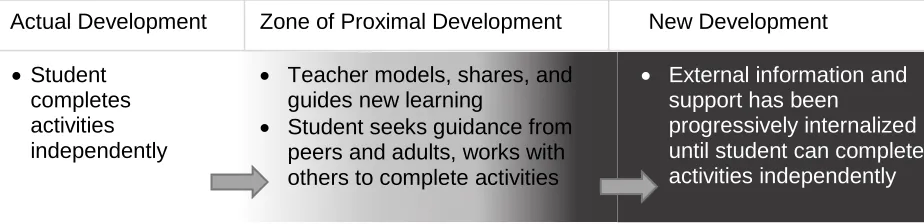
List of Figures Figure 1-1:Diagram showing how students progress through the Zone of Proximal Development. ... 14
Figure 1-2: Diagram illustrating the theory of planned behaviour (Ajzen, 1985). ... 16
Figure 2-1: Six cluster map of high-ability students’ beliefs about grade-based acceleration. ... 40
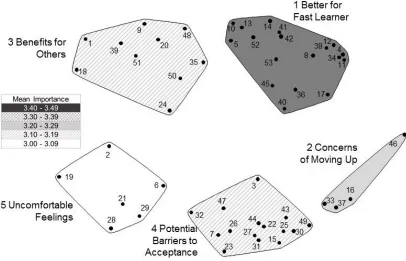
Figure 3-1:Group concept map showing five key concepts in students' beliefs about grad-based acceleration for high-ability students. ... 78
Figure 4-1: Strategies to include accelerated students in inclusive classes. ... 122
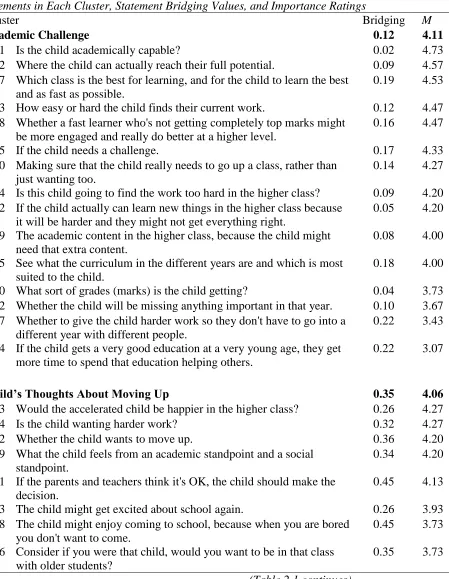
List of Tables Table 2-1 Statements in Each Cluster, Statement Bridging Values, and Importance Ratings...41
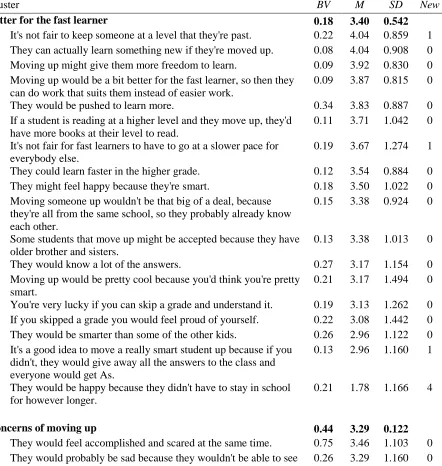
Table 3-1 Statements in Each Cluster, Statement Bridging Values, and Importance Ratings...79
Table 4-1 Participants’ Gender and Grade...109
1. Introduction
“People learn at different rates. Some people learn like bullets!” (Mia1, age 9)
Developing the potential of all students requires flexible approaches to learning.
For students who possess exceptionally high ability and “learn like bullets” (participant
Mia, age 9), accelerative interventions may help meet their educational needs.
Accelerative interventions allow students to progress through educational material at a
faster rate or younger age than conventional (Pressey, 1949), and research shows positive
outcomes for high-ability students who accelerate (e.g., Assouline, Colangelo, &
VanTassel-Baska, 2015; Gross, 2010; Steenbergen-Hu, Makel, & Olszewski-Kubilius,
2016; Steenbergen-Hu & Moon, 2011). Students who accelerate tend to express greater
engagement in school (Dare, Smith, & Nowicki, 2016; Gross, 2010; Gross, Urquhart,
Doyle, Juratowitch, & Matheson, 2011), attain higher academic achievement than
ability-matched non-accelerated peers (McClarty, 2015b; Steenbergen-Hu et al., 2016), and feel
greater social connectivity among older classmates (Gronostaj, Werner, Bochow, &
Vock, 2016; Gross et al., 2011).
Despite the research showing positive outcomes for students who accelerate,
accelerative interventions are rarely used in Canada (Kanevsky, 2011). Examining this
gap between evidence and practice, research suggests that educators’ beliefs about
acceleration often include concerns about socio-emotional outcomes, and these concerns
may act as barriers to accelerative interventions (Gallagher & Smith, 2013; Rambo &
McCoach, 2012; Siegle, Wilson, & Little, 2013; Southern, Jones, & Fiscus, 1989; Wood,
Portman, Cigrand, & Colangelo, 2010). However, relatively little is known about
students’ beliefs about acceleration, and their beliefs are particularly germane to the
social aspects of acceleration. My doctoral research explores what students ages 9 to 14
believe about acceleration. Findings from this research have practical implications for
decision-making about grade-based acceleration, especially in the context of inclusive
education.
1.1 Research Questions
The overarching research question guiding this dissertation is, “What do students
ages 9 to 14 think about grade-based acceleration?” In response, I present this dissertation
in an integrated article format. The chapters are written as independent manuscripts,
formatted for publication, and are presented according to the chronological sequence of
events in the process of acceleration. Chapters Two and Three relate to the decision to
accelerate, and Chapter Four relates to inclusion following acceleration. The following
questions focus the three manuscripts more directly:
1. “What do high-ability students ages 9 to 14 think about grade-based
acceleration?” and the sub-question, “What do students ages 9 to 14 who
accelerated think are the most important factors to consider when deciding
whether to place a high-ability student in a class with older classmates?”
2. “What do students in Grades 6, 7, and 8 think are the most important factors for
parents and teachers to consider when deciding whether to place a high-ability
student in a class with older classmates?” and
3. “What do students in Grade 6, 7, and 8 inclusive classes think about grade-based
acceleration for high-ability students?” I also considered the following three
learn?” “What are these students’ perspectives on placing high-ability learners
with older students?” and “What strategies generated by students in Grades 6, 7,
and 8 might support the inclusion of accelerated students in inclusive classes?”
1.2 Background on Acceleration
Before describing educational acceleration, I would like to emphasize that
acceleration alone may not be sufficient to meet the special educational needs of
high-ability students (Gross et al., 2011). Other appropriate educational practices include
differentiation (including content-based acceleration), enrichment, and ability grouping
(Bennett, Dworet, & Weber, 2008). In Ontario, some school boards offer a variety of
programming for high-ability students “on the quite reasonable premise that variety of
program is necessary to satisfy a variety of superior abilities” (Bennett et al., 2008, p.
139). Nonetheless, the National Association for Gifted Children states that “educational
acceleration is one of the cornerstones of exemplary gifted education practices, with more
research supporting this intervention than any other in the literature on gifted individuals”
(National Association for Gifted Children, 2004).
Each manuscript in this dissertation contains some background on acceleration,
and given the integrated format, some repetition is unavoidable (My apologies to the
reader!). Below I provide a brief introduction to acceleration, beginning with some key
terms.
1.2.1 Context for terms. The National Association for Gifted Children (2004)
defines educational acceleration as “allowing a student to move through traditional
educational organizations more rapidly, based on readiness and motivation” (para. 2).
individuals, taking into account “whether acceleration is a good fit for an individual
student and whether that student is motivated to learn at a faster pace” (Dare & Nowicki,
2015a, p. 249).
Throughout this dissertation, I use the term high-ability to describe students who
have the potential for high academic achievement. Rather than categorizing
exceptionality, this term focusses on academic potential (Dare & Nowicki, 2015), and is
in keeping with a paradigm shift within the field of education research towards “creating
and sustaining appropriate developmental niches for all individuals” (Lo & Porath, 2017,
p. 343). Lo and Porath (2017) explain that the terms more able and advanced reflect
current shifts in an area of research that has historically centered on “people who possess
outstanding abilities” (p. 345); earlier terms included genius and prodigious, as well as
the more recent (and still often heard) term gifted. When describing research articles, I
use the term gifted to retain clarity when referring to the authors’ original expressions. In
conversations with student participants, I used the term fast learner to refer to
high-ability students. This wording was drawn from earlier research with Canadian students in
grades 4 and 5, which reported students’ perspectives that “some people learn faster than
others” (Nowicki, Brown, & Stepien, 2014, p. 77).
In the section below on potential candidates for acceleration, I use the word gifted
to highlight different views. Although the term is associated with an earlier paradigm of
identification (Lo & Porath, 2017), labels such as gifted are still sometimes used to describe
categories of exceptionality (Bees, 2009). In Ontario, the term gifted is used to indicate
requires differentiated learning experiences of a depth and breadth beyond those normally
provided” (Ontario Ministry of Education, 2001, p. 20).
1.2.2 Potential candidates for acceleration. Although acceleration may be
appropriate for students formally identified as gifted, consideration for acceleration
should be independent from gifted identification (Colangelo et al., 2010). For example, a
student who has demonstrated ability in one subject may be a suitable candidate for
acceleration in his or her area of strength even if s/he does not meet overall criteria for
formal identification as gifted. Similarly, twice-exceptional students, that is students who
have co-existing high-ability and learning difficulties (Dare & Nowicki, 2015b), may be
ideal candidates for, accelerative interventions in their areas of strength (Bees, 2009;
Colangelo et al., 2010). Given the diversity among students who may be suitable
candidates for, and could benefit from acceleration, I situate my interests within research
on acceleration as an option for all high-ability students.
1.2.3 Rationale for acceleration. In general, high-ability students learn new
material faster than their typically developing peers (Feldhusen, 1982; Kanevsky &
Clelland, 2013; Winzer, 2002). They often have a pre-existing grasp of age-based
curricula (Peters, Rambo-Hernandez, Makel, Matthews, & Plucker, 2017) and may be
bored in same-age classes (Stanley, 2000). Picture five-year-old Sidney, a high-ability
student who taught himself to read in kindergarten. By Grade 1 he was reading at a Grade
5 level. Now imagine the reading materials that are in a typical Grade 1 classroom. You
will have a sense of the challenges that Sidney and his teachers faced throughout
Researchers have framed meeting the needs of high-ability students’ through
accelerative interventions in different ways. For example, Lubinski and Benbow (2000)
described acceleration as appropriate developmental placement, and McConnaha (1997)
argued that acceleration is developmentally appropriate teaching practice. Other
researchers have referred to Vygotsky’s (1978) zone of proximal development to
illustrate the need for accelerative interventions (e.g., Gallagher & Smith, 2013;
Gronostaj et al., 2016; Kanevsky & Geake, 2004). Ultimately, if there is a good fit
between a student and their progress through educational materials, that student is more
likely to experience positive outcomes. Kanevsky and Clelland (2013) paint this picture
of what can happen when the fit is not good: “The child who finishes early the
assignment he or she could have done several years ago, who finds the teacher’s careful
presentations obvious and elementary, is forced to waste precious time and to find some
means to adapt to the classroom scene. Such adaptations are not likely to be positive
ones” (p. 233).
1.2.4 Categories of accelerative interventions. Many different types of
acceleration allow students to move through curriculum based on readiness and
motivation (see Southern & Jones, 2015 for a complete list). These interventions tend to
fall into two over-arching categories: (a) grade-based acceleration, when a student
moves into a class with older classmates, and (b) content-based acceleration, when a
student receives educational materials at a faster pace while remaining in class with
classmates of the same chronological age (Kanevsky, 2011). In my dissertation, I
focussed on students’ perspectives on grade-based acceleration. Depending on how it is
others, than content-based, and this salience may raise concerns among educators about
possible social issues (Southern & Jones, 2015). Across Canada, grade-based forms of
acceleration are less often practiced or permitted than content-based based forms,
possibly because of the perceived relative salience (Kanevsky, 2011).
1.2.5 Effects of acceleration. Researchers have gathered evidence on the effects
of educational acceleration for over a century (Steenbergen-Hu, Makel, &
Olszewski-Kubilius, 2016). In their position paper, the Association for Bright Children of Ontario
(2015) describe the research on acceleration as “substantial and compelling,” and report
that “empirical evidence demonstrates that accelerated high-ability students make
significant academic gains and may also experience a better match to their personal social
and emotional maturity” (para. 1).
In a comprehensive review of the research on acceleration, Kulik (2004)
examined 25 separate studies with quantitative data comparing accelerated and
non-accelerated students of similar ability. Eleven of these studies had same age comparison
groups, fourteen had older comparison groups. In studies with same-age comparison
groups, the accelerated group consistently out-performed the comparison group (similar
ability, non-accelerated) in measures of achievement. In studies with older control
groups, there was a mix of positive and negative effects for academic achievement,
although most of the effect sizes were small.
In addition to generally positive influences on academic achievement,
acceleration has been show to have generally small positive or no effect on
social-emotional measures (Hoogeveen, van Hell, & Verhoeven, 2009; Kulik, 2004; Neihart,
meta-analysis of 38 studies on acceleration conducted between 1984 and 2008,
Steenbergen-Hu and Moon (2011) compared accelerated to non-accelerated same-age peers and found
a statistically significant positive effect on measures of academic achievement (g =
0.396) and a small, positive effect on social-emotional measures (combined effect size g
= 0.141). Some researchers contend that even when social and emotional measures
demonstrate small positive or no effects following acceleration, such findings contradict
beliefs that socio-emotional outcomes may be negative (Assouline et al., 2015).
On the other hand, some students who accelerate do not experience positive
outcomes overall, and such cases emphasize the importance of careful decision-making.
In a review of the socio-affective impact of acceleration, Neihart (2007) identified
benefits of acceleration which included satisfying social relationships, positive
self-esteem and self-concept, satisfaction with the choice to accelerate, and higher educational
aspirations. However, Neihart (2007) cautions that in a few cases acceleration may not
work out and “there are documented cases of individual accelerated students having
significant adjustment problems” (p. 333). Moreover, for some populations of
high-ability students, including high-high-ability students who attend schools as minority students
or who are from economically vulnerable backgrounds, there is insufficient evidence on
the outcomes of accelerative interventions to draw overall conclusions (Cross, Andersen,
& Mammadov, 2015).
1.2.6 Barriers to acceleration. Despite research showing that students who
accelerate experience measurable benefits, the practice of educational acceleration is
often misunderstood and underutilised (Kanevsky, 2010). In practice, the
towards accelerative interventions (Dare, Dare, & Nowicki, 2017); educators identify
candidates for acceleration, contribute to placement decisions, and are responsible for
delivering differentiated programming within inclusive settings. What’s more, students
who accelerate need teachers who understand their unique learning needs (Culross, Jolly,
& Winkler, 2013; Dare et al., 2016; Gross et al., 2011). Due to the central role that
educators play, some researchers have examined educators’ attitudes towards
acceleration, often using survey methodology (Bain, Bliss, Choate, & Brown, 2007;
McCoach & Siegle, 2007; Rambo & McCoach, 2012; Southern et al., 1989; Wood et al.,
2010). For example, Southern et al. (1989) surveyed 554 teachers, principals, school
psychologists, and coordinators of gifted education about their attitudes towards early
entrance and grade skipping. More than three-quarters of respondents (78%) rated the
statement “accelerants will miss important social interactions” as their greatest concern
(Southern et al., 1989, p. 33). Bain et al. (2007) found similar results in a survey of 285
pre-service teachers; more than four out of five pre-service teachers (82%) agreed that
skipping grades would “most likely have a negative effect on [students’] socialization
skills” (p. 465). And in a survey of 262 teachers, McCoach and Seigle (2007) found 24%
of respondents had negative attitudes towards grade-skipping, 67% were “ambivalent,”
and only 10% had positive attitudes towards grade-skipping (p. 251).
Overall, the research suggests such negative beliefs may restrict access to
accelerative interventions (Bennett et al., 2008). That is, opportunities to accelerate may
be blocked by misconceptions about acceleration and overly cautious approaches to
decision-making about accelerative placements, particularly if educators have concerns
accelerative interventions, recognising that high-ability students may struggle to fit in
with same-age classmates (Gross et al., 2011). Remember Sidney? After about six weeks
in Grade 1, his teacher called home to tell his mom, “I don’t know what to do with
Sidney, he really should be in the Grade 2 class.”
1.4 The Importance of Student Voice
In addition to examining educators’ beliefs about acceleration, some research
reports students’ experiences following acceleration (e.g., Gronostaj et al., 2016; Gross et
al., 2011; Gross, 2006; Hoogeveen et al., 2009; Muratori, Colangelo, & Assouline, 2003).
In general, these studies report positive experiences, adding support to the literature
recommending acceleration for high-ability students. However, at the time of writing, I
am not aware of any research that has sought students’ views on factors to consider in the
decision to accelerate. Sutherland and Katz (2005) noted that “while it is not unusual for
the experiences and views of teachers to be represented in scholarly research … less
evident are studies in which the views of students are solicited” (p. 258). Yet, students’
views are critical in educational planning and programming where “the central area of
focus is the quality of the students’ experience” (Prior, 2011, p. 121). Indeed, Gordon
(2010) argued that hearing and integrating students’ perspectives is “a valuable way of
moving Canadian inclusive education practices forward” (p. 1). In other words, to really
understand acceleration in school environments, we need to know students’ perspectives
as well as educators’. My doctoral research adds to our understanding of students’
perspectives on grade-based acceleration and adds the voices of students who have not
1.5 Theoretical Perspective
This research is informed by two theoretical perspectives: Vygotsky’s (1978)
concept of optimal learning in the zone of proximal development (ZPD) and Ajzen’s
(1985) theory of planned behaviour.
1.5.1 Vygotsky’s perspective and the Zone of Proximal Development. Russian
psychologist Lev Vygotsky (1896-1934) wrote extensively about development, learning,
and special education (Woolfolk, Winne, & Perry, 2006). His theorising on optimal
learning in the zone of proximal development (ZPD) is particularly germane to using
accelerative interventions to support the special learning needs of high-ability students
(Kanevsky & Geake, 2004). In fact, his view that “learning should be matched in some
manner with the child’s developmental level” (Vygotsky, 1978, p. 85) is an underlying
principle in the rationale for accelerative interventions for high-ability students.
Vygotsky’s perspective was excluded from Western conceptions of
developmental psychology until the last quarter of the twentieth century, in part because
his writings were banned for many years in his homeland (Woolfolk et al., 2006).
However, his theories on learning and development have become increasingly influential
in recent years (Peters et al., 2017). Vygotsky embraced a socio-cultural view,
considering individual learning and development in relation to social interactions and
cultural contexts. His interest in “good learning” (Vygotsky, 1978, p. 89) centred on
cognitive functions that “are on the verge of developing, but need support or scaffolding
before the child will be able to use them independently” (Kanevsky & Geake, 2004, p.
process of tutoring learners through the acquisition of new skills by controlling and
directing the learners’ problem-solving efforts.
To help understand the complex, interconnected relationships involved in
individual learning, Vygotsky proposed a construct called the zone of proximal
development (Vygotsky, 1978). The zone of proximal development provides a framework
for understanding interactions between individual development, optimal learning, and the
learning environment. Vygotsky theorized that students need to work beyond what they
already know (actual development) to experience new learning. Learning is optimized in
the zone of proximal development—where students work on activities they can complete
with assistance or support from adults or more capable peers. Learning and development
progress as the student increasingly internalizes the external assistance, until the student
can complete the newly learned activity independently. In a Vygotskian view, when a
student achieves independent mastery of an activity, the student has transitioned from one
level of actual development through the zone of proximal development, to another, new
level of actual development. Figure 1 summarises Vygotsky’s perspective on learning in
the zone of proximal development.
In addition to describing individual learning in the optimal zone, Vygotsky
emphasized that individual learning happens through social interaction with others (adults
and more capable peers) who scaffold students’ learning within the optimal zone
(Kanevsky & Geake, 2004). Because learning happens in social contexts, a critical factor
in Vygotsky’s socio-cultural perspective is that learning and development “cannot be
understood apart from the settings” (Woolfolk et al., 2006, p. 43). Indeed, Vygotsky
by which children grow into the intellectual life of those around them” (p. 88). Through
social interactions, individuals construct their understanding of the world and develop
their thought processes (Woolfolk et al., 2006). In the zone of proximal development, the
“reciprocity of contributions” by the student and adults or more capable peers is critical
to learning and development (Kanevsky, 1995, p. 187). This recognition of contextual
social interactions is particularly relevant to my study of students’ beliefs about
acceleration. We need to hear students’ perspectives on acceleration to understand
whether students who accelerate would be accepted in the social interactions, and
co-constructed learning, of older classmates.
Applied to this dissertation, Vygotsky’s socio-cultural perspective provides both a
rationale for acceleration, and a frame of reference for understanding the importance of
students’ beliefs about grade-based acceleration. In chapter two, Vygotsky’s perspective
aided in my interpretation of high-ability students’ advice on making decisions about
acceleration. Applied to chapters three and four, Vygotsky’s socio-cultural perspective
reinforces the importance of examining other students’ beliefs about grade-based
acceleration, as those beliefs may influence the learning environment, and social
inclusion, of students’ who accelerate. To illustrate the importance of understanding
students’ beliefs as they relate to intended behaviours, I rely on Ajzen’s (1985) theory of
• Teacher models, shares, and guides new learning
• Student seeks guidance from peers and adults, works with others to complete activities
• External information and support has been
progressively internalized until student can complete activities independently
• Student completes activities independently
Actual Development Zone of Proximal Development New Development
1.5.2 Ajzen’s theory of planned behaviour. Ajzen’s (1985) theory illustrates the
links between beliefs, attitudes, and behaviours, and can help explain human behaviour in
particular contexts. According to theory of planned behaviour, three types of beliefs—
behavioural, normative, and control—influence intentions which in turn influence
behaviours (see Figure 2). The following three factors influence an individual’s
intentions: (a) the individual’s attitude towards the behaviour, (b) the subjective norm,
and (c) the individual’s perceived behavioural control (Ajzen, 1985, 1991). In turn, each
factor is influenced by the individual’s beliefs as outlined below (see also Figure 2):
• Behavioural beliefs are based on the subjective probability that an outcome will
occur as a result of the behaviour. Behavioural beliefs influence a person’s
attitudes towards the behaviour.
• Normative beliefs are the individual’s beliefs about whether others think the
behaviour should or should not be performed. Normative beliefs influence the
perceived degree of social pressure to engage or not engage in a behaviour.
• Control beliefs reflect the individual’s perceptions of factors that help or hinder
specific behaviour. Control beliefs influence a person’s perceived ability to
Many researchers have used the theory of planned behaviour to explain attitudes
and actions across various disciplines, including education (see Armitage & Conner,
2001). For example, researchers have used this theory to investigate teachers’ attitudes
towards the inclusion of students with social, emotional, and behavioural difficulties
(MacFarlane & Woolfson, 2013); to assess student teachers’ attitudes towards students
with dyslexia (Gwernan-Jones & Burden, 2010); to predict teachers’ intentions to
implement school-based assessment (Yan, 2014); to predict educators’ teaching practices
from their attitudes and knowledge of inclusive education (Kuyini & Desai, 2007); and to
investigate students’ attitudes towards peers with Autism Spectrum Disorder (Freitag &
Dunsmuir, 2015). In a meta-analytic review of 185 studies, Armitage and Conner (2001)
found support for the theory’s efficacy; theory of planned behaviour accounted for 39%
of variance in intention and 27% of variance in behaviour.
As the examples above indicate, theory of planned behaviour is well-established
in the field of education and has been used as a framework for understanding educators’
attitudes, intentions, and behaviours. Sidney’s story illustrates how theory of planned
behaviour might apply at an individual level. Throughout elementary school, Sidney’s
academic achievement exceeded that of his same-age classmates. He experienced a
variety of placements in the search for a good fit. He began his school career a regular
class with enrichment; in the middle years (grades 4-6) he was placed in a segregated
class for gifted students. In grade 7, he engaged in single subject acceleration by
completing an online grade 9 math credit. While he was in grade 7, his parents asked if
Sidney could grade-skip to grade 8. The elementary school principal said no. In
and offered Sidney early entrance to high school. Two different principals made two
different decisions about acceleration. In the absence of guiding policies—few district
school boards in Canada have acceleration policies or guidelines (Kanevsky & Clelland,
2013)—Sidney’s example illustrates how educators (including principals and teachers)
may rely solely on their attitudes, beliefs, and perceived control when making decisions
about accelerative interventions.
In this dissertation, Ajzen’s (1985) model helps justify my examination of
students’ beliefs about grade-based acceleration. Theory of planned behaviour illustrates
the links between beliefs and behaviours; I suggest that understanding students’ beliefs
about grade-based acceleration lends some insight into how students in inclusive classes
might behave towards a younger classmate who accelerates.
1.6 Data Collection Journey
The reader will note that the manuscripts in this dissertation describe research
involving students on opposite sides of the world. An exciting part of my data collection
journey was the opportunity to conduct some research in Australia. With the support of
my supervisor, funding through an Australian Endeavour Research Fellowship, and
sponsorship from my Australian host at the Gifted Education Research, Resource, and
Information Centre at the University of New South Wales, I gathered data in Australia for
four months during my second year of doctoral studies. In the first manuscript in this
dissertation, I report on data gathered from Australian high-ability students, many of
whom had experienced acceleration. From this population, I heard advice on making
decisions about grade-based acceleration from students who had direct experience in
district school board, school principal, teachers, and parents, Canadian students in
inclusive classes in Ontario shared their thoughts on what it might be like to have
younger students move into classes with older classmates. From this group of
participants, I heard advice on making decisions about acceleration from the perspective
of potential classmates in inclusive classes (see Chapter Three). I also heard their ideas
on strategies that might be useful in fostering an inclusive environment for students who
accelerate (see Chapter Four).
1.7 Summary
Taken together, the articles presented in this dissertation add students’ voice to
the literature on making decisions about grade-based acceleration. In the first article, On
Deciding to Accelerate: Conceptualized by Students Who Accelerated, I explored
Australian high-ability students’ beliefs about important considerations in grade-based
acceleration using group concept mapping methodology. In the second article, On
Deciding to Accelerate: Conceptualized by Students in Inclusive Classes, I applied group
concept mapping to investigate Canadian students’ beliefs about acceleration in inclusive
education. In the third article, Strategies for Inclusion: Learning from Students'
Perspectives on Acceleration in Inclusive Education, I describe a thematic analysis of
Canadian elementary school students’ perspectives on grade-based acceleration and
strategies to promote the inclusion of students who accelerate. Setting aside your own
beliefs about acceleration, read on to learn what 26 Australian and 26 Canadian students
1.8 References
Ajzen, I. (1985). From intentions to actions: A theory of planned behavior. In J. Kuhl &
J. Beckmann (Eds.), Action control: From cognition to behavior (pp. 11–39).
Heidelberg: Springer-Verlag. doi:10.1007/978-3-642-69746-3_2
Ajzen, I. (1991). The theory of planned behavior. Organizational Behavior and Human
Decision Processes, 50, 179–211.
Armitage, C. J., & Conner, M. (2001). Efficacy of the theory of planned behaviour: A
meta-analytic review. British Journal of Social Psychology, 40(4), 471–499.
doi:http://dx.doi.org/10.1348/014466601164939
Association for Bright Children. (2015). Position paper: Acceleration in Education.
Retrieved from https://www.abctoronto.org/abc-documents
Assouline, S. G., Colangelo, N., & VanTassel-Baska, J. (2015). A nation empowered:
Evidence trumps the excuses holding back America’s brightest students, volume 1.
Iowa City, IA: The Connie Belin & Jacqueline N. Blank International Center for
Gifted Education and Talent Development, University of Iowa.
Bain, S. K., Bliss, S. L., Choate, S. M., & Brown, K. (2007). Serving children who are
gifted: Perceptions of undergraduates planning to become teachers. Journal for the
Education of the Gifted, 30(4), 450–537.
Bees, C. (2009). Gifted and learning disabled: A handbook. Retrieved from
http://www.vsb.bc.ca/sites/default/files/school-files/Programs/GiftedLDHandbook.pdf
Bennett, S., Dworet, D., & Weber, K. (2008). Special education in Ontario schools (6th
Colangelo, N., Assouline, S. G., Marron, M. A., Castellano, J. A., Clinkenbeard, P. R.,
Rogers, K. B., … Smith, D. (2010). Guidelines for developing an academic
acceleration policy. Journal of Advanced Academics, 21(2), 180–203.
doi:10.1177/1932202X1002100202
Cross, T. L., Andersen, L., & Mammadov, S. (2015). Effects of academic acceleration on
the social and emotional lives of gifted students. In A Nation Empowered: Evidence
Trumps the Excuses Holding Back America’s Brightest Students (pp. 31–42). Iowa
City, IA: The Connie Belin & Jacqueline N. Blank International Center for Gifted
Education and Talent Development, University of Iowa.
Culross, R. R., Jolly, J. L., & Winkler, D. (2013). Facilitating grade acceleration:
Revisiting the wisdom of John Feldhusen. Roeper Review, 35(1), 36–46.
doi:10.1080/02783193.2013.740601
Dare, A. W., Dare, L., & Nowicki, E. A. (2017). Concurrent enrollment: Comparing how
educators and students categorize students’ motivations. Social Psychology of
Education, 20(1), 195–213. doi:10.1007/s11218-016-9364-8
Dare, L., & Nowicki, E. A. (2015a). Conceptualizing concurrent enrollment: Why
high-achieving students go for it. Gifted Child Quarterly, 59(4), 249–264.
doi:10.1177/0016986215597749
Dare, L., & Nowicki, E. A. (2015b). Twice-exceptionality: Parents’ perspectives on 2e
identification. Roeper Review, 37(4), 208–218.
doi:10.1080/02783193.2015.1077911
Dare, L., Smith, S., & Nowicki, E. A. (2016). Parents’ experiences with their children’s
Journal of Gifted Education, 25(2), 6–21. doi:10.21505/ajge.2016.0012
Feldhusen, J. F. (1982). Meeting the needs of gifted students through differentiated
programming. Gifted Child Quarterly, 26(1), 3741.
Freitag, S., & Dunsmuir, S. (2015). The inclusion of children with ASD: Using the theory
of planned behaviour as a theoretical framework to explore peer attitudes.
International Journal of Disability, Development and Education, 62(4), 405–421.
doi:10.1080/1034912X.2015.1046818
Gallagher, S., & Smith, S. R. (2013). Acceleration for talent development: Parents’ and
teachers’ attitudes towards supporting the social and emotional needs of gifted
children. International Journal for Talent Development and Creativity, 1(2), 97–
112.
Gallagher, S., Smith, S. R., & Merrotsy, P. (2011). Teachers’ perceptions of the
socioemotional development of intellectually gifted primary aged students and their
attitudes towards ability grouping and acceleration. Gifted and Talented
International, 26(1), 11–24.
Gordon, M. (2010). Student voice key to unlocking inclusive educational practices.
Canadian Journal for New Scholars in Education, Special Issue (August 2010), 1–
11.
Gronostaj, A., Werner, E., Bochow, E., & Vock, M. (2016). How to learn things at school
you don't already know: Experiences of gifted grade-skippers in Germany. Gifted
Child Quarterly, 60(1), 31–46. doi:10.1177/0016986215609999
Gross, M. U. M. (2010). Miraca Gross, in her own write: A lifetime in gifted education.
Gross, M. U. M., Urquhart, R., Doyle, J., Juratowitch, M., & Matheson, G. (2011).
Releasing the brakes for high-ability learners. Sydney, Australia.
Gross, M. U. M. (2006). Exceptionally gifted children: Long-term outcomes of academic
acceleration and nonacceleration. Journal for the Education of the Gifted, 29(4),
404–486. doi:10.4219/jeg-2006-247
Gwernan-Jones, R., & Burden, R. L. (2010). Are they just lazy? Student teachers’
attitudes about dyslexia. Dyslexia, 16(1), 66–86. doi:10.1002/dys
Hoogeveen, L., van Hell, J. G., & Verhoeven, L. (2009). Self-concept and social status of
accelerated and nonaccelerated students in the first 2 years of secondary school.
Gifted Child Quarterly, 53(1), 50–67. doi:10.1177/0016986208326556
Kanevsky, L. (1995). Learning potentials of gifted students. Roeper Review, 17(3), 157–
163. doi:10.1080/02783199509553650
Kanevsky, L. (2010). Acceleration options in Canada: What’s permitted and what’s
happening? In Proceedings of the Acceleration Poster Session at the 2008 Wallace
Research Symposium on Talent Development (pp. 7–9). Iowa City, IA: The Institute
for Research and Policy on Acceleration at the Connie Belin & Jacqueline N. Blank
International Center for Gifted Education and Talent Development.
Kanevsky, L. (2011). A survey of educational acceleration practices in Canada. Canadian
Journal of Education, 34(3), 153–180.
Kanevsky, L., & Clelland, D. (2013). Accelerating gifted students in Canada: Policies
and possibilities. Canadian Journal of Education, 3(2013), 229–271.
Kanevsky, L., & Geake, J. G. (2004). Inside the zone of proximal development:
peers. Journal for the Education of the Gifted, 28(2), 182–217.
doi:10.1177/016235320402800204
Katz, J., Porath, M., Bendu, C., & Epp, B. (2012). Diverse voices: Middle years students’
insights into life in inclusive classrooms. Exceptionality Education International,
22(1), 2–16.
Kulik, J. A. (2004). Meta-analytic studies of acceleration. In N. Colangelo, S. G.
Assouline, & M. U. M. Gross (Eds.), A Nation Deceived: How Schools Hold Back
America’s Brightest Students, Volume II (pp. 13–22). Iowa City, IA: The Connie
Belin & Jacqueline N. Blank International Center for Gifted Education and Talent
Development, University of Iowa.
Kuyini, A. B., & Desai, I. (2007). Principals’ and teachers’ attitudes and knowledge of
inclusive education as predictors of effective teaching practices in Ghana. Journal of
Research in Special Educational Needs, 7(2), 104–113.
doi:10.1111/j.1471-3802.2007.00086.x
Lo, C. O., & Porath, M. (2017). Paradigm shifts in gifted education: An examination
vis-a-vis its historical situatedness and pedagogical sensibilities. Gifted Child Quarterly,
61(4), 343–360.
Lubinski, D., & Benbow, C. P. (2000). States of excellence. American Psychologist, 55,
137–150.
MacFarlane, K., & Woolfson, L. M. (2013). Teacher attitudes and behavior toward the
inclusion of children with social, emotional and behavioral difficulties in
mainstream schools: An application of the theory of planned behavior. Teaching and
McClarty, K. L. (2015). Life in the fast lane: Effects of early grade acceleration on high
school and college outcomes. Gifted Child Quarterly, 59(1), 3–13.
doi:10.1177/0016986214559595
McCoach, D. B., & Siegle, D. (2007). What predicts teachers’ attitudes toward the
gifted? Gifted Child Quarterly, 51(3), 246–255. doi:10.1177/0016986207302719
McConnaha, W. R. (1997). An analysis of dual enrollment as an acceleration option for
high school students. Available from ProQuest Dissertations and Theses database.
Muratori, M., Colangelo, N., & Assouline, S. G. (2003). Early-entrance students:
impressions of their first semester of college. Gifted and Talented International,
47(3), 219–238.
National Association for Gifted Children. (2004). Acceleration [position paper].
Washington, DC.
National Association for Gifted Children. (2010). NAGC pre-k-grade 12 gifted
programming standards: A blueprint for quality gifted education programs.
Washington, DC.
Neihart, M. (2007). The socioaffective impact of acceleration and ability grouping:
Recommendations for best practice. Gifted Child Quarterly, 51(4), 330–341.
doi:10.1177/0016986207306319
Nowicki, E. A., Brown, J., & Stepien, M. (2014). Children's structured conceptualizations
of their beliefs on the causes of learning difficulties. Journal of Mixed Methods
Ontario Ministry of Education. (2001). Special education: A guide for educators.
Retrieved from
http://www.edu.gov.on.ca/eng/general/elemsec/speced/guide/specedhandbooke.pdf
Peters, S. J., Rambo-Hernandez, K. E., Makel, M. C., Matthews, M. S., & Plucker, J. A.
(2017). Should millions of students take a gap year? Large numbers of students start
the school year above grade level. Gifted Child Quarterly, 61(3), 229–238.
Pressey, S. L. (1949). Educational acceleration: Appraisal of basic problems. Columbus,
OH: Ohio State University Press.
Prior, S. (2011). Student voice: What do students who are intellectually gifted say they
experience and need in the inclusive classroom? Gifted and Talented International2,
26(1), 121–130. doi:10.1080/15332276.2011.11673596
Rambo, K. E., & McCoach, D. B. (2012). Teacher attitudes toward subject-specific
acceleration: Instrument development and validation. Journal for the Education of
the Gifted, 35(2), 129–152. doi:10.1177/0162353212440591
Rogers, K. B. (2007). Lessons learned about educating the gifted and talented: A
synthesis of the research on educational practice. Gifted Child Quarterly, 51(4),
382–396.
Rogers, K. B. (2015). The academic, socialization, and psychological effects of
acceleration: Research synthesis. In S. G. Assouline, N. Colangelo, & J.
VanTassel-Baska (Eds.), A Nation Empowered: Evidence Trumps the Excuses Holding Back
America’s Brightest Students (Volume 2, pp. 19–29). Iowa City, IA: The Connie
Belin & Jacqueline N. Blank International Center for Gifted Education and Talent
Siegle, D., Wilson, H. E., & Little, C. A. (2013). A sample of gifted and talented
educators’ attitudes about academic acceleration. Journal of Advanced Academics,
24(1), 27–51. doi:10.1177/1932202X12472491
Southern, W. T., & Jones, E. D. (2015). Types of acceleration: Dimensions and issues. In
S. G. Assouline, N. Colangelo, J. VanTassel-Baska, & A. Lupkowski-Shoplik
(Eds.), A Nation Empowered: Evidence Trumps the Excuses Holding Back
America’s Brightest Students (Volume 2, pp. 9–18). Iowa City, IA: The Connie
Belin & Jacqueline N. Blank International Center for Gifted Education and Talent
Development, University of Iowa.
Southern, W. T., Jones, E. D., & Fiscus, E. D. (1989). Practitioner objections to the
academic acceleration of gifted children. Gifted Child Quarterly, 33(1), 29–35.
doi:10.1177/001698628903300105
Stanley, J. C. (2000). Helping students learn only what they don’t already know.
Psychology, Public Policy, and Law, 6, 216–222.
Steenbergen-Hu, S., Makel, M. C., & Olszewski-Kubilius, P. (2016). What one hundred
years of research says about the effects of ability grouping and acceleration on K-12
students academic achievement: Findings of two second-order meta-analyses.
Review of Educational Research, 86(4), 849–899. doi:10.3102/0034654316675417
Steenbergen-Hu, S., & Moon, S. M. (2011). The effects of acceleration on high-ability
learners: A meta-analysis. Gifted Child Quarterly, 55(1), 39–53.
doi:10.1177/0016986210383155
Sutherland, S., & Katz, S. (2005). Concept mapping methodology: A catalyst for
doi:10.1016/j.evalprogplan.2005.04.017
Vygotsky, L.S. (1978). Mind in society: The development of higher psychological
processes. Cambridge, MA: Harvard University Press.
Winzer, M. A. (2002). Children with exceptionalities in Canadian classrooms. (6th ed.).
Toronto, ON: Prentice Hall.
Wood, D., Bruner, J. S., & Ross, G. (1976). The role of tutoring in problem solving.
Journal of Child Psychology and Psychiatry, and Allied Disciplines, 17(2), 89–100.
doi:10.1111/j.1469-7610.1976.tb00381.x
Wood, S., Portman, T. A. A., Cigrand, D. L., & Colangelo, N. (2010). School counselors’
perceptions and experience with acceleration as a program option for gifted and
talented students. Gifted Child Quarterly, 54(3), 168–178.
doi:10.1177/0016986210367940
Woolfolk, A. E., Winne, P. H., & Perry, N. E. (2006). Educational psychology (3rd
Canadi). Toronto, ON: Pearson Education.
Yan, Z. (2014). Predicting teachers’ intentions to implement school-based assessment
using the theory of planned behaviour. Educational Research and Evaluation, 20(2),
2. On Deciding to Accelerate: Conceptualized by Students Who Accelerated
To nurture a love of learning among their students, educators aim to challenge and
engage every student, across all abilities and needs. For some high-ability students, this
nurturing may require teaching to a higher level than specified by age-based curriculum.
Known as acceleration, the practice of teaching to a higher than age-based level has been
shown to support positive academic, emotional, and social outcomes for high-ability
students (e.g., Assouline et al., 2015; Dare et al., 2016; Steenbergen-Hu et al., 2016;
Steenbergen-Hu & Moon, 2011). Despite this evidence, some educators express
hesitancy towards accelerative interventions, often citing concerns about social
implications. Such concerns may create barriers to the practice of acceleration (Colangelo
et al., 2004b; Gallagher & Smith, 2013).
To better understand whether educators’ concerns about acceleration are relevant
in today’s classrooms, we asked high-ability students to share their thoughts on the topic.
Then, we engaged high-ability students who had accelerated in structuring the data
through group concept mapping activities (Trochim, 1989). Our research was guided by
the question, “What do high-ability students think about grade-based acceleration?” We
also posed the following sub-question: “What do students who accelerated think are the
most important factors to consider when deciding whether to place a high-ability student
in a class with older classmates?” That is, we asked students who had experienced
grade-based acceleration for their advice on deciding to accelerate.
2.1 Terminology
We use the term high-ability to refer to students who have the ability to reach the
focuses on students’ potential (Dare & Nowicki, 2015) anddeemphasizes definitions
such as gifted or talented which rely on discrete categories of exceptionality (Katz et al.,
2012). When speaking with students in our study, we used the child-friendly term “fast
learner” to refer to high-ability students. Some students used the term “gifted”, and in
those instances, we mirrored the term they used during interviews. With respect to
first and identity-first terminology, we acknowledge some readers prefer
person-first language (e.g., student who accelerated), while others identify more with
identity-first language (e.g., high-ability student). Out of respect for both perspectives, and in
keeping with Collier (2012) who opined, “the sentiment expressed in communication is
far more important than the linguistic circumlocutions” (p. 1978), we use person- and
identify-first terms interchangeably throughout.
There are many types of accelerative interventions (see Southern & Jones, 2015,
for a compete description). In general, different forms of acceleration fall into two
overarching categories: content- and grade-based. Content-based acceleration involves
giving a student higher level materials while they remain with same-age classmates.
Grade-based acceleration involves moving a younger student into classes with older
classmates. In the current study, we focused on grade-based acceleration as it is more
likely to raise concerns about social adjustment (Southern & Jones, 2015).
2.2 Background
2.2.1 Acceleration. Pressey’s (1949) classic definition described acceleration as
“progress through educational programs either at rates faster than, or at ages younger than
conventional” (p. 2). The National Association for Gifted Children (2004) introduced a
acceleration as “allowing a student to move through traditional educational organizations
more rapidly, based on readiness and motivation” (para. 2). In other words, acceleration
comprises student-centered interventions which seek an optimal match between existing
knowledge, learning potential, and educational environment.
Research has shown that many high-ability students have a pre-existing
knowledge of age-based curricula at the beginning of the school year (Peters,
Rambo-Hernandez, Makel, Matthews, & Plucker, 2017). Consequently, some students may need
to reach beyond age-based curricula to experience new learning (Stanley, 2000). To
describe how new learning happens, developmental psychologist Lev Vygotsky (1978)
proposed a construct called the zone of proximal development (ZPD). This zone defines
an individual’s optimal learning space as the distance between what the student already
knows, as demonstrated through independent problem-solving, and what they can achieve
with support from adults or more capable peers. We can gauge what a high-ability
student already knows by examining scores on standardized achievement tests. Such tests
are completed independently, and therefore reveal students’ existing level of knowledge
and skills, at the base of their ZPD (Kanevsky & Geake, 2004). In a Vygotskian view,
new learning happens beyond this level.
In addition to describing how new learning builds on existing knowledge and
skills, Vygotsky emphasized connections between thinking and feeling in new learning.
He regarded intellect and affect as closely connected to relationships in the optimal
learning zone (Kanevsky, 2011; Kanevsky & Geake, 2004). This interdependence
suggests that new learning relies on relationships in the learning environment as well as
competent peers support and scaffold their learning (Lo & Porath, 2017). Applying
Vygostsky’s theory to acceleration, accelerative interventions allow high-ability students
to learn new material, through adult and peer interaction, in their zones of proximal
development.
2.2.2 Deciding to accelerate. The decision to accelerate must take into account a
complex interplay of factors. Although a large body of research shows that acceleration
most often results in positive outcomes, some individuals have perceived challenging
socio-emotional consequences following whole-grade acceleration (Neihart, 2007). To
identify those students most likely to benefit from accelerative interventions, educators
and parents must take an evidence-based, well-informed approach to decision-making.
Recommendations in Feldhusen, Proctor, and Black’s (1986) guidelines for grade
advancement, and more recently, the Iowa Acceleration Scale (Assouline, Colangelo,
Lupkowski-Shoplik, Lipscomb, & Forstadt, 2009), can guide decisions about acceleration
on a case-by-case basis.
Feldhusen et al. (1986) set out 12 guidelines to encourage a systematic approach
to making decisions about acceleration. Their guidelines cover three general areas: (a)
screening candidates for acceleration, (b) engaging with adults involved in the process,
and (c) supporting students (Culross et al., 2013). Similarly, the Iowa Acceleration Scale
facilitates collaborative discussion about whole-grade acceleration for candidates in
grades K-8. The scale comprises scored items based on the research and clinical
experiences of staff at the Connie Belin & Jacqueline N. Blank International Center for
Gifted Education and Talent Development, in Iowa. Combining information from a
readiness, and other potentially influencing factors. A child study team, including
educators and parents, completes the form together, resulting in a scaled score indicating
whether whole-grade acceleration is recommended and whether other interventions
should be considered.
To further refine and inform discussions about grade-based acceleration, our
study adds high-ability students’ voice to the literature on the decision to accelerate, and
identifies factors that students who accelerated believed to be most important.
2.2.3 Group concept mapping methodology. We used an unique methodology,
group concept mapping, to investigate high-ability students’ beliefs about grade-based
acceleration. Group concept mapping is a participatory approach to collecting qualitative
data which relies on participants’ interpretations to structure the data (Kane & Trochim,
2007). This approach applies rigorous statistical analyses to qualitative data and has been
widely used in exploratory studies (e.g. Dare & Nowicki, 2015; Daughtry & Kunkel,
1993) and education research (e.g., Kunkel, Pittman, Hildebrand, & Walling, 1994;
Nowicki, Brown, & Stepien, 2014a).
Group concept mapping is a multi-step process in which participants provide
responses to an open-ended focus question, then organize the responses by sorting them
into groups and rating them on a dimension of interest. As strength of this approach is
that the researcher does not rely upon his or her own interpretation of the data (Nowicki,
Brown, & Stepien, 2014b). The researcher facilitates data generation and then prepares
the generated data by removing repetitions and editing for clarity. Participants interpret
and structure the data through sorting and rating activities. Finally, the researcher applies
structured the data (Trochim, 1989). Through these steps, group concept mapping yields
a structured conceptualization represented through statistically-derived maps and charts.
2.3 Method
2.3.1 Participants. Our study included a total of 26 high-ability children from
across Australia. In phase one data generation, our study involved high-ability students
ages 9 to 14 years (M age = 10.2, SD = 1.42), 13 males and 13 females. The sample
included 17 students who accelerated and nine high-ability students who had not
accelerated. Participants resided in five of the eight Australian states and territories,
namely New South Wales (n = 17), Queensland (n = 4), South Australia (n = 3), Victoria
(n = 1) and Australian Capital Territory (n = 1).
In phase two, the 17 students who accelerated completed data structuring
activities, sorting and rating student-generated considerations in the decision to
accelerate. By involving this sub-sample of students in phase two, we relied upon the
expertise of students who had experienced grade-based acceleration to sort and rate the
data. The phase two sample included 7 males and 10 females (M age = 10.2 years, SD =
1.59).
2.3.2 Measures. In phase one, we conducted interviews to collect data in response
to the focus question, “What are some things for parents and teachers to think about when
deciding whether a fast learner goes into a class with older students?”
In phase two, participants structured the data, by sorting the generated items into
meaningful groups. In addition, participants rated the items according to the importance
of each item when deciding whether a fast learner moves up into a class with older
important, (3) quite a bit important, (4) very important, and (5) extremely important. We
used a unipolar rating scale to reflect degree of importance, and gave qualitative labels to
each of the points to help clarify the meaning attached to each numerical value (Krosnick
& Fabrigar, 1997).
2.3.3 Ethics approval and consent. Ethics approval for this study was obtained
from the researchers’ university ethics review boards. During recruitment for the study,
parents who contacted the first author to express interest in the study received a letter of
information about the study by email. Parental consent was required for all participants.
At the beginning of the interviews, all participants were briefed on informed consent and
gave their verbal consent to participate.
2.3.4 Recruitment procedure. Our recruitment began with e-News notifications
across multiple organizations to reach a broad range of potential participants. We
contacted various community organizations connected with the Australian Association
for the Education of the Gifted and Talented (AAEGT) to let them know about the study.
Subsequently, notices about the study were distributed by the Gifted Education Resource,
Research and Information Centre, Australian Mensa, Gifted Families Support Group
(GFSG), Gifted & Talented Children’s Association of South Australia (GTCASA),
Queensland Association for Gifted and Talented Children (QAGTC), and GLD Australia.
Interested parents were asked to contact the first author by email for detailed information
about the study. Through this recruitment procedure, 31 parents of potential participants