R e s o l v i n g P l a n A m b i g u i t y f o r R e s p o n s e G e n e r a t i o n
P e t e r van Beek and Robin Cohen
D e p a r t m e n t of C o m p u t e r ScienceUniversity of Waterloo Waterloo, Ontario CANADA N2L 3G1
A b s t r a c t
Recognizing the plan underlying a query aids in the generation of an appropriate response. In this paper, we address the problem of how to generate coopera- tive responses when the user's plan is ambiguous. We show that it is not always necessary to resolve the ambiguity, and provide a procedure that estimates whether the ambiguity matters to the task of formu- lating a response. If the ambiguity does matter, we propose to resolve the ambiguity by entering into a clarification dialogue with the user and provide a pro- cedure that performs this task. Together, these pro- cedures allow a question-answering system to take advantage of the interactive and collaborative nature of dialogue in recognizing plans and resolving ambi- guity.
Introduction
Somewhat obviously, plan recognition is the process of inferring an agent's plan from observation of the agent's actions. T h e agent's actions can be physical actions or speech actions. F o u r principal methods for plan recognition have been proposed in the literature. T h e methods are plausible inference (Allen [1], C a r b e r r y [2], Litman [15], Sidner [25]), parsing (Huff and Lesser [9]), circumscribing a hierarchical representation of plans and using deduc- tion (Kautz [12, 13]), and abduction (Charniak and M c D e r m o t t [6], Konolige and Pollack [14], Poole
[24]).
O u r particular interest is in the use of plan recog- nition in question-answering systems, where recog- nizing the plan underlying a user's queries aids in the generation of an appropriate response. Here, the plans and goals of the user, once recognized, have been used to: supply more information than is expli- citly requested (Allen [1], Luria [16]), handle prag- matically ill-formed queries and resolve some inter- sentential ellipses ( C a r b e r r y [2, 3, 4]), provide an explanation from the appropriate perspective (McKeown et hi. [17]), respond to queries t h a t result from an invalid plan (Pollack [20, 21, 22]), and avoid misleading responses and produce user-specific cooperative responses (Joshi et a]. [10, 11], van Beck and Cohen [26, 27], Cohen et al. [7]).
E x a m p l e 1 (Joshi et al. [11]). As an example of a cooperative response consider the following exchange between s t u d e n t and student-advisor sys- tem. T h e plan of the student is to avoid failing the
course by dropping it.
User: Can I drop numerical analysis?
System: Yes, however you will still fail the course since y o u r mark will be recorded as with- drawal while failing.
If the system just gives the direct answer, " Y e s " the student will remain unaware t h a t the plan is faulty. The more cooperative answer warns the student.
An i m p o r t a n t weakness of this work in response generation, however, is the reliance on a plan recog- nition component being able to uniquely determine the plan of the user. This is clearly too strong an assumption as the user's actions often will be con- sistent with more t h a n one plan, especially after only one or a few u t t e r a n c e s when there is insufficient context to help decide the plan of the user. In Example 1 there are m a n y reasons w h y a student may want to drop a course, such as resolving a scheduling conflict, avoiding failing the course, or finding the material uninteresting. T h e r e may be no reason to prefer one alternative over the other, yet we may still w a n t to generate a response t h a t does more t h a n just give a direct answer to the user's query.
In this paper, we address the problem of what the system should do when the user's actions are ambi- guous as they are consistent with more t h a n one plan. T o the extent t h a t this problem has been con- sidered by researchers in plan recognition, it is gen- erally assumed t h a t the plan recognition system overcomes the ambiguity problem by inferring the most likely interpretation, given its assessment of the context and dialogue so far and knowledge of typical plans of action. Thus there is a dependence on sali- ence heuristics to solve the ambiguity problem [e.g. 1, 2, 17, and see the final section]. Existing propo- sals for resolving ambiguity beyond heuristics are underspecified and w h a t usually underlies these pro- posals is the assumption t h a t we a l w a y s w a n t to determine one unique plan [2, 15, 19, 25].
response component to estimate w h e t h e r the ambi- guity m a t t e r s to the task of formulating a response. If the ambiguity does not matter, the response com- ponent can continue to answer the user's queries and ignore the ambiguity in the underlying goals and plan until f u r t h e r queries help clarify which plan the user is pursuing. If the ambiguity does matter, the system should take advantage of the interactive and collaborative n a t u r e of dialogue in recognizing plans and resolving ambiguity. A key contribution of this work therefore is providing a clear criterion for when to respond to a question with a question that will differentiate between some of the possibilities. We also propose a specific solution to what questions should then be asked of the user. Moreover, these questions are asked only to resolve the ambiguity to the point where it no longer matters (this is not necessarily to a unique plan).
E x a m p l e 2. Here are two different examples to give a flavor of w h a t we are proposing. T h e r e are two agents: a cook and an expert who is cooperative, helpful, and a d e p t at recognizing plans. The expert observes the cook making marinara sauce and recog- nizes the cook could be pursuing three possible plans, all with the same top level goal of preparing a meal: make fettucini marinara or spaghetti marinara (both a pasta dish) or chicken marinara (a meat dish).
a . Suppose the cook then asks the expert:
"Is
a redwine a good choice?" T h e expert has the criteria for wine selection that red wine should be served if the meal is chicken, fettucini marinara, or spaghetti marinara and white if fettucini alfredo. There is enough information for the expert to decide that red wine should be bought and the ambiguity does not need to be resolved to cooperatively answer the question.
b. N o w suppose the expert also knows that the guest of honor is allergic to gluten and so would not be able to eat if a pasta dish was served. Here the ambiguity is i m p o r t a n t as the expert has recognized t h a t the cook's prepare-a-meal goal may conflict with the cook's entertain-important-guest goal. The expert will want to resolve the ambiguity enough to he assured t h a t the proposed meal does not include a pasta dish and so clarifies this with the cook.
E s t i m a t i n g W h e t h e r t h e
A m b i g u i t y
M a t t e r s
Example 2, above, showed that sometimes it is necessary to resolve ambiguity and sometimes it is not. Here we give criteria for judging which is the case. T h e result is a procedure t h a t allows the response component to estimate w h e t h e r the ambi- guity matters to the task of formulating a response.
Assuming we can answer the user's query, deciding when we want to give more t h a n just a direct answer to the user's query depends on the plan of the user. Previous work has identified several kinds
of faults in a plan that a cooperative response should warn a user about. W e generalize this w o r k in iden- tifying faults and call it
plan critiquing.
O u r propo- sal therefore is to first apply a plan critiquing pro- cedure to determine possible faults.Plan Critiquing
A plan may be labeled as faulty if it will fail to achieve its high level goal (e.g. Allen [1]) or if there are simply b e t t e r alternatives for reaching t h a t goal (e.g. Pollack [20]). Joshi et al. [10, 11] formalize the above and identify additional cases (such as warning the user t h a t a certain plan is the only way to achieve a goal).
In [26, 27], we make some extensions to Joshi et al. [10, 11] and give a procedure to determine faults in plans and to address these faults through coopera- tive responses. Faults include both plans which fail and plans which can be replaced by b e t t e r alterna- tives. In [26, 27], we also include the critical exten- sion of domain goals. T o explain, the system needs to not only respond to goals inferred from the c u r r e n t discourse b u t also to the domain goals a user is likely to have or known to have even though they are not stated in, or derivable from, the discourse.
Example 3.
User: I'm not interested in the material and so would like to drop the course. Can I? T h e ideal response should say more t h a n just "Yes", b u t also warn the s t u d e n t t h a t the domain goal of achieving a degree conflicts with the immediate goal of dropping the course. This example shows how competing goals may exist and need to be addressed in a response.
T o determine w h e t h e r the ambiguity matters, we propose to apply an extension of the procedure of [26, 27], which will be sensitive to complementary goals as well. The s t a n d a r d assumption in coopera- tive response work is t h a t the user is pursuing only a single chain of goals; we allow actions to be used to achieve more than one complementary goal. For example, in the course-advising domain we can assume t h a t all users have the goal to avoid failing a course. If a user then asks "I'm not interested in the course and so would like to drop it. Can I?" the response should address not just the goal of avoiding uninteresting courses b u t also the complementary goal of avoiding failing courses. F o r example, the response should warn the user if he will fail the course because of withdrawal while failing (as in Example I).
Input: A set of possible plans (the o u t p u t f r o m a plan recognition algorithm).
Output: T h e set of possible plans with critiques a t t a c h e d to each plan.
Algorithm Critique:
begin
for each plan in the set of possible plans do critique the plan and, if there is a fault, anno- t a t e the plan with the fault
Input: A set of critiqued possible plans.
Output: "Yes", the a m b i g u i t y m a t t e r s , or " N o " the a m b i g u i t y does not m a t t e r .
A l g o r i t h m Ambiguity_matters:
We are in one of the following two cases:
Case 1. "No", the a m b i g u i t y does n o t matter. T h e critiques are the same for all the plans. T h a t is, either
a. every plan is faultless, or
b. every plan is a n n o t a t e d with the same fault. Case 2. "Yes", the a m b i g u i t y does m a t t e r .
T h e critiques are different for some or all of the plans. T h a t is, either
a. some, b u t not all, of the plans are faultless (the faults m a y or m a y n o t be the same), or
b. e v e r y plan is a n n o t a t e d with a fault and the faults are not all the same.
end
A n E x a m p l e t o I l l u s t r a t e t h e P r o p o s a l Suppose the user asks " C a n I d r o p numerical analysis?". First, a plan recognition algorithm is called to determine the possible plans of the user. T h e y are found to be:
end ~ resolve schedule conflict --~ drop course end ~ avoid uninteresting p r o f --~ drop course
Second, algorithm Critique is called to critique the plans. As a result, b o t h plans are labeled with the same fault t h a t there is a b e t t e r plan for achieving the goal. Third, Mgorithm Ambiguity_matter8 is called to determine w h e t h e r the a m b i g u i t y regarding the plan of the user m a t t e r s to the t a s k of formulat- ing a response. I t is found t h a t the a m b i g u i t y does n o t m a t t e r as b o t h plans are a n n o t a t e d with the same fault (Case 1.b of the algorithm). Finally, the critiqued plans are passed to a response generation procedure. T h e answer t h e n given in this example is, "Yes, b u t a b e t t e r w a y is to switch to a n o t h e r section."
In general, in (Case 1.a) a response generation pro- cedure can j u s t give a direct answer to the user's query, and in (Case 1.b) can give a direct answer plus a n y w a r r a n t e d additional information, such as telling the user a b o u t the fault.
In the above example it was found t h a t the ambi- guity did not m a t t e r as there was enough informa- tion to generate a cooperative response. If instead it was found t h a t the a m b i g u i t y did m a t t e r (Case 2 of the algorithm) we propose t h a t we we enter into a clarification dialogue with the user to resolve the a m b i g u i t y to the point where it no longer does m a t t e r . T h a t is, until we are in Case 1. A response generation p r o c e d u r e would t h e n be called.
C l a r i f i c a t i o n D i a l o g u e s :
Q u e s t i o n s i n R e s p o n s e t o Q u e s t i o n s W h a t should we ask the user when a clarification is necessary? Clearly, we do not w a n t to simply list the set of possible plans and ask which is being pur- sued. Below is an algorithm t h a t determines w h a t to say. O u r a l g o r i t h m for estimating w h e t h e r the a m b i g u i t y m a t t e r s is not d e p e n d e n t on the m e t h o d of plan recognition used. N o w our proposal for cla- rification dialogues is tied to a hierarchical plan library in the style of K a u t z [12]. T h e input to the algorithm is a set of possible plans where the user's action is related to top-level or end goals t h r o u g h chMns of goals. E a c h plan in the set is a n n o t a t e d with a a critique. T h e k e y idea is to ask a b o u t the highest level possible, check w h e t h e r the ambiguity still needs to be f u r t h e r resolved, and if so, ask at the n e x t level down, iteratively, t h r o u g h the hierar- chy of goals.
Input: A set of critiqued possible plans (the out- p u t f r o m Mgorithm Critique).
Output: T h e p r u n e d set of possible plans such t h a t the a m b i g u i t y no longer m a t t e r s .
A l g o r i t h m Clarify:
begin
initiMize the current level to be the first b r a n c h point f r o m the t o p in the set of possible plans
while Ambiguity_matter8 = " Y e s " do
s e p a r a t e o u t the distinct goals in the set of remaining possible plans t h a t are one level below the current level and are a n n o t a t e d with a fault
list the goals (perhaps with their a c c o m p a n y i n g a n n o t a t i o n s as justification for w h y we are ask- ing) and ask the user w h e t h e r one of t h e m is p a r t of the plan being p u r s u e d
according to the answer, r e m o v e the plans t h a t are not being p u r s u e d f r o m the set of possible plans a n d u p d a t e the c u r r e n t level in the hierar- chy t h a t is being looked at to be the next b r a n c h point
next query
... ~ ...
- I f" . . . . 1I I I
'l'
i 1. generateH
2. resolve i'
res°lve H4" generate
i candidate ambiguity w. ' I I ambiguity response I"i---'i with user
i plans heuristics i
I I
I Plan Recognition Component i i Response G e n e r a t i o n C o m p o n e n t i
L J L. J
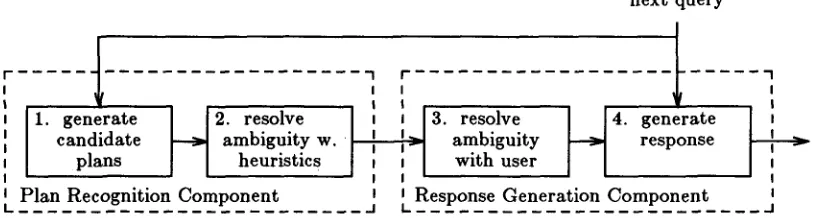
Fig. 1. Major modules o f our proposed query-answering system
E x a m p l e 2b (Revisited). In our story in the introduction about cooking for our allergic guest the expert has recognized the following three plans:
1. end ~ prepare meal ~ make meat dish ~ make chicken marinara ~ make marinara
2. end ~ prepare meal ~ make pasta dish ~ make fettucini marinara ~ make marinara
3. end ~ prepare meal ~ make pasta dish ~ make spaghetti marinara ~ make marinara
Using the algorithm of the previous section, the three plans are critiqued and it is found t h a t the ambiguity matters. T h e plan involving a meat dish is found to be faultless but the two plans involving a pasta dish are found to conflict with a n o t h e r goal of the cook: to entertain the guest. Using the algo- rithm of this section, the question asked to resolve the ambiguity would be "Are you making a pasta dish (perhaps with justification of why we are ask- ing)?" A f t e r either answer of yes or no we know enough t h a t the ambiguity no longer matters. Note t h a t if we just ask the more general " W h a t are you making?" this allows such uninformative responses as " d i n n e r " or just "you'll see".
When asking a question we propose to ask about as high a level of goal as possible t h a t still helps to resolve the ambiguity and to work top down. A top down approach is b e t t e r as it provides a useful con- text for any later queries and makes users give us an answer at a higher level than they may otherwise do. Moreover, the user may be mistaken a b o u t decompo- sitions or have some other wrong view of the domain and by stepping downward through the paths of pos- sible plans these misconceptions may be detected. Here is an example. Suppose the user asks "Can I take numerical analysis?". The system recognizes two plans.
end ~ get_degree ~ B.A. ~ electives ~ course end ~ get_degree ~ B.Sc. ~ required ~ course
a. System: Are you pursuing a B.Sc.?
b. System: Are you trying to fulfill y o u r elected or required courses?
Question (a) is what our algorithm would ask. Ques- tion (b) is what a procedure which uses a b o t t o m up
approach would ask. B u t (b) allows potential confu- sion to go undetected. The user could answer "required", believing t h a t the course is required for a B.A., for example. Thus, we advocate K a u t z style plan recognition [12], as o t h e r plan recognition methods [2, 15, 25] would stop after branch points points and thus could only propose electives and required as the two possible plans. Question (b) is the only question this previous work could ask the user.
Starting with the top most goals and working down may sometimes give as m a n y questions as bot- tom up approaches. However, others have noted t h a t b o t t o m up dialogues are difficult to assimilate without misinterpretation [2, p. 54]. Therefore, we maintain t h a t the top down approach is more desir- able. Moreover, some higher level questions, such as question (a), above, can be eliminated using goals known from the previous discourse or background knowledge a b o u t the user.
C u r r e n t extensions we are examining include allowing the user to have multiple goals so t h a t more than one p a t h from top level goals to action may be correct. This requires resolving ambiguity in multi- ple paths through the set of possible plans. This could be done in a depth-first manner, using clue or redirection words to guide the user when we r e t u r n to resolve the ambiguity in the o t h e r branches. We are also investigating selecting the minimal subset of the possible plans from those with faults and those without faults (at the m o m e n t the algorithm always takes the subset with faults).
D i s c u s s i o n a n d C o n c l u s i o n
In this section we summarize our proposals and defend our position t h a t this straightforward way of doing things is a good way. With reference to Fig. 1, we discuss the design of boxes 2, 3, and 4 and the tradeoffs involved between boxes 2 and 3.
[image:4.596.92.499.65.174.2]generation. F o r example, Allen's [1] preference heuristics are generally incompatible with recogniz- ing and responding to faulty plans (such as the response in Example 1). Because we are using plan recognition for response generation, this should affect the design of Box 2 and therefore what gets passed to Box 3.
B o x 3: R e s o l v e t h e a m b i g u i t y w i t h t h e u s e r .
Previous work in response generation makes the assumption t h a t w h a t gets passed to the R G com- p o n e n t is a single plan the P R 'component proposes the user is pursuing. We argue t h a t , unless we are willing to sometimes arbitrarily commit to one plan instead of another, there will be times when one plan cannot be chosen over a n o t h e r and therefore there will be ambiguity a b o u t which plan the user is pur- suing. Result: we need a method to resolve the ambiguity. In plan recognition in a discourse setting (as opposed to key-hole recognition), the goals and plan the user holds are knowable simply by asking the user. B u t we do not w a n t to always just ask if it is not necessary so we need to know when to s t a r t a clarification dialogue and w h a t to say. And when we do ask, we w a n t to ask the minimal n u m b e r of ques- tions necessary to resolve the ambiguity until it no longer matters. T o this end, box 3 contains a pro- cedure t h a t estimates by plan critiquing whether the ambiguity m a t t e r s to the task of formulating a response. If the ambiguity does not m a t t e r the result is passed to box 4. If the ambiguity does m a t t e r , a procedure is called t h a t starts a clarifica- tion dialogue, responding to the user's question with questions t h a t iteratively differentiate between the possibilities.
B o x 2 v s . B o x 3: T h e t r a d e o f f s . Much previ- ous work in plan recognition makes the assumption t h a t we w a n t the P R component to commit to and r e t u r n a single plan. C a r b e r r y and McKeown, for example, use a strong heuristic to commit to a single plan [2, 17]. However, this means the system will at times commit to the wrong plan. Doing it this way requires the ability to handle n a t u r a l language debugging dialogues. W h y we do not want to com- mit to a single plan and then, if we are wrong, repair using a debugging dialogue? C a r b e r r y [5, p.4] argues t h a t a system will appear "unintelligent, obtuse, and u n c o o p e r a t i v e " if it engages in lengthy clarification dialogues. However, a procedure to perform a debugging dialogue is not specified and is, we specu- late, a difficult problem. We argue for not commit- ting early. O u r hypothesis is t h a t a clarification dialogue is b e t t e r t h a n a debugging dialogue. The questions in the clarification dialogues are simple to answer, whereas determining t h a t the system has misunderstood y o u r goals and plan requires users to engage in plan recognition. T h a t is, users must recognize the plan the R G c o m p o n e n t is using from its responses and note t h a t it differs from their plans. Moreover, the user m a y not recognize we are wrong and be mislead. Finally, we argue t h a t , if the
questions are carefully chosen, the clarification dialo- gues need not be lengthy or too frequent. Note t h a t preference heuristics can still be used in our approach. These would best be applied when too many top level goals give an unwieldy clarification question.
B o x 4: G e n e r a t e t h e r e s p o n s e . Once Box 3 has estimated t h a t any remaining ambiguity does not m a t t e r to generating a cooperative response, the dis- junction of possible plans is passed to Box 4. T h e r e are two cases; both can now be handled as in previ- ous work except t h a t there is now the additional complication t h a t we allow one action to contribute to more t h a n one chain of goals. T h e response com- ponent must then generate a conjunctive response t h a t addresses each of the goals.
1 . E v e r y plan is faultless, so we just give a direct answer to the user's query b u t ignore the underly- ing goals and plan until f u r t h e r queries help clarify which plan the user is pursuing, and
2. E v e r y plan has the same fault, so we give a direct answer plus some additional information t h a t warns the user a b o u t the deficiency and perhaps suggests some alternatives (see [10], [26]).
S o a p B o x : This p a p e r offers an i m p o r t a n t con- tribution to n a t u r a l language generation. It discusses a clear criterion for when to initiate a cla- rification dialogue and proposes a specific solution to
what questions should be asked of the user to
achieve clarification. We believe t h a t natural language response generation systems should be designed to involve the user more directly and this is sometimes achieved quite successfully with our pro- posals.
T h e r e may be tradeoffs between overcommitting in the plan recognition process and engaging in lengthy clarification dialogue, particularly with a large set of complex candidate plans. This may sug- gest applying pruning heuristics more actively in the plan recognition process (Box 2) to reduce the n u m b e r of questions asked in the clarification dialo- gue (Box 3). F o r f u t u r e work, these tradeoffs will be examined more closely as we test the algorithms more extensively.
A c k n o w l e d g e m e n t s . We t h a n k Fei Song and Bruce Spencer for comments on an earlier version of this paper and for m a n y discussions a b o u t plan recognition. Financial assistance was received from the N a t u r a l Sciences and Engineering Research Council of C a n a d a (NSERC).
R e f e r e n c e s
[1] Allen, J . F . 1983. Recognizing Intentions from N a t u r a l Language Utterances. In Computa- tional Models of Discourse, M. B r a d y and R. C. Berwick (eds.). M I T Press.
Report 86-07, Newark, Del.
[3] Carberry, S. 1988. Modeling the User's Plans
and Goals. Computational Linguistics 14,
23-27.
[4] Carberry, S. 1989. A Pragmatics-Based
Approach to Ellipsis Resolution. Computational
Linguistics 15, 75-96.
[5] Carberry, S. 1989. A New Look at Plan
Recognition in Natural Language Dialogue. University of Delaware Technical Report 90-08, Newark, Del.
[6] Charniak, E., and D. V. McDermott. 1985.
Introduction to Artificial Intelligence. Addison
Wesley.
[71
Cohen, R., M. Jones, h. Sanmugasunderam, B.Spencer, and L. Dent. 1989. Providing
Responses Specific to a User's Goals and Back-
ground. International Journal of Expert Sys-
tems: Research and Applications 2, 135-162.
[8] Goldman, R., and E. Charniak. 1988. A Proba- bilistic Assumption-Based Truth Maintenance
System for Plan Recognition. Pros. of the
AAAI-88 Workshop on Plan Recognition, St.
Paul, Minn.
[9] Huff, K., and V. R. Lesser. 1982. Knowledge- Based Command Understanding: An Example for the Software Development Environment. Computer and Information Sciences Technical Report 82-6, University of Massachusetts at Amherst, Amherst, Mass. Cited in [13].
[10] Joshi, A., B. Webber, and R. Weischedel. 1984. Living up to Expectations: Computing Expert
Responses. Pros. of the Third National
Conference on Artificial Intelligence, Austin,
Tex., 169-175.
[11] Joshi, A., B. Webber, and R. Weischedel. 1984.
Preventing False Inferences. Proc. of lOth
International Conference on Computational
Linguistics (COLING), Stanford, Calif., 134-
138.
[12] Kantz, H. A. 1987. A Formal Theory of Plan Recognition. Ph.D. thesis available as Univer- sity of Rochester Technical Report 215, Roches- ter, N.Y.
[13] Kautz, H. A., and J. F. Allen. 1986. General-
ized Plan Recognition. Proc. of the Fifth
National Conference on Artificial Intelligence,
Phil., Penn., 32-37.
[14] Konolige, K., and M. E. Pollack. 1989. Ascrib-
ing Plans to Agents. Pros. of the Eleventh
International Joint Conference on Artificial Intelligence, Detroit, Mich., 924-930.
[15] Litman, D. J., and J. F. Allen. 1987. A Plan Recognition Model for Subdialogue in Conversa-
tions. Cognitive Science 11, 163-200.
[16] Luria, M. 1987. Expressing Concern. Proc. of
the 25th Conference of the Association for
Computational Linguistics, Stanford, Calif.,
221-227.
[17] McKeown, K. R., M. Wish, and K. Matthews. 1985. Tailoring Explanations for the User.
Pros. of the Ninth International Joint Confer-
ence on Artificial Intelligence, Los Angeles,
Calif., 794-798.
[18] Neufeld, E. 1989. Defaults and Probabilities;
Extensions and Coherence. Pros. of the First
International Conference on Principles of
Knowledge Representation and Reasoning,
Toronto, Ont., 312-323.
[19] Perrault, C. R., J. F. Allen, and P. R. Cohen. 1978. Speech Acts as a Basis for Understanding
Dialogue Coherence. Proc. of the Pad Confer-
ence on Theoretical lssues in Natural
Language Processing (TINLAP), Urbana-
Champaign, Ill., 125-132.
[20] Pollack, M. E. 1984. Good Answers to Bad Questions: Goal Inference in Expert Advice-
Giving. Proc. of the Fifth Canadian Confer-
ence on Artificial Intelligence
(CSCS//SCEIO}, London, Ont.
[21] Pollack, M. E. 1986. Inferring Domain Plans in
Question-Answering. Ph.D. thesis (Univ. of
Penn.) available as SRI International Technical Note 403, Menlo Park, Calif.
[22] Pollack, M. E. 1986. A Model of Plan Infer- ence that Distinguishes Between the Beliefs of
Actors and Observers. Pros. of the Pith
Conference of the Association for Computa- tional Linguistics, New York, N.Y., 207-214. [23] Pools, D. L. 1985. On the Comparison of
Theories: Preferring the Most Specific Explana-
tion. Proc. of the Ninth International Joint
Conference on Artificial Intelligence, Los
Angeles, Calif., 144-147.
[24] Poole, D. L. 1989. Explanation and Prediction: An Architecture for Default and Abductive Rea-
soning. Computational Intelligence 5, 97-110.
[25] Sidner, C. L. 1985. Plan Parsing for Intended
Response Recognition in Discourse. Computa-
tional Intelligence 1, 1-10.
[26] van Beek, P. 1987. A Model For Generating
Better Explanations. Proc. of the P5th Confer-
ence of the Association for Computational Linguistics, Stanford, Calif., 215-220.
[27] van Beck, P., and R. Cohen. 1986. Towards User-Specific Explanations from Expert Sys-
tems. Pros. of the Sixth Canadian Conference
on Artificial Intelligence (CSCSI/SCEIO),