Series/l
System
Selection
Guide
Series/1
System
Selection
Guide
Eighth Edition (June 1986)
This is a major revision of, and obsoletes, GA34-0143-6.
Changes are periodically made to the information herein; any such changes will be reported in subsequent revisions or Technical Newsletters.
Configuring Your Series/l
The Series/l is a modular system; you choose only the equipment required to support your computing needs. With the modular approach, you have the ability to configure or add to your Series/l from an extensive product catalog of unit, feature, and software options. These options include a choice of:
Processors and storage sizes • Matrix and line printers
Disk and diskette units • Magnetic tape units
Standard and custom display stations • System/370 channel attachment device
Series/l to Series/l local connection via a data loop (up to 16 processors)
Series/l to Series/l communications
• Two-channel switch for switching I/O devices between processors
• General purpose interface bus (GPm) and teletypewriter adapter for OEM devices • Communications features-SDLC,
asynchronous, binary synchronous, synchronous communications single-line control, and the programmable communications subsystem for mixed line discipline
• Sensor I/O-covering analog and digital interfaces
• Separately licensed programs for software support
• Series/l to Personal Computer.
IBM Series/l System Units
The mM Series/l System Units and their features do not have selection cards nor do they appear on the selection cards as an mM Series/l System Unit selection. When you choose the 5170, you are selecting a self-contained unit.
Related Publications
To complete the set of Series/l reference information, refer to:
• IBM Series/l Digest, G360-0061
• IBM Series/l Pocket Digest, GX34-0104 • IBM Series/l Customer Site Preparation
Manual, GA34-0050
• IBM Series/l Realtime Programming System Version 7: Concepts and Facilities, GC34-0614 • IBM Series/l Event Driven Executive Library
Guide and Common Index, SC34-0645.
Configuring a System-Software
This publication includes a brief comparison of two operating systems for the Series/1 and examples of some Series/1 configurations.
When selecting the operating system to use with your Series/I, consider the following factors concerning your application and the environment of the system:
• Processing mode Batch - Realtime - Interactive
• Number and type of users • Remote locations
- Transmission time - Ease of use factors • Compatibility
- Existing equipment • Programming resource • Dedicated systems
Development Production Combined.
Configuring a System-Hardware
This publication contains a list of Series/1 hardware products and their associated features. To aid you in configuring your Series/1 system, the features are listed in two categories:
• lJnitfeatures
These features enhance the unit's capabilities and do not occupy a data channel socket.
• Channel features
These features are unit attachment feature cards that connect to a data channel socket in a processor or I/O expansion unit.
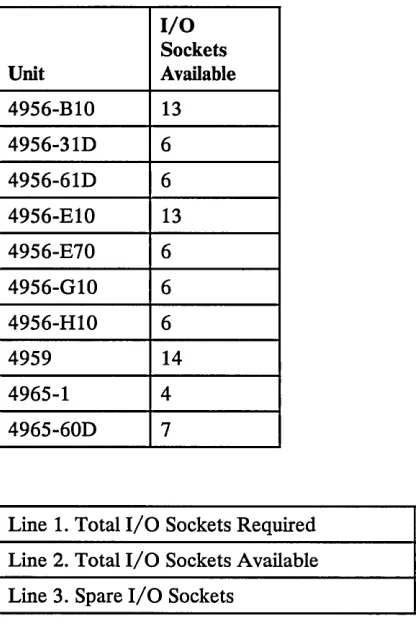
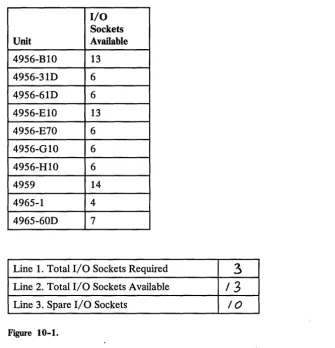
You must total the number of data channel features selected, and subtract the number of data channel sockets available on your processor to determine if you need an I/O expansion unit.
To configure your Series/1 system, read Chapters 1 through 9 and select the appropriate combinations of units, unit features, and data channel features.
How to Use Hardware Selection
Cards
Photocopy all the selection card pages and write on the copy to mark up your order.
Selection cards are at the end of each chapter in this publication. You and your mM marketing
representative can use these cards to develop your Series/1 configuration.
The white areas on the matrix, on the left side of the hardware cards, show unit and feature compatibility.
Use the right side of the card to mark up your configuration. Mark the unit and unit features you selected in the white boxes. Select your data channel features and mark them in the shaded boxes. Add the data channel features (marked in shaded boxes) and write the total in the larger box at the bottom of the card.
It is important to keep an accurate total of (data) channel features because they occupy one or more sockets in a processor or I/O expansion unit. Ultimately, the size of processor and number of expansion units you select depend upon how many channel sockets your system requires. Refer to Chapter 10, "System Assembly," for more information.
The terms "channel" and "data channel" are synonymous with the term "I/O feature location" used in the IBM Series/l Digest, G360-0061.
How to Use Software Selection
Cards
Photocopy all the selection card pages and write on the copy to mark up your order.
The software selection cards contain a list of programs available. Mark your selections in the blank box next to the program number.
Contents
Chapter 1. Series/1 Software ..••.••.••.•••••.••.•.•..•••••••.•••• 1-1 Series/l operating systems ... 1-3 Event Driven Executive ... 1-3 Realtime Programming System ... 1-4 Programming Capabilities ... 1-4 Event Driven Executive Software Selection Card (1) ... 1-9 Event Driven Executive Software Selection Card (2) ... 1-10 Event Driven Executive Software Selection Card (3) ... 1-11 Realtime Programming System Software Selection Card (1) ... 1-12 Realtime Programming System Software Selection Card (2) ... 1-13 Energy Management Software Selection Card ... 1-14
Chapter 2. Processors and I/O Expansion Units •••.••••••••••••••••••• 2-1 4956 Processor Model BI0 ... 2-3 4956 Processor Model 31D ... 2-4 4956 Processor Model61D ... 2-5 4956 Processor Model EI0 ... 2-6 4956 Processor Model E70 ... 2-7 4956 Processor Model GI0 ... 2-8 4956 Processor Model HI0 ... 2-9 4959 I/O Expansion Unit ... 2-10 System Unit 5170, Model 495 ... 2-11 System Unit 5170, Model 496 ... 2-12 Processor and I/O Expansion Selection Card ... 2-13
Chapter 3. Data Storage .••..•.•...•....•••.•.•.••••..•••••••• 3-1 4963 Disk Subsystem ... 3-3 4964-1 Diskette Unit ... 3-4 4965 Storage and I/O Expansion Unit Modell ... 3-5 4965 Storage and I/O Expansion Unit Model60D ... 3-6 4967 High-Performance Disk Subsystem Model 2CA and 2CB ... 3-7 4967 High-Performance Disk Subsystem Model 3CA and 3CB ... 3-8 4968 Autoload Streaming Magnetic Tape Unit Model lAS ... 3-9 Data Storage Selection Card ... 3-10
3161, 3163, and 3164 ASCII Display Stations ... 5-5 Display Station Selection Card . . . 5-6
Chapter 6. Communications •...•..•...•.•..••.•..•..•... 6-1 Integrated Communications Features ... 6-3 4987 Programmable Communications Subsystem ... 6-7 Integrated Communications Selection Card ... 6-9 Programmable Communications Subsystem Selection Card ... 6-10
Chapter 7. Series/l Attachment Features ....•.•.•...••..•..••..•. 7-1 Multifunction Attachment Feature ... 7-3 Multidrop Work Station Attachment Feature ... 7-4 Printer Attachment Feature - 5200 Series ... 7-5 Series/l Local Communications Controller ... 7-6 Telephone Communications Attachment Features ... 7-6 Series/l-to-Personal Computer Channel Attachment ... 7-7 Series/l Attachment Features Selection Card ... 7-8
Chapter 8. User Attachment Features ...•...•...••...•... 8-1 Integrated Digital Input/Output (non-isolated) ... 8-3 Customer Direct Program Control Adapter ... 8-4 Timers. . . .. 8-5 GPIB Adapter. . . .. 8-5 5230 Data Collection . . . 8-5 Teletypewriter Adapter . . . 8-6 User Attachment Features Selection Card ... 8-7
Chapter 9. System Support Units ....•...•....•••..••••.•..•.•.. 9-1 IBM 4982 Sensor Input/Output Unit ... 9-3 ffiM 4993-1 Series/l-ffiM System/370 Termination Enclosure ... 9-4 System Support Selection Card ... 9-5
Chapter 10. System Assembly ...•...•.•....•..•..•...•• 10-1 Data Channel Feature Summary . . . 10-2 System Selection Guide Worksheet ... :... 10-3
Chapter 11. Rack Enclosures .•...•...•...•. 11-1 Introduction . . . 11-1 Series/l Rack Enclosure Selection ... 11-1 Rack Enclosures . . . 11-2 4997-1A and IB Rack Enclosure Unit ... 11-2 4997-2A and 2B Rack Enclosure Unit ... 11-2 Rack Mounting Fixture #4540 . . . 11-2 Rack Enclosure Selection Card . . . 11-3
Chapter 1. Series/1 Software
Series/1 operating systems
The mM Series/lis a general purpose system. Its broad range of hardware is complemented by a comprehensive set of resource management programs, programming languages, and packages that can meet both simple and complex
requirements.
The operating systems available for Series/l are:
•
Event Driven Executive• Realtime Programming System.
Event Driven Executive
Event Driven Executive is an easy to use operating system, allowing multi-user interface program development (customized system generation) to run concurrently with the execution of application programs. The system works efficiently on a small Series/l dedicated to a single application, or on multiple large Series/Is, each serving several realtime applications.
System generation and operation do not require extensive programming background. Event Driven Executive allows you to write application programs with limited concern for, or knowledge of, either the supervisor program or other application programs sharing the system. It also lets you start quickly on application development because it can later be modified with little impact to existing programs.
Good terminal response time, a high level of system availability, and a simple remote user interface make this system appropriate in applications that require a central development site with less skilled operators at remote locations.
The system can be disk, diskette, or storage resident. A diskette-based system provides a small,
Realtime Programming System
Realtime Programming System is a full-function, general purpose operating system, designed for full device support and functional breadth. Realtime Programming System provides an environment to do program development and execute programs online while executing other realtime programs. It can be used to implement realtime, batch, distributed, interactive, and transaction processing applications.
Program Preparation Subsystem is used for generating customized systems and to perform program preparation functions for application programs, such as compile or assemble, and build.
A standard pre-built operating system allows for application development and testing while supporting a broad range of processing functions and device support. If the standard system does not satisfy your requirements, an experienced system programmer can tailor Realtime Programming System to your needs while maintaining room for growth. Realtime Programming System can be applied to multiple large Series/Is, each serving many terminals and several applications.
The system can be disk or diskette based. COBOL, PL/I, FORTRAN, Pascal, and Assembler provide a wide range of language capabilities.
Programming Capabilities
The following figures refer to the capabilities of the operating systems and their associated programs. Contact your marketing representative for latest versions of information for Series/ I software. The operating systems offer similar capabilities although they differ in the packaging of program products. Some of the features that are built into one
operating system require separate program products for the other operating system. The tables on the following pages summarize the capabilities of the operating system, and indicate whether or not a separate program is required. (The program number is given when a separate program product is
Local attachment support EDX RPS
3161 ASCII Display Tenninal YES YES 3163 ASCII Display Tenninal YES YES 3164 ASCII Display Tenninal YES YES
4201 Proprinter YES YESl
4224 Printer YES YES
4962 Disk Storage Unit YES YES
4963 Disk Subsystem YES YES
4964 Diskette Unit YES YES
4965 Storage and I/O Expansion Unit YES YES 4966 Diskette Magazine Unit YES YES 4967 High Performance Disk Subsystem YES YES 4968 Autoload Streaming Magnetic Tape Unit YES YES 4969 Magnetic Tape Unit YES YES
4973 Line Printer YES YES
4974 Printer YES YES
4975 Printer YES YES
4978 Display Station YES YES 4980 Display Station YES YES
5219 Printer YES YES
5224 Line Printer YES YES
5225 Line Printer YES YES
5230 Data Collection 5799-TDE YES
5262 Line Printer YES YES
Local Communications Controller YES YES
Graphics Tenninal YES YES
(Tektronix 4013 or equivalent)
System/370 Channel Attachment 5719-CXl 5719-CAI
Timer YES YES
Series I/Series 1 (RPQ D02241 and D02242) YES NO Series/Ito PC Channel Attachment YES YES
Communication attachment support EDX RPS
Asynchronous YES YES
Bisynchronous YES YES
SDLC (SNA data flow control interface) NO YES SDLC (SNA application program interface) 5719-SXl YES
5719-XX9 5719-XT4
Programmable Communication Subsystem NO 5719-CS2 Remote Job Entry 5719-XS5 5719-RJ6
5719-RJl
Remote Job Entry 5719-SX2 5719-RJ6 Remote Management Utility (BSC) YES YES Remote Management Utility (SNA) 5719-RMI 5799-TEF X25 Network Interface Support 5719-HD2 5719-HDI Interactive Message Processing 5719-CF2 YES 3270 Emulation (BSC) 5719-CF2 YES 3270 Emulation (SNA) 5719-CF2 5799-TEF
5719-SXl
3270 Emulation (channel attach) 5719-CF2 5719-RJ6 5719-CXl
3270 Emulation (Series/l to YES YES Series/l bisynchronous) 5719-CAI Line Concentration 5719-CF2 YES Network Definition Utility 5719-XT5 NO Manufacturing Automation Protocol (MAP) 5719-XTl 5719-XT2
Remote device attachment support EDX RPS
2741 Communications Terminal YES YES 3161 ASCII Display Terminal YES YES 3163 ASCII Display Terminal YES YES 3164 ASCII Display Terminal YES YES
4975 Printer YES YES
Graphics Terminal YES NO
(TEKTRONIX 4013 or equivalent)
Data management support EDX RPS
Spooling YES YES
Sort/Merge 5719-SM2 YES
Sequential access YES YES
Direct access YES YES
Indexed access method 5719-AM4 YES
Keyed direct access 5719-AM4 YES
Fixed records YES YES
Variable records NO YES
Blocked records NO YES
Spanned records NO YES
Sensor I/O YES YES
Application development and
execution support EDX RPS
Transaction Driven Application 5719-MS2 5719-MT1
(Development/Execution) 5719-TR1 5719-TR6
Screen Formatting 5719-XX6 5719-MT1
(Development/Execution) 5719-TR1 5719-TR6
General Program Development Support 5719-XX6 5719-AS7
Job Stream Processor 5719-XS5 5799-TEC
Series/1 Event Driven Language Assembler 5719-XX6 NO
Series/1 Event Driven Language Macro Library 5719-LM9 NO
Series/1 Assembler (Series/1 Assemble) 5719-ASA and 5719-AS7
5719-LM9
Series/1 Assembler (System/370 Assemble) 5799-BNA and 5799-BNA
5740-LM6
Series/1 to Systems/370 Program Transfer 5719-XS5 5798-RBR
Series/1 Event Driven Language 5799-BNA and 5719-XR1
(System/370 Assemble) 5740-LM6
High level languages support
EDX
RPSCOBOL (Series/1 Compile) 5719-CB5 5719-CB7 COBOL (System/370 Compile) 5799-TEL 5799-TEP COBOL (Series/1 Execute) 5719-CB6 5719-CB8 PL/1 (Series/1 Execute) 5719-PL5 5719-PL2 PL/1 (System/370 Compile) 5798-NZK 5798-NZJ PL/1 (Series/1 Execute) 5719-PL6 5719-PL4 FORTRAN N (Series/1 Compile) 5719-F02 5719-F02 FORTRAN Mathematical and Functional 5719-LM3 5719-LM2 Subroutines
Event Driven Executive Software Selection Card (1)
Program·
Program number
Basic Supervisor and Emulator Version 4 5719-XS4 Basic Supervisor and Emulator Version 5 5719-XS5 EDX for the Series/l System Unit 5719-XJ5
Program development
Program
Program number
Program Preparation Facility Version 4 5719-XX5 Program Preparation Facility Version 5 5719-XX6
~acro ~ssembler 5719-~S~
~acro Library Version 4 5719-L~8 ~acro Library Version 5 5719-L~9
Host Preparation Facility for the Series/II 5799-BN~ ~acro Library/Host Version 41 5740-L~5
~acro Library/Host Version 51 5740-L~6
Transaction Processing System for EDX 5719-TRI
ISystem 370 program.
Conunmrlcationssupport
Program
Program number
Communications Facility Version 1 5719-CFl Communications Facility Version 2 5719-CF2 Systems Network Mchitecture Version 1 5719-SXl Systems Network Mchitecture Version 2 5719-XX9 Primary System Network Mchitecture 5719-XT4 Systems Network Mchitecture RJE 5719-SX2
~dvanced Remote Job Entry 5719-RJl
Remote ~anager 5719-~1
Network Definition Utility 5719-XT5
Event Driven Executive Software Selection Card (2)
Device support
Program
Program number
System/370 Channel Attach Program 5719-CXl Series/l Data Collection Interactive 5799-TDE
Commercial support
Program
Program number
Transaction Processing System 5719-TRl Multiple Terminal Manager Version 2 5719-MS2 Indexed Access Method Version 2 5719-AM4
Sort/Merge 5719-SM2
Additional support
Program
Program number
Series/1 Intelligent Work Station Support 5799-TGC
High-level language support
Program
Program number
COBOL Transient Library Version 1 5719-CB4 COBOL Transient Library Version 2 5719-CB6 PL/l Compiler and Resident Library 5719-PL5 PL/l Transient Library 5719-PL6 Host PL/l for Event Driven Executivel 5798-NZK FORTRAN IV Compiler and Object Support Library 5719-F02 Mathematical and Functional Subroutine Library 5719-LM3
Pascal Compiler 5799-TER
Event Driven Executive Software Selection Card (3)
Application programming
Note: The following programs are supported by EDX Version 3.
Program
Program number
General Purpose Automation Executive 5798-RCZ Text Entry and Edit Facility 5798-RAR Chain Pharmacy System 5798-RGD Telephone Listing Management System 5798-NZZ X-Ray Analysis Automation Automated Instrument Control 5798-NYI X-Ray Analysis Automation Fluorescence Analysis 5798-NYK X-Ray Analysis Automation Polycrystalline Diffraction 5798-NYL X-Ray Analysis Automation Search/Match 5798-RCG Air Quality Monitoring System 5798-RDQ Audio Support for Touch-Tonel Telephone 5798-NXX
Point-of -Sale Data Collection and Distribution System 5798-NYA Data Collection Interactive Edit and Transmit 5798-RCX Program Executive System Preparation Support 5796-REE Program Executive System Operation Application Support 5796-REF File Creation and Maintenance Utilities 5798-RBL Yale ASCn Terminal Communications System 5796-RBT
Videotex 5799-TFN
Realtime Programming System Software
Selectio~
Card (1)
Program
Program number
Realtime Programming System Version 7 5719-PC7
Realtime Programming System Version 7 for Series/l System Unit 5719-PJ7
Program development
Program
Program number
Program Preparation Subsystem Version 7 5719-AS7
Job Stream Processor 5799-TEC
Host Preparation Facility for the Series/l 1 5799-BNA
Native Application Load Facility Version 2 5798-RBR
Transaction Processing System 5719-TR6
1System 370 program.
Communications support
Program
Program number
X.25/HDLC Communications Support 5719-HDI
Advanced Remote Job Entry 5719-RJ6
SNA Remote Management Utility 5799-TEF
Programmable Communications Subsystem Preparation Facility 5719-CSO
Programmable Communications Subsystem Extended Execution 5719-CS2
Support
MAP Communications Server 5719-XT2
Series/l Office Connect 5719-XT3
Device support
Program
Program number
System/370 Channel Attach Support 5719-CAI
Realtime Programming System Software Selection Card (2)
Commercial support
Program
Program number
Multiple Terminal Manager Version 3 5719-MT1
Transaction Processing System 5719-TR6
Local Area Network support
Program
Program number
Series/1-to-PC Connect 5719-CN1
IDgh-LevelLanguagesupport
Program
Program number
COBOL Compiler and Resident Library Version 2 5719-CB7
COBOL Transient Library Version 2 5719-CB8
Host COBOL for Realtime Programming System 5799-TEP
PL/1 Compiler and Resident Library Version 2 5719-PL2
PL/1 Transient Library Version 2 5719-PL4
Host PL/1 for Realtime Programming Systeml 5798-NZJ
FORTRAN IV Compiler and Object Support Library Version 2 5719-F02
Mathematical and Functional Subroutine Library Version 2 5719-LM2
Realtime Subroutine Library Version 2 5719-F04
Pascal Compiler and Object Library Programming RPQ P82659 5799-TEQ
lSystem 370 program.
Application programming
Program
Program number
Energy Management Software Selection Card
Program
Program number
Chapter 2. Processors and I/O Expansion Units
4956 Processor Model BIO
The 4956-BI0 has 1024KB of basic storage with error checking and correcting. 512KB are directly addressable. It is a full-width unit with up to 13 card sockets available for data channel feature1?, depending on storage size. The storage address translator, communications power, and a clock/ comparator are standard features.
Unit Features
#2000 Communications Indicator Panel-provides visual display for communication line status information and modem control line settings.
#3925 Floating-Point-provides floating-point instruction set.
#5655 Programmer Console-provides data entry / data display console.
Channel Features
#1565 Channel Repower-required when connecting to a 4959 or 4965.
Processor Requirements
A maximum of five channel repower features can be driven by each processor in a single or mUltiple processor system. (The limit is three for any processor that has the Two-Channel Switch feature included on its data channel.)
Model Upgrade Information
A field-installed upgrade is available to convert a Model BI0 to a Model EI0. See your IBM representative for details.
Card socket assignment
ABCDEFGHJKLMNPO
Processor
Basic storage
'--_ _ _ Any data channel feature or
repower card. *
* If a repower card is used, it must be to the
4956 Processor Model31D
The 4956-31D has 1024KB of basic storage with error checking and correcting. 512KB are directly addressable. A 30MB disk is provided. A 1.2MB diskette drive and 64 KB cache are optional. It is a full-width unit with up to six card sockets available for data channel features. The storage address translator, communications power, and a clock/ comparator are standard features.
Unit Features
#2000 Communications Indicator Panel-provides visual display for communication line status information and modem control line settings.
#3925 Floating-Point-provides floating-point instruction set.
#4100 Diskette Drive-provides a single 1.2MB diskette drive.
#4520 Stand-Alone Enclosure-provides an alternative enclosure that allows the processor to be installed without a rack enclosure. It can be field installed. Due to internal cable limitations, not all features are supported in the stand-alone enclosure (#4520). Refer to the selection card at the end of this chapter.
#5655 Programmer Console-provides data entry / data display console.
#6400 Cache-provides a 64K.B cache where most-used data sectors are pre-fetched and stored. Test cases have shown
improvements in disk throughput ranging from 50% to above 200%. Results are, however, application-dependent. Cache does not require a feature location and is not field-installable.
Channel Features
#1565 Channel Repower-required when connecting to a 4959 or 4965.
Card socket assignment
Any
OPtional diskette drive
Processor Basic storage data channel feature,
disk and diskette attachment card*, or repower card**
*The disk and diskette attachment card should be the rightmost I/O card installed.
* * I f a repower card is used, it must be to the left of and adjacent to the leftmost I/O card.
Processor Requirements
A maximum of five channel repower features can be driven by each processor in a single or multiple processor system. (The limit is three for any processor that has the Two-Channel Switch feature included on its data channel.)
Model Upgrade Information
4956 Processor Model 61D
The 4956-61D has 1024KB of basic storage with error checking and correcting. 512KB are directly addressable. A 60MB disk is provided. A 1.2MB diskette drive and 64 KB cache are optional. It is a full-width unit with up to six card sockets available for data channel features. The storage address translator, communications power, and a clock/ comparator are standard features.
Unit Features
#2000 Communications Indicator Panel-provides visual display for communication line status information and modem control line settings.
#3925 Floating-Point-provides floating-point instruction set.
#4100 Diskette Drive-provides a single 1.2MB diskette drive.
#4520 Stand-Alone Enclosure-provides an alternative enclosure that allows the processor to be installed without a rack enclosure. It can be field installed. Due to internal cable limitations, not all features are supported in the stand-alone enclosure (#4520). Refer tp the selection card at the end of this chapter.
#5655 Programmer Console-provides data entry / data display console.
#6400 Cache-provides a 64KB cache where most-used data sectors are pre-fetched and stored. Test cases have shown
improvements in disk throughput ranging from 50°A> to above 200°A>. Results are,
however, application-dependent. Cache does not require a feature location and is not field-installable.
Channel Features
#1565 Channel Repower-required when connecting to a 4959 or 4965.
Card socket assignment
ABCDE FGHJ
60M-byte disk Optional diskette drive
Processor ' - - - - Basic storage
I0000---
Anydata channel feature,
disk and diskette attachment card* or repower card**
*The disk and diskette attachment card should be the rightmost I/O card installed.
**If a repower card is used, it must be to the left of and adjacent to the leftmost I/O card.
Processor Requirements
A maximum of five channel rep ower features can be driven by each processor in a single or multiple processor system. (The limit is three for any processor that has the Two-Channel Switch feature included on its data channel.)
Model Upgrade Information
4956 Processor Model EIO
The 4956-EI0 has 1024KB of basic storage with error checking and correcting, expandable to 2048KB in 256KB, 512KB, or 1024KB increments. 1024KB are directly mappable. It is a full-width unit with up to 13 card sockets available for data channel features, depending on storage size. The storage address translator, communications power, and a clock/comparator are standard features.
Unit Features
#2000 Communications Indicator Panel-provides visual display for communication line status information and modem control line settings.
#3926 Floating-Point-provides floating-point instruction set.
#5655 Programmer Console-provides data entry / data display console.
Channel Features
#1565 Channel Repower-required when connecting to a 4959 or 4965.
#6330 Storage Addition-provides additional processor storage in 256KB increments (maximum of three).
#6331 Storage Addition-provides an additional 512KB of processor storage (maximum of two).
#6334 Storage Addition-provides an additional 1024KB of processor storage (maximum of one).
Processor Requirements
A maximum of five channel repower features can be driven by each processor in a single or multiple processor system. (The limit is three for any processor that has the Two-Channel Switch feature included on its data channel.)
Card socket assignment
ABCDEFGHJ KLMNPQ
' - - - - Any data channel feature or
repower card. *
4956 Processor Model E70
The 4956-E70 has 1024KB of basic storage with error checking and correcting, expandable to 2048KB in 256KB, 512KB, or 1024KB increments. 1024KB are directly mappable. A 60MB disk is provided. A 1.2MB diskette drive and 64KB cache
are optional. It is a full-width unit with up to six
card sockets available for data channel features, depending on storage size. The storage address translator, communications power, and a clock/ comparator are standard features.
Unit Features
#2000 Communications Indicator Panel-provides visual display for communication line status information and modem control line settings.
#3926 Floating-Point-provides floating-point instruction set.
#4100 Diskette Drive-provides a single 1.2MB diskette drive.
#4520 Stand-Alone Enclosure-provides a field-installed table-top enclosure for nonrack installations. Due to internal cable limitations, not all features are supported in the stand-alone enclosure (#4520). Refer to the selection card at the end of this chapter.
#5655 Programmer Console-provides data entry / data display console.
#6400 Cache-provides a 64KB cache where most-used data sectors are pre-fetched and stored. Test cases have shown
improvements in disk throughput ranging from 50% to above 2009·b. Results are, however, application-dependent. Cache does not require a feature location and is not field-installable.
Channel Features
#1565 Channel Repower-required when
connecting to a 4959 or 4965.
#6330 Storage Addition-provides additional processor storage in 256KB increments (maximum of three).
#6331 Storage Addition-provides additional
processor storage in 512KB increments (maximum of two).
#6334 Storage Addition-provides an additional 1024KB of processor storage (maximum of one).
Card socket assignment
Optional diskette drive
Processor
&....-_-
Basic storageAdditional storage, any data channel feature, disk and diskette attachment card*, or repower card**
*The disk and diskette attachment card should be the rightmost I/O card installed.
**If a repower card is used, it must be to the left of and adjacent to the leftmost I/O card.
Processor Requirements
4956
Processor
Model GIO
The 4956-G10 has 1024KB of basic storage with error checking and correcting. 512KB are directly mappable. A 40MB disk, 1.2MB diskette drive, and 400KB cache are provided. It is a full-width unit with up to six card sockets available for data channel features. The storage address translator,
communications power, and a clock/comparator are standard features.
Unit Features
#2000 Communications Indicator Panel-provides visual display for communication line status information and modem control line settings.
#3925 Floating-Point-provides floating-point instruction set.
#4110 Second Diskette Drive-provides a single 1.2MB diskette drive.
#4115 Second Disk Drive-provides a single 40MB disk drive.
#4116 Third Disk Drive-provides a single 40MB disk drive.
#4521 Stand-Alone Enclosure-provides a field-installed table-top enclosure for nonrack installations. Due to internal cable limitations, not all features are supported in the stand-alone enclosure (#4521). Refer to the selection card at the end of this chapter.
#5655 Programmer Console-provides data entry/data display console.
Channel Features
#1565 Channel Repower-required when connecting to a 4959 or 4965.
Processor Requirements
A maximum of five channel repower features can be driven by each processor in a single or multiple processor system. (The limit is three for any processor that has the Two-Channel Switch feature included on its data channel.)
Model Upgrade Information
A field-installed model upgrade is available to convert a G10 to a H10. See your mM representative for details.
Card socket assignment
ABCDEFGHJ
f
Multicontroller attachment card, any data channel feature, or repower card. *
, 11-
ProcessorStorage card *If a repower card is used, it must be to the
4956 Processor Model HIO
The 4956-HI0 has 1024KB of basic storage with error checking and correcting, expandable to 2048KB in 1024KB increments. 1024KB are directly mappable. A 40MB disk, 1.2MB diskette drive, and 400KB cache are provided. It is a full-width unit with up to six card sockets available for data channel features, depending on storage size. The storage address translator, communications power, and a clock/comparator are standard features.
Unit Features
#2000 Communications Indicator Panel-provides visual display for communication line status information and modem control line settings.
#3925 Floating-Point-provides floating-point instruction set.
#4110 Second Diskette Drive-provides a single 1.2MB diskette drive.
#4115 Second Disk Drive-provides a single 40MB disk drive.
#4116 Third Disk Drive-provides a single 40MB disk drive.
#4521 Stand-Alone Enclosure-provides a field-installed table-top enclosure for nonrack installations. Due to internal cable limitations, not all features are supported in the stand-alone enclosure (#4521). Refer to the selection card at the end of this chapter.
#5655 Programmer Console-provides data entry / data display console.
Channel Features
#1565 Channel Repower-required when connecting to a 4959 or 4965.
#6334 Storage Addition-provides an additional 1024KB of processor storage (maximum of one).
Processor Requirements
A maximum of five channel rep ower features can be driven by each processor in a single or multiple processor system. (The limit is three for any processor that has the Two-Channel Switch feature included on its data channel.)
Card socket assignment
ABCDEFGHJ
Multicontroller attachment card, any data channel feature, or repower card. *
"
t
*If a repower card is used, it must be to the left of and adjacent to the leftmost I/O card.
I
~t
L
Processorl..=
Basic storageAdd itiona I stora~
4959 I/O Expansion Unit
The 4959 provides space for up to 14 channel feature attachment cards. The optional
Two-Channel Switch feature enables I/O devices to be switched between a primary and a secondary processor to provide backup.
Unit Features
#7777 Programmable Two-Channel Switch-provides capability to automatically switch data channel features between two
processors.
#7900 Two-Channel Switch-provides capability to manually switch data channel features between two processors.
Channel Features
#1565 Channel Repower-required when connecting another 4959 or a 4965.
Expansion Unit Requirements
4959 card socket A is reserved for the data channel input cables, the Two-Channel Switch (#7900), or the Programmable Two-Channel Switch (#7777).
t;===::;) To the last position in the primary
processor data channel
To the last position in the secondary processor data channel
ABCDEFGHJKLMNPO
input cables,
PTCS, or Repower card or any data channel feature
System Unit 5170,
Model 495
Features#0205 20MB Fixed-Disk Drive-provides a The System Unit 5170, Model 495, is a desk-top, second fixed-disk drive.
entry-level Series/1 computer. It has 256KB of
storage that is expandable to 512KB. Features #0206 High-capacity Diskette Drive-provides a
include: second diskette drive
• mM Personal Computer AT microprocessor (6 #0207 Dual-sided Diskette Drive-permits the megahertz) that controls I/O devices exchange of 320/360KB diskette media between the mM PC, mM Portable PC,
• 20MB fixed-disk drive mM Personal Computer AT, and mM Personal Computer XT.
• One high-capacity diskette drive
#0215 Serial/Parallel Adapter
• mM Personal Computer keyboard
#1204 Binary Synchronous Communications
• Six-port Terminal/Host Attachment card: Adapter - mutually exclusive with SDLC
Four RS-422 (local) ports #1205 SDLC Communications Adapter
Two RS-232-C asynchronous ports (one #3629 Second 6-port Terminal Host Attachment port may be used for bisynchronous). Card
• Three I/O feature slots available for additional #4900 Monochrome Display and Printer Adapter functions
#4910 Color/graphics monitor adapter.
• Performs Series/1 floating-point instructions
• Serial/Parallel adapter
System Unit 5170,
Model 496
Features#0210 30MB Fixed-Disk Drive-provides a The System Unit 5170, Model 496, is a desk-top, second fixed-disk drive.
entry-level Series/l computer. It has 1024KB of
storage standard. Features include: #0206 High-capacity Diskette Drive-provides a second diskette drive
• mM Personal Computer AT microprocessor (8
megahertz) that controls I/O devices #0207 Dual-sided Diskette Drive-permits the exchange of 320/360KB diskette media
• 30MB fixed-disk drive between the IBM PC, IBM Portable PC, mM Personal Computer AT, and mM
• One high-capacity diskette drive Personal Computer XT.
• mM Personal Computer Enhanced keyboard #0215 Serial/Parallel Adapter
• Six-port Terminal/Host Attachment card: #1204 Binary Synchronous Communications
Four RS-422 (local) ports Adapter - mutually exclusive with SDLC
Two RS-232-C asynchronous ports (one #1205 SDLC Communications Adapter
port may be used for bisynchronous). #3629 Second 6-port Terminal Host Attachment Card
• Three I/O feature slots available for additional
functions #4900 Monochrome Display and Printer Adapter
• Performs Series/l floating-point instructions #4910 Color/graphics monitor adapter.
• Serial/Parallel adapter
Processor and
110
Expansion Selection Card
---
---
-
-
-
- -
----
---
-
----
---
---_.-
Series/1o
Processor and
1/0
Eltpansiorn
Selection Card
4956
en
LO
en
or;:t Feature
~~~~~~)I/
1565 2000 3925 3926 4100
.
4110 4115 4521 5655 6330 I 6331 6334 6400 7777 7900Customer:
Processor Units
4956
Model810 0
E10 0
3 1 0 0
H10 0
E700
4959
ModelD
Unit Features
2009 Communications indicator panel 3925 Floating-point
3926 Floating-point 4100 Diskette drive
4110 Second 5%" diskette drive 4115 Second 40M disk drive 4116 Third 40M disk drive 4520 Stand-alone enclosure 4521 Stand-alone enclosure 5655 Programmer console 6400 Cache (64K)
7777 Programmable two-channel switch 7900 Two-channel switch
Data Channel Features
1565 Channel repower 6330 Storage addition (256K) 6331 Storag'e addition (512K) 6334 Storage add iti on (1024 K) Total data channel features selected
Chapter 3. Data Storage
4963 Disk Subsystem
The 4963 Disk Subsystem features multiple microprocessors to both off-load the Series/1 processor and optimize disk performance. Each subsystem has one primary drive and may have up to three expansion drives-models may be intermixed. Multiple subsystems may be attached--one
attachment feature (#3590) is required for each. This unit provides automatic retries on soft error, automatic seek to alternate sector, automatic seek overlap with read or write, and automatic error handling under subsystem microprocessor control.
4963-58A Primary Disk Storage Unit: 58MB plus
131 KB under fixed heads.
4963-64A Primary Disk Storage Unit: 64MB 4963-64B Expansion Disk Storage Unit: 64MB
Channel Features
#3590 4963 Disk Subsystem Attachment
Note: Each 4963 Disk Subsystem has one primary
disk storage unit and up to three expansion storage units per #3590.
Processor Data Channel
o
\8
lilllhqllllllllllllllllllllllllllllllllllil "
1 st Disk Unit Primary (Model A) I
units only
2nd Disk Unit Expansion (Model B) units only
3rd Disk Unit Expansion (Model B) units only
4964-1 Diskette Unit
This unit features a removable, two-sided flexible diskette that can be used to transfer data or to load programs into the system. The 4964 can also be used for data transfer between Series/1 and other
mM
diskette devices. It uses dual-head recording and bas a capacity of 246K to 606KB, depending on diskette type and format. Track-to-track access time is 40 milliseconds with 5 milliseconds required for each additional track crossed. Instantaneous data transfer rate is 31,250 bytes per second. The attachment operates in cycle-steal mode.Channel Features
#3581 4964 Diskette Unit Attachment
Diskette Unit Requirements
This unit requires feature #4540 rack-mounting fixture.
Processor
4965 Storage and I/O Expansion
Unit Modell
This unit is a direct-access, data-exchange storage device that has one 1.2MB diskette drive unit and four card sockets for channel features. A second 1.2MB diskette drive unit is optional. Diskettes recorded in the double density format with 1024 bytes per sector provide data storage of 1.2MB per diskette. Diskette capacity is from 246KB to 1.2MB, depending on diskette type and format.
Unit Features
#4100 Diskette Drive-provides a second 1.2MB diskette drive.
#4520 Stand-Alone Enclosure-provides removable front, rear, top and bottom decorative covers. See limitations under processor requirements.
#4525 Stand-Alone Enclosure Cable-provides a 3. I-meter (lO-foot) cable for connecting any two stand-alone enclosures (#4520). Requires a channel rep ower (#1565) in the processor.
#7777 Programmable Two-Channel Switch (PTCS)- provides capability to
automatically switch data channel features between two processors.
#7900 Two-Channel Switch (TCS)- provides capability to manually switch data channel features between two processors.
Channel Features
#1565 Channel Repower-required when connecting a processor, a 4959, or another 4965.
Card socket assignment ABCDEF
featu re or repower card
Data channel input cables, PTCS, or TCS feature card
attachment card
4965 Storage and I/O Expansion
Unit Model 60D
This unit is a direct-access, data-exchange storage device that has a 60MB fixed disk and seven card sockets for channel features. A 1.2MB diskette drive and 64KB cache are optional.
Unit Features
#2000 Communications Indicator Panel-provides visual display for communication line status information and modem controlIine . settings.
#4100 Diskette Drive-provides a single 1.2MB diskette drive.
#4520 Stand-Alone Enclosure-provides removable front, rear, top, and bottom decorative covers. See limitations under Processor Requirements.
#4525 Stand-Alone Enclosure Cable-provides a 3. I-meter (to-foot) cable for connecting any two stand-alone enclosures (#4520). Requires a channel rep ower (#1565) in the processor.
#6400 Cache-provides a 64KB cache,
microprocessor controlled, and can improve system performance. Selected data sectors are pre-fetched and stored in cache. Performance improvements are application dependent- ranging from 50% to above 2000/0.
#7900 Two-Channel Switch (TCS)-provides capability to manually switch data channel features between two processors.
Channel Features
#1565 Channel Repower-required when
connecting to a processor, 4959, or another 4965.
Card socket assignment ABCDE FGHJ
Any data Channel
60M·byte disk Optional diskette drive
feature, repower card, or
4967 High-Performance Disk
Subsystem Model
2eA
and
2eB
The High-Performance Disk Subsystem features multiple microprocessors to off-load the Series/1 processor and to optimize disk performance. Each subsystem has one primary drive and may have up to three expansion drives.
The 384KB cache is microprocessor controlled and has the potential to significantly improve system performance. Selected data sectors, determined by the cache control algorithm to be probable
candidates for system read request, are pre-fetched and stored in cache. During a write operation, data is placed in cache after being written to the disk. Performance improvements are application
dependent-test cases from a variety of applications thought to be typical have shown improvements in disk throughput ranging from 500/0 to above 2000/0. No guarantee of results can be made, however.
Applications that are truly random (test cases found none) or that are heavily write oriented may
experience little or no improvement from the cache function. In such cases, the standard performance parameters of 25 milliseconds average access time and 10.1 milliseconds latency are seen.
Cache functions are transparent to programming.
Further 4967 features include automatic retries on soft error, automatic seek to alternate sector (always on same cylinder), and automatic seek overlap with read or write. Error-correction code mechanism corrects the most common form of disk read errors and detects all uncorrectable forms.
Each subsystem can have up to four drives (800MB).
4967-2CA Primary Disk Storage Unit: 200MB and controller
4967-2CB Expansion Disk Storage Unit: 200MB Channel Features
#3595 4967 High-Performance Disk Subsystem Attachment
Note: Each 4967 Disk Subsystem has one primary disk storage unit and up to three expansion storage units per #3595.
Processor Data Channel
111II1I1I1II1II111II11111I11II1II11I111U11l1rn
r
0I
111111111111111111111111111111111111111111111111111111I
I
I
L.11l1ll1ll1ll11ll111ll111l1l1ll1111l1111l11ll1rn
I
oI
111111111111111111111111111111111111111111111111111111I
I
I
1I11II1I1II1I11I1II1I1I1I1II11II1I1II1I1I1II1rn~-I
008l11U11111II1I1II11II1I0I111UIIIIIIIIIIIIIIIII
I
11II1I1II1I1II11I11I11I1II1II1I11II1111I1I1I1rnL.
o
111111111111111111111111111111111111111111111111111111
1st Disk Unit Primary (Model 2CA) units only
2nd Disk Unit
Expansion (Model 2CB) units only
3rd Disk Unit
Expansion (Model 2CB) units only
4th Disk Unit
4967 High-Performance Disk
Subsystem Model
3CA
and
3CD
The High-Performance Disk Subsystem features multiple microprocessors to off-load the Series/1 processor and to optimize disk performance. Each subsystem has one primary drive and may have up to three expansion drives.
The 384KB cache is microprocessor controlled and has the potential to significantly improve system performance. Selected data sectors, determined by the cache control algorithm to be probable
candidates for system read request, are pre-fetched and stored in cache. During a write operation, data is placed in cache after being written to the disk. Performance improvements are application
dependent-test cases from a variety of applications thought to be typical have shown improvements in disk throughput ranging from 50% to above 200% . . No guarantee of results can be made, however.
Applications that are truly random (test cases found none) or that are heavily write oriented may
experience little or no improvement from the cache function. In such cases, the standard performance parameters of 25 milliseconds average access time and 10.1 milliseconds latency are seen.
Cache functions are transparent to programming.
Further 4967 features include automatic retries on soft error, automatic seek to alternate sector (always on same cylinder), and automatic seek overlap with read or write. Error-correction code mechanism corrects the most common form of disk read errors and detects all uncorrectable forms.
Each subsystem can have up to four drives (1432MB).
4967-3CA Primary Disk Storage Unit: 358MB and controller
4967-3CB Expansion Disk Storage Unit: 358MB
Channel Features
#3596 4967 High-Performance Disk Subsystem Attachment
Note: Each 4967 Disk Subsystem has one primary disk storage unit and up to three expansion storage units per #3596.
Processor Data Channel
IIlllIIIIIIIIIIIIIllIIIIIIllllIIlIIlIIlUllim
r
0I
111111111111111111111111111111111111111111111111111111I
I
I
L.llllllllllllllllllllllllllllllllllllllllllilm
I
oI
111111111111111111111111111111111111111111111111111111I
I
I
1II11111111111111111111111111111111111111111m~-I
~UlllnlnIUIII.lllllinUlIIIIUllmllllll
I
I
1IIIIIIIIIIIIIIIIIIIIIIIIIIIIIIIIIIIIIIIIIIImL.
o
111111111111111111111111111111111111111111111111111111
1 st Disk Unit Primary (Model 3CA) units only
2nd Disk Unit
Expansion (Model 3CB) units only
3rd Disk Unit
Expansion (Model 3CB) units only
4th Disk Unit
4968 Autoload Streaming
Magnetic Tape Unit Model lAS
Th@ 4968 Autoload Streaming Magnetic Tape Unit primarily provides fast, convenient save/restore for medium-to-Iarge disk subsystems, such as the mM 4963 or the mM 4967. In streaming mode, it can save 64MB in less than 10 minutes-one reel; it can save 200MB in approximately 30 minutes-three reels. The unit has an automatic restart on
save/restore operations requiring multiple reels and the autoload eliminates tape threading by the operator.
Tape speeds are 25,50, and 100 ips in streaming mode and up to 25 ips in limited-use start/stop operations. Reel capacity is 1600 bpi (ANSI standard) at 25 and 100 ips and 3200 bpi at 50 ips.
Event Driven Executive and Realtime Programming System support save operations in streaming mode.
Channel Features
#1220 4968 Autoload Streaming Magnetic Tape Unit Attachment
Magnetic Tape Unit Requirements
One channel feature (#1220) is required for each 4968 Magnetic Tape Unit.
Data Storage Selection Card
-~-
-- -- -- --
-
-
- - - -
-.:.::::::
~~E: Series!1Data Storage
Selection Card
/
Units/
ffJ:jJji/r
~~ ~ CVf'ij~yo' , ... ~(j CJ~
cv
OJFeature 4100 4520 4525 6400 7777 7900 1220 1565 3581 3590 3595 3596 " ; . , .'
" .'. , ' . -. ' , , .. , ' ' "
Customer:
Disk Storage Units
4963 Model
58AD 64AD 64BO
4967 Model
2cAD 2CBD 3CAD 3CBD
Diskette Unit
4964 Model
10
Storage and
1/0
Expansion Unit
4965 Model 1
D600D
Tape Storage Subsystem
4968 Model
1ASD
Unit Features
4100 Diskette drive 4520 Stand-alone enclosure 4525 Stand-alone enclosure cable 6400 Cache (64K)
7777 Programmable two-channel switch 7900 Two-channel switch
Data Channel Features
12204968 Autoload streaming magnetic tape unit attachment 1565 Channel repower
3581 4964 Diskette unit attachment 35904963 Disk subsystem attachment 35954967 Disk subsystem attachment 35964967 Disk subsystem attachment Total data channel features selected
Chapter 4. Printers
4201 Proprinter
The 4201 is a compact, table-top, matrix. printer. It
provides data processing (DP) printing at normal speed, emphasized printing at half-speed, and correspondence quality at one-fifth speed.
The 4201 also offers the following:
• mM Personal Computer character sets 1 and 2 • Printing at 5, 6, 8.5, 10, 12, and 17 characters
per inch
• 80 characters per line in normal mode • 137 characters per line in compressed mode.
Processor
Data Channel
System Unit Features
#0215 Serial/Parallel Adapter Card
#4900 Monochrome Display and Printer Adapter
Unit Features
#5612 Communications Adapter Cable
Note: Only XON/XOFF pacing is supported when
attaching to the Series/l. Additionally, feature number 1310 will support baud rates up to 4800 bps.
Processor
Data Channel
Unit Features
#2056 Communications Cable plus 5640736 #3000 Serial Module
#4000 5K Print Buffer
Channel Features
#1310
#2095
#2096
Multifunction Attachment-1310 is a multi-device attachment, refer to Series/1 Attachment Features for additional information.
Feature-Programmable
Communications 8-Line Control-controls a maximum of two #2096 adapters. Refer to Series/1 Attachment Features for additional information.
4224 Printer
The 4224 is a tabletop wire matrix printer that produces characters printed by a pattern of dots. Three models are available:
• Model 301 (maximum speed 200 characters per second)
• Model 302 (maximum speed 400 characters per second)
• Model3C2 (maximum speed 400 characters per second; 8 color capability)
The 4224 printer also offers the following:
• Data Processing (DP), Data Processing Text (DPT), and Near Letter Quality (NLQ) print modes
• Printing up to six-part forms
• Printing at 10, 12, or 15 characters per inch • Vertical spacing at 6 to 8 lines per inch • Choice of four-color or eight-color ribbons on
Model3C2.
Unit Features
#2056 Communications Cable plus 5640736
Channel Features
#1310 Multifunction Attachment-1310 is a multi-device attachment, refer to Series/1 Attachment Features for additional information.
#2095 Feature-Programmable Communications 8-Line Control- controls a maximum of two #2096 adapters. Refer to Series/1 Attachment Features for additional information.
#2096 Feature-Programmable Communications 4-Line Adapter- 2096 is a multi-device attachment, refer to Series/1 Attachment Features for additional information.
Note: Only XON/XOFF pacing is supported when
attaching to the Series/1.
4975 Printer
The 4975 is a tabletop printer that provides medium- to high-speed hard copy output for the Series/1 on either cut or continuous forms. It is available in five models that can be connected directly (Models 01L and 02L), remotely (Models 01R and 02R), or as an auxiliary ASCII printer attached to a display terminal (Model 01A).
The 4975 Printer Models 01A, 01L, and 01R print 80 characters per second.
The 4975 Printer Models 02L and 02R are printers with both data processing (draft mode) and text processing (text mode) print capabilities. Models 02L and 02R print 160 characters per second in draft mode, and 40 characters per second in text mode. The 4975 Models 01R and 02R provide a cable for attachment to an RS-232-C interface.
An optional Special Printing Cartridge provides bar-code, large-character, and OCR-A printing.
Unit Features
#1601 Special Printing Cartridge (field installed)
#1610 Special Printing Cartridge (factory installed)
#4450 Forms Stand
#6100 Rear Document Insertion Device
Channel Features
#1310 Multifunction Attachment-1310 is a multi-device attachment, refer to Series/1 Attachment Features for additional information.
Note: Attachment cables for the 4975 can be ordered with feature #1310. RS-422-A cables must not be installed outdoors.
5219 Printer
The 5219 is a tabletop, bidirectional, serial-impact printer that provides high-quality, hard-copy output on continuous or cut form paper.
Interchangeable print wheels are available in 10, 12 and 15-pitch and proportional spacing. The print line is 132 characters wide at 10 characters per inch
(cpi), 158 characters at 12 cpi, and 198 characters at 15 cpi. The pin-feed carriage handles up to 6-part forms, and the carriage moves forms at either 4,5.3, 6, 8, 9.6, or 12 lines per inch vertically, under program control. The forms skip speed is 6 inches per second.
The 5219 is available in two models that differ in print speed.
5219-D01: 40 characters per second 5219-D02: 60 characters per second
Unit Features
#1200 Auto Paper Handling
Prerequisite-provides paper path sensors and an electrical connector for Continuous Forms Feed Device (feature number #7850) or Cut-Sheet Feed Device (feature number #7860).
#4450 Forms Stand-provides a one-shelf, floor-standing forms stand for stacking continuous forms after printing.
#7850 Continuous Forms Feed Device-provides a variable width tractor for feeding
continuous forms.
#7860 Cut-Sheet Feed Attachment-provides cut sheets (under system control) from two source trays, a paper transport, and an output tray.
Channel Features
#5640 Printer Attachment-5200 Series
Note: Feature #5780 provides a 6. I-meter (20-foot) twinaxial cable that can be used to connect the printer to the attachment card.
Processor
5224 Line Printer
The 5224 is a wire-matrix, tabletop, line printer that provides medium-speed output on continuous forms. The print line is 132 characters wide at 10
characters per inch, or 198 characters wide at 15 characters per inch. The pin-feed carriage handles up to 6-part forms, and the carriage moves forms at either 6, 8, or 9 lines per inch vertically, under program control. The forms skip speed is 12 inches per second.
The 5224 Printer is available in two models that differ in print speed. The print speed is based on 7.4-inch nominal lines at 10 characters per inch spacing.
5224-1 Line Printer: 140 lines-per-minute maximum
5224-2 Line Printer: 240 lines-per-minute maximum
Cable-tbm and audible alarm are standard features.
Unit Features
#4450 Forms Stand-provides a one-shelf, floor-standing forms stand for stacking continuous forms after printing.
Channel Features
#5640 Printer Attachment-5200 Series
Note: Feature #5780 provides a 6.1-meter (20-foot) twinaxial cable that can be used to connect the printer to the attachment card.
5225 Line Printer
The 5225 is a wire-matrix, floor-standing, line printer that provides high-speed output on
continuous forms. The print line is 132 characters wide at 10 characters per inch (cpi), or 198 characters wide at 15 cpi. The pin-feed carriage handles up to 6-part forms, and the carriage moves forms at either 6, 8, or 9 lines per inch vertically, under program control. The forms skip speed is 12 inches per second.
The 5225 Printer is available in four models that differ in print speed.
5225-1 Line Printer: 280 lines-per-minute maximum (7.4-inch nominal lines at 10 cpi)
5225-2 Line Printer: 400 lines-per-minute maximum (9.8-inch nominal lines at 10 cpi)
5225-3 Line Printer: 490 lines-per-minute maximum (11.8-inch nominal lines at 10 cpi)
5225-4 Line Printer: 560 lines-per-minute maximum (13-inch nominal lines at 10 cpi)
Unit Features
#1470 Audible Alarm-provides an indication to the operator that intervention is required.
#2680 Cable-Thru-allows connection of additional printers on the interface cable.
Channel Features
#5640 Printer Attachment-5200 Series
Note: Feature #5780 provides a 6.1-meter (20-foot) twinaxial cable that can be used to connect the printer to the attachment card.
5262 Line Printer
The 5262 is a print band, floor-standing, line printer that provides high-speed output on continuous forms. The print line is 132 characters wide at 10 characters per inch (cpi). The pin-feed carriage handles up to 6-part forms, and the carriage moves forms at either 6 or 8 lines per inch, vertically, under program control. The forms skip speed is 20 inches per second.
The 5262 model 1 has a maximum print speed of 650 lines per minute when using a 48 character print belt.
Unit Features
#5450 Optical Character Recognition
Channel Features
#5640 Printer Attachment-5200 Series
Note: Feature #5780 provides a 6.1 meter (20-foot) twinaxial cable that can be used to connect the printer to the attachment card.
Processor
Data Channel
Printer Selection Card
-
...
-
-- -- -- --
-
-
-
- - -
---~:::
:S'f5:
Series/1
Printer Selection Card
Feature 1200 1470 2680 3000 4000 4450 6100 7850 7860 1310 2095 2096 5640 "<,,<:"<:<::r<::r
{j/!/fJi/
~??K?~??~~ ;Y~~~&,&,~Customer:
Printers
4201 Model 1 0
4224 Model 3 0 1 0 3 0 2 0
4975 Model
ALLD
5219 Model D010 D020
5224 Model 1 0 2 0
5225 Model
10
2 05262 Model
10
Unit Features
1200 Auto paper handling prerequisite 1470 Audible alarm
2680 Cable - thru 3000 Serial Module 4000 5KB Print Buffer 4450 Forms stand
6100 Rear document insertion device 7850 Continuous forms feed device 7860 Cut-sheet feed attachment
Data Channel Features
1310 Mu Itifunction attachment (see Series/1 Attachment Features)
2095 Feature-Programmable 8-Line Communications Control 2096 Feature-Programmable 4-Line
Communications Adapter 5640 Printer attachment - 5200 Series Total data channel features selected
Chapter 5. Display Stations
4978 Display Station
The 4978 Model 2 is a tabletop display with a separate keyboard. The character graphics (up to 256 characters) and keyboard operation can be user-defined.
Several keyboard layouts that incorporate program function keys, numeric keypad, and cursor control keys are available.
The screen can accommodate 80 characters per line and up to 24 lines.
The 4978 (RPQ D02055) is available in two base heights-I inch and 3 inches. The I-inch base is recommended for shelf mounting and the 3-inch base is recommended for the keyboard and display on the same level.
Unit Features
D02032 Attachment Cable Increments D02034 Cable Basic (Model 2) D02056 Extended Keyboard D02057 Basic Keyboard D02060 Audible Tone Alarm D02064 Keyboard DAS/C 2-Meter D02065 Keyboard DAS/C I-Meter D02222 Video Monitor Attachment D02275 Keyboard-Data Entry Large D02276 Keyboard-Data Entry Small D02375 Keyboard-Text Entry/Edit
Channel Features
D02038 4978 Display Station Attachment
4980 Display Station
The 4980 is a tabletop display with a separate, low-profile keyboard. A 127-key keyboard is comprised of 87 alphanumeric keys, a separate numeric key pad, program function keys, cursor control keys, and terminal control keys. The screen can accommodate 80 characters per line and up to 24lines. A 25th line is reserved for status
information.
Cable-thru is a standard feature.
Channel Features
#1250 Multidrop Work Station Attachment-this
attachment provides two ports with each port having twinaxial cable connectors. A maximum of eight 4980s can be attached to this feature. See the section on "Series/1 Attachment Features" for additional information.
Note: Feature #5780 provid~s a 6.1-meter (20-foot) twinaxial cable that can be used to connect the first display station to the attachment card.
Processor
3161, 3163, and 3164 ASCII
Display Stations
The 3161, 3163, and 3164 are tabletop keyboard displays with Teletype1 compatible interfaces. They·
have an ASCII character set with 96 alphanumeric and special characters and 32 control characters. They also have an alternate character set that has line drawing, subscript, superscript, and special characters. The 3164 has a color display. The 3163 and 3164 have a loadable character set. The units include separate keyboards with 58 alphanumeric keys, a separat~ 18-key numeric keypad, 12 program function keys, and 14 cursor and terminal control keys.
The screen can accommodate 80 characters per line and up to 25 lines. One line is reserved for operator messages. An auxilary port is provided to attach a printer.
The 3161, 3163, and 3164 have two models available:
• Model 11, EIA RS-232-C modem interface only
• Model 12, EIA RS-232-C modem interface and EIA RS-422-A local interface.
Unit Features
#5770 Local Attachment Cable
D02352 RPQ Cable Series/1 (RS-422-A interface)
#2064 Teletypewriter Adapter Cable with EIA male connector
Channel Features
#1310 Multifunction Attachment
#1610 Asynchronous Communications Single-Line Control
#2091 Asynchronous Communications 8-Line Control
#2092 Asynchronous Communications 4-Line Adapter
#2095 Feature-Programmable Communications 8-Line Control
#2096 Feature-Programmable Communications 4-Line Adapter
#7850 Teletypewriter Adapter
D02350 RS-422 Asynchronous Terminal8-Line Adapter
For 316X ordering information, contact your IBM representative.
Note: Attachment cables for the RS-422-A can be
Display Station Selection Card
==-=-=
==-=':'= Series/1
Display Station Selection Card Feature 2064 5770 002032 002034 002056 002057 002060 002064 002065 002222 002275 002276 002352 002375 1250 1310 1610 2091 2092 2095 2096 7850 002038 Customer: Display Stations
3161
D
31643163
D
4980 Model4978 Model 2
D
Unit Features
2064 5770 002032 002034 002056 002057 002060 002064 002065 002222 002275 002276 002352 002375
Teletypewriter Adapter Cable with E IA male connector
Local Attachment Cable
4978 Display Station Cable Increment
4978 Display Station Cable Basic
4978 Extended Keyboard
4978 Basic Keyboard
4978 Audible Tone Alarm
Keyboard OAS/C 2-Meter
Keyboard OAS/C 1-Meter
4978 Video Monitor Attachment
4978 Keyboard-Data Entry Large
4978 Keyboard-Data E