Copyright 0 1992 by the Genetics Society of America
Germ Line Variable Regions That Match Hypermutated Sequences in Genes
Encoding Murine Anti-Hapten Antibodies
Vivek David,' Nancy
L.Folk and Nancy Maizels
Department of Molecular Biophysics and Biochemistry, Yale University School of Medicine, New Haven, Connecticut 06510 Manuscript received June 1 1, 1992
Accepted for publication July 10, 1992
ABSTRACT
We asked whether there are germ line immunoglobulin variable (V) segments that match sites of hypermutation in V regions encoding murine antibodies. Murine germ line DNA was probed with a panel of short deoxyoligonucleotides identical in sequence to segments of hypermutated V regions from hybridomas generated in the BALB/c response to the hapten 2-phenyloxazolone (Ox). Germ line sequences that match mutations in both heavy and K light chain V regions were identified, and clones of some of these germ line V segments were obtained. Comparison of these clones with hypermutated V regions revealed regions of identity ranging in size from 7 to over 50 nucleotides. In an effort to separate the effects of antigen selection from the mutagenic process, we also searched for matches to a panel of silent mutations in VH regions from germinal center B cells. Fourteen silent mutations occur among a collection of 36 hypermutated VH regions from two separate germinal centers of C57BL/6 mice stimulated with the hapten 4-hydroxy-3-nitrophenyl. Matches to nine of these silent mutations can be found among published sequences of C57BL/6 VH regions of the 5558 family. Taken together, these data are consistent with the possibility that a template-dependent mutational process, like gene conversion, may contrlbute to somatic hypermutation.
S
OMATIC hypermutation is a targeted process ofmutagenesis which introduces single base changes into the rearranged variable regions encoding immu- noglobulin heavy and light chain genes. This muta- tional process occurs following B cell activation by antigen and introduces single base changes at a rate
approaching per base per generation (MCKEAN
et a l . 1984; SABLITZKY, WILDNER and RAJEWSKY
1985; ALLEN et al. 1987; BEREK and MILSTEIN 1987)
which is lo5-1 06-fold higher than the typical rate of mutation in mammalian somatic cells. Somatic hyper- mutation gives rise to clones that produce antibody molecules with 1 O-50-fold increased affinity for anti- gen, thus enhancing the specificity and efficiency of the immune response.
Two very different models have been advanced to explain the mechanism of hypermutation. One pos-
tulates that an error-prone DNA polymerase targeted
to the immunoglobulin loci introduces the observed single base changes. Initially proposed to explain an-
tibody variability (LEDERBERG 1959; BRENNER and
MILSTEIN 1966), this model was later applied specifi-
cally to somatic hypermutation (see, for example,
CREWS et al. 198 1 ; GEARHART and BOGENHAGEN
1983). The other model ascribes hypermutation to a templated process of segmental recombination akin to
gene conversion (reviewed by MAIZELS 1989, 1991 ;
DAVID and MAIZELS 1989). This model originates in
' Present address: Department of Radiology, Brigham and Women's Hos-
pital, 75 Francis Street, Boston, Massachusetts 021 15. Genetics 132: 799-81 1 (November, 1992)
proposals by SMITHIES (1967a,b) and EDELMAN and
GALLY (1967, 1970) that some sort of segmental re-
combination might contribute to antibody structure.
SEIDMAN et a l . (1978) suggested that shared homology
among V regions might facilitate such intergenic re-
combination in somatic cells, and BALTIMORE (1981)
noted that multiple rounds of gene conversion could explain the patchy sequence homology observed among members of immunoglobulin germ line heavy and light chain V region families. T h e idea that gene conversion might mediate somatic hypermutation fell
into disfavor, however, when donors for particular
mutations in murine immunoglobulin genes could not be found at allelic or highly homologous loci (BER-
NARD, HOZUMI and TONEGAWA 1978; CREWS et al.
1981; reviewed by TONEGAWA 1983).
In a variety of organisms, specific genomic se-
quences undergo targeted diversification in response to developmental or environmental stimuli. Examples include mating type loci in the yeasts Saccharomyces cerevisiae and Schizosaccharomyces pombe (HABER, ROG-
ERS and MCCUSKER 1980; KLAR et a l . 1980; KLAR
1987; reviewed by STRATHERN 1988), genes encoding
variant cell-surface glycoproteins in trypanosomes
(LONGACRE and EISEN 1986; ROTH et al. 1986), heavy
and light chain V regions in the preimmune chicken
(REYNAUD et a l . 1987; THOMPSON and NEIMAN 1987;
reviewed by MAIZELS 1987; REYNAUD et a l . 1989),
and heavy chain V regions in the preimmune rabbit
800 V. David, N. L. Folk and N. Maizels
1990). In all these cases, germ line sequences template the diversification of the targeted locus in a process that is commonly referred to as gene conversion.
Because targeted gene conversion occurs in such varied organisms, and because gene conversion is the only molecular mechanism that has been shown to diversify targeted regions of DNA in a regulated manner, we reasoned that it would be useful to test whether the sequences of hypermutated mammalian immunoglobulin genes are consistent with the exist- ence of a templated mutational process. While the absence of matches for certain mutations has been interpreted as invalidating this possibility (BERNARD, HOZUMI and TONECAWA 1978; CREWS et al. 1981; CHIEN et al. 1988), recent experiments have shown that, at least in certain instances, gene conversion can induce or be accompanied by untemplated mutations (THOMAS and CAPECCHI 1986; REYNAUD et al. 1987). This raises the possibility that a single molecular mech- anism could generate both templated and untem-
plated mutations, presumably by a pathway that in- volves formation of a recombinational intermediate that carries both donor and recipient sequences, and its subsequent repair. Hence the absence of a match for any particular subset of mutations would not ex- clude a templated mechanism of mutagenesis.
If mutation is templated, even in part, then there will be matches in germ line DNA for segments of hypermutated variable regions. We asked in two dif- ferent ways whether such matches exist. First, we probed murine germ line DNA with a panel of short deoxyoligonucleotides identical in sequence to seg- ments of hypermutated V regions. We found matches for hypermutated positions in both heavy and K light chain V regions, and we cloned germ line V regions that match some of these probes. Comparison of the hypermutated and germ line VH and VK regions re- vealed regions of sequence identity ranging in size from
7
to over 50 nucleotides (nt). Second, in an effort to distinguish the effects of antigen selection from the mechanism of mutation, we also searched for germ line matches to silent mutations in VH re- gions from germinal center B cells of C57BL/6 mice stimulated with the hapten 4-hydroxy-3-nitrophenyl (NP). Among the published 5558 family VH region sequences, we found matches to 9 of the 14 silent mutations in a panel of 36 hypermutated V regions sequenced from two separate germinal centers (JACOBet al. 1991). Our results are consistent with templated hypermutation, but clearly do not constitute proof of mechanism. Our data suggest, however, that it will be useful to pursue further experiments directly address- ing the possible contribution of templated mutagene- sis to somatic hypermutation of immunoglobulin genes.
MATERIALS AND METHODS
Oligonucleotide sequences:
OL5: 5‘d(TGCTGGAACCAGTTCATGTA), VK codons
OL6: 5’d(TGCTGGAACCACTGCATGTA), VK codons
OL16: 5’d(ATCATTCCCAGCCACTCCAG), VH codons
32-38
32-38
45-5 1
OL2 1 : 5’d(CATTAACCAACTATGGTGTA), VH codons
OL22: 5’d(TACACCATAGGTGGTTAATG), VH codons
OL23: 5’d(GTGCTTCCACCAGTCCATAT), VH codons
OL24: 5’d(CTTCTGCTGGAACCACTGCA), VK codons
OL25: 5’d(TGGAACCACTGCATGTAACT), VK codons
OL29: 5’d(GGGTCTGGAATGGCTGGGAG), VH codons
OL33: 5‘d(TGCTGGTACCAGTGCATGTA); VKOX-1 co-
OLJH4: 5’d(GAGGTTCCTTGACCCCAGTA); JH4 re-
1 8 0 4 : 5 ’ d ( A G T C T G T C G A A T T C C C A C T G C C -
34 1 7: 5 ’d(AGCAAGTTCAGCCTGGTTAAG) Xgt 10 for-
34 18: 5 ’ d ( C T T A T G A G T A T T T C T T C C A G G G T A ) ; 28-34
28-34
51-57
31-38
33-39
43-50
dons 32-38
gion
ACTGAA); RI-VK, 3‘ end in codon 62
ward
Xgt 10 reverse
VK, 3’ end in codon 7
WGG); RI-VH, 3’ end in codon 8
CAG); RI-VH, 3’ end in codon 84
4422: 5’d(CGGAATTCAGCTGACCCAGTCTCCA); RI-
4423: 5’d(CGGAATTCGGTSMARCTGCAGSAGTC-
4424: 5’d(CGGAATTCATANAYSGCWGTGTCNT-
Notation for degenerate positions: N = A, T , C or G; Y = C o r T ; R = A o r G ; S = G o r C ; W = A o r T ; M = A o r C .
Oligonucleotides 1804,4422,4423 and 4424 were designed
to amplify and clone V regions. Their 3’ sequences corre-
spond to conserved positions in VK and VH regions (ORLANDI
et al. 1989; SCHLISSEL and BALTIMORE 1989); their 5’ se- quences include EcoRI sites to facilitate XgtlO cloning.
Oligonucleotide labeling: Oligonucleotides were labeled
for 45 min at 37” in 7-pl reactions containing 5-10 pmol oligonucleotide, 0.75 rl [y-”PIATP (NEN,135 mCi/pl), 70 mM Tris, pH 7.6, 10 mM MgCI2, 5 mM dithiothreitol, with 10 units T 4 polynucleotide kinase (Biolabs). For gel hybrid- ization probes were purified on a 15% acrylamide, 7 M urea gel as described by THIEN and WALLACE (1 986); for hybrid- ization to nylon or nitrocellulose membranes, probes were purified on a Sephadex G-50 spun column. Specific activities were 2-8 X IO6 cpm/pmole.
Gel hybridization: Genomic DNA was isolated from the
Murine Hypermutated Sequences 80 1
under vacuum at ambient temperature, then for 1 hr under vacuum at 60" (WALLACE and MIYADA 1987). The dried gel was floated off the Whatman paper into a dish of distilled water, placed in a plastic bag, and prehybridized at 37 ' for 4-6 hr in hybridization buffer (50 mM Hepes, pH 7.0, 0.9 M NaCl, 0.09 M sodium citrate, 0.1 % sodium dodecyl sulfate (SDS), 0.2 mg/ml Ficoll, 0.2 mg/ml polyvinylpyrrolidone, 0.2 mg/ml BSA, 0.2 mg/ml sheared, boiled salmon sperm DNA) that had been passed through a 0.25-prn HA filter (Millipore). Prehybridization buffer was removed and fresh hybridization buffer (5 ml per 72 cm2 dried gel) added along with 4-6 x lo6 cpm of labeled oligonucleotide. After over- night hybridization, the gel was washed in 6 X SSC (200 ml per 72 cm' dried gel) for 2 X 30 min at room temperature, and then TMACS (100 ml per 72 cm' dried gel) for 2 X 20
min at room temperature. TMACS is 3 M tetramethylamo-
nium chloride, 2 mM EDTA, 50 mM Tris, pH 8.0, contain- ing 0.2% SDS. The tetramethylammonium chloride (Ald- rich) is prepared as a 5 M stock solution and filtered through a Whatman #1 filter. The molar concentration (C) is deter- mined from the refractive index 9 by the formula C = (9
-
1.33 l)/O. 18. Followinga rinse in TMACS, the gel was sealed in a plastic bag containing prewarmed TMACS and incu- bated for 15 min at 56", with agitation. The gel was rinsed for 10 min at room temperature in TMACS, then autora- diographed without further drying for 6-10 days with two intensifying screens at -70 O .
In TMAC the contribution of G-C and A-T base pairs to duplex stability is equalized, so the melting profile is sharp- ened and largely independent of sequence (WOOD et al. 1985). We performed pilot experiments with control plas- mids and oligonucleotides to determine empirically the sen- sitivity of hybridization to sequence mismatch. We found that a duplex formed between an oligonucleotide 20 bases in length and a much longer sequence is stable at 56 " in the gel hybridization conditions described above, provided that the t w o sequences contain no internal mismatches; mis- matches at the end of an oligonucleotide probe contribute less to destabilization than do internal mismatches.
Cloning and sequencing: Genomic V region libraries
were produced by amplifying 20 ng BALB/c liver DNA in 50-pl reactions containing 1 pmol each primer, 400 p~ dNTP, 50 mM KCI, 20 mM Tris, pH 8.3, 20 pg/ml gelatin, 2-3 mM MgCln, 80 units AmpliTaq polymerase (Cetus), in a 25-cycle reaction, annealing temperature 44". Sequences of VH (4423, 4424) and VK (1804,4422) primers containing sites for EcoRI cleavage are shown above. Following ampli- fication, DNA was extracted once with phenol-chloroform, once with ether, ethanol precipitated, EcoRI digested, and then cloned into the Xgt 10 vector and plated on Escherichia coli Hfl. Plaques were blotted to Zetabind nylon disks (AMF/ Cuno), and the disks floated on solutions of 0.5 M NaOH,
1.5 M NaCl for 2 min, of 1.5 M NaCI, 0.5 M Tris, pH 7.4,
for 2 min, rinsed in 5 x SSC, baked at 80" for 30 min, soaked in 5 X SSC, 0.5% SDS for 30 min at 65", then prehybridized and hybridized in conditions similar to those for gel hybridization, except that solutions were not filtered, SDS was omitted from the TMACS, hybridization was at 56" to permit approximately one mismatch per probe, and rinses after hybridization were in 5 X SSC. Phage that gave positive hybridization signals were purified and grown in 1- ml liquid cultures on E. coli Hfl. The V region insert in each Xgt 10 clone was amplified with XgtlO flanking primers, purified by Centricon 30 centrifugation (Amicon), and se-
quenced with Sequenase (USB).
RESULTS
Hypermutation of the
VKOx-1
andVHox-1
genes:The process of hypermutation can be studied sepa-
rately from V region repertoire use because, in certain strains of inbred mice, a single combination of heavy and light chain germ line V regions encodes the majority of antibodies produced in response to im- munization with a specific hapten coupled to a protein carrier. One of t h e best characterized examples of
such a strain-specific response is t h e BALB/c response to the hapten 2-phenyloxazolone (Ox), in which most
antibodies are encoded by the germ line V region
combination vHOx-1 and VKOx-1. MILSTEIN a n d col-
laborators have published extensive sequence and af-
finity analysis of hypermutated antibodies from the O x response (KAARTINEN et al. 1983a,b; GRIFFITHS et
al. 1984; EVEN et al. 1985; BEREK, GRIFFITHS a n d
MILSTEIN 1985; BEREK a n d MILSTEIN, 1987, 1988; RADA et al. 1991). We took advantage of these pub- lished sequences and generated a panel of short oli- gonucleotides that matched regions of hypermutated
vHOx-1 and VKOx-1 genes, as shown in Figure 1.
Most of the oligonucleotide probes span only a single hypermutated base; however, if mutation is tem-
plated, neighboring mutations may derive from a
single donor and appear to be genetically linked. Some probes were therefore designed to test for matches to two mutations a few bases apart.
Several VK probes were designed to assay for
matches to mutations at codons 34 and 36 of VKOx-1 (Figure 1). Mutations at both these codons are found
in a number of independently isolated hybridomas
from the Ox response (BEREK a n d MILSTEIN 1987), although kinetic studies suggest that appearance of these mutations is not usually temporally coupled (RADA et al. 1991). These residues should be under strong antigen selection, since structural analysis has shown that they are within the antigen binding region of the molecule (ALZARI et al. 1990). Chain recombi- nation experiments have demonstrated that either of
the two replacements at codon 34 [His (CAC) to Gln (AAC) or Asn (CAG)] increases binding affinity about
10-fold, so the repeated occurrence of mutations at this position could be ascribed to selection for high affinity antibodies. In contrast, the Tyr to Phe (TAC t o T T C ) m u t a t i o n at codon 36 does not affect anti-
body affinity directly (BEREK a n d MILSTEIN 1987),
although amino acids near to Gln and Asn residues
can influence the rate of deamination and could be subject to selection on that basis (ROBINSON and Ro-
O n e o f t h e five VH region probes was designed to test for matches for two neighboring mutations: OL16 matches two single base changes that result in a re-
placement mutation at codon 50 of one vHOx-1 de-
rived V region (GRIFFITHS et al. 1984). T h e o t h e r VH
802 V. David, N. L. Folk and N. Maizels
31
S L T S Y G V
V"OX
-
1 TCA TTA ACC AGC TAT GGT GTAOL2 1 OL2 2
_ _ _ _ _ _ _ _
-A-_ _ _ _ _ _ _ _ _
""_ "_
_ c __" _"
"_
4 6
5 0 53
K G L E W L G V I W A G G S T
V,Ox-1 AAG GGT CTG GAG TGG CTG GGA GTA ATA TGG GCT GGT GGA AGC ACA
OL2 9
O L 1 6
OL2 3
_
_ _ _ _ _ _
- - A_ _ _
_ _ _
_ _ _
_
_" _" "_ "_
"_
A-G - -_ _ _
_ _ _
A"_ _ _
_ _ _
_ - - --
FIGURE 1 .-Probes for hypermutated regions of VKOX-1 and VllOx-l. The sequences of por- tions of the coding regions of VKOx-1 (codons 31-39) and VllOx-l (codons 28-34 and 43-57)
are shown, with translated sequence shown above each codon and the 20 n t hypermutated region targeted by each synthetic probe shown below the appropriate portion of the sequence. Dashes indicate identity with the germ line sequence. A
line is drawn above codons that encode amino acids in complementarity-determining regions
(CDRs) of the antibody. All oligonucleotides ex- cept OL29 probe replacement mutations. The sequence of each probe is shown in MATERIALS A N D METHODS.
oligonucleotides, OL21, OL22, OL23 and OL29, were all designed to probe single base changes that have been observed in two or more independently isolated hybridomas (BEREK and MILSTEIN 1987). One of these five VH oligonucleotides, OL29, probes for a silent mutation, and the rest probe for replacement mutations.
Probing germ line DNA for matches with regions
of VKOx-1 mutated sequence: T o establish that the
TMAC hybridization protocol (see MATERIALS AND
METHODS) can distinguish sequences that match the
probe perfectly from sequences that differ at one or more bases, we tested whether a 20-nt probe that matches the germ line VKOx-1 region hybridizes only with correct sequences in genomic blots. EVEN et al.
(1 985) cloned and sequenced 1 3 germ line VK regions that hybridize with a VKOx-1 cDNA probe, including one (H3, a 3.3-kb HindIII fragment) that carries the VKOx-1 region itself, and three others (H6, H9 and R9; 1.7-, 3.6- and 4.3-kb HindIII fragments, respec- tively) identical in sequence to VKOx-1 within the region probed. When EcoRI and HindIII digests of BALB/c liver DNA are probed with OL4, which matches the VKOx-1 germ line sequence, and then washed under stringent conditions with TMAC, the oligonucleotide hybridizes as expected to HindIII fragments of 4.3, 3.6, 3.3 and 1.7 kb (Figure 2, lanes 1 and 2). Two cloned germ line VK regions have been shown to differ from the probe at single positions (R2, a 2.1-kb Hind11 fragment, and R13, a 4.0-kb EcoRI fragment; EVEN et al. 1985). These bands are only faintly apparent in the autoradiogram, indicating that hybridization discriminates perfect and imperfect matches.
1 2 3 4 5 6 7 8 9 10 1 1 12
OL4 OL5 OL6 OL25 OL24
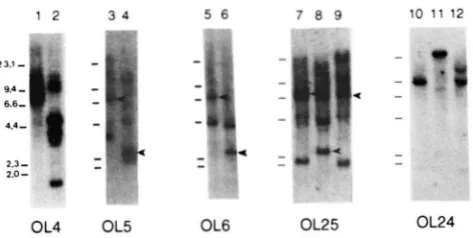
FIGURE 2.-Mouse germ line D N A probed for sequences that
match hypermutated segments of VKOx-1. BALB/c liver DNA
digested with EcoRl (lanes 1, 3, 5, 7 and 10) or Hindlll (lanes 2, 4. 6, 8 and 11) or C57BL/6 DNA digested with EcoRl (lanes 9 and 12) was probed with the labeled oligonucleotide OL4 (VKOx-1
germ line sequence), OL5, OL6, OL25 and OL24. Hybridizations
shown in lanes 3-9 include as control the OLJH4 oligonucleotide, which hybridizes to a single band in each digest (marked by an arrowhead). Mobility of marker fragments is indicated on the left of each set of lanes. D N A preparation, oligonucleotide labeling, hybridization and washes were performed as described in MATE- RIALS AND METHODS.
Murine Hypermutated Sequences 803
control oligonucleotide, OLJH4. This suggested that four germ line regions are near but imperfect matches to this oligonucleotide probe. Hybridization of OL6
to EcoRI and HindIII digests of genomic DNA reveals
a single band in each lane (Figure 2, lanes 5 and 6); comparison with the internal control suggests that the hybridizing band is probably a perfect match present in single copy. T h e results show that there is a single genomic sequence that matches the 20-nt OL6 probe.
To ask whether the fragment that matches OL6 is identical in sequence to VKOx-1 beyond the 20 nt probed by this oligonucleotide, genomic digests were probed with oligonucleotides displaced 3-nt 5’ (OL25) or 4-nt 3’ (OL24) of the OL6 sequence (see Figure 1 for oligonucleotide sequences). As shown in Figure 2 (lanes
7
and 8, 10 and 1 l), both these oligonucleotides hybridize to digests of BALB/c liver DNA, but neither hybridizes to the same band as OL6, showing that the match to the VKOx-1 sequence does not extend much beyond the boundaries of the OL6 probe. Cloning experiments (see below) provide a more quantitative test of the extent of sequence match between hyper- mutated and genomic V regions.T h e probes described above were designed to assay for matches with hypermutated positions in BALB/c mice, but since there appears to be fairly good conser- vation of V region sequence between BALB/c and C57BL/6, we also tested hybridization to DNA from this strain. T h e BALB/c and C57BL/6 hybridization patterns of OL25 are very similar, although there are several bands evident in C57BL/6 DNA that are not apparent in BALB/c (compare Figure 2, lanes
7
and 9). OL24 hybridizes to a 9.4-kb RI fragment in both C57BL/6 and BALB/c DNA, and somewhat less in- tense hybridization to a larger fragment is evident in the C57BL/6 digest (Figure2,
lanes 10 and 12). These data suggest that both oligonucleotides hybridize to sequences or sequence families that are relatively well conserved in the two strains.Cloned sequences that match hypermutated VKOX-
1 regions: We used OL5 as a probe to screen libraries
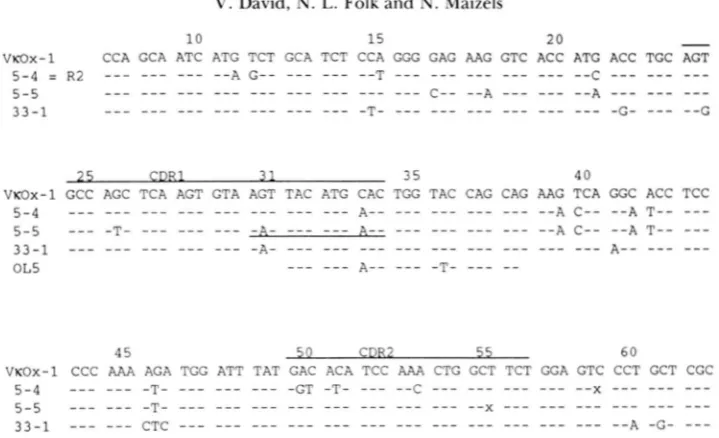
of BALB/c liver DNA for matching sequences. Two separate VK region libraries were generated by ampli- fying germ line DNA with degenerate PCR primers complementary to conserved sequences in VK, and cloning into XgtlO (see MATERIALS AND METHODS). T h e screening produced two different VK region clones that match OL5 at codon 34, but neither of these matches the probe at codon 36. Figure 3 shows these
v
region sequences, compared with VKOX-1. One of the cloned VK regions is identical to R2, described by EVEN et al. (1985); the other, which wecall v ~ 5 - 5 , appears not to have been previously de- scribed. A recurrent change among a collection of
VKOx-1-derived sequences generated by directly am- plifying DNA from germinal center B cells is replace-
ment of both Ser-3 1 and His-34 with Asn (RADA et al.
1991). V K ~ - 5 differs from VKOx-1 at both these posi- tions and could serve as a template for segmental mutation of these positions, which are underlined in Figure 3. In control experiments we identified an- other germ line VK region, V ~ 3 3 - 1 , that is identical to V K ~ - 5 at codon 31. Furthermore, both V K ~ - 4 and vK5-5 carry three matches for hypermutated sites that were not probed in the screen (the legend to Figure
3 notes the positions of these matches). Thus it is unlikely that the sequence matches are due to polym- erase chain reaction (PCR) artifact.
Probing germ line DNA for matches with hyper-
mutated vHOx-1 sequences: We used five different
oligonucleotide probes to assay BALB/c germ line DNA for matches with hypermutated regions in the vHOx-1 heavy chain. Figure 1 shows the sequences of portions of the VHOx-1 germ line V region and cor- responding sequences from hypermutated vHOx-1 regions. Figure 4 shows autoradiograms of digests of germ line DNA hybridized with these 5 probes; the OLJH4 probe was included as a positive control in reactions with OL21,OL22 and OL23.0L16 hybrid- ized to two fragments in both EcoRI and HindIII digests of BALB/c DNA, and hybridization to a 6.2 kb fragment in each digest was particularly intense (lanes 1 and 2). OL29 hybridized to about six frag- ments in EcoRI and HindIII digests of BALB/c DNA (Figure 4, lanes 4 and 5). OL23 hybridizes to four fragments in the BALB/c EcoRI digest and to three fragments in the HindIII digest (lanes 7 and 8). In contrast, there appears to be no match in germ line DNA for the 20-nt region spanned by either OL21 or OL22, although these hybridizations showed the expected bands hybridizing to the OLJH4 probe in- cluded as a positive control (lanes 9- 1 1 and 12-1 4).
As with the VK-specific probes, we also tested for hybridization to digests of C57BL/6 DNA. While OL16 did not hybridize to an EcoRI digest of C57BL/ 6 DNA (lane 3), five of the bands in the C57BL/6 EcoRI digest are of similar mobility with bands in RI- digested BALB/c DNA (lane 6). Thus both the VH and VK probes hybridize to sequences or sequence families that are somewhat but not completely con- served between C57BL/6 and BALB/c mice.
Cloned sequences that match hypermutated VH
regions: To identify cloned V regions that match
804 V. David, N .
10
vmx- 1 CCA GCA ATC ATG TCT GCA
5-4 = R 2
_ _ _ _ _ _
_ _ _
- - A G--_ _ _
5-533-1
"_
_"
"_ "_ _"
"_
_ _ _
"_
"_ "_ _"
"_
L. Folk and N. Maizels
45 60
V K O X - 1 CCC AAA AGA TGG ATT TAT GAC ACA TCC AAA CTG GCT TCT GGA GTC CCT GCT CGC
5-4
_ _ _
_ _ _
_ T __ _ _
_ _ _
_ _ _
_GT -T-_ _ _
_ _ C_ _ _
_ _ _
_ _ _ _ _ _
_-x_ _ _
_ _ - - - -5-5
_ _ _
_ _ _
_ T __ _ _
_ _ _
_ _ _
_ _ _
_ _ _
_ _ _ _ _ _
_ _ _
- _ x_ _ _
_ _ _
_ _ _
_ _ _
_ _ _
_ _ _
33-1_ _ _
_ _ _
CTC_ _ _
_ _ _ _ _ _
_ _ _
___ _ _ _
_ _ _
_ _ _ _ _ _
_ _ _ _ _ _
_ _ _
--A -G- _ _ -FIGURE 3.-Sequences of cloned VK regions that match probes for hypermutated sequences. The top line shows the sequences of VKOX- 1, the germ line light chain V region used in the majority of antibodies in the BALB/c response to Ox. A line is drawn above codons that encode amino acids in complementarity-determining regions (CDRs) of the antibody. Sequences of 3 VK regions cloned by PCR amplification
of germ line DNA are shown below the VKOX-1 sequence. Dashes indicate identity with the germ line sequence; x indicates an uncertainty
in the sequence. We note that differences from VKOX-1 at positions 21, 31, 34, 42. 50 and 61 all correspond to mutations found in VKOX-l- derived hypermutated VK regions. V K ~ - 5 differs from VKOX-1 at codons 3 1 and 34. and segmental transfer of this region of sequence would replace both Ser-31 and His-34 with Asn, a linked change that occurs among several members of a collection VKOx-1-derived sequences generated by directly amplifying DNA from germinal center B cells (RADA ef al. 1991); these differences at codons 3 1 and 34 are underlined.
I he sequence of probe oligonucleotide OL5 is shown below the sequences of the cloned V regions. vK5-4 is identical i n sequrncc to K2.
previously described by EVEN ef al. (1985).
..
1 2 3 4 5 6 7 8 9 10 11 12
23.1 .
9.4 .
6.6 '
4.4 .
2.3 .
2.0 .
.' * ., 23.1 .
-
FIGURE 4.-Mouse germ line DNA probed for23.1 .
9.4 .
-
9.4 - 06.6 - b * v
:*
4.4 .
sequences that match hypermutated segments of
VllOx-l. BALB/c liver DNA digested with EcoRI
(lanes 1, 4, 7, 9 and 1 1 ) or Hind111 (lanes 2, 5 . 8,
~ a 10 and 12) or C57BL/6 DNA digested with EcoRI
otide OL16, OL29, OL23, OL2I or OL22, as
clude as control the OLJH4 oligonucleotide, which hybridizes to a single band in each digest (marked by an arrowhead). Mobility of marker fragments is indicated on the left of each set of lanes. -D
6.6 . m
2.3 .
*
(I) - - <4.4 . 2.0 . (lanes 3 and 6) was probed with labeled oligonucle-
2.3 . indicated. Hybridizations shown in lanes 7-1 2 in-
2.0 . ,. .
OL16
oL29
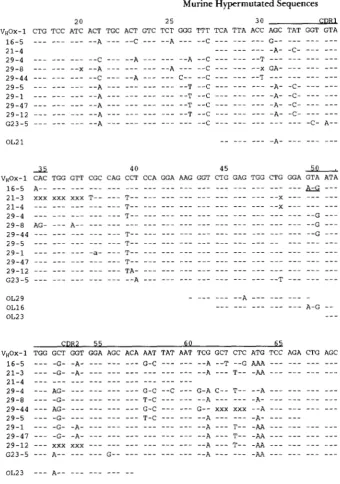
OL23 OL21 oL22at codon 50. T w o clones (29-4 and 29-44) match the mutation at codon 53 probed by OL23. We also isolated a clone that carries the mutation probed by O L 2 3 from a conventional EMBL3 library, and part of the sequence of this cloned V region, G23-5, is shown in Figure 5.
While TMAC hybridization should not produce false positives, failure to hybridize does not necessarily mean that a mutation is not present in germ line DNA; rather, because the TMAC hybridization pro- tocol is capable of distinguishing perfect matches from single base mismatches, failure to hybridize may sim- ply mean that the germ line DNA region containing the mutation does not match the entire length of the oligonucleotide probe. For example, as shown in Fig-
ure 4, OL2 1, an oligonucleotide that probes an AGC to AAC mutation at codon 3 1, did not hybridize to germ line DNA. Nonetheless, we isolated six clones that carry matches to the G to A change at codon 31
that OL21 was designed to probe. All of these clones differ in sequence from OL21 at one or more posi- tions, consistent with the absence of hybridization of OL21 to germ line DNA on blots.
Homology between germ line
V H
regions andhypermutated regions: l'emplated mutation requires
Murine Hypermutated Sequences 805
VHOX-1 CTG
1 6 - 5 - - -
2 1 - 4 2 9 - 4 - - -
2 9 - 8 - - -
2 9 - 4 4 - - -
2 9 - 5 - - -
2 9 - 1 - - -
2 9 - 4 1 - - -
29-12 - - -
G 2 3 - 5 - - -
2 0 TCC ATC
"_
_"
"_
_"
"_
--X"_
_"
"_
_" "__"
"__"
"_
_ _ __"
_"
ACT TGC ACT GTC _ _ A
_ _ _
_ - C_ _ _
2 5 TCT - - A
"_
- - A
"_
"_
"_
_"
"_
"_
TCA"_
_"
"_
"_
"_
_"
"_
_"
"_
"_
3 0T T A ACC
"_ "_
"_ "_
"_
-
- T_"
"X"_
-
- T"_ "_
"_
"_
"__"
"_"_
"_ "_
CDRl
GGT GTA
"_ _"
_"
_"
_"
_"
"_
_"
"__"
"_ _"
"_
_""_ _"
_" _"
_ C _ A _ _
OL2 1
_ _
_ _ __ _ _
_ A __ _ _
_ _ __ _ _
VHOX- 1
1 6 - 5 2 1 - 3 2 1 - 4 2 9 - 4 2 9 - 8 2 9 - 4 4 2 9 - 5
2.5
CAC TGG A _ _
_ _ _
xxx xxx
"_
_"
_"
"_
AG- _ _ _
"_
_"
"_
_"
G T T CGC
_ _ _
"_ xxx T - -_"
"_
_" "_
A _ _
_ _ _
"_
"_
_" "_
CAG
"_
"_"_
"_
_"
"_
"_
40CCT CCA GGA AAG
_"
_" _"
"_
T _ _
_ _ _ _ _ _
_ _ _
T _ __ _ _
_ _ _ _ _ _
T _ -_ _ _
_ _ _ _ _ _
_"
_ _ _
"_
"_
T _ _
_ _ _ _ _ _
_ _ _ T_ _ _
__
_ _ _ _ _ _
4 5 GGT CTG
_" "_
_" "_
_" "_
_"
"_
_"
- _ __" _"
"_ "_
GAG TGG
"_ _"
"_
_"
"_
_"
"_ "_
"_ _"
"_
_" "__"
CTG GGA
_"
"_
"X"_
"X "_
_"
"_
_ _ _
- _ _"_
"_
_ _
"_
5 0
.
GTA ATA_"
"_
_""_
_"
_ _ G _ _ _ _ _ G
_ _ _
_ _ G _ _ __" _"
OL2 9 OL16 OL23
_
_ _ _ _ _ _ _ _ A_ _ _
_ _ __ _ _
_
"_
"__"
_ _ _"_
A-G --_"
VHOX- 1
1 6 - 5 2 1 - 3
21-4
2 9 - 4 2 9 - 8 2 9 - 4 4 2 9 - 5 2 9 - 1 2 9 - 4 7 29-12 G 2 3 - 5
TGG
"_
"_
"_
"_
"_
"_
"_
"_
"_"_
"_
GCT -G- -G-_"
AG - -G- AG- -G- -G- -G- xxx A"
GGT GGA _ A -
_ _ _
_ A -_ _ _
"_
-"_"
"_
_"
"_
_"
"_
"_
"_
_ A _
_ _ _
_A-
_ _ _
xxx - - -
"_
"_
AGC
"_
"_
"_
"_
"_
"_
"_
"_
"_
"_
G" AGC_"
-"_"
_"
_"
-"_"
"_
_"
FIGURE 5,"Sequences of cloned VH regions that match probes for hypermu- tated sequences. The top line shows part of the sequence of vHOx-1, the germ line heavy chain V region used in the majority of antibodies in the BALB/c response to
Ox. A line is drawn above codons that encode amino acids in complementarity- determining regions (CDRs) of the anti- body. Sequences of portions of 10 VH regions cloned by PCR amplification of germ line DNA and one VH region cloned from a conventional library (V"G23-5) are compared to the VHOx-1 sequence. A dash indicates identity with the germ line sequence, x indicates uncertainty in the sequence. The match in V16-5 to linked mutations at codon 50 is underlined. Se- quences of probe oligonucleotides are
shown below V region sequences. For
brevity, parts of V region sequences are omitted from the figure.
OL23
_ _ _
A _ __ _ _ _ _ _
_ _ _
_ _
or more germ line VH regions match the hypermu- tated sequence, one example each of minimal and maximal identity is shown. From Figure 6 it is evident that sequences of
7
to over 50 nt could serve as targets for templated mutation. These numbers are consistent with a similar analysis of the cloned V K sequences (not shown).Matches for silent mutations in the C57BL/6 re-
sponse to
NP:
B cells undergo intense selection byantigen in vivo. Since most published sequences of hypermutated V regions derive from cells with signif- icantly increased affinity for antigen, mutations that enhance affinity will be overrepresented in this data set. In order to separate the effects of antigenic selec- tion from the mechanism of mutation, it seemed im- portant to search for matches in a panel of hypermu- tated sequences that had undergone minimal selec-
tion. T h e hapten NP induces a strain-specific immune response in C57BL/6 mice, so sites of hypermutation can be readily identified. JACOB et al. (1991) have sequenced 36 VH regions that were PCR-amplified directly from DNA of germinal center B cells of C57BL/6 mice immunized with NP. These sequences seemed especially appropriate for analysis because they do not carry mutations typical of affinity selection (JACOB et al. 199 1) and because the activated B cells were never selected as hybridomas. Among these 36
806
3 40 4 5
CAC TGG GTT CGC CAG CCT CCA GGA AAG GGT CTG GAG TGG CTG GGA GTA ATA TGG GCT
50 CDR2 55
VHoX-1 CTG GGA GTA ATA TGG GCT GGT GGA AGC
V29-4 G23-5
_ _ -
_ _ _
_ - G_ _ _ _ _ _
AG- _ - _ _ _ __ _ _
_ _ T - - _ _ _ __ _ _
_ _ _
A" _ _ __ _ _
G - _ NQ10-15.9_ _ _ _ _ _
_ _ _ _ _ __ _ _
A" _ _ __ _ _
_ C -identity:
_"
"_
A 7 nt21 nt
_ _ _
_ _ _ _ _ _
_ _ _
A--_ _ _
_ - -FIGURE 6.-Extent of homology between hypermutated antibodies and germ line VH regions at positions at which ternplated mutation
may have occurred. Portions of germ line VH regions are compared with hypermutated V regions from anti-Ox hybridomas (BEREK,
GRIFFITHS and MILSTEIN 1985) throughout the region of homology; notations are as in Figure 3. When more than one germ line VH region
matches the hypermutated region, an example of minimal and maximal identity is shown.
1985; SIEKEVITZ et al. 1987; FORSTER, GU and RA-
JEWSKY 1988). Matches for 9 of the 14 silent mutations
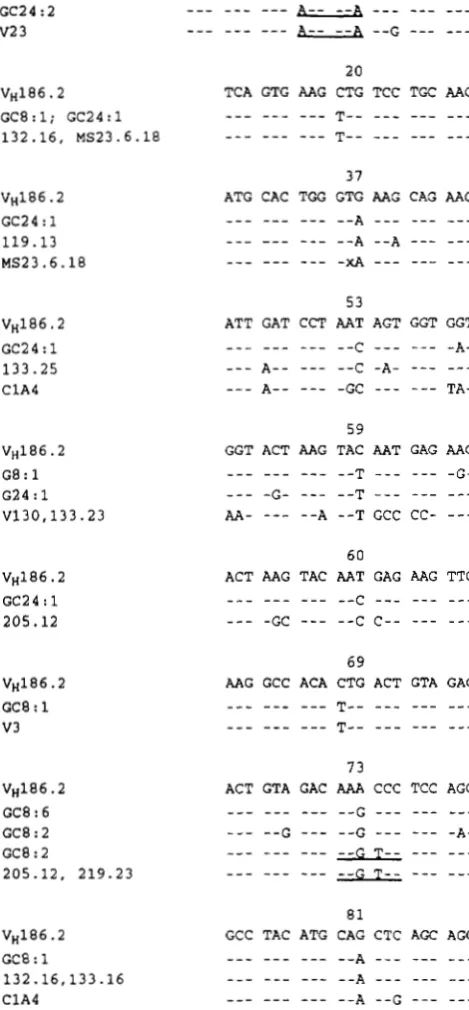
are apparent among these published sequences, as shown in Figure
7.
T h e germ line sequences that match the silent mutations at positions 10 and 7 3 also carry fortuitous matches to linked mutations, which are underlined in Figure 7. CUMANO and RAJEWSKY (1 986) have noted another example of a single germ line V region that matches several linked sites of hypermutation in an anti-NP antibody.DISCUSSION
We have searched for matches in germ line DNA
to hypermutated regions of sequence, and have found matches among cloned germ line V regions for about two-thirds of the hypermutated regions tested. T h e germ line sequences characterized include matches for replacement mutations, and silent mutations, as well as several examples of linked mutations.
Technical considerations: T h e matches to oligo-
nucleotide probes in genomic DNA were demon- strated initially by genomic blotting using a stringent TMAC hybridization protocol which could be shown,
by appropriate pilot experiments and internal con- trols, to discriminate perfect matches from single base mismatches. We cloned germ line sequences that matched some of the probed hypermutated sites from
V region libraries generated by PCR. We turned to PCR-based libraries for V region cloning in order to streamline the screening process and to ensure that V region sequences were not lost during cloning (see below). A potential concern about PCR-generated libraries is that Taq polymerase errors could create an apparent match where none really exists. However, several groups have shown that the error rate of PCR is actually quite low: it is well below 1 0-3, and probably closer to under amplification conditions resem- bling our own (TINDALL and KUNKEL 1988; KEOHA- VONG and THILLY 1989; MEYERHANS et al. 1989). Two other kinds of data make it unlikely that matches in the genes we have cloned are due to artifacts of
Murine Hypermutated Sequences 807
VH186.2
GC8:2: GC24:3 GC24:2 V 2 3
V ~ 1 8 6 . 2
GC8:l; GC24:1 132.16, MS23.6.18
V ~ 1 8 6 . 2
GC24 : 1 119.13 MS23.6.18
VH186. 2
GC24 :I
133.25 C1A4
V ~ 1 8 6 . 2
G8: 1 G24 : 1 V130,133.23
V ~ 1 8 6 . 2
GC24 : 1 205.12
V ~ l 8 6 . 2
G C 8 : 1 v3
V ~ l 8 6 . 2
GC8 : 6 G C 8 : 2 GC8 : 2
205.12, 219.23
VH186. 2
G C 8 : 1
132.16,133.16 C1A4
TCA GTG
"_
"_
_"
"_
ATG CAC
_" "_
"_ "_
"_ "_
FIGURE 7."Silent mutations in germinal center VH regions of NP-immunized C57BL/6 mice and matching regions ofJ558 family V segments. Silent mutations in VH regions of two different ger- minal centers (JACOB et al. 1991) are compared with the progenitor VH186.2 region and with matching regions in 5558 family germ line V, segments. The number in each portion of the figure denotes the position of the codon at which the silent mutation occurs. The matches to the silent mutations at codons 10 and 7 3 that include fortuitous matches to linked mutations are underlined. The two germinal centers, denoted GC8 and GC24, comprise t w o separate cell lineages. The number of recurrences of each silent mutation within each lineage is shown after the colon, so in the first example there were 2 VH regions in GC8 and 3 VH regions in GC24 that
carried the GAG to GAA mutation at codon 10, but no mutation
one probe turned out upon sequence analysis to match a second, unprobed and unselected mutation.
Another reason we turned to PCR-generated li- braries is that published data as well as our own observations suggest that V region sequences may be difficult to clone by traditional techniques. Several laboratories have attempted extensive screens for mu- rine V regions, but the number of VH sequences actually cloned is about an order of magnitude lower than the minimum number of 500-1000 VH se- quences estimated by hybridization (LIVANT, BLATT and HOOD 1986). In addition, only a fraction of VH segments could be cloned from the chicken genome in an exhaustive screen (REYNAUD et al. 1989), and only about two-thirds of VX segments could be cloned from sheep genomic DNA (REYNAUD et al. 1991). It may be that the genomic organization of V regions makes them difficult to clone. Members of a highly repetitive gene family, organized as direct or inverted repeats, may tend to be lost during propagation on standard host strains. In fact, in a model experiment where we attempted to clone homologous V regions in head-to-head organization, we found that nearly 1 kb of spacer between the V regions was necessary to produce a stable plasmid clone (T. TSUKUDA, N. BATCHVAROVA and N. MAIZELS, unpublished data).
We have thus far been unable to isolate clones that match the mutations probed by OL25 and OL29, both of which hybridize to a number of fragments in germ line DNA. This may reflect a biased represen- tation of V region sequences in the PCR-based librar- ies. T h e major limitation of PCR-based cloning of
repetitive gene families is that the sequences amplified will depend on the exact choice of primer, and that highly divergent V segments will not be represented in the library. T h e primers we used matched frame- work sequences of VH and VK that appear to be highly conserved (ORLANDI et al. 1989; SCHLISSEL and BAL- TIMORE 1989), but it would be very surprising if all V segments were amplified equally well by these primers, and there are undoubtedly some truncated pseudo-V segments that will not be amplified at all. Alternatively, some hybridization in the genomic blots may be to sequences that do not derive from V re- gions, and matches to such probes would not be re- trieved from PCR-based V region libraries. In ge- nomic libraries we have identified clones that carry as much as 18 bases of contiguous match to probe se- quences, but do not derive from V region families;
808 V . David, N. L. Folk and N. Maizels
and similar results have been obtained by others at- tempting to screen conventional genomic libraries for matches to hypermutated regions of sequence (WY-
SOCKI, GEFTER and MARGOLIES 1990).
Germ line matches for hypermutated sequences:
We find regions of identity between germ line and hypermutated VHOX sequences ranging from
7
to 5 1 nt in length. While the regions of sequence that undergo gene conversion on an evolutionary time scale are relatively long ( e . g . , see MAEDA and SMITHIES1986), in both chickens and trypanosomes patches of sequence as short as 4 nt in length undergo templated diversification in response to developmental stimuli. T h e lengths of the matches that we observe are there- fore consistent with a templated mechanism of muta- tion.
If hypermutation is not templated, what are some alternative explanations for the existence of matches between hypermutated and germ line sequences? T h e pool of germ line V regions is very large: hybridization studies estimate that there are 500-1000 VH segments in the BALB/c 5558 family alone (LIVANT, BLATT and HOOD 1986). A question often raised is whether one could expect to find any given single base change within this large sequence pool. However, a rough calculation shows that this is unlikely. A V segment is about 300 nt in length. Assuming that sequence is random, and that all but 50 positions are invariant due to structural constraints, one can estimate how many V regions there would have to be in order to find all possible changes at all the 50 positions free to undergo variation. T h e number approaches 450. T h e fact that V region sequences are not random but related would tend to decrease this number; nonethe- less, a pool of about 1000 genes would contain all possible base changes at only 5 positions (45 = 1024). Another possibility is that matches between hyper- mutated and germ line DNA might mean that natural selection of germ line V regions over evolutionary time resembles antigen selection of expressed immu- noglobulin genes during an immune response. This intriguing possibility could explain replacement mu- tations, but not silent mutations, and we readily found matches for silent mutations in the NP response among a rather small pool of published V region sequences (Figure 7). Preferential codon usage is most unlikely to account for selection of all these mutations, particularly since the hypermutated V regions we searched were cloned directly from amplified ger- minal center DNA, in a protocol that did not involve production or selection of hybridomas (JACOB et al.
Templated mutation that involves segmental trans- fer of information can result in multiple single base changes at neighboring positions; the simultaneous appearance of these mutations reflects their genetic
199 1).
linkage in the donor. We find four examples of matches that are consistent with such segmental mu- tation. One of these matches (VH 16-5, Figure 5) was cloned by hybridization with a probe (OL16) that matched both mutated positions, while the others were encountered while searching for matches to sin- gle mutated positions ( V K ~ - 5 , Figure 3 and positions 10 and 73, Figure 7). Could mechanisms other than templated mutation produce apparently linked muta- tions such as these? One possibility is that neighboring replacement mutations might be coselected in certain circumstances. For example, as discussed in Results, mutations are often found in both codons 34 and 36 of VKOx-1, although only the mutation at codon 34 increases antibody affinity (BEREK and MILSTEIN 1987). T h e two common mutations at codon 34 re- place His (CAC) with Gln (AAC) or Asn (CAG). Both Gln and Asn can undergo spontaneous posttransla- tional deamination in certain protein microenviron- ments, so neighboring residues that influence the rate of deamination may therefore be subject to selection (ROBINSON and ROBINSON 199 1).
Others have addressed the question of whether gene conversion might contribute to somatic hyper- mutation of mammalian immunoglobulin genes and found their data incompatible with a mechanism that involves templating. CHIEN et al. (1988) reported that they were unable to find matches in germ line DNA for two hypermutated sequences in murine anti-phos- phorylcholine antibodies, and concluded from these data that gene conversion plays no role in somatic hypermutation at the immunoglobulin locus. How- ever, these experiments are open to technical criticism because there were no internal controls for hybridi- zation stringency, which can be sensitive to minor variations in temperature or salt concentrations, and only a single probe was used to test for a germ line match to each hypermutated region. WYSOCKI, GEF- TER and MARGOLIES (1990) screened genomic librar- ies for matches to recurrent mutations in CDR2 of the VH region of anti-p-azophenylarsonate antibodies; remarkably, three hybridomas have been identified which carry the same four contiguous replacement mutations in codons 52-59. However, the clones these authors identified did not derive from V region se- quences, and these authors concluded that it was unlikely that all four replacement mutations were inserted in one or two templated mutational events. They suggested that intense selection probably ac- counts for the recurrent appearance of these four mutations, a conclusion supported by the observation that these mutations can appear independently (FISH
Murine Hypermutated Sequences 809
cells with germ line light chain V regions. T h e absence of obvious long conversion tracts led these authors to conclude that gene conversion is not the mechanism of hypermutation in the sheep, but two features of
these data suggest this conclusion should be reconsid- ered. First, a number of matches were in fact evident, particularly in regions of the gene that are not subject to intense selection, but were discounted as being too short to be significant. Second, a substantial fraction of germ line light chain V regions were not repre- sented in the germ line library (REYNAUD et al. 1991), and matches could exist among these uncloned se- quences.
There is considerable evidence that as an immune response progresses, hypermutation accumulates not only in V regions, but also in J regions and in the J-C intron (LEBECQUE and GEARHART 1990; BOTH et al.
1990; STEELE, ROTHENFLUH and BOTH 1992). Al- though apparently untemplated, these changes could be caused by the same molecular mechanism respon- sible for templated hypermutation earlier in the im- mune response. There is evidence to suggest that, while chromosomal gene conversion events are not normally associated with mutation (STACHELEK and LISKAY 1988), a highly error-prone heteroduplex re- pair process can operate in certain instances in mam- malian cells. THOMAS and CAPECCHI ( 1 986) found that introduction of homologous DNA sequences into a cell can result in mutation of the corresponding chro- mosomal locus which apparently occurs when the heteroduplex formed between the two sequences is incorrectly repaired. Error-prone repair has also been observed to affect extrachromosomal heteroduplex DNAs (AYARES et al. 1987; WEISS and WILSON 1988).
Gene conversion may involve formation of a het- eroduplex and its subsequent repair. If donor and recipient sequences are homologous but not identical, accurate heteroduplex formation followed by faithful repair will transfer new information from donor to recipient, and all the diversified sequences will have an obvious template in germ line DNA. If donor and recipient sequences are misaligned, or if repair is inaccurate, then both templated and untemplated mu- tations will appear in the diversified recipient se- quence. In fact, there may be circumstances in which gene conversion results exclusively in untemplated mu- tations: If identical sequences (for example, from sister chromatids) undergo heteroduplex formation, incor- rect resolution of the heteroduplex can only produce untemplated mutations. This may be relevant to the observed mutations in the VX regions, J regions, and the J-C intron. If an expressed V(D)J region under- went heteroduplex formation not with a nearby V region segment, but with the identical rearranged V(D)J region on a sister chromatid, incorrect resolu- tion of this duplex would produce mutations despite
the fact that there are no homologous but divergent donor sequences. Faulty repair of other sorts of re- combinational intermediates (gapped DNAs, or du- plex molecules carrying segments of information from different donors) could similarly produce untem- plated mutation as the sole outcome of a molecular process that was also capable of templated mutagene- sis.
The existence of germ line matches to hypermu- tated sequences is consistent with a templated muta- tional mechanism, but does not of course constitute proof of mechanism. However, these results suggest that one useful direction of future research will be to create transgenic mice carrying constructs that are designed to test the role of templated mutation. Stud- ies on hypermutation are currently limited by the fact that no existing cell line undergoes efficient hyper- mutation in culture, and in the longer run definitive analysis of molecular mechanism will require devel- oping such a cell line.
We thank our neighbors in C-wing basement for their good advice and encouragement. This work was supported by National Institutes of Health grant GM41712 to N.M. V.D. was the recipient
of a Howard Hughes Medical Institute predoctoral fellowship.
LITERATURE CITED
ALLEN, D., A. CUMANO, R. DILDROP, C. KOCKS, K. RAJEWSKY, N.
RAJEWSKY, J. ROES, F. SABLITZKY and M. SIEKEVITZ,
1987 Timing, genetic requirements and functional conse- quences of somatic hypermutation during B-cell development. Immunol. Rev. 96: 5-22.
ALZARI, P. M., S. SPINELLI, R. A. MARIUZZA, G. BOULOT, R. J. POLJAK, J. M. JARVIS and C. MILSTEIN, 1990 Three-dimen- sional structure determination of an anti-2-phenyloxazolone antibody: the role of somatic mutation and heavy/light chain pairing in the maturation of an immune response. EMBO J. 9:
3807-3814.
AYARES, D., D. GANEA, L. CHEKURI, C. R. CAMPBELL and R.
KUCHERLAPATI, 1987 Repair of single-stranded DNA nicks,
gaps, and loops in mammalian cells. Mol. Cell. Biol. 7: 1656- 1662.
BALTIMORE, D., 1981 Gene conversion: some implications for
immunoglobulin genes. Cell 24: 592-594.
BECKER, R. S., and K. L. KNIGHT, 1990 Somatic diversification of immunoglobulin heavy chain VDJ genes: evidence for somatic gene conversion in rabbits. Cell 63: 987-997.
BEREK, C., G . M. GRIFFITHS and C. MILSTEIN, 1985 Molecular events during maturation of the immune response to oxaza- lone. Nature 3 1 6 412-418.
BKREK, C . , and C. MILSTEION, 1987 Mutation drift and repertoire
shift in the maturation of the immune response. Immunol. Rev.
96: 23-4 1.
BEREK, C., and C. MILSTEIN, 1988 The dynamic nature of the antibody repertoire. Immunol. Rev. 105 5-25.
BERNARD, O., N. HOZUMI and S. TONEGAWA, 1978 Sequences of
mouse immunoglobulin light chain genes before and after somatic changes. Cell 15: 1133-1 144.
BOTH, G. W., L. TAYLOR, J. W. POLLARD and E. J. STEELE,
1990 Distribution of mutations around rearranged heavy-
chain antibody variable-region genes. Mol. Cell. Biol. 1 0 5187- 5196.
810 V. David, N. L. Folk and N. Maizels
RAJEWSKY and D. BALTIMORE, 1981 Heavy chain variable
region contribution to the NPb family of antibodies: somatic mutation evident in a 72a variable region. Cell 24: 625-637. BRENNER, S., and C. MILSTEIN, 1966 Origin of antibody variation.
Nature 211: 242-243.
CHIEN, N. C., R. R. POLLOCK, C. DESAYMARD and M. D. SCHARFF,
1988 Point mutations cause the somatic diversification of IgM
and IgG2a antiphosphorylcholine antibodies. J. Exp. Med. 167:
954-973.
CREWS, S., J. GRIFFIN, H. HUANG, K. CALAME and L. HOOD,
1981 A single VH gene segment encodes the immune re-
sponse to phosphorylcholine: somatic mutation is correlated with the class of the antibody. Cell 25: 59-66.
CUMANO, A., and K. RAJEWSKY, 1986 Clonal recruitment and
somatic mutation in the generation of immunological memory
to the hapten NP. EMBO J. 5: 2459-2468.
DAVID, V., and N. MAIZELS, 1989 Templated, targeted sequence
diversification displays a similar choreography in different or- ganisms. Cold Spring Harbor Symp. Quant. Biol. 54: 227-23 1.
EDELMAN, G. M., and J. A. GALLY, 1967 Somatic recombination
of duplicated genes: an hypothesis on the origin of antibody diversity. Proc. Natl. Acad. Sci. USA 57: 353-358.
EDELMAN, G. M., and J. A. GALLY, 1970 Arrangement and evo-
lution of eukaryotic genes, pp. 962-972 in The Neurosciences: Second Study Program, edited by F. 0. SCHMITT. Rockefeller University Press, New York.
EVEN, J., G. M. GRIFFITHS, C. BEREK andC. MILSTEIN, 1985 Light chain germ-line genes and the immune response to E-phenylox-
azolone. EMBO J. 4: 3439-3445.
FISH, S., E. ZENOWICH, M. FLEMING and T. MANSER, 1989
Molecular analysis of original antigenic sin. I. Clonal selection,
somatic mutation, and isotype switching during a memory B
cell response. J. Exp. Med. 1 7 0 1191-1209.
FORSTER, I . , H. Gu and K. RAJEWSKY, 1988 Germline antibody V regions as determinants of clonal persistence and malignant
growth in the B cell compartment. EMBO J. 7: 3693-3703.
GEARHART, P. J., and D. F. BOGENHAGEN, 1983 Clusters of point mutations are found exclusively around rearranged antibody variable genes. Proc. Natl. Acad. Sci. USA 8 0 3439-3443.
GRIFFITHS, G. M., C. BEREK, M. KAARTINEN and C. MILSTEIN.
1984 Somatic mutation and the maturation of the immune
response to 2-phenyloxazolone. Nature 312: 271-275.
HABER, J. E., D. T . ROGERS and H. J. MCCUSKER, 1980
Homothallic conversions of yeast mating-type genes occur by
intrachromosomal recombination. Cell 22: 277-289.
JACOB, J., G. KELSOE, K. RAJEWSKY and U. WEISS,
1991 Intraclonal generation of antibody mutants in germinal centres. Nature 3 5 4 389-392.
KAARTINEN, M., G. M. GRIFFITHS, P. H. HAMLYN, A. F. MARKHAM,
K. KARJALAINEN, J. L. T . PELKONEN, 0. MAKELA and C.
MILSTEIN, 1983a Anti-oxazolone hybridomas and the struc- ture of the oxazolone idiotype. J. Immunol. 1 3 0 937-945.
KAARTINEN, M., G. M. GRIFFITHS, A. F. MARKHAM and C. MIL-
STEIN, 1983b mRNA sequences define an unusually restricted IgG response to 2-phenyloxazolone and its early diversification. Nature 304: 320-324.
KEOHAVONG, P., and W. G. THILLY, 1989 Fidelity of DNA polym-
erases in DNA amplification. Proc. Natl. Acad. Sci USA 8 6
KLAR, A. J. S., 1987 Differentiated parental DNA strands confer developmental asymmmetry on daughter cells in fission yeast. Nature 3 2 6 466-470.
KLAR, A. J. S., J. MC~NDOO, J. N . STRATHERN and J. B. HICKS, 1980 Evidence for a physical interaction between the trans- posed and the substituted sequences during mating type gene transposition in yeast. Cell 22: 291-298.
KNIGHT, K. L., and R. S. BECKER, 1990 Molecular basis of the allelic inheritance of rabbit immunoglobulin VH allotypes: 9253-9257.
implications for the generation of antibody diversity. Cell 60:
LEBECQUE, S . G., and P. J. GEARHART, 1990 Boundaries of so-
matic mutation in rearranged immunoglobulin genes: 5’boundary is near the promoter, and 3’ boundary is approx- imately 1 kb from V(D)J gene. J. Exp. Med. 172: 3652-3665. LEDERBERG, J., 1959 Genes and antibodies. Science 1 2 9 1649-
1652.
LIVANT, D., C. BLATT and L. HOOD, 1986 One heavy chain
variable region gene segment subfamily in the BALB/c mouse
contains 500-1000 or more members. Cell 47: 461-470.
LONGACRE, S., and H. EISEN, 1986 Expression of whole and
hybrid genes in Trypanosoma equiperdum antigenic variation.
MAEDA, N., and 0. SMITHIES, 1986 The evolution of multigene
families: human haptoglobin genes. Annu. Rev. Genet. 20: 81-
108.
MAIZELS, N., 1987 Diversity achieved by diverse mechanisms:
gene conversion in developing B cells of the chicken. Cell 48:
MAIZELS, N., 1989 Might gene conversion be the mechanism of somatic hypermutation of mammalian immunoglobulin genes? Trends Genet. 5: 4-8.
MAIZELS, N., 1991 Templated, targeted mutation of mammalian
immunoglobulin genes, pp. 129-1 36 in Somatic Hypermutation
in V-Regions, edited by E. 0. STEELE. CRC Press, Boca Raton, Fla.
MAIZELS, N., and A. BOTHWELL, 1985 The T-cell-independent
immune response to the hapten NP uses a large repertoire of heavy chain genes. Cell 43: 7 15-720.
MCKEAN, D., K. HUPPI, M. BELL, L. STAUDT, W. GERHARD and M.
WEIGERT, 1984 Generation of antibody diversity in the im- mune response of BALB/c mice to influenza virus hemagglu- tinin. Proc. Natl. Acad. Sci. USA 81: 3180-3184.
MEYERHANS, A., R. CHEYNIER, J. ALBERT, M. SETH, S. KWOK, J.
SNINSKY, L. MORFELDT-MANSON, B. ASJO and S. WAIN-HOB-
SON, 1989 Temporal fluctuations in Hiv quasispecies in vivo are not reflected by sequential HIV isolations. Cell 58: 901- 910.
ORLANDI, R., D. H. Gussow, P. T. JONES and G. WINTER,
1989 Cloning immunoglobulin variable domains for expres- sion by the polymerase chain reaction. Proc. Natl. Acad. Sci.
USA 86: 3833-3837.
PARHAMI-SEREN, B., L. J. WYSOCKI, M. N. MAR GO LIE^ and J.
SHARON, 1990 Clustered H chain somatic mutations shared by anti-p-azophenylarsonate antibodies confer enhanced affin- ity and ablate the cross-reactive idiotype. J. Immunol. 145:
2340-2346.
RADA, C., S . K. GUPTA, E. GHERARDI and C. MILSTEIN,
1991 Mutation and selection during the secondary response to 2-phenyloxazolone. Proc. Natl. Acad. Sci. USA 88: 5508- 5512.
REYNAUD, C. A., V. ANQUEZ, H. GRIMAL and J.-C. WEILL, 1987 A hyperconversion mechanism generates the chicken light chain preimmune repertoire. Cell 48: 379-388.
REYNAUD, C. A , , A. DAHAN, V. ANQUEZ and J.-C. WEILL,
1989 Somatic hyperconversion diversifies the single VH gene
of the chicken with a high incidence in the D region. Cell 59:
171-183.
REYNAUD, C.-A,, C. R. MACKAY, R. G. MULLER and J.-C. WEILL,
1991 Somatic generation of diversity in a mammalian primary lymphoid organ: the sheep ileal Peyer’s patches. Cell 64: 995-
1005.
ROBINSON, A. B., and L. R. ROBINSON, 1991 Distribution of
glutamine and asparagine residues and their near neighbors in peptides and proteins. Proc. Natl. Acad. Sci. USA 88: 8880- 8884.
ROTH, C. W., S. LONGACRE, A. RAIBAUD, T. BALTZ and H. EISEN,
963-970.
EMBO J. 5: 1057-1063.