Olfactory Object Recognition and
Generalization in the Insect Brain
Thesis by
K
AI
S
HEN
In Partial Fulfillment of the Requirements
for the Degree of
Doctor of Philosophy
California Institute of Technology
Pasadena, California
2010
© 2010
Kai Shen
Acknowledgment
First of all, I would like to thank my graduate advisor, Gilles Laurent for leading me into a fascinating area of research; for both his experimental rigor and clarity of thought; for his appreciation of beautiful data; for his ability to ask the right questions and weave together a great story. I am also very grateful for his understanding during a difficult period in my graduate career, and for allowing me to take a sabbatical to explore other interests, and finally for providing the means for me to travel to Germany to write my thesis. I would also like to thank the other members of my thesis committee: Erik Winfree, for his insights, and valuable suggestions on data analysis; Thanos Siapas, for his skepticism and methodical approach to science that is unsurpassed, and for providing tetrodes for KC recordings that became the foundation to this thesis; and Christof Koch and Michael Dickinson for their valuable support over the years.
advice, and extraordinary experimental prowess that is inspiring; Glenn Turner, for always being a willing listener, and for his good humor and for his love of science; Cindy Chiu for her encouragement and thoughtfulness; Ben Rubin for all the basketball and life conversations; Vivek Jayaraman for helping me get started in the early days and helpful criticisms; Appreciation also go out to Ofer Mazor, Bede Broome and Mark Stopfer for their advice and expertise in KC recordings; Ueli Rutishauser for discussions about RLSC and science in general; Thomas Nowotney and Ramon Huerta for interesting ideas and different ways of thinking about locust olfaction; and Viola Priesemann for her help in the writing process.
Abstract
Contents
Page
ACKNOWLEDGMENTS iii
ABSTRACT
v
TABLE OF CONTENTS vi
1. INTRODUCTION
1
1.1 Object Recognition 1
1.2 Olfactory Computations 5
1.2.1 Nature of odors
1.2.2 Perception of odor mixtures
1.2.3 Odor discrimination
1.2.4 Odor segmentation
1.2.5 Odor generalization
1.3 Olfactory Microcircuits 12
1.3.1 Olfactory receptor neurons
1.3.2 Antennal lobe
1.3.3 Antennal lobe-to-Mushroom body circuit
1.4 Outline and Specific Aims 18
2. MIXTURE CODING AND ODOR-SEGMENTING KENYON
CELLS
20
2.1 Results
22
2.1.2 Representation of mixtures of increasing
complexity by PNs
2.1.3 Kenyon cell responses to mixtures
2.1.4 PN and KC population statistics
2.1.5 Generating model KC classifiers using recorded PN
data
2.2 Discussion
42
2.2.1 Functional consequences
2.2.2 KCs as independent feature dectors?
2.3 Methods
75
2.3.1 Preparation and stimuli
2.3.2 Binary-mixture experiments
2.3.3 Multi-component-mixture experiments
2.3.4 Electrophysiology
2.3.5 Recording constraints and potential sampling
biases
2.3.6 Extracellular data analysis
2.3.7 Analysis
2.4 Acknowledgements 96
3. ODOR IDENTIFICATION AND GENERALIZATION IN THE
MUSHROOM BODY
97
3.1 Results
98
3.1.1 Decoding PN trajectories over time
3.2 Discussion
105
3.2.1 Odor segmenting KCs leads to stimulus
generalization
3.2.2 Combinatorial codes for mixtures in the MB
3.3 Methods
126
3.3.1 Mean KC spike latency
3.3.2 Population decoding
4. SUMMARY AND CONCLUSIONS 132
4.1 An elegant solution for odor recognition and generalization
132
4.2 Open questions
134
C
HAPTER1
Introduction
Sensory object recognition is the most fundamental of operations
performed by the brain. Computational vision, e.g., has been directed at
understanding how visual objects and their associated properties are
reconstructed and recognized from local information that falls on the
retina (1). In the olfactory system, object recognition involves identifying
characteristic combinations of molecules in complex blends of odorants.
Three fundamental computations olfaction must solve are: recognition,
concentration-invariance, and mixture segmentation.
1.1 Object Recognition
The apparent ease with which we recognize objects belies the magnitude
of this feat: we effortlessly recognize objects from among millions of
possibilities and we do so within a fraction of a second, in spite of
tremendous variation in the appearance of each one (2). Understanding
the computational processes that underlie this ability is one of the
the ability to accurately discriminate each object from every other object
(‘identification’) or set of similar objects (‘categorization’) from all other
possible objects, and to do this over a range of identity preserving
transformations (e.g., variation in object position, scale, pose and
illumination, and the presence of visual clutter) (2-4). We see an object
many times but never see the exact same image on our retina twice (5).
Although several efforts have examined this so called “invariance
problem” (6-8), a robust, recognition machine still evades us and we lack
a truly satisfying understanding of how the problem is solved by the
brain.
In the visual cortex, evidence suggest that neuronal processes
underlying object recognition are localized in the ventral stream
(V1→V2→V4→posterior IT→anterior IT) (9). The highest stages of this
stream are thought to convey neuronal signals that explicitly support
object recognition – i.e., object identity can be directly extracted from
these populations despite identity-preserving image changes (4, 10, 11).
How are such useful neuronal representations constructed in the brain?
How is it that neurons can be sensitive to subtle changes in object
identity, and yet are relatively insensitive to large identity-preserving
image changes?
Olfaction is very different to vision, because it’s a synthetic sense
Hopfield (13) postulated several computations that olfactory systems
need to solve that are more sophisticated than simple discrimination.
These include: (i) concentration-invariant odor recognition, (ii)
background-invariant odor recognition, and (iii) odor-mixture
segmentation. Such computations could underlie complex behaviors,
e.g., by tracing a series of sequential odor way-points, salmon can
navigate over thousands of miles from their spawning grounds to the
open ocean and back (14), and rodents have also been shown to track
odors (15). These are examples of computations that have been
proposed but remain poorly characterized at the behavioral level and
unexamined at the neural level.
To recognize an object, an animal must use some internal
representation of the external stimulus (e.g., visual or olfactory scene) to
make a decision: is object A present or not? Computationally, the brain
must apply a decision function to divide an underlying neuronal
representational space into regions where object A is present and regions
where it is not (16, 17). Because brains are essentially networks of
neurons, the subject must also have read-out neurons that can
successfully report if object A was present or not. The central
computational issues of object recognition are (2):
(i) What is the format of the representation used to support the
i.e., how is the external world represented and what information is
available in the neural code?
(ii) What kinds of decision functions (i.e., read-out tools) are applied to
that representation? i.e., how is the neural code read out by decision
neurons?
Object recognition can thus be viewed as the problem of finding
operations that progressively transform the external world (e.g., visual,
olfactory, auditory stimuli) into a new form of representation, followed by
the application of relatively simple decision functions (e.g., linear
classifiers) that ultimately lead to perception and behavior (2). Along the
way, there are other issues, such as how many neurons are required in
computing the decision function, where are they in the brain, is their
operation fixed or dynamically related to the task (i.e., nonlinearities
involved, learning) and how they code their choices (as a function of
spikes)?
Basic machine learning textbooks tell us that feature selection is
more important than the complexity of the classifier used (SVM, NN or
one of many nonlinear classifiers). It has been shown that a variety of
recognition tasks can be solved in inferotemporal (IT) cortex using simple
linear classifiers (10, 18). The feature vector that results from the
applied by a decision function due to its high dimensionality and
redundancy. The “curse of dimensionality” tell us that the number of
training examples must grow exponentially with the number of features
in order to learn an accurate model (19). Because only a limited number
of examples are typically available, there is an optimal number of feature
dimensions beyond which the performance of the recognition model
starts to degrade. Thus, dimensionality reduction is crucial in order to
build a classifier with high accuracy. We can think of progressive
transformations from one form of representation to another as extracting
features optimal for decision making, akin to dimensionality reduction.
1.2 Olfactory Computations
1.2.1
Nature of odors
The sense of smell is well known for its ability to detect odorants at levels
far below that of the most sensitive instruments, to discriminate between
thousands of single odorants, and to engrave into memory recollections
of smells that stretch back in time. Our olfactory abilities to detect,
discriminate, and imprint odors is unmatched by any electronic nose.
Naturally occurring odors rarely emanate from a single chemical, it
sense of smell must have developed, over evolution, to process complex
odor mixtures.
The relationship between odor structure, neural representations
and perception is not deterministic, and depends on experience and
learning (20). Odors are also difficult to quantify because its chemical
structure cannot be described by a simple set of parameters – odor space
is extremely high dimensional and vary in an indeterminate number of
parameters such as carbon-chain length, molecular weight, and polarity.
Recently a multidimensional, physiocochemical odor space was devised to
describe odor structure: 1664 molecular descriptors (thus 1664-d space)
for 1500 odors (21). Each odor was represented as a 1664-d vector in
this space. This odor space maybe useful in predicting odor perception.
Principle component analysis revealed a correlation between odor
structure in this space and its perceived pleasantness among humans
(22).
1.2.2
Perception of odor mixtures
Over the centuries, odor mixtures in the form of fragrances and incense
have been used to suppress or mask a variety of unpleasant odors,
including body odors or those emanating from waste materials, as well as
most liked and effective fragrance mixtures became known, - e.g.,
jasmine, rose and orange oils are still in use. Our knowledge of brain
mechanisms that computes and recognizes odor mixtures is however
very limited. The study of the perception of odor mixtures by humans
starts with binary mixtures, e.g., (23), and there are several common
outcomes: both odors may be identified with no change in their perceived
intensities compared to their intensities before mixing; both may be
perceived but with one or both having reduced intensity; or one maybe
suppressed to such an extent that it cannot be perceived (24-27). Odor
reduction or suppression is dependent on the particular odor
combination and the concentration of each odor. When binary mixtures
are analyzed by human subjects, discrimination of the individual
components is influenced not only by the type of odor and the perceived
intensity of each component, but also by their familiarity and
pleasantness (28).
In humans, correctly judging whether a binary mixture is different
(discrimination) from a stimulus consisting of only one of the
components is generally much simpler than having to identify one or
both of the components (identification). The ability to identify
components in mixtures becomes increasingly more difficult as the
number of components increase, with the limit at ~4 (25-27).
was also the most common maximum number of odors chosen in
mixtures containing up to 8 odors. When this experiment was repeated
with mixtures instead of single components, the result was again 4.
Taken together, this indicates that humans encode complex odor
mixtures as single entities.
1.2.3
Odor discrimination
With training, rodents can learn to discriminate between virtually any pair
of pure odors, including highly related stereoisomers (29-31). Rats can
also perform difficult odor discrimination tasks after extensive lesions of
the OB (29), suggesting that simple discrimination (e.g., go/no-go, where
1 bit of information to be extracted) is fundamental to olfactory
processing and not necessarily a computationally difficult task (or at least
not one that requires the entirety of the OB).
1.2.4
Odor segmentation
The 2007 Pixar film Ratatouille is about how a rat Remy, blessed with
unusually sharp olfactory senses, becomes an extraordinary chef. The
food odors in Remy’s kitchen do not exist alone, there are experienced in
the larger context of a variety of different odors and thoroughly mixed.
ingredients that goes into a soup. Odor segmentation is thus the ability
to identify unique odor objects from a mixture of odors, - an analogy to
the “cocktail party problem” in audition - where a single voice is
recognized from a background of many different noises (32).
Psychophysical experiments in humans show that the limit of identifying
components within mixtures is ~4 (24), but if asked to identify only one
highly familiar odor within mixtures, performance becomes chance only
after 16 odors in the mixture (33). Highly olfactory animals such as rats
likely can do even better (34).
Because odors are thought to be mixed thoroughly at the receptor
level, the computational problem of segmenting particular components is
not necessarily a simple one. By exploiting temporal correlations
between groups of receptors to temporal fluctuations (in concentrations)
of different odor streams, odor mixtures have been decomposed into its
components in a computational model (35). However, the problem
becomes more difficult if the temporal fluctuations are not present, as is
the case when the different components are very well mixed (e.g., aroma
from wine or well cooked meal). Brody and Hopfield (34) implemented a
neural model (termed many-are-equal) using spike-timing computations
allowing for concentration-invariant recognition and odor segmentation
within complex olfactory scenes. Their model relies on differential phase
apply to the locust antennal lobe (AL, model system of this thesis),
because in our model system, the phase of AL principal neuron firing
contains no information about odor identity or intensity (7).
1.2.5
Odor generalization
Learning strongly influences the ability of animals to perceive and identify
odors. Animals must take information about a conditioned odor
experience and generalize this information to future odor experiences
because no two conditioning stimuli are experienced in exactly the same
way (36). Generalization of a conditioned response, (e.g., a learned
association of an odor with reward), occurs when animals perceive
similarities among stimuli from one experience to the next. Put it more
formally, it is the ability to decide that two odors, though readily
distinguishable, are similar enough to afford the same outcome (36).
One beautiful example in nature is the foraging behavior by honeybees –
they use the odor of flowers to identify a good floral source and forage
on it exclusively (37, 38). Floral scents are intrinsically variable:
substantial variation in the ratios of the compounds exist even for flowers
produced by the same plant (39). A honeybee can learn the odor of a
flower and subsequently compares it to odors emanating from novel
flowers and decides whether or not to forage. It uses several aspects of
generalize what is learned to novel flowers (39, 40). In a recent study
(41), it was shown that honeybees have the ability to use precise
information about the ratios of two odors in a mixture in order to identify
a rewarding stimulus and to discriminate it from a
punishment-associated stimulus having a different ratio of the same two odors.
Alternatively, if two stimuli differing in odor ratios both lead to a
rewarding outcome, honeybees can learn to ignore information about the
ratio of the two odors and thereafter respond to all mixtures of the same
two odors with equal probability (41).
Fig. 1.1. Locust Olfactory Anatomy. AL, antennal lobe; LH, lateral horn; MB, mushroom
body; OL, optic lobe; agt, antennal-glomerular tract; an, antennal nerve; gl, glomerulus;
on, ocellar nerve; p, pedunculus; βLN, β-lobe neuron; KC, Kenyon cell; LN, local neuron;
ORN, olfactory receptor neuron; PN, projection neuron; d, dorsal; l, lateral; mid, midline.
Adapted from (42, 43).
2
Figure 1.1.Locust Olfactory Anatomy. AL, antennal lobe; LH, lateral horn; MB, mushroom body; OL, optic lobe; agt, antennal-glomerular tract; an, antennal nerve; gl, glomerulus; on, ocellar nerve; p, pedunculus;βLN,β-lobe neuron; KC, Kenyon cell; LN, local neuron; ORN, olfactory receptor neuron; PN, projection neuron; d, dorsal; l, lateral; mid, midline. Adapted from Laurent and Naraghi (1994); MacLeod and Laurent (1996).
cholinergic), as well as local neurons (LNs, GABAergic, but, inDrosophila, some also
cholinergic (Shang et al., 2007)). The neuropil where these synapses are formed is
organized into glomeruli (Figure 1.1A). PNs send axons out of the AL, via the
antennal glomerular tract (AGT), and synapse onto the dendrites of Kenyon cells
(KCs) in the calyx of the mushroom body (MB). Beyond the MB, the bifurcating
axons of PNs also target the Lateral Horn (LH), where they contact inhibitory
neurons (LHIs) (Laurent et al., 2001).
This architecture resembles a simplified version of the mammalian olfactory
bulb (OB): ORNs send axons, via the olfactory nerve (ON), to the OB, where they
contact the principal neurons of the OB, mitral and tufted (M/T, glutamatergic)
cells, as well as periglomerular (PG, GABAergic and/or dopaminergic) cells. The
neuropil where these synapses are formed is organized into glomeruli. M/T cells
1.3 Olfactory Microcircuits
1.3.1
Olfactory receptor neurons
Olfaction can be thought of as a series of representations and
re-representations of the external olfactory world that ultimately allows the
nervous system to use it for perception and behavior. The primary
representation of an odor is in the response profiles of olfactory receptor
neurons (ORNs, ~1300 ORNs from each antenna project bilaterally to the
AL in Drosophila). The number of unique olfactory receptor (OR) types is
very large in most species (~60-1000), making olfaction fundamentally
different to other sensory modalities (13). Most ORNs express only one
OR (some 2-3), but the same OR is never expressed by more one ORN
type (20). The signaling of specific ORNs thus reflects the activity of
specific odor receptors. From systematic studies of ORN responses to
many odors (44) three basic principles emerge: (i) individual odors
activate subsets of ORNs; (ii) individual ORNs are activated by subsets of
odors with varying breadth of tuning. Broadly tuned receptors are most
sensitive to structurally similar odors; (iii) increasing odor concentrations
elicit activity from greater numbers of ORNs. Thus, both odor identity
and intensity are represented combinatorially across the receptor
population. However, there also exist very specialized channels that are
highly selective to certain chemicals. In moths, there are dedicated to
ORN type is highly selective for 4-methylphenol which is present in our
sweat (45); CO2 as low as 0.1% also activates a single glomerulus (V
glomerulus) in flies and in turn induces robust avoidance response, CO2
are released by flies under stress (46).
1.3.2
Antennal lobe
In insects, ORNs send axons, via the antennal nerve (AN), to the antennal
lobe (AL), where they contact the principal neurons of the AL, projection
neurons (PNs, cholinergic), as well as local neurons (LNs, GABAergic, but,
in Drosophila, some also cholinergic (47)). The neuropil where these
synapses are formed is organized into glomeruli (Fig. 1.1). In most
insects, ORNs that express the same receptor converge upon one or two
glomeruli (32). The convergence ratio from ORNs is high, ~50 ORNs onto
an average of ~3PNs per glomerulus each ORN contacts all PNs in the
glomerulus) and with reliable synapses in Drosophila (48). This is
thought to increase signal-to-noise ratio in PNs (making one PN more
informative than one ORN). Most individual PNs receive direct excitatory
input from only one type of ORN, expressing one type of odor receptor,
in locusts, each PN receives input from 10-14 glomeruli (out of ~1000)
with ill-defined boundaries; correspondingly, individual ORN axons
project to several glomeruli (32). It is not known whether all ORNs of the
whether the glomeruli visited by each PN are innervated by ORNs of the
same type. Both PNs and LNs receive direct excitatory synapses from
ORNs. There are also neuromodulatory neurons that release
neuropeptides such as dopamine, octopamine and serotonin, in the AL;
these releases are believed to alter PN responses during associative
learning (49).
PNs form direct excitatory synapses onto LNs, LNs in turn inhibit
PNs, together they form a recurrent network (32). This interplay between
excitation and inhibition gives rise to AL dynamics at two time scales (50,
51). First, PNs respond to odors with slow temporal spike patterns that
outlast the odor stimulus (12). These patterns include both excitatory
and inhibitory epochs. Second, PNs transiently synchronize with each
other during an odor presentation (52). This transient synchrony gives
rise to ~20-30Hz oscillations seen in the local field potential (LFP:
representative of summated synaptic potentials of the PN outputs
measured in the Mushroom body). These odor-evoked oscillations are
also visible in the subthreshold activity of PNs, LNs and the recipients of
PN output in the MB, the Keyon cells (53). GABAA conductances in LNs are
thought to underlie these oscillations, which can be abolished with
1.3.3
Antennal lobe-to-Mushroom body circuit
PNs send axons out of the AL, via the antennal glomerular tract (AGT),
and synapse onto the dendrites of Kenyon cells (KCs) in the calyx of the
mushroom body (~50,000 KCs in each locust MB). Beyond the MB, the
bifurcating axons of PNs also target the Lateral Horn (LH), where they
contact inhibitory neurons (LHIs) (54). The MB is a bilaterally symmetrical
structure consisting of a calycal neuropil, which forms a cup beneath a
large number of KC somata, and a pedunculus that terminates in two or
more lobes. The KCs send their dendrites into the calyx and their axons
make up the pedunculus and subsequently bifurcate into the lobes. The
input to the calyx is predominantly olfactory, from PNs. The output of
the MB appears to be restricted to the lobes, where KC axons contact MB
extrinsic neurons. The KC population can be divided into multiple types,
as determined by anatomical methods (55). In the pedunculus and lobes,
KC axons appear to segregate into multiple concentric or parallel layers,
subsets of which are selectively invaded by individual MB extrinsic
neurons. The MB has been compared to three different regions in the
mammalian brain (56): first, the hippocampus, because of its involvement
in learning and memory; lesioning the MB in cockroaches impairs their
memory for spatial locations, much like hippocampal lesions do in
rodents (57). Second, the cerebellum because of its involvement in
compared to the piriform cortex because both are two synapses
downstream of the olfactory sensory layer.
KCs are activated by subsets (50 ± 15%) of coincident PNs, with
high threshold, and integrate over ~1/2 an oscillation cycle (25 ms), are
driven most strongly during the most dynamic epochs of PN firing (58,
59). Furthermore, voltage-gate channels in KC dendrites amplify
responses to coincident PN inputs nonlinearly, further narrowing the
integration time-window (60). These circuit operations between PNs and
KCs results in a marked transformation from broadly tuned cells (PNs) to
highly odor-selective ones (KCs) (53, 61). This sparse, selective property
of KCs has great benefits for memory storage, because if a neuron (i.e.,
PN) responds to multiple odors, synaptic plasticity driven by one odor
could perturb memories formed by a different odor (a problem known as
synaptic interference). Such sparse codes have also been found in many
other systems (11, 62, 63), and more recently, odor coding has also been
found to be sparse in the pyramidal neurons of the piriform cortex (64),
an analogue of the MB in rodents.
In many animals, certain odors elicit innate behavioral responses in
addition to pheromonal responses (20). Both insects and mammals can
be innately attracted to or repelled by certain odors through a mechanism
that depends on the activation of specific glomeruli (20, 65). These
specific neurons in higher centers – (i) PN axons from the same
glomerulus show stereotyped projections to the LH (66); (ii) PNs
associated with food odors and pheromones target different regions of
the LH (67). In comparison, a recent electrophysiological study did not
find a high level of stereotypy in the MB (68). Experiments that lesion or
inactivate the MB suggest that information flow through the LH alone is
sufficient to support basic olfactory behaviors (69), while the MB is
required for associative olfactory learning. In Drosophila, there are ~ 50
MB extrinsic neurons that decode the MB neuronal output (48), in locusts,
there likely more (Stijn Cassenaer, personal communication). This shows
that after the fan-out (PNs to KCs), there is now again a fan-in (KCs to MB
output) as the system is closer to motor output. These synapses are
likely changed during associative learning (48). It was recently
discovered that there exists a form of spike-timing-dependent plasticity
(STDP) at the synapse between KCs and a class of output neurons, termed
β lobe neurons (βLNs) (70). Synapses that were active a few milliseconds
before these βLNs spiked were strongly potentiated, while those synapses
1.4 Outline and Specific Aims
How does the brain achieve both fine recognition of particular odor
objects (selectivity) and generalization across categories of odor objects
(invariance)? The focus of this thesis is in answering the computational
aspects of the aforementioned question, using the locust olfactory
system as a model system. The approach I will take is to investigate how
neural representations of odor components and mixtures are transformed
from the projection neurons (PNs) of the Antennal lobe to the Kenyon
cells, intrinsic cells of the Mushroom body, and how KC population data
could be read out. In particular, the emphasis of this work will be on the
analysis of population neural data of both PNs and KCs. A PN-KC model
is implemented and fed with experimental PN inputs that will
demonstrate at a detailed mechanistic level, how KC properties observed
experimentally could be derived.
The work presented in Chapter 2 builds on a large body of previous
research that has elucidated the roles of different elements of the locust
olfactory system and described some of the rules governing their
interactions (7, 42, 43, 53, 58-60, 71, 72). This work has led to a fairly
detailed understanding of the mechanisms that underlie the integration
of ensemble PN input by KCs in the MB. But insofar, no detailed and
systematic examination of multi-component mixtures have been
experimental study of odor segmentation in any neural system (with
mixtures beyond 3 components). I will examine the following questions:
What are the neural representations of odors and mixtures in the AL and
how are they re-represented again the MB? Can we reproduce the
characteristics of KCs that we observe experimentally from what we know
about the biological constraints of the system.
Chapter 3 applies for the first time a population decoding method
to Kenyon cells. What is crucial are the informational aspects of odor
stimuli (e.g., category vs. identity) that are represented in the KC
population response, because this representation is used by downstream
neurons for associative learning and subsequent behavior output.
Chapter 3 is organized to answer four questions: (i) What types of
olfactory information is extracted by KCs from the PN input? Or put it
another way, what types of information is contained in the KC population
response? (ii) What is the format of this representation? And how is it
different to the format of the PN representation? (iii) What is this format
useful for? (iv) How is the KC population response read out by
downstream neurons? The work in Chapter 2 and 3 is in preparation for
publication as Shen, K., Tootoonia, S. and Laurent, G.
Chapter 4 concludes the thesis and presents some open questions
C
HAPTER2
Mixture Coding and
Odor-segmenting Kenyon Cells
The main computational problems of olfaction include odor
discrimination (29-31, 73, 74), concentration-invariant recognition (7,
75, 76), classification (grouping of stimuli by shared features),
generalization (assignment of novel stimuli to a group, based on shared
features), and odor segmentation (of components from within a mixture,
of signal from background) (32, 77). These object recognition problems
(2) are not specific to olfaction but they are interesting to study from
within it, because olfactory systems are structurally shallow and thus
solve them in very few steps. Using locusts as models, we gained some
understanding of the representation formats for simple odors in the first
three relays of its olfactory system—the antennal lobe (AL), mushroom
body (MB) and beta lobe (βL)—and of the computations carried out by
these circuits (7, 53, 58, 70). We also discovered that odors at different
concentrations generate low-dimensional manifolds of spatio-temporal
invariance. In this study, we turn to odor mixtures. Most natural odors
comprise many components, usually mixed in particular ratios. Mixtures
can be perceived as wholes (“coffee”, “grapefruit”) (33), but they can also
be classified into categories, with various degrees of refinement (“fruity”
→ “citrusy” → “grapefruit”). In addition, humans can identify as many as
8-12 familiar odors in a blend (33), animals such as insects and rodents
can likely do better (78). These observations are interesting, because the
computational constraints on generating a unitary percept and on
segmenting a stimulus into its components are contradictory. Our goal
was thus to discover, using the locust system, whether and how the
formats of representations for odor mixtures might be consistent with
these competing requirements. In the first set of experiments, we
investigated neural representations to two odors and analyzed how these
responses changed when the stimulus was “morphed” from one odor to
another through a series of intermediate mixtures (binary mixture
experiments, see Methods). In the second set of experiments, we chose a
set of eight monomolecular odors, paraffin oil (their dilution substrate)
and mixtures of two, three, four, five and eight of those odors (44 stimuli
in all, out of 211 possible, see Methods). We recorded from 343
projection neurons (PNs, the analog of vertebrate mitral cells, 168 PNs for
binary experiments, 175 PNs for multi-component mixture experiments)
and 209 Kenyon cells (KCs, the mushroom body neurons, for
2.1 Results
2.1.1
Representations of binary mixtures by PNs
Because odor representations by PNs are highly distributed and varied in
time (Fig. S2.3), because their activity patterns are decoded by individual
KCs on which converge many PNs (59) and because KCs have very short
effective temporal integration windows (53, 60), it is appropriate and
more informative to examine PN responses as time-series of
instantaneous population vectors, or trajectories, in an appropriately
reduced state space (7, 58, 71, 79). Figure 2.1 illustrates these PN
population trajectories for a set of representative stimuli. Figures 2.1A-C
concern binary mixtures: we plot the evolution of the representation for
the odors citral, octanol, and their 1:1 mixture. The mixture trajectory
lies somewhere in between those for the two components, suggesting a
simple linear combination. This was confirmed by correlation analysis
performed in full PN space. This relatively simple combination was not
entirely predictable from the responses of single PNs to binary mixtures,
for those often deviated significantly from the arithmetic sum of the
responses to the components (Fig. S2.3; compare open and filled PSTHs).
This suggests that significant correlations exist between the responses of
different PNs to the same stimulus, and that those linearize the
population's combined output, at least for binary mixtures. Figure 2.1B
odors and their binary mixture). Extending previous results (7), we find
that concentration series for 1:1 mixtures, as for single odors, generate
families of closely related trajectories (lower-dimensional manifolds),
clustered by odor rather than concentration. In a final experiment, we
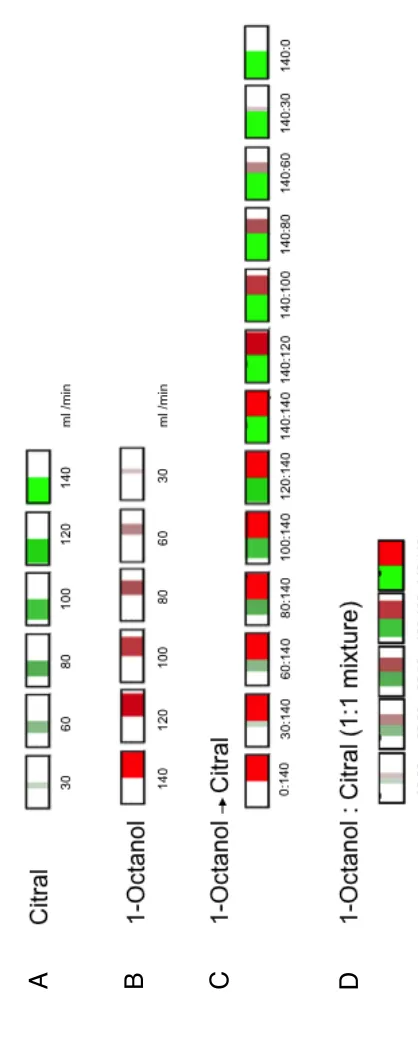
“morphed” one odor into the other in 11 intermediate steps (Fig 2.1C).
Contrary to recent results in the zebrafish olfactory bulb (Friedrich et al.,
in press), we observed no sudden transition but rather, a gradual shift of
the population trajectory corresponding to one odor to that for the other
odor, via their 1:1 mixture trajectory. Thus the encoding space defined by
PNs appears to optimize the spread of odor representations to
accommodate even small changes in the stimulus. While the responses of
single PNs often deviate from the linear combination of the responses to
their components, the population output is reasonably well approximated
by linear summation.
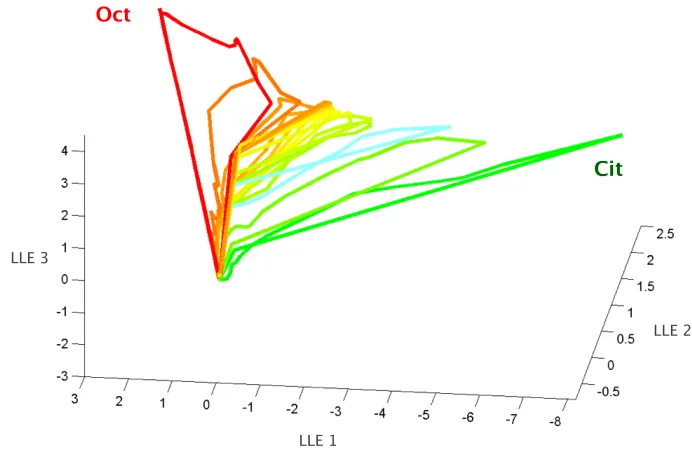
Figure 2.1 Representations of single odors and their mixtures are spread orderly in PN coding space.
A-C. Trajectories representing PN-ensemble responses to binary mixtures. PN activity is
represented as a point in 168-D space, where each dimension represents the firing rate of one of the 168 PNs during one 50-ms time bin. Data analyzed using LLE and projected in the space of the first three LLE components (see Methods). Arrows indicate direction of motion. Three seconds are represented, beginning at odor onset; odor pulses are 300 ms long; each trajectory composed of a sequence of 50ms-bin
measurements, averaged over three trials. (A) PN Population responses to single odors
(citral: green; octanol: red) and to their 1:1 mixture (yellow). Initially at a resting state
Trajectories to different concentration series of citral, octanol (30, 60, 80, 100, 120, 140 ml/min) and their 1:1 mixture (30:30, 60:60, 80:80, 100:100, 140:140 ml/min). Similar to trajectories for pure odors, concentration-specific trajectories of the 1:1
mixture form odor-specific manifold. Nine-trial averages for each condition. (C)
Trajectories corresponding to odor-morphing series. From Oct to Cit: 140:0, 140:30, 140:60, 140:80, 140:100, 140:120, 140:140, 120:140, 100:140, 80:140, 60:140, 30:140, 0:140. Trajectories change smoothly, with greatest changes away from pure-odor.
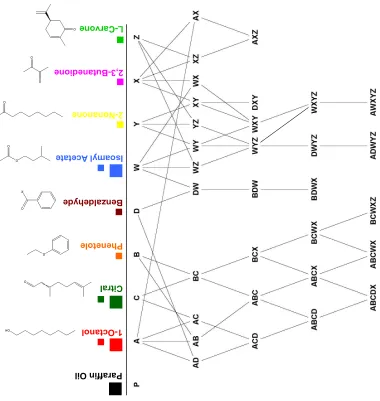
D-H. Multi-component-mixture trajectories (dataset different from that in A-C: 175
other PNs, stimulated with 44 different odor conditions, see Methods). Four and a half seconds are represented, beginning at odor onset; odor pulses: 500 ms long; 50-ms
bins, each averaged over three 2-trial averages. (D) Trajectories in 3-LLE space for the 8
single-odor components. Inset: zoom out of 8 single-odor trajectories together with the 8-mixture trajectory (gray) (LLE axes recalculated). Mixture trajectory loops around
those for individual odors. (E) Starting from single odor W, trajectories increasingly
deviate as components added (W→WX→WXY→WXYZ→AWXYZ). (F) Mixtures form
ordered trajectory clusters: family of {W,X,Y,Z} (W, X, Y, Z, WX, WY, WZ, XY, XZ, YZ, WXY, WYZ, WXYZ) well separated from family of {A,B,C,D} (A, B, C, D, AB, AC, AD, BC, ABC,
ACD, ABCD). (G) Trajectories to partly overlapping 4-mixtures. (H) Four D-containing
trajectories (D, AD, ACD, ABCD) plotted together with four Z-containing trajectories (Z, WZ, WYZ, DWYZ). DWYZ trajectory (cyan) follows WYZ trajectory for the most part but deviates towards the D-series transiently. Hence, DWYZ can be classified as related to Z or D, depending on time within response (see text).
I. Minimum correlation distances (dmin) between two trajectories as functions of number
of components in the mixture (correlation distances minimize contributions of firing rate differences). Each bin of a trajectory (2-trial average) is compared with bins of the
other at times t±2bins. Correlation distances in space defined by the 40 first principal
2.1.2
Representation of mixtures of increasing
complexity by PNs
We next examined PN trajectories for mixtures of increasing number of
components. Eight molecules were chosen to be chemically distinct and
their concentrations adjusted to evoke minimal, reliable and comparable
electro-antennograms, compensating for differences in vapor pressure or
receptor activation and ensuring operation away from saturation. The
trajectories corresponding to these eight stimuli are shown in Fig. 2.1D.
Consistent with the odors’ distinct chemical composition, these trajectories
did not cluster, indicating large differences between the evoked PN response
patterns.
We first examine the effect of adding 1<n<7 components to a single
odor, W (Fig. 2.1E). The mixture trajectories always deviated from that for W
and from each other. For n>3, however, subsequent component addition led
to decreasing changes in the population trajectory. This is consistent with
the fact that the fractional change to the stimulus decreased with each
single component addition. This observation was repeated with the other
odors and quantified by analysis in the full PN space (not shown).
Second, we observed that, while mixture representations deviated
from those of their components, they still formed clusters of trajectories,
well segregated from those corresponding to non-overlapping mixtures. In
{W,X,Y,Z} and {A,B,C,,D} are plotted, revealing two non-overlapping
manifolds. This suggests that PN population patterns retain information
about components in mixtures, and that PN trajectories do not spread
randomly in representation space.
Third, we examined the trajectories corresponding to partly
overlapping odors with equivalent strengths (same numbers of
components). In this example (Fig. 2.1G) we plot the trajectories of six
mixtures. Three pairs had an overlap of 3 out of 4 components (BCWX &
BDWX; ABCD & ABCX; WXYZ & DWYZ) and these pairs clearly clustered
together. The other combinations overlapped by two (e.g. BCWX vs. ABCD;
BCWX vs. WXYZ) and were roughly equidistant from one another. This again
suggests an ordered occupancy (qualitatively at least) of PN coding space,
where distances between population representations decrease as
composition overlap increases. Note, however, that overlaps between
mixtures representations—considered until now as averages—often changed
over the course of a trajectory. Figure 2.1H, for example, plots the
trajectories for two groups of odors that were distinct (ABCD vs. WYZ), until
component D was added to WYZ. The addition of D caused a new kink in the
DWYZ trajectory, bringing it closer to the D family during a short segment of
the response. Conversely, two highly overlapping mixtures (overlap of 4 out
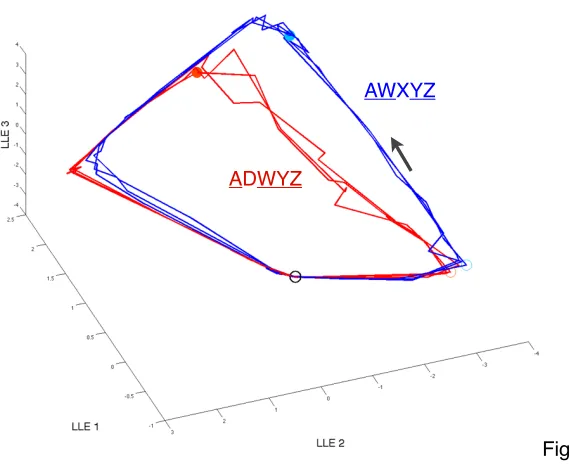
of 5 components: ADWYZ and AWXYZ) could be represented by PN
and then split apart over a later epoch (Fig. S2.8). These results
showed that a fair metric of the similarity between two mixture
representations should be based not on the totality of their corresponding
trajectories, but on piecewise measurements, and on the closest encounter
between them. We thus measured the minimum correlation distances
between every single-component odor and all other odors (other singles,
mixtures of 2, 3, etc.). Using correlation distance (as opposed to Euclidean)
has the advantage of focusing on differences in PN population vectors and
discounting effects attributed to changes in firing rate (such as
concentration). This minimum-distance plot (Fig. 2.1I) was calculated in
three ways: between trials (black), to measure the variance of individual
population representations; between the representations of each single
component and those of all the mixtures containing it (blue); between the
representation of each single component and those of all the mixtures
excluding it (red). The blue and red curves (and corresponding distributions)
were significantly different (Wilcoxon Rank Sum Test, p < 0.01) only for
n=1, 2 or 3. Thus, the representations of a monomolecular odor and of
mixtures of n>3 components are equally distant (on average over odors,
and at the times corresponding to minimum distances) whether the mixture
contains that component of not. In conclusion, while PN-representation
space clearly shows order from mixture coding, extraction of component
composition, based on overlaps between PN population vectors appears
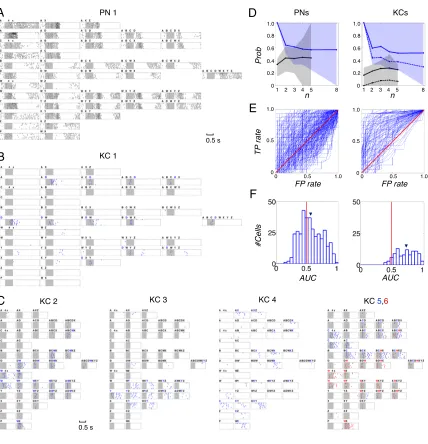
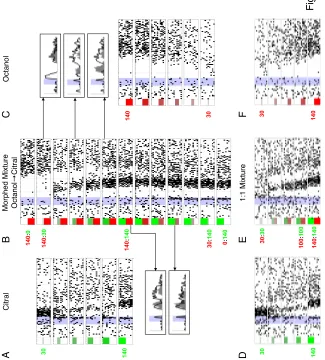
Figure 2.2 KCs segment components out of odor mixtures, but PNs do not.
A. Spike rasters of a representative PN to single and mixed odors (see Methods for 44
stimuli, 7 trials, 500-ms stimulus at shaded area, 2.5 s shown). Numbers of components organized by column, conditions arranged so that overlapping mixtures next to each other wherever possible. Increased inhibition often observed for mixtures
5 4 3 2 1 8 0.6 0.4 0.2 0 1.0 0.8 A B
KC 2 KC 3 KC 4 KC 5,6
KC 1 PN 1 C D E n Pro b PNs KCs n F FP rate FP rate T P ra te AUC #Cells 0.5 s 0.5 s 5 4 3 2 1 8 0.6 0.4 0.2 0 1.0 0.8 0 1.0 0.5 0.5 1.0
0 00 0.5 1.0
1.0
0.5
with increasing size; responses to mixtures difficult to predict from responses to components (see Fig. S9).
B-C. Spike rasters of six representative KCs (see Figs. S11-14 for more examples). (B)
D-segmenting KC, with weak late response to unrelated mixtures Y, WZ, YZ. Same scale
as in A. (C) Other representative KCs, showing segmentation of different odors (in order
of KCs: W, Y, X, C and W). KCs 5 and 6 recorded simultaneously; both responded to mixtures containing both C and W (e.g., BCWX), but at different times. Only 1 s shown, centered on KC response times; t scale as in B.
D. Conditional probability of response to mixtures, given that cell responds to
components (see text and Method). Blue: “in-class”. Black: “out-class”. Lines: “inclusive”; dashed: “exclusive”. Averaged across all responding cell-odor class pairs. Shaded region: 30-70% distribution. Separation between in-class and out-class much greater for KCs than PNs.
E. ROC evaluation of component selectivity by PNs and KCs. True and false positive rates
(TP, FP) determined by sliding response threshold; response based on spike counts within 1 s window summed over 7 trials. Red diagonal: chance performance. Blue lines: results for each responding cell-odor class pair (see Methods for class partitions).
F. Distribution of area-under-curve (AUC) values for KC-odor class pairs significantly
shifted to the right of PN-odor class pairs (p<3.10-13, Wilcoxon rank sum test). Arrows
indicate means: 0.73 (KCs; SD=0.16); 0.57 (PNs; SD=0.18).
2.1.3
Kenyon cell responses to mixtures
Because Kenyon cells are the direct targets of PNs in the mushroom bodies,
because mushroom bodies are a site for associative memory (48, 80) and
because KC output synapses are plastic (70), KCs are the likely repository of
olfactory memories. It is therefore important to determine the stimulus
features that they extract from PNs. For comparison, we show first the
(53), this neuron responded to about half of the stimuli with a variety
of discharge patterns (Fig. 2.2A, see also Fig. S2.10). By contrast, KCs
responded very rarely to single odors, but when they did, did so with very
high specificity (Figs. 2.2B-C). Surprisingly, KCs that responded to a
component also often responded to many—if not all—of the mixtures
containing it. KC 1 (Fig. 2.2B), for example, fired in response to odor D, and
responded to all mixtures containing D (though not necessarily at the same
times and for the same durations). The same can be seen with KCs 2 and 6
for odor W (Fig. 2C). KCs 5 and 6 were recorded simultaneously, and each
responded to a different molecule. We found KCs specific to all 8 single
odors. (Our pre-experiment search for KCs always focused on these 8 odors,
but on them only, see Methods; we also found, by chance and thus rarely, a
few KCs specific for binary mixtures; Fig. S2.13). Thus the ability to detect
components in a mixture appears to occur first with KCs.
We next analyzed the difference between PN and KC responses using
two metrics. In the first, we measured conditional probabilities of response
to mixtures, given that a neuron responded to a component (see Methods
for definition of response). If a neuron responded to component c, we
measured the fraction of c-containing mixtures that it responded to (blue
curves). This was repeated for all component-cell combinations with PNs
and KCs (Fig. 2.2D). With KCs, this measurements were performed in two
one component (continuous lines); an “exclusive” computation
contained KCs that responded to only one component (stippled line); the
later measure is more informative since it excludes the potential
contribution of components other than that tested on responses to
mixtures. This exclusive computation was not possible with PNs for they
always responded to many components. Our second approach was a
receiver-operator-characteristics (ROC) analysis (81), measuring a neuron’s
ability to separate stimuli into “containing-x” and “not-containing-x” sets,
as response threshold is varied. On a true-positive (TP) vs. false-positive
(FP) plot, selective neurons are identified by ROC curves located in the
upper-left quadrant (Fig. 2.2E). Unselective ones run along the diagonal. The
area under the curve (AUC) thus measures selectivity (near 1 for high, near
0.5 for low) (Fig. 2.2F). Both approaches indicated that KCs are significantly
better than PNs at component segmentation. ROC analysis proved that this
is not explained simply by high KC firing thresholds. Hence, in addition to
being highly selective and thus, rare responders, KCs behave as odor
segmenters, extracting component information from PN population vectors.
2.1.4
PN and KC population statistics
We quantified population PN and KC activity as a function of n number of
odor components in the mixture (Fig. S2.17A). Mean baseline PN firing rate
around odor offset. Peak instantaneous firing (and total spikes)
remained approximately the same as a function n, interestingly, peak firing
rate increased for the higher concentration of single components (~3.8 Hz),
while mixtures of comparable concentration resulted in a lower firing rate
(~2.8 Hz for 4-mixtures, Fig. S2.17A). A closer examination of the response
profiles of firing rates reveals that the onset of firing is earlier for mixtures
than for components, and this difference cannot be accounted for by
concentration alone, e.g., compare peak and onset of 3- mixtures to 4x 1-
components. Next, we examined the percentage of silent PNs as a function
of time and n components. A cell was defined as silent if it fired no spikes
in 100 ms time bins (across 7 trials) to allow for a more conservative
measure of silence. The percentage of silent PNs clearly increases as a
function of n components (Fig. S2.17B). This reflect increased inhibition by
local neurons (LNs) onto PNs. When many components are mixed, this
inhibition is greater for mixtures than for components of comparable
concentrations. Together, these results suggest a gain control mechanism
of mixtures mediated by the PN-LN network that regulates the output of the
PNs. Next, we examined the firing rate of the KC population as a function of
n (Fig. S2.17A), unlike PNs, instantaneous KC firing increases as a function
of n, for ~0.3 Hz for single components to ~0.9 Hz for 8-mixtures. In
addition, we observe that unlike PNs, where many cells become inhibited
during odor response, most KCs by comparison are silent at rest, and a very
still significant increase in KC firing as a function of n must be
attributed to not greater number of PN spikes, but greater synchrony of PN
inputs.
An important property of neural codes is the activity ratio, the fraction
of active neurons at any one time (82). At one end of the spectrum are local
codes, where each stimulus is represented by a single active cell. At the
other extreme are dense distributed codes, where each stimulus is
represented on average by about half of the cells, e.g., the ASCII code.
Codes with low activity ratios are known as sparse codes, where each
stimulus is represented by much a smaller neuronal population (but not 1
cell), the members of which respond in an explicit manner to specific
features. The activity ratio has implications for coding capacity, memory
recall, generalization, fault tolerance and speed and rules of learning (see Ch
3). Here, we compared the activity ratio between PNs and KCs (Fig. S2.17C).
We measured the responsiveness of cells in short time bins of 50 ms. A cell
was defined as responding if it spiked at least once in 4 of 7 trials, and was
at least 1.5 SDs above the baseline firing (see Methods). At rest, less than
0.4% of all PNs are responding by this metric, however, with odor onset, the
percentage of responsive PNs immediately rose to ~8% for single
components, ~13% for higher concentrations of single components, and
~11% for multi-component mixtures. Because the identities of responding
responded in at least one time bin (this percentage increased as a
function of n). In comparison, there were no responding KCs at baseline,
and only a very small subset of them responded with odor onset, ~0.5-1% in
any one time bin, and a maximum of ~5% in a 3 s period (to 8- mixture).
These KC response probabilities are qualitatively a 10-, 20- fold
over-estimation, because there was a selective bias for single components in the
KC recordings (see Methods). These results confirm that PN responses are
dense and distributed with a mechanism for gain control of PN outputs. In
contrast, KC responses are sparse and rarely respond (this issue is revisited
in Ch 3). Interestingly, in a recent modeling study (83), it was shown that
optimal discrimination performance is associated with a narrow range of
Figure 2.3 KCs segment components out of odor mixtures, but PNs do not.
A. Spike rasters of a representative PN to single and mixed odors (see Methods for 44
stimuli, 7 trials, 500-ms stimulus at shaded area, 2.5 s shown). Numbers of components organized by column, conditions arranged so that overlapping mixtures next to each other wherever possible. Increased inhibition often observed for mixtures with increasing size; responses to mixtures difficult to predict from responses to components (see Fig. S9).
B-C. Spike rasters of six representative KCs (see Figs. S11-14 for more examples). (B)
D-segmenting KC, with weak late response to unrelated mixtures Y, WZ, YZ. Same scale
as in A. (C) Other representative KCs, showing segmentation of different odors (in order
of KCs: W, Y, X, C and W). KCs 5 and 6 recorded simultaneously; both responded to mixtures containing both C and W (e.g., BCWX), but at different times. Only 1 s shown, centered on KC response times; t scale as in B.
D. Conditional probability of response to mixtures, given that cell responds to
components (see text and Method). Blue: “in-class”. Black: “out-class”. Lines: “inclusive”; dashed: “exclusive”. Averaged across all responding cell-odor class pairs. Shaded region: 30-70% distribution. Separation between in-class and out-class much greater for KCs than PNs.
E. ROC evaluation of component selectivity by PNs and KCs. True and false positive rates
(TP, FP) determined by sliding response threshold; response based on spike counts within 1 s window summed over 7 trials. Red diagonal: chance performance. Blue lines: results for each responding cell-odor class pair (see Methods for class partitions).
F. Distribution of area-under-curve (AUC) values for KC-odor class pairs significantly
shifted to the right of PN-odor class pairs (p<3.10-13, Wilcoxon rank sum test). Arrows
! !"# $ $%&' #( ï $! ! $! %! &! $ ) # $#$
$#$* +,-"* ./0
ȴ ȴ Δ t 1% Ѭ% Ѭ$ 1$ ȴ ѡ 22/ ȴ $!3!!!* 4560 7.8. +.8. 1 9 Ѭ ! $
% & $ !
! "$ ! "% ! "& # $# : ;4<*=0> ï ! "# ! ! "# $ : ;4<*=0> ./*?@AB C*0DEF< A .FEG 1' *, 6' *, H' *,
1 6 ! I H K J C .
1
!
16
1I
1J !6 IH HC HK KC JK JC HJ
1
!
6
16
I
1JC !6J !IH IJ
K HJ K HK C 1 ! 6I 1 ! 6J ! 6H J ! IH J IH KC HJ KC 1 ! 6I J 1 ! 6H J 1I HK C 1H JK C ! 6H JC 1 ! 6I HJ KC 1' *, 6' *, " '* ,
1 6 L I " K J C .
1L 16
1I
1J L6 I" "
2.1.5
Generating model KC classifiers using recorded
PN data
A simple abstraction to explain our observations is that odor
representations are spread orderly in a high-dimensional PN space (Fig
2.1A); because of their partial and specific connectivity to PNs (50±15%,
(59)), individual KCs sample different lower-dimensional projections of
PN space. At every oscillation cycle, each KC makes a binary
classification decision in the subspace that it sees, on the presence or
absence of a particular stimulus feature (odor component). This
abstraction might explain the fact that a single KC can recognize a
component, even when the PN trajectories corresponding to the mixtures
containing it differ significantly from one another in the full PN space
(Fig. 2.1A): by projecting those PN mixture trajectories into the
appropriate subspace (by sampling the appropriate subset of PNs), a KC
could detect the appropriate “crossings” of the projected trajectories. To
test this intuition, we generated a simplified model of the antennal
lobe-mushroom body circuits, fed into it our recorded PN data, and tested
whether it was sufficient to produce model KC (mKC) responses similar to
those recorded in our experiments. Our constraints on the model’s
design were entirely determined by our knowledge of the system (53, 59,
There are four main components to our simplified PN-KC model.
First, each mKC received direct PN input from 50±15%of the incoming
PNs (59). The large number of different PN combinations implies that
there are a large number of patterns that KCs could potentially encode
(59). Such convergence (~400 PNs–1 KC) and divergence (one PN–many
KCs) would lead to a lot of KC firing unless the KC’s threshold were
appropriately high and appropriate gain control (see below). Second,
EPSPs were modeled as first order filters with amplitude A1, and decay τ1,
both subjected to a nonlinearity constrained by electrophysiological
results (53, 60). This was to mimic voltage-dependent conductances that
serve to sharpen EPSPs when KCs were depolarized. Thus, a PN spike
that arrives synchronously with others can contribute disproportionately
towards the KC reaching threshold. Third, KCs receive odor-evoked
feedforward inhibition from the LHI neurons. These GABA-ergic neurons
which respond non-specifically to odors appear to have extensive axonal
arborizations in the MB. Each mKC thus received delayed feed-forward
inhibitory input from the entire PN population, modeled as an IPSP (A2, τ2)
with delay Δt, representing these LHIs (53). Overall, KCs receive both
excitatory and inhibitory inputs at specific times that are locked to the
LFP. PNs tend to fire preferentially during the rising phase of each cycle.
LHIs, which receive their input from PNs, tend to fire with a delay and
response, a KC receives excitatory input from the set of PNs it is
connected to that happen to be active during that cycle. Immediately
after this, the KC receives non-specific inhibitory input from the LHIs that
resets its membrane potential limiting integration of EPSPs across
oscillation cycles. Fourth, The respective excitatory and inhibitory inputs
were summed and compared to the firing threshold, itself regulated
adaptively by the entire mKC population output, through the normalizing
negative feedback pathway recently identified (giant GABAergic neuron,
Papadopoulou et al.). This feedback gain control (the final component of
our model) was indispensible to generated mKC-population response
statistics commensurate with experimental results.
Each KC differed from the others only by its connection vector to the
PN population, drawn randomly and independently. This model system was
fed the PN spike data (phase warped to simultaneously recorded LFP)
recorded experimentally with our 44 stimuli. Because our mixture dataset
comprised ~151 PNs (vs. 800 in the entire population), the AL-MB model
was scaled down to 10,000 KCs (rather than 50,000). The simulations were
run 100 times, generating 1,000,000 model KCs (mKC), each uniquely
determined by 55 randomly selected PNs out of 151 possible PN inputs to
our model. We identified each mKC’s response profile and examined the
response statistics of this population. The responses of one mKC to a single
mKC responses were entirely constrained by PN activity (given by
recordings), by our knowledge of the circuits (given) and by PN-mKC
connectivity (the only variable). Hence, the null hypothesis was that random
connectivity between PNs and KCs is a sufficient constraint to generate
component-detecting KCs, and to produce them with the distribution
observed experimentally.
Two examples of classifying mKCs are shown in Fig. 2.3C. As
observed experimentally, these two mKCs responded to one odor (B or W),
and to most mixtures containing the component. Over the population of
mKCs, firing rates varied with mixture composition precisely as observed
experimentally. Over 106 mKCs, however, only 1,200 were found to be
segmenters. (Over 50,000 true KCs, this fraction would be equivalent to 60
segmenting true KCs, a number grossly inconsistent with our experimental
discovery over a very small sample.) Similarly, there was no separation
between conditional response probabilities to mixtures containing the
component and those excluding it, contrary to experimental results. Hence,
mKCs did not classify odors with the frequency observed in our
experiments.
Because the only features distinguishing the responses of mKCs were
their connectivity to PNs, we extracted the 1,200 good segmenters from
among all mKCs and identified the PNs to which they were connected. For
whether they tended to be present or absent in the input vector. With
this knowledge, we returned to the full mKC population and imposed a
selected bias on the composition of the input vectors to mKCs, thus
deviating from randomness. We increased this bias until conditional
response probabilities for mKCs matched those observed experimentally. We
observed that when 20% of all mKCs connectivity were biased, by
manipulating 15/55 of their PN inputs it was sufficient to explain our
experimental observations. Hence, a circuit constrained by data, with 50 ±
15% input connectivity and a small bias away from randomness can fully
account for our experimental results on odor classification by KCs.
2.2 Discussion
2.2.1
Functional consequences
While the representations of odor mixtures by PN assemblies show
clustering by chemical composition, the relationship between the
representation of a mixture and that of one of its components is on average
no tighter than that between mixture and unrelated components as soon as
the mixture contains more than 3 components. Surprisingly KCs—directly
postsynaptic to PNs—are individually much better than PNs at detecting a
component in a mixture of up to eight odors (ROC analysis). By building a
data (53, 59, 60) and feeding this model our experimental PN data, we
showed that the segmenting properties of KCs can be entirely explained,
qualitatively and statistically, provided that connectivity between the PN and
KC populations, set at 50±15% by experiments (59), is not entirely random.
This suggests either a genetic encoding of PN-KC connectivity or more
likely, the existence of a learning rule, presumably unsupervised and yet to
be discovered there, to fine-tune PN-KC connectivity in the mushroom
body. This model also suggests that we now have a relatively good
mechanistic understanding of these early olfactory circuits. Among its key
components is an all-to-all normalizing feedback loop within the mushroom
body (Papadopoulou et al). This normalizing feedback loop is mediated by a
giant GABAergic neuron (GGN) that has extensive arborizations in the MB
(Papadopoulou et al). This neuron was found to be non-spiking and
provides increased inhibition as the number of components was increased in
the odor mixture. In our PN-KC model, we found that without feedback gain
control from the GGN, KC firing increased at a much greater rate as a
function of n components than what experimental KCs. Because this was
the one variable in our model that KCs were the most sensitive to, we
conclude that GGN feedback onto KCs is crucial in maintainin