University of South Carolina
Scholar Commons
Theses and Dissertations
2017
Scribes Impact On Patient And Provider
Experience In The Outpatient Setting
Kimberly A. Taylor
University of South Carolina
Follow this and additional works at:https://scholarcommons.sc.edu/etd
Part of theFamily Practice Nursing Commons
This Open Access Dissertation is brought to you by Scholar Commons. It has been accepted for inclusion in Theses and Dissertations by an authorized administrator of Scholar Commons. For more information, please [email protected].
Recommended Citation
SCRIBES IMPACT ON PATIENT AND PROVIDER EXPERIENCE IN THE OUTPATIENT SETTING
by
Kimberly A. Taylor
Bachelor of Science in Nursing Medical University of South Carolina, 1994
Master of Science in Nursing East Carolina University, 2008
Submitted in Partial Fulfillment of the Requirements
For the Degree of Doctor of Nursing Practice in
Nursing Practice
College of Nursing
University of South Carolina
2017
Accepted by:
Deb McQuilkin, Major Professor
Ronda Hughes, Committee Member
Nausheen Momen, Committee Member
DEDICATION
I am extremely grateful to God for giving me the strength, ability, and desire to
pursue this milestone accomplishment. Through Him I have been blessed with amazing
family, friends, and professors who have encouraged, and motivated me to stay the
course, and finish with excellence. I would like to specifically thank my husband,
children, parents, and nephew for their love, and support throughout every season of this
journey. This degree is for you guys too! Truly you are the greatest blessings in my life,
and I love you all dearly!
I am very proud to be a Gamecock and am thankful for the many phenomenal
mentors that I had the honor to work with over the course of my time at the University of
South Carolina. The College of Nursing faculty is a dynamic group of leaders and I
ACKNOWLEDGEMENTS
I am immensely thankful to my mentor Dr. Deb McQuilkin and my committee
members, Dr. Ronda Hughes, and Dr. Nausheen Momen for their time, support, and
guidance throughout this challenging evolution. Their dedication and willingness to share
their insight and knowledge was helpful and vital to the success of this process. I would
also like to recognize Dr. Helen Halasz for her steadfast devotion to ensuring that my
courses, graduation timeline, and all other concerns with being a distant learner were
handled in a timely and professional manner.
With a relocation from the East Coast to Texas in the middle of my degree
program, Dr. Halasz worked diligently to ensure that I met every requirement of the
degree plan to facilitate a Fall 2017 graduation. Additionally, I am honored to have been
selected as the University of South Carolina’s College of Nursing’s 2016-2018 Jonas
Veteran Healthcare scholar. I thank all of my mentors and Dean Jeannette Andrews for
their support during the application process.
I would like to express a deep sense of gratitude to Dr. Rick Hammett and Mr.
Mario Ernie Corral for their assistance with statistical analysis. I would not have been
able to perform these tasks without them. Last but definitely not least, I would like to
thank all of my peers and colleagues that I had the pleasure to work, and learn with
throughout my academic trajectory. Truly, they made it a memorable journey. I wish
ABSTRACT
The purpose of this project was to evaluate the effectiveness of using
scribes in the outpatient setting on patient and provider experience. A mixed methods
approach with a convenience sample of voluntary patient participants scheduled for an
outpatient appointment was utilized. Two primary care physicians volunteered to receive
scribes. Four hospital corpsmen were selected and trained to serve in the scribe role.
This quality improvement project evaluated two aspects of experience during the
implementation of the scribes. These included: 1) patient experience as indicated via a
pre and post implementation questionnaire; and 2) provider experience as indicated via a
pre and post implementation questionnaire.
SPSS was used to analyze quantitative data. Results revealed a slight decrease of
0.18 mean patient satisfaction and overall patient experience. The providers’ experience
improved with an average 50% decrease in time spent after hours documenting in the
electronic health record, enhanced engagement with patients, and improved work life
balance. Clinic efficiencies improved with a savings of 13.88 minutes per appointment,
and enhanced clinical and war time readiness for hospital corpsmen were identified.
Although a small-scale project, the provider experience was strengthened when
using scribes while patient experience decreased slightly. Future exploration, centered on
setting for providers. Further study of the scribe’sexperience, especially considering the
positive comments from the hospital corpsmen that participated as scribes during the
project, could provide beneficial outcomes.
PREFACE
In the fast-paced environment of healthcare, it is imperative to consider new and
innovative evidence-based strategies to promote positive outcomes and experiences for
patients and providers. The utilization of scribes is recommended as a consideration and
strategy to elevate overall care experience; therefore, this evidence-based quality
improvement project was designed to evaluate the impact scribes could have on patient
and provider experience in an outpatient setting. Furthermore, as a requirement of the
Doctor of Nursing Practice program, this evidence-based practice project was completed
TABLE OF CONTENTS
Dedication ... iii
Acknowledgements ... iv
Abstract ...v
Preface ... vii
List of Tables ... ix
Chapter 1 Introduction ...1
Chapter 2 Scribes Impact on Patient and Provider Experience in the Outpatient Setting .18 Chapter 3 Findings and Conclusion ...40
LIST OF TABLES
Table 2.1 Descriptive Statistics for the One-Way ANOVA (time efficiencies) ...29
Table 2.2 The Dunnett’s C Post-hoc Test of Multiple Comparisons between Scribe
Interventions ...30
Table 3.1 Descriptive Statistics for the One-Way ANOVA (time efficiencies) ...44
Table 3.2 The Dunnett’s C Post-hoc Test of Multiple Comparisons between Scribe
Interventions ...45
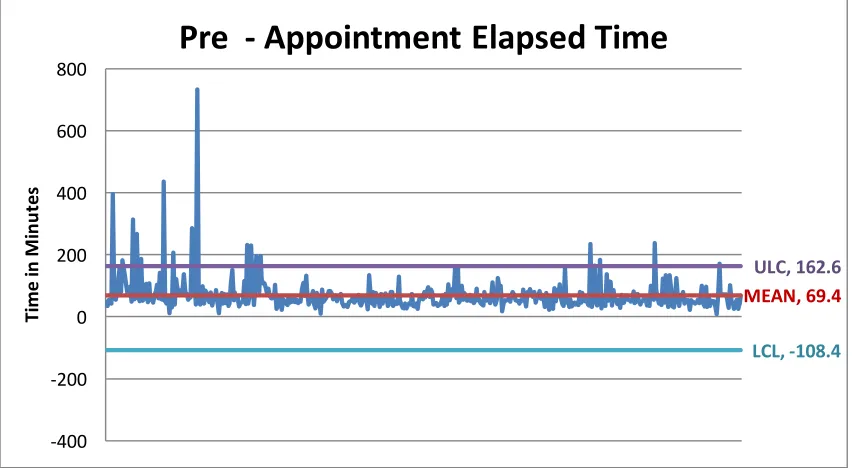
Table 3.3 Statistical Process Control Chart – Pre-Scribe – Phase One ...47
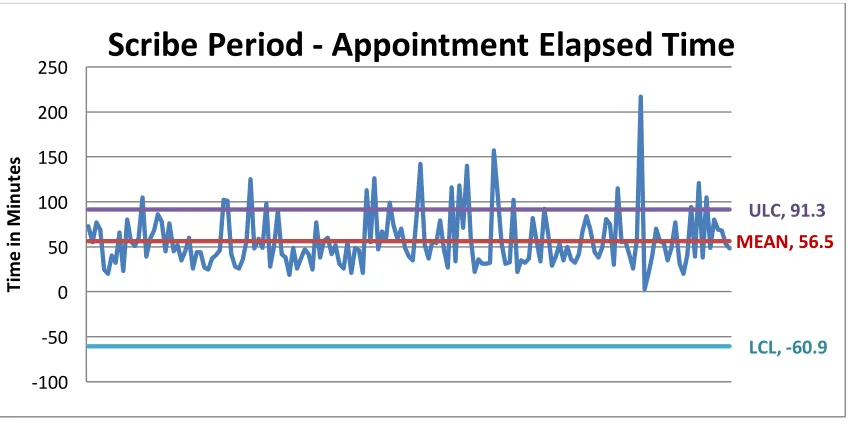
Table 3.4 Statistical Process Control Chart – Initial Scribe Implementation – Phase Two ...48
CHAPTER 1
INTRODUCTION
Introduction and Background
A strong provider-patient relationship is critical to promote collaboration,
partnerships, and ultimately optimal patient outcomes (Zolnierek & DiMatteo, 2009).
With the ongoing transition to electronic health records (EHR), providers have additional
administrative burdens to perform data entry while engaging with the patient during the
health care visit (Carnes, de Riese, & de Riese, 2015). The complex nature of the EHRs
left providers frustrated and distracted which hindered connectivity, and communication
with the patient (Shachak & Reis, 2009). The utilization of medical scribes in the
outpatient clinical setting was a strategy shown to enhance provider and patient
interaction, decrease clinician’s administrative tasks, and promote satisfaction among
providers and patients (Allen, Banapoor, Weeks, & Payton, 2014; Hess et al., 2015).
Challenges such as these are prevalent within Navy Medicine (J. Ehrmann,
personal communication, January 18, 2017). In the quest to provide high quality care and
promote high reliability, the Surgeon General has given direction to advance patient
experience, cultivate partnerships, and promote health for the Navy Medicine team and
implemented on a small scale within the Family Medicine clinic to determine benefits of
scribes.
Scope of the Clinical Problem
Menon (2015) stated there was a general perception that EHRs impeded effective
communication with patients, and providers thought they spent more time doing
administrative duties “like documentation and writing orders, and less time interacting
with patients” (p. 58). Providers believed that EHRs created a barrier that decreased and
often removed the personal interaction and human connectivity during a patient visit
(Bank et al., 2013; Hess et al., 2015). Likewise, Kreamer, Rosen, Susie-Lattner, and
Baker (2015) acknowledged that providers affirmed they experienced challenges with
communication when there were constant distractions focused on data entry into the
EHR. This concern transcended into all potential health care touch points for a patient
seeking medical treatment from a clinical provider (Kreamer, Rosen, Susie-Lattner &
Baker, 2015).
Within the Navy Medicine Family Practice outpatient clinic, providers have been
challenged with documenting while interacting with the patient, waiting to document
after the patient encounter, or a combination of both (M. Buchanan, personal
communication, November 13, 2016). These choices led to provider frustration, increased
time required to document, delays in completing the notes, and decreased personal
Significance
With the adoption of the EHR, Koshy, Feustel, Hong, and Kogan (2010) noted
that providers believed “that the use of the EHR threatens their relationship with the
patient because attending to a computer interferes with the doctor-patient interaction,
and/or they believe that typing in front of the patients is rude” (p. 259). Likewise, Bank
and colleagues (2013) indicated that, when an EHR was utilized, the personal interaction
with patients was hindered, not patient centered, and fragmented. As a result, medical
scribes were utilized with increased prevalence to improve productivity, efficiency, and
patient and provider experience (Kosowsky, 2015).
While the research on the benefits of scribes in the practice setting is increasing,
literature indicated that in a variety of settings, such as the emergency department,
specialty clinics, and outpatient arena, positive outcomes occurred for patients and
providers (Arya, Salovich, Ohman-Strickland, & Merlin, 2010; Bank et al., 2013;
Bastani, Shaqiri, Palomba, Bananno, & Anderson, 2013; Cabilan & Eley, 2015; Imdieke
& Martel, 2017; Koshy et al., 2010; Menon, 2015; Shultz & Holmstrom, 2015; Walker,
Ben-Meir, O’Mullane, Phillips, & Staples, 2014; Yan et al., 2016). A study conducted by
Bank and Gage (2015) revealed that during an outpatient health care visit providers using
scribes saved approximately 2.5 hours during each scheduled clinic day. Bank and Gage
added that providers were able to spend more time directly engaging with patients
resulting in “increased face-to-face interaction with patients during a clinic visit without
Additionally, Bastani and colleagues (2013) discovered that the implementation
of a scribe program positively impacted patient satisfaction and improved overall patient
satisfaction scores by 14%. The use of scribes also improved provider efficiencies
allowing the provider to arrive on time to see the patient thus enhancing the patient care
experience and improving patient satisfaction (Bank & Gage, 2015). Furthermore, Bank
and colleagues (2013) noted that “time spent in direct patient interaction (without using
the computer) was over fourfold greater on scribe visits. Overall quality of the
physician-patient interaction was also significantly better on scribe…visits” (p. 402). These recent
studies and literature conveyed the importance of considering utilization of scribes which
proved to alleviate the administrative burden and tasking of providers in order for them to
focus on the patient during the health care visit, strengthen the provider-patient
relationship, and improve patient and provider experience.
Background: Analysis and Synthesis
Utilizing components of the PICOT question and key words of scribe, patient
satisfaction, and provider satisfaction, the search strategy yielded 17 applicable articles
for consideration and evaluation of the PICOT question. Of those, thirteen articles
described research studies and one resource was a randomized study. All of these articles
explored the intervention of the scribes in an ambulatory setting. Five research studies
included financial and clinical improvements.
One systematic review utilizing an expert consensus panel explored the impact of
scribes within an emergency department, cardiology clinic, and urology clinic. Three
experience. All of the relevant articles were published between July 2009 to January 2017
revealing that the utilization of medical scribes was a relatively new strategy since the
inception of the EHR.
The Koshy, Feustel, Hong, and Kogan (2015) randomized control study found
that scribes were readily accepted by the patients and providers. A total of 166
scribe-patient satisfaction surveys, and 321 control scribe-patient satisfaction surveys were collected. A
total of 29 scribe-physician satisfaction surveys and 26 control physician surveys were
obtained. Patient satisfaction rates increased from 87% to 93%, and physicians were
dramatically more satisfied with their experience showing a 50% improvement from 19%
to 69%. Likewise, the Imdieke and Martel (2017) quasi-experimental study revealed that
utilizing scribes in the ambulatory care setting decreased provider time spent
documenting by over 50%, and improved satisfaction of the providers.
In the Bastani, Shaqiri, Palomba, Bananno, and Anderson (2014)
quasi-experimental study, initial data revealed that collectively providers on shift during a
24-hour period spent 25 24-hours a day in front of a computer instead of with patients.
Comparative data was collected on over 11,000 encounters prior to the implementation of
scribes, and over 12,000 encounters after scribe implementation. With the
implementation of scribes, the satisfaction increased for patients from 58% to 72%, and
for providers from 62% to 86%. The Bank and Gage (2015) retrospective study found
that revenue increased over a million dollars, and providers gained more than two hours a
day back to spend interacting and engaging with patients, were collectively able to see
almost 10 additional patients per hour, and were able to complete all of their
The Carnes, de Riese & de Riese (2015) study focused on waiting times for
patients, and time spent with provider. Results indicated that the urology clinic would
benefit from the implementation of a scribe program as long as it was a cost effective and
financially sound initiative. Walker, Ben-Meir, O’Mullane, Phillips, and Staples (2014)
utilized comparison data from six and a half months prior to the scribe program and then
for six weeks after the scribe program to reveal a 36% reduction in patient wait times to
see the provider, and an increase of 0.32 patients per hour. Hess and colleagues (2015)
noted that after scribe implementation over 61% of providers valued scribes, 82% of the
providers indicated that charting and documentation were enhanced, and 30% (p<.01)
more time was spent with the patient. Allen, Banapoor, Weeks, and Payton (2014) found
a statistically significant decrease in waiting time to triage, transition time to room, and
disposition with a p value of less than 0.001 with a scribe program. Furthermore, 100% of
the providers indicated scribes were a valuable asset and indicated a significant
improvement in quality of life, workplace satisfaction, and stress levels.
Arya, Salovich, Ohman-Strickland, and Merlin (2015) focused on relative value
units (RVU), and number of patients seen per hour. This study indicated that scribes
allowed an additional patient to be seen each hour which increased RVUs to 2.4/hour.
Bank and colleagues (2013) conducted a study with four physicians who saw 129 patients
before scribes and then 210 patients after scribe. Results showed a 59% (p < .001)
increase in patients per hour and a 57% increase in RVUs per hour yielding direct and
indirect financial gains of over $200,000. Kreamer, Rosen, Susie-Lattner and Baker
per patient. This reduction allowed providers to interact and communicate more with
patients and further elevated patient satisfaction.
These studies (Allen, Banapoor, Weeks, & Payton, 2014; Arya, Salovich,
Ohman-Strickland, & Merlin, 2010; Bank & Gage, 2015; Bank et al., 2013; Bastani, Shaqiri,
Palomba, Bananno, & Anderson, 2014; Carnes, de Reise, & de Reise, 2015; Hess et al.,
2015; Imdieke & Martel, 2017; Koshy, Feustel, Hong, & Kogan, 2010; Kreamer, Rosen,
Susie-Lattner, & Baker, 2015; Walker, Ben-Meir, O’Mullane, Phillips, & Staples, 2014)
revealed that scribes had a positive impact on patient and provider experience. Likewise,
the utilization of scribes also produced financial, clinical, and productivity improvements
which led to overall efficiency and quality for patients, providers, and organizations. The
cultivation of these types of positive environments and outcomes were beneficial for both
the patients and providers.
As the various levels of evidence were examined, the Schultz and Holmstrom
(2015) systematic review explored five studies assessing use of scribes in emergency
departments, and cardiology and urology clinics. The authors indicated that two of the
three studies showed no change in patient satisfaction, two of the studies revealed
improved provider satisfaction, three of the studies noted improved time related
efficiencies, and one study reported improved patient-provider interactions. Additionally,
Yan and colleagues (2016) conducted a qualitative study which identified that patients
were comfortable with scribes being in the room, found that providers were able to listen
more attentively, and gave their full attention to the patient further enhancing the patient
Within the literature reviews, Cabilan and Eley (2015) identified that scribes
alleviated documentation burden, increased number of patients seen, and improved
patient wait times. Shachak and Reis (2009) identified that innovative strategies such as
scribes were beneficial in strengthening communication between the provider and patient
as well as patient outcomes. Kosowsky (2015) indicated that physicians were better able
to engage and communicate with patients without the distraction of a computer when a
scribe was utilized during the patient visit. Menon (2015) referenced that using scribes
allowed the provider to interact more freely with the patient.
These articles (Cabilan & Eley, 2015; Kosowsky, 2015; Menon, 2015; Shachak &
Reis, 2009; Shultz & Holmstrom, 2015; Yan et al., 2016) further supported that scribes
removed the administrative burdens on the providers, improved patient wait times,
enhanced communication between the provider and the patient, promoted positive
outcomes, and positively impacted patient and provider experience. To this end, the value
of scribes and their ability to enhance the healthcare experience for patients and the
quality of life for providers must be considered.
Evidence-based practice considers “a synthesis of evidence from multiple studies
and combines it with the expertise of the practitioner as well as patient preferences and
values” (Melnyk & Fineout-Overholt, 2015, p. 4). In the fast-paced environment of
healthcare, it is imperative to consider new and innovative strategies to promote positive
outcomes and experiences for patients and providers. The utilization of scribes is
recommended as a consideration and strategy to elevate the overall care experience for
Limitations regarding the utilization of scribes is hinged on the premise that there
is a limited number of studies on this particular strategic initiative and sample sizes were
relatively small. To this end, there is a critical need for randomized control and other
types of experimental studies with larger sample sizes to be designed and conducted to
assess the impact of scribes on the provider and patient experience. High levels of
evidence and quality studies are highly recommended in order to grow this body of
knowledge and further strengthen the evidence-based practice of scribe utilization in the
outpatient setting.
Although there is a limited amount of evidence to support the impact of scribes,
the literature that is available clearly delineates the benefits scribes can have on
enhancing the provider and patient experience. Furthermore, the evidence reveals that
additional benefits to the organization and community at large can be extrapolated from
using scribes to include improved efficiencies, increased revenue, decreased wait times,
enhanced access to care, enriched quality of life, and optimized patient outcomes.
Organizations are encouraged to evaluate their current practices, satisfaction
scores, and financial standings to determine if scribes could be utilized to strengthen
provider and patient experience. Considerations should be made to the organization’s
receptivity to innovative strategies and time must be devoted to cultivate adequate buy in
from the stakeholders in order to maximize the potential benefits of this type of
intervention. Furthermore, the strengths of this cutting-edge initiative are outlined within
the body of this document, and this highlights the positive impact that scribes can have
not only on the provider and patient experience, but also on organizational and financial
Statement of Purpose
The purpose of this study was to evaluate the effectiveness of using medical
scribes in an outpatient clinical setting on provider and patient experience. Menon (2015)
remarked that “medical scribes are trained nonmedical personnel, who work closely with
their partnered clinician either a physician, physician assistant, or advanced practice
nurse practitioner” (p.58), and scribes were able to “perform multiple documentation
tasks under physician supervision to assist physicians during their care of patients”
(Banks & Gage, 2015, pp. 489-490).Shultz and Holmstrom (2014) indicated that as
EHRs “continue to be integrated within health care settings both large and small, policy
makers, health care administrators, and clinicians will need new tools to improve
productivity, quality, and outcomes” (p.379). Furthermore, Shultz and Holmstrom noted
that “medical scribes may improve clinician satisfaction, productivity, time-related
efficiencies, revenue, and patient-clinician interaction” (p.379).
At the proposed site where this project occurred, the providers identified that they
were inundated with computer documentation, spent several additional hours after work
documenting in the medical record, and expressed dissatisfaction with the current
practice (J. Ehrmann, personal communication, November 13, 2016). While patient
satisfaction was relatively stable at the location, there were patients who expressed the
need to enhance patient and provider interaction, and overall experience of care (M.
Buchanan, personal communication, December 21, 2016). In reviewing these elements
with the executive leadership, we surmised that the pilot project of utilizing scribes in the
priority of enhancing the patient experience (M. Buchanan, personal communication,
January 15, 2017).
PICOT Question
The PICOT question asked in this project was as follows:
In adult patients (P), does having a medical scribe (I) versus not having a medical scribe
(C) improve the patient and provider experience (O) during a scheduled outpatient visit
(T)?
PICOT Definitions
The PICOT definitions for this project are included below:
Population (P) = adult patients at the Naval Health Clinic Corpus Christi, Texas
Intervention (I) = having a medical scribe
Comparison (C) = not having a medical scribe
Outcome (O) = improve patient and provider experience; patient experience evaluated
based on enhanced communication and interaction with provider, and overall experience;
provider experience evaluated based on improved efficiency, decreased administrative
burden, enhanced interaction with patient, and provider satisfaction.
Project Methodology
Theoretical Framework
The theoretical framework selected for this evidence-based project was developed
by Rosswurm and Larrabee and is called the Model for Evidence-Based Practice Change.
This model incorporates six steps to include step one) assess the need for change in
practice, step two) locate the best evidence, step three) critically analyze the evidence,
step four) design practice change, step five) implement and evaluate change in practice,
and step six) integrate and maintain change in practice (Melnyk & Fineout-Overholt,
2015). Within step one, the providers, ambulatory care nurse manager and clinic manager
for family practice, director of outpatient services, executive officer, director of quality
improvement and chief nursing officer were the stakeholders identified.
Then, the staff and project author gathered, consolidated, and evaluated data on
patient and provider experience to formulate the PICOT question referenced above. The
focus of this project was to determine the impact that scribe utilization had on the patient
and provider experience. The independent variable for this project was the scribe
utilization and the dependent variables were the patient experience and provider
experience.
Next, step two focused on locating the best available evidence. The search yielded
17 references and each piece of literature was reviewed for inclusion criteria in
congruence with the PICOT question. Then, the John Hopkins Nursing Evidence-Based
study each article to identify the level of evidence, and quality ratings. The references
identified consisted of Level I, Quality B to Level 5, Quality C.
Within step three, evidence was synthesized, feasibility was addressed, and
potential benefits and risks were considered. The stakeholders, staff, and project author
identified that the family practice team was willing to participate in a quality
improvement pilot project, equipment was available to support project, and leadership
was supportive. Furthermore, the review of available literature supported the benefits of
an innovative practice change, and the stakeholders were convinced there was an
opportunity to improve current practices in the family medicine clinic. Within step four,
the Rosswurm and Larrabee Model guided a change in practice design. This new practice
design involved a medical scribe accompanying the provider in the outpatient health care
settings during designated patient visits. In order for the maximum positive impact on
patient and provider experience, it was critical to ensure that the stakeholders remain
engaged and were supportive of the practice change. The family practice clinic managers
and project author collaborated to ensure promotion of new practice design. Providers
and scribes participated in a weekly debrief and feedback session to address concerns and
questions that emerged during the week.
For step five, the pilot study within the outpatient setting was launched. During
this time, evaluation of the “process, outcomes, and costs; and development of
conclusions and recommendations” (Melnyk & Fineout-Overholt, 2015, p. 289) occurred.
Lastly, step six included recommendations for practice, consideration of this
evidence-based practice change throughout the family practice clinic, and ongoing monitoring and
Project Intervention
This project was performed at a Military Treatment Facility (MTF) in the Family
Practice outpatient setting during scheduled routine outpatient visits to improve the
patient and provider experience. A mixed methods approach with a convenience sample
of voluntary patient participants scheduled for an outpatient appointment were utilized.
Two primary care physicians, a Family Practice doctor and an Internal Medicine doctor,
were selected as the providers to receive scribes and were willing to participate in this
pilot project. Four hospital corpsmen were selected as scribes, and were willing to
participate in the project.
These four hospital corpsmen served as scribes after they received two weeks of
training centered on orientation to the EHR, data entry into the EHR, creation of referrals,
and scribe simulation in which the scribe was paired with their designated provider in a
training atmosphere with opportunities to perform scribe functions with a simulated
patient. Laptops were provided to the scribes during the project period and utilized during
the patient visit. No additional resources were needed for the project.
Navy Medicine and the University of South Carolina Institutional Review Boards
(IRB) considered this project exempt. Physicians, and hospital corpsmen identified to
participate were approved by their respective chain of command within the Navy, and
were not pending any deployment or transfer orders. The questionnaires utilized in this
pilot project were developed in compliance with Navy Medicine guidelines and approved
Action
Two scribes were paired with the same physician throughout the project period,
and accompanied the provider during the patient visit to perform real-time documentation
into the EHR. Patients provided verbal consent at the beginning of the appointment.
During sensitive physical exams, scribes were excused from the room.
Evaluation Plan
Prior to the launch of the scribes, patients willing to participate were surveyed via
a printed questionnaire for one week. Of the initial 100 surveys given to patients, 89 were
returned to check-out personnel. Patients that agreed to participate were also surveyed via
a printed questionnaire during the final week (week six) of the pilot project with 96
questionnaires collected. Patients returned completed surveys to check-out personnel. For
providers, printed questionnaires were disseminated and collected prior to the
implementation of the pilot project and then three days after completion of the project.
After collection of questionnaires from the patients and providers, a review and
comparison was performed with the assistance of the committee. Descriptive statistics,
improvements, and comments were assessed and integrated into the results section of this
project.
Expanded project intervention
The original project was scheduled to occur over a six-week period. After
completion of this phase of the project, the project was expanded an additional six weeks
hour time frame designated by Navy Medicine, of the providers. This additional phase
provided an opportunity to analyze the efficiencies gained by providers when utilizing
scribes and was thought to be a beneficial addition in order to further support the value of
this innovative quality improvement project.
Timeline
The first phase of the pilot project was initiated during the first quarter of the year.
The second phase immediately followed, and both phases were completed over a
12-week period.
Evaluation
The ambulatory clinic was implementing several quality improvement projects
during the previous months, and the current climate was conducive for a project of this
nature. Leadership was highly supportive and interested in this type of quality
improvement initiative. Given this environment, and utilizing the principles of Kotter
(2017), change management was guided for long term sustainability. The use of scribes is
an interest in Navy Medicine, and this project may facilitate understanding of the impact
scribes can bring to an organization prior to utilizing in other outpatient settings to
enhance patient and organizational outcomes.
Introduction to Article for Submission
The manuscript will be submitted to the Military Medicine journal. In order to
satisfy the requirements of this journal, manuscript guidelines include utilizing the
manuscripts for pilot projects could not exceed 3,000 words. Additionally, the abstract
was required to be between 250 to 500 words.
Upon approval from the Doctor of Nursing Practice committee, the manuscript
and abstract must also be approved by Naval Health Clinic Corpus Christi’s Public
Affairs Officer, and the Navy Medicine East’s Public Affairs Officer prior to submission
CHAPTER 2
MANUSCRIPT
SCRIBES IMPACT ON PATIENT AND PROVIDER EXPERIENCE IN THE
OUTPATIENT SETTING
1CAPT Kimberly A. Taylor, NC USN, Deb McQuilkin, DNP, Ronda G. Hughes, PhD.
ABSTRACT
Introduction
A strong patient-provider relationship is critical to promote collaboration,
partnerships, and ultimately optimal outcomes. The usage of electronic health records
(EHR) has created additional administrative burdens on providers to perform data entry
while trying to engage with the patient during the health care visit (Carnes, de Riese & de
Riese, 2015). The complex nature of the EHR left providers frustrated and distracted
which hindered connectivity, and communication with the patient (Shachak & Reis,
2009). The utilization of medical scribes in the outpatient clinical setting was a strategy
shown to enhance patient and provider interaction, decrease clinician’s administrative
tasks, and promote satisfaction among providers and patients (Allen, Banapoor, Weeks,
& Payton; Hess et al., 2015). This was an innovative quality improvement pilot project to
improve the patient and provider experience using scribes in an outpatient setting.
Materials and Methods
Two providers and four hospital corpsmen were selected to participate in this pilot
project. The four hospital corpsmen received a two-week training of the fundamentals of
the EHR and their role as scribes prior to the start of the project. Two corpsmen were
designated for each provider and worked with their provider throughout the six-week
project period. The two primary aspects evaluated during the implementation of the
scribes were the patient experience, and provider experience. Additional findings of
improved clinic efficiency, completion of documentation, and positive qualitative
Results
The experience questionnaire results indicated a slight mean decrease of 0.18
mean in patient satisfaction and overall patient experience. However, the Navy Medicine
patient satisfaction, obtained through the Interactive Customer Evaluation, and the Joint
Outpatient Experience Survey, indicated that there was no decrease in patient satisfaction
or overall experience during the project period. The providers’ experience improved with
an average 50% decrease in time spent after hours documenting in the EHR, enhanced
engagement with patient, staff, and ancillary team members, and improved work life
balance. Additional findings of improved clinic efficiencies with saving 13.88 minutes
per appointment and completion of notes for both providers were identified.
Conclusion
The delivery of health care is a multifaceted team approach in a fast-paced
environment of evolving EHRs. The patient and provider experience was strengthened
through the utilization of medical scribes, so future research centered on the provider and
patient experience could be beneficial to organizations. In multiple settings,
documentation requirements burden providers. The consideration of scribes could foster
work life balance, retention, and wellness. Further study of the scribe’s experience,
especially considering the positive comments from the hospital corpsmen that
participated as scribes during the project, could provide beneficial outcomes. Navy
Medicine is advancing every opportunity to strengthen clinical and operational readiness,
health and partnerships to provide the highest quality care and promote wellness for our
Keywords: patient experience, provider experience, scribe, outpatient, and
electronic health record (EHR)
Introduction
A strong provider-patient relationship is critical to promote collaboration,
partnerships, and ultimately optimal patient outcomes (Zolnierek & DiMatteo, 2009).
With the ongoing transition to electronic health records (EHR), providers have additional
administrative burdens to perform data entry while engaging with the patient during the
health care visit (Carnes, de Riese, & de Riese, 2015). The complex nature of the EHRs
has left providers frustrated and distracted, which has hindered connectivity to, and
communication with the patient (Shachak & Reis, 2009). The utilization of medical
scribes in the outpatient clinical setting was used as a strategy shown to enhance provider
and patient interaction, decrease clinician’s administrative tasks, and promote satisfaction
among patients and providers (Allen, Banapoor, Weeks, & Payton, 2014; Hess et al.,
2015).
With the adoption of the EHR, Koshy, Feustel, Hong, and Kogan (2010) noted
that providers believed “that the use of the EHR threatens their relationship with the
patient because attending to a computer interferes with the doctor-patient interaction,
and/or they believe that typing in front of the patients is rude” (p. 259). Likewise, Bank
and colleagues (2013) indicated that, when an EHR was utilized, the personal interaction
with patients was hindered, not patient centered, and fragmented. To improve the
patient-provider interaction, medical scribes were utilized with increased prevalence to improve
The research on the benefits of scribes in the practice setting is increasing.
Evidence indicated that in a variety of settings, such as the emergency department,
specialty clinics, and outpatient arena, positive outcomes occurred for patients and
providers (Arya, Salovich, Ohman-Strickland, & Merlin, 2010; Bastani, Shaqiri,
Palomba, Bananno, & Anderson, 2013; Cabilan & Eley, 2015; Imdieke & Martel, 2017;
Menon, 2015; Shultz & Holmstrom, 2015; Walker, Ben-Meir, O’Mullane, Phillips, &
Staples, 2014; Yan et al., 2016). Bank and Gage (2015) found that during an outpatient
health care visit providers using scribes saved approximately 2.5 hours during each
scheduled clinic day. Bank and Gage added that providers were able to spend more time
directly engaging with patients resulting in “increased face-to-face interaction with
patients during a clinic visit without distraction from interaction with a computer” (p.
494).
Additionally, Bastani and colleagues (2013) discovered that the implementation
of a scribe program positively impacted patient satisfaction and improved overall scores
by 14%. The use of scribes also improved provider efficiencies allowing the physician to
arrive on time to see the patient, thus enhancing the patient care experience and
improving patient satisfaction (Bank & Gage, 2015). Similar to Bank and Gage (2015)
findings, Bank and colleagues (2013) noted that “time spent in direct patient interaction
(without using the computer) was over fourfold greater on scribe visits. Overall quality of
the physician-patient interaction was also significantly better on scribe…visits” (p. 402).
These recent studies and literature conveyed the importance of considering
facilitated their focus on the patient during the health care visit, strengthened the
patient-provider relationship, and improved patient and patient-provider experience. In the quest to
provide high quality care and promote high reliability, the Surgeon General gave
direction to advance patient experience, cultivate partnerships, and promote health for the
Navy Medicine team and their beneficiaries (Wise, 2016). To this end, a quality
improvement pilot project was implemented within the Family Medicine clinic to
determine benefits of scribes on patient and provider experience consistent with the
Surgeon General’s direction.
Methods
This project was performed at a Military Treatment Facility (MTF) in the Family
Practice outpatient setting during routine scheduled outpatient visits. The design was a
non-experimental project using a mixed methods approach, qualitative and quantitative
methodologies combined, to facilitate greater understanding of how scribes impact the
patient and provider experience (Wisdom & Creswell, 2013). Additionally, a
convenience sample of voluntary patient participants scheduled for an outpatient
appointment was utilized. Similar to the literature, the providers to receive scribes and
who were willing to participate in this pilot project were two male primary care
physicians, a Family Practice doctor and an Internal Medicine doctor, in a
patient-centered medical home port model. Four hospital corpsmen, three males, and one female,
were selected as scribes, and were willing to participate in the project.
These corpsmen served as scribes during the project period after they received
two weeks of training centered on orientation to the EHR, data entry into the EHR,
designated physician in a training atmosphere with opportunities to perform scribe
functions with a simulated patient. The scribes used designated laptops during the patient
visit.
This quality improvement project evaluated two aspects of experience during the
implementation of the scribes. These included the patient experience as indicated via a
pre and post implementation questionnaire, and the provider experience as indicated via a
pre and post implementation questionnaire.
Navy Medicine and the University of South Carolina Institutional Review Boards
(IRB) considered this project exempt. Respective chain of command within the Navy
identified and approved team members to participate. The participants were not pending
any deployment or transfer orders. The questionnaires utilized in this pilot project were
developed specifically for this initiative, in compliance with Navy Medicine guidelines,
and approved for use.
Scribes, paired with the same physician throughout the project period,
accompanied the provider during the patient visit to perform real-time documentation
into the EHR. Patients provided verbal consent at the beginning of the appointment.
During sensitive physical exams, scribes were excused from the room.
Prior to the launch of the scribes, patients willing to participate were surveyed via
a printed questionnaire for one week. Of the initial 100 questionnaires given to patients,
89 were returned to the check out personnel. Patients that agreed to participate were also
personnel. For providers, printed questionnaires were disseminated and collected prior to
the implementation of the pilot project and then three days after completion of the
project.
The first part of the project occurred during a six-week period. Afterwards, the
check in and check out times for patients was evaluated using a one-way ANOVA, and
the Dunnett’s C Post-hoc test of multiple comparisons during an additional six weeks.
This provided an opportunity to analyze the efficiencies gained by providers when
utilizing scribes, and was thought to be a beneficial addition in order to further support
the value of this innovative quality improvement project. The number of days used in the
one-way ANOVA, and the Dunnett’s C Post-hoc test of multiple comparisons are
different due to sporadic gaps in data capture during the designated periods.
IBM SPSS Statistics Version 21 software was used to assess the Mann-Whitney U
tests on the patient experience with both the pre and post questionnaires. The
Mann-Whitney U test was used to evaluate whether there was a statistically significant
difference in patient satisfaction with the provider interaction when scribes were present.
Additionally, other quantitative analysis to include a one-way ANOVA and the Dunnett’s
C Post-hoc test of multiple comparisons on the time efficiencies was performed. Since
the constructs of the pre and post provider questionnaires were not congruent, further
statistical analysis was not possible. To this end, an evaluation of the qualitative data was
Results
From the patient perspective, the pre-implementation experience survey mean was
4.7 out of a possible 5, during the sixth week of the project implementation the patient
experience mean dropped to 4.5 indicating that there was a slight decrease in experience,
and during the twelfth week the patient experience mean increased to 4.9 demonstrating
an overall improvement in experience when their provider used scribes. Further testing
evaluated, the difference in patient satisfaction with their primary care physician
interaction with the scribes present, and the patient overall experience during the medical
visit with scribes present. The Mann-Whitney U test was used on the first group of
patients that did not have scribes present during the medical visit (n=89), and the second
group of patients that did have scribes present (n=96). The results of the test were
significant, but not in the expected direction (z=-2.47, p= .014). The group with scribes
had a mean rank of 86.10 and the group without scribe had a mean rank of 101.57,
indicating that the group without scribes was more satisfied. While the test was
significant (p= .014), the average scores for the two groups on the first questionnaire item
were within a quarter point of each other at 4.72 and 4.52 respectively.
In order to evaluate whether there was a difference in the patient overall rating of
the visit experience when scribes were present, a second Mann-Whitney U test was
completed. The results were similar to the first test, and were significant but in the
opposite expected direction (z=-2.5, p= .012). The overall experience mean was 102.03
for the group without scribes and 85.68 for the group with scribes. The mean score for the
but the mean scores on the two questionnaire items were less than 0.18, and not in the
expected direction; therefore, indicating that patients were slightly more satisfied and
overall experience was slightly higher when the scribe was not present.
Qualitatively, the two physicians using scribes indicated that they were more
engaged with their patients, were able to close their notes within the 72-hour time period,
and were not staying after hours to complete charting. Prior to the utilization of scribes
each provider spent 20-26 hours after work charting in the EHR each week. After the
initial six-week implementation of scribes, both providers reported that they were
spending less than 10 hours per week. This was a remarkable improvement of at least
50% in time spent after hours documenting in the EHR. Both providers indicated that
they were able to spend this time engaging more fully with patients, team members, and
clinic support staff. This new scribe process allowed the providers to complete their
scheduled appointments in a timely fashion and they were able to improve their work life
balance. Upon attempting to run a quantitative analysis, it is important to note that the pre
and post questionnaires did not utilize the same construct and this was not identified prior
to the start of the project; therefore, further completion of statistical testing was not
feasible.
Utilizing Clarke and Braun’s (2017) thematic analysis approach, weekly
debriefing session physician responses and post-project narrative comments were
analyzed. Four themes emerged from the qualitative analysis of provider comments of
improved efficiency, decreased time documenting in the EHR, improved experience
when using scribes, and a concern that the presence of scribes may hinder the full
sensitive concerns, patients were told that at any point during the visit that the scribes
could step out if they needed to discuss something private. This particular situation arose
less than five times during the project period.
While the experience questionnaire results indicated a slightly decreased patient
satisfaction and overall patient experience, the Navy Medicine patient satisfaction
obtained through the Interactive Customer Evaluation (ICE) remained consistently at
100%, and the Joint Outpatient Experience Survey (JOES) remained at least 90% which
indicated that there was no decrease in patient satisfaction or overall experience during
the project. Qualitatively, the providers’ experience improved with the decrease in time
spent after hours documenting in the EHR, enhanced engagement with patient, staff, and
ancillary team members, and improved work life balance as revealed in the weekly
debriefing sessions, and post project narrative comments.
Additional Findings
The presence of the medical scribes improved clinic efficiency of time in the
room. This was evaluated using a one-way ANOVA and the Dunnett’s C Post-hoc test of
multiple comparisons. The visit-elapsed time dependent variable (DV) was measured as a
continuous measure in minutes. The check-out variable was a nominal measure of Yes for
checked out and No for did not check out. The independent variable (IV), the scribe
presence based on three different observations, had three levels including: (a) 51 days
when the data was collected with no scribe present (phase one); (b) 17 days when the data
was collected during the presence of a scribe (phase two); and (c) 72 days when the data
visits (phase three). Using a random sample of 250 observations from each of the three
groups (N = 750), a one-way ANOVA was conducted to evaluate the difference in
patient-visit elapsed time (DV) based on the presence of a scribe (IV). The underlying
theory was that the presence of a scribe increased the overall efficiency of the clinic as
measured by patient-visit elapsed time(Bastani et al., 2014; Bank & Gage, 2015; Cabilan
& Eley, 2015). The continuous DV was measured in minutes and the nominal IV
consisted of three levels: (a) pre-treatment (before scribe presence); (b) scribe present;
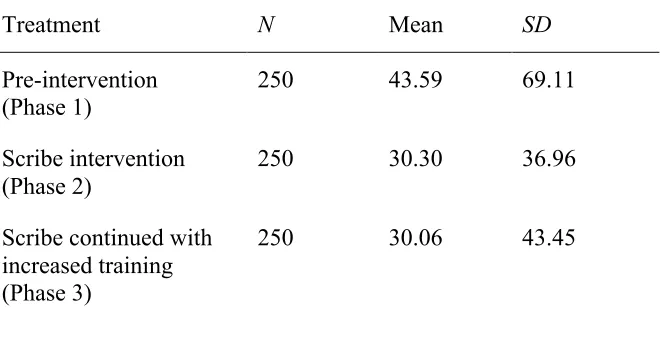
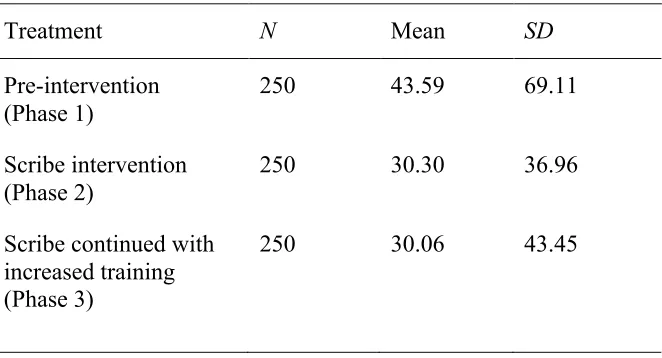
and (c) continued scribe presence with increased training and rotation of scribes. Table 1
provides the descriptive statistics for the three levels. The results of the ANOVA were
significant, F(2, 747) = 5.90, p = .03. There was a statistically significant difference (p=
.03) in patient-visit elapsed time based on the presence of a scribe.
Table 2.1
Descriptive Statistics for the One-Way ANOVA (time efficiencies)
(p= .03)
Treatment N Mean SD
Pre-intervention
(Phase 1) 250 43.59 69.11
Scribe intervention (Phase 2)
250 30.30 36.96
Scribe continued with increased training (Phase 3)
250 30.06 43.45
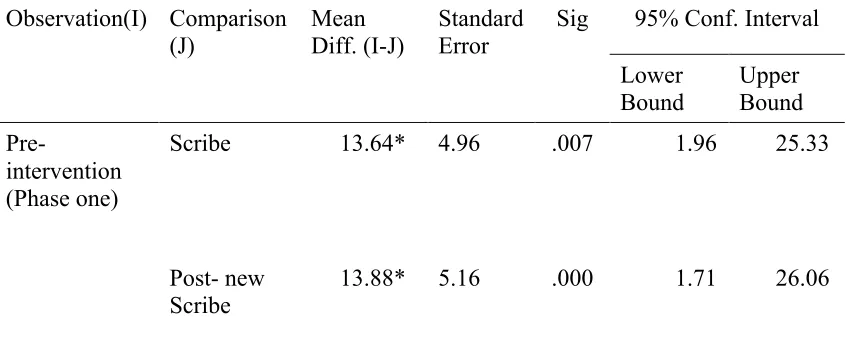
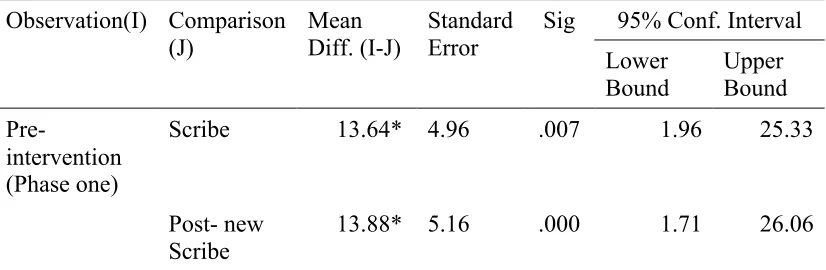
Because the comparison of means test was significant, further interpretation on
treatments differed. The Levene’s test of homogeneity of variance was significant (p =
.02), and therefore the Dunnett’s C (equal variance not assumed) post-hoc test was used
to interpret the comparison of the three observations. As shown in Table 2, for the
pre-intervention comparison, the elapsed time decreased significantly when a scribe was
present (-13.64 minutes), and the difference was slightly greater (-13.88 minutes) when
additional training was provided to the scribes. The difference in the patient-visit elapsed
time was much less, and still decreasing, when comparing the scribe-present and the
continued scribe presence with increased training and rotation of scribes (-2.40 minutes).
With this gained efficiency, providers were able to achieve an improved work-life
balance and gain greater satisfaction during the work day by reducing the number of
hours spent documenting after the work day from more than five to less than two, and
completing the scheduled visits for each work day.
Table 2.2
The Dunnett’s C Post-hoc Test of Multiple Comparisons between Scribe Interventions
Observation(I) Comparison (J)
Mean Diff. (I-J)
Standard Error
Sig 95% Conf. Interval
Lower
Bound Upper Bound
Pre-intervention (Phase one)
Scribe 13.64* 4.96 .007 1.96 25.33
Post- new Scribe
Scribe intervention (Phase two)
Pre-intervention -13.64* 4.96 .010 -25.33 -1.96
Post-intervention
.240 3.61 1.00 -8.28 8.75
Scribe continued with increased training (Phase three)
Pre-intervention
-13.88* 5.16 .008 -26.06 -1.71
Scribe -2.40 3.61 1.00 -8.75 8.27
* Mean difference is significant at the 0.05 level.
While not measured during this project, the hospital corpsmen trained to serve in
the project scribe role provided anecdotal accounts that, indicated a drastic improvement
in: a) their physical assessment skills; b) documentation skills; c) ability to proactively
identify diagnosis; d) improved collaboration with their assigned provider; e) comfort
level engaging with the patient; f) team cohesion and efficiency; and g) preparation to
treat patients in the operational setting after having participated in the scribe project. This
additional benefit to the project was in direct support of the Navy Surgeon General’s
mission of Readiness, Health and Partnerships (Health.mil, 2016).
Discussion
This quality improvement project demonstrated that the use of scribes in an
EHR, and improved physician work life balance. While the patient experience revealed a
slight decrease, this was shown to be less than .18. Additionally, throughout the project,
patients were receptive to the scribes, and continued to provide positive experience
feedback via ICE and JOES. These slight variations in these two factors revealed that the
overall patient experience and satisfaction were not negatively impacted when using
scribes.
This evidence-based emerging process highlighted the positive impact that scribes
can have on fostering collaborative teamwork, and elevating a family practice clinic’s
efficiency among outpatient healthcare settings. Policies focused on the patient and
provider experience that is centered on improving the patient and provider interaction and
quality of the visit, as well as clinic and documentation efficiencies, will further
strengthen the ability of organizations and individuals to promote high reliability and
drive optimal patient and organizational outcomes.
The delivery of health care is a multifacted team approach in the fast-paced
environment of evolving EHRs. Further study of the scribe’s experience, especially given
the positive qualitative comments from the hospital corpsmen that participated as scribes
during the project period, could provide beneficial outcomes. The utilization of medical
scribes strengthened physician experience. Future research centered on the provider
experience could be beneficial to organizations. In multiple settings, documentation
requirements burdened providers, and the consideration of scribes could foster work life
Additionally, research focused on the development and validation of instruments
to effectively measure patient and provider interaction with the presence of scribes, as
well as, and the experience of providers and patients when using scribes would be
beneficial. Navy Medicine is advancing every opportunity to strengthen clinical and
operational readiness, health and partnership. This type of innovative evidence-based
process, utilizing medical scribes in the outpatient primary care setting, could yield best
practices and facilitate optimal patient and organizational outcomes.
Limitations included a need for a validated questionnaire for the pre and post
patient and provider experience, and the small-scale size of the project minimized the
generalizability of the project results.
Navy Medicine catalyzed initiatives to foster innovation in care delivery in order
to streamline care and enhance the patient experience utilizing concepts of the quadruple
aim (Beauvis, Richter, & Brezinski, 2017; Department of the Navy, 2010; Hudak et al.,
2013; Military Health System, 2014). Providing world class care to our nation’s most
deserving citizens is an honor and privilege, and the quest for maximizing patient
outcomes is on the forefront of the minds of our nation’s leaders (Cooper, 2016; Military
Health System, 2014). To improve communication and engage patients in their care, it is
crucial for organizations to scrutinize the needs of their patient population and determine
innovative strategies that will facilitate effective partnerships with our patients (Agency
Acknowledgements
We would like to thank the leadership at Naval Health Clinic Corpus Christi, and
the Medical Home Port team for their support of this project. A special thank you to Dr.
Rick Hammett, Mr. Mario Ernie Corral and HM3 Matthew Hart for their assistance with
data collection and analysis, and LCDR John Ehrmann, LCDR Nausheen Momen, LT
Isaac Ilaoa, LT Jamie Moore, LT Rachael Wheelous, HMC Stephen Armstrong, HM3
Dillin Lanting, HM3 Hunter Zuccarell, HN Michael Goodman, and HN James Massie for
References
Agency for Healthcare Research and Quality (2017, March). Guide to improving patient
safety in primary care settings by engaging patients and families [Executive
summary]. Retrieved from
https://www.ahrq.gov/professionals/quality-patient-safety/patient-family-engagement/pfeprimarycare/envscan-exec-summary.html
Allen, B., Banapoor, B., Weeks, E. C., & Payton, T. (2014). An assessment of emergency
department throughput and provider satisfaction after the implementation of a
scribe program. Advances in Emergency Medicine, 1-7. doi:
10.1155/2014/517319
Arya, R., Salovich, D. M., Ohman-Strickland, P., & Merlin, M. A. (2010). Impact of
scribes on performance indicators in the emergency department. Academic
Emergency Medicine, 17, 490-494. doi 10.1111/j.1553-2712.2010.00718.x
Bank, A. J., & Gage, R. M. (2015, September 30). Annual impact of scribes on physician
productivity and revenue in a cardiology clinic. ClinicoEconomics and Outcomes
Research, 7, 489-495. doi: 10.2147/CEOR.S89329
Bank, A. J., Obetz, C., Konrardy, A., Khan, A., Pillai, K. M., McKinley, B. J., Gage, R.
M., Turnbull, M. A., & Kenney, W. O. (2013, August). Impact of scribes on
patient interaction, productivity, and revenue in a cardiology clinic: a prospective
study. ClinicoEconomics and Outcomes Research, 5, 399-406. doi:
10.2147/CEOR.S49010
Bastani, A., Shaqiri, B., Palomba, K., Bananno, D., & Anderson, W. (2013). An ED
American Journal of Emergency Medicine, 32, 399-402. doi:
10.1016/j.ajem2013.03.040
Beauvais, B., Richter, J., & Brezinski, P. (2017). Fix these first: How the world’s leading
companies point the way toward high reliability in the Military Health System.
Journal of Healthcare Management, 62(3), 209-210. doi:
10.1097/JHM-D-17-00041
Cabilan, C. J., & Eley, R. M. (2015). Review article: Potential of medical scribes to allay
the burden of documentation and enhance efficiency in Australian emergency
departments. Emergency Medicine Australasia, 27, 507-511. doi:
10.1111/1742-6723.12460
Carnes, K. M., de Riese, C. S., & de Riese, W. T. (2015). A cost-benefit analysis of
medical scribes and electronic medical record system in an academic urology
clinic. Urology Practice Journal, 2, 101-105. doi:10.1016/j.urpr.2014.10.006
Clarke, V., & Braun, V. (2017). Thematic analysis. The Journal of Positive Psychology,
12(3), 297-298. doi: 10.1080/17439760.2016.1262613
Cooper. T. (2016, Dec.). What’s on the horizon for the Military Health System? Health
Care Current [Peer commentary on Military Health System news and
development]. Retrieved from
Department of the Navy. (2010). BUMED INSTRUCTION 6300.19: Primary care
services in Navy Medicine [electronic copy of Naval instruction]. Retrieved from
http://www.med.navy.mil/directives/ExternalDirectives/6300.19.pdf
Health.mil. (2016, October). Navy Surgeon General announces new strategic priorities.
Retrieved from
https://health.mil/News/Articles/2016/11/16/Navy-Surgeon-General-announces-new-strategic-priorities
Hess, J. J., Wallenstein, J., Ackerman, J. D., Akhter, M., Ander, D., Keady, M. T., &
Capes, J. P. (2015). Scribes impact on provider experience, operations, and
teaching in an academic emergency medicine practice. Western Journal of
Emergency Medicine, 16(5), 602-610. doi: 10.5811/westjem.2015.6.25432
Hudak, R. P., Julian, R., Kugler, J., Dorrance, K., Ramchandani, S., Lynch, S., …
Reeves, M. (2013). The patient-centered medical home: A case study in
transforming the Military Health System. Military Medicine, 178(2), 146-152.
doi: 10.7205/MILMED-D-12-00170.
Imdieke, B. H. & Martel, M. L. (2017). Integration of medical scribes in the primary care
setting improving satisfaction. Journal of Ambulatory Care Manager, 40(1),
17-25. doi: 10.1097/JAC.0000000000000168
Koshy, S., Feustel, P., Hong, M., & Kogan, B. (2010). Scribes in an ambulatory urology
practice: Patient and physician satisfaction. The Journal of Urology, 184,
Kosowsky, J. (2015). The effect and impact scribes can have on patient experience
[electronic copy]. Retrieved from
https://www.studergroup.com/resources/news-
media/healthcare-publications-resources/insights/october-2015/the-effect-and-impact-scribes-can-have-on-patient
Menon, S. P. (2015). Maximizing time with the patient: The creative concept of a
physician scribe. Palliative Medicine, 17, 57-59. doi: 10.1007/s11912-015-0484-7
Military Health System. (2014). Military Health System review. Final report [electronic
copy]. Retrieved from
https://health.mil/Military-Health-Topics/Access-Cost-Quality-and-Safety/MHS-Review
Shachak, A., & Reis, S. (2009). The impact of electronic medical records on
patient-doctor communication during consultation: A narrative literature review. Journal
of Evaluation in Clinical Practice, 15, 641-649. doi:
10.1111/j.1365-2753.2008.01065.x
Shultz, C. G., & Holmstrom, H. L. (2015). The use of medical scribes in health care
settings: A systematic review and future directions. Journal of the American
Board of Family Medicine, 28(3), 371-381. doi: 10.3122/jabfm.2015.03.140224
Walker, K., Ben-Meir, M., O’Mullane, P., Phillips, D., & Staples, M. (2014). Scribes in
an Australian private emergency department: A description of physician
productivity. Emergency Medicine Australasia, 26, 543-548. doi:
Wisdom, J., & Creswell, J. W. (2013). Mixed methods: Integrating quantitative and
qualitative data collection and analysis while studying patient-centered medical
home models [electronic copy]. Retrieved from
https://pcmh.ahrq.gov/page/mixed-methods-integrating-quantitative-and-qualitative-data-collection-and-analysis-while
Wise, J. (2016, November). Navy Surgeon General announces new strategic priorities
[electronic copy]. America’s Navy. Retrieved from
http://www.navy.mil/submit/display.asp?story_id=97670
Yan, C., Rose, S., Rothberg, M. B., Mercer, M. B., Goodman, K., & Misra-Hebert, A. D.
(2016). Physician, scribe, and patient perspectives on clinical scribes in primary
care. Journal of General Internal Medicine, 31(9), 990-995. doi:
10.1007/s11606-01603719x7
Zolnierek, K. B. H., & DiMatteo, M. R. (2009). Physician communication and patient
adherence to treatment: A meta-analysis. Medical Care, 47(8), 826-834.
CHAPTER 3
FINDINGS AND CONCLUSION
Project results provided insight into the impact of medical scribes on patient and
provider experience in a military outpatient clinic setting. This quality improvement
project evaluated two aspects of experience. These included the patient experience as
indicated via a pre and post implementation questionnaire, and the provider experience as
indicated via a pre and post implementation questionnaire.
From the patient perspective, the pre-implementation experience survey mean was
4.7 out of a possible 5, during the sixth week of the project implementation the patient
experience mean dropped to 4.5 indicating that there was a slight decrease in experience,
and then during the twelfth week the patient experience mean increased to 4.9
demonstrating an overall improvement in experience when their provider used scribes.
Further testing, using IBM SPSS Statistics Version 21 software, evaluated the difference
in patient satisfaction with their primary care physician interaction with the scribes
present, and the patient overall experience during the medical visit with scribes present.
The Mann-Whitney U test was used on the first group of patients that did not have scribes
present during the medical visit (n=89), and the second group of patients that did have
scribes present (n=96). The results of the test were significant, but not in the expected
direction (z=-2.47, p= .014). The group with scribes had a mean rank of 86.10 and the
was more satisfied. While the test was significant (p= .014), the average scores for the
two groups on the first questionnaire item were within a quarter point of each other at
4.72 and 4.52 respectively.
In order to evaluate whether there was a difference in the patient overall rating of
the visit experience when scribes were present, a second Mann-Whitney U test was
completed. The results were similar to the first test, significant but in the opposite
expected direction (z=-2.5, p= .012). The overall experience mean was 102.03 for the
group without scribes and 85.68 for the group with scribes. The mean score for the group
with scribes was 4.65 and the mean score for the group with scribes was 4.47 out of a
possible 5. The results for these two groups were statistically significant (p= .012), but
the mean scores on the two questionnaire items were less than 0.18, and not in the
expected direction; therefore, indicating that patients were slightly more satisfied and
overall experience was slightly higher when the scribe was not present. Additionally,
throughout the project, patients were receptive to the scribes, and continued to provide
positive experience feedback via the Interactive Customer Evaluation (ICE), and the Joint
Outpatient Experience Survey (JOES). The slight variation in these two factors revealed
that the overall patient experience and satisfaction were not negatively impacted when
using scribes.
Qualitatively, the two physicians using scribes indicated that they were more
engaged with their patients, were able to close their notes within the 72-hour time period
as per Navy requirements, and were not staying after hours to complete charting. Prior to
the utilization of scribes each provider spent 20-26 hours after work charting in the