University of Windsor University of Windsor
Scholarship at UWindsor
Scholarship at UWindsor
Electronic Theses and Dissertations Theses, Dissertations, and Major Papers
2012
Minimization of DDoS false alarm rate in Network Security;
Minimization of DDoS false alarm rate in Network Security;
Refining fusion through correlation
Refining fusion through correlation
Faisal Mahmood
University of Windsor
Follow this and additional works at: https://scholar.uwindsor.ca/etd
Recommended Citation Recommended Citation
Mahmood, Faisal, "Minimization of DDoS false alarm rate in Network Security; Refining fusion through correlation " (2012). Electronic Theses and Dissertations. 4829.
https://scholar.uwindsor.ca/etd/4829
This online database contains the full-text of PhD dissertations and Masters’ theses of University of Windsor students from 1954 forward. These documents are made available for personal study and research purposes only, in accordance with the Canadian Copyright Act and the Creative Commons license—CC BY-NC-ND (Attribution, Non-Commercial, No Derivative Works). Under this license, works must always be attributed to the copyright holder (original author), cannot be used for any commercial purposes, and may not be altered. Any other use would require the permission of the copyright holder. Students may inquire about withdrawing their dissertation and/or thesis from this database. For additional inquiries, please contact the repository administrator via email
Minimization of DDoS false alarm rate in Network Security; Refining fusion through correlation
by
Faisal Mahmood
A Thesis
Submitted to the Faculty of Graduate Studies through Computer Science
in Partial Fulfillment of the Requirements for the Degree of Master of Science at the
University of Windsor
Windsor, Ontario, Canada
2012
Minimization of DDoS false alarm rate in Network Security; Refining fusion through correlation
by
Faisal Mahmood
APPROVED BY:
______________________________________________ Dr. Kemal Ertugrul Tepe, External reader
Department of Electrical and Computer Engineering
______________________________________________ Dr. Arunita Jaekel, Internal reader
School of Computer Science
______________________________________________ Dr. Robert Kent, Advisor
School of Computer Science
_____________________________________________ Dr. Subir Bandyopadyhay, Chair of Defense
School of Computer Science
DECLARATION OF ORIGINALITY
I hereby certify that I am the sole author of this thesis and that no part of this thesis has
been published or submitted for publication.
I certify that, to the best of my knowledge, my thesis does not infringe upon anyone’s
copyright nor violate any proprietary rights and that any ideas, techniques, quotations, or
any other material from the work of other people included in my thesis, published or
otherwise, are fully acknowledged in accordance with the standard referencing practices.
Furthermore, to the extent that I have included copyrighted material that surpasses the
bounds of fair dealing within the meaning of the Canada Copyright Act, I certify that I
have obtained a written permission from the copyright owner(s) to include such
material(s) in my thesis and have included copies of such copyright clearances to my
appendix.
I declare that this is a true copy of my thesis, including any final revisions, as approved
by my thesis committee and the Graduate Studies office, and that this thesis has not been
ABSTRACT
Intrusion Detection Systems are designed to monitor a network environment and generate
alerts whenever abnormal activities are detected. However, the number of these alerts can
be very large making their evaluation a difficult task for a security analyst. Alert
management techniques reduce alert volume significantly and potentially improve
detection performance of an Intrusion Detection System.
This thesis work presents a framework to improve the effectiveness and efficiency of an
Intrusion Detection System by significantly reducing the false positive alerts and
increasing the ability to spot an actual intrusion for Distributed Denial of Service attacks.
Proposed sensor fusion technique addresses the issues relating the optimality of
decision-making through correlation in multiple sensors framework. The fusion process is based
on combining belief through Dempster Shafer rule of combination along with associating
belief with each type of alert and combining them by using Subjective Logic based on
Jøsang theory. Moreover, the reliability factor for any Intrusion Detection System is also
addressed accordingly in order to minimize the chance of false diagnose of the final
network state. A considerable number of simulations are conducted in order to determine
DEDICATION
ACKNOWLEDGEMENTS
I am sincerely and heartily grateful to my advisor, Professor Dr. Robert Kent, for
the support and guidance he showed me throughout my research work and dissertation
writing. I am sure it would have not been possible without his help. I owe an earnest
thankfulness to Dr. Akshai Kumar Aggarwal for providing me the opportunity to start my
graduate degree under his supervision. Besides I would also like to thank to my lovely
TABLE OF CONTENTS
DECLARATION OF ORIGINALITY ... iii
ABSTRACT ... iv
DEDICATION ...v
ACKNOWLEDGEMENTS ... vi
LIST OF TABLES ...x
LIST OF FIGURES ... xii
CHAPTER I. INTRODUCTION Overview ...1
Problem Statement ...2
Research Questions ...3
Methods ...4
Contribution ...4
Thesis Outline ...5
II. REVIEW OF LITERATURE Brief Introduction ...6
Network Types ...7
Intrusion Detection System - IDS ...9
Datasets available for experiments ...11
Computer attacks in DARPA 1999 evaluation dataset ...14
Selection of Network Intrusion Detection Systems ...14
Intrusion Detection System used for research work. ...18
Standardized efforts for representing alerts in IDS - IDMEF ...26
Alert Management Techniques ...27
Data Fusion Process for IDS...30
Fusion-Based IDS ...33
Probability Theory ...37
Dempster Shafer Theory -DST ...40
Mathematics Computation for D – S Theory ...44
Rules for the Combination of Evidence ...46
The Consensus Operator ...50
III. DESIGN AND METHODOLOGY Sensor output and Data Collection ...53
Alert Normalization ...54
Alert Preprocessing ...56
Alert Filtering ...57
Multilevel correlation and Alert prioritization ...58
Alert Fusion Engine based on Dempster Shafer Theory ...61
Dempster-Shafer Applied to Distributed Intrusion Detection ...73
Final Decision Rule (FDR) for Dempster Shafer Combination rule. .75 Alert Fusion Engine based on Subjective Logic ...76
The Consensus Operator ...77
Dealing with uncertainty of the sensor ...79
IV. ANALYSIS OF RESULTS Result Analysis: ...84
Analysis of multilevel correlation component. ...85
Analysis of fusion component ...90
Discussion ...94
V. CONCLUSIONS AND RECOMMENDATIONS Conclusion and summary of contribution: ...96
Recommendations and Future Work ...98
APPENDICES System Configuration and Experimental Test Bed ...101
IDS Installation and Configuration ...104
Various Datasets and Research Institutes ...119
DARPA 1999 Attacks...121
J.1 Alert Filtering component for Snort sensor ...131
J.2 Alert Filtering component for Bro sensor ...133
J.3 Multilevel Correlation for Snort sensor ...134
J.4 Multilevel Correlation for Bro sensor ...136
J.5 DS Rule of Combination – Demspter Shafer Theory ...137
J.6 Attack scenario through Subjective Logic – Jøsang ...141
List of Abbreviation ...151
LIST OF TABLES
TABLE 1WELL KNOWN NETWORK INTRUSION DETECTION SYSTEMS ... 17
TABLE 2UNIFICATION ALERT FORMAT ... 56
TABLE 3THE REASSIGNMENT OF MASS FUNCTION BETWEEN TWO SENSORS ... 72
TABLE 4SYSTEM SPECIFICATION ... 101
TABLE 5SERVICES RUNNING ON EACH SYSTEM ... 102
TABLE 6SNORT TABLES LIST ... 112
TABLE 7BRO-DATABASE TABLES LIST ... 116
TABLE 8ATTACK DICTIONARY ... 117
TABLE 9DATASETS WITH CORRESPONDING DOWNLOAD ADDRESSES ... 119
TABLE 10RESEARCH INSTITUTE WITH CORRESPONDING REFERENCE ADDRESSES ... 119
TABLE 11PROBES AND DOS ATTACKS IN DARPA1999DATASET ... 122
TABLE 12U2L,U2R AND DATA ATTACKS IN DARPA1999DATASET ... 123
TABLE 13ATTACK LIST DETECTED BY BRO SENSOR ... 124
TABLE 14ATTACK LIST DETECTED BY SNORT SENSOR ... 125
TABLE 15EVIDENCE COLLECTION -SNORT AND BRO SENSORS ... 126
TABLE 16CALCULATION FOR CERTAINTY LEVEL –SNORT SENSOR ... 127
TABLE 17CALCULATION FOR CERTAINTY LEVEL –BRO SENSOR... 128
TABLE 18TOTAL CONNECTIONS IN DARPA1999DATASETS ... 129
TABLE 19ATTACKS DETECTED BY SNORT SENSOR ... 130
TABLE 20ATTACKS DETECTED BY BRO SENSOR ... 131
TABLE 21ALERT FILTERING BASED ON SOURCE IP–SNORT SENSOR ... 131
TABLE 23ALERT REDUCTION RATE 1-SNORT SENSOR ... 132
TABLE 24ALERT FILTERING BASED ON SOURCE IP–BRO SENSOR ... 133
TABLE 25ALERT FILTERING BASED ON DESTINATION IP–BRO SENSOR ... 133
TABLE 26ALERT REDUCTION RATE 1-BRO SENSOR ... 134
TABLE 27CORRELATION BASED ON SIGNATURE TYPE -SNORT SENSOR ... 135
TABLE 28CORRELATION BASED ON TIME STAMP AND IP-SNORT SENSOR ... 135
TABLE 29CORRELATION BASED ON TIME STAMP AND IP-BRO SENSOR ... 136
TABLE 30DS RULE OF COMBINATION -ICMPFLOODING ... 137
TABLE 31DSCOMBINATION RULE RESULT -ICMPFLOODING ... 139
TABLE 32DS RULE OF COMBINATION -SYNFLOODING... 139
TABLE 33DSCOMBINATION RULE RESULT -SYNFLOODING ... 141
TABLE 34JØSANG SUBJECTIVE LOGIC -ICMPFLOODING ... 141
TABLE 35JØSANG SUBJECTIVE LOGIC RESULT -ICMPFLOODING ... 145
TABLE 36JØSANG SUBJECTIVE LOGIC -SYNFLOODING ... 145
TABLE 37JØSANG SUBJECTIVE LOGIC RESULT -SYNFLOODING ... 148
TABLE 38MULTILEVEL CORRELATION RESULT -SNORT SENSOR ... 149
TABLE 39REDUCTION RATE -SNORT SENSOR ... 149
TABLE 40MULTILEVEL CORRELATION RESULT -BRO SENSOR ... 150
LIST OF FIGURES
FIGURE 1MAIN OPERATIONAL NETWORK FOR DARPA1999DATASET ... 14
FIGURE 2COMPONENTS OF GENERAL INTRUSION DETECTION SYSTEM ... 15
FIGURE 3WORKING MODULE FOR A TYPICAL INTRUSION DETECTION SYSTEM ... 17
FIGURE 4BRO DEVELOPMENT OVER THE YEARS ... 19
FIGURE 5BRO TAP IN THE NETWORK ... 20
FIGURE 6BRO LAYER ARCHITECTURE ... 21
FIGURE 7VARIOUS FRAME WORK OF BRO NIDS ... 22
FIGURE 8VARIOUS COMPONENTS OF SNORT NIDS... 24
FIGURE 9SNORT IN STEALTH MODE TO PROTECT FROM OUTSIDE ATTACK ... 25
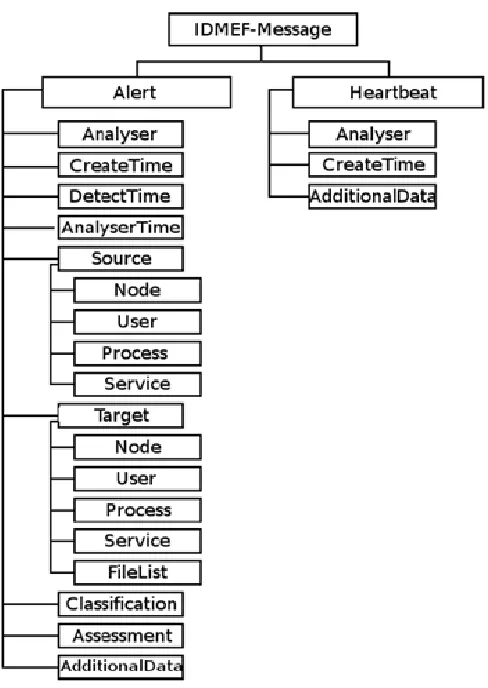
FIGURE 10IDMEF DATA MODEL ... 26
FIGURE 11VARIOUS ALERT MANAGEMENT TECHNIQUES ... 28
FIGURE 12DATA LEVEL FUSION APPROACH ... 31
FIGURE 13FEATURE LEVEL FUSION APPROACH ... 32
FIGURE 14DECISION LEVEL FUSION APPROACH ... 33
FIGURE 15JDLREVISED MODEL DATA LEVEL FUSION APPROACH ... 35
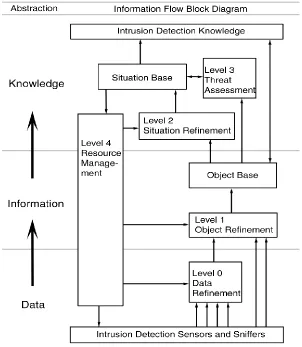
FIGURE 16IDSDATA FUSION MODEL – AN IMPLEMENTATION APPROACH ... 37
FIGURE 17CONFIDENCE INTERVAL BETWEEN "BELIEF' AND "PLAUSIBILITY" ... 45
FIGURE 18JØSANG'S OPINION TRIANGLE ... 50
FIGURE 19PROPOSED ARCHITECTURE FOR ALERT REDUCTION ... 54
FIGURE 20FUSION MODULE BASED ON DEMPSTER SHAFER THEORY ... 76
FIGURE 21FUSION MODULE BASED ON SUBJECTIVE LOGIC ... 82
FIGURE 23(B)MULTILEVEL CORRELATION -SNORT ... 86
FIGURE 24FALSE POSITIVE REDUCTION RATE -SNORT ... 87
FIGURE 25(A)MULTILEVEL CORRELATION -BRO ... 88
FIGURE 26(B)MULTILEVEL CORRELATION -BRO ... 89
FIGURE 27FALSE POSITIVE REDUCTION RATE -BRO ... 90
FIGURE 28ATTACK SCENARIO THROUGH DS COMBINATION RULE -ICMPFLOODING ... 91
FIGURE 29ATTACK SCENARIO THROUGH DS COMBINATION RULE -SYNFLOODING ... 92
FIGURE 30ATTACK SCENARIO THROUGH SUBJECTIVE LOGIC -ICMPFLOODING ... 93
CHAPTER I
INTRODUCTION
Overview
Nowadays, computers are interconnected through global Internet. These interconnections
between computer systems offer numerous advantages in each life domain. However,
computer networks are an easy target for various intrusion attempts. Intrusion is an
unauthorized attempt to gain control of computer resources. These intrusions are
growing more seriously, rapidly and aggressively with a passage of time. The most
important challenge faced by network system administrators, since its invention is, the
security and privacy of the data travel on the network. Information on these network
systems is a valuable corporate asset and therefore more and more protective security
efforts are being followed to protect these priceless assets. Organizations use various
computer security tools to do damage control done by these intrusion attempts. Intrusion
detection system (IDS) is one of the tools that determine unauthorized access attempts on
the system network. IDS generate various intrusion detections reports and provide
valuable information about the current system security status.
Generally, IDS generate large volume of false alerts. These alerts could be of two
types, false positive or false negative. According to Anastasios et al. [1994] false positive
alerts are mistakenly generated by the IDS. According to Axelsson [2000] false negative
marked by the IDS as a non malicious event but in reality, it should be marked as
malicious event. Over the time, researchers adopted various techniques to deal with the
issue of large number of false positives alerts generation. These techniques include
machine learning and data mining approaches. Each approach has its own advantages,
disadvantages and alert management issues. Network designing, data rate, network data
type and sensor selection also affects the final output of the IDS. This thesis work deals
with the reduction of false positives through alert correlation and fusion process.
Problem Statement
According to Almgren et al. [2000] and [2001], most of the time IDS generate to many
alerts through the process of one-to-one mapping between events and alerts. For system
administrator, these overwhelming reports are difficult to read and take longer time to
extract current situation of the network security. Additionally, the performance of IDS
further affects by generating long list of false positive alerts. According to Alsubhai
[2008], these false positives alerts are not real alerts. Investigating all these reported
alerts manually and separating positive real alerts from the final listed alerts is extremely
complicated and time consuming task for security experts. Moreover extra resources and
care is required to accomplish this task error freely. In ideal situation, the IDS should
detect all possible intrusions and report only real intrusions. Effectiveness of the IDS
depends on its capability to detecting all malicious activities on the target systems. This
capability is known as sensitivity of the IDS. According to Bass [1999] and [2000],
sensitive IDS generates more alarms than the non sensitive one on daily basis. In an
active operational middle size network, IDS could report several hundred thousand alerts
a day, out of them 99 % might be the false alerts. Due to the huge volume of false alarms
reported by any IDS, the possibility of ignoring the real threat by system administrator
The research reported in this thesis has focused on the ways to extend intrusion
detection outcome with alert correlation and alert fusion process. The assumption has
been that existing IDS are using various techniques to overcome the issue of false
positives. The computer systems are itself under the protection of some basic security
measures such as firewalls, authentication servers, IDS etc. When the security of a system
is more important and possibility of making the current systems more secure exhausted
through previous security techniques, other effective options need to be evaluated. This
thesis has analyzed combination of two additional measures, which is correlation of
intrusion alerts for more effective intrusion detection performance and fusion of alerts
based on mathematical foundation to further minimize the negative effects of false alarm
generation.
Research Questions
The process of surveying, proposing new methodology, testing and evaluating various
alert correlation and fusion methods includes following research questions:
- What technique and methods exist for intrusion alert correlation?
- What technique and methods exist for intrusion alert fusion?
- What are the various researchers worked in this field?
- What are the short comings of previous work?
- What are the open problems in this problem domain?
- What are the various possibilities of data sets availability for experiments?
- Which dataset is acceptable for experiments in research community?
- What are the possible options for various sensors available for alert
- What is the implication of combining alert correlation with fusion process?
- Is it possible to customize the current Open Source to create effective
intrusion alert system?
- What are the possible computer attacks created so far and how their signature
looks like?
Methods
To answer these research questions mentioned above, the following methods were used:
- Detailed survey the research topic, understand the work done by previous
researchers along with their shortcomings.
- Design own system to address the issue of false alarms using system
integration and system development techniques.
- Experimental evaluation of implemented prototype.
- Compare the proposed method result with other researchers output.
Contribution
We proposed new methodology for false positive alert reduction in Distributed Denial of
Service (DDoS) attack by refining the fusion process through various correlation
techniques. Our proposed fusion engine has strong mathematical foundation. Some small
scale alert reduction rules and methods are also introduced on individual basis for various
sensor types. For analysis and evaluation purpose, we used DARPA 1999 Dataset and
two open source Intrusion Detections Systems, Bro and Snort. These selections are
completely accordance with the acceptance of Intrusion Detection Research community
Thesis Outline
The rest of the thesis is organized as follows. Chapter 2 provides the literature survey of
the research topic and detailed back ground study. Chapter 3 describes our proposed
methodology along with some technical and configuration issues. Simulation results and
their analysis are presented in chapter 4. Finally, Chapter 5 concludes this thesis with
CHAPTER II
REVIEW OF LITERATURE
Brief Introduction
According to Siaterlis and Maglaris [2004] “data fusion is a process performed on
multisource data towards detection, association, correlation, estimation and combination
of several data streams into one with a higher level of abstraction and greater
meaningfulness.” The process of collecting information from multiple possibly sources
and combining them leads to more authentic and significant results. According to Bass
[2000], multi sensor data fusion is a relatively new discipline that is used to “combine
data from multiple and diverse sensors and sources in order to make inferences about
events, activities and situations”. Bass [2000] states that this process can be compared to
the human reasoning process where the brain receives various information from human
body parts for evaluating their current state for making decision and to direct some
specific actions. Bass [2000], Siaterlis and Maglaris [2004] [2005] give several examples
that use data fusion in the real world. Bass [2000] claim that data fusion is widely used in
military applications such as battlefield surveillance, tactical situation assessment and in
commercial applications such as robotics, manufacturing, remote sensing and medical
diagnosis. Military systems for threat assessment and weather forecast systems are the
examples of such systems developed by Siaterlis and Maglaris [2004 and 2005] that are
currently in use today.
Most modern IDS use multiple intrusion sensors to maximize their reliability
level. The process of multi sensor data fusion, also known as distributed sensing is used
network in order to make more informed decision about events, activities and situations.
Input to a data fusion module of the IDS consists of various sensors output data, users’
commands, most of the time by system administrator and some other relevant data from
the database through various data mining approaches. For example, the fusion system
input could be the output data from various packet sniffers modules consisting of
dedicated hardware and software, system log files, SNMP traps and queries, user profile
databases, system messages and operator commands. The output of the data fusion
module could be estimates of identity for a particular intruder, the various activities of an
intruder, the location of an intruder, the observed threats, the attack rate and an
assessment of the severity and strength of the cyber attack.
Network Types
Computer Networks are categorized based on their different sizes and network
scalability. Selection among different network topologies also depends upon network
type for sharing multiple information resources on the network. Some widely used
network types are briefly discussed in following section.
Wired Networks: In wired networks, systems are physically connected to each other.
These networks are much secure and support huge data rates. Wired networks are also
cheap in cost and much faster as compared to wireless networks.
Wireless Networks: The simplest way to connect multiple devices is to use wireless
networks. A wireless network uses radio waves for connection therefore the absence of
physical media like wires makes this network much capable and easy to maintain. These
Infrastructure Networks: Infrastructure networks are the kind of a wireless network based
on some infrastructure. It has servers and clients machines and is controlled by the main
server. The whole network has a proper infrastructure and no other machine can enter the
network without authentication and permission of the main server.
Infrastructure-less Networks (Ad hoc Networks): There is no specific server client
relationship among various systems of infrastructure-less network. Each system can act
as a server or a client. Each device in this network is self organized and connection
among them is wireless. This network type is further sub categorize into following two
types.
Static Ad hoc Networks: In a static ad hoc network, devices are not in continuous
movement and they are connected among each other through a wireless network.
Mobile Ad hoc Networks: According to Corson et al. [1999] “a mobile ad hoc network
(MANET) is an autonomous system of mobile routers. It is very flexible network and
deployment is easy as compare to static ad hoc network”. MANETs are suitable for
emergency situations. This type of network is a relatively new innovation in the field of
wireless network technology with new challenges and limitation. Various network
operations are difficult to handle in a MANET because each node is independent and
topologies change is very frequent. Reliable and efficient protocol is needed for smooth
working of the mobile ad hoc network. A MANET consists of a set of communication
devices able to indigenously interconnect without any pre existing infrastructure. The
most challenging aspect in MANETs is communication of the devices within network
Intrusion Detection System - IDS
The real-time monitoring and analysis of various network activities for potential
vulnerability is known as intrusion detection. IDS have become an important component
in the security of any network. According to Thakar et al. [2005] “IDS tools aim to detect
computer attacks and/or computer misuse and to alert the proper individuals, most of the
time a system administrator, upon detection”. The IDS installed on a network serves the
same purpose as a burglar alarm system installed in a house. Mainly IDS work in two
modules, first when intruders or attackers are trying to enter in the network, secondly
after they entered in the network. The IDS may be used with firewalls packages to
enhance the network security and mainly to regulate the network traffic flow in and out
of network. Firewalls and IDS are two different security tools and should never be
considered the same.
Active and Passive IDS: According to the www.dummies.com web site “an active IDS
(now more commonly known as an intrusion prevention system — IPS) is a system that
is configured to automatically block suspected attacks in progress without any
intervention by an operator”. IPS is the main defense line for the intrusion that provides
real-time response to an attack with in the network boundary. The main issue with an IPS
is the vulnerability to cyber attack due to its activation within the network boundary.
According to CISSP for Dummies page 406 “a passive IDS is a system that is configured
only to monitor and analyze network traffic activity and alert an operator to potential
vulnerabilities and attacks”. Unlike an IPS passive IDS only generate alerts relating to the
Development and deployment of these IDS are easy and quick compared to an IPS. These
IDS are not vulnerable to intrusion because these systems mainly perform their role
outside of the network.
Network-Based and Host-Based IDS: According to Sree, Babu, Murty, Ramachandran
and Devi [2008] “Network-based intrusion detection analyzes data packets that travel
over the actual network. These packets are examined and sometimes compared with
empirical data to verify their nature. Because they are responsible for monitoring a
network, rather than a single host, Network-based IDSs (NIDS) tend to be more
distributed than host-based IDS”. A network-based IDS has some network sensors
connected with the network interface card working under unrestricted mode with their
own management interface. The IDS monitors all data traffic within its boundary with the
help of these network sensors.
According to the CISSP for Dummies “A host-based IDS requires small programs (or
agents) to be installed on individual systems to be monitored. The agents monitor the
operating system and write data to log files and/or trigger alarms”. The host based IDS
has limited surveillance to those host systems on which the agents are installed. Therefore
entire network is not being monitored by host-based IDS. The very first type of IDS was
the host based IDS. According to Sree et al. [2008] “these systems collect and analyze
data that originate on a computer that hosts a service, such as a web server. Once this data
is aggregated for a given computer, it can either be analyzed locally or sent to a
Knowledge-Based and Behavior-Based IDS: According to the CISSP for Dummies “a
knowledge-based (or signature-based) IDS references a database of previous attack
profiles and known system vulnerabilities to identify active intrusion attempts.
based IDS is currently more common than behavior-based IDS”.
Knowledge-based IDS has many advantages over other categories of IDS. Most significant is lower
false alarm rate. The understandings of these output alarms are more easy and
standardized. The knowledge based IDS is completely dependent on signature database.
Therefore continuous update and maintenance is needed to detect new and unique attacks
patterns.
According to Desta [2007] “a behavior-based (or statistical anomaly–based) IDS
references the baseline and learned pattern of normal system activity to identify active
intrusion attempts. Deviations from this baseline or pattern cause an alarm to be
triggered”. The behavior-based IDS generate more false alarms than knowledge based
IDS but these IDS are easily and dynamically able to detect new attacks.
Datasets available for experiments
Researchers who have conducted experiments to demonstrate their proposed
methodology for reducing false alarm rate have utilized various datasets in their research
work. The DARPA DDoS intrusion detection evaluation datasets are popular choice
among many IDS testers. It is no different when it came to testing the Dempster-Shafer
IDS models. Yu and Frincke [2005] used the DARPA 2000 DDoS intrusion detection
evaluation dataset to test their model. Chou et al. [2007] and [2008] used the DARPA
KDD99 intrusion detection evaluation dataset. The KDD99 dataset can be found at
According to Chou et al. [2007], the DARPA KDD99 data set is made up of a large
number of network traffic connections and each connection is represented with 41
features. Further, each connection had a label of either normal or the attack type. They
stated that the data set contained 39 attack types which fall into four main categories.
They are, Distributed Denial of Service (DDoS), Probe, User to Root (U2R), and Remote
to Local (R2L). The authors have reduced the size of the original data set by removing
duplicate connections. They further modified the data set by replacing features
represented by symbolic values and class labels by numeric values. Also, they normalized
values of each feature to between 0 and 1 in order to offer equal importance among
features. The 1998 DARPA intrusion detection evaluation data set was used by Katar
[2006] for his experiments. Chen and Aickelin [2006] used the Wisconsin Breast cancer
dataset and the Iris data set [Asuncion and Newman 2007] of the University of
California, Irvine (UCI) machine learning repository for their research.
Some authors chose to generate their own data for the attacks and background traffic. For
example, Siaterlis et al. [2003] used background traffic generated from more than 4000
computers in the National Technical University of Athens (NTUA) for their experiment.
Various well known data sets used for experiments are mentioned in appendix D.
We used DARPA 1999 evaluation in our research work that is the most preferred
evaluation dataset used by researcher to evaluate their proposed methodology. Despite
some criticism by IDS research community, especially Mahoney and Chan [2003]
relating data gathering and further use of DARPA dataset in anomaly detector, the dataset
still remains the top choice for the new researcher in the field of IDS. As mentioned
generation and address specific methods to minimize the negative effects of these false
alarms.
DARPA 1999 evaluation Dataset: It is difficult and very costly to perform reliable system
evaluation for new IDS or new proposed methodology. The wide spread research in the
field of IDS along with very high cost for development of these systems has led to a
centralized idea to evaluate new IDS. DARPA consider most reliable and pioneer in this
step by providing huge set of datasets to the research community. Like 1998 evaluation,
1999 evaluation dataset is also an off-line dataset. All critical points and issues raised in
1998 evaluation dataset are addressed individually in 1999 evaluation dataset. 1999
dataset covers more attack types than 1998 evaluation. Addition of Windows NT
workstation as a victim and inside tcpdump sniffer machine also play significant role to
make dataset type different from previous 1998 evaluation. New stealthy and inside
attacks were design to include in 1999 evaluation in order to make network IDS
evaluation more effective. 1999 evaluation dataset was designed mainly to detect the
ability of new IDS for detecting more sophisticated distributed attacks without training
Figure 1Main Operational Network for DARPA 1999 Dataset (Adapted from 1999 DARPA Intrusion Detection Evaluation:
Design and Procedures. Haines et al [2001 page 18])
Computer attacks in DARPA 1999 evaluation dataset
Computer attack is any malicious activity detected on any computer system. These
attacks may include viruses, use of the system or its resources by any other unauthorized
individual, probing of a system resources to get any unauthorized information, or any
physical attack on computer hardware to interrupt the normal computer system. There are
many ways that an attacker can either gain access to the system resources or stop the
authorized user from gaining access of the system resources. The detailed attack
instances for DARPA 1999 are mentioned in appendix E.
Selection of Network Intrusion Detection Systems
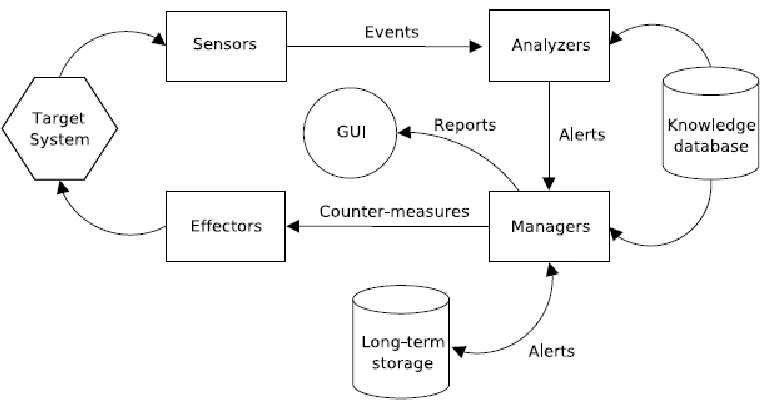
Normally, NIDS consists of five types of components including data collector, detector,
user interface, storage and responder. Some NIDS perform these tasks in layers with
addition of other supporting components. Detailed working and configuration of each
methodology test. A brief introduction of each of five major components of NIDS is
mentioned, followed by some in depth knowledge of Snort and Bro NIDS used in this
research work.
Figure 2Components of General Intrusion Detection System
(Adapted from Design Viable Intrusion Detection in High Performance Environments: Sommer [2005])
1) Collector
Collector provides an interface for accessing data used in detection process. That could in
ASCII or binary format. For most of the NIDS, network tap is default type of data
collector. Network tap provides interface access to all network packets traveling on some
particular position of a network. Some collectors provide access to external databases for
detection process.
2) Detector
Most important component where actual detection process takes place could be name as
the central processing unit of whole NIDS like brain to human body. Collector and
Storage units provide all necessary data to Detector unit for deciding what events are
3) User Interface
Provides output reports to the user and enable user to control NIDS. User interface is
consisting of ASCII files and some complicated NIDS also provide graphical user
interface.
4) Storage
Two types of data is saved in storage component. First, data may need by detector for
further analysis and secondly for user interface to generate reports. This type of data is
mainly provided by detector component and saved in database systems. Sometimes, user
creates its own database as per requirements.
5) Responder
To save the system from an intrusion, NIDS reacts to the detected intrusions. Responder
may actively respond to an intruder by dropping all connectivity with an attacker or
Figure 3Working module for a typical Intrusion Detection System
(Adapted from Design and Implementation of Intrusion Management: Alfaro [2006 page 22]) There is a wide range of NIDS available, and providing detailed overview of each
NIDS is out of the scope of this thesis. Various NIDS are regularly evaluated by research
community and computer network magazines. The most reputable research group that
performs these tests on regular basis is NSS group [http://www.nsslabs.com]. Their
reports are not freely available. Very brief introduction of some famous NIDS are
mentioned in the table below followed by detailed overview for the two NIDS used in our
thesis research work, Bro and Snort.
Table 1 Well known Network Intrusion Detection Systems NIDS Brief introduction
Bro A very exible open-source research system. It also provides the starting
point for much of our work relating correlation and fusion technique.
Hence, we again take a close look at its design along with Snort.
among open-source systems. This is used in our thesis work. Hence, we
take a close look at its design and working.
Emerald,
STAT
Two major research systems. They combine different detection approaches
in a combined framework. While not purely network-based, they both
contain major network-based components. While STAT is open-source,
Emerald is not freely available.
Dragon,
IntruShield
Two commercial NIDS developed by Enterasys Networks Inc. and
McAfee Inc. respectively. These systems are purely network-based and are
not available freely.
Intrusion Detection System used for research work.
Bro: Bro is widely used open source NIDS by research community. Vern Paxson is the
main person behind the idea who developed Bro NIDS with his team. Compare to other
NIDS, Bro is neither fully anomaly-based system nor a misused detection system. Bro
has both capabilities, written in C++ under BSD-style license and is a Unix-based
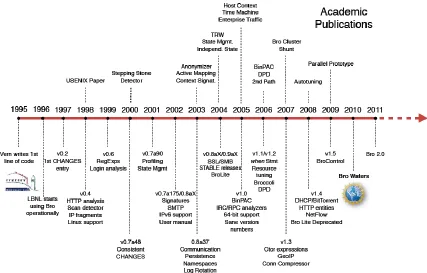
Figure 4 Bro development over the years (Adapted from Bro Workshop [2011])
According to Sommer [2005] Bros’ primary goal were 1) separation of mechanism and
policy 2) efficiency operation suitable for high-volume network monitoring and 3)
resistance to attacks directed at it. Bro works under real-time network analysis framework
with low level detection capabilities. Bro works very well under high speed networks and
emphasis on application-level semantics. Bro user need to specify what has to be detected
Figure 5 Bro tap in the network (Adapted from Bro Workshop [2011])
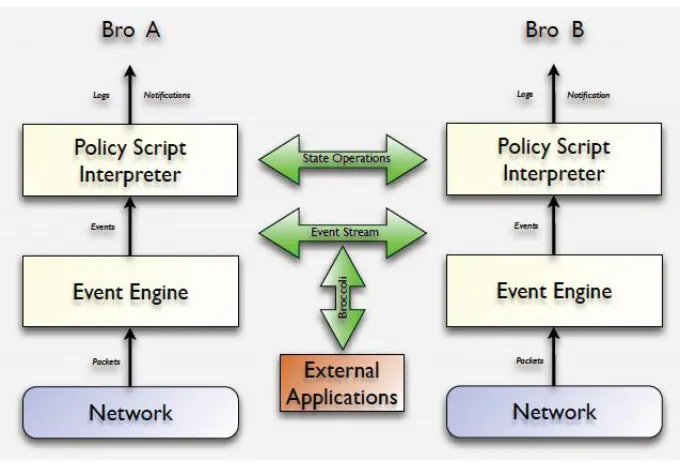
Bro architecture consists of three main layers: packet filter, event generation and
policy scripts execution. Packet filtering is done using a static BPF expression. Event
generation layer generates events for various actions that take place within the network.
For example, successful and unsuccessful user authentication, number of established
connections, terminated connections, rejected connection and still alive connections. The
user writes policy scripts using a high level language. These scripts contains event
handler to deal with various events when they occur. Event handler could be program to
response against an event. Event handler may also be program to update the data
structure by sending out real time alerts against some event and same time executing
Figure 6 Bro layer architecture (Adapted from Bro Workshop [2011])
Main advantages of Bro over the other NIDS are real-time network analysis beside
intrusion detection, highly sophisticated and stateful that tracks extensive
application-layer network state, policy-neutral at the core that can accommodate a range of detection
approaches and supports wide range of forensic analysis by saving huge logs files on the
network. Bro is mainly command line based and fully customizable that adds more power
to its adoptability beside more than 20,000 lines of script prewritten functionality that can
just be loaded. These prewritten scripts are responsible to generate logs and alarms as per
user demand and requirements. Bro has some challenges when working on huge clusters.
Mainly these challenges include communication capability and management of
multi-machine setup. These challenges make setup tedious and complex. Bro system lacks
proper documentations and functionality polishing that further upgrades the complexity
Bro development team to tackle these issues by working on user experience and
performance feed backs.
Bro is a fully distributed system and analyze the network connections to support almost
all type of connections including TCP, UDP and ICMP. These connections types known
as connections semantics are interpreted by analyzer through extracting basic semantic
protocols elements and generating relating network events. Analyzer consists of two main
components i.e. policy-neutral analysis and secondly policy script component that has
various policy-specific actions. Analyzers can interact with wide range of protocols
including HTTP, FTP, TCP, SMTP, DNS SSL and many more. Some analyzers are
protocol independent for detecting scanning, stepping stones and backdoor attacks. Single
line ASCII summary is generated by connection analyzer for each connection the system
detects.
Bro resists attacks against itself. Bro detection mechanism and all other documentations
are public except the system core parameters in order to keep the Bro save from intrusion.
Bro is a policy-neutral research system that provides huge flexibility to perform various
experiments on different parameters in order to evaluate capabilities of new security
policies. Therefore we carried out our work by using this highly sophisticated Network
Snort: Snort is highly sophisticated and widely acceptable open source network based
IDS in computer networks intrusion research community. Snort uses signature detection
method by sniffing network packets and afterward examining that data for the contents
that matches known attacks. Snort was developed by Martin Roesch in 1998 and later by
Sourcefire (http://www.sourcefire.com) a well know network Security Company based in
USA. Snort is capable of performing real time traffic analysis with all capabilities that
Bro NIDS capable of, like protocol analysis, events generations and saving the log files
for further analysis. According to the Snort website, it can be used as straight packet
sniffer like tcpdump, a packet logger or as a full blown network IDS.
Snort is logically divided into many components with different functionalities. The major
components are 1) Packet Decoder that takes packets from different types of network
interfaces and send them to detection engine for further process. 2) Preprocessors that
modify the data before the detection engine perform some security operations in order to
detect alerts. In other worlds, preprocessors are plug-ins that may find anomalies in
packet headers. Snort Preprocessors has the ability to defragment the network packet,
decode HTTP URI and reassembly various packet streams. 3) Detection Engine is like a
responsible to detect any intrusion activity within network packets. The processing power
of Snort detection engine is directly link with the system power where the Snort is
installed. Various Snort detection engine may take different amount of time to detect and
response the network attacks. Detection engine’s processing power mainly depends upon
the number of loaded rules, machine power, network speed and network load.
Figure 8 Various components of Snort NIDS (Adapted from Snort user manual [July 2011])
4) Logging and Alerting System is another major component of Snort that creates various
log files depending on the events detected by detection engine. Logs are kept in simple
text files or tcp-dump format and may need further manipulation in order to apply various
correlation rules. 5) Output Modules specify the format to save the output generated by
logging and alerting system of Snort. Output modules may simply alerts in specified
location, sending SNMP traps, sending messages to syslog facility, logging alerts in some
Snort is being supported on number of hardware platforms and operating systems like
Linux, OpenBSD, FreeBSD, NetBSD, Solaris, HP-UX, AIX, IRIX, MacOS and
Windows. Like Bro, Snort also protects itself from intrusion.
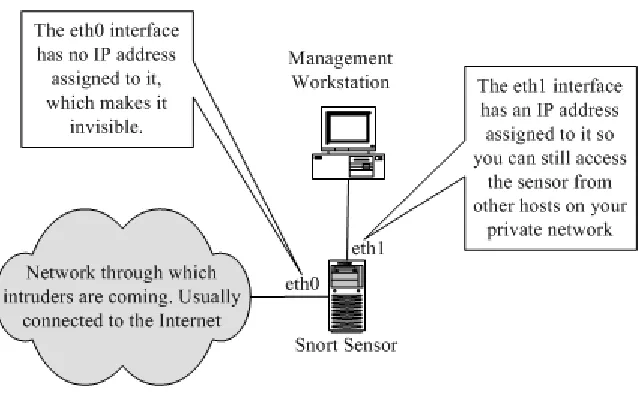
Figure 9 Snort in stealth mode to protect from outside attack (Adapted from Advance Intrusion Techniques Rehman [2003])
User may run Snort in stealth mode for listening incoming traffic in order to hide its
existence. Snort could be run without any IP address interface for keeping its identity
hidden. Snort NIDS is well documented and several third-part tools provide interfacing
bridge with Snort for administration tasks. Well known third party tools are Snorby (open
source), BASE (open source), Sourcefile (commercial) and Aanval (commercial). Snort
is most widely deployed NIDS worldwide with millions of downloads and over 400,000
registered users. That’s why we selected Snort NIDS for our second open source sensor
Standardized efforts for representing alerts in IDS - IDMEF
Intrusion Detection Message Exchange Format (IDMEF) defines common data formats
and exchange procedures for sharing information among IDS and response systems. The
Intrusion Detection Message Exchange Format (IDMEF) is a standard format (RFC
4765) developed by Curry and Debar in the Intrusion Detection Working Group (IDWG)
[www.izerv.net/idwg-public]
IDMEF manage different systems need to interact with IDS. In other words, IDMEF is a
standard data format for alert representation used by various IDS for reporting various
detected suspicious events. According to Debar et al. [2007], “the most obvious place to
implement the IDMEF is in the data channel between an intrusion detection analyzer (or
“sensor) and the manger (or “consol”) to which it sends alarms.”
The data stores in databases though many IDS in the form of IDMEF makes data
analyzer (security administrator) able to decide about the system state more effetely on
the basis of whole network picture instead of just a part of it. Another huge advantage of
IDMEF is during the process of correlation, where various types of data though different
sensors are cross-correlated based on some common calculating means. IDMEF also
enables the data representation more easy to understand and more towards centralized
interface. Data communication among various organizations and security agencies is also
more effective and in more efficient way due to the implementation of IDMEF by them.
IDMEF also has some limits. For example two or more IDS may name the same alert
type differently due to limited capability of IDMEF in semantic representation. This issue
further adds complexity in creating an equivalent object oriented representation of the
same event in relational database such as MySQL.
Alert Management Techniques
After deploying IDS, alert handling is the next step. The challenge of IDS is not only
detecting intrusions but also by managing alerts. Reducing the large number of alerts is
known as alert management. Alert management techniques can be divided into two
Low-level alert management: According to the Alsubhi [2008] “the low-level alert
operations deal with each alert individually to enrich its attributes or assign scores based
on potential risk”.
High-level alert management: According to the Alsubhi [2008] “high-level alert
management techniques, such as aggregation, clustering, correlation, and fusion, deals
with a set of alerts and provide an abstraction of these alerts. High-level techniques will
improve their outcomes due to the early low-level evaluation steps”. Various alert
management techniques deals with huge number of unrelated alerts during the managing
process that leads toward inaccurate final result for the IDS fusion process.
Figure 11 Various Alert Management techniques (Adapted from A Fuzzy-logic based alert prioritization engine:
Alsubhi [2008])
Brief descriptions of the main alert management techniques are as follows:
Alert Reduction: Alert reduction is a very important technique that is done either before
IDS generates alerts or afterwards. According to Alsubhi [2008] “alert reduction
have some common characteristic, such as the source, the target and the type of the
attack”. The other important technique is Alert merging technique that combines all alerts
in one single alert representation form to present an abstract view of the generated alerts.
Alerts with common features such as IP addresses of the machines, their ports or domain
name are grouped in alert clustering technique.
Alert Correlation: An alert correlation process discovers connection between various
series of security events. To achieve the final goal, most of the time, intruders launch
their attack in a series of steps. Traditional IDS are unable to detect these complex attacks
series and deal with each small attack as an individual attack without correlating with
other attacks. As a result, the IDS generates huge number of alerts and false positives
making the analysis process more difficult for network administrator. Most of the time,
alert correlation process eliminates huge number of false alarms.
Alert Visualization: Each alert has many related fields, for example the IP address for
attack generated machine, the IP address for the target machine, domain name, port
number, time stamps and many other related information. This information is shown to
the network administrator in the best understandable and visual format. Simply by
looking at alert records, it is difficult for the network administrator to make a decision
without understanding completely what these alerts are addressing. Alert visualization
Data Fusion Process for IDS
The main goal of the alert fusion process is to fix the problems of IDS that include
generation of large number of alerts, large number of false positives, large number of
non-relevant positives and alerts that do not contain enough information about their
attributes. Alert fusion process not only fixes the problems of particular IDS but also
process the output of other sensors to find the high-level of attack pattern by performing
the process of alert prioritization. According to Helney et al. [2010] “data fusion is a
formal framework in which are expressed means and tools for the alliance of data
originating from different sources. It aims at obtaining information of greater quality; the
exact definition of `greater quality' will depend upon the application.”
Multi-Sensor Data Fusion: Around 1970, the first data fusion method was in the military
domain for example in surface to air or air to air defense, various surveillance purposes,
intelligent gathering for various warning, and defense systems in the battlefield. Later this
process was also applied to civilian domains for example robotic engineering, automotive
industry, manufacturing industry, medical applications and various construction sites.
According to the Bass [2000] a more recent idea is the application of multi-sensor data
fusion techniques to the area of information security.
Data Fusion Architecture: A basic and important aspect of a data fusion system is the
selection of the architecture for developing the fusion system. Hall [1992] as well as Hall
and Llinas [1997] describe three architectural approaches to the data fusion architecture
model. According to Boer [2002] “the first approach involves the fusion of raw sensor
below). This method requires more bandwidth because all sensors data is required to
transfer to central processing facility for the fusion process to start. It is important that all
sensors in the network have equal capability and level of expertise.
Figure 12 Data Level Fusion Approach (Adapted from Hall [1992], Llinas [1997] page 17)
According to Boer [2002] “another possible architecture is centralized fusion with feature
vector data (see figure below). This is also called feature level fusion. In this architecture,
feature vectors rather than raw data are transmitted to the central fusion process”. Sensors
extract these vectors from the raw data. These feature vectors are refined representation
model during conversion of vector data from raw data, less bandwidth is require as
compare to the data level fusion approach to transfer data to the central fusion facility.
Figure 13 Feature Level Fusion Approach (Adapted from Hall [1992], Llinas [1997] page 19)
The next fusion level model is known as decision level fusion approach model (see
Figure below). In this approach sensors makes decision based their source data. This
decision result of sensors goes into the fusion process for further refine fusion. This
approach also deals with significant low volume of data transfer and requires less
Figure 14 Decision Level Fusion Approach (Adapted from Hall [1992], Llinas [1997] page 22)
The selection of right approach is purely depends on the requirements and various
constraints, for example type of sensors and available bandwidth. Each architecture has
some advantages and disadvantage over the others
Fusion-Based IDS
The main purpose of fusion-based IDS is to keep the network operators up to date
relating to the current information of the network state. This information mainly relates to
attacks, intruders and relationship among them. Fusion based IDS perform this task with
greater quality than traditional non fusion based IDS. The success rate of a fusion based
IDS is completely based on its multiple sensors and multiple levels of fusion processes
known as abstraction levels. According to Blasch and Plano [2002] “the multiple levels
of abstraction are supported by the Joint Director of Labs (JDL) [1999] data fusion
[2002] level 0 is for preprocessing, level 1 for object refinement, level 2 for situation
refinement, level 3 for threat refinement, and level 4 for process refinement.
This means that the JDL model [2002] is applicable to intrusion detection. At each of the
levels of the JDL model, functionality of fusion-based IDS can be identified. Filtration
process is done at level 0. Unimportant and nonrelated are filtered out after series of
events. These series of events generates alerts. These alerts are transferred to Level 1
fusion of JDL model. In level 1 these alerts combine on the basis on their similarities
(alerts generated on the same event) and categorize in to groups. These groups of alerts
are called alert tracks. Identity estimate process is done on each alert track by the process
of fusion. On level 2 of JDL fusion model, reasoning process is applied in order to find
the various categories of attacks and attackers (intruders) on the alert tracks. Threat
assessment of current situation is done during level 3. Threat assessment of an attack and
attacker is asses during this level. Level 4 generates the final output result after refining
the threat assessment in an improved version after considering some additional external
Figure 15 JDL Revised Model Data Level Fusion Approach (Adapted from Blaschl E and Plano S [2002], page 2)
According to Valdes et al. [2001] “the probabilistic approach is used when a similarity
function is defined for each attribute”. Similarity function plays a vital role for
controlling huge number of alerts. The overall similarity of alerts is calculating by
applying similarity function using an expectation of similarity. According to Valdes et al.
[2001] “the method considers appropriate fields in alert reports as features for matching
algorithm. For each new alert, algorithm computes similarity to existing meta alerts, and
merge the new alert with the best matching meta alert, as long as the match passes a
threshold value”.
Gula [2002] suggested a solution for preventing and reducing false positive alert by
correlating IDS alert with vulnerability of that particular system. At a high level, if IDS
concern itself with attacks against that particular vulnerability. According to the author,
this alert fusion approach makes better decisions through an automated fashion.
According to the Burroughs [2002], network system should be secure and defended
against attacker not the attack itself. To secure the system from an attacker, the intrusion
detection is needed to be performed from an attacker’s central viewpoint. According to
Burroughs, central view point idea ignores the core issue of possibility of coordinated
attack effort among separate attackers against a network.
Chaitanya Kumar [2003] explains another approach to handle false alarm through
fusion process. He introduced E-IDS Data Collector that obtained input (alerts) from
sensors, logs and device logs and perform multiple steps to reduce alert flooding and
Figure 16 IDS Data Fusion Model – an implementation approach (Adapted from Bassl [2000], page 14)
Probability Theory
Probability theory is branch of mathematics concerns with probability, the analysis of
random formulas. Random variable and events are main inputs for any probability theory.
This theory is very helpful to determine the non-deterministic events over time interval in
random fashion. These random events repetition- occurrence lead towards evidence for
certain patterns of occurrence. After detailed analysis, evidence helps for predicting
systems in order to describe the system state. Probability theory deals with events occur
in countable time intervals, is known as discrete probability distribution theory.
Continuous probability theory deals with events that occur in continuous time.
Detective logic: Detective logic creates arguments based on necessary hypotheses within
set of premises. Premise is a statement about any argument based on rules of inference or
symbolic logic for justifying the conclusion. Detective logic or reasoning considers being
a sound reasoning if it is a valid reasoning argument and its premises are true.
Probability Logic: Probability logic handles uncertainty factor by combination of
probability theory capacity with detective logic capacity. Probability logic is based on
very complex formulas that further enhance computational complexity of probability and
logical calculations. Various proposals are available to deal with these complex systems.
There are two main classes of these proposals. One deals with probabilistic extension to
logical entailment and other deals with uncertainty and lack of evidence.
Subjective logic: Subjective logic is a type of probability logic that deals with uncertainty
and incomplete knowledge for any situation. Subjective logic works on opinion known as
subjective opinion about any proposition. There are two types of opinions, one is
binomial opinion applies to single preposition and represent as beta distribution. Other
type of opinion is known as multinomial opinion represent as dirichlet distribution.
Subjective logic has two types of subjective operators, standard operators and non
subjective belief relating the correctness of any proposition with degree of uncertainty.
Proposition is content or meaning of any sentence. In mathematical form proposition is a
combination of symbols and variable that make a meaningful declarative formula.
Uncertainty types: Uncertainty is the base of complex computational analysis that results
in advancement of various fields of science. By handling uncertainty factor more
efficiently, system becomes more accurate and effective. According to Helton [1997],
uncertainty has two major types. Aleatory uncertainty results from the fact that a system
can behave in a random way. Aleatory uncertainty is also known as Type A uncertainty,
Irreducible uncertainty or objective uncertainty. The other type of uncertainty, known as
Epistemic uncertainty results from the lack of knowledge about the system parameters.
More in depth analysis needed for Epistemic uncertainty which is also known as Type B
uncertainty, Reducible uncertainty, Subjective uncertainty or Ignorance.
Traditional probability theories can handle both uncertainty types. Application of
traditional probability theories for Epistemic or Subjective uncertainty is known as
Bayesian probability. In probabilistic analysis, analyst knows the exact probability of
each event occurrence. When it is not available, Principle of Insufficient Reason is used
to represent probability of un known events.
Types of Evidence: Combination of evidence from multiple sources has two major issues
to deal with. One is the type of evidence involved and the other is to deal with conflicting
evidence. The combination of evidence is based on various types of the evidence
structure), consistent evidence (at least one element is common to all subsets), arbitrary
evidence (no element is common to all subsets) and disjoint evidence (any two subsets
have no element in common).
Dempster Shafer Theory -DST
Dempster Shafer Theory (DST) is a mathematical theory of evidence. Initially Dempster
[1967] provide the theory and later Shafer [1976] provide the extension of Dempster’s
work in more effective and influential way. In a finite discrete space, DST is a
generalization of probability theory where different probabilities are being assigned to
various sets of events unlike single possible event in traditional probability theories.
Therefore, evidence in DST is more meaningful at higher level of abstraction. DST has
three main functions to deal with uncertainty. One is basic probability assignment known
as bpa or m. Secondly, the Belief function (Bel) and lastly, the Plausibility function (Pl).
Dempster-Shafer theory of evidence is more general form of Bayesian theory that also
deals with probability factor of an event that requires probability of each step for leading
towards an event. Belief function is used in Bayesian theory that leads to various
questions of interests like these degrees of belief may or may not have the mathematical
properties of probabilities. The closeness of two related questions decides the difference
of probability factor among them. According to Glenn Shafer [1976], subsequent work
has made clear that the management of uncertainty inherently requires more structure
than is available in simple rule-based systems, but the Dempster-Shafer theory remains
attractive because of its relative flexibility.
The Dempster-Shafer theory works in two main steps. In first step the degree of belief for
step the, Dempster’s rule of combining is applied on these related questions on the basis
of their probability factors. The Dempster-Shafer theory is mainly theory of reasoning in
order to reach a final decision. The implementation of Dempster-Shafer theory involves
the solution of two related problems. First, sorting the uncertainties factors of the
problem into an independent item. Second, carry out Dempster’s rule computationally.
Sorting the uncertainties into independent items leads to a structure involving items of
evidence that influence by different but related questions, and this structure can be used
to make computations feasible.
Motivation for choosing Dempster-Shafer theory
A major advantage of Dempster Shafer theory over other approaches is narrowing down
the hypothesis set with the accumulation of evidence. In Intrusion Detection
environment, Dempster Shafer theory is useful for combing the evidence provided by
different observers. These observers could even be completely different and located
remotely from each other. Each observer could provide its own perceived state to a
central server which will combine the evidence to determine the final state of the
network. The most important part of the theory is Dempster’s rule of combination is
combining the evidence from two or more sources to form inferences. Various
researchers discussed the advantages of D – S theory of evidence in their work. Some of
them are discussed below.
According to Siaterlis et al. [2003], and Siaterlis and Maglaris [2004 and 2005], the
Dempster-Shafer theory approach has significant advantages over the Bayesian approach.
They state that in contrast to the Bayesian approach where one can only assign