Mixed Oxide-LDHs Materials: Synthesis,
1
Characterization and Efficient Application for Mn
2+
2
Removal from Synthetic Wastewater
3
Cristina Modrogan1, Simona Cǎprǎrescu2*, Madelene Annette Dǎncilǎ1*, Oanamari Daniela
4
Orbuleț1, Eugeniu Vasile3
5
1 University POLITEHNICA of Bucharest, Faculty of Applied Chemistry and Materials Science,
6
Analitycal Chemistry and Environmental Engineering Department, 1-7 Polizu Str., 011061, Bucharest,
7
Romania, [email protected]; [email protected]; [email protected]
8
2 University POLITEHNICA of Bucharest, Faculty of Applied Chemistry and Materials Science,
9
Inorganic Chemistry, Physical Chemistry and Electrochemistry Department, 1-7 Polizu Str.,
10
Bucharest, Romania, [email protected]
11
3 Institute of Research and Development ”METAV” SA, C.A. Rosetti 31, 020011, Bucharest, Romania;
12
13
* Corresponding authors: [email protected] (S.C.); [email protected] (A.M.D.)
14
Tel.: +40214023820 (S.C.)
15
16
Abstract:
In this study, Mg-Al and Mg-Al-Ni - layered double hydroxides (LDHs) were17
successfully synthesized for efficient removal of Mn2+ from synthetically wastewater. LDH
18
adsorbents (Mg-Al and Mg-Ni-Al) were prepared by co-precipitation method. The formation of the
19
layered double hydroxide, the adsorption of manganese on both LDH (Mg-Al and Mg-Ni-Al) were
20
observed by XRD, SEM and EDX analysis. The various parameters such as the effect of shaking time,
21
initial Mn2+ concentration, temperature were controlled and optimized to removal of Mn2+ from
22
synthetic wastewater. The kinetics and adsorption isotherms for Mn2+ removal from wastewater were
23
studied in batch mode. At temperatures of 10 °C and 20 °C the adsorption equilibrium was reached
24
after 24 h. Adsorption isotherms of Mn2+ are well fitted by Langmuir and Freundlich isotherm
25
equation. The adsorption capacity of Mn2+ from synthetic wastewater of 80.607 mg/kg was obtained
26
for (Mg-Al-Ni)-LDH. It is found that the adsorption kinetics is best described by the pseudo-second
27
order model. These results prove that LDHs can be considered as a potential material for adsorption
28
of Mn2+ from wastewater.
29
Keywords: mixed oxide-LDHs; manganese; wastewater; adsorption kinetics
30
31
1. Introduction
32
The pollution of water bodies by metals has received increasing public attention due to the
33
importance of metals in industrial processes and their potential toxicity towards humans and in the
34
aquatic environment [1]. In the earth's crust the manganese is frequently associated with iron. The
35
main minerals are: pyrolusite (MnO2), rhodocrosite (MnCO3), hausmanite (Mn3O4), braunite (Mn2O3).
36
Manganese oxides can be reduced with coal in furnaces at high temperatures or in electric furnaces.
37
Pure manganese can be obtained by aluminothermy, electrolysis of a concentrated solution of MnSO4
38
or by sodium dislocation of MnF2 or MnCl2. [1-3].
39
The sources of manganese pollution are: siderurgy, being an alloying element with other
40
metals such as: iron, nickel, copper, aluminum; manufacture of dry batteries, glass and ceramics
41
industry, chemical industry, paint industry. Waste waters from industries, mainly the steel
42
manufacturing industry (about 95%), are the main sources of manganese pollution along with the
43
ores processing and exploitation [2].
44
In organism’s manganese is an essential trace element, its function being related to the
45
metabolism of oxygen. The daily dose in humans is 5 - 10 mg. High doses of ingested manganese can
46
cause local affections (burns of the digestive tract, vomiting, glottic edema, digestive bleeding) and
47
general affections (liver, respiratory and cardiovascular disorders). The respiratory tract damage may
48
occur during inhalation in the case of occupational exposures to iron and manganese processing, in
49
the production of alloys, mining, welding and working with agrochemicals products. Symptoms of
50
neurological appear in chronic intoxication and develops slowly, only after years of exposure. It
51
appears headache, asthenia, drowsiness, changes in gait "went of cock" or irreversible effects such as:
52
Parkinson's syndrome, dysgraphia, dysarthria, psychic impairment. From US statistics, a population
53
between 500,000 and 1500,000 people is diagnosed with Parkinson's disease, and doctors are
54
considering a possible exposure to manganese [2]. In drinking water, the concentration of manganese
55
should not exceed 0.1 mg/L. The legislation has established a maximum concentration of manganese
56
in effluent of 1.0 mg/L [3].
57
Manganese has high solubility under both acid and neutral conditions, which is why it is
58
considered a difficult element to remove from aqueous media. [4]. For the removal of manganese, the
59
most used methods are precipitation processes with carbonates, hydroxides or oxidative
60
precipitation. Reagents such as NaOH or Na2CO3, have low selectivity in the case of Mn2+, therefore
61
it is not recommended in the processes of treatment of effluents with low manganese content. [5].
62
Oxidation of Mn2+ to Mn4+ can be most easily done with air or O2 when manganese dioxide is formed,
63
but the reaction has a slow speed. Other oxidation agents used in this process are: potassium
64
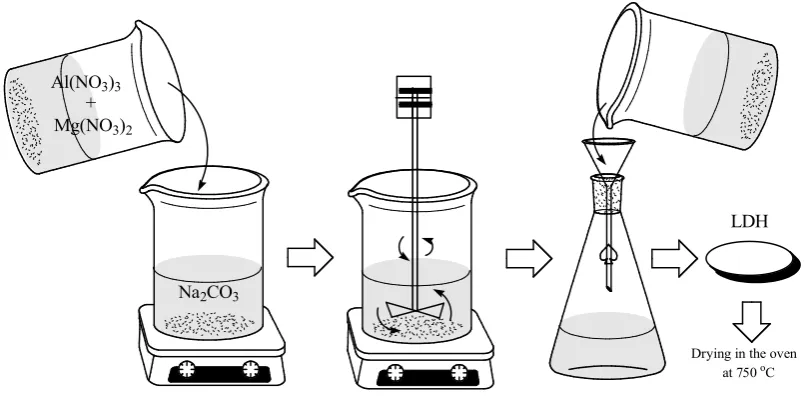
permanganate, hypochlorite or ozone [5], but these oxidations have the disadvantage of high costs
65
and special methods of handling the reagents [6].
66
Various techniques for treating manganese wastewater have proved to be disadvantageous
67
due to the followings: generate of a secondary pollution, are inefficient in the case of low manganese
68
content and high costs are recorded [7]. Therefore, the researchers focused on discovering cheap,
69
environmentally friendly, simple and efficient manganese removal methods. Such methods use
70
anionic clays (LDH) materials that can be synthesized in the laboratory by simple and economical
71
methods whose size is nano [8-13].
72
LDH have brucite like structure. Wimonsong et al. [8] established that the general formula is
73
[MII(1-x)MIIIx(OH)2]x+ [An-x/n, zH2O]x-, where MII and MIII are divalent, respective trivalent cations
74
occupying octahedral positions of the hydroxide layer. They are very positive loadings. An- is the
75
anion that compensates for the load (n represent the number of moles of co-intercalated water and
76
MIII per formula weight of the compound). LDH is a strong positive material resulting by replacing
77
the divalent cations with the trivalent cations and it is balanced by the presence of An- anions in the
78
interlayer. These anions can be exchanged with other anions [9, 10]. These materials are characterized
79
by large specific surfaces and high porosity, thermal stability and anion exchange capacity (2-3 mg/g)
80
To understand the structure of these compounds it is necessary to start from the structure of
82
brucite, Mg(OH)2 brucite consists of infinite planes of octahedra of Mg2 + ions coordinated with 6 OH
-83
groups. These sheets are stacked on top of each other and are held together by hydrogen bonding.
84
When Mg2+ ions are substituted by a trivalent ion having not too different a radius (such as A13+ for
85
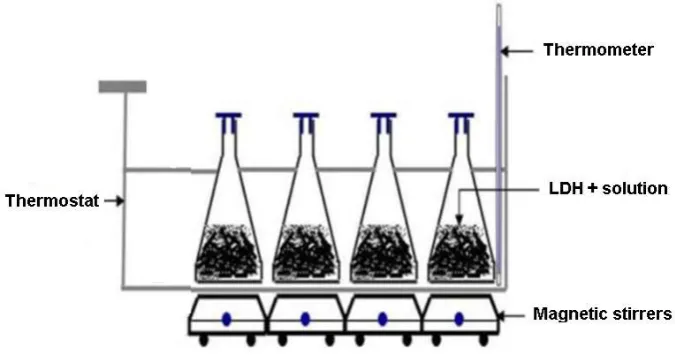
hydmtalcite), a positive charge is generated in the hydroxyl sheet. The positive charge is offset by
86
divalent anions (e.g. CO32-) that are found in the interlayer region of the two sheets type Brucite. The
87
main features of LDH structures therefore was determined by the nature of the brucite-like sheet, by
88
the position of anions and water in the interlayer region and by the type of stacking of the
brucite-89
like sheets. The crystallization water will be encountered in the space in the intermediate layer [13].
90
Water and anion have a random location in the area of intermediate layers. Their free movement
91
occurs when the existing links are broken and other new connections are formed. The oxygen atoms
92
of the water molecules and of the (CO3)2- groups are distributed approximately closely around the
93
symmeuy axes that pass through the hydroxyl groups (0.56 A apart) of the adjacent brucite-like sheet
94
[14]
95
It is known that LDH is an active adsorbent, but studies on the effects of different parameters
96
on the efficiency of eliminating Mn2+ have not been adequately explored [15].
97
The study aims to synthesize of LDH (Mg-Al and Mg-Ni-Al) for the removal of Mn2+ from
98
synthetically wastewater. Also, in this study was investigate the adsorption equilibrium on these
99
LDHs in terms of thermodynamics and kinetics in different experimental conditions such as: pH,
100
stirring time, initial concentration of Mn2+ and competing ions. The structural and morphological
101
properties of the mixed oxide-LDHs were investigated by X-ray diffraction (XRD), scanning electron
102
microscopy (SEM) and Energy Dispersive Spectroscopy (EDX) analysis. The environmentally
103
friendly procedure described for synthesis of mixed oxides-LDS is low cost, uses eco-friendly
104
materials and could potentially be applied on an industrial scale.
105
2. Materials and Methods
106
107
Mg(NO3)2·6H2O; Al(NO3)3 9H2O; Ni(NO3)2. 6H2O; Na2CO3; NaOH; MnSO4 were purchased
108
from Sigma Aldrich and used without further purification. H2SO4 was was supplied by Merck. All
109
reagents used were analytical grade. Distillated water was used in this work.
110
111
2.1. Synthesis of the (Mg-Al and Mg-Ni-Al)-LDHs materials
112
113
The (Mg-Al and Mg-Ni-Al)-LDHs materials was synthesized by chemical co-precipitation
114
method, at constant pH 8.45 (pH-meter JKI JK-PH009). In order to synthesized the Mg-Al LDH a
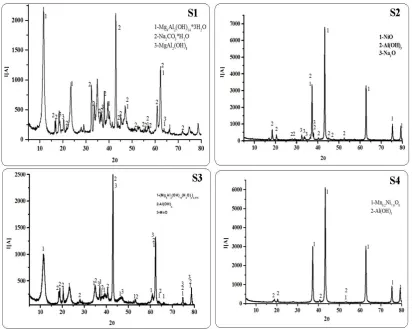
115
typical procedure was followed: a stoichiometric amounts of reagents Mg(NO3)2 .6H2O and Al(NO3)3
116
.9H2O were dissolved in distilled water (total concentration 1 M, cationic ratio Mg2+:Al3+ was 3:1). The
117
obtained solution was added slowly over a Na2CO3 solution (2.10-3 M), under vigorous stirring (200
118
rot/min). During the synthesis the pH value was kept constant at 8.45 by adding NaOH solution (0.1
119
M). After that, the obtained mixture was stirred continuously for 30 minutes, at room temperature
120
(22±1 oC). The precipitate formed was left to mature for 12 h, then filtered, washed with distilled
121
water several times and dried in air at room temperature. The precipitate was calcined using an oven
122
adsorption of manganese ions. A similar procedure was employed for the synthesis of Mg-Ni-Al
124
LDH, using Mg(NO3)2 .6H2, Al(NO3)3 .9H2O amd Ni(NO3)2 .6H2O (total concentration 1 M, cationic
125
ratio Mg2+:Ni2+:Al3+ was 2:1:1). The calcination temperature was 750 °C, for 8 h.
126
A schematic pathway for the obtained LDHs was showed in Fig. 1.
127
Mg(NO3)2
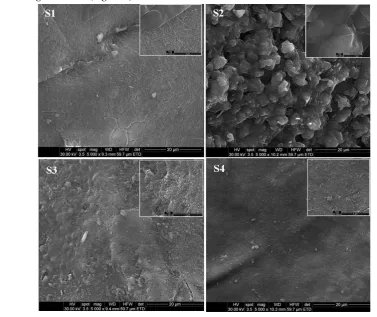
Al(NO3)3
Na2CO3
+
LDH
Drying in the oven at 750 oC
128
Figure 1. Schematic pathway for obtained LDH
129
130
2.2. Characterization of the synthesized materials
131
132
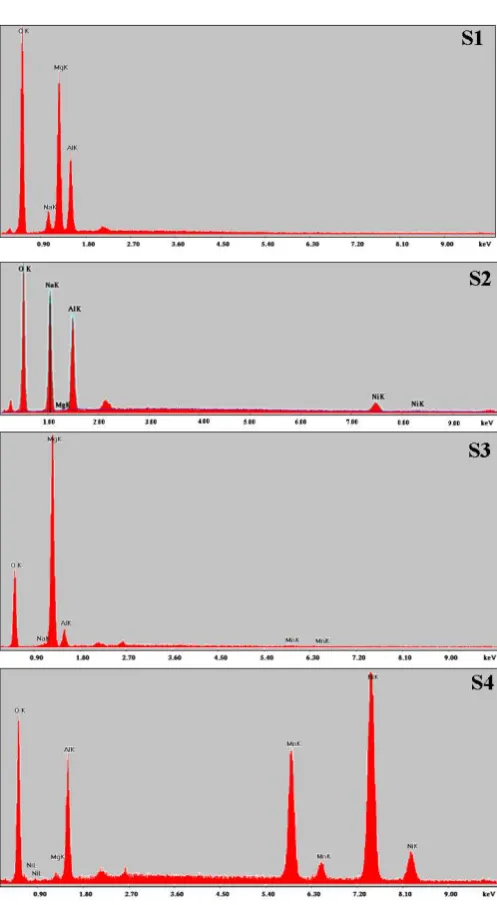
The structural properties of the LDHs regarding the adsorption of Mn2+ on both Mg-Al-LDH
133
and Mg-NiAl-LDH were observed by Energy Dispersive Spectroscopy (EDX) analysis. The phase
134
composition analysis of the sorbents was performed by X-ray diffraction method using a
Shimadzu-135
6000 diffractometer (2θ Bragg-Brentano geometry, using the CuKα characteristic radiations). The
136
elimination of the CuKβ component was achieved by a Ni filter. The experimental data were digitally
137
collected by the ”step by step” scanning method in the 2θ angle interval of 10 ÷ 90 degrees.
138
The surface morphology of LDHs was performed by Scanning Electron Microscopy (SEM)
139
using a scanning electron microscope Hitachi S2600N.
140
The textural analysis was performed using Micromeritics ASAP 2020 by adsorption of
141
nitrogen at the liquefaction temperature. The samples were first degassed for 2 hours at 150 °C and
142
0.1 Pa and then subjected to analysis where they were characterized in terms of the specific surface
143
area, the pore volume and the mean pore size.
144
The obtained LDHs (see Table 1) were examined before (blank) and after adsorption of Mn2+.
145
146
Table 1. Notation of samples before and after adsorption of Mn2+
147
Samples Notation
(Mg-Al)-LDH blank S1
(Mg-Al-Ni)-LDH blank S2
(Mg-Al)-LDH – Mn2+ S3
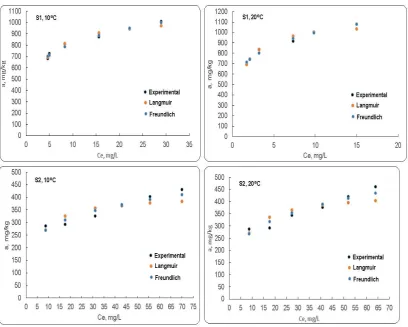
(Mg-Al-Ni)-LDH – Mn2+ S4
148
2.3. Adsorption study of Mn2+ used LDH
In order to establish equilibrium conditions for Mn2+ removal from synthetical wastewaters
151
were used mixed oxides (Mg-Al and Mg-Al-Ni)-LDHs. Stock solutions that contain Mn2+ were
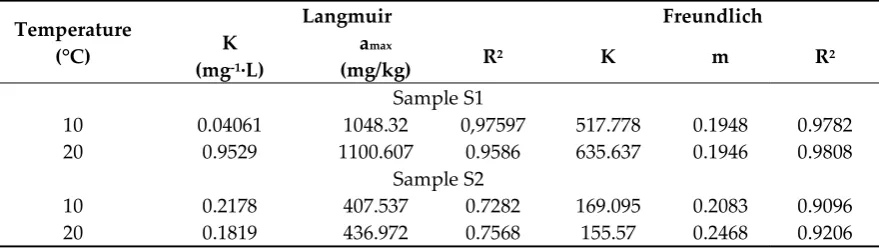
152
prepared by dissolving MnSO4 in deionized water at room temperature (22 ± 2 oC). The working
153
solutions were prepared by diluting the stock solution with deionized water and H2SO4 used to adjust
154
the pH to the preset values.
155
The experimental procedure for the dynamic studies was: 0.3 g mixed oxides (Mg-Al and
156
respectively Mg-Al-Ni)-LDHs, was placed in Berzelius glasses, were added 50 cm3 MnSO4 solution
157
with various concentrations: 5 mg/L; 15 mg/L; 30 mg/L; 50 mg/L; 100 mg/L. The glasses were coated
158
in order to prevent solution evaporation. The mixed oxides-LDHs was in contact with the solution
159
for 24 hours then filtered using blue ribbon paper and solution was placed in volumetric flask of 50
160
mL. From the filtrate, 10 cm3 solution was spectrophotometrically analyzed at λ = 525 nm (Shimatzu
161
1900 UV-VIS). LDH was used like powder and boring.
162
The experimental procedure for the kinetic studies was: 0.3 g mixed oxides-LDHs was placed
163
in Berzelius glasses, were added 50 cm3 MnSO4 solution with concentration of 100 mg/L. The glasses
164
were coated in order to prevent solution evaporation and were stirred (200 rpm) at different times (5,
165
10, 20, 30, 60, 90 minutes) at 10 °C and 20 °C.
166
167
Figure 2. Adsorption study of Mn2+ used LDH
168
169
Magnetic stirring was realized using a Heidolph Unimax shaker at 300 rpm. At the end of the
170
stirring, the samples were filtered using blue ribbon paper and solution was placed in 50 mL
171
volumetric flask (Figure 2). From the filtrate, 10 cm3 solution was spectrophotometrically and
172
analyzed at λ = 525 nm. All the experiments were made at pH = 7 (pH-meter JKI JK-PH009, 0 - 14
173
pH).
174
175
2.3.1. Kinetic and thermodynamics study of Mn2+-LDHs
176
To evaluate the adsorption capacity of LDHs for Mn2+, adsorption isotherm studies were
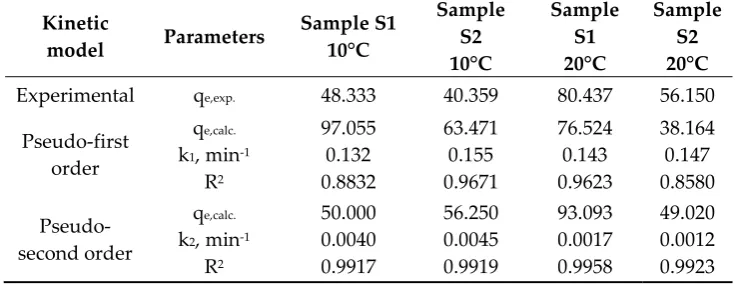
177
carried out at different temperatures (10 and 20 oC). The experimental data were fitted on the
178
Freundlich and Langmuir models.
179
The Langmuir model starts from the model of an adsorbent on whose surface are active
180
surface of the adsorbent and the molecules of the adsorbed component, and there are no interactions
182
between the molecules of the adsorbed component [15].
183
a =C
K
a
C
K
1
max (1)
184
185
where: K - the equilibrium constant of the adsorption process (mg/L); C – Mn2+ concentration in the
186
aqueous phase, at equilibrium (mg/L); amax - maximum adsorption capacity of LDH (mg/kg); a -
187
adsorption capacity of LDH at equilibrium (mg/kg).
188
Equation (1) is linearized, obtaining the following form [15]:
189
a 1= max max 1 1 a a CK (2)
190
In equation (2) the following changes of variable have to be done:
y
a
1
;
x
C
1
191
obtaining the equation of a straight line of form: yc = Ax + B
192
Starting from the equilibrium data obtained experimentally and carrying out the afford
193
mentioned variable changes, the parameters of the straight line are calculated by linear regression.
194
The Freundlich model starts from the hypothesis of reaching the chemical equilibrium when
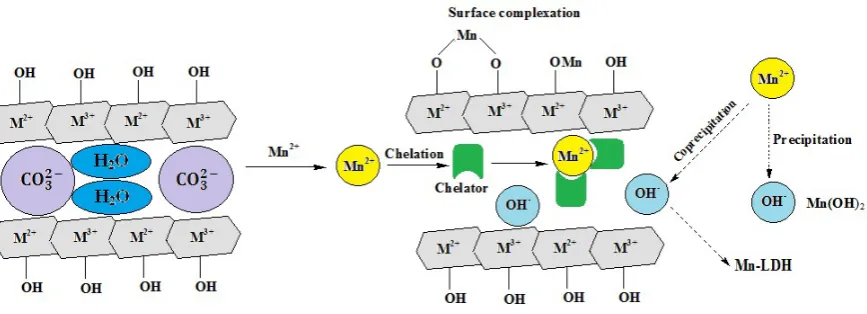
195
there is a dynamic exchange between the molecules of the adsorbed phase and those remaining in
196
solution [15]:
197
a = K· Cm (3)
198
where: K, C and a have the same meaning as in equation (1), and m is a constant, in other words
199
another parameter of the Freundlich model.
200
Equation (3) can be linearized by logarithmation:
201
C
m
K
a
ln
ln
ln
(4)202
Noting y = lna and x = lnC, equation (4) can been written:
203
yc = A . x + B (5)
204
The parameters of the straightline are calculated by linear regression, finally obtaining the
205
parameters of the Freundlich model (K, m).
206
These equations are widely used, the former being empirical while the second assumes that
207
the maximum adsorption occurs when the surface is covered by the functional groups. Langmuir
208
developed a theoretical equation, considering that a monomolecular adsorption layer occurs on an
209
energetically homogeneous surface, and that there is no interaction between the adsorbed molecules.
210
The Langmuir adsorption isotherm plot (qe vs. Ce). Ce indicates the applicability of Langmuir
211
adsorption isotherm. The values of qm and b were calculated from the slope and the intercept of the
212
linear plots Ce/qe vs. Ce. To predict the adsorption efficiency of the adsorption process, the
213
dimensionless equilibrium parameter was determined by using the following equation (6) [15]:
214
qe=qm ·b·Ce
1+b·Ce (6)
215
216
where: Ce – Mn2+ concentration in the aqueous phase, at equilibrium (mg/L); qe - the adsorbent
217
equilibrium concentration (mg/g); qm - the adsorbent capacity for a monolayer adsorption (mg/g); b -
218
equilibrium constant [15].
219
3. Results and discussions
221
3.1. Characterization of LDH
222
To further reveal the interaction of Mn2+ with LDHs, the XRD analysis was performed. Figure
223
4 showed the XRD spectra of LDHs before and after Mn2+ adsorption.
224
The mixed oxide LDH had XRD peak patterns different those of from manganese oxide (Fig.
225
4), which indicates that the LDHs have a different crystal structure from a simple physical mixture of
226
manganese oxides, that is, a homogeneous single phase.
227
228
Figure 3. XRD pattern of the LDHs before and after Mn2+ adsorption.
229
230
The XRD patterns of LDHs before and after Mn2+ adsorption (Fig. 3) indicated that the
231
diffraction intensity of peaks decreases and the basal distance increases after reaction, indicating the
232
incorporation of manganese species into the interlayer of the LDHs.
233
As indicated in the Figure 3, the XRD pattern of the prepared adsorbent before adsorption
234
presented sharp and symmetrical peaks and some high-angle asymmetrical peaks, demonstrating the
235
formation of highly crystalline Mg-Al LDH structure. The phases encountered for the sample S1 are
236
Na2CO3.H2O - 50% crystallized in the orthorhombic system, Mg4Al2(OH)14. 3 H2O - 47 % crystallized
237
in the rhombohedral system, and MgAl2 (OH) 8-43% crystallized in the monoclinic system. The
238
phases encountered for the sample S2 are NiO 62 % with cubic crystallization and the sides of 4.18 Å,
239
Al(OH)3 - 40% crystallized in monoclinic system and Na2O - 33% crystallized in orthorhombic system,
240
no Mg compounds were identified in this analysis. The phases encountered for the sample S3 are
241
MnO - 58 % crystallized in the cubic system, Al(OH)3 – 56 % crystallized in the hexagonal system, is
242
in fact β Al (OH)3- and (Mg6Al2 (OH).18(H2O)4) 0.375 (hydroxide) double Mg and Al hydrated) - 49%
243
crystallized in rhombohedral system. For the sample S4 are indicated two phases: Al(OH)3 - 25 %
crystallized in monoclinic system and a mixed oxide of Mn and Ni - 75 % crystallized in cubic system
245
[16-20].
246
The surface morphology of the LDHs before and after Mn2+ adsorption was observed by SEM
247
at 5000x magnifications (Figure 4).
248
249
Figure 4. The SEM image for LDHs before and after Mn2+ adsorption
250
251
It can be observed from the figure 4 that the LDH particles were uniformly shaped sheets,
252
with most of them being hexagonal (gray parts), and the particle size ranged from 200 to 1000 nm in
253
diameter. In addition, several heterogeneous small pores (dark parts) could be noted, which are
254
known to provide larger surface area for contaminant adsorption, thus making the LDH
255
nanoparticles as a well-supported material [19]. Also, Mg-Al-LDH and Mg-Al-Ni-LDH exhibit the
256
agglomerates of compact and non-porous structure. It can be seen that the Mg-Al-LDH had a smaller
257
particle size compared to Mg-Al-Ni-LDH [20].
258
To further reveal the interaction of manganese with LDHs, the EDX analysis was performed.
259
Figure 5 showed the EDX spectra of LDHs before and after Mn2+ adsorption.
261
Figure 5. EDX surface analysis of the LDH before and after Mn2+ adsorption
262
263
In EDX for the sample S1, indicated that the component elements, Mg, Na and Al are
264
highlighted. The calculated quantitative percentages Na4.52%, Mg26.50%, Al16.67% and O
-265
52.31%, which demonstrates the unevenness of the material. The EDX for the sample S2 showed that
266
the sample has uniformly spread elements, the Mg analysis it is not identified, but the following
267
elements are detected: Na - 30.81%, Al - 22.25% and Ni - 3.97% the rest is O - 42.97%, so in large
268
quantity it is NaO2. The lack of Mg can be explained by the inclusion of Mg in certain compounds
269
such as aluminum hydroxide and sodium oxide. The compounds are in the form of, sintered
270
crystallites, overlapping. The sample S3 showed a compact surface with small amounts of Mn and
271
the blades are found in the form of very thin sheets and in these small quantities of Mn are recorded.
272
Most of the surface is covered with slats, but compact groups of slats are also observed. Mn retention
273
is uneven, concentrated in different areas. The presence of Mn is detected by the formation of
274
polyhedra, in some areas double pyramids are encountered and the concentration of Mn is greater
275
Mn and the rest O was calculated. The elements detected are: O 39.52 %, Na 0.65 %, Mg 50.63 %, Al
277
8.56 %, Mn 0.63 %. In case of sample S4 it is observed the deposit of a large quantity of Mn, but Na is
278
not detected in the sample. Also, Mg is present, but in small quantity. The presence of Mn is
279
illustrated by the formation of pyramid formations. The presence of Ni favors the retention of Mn,
280
the compound identified by XRD analysis being a mixed oxide of the type Mn0.2Ni7.6O8. The
281
appearance of the sample is quite compact, the very thin blades are arranged, some weights being
282
arranged others in the majority, but also perpendicular to the others. At an increase of 400 000 hours
283
it is observed that on the pyramidal formations there are deposits in the form of crystallites [17-20].
284
285
3.2. Kinetics and adsorption isotherms evaluation
286
The equilibrium adsorption isotherm is important in the adsorption system design. The
287
distribution of manganese between the liquid and the solid phase in equilibrium is expressed by the
288
Freundlich and Langmuir models.
289
290
291
Figure 6. The adsorption curves of Mn2+ using Mg-Al-LDH (S1) and Mg-Ni-Al-LDH (S2)
292
at 10 °C and 20 °C
293
294
The adsorption isotherm of Mn2+ on Mg-Al-LDHs and Mg-Ni-Al-LDHs measured with the
295
initial Mn2+ concentration ranging from 5 to 100 mg/L was shown in Figure 6. As we can see, the
296
adsorption capacity of Mn2+ increased with increasing the initial Mn2+ concentration. The adsorption
297
isotherm parameters from Mg-Al-LDHs and Mg-Ni-Al-LDHs are presented in Table 2. As shown in
298
Table 2, the isotherm data were better fitted into the Langmuir model than the Freundlich model. It
299
and 1100.607 mg/kg at 20°C for Mg-Al-LDHs (S1) and 407.5368 mg/kg at 10 °C and 436.9719 mg/kg
301
at 20 °C for Mg-Ni-Al-LDHs (S2)) of adsorption capacity from Langmuir isotherm model. These
302
obtained results shows that the adsorption of Mn2+ on Mg-Al-LDHs followed the Freundlich isotherm
303
model which indicate that the adsorption belongs to multilayer. The comparisons of the maximum
304
adsorption capacity among LDH and other related adsorbents are summarized in Table 2. The result
305
demonstrated that the as-prepared Mg-Al-LDHs exhibited excellent removal capacity of Mn2+ than
306
most of the adsorbents reported in literature [16-18]. Li et al. [16] synthesized Mn-doped
MgAl-307
layered double hydroxides (LDHs) for removal arsenate from aqueous solution. The study indicated
308
that the adsorption capacity of As(V) on Mn-LDHs via Langmuir isotherm model was 166.94 mg/g.
309
Bakr et al. [17] studied the removal of Mn(II) from aqueous solutions by Mg-Zn-Al
310
LDH/montmorillonite nanocomposite. The results indicated that the maximum adsorption efficiency
311
were 24.5, 26.4 and 28.9 mg/g at adsorbent mass of 0.25 g/L, initial Mn(II) concentration of 80 mg/L,
312
pH of 6.0, stirring rate of 160 rpm, contact time of 75 min and temperatures 298, 308 and 318 K. The
313
obtained results indicated that the increasing the temperature of the adsorption process increases the
314
adsorption capacity due to the acceleration of some original slow adsorption steps [17, 18]. Also, can
315
be due to the new adsorption active sites that being created on the adsorbent surface or could be due
316
to the increases the solubility of the Mn(II) ions in the medium [19-22].
317
318
Table. 2. Summary of Mn2+ adsorption kinetics parameters by samples S1 and S2 at 10 °C and 20 °C
319
320
As shown in the Table 2, all the used models correlated well with the experimental data (R2
321
> 0.9) in the following order: Freundlich > Langmuir. The higher values of R2 indicate that the
322
Freundlich model was more suitable for describing the sorption equilibrium of manganese onto the
323
LDH adsorbent. The manganese adsorption data obtained in this study were better represented by
324
the Freundlich form than by the Langmuir form, as confirmed by the R2 values, at temperature of 20
325
oC (Table 2). The Freundlich model provided the best fit to the data for the adsorption of Mn2+ onto
326
Mg-Al-LDH (R2 = 0.9808), indicating that the manganese monolayer adsorption on surface of the
327
adsorbent was heterogeneous. This fact can be attributed to the incorporation of different elements
328
from the wastewater into the Mg-Al-LDH structure during the synthesis procedure [19].
329
The calculated maximum Mn2+ adsorption capacity of 80.607 mg/kg was obtained for
Mg-Al-330
LDH, indicating that mixed oxide LDH is a promising adsorbent that can be used in the removal of
331
Mn2+ from wastewaters.
332
333
334
335
Temperature (°C)
Langmuir Freundlich
K (mg-1·L)
amax
(mg/kg) R2 K m R2
Sample S1
10 0.04061 1048.32 0,97597 517.778 0.1948 0.9782
20 0.9529 1100.607 0.9586 635.637 0.1946 0.9808
Sample S2
10 0.2178 407.537 0.7282 169.095 0.2083 0.9096
3.2.1. Sorption kinetics
336
The experimental kinetic curves for Mn2+ sorption on Mg-Al-LDH and Mg-Ni-Al-LDH are
337
presented in Figure 7.
338
339
Figure 7. Integral kinetic curves for Mn2+ retention on Mg-Al-LDH and Mg-Ni-Al-LDH at 10
340
and 20°C
341
342
As can be seen, in all experiments the sorption reached equilibrium in approximately 60
343
minutes. The results are consistent with those derived from sorption isotherms (Figure 7).
344
Pseudo-first-order and pseudo-second-order were used to evaluate the kinetic sorption data.
345
Linear forms of these kinetic models are presented in Equations (7)-(9) [17]. The kinetic parameters
346
and the correlation coefficients are presented in Table 3.
347
q
q
ln
q
k
t
ln
e
t
e
1 (7)348
e 2 e 2
t
q
t
q
k
1
q
t
(8)349
C
t
K
q
t
id 1/2
(9)350
where qe and qt - in the above equations are the sorption capacity at equilibrium and at a time t,
351
respectively, (g Mn2+/g of sorbent), k1 - the pseudo-first-order rate constant (min-1), k2 - the
pseudo-352
second-order rate constant (gmg-1 min-1), Kid - the diffusion rate coefficient (mg g-1 min-1/2), C - the
353
intercept and it is related to the thickness of the boundary layer.
354
According to the correlation coefficients (R2) the kinetic sorption of Mn2+ was better evaluated by
355
the pseudo-second-order kinetic model for all experiments. The kinetic rate (k2) is always higher for
356
Mg-Al-LDH (Table 3). These results are indicative for a higher affinity between Mn2+ and the available
357
and well distributed active sorption sites of Mg-Al-LDH beads, which leads to a faster sorption. In
358
addition, the sorption capacity of Mg-Al-LDH beads follows the same trend suggesting that the high
359
surface area of Mg-Ni-Al-LDH.
360
Bakr et al. [18] applied the pseudo first order and pseudo second order models to evaluate
361
the adsorption kinetics of Mn(II) ions onto Mg-Zn-Al LDH/montmorillonite nanocomposite. The
362
results obtained indicated that by applying of the pseudo second order kinetic model the correlation
363
kinetic model to the adsorption data. Also the kinetic model revealed that the stage of determining
365
the adsorption rate of Mn(II) metal ions was the chemical interaction between the metal ions and the
366
adsorbent [23].
367
368
Table 3. Kinetic parameters and the correlation coefficients of Mn2+ sorption
369
on Mg-Al-LDH (samples S1) and Mg-Ni-Al-LDH (sample S2), at 10°C and 20°C
370
Kinetic
model Parameters Sample S1 10°C
Sample S2 10°C Sample S1 20°C Sample S2 20°C
Experimental qe,exp. 48.333 40.359 80.437 56.150
Pseudo-first order
qe,calc.
k1, min-1
R2 97.055 0.132 0.8832 63.471 0.155 0.9671 76.524 0.143 0.9623 38.164 0.147 0.8580 Pseudo-second order qe,calc.
k2, min-1
R2 50.000 0.0040 0.9917 56.250 0.0045 0.9919 93.093 0.0017 0.9958 49.020 0.0012 0.9923
371
A higher sorption rate was observed at the initial reaction time when 80 mg/L of Mn2+ was
372
employed. At 60 min of shaking time, 15%, and 95% of Mn2+ were removed for the initial
373
concentration.
374
Yung et al. So studied the Adsorptive removal of phosphate by Mg-Al and Zn-Al layered
375
double hydroxides. The results obtained indicated that the adsorption of phosphate onto Mg-Al and
376
Zn-Al LDHs were governed by the pseudo-second-order kinetic model. This kinetic model indicates
377
that the chemical adsorption or chemical bonding between adsorbent active sites and phosphate
378
could dominate the adsorption process. The values of qe for Mg–Al was 9.78 mg/g and fro Zn-Al
379
LDHs was of 24.8 mg/g. These values indicated that the order for phosphate adsorption capacity was
380
Zn-Al LDH >Mg-Al LDH [24].
381
382
3.3. Adsorption mechanisms
383
In general, three mechanisms have been proposed that control the elimination of contaminants
384
using LDH, namely: surface adsorption, the anion exchange between layers, and reconstruction of
385
calcined LDH precursors by memory effect [19]
386
Surface adsorption involves the attachment of contaminants to the surface of LDHs, thus
387
allowing the formation of a molecule or a film.
388
The cationic exchange process of LDHs is mainly influenced by the load balancing anions in the
389
intermediate layer, but also by the charge density of the layer. As a unit of construction, the
double-390
lamellar hydroxides of Mg-Al-LDH and Mg-Al-Ni LDH type have the surface occupied with
391
complete hydroxyl groups (OH-) or with deprotroned hydroxyl groups (-O-) which could form
392
394
Figure 8. The possible adsorption mechanism of Mn2+
395
396
According to the Pourbaix diagram, for manganese in aqueous solution, the Mn2+ species exist
397
at pH values between 0 and 8.
398
So, it can be assumed that Mn2+ was removed mainly by the formation of surface complexes.
399
However, the introduction of the Ni ion into the LDH structure could lead to an increase in pH due
400
to the release of hydroxyl ions (OH-), and Mn2+ easily forms chemical precipitates which leads to a
401
reduction in the adsorption capacity. The experimental results obtained suggested that the
402
determining stage of speed may be chemical adsorption.
403
Therefore, the high adsorption capacity of Mn2+ on Mg-Al-LDH can be explained by the
404
formation of four surfaces with loads between bivalent and trivalent cations, which means the
405
formation of surface energy layers. In addition to the large surface area and the large exchange of
406
anions, their flexible intermediate region, accessible to various molecular species, is another
407
important feature that promises a high efficiency in removing contaminants (Figure 8).
408
409
4. Conclusions
410
The objective of this work was to synthetize, characterize and applied an Mg-Al and
Mg-Ni-411
Al LDHs for removing Mn2+ from synthetical wastewaters similar to groundwater. The stirring time,
412
pH effect, initial concentration of Mn2+ and competing ions, the adsorption kinetics and isotherms
413
were also examined.
414
The success of the synthesis of the new material has been confirmed by XRD, SEM and EDX
415
analysis that revealed new properties comparative with the basic material, namely brucite. The XRD
416
patterns of LDHs before and after Mn2+ adsorption showed that the diffraction intensity of peaks
417
decreases. This indicated that the manganese species was incorporated into the interlayer of the
418
LDHs. The SEM image indicate that the LDH particles were uniformly shaped sheets, with most of
419
them being hexagonal (gray parts). The prepared LDHs exhibit the agglomerates of compact and
420
non-porous structure.
421
The adsorption of Mn2+ could reach equilibrium quickly at 60 min of shaking time. The
422
pseudo-second-order expression accurately described the Mn2+ adsorption kinetics for the prepared
423
LDHs. The adsorption capacity of Mn2+ increased with increasing the initial Mn2+ concentration. The
424
calculated value was 1048.315 mg/kg at 10° C and 1100.607 mg/kg at 20°C for Mg-Al-LDHs and
425
Langmuir isotherm model. The calculated maximum Mn2+ adsorption capacity of 80.607 mg/kg was
427
obtained for (Mg-Al-Ni)-LDH. The adsorption experiments revealed that Mg-Al-LDH has a much
428
higher adsorption capacity than Mg-Ni-Al-LDH for Mn2+. Moreover, the high rate of adsorption of
429
the three chemical species has been highlighted. In this regard, about 95% of them were removed
430
from the aqueous solution in about 60 minutes.
431
The obtained results prove that the synthetized LDHs can be used as potential adsorbents
432
for Mn2+ removal from wastewater.
433
434
Author Contributions: Conceptualization, C.M. and S.C.; Data curation, C.M., S.C. A.M.D. O.D.O and E.V;
435
Formal analysis, C.M. and A.M.D.; Funding acquisition, O.D.O. and E.V.; Investigation, C.M., S.C. and A.M.D.;
436
supervision: S.C. and A.M.D..; writing—original draft preparation, C.M., S.C. and A.M.D..; writing—review and
437
editing, C.M., S.C. and A.M.D..; Software, E.V. All authors have read and agreed to the published version of the
438
manuscript.
439
Acknowledgments: This work has been funded by University Politehnica of Bucharest, through the “Excellence
440
Research Grants” Program, UPB – GEX 2017. Identifier: UPB- GEX2017, Ctr. No. 78/2017 Cod 136”.
441
Conflicts of Interest: The authors declare no conflicts of interest
442
443
References
444
[1] Li,H.H.; Chen, L.J.; Yu, L.; Guo,Z.B.; Shan,C.Q.; Lin, J.Q.; Gu, Y.G.; Yang, Z.B.; Yang,Y.X.; Shao,
445
J.R.; Zhu, X.M.; Cheng, Z. Pollution characteristics and risk assessment of human exposure to oral
446
bioaccessibility of heavy metals via urban street dusts from different functional areas in Chengdu,
447
China, Science of The Total Environment 2017, 586, 15, 1076-1084
448
[2] Levy, B.S. Nassetta, W.J. Neurologic Effects of Manganese in Humans: A Review, Int J Occup Environ
449
Health, 2003, 9, 153-163
450
[3] Resolução CONAMA 430/2011, de 13 de Maio de 2011. Dispõem sobre as condições e padrões de
451
lançamento de efluentes, complementa e altera a resolução nº357, de 17 de março de 2005, do Conselho
452
Nacional do Meio Ambiente – CONAMA. Brasília, Ministério do Meio Ambiente, 2011.
453
[4] Silva, A.M.; Cunha, E.C.; Silva, F.D.R.; Leão, V.A. Treatment of high-manganese mine water with
454
limestone and sodium carbonate. Journal of Cleaner Production 2012, 29–30, 11-19
455
[5] Zhang, W.; Cheng,C.Y.; Pranolo, Y.; Investigation of methods for removal and recovery of manganese
456
in hydrometallurgical processes, Hydrometallurgy 2010, 101, 1–2, 58-63
457
[6] Aziz, H.A.; Smith, P.G. Removal of manganese from water using crushed dolomite filtration technique.
458
Water Research 1996, 30, 2, 489-492
[7] Han, M.; Zhao, Z.; Gao, W.; Cui, F. Study on the factors affecting simultaneous removal of ammonia
460
and manganese by pilot-scale biological aerated filter (BAF) for drinking water pre-treatment.
461
Bioresource Technology 2013, 145, 17-24
462
[8] Wimonsong, P.; Nitisoravut, R.; Llorca,J. Application of Fe–Zn–Mg–Al–O hydrotalcites supported Au
463
as active nano-catalyst for fermentative hydrogen production. Chemical Engineering Journal 2014, 253, 1,
464
148-154
465
[9] Lin, J.; Jia, H.; Liang, H. ; Chen, S.; Cai, Y.; Qi, J. ; Qu, C. ; Cao, J. ; Fei, W.; Feng, J. Hierarchical
466
CuCo2S4@NiMn-layered double hydroxide core-shell hybrid arrays as electrodes for supercapacitors.
467
Chemical Engineering Journal 2018, 336, 15, 562-569
468
[10]Eisuke, T.K.; Yoshioka, K.T. Equilibrium and kinetics studies on As(V) and Sb(V) removal by Fe2+
-469
doped Mg–Al layered double hydroxides, Journal of Environmental Management, 2015, 151, 15, 303-309
470
[11]Sepehr, M.N.; Al-Musawi, T.J.; Ghahramani, E.; Kazemian, H.; Zarrabi, M, Adsorption performance of
471
magnesium/aluminum layered double hydroxide nanoparticles for metronidazole from aqueous
472
solution. Arabian Journal of Chemistry 2017, 10, 5, 611-623
473
[12]Birsanu, M.; Puscasu, M.; Gherasim, C.; Carja, G.; Highly efficient room temperature degradation of
474
two industrial dyes using hydrotalcite-like anionic clays and their derived mixed oxides as
475
photocatalysts, Environmental Engineering and Management Journal 2013, 12, 5, 1535 – 1540
476
[13]Gu, P.; Zhang, S.; Li, X.;Wang, X.; Wen, T.; Jehan, R.; Alsaedi, A.; Hayat, T.; Wang, X., Recent advances
477
in layered double hydroxide-based nanomaterials for the removal of radionuclides from aqueous
478
solution. Environmental Pollution 2018, 240, 493-505
479
[14]Cavani, F.; Trifirb, F.; Vaccari, A. Hydrotalcite-type anlonlc clays: preparation, properties and
480
applications. Catalysis Today 1991, 11, 173-301
481
[15]Modrogan, C.; Orbuleț, O.D.; Orbeci, C.; Bobiricǎ, C.; Dancila, A.M. Removal of manganese from
482
groundwater by adsorption on gellan gum/Fe3O4 composite, 18th International Multidisciplinary
483
Scientific Geoconferences SGEM 2018, Ecology, Economics, Eduction and Legislation Conference Proceedings
484
2018, 18(1), 705-711, ISI Proceedings; DOI: 10.5593/SGEM2018/5.1
485
[16]Li, S.; Guo, Y.; Xiao, M.; Zhang, T.; Yao, S.; Zang, S.; Fan, H.; Shen, Y.; Zhang, Z.; Li, W. Enhanced
486
arsenate removal from aqueous solution by Mn-doped MgAl-layered double hydroxides. Environ Sci
487
Pollut Res Int 2019, 26(12), 12014-12024
488
[17]Bakr, A.A.; Sayed, N.A.; Salama, T.M.; Ali, I.O.; Abdel Gayed, R.R.; Negm, N.A. Kinetics and
489
thermodynamics of Mn(II) removal from aqueous solutions onto Mg-Zn-Al LDH/montmorillonite
490
nanocomposite. Egyptian Journal of Petroleum 2018, 27, 1215-1220
491
[18]Bakr, A.A.; Sayed, N.A.; Salama, T.M.; Ali, I.O.; Abdel Gayed, R.R.; Negm, N.A. Potential of Mg–Zn–
492
Al layered double hydroxide (LDH)/montmorillonite nanocomposite in remediation of wastewater
493
containing manganese ions. Res. Chem. Intermed. 2018, 44, 389–405
494
[19]Li, S.; Shen, Y.; Liu, D.; Fan, L.; Zhao, Y. Novel nanomaterials of 2-benzoylbenzoic acid anions
495
intercalated magnesium aluminum layered double hydroxides for UV absorption properties. Sci Adv
496
Mater 2015, 7, 756–761
497
[20]Teixeira, M.A.; Mageste, A.B.; Dias, A.; Virtuoso, L.S.; Siqueira, K.P.F. Layered double hydroxides for
498
remediation of industrial wastewater containing manganese and fluoride. Journal of Cleaner Production
499
[21]Ai, L.; Zhang, C.; Chen, Z. Removal of methylene blue from aqueous solution by a
solvothermal-501
synthesized graphene/magnetite composite. Journal of Hazardous Materials 2011, 192(3), 1515–1524
502
doi:10.1016/j.jhazmat.2011.06.068
503
[22]Dho, N.Y.; Lee, S.R. Effect of Temperature on Single and Competitive Adsorptions of Cu(II) and Zn(II)
504
Onto Natural Clays. Environ. Monit. Assess. 2003, 83(2), 177-203
505
[23]Sadeek, S.A.; Negm, N.A.; Hefni, H.H.H.; Abdel Wahab, M.M. Metal adsorption by agricultural
506
biosorbents: Adsorption isotherm, kinetic and biosorbents chemical structures. Int. J. Biol. Macromol.
507
2015, 81, 400–409
508
[24]Yang, K.; Yan, L.; Yang, Y.; Yu, S.; Shan, R.; Yu, H.; Zhu, B. B.D. Adsorptive removal of phosphate by
509
Mg–Al and Zn–Al layered double hydroxides: Kinetics, isotherms and mechanisms. Separation and
510
Purification Technology 2014, 124, 36–42