Medical Devices: Evidence and Research
Dove
press
O R I G I N A L R E S E A R C H open access to scientific and medical research
Open Access Full Text Article
Preclinical evaluation of the effect of the
combined use of the Ethicon Securestrap
®
Open
Absorbable Strap Fixation Device and Ethicon
Physiomesh™ Open Flexible Composite Mesh
Device on surgeon stress during ventral hernia
repair
Nadia Sutton1
Melinda H MacDonald2
John Lombard1
Bodgan Ilie3
Piet Hinoul4
Douglas A Granger5,6
1Global Health Economics and Market
Access, Johnson & Johnson Medical Devices, New Brunswick, NJ, USA;
2Preclinical Center of Excellence,
Johnson & Johnson Medical Devices Companies, Somerville, NJ, USA;
3Biostatistics, Ethicon, Somerville,
NJ, USA; 4Medical Affairs, Ethicon,
Somerville, NJ, USA; 5Institute for
Interdisciplinary Salivary Bioscience Research (IISBR), University of California at Irvine, Irvine, CA, USA;
6Johns Hopkins University School of
Nursing, Bloomberg School of Public Health, and School of Medicine, Baltimore, MD, USA
Aim:To evaluate whether performing ventral hernia repairs using the Ethicon Physiomesh™ Open Flexible Composite Mesh Device in conjunction with the Ethicon Securestrap® Open
Absorbable Strap Fixation Device reduces surgical time and surgeon stress levels, compared with traditional surgical repair methods.
Methods:To repair a simulated ventral incisional hernia, two surgeries were performed by eight experienced surgeons using a live porcine model. One procedure involved traditional suture methods and a flat mesh, and the other procedure involved a mechanical fixation device and a skirted flexible composite mesh. A Surgery Task Load Index questionnaire was administered before and after the procedure to establish the surgeons’ perceived stress levels, and saliva samples were collected before, during, and after the surgical procedures to assess the biologi-cally expressed stress (cortisol and salivary alpha amylase) levels.
Results:For mechanical fixation using the Ethicon Physiomesh Open Flexible Composite Mesh
Device in conjunction with the Ethicon Securestrap Open Absorbable Strap Fixation Device, sur-geons reported a 46.2% reduction in perceived workload stress. There was also a lower physiological reactivity to the intraoperative experience and the total surgical procedure time was reduced by 60.3%.
Conclusions:This study provides preliminary findings suggesting that the combined use of
a mechanical fixation device and a skirted flexible composite mesh in an open intraperitoneal onlay mesh repair has the potential to reduce surgeon stress. Additional studies are needed to determine whether a reduction in stress is observed in a clinical setting and, if so, confirm that this results in improved clinical outcomes.
Keywords:ventral hernia, SURG-TLX, flexible composite mesh device, hernia repair, salivary
cortisol, salivary alpha amylase
Introduction
Ventral incisional hernias are a common, costly complication of midline abdominal incisions.1,2 A recent systematic review and a meta-analysis of published studies
describing midline incisions reported a postoperative incisional hernia prevalence of over 12% and a >5% risk of undergoing surgical repair after midline laparotomy.1
As approximately one-third of all individuals in developed countries will undergo
Correspondence: Nadia Sutton Global Health Economics and Market Access, Johnson & Johnson Services Inc. 501 George Street, #JH2226
New Brunswick, NJ 08901, USA Tel +1 732 524 2098
Email [email protected]
Journal name: Medical Devices: Evidence and Research Article Designation: ORIGINAL RESEARCH Year: 2018
Volume: 11
Running head verso: Sutton et al
Running head recto: Surgical mesh devices for hernia repair DOI: http://dx.doi.org/10.2147/MDER.S146761
Medical Devices: Evidence and Research downloaded from https://www.dovepress.com/ by 118.70.13.36 on 24-Aug-2020
For personal use only.
Dovepress
Sutton et al
abdominal surgery in their lifetime, this represents a signifi-cant economic burden.2,3 In the USA, the number of ventral
hernia repairs performed has risen from an estimated 360,000 in 2003 to over 500,000 in 2010.4,5
Despite surgical improvements, hernia repair procedures are associated with a high incidence of serious postoperative complications including hernia recurrence.6,7 Systematic
reviews and expert consensus on best practice in the manage-ment of ventral hernias recommend using mesh reinforce-ment for ventral hernia repairs to reduce recurrence rates.8
However, other factors have also been shown to influence surgical outcome.8 Patient comorbidities, such as obesity
and smoking, wound class, operative factors,6,8 and surgeon
factors including procedural inexperience and stress expe-rienced during a complex or unfamiliar procedure, have all been associated with poor patient outcomes.8–12 Consequently,
reducing surgeon stress by reducing surgical procedure complexity has the potential to improve patient outcomes and minimize surgical error.
The Ethicon Securestrap® Open Absorbable Strap
Fixa-tion Device (Ethicon US, LLC, Cincinnati, OH, USA) is a mechanical fixation device designed to secure prosthetic materials to soft tissue, including open intraperitoneal onlay mesh (IPOM) used for ventral/incisional hernia repair proce-dures. Ethicon Physiomesh™ Open Flexible Composite Mesh
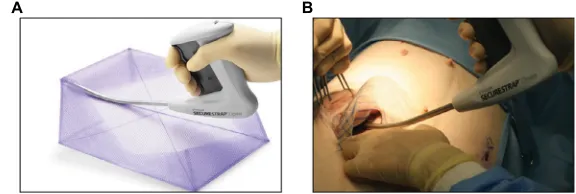
Device (Ethicon US, LLC, Cincinnati, OH, USA) is a skirted mesh designed specifically for use with absorbable tackers for open ventral hernia repairs (Figure 1). Using mechanical fixation in conjunction with skirted mesh reduces the com-plexity of the procedure, facilitating fast, secure fixation of the mesh to the defect site.11 This decreases procedure time
which, in conjunction with the use of absorbable tackers instead of transfacial sutures, has the potential to improve patient outcomes, for example, by limiting postoperative pain.13
This study was an interventional, randomized, paired-within-subject, crossover study. It was designed to inves-tigate whether, compared with traditional hernia repair methods, the surgical benefits associated with mechanical fixation using the Ethicon Securestrap Open Absorbable Strap Fixation Device in conjunction with the Ethicon Physiomesh Open Flexible Composite Mesh Device reduce surgeon stress during a hernia repair procedure. In this study, surgeons performed two hernia repairs using a porcine simulated hernia repair model. Surgical task load was measured using the surgical task load index (SURG-TLX), a validated self-reported questionnaire that measures intraoperative mental stress and workload by evaluating six
different dimensions: mental demands, physical demands, temporal demands, task complexity, situation stress, and distractions.14,15
This study expanded on an earlier work performed using a similar simulated hernia repair model by measuring the levels of cortisol and alpha amylase in the saliva of surgeons to evaluate surgeon stress.15 Previous studies have demonstrated
that cortisol correlates with hypothalamic–pituitary–adrenal (HPA) activity, which is associated with lack of perceived control, withdrawal, and distress; whereas, salivary alpha amylase (sAA) correlates with autonomic nervous system (ANS) arousal, an indicator of perceived control, cognitive effort, and an identified need to mobilize existing skills and strategies to solve problems.16,17 Using a mechanical strap
fixation device in conjunction with a preformed skirted mesh product was predicted to reduce surgical time and surgeon stress levels compared with traditional suture fixation per-formed using a standard flat mesh, resulting in reduced HPA activity and ANS arousal.
Methods
Study design
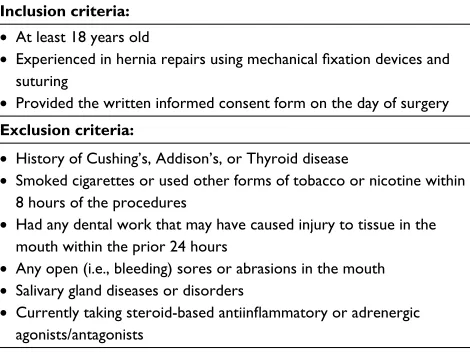
This randomized study applied a paired-within-subject cross-over design to measure surgeon stress levels experienced during two simulated ventral hernia mesh repair procedures, both performed on the same day using an IPOM technique. A live porcine model was used for this investigation. The surgeons participating in the study were experienced in per-forming hernia repairs using both traditional suture methods and mechanical fixation repair techniques, but were naïve to the use of both the Ethicon Physiomesh Open Flexible Composite Mesh Device and the Ethicon Securestrap Open Absorbable Strap Fixation Device. The order in which surgeons performed the two mesh repair procedures was randomized. The study was reviewed and approved by the Western Institutional Review Board, Puyallup, WA, USA, and the Institutional Animal Care and Use Committee (pro-tocol number 14-0031) at Ethicon Inc. Eight surgeons were recruited and written informed consent was obtained. Table 1 presents the specific eligibility and exclusion criteria that were utilized. Each eligible surgeon was assigned a unique identification number that was retained throughout the study to protect his/her confidentiality, and physicians were com-pensated for participation in the study.
Surgical procedures
To prevent experimentally independent elevations in cortisol and sAA, surgeons were instructed not to consume a large
Medical Devices: Evidence and Research downloaded from https://www.dovepress.com/ by 118.70.13.36 on 24-Aug-2020
Dovepress Surgical mesh devices for hernia repair
meal within 1 hour of sample collection, or to consume dairy, acidic, or high sugar-content foods within 20 minutes of the first saliva sample collection time. In the event that a surgeon ingested any salivary stimulants, he/she was instructed to rinse their mouth with water at least 10 minutes prior to initial sample collection.
Participating surgeons were blinded to the order of the IPOM procedures until the start of the first simulated IPOM hernia repair. For study documentation purposes, the two procedures were designated as Procedure A (traditional hernia repair method with Proceed Surgical Mesh and suture fixation) and Procedure B (mechanical fixation using Ethicon Physiomesh Open Flexible Composite Mesh Device with Ethicon Securestrap Open Fixation Device). The randomiza-tion was performed to ensure that both procedural orderings (A then B, and B then A) were performed an equal number of times.
All institutional and national guidelines for the care and use of laboratory animals were followed and the study proto-col was approved by the local Institutional Animal Care and Use Committee. Animals were anesthetized, intubated, and maintained under a surgical plane of anesthesia for the dura-tion of the study. Animals were draped for abdominal surgery and a preclinical veterinary surgeon performed a full thick-ness ventral midline abdominal incision of ~12 cm in length to create a simulated ventral hernia. Participating surgeons were then brought into the operating room where they were required to follow standard sterile operating room procedures in an effort to replicate a human operating room environment. Once scrubbed, gowned, and gloved, the surgeons were shown the ventral midline defect and asked to repair the simulated hernia using Procedure A or B as assigned.
For Procedure A, the surgeons trimmed and prepared the Proceed Surgical Mesh using their preferred method. The surgeons then followed standard surgical procedures to secure the mesh to the ventral abdominal wall using an IPOM tech-nique and a suture pattern of their preference. For Procedure B, the skirted mesh was designed so that no modifications were required before use. Surgeons secured the skirted mesh (15×20 cm Ethicon Physiomesh Open Flexible Composite Mesh Device) to the peritoneal layer and underlying muscu-lature using the Ethicon Securestrap Open Absorbable Strap Fixation Device using an IPOM technique. Prior to surgery, the surgeons were given access to the instructions for use (IFU) for the Ethicon products and were instructed to place the straps through the skirted portion of the mesh as directed in the IFU (Figure 1).
The surgeons were instructed in advance to notify the surgical team once half of the mesh fixation for each proce-dure was completed to permit staff members to collect the mid-fixation saliva samples. For each procedure, the surgeons were permitted to place trans-abdominal stay sutures around the border of the mesh prior to insertion into the abdomen. The surgical start time was defined as the time the surgeon first handled the mesh and the surgical finish time was defined as the time that mesh fixation was complete (i.e., when the last suture knot was tied or fixation strap fired). Following completion of each procedure, the surgeon was instructed to leave the operating room for the postprocedural saliva sample collection. The preclinical veterinary surgeon then removed the first implant device and the second procedure was performed using the same animal.
Saliva collection and analysis
HPA axis activity and ANS arousal were assessed noninva-sively using saliva.18 The validity of using salivary cortisol as
a measure of the HPA axis and sAA as a surrogate marker of ANS activity has been extensively documented elsewhere.17–21
Saliva samples were collected by an independent study nurse by placing a 1×4 cm absorbent swab (SalivaBio, Carlsbad, CA, USA) under each participant’s tongue for 90 seconds. The samples were defined as the preprocedure sample (collected ~30 minutes before initiating each fixation procedure), the procedure sample (collected at the mid-point of the fixation procedure as dictated by the surgeon), and two postprocedure samples (collected at ~5 and 20 minutes following completion of the fixation).
Following sample collection, samples were placed on dry ice and transferred to −80°C storage. All samples were
Table 1 Study inclusion and exclusion criteria
Inclusion criteria: • At least 18 years old
• Experienced in hernia repairs using mechanical fixation devices and
suturing
• Provided the written informed consent form on the day of surgery Exclusion criteria:
• History of Cushing’s, Addison’s, or Thyroid disease
• Smoked cigarettes or used other forms of tobacco or nicotine within 8 hours of the procedures
• Had any dental work that may have caused injury to tissue in the mouth within the prior 24 hours
• Any open (i.e., bleeding) sores or abrasions in the mouth • Salivary gland diseases or disorders
• Currently taking steroid-based antiinflammatory or adrenergic
agonists/antagonists
Medical Devices: Evidence and Research downloaded from https://www.dovepress.com/ by 118.70.13.36 on 24-Aug-2020
Dovepress
Sutton et al
shipped on dry-ice overnight delivery to the Institute for Interdisciplinary Salivary Bioscience Research (IISBR) for analysis.
Salivary analytes
Samples were thawed and centrifuged to remove mucin. Saliva samples were assayed using a commercially avail-able assay kit for the kinetic measurement of sAA activity (Salimetrics, State College, PA, USA). Cortisol was assayed in duplicate using a commercially available enzyme immu-noassay (Salimetrics, Carlsbad, CA, USA). All analyses were performed according to manufacturer’s instructions.
SURG-TLX and task load assessments
The surgeon-reported SURG-TLX questionnaire methodol-ogy has been reported elsewhere.14The first stage of the questionnaire calculates the weighting of the six dimensions using a set of 15 paired comparisons. The dimension with the highest weight is the most important contributing factor for the perceived work-load (scores range from 0 to 5). Then, within 5 minutes of completing the procedure, surgeons were asked to describe their experience of the procedure by rating each of the six domains on a 20-point scale. The scores for each measure-ment were multiplied by the number of instances recorded for the “pair-wise” comparison for each of the dimensions. The scores for each of the adjusted dimensions were used to generate the overall SURG-TLX score for each procedure and each surgeon.
Analytical strategy
For each of the study end points, the difference between Procedures A and B was calculated for each surgeon and was used to determine the median difference between pro-cedures. Descriptive statistics were calculated for the maxi-mum change from baseline in both the sAA levels and the
salivary cortisol levels. The maximum change from baseline in surgeon sAA and cortisol levels was estimated along with a two-sided 97.5% CI for the median difference between the maximum change from baseline recorded for the two mesh fixation methods (Ethicon Securestrap Open Fixation Device with Ethicon Physiomesh Open minus Proceed Surgical Mesh with suture).
For the overall surgeon-reported SURG-TLX score (i.e., the compilation of all task-load components), the median difference was estimated along with a two-sided 95% CI. The median difference in fixation time between the two mesh fixation methods (Ethicon Securestrap Open Fixa-tion Device with Ethicon Physiomesh Open minus Proceed Surgical Mesh with suture) was determined along with a two-sided 95% CI.
Results
Surgical task load
The weighted SURG-TLX results for each fixation procedure are summarized in Table 2. The overall score and the scores for each dimension were lower for Procedure B (skirted mesh and mechanical fixation) compared with Procedure A (flat mesh and traditional suture fixation), with the exception of Distractions. The median difference (95% CI) for the Total (Overall) Weighted Score between procedures was −49.50 (−114.00, −16.00). On average, self-reported surgical stress and demand load were 46.17% lower for surgeons perform-ing a hernia repair usperform-ing a Securestrap Open Fixation Device with Physiomesh Open (Procedure B) compared with suture fixation with Proceed (Procedure A; Figure 2).
Fixation time
Procedure fixation time reported by each surgeon is summa-rized in Table 3. The mean (SD) for fixation time for Proce-dure B was 13.29 (6.89) minutes compared with 33.46 (15.08) minutes for Procedure A, representing a significant reduction
Figure 1 (A) Illustration of the use of Ethicon Securestrap® Open Absorbable Strap Fixation Device to secure Ethicon Physiomesh™ Open Flexible Composite Mesh for
an IPOM hernia repair and (B) intraoperative image obtained during fixation of Ethicon Physiomesh Open Flexible Composite Mesh using the Ethicon Securestrap Open Absorbable Strap Fixation Device in a porcine simulated ventral hernia model.
Abbreviation: IPOM, intraperitoneal onlay mesh.
A B
Medical Devices: Evidence and Research downloaded from https://www.dovepress.com/ by 118.70.13.36 on 24-Aug-2020
Dovepress Surgical mesh devices for hernia repair
Table 2 SURG-TLX by procedure
Dimension Suture with Proceed Securestrap Open Fixation Device:
Physiomesh Open
Mean (SD) Median Min, Max Mean (SD) Median Min, Max
Mental demands 21.25 (15.21) 19.5 0, 45 12.13 (9.76) 11.5 0, 27
Physical demands 17.38(10.01) 17.0 0, 30 8.63(5.18) 8.0 0, 16
Temporal demands 34.50(13.80) 35.0 16, 60 15.63 (7.98) 15.0 5, 28
Task complexity 27.25 (19.76) 22.5 9, 70 14.88 (7.34) 17.0 5, 25
Situational stress 26.63 (21.25) 25.0 0, 65 14.50 (12.68) 13.0 0, 40
Distractions 3.75 (3.88) 3.0 0, 10 4.63(5.07) 4.5 0, 15
Total score 130.75 (44.97) 117.5 75, 212 70.38 (23.94) 71.0 25, 98
Median (95% CI) difference between procedures (Securestrap – Proceed) −49.50 (−118.00, −16.00)
Note: Bold values in “Total Score” indicates total workload score determined by aggregating the scores from the six individual dimensions.
Abbreviations: SURG-TLX, surgical task load index; min, minimum; max, maximum.
Figure 2 (A) Weighted individual SURG-TLX domain scores and (B) total median SURG-TLX scores for all surgeons. Lower median scores were seen with Securestrap compared with Proceed across five out of six SURG-TLX domains.
Notes: Procedure A= traditional hernia repair method with Procced Surgical Mesh and suture fixation; Procedure B= mechanical fixation using Ethicon Physiomesh Open Flexible Composite Mesh Device with Ethicon Securestrap Open Fixation Device.
Abbreviation: SURG-TLX, surgical task load index.
Total score
Median SURG-TLX score
(± min, max)
117.5
71.0
0 50 100 150 200 250
Mental demand s
Physical demand s
Temporal demandsTa sk complexit
y
Situational stress Distractions
Median SURG-TLX score
19.5
11.5 17.0
8.0 35.0
15.0 22.5
17.0 25.0
13.0
3.04.5 0
5 10 15 20 25 30 35 40 45 50
A B
Procedure A Procedure B
Table 3 Fixation time summary
Surgeon ID number
Suture with Proceed Securestrap Open Fixation Device
with Physiomesh Open
Fixation start time Fixation end time Fixation start time Fixation end time
001 11:54 12:25 13:44 13:52
002 13:53 14:09 11:55 12:04
003 11:34 11:55 13:06 13:15
004 14:11 14:29 12:37 12:49
005 14:01 14:56 12:13 12:40
006 12:15 13:07 14:16 14:33
007 12:00 12:44 14:06 14:23
008 14:24 14:56 13:21 13:29
Mean duration of the procedure (SD)
33.46 (15.08) 13.29 (6.89)
Median (95% CI) difference between the duration of procedures (Securestrap – Proceed)
−23.64 (−27.15, −6.58)
Medical Devices: Evidence and Research downloaded from https://www.dovepress.com/ by 118.70.13.36 on 24-Aug-2020
Dovepress
Sutton et al
in time of 20.17 minutes. The median difference (95% CI) in fixation times between the procedures was −23.64 (−27.15, −6.58) minutes (Figure 3). On average, fixation time was 60.28% lower when using mechanical fixation with Procedure B compared with suture fixation with Procedure A.
Salivary analytes
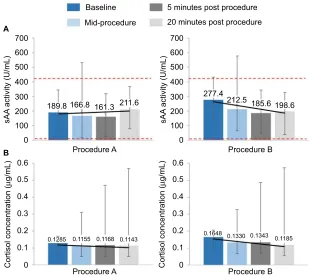
Cortisol concentrations and sAA activity at each time point are shown in Table 4 and Figure 4.
The median differences (95% CI) between the maximum change from baseline of the two procedures for sAA and cortisol were −81.02 (−291.92, 131.36) U/mL and −0.0275 (−0.3290, 0.1105) μg/dL, respectively (Tables 4 and 5). Post-hoc analysis demonstrated that this was caused by variations in cortisol response; four of the eight surgeons had no increase in cortisol across time when performing either Procedure A or B. Among the four surgeons who
showed a meaningful increase in cortisol across time, three showed markedly greater cortisol increases when using the suture method in Procedure A compared with the mechani-cal method used in Procedure B. Only one surgeon had a higher cortisol response when using the mechanical method in Procedure B, and the magnitude of that change was very small relative to the measurement error of the assay.
Discussion
Surgeon stress can impact overall performance and lead to surgical errors that, in turn, can adversely influence patient outcomes. Workload, procedural complexity, and time con-straints are primary causes of such stress.9,22 Addressing the
causes of surgeon stress has the potential to help improve surgical performance, leading to better patient outcomes, a decrease in the length of hospital stays, and ultimately, a reduction in procedural costs.9,22 Surgical procedure length is
Figure 3 (A) Individual procedural time for each surgeon and (B) median procedural time for all surgeons. Fixation duration was faster for Securestrap Open with Physiomesh Open vs Proceed.
Notes: Procedure A= traditional hernia repair method with Proceed Surgical Mesh and suture fixation; Procedure B= mechanical fixation using Ethicon Physiomesh Open Flexible Composite Mesh Device with Ethicon Securestrap Open Fixation Device.
Abbreviations: min, minimum; max, maximum.
Procedure time (minutes)
Medium procedure time, minutes
(±min, max)
1 2 3 4
Surgeon5 6 7
7
8 0
10 20 30 40 50 60
32
10
0 10 20 30 40 50 60
31
8 16
9 20
7 18
54 51
43
31
17 16 27
11
Procedure A Procedure B
A B
Table 4 Saliva sAA activity and cortisol concentration by procedure and sampling time point
Sampling time point Suture with Proceed Securestrap Open Fixation
Device with Physiomesh Open
Mean (SD) Mean (SD)
sAA activity (U/mL)
Baseline 186.84 (108.67) 296.86 (218.27)
Mid-procedure 189.75 (167.82) 266.46 (224.14)
Five minutes post procedure 166.23 (111.79) 217.10 (145.54)
Twenty minutes post fixation procedure 197.72 (98.06) 226.22 (174.24)
Cortisol concentration (μg/mL)
Baseline 0.1253 (0.0347) 0.1836 (0.0960)
Mid-procedure 0.1365 (0.0850) 0.1709 (0.1364)
Five minutes post procedure 0.2005 (0.1617) 0.1912 (0.1281)
Twenty minutes post procedure 0.2072 (0.1828) 0.1651 (0.1040)
Medical Devices: Evidence and Research downloaded from https://www.dovepress.com/ by 118.70.13.36 on 24-Aug-2020
Dovepress Surgical mesh devices for hernia repair
of particular importance as longer procedures are correlated with complications such as an increase in infections, result-ing in longer hospital stay and greater readmission rates.23–26
Mechanical fixation devices are designed to facilitate fixation and are expected to reduce procedure time compared with other mesh repair methods that rely on suture fixation. Skirted meshes provide a matrix to further facilitate fixation by providing a preformed platform for tacker placement and do not require any modification prior to use. Combining both devices in IPOM hernia repairs should further reduce proce-dure time and decrease surgeon-perceived stress. The results from this study confirmed this hypothesis, demonstrating that procedure time, surgical stress, and demand loads were reduced when using mechanical fixation with a skirted mesh. These results support the results observed in a previous study,
which demonstrated reductions in surgeon stress measured by SURG-TLX and faster fixation times.15
In this study, the concentrations of both sAA and cortisol were measured before, during, and after completing IPOM repairs to evaluate the biobehavioral response to stress asso-ciated with both procedures. The median differences and 97.5% CI in the maximum change from baseline concentra-tions of sAA and cortisol were generally consistent with the behavioral data above. However, there was evidence of individual differences in the surgeons’ physiological reactiv-ity to the procedures, with a greater proportion of surgeons exhibiting larger HPA axis reactivity when using the suture fixation method compared with the mechanical method. This suggests that there was a reduction in HPA activity and ANS arousal when using Procedure B (Securestrap Open Fixation Device in conjunction with Physiomesh Open procedure) compared with using Procedure A (suture with Proceed procedure).
This study is associated with several limitations. The pro-cedural time measurement started after handing the surgeon the mesh and so the time required to alter the mesh before use was included as part of this measurement. Consequently, the experimental design would provide a small benefit to the
Figure 4 (A) Median sAA activity (U/mL) and (B) median cortisol concentration (μg/dL) by procedure and sample collection time point.
Notes: Dotted red line represents the normal range for sAA activity (3.1–433.1 U/mL). Trend line is shown in black. All data shown are median ± min, max. Procedure A= traditional hernia repair method with Proceed Surgical Mesh and suture fixation; Procedure B= mechanical fixation using Ethicon Physiomesh Open Flexible Composite Mesh Device with Ethicon Securestrap Open Fixation Device.
Abbreviations: sAA, salivary alpha amylase; min, minimum; max, maximum.
Baseline 5 minutes post procedure
20 minutes post procedure Mid-procedure
0 0.1 0.2 0.3 0.4 0.5 0.6
0 0.1 0.2 0.3 0.4 0.5 0.6 Procedure A
Procedure A
Procedure B
Procedure B 189.8
0.1285 0.1155 0.1168 0.1143 0.1648 0.1330 0.1343 0.1185
166.8 161.3 211.6
277.4
212.5 185.6 198.6
sAA
activity (U/mL)
Cortisol concentration
(
µ
g/mL
)
Cortisol concentration
(
µ
g/mL
)
sAA
activity (U/mL)
0 100 200 300 400 500 600 700 A
B
0 100 200 300 400 500 600 700
Table 5 Median difference in maximum change from baseline in
sAA and salivary cortisol
Median difference
Lower 97.5% CI
Upper 97.5% CI
sAA (U/mL) −81.02 −291.92 131.36
Cortisol (μg/mL) −0.0275 −0.3290 0.1105
Abbreviation: sAA, salivary alpha amylase.
Medical Devices: Evidence and Research downloaded from https://www.dovepress.com/ by 118.70.13.36 on 24-Aug-2020
Dovepress
Sutton et al
skirted mesh as the design required no trimming before use. To minimize bias and mitigate anticipatory stress, surgeons were randomized to the order in which each procedure would be performed. However, as described above, it was not pos-sible to blind the study after the surgeon had performed the first surgery. Although designed to be robust and to closely mimic the clinical operating room situation, the study was performed in a porcine model which does not fully reproduce the human surgical experience. In addition, accurate surgical exposure of the hernia ring is a critical part of hernia repair in surgical practice; however, for this study model the hernia was simultaneously created and exposed by the study vet-erinarian; participating surgeons only performed the fixation portion of the surgery. Finally, the sample size for this pilot study was relatively small, although it was determined to be large enough to permit assessment of all study end points.
The baseline concentrations of sAA and cortisol were 277.4 and 189.8 U/mL, and 0.1648 μg/dL and 0.1285 μg/dL, respectively, for surgeons starting Procedure B and Procedure A. A possible explanation for the elevated baseline sAA and cortisol levels observed for the Securestrap Open Fixation Device may have been the blinding method used, as it was only possible to blind the first procedure. Consequently, the elevation may be an indicator of perceived excitement for a novel task, as all surgeons were naïve to this method. For example, sAA has been reported to be an indicator of the early fight/flight response preparing an individual to react to perceived stimuli.27
The results of this study may inform future studies designed to assess the correlation of stress with other con-founding factors associated with mechanical fixation proce-dures. Understanding how surgical performance is affected by factors such as distractions, fatigue, and overall familiarity with the surgical procedure and devices, may help explain the variability observed between surgeons. Additional studies could also confirm the optimal saliva sampling time points (before, during, and after surgery) in order to better align the measurement of salivary biomarkers with other physiological markers of stress including blood pressure and pulse rate.
Conclusions
This pilot study provides preliminary findings suggesting that mechanical fixation with the Ethicon Securestrap Open Absorbable Strap Fixation Device in open IPOM repair using the Ethicon Physiomesh Open Flexible Composite Mesh Device has the potential to reduce surgeon stress, as evidenced by a reduction in perceived workload stress, fixa-tion time, and physiological reactivity to the intraoperative
experience. Future studies could focus on determining whether the reduction in stress is also observed in a real-life setting, and whether this results in reduced surgical errors and improved patient outcomes.
Acknowledgments
Sponsorship for this study and article processing charges were funded by Ethicon, Inc., a subsidiary of Johnson & Johnson. All authors had full access to all of the data in this study and take complete responsibility for the integrity of the data and accuracy of the data analysis. The authors acknowledge the significant contributions of Vivienne Mendoza, Preclinical Research Assistant, who functioned as the research coordinator for the study, and Diana Frisica who managed saliva sample collection and shipment for the study. In addition, we acknowledge the contributions of Kelly Henning, IISBR program manager, and former Ethicon employees who helped with the preparation of the study protocol and conduct. These include Benjamin Kamhi (Data Management), Jessica Panish (Health Economics and Market Access-protocol development), Martin Chomiak study sponsor), and Ross Saunders (Marketing-study sponsor). Medical writing and editorial support were provided by Simon Foulcer, PhD, Costello Medical Consult-ing Ltd, which was funded by Ethicon Inc.
Author contributions
All named authors meet the International Committee of Medical Journal Editors (ICMJE) criteria for authorship for this manuscript, take responsibility for the integrity of the work as a whole, and have given final approval to the version to be published.
Disclosure
DAG is the founder and chief scientific and strategy advisor at Salimetrics LLC and SalivaBio LLC and the nature of these relationships have been managed by the policies of the committees on conflict of interest at the Johns Hopkins Uni-versity School of Medicine and the UniUni-versity of California at Irvine. NS, MHM, JL, BI, and PH are employees of Ethicon. The authors report no other conflicts of interest in this work.
References
1. Bosanquet DC, Ansell J, Abdelrahman T, et al. Systematic review and meta-regression of factors affecting midline incisional hernia rates: analysis of 14,618 patients. PLoS One. 2015;10(9):e0138745. 2. Gillion JF, Sanders D, Miserez M, Muysoms F. The economic burden
of incisional ventral hernia repair: a multicentric cost analysis. Hernia. 2016;20(6):819–830.
Medical Devices: Evidence and Research downloaded from https://www.dovepress.com/ by 118.70.13.36 on 24-Aug-2020
Dovepress
Medical Devices: Evidence and Research
Publish your work in this journal
Submit your manuscript here: https://www.dovepress.com/medical-devices-evidence-and-research-journal Medical Devices: Evidence and Research is an international,
peer-reviewed, open access journal that focuses on the evidence, technology, research, and expert opinion supporting the use and application of medical devices in the diagnosis, monitoring, treatment and management of clinical conditions and physiological processes. The identification of novel
devices and optimal use of existing devices which will lead to improved clinical outcomes and more effective patient management and safety is a key feature. The manuscript management system is completely online and includes a quick and fair peer-review system. Visit http://www. dovepress.com/testimonials.php to read real quotes from authors.
Dove
press
Surgical mesh devices for hernia repair
3. Nunoo-Mensah JW, Rosen M, Chan LS, Wasserberg N, Beart RW. Prevalence of intra-abdominal surgery: what is an individual’s lifetime risk? South Med J. 2009;102(1):25–29.
4. Beadles CA, Meagher AD, Charles AG. Trends in emergent hernia repair in the United States. JAMA Surg. 2015;150(3):194–200. 5. Rutkow IM. Demographic and socioeconomic aspects of hernia repair in
the United States in 2003. Surg Clin North Am. 2003;83(5):1045–1051, v–vi.
6. Plymale MA, Ragulojan R, Davenport DL, Roth JS. Ventral and inci-sional hernia: the cost of comorbidities and complications. Surg Endosc. 2017;31(1):341–351.
7. Dindo D, Demartines N, Clavien PA. Classification of surgical com-plications: a new proposal with evaluation in a cohort of 6336 patients and results of a survey. Ann Surg. 2004;240(2):205–213.
8. Liang MK, Holihan JL, Itani K, et al. Ventral hernia management: expert consensus guided by systematic review. Ann Surg. 2016.
9. Wetzel CM, Kneebone RL, Woloshynowych M, et al. The effects of stress on surgical performance. Am J Surg. 2006;191(1):5–10. 10. Moorthy K, Munz Y, Dosis A, Bann S, Darzi A. The effect of
stress-inducing conditions on the performance of a laparoscopic task. Surg
Endosc. 2003;17(9):1481–1484.
11. Roy S, Shnoda P, Savidge S, Hammond J, Panish J, Wilson M. Reduc-tion in fixaReduc-tion time and related surgical stress with the use of Ethicon Securestrap™ open absorbable strap fixation device in the deployment of intra-peritoneal onlay mesh (IPOM) for open ventral hernia repair.
Value Health. 2013;16(7):A486.
12. Sosa JA, Bowman HM, Tielsch JM, Powe NR, Gordon TA, Udelsman R. The importance of surgeon experience for clinical and economic outcomes from thyroidectomy. Ann Surg. 1998;228(3):320–330. 13. Sajid MS, Parampalli U, McFall MR. A meta-analysis comparing tacker
mesh fixation with suture mesh fixation in laparoscopic incisional and ventral hernia repair. Hernia. 2013;17(2):159–166.
14. Wilson MR, Poolton JM, Malhotra N, Ngo K, Bright E, Masters RS. Development and validation of a surgical workload measure: the surgery task load index (SURG-TLX). World J Surg. 2011;35(9):1961–1969. 15. Roy S, Hammond J, Panish J, Shnoda P, Savidge S, Wilson M. Time
savings and surgery task load reduction in open intraperitoneal onlay mesh fixation procedure. Sci World J. 2015;2015:340246.
16. Tsigos C, Chrousos GP. Hypothalamic–pituitary–adrenal axis, neuro-endocrine factors and stress. J Psychosom Res. 2002;53(4):865–871. 17. Nater UM, Rohleder N. Salivary alpha-amylase as a non-invasive
bio-marker for the sympathetic nervous system: current state of research.
Psychoneuroendocrinology. 2009;34(4):486–496.
18. Granger DA, Fortunato CK, Beltzer EK, Virag M, Bright MA, Out D. Focus on methodology: salivary bioscience and research on adolescence: an integrated perspective. J Adolesc. 2012;35(4):1081–1095. 19. Kirschbaum C, Pirke KM, Hellhammer DH. The ‘Trier Social Stress
Test’-a tool for investigating psychobiological stress responses in a laboratory setting. Neuropsychobiology. 1993;28(1–2):76–81. 20. Kirschbaum C, Hellhammer DH. Salivary cortisol in
psychoneuroen-docrine research: recent developments and applications.
Psychoneuro-endocrinology. 1994;19(4):313–333.
21. Nater UM, Rohleder N, Gaab J, et al. Human salivary alpha-amylase reactivity in a psychosocial stress paradigm. Int J Psychophysiol. 2005;55(3):333–342.
22. Arora S, Sevdalis N, Nestel D, Woloshynowych M, Darzi A, Kneebone R. The impact of stress on surgical performance: a systematic review of the literature. Surgery. 2010;147(3):318–330. e316.
23. Procter LD, Davenport DL, Bernard AC, Zwischenberger JB. General surgical operative duration is associated with increased risk-adjusted infectious complication rates and length of hospital stay. J Am Coll Surg. 2010;210(1):60–65. e62.
24. Sellers MM, Merkow RP, Halverson A, et al. Validation of new read-mission data in the American College of Surgeons National Surgical Quality Improvement Program. J Am Coll Surg. 2013;216(3):420–427. 25. Nguyen MT, Li LT, Hicks SC, et al. Readmission following open ven-tral hernia repair: incidence, indications, and predictors. Am J Surg. 2013;206(6):942–948; discussion 948–949.
26. Williams S, Bottle A, Aylin P. Length of hospital stay and subsequent emergency readmission. BMJ. 2005;331(7513):371.
27. Chatterton RT Jr, Vogelsong KM, Lu YC, Hudgens GA. Hormonal responses to psychological stress in men preparing for skydiving. J Clin
Endocrinol Metab. 1997;82(8):2503–2509.
Medical Devices: Evidence and Research downloaded from https://www.dovepress.com/ by 118.70.13.36 on 24-Aug-2020