Solar Concentrators – A Review
Parvathi Gorantla1, B. Janarthanan1, J. Chandrasekaran2
Research Scholar, Department of Physics, Karpagam University, Coimbatore, India
Associate Professor, Department of Physics, Karpagam University, Coimbatore, India
Associate Professor, Department of Physics, Sri Ramakrishna Mission Vidyalaya College of Arts and Science,
Coimbatore, India
ABSTRACT: An attempt has been made to classify different types of concentrators and its working by various researchers all over the world. The specifications of the various designs have been highlighted and the advantages are mentioned which will be helpful for the researchers working in this field. Moreover, the concentrators used for the direct conversion of solar energy into electric energy have been analysed for the best performance and principle behind the system is presented. In addition, the concentrators used for the conversion of solar energy into thermal energy have also been mentioned. The equation for thermal and optical efficiency of the various designs of concentrators by the researchers is reviewed and presented. Specific results regarding each design of the concentrator along with its working principle have been explained for better perception for the researchers in the field of concentrators. The advantages and disadvantages of each design are written in the paper in order to optimize the design and operational parameters of the system for better performance in all climatic conditions. The status of the concentrator for the possible production of electricity is mentioned after a brief review of the existing designs of concentrators. The paper also presents the schematic diagram of the designs of concentrators with better perception.
The solar concentrator is a device that converts solar energy into solar thermal energy or direct energy conversion in the linear focus receiver or other arrangements. In the detailed in thermal collectors the solar energy has converted into steam and then converted into electricity. In addition, in photovoltaic collectors the solar energy is directly converted into electricity. The present paper is an attempt that has made the review of the present state of solar concentrators.
KEYWORDS: concentrator, optical efficiency, Thermal efficiency, Energy.
I. INTRODUCTION
Solar concentrator is a device to collect light energy through a large area from the Sun and focusing it on a smaller area, i.e., receiver. Concentrators can provide higher temperatures compared to flat plate collectors, since the energy is focused on a smaller area. Moreover, concentrators cannot account for the collection of diffuse radiation. Therefore, it is necessary to orient the concentrators continuously towards the direction of motion of the Sun, to collect direct solar radiation only, by a mechanical tracking device. Concentrators can be utilized to collect solar energy throughout the year, as the annual solar energy incident on the ground surface is higher in amount and fulfil the demand for energy sources.
Safa Skouri et al. [3] and three pilot sun tracking systems have been designed, realized and compared. The non - uniform distribution of the temperature on the circumference of the tube of a parabolic trough solar collector has been described by Sourav et al. [4] and calculated the analytical equations of the deflection tube. A novel hybrid between a solar cavity receiver and combustor have been presented by Jin Han Lim et al. [5] and showed that the combustor achieve the same efficiency as a conventional boiler. Effects of spacing, receiver height of a linear Fresnel reflectors have been investigated by Vashi Sharma et al. [6] and analyzed collector configuration has no significant effect on annual shading. A point-focus Fresnel lens photo voltaic/thermal module has been proposed and studied by Ning Xu et al. [7] and estimated the electrical efficiency of 28% and thermal efficiency of 60%. Monte Carlo Ray Trace code is used to compare the energy effectiveness and flux intensity of receiver for different days of the year and different orientations in Almería, Spain, and in Aswan, Egypt has been proposed by Abbas et al. [8] and concluded that Linear Fresnel Concentrators with secondary reflector receiver achieve higher concentration factors than Parabolic Trough Collectors. The range of incidence angles for a required transmittance of elementary prisms in a curved Fresnel lens and hence to determine the curvature of the lens has been proposed by Xing long Ma et al [9] and The optimal transmittance condition of prism (OTCP) has been derived. Three different optical models for parabolic trough solar collectors has been derived by Hongbo Liang et al. [10] and estimated the Effects of varying Parabolic Trough Collector's geometric parameters on optical efficiency. Free and forced convection heat losses from modified cavity receiver have been derived by Reddy et al [11] and proposed the Nusselt number to calculate combined convection heat losses from the receiver as a function of receiver inclination, wind direction, wind velocity and aperture diameter ratio. Many researchers have made sincere efforts to design, fabricate and analyze the performance of different designs of solar concentrators in both solar thermal conversion system and direct conversion system. Different types of concentrators designed by a few researchers have been presented for the purpose of getting precise knowledge about the design, fabrication and performance.
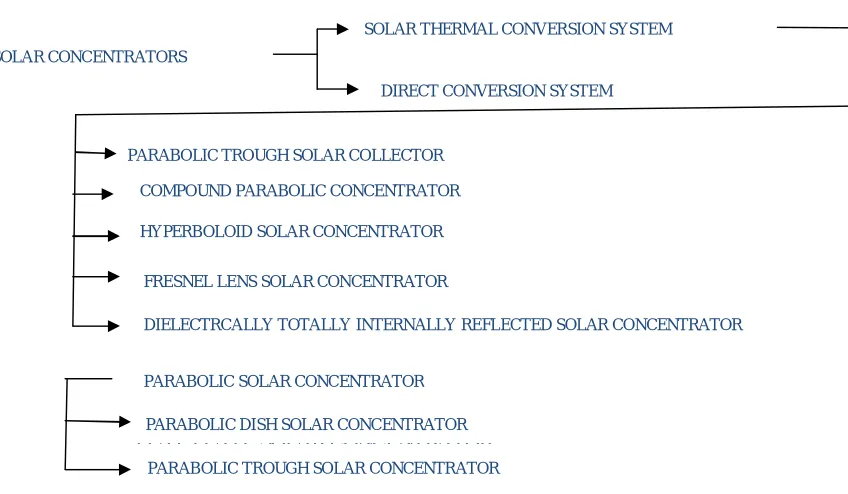
Table 1. Classification of solar concentrators
SOLAR CONCENTRATORS
SOLAR THERMAL CONVERSION SYSTEM
DIRECT CONVERSION SYSTEM
PARABOLIC TROUGH SOLAR COLLECTOR
COMPOUND PARABOLIC CONCENTRATOR
HYPERBOLOID SOLAR CONCENTRATOR
FRESNEL LENS SOLAR CONCENTRATOR
DIELECTRCALLY TOTALLY INTERNALLY REFLECTED SOLAR CONCENTRATOR
FLAT-PLATE SOLAR CONCENTRATOR
PARABOLIC TROUGH SOLAR CONCENTRATOR PARABOLIC SOLAR CONCENTRATOR
HYPERBOLOID SOLAR CONCENTRATOR
ELLIPTICAL HYPERBOLOID SOLAR CONCENTRATOR CIRCULAR HYPERBOLOID SOLAR CONCENTRATOR
ELLIPTICAL PARABOLIC SOLAR CONCENTRATOR
CIRCULAR PARABOLIC SOLAR CONCENTRATOR
FRESNEL LENS SOLAR CONCENTRATOR
LINE FOCUS FRESNEL LENS SOLAR CONCENTRATOR
POINT FOCUS FRESNEL LENS SOLAR CONCENTRATOR
DIELECTRICALLY TOTALLY INTERNALLY REFLECTED SOLAR CONCENTRATOR
PHASE CONCENTRATION DIELECTRICALLY TOTALLY INTERNALLY REFLECTED SOLAR CONCENTRATOR
MAXIMUM CONCENTRATION DIELECTRICALLY TOTALLY INTERNALLY REFLECTED SOLAR CONCENTRATOR
FLAT PLATE SOLAR CONCENTRATOR
XR TYPE FLAT PLATE SOLAR CONCENTRATOR
RX TYPE FLAT PLATE SOLAR CONCENTRATOR
RR TYPE FLAT PLATE SOLAR CONCENTRATOR
XX TYPE FLAT PLATE SOLAR CONCENTRATOR
RXI TYPE FLAT PLATE SOLAR CONCENTRATOR
PHOTOVOLTAIC SOLAR CONCENTRATOR
QUANTUM DOT SOLAR CONCENTRATOR
II. PARABOLIC TROUGH SOLAR COLLECTOR
Researchers have designed different parabolic trough concentrators and tracking mechanisms have been used to track the Sun. The Sun controller sheet (or highly reflecting paint) can be used for the purpose of reflecting solar radiation towards the focal point of the trough. Researchers have used glass, copper or aluminium receivers on the focal point of the trough receive the solar radiation reflected by the reflectors. The fluid, mostly water, absorbs the heat radiation from the receiver through which the fluid is allowed to flow.
WORKING
Fig. 1 Parabolic trough concentrator
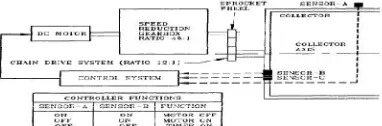
Tracking mechanism has been made by using a small motor provided with a speed reduction gearbox and control system. Control system detects the Sun’s position by using focus sensor, cloud sensor and daylight sensor, and the collector is rotated to the desired position with respect to the results of the sensor in the control system. It is found that the system has higher optical and thermal efficiency compared with the previous methods of tracking adopted by the researchers. Fig. 2 shows the schematic diagram of the control system used in this study.
Fig. 2 Control system of the parabolic trough concentrator
The thermal efficiency of the collector is given by
= (1) Optical efficiency
= 1− ( ) ( ) (2)
From the results, it has been concluded that the experimentally calculated optical efficiency varied 0.8% with theoretical values.
III. PARABOLIC DISH SOLAR CONCENTRATOR
To analyze the performance of the proposed concentrator, theoretical and experimental performances were calculated with the cavity receiver at the focal plane. Real time analysis has also been performed.
WORKING
The cavity receiver placed at the focal plane absorbs the solar radiation and transfer the thermal energy to the working fluid. Paraboloidal dish is fabricated with Aluminum frames with aperture diameter of 2.405m and 65˚ rim
angle. The concentration ratio of the concentrator is 295 and the reflectance of the Aluminum surface range from 0.8-0.9. The reflectors are glass mirrors of 1mm thickness, pasted on the aluminium surface to focus the solar radiation onto the absorber, i.e. cavity receiver.
Fig.3 ExPerimental set up of the paraboloidal solar concentrator
The thermal conversion efficiency of the collector is
= (3) Where
= Ф + (1−Ф ) (4)
Where QL is the total heat loss rate of the receiver involves conductive, convective and radiative losses of the cavity
and convective and radiative losses of the external absorbing surface. From the results it has been concluded that the maximum efficiency achieved at the aperture radius 0.035m and AW/Al is 8. The performance analysis of the dish
collector system with a modified cavity receiver, the solar to steam conversion efficiency is 70-80% at 450ºC.
IV. PARABOLIC DISH SOLAR CONCENTRATOR
The Solar dish concentrator is a device to produce low and medium temperature applications. The proposed concentrator has an aperture area of 20m2.
WORKING
In the above system, the flux distribution at a focal plane of the dish has been evaluated theoretically. The reflected radiation from the dish forms a central cone due to interception of reflected radiation from the two halves of the dish. The elliptical image in the focal plane is generated by reflecting radiations from each element. The dish was tested in the location having latitude of 13.06˚N and longitude of 80.28˚E. The superposition of numerous elliptical images of
different numerate for different orientations and sizes was determined and the flux was mapped. The outer portion of the image has zero intensity beyond the semi major axis of the ellipses. The decrease in number of ellipses at a point is due to the variation in local solar radiation intensity. Daily performance was evaluated for different equilibrium temperatures, varying time constant for flow rates of heat transfer fluid and operating conditions and presented. Fig.4 shows the diagram of the solar dish concentrator.
Fig.4 Experimental set up of Solar dish concentrator Reddy et a l [14]
Direct solar radiation was measured by pyrheliometers. Rotometer and K-type thermocouples were used for the measurement of volume flow rate of water and working fluid and receiving temperature at different points within the receiver. The thermal efficiency of the parabolic dish collector with respect to heat gained by the fluid is written as
=∫
∫
(5)
From the results, it has been concluded that the overall heat loss coefficient is found to be 356W/m2K.The time constants of heating and cooling of parabolic dish are 44S and 47S for flow rate of 250L/h. The average thermal efficiency of parabolic dish collector is found to be 74%.
V. COMPOUND PARABOLIC SOLAR CONCENTRATOR
The CPC was fabricated by joining two parabolic segments providing an entrance aperture with an acceptance angle of
2θ, and concentrator focuses the reflected sunlight on to the exit aperture.
WORKING
Highly reflective material was pasted on the inner surface of the two parabolic segments and copper tube was used to connect the top and bottom of the metal absorber mounted at the focal point of the 3D compound parabolic concentrator. Tracking mechanism was used for the concentrator to back the motion of the Sun. Heat transfer fluid is circulated through the copper tube to the metal absorber and steam is generated. The performance analysis of the proposed CPC was done by ANOVA software. Fig. 5 shows the photograph of the proposed CPC concentrator.
Reddy KS, Sendhil kumar, Natarajan and Veer shetty [15]
Fig. 5 Photograph of compound parabolic concentrator
The optical efficiency is calculated by using the equation
= ( ) (6)
From the results it has been concluded that the experimental optical efficiency have good agreement with theoretical values. The 3D CPC provides high optical efficiency, in turn, increase the thermal efficiency of the collector and the average efficiency over the period of the day was0.582. The values of heat loss coefficient of the CPC at zero solar irradiance3.27W/m2°C have good agreement with the value of heat loss coefficient obtained at the instantaneous curve.
VI. FRESNEL LENS SOLAR CONCENTRATOR
WORKING
Mineral oil is used as heat transfer fluid and the reservoir is kept at the focal point of the Fresnel lens solar concentrator. The heat absorbed by the oil is transferred to thermo electric module. The hot side of the Thermo electric module is full of hot oil and water flows with the flow rate of 0.002kg/s through the module to produce steam. The steam runs a turbine to produce electricity.
Fig.6.Experimental set up of Fresnel lens solar concentrator
The thermal efficiency of the system is found by the equation
(7)
From the results it has been concluded that the maximum available temperature on the oil reservoir surface is equal to the 130ºC. The maximum thermal efficiency is 51.9% and the thermal power transferred to water is 30.93W and utilizing water with a flow rate of 0.002Kg/s and an initial temperature of 19ºC, electrical power in the matched load condition was 1.038W.
VII. LINEAR FRESEL LENS SOLAR COLLECTOR
Linear Fresnel solar concentrator refracts the light falling on the lens and focuses in a line.
WORKING
Lin et al.[6] have designed and fabricated a Fresnel lens made of Polymethymethacrylaten. Cavity receiver has been used at the focal line of the lens and stepper motor with subdivision driver has been used for single axis tracking. The beam width of linear Fresnel lens is 26.7mm and concentric ratio is 15. The Optical efficiency has been found using the expression
( ) = (8) Where
The thermal efficiency
= ( ) (9)
The optical and thermal efficiency of the system has found to be 81.2% and 40.5% with the utilization of rectangular cavity receiver at 90˚C.
Fig.7.Photograph of Linear Fresnel lens solar concentrator
VIII. HYPERBOLOID SOLAR CONCENTRATOR
The hyperboloid system internally reflects the rays falling on the entrance, and they reach the exit of the aperture.
WORKING
Imhamed M.Saleh Ali et al. [7]have fabricated a concentrator using the thick aluminum sheet. No tracking mechanism has been adopted since the concentrator receives the rays entering through the aperture and delivering the rays through the exit of the concentrator. Water has been flown through the helical receivers mounted on the exit of the concentrator and hot water is collected in the collection tank. Two such concentrators are connected in series and convective heat loss has been reduced by enclosing the receiver in a chamber covered with glass wool.
The equation for optical efficiency is
= ∑ 0≤J≤m. (10)
Fig.8.Experimentalsetupof Hyperboloid solar concentrator
From the results it has been concluded that the area of the fabricated model of the elliptical hyperboloid concentrator is 20%less than optimum dimension, loss of reflectivity of the thin film due to air traps in the internal surface of the concentrator, heat loss from the surroundings and external shading the performance of the concentrator has been reduced.
From the analysis, it has been predicted that the optimal concentration ratio of20X with 28% efficiency .The maximum stagnation temperature recorded was 125ºC and outlet temperature of the system was 125ºC with a flow rate of 0.5kg/minute and by increasing flow rate to 1kg/minute the maximum outlet temperature was 68ºC.
Lin M, Sumathy K, Dai YJ and Zhao XK[15]
IX. FLAT HIGH CONCENTRATION DEVICES
These types of concentrators are capable of achieving maximum acceptance-angle-concentration. There are five possible designs of concentrators’ viz., RR, XX, XR, RX and RXI where R denotes refraction, X denotes reflection and I denote total internal reflection. For simplicity, discussion has been restricted to RXI concentrator.
WORKING
Minano et al. [8] have designed an RXI concentrator with rotational symmetry with a dielectric of refractive index 1.5 and acceptance angle of ±2.7°.The concentrator can achieve a concentration factor of 1000x.
Fig.9.Schematic diagram of Flat high concentrator device
X. DIELECTRIC TOTAL INTERNAL REFLECTING SOLARCOCENTRATOR
This concentrator is known as secondary concentrator, and are optical elements having the capability to achieve concentration close to the theoretical maximum limits. There are two methods of producing DTIRC, maximum concentration method and phase conserving method.
WORKING
Ning et al. [9] have designed and fabricated a DTIRC consisting of three parts. The curved front surface received the radiation hitting on it and is refracted. The refracted rays are directed towards the side walls where they are totally reflected internally to the exit aperture.
Fig.10.Schematic diagram ofDielectric Total Internal Reflecting Solar Concentrator Minano JC, Gonzales JC and Zanesco I [17]
XI. QUANTUM DOT SOLAR COLLECTOR
Quantum dot concentrators are planar devices to concentrate solar radiation into quantum dot-doped glass or plastic substrate. Photovoltaic cells are fixed beneath the substrate to convert the solar radiation into electrical energy.
WORKING
Fig.11.Schematic diagram ofQuantum dot solar collector
Gallagher et al. [10] fabricated a quantum dot solar concentrator consisting of a transparent sheet of fluorescent material doped with quantum dots. The radiation gets refracted by the fluorescent material and absorbed by quantum dots. Photons are reemitted from the substrate and guided towards the PV cell by total internal reflection. The photoelectric current produced by PV cell is then connected to the external circuit or battery to store the electrical energy.
The conversion efficiency is given by the equation
= (11)
From the results it has been concluded that comparative concentrating factors ranging from 1.33 to3.05 compared to the reference A and much higher concentrating factors between 3.78 and 8.65 compared to the reference B. Highest fill factor achieved by sample 5 and efficiency 12.5% lower than the specified manufacturers.
XII. CONCLUSION
The solar radiation produces abundant clean energy that can be transformed into heat and electricity. Concentrator integrated with Photovoltaic module has shown better optical and thermal efficiency among the different types of concentrators and also gives output from microwatts to megawatts. The solar thermal system is one of the most promising renewable energy options to substitute the increasing demand for conventional energy. Among the all the solar concentrating collectors, parabolic trough collector has been designed to reach the temperatures from 100°C to 600°C and employed for a variety of applications, including steam production for industrial process heat applications. Moreover parabolic dish concentrator is cost effective and efficient in the production of useful energy.
REFERENCES
[1] L.A. Andrade, M.A.S. Barrozo, L.G.M. Vieira, ” A study on dynamic heating in solar dish concentrators”, Renewable Energy,Vol 87;pp- 501-508,2016.
[2] S. Benyakhlef, A. Al Mers, O. Merroun, A. Bouatem, N. Boutammachte, S. El Alj, H. Ajdad, Z.Erregueragui, E.Zemmouri,” Impact of heliostat curvature on optical performance of Linear Fresnel solar concentrators”; Renewable Energy,Vol 89, pp- 463-474,2016.
[3] Safa Skouri, Abdessalem Ben Haj Ali, Salwa Bouadila, Mohieddine Ben Salah, Sassi Ben Nasrallah, “Design and construction of sun tracking systems for solar parabolic concentrator displacement”, Renewable and Sustainable Energy Reviews, Vol 60pp- 1419-1429,2016.
[4] HulingXie, Jinjia Wei, Zexin Wang, Gao Yang, Qiuming Ma,” Design and performance research on eliminating multiple reflections of solar radiation within compound parabolic concentrator (CPC) in hybrid CPV/T system”, Solar Energy,Vol 129, pp- 126-146, 2016.
[5] Jin Han Lim, Graham J. Nathan, Eric Hu, Bassam B. Dally, “Analytical assessment of a novel hybrid solar tubular receiver and combustor”, Applied Energy, Vol 162, pp- 298-307,2016.
[6] Vashi Sharma, Sourav Khanna, Jayanta K. Nayak, Shireesh B,”Effects of shading and blocking in compact linear Fresnel reflector field”, Energy,Vol 94, pp-633-653,2016.
[7] Ning Xu, Jie Ji, Wei Sun, Wenzhu Huang, Jing Li, Zhuling Jin,”Numerical simulation and experimental validation of a high concentration photovoltaic /thermal module based on point-focus Fresnel lens”, Applied Energy, Vol 168, pp- 269-281,2016.
[8] R. Abbas, M.J. Montes, A. Rovira, J.M. MartínezVa.”Parabolic trough collector or linear Fresnel collector? A comparison of optical features including thermal quality based on commercial solutions”, Solar Energy, Vol 124, pp- 198-215,2016.
[9] Xing long Ma, Hongfei Zheng, Meng Tian, “Optimize the shape of curved-Fresnel lens to maximize its transmittance”, Solar Energy, Vol 127, pp 285-293,2016.
[10] Hongbo Liang, Shijun You, Huan Zhang,”Comparison of three optical models and analysis of geometric parameters for parabolic trough solar collectors”, Energy, Vol 96, pp-37-47,2016.
[11] K.S. Reddy, G.Veershetty, T. Srihari Vikram,” Effect of wind speed and direction on convective heat losses from solar parabolic dish modified cavity receiver”, Solar Energy, Vol 131, pp- 183-198,2016.
[12] Kalogirou Soteris,” Parabolic trough collector system for low temperature steam generation: Design and performance characteristics”, Applied Energy, Vol 55 (1), pp- 1-19,1980.
[13] Kaushika ND, Reddy KS,”Performance of a low cost solar paraboloidal dish steam generating system” Energy Conversion and Management, Vol 41 (7), pp-713-26, 2000;
[14] Reddy KS, Sendhil kumar, Natarajan, Veer shetty,”Experimental performance investigation of modified cavity receiver with fuzzy focal solar dish concentrator”, Renewable Energy, Vol 7,pp-145-57, 2015.
[15] Senthil kumar S, Perumal K, SrinivasanPSS.”Optical and Thermal performance of a three dimensional compound parabolic concentrator”, Sadhana,Vol 4 (3), pp369-80, 2009.
[16] Hasan Nia M, Abbas Nejad A, Goudarzi AM, Valizadeh M, Samadian PC, “Cogeneration Solar system using thermo electric module and Fresnel Lens”, Energy conversion and Management, Vol 84;pp-305-10,2014.
[17] Lin M, Sumathy K, Dai YJ, Zhao XK,”Performance investigation on a linear Fresnel lens solar concentrator using cavity receiver”, Solar energy,Vol 107,pp- 50-62,2014.
[18] Imhamed M.Saleh Ali, Srihari Vikram T, Tadhg S.O’Donovan, Reddy KS, Tapas K.Mallick” Design and experimental analysis of a static 3-D elliptical hyperboloid concentrator for process heat applications”, Solar Energy, Vol 102, pp- 257-66,2014.