A Two level Task Scheduling Simulator for
Grid Environment
Sunita Rani1, P. K. Suri2
Assistant Professor, Department of CSE & IT, B.P.S.M.V., Khanpurkalan, Sonepat, Haryana, India1 Retired Dean (Sc. /E&T) and Professor & Chairman (Department of Computer Science and Applications),
Kurukshetra University, Kurukshetra, India2
ABSTRACT: Grid computing has caused the popularization of distributed and diversified mode of computing. Its focus is on solving big computing problems which requires huge computing resources. Simultaneous collection of so many computing resources at a same place is practically impossible. This factor has acted as a catalyst in the increasing popularity of grid computing. Preparing a grid of huge collection of computing resource is tedious and costly task. Effective utilization of resources and computing of tasks within specified time limit is more tedious task than creation of grid. Mapping of tasks with required resources falls under the area of task scheduling. In this paper, authors have proposed a two level scheduling approach for task resource mapping in grid environment. At first level, tasks are mapped with cluster of resource and at the second level; tasks are mapped with a specific resource. Authors have used Gridsim simulator to test and compare the proposed approach with existing one. Through simulation results, it has been analyzed that proposed multilevel scheduling approach has outperformed the other approaches on all the relevant parameters.
KEYWORDS: Grid computing, Scheduling, Gridsim, Multilevel;
I. INTRODUCTION
A computing grid is composed of wide range of computing resources. This interconnected pool of resources forms a grid of resources in the form of a layer. To manage this virtualized grid layer efficiently, there is a need of management system, which will handle the resources efficiently and maps the task with resources in such a way that task get completed within the stipulated time. Moreover, size of grid can be varied exponentially. This has forced the need of efficient scheduler to handle the challenges of grid [1].
Grid computing has caused the emergence of distributed and diversified mode of computing to solve very big problem. Connectivity between distributed resources is achieved through internet and it provides live environment for researchers to execute their highly computing demand work. Diversified nature of resources is the forcing factor behind the sharing of resources [2].
It is the middleware of grid which provides the framework for loading and managing the desired resources and data for the user. Some of the IT related issue which is encountered during implementation of grid is as follows:
Selection of management policies
Geographical location for deployment of resources
Finalization of service level agreement
Finding solution of scalability and adaptability issue [3, 4]
Mapping of task with resources in grid environment is NP completeproblem which handles the elastic resource requirement of tasks using Grid’s Virtual Organization.Here virtual organization refers to collection of diversified located resources which are following predefined rules under different heads [5].
available resources at different computational level at same or different geographically locations. It uses grid cluster agent and local resource manager for efficient mapping [6].
Paper organization is as follows: In the section II, authors have discussed the grid scheduling related work found in literature. Proposed multilevel grid scheduling has been discussed in section III. Section IV contains the information about gridsim simulator, results of simulation work. Finally, conclusion and future scope has been given in section V.
II. RELATED WORK
Scheduling algorithm always tries to find solution of optimization problem. It belongs to NP-complete class. Different researchers have contributed in the grid scheduling work. In this section, authors have given a review of the work found in literature. Details are as follows:
Bestavroset al. in [7] have proposed a scheduling approach for distributed systems to satisfy the requirements of tasks. Proposed algorithm first tries to map task with resources in such a way that deadline got satisfied. If it is not able to map, then it finds the most suitable task resource mapping in which deadline violation should be minimum. Nodes are divided in categories like light loaded, medium loaded and heavily loaded based upon their present load. Based upon present situation, some probabilities are assigned to all nodes. This probability indicates the chances of task completion before deadline violation.
Hsu et al. in [8] have proposed a task resource mapping technique for multiple workflows in grid environments. Authors have tested proposed approach with a variety of simulation environment. They have compared the proposed work with Fairness_Dynamic and Rank_Hybd on parameters like makespan, SLR &win% in different situations. Leal et al. in [9] have given a meta-scheduler for mapping independent set of tasks with resources in the grid environment. Authors have discussed four decoupled and simple algorithm for mapping technique. Their approach neither requires the information about the processing capacity of node nor it consider the size of the task to be mapped. It only considers the past performance of the node.
Wang et al. in [10] have given a dynamic scheduling approach for grid environment. Authors have used probabilistic and deterministic based heuristics for task resource mapping. Focus of mapping technique was on minimizing the turnaround time.
Das et al. in [11] have given an auction oriented resource allocation scheme. User bids for resources based upon the requirement of their task. Their scheme composed of three components:
User broker- this component manages the work of resource discovery, job management and bid.
Grid service provider- this component provides the resource pool
Local Market Auction:-this component act as a notice board where GSP can display the resources
Jun et al. in [12] have given a multi agent based job scheduling approach named ordinal sharing learning. Authors have used the concept of distributed learning approach to achieve the scalability in grid environment. Through simulation, authors have compared their proposed approach with the centralized approaches and it has been proved that proposed approach possess the convergence and adaptability property.
Vasile et al. in [13] have given a resource aware dynamic hybrid scheduling algorithm for batch and workflow jobs. Authors have organized the resources in the hierarchy of clusters. A two phase process is followed for the execution of the task. Authors have tested the proposed approach in cloudsim environment.
Tang et al. in [14] have addressed the issue of constrained based scheduling for grid environment. Their focus was on minimizing the makespan using the concept of stochastic scheduling. Authors have developed stochastic earlier finish time which has used the variance and expectation of stochastic processing time for task resource mapping. For implementation of proposed scheduling work, authors have used the directed acyclic graph.
III. PROPOSED WORK
Proposed multilevel task scheduling approach does scheduling at two levels. At first level it maps task with appropriate cluster. At second level it maps task with suitable resource. For mapping task with cluster, it considers the distance, bandwidth and cluster remaining power. Also for mapping task with resource, computing power of each resource, no of tasks in the queue of resource along with their size will be considered and resource with minimum completion time for the current task will be considered.
First Level Scheduling
Whenever cluster level scheduler receives a task, it will transfer the task towards that cluster whose power is highest. Following parameters are used to calculate the power of the clusters.
Di=Distance of ith cluster from task in km.
Bi=Bandwidth of transmitting channel between ith cluster and task in MBPS.
Pji=Processing capacity of j-th resource in the i-th cluster in MIPS.
Puji= Utilized Processing capacity of j-th resource in the i-th cluster in MIPS.
CPi=(
∑ (∑ ( ))
)*Bi Second Level Scheduling
At this level, task is mapped with that resource among the selected cluster which will take least time. This criterion is decided on the basis of following parameter.
Pj=Computing power of the j-th resource
Tj=Size of j-th task in the queue
Sj= Cumulative size of all tasks in queue of the j-th resource
NTS=Size of newly arriving task Pj=
[(. )∗ ∗ ]∗[(. )∗ ][(. )∗ ]
∑
Whenever a new task is arrived or departed from the cluster, power of resource and cluster will be updated accordingly. Algorithmic form of proposed multilevel scheduling approach is as follows:
Algorithm Multi_Scheduling ( ) {
C= {C1, C2, …..Cn}
//Set of available clusters in the grid
For (i=1 to n) //loop will calculate the power of each cluster {
Ci=(
(∑ ( ))
)*Bi CSi= non critical
// Di=Distance of ith cluster from task in km.
// Bi=Bandwidth of transmitting channel between ith cluster and task in MBPS. // Pji=Processing capacity of j-th resource in the i-th cluster in MIPS.
// Puji= Utilized Processing capacity of j-th resource in the i-th cluster in MIPS. //CSi=Status of the i-th cluster
}
HC(t)=Average (Ci) at time t;
j will hold the index of last cluster who has received the task.
/* HC(t) will hold the threshold value. If cluster power is greater than HC(t) then it can receive new task and its status will be non critical otherwise it can’t receive the task and status will be critical.*/
Pick the current task; i=j+1;
while (i≠j) {
If( (Ci<C(i+1)) and (Ci+1>HC(t)) and CSi=non critical) {
k=i+1; }
Else {
k=i; }
i=(i+1 )mod n }
j=k;
Assign the received task to j-thcluster & update the cluster power. If (any resource i has completed the task)
{
update the power of the cluster
}
Update HC(ti)=Average (Ci) at the time ti For (i=1 to n)
{
If (Ci>HC(ti)) then CSi=Non critical; Else
CSi=Critical; }
}
Ri= {R1i, R2i, …..Rmi}
//Set of available resources in the ith cluster
For (j=1 to m) //loop will calculate the power of each resource {
Pj=
[(. )∗ ∗ ]∗[(. )∗ ][(. )∗ ]
∑ [18]
// TSj= Cumulative size of all tasks in queue of the j-th resource // NTS=Size of newly arriving task
}
HR(t)=Average (Pi) at time t;
f will hold the index of last cluster who has received the task.
/*HR(t) will hold the threshold value. If resource power is greater than HR(t) then it can receive new task and its status will be non critical otherwise it can’t receive the task and status will be critical */
While (Task is there for processing at resource scheduler) {
Pick the current task; i=f+1;
If( (Pi<P(i+1)) and (Pi+1>HR(t)) and RSi=non critical) {
k=i+1; }
Else {
k=i; }
i=(i+1 )mod n }
f=k;
Assign the received task to f-th resource & update the resource power. If (any resource i has completed the task)
{
update the power of the resource.
}
Update HR(ti)=Average (Pi) at the time ti For (i=1 to m)
{
If (Pi>HR(ti)) then RSi=Non critical; Else
RSi=Critical; }
} }
IV. SIMULATOR AND RESULTS
To evaluate the performance of various scheduling and resource management techniques in the grid environment, there is need of grid simulator. As practically it is impossible to setup own grid, this factor has motivated the researchers towards use of simulator to test their research work.
Results:
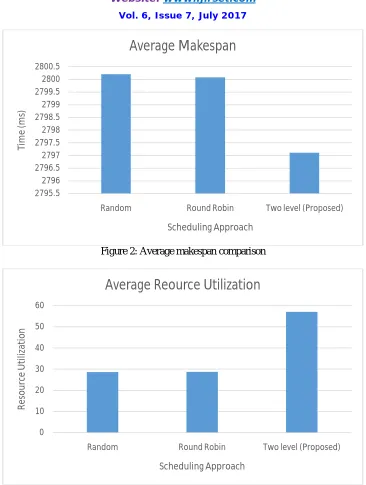
Table 1: Comparison of proposed with existing on the scale of Makespan
Makespan (ms)
No of tasks Random Round Robin Two level (Proposed)
100 966.12 966.12 958.12 200 1882 1888.64 1882 300 2809.2 2824.2 2809.2 400 3714.16 3705.16 3708.4 500 4629.56 4626.28 4627.84
Table 2: Comparison of proposed with existing on the scale of Resource Utilization
Resource Utilization (%)
No of tasks Random Round Robin Two level (Proposed)
100 27.30855 27.99859231 55.52540392 200 27.91711 27.77130634 55.04782147 300 29.02985 29.04067228 57.87839954 400 29.98345 29.50389907 58.72937116 500 29.04034 29.42969297 58.53443507
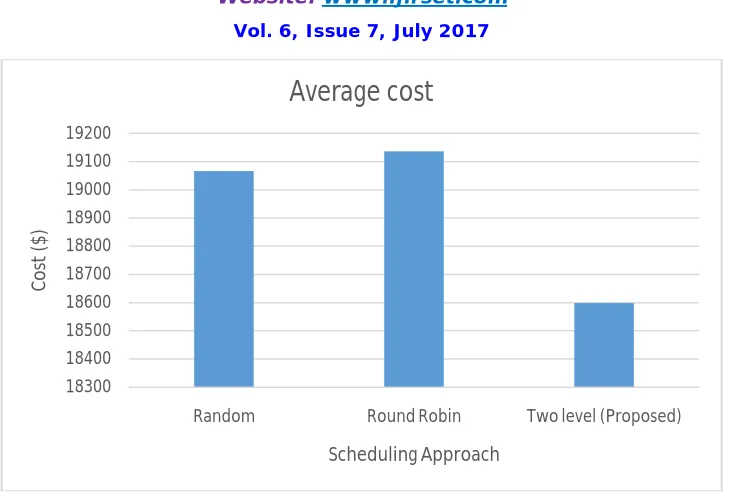
Table 3: Comparison of proposed with existing on the scale of cost
Cost ($)
No of tasks Random Round Robin Two level (Proposed)
100 6572 6379 6349 200 12595 12265 12180 300 18795.12 19204 18654 400 25626.4 25724 25570 500 31747.4 32110 30235
Figure 2: Average makespan comparison
Figure 3: Average resource utilization comparison
2795.5 2796 2796.5 2797 2797.5 2798 2798.5 2799 2799.5 2800 2800.5
Random Round Robin Two level (Proposed)
Ti
m
e
(m
s)
Scheduling Approach
Average Makespan
0 10 20 30 40 50 60
Random Round Robin Two level (Proposed)
R
e
so
u
rc
e
Ut
ili
za
ti
o
n
Figure 4: Average cost comparison
V. CONCLUSION
Scheduling of task with resources is the major research area in the grid computing. As grid is composed of huge range of diversified resources, so managing them with resources is a complex problem.
In this paper, authors have proposed a two level scheduling approach for task resource mapping in grid environment. At first level, tasks are mapped with cluster of resource and at the second level; tasks are mapped with a specific resource. So through the two levels scheduling, authors have always tried to match the task with best resources while considering all the factors like distance, bandwidth, task size, tasks in queue, their size and remaining capacity of resources.
Intensive testing of proposed multilevel scheduling approach has been done through Gridsim simulator. Its comparison with some of the existing scheduling approach has also been done and it has been found that proposed multilevel scheduling approach has outperformed the other approaches on all the relevant parameters.
As a future scope, authors have planned to test the proposed multi-level scheduling approach in actual grid environment. Moreover, authors have planned to incorporate a dynamic pricing model to minimize the price at client as well as server end.
REFERENCES
[1] Foster, C. Kesselman, S. Tuecke, “The anatomy of the grid: Enabling scalable virtual organizations”, Int. J. High Perform. Comput. Appl. 15 (3), pp. 200–222, 2001
[2] I. Foster, C. Kesselman, “The Grid 2: Blueprint for a New Computing Infrastructure”, 2nd ed., Morgan Kaufmann, 2004.
[3] R. Ranjan, A. Harwood, R. Buyya, “SLA-based coordinated super scheduling scheme for computational grids”, in: 2006 IEEE International Conference on Cluster Computing, pp. 1–8, 2006.
[4] K. Krauter, R. Buyya, M. Maheswaran, “A taxonomy and survey of grid resource management systems for distributed computing”, Journal of Software: Practiceand Experience 32 (2), pp.135–164, 2002.
[5] Luther, R. Buyya, R. Ranjan, S. Venugopal, “Peer-to-peer grid computing and a .NET-based alchemi framework”, in: L.T. Yang, M. Guo (Eds.), High-Performance Computing, John Wiley & Sons, Inc., pp. 403–429, 2005.
[6] M.A. Azgomi, R. Entezari-Maleki, “Task scheduling modelling and reliability evaluation of grid services using coloured Petri nets”, Future Generation Computer Systems 26 (8) pp.1141–1150, 2010.
[7] A. Bestavros, D. Spartiotis, “Probabilistic job scheduling for distributed real time applications”, in: The 1st IEEE Workshop on Real-Time Applications, USA, pp. 97–101, May 13–14, 1993.
[8] Hsu CC, Huang KC, Wang FJ,“Online scheduling of workflow applications in grid environments”, Future Generation Computer Systems, 27(6): pp. 860-70, Jun 30, 2011.
18300 18400 18500 18600 18700 18800 18900 19000 19100 19200
Random Round Robin Two level (Proposed)
C
o
st
(
$
)
[9] K. Leal, E. Huedo, I. Llorente, “A decentralized model for scheduling independent tasks in federated grids”, Future Generation Computer Systems, 25 (8), pp. 840–852, 2009.
[10] C. Wang, H. Chen, C. Hsu, J. Lee, “Dynamic resource selection heuristics for a non-reserved bidding-based Grid environment”, Future Generation Computer Systems 26 (2), pp.183–197, 2010
[11] A. Das, D. Grosu, “Combinatorial auction-based protocols for resource allocation in grids”, in: 19th IEEE International Parallel and Distributed Processing
[12] Wu J, Xu X, Zhang P, Liu C. , “A novel multi-agent reinforcement learning approach for job scheduling in Grid computing, . Future Generation Computer Systems, 27(5): pp. 430-439, May 31, 2011.
[13] Vasile MA, Pop F, Tutueanu RI, Cristea V, Kołodziej J., “Resource-aware hybrid scheduling algorithm in heterogeneous distributed computing”, Future Generation Computer Systems,51: pp. 61-71, Oct 31, 2015.
[14] Tang X, Li K, Liao G, Fang K, Wu F., “ A stochastic scheduling algorithm for precedence constrained tasks on grid”, Future Generation Computer Systems, ;27(8): pp. 1083-91, Oct 31, 2011.
[15] Smanchat S, Indrawan M, Ling S, Enticott C, Abramson D. Scheduling parameter sweep workflow in the Grid based on resource competition. Future Generation Computer Systems, 29(5): pp.1164-83, Jul 31, 2013.
[16] Buyya R, Murshed M., “Gridsim: A toolkit for the modeling and simulation of distributed resource management and scheduling for grid computing”, Concurrency and computation: practice and experience, 14(13‐15): pp. 1175-220, Nov 1, 2002.
[17] R. Buyya, H. Stockinger, J. Giddy, and D. Abramson, “Economic Models for Management of Resources in Peerto-Peer and Grid Computing,” SPIE International Conference on Commercial Applications for High- Performance Computing, Denver, USA, August 20-24, 2001.