University of South Carolina
Scholar Commons
Theses and Dissertations
2016
Articulating the Balance of Power: Comparing the
Relative Weights of Human Capital Resources and
Organizational Capabilities
Michael D. Ulrich
University of South Carolina
Follow this and additional works at:https://scholarcommons.sc.edu/etd
Part of theBusiness Administration, Management, and Operations Commons
This Open Access Dissertation is brought to you by Scholar Commons. It has been accepted for inclusion in Theses and Dissertations by an authorized administrator of Scholar Commons. For more information, please [email protected].
Recommended Citation
Articulating the Balance of Power: Comparing the Relative Weights of Human Capital Resources and Organizational Capabilities
by
Michael D Ulrich Bachelor of Science Brigham Young University, 2007
Master of Science
Brigham Young University, 2009
—————————————————————————————— Submitted in Partial Fulfillment of the Requirements
For the Degree of Doctor of Philosophy in Business Administration
The Darla Moore School of Business University of South Carolina
2016 Accepted by:
Patrick M. Wright, Major Professor Robert E. Ployhart, Committee Member Anthony J. Nyberg, Committee Member David K. Kryscynski, Committee Member
DEDICATION
ACKNOWLEDGEMENTS
It takes a village to earn a PhD. My wife and village chieftain, Mel, has raised our children through my many unanticipated late nights and long weekends at the office (not to mention absent mindedness when I was home) and I will forever be in her debt. My children (Maren, Norah, Sonya, and Anneke) have always been thrilled when I come home from work, which pushed me to get home sooner so I could spend more time with them. My parents have both encouraged me, pushed me, and listened to me as I struggled through the ups and downs of a graduate program and writing a dissertation. I can’t count the number of hours I spent talking through my ideas with my dad, who tried his best not to influence my career choice and research interests (yet I followed in his footsteps anyways, sorry). I may not have finished my dissertation had my mom not offered to drive my family across the country so I could focus on writing and for demanding that I quit reading and put my ideas on paper. My sisters, by both earning doctorates, gave me the added motivation to earn one of my own. They each provided advice and
encouragement along the way.
the many years of working on the HRCS. By taking greater responsibility for this project he made it possible for me to devote the necessary time to complete this paper. Others who have provided notable counsel and advice along the way include DJ Schepker, Yasemin Kor, Paul Bliese, Audrey Korsgaard, Liz Ravlin, John Bingham, Wayne Brockbank, among others.
ABSTRACT
Researchers have argued the importance of human capital to organizations for many years. Recent theoretical developments have distinguished between human capital, which is owned by individuals, and human capital resources, which are available to units for performance and competitive advantage. This distinction calls attention to different types of human capital, generic or specific. Studies have found positive unit-level effects emanating from both human capital resource types yet few studies have considered multiple types simultaneously, making it challenging to know which has greater explanatory power. Additionally, studies have also not considered the impact of
TABLE OF CONTENTS
DEDICATION ... iii
ACKNOWLEDGEMENTS ... iv
ABSTRACT ... vi
LIST OF TABLES ... ix
LIST OF FIGURES ... x
CHAPTER 1 INTRODUCTION ... 1
CHAPTER 2 LITERATURE REVIEW ... 5
2.1. SUBUNIT POWER ... 5
2.2. HUMAN CAPITAL RESOURCES ... 15
2.3. ORGANIZATIONAL CAPABILITIES ... 28
2.4. STUDY CONTEXT ... 30
2.5. LITERATURE REVIEW CONCLUSION ... 35
CHAPTER 3 HYPOTHESES ... 37
3.1. HUMAN CAPITAL RESOURCE TYPES ... 37
3.2. SUBUNIT CAPABILITIES ... 48
3.3. CAPABILITIES VERSUS HUMAN CAPITAL RESOURCES ... 53
3.4. CONTEXTUAL MODERATOR ... 56
4.1. SURVEY DESIGN ... 61
4.2. SAMPLE... 64
4.3. MEASURES ... 65
4.4. ANALYTICAL PROCEDURES... 69
CHAPTER 5 RESULTS ... 71
5.1. HYPOTHESIS TESTS ... 71
5.2. SUPPLEMENTAL ANALYSES ... 80
CHAPTER 6 DISCUSSION ... 98
6.1. THEORETICAL AND PRACTICAL IMPLICATIONS ... 101
6.2. LIMITATIONS AND FUTURE DIRECTIONS... 105
6.3 CONCLUSION... 109
REFERENCES ... 110
LIST OF TABLES
Table 5.1 Descriptive Statistics ... 72
Table 5.2 Regression Results for Direct Effects ... 73
Table 5.3 Variance Decomposition of Human Capital Resource Types ... 77
Table 5.4 Variance Decomposition of Human Capital Resources and Subunit Capabilities ... 78
Table 5.5 Regression Results for Intra-Organizational Context ... 79
Table 5.6 Regression Results for Direct Effects Using Tenure Measures ... 81
Table 5.7 Relative Weights of Human Capital Resources Based on Tenure ... 82
Table 5.8 Relative Weights of Human Capital Resources Based on Tenure and Subunit Capabilities ... 83
Table 5.9 Regression Results Using Tenure Measures for Intra-Organizational Context ... 85
Table 5.10 Curvilinear Effects of Specific Types of Human Capital Resources on Subunit Power ... 89
LIST OF FIGURES
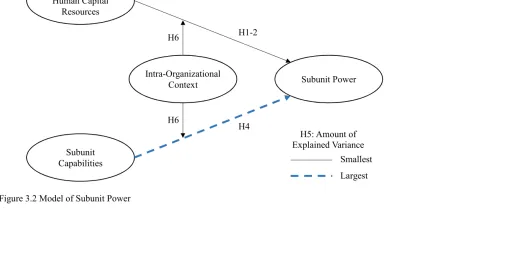
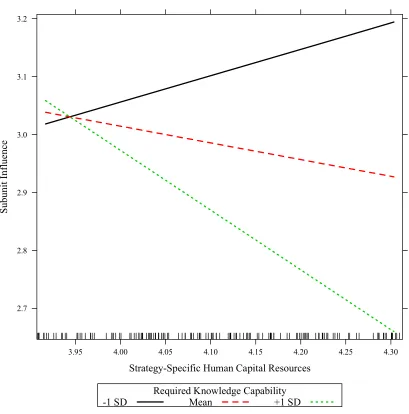
Figure 3.1 Subunit Human Capital Resources and Subunit Power ... 49 Figure 3.2 Model of Subunit Power ... 59 Figure 4.1 Data Collection Process ... 61 Figure 5.1 Interaction Between Strategy-Specific Human Capital Resource and Required
Knowledge Capability ... 75 Figure 5.2 Interaction between Occupation-Specific Human Capital Resources and
Required Knowledge Capability ... 76 Figure 5.3 Curvilinear Relationship Between Strategy-Specific Human Capital Resources
and Subunit Power ... 90 Figure 5.4 Curvilinear Relationship Between Occupation-Specific Human Capital
Resources and Subunit Power ... 91 Figure 5.5 Effect of Strategy-Specific Human Capital Resources Moderated by
Department Concentration of Men ... 95 Figure 5.6 Effect of Occupation-Specific Human Capital Resources Moderated by
Department Concentration of Men ... 96 Figure 5.7 Effect of Generic Human Capital Resources Moderated by Department
CHAPTER 1 INTRODUCTION
Many studies have shown the value and importance of human capital for organizations, must notably popularized through the work of Nobel Prize winning economist Gary Becker in 1964. Discovering new insights and creating novel ideas regarding human capital after over 50 years of research is not easy yet scholars have attempted to reconceptualize human capital in order to more clearly articulate how organizations use human capital to realize a competitive, and sometimes sustained, advantage (L. Dyer & Reeves, 1995; Wright, McMahan, & McWilliams, 1994).
Recent research has called attention to how the collective human capital of individuals, here defined as an individual’s knowledge, skills, abilities, and other attributes (KSAOs), within a unit create resources to their organization through an emergence process (Ployhart & Moliterno, 2011). The complicated emergent nature of these unit resources make them difficult to understand (both by the organization and competitors), create, imitate, purchase from labor markets, or steal from competitors.
general or occupation-specific, were not unique to the organization researchers believed that these resources could be more easily purchased from the labor market. This suggests that organizations have limited ability to appropriate rents from these common and accessible, therefore not rare or inimitable, resources.
Yet other research has called into question the limits of non-firm-specific
resources to create value while also arguing the true value of firm-specific resources may be overstated (Campbell, Coff, & Kryscynski, 2012). Meta-analytic results seem to support the traditional view that greater explanatory power regarding firm performance (typically measured through financial metrics) is derived from firm-specific rather than generic human capital resources (Crook, Todd, Combs, Woehr, & Ketchen, 2011). Yet past studies have rarely considered multiple types of human capital resources within the same study making conclusions regarding the relative importance of the different resources difficult.
These meta-analytic findings also offer support to recent research suggesting generic human capital resources are still significantly related to organizational performance, challenging the assumption that generic human capital does not lead to superior performance (Crook et al., 2011). This then leads to the question of how organizations derive improved performance through the use of human capital resources that can be easily imitated by competitors through open markets. As suggested in
Touching once more upon prior meta-analytical research, there have been numerous studies examining the relationship between human capital and firm
performance (N = 12,163; k = 68; Crook et al., 2011), finding a significant and positive combined effect (rc = 0.21). This leaves little doubt that the employees within an
organization matter, as most every CEO will attest, but human capital resources are likely inputs into more complicated organizational capabilities which more directly impact firm outputs. Yet this meta-analysis found prior studies only considered financial or
operational dimensions of firm-performance, leaving opportunities for future research on alternative performance metrics, such as power. These studies have also not considered whether there are intermediary mechanisms through which human capital relates to firm performance.
To summarize, human capital resources are important tools for organizations to gain competitive advantage but research has neither clearly identified the relative importance of different human capital resource types nor the relative importance of human capital resources compared against organizational capabilities.
CHAPTER 2 LITERATURE REVIEW 2.1. SUBUNIT POWER
Lawrence & Lorsch (1967: 3) define an organization as “a system of interrelated behaviors of people who are performing a task that has been differentiated into several distinct subsystems, each subsystem performing a portion of the task, and the efforts of each being integrated to achieve effective performance of the system.” The nature and definition of these subsystems, or subunits as they will be called hereafter, will vary based on the design on the organization. A classical hierarchical organization might be broken into subunits based on business functions, such as manufacturing, accounting, and marketing. Other organizations may be structured by product lines, geography, or
division. Modern organizational structures are often more complicated (Schilling & Steensma, 2001), layering multiple divisional structures on top of another (e.g., business function and product lines), or by creating networks of specialists coordinated through a central hub (Burns & Wholey, 1993; Miles & Snow, 1986). Regardless of the
organizational form, subunits of the organization are differentiated by purpose, actions, and other attributes (Lawrence & Lorsch, 1967).
In this way, subunits within an organization contend for organizational resources. The dynamics behind how organizations distribute their resources becomes the basis for theories about subunit power.
Subunits seek to influence decisions regarding resource allocation in order to divert more resources towards their subunit. These decisions can directly affect how resources are distributed (e.g., the amount of money given to a subunit at a given point in time) or may alter the strategy of the organization, thus shaping the direction of future resource allocations. Subunits will often influence organizational decisions in order to perpetuate their power (Lachman, 1989). These actions may limit the influence of low powered subunits over strategic decision-making, even if these other subunits possess critical information that may lead to a competitive advantage. Since not all subunits can have equal power (Perrow, 1970), studying subunit power may be an avenue to better understand an organization’s strategic decision making process.
2.1.1. Subunit Power
Seminal studies of power identify five sources of interpersonal power within groups: reward, coercive, legitimate, referent, and expert (Raven & French, 1958). While these early foundations are critical in understanding the sources of individual power they have limited direct applicability to higher-ordered phenomena, such as the power of subunits or organizations (Perrow, 1970).
their dependency on it (Jemison, 1981). From here, researchers sought to better understand the sources of subunit dependency which might lead to a subunit gaining power. Strategic contingency theory (Hickson, Hinings, C. A. Lee, Schneck, & Pennings, 1971; Hinings, Hickson, Pennings, & Schneck, 1974) and resource dependency theory (Hillman, Withers, & B. J. Collins, 2009; Pfeffer & Salancik, 1978; Salancik & Pfeffer, 1974) are the two dominant theories that describe sources of subunit power.
The goal of strategic contingency theory was to show how subunits become dependent upon one another though the control of contingencies. In this theory a
contingency becomes “strategic” when it results in greater subunit power (Hickson et al., 1971: 222)
.
In short, a subunit gains power as other subunits become dependent upon it(Emerson, 1962). The source of these contingencies is based on the assumption that uncertainty, defined as “a lack of information about future events, so that alternatives and their outcomes are unpredictable” (Hickson et al., 1971: 219), is a primary problem facing organizations (Thompson, 1967). It is important to note that organizations are faced with many uncertainties, and not all uncertainties are necessarily important. For example, organizations may be faced with uncertainty regarding changes in the regulatory environment that equally affect the organization and their competitors, limiting the competitive impact of the uncertainty. Critical uncertainties are those which provide the organization an opportunity to create a competitive advantage. Those
Using a sample of 28 subunits across seven manufacturing organizations, Hinings et al., (1974) tested three different subunit coping activities: prevention, information, and absorption. In their study, each coping mechanism was focused on managing inputs to the organization’s operations. Prevention aims to limit unexpected variability in resources available to the organization, allowing the organization to operate without disruption. Information attempts to predict when and where these disruptions may occur. Since disruptions are inevitable, absorption then focuses on how subunits help the organization manage changes in inputs through alternative sources or combinations of other resources.
Subunit power is also affected by how easily other subunits can provide the same function or resources as the focal subunit. A subunit may provide critical information to cope with uncertainty but if that information can be substituted by equivalent information from other subunits it will have a more limited effect on subunit power. This power source is similar to non-substitutability in the resource-based view of the firm (Barney, 1991). When a resource or subunit behavior cannot be provided by other subunits within the organization it will lend greater power to the subunit. Research suggests that as other subunits seek to gain power they may attempt to replicate power-driving behaviors of other subunits (Verhoef & Leeflang, 2009). This is not to say that a substitutable action cannot be a source of power. A subunit may take tasks that may also be done by others and combine them in unique ways or with subunit-specific (though possibly non-critical) actions to create a new source of power that is less easily substituted (Ployhart et al., 2014).
two parts: pervasiveness and immediacy. Pervasiveness focuses on where the subunit fits within the larger organizational network. It addresses the task interdependencies between subunits; in other words, how much does subunit A rely upon subunit B to get their work done. Immediacy is more concerned with importance of the subunit to the overall
performance and outputs of the organization. In effect, centrality is concerned with how the subunit fits within the internally and externally focused components of the
organization. Does the subunit enable other subunits to perform their tasks, and does the subunit enable the organization to reach its goals? Hinings et al., (1974) find that
immediacy, the effect of the subunit on the organization, is of greater importance, with respect to subunit power, than pervasiveness. This suggests that how the subunit contributes to other subunits is not as important in determining its power as how the subunit contributes to the organization’s performance.
which manage uncertainty may gain greater power as other subunits and organizational decision makers become more reliant upon these subunits to resolve uncertainty.
In developing strategic contingency theory, Hickson et al., (1971: 218) define power as “the determination of the behavior of one social unit by another”. This
definition focuses on the outcomes of power, or getting others to do what you want. The authors draw from Kaplan (Kaplan, 1964) to describe three dimensions of power: weight, scope, and domain. Weight, in reference to subunit power, refers to the amount of
influence one subunit has over another decisions. Scope represents the number of
behaviors of a subunit that are influenced by another subunit. Domain then represents the number of other subunits or other entities that a subunit has influence over. In short, domain defines how many other people a subunit controls, scope is the range of
behaviors the subunit controls in other subunits, and weight is influence of the subunit in making specific decisions.
Subunits have the ability to exercise power at different levels in the organization. A subunit can influence the behavior of the employees within their unit by imposing control mechanisms. A subunit can directly influence other subunits by restricting access to critical resources which only that subunit possesses. A subunit can influence the organization by providing critical information or resources necessary for the organization’s success.
conceptualizations of subunit power, the ability of a subunit to control organizational resources or the number of subunits under control of another subunit, by focusing more broadly on strategic decisions.
Determining resource allocation is a critical consequence of increased power but such control is only one aspect of strategic decision making and often results from other strategic decisions. Prior to allocating resources strategic decisions may determine where the organization will compete (e.g., industries, markets, geographies), how the
organization will compete (e.g., differentiation, customer value, types of products), with what the organization will compete (e.g., people, finances, and other resources), and how to design the organization (Hambrick, 1980; Porter, 1991). Decision-making is one of the primary focal points of the other major theoretical perspective on subunit power, resource dependency theory (Pfeffer & Salancik, 1974).
Resource dependency theory was both a parallel and extension to strategic contingency theory. This theory explicitly draws from earlier work on dependency and power (Emerson, 1962; Thompson, 1967) to explain how power is determined at a macro level. Initially, the theory was developed to better understand how subunits gain power within organizations by contributing resources to understand uncertainties which originate from the external environment. The result of subunit power is more resources being allocated to the subunit through control of organizational decision-making. This extends strategic contingency theory by explicitly describing the means by which
A subunit can provide resources through knowledge of regulations or people with prior experience in the new market. Essentially, resource dependency theory more clearly articulated that resources are a type of strategic contingency that can be used by subunits to gain power.
While the earliest studies on resource dependency theory (Pfeffer & Salancik, 1974; Salancik & Pfeffer, 1974; Salancik, Pfeffer, & Kelly, 1978) were intended to explain intra-organizational power, the theory’s largest contributions to management scholarship have come elsewhere (e.g., mergers, joint ventures, shaping the environment; see Hillman et al., 2009 for a review)
.
Resource dependency theory has also made meaningful contributions to two intra-organizational literatures, top management teams and boards of directors. While most research on these intra-organizational phenomena have not focused on subunits they can still inform our understanding of subunit power.Studies of top management teams and directors suggest that individuals can exert meaningful influence over organizational decision-making based on the individual’s ability to contribute meaningful information about the external environment or other resources (Frooman, 1999). Since members of the top management team often represent entire subunits, as those individuals amass greater power the subunit also gains power.
Other sources of subunit power have also focused on possible detrimental effects. Lachman (1989) suggests that subunit power is best predicted by previous subunit power. Powerful subunits and individuals have the ability to determine what problems are most salient to the organization which results in determining the organization’s strategy and objectives (Rajagopalan, Rasheed, & Datta, 1993). Having a single subunit dominate an organization can limit the firm’s long-term performance as avenues for new development and expansion are cut-off in a quest for greater simplicity and focus on this one subunit's objectives (Miller, 1993).
Opportunities to gain power from resources are also affected by the quantity of available resources. During times of strong organizational performance there will likely be ample resources available to both the organization and individual subunits. This situation limits the necessity of subunits to compete over scarce resources, thus limiting the need and opportunity to develop and exert power (Hills & T. A. Mahoney, 1978). Ample resources reduce the potential for one subunit to become dependent on another subunit (Emerson, 1962), thus limiting opportunities for power.
subunit has a high power capacity and high control over resources the subunit should then be considered powerful.
Hambrick (1981) used strategic contingency theory to determine power in top management teams (TMT) in different environmental contexts: hospitals, life insurance companies, and private four year colleges. In this study, TMT member influence was enhanced through environmental scanning behaviors (e.g., product and market trends, innovations in operations, regulatory changes), even if the subunit represented by the TMT member did not directly relate to uncertainties facing the organization. While TMT members representing a subunit will likely be better positioned to address uncertainties related to that subunit’s resources, other TMT members can still gain power on behalf of their subunits if they effectively scan the environment. Thus power may accrue regardless of a TMT member’s functional background or responsibility. This study also suggests that subunit power may be a function of both collective and individual traits.
Hambrick’s study also opens an avenue to consider individual-level sources of subunit power. Strategic contingency theory was originally focused wholly on structural dimensions of power in order to concentrate on subunit traits. This was to move away from research on individuals that only considered psychological and behavioral sources of power (Hinings et al., 1974; Lachman, 1989). More recent calls have also suggested increased attention to a microfoundation approach to understanding power (Hillman et al., 2009) and other unit-level phenomena (Felin & Foss, 2005).
resources, such as human or nonstructural organizational resources, such as capabilities. These resource types have been used in a variety of studies to better understand how individual attributes contribute to group level phenomenon. With regards to subunit power, a primary source of subunit power, coping with uncertainty, can exist at both the group and individual level. Individuals possess certain knowledge, skills, and abilities (e.g., environmental scanning ability, knowledge of organizational systems) that can allow them to manage uncertainty for their individual span of influence. Research suggests that these individual attributes may have an effect on higher-level power (Blackburn, 1981) but there have not been studies that explore subunit power from a human capital resource perspective.
2.2. HUMAN CAPITAL RESOURCES
Human capital has been a dominant theme in management and economics literature for decades (or centuries depending on your familiarity with Adam Smith’s Wealth of Nations). The theory is widely studied across a variety of disciplines including psychology (Schneider, 1987), sociology (Coleman, 1988), management (Hatch & J. H. Dyer, 2004; Ployhart & Moliterno, 2011), and economics (G. S. Becker, 1964; Schultz, 1961). The variety of research disciplines who draw from human capital theory have created tremendous confusion among social science traditions regarding terminology and measures. Even within the narrower confines of management research, scholars have often used the term ‘human capital’ to mean a variety of things.
Multiple attempts have been made to clarify these confusions, including
Wright & McMahan, 2011), special journal issues (Wright, Coff, & Moliterno, 2014), books (Burton-Jones & Spender, 2011), interest groups (Coff, Lepak, Hesterly, & Wright, 2010), and symposium (Nyberg & Wright, 2015). Needless to say researchers seem to care about human capital. The purpose of this paper is not to introduce or bridge definitions of human capital but to use existing definitions of human capital resources to better understand how people might be used by their units.
While the precise definition and measurement of human capital varies widely in these different disciplines, in general the term relates to the knowledge, skills, abilities, and other attributes of an individual. This conceptualization follows earlier attempts to define human capital by Becker (G. S. Becker, 1964) as an individual level asset (Nyberg et al., 2014) that may determine economic performance. From these individual-level origin scholars then define human capital according to the specific theory being studied. 2.2.1. Construct Definition
Scholars have recently distinguished human capital (attributes of individuals used for economic purposes) and human capital resources (human capital available to a unit) (Ployhart et al., 2014; Ployhart & Moliterno, 2011). Since the purpose of this study is to understand subunit influence, my subsequent discussion will largely focus on the unit-level resource, human capital resources. In the following section, I will briefly review relevant human capital resources literature in order to later argue how these subunit resources may increase the subunit’s power.
2.2.1.1. Distinguishing Human Capital as a Resource
possessed by individuals though both firms and individuals may make investments in human capital. Individuals make investments in their human capital through education, training, and other experiences that expand their personal KSAOs. Organizations invest in human capital through staffing (i.e., hiring individuals with high levels of KSAOs) or training (i.e., improving the KSAOs of existing employees) (Youndt & Snell, 2004). The possession of human capital by organizations does not necessarily mean individuals will be a resource to the organization (Coff, 1997), though many studies have made this assumption. Such studies consider human capital as a single-level construct (typically at the individual, firm, or national level) but fail to account for precisely how KSAOs owned by individuals can be valuable to higher-order units, such as teams, organizations, or countries.
Ployhart & Moliterno (2011) was one of the earliest attempts to explicitly define and theorize about the multi-level nature of unit-level human capital. They define a human capital resource as “a unit-level resource that is created from the emergence of individuals’ knowledge, skills, abilities, and other characteristics (KSAOs)” (Ployhart & Moliterno, 2011: 128). In order for human capital to be a true resource of the unit it not only needs to be accessible to the unit but must also be capable of affecting unit
An individual may possess KSAOs that are accessible by the unit for unit-relevent purposes directly. Examples of these type of individual human capital resources include star performers (Call, Nyberg, & Thatcher, 2015; Groysberg, L.-E. Lee, & Nanda, 2008; Kehoe, Lepak, & Bentley, 2016), members of the organization’s top management team (Geletkanycz & Hambrick, 1997; Marcel, 2009), or other leaders (Goodall, Kahn, & A. J. Oswald, 2011). Alternatively, unit-level human capital resources originate from
combinations of individuals’ KSAOs. These combinations of KSAOs from different individuals become a unit-level resource through emergence.
Emergence is the process by which individual level phenomena work together to create a higher-level construct (Kozlowski & Klein, 2000; Ployhart & Moliterno, 2011). Emergence has two general forms, first composition emergence occurs when common lower-level constructs are essentially the same as higher-level constructs (see Chan, 1998)
.
In this emergent process individuals are easily replaced since individual-levelattributes are homogenous. Second, compilation emergence occurs when unique lower-level constructs are combined into a unique higher-lower-level construct. In this emergent process each individual represents a heterogeneous component of the high-level
construct, and replacing any individual will result in a changed collective (Kozlowski & Klein, 2000; Ployhart et al., 2014; Ployhart & Moliterno, 2011).
environment increases in complexity, the ability for an independent individual to
successfully operate within that task decreases. Emergence enabling states describe how individuals within the unit “act, think, and feel” (Ployhart & Moliterno, 2011: 135). While the task environment determines the amount of interdependence among
individuals, emergence enabling states describe how individuals within the group actually interact.
Studies of human capital at the macro and micro levels often fail to take into account this emergence process (Ployhart & Moliterno, 2011). At the macro level it is not enough to create a unit-level measure of human capital resources by simply aggregating employee firm tenure or education. Human capital resources should account for the full range of employee KSAOs. Without incorporating a range of KSAOs research may overlook emergent effects of human capital on level outcomes. They argue that unit-level human capital resources should account for content (cognitive and non-cognitive human capital) and specificity (context-generic and context-specific). Failure to
adequately describe the emergence process or define levels of theory and measurement can lead to fallacious interpretations. These mistakes may include improperly matching levels of theory and measurement (e.g., measuring individual human capital using firm-level measures), failing to describe contextual factors (e.g., individual KSAOs may be more appropriate in different organizational climates), or believing that findings at one level will automatically apply to another level (e.g., better performing individuals will lead to improved firm performance).
resource-based theory argued that human capital resources can become a source of competitive advantage for their organization since these resources are often difficult to replicate by competitors (Barney, 1991). Without understanding emergence one might falsely conclude that any organization can capture the value of another firm’s human capital resources by simply hiring employees with similar types and amounts of human capital. Doing this would ignore important specific enabling processes. Similarly, using unit-specific enabling processes can allow a unit to create a competitive advantage from generic human capital (Campbell et al., 2012).
2.2.1.2. Human Capital Resources Dimensions
Building upon a unit-level definition of human capital resources, Nyberg et al., (2014) conducted an extensive literature review of studies that treat human capital as a resource of the unit or firm. Using 92 empirical studies related to human capital resources, this study identified three dimensions of human capital resources: type, context, and antecedents. Since the focus of this study is how subunits can increase their influence over strategic decision making through use of resources I will focus my discussion on the type and context dimensions. This is not to say that antecedents of subunit human capital resources play no part in subunit strategic influence, but I simply chose to focus my conceptual development elsewhere.
2.2.1.2.1. Type Dimension
al (Nyberg et al., 2014) find that most studies involving types of human capital resources fail to specify individual KSAOs or the how individual KSAOs emerge to become a resource to the unit. This lack of specificity raises concerns regarding conceptual linkages between individual and unit levels. Logic would suggest that a unit’s human capital resource based upon individual’s knowledge of manufacturing systems will be more pertinent to the unit’s operational efficiency than the unit’s sales strategy. While inherent, it is no less important for research to more granularly define types of individual KSAO and their unit-level relationship to unit-level outcomes.
In addition to specifying KSAOs types, individual human capital may be classified as generic or specific (e.g., firm or unit-specific, occupation-specific, or task-specific) (Campbell et al., 2012; Pil & Leana, 2009; A. Smith, Houghton, Hood, & Ryman, 2006; Wright & McMahan, 2011). Generic human capital is determined by KSAOs that are broadly applicable across a variety of organizations, industries, or jobs. This type of human capital could refer to an individual’s general mental ability,
conscientiousness, education, or other traits. Generic human capital is often operationalized in macro literatures using an individual’s highest level of obtained education or using psychometric assessments in micro literatures. In this study generic human capital resources may refer to KSAOs that are applicable outside the focal subunit but within the organization or more broadly outside the organization.
Firm or unit-specific human capital is described by individual KSAOs that do not easily translate to other organizations. Unit-Specific human capital is often gained through longevity with a unit. As an individual’s unit-tenure increases they gain
may increase efficiency or performance. This type of human capital has been suggested as a primary driver of competitive advantage since these KSAOs may provide limited or reduced value outside the organization (Crook et al., 2011; Lado & Wilson, 1994; Peteraf & Barney, 2003; Teece, Pisano, & Schuen, 1997) though recent literature has challenged this belief (Campbell et al., 2012; Lazear, 2009). Within this study I will focus on human capital resources that are specific to an organizational subunit, with limited applicability to other organizational subunits. Since I conceptualize subunits through a functional classification (e.g., finance, accounting, marketing, etc), subunit-specific knowledge is related to occupation-specific human capital (Kambourov & Manovskii, 2009).
Task specific human capital pertains to KSAOs that apply uniquely to a specific job or outcome and may be used within the organization or more broadly (Gibbons & Waldman, 2004). In a study of teacher effectiveness Pil & Leana (2009) found a significant effect at the individual teacher-level from task-specific skills, teaching mathematics, on student performance while generic human capital, education level, was not. When aggregating to the team level this same study failed to find a significant effect for task-specific human capital but did find a significant effect for generic human capital, the average education level of the team. In this study my focus is on how subunits
influence an organization’s strategic decision making. As such, I conceptualize task-specific human capital resources as unit-level emergent KSAOs that pertain to
2.2.1.2.2. Context Dimension
Related to specific human capital, the second dimension of human capital resources identified by Nyberg et al., (2014) refers to the context or setting in which the resource is used. Within this dimension they identify three contexts: global, leadership, and organizational activity. Studies of global human capital resources examine how human capital resources are used outside of the United States. Studies of leadership human capital resources examine the human capital of organizational executives, including the CEO, top management team, and board of directors. The setting of organizational activities considers unit-level activities, and has largely been utilized in mergers and acquisitions or research and development studies. As mentioned previously, the context of this study is intra-organizational, focusing on the human capital resources of organizational subunits. Future discussions of unit-specific human capital resources in this study are then considered at the subunit level. As such I must also define
organization human capital at the broader-organization level. 2.2.2. Subunit Power and Human Capital Resources
Research on human capital resources have largely focused on either
Generalizing across both these studies I can conclude that human capital is strongly related to organizational performance.
Additionally, Crook et al., (2011) found that studies using aggregation to measure human capital resources have a weaker effect than those using direct unit-level measures, though this effect was not necessarily large or strongly significant (r = .14 versus .21, p<.10, page 451). One weakness of this conclusion is the lack of studies that included both aggregated and non-aggregated measures. While this study will not assess unit-level human capital resources directly it will incorporate unit-level measures of capabilities. This may not perfectly align with Crook’s finding but still allows a more direct
comparison between measures based in different levels of analysis.
Additionally, despite the multitude of studies focused on organizational outcomes, few studies considered more proximal outcome measures at the unit level. This gap may also explain the difference Crook et al found in aggregated and non-aggregated measures of human capital. Since aggregated measures of human capital resources are based on individual evaluations, aggregating these measures may result in isomorphic dependent and independent constructs (Bliese, Chan, & Ployhart, 2007; Klein, Dansereau, & R. J. Hall, 1994). As suggested by Bliese et al., (2007) and prior discussion in this paper, it is important to select measures of individual human capital which have a more clear, and theoretically reasoned, relationship with outcomes of interest. Additionally, picking a performance construct more proximal to the individual level of analysis should reduce the attenuation of aggregated effects.
subunit power as an outcome of human capital resources I assume that theory regarding unit-level human capital resources (Ployhart et al., 2014; Ployhart & Moliterno, 2011) applies equally to subunits. The human capital resources, task environments, and emergence enabling states of the subunit will then refer to the individuals within the subunit, the subunits tasks, and the social systems within the subunit.
As discussed previously, opportunities for subunit power may be determined by the amount of uncertainty faced by the organization. A subunit will acquire greater power as the subunit is able to help the organization cope with this uncertainty, in a unique and valuable way, and the centrality of the subunit within the intra-organizational network and with regards to the organization’s production of goods or services.
At the individual level, an individual’s KSAOs may become a human capital resource of the subunit when those skills directly influence the amount of power afforded to the subunit, either through coping with uncertainty or centrality. This type of subunit resource is often manifest through the subunit’s senior leader belonging to the
organization’s top management team. At this level the subunit’s influence over strategic decision making may be impacted by this senior person’s business knowledge, political skills, and environmental scanning behavior. A TMT member’s strategic influence is more likely determined from functional-agnostic KSAOs rather than KSAOs specific to their represented subunit, as found by Hambrick (1981). Additionally, one could argue that a subunit within the organization only has influence by way of this senior leader (Adner & Helfat, 2003).
Different members of the top management team will each bring different
different individuals, and thus subunits. But at least some capacity differences will originate from the resources available within the subunit, such as the knowledge and abilities of other subunit members. Indeed, theory (Blackburn, 1981) and empirical findings (Floyd & Wooldridge, 1992; 1997) suggest that individuals within a subunit may influence the organization’s strategy by providing the senior most subunit member with strategically pertinent information. This information is often unique to the subunit, being based on the unique and personal knowledge and experience of subunit members (Floyd & Wooldridge, 1997).
Individual-level human capital resources of TMT members and their relation to subunit power are easy to conceptualize but will not be the focus of the remainder of this study. While these skills are no doubt important, the value any single individual brings to a subunit may also be temporary, as individuals may leave the organization largely at their choosing (Coff, 1997). Thus I will focus the remainder of my discussion on how the collective individual KSAOs become a human capital resource for the subunit to gain power.
For a subunit's human capital resources to become a source of power requires the emergence of specific individual-level KSAOs related to strategic decision-making or coping with uncertainty. In order for individual human capital to emerge requires task complexity and enabling states (Ployhart & Moliterno, 2011). In other words, for individual attributes to emerge would require a complex task environment and
with uncertainty. Thus, I might argue that as the organization is faced with greater uncertainty, creating greater opportunities for subunit power, the task complexity also increases. So as the level of uncertainty increases so does the efficacy of the emergence process.
Next, emergence requires enabling states, allowing individuals within the subunit to interact in ways that create a unique unit-level resource. Another proposal of strategic contingency theory suggests that the centrality of the subunit within the organization will increase the subunit’s power. While network centrality is often related to boundary spanning behaviors that increase collaboration, these inter-subunit behaviors would not necessarily create greater intra-subunit interaction. For a subunit’s individual human capital to emerge requires those within the subunit to interact with one another but does not make any assumptions or statements requiring interaction with those outside the focal subunit. However, as individuals play a more central and boundary spanning role across subunits, the complexity of their tasks increases (yet adding additional support for increased task complexity and emergence).
Ployhart & Moliterno (2011) suggest that task complexity and emergence
enabling state may be interrelated and we see reasons why such a relationship would exist within this context. As individuals within a subunit are asked to connect disparate nodes within the organization they will be less likely to complete their responsibilities without assistance from others. As task complexity increases with increased extra-unit
processes, capabilities, and purpose. While external support may provide knowledge more specific to the external issues, inter-subunit networks will contextualize, interpret, and advise other subunit members using language and resources specific to the subunit. I therefore propose that the subunit’s human capital resources will likely emerge into the strategic resources available to the subunit for the purposes of gaining greater power within the organization. The specific power gleaned from these resources will be dependent upon the types of human capital possessed by those within the unit and the capabilities of the unit to leverage those resources to create value for the organization. In the following section I will introduce a specific subunit with limited physical resources, which creates greater dependency upon human capital resources to gain power. Having introduced the subunit context, I will present hypotheses regarding how general,
occupation-specific, and strategy-specific human capital resources can increase subunit power. Additionally, I will hypothesize how the subunit’s capabilities may increase the subunit’s power, and that capabilities will explain more variance in subunit power than measures of subunit human capital resources. Finally, I discuss how an
intra-organizational moderator may alter the relationship between human capital resources, capabilities, and power.
2.3. ORGANIZATIONAL CAPABILITIES
state of the art classrooms and a gourmet cafeteria yet students often take online classes. Classrooms and cafeterias could create a competitive advantage in attracting students who plan to physically attend classes yet offer no advantage for students who rarely set foot on campus. Likewise, organizations fail to convert their human capital resources into competitive advantage when they don’t have accompanying capabilities (Linnehan & De Carolis, 2005).
Unfortunately, clarity regarding the construct of capabilities is not much better than that of human capital. Existing is a broad conceptualization of organizational
capabilities as the ability of an organization to do something (Nelson & Winter, 1982: 52) which may be referred to in the literature as capabilities (Teece et al., 1997),
organizational capabilities (Chandler, 1992; Dierickx & Cool, 1989), managerial capabilities (Adner & Helfat, 2003; Kor & Mesko, 2013), capacity (W. M. Cohen & Levinthal, 1990), routines (Foss, 2003; Levitt & March, 1988; Zollo & Winter, 2002), intelligence (Bettis & Prahalad, 1995), processes (Linnehan & De Carolis, 2005; Teece et al., 1997), patterns (Linnehan & De Carolis, 2005), function of individuals (Felin & Foss, 2005), activities (Ray, Barney, & Muhanna, 2004), competencies (Lado & Wilson, 1994), or resources (Danneels, 2010; Sirmon, Hitt, & Ireland, 2007). Each of these terms may refer to a nuanced view of capabilities or to a specific type of capability but such differences are not the focus of this paper.
concerned with how those resources are deployed for the good of the unit (Danneels, 2010; Lado & Wilson, 1994; Teece et al., 1997). Capabilities are fed in part by human capital resources but also include the organization’s culture, systems, processes, and other values (Leonard-Barton, 1992; Wright et al., 2001). Capabilities are not measured
through aggregate human capital since aggregating or combining human capital describes neither how the resource is used nor non-human resources, such as technologies, systems, or culture. Capabilities are assessed independently from the human capital resources of the unit in order to concentrate on the actions of the organization to accomplish specific tasks (Kogut & Zander, 1992; Nahapiet & Ghoshal, 1998; Nelson & Winter, 1982). Therefore, assessing capabilities, what a unit does, is accomplished directly at the unit-level as opposed to a composition or compilation of individual actions.
2.4. STUDY CONTEXT
al., 1994). How an organization can best manage its human capital then becomes a source of organizational uncertainty.
It then stands to reason that as competition over human capital increases, organizations might gain additional competitive advantages through the HR function, which is tautologically tasked with managing the organizations’ employees (Stiles & Trevor, 2006). Yet despite what seems like a natural match between human capital being a source of uncertainty and HR departments being tasked with managing the
organization’s people, HR has struggled to gain strategic influence (Guest & King, 2004). Observers and advocates of HR have been calling for the function to become a strategic business partner and “sit at the table” of strategic decision making for many years (Lawler & Mohrman, 2003; D. Ulrich, 1998). These calls have pushed for HR to move from an administrative to a strategic role under the pretext that using human resources effectively within an organization is essential to competitive advantage
(Barney, 1991) and that HR understands how to fit the business’s human resources to the business strategy better than other functions (Wright et al., 1994; 2001).
There are likely many reasons why HR has not realized increased strategic power within their organizations, of which I will only mention a few, beginning with a brief discussion of the history of HR departments (for a deeper discussion of the history of HR departments see Kaufman, 2014). HR departments first came into existence as
organizations increased in size during the industrial revolution. In smaller organizations, the responsibility for employee management falls on an owner or line manager. It is not until organizations reach a certain size where having an HR specialist becomes a
century, labor unions came into power with the New Deal and passage of the Nation Labor Relations Act of 1935. Unions created a great deal of uncertainty for organizations, which as discussed previously creates opportunities for subunits to gain greater power. Unfortunately for HR, the function received blame for creating unfriendly employee policies which necessitated New Deal policies and was left out of early labor union relationships and related strategic decisions (these responsibilities would fall on corporate leaders and thugs).
For many organizations the role of HR and personnel management were relegated to perfunctory and administrative tasks (Lawler & Mohrman, 2003). While this relegated position of HR was not ubiquitous, HR did have strategic impact in some organizations, it did create a bias in the minds of many people. These biases created a path dependency that restricted opportunities for HR to gain influence. Guest & King (2004) explain several results of this path dependency. First, with limited power and influence on
organizational decision making, HR is often without a say in the organization's goals and priorities. Without identifying challenges related to HR, problems may arise as the organization makes decisions that fail to account for people-related issues. This leaves the HR department in a low power condition (Legge, 1978), requiring the subunit to react to problems as they arise instead of helping the organization avoid them.
behavior may be valuable to the organization but it takes resources away from HR that could be used to proactively avoid such problems. By not having resources to engage in strategic activities, non-HR managers perceive HR as having little to add to strategic decision making.
Second, with unclear measures of performance HR struggles to prioritize tasks and responsibilities. Without clear direction, HR is again left to respond to whatever problems are given them by others, often marginalizing HR to administrative burdens. Third, since HR is often held in low esteem by others, the function struggles to recruit top talent into their ranks. Therefore, the function is often left with people who have limited capacity to work at higher, more strategic levels, and may lack the personal drive to advance up the organization’s hierarchy. Unfortunately, even when HR professionals do advance to the highest levels of the organizations, placing them in a high power condition (Legge, 1978), they are not always equipped with the requisite KSAOs to gain credibility or offer meaningful insight.
increased presence of HR leaders in senior leadership teams within organizations yet the long term efficacy of symbolic behaviors may be limited.
Galang & Ferris (1997) used a measure of symbolic action to show how these actions increased the department’s power in a cross sectional survey. Their measure asked respondents to evaluate how often the HR department engaged in certain behaviors including “is concerned with how reports/documents look as much as with what they contain”, “uses such terms as ‘competitive advantage,’ ‘bottom line,’ ‘efficiency,’ ‘organizational goals,’ ‘value-added,’ ‘productivity,’ ‘assets,’ and the like”; “releases only positive information about the performance of the HR department in official/formal reports”; “relates stories or anecdotes that portray the importance of HRM to the
organization”; “displays certificates in office area attesting to the HR staff's training and professional affiliations.” (Galang & Ferris, 1997: 1416)
Lacking from their measure was any consideration of the ability of the HR department to resolve uncertainty, solve problems, provide resources, span intra-organizational boundaries, or carry out other behaviors suggested to increase subunit power (Hickson et al., 1971). While the symbolic actions measured by Galang & Ferris (1997) may have predicted a short-term (i.e., cross-sectional) power condition they likely would have less and less value as the organization expected real value generating
the organization, thus limiting the cultivation and ascendency of the HR department’s influence in strategic decision making.
Unfortunately for HR departments (but fortunate for this dissertation) there have been few subsequent large-scale studies of antecedents of HR department power. One recent study examined the role of HR departments in Higher Education Institutions in the United Kingdom (Farndale & Hope-Hailey, 2009). In this study HR departments were found to have relatively little influence in their universities’ strategic decisions outside of staff planning. This result is hardly surprising given the highly specialized nature of faculty staffing decisions in a university setting where responsibility for key personnel decisions fall within academic departments. Other studies of HR department power have found that HR departments might gain power by devolving, or outsourcing, non-strategic HR work, thus freeing up resources to focus on strategic priorities. Shifting
administrative responsibilities allowed HR departments to change their role within the organization (Kulik & Perry, 2008). Conversely, HR departments which devolve
responsibilities that enable the subunit to cope with organizational uncertainty can have a negative impact on department power (Reichel & Lazarova, 2013).
2.5. LITERATURE REVIEW CONCLUSION
KSAOs, and KSAOs related specifically to a subunit’s influence over strategic decision making. I then test how capabilities of the HR department might increase the
CHAPTER 3 HYPOTHESES 3.1. HUMAN CAPITAL RESOURCE TYPES
As I discussed previously, this study compares three different types of human capital resources: generic, occupation-specific, and strategy-specific. Generic human capital refers to individual KSAOs that are widely applicable, such as education, personality, values, or general mental ability (Ployhart & Moliterno, 2011). Firm, or in this study unit-specific, human capital refer to KSAOs that relate to the unit to which the individual belongs but may not apply elsewhere in the competitive landscape (Campbell et al., 2012). Since the focus of my study are functional subunits, unit-specific human capital can be thought of as occupation-specific human capital (Kambourov &
Manovskii, 2009). In the context of this study occupation-specific human capital will refer to individual KSAOs related to HR departments that might not translate into other organizational subunits. While some HR skills are certainly applicable outside of HR departments, (e.g., resolving concerns or negotiating) I focus on KSAOs generally attributed to the HR function.
3.1.1. Generic Human Capital Resources
Generic human capital refers to individual KSAOs that are broadly applicable across contexts, such as firms, occupations, or responsibilities. Generic human capital may include individuals’ general mental ability, personality, values, interpersonal skills, interests, education, and other attributes (Ployhart & Moliterno, 2011). Greater amounts of generic human capital can increase an individual’s ability to absorb new knowledge, develop specific-human capital, and solve problems (Ployhart, van Iddekinge, &
Mackenzie, 2011; Schmidt, 2002; Skaggs & Youndt, 2004; Wright et al., 1994) as well as increased ability to manage complexity, navigate contradictory demands or information, or cope with uncertainty (Schultz, 1961; W. K. Smith, 2014; Snell & Dean, 1992).
Studies have demonstrated the positive effects of generic human capital on individual and team performance (Bell, 2007; Schmidt, 2002). As other members of a team come to rely upon individuals with greater generic human capital, those individuals gain greater influence over team decision making. These findings hold across all levels of job complexity (Schmidt, 2002) which suggests that greater amounts of generic human capital resources might have a positive effect on outcomes related to subunit power. Strategic contingency theory proposes that subunits which help the organization cope with uncertainty are granted greater power and influence over decision making.
expect that the greater the limits of an individual’s bounded rationality (i.e., greater generic human capital) the more capable that person should be at making decisions that benefit the unit or organization (Eisenhardt & Zbaracki, 1992; March & Simon, 1958).
Generic human capital resources can indirectly create other unit or task specific human capital resources (Ployhart et al., 2011) but are not context specific. Generic human capital resources then relate to a subunit’s general ability to cope with uncertainty and not related to any specific ambiguity. General coping behaviors may be manifest by a subunit’s ability to manage disruptions to the organization’s operations (Hinings et al., 1974) or tensions between conflicting demands (Birkinshaw, Crilly, Bouquet, & S. Y. Lee, 2016). Since organizations are faced with many types of uncertainty, a greater general capacity to cope with uncertainty will likely increase a subunit’s power.
Hypothesis 1: A subunit’s generic human capital resources will be positively
related to that subunit’s power relative to other subunits.
3.1.2. Specific Human Capital Resources
Generic human capital resources may provide a subunit with general knowledge and capacity but studies have found that specific human capital resources have a stronger relationship with firm outcomes (Crook et al., 2011). Specific human capital resources can be harder for others to imitate thus providing the organization with a more
sustainable competitive advantage (assuming such capital is valuable to firm outcomes). In this study I will consider two types of specific human capital, occupation and strategy-specific, and expect both to have positive effects on subunit power.
subunits’ core responsibilities. Since this study is focused on the subunit of HR
departments, occupation-specific human capital resources are focused on KSAOs related to managing the organization’s stock of human capital. This type of human capital resource may have inter-organizational generalizability as HR departments exist within most large organizations, but is less likely to be competed for intra-organizationally by other functional subunits. Occupation-specific human capital resources related to HR may have some role outside of HR departments but the primary value and benefit derived from these resources is owned by HR departments.
In this study, occupation-specific human capital resources must provide the subunit with increased ability to manage uncertainty facing the organization in order for the subunit to gain power. Human capital resources derived from functional expertise provide organizations with valuable information that other departments may struggle to replicate (Farndale & Hope-Hailey, 2009). By not being available to other subunits, occupation-specific human capital can provide a subunit with a competitive advantage (in this case competing for power over strategic decision-making) so long as the resource provides value to the organization. Less valuable occupation-specific skills may still increase the relative power of the subunit though this advantage will likely be small.
competitive advantage (Y. Kim & Ployhart, 2014). Thus subunits that help their organizations acquire, motivate, train, or develop employees, thereby improving the organization’s performance, should increase in power.
Sources of subunit power come from the subunit’s ability to cope with uncertainty and centrality within the organization (Hinings et al., 1974). Coping with uncertainty regarding the organization’s human capital occurs through prevention (e.g., maintaining a consistent supply of human capital), information (e.g., anticipating future human capital needs), and absorption (e.g., managing disruptions or changes to human capital) (Hinings et al., 1974). Centrality occurs as a subunit provides other subunits with human capital necessary for their performance.
Referring back to the context of this study, HR departments are often tasked with managing other subunits’ human capital in several ways. First, HR departments may be responsible for recruiting employees on behalf of other units. For example, the HR department in Boeing recruits, interviews, and hires thousands of engineers per year. Individual managers or project teams are not equipped to handle the quantity of applicants and thus rely upon HR to provide essential human capital. Second, HR
departments can bring together individuals to form teams with complementary skills that create unique value to the organization. The HR department’s boundary spanning
may involve international job-assignments or other responsibilities that must be coordinated from a position higher in the organization’s hierarchy.
While not all HR functions are unique to HR departments (Doorewaard & Meihuizen, 2000; Mitsuhashi, Park, Wright, & Chua, 2000; Schuler, 1990) I still expect that as HR departments more effectively staff, manage, and motivate their organizations’ employees (Lawler & Mohrman, 2003) that the department will increase in power (Oh, Blau, Han, & S. Kim, 2015).
Hypothesis 2a: A subunit’s occupation-specific human capital resources will be
positively related to that subunit’s power relative to other subunits.
Task-specific human capital resources are those resources related to a specific assignment, responsibility, or process (Gibbons & Waldman, 2004). Task-specific human capital is similar to occupation or industry specific human capital in that it is not entirely specific to a firm. Additionally, this type of capital is not specific to a single occupation or industry since some tasks are context agnostic. An employee with task-specific human capital can use this capital in multiple ways within a firm or within an industry depending on the nature of the task.
competitive environment may require general knowledge about industrial risks but also knowing how the organization is vulnerable to those risks. Understanding customer desires does has limited value unless coupled with knowledge of the organization’s resources that can create new products or services. Interpersonal skills that help an individual build relationships can be coupled with knowing who key organizational actors are, granting the person access to and influence with those who set the organization’s strategy.
Strategy-specific human capital resources are related to my discussion of generic human capital resources, which focused on a broad capacity to manage ambiguity and uncertainty independent of a specific context. Strategy-specific human capital resources narrowly define the context as specific to an organization. Strategy-specific human capital resources are also different than possessing generic and firm-specific human capital. My conceptualization of strategy-specific human capital requires a direct application of generic human capital within a firm-specific setting.
This integration is a key determinant of understanding and enacting the organization’s strategy. It also enables subunits to better cope with organizational uncertainty. Subunits with high levels of strategy-specific human capital resources are positioned to identify environmental uncertainty, through generic human capital
resources, and respond to uncertainty, through firm-specific human capital resources. In this way increased strategy-specific human capital resources may provide subunits with greater power and influence.
Hypothesis 2b: A subunit’s strategy-specific human capital resources will be
3.1.3. Generic Versus Specific
Our first two hypotheses predict that as a subunit increases its human capital resources it will gain greater power within the organization, regardless of the type of resource being cultivated. These theories fall in line with other research regarding human capital resources in predicting better outcomes as you get more resources. Saying that increasing either general and specific human capital will lead to improved performance is somewhat expected even when considering different measures of unit performance. What these previous studies have not considered is the relative influence of different resource types in explaining variation in unit-outcomes. While each resource type may lead to improved performance, few studies have considered these resource types simultaneously.
A meta-analysis of human capital found that specific human capital had a stronger relationship with firm performance than generic human capital across 66 studies (Crook et al., 2011). While meta-analysis is a useful tool to determine effect sizes across studies it is limited by the availability of previous studies. Without considering the effects of general and specific human capital simultaneously we cannot say with certainty which resource explains the greatest variation in performance. Different types of human capital are likely related (Ployhart et al., 2014), and the shared variance between resources cannot be captured through meta-analytical techniques unless previous studies included multiple resource types.
gaining greater power yet each of these will likely impact subunit performance in
different amounts (Nyberg et al., 2014; Ployhart et al., 2014) because they impact subunit and organizational performance in different ways. General KSAOs explain how
individuals within the subunit might handle complexity and problem solving. Occupation-specific KSAOs will provide the unit with capacity to address specific uncertainties regarding talent management faced by organizations, a source of significant organizational uncertainty. Strategy-specific KSAOs are most specifically concerned with understanding the organization’s strategy which is most closely aligned with the concept of strategic decision making.
Strategic contingency theory suggests that since occupation-specific human capital resources directly help organizations cope with uncertainty these resources may explain significant variance in subunit power. These resources are also the least likely to be possessed by competing subunits. However, other literature advocates that KSAOs most relevant to the measure of performance will explain the most variance, which suggests that strategy-specific KSAOs related to organizational strategy are most
important. To further complicate matters, one study which included multiple measures of human capital resources found that at the unit level, generic human capital resources are the most important (Pil & Leana, 2009, this same study did not find a significant generic human capital effect at the individual level)