Western University Western University
Scholarship@Western
Scholarship@Western
Electronic Thesis and Dissertation Repository
5-23-2017 12:00 AM
The Effects of Video Recording on the Level of Expertise and
The Effects of Video Recording on the Level of Expertise and
Self-Regulated Learning Ability of Adults in a Beginner Classical Guitar
Regulated Learning Ability of Adults in a Beginner Classical Guitar
Class
Class
Patrick K. Feely
The University of Western Ontario
Supervisor Dr Kevin Watson
The University of Western Ontario Graduate Program in Music
A thesis submitted in partial fulfillment of the requirements for the degree in Master of Music © Patrick K. Feely 2017
Follow this and additional works at: https://ir.lib.uwo.ca/etd
Part of the Music Education Commons
Recommended Citation Recommended Citation
Feely, Patrick K., "The Effects of Video Recording on the Level of Expertise and Self-Regulated Learning Ability of Adults in a Beginner Classical Guitar Class" (2017). Electronic Thesis and Dissertation Repository. 4733.
https://ir.lib.uwo.ca/etd/4733
This Dissertation/Thesis is brought to you for free and open access by Scholarship@Western. It has been accepted for inclusion in Electronic Thesis and Dissertation Repository by an authorized administrator of
ii
ABSTRACT
This mixed methods study investigated the effects of video recording on the self-regulated
learning behaviours and achievement levels of adults in a beginner classical guitar class. The
class met for twelve sixty-minute sessions. Participants (N=25) were recruited from a community
arts organization, were over the age of eighteen, and had little or no previous classical guitar
experience. Participants were randomly assigned to a control (n=13) or experimental (n=12)
group. All participants completed pre and post measures of self-regulation, and responded
weekly to four reflection questions. Experimental group participants submitted short musical
excerpts each week by video. All participants submitted a performance video at the conclusion of
the study. An external examiner assessed all final videos using the researcher-constructed
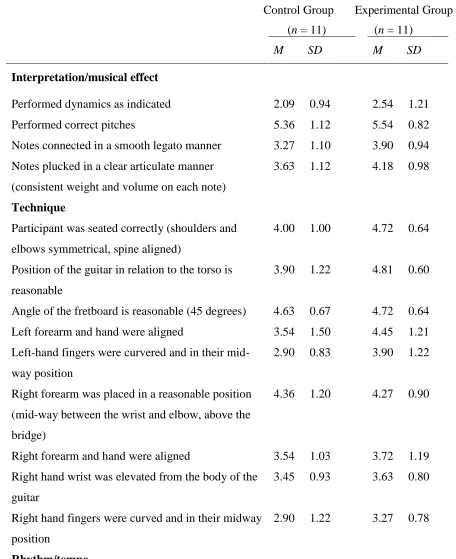
performance scale. Results from the performance measures indicated statistically significant (p =
.037) group differences, suggesting that the experimental group performed more musically, with
better tone, greater rhythmic precision, and with a more secure technical foundation than the
control group. Results from the self-regulation measures were not statistically significant,
however self-efficacy levels increased for the experimental group participants and decreased for
the control group participants over the study interval. Qualitative data indicated that most
participants were intrinsically motivated yet persistent disruptions hindered them from
successfully managing their practice time and environment. These disruptions centred on
commitments to family, work, domestic duties, and health related issues. Methods of instruction
that take into consideration the life stage challenges faced by adult learners are discussed.
iii
ACKNOWLEDGMENTS
This project would not have been possible without the support of many people. Many
thanks to my supervisor, Kevin Watson, who read my numerous revisions and helped make some
sense of the confusion. Also thanks to my second reader, Robert Wood, who played a formative
role in my thesis question and design. Thanks to Jeffrey McFadden for his expert assessment
skills and for providing me with a soundboard for many guitar related questions. Thanks to the
Don Wright Faculty of Music for awarding me a scholarship and providing me with the financial
means to complete this project. Finally, thanks to my wife Denise, my two children Emilee and
Patrick, my parents John and Arlene, and numerous friends who endured this long process with
iv
TABLE OF CONTENTS
Abstract………..……….……… Acknowledgments……….…..…....
Table of Contents………...………...
Introduction & Review of Literature……….………..….….…..
Introduction…………..……….…..
Construct Of Self-Regulation………..…… Measurement Of Self-Regulation………..……….. Measurement Of Classical Guitar Performance Achievement……… The Effect Of Interventions On Self-Regulated Learning………..…...……. Third Phase Adults As Novice Musicians………...
Method………...………...…... Participants………... Measures………..
Classical Guitar Performance Rating Scale………..……... Instrumental Music Student self-Regulation Measure………..….. Practice Reflection Questionnaire………...
Procedure……….………
Results……….………....
Measures of self-regulation……….
Measures of performance achievement……….…..
Practice questionnaire………... Motive………..………....…..…. Time………..………..……….... Method………..………..………….... Behaviour………..………..……….... Environment……….………...……… Social Factors………..………..…..….... Discussion………...………....
Creation Of A Measure Of Classical Guitar Performance Achievement ………... Effect Of Experimental Treatment On Performance Achievement………
Performance Achievement And Deliberate Practice ………. Effects Of Experimental Treatment On Self-Regulated Learning Behaviour……….…...
Effects Of Experimental Treatment On Motivation ………...……….…..
Disruptions During Practice ………...
Limitations………... Significance Of Study……….
v
Appendix A: Instrumental Music Student Self Regulation Measure………... Appendix B: Classical Guitar Performance Rating Scale……… Appendix C: Weekly Reflection Questions……….……… Appendix D: Weekly Video Recording Musical Excerpts………...…………
Curriculum Vitae………...………... 80
1
Introduction
Compared to many other educational settings, instrumental music students spend a
considerable amount of time practicing away from the direct guidance of their teachers (Sloboda,
Davidson, Howe, & Moore, 1996). This self-guided instruction is critical to the development of
fundamental skills and activities that may lead to future musical success (Miksza, 2012). As
such, instrumental music practice may be examined in terms of the self-regulation processes that
students develop and deploy in order to become more proficient musical practitioners
(McPherson & Renwick, 2001). Self-regulated learning has been defined as active behavioural,
cognitive, metacognitive, and highly motivated participation in one’s own learning and has been
positively related to academic (Zimmerman, 1986) and musical (McCormick & McPherson,
2003) achievement. In this introductory chapter, research relevant to the current study will be
discussed according to the following categories: (a) construct of self-regulation, (b) measurement
of self-regulation, (c) instruments that have been developed to measure achievement in classical
guitar performance, (d) effectiveness of educational interventions on self-regulation, and (e) third
phase adult novice musicians.
Construct of Self-Regulation
Self-regulation has been viewed as an open-ended cyclic process that occurs in three
phases: (a) forethought – thought processes and personal beliefs that precede efforts to learn, (b)
performance/volition control - processes that occur during the learning effort that affect
concentration and performance, and (c) self-reflection – reactions and responses that occur after
the learning efforts (McPherson & Zimmerman, 2002, p. 340). These processes are thought to be
cyclical because the self-reflection phase feeds back into the forethought phase. Within this
2
advanced conservatory students’ performance preparation. She noted that these two organists
first analysed the musical task before them and then set goals concerning what they thought was
attainable within a given practice period. Goals were arranged hierarchically and participants
subsequently chose appropriate strategies for approaching these goals based on contextual
factors. Such behaviours exemplified the forethoughtaspect of self-regulation. During what
could be described as the performance/volitional control phase, the students engaged in
self-instruction by verbalizing and planning how they should proceed as they executed certain tasks.
Familiar task learning strategies such as isolating problem spots from within a given context and
reducing the task to its essential parts were exhibited. Self-monitoring was also evident as the
students made judgements that demonstrated knowledge of when they were performing well and
when they were not. In the third phase, self-reflection, Nielson’s two participants self-evaluated
by comparing their current performance with their ideal of the piece, and thus changes in
strategic activities were made.
Further unpacking the construct of self-regulation, McPherson and Zimmerman (2002)
outlined six potential dimensions: (a) motive, dealing with self-motivation, how individuals
come to value their learning, and why they choose to continue their learning in spite of many
obstacles; (b) method, referring to the types of skills, knowledge, and understanding that are
required when deciding which approach is superior when engaging with music; (c) time
management, referencing how individuals successfully plan and manage their time efficiently;
(d) behaviour, dealing with an individual’s ability to self-monitor and evaluate his or her own
performance; (e) physical environment, relating to controlling the space where learning takes
place; and (f) social factors, concerning an individual’s disposition to reach out to knowledgeable
3
Music researchers have incorporated this theoretical framework of self-regulation into
their investigations of music practice. For example, Miksza, Prichard, & Sorbo (2012)
investigated intermediate band students’ self- regulated behavior during individual music
practice. Participants’ practice sessions were rated for evidence of self-regulated behavior using
a rating scale comprised of items that addressed McPherson and Zimmerman’s (2002) method,
behavior, and time-use dimensions of self-regulated learning. Results indicated significant
relationships between self-regulation ratings and frequencies of certain practice behaviors.
McPherson & Renwick (2001) studied the common trends and individual differences of
seven beginner band students according to the six dimensions of self-regulation as outlined by
McPherson and Zimmerman (2002), (i.e., method, behavior, time, motive, social factors and
environment). Participants were video recorded over the course of three years. Behavioural
coding was conducted on the content of practice, the nature of errors and off-task behaviours,
and the interaction of family members. Results showed that participants chose a wide variety of
practice locations ranging from quiet bedrooms to busy family rooms and were generally well
equipped with music stands and an appropriate chair. Higher levels of cognitive engagement
were associated with intrinsic motivation; thus, participants motivated by personal rather than
external factors were more likely to engage in self-regulatory behaviour. Participants practice
strategies were minimal, consisting of playing straight through the piece 90% of the time.
Virtually no evidence of deliberate practice strategies was exhibited. Time spent playing during
rehearsal increased from 72.9% in year one to 84.1% in year three.
Research conducted by McPherson and McCormick (2006) examined the role of
motivation in young musicians’ capacity to prepare for, and to satisfactorily complete, prepared
4
examinations with the Australian Music Examination Board ranging in levels from grades 1-8.
Structural equation analysis was used and self-efficacy was found to be the most important
predictor of achievement.
The theoretical framework of expertise explains expert performance as the end result of
individuals’ prolonged efforts to improve performance while negotiating motivational and
external constraints. The construct of deliberate practice plays a central role within this
framework. Ericsson, Krampe, & Tesch-Römer (1993) have described deliberate practice as, “a
highly structured activity, the goal of which is to improve performance” (p. 368). These
researchers assessed the levels of deliberate practice in three groups of elite, adult violinists
whose performance differed. The researchers analyzed the amount of practice the violinists had
acquired by the age of 18 and concluded that there were significance differences among the
groups. The best violinists had accumulated an average of 7,410 hours of practice, the second
best performers had accumulated an average of 5,301 hours and the third group had accumulated
an average of 3,420 hours. As the amount of deliberate practice increased so too did the level of
expertise.
Hallam et al. (2012) assessed 3,325 young people ranging in level of expertise from
beginner to the level required for entry to higher-level education. A questionnaire was completed
with a number of statements related to practice strategies, organization of practice and
motivation with a 7-point rating scale. The researchers sought to know whether musicians with
less expertise adopted similar practice strategies to those musicians with greater expertise. The
researchers also investigated whether these strategies changed as expertise increased over time.
Results of factor analysis revealed seven factors: adoption of systematic practice strategies,
5
of analytical strategies, adoption of ineffective strategies, concentration, and immediate
correction of errors. Results indicated that as expertise increased students practiced more
minutes, adopted more systematic practice strategies, organized their practice more efficiently,
used recordings for feedback, and engaged in more analytic strategies (Hallam et al., p. 665). The
factor entitled “use of recordings for listening and feedback and use of metronome” explained
7.6 percent of the amount of variance, behind organization of practice (7.7%), and adoption of
systematic practice strategies (10.7%).
Araujo (2016) explored self-regulated behaviours in advanced musicians (N=212)
through an online questionnaire using a five point Likert-type scale. He found that self-regulation
through personal resources was the most predominant in practice approaches, and that
self-regulation through external resources decreased with experience (Araujo, 2016, p. 278). Araujo’s
instrument assessed three factors of self-regulated behaviours; the “self-regulation through
practice organization” factor included items derived from the goal-setting theories of locke &
Latham (2013).
Measurement of Self-Regulation
Perhaps the most frequently used measure for evaluating the effects of classroom
academic performance is the Motivated Strategies for Learning Questionnaire (Duncan,
McKeachie, 2005). The MSLQ is an 81-item, self-report instrument with a motivation section
and a learning strategies section. There are 31 items in the motivation section assessing student
goals and value beliefs for a course, their beliefs about their skills to succeed in a course, and
their anxiety concerning tests in a course. Thirty-one items also comprise the learning strategy
section dealing with students’ use of cognitive and metacognitive strategies. There is also a
6
resources (2005). All questions are paired with a seven-point Likert-like scale. This tool has
proven to be reliable and useful, having been adapted for a number of different purposes for
researchers, instructors and students.
Most quantitative studies examining self-regulated music practicing have used an adapted
version of the Motivated Strategies for Learning Questionnaire developed by Pintrich and
colleagues (Pintrich, Smith, Garcia, & McKeachie, 1993). However Zimmerman (1998) has
defined self-regulation as being context-specific. The reliability and validity of these self-report
measures used in music education research may therefore have been impacted. Because of this, a
number of music researchers (e.g., Araujo, 2016; Hallam et al; 2012; Miksza, 2012) have set out
to create reliable measures of self-regulated learning in music. For example, Miksza tested the
construct validity and reliability of a measure of self-regulated practice behaviour based on the
six dimensions of self-regulation outlined by McPherson and Zimmerman (2002). Construct
validity was tested using confirmatory factor analysis. Internal consistency and consistency over
time were also assessed. A sample (N=302) of middle school band students was used. Factor
analysis showed the dimensions of self-efficacy, method/behaviour combined, time management,
and social influences as the best fit. Cronbach’s alpha and test retest reliability results indicated
good to excellent consistency for all self-regulation subscales, with coefficients ranging from .79
to .90. Significant correlations (p <.001) between self-regulation subscales and self-reported
practice habits provided preliminary evidence of predictive validity of the measure (Miksza,
2012).
Araujo (2016) created an online questionnaire based on behaviours identified in the
literature regarding expert music performance. Cronbach’s alpha was used to test the
7
.86. Exploratory factor analysis indicated three different aspects of music practice: (a) practice
organization; (b) personal resources, which included reflexive/metacognitive strategies during
practice and the evaluation of executed tasks; and (c) external resources, such as teachers, peers,
and materials.
Hallam (2012) designed a questionnaire based on the findings from existing literature.
Two groups of questions were established a priori in order to carry out multiple regression
analysis: 1) statements relating to practicing, and 2) factors contributing to motivation. A
Cronbach’s alpha statistic was calculated for each group of items. In addition, as Cronbach’s
alpha statistic does not confirm uni-dimentionality of included items the factor structure for each
composite was also examined (Grayson 2004). The Cronbach’s alpha statistic for each composite
measure was as follows: (a) practicing strategies a=.866; organization and self-management of
practice a=.637; practicing when not preparing for an examination a=.67; practicing when
preparing for an examination a=.75; self-belief a=.796; support from family, friends, and
teachers a=.709; enjoyment of performing a=.852; attitudes towards playing an instrument and
perceptions of its value a=.813: enjoying musical activities a=.786: future aspirations a=.787:
and teachers ratings a=.927.
While these previous measures have been shown to be a reliable and effective manner of
gathering and assessing data concerning music students’ practice habits, each has their
limitations. Hallam et al’s. measure (2012) contained items on practice strategy and organisation
of practice, yet none from the social factors aspect of self-regulation. Similarly, Araujo’s
measure contained items from the social factors aspect of self-regulation, yet items from the
motive aspect are absent. Miksza’s measure adhered most closely to McPherson and
8
environment aspect of self-regulation was absent from his measure. Because important aspects of
McPherson and Zimmerman’s (2002) model of self-regulation were absent from each of the
previous measures there is a need for a new measure that more completely assesses each of the
dimensions of this model.
Measurement of Classical Guitar Performance Achievement
In order to examine potential effects of levels of self-regulation on musical achievement,
reliable assessment measures for musical achievement are needed. Musical performance
assessment is an important part of the instructional process for both solo and ensemble programs.
Performance assessment is a regular part of summative assessments, examinations, and music
festivals (Zdzinski & Barnes, 2002). During performance assessments students are evaluated on
their ability to apply skills, demonstrate understanding of concepts, and to meet specific
objectives. The evaluation of a musical performance however has generally been considered a
difficult endeavour; reliability among assessors is sometimes low and significant biases often
influence the results (McPherson & Thompson, 1998, p. 12). The creation of a common set of
evaluative dimensions may increase inter-judge reliability when rating performances
(McPherson & Thompson, 1998).
An early example of such a rating system was the Watkins Farnum Performance Rating
Scale (1954). The scoring for this scale was based on measure-by-measure performance errors,
and while the scale is highly reliable, questions have been raised regarding the validity of the
measure because important parameters such as musical interpretation, intonation, and tone
quality are left unevaluated (Stivers, 1972; Zdzinski & Barnes, 2002). More recently, researchers
have utilized facet-factorial design procedures to create a number of instrument-specific
9
& Barnes, 2002). These designs seek to improve the evaluation of musical performances by
replacing judges’ general impressions with a more systematic procedure - a common set of
evaluative dimensions or “factors” is used. Common factors include tone, intonation, and tempo
and several questions may be contained within each factor. Judges then rate performers using a
Likert-like scale for each question. Data collected may be summed to generate a cumulative
score. The facet factorial design is therefore an attempt to provide an improved performance
assessment by providing common judging criteria not possible in global rating scales (Zdzinski
& Barnes, 2002).
There are several instruments that measure guitar proficiency (e.g., Fink 1973; Russell
2010; Watkins 1982). Russell’s measure gathered items concerning the characteristics of a good
or poor guitar performance from guitar performance literature, previously constructed rating
scales, and statements from professional guitar players, guitar teachers, and college guitar
majors. Ninty-nine item statements were identified and placed into a priori categories established
in previous research by Abeles (1973), Bergee (1987), and Zdzinski and Barnes (2002). A
five-point Likert scale was used and 100 recorded samples of guitar performance excerpts were
adjudicated by 67 volunteer judges. The results of a factor analysis identify a five-factor
structure consisting of 1) interpretation/musical effect: seven items including, “spiritless playing”
and “melodic phrasing”, 2) technique: six items including, “played fluently” and “flubbed”, 3)
rhythm/tempo: seven items including, “the tempo was in good taste” and “hurried repeated
notes”, 4) tone: seven items including “tone is rich”, and “tone quality is beautiful”, 5)
intonation: four items including; “ignored key signature” and “intonation is good”. These factors
accounted for 71% of the total variance. Based on factor loadings 32 items were selected to
10
Horowitz’s scale (1994) examined improvisation from a jazz guitar perspective. Items
were gathered through analysis of pedagogical materials, teacher-generated essays, and
published interviews of established guitarists. Statements were paired with a 5-point Likert scale
and used by 28 judges to rate 70 student performances. Factor analysis indicated a model of three
factors of ten items each: 1) musicianship: including “plays wrong notes for certain chords” and
“sounds like just a bunch of licks over changes”, 2) expression: including “has something that
grabs you” and “tone quality alive”, and 3) overall structure: including “reaches climax of solo at
appropriate moment” and “solo doesn’t end well”. Inter-judge reliability estimates for the overall
score were >.96, and for the three subscales >.94. Inter-item reliability estimates were .87 to .97
for the eight solos.
These scales are not without limitations, however. Neither of the two extent studies that
assess guitar playing with a facet factorial design (Horowitz 1994, Russell 2010) takes into
consideration the specific demands of classical guitar technique or its repertoire. Russell’s scale
(2010) attempts to measure “general guitar performance”, yet this is problematic. It would seem
that each instrument must be evaluated according to its unique features - excellent violinists have
superior vibrato, pianists do not, nor should they be expected to. To illustrate this point, Russell’s
scale asks adjudicators to rate whether the performer played with, “Poor synchronization of pick
and fretting hand fingers” (p.29). This item clearly indicates that the meaure was designed for
plectrum guitar styles. The plectrum, or guitar “pick” is used by folk, rock, and jazz performers,
however classical and flamenco guitarists use only their fingers to pluck the strings. In a similar
manner, Horowitz states that the items in his Jazz Guitar Instrument Rating Scale “do not appear
to be specific to the guitar” and that the scale “may be applicable to jazz improvisation in
11
The manner in which the guitar is played is also dictated by the multiplicity of genres that
is afforded it. Guitar styles such as rock, jazz, classical, folk, and flamenco each use specific
techniques and have stylistic characteristics which must be measured on their own merits and
according to the demands of their own repertoire (McPherson & Thompson, 1998, p. 13). For
instance, the guitar can be played harmonically (strumming), monophonically (with a pick), or
homophonically, (a combination of pick and fingers). Folk Music, Death Metal and Flamenco
guitar styles have only a few practical aspects in common with each other. The type of guitar
being played - whether steel string, classical, electric, or cutaway - will also determine the types
of questions that will be asked. These will in turn affect the validity and reliability of data
gathered. In light of the limitations of the measures discussed above, and because greater
precision in assessment is needed to provide more accurate information to guitar students and
teachers alike, there is, therefore, a need for the creation of a new measure.
The Effect of Interventions on Self-Regulated Learning
Educational interventions designed to enhance self-regulated learning skills in academic
settings have been examined since the early 1980’s (Hattie, Biggs & Purdie, 1996, p. 100). The
majority of these interventions have taken place in the domains of reading comprehension,
mathematics and mathematical problem solving, and science and social sciences (Dignath,
Buttner & Langfeldt, 2008). Broadly speaking, these interventions have targeted the cognitive,
metacognitive, and motivational dimensions of self-regulation. Findings show that interventions
are most effective when they are context-related, which is easier to do when integrated into the
classroom instruction, and when students are given opportunity to apply and practice newly
12
Dorrenbacher and Perels (2016b) examined a sample of college students (N=173) that
signed up for a course to improve their self regulated learning skills. The study was based on
Zimmerman’s social cognitive model (2000) of self regulation and addressed the forethought,
performance, and reflection phases of the theory. The study utilised a 2 x 2 x 2 control group
design and analysed the effects of a general self regulated learning program, a learning diary, a
combination of the two interventions, and a control group. The researchers hypothesised that the
latter condition would display the most robust results because “learning diaries stimulate
self-monitoring and therefore should cause behavioural optimization processes” (Dorrenbacher &
Perels, 2016a, p. 53). Learning diaries consisted of 47 self report items and were completed each
day during the study. The general self regulated learning intervention included seven topics
including goal setting, time and strategic planning, self-motivation and procrastination, volition
and attention, focusing, task strategies, self reflection and causal attribution. The intervention
took place once per week for 90 minutes. Self observation was not included in the training. This
component was fostered separately through the use of the intervention of learning diaries. The
54-item self regulated learning questionnaire was administered before the study began, during
the last training session (eight weeks later), and a third time eight weeks after the training ended.
Results indicated that the self regulation training positively influenced self regulated learning
behaviours, whereas the learning diary alone had no effects. The combination of both
interventions produced the highest effect, as the researchers had hypothesized. Although effects
were stable for eight weeks, no transfer effect was found. The analysis revealed a statistically
significant multivariate two-way interaction of Time x Training, F(12, 158) =2.16, p <0.05, as
well as a statistically significant multivariate two-way interaction of Time x Learning Diary,
13
intervention groups showed higher gains than the corresponding non-intervention groups.
Furthermore, a statistically significant multivariate three-way interaction Time x Training x
Learning Diary was found, F(12, 158) = 2.04, p < 0.05.
Using a similar research design Bellhauser, Losch, Winter and Schmitz (2016) examined
the effects of a web-based self regulation trainer and a learning diary on 166 university math
students. Participants were randomly assigned to four groups in a 2 (training vs. no training) x 2
(diary vs. no diary) between subjects design. Group TD (training plus diary) attended the
web-based training and kept an online diary, while group T (training) attended the same training but
did not keep a diary. Group D (diary) kept a diary but had no access to the web-based training.
Finally, group C (control) did not receive training or keep a diary. Tests were administered
before the study period began and four weeks later at the conclusion of the intervention period.
These tests contained 42 items on self regulated learning and other constructs, a 20 question
multiple choice test on declarative knowledge of self regulated learning, and a mathematics test.
Lessons contained in the web based training were based on the three phases of Zimmerman’s
(2000) self regulation theory; 1) preaction, 2) action, and 3) post-action. Each lesson contained
various videos, presentations, self-tests, exercises, and group discussions on an online bulletin
board. Three lessons were completed each week over the four week treatment period. The
learning diary contained both open ended questions to foster metacognition and closed questions
for measurement. These items were assessed on a six-point rating scale. Results showed that the
training had significant effects on self regulated learning knowledge, self regulated learning
behaviour, and on self-efficacy.
Many studies have used an educational intervention in an effort to increase the
14
studies have examined the effects of self regulated learning as they relate to certain aspects such
as self-evaluation, performance achievement and motivation. Few music studies, however, have
attempted to use educational interventions to increase levels of self regulated learning behaviour
in students.
Hewitt (2011) conducted one such study. The researcher sought to determine whether
self-evaluation instruction would have an impact on student self-evaluation, music performance,
and self-evaluation accuracy of music performance among middle school instrumentalists. He
also sought to understand if student grade levels affected these variables. Participants (N=211)
within each grade level (5 through 8) were assigned to one of three treatment conditions:
self-evaluation instruction (SE-1), self-evaluation only (SE-O), or no self-self-evaluation (SE-No). The
treatment period was eight weeks in duration and students meet four days a week for 40 minutes
each time. At least 25 minutes of each class was used to instruct the SE-1 group in
self-assessment methods; thus, totalling a minimum of 500 minutes of instruction. Music used in the
study consisted of three pieces for each grade level. Researchers chose pieces based on three
criteria: 1) that the pieces possessed appropriate grade level musical demands, 2) that the pieces
would avoid a floor and ceiling effect, and 3) that the pieces were similar in difficulty for each
instrument within each grade level. Each group played through music used in the study at each
lesson and heard a model recording of the piece. Students evaluated themselves using a
pre-existing measure (Woodwind Brass Solo Evaluation Form) with seven subareas including, tone,
intonation, melodic accuracy, rhythmic accuracy, tempo, interpretation, and technique. Pre test
performance testing and self-evaluations took place during the third week. A second
performance recording and self-evaluation took place during week eight. Student performances
15
self-evaluation training were generally inaccurate in their assessments and did not improve as a
result of self-evaluation instruction. Performance scores also increased similarly across all
treatment groups.
Cremaschi (2012) reported that studies designed to measure the effectiveness of
interventions among various stages of self-regulation are uncommon in music education research
literature. Similarly, Grunson (1988) stated, “it would be interesting to investigate by means of a
specific training program whether practice is modifiable or whether it is purely a function of
experience” (p. 110). And Hallam et al. (2012) has recommended that further research be
conducted into potential effects of the use of recordings in practice on the level and quality of
expertise (p. 672). One such possible intervention that may act to modify the self-regulating
behaviours of music students during musical practice may be the inclusion of video recordings.
The use of video recording as a means of intervention began in the 1980s with sports
(Liebermann et al., 2002, p. 756). Research in this domain has shown that when video feedback
is provided in an appropriate manner, motor skill acquisition improves significantly (Schmidt &
Lee, 1999). In one study of Montreal area amateur hockey players (midget through to college
and junior pro) findings suggested that players at a younger age used video recording as a tool to
help them “reach the next level”, whereas older players in higher levels used video recording to
study “the other team’s system as well as their own” (Lee, 2011, p. 1). From this perspective,
athletes record themselves so that critical events in their performance can be identified and
quantified in a consistent and reliable manner, allowing for “accurate and objective qualitative
and quantitative feedback” (Lee, 2011, p. 4).
In a similar manner, McPherson and Zimmerman (2002) proposed video recording as an
16
who receive feedback through viewing a video are afforded the ability to engage in much more
in-depth analysis of performance (Fautley, 2013). Fautley has viewed the use of video recording
as an act of cognitive redistribution, in essence offloading cognition externally (Dror & Harnad,
2008). Students who self-evaluate recordings of their performances are, cognitively speaking,
‘freed up’ to concentrate solely on listening and evaluating their performance rather than having
to do so synchronously during its production (Fautley, 2013, pp. 38-39). This practice affords the
performer the ability to fully engage with the auditory and visual aspects of the performance,
rather than having to cognitively multitask. Fautley argues that this, “allows for much more in
depth analytical listening to take part as a result” (pp. 38-39). Music research literature supports
the notion that it is difficult for performers to focus on both the execution of the performance and
the evaluation of the performance with a high degree of accuracy (Silveira & Gavin 2015, p. 7).
Other studies (e.g., Deniz, 2012; Hallam et al., 2012; Yarbrough, 1986) have provided
evidence for the value of utilizing video recording technology as a tool to aid self-regulation.
Hallam et al. (2012) examined the practice behaviour of young musicians in relation to their
level of expertise and by the quality of their performance. These aspects were operationalized as
the highest grade level achieved in a musical examination, and by the mark obtained in the
highest grade. A statistically significant linear trend was found, indicating that as expertise
increased, so did the use of self-recording for listening and feedback. Hallam et al. posit that this
type of feedback may be particularly useful to learners as it is visual as well as aural.
Deniz (2012) conducted a qualitative study in which participants were videotaped during
lessons and were then required to view their videos before practicing. During follow up
17
their playing, that they were able to correct these deficits, that their quality of performance had
improved, and that they were more motivated.
Yarbrough (1986) conducted research using video recording with conducting students.
Students in six conducting classes observed videotapes of themselves conducting, used
observation forms for self-evaluation, wrote self-critiques, and completed a posttest.
Relationships between correct self-observation mark, verbal reinforcements in self-critiques, and
correct posttest scores were examined. Analysis of control and experimental groups showed
significant and positive correlations between posttest scores and correct self-observation marks,
and nonsignificant but positive correlations between correct posttest scores and verbal
reinforcements. Yarbrough’s results indicated that conducting students who watched themselves
through video-playback reported that self-observation significantly contributed to improvements
in achievement due to its immediacy and the opportunity to study one’s own behaviour in great
detail and at length (p. 188).
Similar to video recording interventions, Silveira and Gavin (2015) examined the effects
of audio recording and playback on middle school students’ (N=112) ability to self-assess
themselves. Students assessed their performances using a 7-point Likert-type scale. The young
musicians then listened to a recording of their performance and completed another identical
self-assessment. A third identical assessment occurred two days later after listening to the same
recorded performance. Aspects being examined were chosen from Bergee’s (1993) 27-item
performance rating scale, including 1) tone quality/intonation, 2) technique: 3) rhythm/tempo;
and 4) interpretation. A repeated measures multivariate analysis of variance was used to test for
differences among the three listening conditions for the four elements. A statistically significant
18
conditions of tone, pitch, and rhythm, but not for dynamics. Post-hoc analysis were conducted
for mean differences in self-assessment scores across the three listening conditions. Significant
differences were found between live and recorded performance two days later for the elements of
tone (p <.05), pitch (p <.01), and rhythm (p <.001).
Interventions aimed at developing the self regulated learning abilities of students within
the musical domain are infrequent. It may be that implicit interventions, compared to
instruction-based interventions, may be more effective in this domain. If novice musicians are so
preoccupied with the task of learning to play an instrument that they cannot self-monitor and
assess effectively, retroactive monitoring through video recordings may allow them to do so.
Video recordings may afford musicians the opportunity to engage in metacognitive analysis apart
from the act of performing via cognitive redistribution. Introducing video recording into student
practice environment may be seen as an intervention that facilitates the development of self
regulated learning skills through more implicit means.
Third Phase Adults as Novice Musicians
Music researchers have investigated beginner instrumental music students from a number
of groups, including school-aged children (Hallam, 2011; Sloboda, Davidson, Howe & Moore,
1996), older adults (Creech, Hallam, Varvarigou, McQueen, & Gaunt, 2013), and
intergenerational music making groups (Newman, Hatton-Yeo, 2008). Researchers have defined
older adults in terms of a Third and Fourth phase (Creech, Hallam, McQueen, & Varvarigoou,
2013). Generally, Third phase adults are categorized as those who enjoy a considerable degree of
resilience in relation to independence, autonomy, and cognitive functioning (p. 87). In contrast,
the Fourth phase is one of a period of disengagement and dependency, involving physical and
19
participation in making music can enhance this population’s social, emotional, and cognitive
well-being. Roulston and Jutras (2015) attempted to examine third phase adults in their paper,
Adult Perspectives of Learning Musical Instruments. The researchers did not initially anticipate
recruiting adults aged 60 or older, yet those who volunteered tended to be older; two-thirds of
their participants were over 60 years old. This recruitment trend may have been because retired
individuals have fewer commitments and more discretionary time than adults who are at an
earlier stage in the life cycle. The researchers found that participants’ main challenges included
manual dexterity and hand-eye coordination; the cognitive processes of learning to read music
were also described as physically and mentally challenging (p. 329). Participants in the present
study were from the third phase; primarily non-retirees, currently in the workforce and many
with school-aged children. There is a dearth of beginner instrumental music research addressing
the unique challenges that beset this particular age demographic.
The purpose of this study was to investigate the effects of student self-assessment of
video recordings on the self-regulating behaviours and achievement levels of adults in a beginner
classical guitar class. The following research question was asked: Among adult beginner
classical guitarists, does video recording musical excerpts cause more self-regulated learning
behaviours and greater levels of expertise than those who do not video record musical excerpts?
The following two hypothesis are put forward: 1) Participants who self-assess video recorded
performances will engage in more regulated learning behaviours; 2) Participants who
self-assess video recorded performances will exhibit greater levels of expertise.
20
Method
The present study examined the effects of assessing self-recorded video performances on
the self-regulated practice behaviours and achievement levels of beginner adult classical guitar
students.
Participants
Participants (N=25) in the study were adults over the age of eighteen who self-reported
little or no previous classical guitar performance experience. The sample included both males
(n=8) and females (n=17). Permission to recruit participants was granted from the University of
Western Ontario Research Ethics Board. Recruitment posters with tear off phone tabs were
placed on community bulletin boards throughout the city of Brantford, Ontario, requesting
volunteers to take part in a research study on music practice. Information on the posters outlined
that participants would take part in a group guitar class administered through the Guitar Society
of Brantford. Participants were to be18 years of age or older and were to have little or no
previous guitar playing experience. Interested persons were invited to phone the organization for
more information. A research assistant at the Society explained the study procedures to callers.
Potential participants were informed that there was no fee for the instruction, and that
instruments and materials would be provided to those who needed them. After the initial
conversation with the research assistant, those people who expressed interest were emailed a
letter of information and consent explaining further details of the study, and were requested to
sign the document and return it to the research assistant. All members of the guitar class were
participants in the research study. The course was taught by the researcher and instruction took
21
Measures
Classical Guitar Performance Rating Scale
The researcher-designed Classical Guitar Performance Rating Scale (CGPRS, see
Appendix B) was developed to be used by both research participants for self-assessment and by
independent judges to assess the dependent variable of performance achievement. The
Likert-type measure was based on Russell’s (2010) Guitar Performance Rating Scale, but was altered to
represent techniques more specifically involved in classical guitar performance. Russell’s
original measure addressed five performance dimensions: (a) interpretation/musical effect, (b)
technique, (c) rhythm/tempo, (d) tone, and (e) intonation. Russell suggested that future rating
scales for guitar performance should include assessments of visual as well as aural aspects. As a
result, additional items were added to the measure to assess the basic physiological principles of
classical guitar technique (Shearer, 1990), including the proper positioning of the body, arms,
hands and fingers, and the orientation of the instrument. These items were included within the
technique dimension. In addition, two other items were added to specifically address pitch
accuracy and continuity issues. The number of items addressing intonation was reduced to one
based on the rationale that the guitar is a fretted instrument with fixed pitches, similar to the
piano or harp, and does not deal with intonation issues in the conventional sense that fretless
string and wind instruments do.
Instrumental Music Student Self-Regulation Measure
The Instrumental Music Student Self-Regulation Measure (IMSSRM, See Appendix A)
was developed by the researcher to assess whether the experimental intervention elicited greater
self-regulatory practice behaviours among participants. The measure addressed the six
22
method, (c) behaviour, (d) time management, (e) physical enviroment, and (f) social factors. The
25-item IMSSRM was a Likert-type scale based on previous measures created by Hallam et al.
(2012), Miksza (2012), and Araujo (2016), with items altered to address the goals and objectives
of the present research design more specifically. For example, Hallam et al.’s measure included
the item, “I record myself playing and listen to the tapes.” In order to assess the frequency of
recording as well as the goal directed behaviours commensurate with the feedback attained from
those recordings, the item was modified to read, “I frequently record myself in order to detect
and correct errors in my performance.” In addition, because previous measures included either
no items related to self-efficacy and motivation (Hallam et al.), or included motivational items
related only to self-efficacy (Miksza), several items from Arajuo’s measure were used to provide
balance within the motivation dimension for the IMSSRM. While Miksza chose to omit the
dimension of physical environment from his measure, based on the rationale that the participants
in his study were too young to exercise control over this aspect, this dimension was included in
the IMSSRM because the participants were considered mature enough to be capable of
exhibiting control over their practice enviroment. This element was assessed by including the
item, “I structure the physical space to make the most of my practice,” which was an altered
form of Araujo’s item, “I organize the physical environment of my practice sessions.” In
addition, McPherson and Zimmerman’s method and behaviour dimensions were consolidated
into one dimension based on Miksza’s previous findings suggesting this combination as a more
parsimonious model.
Practice Reflection Questionnaire
During the instructional period, all participants responded weekly to four practice
23
(2002) self-regulation model, asked participants to describe the following: (a) what you do when
you practice (your method of practice), (b) your practice environment (where you practice), (c) a
brief assessment of your practice (the quality of your practice), and (d) how many minutes did
you practice on the following days.
Data were coded and analysed using the Computer Assisted Qualitative Data Analysis
Software NVivo Starter 11 for Windows. Individual participant cases were created and each
participant’s data was aggregated into a single file. Nodes were created as topologies for
collecting coded entries and sub-nodes were created for collected emergent themes and patterns.
Participant files were read and salient quotes were coded to the appropriate nodes. Annotations
for each coded entry were also created within the software program.
The six dimensions of self-regulation identified by McPherson and Zimmerman (2002)
were used a priori as topologies (LeCompte & Preissle, 1993) for coding the data. Emergent
themes associated with each topology were arrived at inductively. Data analysis was conducted
using the following nine steps: (a) topologies were chosen, (b) data was read and entries related
to topologies were coded, (c) data were summarized by the researcher, (d) patterns, relationships
and themes within the topologies were developed, (e) data was read and coded according to the
identified patterns, (f) a search was conducted to determine if the patterns were supported (or not
supported) by the data, (g) relationships among patterns were identified, (h) patterns were written
as one-sentence generalizations, (i) selected data excerpts that supported these generalizations
were chosen for inclusion in the study. Participant quotes were identified by participant number,
24
Procedure
Data collection for the study took place in the fall of 2016. The instructional treatment
was delivered over the course of 12 research sessions, each approximately 60 minutes in length.
The instructional materials utilized in this study were obtained from Guitarcurriculum.com, and
were created by the Education and Outreach Branch of the Austin Classical Guitar Society. The
Society allows subscribers unlimited printing and distribution rights. The Guitarcuriculum.com
method is specifically designed for the classical guitar, is arranged for three guitar sections (bass,
tenor/alto, and soprano), and assumes no prior guitar playing or music reading ability. The
curriculum focuses on expressive music making by incorporating dynamic contrasts, flexible
tempo, and rhythmic accenting within original compositions and arrangements of global dance
and folk music, all within a tightly sequenced set of technical and note reading constraints. The
curriculum includes detailed written and on-line video tutorials that describe and illustrate the
core technical components involved in the set up and positioning of the instrument, as well as the
proper positioning of the body, arms, hands, and fingers while performing.
The instructional treatment (see Appendix D) utilized repertoire spanning the first four of
nine levels represented in the method. Level one introduces note reading on open strings, some
simple left hand fretting, and right hand fixed “finger-to-string assignment,” in which the fingers
and thumb of the plucking hand are assigned to specific strings. Level two introduces note
reading on the first three strings in the first position. Level three focuses on the alternation of
index and middle fingers when plucking and string crossing (the technique in which the plucking
hand fingers traverse across the six strings when plucking). Level four of the curriculum deals
with note reading on all six strings in first position and a few simple chords. Because the
25
also focused on learning the anatomy of the instrument. Participants learned several pieces from
each level of the curriculum over the course of instruction. The researcher/instructor used the
sequencing document included with the curriculum to describe and model new musical or
instrument-specific concepts. Participants performed en masse or individually as the situation
required. Assignments to specific guitar sections (bass, tenor/alto, soprano) were rotated ensuring
that all students learned and performed each of the three guitar parts within each piece.
Prior to beginning instruction, all participants completed an initial administration of the
Instrumental Music Student Self-Regulation Measure (IMSSRM). Participants were also
instructed to submit the Practice Reflection Questionnaire (see Appendix C) each week during
the course of instruction. As part of the experimental design participants were randomly assigned
to either a control (n=13) or an experimental group (n=12). Each week during the instructional
period members of the experimental group were asked by a research assistant to submit a
self-recorded video consisting of a short performance excerpt from repertoire covered during the
previous week’s lesson. The researcher or external adjudicator did not assess these videos, nor
were participants told that the videos would be assessed. As part of the instructional procedures
in the class, a copy of the Classical Guitar Performance Rating Scale (CGPRS) was distributed to
all students to communicate important elements of exemplary classical guitar performance.
Members of the experimental group were additionally asked to use the CGPRS to self-evaluate
each of their weekly recorded performances and to submit these evaluations along with their
videos. At the conclusion of the instructional period, all participants from both the experimental
and control groups submitted a video recording of themselves performing a 16-measure excerpt
of the melody from “Ode to Joy”by Beethoven (see Appendix D). All participants also
self-26
evaluations, and practice questionnaires were uploaded to a secure DropBox folder monitored by
a research assistant so that the researcher/instructor could remain blind to the participants’ group
membership.
The final video recordings from both groups were compiled, randomized, and placed in a
separate DropBox folder. Data regarding the dependent variable of performance achievement
were obtained by having a senior guitar specialist from the College of Examiners at the Royal
Conservatory of Music assess each of the final videos using the Classical Guitar Performance
Rating Scale (CGPRS). Before beginning the evaluations, the judge underwent a brief training
session regarding the use of the measurement instrument. The judge and the researcher, who is
also a senior guitar specialist from the College of Examiners at the Royal Conservatory of Music,
independently assessed three performance videos using the CGPRS. These training videos were
selected from the weekly videos that had been submitted as part of the experimental treatment
and did not include any final post-instruction performances. Achievement scores from the expert
judge and the researcher were compared and any points of discrepancy were discussed and
27
Results
This study sought to understand whether adult beginner classical guitarists who
self-assessed weekly video recorded musical excerpts would exhibit more self-regulated practice
behaviour and greater levels of expertise than those guitarists who did not self-assess weekly
video recorded musical excerpts. This chapter presents the analysis of data and results of the
study. In preliminary analyses, internal reliability was determined for the self-regulation and
performance achievement measures and interjudge reliability was calculated for the achievement
assessment. Descriptive statistics were determined for all variables. Analysis of variance was
used to compare pre- and postinstruction group means on the self-regulation measure, and an
independent samples t-test was used to compare experimental and control group mean
achievement scores.
Measures of Self-Regulation
Cronbach’s alpha internal reliability coefficients for the 25-item Instrumental Music
Student Self-Regulation Measure (IMSSRM) were ɑ = .837 for the pre-instruction scores and ɑ =
.812for the post-instruction scores. A review of the data suggested that item 17, “I frequently
play pieces from beginning to end without stopping,” was inconsistent with the other items on
the measure. With item 17 removed the internal reliability of the scale increased to ɑ = .865 for
the pretest scores and ɑ = .834 on the posttest scores, indicating a high degree of internal
consistency among scale items. Thus item 17 was removed from further analyses. One possible
reason this question may have been ineffective is that many participants reported stopping to
correct errors when practicing. This contrasts with the practice habits of children, whose primary
28
2001). It is possible that the ceiling effect evident in the data prevented this question from
providing any discriminating data.
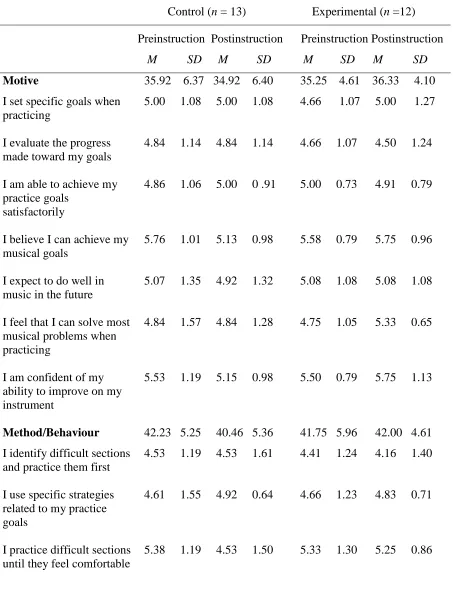
Table 1 presents the descriptive statistics for the pre- and post-instruction administrations
of the IMSSRM. The deletion of item 17 from the measure, as previously discussed, resulted in a
maximum potential composite score of 168. The pre- and postinstruction composite mean scores
for the control group were 115.69 and 113.76 respectively, indicating a slight decrease in
reported self-regulation strategies. Standard deviations of 16.20 (preinstruction) and 13.98
(postinstruction) also indicated a slight decrease in variability of participants’ scores. In contrast,
the pre- and postinstruction composite mean scores for the experimental group were 116.41 and
118.66 respectively, indicating a slight increase in reported self-regulation strategies, with
29 Table 1
Descriptive Statistics for Pre- and Post-Instruction Measures of Self-Regulation by Experimental Condition
Control (n = 13) Experimental (n =12)
Preinstruction Postinstruction Preinstruction Postinstruction
M SD M SD M SD M SD
Motive 35.92 6.37 34.92 6.40 35.25 4.61 36.33 4.10
I set specific goals when practicing
5.00 1.08 5.00 1.08 4.66 1.07 5.00 1.27
I evaluate the progress made toward my goals
4.84 1.14 4.84 1.14 4.66 1.07 4.50 1.24
I am able to achieve my practice goals
satisfactorily
4.86 1.06 5.00 0 .91 5.00 0.73 4.91 0.79
I believe I can achieve my musical goals
5.76 1.01 5.13 0.98 5.58 0.79 5.75 0.96
I expect to do well in music in the future
5.07 1.35 4.92 1.32 5.08 1.08 5.08 1.08
I feel that I can solve most musical problems when practicing
4.84 1.57 4.84 1.28 4.75 1.05 5.33 0.65
I am confident of my ability to improve on my instrument
5.53 1.19 5.15 0.98 5.50 0.79 5.75 1.13
Method/Behaviour 42.23 5.25 40.46 5.36 41.75 5.96 42.00 4.61
I identify difficult sections and practice them first
4.53 1.19 4.53 1.61 4.41 1.24 4.16 1.40
I use specific strategies related to my practice goals
4.61 1.55 4.92 0.64 4.66 1.23 4.83 0.71
I practice difficult sections until they feel comfortable
30 I try to get one section of
music accurate before practicing the next
4.84 1.40 4.30 0.85 4.66 1.30 4.41 1.56
I mark trouble spots in the music when practicing
5.30 1.03 5.38 1.32 5.00 1.53 4.58 1.44
When I make mistake I often go back to the beginning of the piece and start again
4.15 1.81 4.00 1.73 4.25 1.86 4.58 1.31
I frequently record myself in order to detect and correct errors in my performance
2.76 1.09 2.46 1.12 2.66 1.43 3.25 1.48
I use strategies that have been effective in the past
4.84 1.21 4.76 1.09 5.00 0.95 4.91 0.79
I practise difficult sections slowly
5.76 0.83 5.53 1.45 5.75 0.62 5.83 1.40
Time 19.31 3.66 19.46 3.55 20.33 2.99 20.58 3.90
I schedule and organize my practice time
4.84 0.68 4.30 1.18 4.66 1.23 3.91 1.37
It’s easy for me to remain focused on my music when practicing
4.92 1.18 5.46 0.96 5.50 1.08 5.66 0.77
I am easily distracted when I practice
4.69 1.18 4.53 1.19 4.91 1.37 5.16 1.46
I often daydream when practicing
4.84 1.46 5.15 1.21 5.25 1.21 5.83 1.69
Physical environment 10.31 2.06 11.08 1.66 10.25 2.42 11.08 2.39
I practice in a quiet space away from distractions
5.30 1.37 5.84 0.89 5.16 1.46 5.66 1.30
I structured the physical space to make the most of my practice
31
Social factors 7.92 3.09 7.77 1.64 8.83 2.41 8.67 2.10
I often practice with my peers
2.84 1.99 2.53 1.19 2.91 1.78 2.83 1.64
When I find something difficult, I seek help from outside resources
5.07 1.49 5.23 1.01 5.91 0.99 5.83 0.93
Composite 115.69 16.20 113.76 13.98 116.41 13.55 118.66 12.09
An examination of the scores uncovered some notable trends. Of the four items
concerned with self-efficacy on the IMSSRM (items 1, 3, 9, 23) the experimental group score
rose an average of 0.25 from 5.22 on the pre-test to 5.47 on the posttest, while control group
scores dropped an average of 0.29 from 5.30 on the pre-test to 5.01 on the posttest. Scores for the
third item in the methods/behaviour dimension of the IMSSRM, “I practice difficult sections
until they feel comfortable,” showed the most decline from pre- (5.38) to posttest (4.53) of all the
nine items in this dimension for the control group. However, the experimental group mean
average on the posttest was 5.25, the second highest score of the nine items. This may suggest
that experimental participants repeated difficult sections more often than control group members.
In order to investigate the effect of experimental treatment (self-assessment of video
performances) on self-regulation, a mixed design ANOVA was calculated to determine whether
the preinstruction and postinstruction mean scores differed according to the between subjects
factor of experimental group. An independent samples t-test revealed no significant difference (t
= -.121, p > .05) in preinstruction self-regulation scores by instructional group. Levene’s tests
confirmed homoscedasticity for both pre- (F = .068; p > .05) and postinstruction data (F = .256;
32
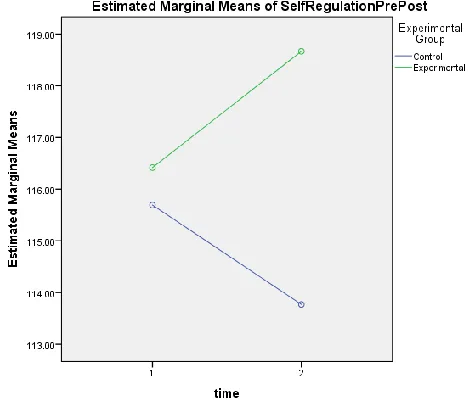
However, an examination of the plot of estimated marginal means (Figure 1) indicated a clear
divergent trend between the two treatment groups, with experimental group means increasing
while control group means decreased. The observed power for this analysis was .10, far below
the generally accepted standard of .80. It is possible that the small sample size obtained for this
study may have obscured a potentially significant effect.
Figure 1
Plot of Estimated Marginal Means by Experimental Treatment Group
Measures of Performance Achievement
Two members of the control group and one member of the experimental group failed to
submit postinstruction video performances, thus the achievement results are based on the scores
from 22 participants evenly divided between control and experimental groups. The Cronbach’s
alpha internal reliability coefficient for the 23-item Classical Guitar Performance Rating Scale
(CGPRS) was ɑ = .817. A review of the data suggested that item 11, “backtracked often to
33
because participants did not understand the question properly. The qualitative data indicates that
many participants stopped to repeat sections that they found difficult, however, it is possible that
participants did not think of these as being earlier mistakes, but rather, present mistakes.
Changing the wording of the item to “stopped to correct mistakes as they occur” may have
changed the outcome of the results on this item.
With item 11 removed the internal reliability of the scale increased to ɑ = .880, indicating
a very high degree of internal consistency among scale items. Thus, the decision was made to
remove item 11 from further analyses. Scores on items representing each of the four performance
dimensions were summed to provide a dimension score. Internal reliability coefficients were
calculated for each of these dimensions, with results indicating moderate to high internal
reliability for the interpretation (ɑ = .770), technique (ɑ = .739) rhythm (ɑ = .899) and tone (ɑ =
.705) dimensions. All item scores were summed to provide a single achievement score. A
Kolmogorov-Smirnov test confirmed normality of distribution (p > .05) for these composite
scores.
In order to assess interjudge reliability, the researcher - also a guitar specialist from the
College of Examiners at the Royal Conservatory of Music - assessed 30% of the performances.
Reliability was assessed by examining Pearson Product Moment correlations between scores
from the expert judge and scores from the researcher. Interjudge reliability for the individual
items (Table 2) ranged from r = .73 (ns) to r = 1.00 (p < .01), while coefficients for dimension
totals ranged from r = .73 (ns) to r = .98 (p < .01). The reliability coefficients for composite
34 Table 2
Interjudge Reliability for CGPRS Achievement Item, Dimension, and Composite Scores (N = 22)
Subscale Item R
Interpretation/musical effect .81*
Performed dynamics as indicated .88**
Backtracked often to correct earlier mistakes
Performed correct pitches 1.00**
Notes connected in a smooth legato manner .80*
Notes plucked in a clear articulate manner (consistent weight and volume on each note)
1.00**
Technique .98**
Participant was seated correctly (shoulders and elbows symmetrical, spine aligned)
1.00**
Position of the guitar in relation to the torso is reasonable
.81*
Angle of the fretboard is reasonable (45 degrees)
1.00**
Left forearm and hand were aligned .93**
Left hand fingers were curved and in their mid-way position
.73
Right forearm was placed in a reasonable position (mid-way between the wrist and elbow, above the bridge)
1.00**
35
Right hand wrist was elevated from the body of the guitar
.89**
Right hand fingers were curved and in their midway position
.81*
Rhythm/tempo .97**
Performed with an appropriate tempo 1.00**
Performed with a steady tempo (not slowing down or speeding up)
.98**
Performed tempo changes where indicated (ritards, accelerandos)
.83*
Performed correct rhythms .84*
Performed with regularly reoccurring rhythmic accenting
.84*
Performed fluidly and without hesitation .94**
Tone .84*
Participant “snapped” the strings often .73
Performed with a warm, full-bodied tone .96**
Intonation .73