_____________________________________________________________________________________________________ *Corresponding author: E-mail: [email protected],[email protected];
www.sciencedomain.org
Effect of Vitamin C Supplementation on Learning
and Memory in CD1 Mice
S. A. Bisong
1*, I. O. Ajiwhen
1, C. C. Mfem
1and A. O. Igiri
21
Department of Physiology, College of Medical Sciences, University of Calabar, PMB 1115 Calabar, Nigeria.
2
Department of Anatomy, College of Medical Sciences, University of Calabar, PMB 1115 Calabar, Nigeria.
Authors’ contributions
This work was carried out in collaboration between all authors. Author SAB designed the study, wrote the protocol and vetted the second and the final drafts of the manuscript. Author IOA conducted the laboratory work and wrote the first draft. Author CCM managed the literature searches and managed the experimental process. Author AOI conducted the statistical analysis and data interpretations. All authors read and approved the final manuscript.
Article Information
DOI: 10.9734/BJMMR/2016/26165 Editor(s): (1) Alex Xiucheng Fan, Department of Biochemistry and Molecular Biology, University of Florida, USA. (2)Philippe E. Spiess, Department of Genitourinary Oncology, Moffitt Cancer Center, USA and Department of Urology and Department of Oncologic Sciences (Joint Appointment), College of Medicine, University of South Florida, Tampa, FL, USA. Reviewers: (1) Alfred “Roc” Ordman, Beloit College, WI, USA. (2)Sanghamitra Chakraborty, Nil Ratan Sircar Medical College, West Bengal, India. Complete Peer review History:http://sciencedomain.org/review-history/15299
Received 4th April 2016 Accepted 28th May 2016 Published 7th July 2016
ABSTRACT
Vitamin C (ascorbic acid), an ‘over the counter’ supplement, has numerous physiological functions and it is found in high concentrations in the brain. The effect of vitamin C on cognitive memory and visuospatial memory was studied using the Novel Object recognition task (NORT) and the Morris water maze (MWM) respectively. Twenty Swiss white albino (CD1) mice, within the age of 90-120 days, were randomly divided into two groups of ten mice each. Mice in group 1 served as the control and so received normal saline orally while the other group received vitamin C (200 mg/kg) orally for 21 days. All animals had access to feed and water ad libitum. Behavioural testing started on day 21. There was no significant difference in swim latencies between the control and test groups in the MWM though there was a uniform reduction in swim latency in both groups during acquisition and reversal training days. There also was no significant difference in quadrant duration and swim latencies of both groups in the probe trial and the visible platform task. The habituation
index is significantly higher in the test group compared to control in the short term inter trial interval of the Novel Object recognition task (NORT). However there was no significant difference in the index of habituation in both groups in the long term inter trial interval of the NORT. There also was a significantly higher index of discrimination in the vitamin C treated group compared to control in the short term inter trial interval of the NORT. There was no significant difference in the index of discrimination in the long term inter trial interval of the NORT. Vitamin C did not affect learning as both groups learned equally well during training in the MWM. It also did not affect visuospatial memory. However, Vitamin C improved short term cognitive memory in the NORT.
Keywords: Vitamin C; memory; mice.
1. INTRODUCTION
Vitamin C is a six-carbon compound, with a structure related to glucose. It has two inter-convertible compounds: L-ascorbic acid (which is a strong reducing agent) and its oxidised derivative, L-dehydroascorbic acid. This vitamin can simply be referred to as Vitamin C or as Ascorbic acid. Gastrointestinal absorption of vitamin C is efficient and occurs in the small intestine via the action of sodium dependent ascorbic acid transporters [1]. Absorption efficiency of low oral doses of vitamin C (4 – 64 mg) may be as high as 98%; however, this decreases with increasing doses of the vitamin [2]. Ascorbic acid is widely distributed in all tissues of the body, with higher levels found in the brain, kidneys, lungs and spleen [3]. The ascorbic acid concentration of the brain is kept within a relatively narrow limit [4,5]. At tissue saturation, whole body vitamin C content is approximately 20 mg/kg, or 1500 mg, and during depletion its loss is at a rate of 3% of whole-body content per day [6]. Although vitamin C circulates in plasma in micromolar concentrations, it reaches millimolar concentrations in most tissues. These high ascorbic acid cellular concentrations are thought to be generated and maintained by the sodium dependent Vitamin C transporter 2 (SVCT2 - Slc23a2), a specific transporter for ascorbic acid [7]. The importance of the SVCT2 for CNS function is supported by the finding that its targeted deletion in mice causes widespread cerebral haemorrhage and death on post-natal day one [8]. Vitamin C is also readily recycled from its oxidized forms inside cells. Neurons in the central nervous system (CNS) contain some of the highest ascorbic acid concentrations of mammalian tissues [9,10].
The antioxidant property of vitamin C serves as a protection against environmental stressors. Pre-treatment with vitamin C protects thyroid gland
acinar cells from the alterations in hormone synthesis associated with administration of chlorpyrifos and lead [11]. Vitamin C also helps in the metabolism of cholesterol, increasing its elimination thereby assisting lower blood cholesterol [12]. Vitamin C enhances the absorption of non-heme iron in the small intestine [13]. This it does by its ability to reduce ferric iron to its ferrous form [14]. A study has also shown that the regular supplementation of ascorbic acid to pregnant women proved to reduce hospitalization rate during pregnancy and provide overall mother-to-child health benefit [15]. Ascorbic acid plays an important role in the maintenance of collagen. Ascorbic acid is essential to maintain the enzyme prolyl and lysyl hydroxylase in an active form. The enzyme prolyl hydroxylase is responsible for hydroxylation of proline and lysine using ascorbic acid as co-factor. Ascorbic acid deficiency results in reduced hydroxylation of proline and lysine, thus affecting collagen synthesis [16].
Ascorbic acid may also act to increase the number of dopamine neurons, both in culture and following transplantation, by stimulating dopaminergic differentiation of neural precursors from the foetal ventral mesencephalon [19]. A
lack of dopamine results in a
performance/motivational decrement that masks learning competence [20]. Neurons are sensitive to ascorbic acid deficiency, perhaps because they have 10-fold higher rates of oxidative metabolism than supporting glia [21,22]. This increased sensitivity is most apparent in states of ascorbic acid deficiency and in conditions of excess oxidant stress. The existence of homeostatic mechanisms that maintain high concentrations of ascorbic acid in cerebrospinal fluid (CSF) and in neurons further suggests a neuroprotective role. A key feature in this regard is the ability to sustain steep ascorbic acid concentration gradients: a) from plasma to the CSF across the choroid plexus and b) from the CSF and interstitium into neurons [8].
So far, research has shown that vitamin C plays a great role in the normal functions of the central nervous system. Brain tissue level of ascorbic acid is very high and is maintained at a relatively narrow limit. The focus of this research is to determine the effect of long term administration of vitamin C on learning and memory.
2. EXPERIMENTAL PROCEDURE
2.1 Vitamin C Preparation
Vitamin C supplements (100 mg tablets, EMZOR pharmaceuticals, Nigeria) were obtained from a certified pharmacy, Bez Pharmacy, in Calabar Nigeria. These tablets of vitamin C were dissolved in normal saline and administered orally at a dose of 200 mg/kg. The drug was prepared daily before administration and left overs discarded.
Plate 1. CD 1 mouse
2.2 Experimental Animals
Twenty Swiss white albino (CD1) mice, within the age of 90-120 days, were randomly divided into two groups of ten mice each. The first group served as the control and so received normal saline orally. The other group was administered vitamin C (200 mg/kg) orally for 21 days. All animals had access to feed and water ad libitum. Behavioural testing in the Novel object recognition task and Morris water maze began on day 21 of vitamin C administration.
2.3 Evaluation of Learning and Memory
2.3.1 The novel object recogniton task
The Novel object recognition task (NORT) modified by Brown et al. [23] was used to test cognitive memory. The NORT assesses a mouse's ability to recognize a familiar object over a variable length of time; this ability has been coined recognition memory. The NORT relies upon a mouse's intrinsic exploratory drive to investigate novel objects. The experimental procedure also lacks stress components, such as forced swimming or food deprivation. In mice models the amount of interaction with the novel object is assessed. Recognition memory is comprised of both familiarity detection and recollection [24,25]. These functions are primarily localized within the medial temporal lobe (MTL) [26,27].
Plate 2. The small open field used for the novel object recognition test
2.3.2 The morris water maze
physiologists and pharmacologists. A cursory literature search revealed that well over 2500 journal articles have been published since 1982 in which this model (or variations of the model) was used to assess and compare spatial learning and memory in rodents. The MWM, while simple at first glance, is a challenging task for rodents that employs a variety of sophisticated mnemonic processes. These processes encompass the acquisition and spatial localization of relevant visual cues that are subsequently processed, consolidated, retained, and then retrieved in order to successfully navigate and thereby locate a hidden platform to escape the water [29].
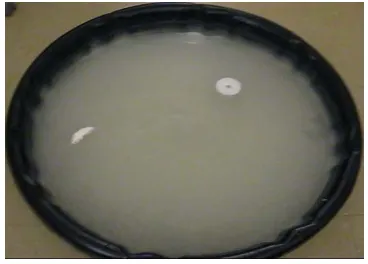
Various objects were placed in the testing room or hung on the wall so that the mice could use these visual cues as a means of navigating in the maze. With each subsequent entry into the maze the mice progressively become more efficient at locating the platform, thus escaping the water by learning the location of the platform relative to the distal visual cues. The learning curves are thus compared between groups.
Plate 3. The Morris water maze
2.4 Statistical Analysis
Values for the results were expressed as mean ± SEM. The statistical analyses were done using the Student t-test, analysis of variance (ANOVA) and the post/hoc Neumann Keul’s test. The computer softwares used were Microsoft excel 2007 edition and SPSS 10.0 for windows. Differences between means were considered significant at P ≤ 0.05.
3. RESULTS
Fig. 1 shows the learning curve comparing swim latency during acquisition training days (days 1-3) for mice treated with vitamin C supplement and control in the MWM. Swim latency for both the test group and the control decreased on day
2 of the Acquisition training when compared to day 1, with little reduction in day 3 compared to day 2, showing that learning occurred. However there was no significant difference in the swim latency of the test group compared to control.
Fig. 2. shows learning curve comparing swim latency during reversal training days (days 4-6) for mice treated with vitamin C supplement and control in the MWM. There was no significant difference in the swim latency of the Vitamin C-treated group of mice compared to control even though there was a slight decrease in swim latency for both groups (test and control) across the Reversal training days.
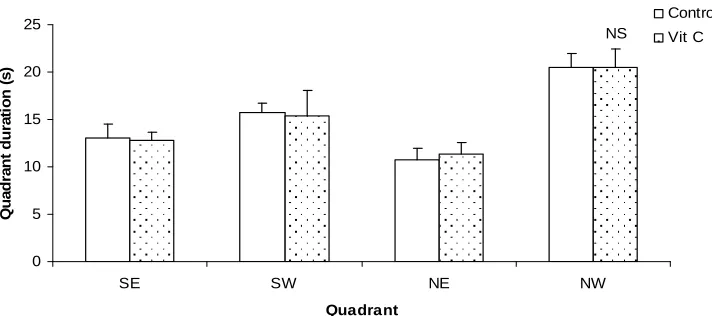
Fig. 3. Compares quadrant duration in the probe trial (day 7) for mice treated orally with vitamin c supplement with the control in the MWM. The mice in both groups showed no significant preference for any of the quadrants.
Fig. 4. shows swim latency in mice treated with vitamin C supplement compared to control in the visible platform task (day 8) of the MWM. There was also no significant difference in the swim latency in the test group compared to control.
Fig. 5. shows the habituation index in the short term inter trial interval of the NORT in mice after chronic oral administration of vitamin C compared to the control. The vitamin C-treated group of mice showed a higher index of habituation (12.6±4.9) compared to control (1.2±3.4; p< 0.01).
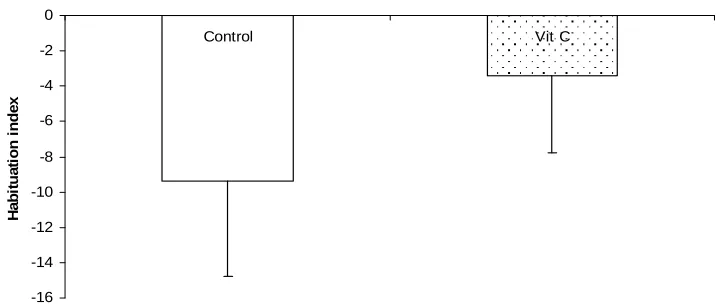
Fig. 6. Compares habituation index in the long term inter trial interval of the NORT for mice treated (chronic) with vitamin C supplement with that of the control. There was no significant difference in the habituation index for both groups.
Fig. 7. compares the index of discrimination in the short term inter trial interval of the NORT for mice treated orally with vitamin C supplement and control. The test groups showed a significantly higher index of discrimination compared to control.
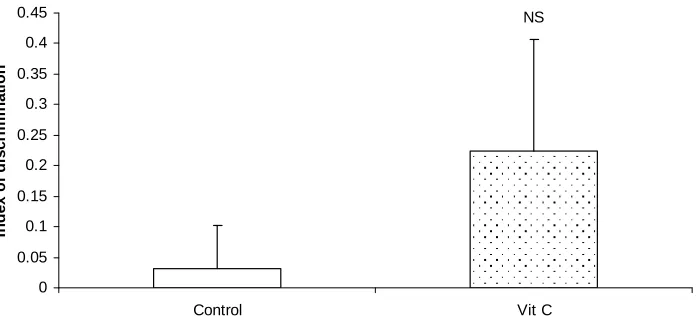
Fig. 8. shows the index of discrimination in the long term inter trial interval of the NORT for mice treated with oral vitamin c supplement and the control.
Fig. 1. Learning curves comparing swim latencies during the acquisition training in the Morris water maze test following chronic oral administration with vitamin C
Fig. 2. Learning curves comparing swim latencies during the reversal training in the Morris water maze test following chronic oral administration with vitamin C
Fig. 3. Comparison of quadrant durations during the probe trial in the Morris water maze test following chronic oral administration with vitamin C
NS – Not Significant compared to control 0
5 10 15 20 25 30 35 40
Acq. 1 Acq. 2 Acq. 3
Acquisition training duration (days)
S
w
im
l
a
te
n
c
y
(
s
)
Control Vit C
0 2 4 6 8 10 12 14 16 18 20
Rev. 1 Rev. 2 Rev. 3
Reversal training duration (s)
S
w
im
l
a
te
n
c
y
(
s
)
Control Vit C
0 5 10 15 20 25
SE SW NE NW
Quadrant
Q
u
a
d
ra
n
t
d
u
ra
ti
o
n
(
s
)
Fig. 4. Comparison of swim latencies during the visible platform task in the Morris water maze test following chronic oral administration with vitamin C
NS – Not Significant compared to control
Fig. 5. Comparison of habituation indices during the short term memory test of the novel object recognition task following chronic oral administration with vitamin C
** – Significant at p< 0.01 compared to control
Fig. 6. Comparison of habituation indices during the long term memory test of the novel object recognition task following chronic oral administration with vitamin C
NS – Not Significant compared to control 0
2 4 6 8 10 12 14
Control Vit C
S
w
im
l
a
te
n
c
y
(
s
)
NS
0 2 4 6 8 10 12 14 16 18
Control Vit C
H
a
b
it
u
a
ti
o
n
i
n
d
e
x
**
-16 -14 -12 -10 -8 -6 -4 -2 0
Control Vit C
H
a
b
it
u
a
ti
o
n
i
n
d
e
Fig. 7. Comparison of indices of discrimination during the short term memory test of the novel object recognition task following chronic oral administration with vitamin C
* – Significant at p< 0.05 compared to control
Fig. 8. Comparison of indices of discrimination during the long term memory test of the novel object recognition task following chronic oral administration with vitamin C
NS – Not Significant compared to control
4. DISCUSSION
In the MWM the result for the acquisition training shows a consistent decrease in the swimming latency over the period meaning that both groups of mice were able to learn. However there was no significant difference between the groups.
Although the swim latencies during reversal training were not different they tend to be shorter for the test groups on day 2 than on day 3 which means better learning curves also at reversal training.
During the probe trial, the animals show better learning ability. The trend was a preference for north-west (NW) and south-west (SW) quadrants
which had the escape platform during the reversal and acquisition training days respectively. However there was no significant difference in the values for the test group compared to control.
The visible platform task, used in assessing place learning, showed no significant difference between the test group and the control. This implies that both groups had good place learning and visual acuity.
In the NORT, the result shows the index of habituation in the short term memory test to be significantly higher in the test group compared to control. Habituation is a decrease in response to a stimuli after repeated exposure. The test
-0.2 -0.15 -0.1 -0.05 0 0.05 0.1 0.15 0.2 0.25
Control Vit C
In
d
e
x
o
f
d
is
c
ri
m
in
a
ti
o
n
*
0 0.05 0.1 0.15 0.2 0.25 0.3 0.35 0.4 0.45
Control Vit C
In
d
e
x
o
f
d
is
c
ri
m
in
a
ti
o
n
animals recognised the familiar object from the first trial (acquisition trial). This shows a good cognitive memory. This finding agrees with the index of discrimination, a ratio of how much the novel object was explored, which was also significantly higher in the test group compared to control. This agrees with an earlier study of memory, in rats, using passive avoidance task [30] where the result showed significant increase in working memory of vitamin C treated rats as compared to control rats.
In the long term test of memory, however, there was no significant difference in the indices of habituation and discrimination. This implies that vitamin C improved cognitive memory only in the short term.
Vitamin C is known to modulate the levels of the neurotransmitters acetylcholine, serotonin and dopamine [31,32] and glutamate. These neurotransmitters play a pivotal role in the acquisition (learning) and retention (memory) of information [33]. Dopamine provides the motivation that is essential for reward associated learning [20]. The release of acetylcholine in many brain areas seem to be essential for processes of attention, detection of novelty and for consolidation process [34]. It is not clear why there was no significant difference between the test group and the control in the MWM. Previous studies have shown that vitamin C reduces spatial learning deficits in middle-aged and very old APP/PSEN1 transgenic and wild-type mice [35]. The absence of a significant difference in this case could be attributed to the fact that the MWM has some stress component (absent in the NORT) which may have interfered with memory performance [36]. In addition, glutamate and glutamate receptors modulate memory processes such as spatial recognition as well as formation and retrieval of memories, especially long term memory. Glutamate also influences the cholinergic pathway [37,38]. While this research work did not assay the level of the neurotransmitter, glutamate, nor did we study the activity of the glutamate receptors, it is likely that the absence of a significant difference in visuospatial learning and long term cognitive memory could be attributed to the inverse relationship between ascorbic acid and glutamatergic activity [17].
It is not certain how vitamin C would have improved short term cognitive memory but not long term cognitive memory. As a step further in this research, we would be trying to establish
what neurotransmitter is mostly modulated by vitamin C and what area of the brain is most affected by vitamin C administration, because visuospatial and cognitive memory are controlled by different areas of the brain and possibly by different neurotransmitters.
5. CONCLUSION
In conclusion, Vitamin C did not affect learning as both groups learned equally well during training in the MWM. It also did not affect visuospatial memory. However, Vitamin C improved short term cognitive memory in the NORT.
CONSENT
It is not applicable.
ETHICAL APPROVAL
All authors hereby declare that "Principles of laboratory animal care" (NIH publication No. 85-23, revised 1985) were followed, as well as specific national laws where applicable. All authors also hereby declare that all experiments have been examined and approved by the appropriate ethics committee and have therefore been performed in accordance with the ethical standards laid down in the 1964 Declaration of Helsinki.
COMPETING INTERESTS
Authors have declared that no competing interests exist.
REFERENCES
1. Takanaga H, Mackenzie B, Hediger MA. Sodium-dependent ascorbic acid transporter family SLC23. European Journal of Physiology. 2004;447:677-682. 2. Liorn FS, Talesa V, Menghini AR. Absence
of accumulation phenomena in normal and tumoral tissues of mice treated with ascorbic acid. Int. Vitam. Nutr. Res. 1983; 53:251-257.
3. Tsao CS, Leung PY, Young M. Effect of dietary ascorbic acid intake on tissue vitamin C in mice. The Journal of Nutrition. 1987;291-297.
5. Spector R, Lorenzo AV. Ascorbic acid homeostasis in the central nervous system. Am. Physiol. 1973;225(4):757-763.
6. Kallner A, Hartmann D, Hornig D. Steady-state turnover and body pool of ascorbic acid in man. American Journal of Clinical Nutrition. 1979;32(3):530-9.
7. Sotiriou S, Gispert S, Cheng J, Wang Y, Chen A, et al. Ascorbic-acid transporter Slc23a1 is essential for vitamin C transport into the brain and for perinatal survival. Nat Med. 2002;8:514-517.
8. May JM. Vitamin C transport and its role in the central nervous system. Subcell Biochemistry. 2012;56:85-103.
9. Rose RC. Transport of ascorbic acid and other water-soluble vitamins. Biochimica et Biophysica Acta. 1988;947:335–366. 10. Agus DB, Gambhir SS, Pardridge WM,
Spielholz C, Baselga J, Vera JC, Golde DW. Vitamin C crosses the blood-brain barrier in the oxidized form through the glucose transporters. Journal of Clinical Investigation. 1997;100:2842-8.
11. Ambali SF, Orieji C, Abubakar WO, Shittu M, Kawu MU. Ameliorative effect of vitamin C on alterations in thyroid hormones concentrations induced by sub-chronic co-administration of chlorpyrifos and lead in wistar rats. Journal of Thyroid Research; 2011.
DOI: 10.4061/2011/214924
12. Rath M. Eradicating heart disease. Health Now. San Francisco, CA; 1993.
13. Lynch SR, Cook JD. Vitamin C and iron. Annals New York Academy of Sciences. 1980;32-44. (00-8923/80/0355-0032). 14. Sayers MH, Lynch SR, Jocobs P. The
effects of ascorbic acid supplementation on the absorption of iron in maize, wheat and soya. British Journal of Haematology. 1973;24:209-218.
15. Unim H, Byamukama E. Regular vitamin C supplementation during pregnancy reduces hospitalization: Outcomes of a Ugandan rural cohort study. Pan African Medical Journal. 2010;5:15.
16. Naidu KA. Vitamin C in human health and disease is still a mystery? An Overview. Nutrition Journal. 2003;2:7.
Available:http://www.nutritionj.com/content/ 2/1/7
17. Castro MA, Pozo M, Cortes C, Garcia M, Concha II, Nualart F. Intracellular ascorbic acid inhibits transport of glucose by
neurons, but not by astrocytes. Journal of Neurochemistry. 2007;102:773-782. 18. Cameron E, Pauling L. Ascorbic acid and
the glycosaminoglycans. Oncology. 1973; 27:181-192.
19. Bagga V, Dunnett SB, Fricker-Gates RA. Ascorbic acid increases the number of dopamine neurons in vitro and in transplants to the 6-OHDA-Lesioned rat brain. Cell Transplantation. 2008;17:763– 773.
20. Denenberg VH, Kim DS, Palmiter RD. The role of dopamine in learning, memory, and performance of a water escape task. Behavioural Brain Research. 2004;148: 73–78.
21. Wilson JX. Antioxidant defense of the brain: A role for astrocytes. Canadian Journal of Physiology and Pharmacology; 1997.
22. Hediger MA. New view at C. Nature Medicine. 2002;8:445-446.
23. Brown RE, Corey SC, Moore AK. Differences in measures of exploration and fear in MHC-congenic C57BL/6J and B6-H-2K mice. Behavior Genetics. 1999;26: 263-271.
24. Aggleton JP, Brown MW. Interleaving brain systems for episodic and recognition memory. Trends in Cognitive Sciences. 2006;10(10):455-463.
25. Fortin NJ, Wright SP, Eichenbaum H. Recollection-like memory retrieval in rats is dependent on the hippocampus. Nature. 2004;431:188-191.
26. Bachevalier J, Vargha-Khadem F. The primate hippocampus: Ontogeny, early insult and memory. Current Opinion in Neurobiology. 2005;15:168-74.
27. Brown MW, Aggleton JP. Recognition memory: What are the roles of the perirhinal cortex and hippocampus? Nature Reviews Neuroscience. 2001;2:51-61.
28. Paylor R, Baskall-Baldini L, Yuva L, Wehner JM. Development differences in place learning performance between C57BL/6 and DBA/2 mice parallel the ontogeny of hippocampal protein kinase C. Behavioural Neuroscience. 1996;110: 1415-1425.
30. Saleem S, Haider S, Madiha S, Siddiqui S, Mansoori S, Haleem DJ. Enhanced memory function in young rats following ascorbic acid administration. Pakistan Journal of Biochemistry and Molecular Biology. 2012;45(2):94-98.
31. Castagne V, Rougemont M, Cuenod M, Do KQ. Low brain glutathione and ascorbic acid associated with dopamine uptake inhibition during rat’s development induce long-term cognitive deficits: Relevance to schizophrenia. Neurobiology of Disease. 2004;15:93-105.
32. Lee L, Kang SA, Lee HO, Lee BH, Jung IK, Lee JE, Hoe YS. Effect of supplementation of vitamin E and vitamin C on brain acetylcholinesterase activity and neurotransmitter levels in rats treated with scopolamine, an inducer of dementia. Journal of Nutritional Science and Vitaminology. 2001;47:323-328.
33. Myhrer T. Neurotransmitter systems involved in learning and memory in the rat: A meta-analysis based on studies of four behavioral tasks. Brain Research. 2003; 41:268-287.
34. Miranda MI. Changes in neurotransmitter extracellular levels during memory formation. In neural plasticity and memory: From genes to brain imaging. Boca Raton: CRC Press. 2007;129-146.
35. Harrison FE, Hosseini AH, McDonald MP, May JM. Vitamin C reduces spatial learning deficits in middle-aged and very old APP/PSEN1 transgenic and wild-type mice; 2009.
36. Sik A, van Nieuwehuyzen P, Prickaerts J, Blokland A. Performance of different mouse strains in an object recognition task. Behavioural Brain Research. 2003; 147:49-54.
37. Daikhin Y, Yudkoff M. Compartmentation of brain glutamate metabolism in neurons and glia. J. Nutr. 2000;130(4).
38. Michalak A, Kruk-slomka M, Biala G. The molecular basis of memory: Mechanisms, neurotransmitters and receptors involved in cognitive processes. Annales Universitatis Mariae Curie-Sklodowska. 2011;XXIV,N3(23):197-207.
_________________________________________________________________________________
© 2016 Bisong et al.; This is an Open Access article distributed under the terms of the Creative Commons Attribution License (http://creativecommons.org/licenses/by/4.0), which permits unrestricted use, distribution, and reproduction in any medium, provided the original work is properly cited.
Peer-review history: