Deep Belief Networks Using Convolution Neural Networks Algorithm
OGGU UMARANI1 & MS.DAMALLA JYOTHI2
1
M-Tech Dept of CSE, Laqshya Institute of Technology and Science, Khammam.
Mail id: [email protected]
2
Associate Professor Dept of CSE, Laqshya Institute of Technology and Science, Khammam.
Mail id: [email protected]
Abstract
The concept of deep learning is not new to higher educatio n. However, deep learning has drawn more
attention in recent years as institutions attempt to tap their student’s full learning potential. To more
fully develop student talents, many campuses are shifting from a traditional passive, instructor-
dominated pedagogy to active, learner-centered activities. Switching these features of human brain to a
learning model, we wish the model can deal with the high-dimensional data, support a fast and
intellectual learning algorithm and perform well in the complicated AI tasks like computer vision or
speech recognition. This survey reviews a history of deep learning, summarizing the components of
Convolutional Neural Networks (CNNs) and Deep Belief Networks (DBNs) together with their learning
algorithms and their performances in different applications. Institutions and researchers can use the
resulting scales to assess and investigate deep approaches to learning.
Keywords: Deep Learning, Deep Belief Networks (DBNs), Convolution Neural Networks (CNNs),
Algorithm.
1.
Introduction
The goal of AI is to invent a machine which can
sense, remember, learn, and recognize like a real
human being. Perceptron is the first machine
which can sense and learn but has
fundamentally limited learning abilities. The
later neural network [1] with multiple hidden
layers can learn more complicated functions but
it lacks a good learning algorithm. The
appearance of SVM enlightens people within a
short time since it facilitates the learning
procedures and performs well in many practical
problems, but SVM also encounters its
bottlenecks due to its shallow architectures.
Feedback [2] is part of the interactive
components of teaching and learning and can
therefore be seen as central to pedagogy. There
are many ways in which teachers can provide
feedback to assist the development of student
learning. The important issue is that whatever
the selected method, it must be able to provide
information about what the student does and
for improvement. Feedback can be provided on
an individual and group basis. Students using
“surface-level processing [3]”focus on the
substance of information and Emphasize rote
learning and memorization techniques. The goal
of studying for a test or exam is to avoid failure,
instead of grasping key concepts and
understanding their relation to other information
and how the information applies in other
circumstances. In contrast, students using
“deep-level processing” focus not only on
substance but also the underlying meaning of
the information. As inferred: “Deep learning [4]
is learning that takes root in our apparatus of
understanding, in the embedded meanings that
define us and that we use to define the world”.
1.1 Learning learning [5] can be considered to
encompass „deep learning‟ that includes
understanding and interpretation. It is
recognized the potential that assessment has for
affecting learning and the intricate links are now
widely recognized informing pedagogy. In the
literature formative assessment is linked more
strongly to teaching rather than learning. The
literature highlights many claims regarding the
positive effects of formative assessment on
learning; further work applying the existing
theories into practice is therefore necessitated.
There are many aspects of classroom interaction
that contribute to formative assessment, such as
discourse, questioning, giving tests and
observation. In studies, it was found that
feedback was the greatest influence on
performance if provided prior to provision of
the answers. There is considerable literature
addressing this area, but there is considerable
variation between the existing studies that limits
the internal validity of using such meta-analyses
to inform practice.
2.
Related Work
Deng, Li,Gong [1]: survey describe that deep
learning is becoming a mainstream technology
for speech recognition at industrial scale. In this
paper, we provide an overview of the work by
Microsoft speech researchers since 2009 in this
area focusing on more recent advances which
shed light to the basic capabilities and
limitations of the current deep learning
technology. We organize this view along with
feature-domain and model-domain dimensions
according to the conventional approach to
analyzing speech systems. Selected experiments
results, including speech recognition and related
applications such as spoken dialogue and
language modeling are presented to demonstrate
and analyze the strengths and weakness of the
techniques described in the paper. Deng,
Platt[2]: survey presents that deep learning
systems have dramatically improved the
accuracy of speech recognition and various deep
architectures and learning techniques have been
developed with distinct strengths and
weaknesses in recent years. How can ensemble
systems to achieve greater recognition accuracy
is the focus of this paper. We develop and report
linear stacking methods for ensembling learning
with applications specifically to speech-class
and long-linear stacking methods for ensemble
learning with applications connected deep
neural networks.
Gravier, Garg[3,10] : survey presents Visual
speech information from the speaker‟s moth
region has been successfully shown to improve
noise robustness of automatic speech
recognizers , thus promising to extend their
usability into the uman computer interface. In
this paper, we review the main components of
audio-visual automatic speech recognition and
present novel contributions in two main areas:
first, the visual front end design and later, we
discuss new work on features and design fusion
combination , the modeling of audio-visual
speech asynchrony and incorporating modality
reliability estimates to the bimodal recognition
process. Das[4]: presents a brief survey on
speech is the primary and the most convenient
means of communication between people. The
communication among human computer
interaction is called human computer interface.
Speech has potential of being important mode of
interaction with computer. This paper gives an
overview of major technological perspective
and appreciation of the fundamental progress of
speech recognition and also gives overview
technique developed in each stage of speech
recognition. This paper helps in choosing the
technique along with their relative merits and
demerits. A comparative study of different
techniques is done. This paper concludes with
the decision on feature direction for developing
technique in human computer interface system
in different mother tongue and it also gives the
various technique used in each step of a speech
recognition process and attempts to analyze an
approach for designing an efficient system for
speech recognition . The objective of this review
paper is to summarize and compare different
speech recognition systems and identify
research topics and applications where are at the
front end of this exciting and challenging field.
Dhameliya, Desai[7,8]: survey presents speech
is the most natural form of human
communication and speech processing has been
one of the most inspiring expanses of signal
processing . Speech recognition is the process of
automatically recognizing the spoken words of
person based on information in speech signal.
Automatic Speech Recognition(ASR) system
takes a human speech utterances as an input and
requires a string of words as output. This paper
introduces a brief survey on Automatic Speech
Recognition and discusses the major subjects
and improvements made in the past 60 years of
research , that provides technological outlook
and a respect of fundamental achievements that
have been accomplished in the important areas
types of speech classes , feature extraction
techniques, speech classifiers and performance
evaluation are issues that require attention in
designing of speech recognition system. The
objective of this review paper is to summarize
some of the well-known methods used in
several stages of speech recognition system.
Gaikwad, Gawali and Yannawar [6,9] : The
speech is most prominent and primary mode of
communication among human beings. The
communication among human computer
interaction is called human computer interface.
Speech has potential of being important mode of
interaction with computer. This paper gives an
overview of major technological perspective
and appreciation of fundamental progress of
speech recognition and also gives an overview
technique developed in each stage of speech
recognition. This paper helps in choosing the
technique along with their merits and demerits.
A comparative study of different techniques is
done. This paper concludes with the decision on
feature direction for developing technique in
human computer interface system in Marathi
language. Therese, Lingam [5,11]: Says that
speech has evolved as a primary form of
communication between humans. The advent of
digital technology gave us highly versatile
digital processors with high speed, low cost and
high power, which enable researchers to
transform the analog speech signals into digital
speech signals that can be significantly studied.
Achieving higher recognition accuracy, low
word error rate and addressing the issue of
resources of variability are the major
consideration for developing an effective
automatic Speech Recognition System. . In
speech recognition, feature extraction requires
much attention because recognition performance
depends heavily on this phase. In this paper, an
effort has been made to highlight the progress
made so far in the feature extraction phase of
spec recognition system and an overview of
technological perspective of Automatic Speech
Recognition System is discussed.
3.
Implementation
Deep learning algorithms
(a) Restricted Boltzmann Machines
In RBMs, the gradient used in training is an
approximation formed by a taking small number
of Gibbs sampling steps. Given the biased
nature of the gradient and intractability of the
objective function, it is difficult to use any
optimization methods other than plain SGDs.
(b)Auto encoders and denoising auto
encoders
Here, we use the L2 norm to penalize the
difference between the reconstruction and the
input. Typically, we set the activation function _
to be the sigmoid or hyperbolic tangent
function. Unlike RBMs, the gradient of the auto
encoder objective can be computed exactly and
advanced optimization methods, such as
L-BFGS and CG, to train the networks.
(c) Sparse RBMs and Auto encoders
Sparsity regularization typically leads to more
interpretable features that perform well for
classification. Sparse coding was first proposed
by (Olshausen & Field, 1996) as a model of
simple cells in the visual cortex. The key idea in
this approach is to penalize the deviation
between the expected value of the hidden
representations and preferred target activation _.
By setting _ to be close to zero, the hidden unit
will be sparsely activated. Sparse
representations have been employed
successfully in many applications such as object
recognition, speech recognition and activity
recognition. A common practice to train sparse
RBMs is to use a running estimate and
penalizing only the bias. This further
complicates the optimization procedure and
makes it hardto debug the learning algorithm.
Moreover, it is important to tune the learning
rates correctly for the different parameters W, b
and c. Consequently, it can be difficult to train
sparse RBMs. In our experience, it is often
faster and simpler to obtain sparse
representations via auto encoders with the
proposed sparsity penalties, especially when
batch or large mini batch optimization methods
are used. In detail, we consider sparse auto
encoders with a target activation of _ and
penalize it using the KL divergence. To train
sparse auto encoders, we need to estimate the
expected activation value for each hidden unit.
However, we will not be able to compute this
statistic unless we run the optimization method
in batch mode. In practice, if we have a small
dataset, it is better to use a batch method to train
a sparse auto encoder because we do not have to
tweak optimization parameters, such as mini
batch size, _ as described below.
(d)Tiled and locally connected networks
RBMs and auto encoders have
densely-connected network architectures which do not
scale well to large images. For large images, the
most common approach is to use convolutional
neural networks. Convolutional neural networks
have local receptive field architectures: each
hidden unit can only connect to a small region
of the image. Translational invariance is usually
hardwired by weight tying. Recent approaches
try to relax this constraint. It shows that local
architectures, such as tiled convolution or
convolution architectures can be efficiently
trained with a computer cluster using the Map
Reduce framework. With local architectures, the
cost of communicating the gradient over the
network is often smaller than the cost of
computing it (e.g., cases considered in the
experiments).
4.
Experimental Work
We present the results from a series of
experiments designed to test the effectiveness of
problems considered by Hinton &
Salakhutdinov (2006) (abbr. H&S). We adopt
precisely the same model architectures, datasets,
loss functions and training/test partitions that
they did, so as to ensure that our results can be
directly compared with theirs. Each dataset
consists of a collection of small grey-scale
images of various objects such as hand-written
digits and faces. Table 1 summarizes the
datasets and associated experimental
parameters, where size gives the size of the
training set, K gives the size of minibatches
used, and encoder dims gives the encoder
network architecture. In each case, the decoder
architecture is the mirror image of the encoder,
yielding a “symmetric auto encoder”. This
symmetry is required in order to be able to
apply H&S’s pre-training approach. Note that
CURVES is the synthetic curves dataset from
H&S’s paper and FACES is the augmented
Olivetti face dataset.
We implemented our approach using the
GPU-computing MATLAB package Jacket. We also
re-implemented, using Jacket, the precise
approach considered by H&S, using their
provided code as a basis, and then re-ran their
experiments using many more training epochs
than they did, and for far longer than we ran our
HF approach on the same models. With these
extended runs we were able to obtain slightly
better results than they reported for both the
CURVES and MNIST experiments.
Unfortunately, we were not able to reproduce
their results for the FACES dataset, as each net
we pre-trained had very high generalization
error, even before fine-tuning. We ran each
method until it either seemed to converge, or
started to over fit (which happened for MNIST
and FACES, but not CURVES). We found that
since our method was much better at fitting the
training data, it was thus more prone to
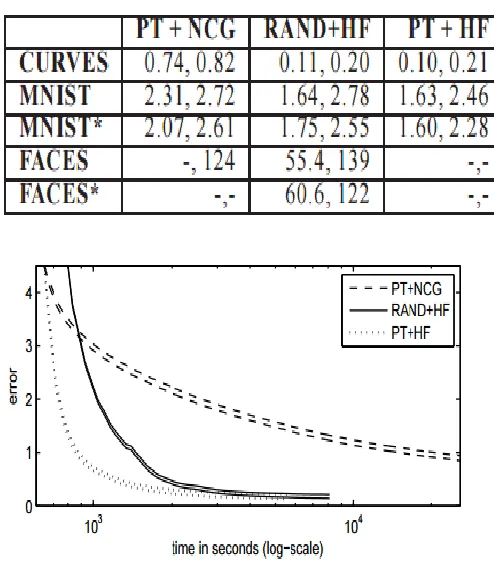
Figure 2. Error (train and test) vs. computation
time on CURVES.
Over fitting, and so we ran additional
experiments where we introduced an l2 prior on
the connection weights. Table 2 summarizes our
results, where PT+NCG is the pre-training +
non-linear CG fine-tuning approach of H&S,
initialized randomly, and PT+HF is our
approach initialized with pretrained parameters.
The numbers given in each entry of the table are
the average sum of squared reconstruction errors
on the training-set and the test-set. The’s
indicate that an l2 prior was used, with strength
10−4 on MNIST and 10−2 on FACES. Error
numbers for FACES which involve pre-training
are missing due to our failure to reproduce the
results of H&S on that dataset (instead we just
give the test error number they reported). Figure
2 demonstrates the performance of our
implementations on the CURVES dataset.
Pre-training time is included where applicable. This
plot is not meant to be a definitive performance
analysis, but merely a demonstration that our
method is indeed quite efficient.
5.
Conclusion
The results of this study suggest that these
items, when combined with existing core survey
items, assess three distinct aspects of a second
order factor that, in content, appears to be
related to deep learning. Natural Language
Processing (NLP) is a typical example; deep
learning cannot understand a story, as well as a
general request to an expert system. So there's
still a long way to go before we can implement
the real intelligent machine. But deep learning
indeed provides a direction to implement the
more intellectual learning; therefore it can be
regarded as a small step toward AI. Deep
architectures help deep learning by trading a
more complicated space for better performance,
in some cases, even for less computation time.
Deep architectures are good models for deep
learning, but can't be proved to be the best one.
There're still many possibilities in the
architectures and learning algorithms that can
carry out better performances.
6. References
[1] Das, Thomas F. Nelson Laird et al.:
Measuring Deep Approaches to Learning Using
the National Survey of Student Engagement,
1900
[2] Dandong Mo, L. Stochastic gradient learning
in neural networks: A survey on deep learning:
one small step toward AI 2012.
[3] Xavier Glorot, Antoine Bordes et. al :
Domain Adaptation for Large-Scale Sentiment
Classi_cation:A Deep Learning Approach,
2008.
[4] ALISON RUSHTON, A. University of
Birmingham, Edgbaston,Birmingham, UK :
Formative assessment: a key to deep learning? ,
2007.
[5] Ciresan, D. C., Meier, U., Gambardella, L.
M., and Schmidhuber, J. Deep big simple neural
nets excel on handwritten digit recognition.
CoRR, 2010.
[6] Coates, A., Lee, H., and Ng,A. Y. An
analysis of singlelayer networks in unsupervised
[7] Dean, J. and Ghemawat, S. Map-Reduce:
simplified data processing on large clusters.
Comm. ACM, pp. 107–113,2008.
[8] Deng , Li,Gong,et al. : Proximal
regularization for online and batch learning. In
ICML, 2009.
[9] Good fellow, I., Le, Q.V., Saxe, A., Lee, H.,
and Ng, A.Y. Measuring invariances in deep
networks. In NIPS, 2010.
[10] Gaikwad, Gawali and Yannawar : A
practical guide to training restricted boltzmann
machines. Technical report, U. of Toronto,
2010. [11] Lee, H., Ekanadham, C., and Ng, A.
Y. Sparse deep beliefnet model for visual area
V2. In NIPS, 2008.
Authors Profile
MS.DAMALLA JYOTHI
Designation: Associate Professor.
Working: Laqshya Institute Of Technology and
Science,Tanikella, Khammam. Experience:
10years. Qualification: M.Tech.,(Ph.D)
Email-d: [email protected]
Phone Number: 9885329435.
OGGU UMARANI
B-Tech in Laqshya Institute Of Technology And
Science, Khammam, M-Tech Computer Science
And Engineering Laqshya Institute Of
Technology and Science, Tanikella, Khammam.
Mail id: [email protected]