S.Shiva Kumar
M.Tech, Electrical Power Systems
Talla Padmavathi College Of Engineering,Kazipet,Warangal
Zarina Begum
Assistant Professor,EEE
Talla Padmavathi College Of Engineering, Kazipet,Warangal
A b s tract : This paper deals with the current controlmethod for grid related operations of distributed generations below non-linear loads using dq-srf technique. The proposed approach has contemporary controller which is designed in DQ-synchronous reference body (dq-srf) and composed of PI controller. More over the proposed technique does now not need any sensors for dimension harmonic evaluation of grid voltage and in addition to harmonics are eliminated to the maximum extent. Hence this may be effortlessly followed at any disbursed era which adds as an advantage. The operation precept of proposed current controller is validated thru MATLAB SIMULINK.
Key wo rd : Distributed generation (DG), Inverter, Non-linear load, dq-srf technique, harmonic compensation.
I. INTRODUCTION
The of renewable energy sources, such as wind turbines, photovoltaic, and fuel cells, has Greatly increased in recent decades to address concerns about the global energy crisis, depletion of fossil fuels, and environmental pollution problems. As a result, a large number of renewable energy sources have been integrated in power distribution systems in the form of distributed generation (DG). DG systems can offer many advantages over traditional power generation, such as small size, low cost, high efficiency, and clean electric power generation. A DG system is typically operated in a grid-connected mode where the maximum available power is extracted from energy sources and transferred to the utility grid. In addition, to exploit full advantages of a DG system, the DG can be also equipped and operated with local
loads, where the DG supplies power to the local load and transfers surplus power to the grid. In both configurations, i.e., with and without the local load, the prime objective of the DG system is to transfer a high-quality current (grid current) into the utility grid with the limited total harmonic distortion (THD) of the grid current at 5%, To produce a high-quality grid current, various current control strategies have been introduced, such as hysteresis, predictive, proportional–integral (PI), and proportional-resonant (PR) controllers. Hysteresis control is simple and offers rapid responses; however, it regularly produces high and variable switching frequencies, which results in high current ripples and difficulties in the output filter design. Meanwhile, predictive control is a viable solution for current regulation of the grid-connected DG. However, despite its rapid response, the control performance of the predictive controller strongly relies on system parameter. Therefore, system uncertainty is an important issue affecting the grid current quality. The PI controller in the synchronously rotating (d–q) reference frame and the PR controller in the stationary (α–β) reference frame are effective solutions that are commonly adopted to achieve a high-quality grid current, However, these current controllers are only effective when the grid voltage is ideally balanced and sinusoidal. Unfortunately, due to the popular use of nonlinear loads such as diode rectifiers and adjustable speed ac motor drives in power systems, the grid voltage at the point of mono coupling (PCC) is typically not pure sinusoidal, but instead can be unbalanced or distorted. These abnormal grid voltage conditions can strongly deteriorate the performance of the regulating grid current.
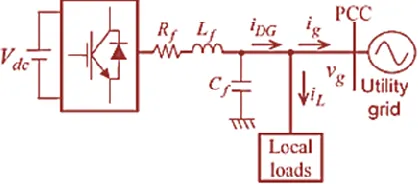
Fig.1. System configuration of a grid-connected DG system with local load
One single RC can compensate a large number of harmonic components with a simple delay function. Hence, the control strategy can be greatly simplified. Another advantage of the proposed control method is that it does not demand the local load current measurement and the harmonic analysis of the grid voltage. Therefore, the proposed control method can be easily adopted into the traditional DG control system without the installation of extra hardware. Despite the reduced number of sensors, the performance of the proposed grid current controller is significantly improved compared with that of the traditional PI current controller. In addition, with the combination of the PI and RC, the dynamic response of the proposed current controller is also greatly enhanced compared with that of the traditional RC. The feasibility of the proposed control strategy is completely verified by simulation results.
II. M ULTILEVEL INVERTER
Fig. 1 shows the system configuration of a three-phase DG operating in grid-connected mode. The system consists of a DC power source, a voltage source inverter (VSI), an output LC filter, local loads, and the utility grid. The purpose of the DG system is to supply power to its local load and to transfer surplus power to the utility grid at the point of common coupling (PCC). To guarantee high quality power, the current that the DG transfers to grid (ig ) should be balanced, sinusoidal, and have a low THD value. However, because of the distorted grid voltage and nonlinear local loads that typically exist in the power system, it is not easy to satisfy these requirements.
A . Effect o f Grid Vo ltag e Dis to rtio n
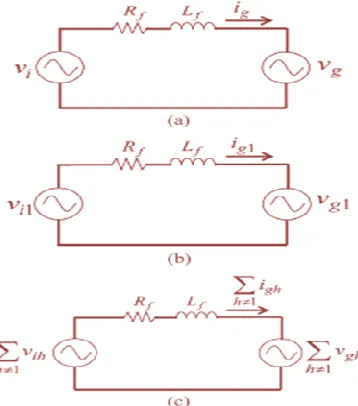
To know the influence of grid voltage distortion on the grid current performance of the DG, a model of the grid connected DG system is developed as shown in Fig. 2. In this model, the VSI of the DG is simplified as voltage source (vi). The inverter
transfers a grid current (ig) to the utility grid (vg). For
simplification purpose, it is assumed that the local load is not connected into the system. From Fig. 2(a), the voltage equation of the system is given as
(1)
Where Rf and Lf are the equivalent resistance and
inductance of the inductor respectively. If both the inverter voltage and the grid voltage are composed of the fundamental and harmonic components as (2), the voltage equation of (1) can be decomposed into (3) and (4), and the system model shown in Fig. 2(a) can be expressed as Figs. 2(b) and (c), respectively.
………. (2)
………. (3)
Fig.2 Model of grid-connected DG system under distorted grid voltage condition
From (4), due to the existence of the harmonic components in the grid voltage, the harmonic currents are induced into the grid current if the DG cannot generate harmonic voltages that are exactly the same as As a result, the distorted grid voltage at the PCC causes non-sinusoidal grid current , if the current controller cannot handle harmonic grid voltage
.
B. Effect o f No n lin ear Lo cal Lo ad
Fig. 3 shows the model of a grid-connected DG system with a local load, whereby the local load is represented as a current source , and the DG is represented as a controlled current Source . According to Fig. 3, the relationship of DG current , load current , and grid current is described as
………. (5)
where and are the fundamental and harmonic components of the load current, respectively.
Fig.3 Model of grid-connected DG system with nonlinear local load
Assuming that the local load is nonlinear e.g., a three-phase diode rectifier—the load current is composed of the fundamental and harmonic components as
……….. (6)
where and are the fundamental and harmonic components of the load current, respectively.
Substituting (6) into (5), we have
………. (7)
From (7), it is obvious that to transfer sinusoidal grid current g i into the grid, DG current DG i should include the harmonic components that can compensate the load current harmonics . Therefore, it is important to design an effective and low-cost current controller that can generate the specific harmonic components to compensate the load current harmonics. Generally, traditional current controllers, such as the PI or PR controllers, cannot realize this demand because they lack the capability to regulate harmonic components.
III. PROPOSED M ULTILEVEL INVERTER
algorithm, which is developed in the d-q reference frame.
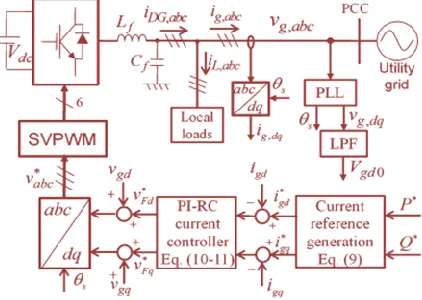
Fig. 4. Overall block diagram of the proposed control strategy
The proposed control scheme is composed of three main parts: the phase-locked loop (PLL), current reference generation scheme, and current controller. The operation of the PLL under distorted grid voltage has been investigated in detail in [20]; therefore, it will not be addressed in this study. As shown in Fig. 4, the control strategy operates without the local load current measurement and harmonic voltage analysis on the grid voltage. Therefore, it can be developed without requiring additional hardware. Moreover, it can simultaneously address the effect of nonlinear local load and distorted grid voltage on the grid current quality.
A. Current Reference Generation
As shown in Fig. 4, the current references for the current controller can be generated in the d-q reference frame based on the desired power and grid voltage as follows [15]:
………. (8)
where P∗ and Q∗ are the reference active and reactive power, respectively; represents the instantaneous grid voltage in the d-q frame; and and denote the direct and quadrature components of the grid current, respectively. Under ideal conditions, the magnitude of has a constant value in the d-q reference frame because the grid voltage is pure sinusoidal. However, if the grid voltage is distorted, the magnitude of no longer can be a constant value. As a consequence, reference current and cannot be constant in (8). To overcome this problem, a low-pass filter (LPF) is used to obtain the average value of , and the d-q reference currents are modified as follows, where is the average value of , which is obtained through the LPF in Fig. 4
………. (9)
IV. SIM ULATION RESULTS
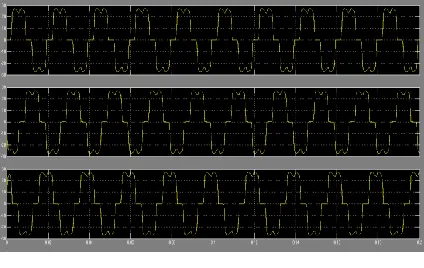
Fig.5 shows the waveform of the voltages that are obtained in the distributed generation which never changes before and after the connection of the current compensator to the distribution generation grid. The compensator which is designed only to the maintenance of current. Thus it compensates only the current of the source. Load current also does not varies after the mounting of the compensator because load is non-linear, it will be same as the before and is shown in the Fig. 6.
distortion less than 5% as mentioned in IEEE 1547 standard.
Fig. 5 showing the voltage of the distributed generation grid before attaching the current
compensator.
Fig.6 showing the load current waveforms of the distributed generation before connecting the current
compensator.
Fig.7 showing the source current waveforms of distributed generation before connecting the current
compensator
Fig.8 showing the waveforms source current in distributed generation after connecting the current
comp
V. CONCLUSION
In this paper the new technique for the current compensation has been discussed in which THD is below 5%. And the increasing of current compensator is also easier as it does not needs any measuring instruments. For forthcoming enhancing some other new technique can be found which can reduce than this technique. At present dq-srf technique is the finest for the current compensation in the distributed generation.
REFERENCES
[1] R. C. Dugan and T. E. McDermott, "Distributed generation," IEEE Ind. Appl. Mag., vol. 8, no. 2, p p. 19-25, Mar./Apr. 2002.
[3] Suul, J.A.; Ljokelsoy, K.; Midtsund, T.; Undeland, T., “Synchronous Reference Frame Hysteresis Current Control for Grid Converter Applications,” IEEE Trans. Industry Applications, vol.47, no.5, pp.2183-2194, Sept.-Oct. 2011.
[4] Qingrong Zeng; Liuchen Chang, “An Advanced SVPWM -Based Predictive Current Controller for Three-Phase Inverters in Distributed Generation Systems,” IEEE Trans. Ind. Electron., vol.55, no.3, pp.1235-1246, March 2008.
[5] Buso, Simone Mattavelli, Paolo, “Digital Control in Power Electronics,” Synthesis Lectures on Power Electronics, Vol.1, Iss.1, pp.1, 2006.
[6] Busada, C.A.; Gomez Jorge, S.; Leon, A.E.; Solsona, J.A., "Current Controller Based on Reduced Order Generalized Integrators for Distributed Generation Systems," IEEE Trans. Ind. Electron., vol.59, no.7, pp.2898-2909, July 2012.
[7] M. Liserre , R. Teodorescu and F. Blaabjerg, “Multiple harmonics control for three-phase grid converter systems with the use of PI-RES current controller in a rotating frame,” IEEE Trans. Power Electron., vol.21, no.3, pp.836-841, May 2006.
[8] Castilla, M.; Miret, J.; Camacho, A.; Matas, J.; de Vicuna, L.G.,"Reduction of Current Harmonic Distortion in Three-Phase Grid-Connected Photovoltaic Inverters via Resonant Current Control," IEEE Trans. Ind. Electron., vol.60, no.4, pp.1464,1472, April 2013.
[9] Rong-Jong Wai; Chih-Ying Lin; Yu-Chih Huang; Yung-Ruei Chang, "Design of High-Performance Stand-Alone and Grid-Connected Inverter for Distributed Generation Applications," IEEE Trans. Ind. Electron., vol.60, no.4, pp.1542-1555, April 2013.
[10] Balaguer, I.J.; Qin Lei; Shuitao Yang; Supatti, U.; Fang Zheng Peng, "Control for Grid-Connected and Intentional Islanding Operations of Distributed Power Generation," IEEE Trans. Ind. Electron., vol.58, no.1, pp.147-157, Jan. 2011.
[11] Pozzebon, G.G.; Goncalves, A.F.Q.; Pena, G.G.; Mocambique, N.E.M.; Machado, R.Q., "Operation of a Three-Phase Power Converter Connected to a Distribution System," IEEE Trans. Ind. Electron., vol.60, no.5, pp.1810-1818, May 2013.
[12] Qing-Chang Zhong; Hornik, T., "Cascaded Current– Voltage Control to Improve the Power Quality for a Grid-Connected Inverter with a Local Load," IEEE Trans. Ind. Electron., vol.60, no.4, pp.1344-1355, April 2013.
[13] Zhilei Yao; Lan Xiao, “Control of Single-Phase Grid-Connected Inverters with Nonlinear Loads,” IEEE Trans. Ind. Electron., vol.60, no.4, pp.1384-1389, April 2013.
[14] Liu, Z.; Liu, J.; Zhao, Y., "A Unified Control Strategy for Three-Phase Inverter in Distributed Generation," IEEE Trans. Power Electron., vol.29, no.3, pp.1176-1191, Mar. 2014.
[15] IEEE Application Guide for IEEE Std 1547, IEEE Standard for Interconnecting Distributed Resources with Electric Power Systems, IEEE Std 1547.2-2008
[16] Teodorescu, R. Blaabjerg, F. Liserre, M. Loh, P.C., “Proportional-resonant controllers and filters for grid-connected voltage-source converters,” IEE Proceedings - Electric Power Applications, Vol.153, Iss.5, pp.750, 2006.
[17] T.-V. Tran, T.-W. Chun, H.-H. Lee, H.-G. Kim, and E.-C. Nho, “Control Method for Reducing the THD of Grid Current of Three-Phase GridConnected Inverters under Distorted Grid Voltages,” J. Power Electronics, vol.13, no.4, pp.712-718, July 2013.
[18] Q.-N., Trinh; H.-H. Lee, “Improvement of current performance for grid connected converter under distorted grid condition,” in Proc. IET Conference on Renewable Power Generation (RPG 2011), pp.1-6, 6-8 Sept. 2011.
[19] Mohamed, Y.A.-R.; El-Saadany, E.F., "Adaptive Discrete-Time Grid-Voltage Sensorless Interfacing Scheme for Grid-Connected DG Inverters Based on Neural-Network Identification and Dead beat Current Regulation," IEEE Trans. Power Electron., vol.23, no.1, pp.308-321, Jan. 2008.
[20] V.Blasko, V.Kaura,"Operation of a Phase Locked Loop System under Distorted Utility Conditions", IEEE
Trans. Ind. Electron., vol.33, no.1, p.58-63,
Aut hors:
Sh iv a Ku mar pursing M.Tech in Electrical Power
System from Talla Pad mav ath i Co lleg e Of
En g in eerin g , Kazip et, W aran g al.